In short
Podcast Summary: This Cultural Life - Guillermo del Toro
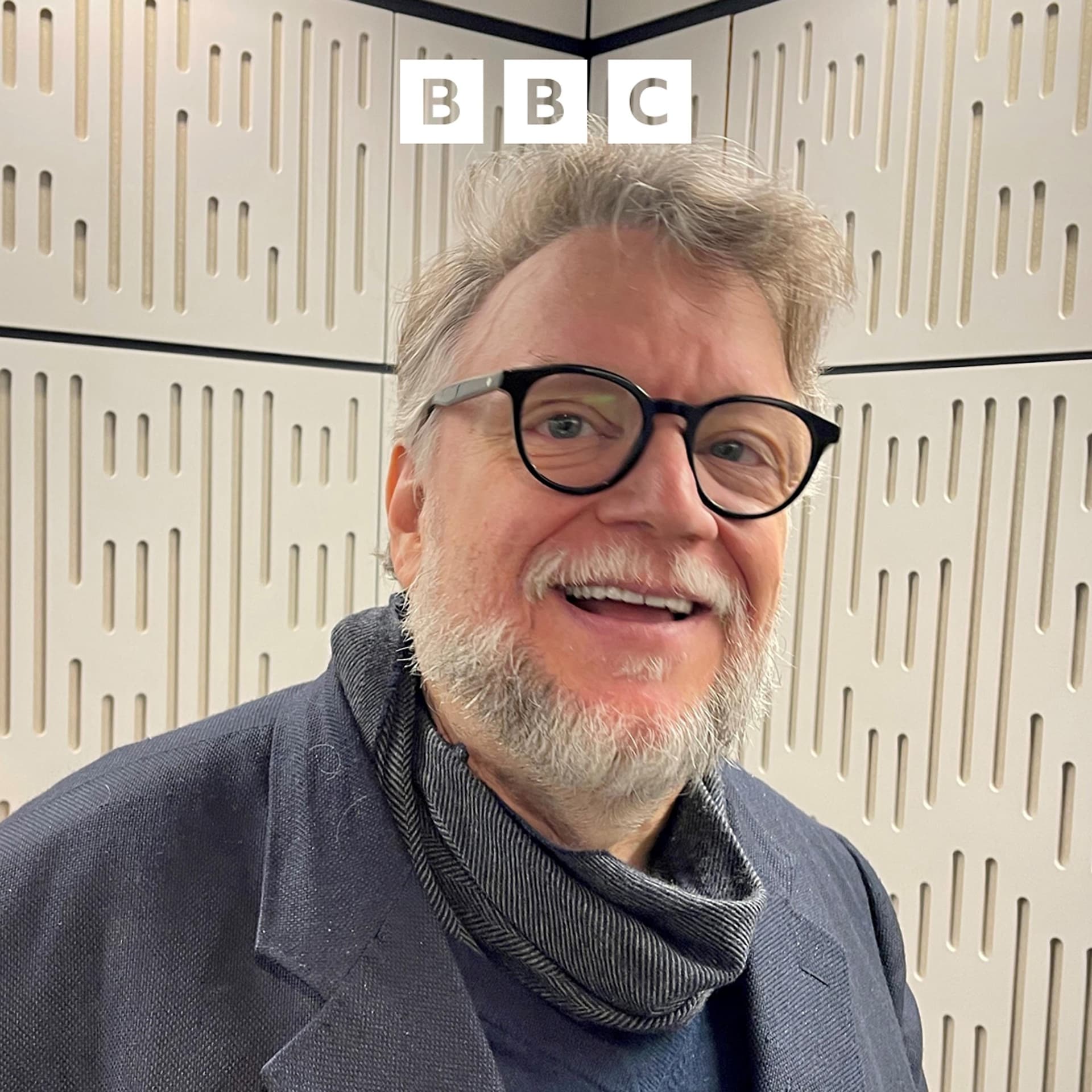
Episode Overview In this episode of *This Cultural Life*, host John Wilson converses with Oscar-winning filmmaker Guillermo del Toro. The discussion spans del Toro's life, his cultural influences, and the themes present in his films, which often blend fantasy, horror, and Gothic romance. Del Toro shares insights about his upbringing, artistic inspirations, and the creative process behind his acclaimed films, including *Pan's Labyrinth*, *The Shape of Water*, and his upcoming retelling of *Frankenstein*.
Key Highlights
Early Life in Guadalajara
- Background: Born in 1964 in Guadalajara, Mexico, del Toro was raised in a conservative, Catholic family. His father was a motorcycle racer and a bohemian figure, while his maternal grandmother imposed strict religious discipline.
- Cultural Influences: His upbringing was a blend of traditional Catholic teachings and a fascination with horror and fantasy, leading to a unique perspective on storytelling.
Thematic Elements in Film
- Catholic Imagery: Del Toro's films are heavily influenced by Catholic symbols and themes, including concepts of sin, purgatory, and redemption.
- Monsters and Humanity: He expresses a deep empathy for monstrous characters, viewing them as reflections of societal outcasts and exploring themes of innocence and brutality.
Influences and Inspirations
- Literary and Cinematic Influences: Del Toro cites various influences, including Mary Shelley’s *Frankenstein*, Alfred Hitchcock, and Romantic artists like Goya and Blake. These figures contributed to his understanding of storytelling and visual aesthetics.
- Childhood Exposure to Death: Experiences with graphic depictions of death in Mexican culture shaped his fascination with horror and the monstrous.
Filmmaking Journey
- Career Beginnings: Del Toro started his career in special effects before making his directorial debut with *Cronos*. He emphasizes the importance of creative control in his projects.
- Struggles in the Industry: His experiences with producers, particularly during the making of *Mimic*, highlighted the challenges of maintaining artistic integrity in commercial filmmaking.
Recent Works and Future Projects
- Current Projects: Del Toro discusses his recent works for Netflix, including *Pinocchio* and *Frankenstein*, emphasizing the freedom and scale afforded to him by the platform.
- Upcoming Projects: He reveals plans for a stop-motion adaptation of Kazuo Ishiguro's *The Buried Giant*, exploring themes of memory and regret.
Key Themes and Concepts
- Gothic Romance: Del Toro identifies himself as a romantic filmmaker, emphasizing the blend of beauty and horror in his storytelling.
- Artistic Freedom: He stresses the importance of creative autonomy in filmmaking, often prioritizing personal passion projects over commercial success.
- Philosophical Views: Del Toro engages with profound questions about existence, creation, and the nature of good and evil as explored through his art.
Conclusion Guillermo del Toro’s conversation offers a deep dive into the mind of a filmmaker who has navigated the complexities of creativity, culture, and personal experience. His unique blend of influences shapes his narrative style and thematic exploration in cinema, making him a significant voice in contemporary filmmaking.
---
Other Notable Mentions
- The importance of visual storytelling and emotional impact in cinema.
- The role of memory and loss in art and personal life.
- Del Toro’s views on technology in filmmaking, specifically his skepticism towards AI in creative processes.
This episode provides a poignant look at Guillermo del Toro’s artistic journey and the complexities that shape his creative output.
Written by AI. May contain mistakes. Listen to the episode to check what was said.
Chapters
Tap a time to open that second in VOChildhood Influences on Filmmaking
0:45 to 4:38
Del Toro discusses his upbringing in Guadalajara and its impact on his art.
“plus three Golden Globes and seven BAFTAs.”
Religious Upbringing and Fear of Death
4:38 to 8:27
Exploration of del Toro's Catholic upbringing and its effects on his psyche.
“My father had a very particular apprehension of the world.”
The Influence of Violence and Death
8:27 to 12:29
Del Toro recounts early exposure to violence and its influence on his work.
“in the world, the cadavers of people that had been crushed by machinery, decapitated by a jealous lover.”
Father-Son Dynamics in Filmmaking
12:29 to 14:07
Del Toro reflects on paternal relationships and their portrayal in his films.
“Yeah, they were very powerful, almost untouchable at the time.”
Exploring Monstrous Adversity in Childhood
14:07 to 17:24
Del Toro discusses the connection between his childhood experiences and the monstrous themes in his films.
“Several of your films feature a child protagonist facing monstrous adversity, especially in Pan's Labyrinth, which is set in 1940s Fascist Spain.”
The Role of Religion and Spirituality in Del Toro's Work
17:25 to 20:38
Del Toro reflects on the influence of religion and spirituality on his storytelling and character creation.
“You've said a movie version of the Mary Shelley novel has been a lifelong ambition for you.”
Early Inspirations and Filmmaking Aspirations
20:39 to 23:10
Del Toro shares his early experiences with filmmaking and the creative stories he crafted as a child.
“Well, the first film I saw, it was a big event when Psycho came on TV.”
The Influence of Alfred Hitchcock on Del Toro
23:11 to 25:50
Del Toro discusses how Alfred Hitchcock's storytelling techniques shaped his own filmmaking approach.
“We should just explain, Kronos, your debut film.”
Fascination with Romantic Artists and Visual Aesthetics
25:51 to 28:00
Del Toro explores how his love for Romantic artists has influenced the visual style of his films.
“Very oftentimes, his protagonists are very banal, regular, quote-unquote, people that fall into evil only to come out of that stronger because they were exposed to it.”
Romantic Influences in Art and Film
28:00 to 29:16
Explore how romantic painters influenced Guillermo del Toro's visual storytelling.
“and I read all of them and I received an education on the history of art at a very young age that in a strange way combined with my knowledge of the pop narrative art.”
Show all 17 chapters
Goya's Dark Imagery and Its Impact
29:16 to 30:59
Discuss Goya's black paintings and their thematic connection to del Toro's work.
“You know, as I recall, you can think of the raft of the Medusa.”
The Clash of Beauty and Horror
30:59 to 31:55
Delve into the concept of beauty and horror in gothic romance and del Toro's films.
“which are anguish and brushstrokes with an urgency and a fervor of pain that I don't think has ever been equaled.”
The Influence of American Realism and Noir
31:55 to 33:27
Learn how American realism and noir genres shape del Toro's cinematic approach.
“And talking about these artistic influences in the email that you sent us, some of you have a very long and extensive list of all of the things.”
Hitchcock's Artistic Liberation
33:27 to 35:26
Examine how Alfred Hitchcock's evolution influenced del Toro's philosophy on filmmaking.
“Then he goes to America and makes a quintessential British film, which is Rebecca, even if he's in America.”
Art and AI: Del Toro's Perspective
35:26 to 36:58
Understand Guillermo del Toro's critical view on AI's role in the creative arts.
“Let me just ask you about the technology of filmmaking.”
Filmmaking in the Age of Streaming
36:58 to 38:48
Discuss the impact of Netflix on del Toro's filmmaking experience and audience reach.
“Your most recent projects, including Pinocchio and Frankenstein, have been made for Netflix.”
Creative Drive and Lost Causes
38:48 to 40:52
Explore del Toro's motivations and how he pursues challenging projects in filmmaking.
“were exposed to it after only a few days.”
Transcript
Automatic transcript. May contain errors.0:06Welcome to This Cultural Life, the series in which the world's leading creative figures choose the most significant influences and experiences that have inspired their own artistic lives. I'm John Wilson, and my guest in this episode is the Mexican-born filmmaker Guillermo del Toro. From his 1992 debut Kronos up to his recent big-budget spectacular retelling of Frankenstein, del Toro's 12 feature films mix fantasy, horror, and gothic romance to create modern fairy tales about innocence, brutality, and redemption. His movies have won eight Academy Awards, including three for Pan's Labyrinth in 2006 and four Oscars for The Shape of Water in 2017, plus three Golden Globes and seven BAFTAs.
0:55Guillermo del Toro, welcome to This Cultural Life. I'm very happy to be here. You've sent us a fascinating list of creative influences and experiences, and we'll explore as many as we can during the course of this conversation. But it's clear to me that so many of the aspects of your filmmaking, the themes and the imagery in particular, are rooted in your childhood. So let's start there. You were born and raised in Guadalajara in Mexico in 1964. Just tell us about your earliest childhood memories of home life. Well, Guadalajara is the second largest city in Mexico. And it was and is very conservative in a way and very Catholic.
1:35So I was born in something that, even if it was the 60s, it felt like the 1800s. Withowed women wore black the rest of their life. People wore veils to the church. Men had a pocket handkerchief and three-piece suits. It was really— Very incredibly traditional. And I was born in a sort of really repressive Catholic family on my mother's side. My dad was a little bit of a bohemian. He was a motorcycle racer and he was a ladies' man and he was like a Bombay van, but he came from nowhere. Sorry, but he raced motorcycles, not professionally. Professionally. Really? He was a motorcycle champion. And then later in 1969, he won the lottery, the national lottery.
2:23He won$6 million in 1969. And life changed. Life changed. So my childhood goes from my original neighborhood, where all the streets were paved in duotone, handmade tiles. The sidewalks looked like something out of a classical painting, to a suburb where my father built this gigantic white elephant of a house. It was almost half a block. We could go weeks and weeks without seeing each other. Because it was so big. Yeah, it was very big. You could avoid adults for weeks and still find food in the kitchen and find that your clothing cleaned and pressed. Was this a very modern house in a very old traditional neighborhood?
3:07Well, it was actually in a suburban neighborhood. And as part of that, I was torn between all the Catholic guild mythology and all the fiction. Like I adored movies. I became bilingual at a very early age, four or five years old. I was already bilingual. Let me just ask you about your religious upbringing. Catholic imagery, of course, runs very deeply throughout so many of your films, not least in Frankenstein, your most recent film, where you have a Christ-like monster. Just tell us something about your religious education and the upbringing. You had to go to church, obviously, all the time. Every day, every day we would go to church and Sundays particularly very early.
3:50The woman that I called my grandmother, who was really my great aunt, she raised me with the fear of purgatory, original sin. She used to explain to me that I needed to mortify the flesh in order to atone for original sin. So she would put upside down bottle caps on my shoes so that my feet would bleed. Inside your shoes. Inside the shoes. So my feet would bleed and I would atone. And my mother discovered this after many months and she stopped the practice. But, you know, she raised me and she raised me as a child with an enormous fear of death. Why was she raising you, this woman who was your great aunt, who you called grandmother?
4:30Because when my father and my mother came into money, they decided to see the world. So they would disappear for weeks and weeks and weeks at an end. Wow. My father had a very particular apprehension of the world. He would describe New York as a bunch of elevators. I said, how was New York? He said, a bunch of elevators. Paris made no impression on him, except that food was expensive. But my mother was a different sort. She was sort of a poet and a painter, and she had the bohemian side. So she would also disappear, and she would run with the bohemians of the area. She even learned from Romani wonders.
5:10She learned to read the tarot and palmistry and the tea leaves. And she was a little bit of a white witch. A very interesting childhood torn between the complete sort of bohemian wild side of my mother and the very conservative side of my grandmother. Sounds like you've inherited it a lot from your mother aesthetically in terms of your... And in terms of discipline and work, I'm very much my father. So the woman who was your grandmother, but actually really your great aunt, not only inflicting physical pain on you, but creating a sense of doom, purgatory. Every night I would sleep at the foot of her bed in a little mattress.
5:50I said, wouldn't I see you tomorrow, Grandma? And she would say, if I wake up, because God may choose to pick me up tonight. And I would spend the night, the entire night, hearing her breathing. and if she stopped even for a second I would get up and look and make sure she was alive when I was not with her I would say goodbye on the phone and I would call her three minutes later to make sure she was still alive and that is still my mo in a way but the funny thing is I was mortally afraid of dying when I was a child and now I'm completely free of that fear but did you take that seriously you not only thought that she might die in the night did you think that you might die.
6:28Did she say to you, unless you're a good boy? Well, even if you're a good boy, you're going to, I mean, it was like buying a timeshare in hell, purgatory. You got a bad deal for a very little down payment. Did she describe it to you? Yeah, yeah, yeah. She said, imagine that you are on fire, but for eternity or for hundreds of years. I said, hundreds of years, I'm only three. It's like, it was really a bad deal. But along with that came Catholic pageantry. And I think Catholicism is the most visceral, wild, baroque, gory, passionate religion I could have fallen into. It's food for the imagination.
7:08It's food for the imagination. The cosmology is fascinating. I mean, the Bible is the goriest reading to this day that I've ever had. The decapitations, flayings, eye gouging, mutilation, being broiled alive, broiled, baked, fried, you know. And there's all sorts of sexual escapades, incest. I mean, it really was the most garish literature I could have read as a child. But also with it came the imagery of statuary, the Baroque beauty of particularly Spanish and Mexican painters, you know, that adorned the churches. And all that, for example, the statue and the paintings of St. Lucie with the eyes, her eyes on a little tray.
7:56That's in Pan's Labyrinth. The crucifixion, obviously, you describe it. The creature in Frankenstein is crucified and has a crown of thorns and has the astigmata, blah, blah, blah. And it never left me. And that clashed also with how incredibly graphic death is in Mexico. I was exposed to kidnapping and murder of one of my cousins and the descriptions the adults made of when they found the body in a river in a burlap sack and the decomposition of that, the fact that there was a newspaper that came out weekly with the goriest covers in the world, the cadavers of people that had been crushed by machinery, decapitated by a jealous lover.
8:40And they were right next to my Archie and Batman comic books that I was buying. So you were fascinated with death then? Well, I was inevitably exposed to it. I saw people burn alive in a car. I saw my first accident when I was four. I saw that guy laying on the grass and his head was tangled on a barbed wire fence. And that cousin that you were talking about who had been kidnapped and murdered, they didn't shield you from those horrible, gory details. Mary Shelley listened to the rhyme of the ancient mariner under the table of her dining room. I listened to the descriptions of my cousin dying under the dining table.
9:19because as a kid under the dining table, you're like the spy who came from the cold. You're listening to conversations secretly and the adult whisper these things and they're having what in Mexico was the aperitif. One of the recurring themes of your films, the recurring character, in fact, is the paternal figure. We see it in your very first film. Kronos writes it up again to Frankenstein, in which the monster calls his creator, Frankenstein, father. Yes. It's also there in the themes about orphaned children, abandoned children. Were you in those films drawing directly, do you think, on those childhood experiences, fears that you had as a child?
10:00Yeah, no, of course, I felt completely out of place. I think I was a apostle to my father in many ways. He was very dear to me and I was very dear to him. But we were very different, I thought, until I turned 40 and realised I was my father. He was physically very affectionate, was very aloof, very mysterious. He wouldn't like to talk about himself. You know, he was really naturally remote. And he was kidnapped in 1998 for 72 days. And I think that aloofness served him well because he came out of it relatively intact mentally. He had a week in which he became a saint. And then the week after, he was my good old dad.
10:44During that experience, I think when he was kidnapped, it is around the time that you were making your first film, Cronus, I think. No, it was later. It was after making Mimic. Which was your second film. My second film with the Weinsteins, which was an even more harrowing ordeal. Than your film. At least the kidnapping had a certain logic. You know, they wanted money and we wanted my father. With the Mimic, I didn't know what they wanted. Seriously, you're not just making a joke retrospectively, given what we know about the Weinsteins. They were at the time incredibly difficult to deal with in what way?
11:16Incredibly. Well, there was no logic to it, which has happened only once, by the way. I've been making movies for more than 30 years, and that's my only bad experience. Actors, schedule and all that, they can go wrong or right, but with a studio, it's my only bad experience. And it was because they hire you for who you are, and then they didn't want your personality in it. They wanted to suffocate every instinct that you had as a filmmaker. So it was very disorienting. But fortunately for me, four years later, I was able to do The Devil's Backbone with Pedro Modover. And Pedro basically saved my sanity.
11:55Because obviously, in Europe, you have all the authorship of the piece. And I remember talking to Pedro and saying, I just want to make sure that I get final cut. And he says, what is a final cut? I said, well, that I cut the movie. He says, but you're the director. Who else would cut it? Ah, that's great, isn't it? That was so beautiful. That must have been a complete sense of liberation for you. Complete, and Mimic did a lot of damage. I was unemployable for about three, four years because of the rumours that were spread about my tension with the Weinsteins, which back then they were seen as holy saviours.
12:31Yeah, they were very powerful, almost untouchable at the time. Yeah. But it must have also been incredibly difficult because, as you say, this was the time when your father had been kidnapped. were you dealing directly with kidnappers who said your father will yeah yeah yeah what did they were they threatening to kill him well the first part of the negotiation was my older brother second part of the negotiation was half my younger brother and half me i got the final the final quarter of the negotiation and you get very unpleasant phone calls when people tell me did you have a bad call with the studio i go no i've had really difficult calls when they yell at you and they curse you and they say, you're going to have his head in a box tomorrow.
13:12And they hang up. Well, that's a bad phone call. I got the final stretch of the negotiation. I did alone. And I was the one that welcomed my father back home. And I was the one that finished the deal. And so obviously you had to pay the money to release your father. There's a whole delivery of the ransom, which is Raymond Carver's story. I mean, there's all sorts of things that happen that actually strengthen the spirit. Strengthen your spirit. Yeah. Oh, yeah. You come out of it much stronger. The processing of the pain, I'm not very good at it, but I try to do it through my work and my stories.
13:51It's an interesting year, 98.
14:07Several of your films feature a child protagonist facing monstrous adversity, especially in Pan's Labyrinth, which is set in 1940s Fascist Spain. It's about a young girl that descends into the underworld. Are the children that we see in those situations, we also see it in Kronos, in Devil's Backbone that you mentioned, do you think versions of you as a child? Yes. Mostly every character I write has to have something on me. whether it's Mako Mori in Pacific Rim or it's Hellboy or the kids or in this case the creature and the doctor on Frankenstein, the Baron. They all have aspects of myself. The difference when you write when you're young is you write as the protagonist of your film and the older you get you write yourself as the antagonist.
14:58And this duality in characters, the father-son relationship, the creator, the monster. Again, a recurring theme. We see it in Pan's Labyrinth, in Shape of Water, Frankenstein, an empathy for these monstrous characters. Because I think there is monstrosity of personality and monstrosity of physique. I think that the physical monstrosity is something that when you grow as an outsider, for whatever reason, and it can be temperament, you know, I think that certain souls are made of a crystal that fractures with reality. Mine was one of those. I was not really good at reality. I was very good at fiction.
15:42And one of the salient things that occupied my mind as a young child was the consubstantial nature of God and Jesus. I was very intrigued by why would a father send his child to be crucified and tortured? What was God trying to learn? And that is partially one of the questions I ask in Frankenstein. I must confess, I never considered what would come after creation.
16:13And the answer is, you know, there is, first of all, I think God wanted to know pain. I wanted to know what it was to be human. And death intrigues me because it seemed to be out of his control. Like, it's when the warranty expires, I guess. but those were things I would ask the priests. Were you a happy child? No, I've aged into a form of happiness. The most unhappy period of my life is my childhood. I was fraught with nightmares and fears and I didn't understand the world. That's why I embrace monsters because monsters have a clarity of purpose. When you look at them, you know what they are.
16:56You don't see Godzilla enter a city and think, What does he want? Is he going to be careful with the city this time? I found that clarity sort of a permission to be imperfect. And what's your relationship with organized religion now? Well, I don't like anything that needs a building. Are you spiritual, though? I am very spiritual. I come to believe that good is good and it's the state of grace. And when you break it, it's very clear to the human heart. That sense of goodness, the state of grace is explored in Frankenstein. You've said a movie version of the Mary Shelley novel has been a lifelong ambition for you.
17:36When did you first come across the story? The first time I saw the original movie, which is what I saw first, was on a Sunday after church. The Boris Karloff. Boris Karloff, yeah. We went to mass at eight, came back home, and we watched monster movies all day in Channel 6 in Guadalajara.
18:01I went into like a paroxysm, a religious St. Paul in the road to Damascus moment. I found my Messiah. I completely emptied myself into that figure as a child. I said, that's me. I understood immediately that that was me. Out of place in the world the way I saw it, sort of a puzzle to my father. I understood every precept that I had read about or heard of, resurrection of the flesh, immaculate conception. You saw it as a religious parable? Oh, yeah. No, because his eyes were rolled back. He was trying to emulate the void look that Mary Shelley describes in the book so eloquently. But it also evoked the ecstasy of St.
18:43Teresa to me. And the way he was posed by Boris Karloff looked like a martyr to me. And then I really loved the novel. I thought it was the greatest book I've ever read. I was 11 and I was already reading two books a day, three books a day. I am a super fast speed reader. And you say that you were coming home regularly and watching monster movies on television after mass whenever it was. But did you imagine at that time as a kid that you could make your own movies? Was that part of your imagination? When I was eight years old, my father, who had many car dealerships, he took Super 8 equipment as down payment for a car.
19:25And he said to me, you like movies. Why don't you use it and tell me how it works? At eight? At eight. And I did a couple of Super 8 movies. You took the reels to the pharmacy. And the pharmacist would return them to you like two weeks later. And I projected it. And it's the happiest experience to this day I've ever had making movies. because I saw the image projected on the screen and I said, I made a movie. I made that. What was it? What were you seeing? It was a Planet of the Apes stop motion with my toy figures. Oh, so you weren't just filming your family. You actually created a story. No, no, I created a story.
20:02The Planet of the Apes stop motion crudely made and I then went to do a movie called The Killer Potato about a potato that wanted to take over the world and got crushed by a car trying to cross the street. These are the first del Toro movies. Yes, yes. But, you know, the thing is, at age 11, when I read the novel, I very, very earnestly say, I'm going to make that movie. Took you 50 years. It took me 50 years. And I didn't go through the pharmacist this time.
20:38Your next choice for this cultural life, Guillermo del Toro, is the director Alfred Hitchcock. Another Catholic overweight man. Ah. Yes. I hadn't made that connection. When did you first see his films? Well, the first film I saw, it was a big event when Psycho came on TV.
21:01And I saw it, I loved it, but the one that got me was I Confess with Montgomery Clift because it was a Catholic thriller. and the MacGuffin, as Hitchcock would call it, was the secret of confession. Caught in the tangled web of murder, three people confess the secrets that torture their souls. But in the echoes and shadows of the ancient city of Quebec, Canada, walks a man who knows the whole terrifying truth, but can never tell all the strange things his ears have heard, for he is sworn to silence. It was so thrilling to me. I was on the edge of my seat, and Montgomery Clifford was such a great martyr.
21:46It was his calling to be martyred. Do you understand? I chose to be what I am. I believe in what I am. And Hitchcock plays with that heavy weight in a way that you know he knows. I knew that moment he was Catholic. and later at age 21 I think I wrote a book on Alfred Hitchcock, 500-something pages long, and got published by the University of Guadalajara. That's really interesting because, I mean, your route to filmmaking wasn't a conventional one. I think you spent a decade or so working in special effects and then you set up your own effects company, but you didn't have any formal filmmaking training.
22:27Not quite. So was Hitchcock, in effect, was he your film school? Well, he was in many ways. I mean, what happened is I was a film director in Super 8 and 16 and all that. And I created my effects company in order to, many years later, be able to do Kronos. Because no one would do the effects in Kronos. So I said, OK, I better create a company. So you knew you were going to be a filmmaker. Oh, yeah. I knew I was a filmmaker before I did effects. And I offered my services to storyboard, to do makeup effects, physical effects, stop motion animation, anything. created the company in order to finance the effects in Kronos and in the meantime I studied three years of screenwriting and three years of make-up effects creation.
23:11We should just explain, Kronos, your debut film. It's about an antique dealer who comes across an ancient object which somehow attaches itself to him and injects him with... Eternal life. Well, I was going to say eternal life. I was going to say special powers. It's vampirism. And the connections between vampirism and Catholic dogma, they were very appealing to me. So the character is called Jesus Grey, and he resurrects on the third day, and he has a stigmat on his feet. And it was about the bond between him and his granddaughter, which was an echo of me and my grandmother, you know, because I loved my grandmother in spite of her imperfections.
23:49and I thought the unconditional love of the granddaughter was very appealing to me when she realized the grandfather was a vampire but didn't care. What's interesting though is, I mean, if you watch Kronos now, there is that aspect to it of the eternal life and the sort of Catholic possibly influence. Yeah. But it doesn't look immediately like it's been influenced by Alfred Hitchcock. No, no, no, no. I don't think, I think that one thing is who is your formative filmmaker and a very different thing is that you're trying to be him. I don't think anyone can be Hitchcock. But what did he teach you, as I suggest there?
24:27You know, he was your film school. No, but I'll tell you, the discipline of storytelling is the most salient thing on him. He has very clear that an emotion is the effect of the arrangement and the composition of audiovisual elements. He used to say, what is film but a rectangle charged with emotion? And I think the way you engineered that was very clear to me. I saw, OK, he's using a close-up here, he's using a wide shot here, he's hiding this piece of information for the audience to be ahead of the protagonist. Just give us an example of where we may see that influence, however indirect are the particular scenes, or films where you have either referenced Hitchcock or you know there is a certain aesthetic which feeds into your film.
25:15I would say it's just the discipline of fighting the emotion. I would say that in Kronos, obviously the fact that they're fighting on a billboard at the end of the movie in the heights, I mean the duel in the heights is very frequent. On Hitchcock you see it in many movies, North by Norweez, Saboteur, you know, he recurs to it quite often. But the main thing I believe is the fact that he had an ambivalence about evil. And he very much believed that it was very easy to fall from grace. He felt that banality was a sin. Very oftentimes, his protagonists are very banal, regular, quote-unquote, people that fall into evil only to come out of that stronger because they were exposed to it.
26:04So I think that is in my movies.
Read the full transcript
26:16The next significant influence that you've chosen, Guillermo, is an art encyclopedia that sparked a fascination with the Romantic artists in particular, Goya, Blake, Casper David, Friedrich. Was this a school book or one of those that you had at home? You know, as part of the lottery, my father bought and built a huge library slash studio, which he never, and I mean never, used. If he was in there two times, three times, I am exaggerating. You say a library, he stocked it with books as well? Yeah, they said you should buy books because they look really good. So he bought a whole library. But never read them?
26:53Never read them. I read them all. And the three salient things that I got from it, I read an entire encyclopedia of health and anatomy, and I was morbidly interested in medicine. I became the youngest hypochondriac. I would go to my mother and say, I think I have trichinosis in the brain. I think I have cirrhosis. I think I have an aneurysm. And she would say, why? And these are my symptoms. And that's still in Frankenstein. Yeah. This fascination with the biology and the lymphatic system and all this. And a fascination with anatomy. A fetishization of anatomy throughout 70s and 30s. Very much so.
27:32And that is tied to martyrdom paintings, too, in a way. But then the second biggest thing was obviously a classic library where I read Dr. Jekyll and Mr. Hyde, Huntsville of Notre Dame, Portrait of Dorian Gray, Moby Dick, Tom Sawyer, Huckleberry Finn. And I read every book very rapidly. And then the most important of all was the Encyclopedia of World Art, which was many, many volumes. and I read all of them and I received an education on the history of art at a very young age that in a strange way combined with my knowledge of the pop narrative art. I was being exposed to comic book artists like Jack Kirby, Steve Ditko, at the same time that I was discovering Manet or Callebot or Monet or Degas, you name it.
28:24With the romantic painters in particular, there is an element of fantasy, isn't there? of a widescreen narrative, if you think of, you know, Caspar David Friedrich in particular, or some of the fantasy explored. Or the Lacroix, or, you know, as they call. And do you think that has fed into the visual aesthetic of some of your films? I mean, there is, there's a vocation for eloquence and grandeur in the romantics. They want, you know, all the poses are very eloquent. They want to be operatic. They want to move you instantly. They want to transmit a mood. Just conjure up some of those images in our imagination right now.
29:01Which paintings are you talking about? Well, Caspar David Friedrich, whether it's his polar paintings or man facing the sea or... The polar paintings, which, I mean, without spoiling for anybody who hasn't seen Frankenstein, the end, the last 30 minutes of Frankenstein. Absolutely. That or his cathedral ruins. You know, as I recall, you can think of the raft of the Medusa. There is such a beautiful lineage that you can trace to sort of transcendental spiritual landscape paintings through the romantics into what I would say is cinematic painting. The sort of grandeur of spirit transmitted through images because the visuals are very dramatic.
29:44Very different images created by Goya in that house where he was holed up and created with the so-called black paintings made very late in life. They're bleak, they're horrific images, painted directly onto the walls of the house, and they're now all in the Prado in Madrid. Let me just ask you about a scene in Pan's Labyrinth. One of the most horrific Goya paintings, and the black paintings, is that one of Saturn devouring his son. A very similar image is conjured up in Pan's Labyrinth when the young girl Ophelia first meets the pale man, a sightless, naked creature who devours the fairies who are trying to warn her.
30:21and the way he eats the fairies is very much... Is that a direct reference? Completely direct, blatantly so.
30:36Goya, the way I see it, is he serves power. He is a painter of the houses of power and position in Spain and then the war sort of cracks him. the violence, the inhumanity of it drives him into a much, much darker corner of the human psyche. And that is expressed in the black paintings, which are anguish and brushstrokes with an urgency and a fervor of pain that I don't think has ever been equaled. I mean, maybe Monk's The Scream is similar in how vehement it is about madness or terror. But I think that the romantic spirit is the clash of beauty and horror. Gothic romance is obviously born of the idea of the beauty of the ruins, the mystery of death, you know, or the idea that evil permeates and surrounds goodness.
31:36With all these references, then, is it fair to call you a romantic filmmaker? Oh, yeah. Rather than a horror filmmaker or a fantasy filmmaker? I would say 100%. First of all, I'm a Gothic romance addict, but I am a romantic filmmaker. I think it's a very difficult position to be in in the world as it is today. And talking about these artistic influences in the email that you sent us, some of you have a very long and extensive list of all of the things. We can't cover all of it, but I just want to ask you about American realism. And I guess you're talking about the paintings of somebody like Edward Hopper.
32:10Edward Hopper, George Bellows, the Ashken School of Painting. Where do we see that in your films? In Nightmare Alley. Right. Completely and clearly. And American realism and the romantic movement both come out of disillusionment. Both come about industrialization or urbanization of life, meaning the disappointment that the romantics feel with the industrial revolution, the mechanization of a human task. And it's also framed by a war. It's not dissimilar to the mechanization of human life in the urban landscape of modern America, post-pastoral America, post-idealism America. And one is framed by Napoleonic Wars, and the other one is framed by World War I.
32:55So the spirit that gives, in American realism, it gives birth to basically noir, noir fiction and noir film and all that. and noir is ultimately a romantic genre. And Nightmare Alley, which starred Bradley Cooper, that is your homage to noir. But there's a lot of Hitchcock in there as well, isn't there? Well, as I was saying, Hitchcock had a painful delineation of good and evil. He said it's always a precarious balance. He's a quintessentially British filmmaker. Then he goes to America and makes a quintessential British film, which is Rebecca, even if he's in America. And then he has to eventually declare himself an American filmmaker with a shadow of a doubt with Joseph Cotton.
33:40That is not only his American declaration. He is one of the most mordant American films ever made. And he's talking about evil in the white picket fence America. As Norman Rockwell meets Edward Hopper, you know. And Edward Hopper, by the way, big influence on Hitchcock. The Psycho House is based on a house by the rail yards, et cetera, et cetera. But Hopper has a very gothic deco, the elongated shadows, big diagonal compositions, very Dutch angles. And Hopper little by little domesticates that into a stillness, almost a taxidermy of the urban America that is so mordant and so poignant. And Hitchcock learns from that.
34:28a lot of his compositions on Northern and Northwest are positively Hopper-esque. The way I see the history of art, I'm fascinated. This transition from photography to academic painting being liberated into a symbolist school of painting or the impressionist school of painting, when the painters are not obligated to render reality anymore. They're obligated to render the spirit, the feeling and the light of reality. I think Hitchcock tries to liberate film in that way. He said very pointedly, I've gone through every technical stage of film. I was doing silence, and then I got sound, and I took sound very seriously.
35:09Then I got color, and I took color very seriously. And his duty as a filmmaker gets liberated into portraying eventually the human spirit.
35:26Let me just ask you about the technology of filmmaking. You've created so many fantastical creatures, environments, landscapes, other worlds in a way, using a combination of that physical production design and CGI. What opportunities does AI offer you as a filmmaker? It offers me the opportunity of never being in contact with it. I'm not interested at all. I think artificial intelligence is a very tricky subject for me. I understand it in disciplines like architecture, engineering, science, medicine, things that depend on a glossary of terms or ideas that can be cross-pollinated. I find it of no use in art.
36:08Even though some people would say, obviously, your films are enabled by computer-generated imagery. But is it not the next logical, technological step? No, that's the difference between a microwave and an atomic bomb. They're not the same. You know, first of all, I think that there's a tacit agreement culture has with imagery, with iconography that tells us this is a spirituality. The silhouette of a hand in a cave in Altamira is testimonial of somebody that lived. If you do that with an airbrush and a mechanical arm, it's testimonial of what? You know, ones and zeros don't experience loss or gain or pain or, you know, bereavement.
36:49how can they speak about love and transcendental emotions if they're programmed permutations? We are biochemical machines. Your most recent projects, including Pinocchio and Frankenstein, have been made for Netflix. As somebody who clearly loves the cinematic spectacle that's best appreciated on the big screen, does it not worry you that so many people will see your Netflix films at best on a television screen, more likely a computer screen or a tablet or at worst on their phone while they're sitting on a bus. Well, there's three pieces of information that is important to qualify. First, I've been trying to make both Pinocchio and Frankenstein for more than 20 years.
37:35Everybody passed. And Netflix came to me and Ted Sarandon said, what is your bucket list? I said, Pinocchio and Frankenstein at this scale. And he said, go ahead. He gave me the scale, the chance to make them. He gave me theatrical release that was considerable for me, but more importantly, complete freedom. So that is number one, because people imagine or fantasize that filmmakers choose their career. A career happens to you. I've written about 40 screenplays, done 12, 13 movies, you know. So by my count, any chance I have to make a movie, I take it. I think second, I find it very difficult to say that the only experience has to be theatrical because I witnessed Frankenstein on a little telefunken television.
38:28I experienced Citizen Kane. I experienced Jimmy Cagney, the golden age of Mexican cinema, all through television. So it would be very hard for me, born in 64, to defend that. What I can defend is that the best experience will be in a theater if you can. and if it's accessible to you economically or geographically. And the final piece for me is Frankenstein had hundreds of millions of people were exposed to it after only a few days. When you started making films in 1992 with Kronos, I know that was a struggle. You, from what I understand, you remortgaged your house. You underwrote a lot of the production.
39:07But is it now harder to make films from the root of your imagination, things that challenge perceptions of what is a commercial film because the expectations, the commercial demand are so high. Well, it's never easy. I mean, I have never made a movie I didn't believe was necessary for me or for someone in the world, whether to entertain or to connect at a spiritual level or something. It's been only done for the art. And it doesn't matter if it's Pacific Rim or Devil's Backbone. I believe in both as remedies of some sort for a spiritual need or a dialogue of some kind that is very intimate. Movies have saved my life so many times.
39:46So it is always hard when you are not somebody interested in a career, when you're interested in a biography through film. I mean, every movie I've made has a biography of some sort, even Blade II, which is a sequel. so there's always a streak of strong biography in what I do and as a result I've been unemployed many years rather than take a movie that they commissioned from me. I've been offered huge franchises and I've said I don't understand them. And what is the next movie for you? It's a stop-motion animation version of the Kazuo Ishiguro book The Buried Giant. Wow, which is a fantasy set in ancient England.
40:30It's almost Arthurian. Yeah, and the idea precisely is regret and memory, which are two things I'm fascinated by at age 61. And the great thing is it takes you back to your roots as a filmmaker at the age of 10 or 11 with the potato. Yeah, the potato and Pinocchio. The beauty of it, I think, is I want to push that art form a little bit before I go. You know, stop motion is always endangered. If animation is a religion, this is a sect. These are sectarian mad people doing a thing that is completely unpractical to do, which makes it more beautiful. And more generally, what drives you on creatively?
41:10Lost causes. I really want to do things that nobody else wants to do. If it looks like nobody should make that movie, that's the movie I try to make. I am the truffle seeker of impossible movies to make. I want to do Pinocchio, yes, but I want to do it during the rise of Mussolini. Jesus Christ, make your life a little easier, won't you? Guillermo del Toro, thank you very much indeed for sharing your cultural life with us. A pleasure. See you later.
41:46Well, I really hope you enjoyed that absolutely fascinating conversation with Guillermo del Toro as much as I did. He's just one of many award-winning filmmakers who we've had on This Cultural Life, including the La La Land director Damien Chazelle, social realists Ken Loach and Mike Lee, cinematic absurdist Yorgos Lanthimos, and Guillermo's good friend Alejandro Inarritu. Just a few of the names from all artistic fields waiting for you in our archives. Just head to BBC Sounds or wherever you get your podcasts internationally, and please do subscribe to the series so that you never miss an episode.
42:21from me John Wilson and series producer Edwina Pittman thank you very much indeed for listening to This Cultural Life
42:31Just put your headphones on and immerse yourself in a gripping thriller A guy you've never seen before offers you ten grand to look after an envelope and you take it? Are you crazy? A chilling mystery Your lady! There! Can't you see her? A heart-stopping adventure I'm going to kiss you now I'm Kim Cattrall and you can hear me in Limelight from BBC Radio 4 where drama serials take centre stage I know that it wasn't an accident they were murdered, weren't they? Search for Limelight on BBC Sounds Are you scared?
From the publisher
Oscar-winning Mexican filmmaker Guillermo del Toro talks to John Wilson about his cultural influences. From his 1992 debut Cronos to his recent big budget spectacular retelling of Frankenstein, del Toro’s 12 feature films mix fantasy, horror and Gothic romance to create modern fairy tales about innocence, brutality and redemption. His movies have won eight Academy Awards including three for Pan’s Labyrinth in 2006, and four Oscars for The Shape Of Water in 2017, plus seven BAFTAs and three Golden Globes.
Producer: Edwina Pitman
Archive used: Clip from Pan's Labyrinth, Guillermo del Toro, 2006 Clip from Frankenstein, Guillermo del Toro, 2025 Clip from Frankenstein, James Whale, 1931 Clip from I Confess, Alfred Hitchcock, 1953