
In short
Summary of Podcast Episode: Hanif Kureishi
Podcast Title
This Cultural Life
Host
John Wilson
Episode Title
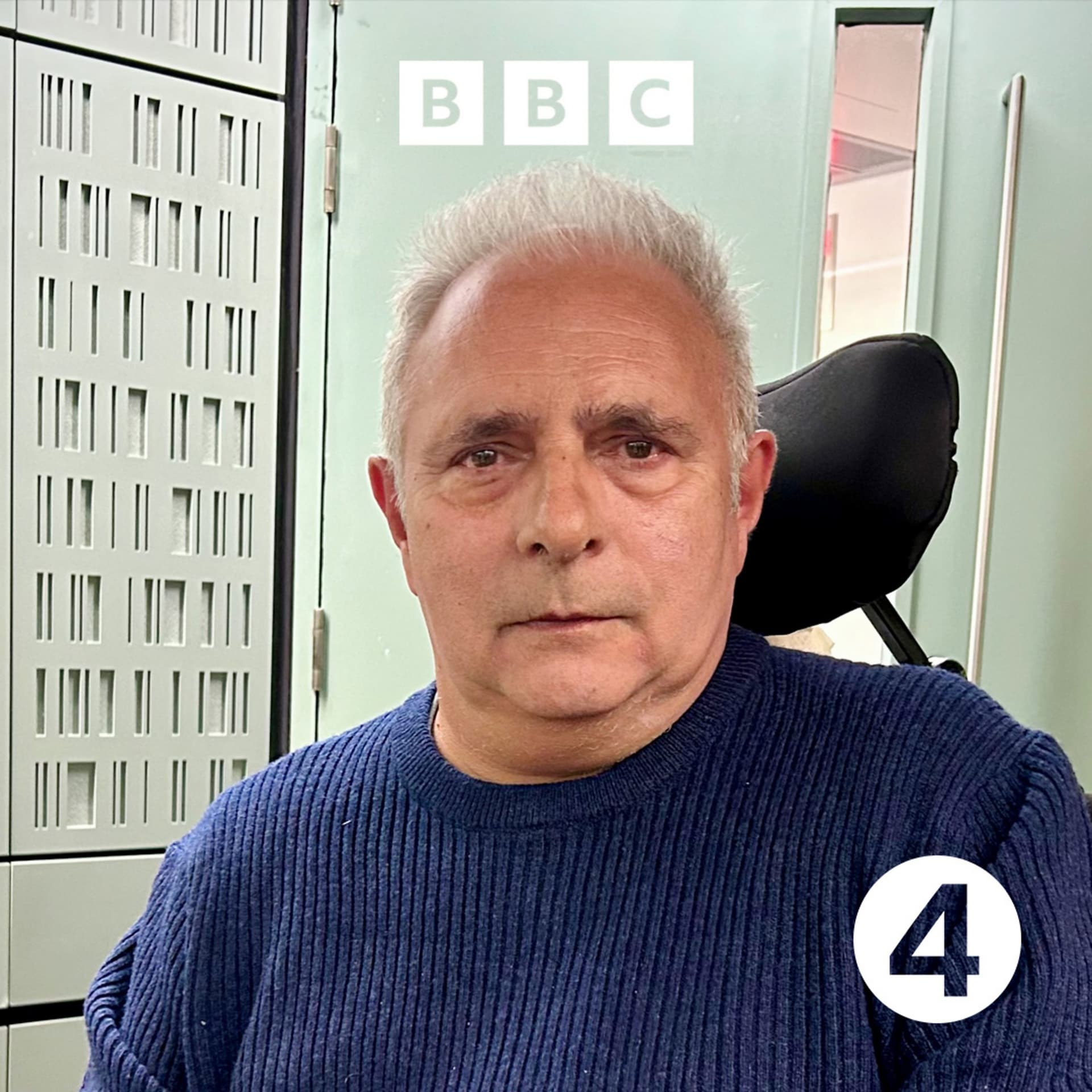
Hanif Kureishi
Episode Overview In this episode, John Wilson engages in a profound conversation with Hanif Kureishi, a celebrated novelist, playwright, and screenwriter known for works like *My Beautiful Laundrette* and *The Buddha of Suburbia*. Kureishi discusses his creative journey, the impact of his father's influence, his experiences after a life-altering accident, and the role of writing in coping with his new reality.
---
Key Themes and Discussions
- Career Highlights and Influences
- Early Work: Kureishi's first screenplay, *My Beautiful Laundrette*, earned Oscar and BAFTA nominations, marking his entry into significant cultural discourse.
- Literary Contributions: His debut novel, *The Buddha of Suburbia*, explores racial and social issues in 1970s Britain and was adapted into a BBC series.
- Influence of Family: Kureishi credits his father as a major influence, instilling a love for sports, politics, and storytelling. His father's own literary aspirations contributed to Kureishi's path as a writer.
- Life-Altering Accident
- Accident Impact: Kureishi recounts the traumatic fall he had on Boxing Day 2022, which left him paralyzed and required a year-long hospital stay. He discusses the psychological and emotional challenges he faced during recovery.
- Writing as Therapy: Despite his physical limitations, he found solace in writing, producing a memoir titled *Shattered* that reflects on his hospital experiences and the psychological toll of his condition.
- Collaboration with Family: Kureishi's son, Carlo, became his amanuensis, helping him articulate his thoughts and experiences, leading to a new dynamic in their relationship.
- Psychological Reflections
- Freudian Influence: Kureishi discusses the impact of Freudian analysis on his writing, emphasizing the importance of exploring the unconscious mind and how it shapes creativity.
- Therapeutic Conversations: He reflects on how therapy sessions have helped him understand his emotions and the realities of his condition, transitioning from a desire for salvation to acceptance of his new life.
- Exploration of Themes in Work
- Sexuality and Intimacy: Kureishi addresses his recurring exploration of sexuality in his works, focusing on the intimacy and vulnerability it reveals between individuals.
- Cultural Commentary: His experiences as a mixed-race individual in the UK inform his narrative voice and thematic choices, particularly in confronting societal racism and personal identity.
- Current and Future Creative Pursuits
- Creative Drive: Kureishi expresses a renewed commitment to writing, seeing it as essential for maintaining his identity and connection with the world.
- Shift in Writing Focus: While he acknowledges his past as a novelist, he emphasizes a preference for writing non-fiction and collaborative pieces based on his experiences post-accident.
---
Key Takeaways
- Resilience Through Writing: Kureishi’s writing serves as a lifeline, allowing him to maintain a sense of self and connection to his readers despite physical limitations.
- Interpersonal Dynamics: His relationship with his family has evolved, revealing new forms of intimacy and support in the face of adversity.
- Cultural Reflection: Kureishi's works and discussions provide critical insights into the complexities of identity, race, and the human experience.
Conclusion Hanif Kureishi's journey illustrates the transformative power of art and writing as therapeutic tools, especially in the wake of personal trauma. His reflections on family, identity, and creativity offer listeners a profound understanding of resilience and the human spirit.
---
Producer: Edwina Pitman For more episodes, subscribe to This Cultural Life on BBC Sounds or your preferred podcast platform.
Written by AI. May contain mistakes. Listen to the episode to check what was said.
Transcript
Automatic transcript. May contain errors.0:00BBC Sounds. Music, radio, podcasts.
0:12Welcome to This Cultural Life, the series in which leading creative figures reveal the most important influences and experiences that have inspired their own work. I'm John Wilson, and my guest in this episode is the novelist, playwright and screenwriter Hanif Qureshi. The first film he wrote, My Beautiful Laundrette, in 1985 brought him Oscar and BAFTA nominations. Five years later, his debut novel, The Buddha of Suburbia, set amidst the social divisions of 70s Britain, became a bestseller and was adapted as a BBC television series. After 11 screenplays, including My Son the Fanatic, Venus and the Mother, and nine novels, including Intimacy and The Black Album, his latest book is a memoir called Shattered.
0:56It records the year he spent in hospital after a fall on Boxing Day 2022, which has left him paralysed.
1:08Hanif Qureshi, welcome to This Cultural Life. Thank you. It's a great, great pleasure to be here. Well, it's great to have you here. You join me today in Broadcasting House in your wheelchair, 22 months after your cataclysmic accident. After a year in hospital, you are now back home, I know. How are you doing? I'm doing all right, actually, in the circumstances. It got pretty grim and nasty in those hospitals, particularly when I came back to London in the middle and I had to go in through A &E. And then I got put on a dementia ward and then I couldn't eat and it got very dark and depressing. Then finally I went to a rehab, Stanmore, in North London, where they treated me really well.
1:58They've got great facilities there. And I left just before Christmas. and since then I've been writing every day with my amanuensis, my son Carlo, he writes with me, so I've written one book, Shattered, and I've written half of another book, which is going to be called Still Shattered. As you say, Shattered documents the impact of the accident itself, the treatment, the rehabilitation in hospital, but also the psychological effects of everything on you. How important was it to write that book, to make sense of your condition? As soon as I was in the hospital, even though I was in a terrible state and I was dragged up to the nostrils, I wanted to write.
2:44And my partner, Isabella, sat at the end of the bed and wrote down my words on her phone. And I was doing that every day at the start, writing for a platform called Substack, which is very good for writers. and I was really writing for my life you know writing to remind myself that I was still a writer a human being that even though I couldn't and still can't use my hands or my legs I can't walk I'm paraplegic that I was still capable of human communication and of being a writer and then it blew up people started responding journalists started ringing me up there were stories in American papers, in the Indian papers.
3:31So even though I was in a terrible state, I was reconnecting with my readership and getting new readers around the world. It was extraordinary. So I was lying in this hospital bed completely alone, you know, for hours and hours, you know, crying my eyes out. And there were people all around the world who were reading my dispatches. So it was a very odd situation to be in. That's really powerful what you say that you were writing for your life. Writing has always been your life, but in a way this has proved that your words are more powerful than ever. Well, what I was doing, I was writing not in retrospect, but I was writing from within the trench.
4:11In the moment. I was writing as the events occurred to me. As I was being dragged around the hospital, as I was having tests and I couldn't eat, or this or that was happening to me, and I I was putting a room next to another man who was literally dying. I wrote about it that night. Obviously not something I've ever done before. Writing fiction implies a distance from the material. So this was a completely new way of writing. It was a kind of journalism, a kind of diary. And you say you've been writing with your son Carlo. He became your Emanuensis. So you're dictating your diaries, your experiences to him.
4:49How did that work? I mean, it must have created a different relationship with Carlo. Well, when the kids grow up, I guess you don't see them so much and they have their own lives and so on. But when I came back to London, I started to work with Carlo every morning. He was there this morning. He comes in at 10 o 'clock. Basically, I shout at him and he writes it down and then he says, I'm not writing that down, I don't like that. And so we have many arguments and disputes and differences. but he drags me into writing things that I wouldn't have written otherwise. He really strong arms me into writing in a particular way and I always resist and think I'm not doing that and then usually I go along with it.
5:33When you collaborate with someone, you can do something you can't do by yourself. And are you suggesting that he's encouraging you to be more candid and more forthright then? He's very bossy, yeah, and he wants me to be much more direct. because I go on this and maybe on the other hand and around and around and so on. But he encourages me to be very direct, very straightforward. So it's a new kind of writing for me. And also I can't muck about. We're going to write it and we're going to write it now. And that's one shot. When I was in the hospital, I would write the blogs in my head paragraph by paragraph I could see it visually then I would try and remember it and then when my girlfriend Isabella turned up I would have to remember it and say it to her and she would then write it down but I've never done this before, I just had to figure it out What has changed physically since treatment, since rehab?
6:34Have you gained much more mobility? I'm stronger, I'm waggling my arms around a bit I can move my legs a bit but I can't um I can't use my hands that's that's the the worst thing of all I don't mind so much not being able to walk but I can't pick up anything I can't use a computer I can't use a pen I can't pick up a glass of water or make a cup of tea so I'm entirely dependent on other people and it's very hard it's very painful because my girlfriend has to do everything and I sit there in my chair watching her and it's terrible to feel so dependent on someone else and to see them getting tired looking after you when you have an accident like mine it's a bomb in the family it blows everyone up my kids my ex exes and Isabella everybody is profoundly affected by by this but of course then you realize I'm not the first person this has happened to I mean we're all going that way we're all gonna rely on the kindness of strangers at the end of our lives in the care home or at home or whatever so initially I thought I was exceptional I'd been picked out you know why they chosen me for this terrible fate then I began to see no family there isn't a family in the land that misses out on on such a tragedy and I think you explain that in the book as well and it's a reminder reading the book of the fragility of human existence and life changes very very quickly it's incredible that because when i was in stanmore i was on a ward in which um everyone had had an accident there was a bloke there who fell out of bed one night he was drunk and he broke his neck he never walked again there was a kid in there who was 17 or 18 years old who'd fallen off a trampoline and broken his neck there was a guy i was very friendly with who was in his garden he tripped over the rake and broke his neck and never walked again so as you say you become incredibly aware that not only are we vulnerable but that these things are arbitrary and random and there's nothing you can do about it and maybe that's why the book appeals to people because they think well they sometimes look at me in the wheelchair and you know they're thinking there but for the grace of god on this cultural life hanif koreshi i asked my guests about their formative creative influences and experiences and your first choice is your father who you said is the source of my enthusiasm for sport politics literature and storytelling he was born in india when did he come to the uk my dad came on a boat from bombay to southampton in 1947 my dad was studying here but eventually he ran out of money so he went to work as a civil servant in the Pakistan embassy, where he stayed for most of his life.
9:45He was a Pakistani when he was at work, because he worked in the embassy. But really, he was an Indian man. And when did he meet your mother, Audrey? He met my mother, I think, after two or three years. And she comes from a low-middle-class family in the suburbs. White woman? A white, yeah, very white, actually. It was quite unusual in those days for an Indian man to be married to a white woman. But my grandparents very welcomed him and they loved my dad. And my dad really loved the suburbs. And you came along in 1954 and grew up in Bromley, technically I think in Kent, so on the outskirts of South London.
10:28What are your earliest memories of your father at home? my dad was a big my whole indian stroke pakistani family they were a very big cricket family and my dad wanted me to be a cricketer they'd all played cricket in india were you good no i was frightened of the ball it's which is not an advantage in a cricketer and in the end i hated it but my dad was a kind of sports dad and he trained me and he trained me and he trained me and he thought it would be great to have a brown kid playing for England. But I didn't want to play cricket. And also by then I'd become a hippie. So it was very difficult to be a hippie and a cricketer at the same time.
11:12It was quite an unusual combination. So your father was working as a bureaucrat at the Pakistan embassy. He was also writing as well. He had ambitions to be a novelist, didn't he? There were many writers in my family, mostly journalists. but my dad wanted to be a novelist and he wrote these books which were really more like memoirs than novels and when I got to be around 14 I thought I'll give this a go he would talk about writing all the time had you read his novels no I didn't read his books then have you since I've read them since and I wrote a book my ear at his heart about reading his books which I found very a very interesting experience but I decided when I was 14 or 15 I thought I would be a writer because we shared a huge interest in literature.
12:01My dad had a very good library in his house. What was he encouraging you to read? People like Hemingway and Fitzgerald and Dorothy Parker and all the others. And he loved American writing, and we would talk about that. He also loved Russian writing, Dostoevsky, Chekhov, Tolstoy, and so on. He had a really great library. And he would just shoot the breeze with me, talk about, oh, there's this great short story by Chekhov, and he does this, that, and the other. So you talk in a very technical way about writing what the writer was actually trying to achieve. I was terrified of Hanif going into an ordinary kind of boring job, you see.
12:42I never wanted him to do that. Sometime in the night, you see, I used to, honestly, I used to feel terrified, and I used to get up, because, you know, I could imagine sitting there in a desk growing grey, you know. I can't see somebody who's got talent spending the rest of his life behind a desk. It's not on. I have told him once or twice that, you know, that he should never forget that he's a writer first. The more he writes, the better it is for him. Did you start to write around that time? All the kids in my neighbourhood, they wanted to be pop stars at that time, and later Punk and the Bromley contingent came out of the suburbs as well.
13:30Susie and the Banshees. Susie. Billy Idol, people like that. Yeah, yeah, yeah. Billy Idol was the first person to give me LSD, actually. Really? Yeah, nice. Were you at school with him? He went to Bromley Grammar, I went to Bromley Tech. Right. But we were mates. and he kind of turns up as a character in my novel The Buddhist Suburbia as Charlie Hero. Oh, that is Charlie Hero, is it? Based on Billy Idol? Yeah, partly. Partly on another boy. What was school like in the late 1960s, early 1970s in South London for a mixed-race teenager in particular? Well, it was really nasty, it was really boring, it was really pointless and it was incredibly racist.
14:13but there was another thing that was happening at the same time which was the so-called counterculture and we were getting the counterculture in Bromley we had access to Rolling Stone magazines and we would wait for Radio 1 to play the next Beatles single my life grew in parallel with that of The Beatles which was really the idea that these four little oiks from Liverpool could become musical geniuses that they hadn't done particularly well at school, but they changed the face of popular music forever. And that was a huge example to us kids in the suburbs. I could do that. We could be like that.
14:54Because of the class system in Britain, otherwise it was so intimidating, you'd never get anywhere because everyone was posh. But suddenly these kids, they were everywhere and they were everything, and it really changed our sense of ourselves, I think. And then there was American post-war literature, which I was reading a lot. Philip Roth, Catherine the Rye, Norman Mailer, Joan Didion. It was a huge deluge of fantastic, when James Baldwin, of course, writing coming out of the US at that time. So I lived in these parallel worlds in this really boring classroom, listening to these really boring teachers who had no interest in entertaining you, while at the same time you could read under the desk The Armies of the Night by Norman Mailer.
15:38So school was no use to me, but I educated myself nonetheless. And I asked you about literary ambitions, and then we got slightly distracted by Billy Idol and music, but is that when you started thinking about doing your own writing at school and then having this insight to the possibilities of literature? I wanted to be a writer, and I wanted to write about what I saw happening around me. hippies, drugs, race, racism, being chased around the streets by skinheads and so on. You have to remember the 1970s was a very, very heavy period for Asian people. It was very violent and disgracefully racist, overtly racist in a way that the world isn't now.
16:28It was a real turning point. And I wanted to write about all that stuff. And I can see now that in retrospect, I was getting ready to write The Buddha of Suburbia. Which was your debut novel in 1990, and it's about a young mixed-race man called Kareem, growing up in South London, who wants to forge a career in theatre and live this exciting life in the city. And the father in that book is this... seen as a sort of exotic, mystical figure by Kareem's new friends. How far was he based on your own father? My dad, he loved the counterculture, and he was very interested in Buddhism and all the Eastern mystical stuff.
17:10And he used to talk to my school friends about this stuff, and they would come and see him and sit with my dad for hours in the front room talking about meditation and mindfulness and so on and so on. And he would go around people's houses talking about this stuff. So much later, at the end of the 80s, I conceived the idea of writing a novel based around this father and son, and an evening when they go to Charlie Hero's house to be entertained by his mother. And they both have that night, the father and the son, a sexual experience that changes them. And then the book kicks off from that moment.
17:47But the struggle for me until then had been how to technically kind of work out how you put all this stuff in a novel because I'd never seen a novel like it. You know, Iris Murdoch was writing novels but she didn't have people dropping acid, wearing flares, being chased around the street by skinheads, going to orges and all of that stuff. So it took me a long time to work out the form, really, of that book. My dad was standing on his head now, balanced perfectly. His stomach sagged down. The considerable muscles in his arms swelled up and he breathed energetically. Like many Indians, my dad was small, but he was also elegant and handsome, with delicate hands and manners.
18:31He was broad and strong too. When young, he'd been a boxer and fanatical chest expander. He was as proud of his chest as our next-door neighbours were of their kitchen range. At the sun's first smile, Dad would pull off his shirt and stride out into the garden with a deck chair and a copy of the New Statesman. Did your father read it when it was published? What did he make of it? I don't know if he ever actually read it, but I remember him telling people that he was a Buddhist suburbia and he was rather proud of the whole thing. But you never discussed the book with him? No, I wouldn't have talked to him about my writing.
19:08It's a really private thing. I don't talk to anyone about my writing. My kids haven't read my books. It's a separate and a private thing, I think. Well, it's a very public thing as well, isn't it? Because your words are on bookshelves in every town in the country, but your own children haven't read your books. Have you told them not to read it, or is it just that that's their own choice? I think it's really important that there's a distance and that they maintain a distance from you. There are lots of things they don't need to know about you and lots of things you don't need to know about them and you respect their privacy.
19:42And that distance between you enables you to have a relationship. You could argue that the distance is there in the word fiction, but that's very telling, isn't it? Because you've always said so much of your work is based on your own life. Does that suggest that your fiction is too close to the truth for your children to read it very often? Well, yes and no. Carlo and Sachin are Haneef's twin sons. They were four years old when their dad left their mother and wrote about the break-up in his novel Intimacy. Have you read it? No, I certainly wouldn't read it while you're alive, just because of all the commotion it caused, or because it's, you know, directly about Mum.
20:23So it's quite a raw subject. And she obviously wasn't happy with it as well. I wouldn't say that it was a book about any specific person, but about a situation. You could say that about any of your books. Yeah, obviously it's not going to have her name. People knew that it was about Mum. Yeah. But did you not think about that when you wrote it at all, that we would read it one day? You spoke to Mum about that, didn't you? Yeah. What did she say? I can't remember. She said, don't let Carlos Hatch and read it, didn't she? I've never written anything that I would be ashamed of, that I couldn't justify.
20:54She's been ashamed of it, though. Well, I'm sorry about that.
21:07The Buddha of Suburbia was your debut novel, but, of course, you had already written the screenplays for My Beautiful Laundrette, for which you were Oscar-nominated, and then there was Sammy and Rosie Get Laid. And before that, you'd worked as a writer-in-residence at the Royal Court Theatre. You were still only, what, 17? By then I was probably about 19 or 20. Right. And I was very impressed by the Royal Court because there were lots of people there who were artists for a living. And I'd never met anyone whose job it was to be a writer or whose job it was to be an actor or a director. And that really blew my mind.
21:41I thought, you can spend all day for the rest of your life talking about plays, writing, acting, taking theatre really seriously. Who was there at the time? Who made a particular impression on you? Lindsay Anderson, Bill Gaskell, Max Stafford-Clark, David Hare, Christopher Hampton, Carol Churchill, on and on and on, writers coming in, serious writers, David Story. And of course, Samuel Beckett was working there and he was rehearsing a play with Billy Whitelaw called Footfalls. And I would sit at the back of the theatre and watch him on stage. It was incredible watching this great writer working.
22:20It was a great privilege. That's an amazing insight to have had at such a young age. Yeah. Did you talk to Beckett? I used to sit next to him in the pub. There was a pub next door to the Royal Court that everybody went into at the end of the day, and I used to sit there with him, yeah. And he was a very, very friendly person, not intimidating at all, and he liked to be amused. And also he liked women a lot, I noticed. In the Buddha of Suburbia, the theatrical world offers an escape route from suburbia, and it's an introduction to sex and politics and freedom to a different way of life. Is that what also you took away from the Royal Court?
22:58Or what did you learn at the Royal Court? Romney had been really dreary and boring and it had been hard to live through because of the racism and the danger, really, that you were in all the time. So coming to London, I suddenly thought, this is it, this is the life, this is where I want to be. It's sexy and funny and it's full of artists than always having parties. And I thought, I want to do this all day, every day, for the rest of my life. And I did, actually.
23:32Your next choice for this cultural life, Hanif, is Sigmund Freud. So why have you chosen Freud? When I was at King's reading philosophy, a subject that I was very interested in and I really enjoyed, there was a bit missing really which was to do with sexuality and the psyche and I got very interested in Freud because I was interested in the unconscious because I was aware that when I was writing if I was lucky stuff would start happening in my head that as it were I didn't know was there and that when you're an artist you can imagine that you're some sort of conduit for ideas and images and dialogue, thoughts and so on that come from elsewhere.
24:19And Freud made you aware that what we did and what we knew was a tiny part of what the human being was. He was also, of course, partly responsible for all the work that began to develop in the post-war period in terms of sexuality. Sexuality is so central to Freud, but sex has been such a big part of your writing career as well, hasn't it? right from my beautiful Laundrette, your first screenplay, right through Sammy and Rosie Get Laid, and in the novel Intimacy in particular. Writing about sex is notoriously difficult, but you've always risen to the challenge, so to speak, haven't you? Writing about sex is difficult, I say.
25:01I always say that writing about anything is difficult, to be honest. But I think sex has to be written about. it's a central motive for people in their lives and none of us would be here without it you've got to find a way of getting hold of it as an artist as a writer and there was a huge flood of writing in the 60s about sexuality that was really important what you can't really do is write about even though i wrote pornography for a short time what you can't really do is write about acts, particular acts, what you want to do is write about what it means to somebody. I mean, what's interesting about sex is the intimacy it creates between two people, that they can do and say stuff between them they wouldn't say, as it were, in normal civil life, I guess.
25:52It creates an incredibly powerful intimacy, and it's that that's interested me about that, where you are at your most vulnerable or you're most needy, you know, lying naked next to somebody, whispering in their ear, talking to them, you know, that if you're lucky, there is a rare honesty there. But in writing about sex in that way, at the time, did you feel that you were pushing any boundaries, that you were tackling something that was slightly taboo in literature or difficult to do? I think with My Beautiful Laundrette, I was really aware that there hadn't been a big, major movie about a gay couple.
26:34I mean, there'd been movies with Dirk Bogart in them, and so on, miserable mostly. But this was a joyful, loving, gay relationship, and a comic film about a skinhead in a Pakistani having sex in a laundrette. That seemed like a great idea to me. I've had a vision of how our place can be. Why don't people like laundrettes? Because they're like toilets. This could be a Ritz among laundrettes. A laundrette as big as the Ritz. Oh, yes. And it was a great celebration of what was going on, really, in the 80s, as the gay movement kind of gathered pace. Later on, there'd be Section 28, Thatcher's Law, Intervention and so on.
27:24But at that time, just before AIDS, there was huge joy about the way London was developing and England was freeing itself really from Victorian ideas about homosexuality. Your writing has often explored the subconscious or darker aspects of the human condition, whether that's depression or drugs or infidelity. how has analysis and Freudian analysis in particular impacted on you as a writer? Has it given you a licence to explore aspects of your own life in a way that you might not otherwise have done? I went into analysis, I rang up this guy who'd been recommended to me and he said, come round on Tuesday.
28:10So I went round on Tuesday and I just lay down on the couch and i started talking as i talked i began to hear that i could say things to him that i never said to anyone else particularly about my family about my mother about growing up about my dad the suburbs sexuality the whole stuff and as the months and years passed i felt more and more liberated but the other thing that i felt was that i got really good ideas when i was lying there and sometimes quite long silences. I think silence is really important in analysis. Silence is a tool, and in that silence you say things, you have ideas, you listen to your unconscious, you listen to your mind in a way you don't normally when you're out and about in the world.
29:00You attend to yourself, and then you begin to see your life from a different point of view because the analysts will point out certain connections and this and that. you'll think, my God, I never thought about that or I would never have thought about that without you. So the analyst guides you through the maze of yourself into your unconscious and it really suited me. Have the sessions become more important to you since your accident? I talk to my analyst now on the phone once a week and I love him and I like talking to him still but I know now he can't save me. I mean, I used to believe that he could save me, that there were terrible things that may or may not be happening in my life, but that I could get over to do with relationships or depression or things that I was doing wrong that would have harmed me.
Read the full transcript
29:56And so I had a lot of hope then. Now I talk to him, I know that he can't save me from this and that all he can do is help me to try and accept my condition, a condition that I have to accept and a condition that I don't want to accept because I don't want to be this person I hate being this person I've become a person that I never expected I would become and I still want to go back I imagine that I'm going to go back to who I was before a bloke walking around the street making a cup of tea I want to go back to being that person I don't want to be a person who doesn't have any hands. Can you imagine what that means?
30:43So his work is to try and help me to accept my condition insofar as ever possible. And not only that, do stuff. Do good stuff every day, like doing this, talking to you, writing books, making movies, and being in love with other people. Has the physical therapy become more important than the psychotherapy then? I physio every day. which I pay for myself, which is very expensive, but it's very important to me, because otherwise I would never use my arms or legs. And they stretch me out, I stand up, they put me in machines, they get me physically to do stuff, because otherwise I never use my body.
31:22I haven't moved my arms at all since I've been sitting here with you. So it's very important for me not to forget that I have a body. I try and forget that I've got a body. I want to be just, I'm like a Bacchettian talking head, you know. I'm a talking vegetable. But I need my body, and so having physiotherapy really helps me, yeah. The way you're talking to me about it now, you seem quite stoic. Not accepting, but stoic about your condition. Are you angry about it? Yeah, when you said that, I thought, I'm not fucking stoic at all. I'm really annoyed about it. I'm annoyed with God. I'm annoyed with fate just as anyone in the start would be annoyed about that listen you've got to die and you're going to have to accept that one day and you're going to have to face that I'm angry because I'm frustrated because I can't do the things that I want to do I can't even turn on the telly I can't find the channel I can't do anything I can't lift up a pen so it's very very frustrating and it makes you angry and pissed off with the world with yourself with other people but does your analyst help you alleviate some of that anger then well it's really about acknowledging your dependence you've got to give up and you've got to allow other people to love you people really want to do things for you when i was in hospital tons of people turned up and they would bring me meals and they would clean my teeth, they would brush my hair, they would massage me.
33:02They became intimate with me and my body and who I am in a way that wouldn't have happened in, as it were, normal life. You talk about the intimacy there and people offering you help. That comes back to what we're talking about, about sexuality and your exploration of sex and that sort of intimate connection with people, doesn't it? what's left after an accident like mine that destroys your physical body is still love and that's a is also a form of sensuality but it's a new kind of love it's a love of dependence and a love and appreciation of what other people want do for you and how hurt they are by what's happened to you and an intimacy with my children that I guess I wouldn't have had otherwise that you know they're in their late 20s early 30s they're grown up they have their girlfriends and they have their lives but now they're in my house every day which they probably wouldn't have been without this so it's a it's a new form of intimacy I guess, and the revelation really of other people's kindness and how much they want to do for you and how much they love you, probably in a way that I wouldn't normally have seen had I been, you know walking around Shepherd's Bush in the way I was before my accident
34:37Another choice of influence that you've sent to us is Dostoevsky's Notes from the Underground a formative influence on your work when did you first read it? I read Notes from the Underground when I was a kid, and I always read it on and off since then. And it's a horrible, nasty tale about a horrible man who's incredibly masochistic, and he's really turned on by how much he hates himself. And I thought that was quite a revelation in literature. But the reason I brought it up to talk with you about was really to do with the style. it's written in a very direct full-on style he says i'm an unhappy man i'm a nasty man i'm etc etc and i thought i love the directness of this so when i wrote my blogs from hospital at the beginning you know it was like i'm in hospital i'm an unhappy man two nurses are turning me over and they're washing me and i feel like a piece of meat in their arms and so it's the direct directness of the address that really attracted me about that particular bit of Dostoevsky's writing and I use that now today very directly to talk about my condition and that it's unsparing he doesn't spare himself everything nasty and pleasant rude and true about himself he puts into the telling of that tale, and I wanted my writing about my accident and condition to be as truthful as I could make it.
36:19In Shattered, there are several references to Kafka as well, to metamorphosis, to the idea of Gregor Samsa waking up suddenly transformed. So you saw a parallel there, did you, with your condition? I love the metamorphosis of Kafka. It's one of the greatest works of literature that there is. What's odd about it, though, when he wakes up, as you say, and he's transformed into a giant beetle, and he sort of lies in bed. I was talking to my analyst about this the other day. What's interesting about it is that people are really horrible to him. You know, he's in bed, he's turned into a beetle, and they hate him for it.
37:01They resent it, don't they? They really resent it. I mean, he's a breadwinner in that family. And obviously as a beetle he doesn't get much work after that. But it's interesting, the hatred for him, and in the end they throw apples at him and he finally declines and dies. But I found the opposite. I've turned into a beetle. I'm an uncomfortable object in my family and for my friends and others around me, but actually I've found that they are, on the whole, incredibly kind and will sacrifice themselves to you. The book ends with the line, I will not go under, I will make something of this. I mean, your body has been broken, Hanif, but your mind seems as clear as ever.
37:46Do you feel just as driven creatively, or more so even? Yeah, I'm much more so now. I'm fighting to remain alive. And when I say alive, I mean to be a writer. I don't want to be a burden. I don't want to be a useless person. It's absolutely, completely necessary for me to do stuff, yeah. It may seem like a strange thing to say, but in a way it's lucky you were and are a writer rather than somebody whose job needs physical activity. I mean, your job was always presumed primarily about sitting at a desk and typing. I mean, one of the things I realised when I was in the hospital at the end in Stanmore, that all those people, I mean, they'd lost their jobs because if you're a lorry driver, you break your neck, that's it, mate.
38:38Or if you're a ski instructor or fireman or whatever your job might be, You just can't continue. My job is perfectly compatible with sitting in a chair all day, stirring out of the window and writing stuff down from time to time. So, yeah, it's an honour and privilege that I've got this job. It's a good job being a writer. Everyone wants to be a writer because they can see that, you know, it involves a lot of skiving and they pay you loads. The accident has changed the way you write. Do you think you had to write Shattered, the memoir, to clear the way for more fiction in the future. Do you think everything you write from now on will be kind of almost filtered through the prism of the accident and your condition?
39:21I don't want to write fiction anymore. I'm writing the blogs, which I write every day and publish every Saturday, and they are bits of memory or they are reportings on what's happening with my physical self. I don't want to make anything up. What's happened to me is so, let's say, profoundly damaging. I can't make up stuff anymore. I'm going to do a movie based on Shattered, and I may have to make up bits and pieces of that, I guess. But I don't really want to make stuff up. I don't need to make stuff up. I asked you that question bearing in mind something that Salman Rushdie on this programme had said, that he wrote his memoir Knife in order to clear the way, to be able to return to the calling, which is fiction.
40:07You've just surprised me that you really don't think you will write any more fiction. Salman's a novelist. He loves writing novels and he's written, I don't know, about 20. I don't see myself as a novelist in that way. If something occurs to me, then I would write it, but I don't see writing novels as my calling. I can write movies, I can write essays, I can write short stories, all kinds of other stuff, depending on what I need to do at that moment. This new form of writing with somebody else, sitting in the room, the two of us batting the sentences around, is fantastic for me, and I do it with Carlo.
40:50If Carlo's not available, I do it with his brother, Sashin. If he's not available, I do it with another one of my sons. And all the blogs that I write with other people are different because they are obviously different people themselves. it's a fascinating experiment sitting in a room and writing with another person it's quite a new thing for me I love it and it's been received very well and what is driving you on then creatively? to keep myself alive to keep my mind working and to continue to communicate with other people I mean Elton John rang me up yesterday it's not often you get a chance to say that to be honest I don't know Elton John I've never met him.
41:34You just rang him up out of the blue? Yeah, I was in my room and I was doing my physiotherapy. The phone rang and a guy said, Hi, it's Elton John. That really knocked me out. He said, I've been reading your stuff, I love your writing. He said, I'm going to come round and see you and give you a cuddle. And that was it, that was so cool. And I hope I see you again and I'll tell you what it was like when I was cuddled by Elton John. I look forward to it. Hanif Qureshi, thank you so much for sharing your cultural life with us. pleasure, any time, thank you
42:11Well I do hope you enjoyed that extraordinary conversation with Hanif Qureshi and don't forget there are many more powerful encounters with leading artistic figures to be found in our archives including Tracey Emin, Goldie, Werner Herzog Marina Abramovich and Margaret Atwood to name just a few Please do subscribe to This Cultural Life on BBC Sounds or wherever you get your podcasts internationally. From me, John Wilson, and series producer Edwina Pittman, thank you very much indeed for listening to This Cultural Life.
42:47Hello, I'm Amol Rajan. And I'm Nick Robinson, and from BBC Radio 4, this is the Today Podcast. and nick this is the moment to ask you what you most enjoy about spending a couple of hours in my company each week well that would be enough in itself but the fun is to go in depth on a story with an expert guest and for you and i to try and really get what's going on i have cctv on my home i've had people rip my gates down is it worth it and you being an mp on no occasion did the scan that I'd had ever appear in the other hospital. So what do you enjoy most about doing? I love the fact that we've got a really strong sense of community.
43:26And yes, I love some of our star guests too. Frank Skinner! Whee! This is where we need tinned applause. I'm going to clap as well just to thicken it up. Listen and subscribe on BBC Sounds.
From the publisher
Novelist, playwright and screenwriter Hanif Kureishi's first screenplay, My Beautiful Launderette brought him Oscar and BAFTA nominations in 1985. Five years later his debut novel The Buddha Of Suburbia, set amidst the social divisions of mid 70’s Britain, became a bestseller and was adapted as a BBC television series. After eleven screenplays including My Son The Fanatic, Venus and The Mother, and nine novels, including Intimacy and the Black Album, his latest book is a memoir called Shattered. It records the year he spent in hospital after a fall on Boxing Day 2022 which has left him paralysed.
Hanif talks to John Wilson about the influence of his father, also a writer, who in part inspired his debut novel The Buddha Of Suburbia. He also talks about the influence of Freudian analysis on his writing and how he is coping with the effects of his life-changing accident.
Producer: Edwina Pitman