In short
Podcast Episode Notes: Ian McEwan on This Cultural Life
Podcast Information
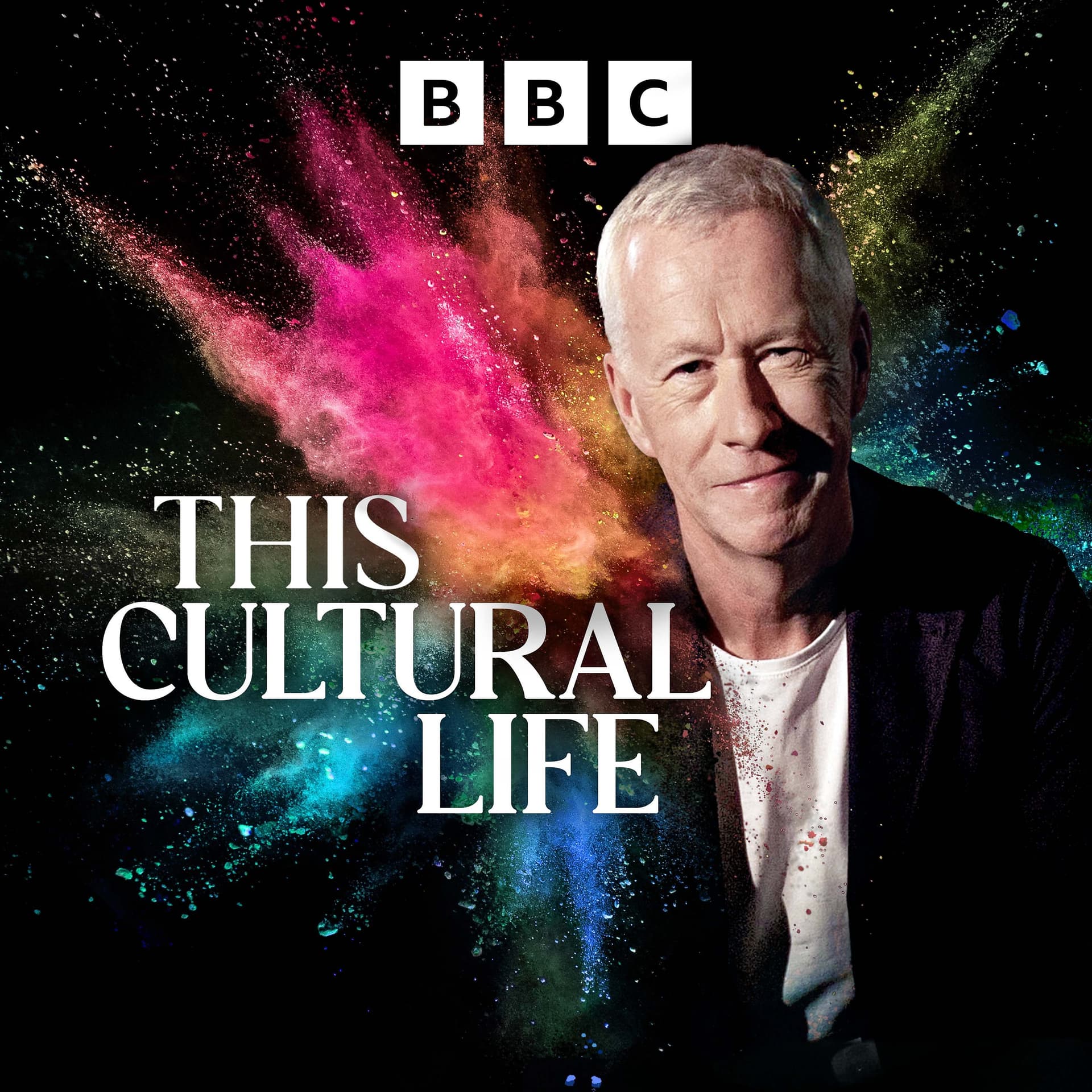
- Title: This Cultural Life
- Host: John Wilson
- Episode Title: Ian McEwan
- Episode Description: Ian McEwan discusses his career, influences, and the evolution of his writing style, reflecting on his experiences growing up and how they shaped his literary voice.
Key Themes and Discussions
Origins and Influences
- Early Life:
- McEwan shares memories of living in Libya during his father's military service amid the Suez Crisis.
- He attended a state-run boarding school in Suffolk, where he experienced a profound awakening at age 16.
- Literary Awakening:
- Introduced to poetry by his English teacher, notably the works of Wordsworth, T.S. Eliot, and other romantic poets.
- This exposure sparked a deep emotional connection to literature, enhancing his appreciation for the landscape and beauty of his surroundings.
Formative Experiences
- Friendships:
- Meeting fellow writers Martin Amis and journalist Christopher Hitchens became pivotal in his life, leading to lifelong friendships.
- Reflects on their shared journey in literature and mutual influences.
- Historical Context:
- Witnessing the fall of the Berlin Wall in 1989 deeply impacted him and inspired his writing about significant global events.
- Time spent observing neurosurgery for his novel *Saturday* provided insights into the human condition.
Themes in Writing
- Psychological Drama:
- McEwan's work often delves into complex human relationships set against global issues like climate change and war.
- His latest novel *Lessons* is autobiographical and reflects on his youth and the notion of freedom.
- Literary Style:
- Early works characterized by dark themes and exploration of human nature earned him the nickname "Ian Macabre."
- Shift towards incorporating broader societal themes and historical contexts in his narratives.
Personal Insights
- Reflection on Freedom:
- Discusses the concept of freedom, which influenced his choices to pursue a writing career without a traditional job.
- Emphasizes the importance of literary friendships and literary culture in shaping his worldview.
- Impact of Success:
- Successful works like *Atonement* brought commercial success but did not alter his creative process significantly.
- Continues to view writing as a way of life rather than just a career.
Final Thoughts
- Legacy of Relationships:
- Reflects on the profound impact of friendships with Amis and Hitchens, especially in their shared literary discussions.
- Expresses a sense of loss following their deaths and the enduring value of their connections.
Key Takeaways
- Influence of Environment: Early life experiences in diverse global contexts informed McEwan's thematic focus on human psychology and relationships.
- Value of Literary Connections: Lifelong friendships with fellow writers were crucial to his development as a novelist.
- Evolving Literary Themes: McEwan's work evolved from dark, psychological narratives to include broader societal issues and personal reflections.
Conclusion Ian McEwan's exploration of his formative years, influential friendships, and the evolution of his writing provides listeners with a profound understanding of his literary journey. His reflections on freedom, creativity, and personal relationships underscore the interconnectedness of life experiences and artistic expression.
Written by AI. May contain mistakes. Listen to the episode to check what was said.
Transcript
Automatic transcript. May contain errors.0:00BBC Sounds. Music, radio, podcasts.
0:15Welcome to This Cultural Life, the series in which leading creative people choose the most important influences and experiences that inspired their own creativity. I'm John Wilson, and my guest in this episode is the critically acclaimed and best-selling author Ian McEwan. He made his name in the 1970s with short stories and slim novels that explored the darker aspects of human nature, earning him the nickname Ian McCabe. He won the Booker Prize in 1998 with his novel Amsterdam, and its follow-up Atonement was adapted as a film and nominated for several Academy Awards. McEwen primarily writes psychological dramas about relationships, but often within the context of big issues, including climate change, the Iraq War and AI.
0:59His most recent novel, Lessons, is his most directly autobiographical, drawing on aspects of his childhood and travels as a young man. Ian McEwan, welcome to This Cultural Life. Thank you. On this programme, I asked my guests about the influences and experiences that have had a big impact on their own creativity. And you said in the email that you sent to us that turning 16 and coming awake was a formative moment for you. Just take us to being 16. Where were you? I was at a state-run boarding school, a very tiny place, beautiful Palladian mansion and some modern low buildings around it. It was largely free.
1:42It was a grammar school education of a very, very high quality. My parents were 2 ,000 miles away in North Africa, where my father was posted. So for the first two or three or four years there, I was in a kind of daze, really, slowly coming awake. But round about that time, 16, I suddenly realised where I was physically. Astonishingly beautiful place. A glorious view across the balustrades and ha-haz towards a long straight road of the River Orwell stretching away and surrounded by pretty much untouched Suffolk countryside. So when you say about coming awake in you. Coming awake. Awareness of your environment.
2:20The first thing was that sense of landscape and beauty hit me, and it coincided with beginning to read poetry. I'm one of those writers with a gifted English master. So one of the first things we did was read Wordsworth. I suddenly started seeing landscape through the eyes of Wordsworth's revolutionary moment, his 16, as it were, slightly later, of describing emotional relationship to a landscape in simple language that had no reference to classical literature. Absent long, these forms of beauty have not been to me as a landscape to a blind man's eye. But oft, in lonely rooms and mid the din of towns and cities, I have owed to them in hours of weariness sensations sweet felt in the blood and felt along the heart and passing even into my purer mind with tranquil restoration.
3:24It spoke straight to the heart. Suddenly my selfhood rather erupted on me. I was temperamentally rather shy and it was the beginning of a love affair with literature. Wordsworth Coleridge, Shelley Keats, that first generation and second generation of romantic poets, was a big awareness. But then one day he said, I want you to read this poem and regard it as a jazz poem. April is the cruelest month, Breeding lilacs out of the dead land, Mixing memory and desire, Stirring dull roots with spring rain. And it was the wasteland. Winter kept us warm. It was a jazz poem. saying that made it available to us.
4:14Freeform jazz. We didn't have to understand everything in it. He said, forget the notes at the back, that's all nonsense. Just be open to the rhythmic and strangeness of this. And drank coffee and talked for an hour. Bin gar keine Russi. Stamm aus Liedawend. Echt Deutsch. This was the beginning for me of an emotional, visceral, sensual feeling about literature. We'll pursue that literary love affair a bit further, but just give us the backstory, family life being from an army family. I think you had grown up in Libya, Singapore, Germany. What did that time abroad do for your creative imagination at a young age?
4:56I mean, the order of it was Singapore when I was very tiny, but crucially, North Africa, Libya, Tripoli, from the ages of, say, six till 12. There were some certain crucial moments that I think had some influence. One was in 1956, the school bus that would take us out past the peanut farm where we had a house. It was army quarters, but a rather lovely little white bungalow surrounded by pomegranate trees and peanut plantation. the bus went straight past and delivered us two miles further up the road to the army camp where my father worked. It was right on the edge of the desert. And we were met by lots of soldiers with machine guns and there were APCs and sandbags and a general sense of crisis.
5:43What had happened was the Suez Crisis was starting. The authorities, somewhere up in the clouds, had decided that Libyan nationalism put service families at risk, so we were all herded into camps. And by a huge stroke of fortune, my mother was away in England on some family business at the time. My father was too busy, a distant figure with a revolver strapped to his waist, striding around ordering people about. And with a few mates, we were left to some very kindly officers' wives looking after about 50 children, but they could only manage to glance our ways. We were slightly older than the rest.
6:24a week, ten days of total freedom, of a kind, for me, just came out of children's adventure books. You know, a young, cool lieutenant took me for a ride on his Harley Davidson. We went up the ladder to hang out with the lads with their machine guns pointing across the desert. We hung about in the tank repair workshop. I mean, it was just... All of these memories have played out in your most recent novel. They absolutely are. It's seen through the eyes of your protagonist, Roland Baines. Yeah. I think for me the crucial theme there is freedom. Later on, I realised that this notion of freedom began to really haunt me.
7:05And one of the notions of freedom that, by the time I was at the end of my teens, really, really played a big part in my decisions about life, was I never wanted a job. I wanted to be free. and when I thought about literature that notion of freedom was very much caught up in it freedom to explore but also freedom to be oneself and although I did lots of terrible jobs I mean I was, I left school I did four months on Camden Council as a dustman I was prepared to do jobs as it were but not have a career, not go into an office but that taste of freedom haunted me that sense of endless possibility The episode, A Taste of Unreal Freedom, had lasted eight days.
7:51It sustained him at boarding school. It shaped his restlessness and unfocused ambitions in his twenties and strengthened his resistance to a regular job. It became a hindrance. Whatever he was doing, he was pursued by an idea of a greater freedom elsewhere, some emancipated life just beyond reach, one that would be denied him... But coming back to 16, I hadn't thought of writing. I was a reader. I got inculcated with the notion from Neil Clayton, who's a wonderful, charismatic teacher, that the study of literature and writing about it, literary criticism, was the highest possible art. It was like a calling.
8:32It was like being called into some monastic order, that it was really, for the culture, the most important thing you could be doing. and you're being led to Wordsworth and T.S. Eliot or whoever by this teacher who did you choose to read I mean at 16 I read a lot of Graham Greene there was another bit of crucial reading about that time I was reading the go-between I don't remember but at one point it's getting hotter and hotter and this little boy Leo is checking out the temperature waiting to see if it gets to 100 degrees Fahrenheit, he'd just been looking at a copy of Punch that arrived in the big house where he's staying.
9:12And on the front cover, Punch is mopping his head with a handkerchief. And I thought, oh, so I put the book down, I crossed the library where there were all the back numbers of Punch. And I pulled out 1900. And I turned to July. And I felt this thrill through my spine. Punch was on the cover, mopping his head. Wow. And that crossover between the fiction and the real, I think, had a lifelong effect on the kind of writing I did. It's fictional, but it's embedded in historical events. So from then on, the novel seemed to glow with a kind of super realism. He asked me to give you this, I said, pulling it out of my pocket.
9:54I'm afraid it's rather crumpled. She almost snatched it out of my hand. You mustn't tell anyone about this letter, she said. No one at all, not even Marcus. I was rather bored with all these injunctions to secrecy. Grown-ups didn't seem to realise that for me, as for most other schoolboys, it was easier to keep silent than to speak. I wonder if the go-between had a longer-lasting effect in the way that you described the country house, the heat, the child at the centre. There's atonement, isn't there? Exactly. I don't know how much longer it was, 20, 30 years later. I'm back in that moment, really.
10:29There's even, in the go-between, there are many letters backwards and forwards. I only had one in the tournament, which has crucial consequences. But the house is indeed that Palladian mansion. Well, no, I made it uglier than that. Still, it haunted me that moment. Partly because of her youth and the glory of the day, partly because of her blossoming need for a cigarette, Cecilia Tallis half ran with her flowers along the path that went by the river before curving away through the oak woods. Her quickest way into the drawing room was across the lawn and terrace and through the French windows. All of that encouragement came at Wolverston Hall and through the teachers.
11:06What about from home? Were there books at home? There were no books at home except for the library books. So there was an army library, and every Tuesday evening my parents and I, my siblings were much older than me, so I was a kind of only child, would go to the army library. Now my parents left school at 14. They came from pretty culturally deprived backgrounds. No one ever read to them. They had no children's books in their background. So they had none of the portable mental history of children's classics. They both came from working class families. Yeah, absolutely. My mother's first work was a chambermaid.
11:44My father was a butcher boy. Then he trampled the Clive looking for work and joined the army, lied about his aid and joined the army. That's where he stayed for all his life. but they valued education, the education they didn't have. So while it was not a house groaning with harpsichords and bookshelves and the rest, really was at least valued. What did they make of the novels when they first read them, or the early work in particular? Well, it was very tough, particularly for my dad, by then an officer, and he was torn. He had immense pride. He was proud that I stood on at school past 16, pride again that I was going to university.
12:23No one in his family had ever done such a thing that I should have a book published and it be reviewed in the press and favorably. Fine. The content, on the other hand, was short stories, the short stories, you know, bestial, over sexualized, dark, perverse and all the rest. But Pride won and he distributed copies of First Love, Love, Rights to all the officers in the officers mess. and I went out to visit him. I was 26 years old, I guess, at the time. I went for drinks in the officer's mess and all these officers introduced to the colonel and the CEO and they just looked at me through narrowed eyes and rather forced grins and I knew that they had not gotten past the first story.
13:10Ian McEwan won this year's Somerset Moom Award and is likely to win more prizes if his reviews were anything to go by. These are strange and odd stories, in a way. They are, though, all in this collection about children, adolescents, or what loosely might be called disturbed people. Yes. Well, there's a degree of usefulness, really, in having either children or adolescents or psychopaths or outsiders narrate your stories, because it does give you the possibility of describing the world in a fresh way, without the usual logic of social convention. Paul Johnson. Can I ask you this question? It's not meant to sound offensive, but do you actually aim to shock and disgust your readers?
13:52Because I, as a reader, was quite revolted by some of your tales and terribly upset at the misuse of what is obviously a brilliant talent. Do you aim to get that effect in your readers? Absolutely not. I regard the stories, ultimately, as compassionate ones. And I think that you should, to overcome your disgust, understand the degree of distance and compassion that's working between the author and the narrator. And I think that that distance is a vital one. You studied English at the University of Sussex and then at the University of East Anglia under Malcolm Brabery and Angus Wilson. Was the tone of the work, or the tone that you've become known for, particularly in the early work, the darkness of human nature, violence, macabre aspects, was that developed there at East Anglia?
14:42No, I mean, I don't really know where all that came from. Because, I mean, my time at Sussex, I got introduced to the work of Freud and read passionately, which I think was crucial to those early work, as well as Kafka. We were required to read what they were regarded as three foundational writers, Darwin, Marx and Freud. I sort of skipped out on the Marx, but Darwin had a big part of that as well. Later I fell away from Freud, but it had quite a strong influence on those early stories and the unwieldiness of the imagination. Well, the cement garden in particular, when we have these children who there is an incestuous relationship there, the mother dying and all of those things.
15:28I mean, it's interesting you say Freud and Kafka. And when you think of Kafka and that strangeness and change, you get that in some of your early short stories. I read Kafka and Freud in parallel. I was in my third year then and also just beginning to write. I'd had a fatal moment. I mean, Neil Clayton was a marvellous teacher. When he said, you know, you're an absolute natural for Cambridge and a scholarship and all you have to do is just go up for an interview. I'd never heard of interviews before. I turned up at King's College thinking they're just going to ask me, you know, show me my bedroom or something.
16:01I had no idea. Welcome. Yeah. It was rather a terrible moment because suddenly I sat myself, I'll sit into a room and there were three very serious men in grey flannel trousers sitting across from me. They started grilling me. I was not expecting this. About literature? About literature, yeah. I was really talking off the top of my head. I had no preparation at all. But, you know, I'd read, knew my way around 12 or 15 Shakespeare plays. I knew the canon pretty well. and we stumbled onto Macbeth and I knew the story but I absolutely hadn't read Macbeth. Shame really, it's one of the shortest plays.
16:40I could have read it on the train. Anyway, I bluffed my way through and then one said, let me ask you a question. Have you read Macbeth? And I said, no. And so they said, well, okay, anyway, you seem to have read lots of other things. So let's turn to Chaucer and I was so humiliated. I wouldn't speak a word. I was just so embarrassed. So it sounds like you could have made it to Cambridge. You just hit a stumbling block and then couldn't recover. But do you regret not going there, given that actually it possibly would have been a more formal traditional course than the one that you studied at Sussex?
17:13It might have been the end of me. I don't know. Just looking around, it looks so lovely. I think I might have just got institutionalized and still be there to this day. Emeritus. I don't know whether that parting point was my liberation into a completely different mental world. of an undergrad. I mean, I attended seminars called Quantum Mechanics for Liberal Arts Know Nothings. I've just loved it. I had a one-on-one for 12 weeks. Peter Calvacresi, who was at the Nuremberg Trials, barrister, became head of Penguin Books, international relations. I don't know if I would have got quite that openness and stimulation from, you know, just slogging from Anglo-Saxon through to Virginia Woolf or whatever they were doing.
17:57And did you know you wanted to be a novelist when you were at Sussex? When did the ambition really start? By the second year, I began to think of literature as a long conversation through the centuries, and I could join in. And earn money as well. I mean, was there the point that it would be a job? No, I just thought I could write. And then what happened is I'd been hitchhiking in Italy with my girlfriend and came back. I had money from the Department of Education to go and do an MA. it was August I didn't have a university to go to took away a pile of prospectuses and I saw a comparative literature course at UEA and it said that one twelfth of the course could be handing in some fiction of one's own and I thought oh so I picked up the phone and then asked to speak to Malcolm Bradbury within a minute now remember I was in a house where the only phone is in the hall in a rather crackly line and I said I'm phoning about the comparative literature course with the bit of creative writing involved and he said oh we've had no applications and so we've closed it down and I said well could I come and he said well come and see me so I borrowed my father's car and drove to Norwich very trusting of him didn't have a lot of driving experience it was a long way from Middle Wallop where he was posted spent 20 minutes with him and he said well did you bring any of your fiction and I said no He said, well, I need to see it.
19:28So I drove home and I wrote two stories in about 10 days and sent them. And he phoned me up and said, wonderful, come and do it. But he said, most of the time, it's going to be comparative literature, nearly all of it, in fact. But that important one twelfth of the course. I spent all of that year. I wrote 20, 25 stories that year. I did all the other stuff, too. Comparing Anna Karenina with Middlemarch is quite a hefty weight to carry around when what you really want to do is get on with some fiction. Malcolm was a media don. He was always away. We would have 10 minutes in the corridor or we once had a meeting in a pub, half a pint each.
20:05And he would always say, marvellous, loved it. When can I have the next one? That was it. Apart from the reading lists he gave me. And suddenly now my reading carried towards the States. And I read Updike for the first time and Bellow and Norman Mailer, many others. And what was the single most important thing that you learned from Malcolm Bradbury, do you think? The only thing I learned was that I should keep going. I got encouragement. I don't think neither he nor Angus Wilson, who I saw in the summer term, ever said anything like, well, I think it should have been in the first person and you should always be careful with your danglers or anything like that.
20:43Nor did I go through what most kids go to creative writing courses go through, which is it's your turn, you've got a story up, and 12 kids are sitting around the table and they've all read it. And one of them says, well, I really had a problem with the character of Frederick. I think that would have killed me. And you were the only student. I was the only student. There was no course. I'm always spoken of as someone who went to a UEA course. When it was Angus Wilson's turn again, he was very encouraging. He said, marvellous. My dear boy, these are lovely stories. You must keep going. That's what I got, encouragement.
21:22Your next choice for this programme is having supper with two writers with whom you became firm friends, the journalist Christopher Hitchens, who died in 2011, and the novelist Martin Amis, who died very recently. And you made this choice, Ian, before Martin died. Why did you choose the two of them for this programme? Well, if I could just stay on Martin for the moment, we met in 1974, instantly became friends. So this is almost 49 years. Kurt Vonnegut had this word that used to be very fashionable and we used to use it all the time, caress. That was your circle of friends, acquaintances who drift into your life and become siblings, brothers, sisters.
22:09And your life just seems sort of unnecessary without them in a way. but Martin really became such a close friend he really was like a brother and so the loss has been severe I think the manner of his death has been extraordinary he never complained he never wanted to talk about his illness, his symptoms it made him sort of impatient he was, interestingly, less keen to have deathbed visits from old friends He didn't want those farewell conversations. Did you talk to him in the last few months? No, his voice was so faint. It was an effort for him to speak. So we emailed a fair amount about what we were reading.
22:54He'd much rather address that than anything else. And as you say, you knew him for nearly 50 years. And take me back to that first meeting. And the fact that you've chosen him with Christopher Hitchens, were they very much a double act from the start? They were like a very upgrade, Morecambe and Wise. They had so many routines that had been rather unselfconsciously polished, many of them unbelievably obscene. And I think my meeting with them on the very first occasion, Martin wanted to show off his friend Christopher Hitchens to me very early in our friendship. And, you know, they pulled out the stops.
23:34I ached from laughing. I felt a bit of kicks in the ribs. But Martin on his own was immensely funny, a fantastic mimic. I felt liberated in his presence. And again, I come back to the idea of freedom. They seem to range with the kind of obscene freedoms that I had been pushing at in my stories. And I suddenly found these kindred spirits who were fearless about saying anything and everything. that meeting stands in for a whole range of literary friendships I met at that time Martin Christopher, James Fenton, Craig Raine, Seamus Heaney, Christopher Reid All men Incredibly blokey and that's why when the great pushback happened and it's happening now I always think it's right, you know, we really had our time in the sun Well, for several decades, Julian Barnes and Clive James and all of those people.
24:37Well, Julian, crucially, was a very important figure. But seen as a sort of dominant clique in British literature for so long. Did it feel like that? No, at the time, no, it didn't. That's how it was. But once the pushback began, I thought, you know, and especially now when people say, well, you weren't even on the long list for the fifth time running or whatever it is. I think we had such a long time in the sun, really. Move over. Come on. And just getting back to Martin Amis and Christopher Hitchens in particular, you say you found kindred spirits because their personalities reflected or possibly were sort of running in tandem or parallel to the sort of stories you were writing, but very different personalities to you.
25:17Oh, absolutely. I still maintained a little bit of that shyness of my childhood or reticence. That wore off. But then over the decades, Martin and I became almost like shadow figures in each other's lives. We got married at the same time. We had two sons at the same time. We got divorced at the same time. We got remarried at the same time. And our lives just ran together. And our work went off in all kinds of different directions. But that sense of someone out there, important colleague, it was a constant presence of it. But given that you and Amos and Hitchens were all still, when you first met, forging these friendships, you were still quite young and starting out.
25:59Were you reading each other's work and were you harsh critics of each other? I think there was a muted kind of competitiveness in the air. We certainly read each other. But there was a sort of convention of reticence about either giving your friends too much praise or upsetting them with any criticism. So there was a rivalry as well? There was definitely a rivalry, but there was too much fun to be had at the same time to let the rivalry ever get larger than just one small element. Did it make you raise your game as a writer, if there was this rivalry? Well, I went through my own crisis of work.
26:35You know, I got to the point, I published in the early 80s, The Comfort of Strangers, and I felt I'd just written myself into too cramped a world of perversity and darkness. And I went off to, you know, I wrote for television, and then I wrote an oratorio, and I took a conscious break in order to make myself more inclusive in my fiction and bring into it the history, the science, the politics that was on my mind, but never had found a gateway into my fiction. And so that appeared in a novel called The Child in Time. Martin was going his own separate route. Christopher was not famous, but it was not until he really got to the States.
27:19And it was only in the last 10, 12 years of his life that he became a sort of legendary figure. Do you miss him? Very much, yeah. Very much indeed. I remember when he lay dying and I said to Martin, this is going to be our first truly significant death. I mean, right to death. And Martin was the most affected. I think he really had lost a very, very significant figure in his life. Now that Martin himself has died. Yes, last night I was speaking to James Fenton. We had a talk about all this. And he said, well, I guess the only question remaining is, who's next? I said, don't let it be you, don't let it be me.
28:09I said, we've just all got to hang on. Did they change you as a person, do you think, having met them? Well, you know, many of our evenings were spent talking about books. I mean, we didn't talk about our own work so much. So the sense of the impact of these friendships were diffused, really, through the fact that we were reading the same things. We spent a lot of time, especially Martin and myself, talking about poetry. We would have whole evenings on Larkin, and reading him to each other. We constantly referred, oddly enough, to Obard, which we both regarded as the great poem about death from an atheist's point of view.
Read the full transcript
28:56I work all day and get half drunk at night. Waking at four to soundless dark I stare. In time the curtain edges will grow light. Till then I see what's really always there, unresting death, a whole day nearer now, making all thought impossible but how and where and when I shall myself die. arid interrogation. Yet the dread of dying and being dead flashes afresh to hold and horrify. Out of these conversations, which ran for years and years and years with Christopher II, a sense of how friendship and seriousness about literature was all rolled into one, that literature was this sort of meeting place, that their attention to detail was something that I celebrated with them so much.
29:54So out of that, I took a joyous sense of the life that still lay ahead of all of us.
30:09Your next choice, Ian McEwan, is the 10th of November 1989, Crossing into No Man's Land from Potsdamer Platz.
30:20And here we go. The digger has gone on to the top of the Berlin Wall and literally munched off the top of it. What were you doing in Berlin on that day? Well, I thought I'd write a novel about the end of the Cold War and I set it in the mid-50s at the height of a tunnel being dug and right at the end, in the final paragraph, the main character sends a letter to his lover from a long time ago saying we must meet by the Berlin Wall before it all comes down. And I finished that in June of 89. And no one was more astonished than me when in November it did come down. You know, I'm not used to being so right.
31:02This is a novel called The Innocent. And you've just astonished me, actually, because I know that novel was published in 1990. So I presumed that you'd gone to Berlin to research a novel about what was happening, not knowing the wall was going to come down, and how that might have been affected by the event that you witnessed. I did a lot of research in Berlin. And, of course, there was a lot of turmoil in Eastern Europe, but I didn't think the wall was going to come down. But still, I had sort of predicted it. So how did you end up in East Berlin on the 10th of November, given that the wall started to come down on the 9th?
31:34I'd come down on the 9th. I got on the first plane available. I had to go first time in my life business class. It cost me almost a year's salary. And my then wife was with me. and we went straight to Potsdamer Platz. Why have you come here this morning? We need a piece of the wall. Have you got one yet? Yeah, between my feet. Are you happy? Yes. She's very glad because she's from East German and to see this, it's a very great moment. I can't explain it. I can't explain it in German even. I cannot believe in it. This is history. I mean, this is the day where the wall is gone. He sees she's crying.
32:14I mean, this is it. It's often forgotten that there are two walls. They stand in parallel, and between them is a couple of hundred metres of death strip, a no-man's land, heavily mined and automatic machine guns and dogs and patrols. Which was right through the middle of Potsdamer Platz. Yeah, right through. We went to Potsdamer Platz, and the wall had been knocked down from the western side. The West Berlin authorities had made a corridor into the no-man's land, which had been made safe, and we all flooded through into it. And I'd spent so much time writing about the Cold War. I'd been through Checkpoint Charlie many times.
32:59I'd crossed often, see friends there. To be standing there was just like standing on Mars, more important to me than standing on Mars. To be standing would just seem to me unbelievable. I could pinch myself. I thought I was dreaming. All sorts of thoughts that had been gathering came together at that moment. And I suddenly felt this surge of optimism about the future. I could see it all. Russia, an open society, the dismantling of the nuclear weapons, an extraordinary peace dividend. It all went through my head. When all that's happened, I'd love to drive a car from Calais to the Bering Straits.
33:41without showing my passport. There were the extraordinary things of looking through the chain link fences and seeing thousands, thousands of rabbits. They had lived a very good life between... Understood. They weren't large enough to set off the mines. The Vopos, maybe they shot the occasional one for the kitchen pot, I don't know. But their time was over. A safety request came through a megaphone on the west side for people to spread out if they could. The good-natured crowd instantly obeyed. Roland was searching again. Could Florian and Ruth have made it here with the girls? He knew that getting out of Schweiz so soon would have been impossible, but he wanted them here.
34:23They deserved to be here for five minutes on end. So this was a moment in which you also realised, though, that there were huge geopolitical shifts going on. Did you know in that moment that your writing was going to have to change to reflect that? Yes, I thought it's bound to. We're going to be living in a different kind of world. Just as we stand on the precipice, possibly, of a very different kind of Europe, where there's a war, where the ground can be regained or not, will say a lot about our immediate future. This was that in reverse. This was a very, very positive feeling. For once, I really loved being in a crowd.
34:57And also just that sense of being at a turning point. I thought history books will end here. It'll go 1945 to 1989. And it had this other crucial bit for me, which is how these big events penetrate the private life, the personal life. And that has been an element in a lot of my writing all through the 90s and in this century, too.
35:22Your next choice for this programme is watching the neurosurgeon Neil Kitchen operate on a patient. Now, this was research for your book, 2005 book, Saturday. Some hours before dawn, Henry Perrone, a neurosurgeon, wakes to find himself already in motion, pushing back the covers from a sitting position and then rising to his feet. It's not clear to him when... I shadowed Neil Kitchen at the National Hospital in Queen's Square, London. I think it was about 18 months. Watched countless brain operations. I mean, I was fascinated by it. But the very first one lodged in my memory because I thought to actually see a living brain and contemplate that extraordinary fact that matter could give rise to consciousness.
36:14I'm a complete materialist in this. I don't have any other... I don't think there's any other way. The brain is responsible for the mind. It was, I guess, Potsdamer Platz on another level. I was fully gloved up and I was asked if I would like to touch. I can't remember if I asked or if I was invited, but I was very willing to just gently put my finger on the brain. It was much firmer to the touch than I thought. It's not porridge, you know, it's quite firm. And that touch just put me in touch with that miracle, that extraordinary thing that this, as Henry Perrone says, Because this kilogram of stuff responsible for dreams and intentions and thoughts and hopes, this inward cinema of a mental life could come out of densely arranged matter, was the most beautiful and wonderful thing.
37:14Henry Perrone is the protagonist of the novel. Yes, he's my Henry Kitchen. I took him as far away from Neil as I could. When you first started shadowing Neil Kitchen in the theatre then, Did you know the story of Saturday or did you know you just wanted to write about a neurosurgeon? I was writing the novel as I was researching it. Is your research always that extensive? You say you witnessed countless operations. Is it always important to get the facts down, to put the character in exactly the right situation so that if somebody who was doing that job would recognise themselves? Absolutely. I am pleased that I spent so much time on this because I've got wonderful letters from surgeons about this.
37:53there came a point I was standing around and a couple of medical students came in and they tiptoed over to me and they said excuse me doctor but would you mind if we watch and I said of course I was quite late into my research by then and they said would you mind telling us what's going on and I said by all means come over to the light box where there was CT scans 16 of them so they came over and I said so we are clipping a middle cerebral artery aneurysm and it's in a rather delicate position above the chordate and we're taking a very particular route devised by a famous Canadian neurosurgeon and I gave them the full account and I thought even as I was doing it I thought if I can't pull this off I can't write this novel.
38:43Did they have any idea? They had no No idea at all. I mean, I was in my scrubs, you know, and I also had a little bit of chest hair curled over the V-neck, like they do, the guys. I still wonder to this day how they did in their exams. But Henry Perrone does admit, as indeed Neil Kitching did admit to me, that alongside the extraordinary, dense, unbelievable circuitry of the human brain, neurosurgeons are, and these were his words, brilliant plumbers. it's a bold thing to put a drill into the side of someone's head i mean the scalp is very thick if ever you've hung a picture on or put a shelf up on a cement wall this i mean you're drilling away like this you can take a while to get in and there's quite a section of skull then you've got the bone flap out yeah yeah you've only got this tiny little patch to work in the patient is completely covered, complete, so it's no longer a patient, it's no longer a person.
39:41And you weren't horrified or squeamish at this? No. I mean, we have no idea about our insides, we walk around with them, but, you know, you just don't know what's going on in there. The winner of the 1988 Booker Prize is Ian McEwan for the novel. What impact do you think has success had on the sort of books that you've written? Well, success in the sense, like the biggest success, a big moment for me had been that started to publish. New American Review arrived. It was a little paperback book. And on the front was Gunter Grass, Philip Roth, Susan Sontag, Ian McEwan, all in the same list. And I thought, this is the same type.
40:23Same typeface. Yes, exactly the same size. And it was on page one. That probably was the most exciting publishing moment. Nothing ever came near it. That's personal validation. I'm talking about commercial success. Oh, commercial success. Big sales, best-selling author. The only really best-selling novel I've had was Atonement. All the others, I mean, they do well, but there's nothing like that. So that was transformative. but I don't it doesn't change what I write I don't think it's changed what I write even when in the 70s living on four or five, six hundred pounds a year well life was cheap rents were low we were, as I write in lessons and I've written elsewhere we sat on history's aproned lap drinking all the cream I'd lived a life where the state had supplied me with an unbelievable education administration had looked after my health.
41:22The state, actually in my lifetime, was the bringer of boundless opportunities. But it's interesting that you're talking about a time of cheap rent and you're well paid and there's almost sort of a sense of support by the state and all those things. But the books you were writing at the time were so dark and you became Ian Macabre. What happened to that darkness, do you think? Well, it arrives in all kinds of moments through my novels, certainly in The Innocent, there's a man cutting up a body and putting in two suitcases, there's the beginning of enduring love, there's a man falling from the balloon, and so on.
41:56But the question you just asked me was the question I asked myself in the early 80s and just had to stop. This is nuts, I thought. There's so much else I care about, and it's not arriving in my fiction. Somehow there's something, there is something very social about the format of a screenplay or a play. All you're down to is what they say and do. Somehow that liberates you from the introspection, well certainly the kind of introspection that dominated my early work and it was a useful break. What drives you on creatively now? Well it's no longer a job or career, it's a way of being, it's total.
42:36What would stop me would be death or Alzheimer's or you know some terrible illness. It's the way I've learned to exist. So it's too late to stop now. Ian McEwan, thank you so much for sharing your cultural life with us. It's been a real pleasure. Thanks, John.
43:01Along with COVID-19 came the rise of the conspiracy theory movement in the UK. The system's rotten at the core. It should be deleted. I'm Marianna Spring. In my new series, I'll be exposing how radical some people in the movement have become and how alternative media is fueling them. So many crazy stories have been spread so far and wide that it's hard to see this ending well. Marianna in Conspiracyland on BBC Radio 4. Available now on BBC Sounds.
From the publisher
Ian McEwan made his name in the 1970s with short stories and slim novels that explored the darker aspects of human nature. He won the Booker Prize in 1998 with his novel Amsterdam, and its follow up Atonement, was adapted as a film and nominated for several Academy Awards. McEwan primarily writes psychological dramas about relationships, but often within a global context of issues including climate change, the Iraq War and A.I. His most recent novel Lessons is his most directly autobiographical, drawing on aspects of his childhood and travels as a young man.
In conversation with John Wilson, the author recalls early memories of Libya, where his Army officer father was posted during the Suez Crisis of 1952. He says he first realised the power of poetry, especially that of Wordsworth and TS Eliot, through an English teacher at the state-funded boarding school he attended in Suffolk. He chooses, as one of his formative experiences, meeting the novelist Martin Amis and joumalist Christopher Hitchens, both of whom became lifelong friends. Other major turning points were witnessing the fall of the Berlin Wall in 1989, as he researched a book about the Cold War, and time spent in an operating theatre watching neurosurgeon Neil Kitchen in preparation for his 2005 novel Saturday whose protagonist is a leading brain surgeon.
Producer: Edwina Pitman