In short
Podcast Summary: This Cultural Life - Isabel Allende
Podcast Overview Title: This Cultural Life Host: John Wilson Description: In-depth conversations with leading artists and creatives across various fields, including theatre, visual arts, music, dance, and film.
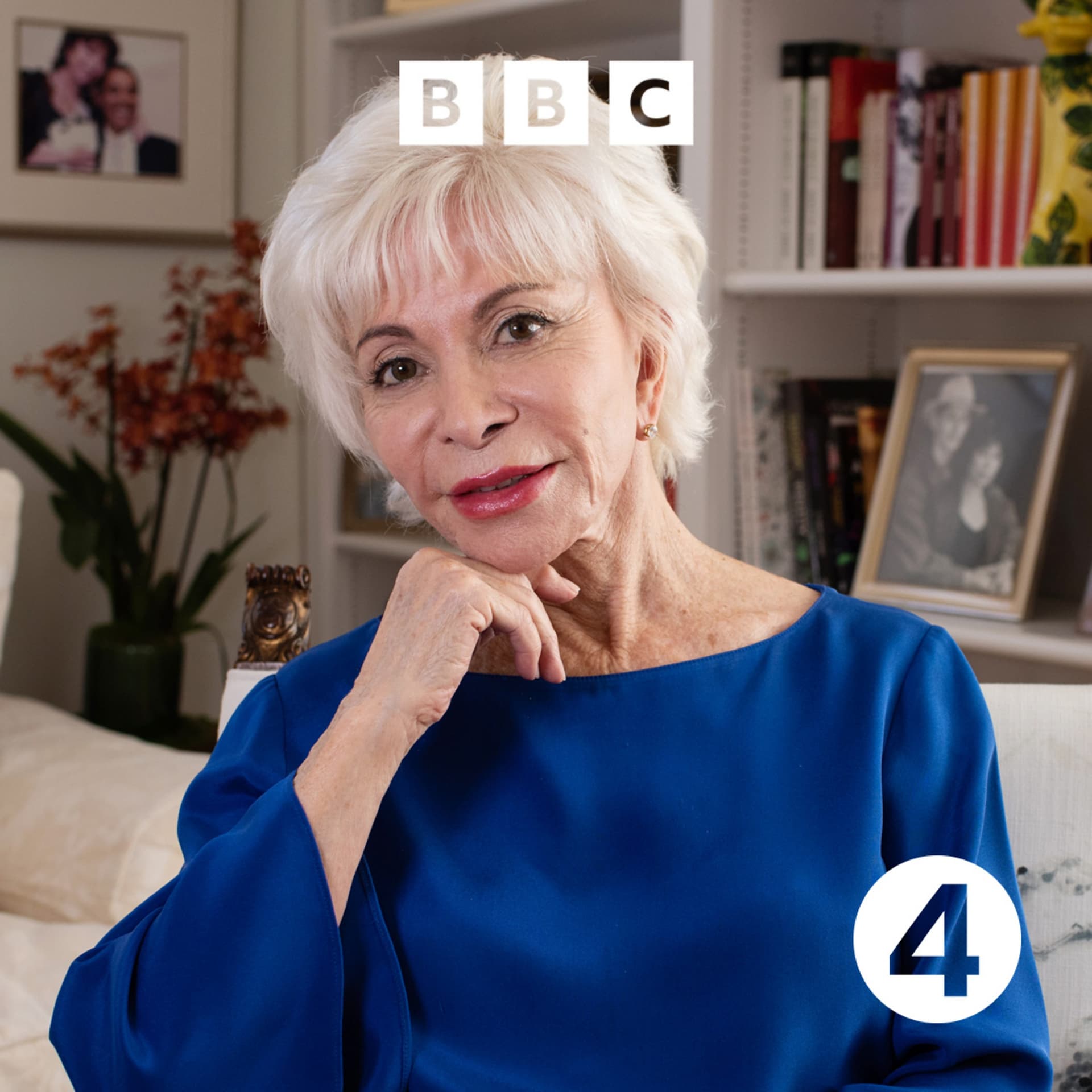
Episode Overview Episode Title: Isabel Allende Episode Description: Isabel Allende, a renowned Chilean author, shares insights about her life and work, including her influential debut novel *The House of the Spirits* and the impact of personal and political experiences on her writing.
---
Key Themes and Discussions
- Early Life and Influences
- Background:
- Born in Peru in 1942, raised in Chile.
- Parents' separation led to her maternal grandfather becoming a significant influence.
- Influence of Grandfather:
- Described as tough but kind, instilled values of discipline, tenacity, and hard work.
- Shared stories and anecdotes that later inspired her writing.
- Literary Inspiration:
- Early exposure to storytelling, especially through classic folktales like *Thousand and One Nights*, ignited her passion for writing.
- Political Landscape of Chile
- Connection to Salvador Allende:
- Allende was her father's cousin and served as President until the military coup in 1973.
- Her experiences during the coup shaped her worldview and later writings.
- Escape and Exile:
- After feeling threatened under Pinochet's regime, she fled to Venezuela, where she began writing *The House of the Spirits*.
- Personal Tragedy and Writing
- Loss of Daughter:
- Isabel's daughter Paula passed away at 29 after a long illness, profoundly affecting her life and creativity.
- Wrote *Paula*, a memoir reflecting her grief and the bond they shared.
- Literary Career
- Debut Novel and Impact:
- *The House of the Spirits* was initially a letter to her grandfather and later evolved into a novel exploring themes of family and national identity.
- The book was banned in Chile but became an international bestseller.
- Magical Realism:
- Explores the concept as more than a literary device, relating it to her life experiences and cultural heritage.
- Continuously draws from her understanding of dreams and the supernatural in her writing.
- Writing Process and Philosophy
- Routine and Discipline:
- Regularly starts writing new works on January 8th, using this date as a mental reset.
- Advice for Aspiring Writers:
- Encourages writers to embrace the struggle of writing without fear of a blank page, emphasizing that editing is easier than starting anew.
Key Takeaways
- Isabel Allende's writing is deeply intertwined with her personal history and the political upheaval of her homeland.
- Her works reflect a unique blend of personal narrative and broader cultural themes, illustrating the complexities of identity, loss, and resilience.
- Allende encourages breaking free from conventional constraints in storytelling, advocating for authenticity and emotional connection in writing.
---
Conclusion Isabel Allende's interview on *This Cultural Life* highlights her remarkable journey as a writer shaped by personal loss and political turmoil. Her commitment to storytelling, combined with her rich cultural background, continues to resonate with readers worldwide.
Written by AI. May contain mistakes. Listen to the episode to check what was said.
Transcript
Automatic transcript. May contain errors.0:00BBC Sounds. Music, radio, podcasts. Hello, I'm John Wilson. You're about to listen to This Cultural Life. Episodes are released weekly, wherever you get your podcasts. But if you're in the UK, you can listen to the latest episode first on BBC Sounds, seven days earlier than anywhere else. Do subscribe to This Cultural Life on BBC Sounds and make sure you have push notifications turned on and we'll let you know as soon as new episodes are available.
0:34Welcome back to This Cultural Life, the show in which the world's leading creative figures reveal the most important influences and experiences that inspired their own creativity. I'm John Wilson, and my guest in this first episode of a new series is the best-selling and multi-award-winning Chilean author Isabel Allende. She became an international literary star after the publication of her 1982 debut novel The House of the Spirits, an epic family saga set amidst violent political upheavals. Since then, she's written 21 novels and five works of non-fiction and has sold over 80 million copies worldwide.
1:13Isabel Allende, welcome to This Cultural Life. Thank you very much for having me in the programme. You were born in Peru in 1942, but your parents were Chilean and you were brought up in Chile. Your father left the family home when you were very young. And we're going to start this discussion about the most influential people and experiences of your life by talking about your grandfather, your maternal grandfather, who you say raised you as a child. Tell us who he was, first of all. Well, when my father left, my mother, who was very young, was pregnant. And a few days later or weeks later, she gave birth to my brother Juan.
1:55and she had to move back to Chile to her parents' house because she was helpless and very vulnerable. And so she came to her parents' house with three babies in diapers. Well, I don't think I had diapers, but we were very young, 11 months apart. And my grandfather was of Basque origin, tough but kind, generous, understated, severe, authoritarian, decent, the kind of person who has a set of principles and you live by them, no matter what. And he instilled in me all the things that I have been able to use in my life to survive. Strength, discipline, tenacity, don't complain, don't ask for anything because it will not be given to you.
2:51Work for it. I was the oldest grandchild, so he would have loved if I was a boy and he would have been able to share his tools with me. But the fact that I was a girl didn't stop him from loving me in his own particular way, which was never praised me in any way. No touching, no apparent kindness, but I knew that he was always there. You mean no affection, no outward shows of affection? No physical, physical affection. What are your happiest memories of spending time alone with your grandfather? Well, happy, I don't know if it was happy, but for example, there was a radio program that was horrific.
3:37Stephen King didn't exist then, but imagine something really, really scary. so my grandfather would turn off all the lights and we would, in the darkness, we would have to listen to this horrible stuff. And of course, we had nightmares for the rest of the week. But I remember that joyfully because we were holding hands and I was scared and he was there. I had a cup of tea with him every single day of my life when I started working. I would stop after work in his house, have tea, and he would tell me anecdotes about the family, which later they all appeared in The House of the Spirits, my first novel.
4:19I didn't have to invent much with these lunatic relatives. I mean, you don't need any imagination. But did he spark that interest in storytelling then with those gothic terrifying tales of the young age? Probably, probably, But I was raised with stories. There was no television in Chile at the time. And we never went to the movies. And people sat and have a cup of tea and they would talk and tell stories, legendary stories about my grandmother, about crazy relatives, about Chile, about the devil, a lot about the devil. But there was also one more thing in that house. It had a basement, the kind of basement where all the electrical cables are hanging down like a dangerous place.
5:05But I would go there. It was my hiding place. And there was a trunk, a metallic green trunk with the initials TA, which were the initials of my father, Tomas Allende. and inside it was full of young adult books. Jack London, Oscar Wilde, Bernard Shaw, Salgari, so many. It was a treasure that because it belonged to my father, I thought that it was forbidden. We never mentioned my father, ever, ever. So I thought there was something forbidden about those books and about the trunk and I read those books in the basement with a candle. That's illicit reading, isn't it? That was reading that you were...
5:50Which probably made it more attractive at a young age. Yeah, yeah, absolutely. Did you ever meet your father? No, I only saw him once. He died in the street of a heart attack, and I was called to identify the body. But I couldn't because I had never seen a picture of him. When I was in the morgue, my stepfather came, and he recognised him, and he said, he's your father, look at him. How old were you at the time then? Oh, I was in my 20s. That was the first, the only contact. The only time, the only contact. Salvador Allende, the president of Chile from 1970 to 1973, who was ousted in the military coup led by General Pinochet, was your father's cousin.
6:33Yeah. So did you know Allende as you were growing up? Yeah, Salvador Allende was a good friend of my stepfather. So there were picnics on Sundays, birthdays, days, sometimes maybe for Christmas, we would get together. But it was not a very intimate or a very close relationship. It became closer when he was president. What are your overriding memories of the 11th of September 1973, the day of the military coup? People had been talking about the possibility of a military coup, but we had no idea what that was. And then that day, I got up early as usual, and I went to my office, my kids would walk to school.
7:12So my kids left, and when I was driving to my office, I saw that the streets were empty of vehicles. There were people standing in corners waiting for buses that never came, and a lot of military vehicles passing by. And when I reached the office, it was closed, and the janitor that was at the door said, go home, go home, it's a military coup, listen to the radio. I didn't have a radio in the car. I thought of my kids, and I went to a friend's house who had a phone to call my mother-in-law who lived close by to pick up the kids. She was crying, and she said that her husband, who was a French teacher, had left very early to correct some tests at the school.
7:57The school was four blocks away from the government Palace, La Moneda. So I said, I'll go and pick him up. And I went through lateral streets because most of the main streets were blocked. And I went there to pick him up and the school was empty and all the doors were open. And I went in and I went to his classroom and there he was glued to the radio listening to Salvador Allende's last words when he addressed the country.
8:38He was crying. And we saw the bombing of the palace from the roof of the school. We saw the smoke and we saw the planes going by. And so I said, we have to go back, we have to go back. And we returned home somehow. And then we had 72 hours of curfew. Nobody could get out. There was no information. But I was a journalist, and I had a TV program. So we started communicating with the producers on TV, with other journalists, and more or less have an idea of what was going on. And by 2 o 'clock in the afternoon, I got the news that the body of Allende had been taken out of La Moneda by the firemen.
9:21The government buildings surrounded the gutted presidential palace have been all shot up. There isn't a light showing. There's a heavy military guard, a heavy police guard. You can still hear sniper fire and military units responding with machine guns and tank cannon. The palace is absolutely gutted. It was reported that Allende had killed himself whilst holed up in the presidential palace as the bombs were falling from those military jets flying overhead. How do you think he died? I think he probably killed himself. He would have never surrendered. it's not for sure you know i had been with him a month before when my stepfather came to chile every time he came we had some kind of meeting a luncheon or something and we were having lunch in allende's house and people were talking about the right wing el mercurio newspaper was publishing huge titles saying chileans gather calling for violence and for the military and Allende said I will not leave the palace until my term is over because the people have put me there or he said with my feet forward which in Spanish means dead, los pies para adelante, that means that you are taken out dead and I thought that it sounded so solemn, so melodramatic for a family luncheon but he knew exactly what was going on and we didn't.
10:51As you say, you were working as a journalist at the time, and you were known to be related to Salvador Allende, and you were on the left politically. How dangerous was it for you to remain in Chile? I didn't think I was in danger because we didn't know how these things work, you know. We didn't know how repression works. Repression works in circles, in circles that at the beginning are sort of vague, and then they become more and more efficient and more concentrated. I was fired from everywhere. I had to quit my job on TV because I was doing humor, and I couldn't be doing humor while people were being tortured.
11:30the magazine where I worked. I directed a children's magazine. I was practically fired and also from the women's magazine where I worked. And I thought, well, if I keep a low profile, I'll wait because the military sooner or later will go back to their barracks and we will have democracy again. Chile was known for its democracy. And then things got really bad and eventually I had to leave. Well, of course, the soldiers didn't go back to their barracks for 17 years, in effect, because that was how long Pinochet ruled. Eventually, you went to Venezuela, and you were joined there by your husband and two children, and you lived in exile in Venezuela for 13 of those years, I think, didn't you?
12:17Yes. Getting back to your grandfather, who was such an influential character in your life, did you talk to him about politics when you were growing up? When I was growing up, we never talked religion or politics ever, or money. What were his politics? I think he was conservative, but democratic. Because when we had the coup, he was horrified. He had never been a supporter of Allende. But the idea that the military had taken over the country was unthinkable for him. And he told me many times, don't say anything. Get out of the news. Get out of your job. Just be quiet. Be silent. He was afraid for me.
12:58But I couldn't be quiet. First of all, because I didn't know the consequences at the time. And also because it was very hard to be quiet, not to get involved. Very, very hard. You know, I never dared tell him that I was going to leave because I would have broken his heart. And so I left and I left a letter for him. And I wrote to him from Venezuela many times, but I never saw him again. Your debut novel, The House of the Spirits, started as a letter written to your grandfather when you heard that he was dying in 1981. Take us back to that moment. He was very old at the time, I think, wasn't he?
13:39Very old, almost 100. Totally lucid. You know, in my family, we have bad bones, but we have good brains. No one has dementia in my family. And my grandfather, who had shrunk, he was a little bird, totally lucid, and he would write to me also. We never talked on the phone. He hated the phone. And I started writing to tell him that he could go in peace, that I remembered everything he had told me in those infinite cups of tea and talking that we shared. And so I started telling about Rose. Great Aunt Rose was my grandfather's first fiancé. And she died mysteriously. I think she was poisoned. It was never clear.
14:32And so I grew up with a sepia photograph of this lady who was supposedly beautiful, although she didn't look that beautiful in the picture. and so I started telling him I remember this now in a matter of two pages I would say a day it didn't look like a letter anymore and I knew that I had started something different and I kept going knowing that my grandfather was never going to read it. So within days you knew you were writing a novel? No I knew I was writing something and I thought it was like a memoir I didn't know exactly what I was doing, but I didn't dare say to myself, I'm going to write a book.
15:15I'm going to write a novel because that sounded so pretentious. So when you started writing this letter, which became something else, you were in probably in your early 40s by that time. I was 39. I'd read that the Chilean poet and national hero Pablo Neruda played a part in encouraging you towards fiction. No, John. He told me that I was the worst journalist in the country, that I lied all the time, I could never be objective, and I should turn to fiction, because in literature all those defects are virtues. And that was in 1973, a month and a half before the coup. And I started writing in 81, so I didn't even remember what Neruda had told me.
15:59Right, so he wasn't an influential figure in steering you towards this illustrious career that you went on. The House of the Spirits is an epic story that spans decades to tell huge family saga and also a national tragedy is played out as well. And the country in which it all takes place is never named Chile. And yet the political events, the rise and fall of the leftist government, the military coup, and the brutality of the ruling junta in the early 1970s are clearly recognisable. So why didn't you call it Chile? Because the same things were happening all over Latin America, in Uruguay, in Argentina, in Brazil, in many places we had the military take over.
16:42And repression and people disappearing and torture and executions were everywhere. To me, this was more the story of a continent than of Chile in particular. Also, if I had mentioned And Chile, I suppose I would have felt that I had to be very precise with the facts and the dates that sometimes didn't coincide with the story I was telling. Because in a way, the story of the family is like a microcosmos of what happens to the macrocosmos of the country. So both stories have evolved together. The day Esteban Trueba asked to be received, Severo and Nevea del Valle remembered the words with which Clara had broken her lengthy silence.
17:31With all due honesty, they told him of their daughter's traits, without omitting the fact that she had spent more than half her lifetime without speaking, because she did not feel like it. But Esteban Trueba was not the kind of man to let himself be scared away by tales of ghosts and hallways, objects that move of their own accord, or prognostications of bad luck, much less by Clara's prolonged silence, which he considered a virtue, and he asked to be introduced to her. The patriarchal figure at the heart of the story, the character called Esteban, was he based directly on your grandfather as a character?
18:07As a character, but my grandfather was never a rapist, a murderer. He never approved of the coup. He was a very decent and honourable man. He would have died of a heart attack if he had read the book and thought even for a minute that I had based my character on him. But Esteban, like my grandfather, is a self-made man, authoritarian, conservative, who thinks that he's always right and that whatever his values and his principles are, that is the way the country should be and the family should be. There's no questioning. That was my grandfather. If so many of the events of the novel are drawn from real life stories that you'd heard told by your grandfather or other members of the family, how did your family react when House of the Spirits was published?
18:59Well, when the book was published, it was forbidden in Chile. We had censorship. So some copies got into the country, smuggled into the country. They changed the jacket and they were photocopied. and somehow some people read it. Eventually, censorship was eliminated only for books and for theater plays because they were expensive and few people could afford it. And so you could buy it in Chile, but under the table. No bookstore would display it. Some members of my family were really offended and some didn't speak to me for years until the movie came out. From the novel by Isabella Allende, The House of the Spirits, Meryl Streep, Jeremy Irons, Glenn Close, Winona Ryder, Antonio Banderas and Vanessa Ridgrave.
19:49When Meryl Streep and Jeremy Irons were my parents, oh, that was great. That's the official story of my family now. What were they objecting to? The politics. Because you had revealed that it was a very conservative family on your grandmother's side. and in the book and in the film that they saw, the coup was supported. In fact, there's a moment when Esteban is sitting there watching the television as the planes are bombing the palace and he has a bottle of champagne ready to be opened. Was that the sort of response? From several of my relatives, of course. And some of my relatives would denounce other people and I'm sure that some people were arrested and even tortured.
20:28Maybe they disappeared because of some, at least I know of one of my relatives. The House of the Spirits became a huge international bestseller and launched your career. How did your life change? It didn't change very much at the beginning. I was living in Venezuela and the book was very successful in Europe. So I didn't get the echo of what was happening until a year later. And then my life changed slowly. I wrote a second book, then a third book, and by the third book I quit my day job and I dared call myself a writer because I thought I could make a living writing, which is rare, let me tell you.
21:09You became and remain one of the world's most famous Chileans and yet you couldn't visit your homeland for 13 years. Do you still feel Chilean? Yes. If you ask me who are you, I would say Chilean. I have lived in Chile very few years, really. But I have the Chilean accent. I have an invented country in my brain, the country where my grandfather lived, the country of my childhood. that doesn't exist anymore, of course. And so when I say I'm Chilean, I am from that Chile, that old, old Chile.
21:50Your next choice, Isabel Allende, is the collection of classic Middle Eastern folktales, The Thousand and One Nights, stories of love, magic and fantasy, which you say have inspired your own writing. Where and when did you first read them? It was in hiding. Like the books that I read in my father's basement. We were living in Lebanon, and my stepfather had an armoire, always locked. But of course, we, the kids, we knew how to unlock the armoire, because there he kept cigarettes, chocolates, whiskey. And there he had all the things that we wanted, and of course we didn't have, but we knew how to open the armoire.
22:31And being a diplomat, he went out every evening to some social event. So we would open the armoire, drink the whiskey, smoke the cigarettes. My brothers would do that, while I, with a flashlight, would read 1001 Nights. Of course, I couldn't mark the book. So I was skipping from one story to the other. I could never finish a story. It was more about the atmosphere, the color, the sensuality, the magic of it. That book had a huge influence in me. because my hormones were exploding at the time. I must have been 14. This was in Lebanon. We girls didn't go anywhere with school and home. That's it.
23:15No social life. And this book was like a window into fantasy and eroticism, which I couldn't quite understand. That sense that life is playful, joyful, and scary also, and full of color. I think that I tried to convey that in my books. Isn't it interesting that this was a book that you weren't supposed to read, just as those books that had been left in the trunk left by your father? This, again, illicit literature. And your very first book, The House of the Spirits, became a banned book. I mean, I wonder when you were writing The House of the Spirits, whether that was part of it, knowing that you had to be bold with your stories and write something that some people wouldn't want other people to read.
24:02John, I wasn't thinking. I just opened a vein and let it come out. There was no plan. There was no outline, nothing. And at the end, I had 500 and something pages on the kitchen counter. and when my former husband, Miguel, read it, he realised that the chronology was completely crazy. So he was an engineer. He made a chart with the dates and the characters so that I would see the evolution of each character according to the events of the country as well. And so I did a second draft adjusting those things. But you say that first novel, The House of the Spirits, poured out of you is like opening a vein.
24:46Were all the books like that? afterwards or was it that one in particular? No because I had no idea of the book industry of I never read a book review in my life never taken a course so the first book was written with innocence with with the with the confidence of the ignorant you know and then after that I learned some or at least more stuff about writing and I never had that freedom again never. Let's get back two 1001 nights, this story which you discover in the hidden locked closet. They are fantastical fables involving magic and the supernatural. And there's a magical aspect to many of your books, including The House of the Spirits, in which one character is clairvoyant and can move objects around with the power of her mind.
25:41Was that based on your own grandmother? that. Yes. These are all the stories that were told about my grandmother. And she spent her short life experimenting with the paranormal at a time when there was great curiosity about secret societies and the Rosa Cruces and Gurdjieff. There were seances. I grew up with that, with the idea that all that was not only possible, it was almost normal. And if you think about it, we all have superstitions. The thing about my grandma is it was more explicit. My grandfather didn't approve of it, but he protected her and loved her. And then after she died, repeated all the stories about her, the story about her moving the table and about all those things.
26:30Do you regard yourself as a magical realist author or do you dislike that phrase? I don't mind it. I think that magic realism is accepting that life is very mysterious, that there are many things we can't control, we can't explain. And I accept that in my life. Therefore, it comes very naturally in my writing. But it is not a literary device like salt and pepper that you can sprinkle on any story. It doesn't work that way. It works sometimes for some stories. But, you know, in my life, for example, I am not magical at all. I'm not like my grandmother, but I pay attention. I am tuned to it. I'm tuned to dreams.
27:13I have been writing down my dreams for years so I know what the symbols mean, the images, the recurrent images mean. And I use that knowledge in my daily life, often in my writing. So you believe in those greater forces that are not so easily explained? I believe that there are parts of my brain or everybody's brain that we have not developed, that we don't pay attention to. Magic realism has manifestations in daily life, in reality. And sometimes you can really explain them. And fantasy has none. I mean, fantasy, for example, is the invisibility cloak of Harry Potter. You have never seen it. We wish it was available and you could order it on Amazon, but you can't.
28:03Now, the invisible Indians in the Amazon, they sound as magical as the invisible cloak, but they are Indians that paint their bodies in the colors of nature and move so swiftly in the vegetation that they can be a yard away and you don't see them. So Garcia Marquez has a beautiful explanation. he says that when he had a character called Remedios the Beautiful she ascends to heaven embody a soul like the Virgin Mary and the whole scene didn't work. He tried many things and eventually he came up with the idea that Remedios was hanging the sheets to dry and the wind came and lift her with the sheets like sails or like the wings of a big bird.
28:49With the sheets is magic realism. Without the sheets it's fantasy.
28:58Your next choice, Isabel Allende, is a tragic event that you say broke my heart and changed me forever. Your daughter, Paola, died in 1992 at the age of 29 after becoming seriously ill and falling into a coma for a year. What do you remember about first hearing the news that she was in hospital that night? I was launching a book called The Infinite Plan in Barcelona. I was with Antonio Banderas, and then my husband, I saw him in the crowd, and he came almost running, and he told me that Paula was in the hospital. And I remember I gave my glass of champagne to Banderas, and I went to the airport.
Read the full transcript
29:46And I took the first plane to Madrid, and it's an hour flight, and I arrived at night to the hospital, and she was still conscious. I don't know. It's hard for me to even talk about this.
30:06I thought she was very ill, but I never thought she was going to die, never. And it took me a year to accept it. Finally, after five months in the hospital in Madrid in which the hospital hid the fact that there was serious negligence, gross negligence in intensive care, and she was not given enough oxygen, and she ended up with severe brain damage. When finally I was told the truth, and they gave me back my daughter, who was like, I can't describe it. She was like a doll. She had no reaction of any kind, nothing. She has no muscular tone. She has nothing. I brought her to California. And with the idea still then that in California with American doctors, with American medicine, I could bring her back to life.
31:06So it took me months and months to really let go of her. You cared for her at home all of that time and then you started writing what became your memoir Paola like House of the Spirits it was also started as a letter to Paola wasn't it? Well because when she was in the hospital in Madrid I could see her once a day for five minutes but you never knew at what time they would allow you to go in if her husband was there he would go in. But most of the time the husband was working, so I would go in. And one of the nurses said, she will wake up, she will wake up. But when she wakes up, she will have no memory.
31:49I have seen this, she said, from other patients. So I started a notebook, writing down the things I had to remind her of, remind her who she was, where she came from, the family, Chile, her husband, what had happened to all of us. And then I wrote 160 letters to my mother in Chile. I wrote to her sometimes several times a day, telling her step by step what was happening to Paula. So at the end of the year, when she died, I had a very dark and confused memory of what had happened. It was just like one long night. The only thing I remembered was bringing her from Madrid, the plane ride, was all I remembered.
32:38And the rest was just one thing. And so my mother gave me back the letters. And she said, read them so that you will see what happened and realize that Paula's only way out was death. and with a notebook and with the letters I started writing as I always do on January 8th a month after she died. And did that process of writing help you come to terms with her death then? yeah it was cathartic in the sense that i could give some order to all what had happened you know it had invaded everything sorrow mourning death illness had occupied me completely and my life and i failed to see that while all this was happening my son was having kids i couldn't see anything.
33:39I mean, it was just Paula. And writing the book allowed me to frame this tragedy somehow so that I could contain it. It was contained in a book. And somehow I could deal with it much better. Of course, I went into a writer's block that lasted like three years after that. But at least I could go back to life. So it was cathartic in a way to write the book. What about the reaction from readers, the response to the book? How did that affect you? The response was unbelievable. All the mail that came filled up boxes and boxes and boxes. The most touching letters, some of them in languages that I couldn't even read the alphabet.
34:26Let me give you a little example that just happened. They did a documentary about me and the filmmaker said, do you have any of those letters available. And so they went to the files that we have and picked up just any letter. And it was a letter written by a medical student. And she says in the letter that after reading my book, everything changed for her. And she will try to be a doctor that will always remember that it's not about the illness, it's about the patient. And every patient has someone who loves him or her. This letter was written 30 years ago, but my daughter-in-law said, let's find her.
35:04And we connected on Zoom. And she's working as a doctor with the most vulnerable people. And she never forgot the letter that she had written. You influenced her work and her life. She influenced mine because I realized that words have power. They have weight and they touch people. You have to be very careful. A short while before she fell ill, your daughter had had a dream which prompted her to write you a letter and it said on the envelope to be opened in the event of my death. What did the letter say? The letter talks of herself already as a spirit. She says, we, the spirits, will accompany you if you are content and happy.
35:52It's like a spiritual will in a way. Why would a 28-year-old girl in her honeymoon wake up and write such a letter? The dream must have been a premonition. She was on honeymoon at the time and she had this dream. In Scotland, yes. And she wrote it in the hotel. And the letter was not for me. The letter was, didn't say for whom. The letter said, to be open when I die. When I die, it's not if I die. And her husband kept the letter, and then he gave it to me, and he said, I don't want to have this with me. And I kept the letter without opening it, because I never thought she was going to die. And then when it was obvious that she was dying, then Ernesto was in New York, and I called Ernesto and I said, I think we have to open the letter.
36:50But I couldn't read it. So my daughter-in-law, Celia, she read it. So I heard her words in Celia's voice and they were so clear, so calm, so wise. the tone was of someone who has completely accepted the fact that she'll die and she will die soon. So when we talk about magic realism that's what it is, you know. In a way the letter helped Ernesto and me to let go. Losing a child is the worst thing that could happen to a parent. Of course, it changed your life forever. What was the impact on your writing, do you think? Well, first, that's the year I turned 50. So I think some of the changes in me were not only because of Paula, but because I was aging and it was menopause.
37:58It was the end of my youth. That visible change also happened internally. I became in touch with what is really essential in life. And everything that is not essential is clutter. So you don't want clutter in your home, and you don't want it in your brain, and you don't want it in your life. And so that has been, since then, the way I live. And in a way, it's the way I write. I focus more and more on stories that really matter to me. I think that even my way of writing is simpler. Also because I live in English and I live in the United States. So all the Baroque style of the Spanish language, I don't have it in my ear all the time.
38:44So that's also one of the reasons. Do you write directly into English now? No. You still write in Spanish? Always in Spanish when it's fiction. When it is non-fiction, I have both texts in Spanish and English on the screen, and I work on both simultaneously. You've written nearly 30 books, and you've sold over 80 million copies worldwide. Do you have a regular routine when you set out to write a new book? You mentioned earlier January the 8th is the date in which you start a new book. Is that because that was the date on which you wrote The House of the Spirits or started that book? Yeah, but also it's discipline.
39:23I need to organize my life. My life is complicated. Each book is not just writing it. You have to launch it. Interviews, book tours, signings. And because they are translated to 42 languages, there is always one book that is being published that day. So, for example, tomorrow I have two hours with China because one of my books is going to be published in China. I wrote it 15 years ago. So who knows what we are going to talk about? I can't remember anything. So having a day to start means that by January 8th, I have cleared my office, cleared my brain, take all the research of the previous book out, and my calendar is free, and everybody around me knows that if I have a sign at the door, I'm not to be interrupted.
40:10Because now I am working at home, where I write all day. My husband, who is 82 years old, goes to university every day. He lives early in the morning with a picnic and I don't see him until the evening. So I have the whole day. I love it. You've just become the latest mentor on the BBC Maestro series in which you offer advice for aspiring writers. What was the best piece of advice about writing that you were ever given? Several. The first advice that my agent, who unfortunately died, gave me, she said, don't quit your day job until you are able to make a living and very few people can make a living.
40:53This is a vocation. You do it because you have to do it. You love the process and maybe you will never get published. You forget that you will have fame or money with your writing. You love it. That's why you do it. The advice that I tried to give in the maestro course was lose the fear of the blank screen or the blank page. Because if we think that we're going to write the great novel in one sitting, it's never going to happen. You're never going to get started. But if you think, OK, I'm going to write just anything, a bad novel, and then I'll fix it on the way. You can always edit a bad page.
41:35You cannot edit a blank page. Are you still writing? And do you have that January the 8th circled in your diary as the next start of the next book. Of course, and I'm writing. You are interrupting my writing, John, right now. Isabel, I'm so sorry. What drives you on creatively, though? The joy, the joy of putting together this puzzle that life is. You pick up little things here and there, and then you put them together and then try to give them a meaning, a sense, an order. That's fascinating. I just love it. Isabel Allende, thank you so much for sharing your cultural life with us. Thank you, John.
42:24Well, I do hope you enjoyed my conversation with Isabel Allende. Remember that you can subscribe to This Cultural Life on BBC Sounds. Make sure that you have push notifications turned on and we'll let you know as soon as new episodes are available. From me, John Wilson, and producer Edwina Pittman, thank you very much indeed for listening to This Cultural Life.
42:48World of Secrets is where untold stories are exposed. And in this new series, we investigate the dark side of the wellness industry, following the story of a woman who joined a yoga school, only to uncover a world she never expected. I feel that I have no other choice. The only thing I can do is to speak about this. Where the hope of spiritual breakthroughs leaves people vulnerable to exploitation. You just get sucked in so gradually. And it's done so skillfully that you don't realise. World of Secrets, The Bad Guru. Listen first on BBC Sounds.
From the publisher
Chilean author Isabel Allende became an international literary star after the publication of her 1982 debut novel The House Of the Spirits, an epic family saga set amidst violent political upheavals. Since then she has written 21 novels and five works of non-fiction, and has sold over 80 million copies worldwide.
Isabel Allende tells John Wilson about her upbringing in Santiago and how, after her parents split, her grandfather became a hugely influential figure in her life, encouraging her love of storytelling. She recalls reading the classic Middle Eastern folktales the Thousand and One Nights aged 14 and explains how the themes of love, magic and fantasy, inspired her own fiction later in life.
Isabel also discusses her relationship with Salvador Allende, her father’s cousin, who served as President of Chile for three years until he died during the coup of 1973. Having worked as a journalist and broadcaster, she felt increasingly unsafe under the rule of the military junta led by General Pinochet and fought refuge with her family in Venezuela. It was during a 13 year exile from her homeland that she began writing The House Of The Spirits, initially as a series of letters to her elderly grandfather in Chile.
In 1992 Isabel Allende’s daughter Paula tragically died aged 29 having fallen ill and been in a coma for a year. Isabel recalls how she channel her grief, and celebrated her daughter’s life, in the bestselling memoir Paula.
Producer: Edwina Pitman