In short
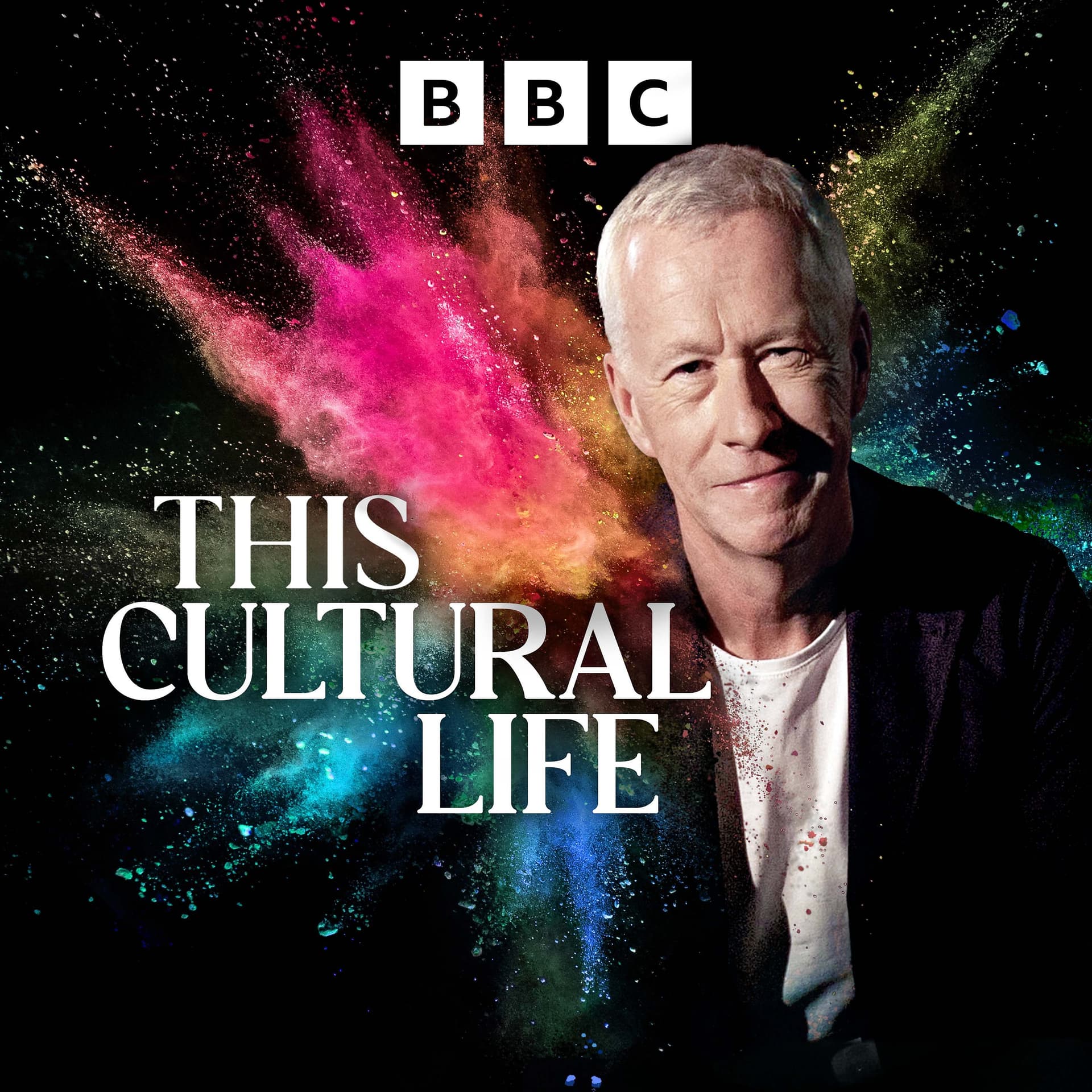
This Cultural Life - Episode: John Adams
Podcast Overview Host: John Wilson Podcast Theme: In-depth conversations with leading artists and creatives across various fields including theatre, visual arts, music, dance, and film.
Episode Summary This episode features composer and conductor John Adams, known for his fusion of Minimalism with late-Romantic orchestral harmonies. He discusses his background, influences, and key works, including major operas like *Nixon in China*, *The Death of Klinghoffer*, and *Doctor Atomic*.
Key Points
Early Life
- Birth and Family Background:
- Born in 1947 in Massachusetts to musical parents.
- Father played clarinet and saxophone in swing bands; mother was an amateur actress and singer.
- Early Influences:
- Developed a passion for music around age 10 after a biography of Mozart inspired him to compose.
- Gained early performance experience with a local amateur orchestra, where he composed his first pieces.
- First Public Performance:
- At age 13-14, his work was performed for a room full of mentally disabled individuals, leading to a profound emotional response that shaped his understanding of music as a means of communication.
Musical Influences
- Leonard Bernstein:
- Influenced by Bernstein's *Young People's Concerts*, which made classical music accessible.
- Initially critical of Bernstein's tonal music during his college years, later realizing the value of emotional authenticity in composition.
- Duke Ellington:
- Highlighted the significance of black culture in American music and Ellington's evolving artistry.
- Inspired his orchestration style and the optimism in his compositions.
- Charles Dickens:
- Admired Dickens for his ability to blend lofty ideas with humor and sentimentality, which he aims to replicate in his music for broader accessibility.
Musical Evolution and Minimalism
- Embracing Minimalism:
- Alongside contemporaries like Philip Glass and Steve Reich in the early 1970s.
- Defines Minimalism as tonal, characterized by slow harmonic movement, repetition, and a regular pulse.
- Transition from Minimalism:
- While he appreciates minimalism's rigor, he sought to incorporate greater emotional depth and dramatic change in his works, inspired by composers like Mahler.
Notable Works
- Nixon in China:
- Premiered in 1987; explores the complexities of historical figures like Nixon and Mao.
- Initially met with mixed reactions; has since gained recognition as a significant modern opera.
- The Death of Klinghoffer:
- Addresses the murder of a Jewish man by a Palestinian terrorist; controversial for perceived biases.
- Emphasizes the importance of emotional narratives and the universal human experience.
- Doctor Atomic:
- Focuses on J. Robert Oppenheimer and the moral implications of the atomic bomb's creation.
- Engages with historical events and personal struggles filtered through artistic expression.
Contemporary Issues in Music
- Cultural Context:
- Discusses the challenges contemporary composers face in a landscape dominated by popular music.
- Advocates for classical music to address social issues and expand its cultural relevance.
- Future of Composition:
- Expresses optimism about younger composers engaging with pressing societal topics.
- Shares insights into his latest work, a piano concerto titled *After the Fall*, reflecting on modern artistic exploration.
Conclusion John Adams reflects on his journey as a composer, the influences that shaped his music, and his commitment to creating emotionally resonant works. His discussion sheds light on the evolving landscape of classical music and the ongoing dialogue between tradition and contemporary artistic expression.
Key Takeaways
- The significance of emotional communication in music.
- The impact of influential figures like Bernstein and Ellington on Adams's work.
- The challenges and responsibilities of contemporary composers in addressing cultural and social issues.
- The potential for classical music to engage wider audiences through accessible storytelling and emotional depth.
Written by AI. May contain mistakes. Listen to the episode to check what was said.
Transcript
Automatic transcript. May contain errors.0:00BBC Sounds, music, radio, podcasts
0:12Welcome to This Cultural Life, the series in which the world's leading artistic figures reveal the most important influences and experiences that inspired their own creativity. I'm John Wilson, and my guest in this episode is the composer and conductor John Adams. Emerging alongside Philip Glass, Steve Reich and the other musical minimalists of the early 1970s, his reputation grew with symphonic work and operas that tackle recent history, including Nixon in China, The Death of Klinghofer and Dr. Atomic. The winner of five Grammy Awards and the Pulitzer Prize for Music, John Adams is one of America's greatest and most performed living composers.
0:53John Adams, welcome to This Cultural Life. Thank you. You were born in 1947 in Massachusetts into a very musical family from what I understand. Both parents were performers? Well, they were amateurs. My father played clarinet and saxophone and he played in small town swing bands during the 30s and 40s. And my mother was a very talented actress and singer. I mean, she never did anything beyond local amateur productions. But I think, you know, I have musical talent. Most of it comes from her. Neither of them were able to go to college because of the Great Depression. My father was able to go for two years but then had to drop out.
1:34But I think in part because of that, they placed extraordinary value on cultural things. So they were always reading books and there was music in the house all the time. Did they have any ambitions for you musically? Was it just about enjoyment and appreciation? You know, it was amazing because I decided I wanted to be a composer when I was about 10 years old. And our third grade teacher read us a child's biography of Mozart. And I was just enchanted by the story of this young boy who could write symphonies. And I went home and got some paper and a straight edge and drew five lines. And then, much to my horror, I realized I didn't know what to do.
2:14And my parents, they were very sensitive to this. And they found me a teacher. And I started studying harmony and counterpoint and started writing my own melodies when I was really young. And in our hometown, which is in northern New England, there was the state mental hospital. And that hospital sponsored an amateur orchestra. A lot of people from the community, my high school English teacher and our doctor played in the orchestra. And it was that orchestra that played my first orchestra piece. I think I was about 13, 14 at the time. my first audience was a room full of about 200 severely mentally disabled people.
3:00And they loved it. They loved it. And what was the response? Oh, there were tears running down their face. You have to just imagine what their lives were like. And they were able to come into this gymnasium and hear this amateur orchestra, you know, play a Sousa march selections from Oklahoma, and then this piece by this kid. And they were so moved by it. And I think that was a formative moment for me to realise that music is fundamentally about communicating feeling. It was the emotional response above everything else then. The emotional response was, I would say, profound because these people were so hungry for the communication they were getting from the live music.
3:45And that was your public debut as a composer? That was your first audience. I guess you could call it that, yeah. Do you think you've been chasing that emotional response ever since? I do, and it was very controversial when I was in college and in the years right after college because that was what I call the bad old days of contemporary music when music had become very intellectual. And there was enormous prestige accorded to music that was created according to what, Systems 12-tone or John Cage flipping corns or whatever. Or Boulez or Schoenberg, that sort of thing. Absolutely.
4:26And it is interesting if you think about how contemporary music sort of went down the rabbit hole during the 20th century at the same time that popular music just took over. You know, it was very controversial to write the sort of pieces that I wrote. my first big successful piece I wrote in 1980, a piece called Harmonium, which has become kind of a standard at the proms. I think it's been done four or five times there.
4:56It is a very emotionally explicit piece. It doesn't tie itself in structural obscurity.
5:16On This Cultural Life, John Adams, I asked my guest to choose the most significant creative influences and experiences that inspired their own work. And your first choice is the American composer and conductor, Leonard Bernstein. So when did you first come across Bernstein? Well, it seems almost predictable that I, as an American, would mention Bernstein, but he was inescapable. When I was a kid, he was at his peak in a way. It was still the black and white period of television, and he was doing the very famous young people's concerts. And you have to understand how profoundly effective that was.
5:54He was a glamorous, charismatic man who was also brilliant. He could think of ways to clarify or articulate basically sometimes very complicated perceptions about music and make them accessible to a young audience. Plus, it was just the idea that there would be an American who could be a composer and also a conductor and love jazz, love Mahler. You know, that was exactly how I imagined my life. And so if those television programs, the young people's concerts, they started in 1958. So I guess by that time you'd already decided to become a composer. I would have been about 10 years old at the time.
6:39We didn't have a television. So I had to watch these programs in the homes of my friends because my parents were afraid if we had a television, I would stop reading books. Of course, if my mother knew that it was Leonard Bernstein, she would have run out and bought a television because she adored him too. They were lessons, these televised programmes, lessons in the art of classical music. What did he teach you in particular? Well, each programme was different. He had a programme about Beethoven's Fifth. He had a programme on jazz. He did a programme on emotion and music. Just a memorable programme where he focused on a phrase from the Tchaikovsky Fourth Symphony.
7:21which I'll never forget. Did you ever feel that you wanted something more than anything else in the world, and you said so, and they said, no, you can't have it, and again you said louder and more excited, I want it, and again louder, I want it, until it seemed that something would break in your head and there's nothing left to do but cry. Well, that's like this music. Listen.
7:48I want it I want it I want it You know, he wrote these scripts, like, overnight in the midst of this very, very busy career. It's kind of a remarkable thing, what he did. Now listen to the orchestra play it and see if you don't feel something like those emotions.
8:14Were you aware that he was also a composer? I think later on I eventually realized he was a composer. What's always enchanted me is his theatre music. I mean, I think West Side Story is just the absolute peak of American theatre music. Tonight, tonight, the world is wild and bright Going back, shooting sparks into space Bernstein was obviously feeding into your creative imagination. Did he influence the sort of music that you were composing at that time? Well, you know, it's funny. When I was in my first year at Harvard, I got very influenced by the avant-garde at the time, particularly the European avant-garde like Pierre Boulez.
9:03And I heard the Chichester Psalms by Bernstein.
9:15And I was appalled by it because, you know, he was still writing tonal music. And so I wrote him a really snotty letter. You know, I didn't know him. I'd never met him and criticized him for writing such retro music in 1965 or whenever it was. And amazing enough, he responded. He wrote me a letter back and said, basically, I hear you, but I have to do what I have to do. I have to do what I naturally feel. And much to my horror, after he died, his letters were all sent to the Library of Congress. And I got a phone call from them saying, gee, we have a copy of his response to you, but we don't have your original letter.
9:57Could you send it to us? I said, no way. I didn't have it anyway, but I was embarrassed by it. But thinking back on it, what he said was something that it took me another 10 years to realize was right. You have to do what you have to do. And I think that part of the tragedy of what happened with contemporary music was composers were writing music that really a lot of them didn't even feel they wanted to. Given that he was one of the American musical greats and was being criticized by a young undergraduate, was his tone polite in response there? Oh, it was very polite. And, you know, if the same thing happened to me, I would probably go out of my way to respond.
10:39Now, I'm not inviting your listeners to flood me with letters, but we take those things very seriously when we're older. In your memoir, Hallelujah Junction, you recall inventing a musical alter ego, a composer called Bruce Craigmore. What was that all about? This is during the more hectic period of my early adolescence when my imagination was running over time. I lived in a very rural village in northern New England, and none of my playmates knew anything about classical music. So I had a very isolated life aside from my home. And I invented this character who was a composer and a conductor and went around the world conducting his own music.
11:24I drew pictures of him. I drew his programs this week with the Vienna Philharmonic, next week with the New York Philharmonic. I think, you know, it was somewhat influenced by Bernstein. But the interesting thing is that my life turned out to be virtually what I had imagined. Do they not call that manifesting?
11:53Your next choice for this cultural life is the composer and band leader, Duke Ellington.
12:01Why have you chosen him? Well, Duke Ellington has meant a great many things to me. First of all, American music would be impossible without black culture. And whether it was Copland or Ives or obviously Bernstein, even Steve Reich, heavily influenced by African drumming. So Ellington is key in that sense. There are other things about Ellington that I love. The fact that like Stravinsky, like Picasso, his life continued to evolve. And every period in his life was amazing and original. Early music that he wrote in the 20s was really raunchy, very provocative, you know, lock your daughter up kind of music.
12:52And then the great period of the big bands in the 40s.
13:05And then at the end of his life, his sacred music.
13:13So he had a life very much like Beethoven in that sense. Last of all, he's had a great influence on the way I treat the orchestra. masses of instruments, the brass, the saxophones, the rhythm section.
13:33You know, the thing about Ellington's music is that it's just so optimistic and so up, and I think I was influenced by it.
13:48My grandfather, my mother's stepfather, owned a dance hall in the state of New Hampshire. And several times when I was growing up, Ellington came through with his band. So I was able to not just stand right in front of the band, but at one point I actually went and sat on the piano bench next to Ellington. What age was that? I think I was probably in my late teens at the time. You felt the power of the band. Yes, and, you know, they weren't amplified. To stand in front of that band and feel the massive power of that sound had a huge effect on how I treated the orchestra.
14:30Did you talk to him? No, it was just a few words. He was running a show. He was busy. And what are your go-to Ellington tunes then? I'm very fond of the period of the 60s. There's a wonderful song that is not that well known. It's an arrangement called The Tattooed Bride, and it's on an album called Masterpieces.
14:57You enrolled at Harvard University in the mid-60s, and this is a time, of course, great political turmoil, anti-Vietnam protests, the Woodstock Festival in 1969. How involved were you in the American political counterculture at the time? Well, it was impossible not to be. And the Vietnam War affected all of us male students. The army was after me, really, really sincerely wanted to send me to Vietnam. So I was involved for a whole year of trying to figure out how to avoid the draft. It wasn't cowardice. It was just that it was, you know, the war was wrong. And all of us understood that. How did you avoid it then?
15:40I avoided it by using a large amount of controlled substances and making myself sleepless for three or four nights before each one of my physicals. So I basically presented myself as a physical wreck. I'm not proud of it, but... You drugged yourself? Yeah. I mean, with over-the-counter stuff. Nothing too serious. It was the period of LSD, and I did all of that. The first trip was astonishing and the last one was horrific. We all went through that period. And did it shape your compositional process as well? Did it influence you musically? You know, it's hard to say. That was the period of the wonderful blossoming of rock.
16:25You could turn on the AM radio at any time of the day and hear a dozen phenomenally wonderful songs, one right after the other. I would say it probably brought me to the realization that the obscurity and the complexity of avant-garde music, something that I was trying to grapple with because I still wanted to be a composer, you know, I would leave the classroom depressed and very frustrated and then go back and hear coming out of a dorm window Jimi Hendrix or Eric Clapton. and think, well, there's something wrong with this picture and I think I have to find a way to be a composer and have the kind of expressive freedom that these guys have.
17:26Your next choice, John Adams, is not a creative individual or a cultural work, but a state, the state of California. And you moved to San Francisco after graduating from Harvard. So what led you west? I had lived my entire life, 22 years in New England, and I was restless. I'd been reading about the beatniks. I'd been reading beat poetry, and it just seemed like an interesting place to go. So I went out there with my first wife at the time, and I found the San Francisco Bay Area to be very right for me. I loved the landscape. I loved the way the ocean collides with the coast. I loved the cultural mix.
18:11It was wonderful to come to San Francisco and be surrounded by people from other cultures. So socially it was very different in terms of the geography as well. We think of New England and particularly in the autumn those amazing golden leaves everywhere. You go to California and it's golden sunshine. Do you think that fed in the light of California? I actually do think that my relationship to the landscape has had a huge effect on my music, particularly that I, you know, if I'm good at anything, I think it's at large scale musical structures. You know, I was very influenced by early minimalism, by the early pieces of Steve Reich, particularly Reich, but also Philip Glass and Terry Riley.
18:51and the experience of being in that kind of landscape in Northern California and particularly, I have to say it, but it's such an American thing of being in a car, of driving. I have a piece for Violin and Piano called Road Movies and that experience, and particularly my early work of sort of driving across the landscape and seeing maybe a barn in the distance or a mountain or a tree or something and it comes closer to you and then it's gone and something else comes. You can feel that experience in a lot of my early music.
19:37You say that when you arrived in California, you started listening to Philip Glass, Steve Reich, and those people who you then became associated with as a young composer, as a minimalist. That's right. Did you welcome that term? Well, I think Steve is very proud of it because in a way, you know, he was the person who did the most critical work at the very beginning in terms of stripping the language down.
20:08I define musical minimalism very simply. It's my definition, but I think it works. I think that it's identifiable by three things. The first is that it is tonal, but the movement between harmonies is very slow. You know, in a Bach chorale, you've got movement from one chord to the next every note. But in a piece of classic minimalism, you could sometimes have a matter of eight or ten minutes between a harmony moving. That's the first thing. The second thing is that the structures are built through repetition of small motives. And the third thing is that it has a regular pulse. and this was a very provocative challenge to contemporary music, to the tradition of Schoenberg and Stockhausen and Boulez, all of the big names of contemporary music.
21:00And when this music first came out, it was ridiculed severely. I remember there was a New York critic who, whenever he went to a concert of minimalist music, he said, well, I checked my brain at the door along with my coat. But, you know, it was this dismissive thing that the music didn't provide any intellectual challenge. But in the end, we found that it provides different kinds of challenges. They're intellectual as well as expressive. And you've moved on from minimalism. I mean, can I suggest that you maybe you kept hold of that pulse, but also reached back to, I guess, some of the stuff you were listening to as a child, the late Romantic symphonies, that kind of thing, and you had more of a dramatic approach to composition.
21:42Well, I think from the start, I was restless. I loved the fact that the music was tonal. I particularly loved the fact that it was accessible and that audiences responded to it. But I felt that it was also, because of its rigor, that it was very emotionally limited, and I wanted to find a way to write a music that had the potential for great dramatic change.
22:11I've always been inspired by Mahler and the way that he tried to just embrace this entire human existence in his works.
22:39Your next choice for this cultural life is the novelist Charles Dickens. It's a funny choice, isn't it? Well, you tell us why. I'll tell you why. It's a very specific reason. When I was in my 30s, I read Dickens for the first time. I read Bleak House twice, Martin Chuzzlewit, Our Mutual Friend, a couple of others. And what struck me about Dickens was the fact that he could be an utterly original artist who could embrace both lofty thought with humor and also with sentimentality and who was accessible to a very, very wide bandwidth of the population and hence had enormous cultural influence. And in my field, contemporary classical music, I feel that composers over the past hundred years have surrendered that potential, starting with Schoenberg right up to today.
Read the full transcript
23:45And I took great inspiration, not just from Dickens, of course, but Tolstoy and Victor Hugo and all that period where writers were immensely influential on a wide cultural basis because their work was original, but it was also accessible. And I, all through my early years as a composer, was attacked. You know, oh, Adams, he's accessible, which was the worst thing you could say about a composer. I was supposed to go bury my head in shame. But I think over the course of my life that things are gradually changing. And if I've had any influence, it's inspiring young composers to think about the influence of their work and to put what we do back on the cultural radar.
24:35are. It's extraordinarily difficult in the United States because pop culture is not only omnipresent and omnipotent, but it also has great prestige. It has everything. It has the money behind it. It has exposure. It has popularity. There's even a course being taught at Harvard next year in Taylor Swift. So those of us composers are doing what we're doing. It's not that we want to be Taylor Swift, but we have, in a sense, dug our own grave by writing music that is essentially a niche experience. And that's why I mentioned Dickens, because he inspired me to move away from niche thinking. And so was that sort of validation of the sort of music that you were making then, that you're instinctively wanting to create, that would be heard, that was popular, that was tonal, that was accessible?
25:27I think it happened at a very critical time when I was very uncertain. I wrote a piece which I mentioned earlier, Harmonium, which was very well received by audiences and musicians, but not by my composer friends who frowned on it.
25:49And I experienced a terrible block. 18 months I couldn't write because I was not sure that I'd maybe gone in the wrong direction and I should be writing music like, I don't know, Elliot Carter or something.
26:11So how much did you have Charles Dickens in mind when you came to write your first opera, Nixon in China, which premiered in 87? The idea of writing Nixon in China was my collaborator Peter Sellers' idea. And when he mentioned it, I immediately knew this was a great idea for an opera because the characters were so vivid. Nixon, this visionary, self-doubting, at times venial, middle American. And Mao, this self-created peasant who wasn't a peasant at all. He was born into a bourgeois intellectual family. and Henry Kissinger and Joe Enlai. You know, the whole cast was just perfect for opera. And it was an opportunity for me to enjoy my love for big band music and for theater and some satire.
27:09We ended up with a portrait of Nixon that was, I think, quite generous. You know, it made fun of him, but it also, I gave him some opportunity to have vision, which I think the real Nixon did have. And of course, you know, when the opera played in New York, people complained. But in the end, so I've been told that the opera's become a classic.
27:36After Nixon in China, your first collaboration with Peter Sellers and the librettist Alice Goodman, and you moved on to another modern story, a tragedy, and it remains your most controversial work, The Death of Klinghoffer, which is about the murder of the elderly Jewish wheelchair-bound man, Leon Klinghoffer, who was on a cruise ship with his wife, and he was murdered by a Palestinian terrorist.
28:08Why did you think that was a story that needed telling as an opera? It isn't that I say, oh, this needs to be told. It appealed to me because, first of all, it was a deeply tragic, and it sounds strange to use this adjective, but it was a very meaningful story. In part, it was like something from the Old Testament, because it was this tragic event that was the result of a clash of identity, a clash of religions, and also an argument about who owns the land, which it still is today. And Alice Goodman, who was born a Jew, wrote this libretto, which is so poetic and so fair to both the Israeli and the Palestinian side.
28:56Of course, particularly in the United States, any opera that would give equal weight to the Palestinian narrative and the Jewish narrative is immediately suspected of being anti-Semitic. And to this day, with these terrible things that have gone on since October 7th, the level of misunderstanding and mistrust and violence has just exploded even more. It's ironic because just a few months before October 7th and this massacre by Hamas, I did a concert performance of the death of Klinghoffer at the Concertgebouw in Amsterdam. and the audience was so moved they came down from their seats and crowded around the edge of the stage to express their appreciation for it.
29:46And, you know, this is an opera that when it was done at the Metropolitan Opera in New York, I had to have a police escort and there were helicopters flying over the opera house before the performance. This was in 2014, wasn't it? This was the revival of... Yes, you know, an angry crowd of about, I don't know, several hundred protesters outside and people who bought tickets and interrupted the performance. People talk about the scandal of the first night of the Rite of Spring. It was nothing compared to the opening of Klinghoffer. So I felt very bad about the opera. I felt it could never be done again.
30:23And then I had this beautiful experience last May in Amsterdam, and now I feel, again, it can probably in my lifetime never be produced because people just are too emotionally charged over this issue. The protests, I mean, there were protests after the premiere in 1991 and, as you say, again in 2014 at the Met, and some of the charges levelled by Jewish campaigning groups were that it was anti-Semitic, it was stereotypes, but also it was romanticising the Palestinian terrorists in the way that they were portrayed musically on stage. Could you understand any of those protests and those concerns?
30:58I think that this easy meme that romanticized terrorism is mostly created by people who didn't even see the opera. There's nothing romantic about these terrorists. There is one character, Mahmood. This is all based on a book that the captain of the Achille Laro wrote. That was the cruise ship. This particular character was up late at night and he told the story of his youth and how his brother had been beheaded in the Sabra and Shatila refugee camps. And, you know, we give him an opportunity to speak for the anger and the sense of sort of dehumanizing that the Palestinians feel.
31:55But some Jewish people felt that this was a vague form of anti-Semitism. It's interesting because during that flack at the Metropolitan Opera, we had outside who joined the crowd was Rudy Giuliani, later Donald Trump's lawyer, as you know. And inside, a great opera fan was the late Supreme Court Justice Ruth Bader Ginsburg. She was asked afterwards if she felt anything was anti-Semitic and she said absolutely not. She felt that it was a very fair and thoughtful emotional portrait of the event. Everything has changed again with what's happening in Gaza at the moment. So you think it will never be in your foreseeable future.
32:39But can you do you think that's right that it's not staged again? You know, a friend of mine called and he said, you know what the world needs right now is the death of Klinghofer. They need to experience this opera. I don't quote that out of self-praise, but what I do is about feeling. I've been saying that since we started talking today. And this opera ends with a woman who's dying of cancer, whose husband, the most important person in the world to her, has been murdered for no reason other than he was a Jew. And this lament that begins in rage and anger and ends in just inconsolable grief. And that's how this opera ends.
33:24So it's really about feeling.
33:39Art is a prism through which we can examine some of the more troubling aspects of the world, so I take it you're arguing that it probably, well, could be staged, but should be staged in that case. I think so, and I think for me to say it will never be done in my lifetime is probably a little overly dramatic of me, but then again, I'm an opera composer, so I tend to be overly dramatic. In 2005, you premiered your opera Doctor Atomic about Robert Oppenheimer and the development of the atomic bomb. That's a work which is surely in line for a revival, isn't it, after Christopher Nolan's film Oppenheimer and the renewed interest in the Manhattan Project?
34:15Yes. Well, I was asked in 2003 by the then general director of the San Francisco Opera, Pamela Rosenberg, to create an American Faust opera. And it was she who proposed Oppenheimer because she thought that this was sort of a Faustian story of this brilliant genius physicist who collaborated with the army to create this terrible, life-changing weapon of mass destruction. Although I didn't totally agree with the Faust idea, I thought it was a great, great American story. I have to say, I never saw the movie and I don't intend to. I know this story so well and it's so deep inside me that I just didn't think I could deal with a Hollywood version of it.
35:00Well, in terms of the timeline, it does examine similar events that were taking place in the development of the bomb. How did you set about telling that story musically when you sit down at your school? Well, we just focused on the last few days leading up to the detonation of the first explosion, which was in July of 45. Better my heart, three-personed God, for you... The first thing was the libretto, and Peter made an extraordinary and very controversial libretto because it was a sort of a mélange of quotes, things that were really said by the scientists, some documents that at the time were top secret.
35:49And then he interlarded that with poetry because Oppenheimer was such a lover of poetry. So there's poetry by Baudelaire and John Donne, John Donne, of course.
36:15So you start with the libretto, but just setting that story to the music. I mean, just talk us through the very last scene in particular, where we are literally in the countdown to the detonation, and we hear the countdown musically as well, don't we? Well, I thought, first of all, this is an incredible tension because these scientists have been working for, I don't know, three years on this project, and they don't know if it's going to work. Billions of dollars have been put into it. There's huge pressure coming from Harry Truman is in Potsdam carving up the post-war world with Churchill and Stalin.
36:53So there's that pressure. What I did is that I just imagined a whole series of clocks going at different rates. So the orchestra and the percussion and the brass and the woodwinds, they're all on different time periods and sometimes they sink and then they go out of sync. They're out of phase. And then eventually this builds up. It would be risible to try to do what a movie can do and, you know, imitate a real explosion, but I do create a sound with low-frequency speakers which makes the theatre rattle.
37:44I found a young Japanese woman, and I asked her to come and very quietly read some quotes from survivors. Basically, it's just a woman asking for water. You realise after all of this technology and after all of this money and this horrific power, what's left is a woman asking for a glass of water for her child.
38:23John Adams, you are arguably America's foremost living composer, and alongside Philip Glass and Steve Reich, your contemporaries, you are still the preeminent figures within classical music, certainly American orchestral music. Is it dispiriting that not many people have come along to take your place? Well, I don't really think that's necessarily true. I stay in touch very actively with the younger generations of composers. And, you know, right now, it's a very interesting period because when I was in my 20s, everything was extremely abstract. The only thing that you discussed was your style. You know, did you follow John Cage or did you follow, you know, Schoenberg or whatever?
39:05And nowadays, it's absolutely at the opposite end of the spectrum. Every composer is concerned with really hot-button issues like social justice or racism or the environment, climate change. So they have really learned that their art needs to address people. You know, in any particular time, there are never more than a handful of great composers living. But you could still fill a concert hall, as can Philip Glass. And other than, I'm thinking off the top of my head, somebody like Wynton Misalas can do that, but how many others? I'm tempted to say it's an unfair question, simply because, you know, filling a concert hall is not necessarily a measure of equality.
39:47I mean, I have conducted music that I thought was extremely banal, And the hall has been full because it's a big name. And then, you know, I think about we in America, our great heroes are people who were really not appreciated in their time. Emily Dickinson, Walt Whitman, Melville, Charles Ives was barely known. So sort of an American tradition in a way. But let me take you back to that letter that you wrote to Leonard Bernstein telling him, you know, come on, move forward. Stop looking back to the past. Has music moved on since minimalism and all of the kind of experiments that you and your contemporaries brought to the fore?
40:30You know, my most recent piece, which has not been performed yet, it's a piano concerto, which I've written for the amazing young Icelandic pianist, Víkingur Olífsson. It's called After the Fall. And it's a response, in a way, to a statement that Pierre Boulez said about the era of experimentation and the avant-garde is all over. and there's nothing left except eternal repetition. And I think he meant it in a very disgusted, almost sarcastic way. But I think in a sense, you know, he was right that most of the potentials of harmony have already been discovered. People have done the wildest things with rhythm, and we've sort of been there, done that.
41:12So the language has been poured over and experimented with, but there's still much to be done with it. There's much more to be said with the materials we have. And what drives you on creatively? You know, I get up in the morning and I do my ritual. I take my dog on a hike and come back. And it's just what I do. I couldn't imagine life without creating. I can't explain why. And every once in a while, a person comes up to me in the market or on the street and tells me that some peace of mind meant something really, really important to them. and that makes it all worthwhile to me. John Adams, thank you very much for sharing your cultural life with us.
41:54Great interview. Really, you're so good. Thank you so much.
42:05And if you enjoyed that conversation with John Adams, you might like to hear about the creative influences chosen by some of my other musical guests, including composers Errolin Wallen and Max Richter, conductor Antonio Papano and soloists including Nicola Benedetti Nigel Kennedy Stephen Hough Evelyn Glennie and Vickinger Olufsen You can listen to all the previous episodes and subscribe to the series on BBC Sounds or wherever you get your podcasts internationally From me John Wilson and producer Edwina Pittman Thank you very much indeed for listening to This Cultural Life Look at this I found a secret room and it's behind a trap door.
42:48We're looking for someone who controls one of the largest gangs of people smugglers. He calls himself Scorpion. The top one? Impossible you can find them. His gang has made millions from people coming to the UK in small boats. This feels so cold. So cold I want to die. Finding him won't be easy and it will be dangerous. Oh, we need to get out of here. So we're getting the car. I'm Sue Mitchell and this is Intrigue to Catch a Scorpion from BBC Radio 4. Listen on BBC Sounds.
From the publisher
The work of composer and conductor John Adams blends the rhythmic vitality of Minimalism with late-Romantic orchestral harmonies. He emerged alongside Philip Glass, Steve Reich and other musical minimalists in the early 1970s, and his reputation grew with symphonic work and operas that tackle recent history including Nixon In China, the Death Of Klinghoffer and Dr Atomic. He is the winner of five Grammy Awards and the Pulitzer Prize for Music, and is one of America’s greatest and most performed living composers.
Born and raised in New England, Adams learned the clarinet from his father and played in marching bands and community orchestras during his formative years. He began composing at the age of ten and heard his first orchestral pieces performed while still a teenager. He tells John Wilson about the huge influence the composer and conductor Leonard Bernstein and his televised Young People's Concerts had on him. He also reveals how jazz band leader and composer Duke Ellington influenced how he writes for the orchestra, and how Charles Dickens inspired him to embrace accessibly in his compositions.
Producer: Edwina Pitman
Extract from Leonard Bernstein's Young People's Concert, What Does Music Mean? CBS, 18 January 1958, © The Leonard Bernstein Office