In short
Podcast Summary: This Cultural Life - Julie Taymor
Episode Overview In this episode of *This Cultural Life*, host John Wilson engages in an in-depth conversation with renowned theatre, opera, and film director Julie Taymor. Known for her imaginative work, including the Broadway adaptation of *The Lion King*, Taymor discusses her artistic inspirations, formative experiences, and major projects, including her directorial role in the troubled *Spider-Man: Turn Off the Dark*.
Key Themes & Topics
Early Life and Influences
- Family Background:
- Julie Taymor was born in Massachusetts to a physician father, who was an early inventor of in vitro fertilization, and a politically active mother who inspired women in politics.
- Artistic Environment:
- Taymor's family engaged in discussions about various subjects at the dinner table, fostering her love for arts and storytelling.
- Childhood Creativity:
- Involved in theatre from a young age, Taymor created plays and costumes, indicating her early passion for performance and narrative.
Formative Experiences
- International Travel:
- Taymor traveled to India and Sri Lanka during her teens, seeking distance from American culture, which shaped her as a "transnational" artist.
- Seeing *Rashomon*:
- At 16, watching Akira Kurosawa's *Rashomon* was pivotal; it opened her eyes to innovative storytelling through multiple perspectives.
- Ceremony in Bali:
- Witnessing a Balinese initiation ceremony profoundly impacted her understanding of the role of theatre in culture and ritual.
Major Works
- The Lion King:
- Taymor created a groundbreaking stage adaptation of *The Lion King*, which became the highest-grossing Broadway show.
- She emphasizes the importance of integrating puppetry and masks to convey the characters' essence while maintaining the physical presence of actors.
- The production was notable for its cultural representation and innovation, drawing from various theatrical traditions.
- Spider-Man: Turn Off the Dark:
- Taymor served as co-writer and director for this ambitious musical, which faced numerous technical and financial difficulties.
- She reflects on the challenges and the premature end of her vision for the production, expressing pride in the potential it had.
Artistic Philosophy
- Cultural Appropriation vs. Inspiration:
- Taymor discusses the nuances between cultural appropriation and inspiration, advocating for a respectful engagement with diverse cultural narratives.
- Storytelling:
- Central to her work is the belief that storytelling transcends cultural boundaries and that powerful tales can resonate universally.
- Creative Drive:
- Taymor expresses her passion for storytelling as the primary driver of her creative endeavors, whether in theatre or film.
Conclusion Julie Taymor's journey as a pioneering director and artist showcases her deep commitment to exploring and interpreting cultural narratives through innovative theatrical techniques. This episode provides rich insights into her creative process, influences, and reflections on the evolving nature of storytelling in the arts.
Key Takeaways
- Julie Taymor's work is characterized by a blend of personal experiences, cultural exploration, and innovative techniques in storytelling.
- Understanding the distinction between cultural appropriation and inspiration is crucial for modern artists.
- The transformative power of theatre and performance can communicate complex narratives and foster deeper connections across cultures.
Further Listening
- For more interviews with influential artists, consider exploring past episodes with figures like Aaron Sorkin, Lucy Preble, Judi Dench, and Sam Mendes.
---
*For more episodes, subscribe to This Cultural Life on BBC Sounds or your preferred podcast platform.*
Written by AI. May contain mistakes. Listen to the episode to check what was said.
Transcript
Automatic transcript. May contain errors.0:00BBC Sounds. Music, radio, podcasts.
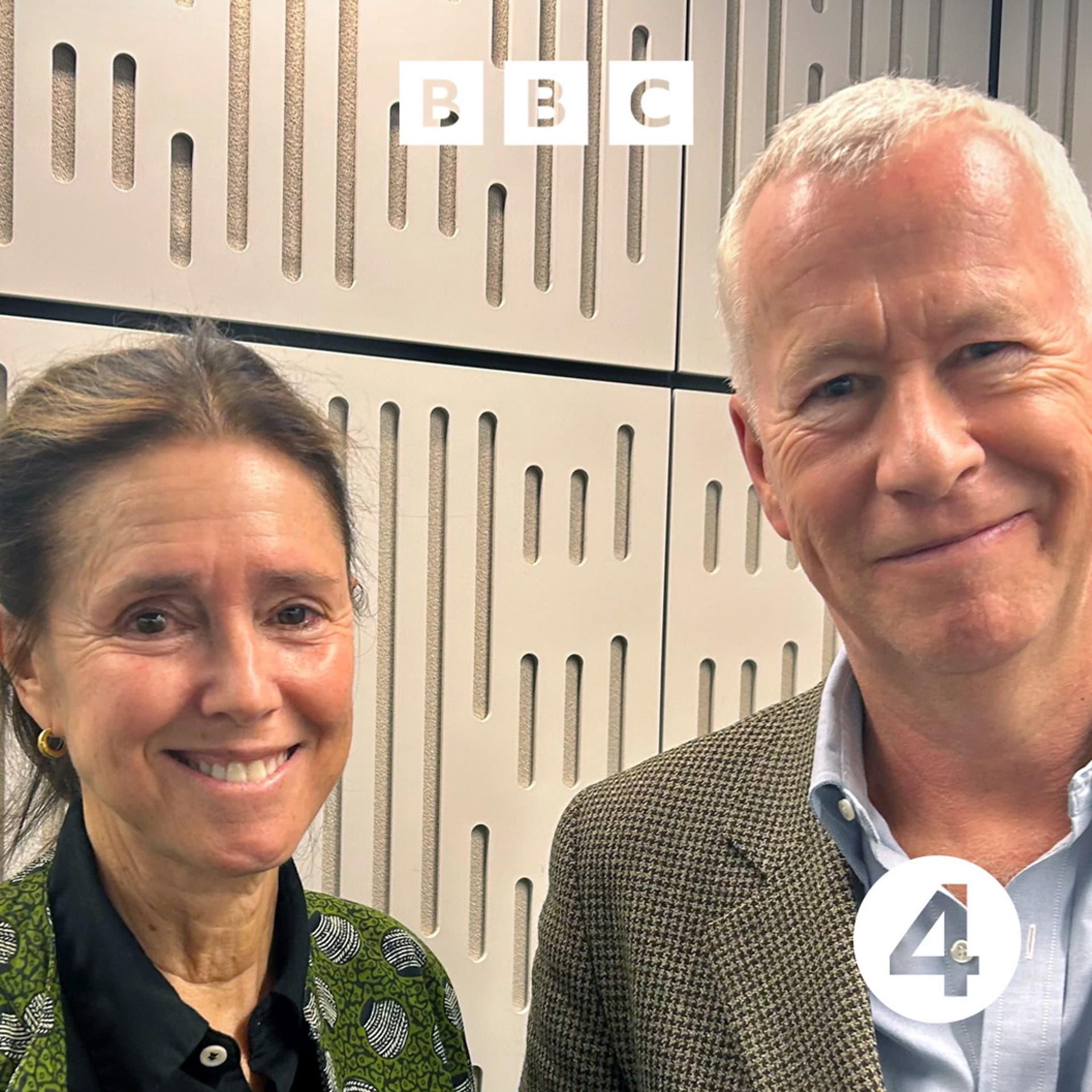
0:12Welcome to This Cultural Life, the series in which some of the world's leading artistic figures reveal the most important influences and experiences that have inspired their own creativity. I'm John Wilson, and my guest in this episode is the theatre, opera and film director, Julie Taymor. Her stage version of The Lion King is the highest-grossing show in Broadway history, having made nearly$2 billion, and it recently marked his 25th year in London. The Lion King won her two Tony Awards, including for Best Director of a Musical, making her the first woman to do so. She was also co-writer and director on the ill-fated Broadway musical Spider-Man Turn Off the Dark.
0:53Julie Taymor has told Shakespearean stories on the big screen, including Titus, starring Anthony Hopkins, and The Tempest with Helen Mirren. Her film credits also include Frida, a biopic of the painter Frida Kahlo, and the Beatles' jukebox musical Across the Universe.
1:13Julie Taymor, welcome to This Cultural Life. Thank you. Happy to be here. You were born in Massachusetts, the youngest of three children. Tell me about your parents, first of all. What did they do? Well, my father was a doctor, and he was one of the early inventors of in vitro fertilization and was a fantastic professor at Harvard. And my mother was a politician. She was in democratic politics. She was a state representative. She was a delegate and inspired many, many other women. There were programs that she started to get women involved in politics after their children were born or they wanted to go back to school.
1:52But she wrote a book called Running Against the Wind, which was pretty amazing and before her time. I did a film on Gloria Stein in my last feature. The Glorias. Yeah, The Glorias. And Gloria said my mother was one of her big inspirations, which I didn't know. So that was pretty amazing. So she gave you as a child, she allowed you to think, I can, as a woman, I can do whatever I want. Absolutely. And with your father being an academic, being a doctor, so there's science, there's politics. What about art and creativity in the household growing up? Well, my parents loved the arts. Every dinner table conversation was filled with everything.
2:31It was nonstop. We didn't have television and streaming to the extent that people, and definitely no iPhone. So people were lost in conversation with each other, not conversations with a flat little two inch whatever it is. I know I sound like I'm from the dark ages, but I really appreciated the kind of full throttle communication that went on at our dinner table every night about ideas, history, politics, everything. Were you a storyteller as a child? Were you interested in making up narratives? Oh, my God. I had a closet full of dress up clothes and my older sister was very theatrical. And I went to Boston Children's Theatre when I was really little, like 10, every day after school and maybe on Saturdays as well.
3:17So I was involved in in theatre very young. And my sister, we would always put on plays in the backyard or the garage. And I always had to be the princess, which really I resented and hated. And she got to be the witch, which was much more fun. Were you borrowing stories or were you writing your own tales? Well, I wouldn't know what writing would be. You know what I mean? I would make up stories, but we'd also do fairy tales or putting on musicals like Peter Pan and then acting those out with my neighbourhood friends. But in your work as a theatre maker, as a storyteller, on stage primarily and the screen, do you trace it back to those stories that you were doing in the back garden?
3:56Well, I've always made plays and I've always made costumes or I made masks when I was really little. Or by the time I was 14 or 15, I was doing experimental. This is, you know, experimental theatre in the basement of Arlington Street Church in Boston, doing original work. Now, this is what you're referring to. At that time, people were starting to create plays without writers. You know, Grotowski, Peter Brook, a lot of them were creating plays through improvisation from their company members. And you were a teenager at this time. Yeah, I was the youngest member of this company. Yes, I was a teenager.
4:30So the seeds had been sown then? Oh, absolutely. Definitely. I read that you spent a summer travelling to India and Sri Lanka, still in your teens. Yes. What do you remember of that trip? Well, it was the experiment in international living. And I went to Sri Lanka. It was called Ceylon back then. And I travelled there to live with a family for two months, I think. I adore my parents and I had a great home. But for me, I wanted to go as far away as I could from American culture. Why that is back then, I can't explain, but I think it did set me off on this journey as a cross-country artist, cross-national, transnational, I call myself.
5:10What identity? Transnational. I live where I live. I get inspiration where I am. And that started very, very young. So I had an amazing experience in India and Sri Lanka when I was, I don't remember if it was 15 or 16. And then that went on to graduating high school early. I put off a year before I would go to college, and I went to Paris to study at École de Mime Jacques Lecoq, because anybody can understand it if it's just physical and not verbal. It's not to be like Marcel Marceau or that kind, but we use masks. It's really using your whole body to tell the landscape, to tell the story. So you were in Paris.
5:50This was just after you'd been to Sri Lanka and India there. And you were 15, 16 years old. Yes. That's actually very young to be travelling the world alone. I know. My parents were insane, people thought. They gave me so much trust that I had to come up to it, if you know what I mean. I had to rise to the occasion. They treated me like an adult and I treated them equally as adults. I never called them mommy and daddy. I called them by their first names. You must have had to grow up pretty quickly, being 15, 16 years old in Paris, in Sri Lanka, India, alone. You had to have your wits about you as well, didn't you?
6:24Yeah, you do. You do. It's a great way to learn.
6:31On This Cultural Life, Julie Taymor, I asked my guests about their formative creative influences and experiences. And your first choice is seeing the film Rashomon by the Japanese director Kurosawa at the age of 16 in Paris. And Rashomon is often cited by critics as one of the greatest films of all time. What did you make of it when you first saw it? Well, it was in Japanese, with subtitles, obviously.
7:06I had never seen anything like it. I mean, it really was my eye-opener to the power of storytelling. Not just film, but storytelling, because at its base, it is telling the story from three or four different points of view. So you had a rape and a murder, very simple, hardly any characters. And you're hearing the story from someone who might have been a servant. Then you hear the story from the murdered rich man. Then you hear the story from the accused rapist murderer. And then you hear the story from the woman who was the object of desire. And so where is the truth? I mean, this is what we're living every day right now.
7:49We're living a Rashomon because nobody knows what the real truth is. So for me, point of view, this idea of how you have to choose what is your point of view when you tell a story, from which vantage point? Are you an objective observer and a narrator, or are you a subjective storyteller? That was extraordinary. And how he changed style in each of the characters. A shaman is one of the stories. That was very important too. If you want to link that to Rafiki, it was the first time I saw a shaman in a story. Rafiki, who is the storyteller in Lion King? Lion King. She starts it and she interrupts or comes to our assistance during it to forward the story.
8:29But Rashima was not only just an incredibly beautifully told tale, but also the use of camera was mind-boggling. Black and white film. I'd never seen Toshiro Mifuni, who became my passion at age 16, just the most extraordinary actor. And then I love all of Kurosawa's. He's done four or five, I think, adaptations of Shakespeare, Throne of Blood, Macbeth, Ran, which is King Lear. Some of them are modern storytellings, but he takes those themes. And I also felt that's very inspirational to me. You could tell a story that might, as I think Lion King does, transcend where it comes from and speak across culture.
9:09And then you interpret it from your culture. So Kurosawa became my favorite director and has remained my favorite director over all these years. Has he influenced the style of your filmmaking? I think so in the sense that I love some of his grander movies like Kagamusha and Ran, where you have many flags moving along with the horses running and you watch the camera movement. And when it's static, you really think about why is the camera static? His use of camera to tell the story is, bar none, it's one of the greatest. He's one of the greatest. So it has definitely inspired. I mean, there are a number of other great directors who have inspired me as well, but Kurosawa still remains at the top.
9:52Give us the proudest prisoner of the gods, that we may sacrifice his flesh. Victorious Titus, spare my firstborn son. Religiously, they ask for sacrifice. You adapted Titus Andronicus for the big screen. Were there any of the sort of tropes of Kurosawa's filmmaking that you borrowed for that in terms of the visual flair? Anthony Hopkins as Titus himself, and it's set in a very... Well, it's set in Rome, but it's a very obviously stylised version of Rome. It's clearly in a silk. Well, it's crossed historically. You have the Colosseum today, but you also have it then. I try to blend time because that's what Shakespeare does.
10:33I mean, you look at Shakespeare's Titus Andronicus and people are going to be in Elizabethan clothes and togas. You know, it's a complete blend because Shakespeare would use ancient tales, myths, stories to talk about his present time. I mean, that's what we do as artists. We have it as an allegory or as a mirror image. So when I went to Rome and I had Dante Ferretti as the brilliant production designer who, you know, did Fellini and Martin Scorsese films, he took me to the Roman Colosseum and Mussolini's Colosseum, the Square Colosseum, which is fascism at its peak. And if you watch Titus, the movie, you'll see that it's a blend of time that you do often in the theatre.
11:16Very rarely do people do that in movies. They think of movies as much more literal. Was that a challenge to present to an audience then in that case? On the big screen when, as you say, you accept the non-naturalism of the stage, but when you try and present it on the big screen, sometimes there is resistance. No, no resistance because it's Shakespeare. They're already speaking in a non-naturalistic language. So you're already in a poetic world. We couldn't shoot in the Roman Colosseum. So we went to Croatia and we shot in Polo, Croatia, because it's the only Colosseum that still exists with a ground.
11:48There was no floor in the Roman Colosseum. Oh, that is an existing historic building that you shot in. I presumed it was a film set. Oh, God, no. A created set. No, no, no. No, we didn't have the money to do that. That was Gladiator. That was not our film. We went to real places. So I've been to Rome a number of times, but when I went with the idea of doing this, what you see is all these ruins in the middle of fiats and fast cars and big buildings. So you're looking at time blended in reality. So in a way, that is reality. You have ancient Rome, then you have the 16th century moving right up through the fascists, right up to the present and the postmodern and the future.
12:30The layers of history. The layers. That's exactly. You feel the layers. That's the word. The layers of time. And I think that because Shakespeare, as we say, is contemporary for all time, you have those layers naturally in the stories that he tells because human beings sadly do not change. Titus was your debut feature, wasn't it? Yes, it was. I mean, that's quite a really deeply brutal story to be telling for the first time that you're making a film. Does that go back to Rashomon as well? Well, maybe, but it also goes to, I'd just done The Lion King, so what should I do next? Titus Andronicus.
13:07What better? You know, I'd been offered the cat in the hat, and I went, okay, here we go. I'm going to get boxed into thinking I should be doing animals and big children's. But I went, no, I want to do what I think is a very great play. It had been extremely maligned for years, Titus Andronicus. I think it is a genius play. I think it is a pearl in an oyster. There's a lot of stuff around it. But if you get to the heart of it, it is the greatest dissertation on violence ever written. It is about the darkest thing to be human. Titus, a great general, comes home to bury his dead sons. And the first thing he does is to slaughter the firstborn son of his enemy, of the enemy queen, as a sacrifice because of religion.
13:54The very first words practically out of the enemy queen's mouth, this was Jessica Lange playing Tamara, when she begs Titus not to kill. He has sons. She has sons. Please do not kill my son. They fought in this war like your sons did. And he says, I have to. This is part of our tradition. This is part of our religion. and she says, Oh, cruel, irreligious piety. Who wrote those genius words? Those are extraordinary. That is the fundamental reason why most wars happen. Oh, cruel, irreligious piety. You know your mother means to feast with me and calls herself revenge and thinks me mad. Hark villains, I shall grind your bones to dust, and with your blood in it I'll make a paste, and of the paste a coffin I will rear, and make two pastries of your shameful heads, and bid that strumpet your unhallowed dam, like to the earth, swallow her own increase.
15:07Here's Titus, a good man, a great general, who by the end kills his daughter and bakes his enemy children into pies. That's not just gruesome storytelling for its own sake. It's a journey. What is it in your background, in your family, in your experiences that will push you to that point? And it's a real, truthful journey. And I saw that in our culture. We opened on Christmas Day 1999 in America with the idea that this would be the last of that kind of violence. You know, I'm talking about silly idealism and all of that from an artist and her compatriots. But of course, it just got worse after 2000.
15:56Your next formative experience is seeing a traditional initiation ceremony in Bali in 1978. I presume you were there on a fellowship. Yes, I had a traveling fellowship to Eastern Europe, Indonesia and Japan. Part of my trip was to go to Indonesia first. I thought I would spend three months in Java and Bali and I spent four years. And one of the reasons is when I was there, there really wasn't film and television. It wasn't ubiquitous like it is now everywhere in the world. So if you went to a village, they would still be doing their theater that was partly ritual and entertainment as they'd always been doing.
16:36And it was very specific to that village. So I went and was blown away by seeing how powerful theatre was, how formative it was in the upbringing of a child, how it spoke to politics, to religion, to education. You'd learn about social things. It was the major entertainment of that society, both in Java and Bali. What was the purpose of the ceremony that you saw? Well, the ceremony that I saw, that specific ceremony, happened after I'd already been in Indonesia for two years. And I was by myself in this giant village square near a temple. And listening in the dark to the sounds of gamelan orchestras from different villages that had come to celebrate this particular village's initiation ceremony was beautiful.
17:28And all of a sudden, I could see coming at the far end of this village square, sparkling little mirrors that had the moonlight bouncing off of them. And as they became closer, these figures in the dark, I realized that they were old men in full warrior Barris costume with their spears, long spears. But their costumes were all covered with little mirrors, the whole thing. So they would be glinting. There was nobody there. They came out, 20 or 30 of these men, and they did this incredible dance. And I had never seen or experienced anything like this. The men were dancing, no musicians, to their own voices, which were what we would say demonic, but things emanating from deep from their bellies as they came and they did this beautiful dance.
18:21dance and as soon as they finished the dance these old men and I say they're old because then they bent over soon as that they were out of what appeared to be a trance they bent over a young man came out with an oil lamp and he took the oil lamp and hung it on a tree branch they didn't see me by the way because I was in the shadows and they were only lit by moonlight and there's no other audience no there was no audience so they were dancing for themselves or for the sake of The ceremony. That's right. And then a young man came out with an oil lamp, hung it on a tree, the square filled with families and people and a curtain.
18:56And all of a sudden they started to do for nine hours an all night Arja. Arja is an opera, like mask dance opera. And, you know, I told you I started very young in the theater and I'd been doing it all my life, along with academics and other things. I wanted to be an anthropologist. I studied anthropology at Columbia, you know, all kinds of things. And I had this kind of light go off in my head, which is these men who did the Barris dance, who came out, they were dancing. The religious dance that they did or the ritualistic dance was for what we call God. But God can mean anything. But it was almost for nature.
19:40It was a giving back and honoring to the spirits. They can describe the way they want to describe, but what I saw as an artist is that there is a point in which an artist has to go beyond the fame and the money and has to go into why are we doing this? Why do we do it for ourselves? Why do we do it for people? Whenever Lion King brings me back, sometimes I tell that story to talk to the actors in the company to say to them, when you're on that stage, no matter how tired you are because you've been doing eight shows a week, you're doing it for an audience that may be their first time at the Lion King.
20:16It may be the six-year-old's first time in the theater. So not only are you inspiring them, but you're also doing it for yourself as an act, a ritual act of performance that you're given. You're blessed with this talent to dance, to sing, to act, to be in a company of players. So when you come for those two hours, you have to fill it with that kind of energy, with that kind of spirit. And that struck you in that moment, watching those old men who were then almost sort of transformed and rejuvenated in the moment of performance. Yes, and that imbuing the tools that you work with, with that kind of feeling that it is beyond the banal, the everyday.
20:56Then I started a theatre company in Indonesia. I had a theatre company, Teatro Loh, L-O-H, which means the source. And using sort of traditional performing techniques or using puppets even? Everything. I had Javanese, Balinese, Sundanese, masked dancers and actors, traditional and contemporary from all over Indonesia. And we all lived together and we created an original piece that was totally inspired by that experience I had and also being a foreigner in somebody else's country. I wanted to tell a tale of that experience of how you can either maintain your center and grow or you can get lost in another person's culture.
21:41Maybe it's one thing to be immersing yourself in other people's cultures at the time and to be expressing and telling these stories through the indigenous culture. But your work in the years since has often looked to those cultures and looking back to your travels. With the debate in more recent years about cultural appropriation, how much thought do you have to give now to conceiving an idea that might borrow from other cultures? Well, I knew it back then. There's a very big difference between inspiration and appropriation. It goes both ways, obviously. I mean, we go to Japan, everybody's wearing suits and ties.
22:17You go to Korea and K-pop is American black culture. I mean, it's been going on forever. That's what travelers telling stories from India to the Middle East to Africa to America. Where do these stories come from? The beauty is that the one thing we're forgetting is that we all have that story. We all have the coming of age story. We all have birth and death and go through the main markers of life. So something like The Lion King proves that there could be a tale that appears to be from Africa, although it could be Hamlet, it could be from Japan. But it is a coming of age tale that you can understand as well in Japan, in Brazil, in Korea, in Mexico, as you do in Great Britain or the United States.
22:59It is not an American tale. We're forgetting our common ground by something very important, which is honoring the identity of voices that have not been heard on their own. So when I was doing the puppetry way back, even before The Lion King, and doing what people like to, oh, she was doing Wayan Kulit, shadow puppetry, or let's talk about The Lion King, or there's Bunraku. No, there is not Bunraku or Wayan Kulit in The Lion King. There is a technique where the actor is manipulating the puppet off of their body, but it is not a traditional Japanese art form because that takes a lot more than just the technicality.
23:40It takes 80 years to become a master Bunraku performer. The movement is so beautiful and you get the feeling of the humanity and the movement of the puppet. Then the singer for the character is off stage. Now, I changed that in my version of this sort of type of puppetry in Lion King, but we'll talk about that when you ask me. Well, I'll ask you now, actually, Julie, because the Lion King opened in 1997.
24:18It seemed to be reaching back from what you're describing to these traditions. Were you drawing on that experience of seeing those shows? Well, I had been in Indonesia already and I'd seen all kinds of puppetry in Czechoslovakia because that was part of my fellowship. So I'd seen a lot of different forms of puppetry from around the world. I had to find the right techniques for each of the characters, the main characters. So the lions have masks on their heads. They're actors who have masks on their heads. You see their face. They stand. They walk like humans. They may have a tail, but it's more like a sash.
24:50And they're facially expressive as well. They're facially expressive. But you get to Timon and Pumbaa, and all of a sudden you have to play with scale because Timon is a little meerkat. Hakuna Matata Ain't no person crazy So if I put a human being into a costume with a mask and little makeup a la cats, they'd be too big. So trying to get this little three foot tall, smaller or at least the same size as a young Simba, I thought of this style, the technique of hachiyoji, which is another Japanese technique that I'd seen in Japan on my fellowship, where an actor or a puppeteer sits on a small box that has wheels, and the feet of the puppet are attached to the feet of the puppeteer, and then he can manipulate the hands or the head or whatever.
25:41And he zooms around the stage on this little box. I thought, ah, what a great idea for Timon, except I don't want the box. So I took a technique that I'd seen, not a tradition. As I say, when it takes 80 years to become a master of a tradition, like punraku or hachiochi or whatever it might be, you're not just studying the technique. It's not just the strings and the rods and how it's manipulated. It's a whole art of exactly how does that character move its hands? How does it speak? It's almost a dance that you're studying. That's why it's a whole cultural thing that takes 80 years. It's not the technique.
Read the full transcript
26:22Techniques belong to everybody, in my opinion. There's no such thing as appropriation of techniques. Oil paints didn't exist in Bali till the Dutch came and brought canvas and oil. Now you look at Balinese paintings, and only the Balinese paint like that. But they took the technique, the oil, the brushes and the canvas from Europe and made it their own. So I believe the techniques, inspiration for that kind of style, there's no such thing as appropriation. It doesn't exist. I mean, what are you going to say? The Chinese Beijing opera or ballet, the Red Ballet. OK, they appropriated Russian ballet.
27:02Oh, now is America appropriated? You start to break it down and it's but the stories they tell and how they infuse the stories. That's what's cultural. Let's go back to the initial idea of taking such a much-loved and very successful film and adapting it for the stage. It's a high-risk game. There's a lot at stake. Why did they ask you? Did they want this approach with the puppets? They didn't have any idea about the approach to the puppets. So you brought that idea to business? I did, but I would say that Tom Schumacher had known, because he was the head of the Olympic Arts Festival when he was introduced to me, He was aware of a production called Liberty's Taken about the underbelly of the American Revolution.
27:42And I had 15 actors play 150 to 200 parts using all kinds of masks and puppets. So somebody would have said, Julie Taymor, let's try her. They must have been thinking she's going to bring us puppets. No, she's going to bring us another way. Could be with puppets, masks. But how are you going to do, as we always say, the stampede? How are you going to do an entire musical that doesn't have any human beings in it at all? Now, cats did it with makeup, but they're all cats. They're all the same size and they're all small. What do you do when you have to have a herd of 500 wildebeests or you have to have giraffes or you have to have elephants?
28:20So I think they were aware that I had the technical background and I'd done huge opera. People think Lion King was the first. I did Stravinsky's Oedipus Rex with Seiji Ozawa with 120 men on stage.
28:44Seiji Ozawa had asked Kurosawa, how do you like that? Kurosawa turned it down, and I got offered to do it. Why? They knew I'd been in Indonesia for four years, and I'd been in Japan, and they knew that I understood much about the Asian theatre forms. If you put a mask on the face of an opera singer, they can't sing. Frankly, it doesn't work. So that's when I first did the heads on the faces. So they knew you would bring a sense of scale and drama and you could animate that possibly through the puppetry. What were your major concerns when they asked you to take it on? Well... Had you seen the film?
29:22No. No, I hadn't seen the animated film. I was brought up on Disney, like most people. But you went out to see it straight away, I presume. Yes, then they sent me a DVD or whatever back then. And I was suitably impressed and moved by it. And then I thought, wow, what a ball to figure out how to do a stampede on stage. And I knew this is the challenge. And this is when you asked me this thing about what were my concerns. Doing eight shows a week for an actor on Broadway, the actors had to really feel like their presence was important. And I don't mean that, you know, that then we do cats, that we would then put makeup and just that's it.
30:03But that I would find a way to have the human and the animal simultaneously. Because after all, even in the animated film, you're aware that that's Jeremy Irons acting that part of Scar. and you're aware of the facial expressions of the animals, which animals do not have. So I thought, OK, I'm going to create a mask on the head that is the lion, that is Scar, but it will be a frozen sculpture into what is the essence of that character. I call that an ideograph. And I sculpted all of the masks and puppets. You handmade them? I handmade them. Michael Curry did the technical parts, most of them. He did a few designs, but generally they're all my original designs and sculptures and painting.
30:46That is an unusually hands-on approach to theatre making, though, isn't it? For a director of a show to also be, in effect, the designer and the artisan. And the costumes. I design the costumes. Well, that's why I say I'm a playmaker, because there's no word for that combo. You know, it's something I did since I was a child. But you presented that idea to Disney. Was there resistance at first to just to the principle of having puppets on a Broadway show? No, because I think Tom understood it. I created a maquette called the Gazelle Wheel. If you're familiar with The Lion King, there is a moment where you see something that looks like a wheelbarrow and a bunch of bicycle wheels that one dancer pushes across the set.
31:29And on those wheels are little gazelles, like relief puppets. So as the wheels turn, the gazelles leap up and down, and it looks like a herd of gazelles, small gazelles, distant, far away. I play with cinematic techniques in The Lion King a lot. So we have full-size gazelles, but this case, the gazelle wheel is a kind of group puppet. And I showed this to Michael Eisner. I flew to Florida with some of my concepts, and I said to him, in traditional puppet theater, you would have a masking, and the puppeteer would be behind that masking. and the puppet of the gazelle will go up and down. You may see a teeny bit of stick, but probably not.
32:09In this Lion King, we are going to get rid of the masking and you're going to see the art of the performance. Now, if you think about the gazelle wheels and you think about the essence of the Lion King and what it's about, it's the circle of life. So built into the design is the idea of the circle. It starts with the sunrise, then Pride Rock circles up out of the stage. Then you have these incredible circles that move the animals along. There's the waterhole as well. And there's the waterhole is done as a circle of silk that pulls through. And I said, we're not hiding the strings and the rods.
32:44In fact, that is what's going to be the pleasure. There's no projections of a sunrise. I wanted to do everything that theatre does best that film can't do.
33:05And this was a totally new theatrical experience when it launched on Broadway and here in London, probably a couple of years later. Do you remember the reactions of the first audiences? Oh, totally. We knew there was something special. It was previews and it was our first theatre. But when the audience started screaming, literally screaming as the animals came down the aisles, we couldn't even hear the show anymore. And that still happens. You know, it was so overwhelming that I think all of us began to cry.
33:44And the other thing that meant so much to me and to a lot of us is that up until that point, African Americans in the American theater, every single show had been about racism, not the Lion King. You know, we were a mixed group culturally, and as artists we saw the same thing. This is the point back to your identity thing. It's the artist's ideas and it's not where we're from. It's are we on the same page and are we authentic to ourselves?
34:20The Lion King was a massive success right from the outset. It is now one of the most successful and longest-running shows of all time. You won a Tony Award for Best Direction of a Musical, becoming the first woman to do so. But just a decade later, you were selected to direct and co-write a new musical, an adaptation of Spider-Man, on Broadway, featuring music and lyrics by Bono and The Edge of U2. I hang on everywhere And you said rise above Open your eyes, oh But that production was famously fraught. It was ridden with technical and financial problems, there were several injuries, and it ended up being the most expensive Broadway production in history.
35:09How do you look back on that experience now? Well, a number of your facts are wrong, but, you know, that's what I expect. Which ones? Well, first of all, it didn't cost what they think it costs. It cost what Shrek cost, but nobody went dived into it. To redo the theater just like they did for Harry Potter, that might have cost money. But this show, this is a subject that is so big, and I've actually never really gone into the details, but it was a stunningly beautiful script. It should have gone out of town because we had critics gunning for it before it was even written. So we don't really want to go into that now, No, I don't think because it's off topic.
35:51And I see the script. I've reread it. It's magnificent. We never finished it. Bono and Edge never finished their music. The show that I was working on, I still believe in it profoundly. The accident that happened had nothing to do with flying. It's a whole other reason. And I won't go into that either at this point because it takes too much. It's a whole other subject matter. Do you regret taking on the project? God, no. No, I regret that the people who were in charge of it didn't know what they were doing. Um, and I feel like it's a real shame that we didn't get to finish it. A real shame. I know people now when young people come up to me, they're 20 and they go, oh, the first experience.
36:29And I keep thinking it's going to be Lion King. And they say it was Spider-Man. You know that there were plenty of people who loved it. We didn't get to finish it. So you think it should have had more time to develop? I think it had to finish when it had to finish. It was like doing Cirque du Soleil. They take two years. You can't do a tech of a show. I was told by Marvel, I want state-of-the-art flying. We were doing things that have never been done before. I mean, you had, what, 187 previews, I think, didn't you, which is the longest in Broadway history. I don't think so. And again, it's a combination of circus and theatre, and you want safety, right?
37:03It's not a matter of how many previews. It's a matter of you've got to get it right. And when you're flying, all these things the press doesn't give a shit about. I mean, frankly, they don't care. but when you're flying to change one little move could take hours in programming. So it's not like doing a preview of a Feats on the Ground musical. It's not like doing the Lion King. We tech Lion King in six weeks. It's not the previews. We didn't have enough tech time to get Spider-Man correct. We didn't and when you're out of town, if things stop in the middle, they don't make such a big thing out of it.
37:37This one, it was all out front. Aside from the logistics, the technicalities, the problems of staging, just your own personal relationship, and you say this is sort of off topic, but it's really striking that you go from making the most successful, one of the most successful Broadway shows of all time, to one which was deeply problematic in many ways. That must be still so frustrating for you. Well, it's frustrating that you didn't get to see. I mean, I've met many people who saw the version that I was working on. What ultimately opened technically had cut a lot of the great stuff. They were terrified.
38:09They thought, you know, the producers, they went to safety. They went to safety. They ended the whole thing with the first act because they liked the coup de théâtre that happened at the end of the first act. And we never finished the end of the original idea. But between Lion King and Spider-Man, I did across the universe, Frida, Titus, the magic flute. It's hardly like I didn't have four or five or six opera, theater and film experiences. The Green Bird, Wandati. I mean, I did so much between those things. So if I tell you the whole story of Lion King, that could have been Lion King, because there was a point where there were some people in the Disney company who didn't believe the puppets would work.
38:53But you won them over. There was a commitment from Disney and it was a fantastic success. What you're saying with Spider-Man is if there was the same level of commitment. There wasn't Don't Abandon the Ship and it was fear. Bono and Edge weren't around. I mean, they were off halfway around the world. And then the producers, they were not even in the room with me when things happened. So there were lots of reasons. That's why I don't think it's worth talking about now. But what's your relationship with that whole project now? I don't have one. You're still proud of what you achieved and what it could have been.
39:23Is that what you're saying? The word proud is not right because that pride, you know, there's too much connotations of that word. That's not what I would say. I'm not proud. Do I think we were on to something special? Absolutely. Did people who really saw it, who knew about theater, think we were on to something? Absolutely. Could it have been a massive hit? Absolutely. It's an honor to be back hosting the 65th annual Tony Awards. And I'd just like to say that I'm not going to be spending the whole show doing Spider-Man jokes because it seems it's too easy. It's too easy. It's expected. But it is such a big story this It was one of these sharks in the water, ready for blood.
40:06Oh, it's Marvel Comics and Julie and Bono. And they were just ready for it and wanting it to fail. The only thing not falling over at Spider-Man are the ticket prices. Julie Tamer was found out it was over when she woke up and found the head of War Horse in her bed. We were the first show to experience that kind of live vitriol that comes from people on the web. You know, the whole thing with blogs had just started when we were there. You understand that. Do you know what it was like to have people in time writing on your first preview? Oh, this is this, this is that. I mean, I think that Ben Brantley, who's not there anymore, the New York Times critic, before we'd even written a script, called the whole idea vulgar, vulgar.
40:51He never liked Lion King. So what can I say about him? He's not there anymore. The Lion King was so innovative at the time. Do you feel that theatre on Broadway, particularly the big musicals, are playing it too safe these days? I have no comment because I don't see enough of them. I really don't. What drives you on creatively, Julie? What drives me on? Really good stories that need to be told or that feel like I could have an in, find a way to tell it. You say you started out telling stories in the backyard with your sister. is it the same urge? Oh, completely. I adore it. The reason people say, do you like film better than theatre?
41:32I like them both for different reasons. But I'll always come back because of the visceral nature, because the smallness of your team. I love doing... I'm not all about big theatre at all. So what drives me is the storytelling. Julie Taymor, thank you very much for sharing your cultural life with us. Thank you.
41:57Well, I do hope you enjoyed that conversation with Julie Taymor. There are many more interviews with leading theatrical figures to be found in our archive, including Aaron Sorkin, Lucy Preble, Judi Dench, and Sam Mendes, to name just a few. Please do subscribe to This Cultural Life on BBC Sounds or wherever you get your podcasts internationally. From me, John Wilson, and series producer Edwina Pittman, thank you very much indeed for listening to This Cultural Life.
42:30Hi, everyone. Hey, that's Marianna Spring. I'm Sarah Smith. And we are a couple of the hosts of America. And right now, as you might imagine, it's not very quiet over in Podcast HQ. We've been keeping ourselves very busy. Yeah, because the two of us, along with Justin Webb and Anthony Zirker, are now getting together a few times a week as we chat through trying to untangle all the twists and turns and developments in the US presidential election. And it would be fair to say there have been quite a lot of twists and turns already. We've also been chatting a lot about what happens on social media, my favourite topic.
43:01If you're interested in US politics, you want to understand what is going on, then I think you might really like our podcast. Which is simply called America. You can listen to it on BBC Sounds. Until then, we'll see you later.
From the publisher
Theatre, opera and film director Julie Taymor is regarded as one of the most imaginative directors and designers working today. Her stage version of the Lion King is the highest grossing show in Broadway history, having made nearly $2 billion, and it recently marked its 25th year in London. The Lion King Julie two Tony Awards, including for best director of a musical in 1997, making her the first woman to do so. Julie Taymor has told Shakespearean stories on stage and the big screen including Titus, starring Anthony Hopkins and The Tempest with Helen Mirren. Her film credits also include Frida, a biopic of painter Frida Kahlo, and the Beatles jukebox musical movie Across The Universe.
She tells John Wilson how seeing Rashomon, Akira Kurosawa's 1950 film, as a teenager, was a formative cultural experience. Kurosawa's ingenious approach to narrative opened her eyes for the first time about the possibilities of innovative storytelling. She also recalls how her travels around Indonesia and Bali after graduation, and in particular, witnessing a ceremony in the isolated Balinese village of Trunyan have had a profound impact on her work as a designer and director.
Julie reveals how she came up with the ground-breaking concept and some of the designs for the stage version of Disney's The Lion King. She also gives her opinion on some of the difficulties faced by the ill-fated Broadway musical Spider Man: Turn Off The Dark, on which she was co-writer and director until being replaced during its previews. The production, which featured music and lyrics by Bono and The Edge of U2, was ridden with technical and financial problems, and resulted in several legal disputes.
Producer: Edwina Pitman