In short
Podcast Notes: This Cultural Life - Katherine Rundell
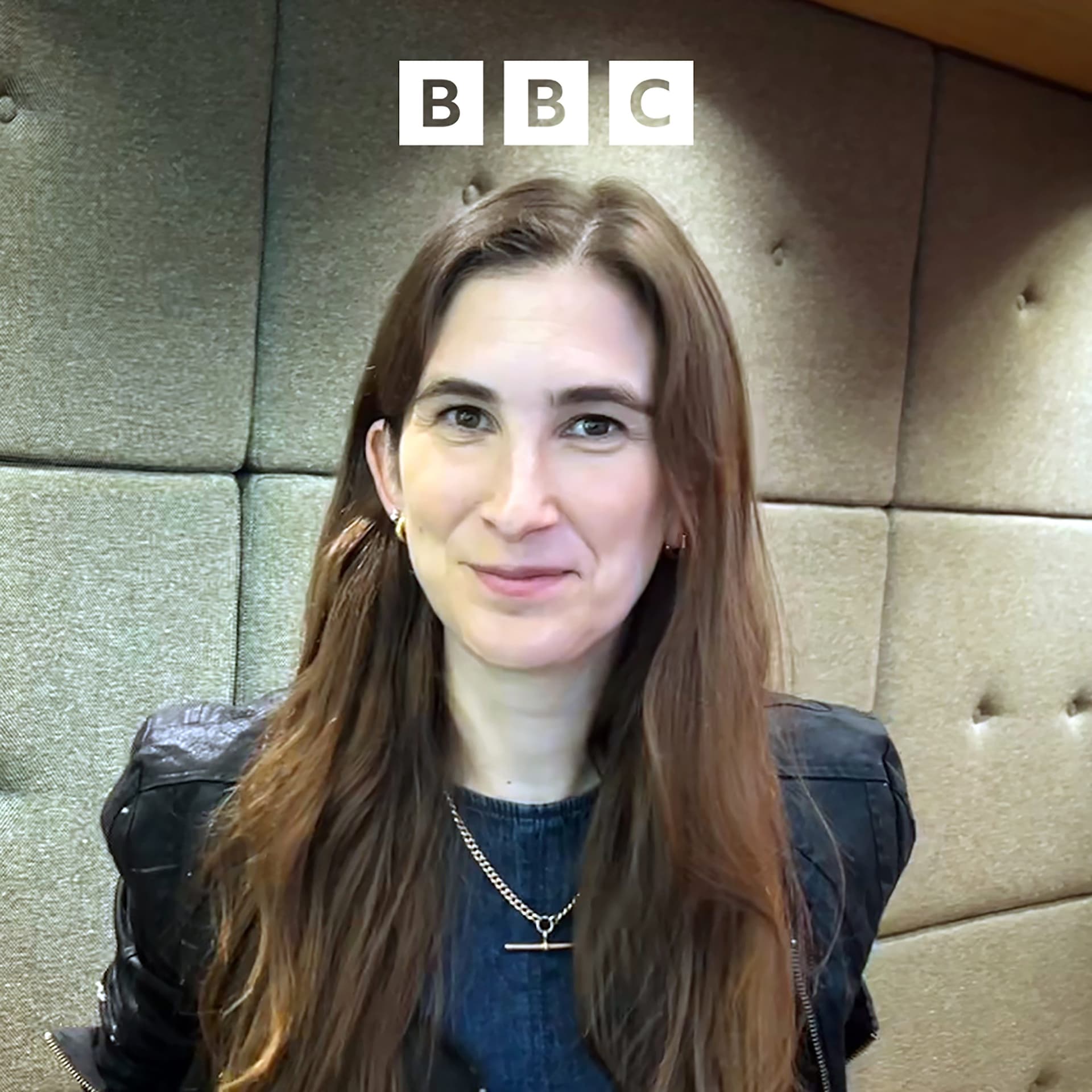
Episode Overview Host: John Wilson Guest: Katherine Rundell Description: Katherine Rundell, a prominent children's author and academic, discusses her influences, family background, and experiences that shaped her work, including her acclaimed books like *Rooftoppers*, *The Wolf Wilder*, and *The Explorer*.
---
Key Themes and Discussions
Early Influences
- Bus Journeys to Culture:
- Rundell recalls Saturday mornings riding the 176 bus in London with her father, a civil servant and dance enthusiast.
- The bus route passed key cultural landmarks, sparking her love for London and the arts.
- Family importance: These outings were family bonding times, instilling appreciation for culture and education.
- Library Visits:
- Visits to Camberwell Library allowed her to choose books freely, fostering her passion for reading.
- Emphasis on the library as a space for intellectual freedom and serendipitous discovery of literature.
Childhood Experiences in Zimbabwe
- Moving to Zimbabwe:
- Rundell lived in Zimbabwe from ages 8 to 14, experiencing a contrast to life in London.
- The natural environment, including wildlife, profoundly impacted her imagination and themes in her writing.
- Discusses the freedom and less supervised lifestyle in Zimbabwe, allowing for exploration and connection with nature.
Tragedy and Loss
- Impact of Loss:
- Rundell reflects on the death of her foster sister, which deeply influenced her perspective on loss and shaped her writing for children.
- Aims to convey complex emotions and realities of life to young readers through her stories.
Literary Influences
- C.S. Lewis's *Chronicles of Narnia*:
- Introduced to fantasy literature; *The Lion, The Witch and The Wardrobe* had a lasting impact on her writing style and thematic choices.
- The concept of portals to other worlds resonates in her own works.
- John Donne's Poetry:
- Rundell expresses her admiration for Donne and metaphysical poetry, which shaped her views on language and creativity.
- Discusses how his explorations of love and life resonate with her own writing.
Writing for Children
- Responsibility in Children's Literature:
- Rundell emphasizes the importance of authenticity and quality in writing for children.
- Highlights the current challenges in capturing children’s attention amidst competing forms of entertainment.
- Celebrity Authors and Market Trends:
- Critiques the rise of celebrity children's books, emphasizing the importance of genuine authorship and care in children's literature.
- Concerns about ghostwritten works potentially diluting children's engagement with literature.
Academic Background
- Academic Journey:
- Rundell transitioned into academia early and discusses how teaching informs her writing.
- Access to extensive literary archives enhances her creativity and knowledge, enriching her storytelling.
Current and Future Work
- Upcoming Series: *Impossible Creatures*:
- Discusses the magical elements and world-building in her new series, which parallels her earlier inspirations from Narnia and fantasy literature.
- Work Ethic and Future Plans:
- Rundell outlines her commitment to hard work and the creative process.
- Mentions plans for adult fiction while continuing to nurture her children's book series.
---
Key Takeaways
- Importance of Early Experiences: Childhood experiences, both joyful and tragic, play a vital role in shaping an author's voice and thematic interests.
- Power of Imagination: The ability to explore complex themes through fantastical narratives can resonate deeply with young readers.
- Cultural and Social Responsibility: Authors have a duty to produce thoughtful, engaging, and authentic works for children, fostering a lifelong love for reading and learning.
---
Conclusion Katherine Rundell’s reflections on her upbringing, influences, and commitment to children's literature paint a picture of a passionate writer dedicated to enriching young minds through storytelling. Her insights into the challenges and responsibilities of writing for children resonate strongly in today's literary landscape.
Written by AI. May contain mistakes. Listen to the episode to check what was said.
Transcript
Automatic transcript. May contain errors.0:28Hello, you're about to listen to This Cultural Life. Welcome to This Cultural Life, the series in which leading artistic figures reveal the influences and experiences, the people, places or artistic works that inspired their own creativity. I'm John Wilson, and my guest in this episode is the children's writer and academic, Catherine Rundle, the multi-million selling author of adventure stories including Rooftoppers, The Wolf Wilder, The Explorer, which won the Costa Children's Book of the Year, and Impossible Creatures, named Waterston's Book of the Year in 2023. Her biography of the 17th century poet John Donne was a non-fiction bestseller, and she became the youngest ever winner of the£50 ,000 Bailey Gifford Prize.
1:11At the age of 36, Catherine Rundle was named Author of the Year at the 2024 British Book Awards. Catherine Rundle, welcome to This Cultural Life. Thank you so much for having me. On this programme, my guests choose the most significant influences and experiences that have inspired their own creativity. And the first choice that you've made is a bus route in London and it's the number 176 bus. When were you taking this bus? Where were you going? I would have been very small, about six years old. We lived in Camberwell and every Saturday morning my father would take me and my big brother from Camberwell Library.
1:53So we would go first to the library and then on that bus route all the way into town to Pineapple Dance Studio where he did a contemporary modern jazz dance class and my brother and I would sit on the windowsill and read. You should explain your father wasn't a dancer by profession. Was he not? Correct me if I'm wrong, he was a diplomat and aid worker. But what was his interest in dance then? He's just a real enthusiast for contemporary modern dance. He's a mover. He's a mover. His profession, at the time he was working for ODA, which then became DFID. But the thing that I adored about that bus route, I think it is probably one of the things at the root of my great love of London.
2:34That bus route takes you past some of the great cultural institutions of this city. As you cross Waterloo Bridge, you can see the Royal Festival Hall and the BFI. You know, you can peer to Rad Suite where you would have the Globe. and it gave me this sense very young of a city that was full of institutions that believed in art, in culture, in education for everybody, institutions that are there to further the human and I just, I adored this city. But was your father pointing out these institutions? Yes, oh yes, absolutely. So you were aware that these were important places? They mattered to my parents.
3:17Right. We were told these are places where delight happens. And I guess also it was just a great day. We were together as a family. It was every Saturday. I had two older sisters, but they were old enough to be with, hang out with their friends, doing their own thing. And I think probably looking back, my dad was just getting us out of the house so that my mother could have some breathing time. But to begin at that library, I know writers go on and on about the local library and I know it can feel repetitious, But that is the place where it begins. And it is the place we go for intellectual freedom.
3:52You know, our phones and Internet is increasingly controlled by oligarchs. But free thought is still possible in the library. So your father would take you there on a Saturday morning. Four books each. And you had free range and you could go and pick the books yourself. Was he prescriptive as well? Was he saying you should read this? Absolutely not. I don't think they even knew what we read. So I would read anything from picture books to books that were much too old for me. I remember reading a book about a heroine who has sex in a gondola. I know I was about eight, but they were just totally untroubled.
4:25I think they decided, rightly, that we would take what we could from those books and just skip over anything that didn't really apply to our minds at the time. I think one of the great things about libraries is serendipity. You read your way through the stuff you love, you know, your Dickingsmiths and your Diana Wynne-Joneses, and then you just see what is next to Diana Wynne-Jones on the shelf. So that was the start of the Saturday morning. Words were really important. What about your dad's contemporary dance moves when you got to the studio? Did you sit and watch him? Yes. We would sit tucked up on the windowsills.
5:01We would each be given a bottle of Snapple, which at the time was an enormous treat, and we would watch my father and 40 women do their contemporary dance routines. So you were aware that it was quite unusual for one's dad to be dancing on Saturday morning. I was profoundly aware that it was quite unusual. Was that embarrassing? I was too young to be embarrassed. When I was 14, I would have found death the easier option. But at the time, no, I wasn't embarrassed. I liked the music. I liked dancing myself. Did he dance at home? Yes, everyone danced at home, yeah. And I mentioned that your father worked in overseas aid, and a significant part of your childhood was also spent in Zimbabwe.
5:42How long were you there for? We went when I was about eight, and we left when I was 14. What are your memories of life in Zimbabwe? It must have been quite a culture shock from Camberwell. It was. It was, I think, one of the most extraordinary experiences you can have as a child. the birds, snakes, insects, monkeys, the things that would come through the garden I think in some ways I've been so lucky when you are in Zimbabwe you have a vision of the great sweep of the natural world and I think that probably informed a lot of the work I went on to do later around extinction and animals and climate change and it was a great great joy, a kind of freedom Children are probably less supervised in Zimbabwe.
6:29There was maybe more a sense that we could just get on with our lives. I had a group of friends, all of whom were very eager to be outside all the time. And so for that bit of my childhood, I was outside more than I was inside. We have to go inside for school, of course. But school ended quite early. And so a life in which we were able to breathe large skies and really witness up close the reality of the living world, its strangeness, its beauty, its danger. I was going to say it's danger. It's the snakes and the spiders and the monkeys and whatever else is out there. Did an awareness of nature give you a kind of a fearlessness at a young age?
7:09I think what you actually develop is a very healthy fear. I think you learn what can be approached and what absolutely cannot, and you learn it quite quickly, sometimes through trial and error. I've never been bitten by anything worse than a lot of ticks and a hornet's nest. But that was enough. So you loved life in Zimbabwe and you were there with your family and also your parents fostered children as well. So you were very close as a unit. We were. There were four of us children and we were a very close family. It was a complicated family, but one that was knit through with a strong thread of a shared sense of humour.
7:46And my parents were very demonstrative in their love, so we never had any doubt about that. I know one of your foster sisters tragically died when she was very young. That must have been an absolutely horrific event for your family. Has it had a lasting impact, do you think, that experience on your life and your writing? I think it must have. She was the most brilliant girl and I sort of hero worshipped her. and losing her tells you very young that that which you adore can be lost, that the people you love are not eternal. And I think there must be a sense in which the age I was, I was nine when she became very seriously ill and ten when she died.
8:37How much older was she than you? She was 16. I am sure that that must have had some, even though I would not have said this when I started writing for children. I would be surprised if there were not some connection there. And I guess when I write for children, I want to offer them a sense that if you sense that the world is difficult, bewildering, opaque, and touched with dread and horror, you are not wrong. That is true. even so it is worth learning to rejoice perhaps not despite but because of the fact that there is so much that you will lose it is worth loving wildly anyway and as you say you were nine ten years old that is significant isn't it because that I presume is the age of the child for which you are writing, or that's the sort of starting point of your demographic, if you like.
9:40It is. That is exactly the age that I would say I write for. We say a sort of a 9 to 12, and that's, I suppose I am probably, to an extent, writing for that child. Is it almost a kind of a sort of unspoken obligation that you have to say something to children of that age in the way that you've just described? I think there must be. I think I do want to tell them things about the world. I want to arm them for the life that will come ahead. I guess a lot of the writing that I do, I want to teach them everything I believe or know to be true and valuable so that they might be able to carry it forward because the children who are 10 now, I don't think the world is going to get easier for them.
10:25Did you know at that age that you wanted to be a writer, do you think? I have no memory of wanting to be anything other than a writer. Books seem to me the place that you would go for delight and knowledge. And I knew very young that a book can change a day. Being a writer is very different from being a big reader, though, isn't it? What I mean is, do you think at that age of that experience when you lost your sister, do you think that almost clarified that ambition in a way? I certainly wanted to be a writer. long before Ali's death. I don't think that I would have known then what type of writer I wanted to be.
11:07But later, when I started writing, which was when I was 21, I think I looked back and thought, what was the most vivid moment of my life? What felt like the most shaping moment of my life? And that was the years I was 9, 10 and 11. And so I imagine thinking, therefore, I would write for that girl who was in need of warmth and wit and comfort and care. And I think when you experience sorrow, one of the things that you long for most is for people to meet you eye to eye and not to condescend to you and not to assume that your grief is in some way small because you are physically very small. And I think when I write, I am probably writing in part for that reason.
11:52That grief is still very keenly felt. Oh, of course, of course. I miss her every day. I would love to know her. I'd love to know the woman she is now.
12:08Your next choice, Catherine Rundle, is The Chronicles of Narnia by C.S. Lewis. The first published book of that series was The Lion, the Witch and the Wardrobe, published in 1950. When did you first read it? I read it around seven or eight and it was an instant infatuation. I longed for Narnia. I still find those books completely extraordinary. They are about so many things. Of course, they're religious allegory, but also they're about betrayal and the will to power. And I think one One of the things I adored most is they are so bodily in their yearning. They teach you to long for delight. Aslan himself is such a brilliant conduit for thinking about glory.
12:56Aslan the lion. Aslan the lion. There's this amazing couple of sentences in, I think it's Lion the Witch, in which Lucy and Susan are playing with Aslan. And it says, it was harder to tell. was it more like playing with a kitten or playing with a thunderstorm? And the sense of Narnia being this real concrete place where people betray and go to battle, but also tell great jokes and stand together. When I was about eight years old, that was just a giddy experience for me. Lucy saw that there was a light ahead of her, not a few inches away where the back of the wardrobe ought to have been, but a long way off.
13:41Something cold and soft was falling on her. A moment later she found that she was standing in the middle of a wood at night-time with snow under her feet and snowflakes falling through the air. The wardrobe itself through which the four children passed to meet the White Witch and the Lion, that is a portal. Was the book itself a portal to an aspect of your imagination that hadn't been explored before. I think it was exactly that. It was, I think, probably the first fantasy book I had read by myself and fully metabolised and the sense that you could imagine things that were not true, but they would tell you things that were true.
14:22That, to me, felt an extraordinary opening of possibility in terms of both my reading and writing. I used to write little fantasy pieces when I was very little And I think also, you know, later as an adult, knowing what Narnia did very much informed what I want to try to do when I've been writing the Impossible Creatures series, trying to offer children a world that feels big enough to step into it wholesale. sale. I was a sceptical kid and I did not believe that Narnia was real. I knew that you couldn't go there and I still checked wardrobes. Just because of the tiny, most just in case of just in cases, there was part of me that thought surely it could not feel so real if it wasn't real.
15:11That's the impact of Narnia and those books on you at the time. You are now something of an expert on children's literature. Just to bring a sort of academic perspective to it, what is the secret? What is the key to the enduring appeal of those C.S. Lewis stories? So I think it's in part extraordinary vividness of scene. He has a visual imagination that offers us these extraordinary vignettes of the fawn in the snow and one shining lamppost. I think a lot of it is C.S. Lewis teaches us to yearn and you long for the tastes and feels and for the emotional experience that those children are having.
15:52I think that is part of the reason. The other is he keeps a lot out of sight until exactly the right moment. So when you open the Lion, the Witch, you don't meet Aslan for quite a long time. C.S. Lewis knew that by keeping someone out of sight and saying Aslan is on the move, when he comes, it will feel like triumph. It's the suspense, isn't it? Yeah. You mention Impossible Creatures, the first in what's planned as a series. You're holding up your five fingers, five books are planned. I was going to say trilogy. Okay. In the first book, a young boy discovers that his grandfather is the guardian to a portal.
16:28We're talking about a portal again to a magically hidden set of islands, the archipelago, inhabited by mythological creatures. It was a very fine day, until something tried to eat him. It was a black, dog-like creature, but it was not like any dog he had ever seen. It had teeth as long as his arm and claws that could tear apart an oak tree. It says, therefore, a great deal in Christopher Forrester's favour that he refused, with speed and cunning and courage, to be eaten. There are obvious parallels with Narnia here, aren't there? Absolutely. I think the reason that Impossible Creatures begins with a boy in our world going through to their world is absolutely informed by Narnia because although I adored The Hobbit and I adored Ursula Le Guin, which are sort of high fantasy wherein there is no our world at all.
17:25We just exist in Middle Earth or in Earthsea. I wanted the possibility that you could go to the archipelago. I wanted children to that same yearning. I wanted them to long to go to the archipelago. And that is absolutely informed by my experience of wishing every day that there was a way to Narnia. Your breakthrough novel, Rooftoppers, in 2013, was very different stylistically. It's about a young girl who forms a friendship with a group of orphans who live on the roofs of Paris. She is looking for her lost mother, presumed dead, in a shipwreck. What was the inspiration for that story? The inspiration for that was, in some senses, a hobby that I developed when I was very young.
18:10I always loved climbing. My father took me to climbing walls and then climb trees and mountains. And when I got to Oxford, of course, there are no mountains readily available. So I started participating in that very, very long tradition of night climbing buildings. And when I was elected to All Souls, I climbed up the rooftop of All Souls as a trapdoor above the lavatory above the library. And while I was up on that rooftop, the idea started to form of an entire rooftop civilization run only by children in which they have the total freedom of autonomy, but also the constraints of a very unusual way of living because a novel has to have constraints.
18:54The children have to be constrained by something so that they can have things to move against, to react to. And also, I think, again, a love of being up high and a love of seeing the great sweep of the world. I wanted to offer children visions of Paris, visions of a great city, of man-made beauty. And a sense of risk, again, and danger, physical danger, isn't it? Little girls in children's literature have historically been far more passive than Sophie, the protagonist. of rooftopers. Was it important for you to have a female protagonist that took those sort of risks? Very important. Of course, by the time I was writing, there were many great, great female protagonists who had been written, Diana Wynne-Jones, Sophie and Howl's Moving Castle.
19:40But I knew that I wanted to add to the growing list of girls who are put right at the very edge of their capabilities and rise to it and rise further than they imagined they would. I wanted to write books that would say to girls, oh, you are braver than you thought. And that braveness is worth unleashing on the world. Rooftoppers is a work of magical imagination, but it exists in the real world, that story. Impossible Creatures, of course, is wild fantasy. Is it more liberating to write fantasy, do you think? I have found it to be the great imaginative project of my life because you can have infinite possibility.
20:22and it feels a truly liberating way to write about large ideas for children. You know, I think you don't start needing philosophy on your 18th birthday. You needed philosophy when you were eight as well. And fantasy can be a glorious way of offering young people the huge ideas that philosophy grapples with, but in the colour of dragons and sphinxes and flying coats. And like C.S. Lewis and other children's authors, including Tolkien, of course, and Lewis Carroll, you are also an academic. How has your role as teacher and academic fed into the children's writing? I think it's been very helpful in part because when you teach, you see how other people's minds work in a much more up-close and intimate way than you perhaps otherwise would.
21:12But also the thing that is one of the great joys about being academic is it gives you access to archives. and a lot of my work that I was doing, for instance, for my work on Renaissance literature, I would then come back and just steal four impossible creatures. So I was reading Pliny because John Donne reads Pliny but then in Pliny in the Natural Histories in 70 AD there's a tiny Dracula's dragon that Pliny describes living in the trees and shooting itself at your face like a javelin and I took that Dracula's dragon and made him speak English and made him fly through the archipelago. So when you're writing fantasy, you need a constant diet of knowledge, of new facts, of new ideas the world has created in order to take them and put them in your work.
21:57And in the case of impossible creatures, new creatures or do they all exist in mythology somewhere? I mean, because obviously you've got the Griffins and the Centaurs and some of those kind of creatures, fantastical creatures that we know. Did you make some of them up or are they all sourced in the archives? I'm very strict with myself. Every single one of them is sourced in the archive. And occasionally, once I found them in the archive, I give them a fair few twists from their original. So my ratatoskis are not that closely related to the Norse ratatoskis who is a messenger between gods and man.
22:27My ratatoskis are greenhorn squirrels who spread gossip across the archipelago. But I wanted to lay out for children the idea that every single one of these creatures, mankind has already dreamed into being. And there was a reason we did it, to talk about fear or greed or evil or delight or just appetite. There's always a reason for these creatures. I mean, that's really reassuring to know that they're all real mythological creatures. Your entry into academia, though, came at a very young age, 21 years old, when you won that fellowship to All Souls College. How did you get in? So the All Souls College exam, it's two sets of papers on your academic specialism.
23:09And what was your specialism? Renaissance literature, more specifically John Donne and the plays of Shakespeare. And then when I was there, you also sat a three-hour exam just based on one word. And it asked you a question about the word? Just the word. You open an A4 envelope and it just has the word novelty. And then we all write an essay about novelty. How many words did you write about the single word? Well, it was three hours, and I imagine I spent at least an hour panicking, so about two hours worth of actual writing, I imagine. Was there a thesis to this essay about the word novelty? Oh, I have a feeling they let me in despite rather than because of it.
23:49I was very into Derrida at the time, so I think I wrote about the Derridean non-concept, and about novelty gifts and Christmas crackers. I've blanked most of it from my memory, deliberately. It's like a very elaborate game of just a minute, isn't it? Exactly. You have to keep going to the end of the three hours. When you became an academic, and I presume you are then teaching students who are more or less the same age as you or just a bit younger? I didn't start teaching until I was wearing into my DPhil. So I wasn't teaching until I was at least 24 or 25, which is quite normal within Oxford. Three or four years older than your students.
24:24Quite a few PhD students do, of course, teach usually in their final year. What was life like as an academic? I loved it. It is one of the things that I miss. I no longer work as a full-time academic. I think being at All Souls was an extraordinary cultural education for me because you would go down every night and have dinner next to somebody who would tell you about AIDS research or Byzantium or alchemy or shipping weights and measures in the year 1450. And in that way, it blasted open my intellectual horizons. And I presume that's all information which feeds the writer's imagination. I think it does.
25:02I think if you are a writer, it is your duty to keep learning as much as you can about the world.
25:13Your next choice for this cultural life, Catherine Rundle, is the poetry of the writer and Anglican cleric John Donne, who is, of course, considered to be the preeminent metaphysical poet of his time. Before we talk about him and his poetry, a quick primer, metaphysical poetry, how would you describe it? Metaphysical poetry would broadly be poetry which takes a conceit and plays with it and pushes it to a limit. So perhaps you might describe a pair of compasses and two people each being one of the arms of the compass. Or you might, for instance, if you're John Donne, imagine a flea and use it to talk about sex.
25:51Metaphysical is a term we use less now because it was essentially an insult leveled at them by Dryden. But certainly that body of writers, John Donne, Herbert, sometimes why it gets included. People who were writing poetry that was intellectually ambitious, intellectually strange, sometimes deliberately obtuse. So how did you first come across the poetry of John Donne? My parents loved poetry. They used to put poetry on the bathroom wall next to the sink where we brushed our teeth. and for some of the poems we were paid to memorise them. I think they had a sense that if you can fill your memory with poetry, it will come back for you at unexpected moments and that might not be now, that might be when you're 60, but just to have it sitting in your subconscious, they will travel with you.
26:41And so John Donne was one of the poems alongside the bathroom mirror. Was there a particular Donne poem there? There were a few. I always feel that I should clarify, not the sex poetry. It was things like go and catch a falling star, get with child and mandrake, tell me where the past years are. Some of the love poems, some of the satires. And one of the things that I am so grateful for is it meant that when I came to study him at university, he felt like an old friend. He felt like somebody whose rhythms I had already eaten when I was eight or nine and therefore had sort of lived with me. I didn't understand him when I was a child, of course not.
27:21But I knew that he was somebody who cared about image and believed that image could lead you to truth. And I loved his ambition. And when I came to study him properly, that was one of the things that I have always adored about him. He said he had an immoderate, hydroptic thirst for learning. He had a sense that human thought is a kind of thrill that can be rivalled by almost nothing. And I think that was galvanic for me. These poems that were hung up in the bathroom, I mean, it sounds like an act of parental encouragement, but really you said they were paying you to memorise. This is bribery, is it then?
Read the full transcript
28:02Absolute bribery. Only some of them you got paid for, though. I think maybe it was just one a week. We got a 50p a poem, and I used to buy little plastic dogs called Puppy in My Pocket. I think you'd get one dog per poem. Does that mean you have lots of poems committed to memory? A fair few, yes. There's quite a few Shakespeare sonnets that just have made their way now into my bones. Mostly though, of course, because it was so long ago, what I have are lines rather than entire poems. Where do you stand on learning by rote in schools then, as an academic and a teacher yourself? If there were a way to make children do it without them feeling like it was drudgery, I would be wildly pro it.
28:42And even if they do feel it's drudgery a little bit, is it feasible to bribe every child in England? Because if I could, I would. It gets your ear in. It teaches you about the music of language. I think those are lessons worth having, whether or not you go on to become a writer. You knew John Donne from a very young age then. You've since described him as perhaps your greatest literary passion. Was there a turning point? Was there a moment when he became this overriding obsession for you? Yes. When I studied him as an undergraduate, I discovered so much about the ways he faced the world with courage, despite very real reasons for dread.
29:19His life was just riven with disaster. Of 12 children, they lost six, and then he lost his wife when she was in her 30s. And he clearly adored his wife as well because he wrote so much of his poetry to her. So much of the poetry really, it's not even quite about her. It's about him looking at her and adoring her. And then he lost her and the epitaph he writes for her gives a sense that his is a grief that will not end. He was also one who experienced enormous physical pain. He nearly died multiple times and he was suicidal. He wrote, only man of all envenomed things doth work upon itself with inborn sting.
30:02But the thing about him is that in the selfsame hand, there is this sense of joy. So this man who longed for death, but also longed for life, and has written some of the most alive poetry that we have in the English language, and some of the most vivid sex poetry, and a sense that in sex, in desire, in love, you might transform. You know, he says, this ecstasy doth unperplex. And you've already alluded to one of the strangest sexual poems in the English language, the one about the flea. It's called The Flea, and it imagines that the flea is biting both lovers and their blood is mixed up there within the body of the flea.
30:42I mean, that is a conceit, which is quite strange. It is. So, in fact, the idea of a flea hopping first from a mistress to then the male speaker originated in France and was not wholly originally hid, but the idea that he then conjured. So he took a pre-existing idea and then used it within the conceit of the poem to try to persuade the young woman that surely if we can mingle our blood in this flea, surely we could also mingle our bodies. And in that he was original. Mark but this flea, and mark in this how little that which thou deniest me is. Me it sucked first, and now sucks thee And in this flea are two bloods mingled be Thou knowest that this cannot be said as sin or shame Or loss of maidenhead Yet this enjoys before it woo And pampered swells with one blood made of two And this, alas, is more than we would do O stay You clearly delight in his language Has his writing had any effect on your own writing style, do you think?
31:52I think it has. I wouldn't argue that my children's fiction is particularly Dunian, and I'm not sure they'd like it if it was. But Dunn liberates us from the need to follow the linguistic confines of the age. He invented words. When there wasn't one for what he needed, he chiselled it from the Greek, from the Latin. He invented the OED lists, 340 words. embrothled fecundate jig, a sense that you should seize hold of language and shake it. You should shape it to make it fit the particular shape of your own mind. And I think that liberation, a sense that when you turn to write, you should write with your own voice.
32:39And if you don't know what that voice is, you should search for it. I think there is a sense of that liberation, and that joy in the children's books. But interestingly, there is also that huge exuberant spirit within your book about Dunn himself, I think. I'm so glad you think so. Well, it's quite unusual for a critical biography, isn't it? Yes, the first draft I wrote was much more serious. It was about three times the length. It had everything I had discovered about John Dunn. This is, I think, a thing that happens to many academics, certainly happened to me. If you spend a week finding a minute fact, even if it is not relevant and the broader audience don't need to know it.
33:17So help me your putting it in because it took you a week to discover it. And I think that was the thing that I had to then break free from. And I decided when I completely rewrote the book, essentially from scratch, that what I would try to do would be to write a book that was idiosyncratic enough to salute Dunn's own strangeness. Did you have a sense of Dunn on your shoulder, almost sort of encouraging you to rewrite it? I think so. I think that first one I had written would not do him justice. It wouldn't be a fair representation of the ways in which he truly erupted out of the constructions and conceits of his own age in a way that got him into trouble at the time.
33:58So what was he saying to you? Come on, loosen up a bit, have a bit more fun with him. Exactly that. With me. Right. Why does it need to be every single fact about the life? Could it not be instead an impression of the man? John Donne was, at least in part, one of the inspirations for Impossible Creatures, your most recent book as well, wasn't he? He was. It's something I don't tend to tell children because I'm not sure that it would make them want to read it. But John Donne wrote an unfinished epic poem called Metempsychosis, in which the first apple of the tree in Eden becomes a soul and transmigrates into eventually a man.
34:35And the thing that I stole from that was the idea that if there had been a human life born of the first tree of knowledge, and therefore they had seen us since the very beginning, what would that immortal soul know of us? and what would they say of us? If they could say yes or no. If they could say, no, mankind is not worth the very real horror that we visit on one another. Or if they could say yes, larger than the world's chaos or its miracles, which would we say, looking at the great sweep of us and the book's final word is yes.
35:28Do you feel the weight of responsibility as a children's writer, knowing that you are following in a tradition of work that has had such a long-lasting impact on its readers? I do feel it every day. I do think that when you write for children, you are writing for people for whom the world is still new and also people who are very hungry for the world itself, for jokes, for ideas. And so I think when you write for children, you owe them your very finest work. Adults can take and leave and prune, but for children, we owe them work that is rigorous, funny, honest, true, bold, original, because they are still learning so much and we must not give the hungry food that is ill-thought-out or bogus or shoddy.
36:22In which case, well, the children's book market appears to be booming, but so many of the bestsellers are by people who are best known for other jobs. Is the rise of the celebrity children's book and the publicity machine that goes with that so often, is that a problem for writers like you? I think the thing that frustrates me most would be where people are publishing books they have not themselves written. Because of course there are many great comedians who could write great children's fiction, I'm sure. But if you are creating a children's book in the same way you would create a perfume or a series of steak knives, you are not giving it sufficient care.
37:06You mean those people who are just lending their name to a story which is written by somebody else? Yes. As part of their brand? Yes. And I think ghostwriting makes perfect sense for memoir, for non-fiction. But for fiction, when a child opens a story, they should be entering a pact with you that you will have thought of them and what they need, their desires, their drive. And if you break that pact, and if you flood the market with books that break that pact, you risk turning children off books. And to turn children off books is to turn them off the great history of ideas. because books are the place we have gone to set down our most bold and ambitious thought.
37:47And to risk turning children off that, I think, is a stupidity for which we shouldn't be forgiven. Anecdotally, how many of those books, what's the proportion of those books written, those so-called celebrity authors, how many of their books are being written by other people, do you think? I don't know. A high percentage. Probably less than half, but not that much less. You are spending a lot of time these days in schools talking to children. Do you have any concerns about the appeal of a book to a child nowadays when there are so many competing sources of information and narratives out there?
38:20I think it has never been harder to capture a child's attention because there are so many siren songs and many of those are immediately easier. A three second video is always going to catch a child's interest more readily than a written paragraph. And I think for that reason, we do probably have a need to meet children where they are rather than the children that we imagine existing 80 years ago. But also, I think it would be a mistake to forget how powerful a story can be. Even children who have been bombarded with TikTok, they still can be lured in. The things they need are access and time and models who will show how important it is.
39:11They need to see their parents' reading, their teachers' reading. And we need space within schools in which teachers can just read children a story to teach them what it is to rejoice in a story. And in your experience, how difficult is that for teachers to carve out that space, given the demands on time and the curriculum as it stands? Very difficult and made more difficult by the absence of a reliable presence of libraries and primary schools. And the closure of local libraries, of course. And the closure of local libraries and those erosions do seem to me brutal and damaging and wrong to our culture because they are the unglamorous bit of the resistance against mass conglomerations and against those who would seek to dominate.
39:57Your rate of output as a writer is astonishing. You've already won numerous prestigious literary prizes. You're not even yet 40 years old. Are you an extremely hard worker? Do you put in the hours or does it come relatively easy to you, do you think? I don't think anything comes easily to me. I do work quite long hours. I don't find it simple or easy, but I do find it worth doing and I think that will power you even when other things won't. And what's the working day? Do you get up with a story in your head? Do they percolate during the night in the dreams? They do. You know, Irina Ratchetsky said ideas come and go like cats.
40:38And I think sometimes it does feel like they've just appeared next to you. But also there's a French saying the appetite comes with the eating. And I think sometimes the ideas come with the writing. I think sometimes you have to trust that the act of forcing the imagination to the forefront of your skull will spark something. And there are days where that doesn't feel true. But then there are days where it does. And The Impossible Creatures, well, Quintet now, you've already told us. One is published, one is on the way. So three more to go. That's the next few years, I presume, planned out. Are there plans for adult fiction?
41:14Yes, I have a plan written and some bits of the adult novel that I will write when Impossible Creatures Book Five has been sent to press. Can you give us any idea about... None at all. Not at all. Not the world that we know, a fantasy world? No. No. What drives you on creatively, Kate? I think so much of it must be when I was young, reading felt like connecting to the infinite human drive towards goodness, truth, jokes that bind us, stories that will lead us. and I think it must be in some sense that I believe in the human project. I believe in the creation of beauty. I believe in gathering flowers even in hell and I think it must be partly that.
42:08I also do find writing for children just a lot of fun. Catherine Rundle, thank you very much indeed for sharing your cultural life with us. Thank you so much for having me.
42:24Well, I really hope you enjoyed that conversation with Catherine Rundle, who now joins a large group of writers in our archive. Writers including Margaret Atwood, Maggie O 'Farrell, Isabel Allende, Zadie Smith, and fellow children's authors Michael Morpurgo and Jacqueline Wilson. You can find them and many more guests from across the art forms if you search for This Cultural Life on BBC Sounds. And please do subscribe to the series so that you never miss an episode. From me, John Wilson, and series producer Edwina Pym, Thank you very much indeed for listening to This Cultural Life.
43:23the audacious crimes of women trying to make it in a world made for men. This is a story of working class women trying to get by. This is survival. Lady Swindlers Season 2 with Lucy Worsley from BBC Radio 4. Listen now on BBC Sounds.
From the publisher
Children’s writer and academic Katherine Rundell is the multi-million selling author of adventure stories including Rooftoppers, The Wolf Wilder and The Explorer which won the Costa Children’s Book of the Year. Impossible Creatures, the first of a five book series, was named Waterstones Book Of the Year in 2023. Her biography of the 17th century poet John Donne was a non-fiction bestseller and she became the youngest ever winner of the £50,000 Bailey Gifford Prize. At the age of 36, Katherine Rundell was named author of the year at the 2024 British Book Awards.
Talking to John Wilson, Katherine Rundell recalls Saturday morning bus journeys from her home in south London to Covent Garden where her father would take part in amateur dance classes. Along the route of the 176 bus he would point out cultural landmarks and helped instil in Katherine a lifelong love for the city. She also explains how her father’s job as a civil servant took her family to live in Zimbabwe when she was a child, an experience that fuelled her imagination and fascination with the natural world. She also remembers the profound loss she felt at the death of her foster sister, and reveals that much of her writing for children has been driven by this tragedy. She chooses the Chronicles Of Narnia series of books, especially The Lion, The Witch and the Wardrobe, by CS Lewis as a huge influence on her own fantasy writing and the poetry of John Donne which she describes as her "greatest literary passion". Katherine also reflects on the importance of encouraging children to read and the current state of children's publishing. Producer: Edwina Pitman