In short
Podcast Summary: This Cultural Life - Episode with Katie Mitchell
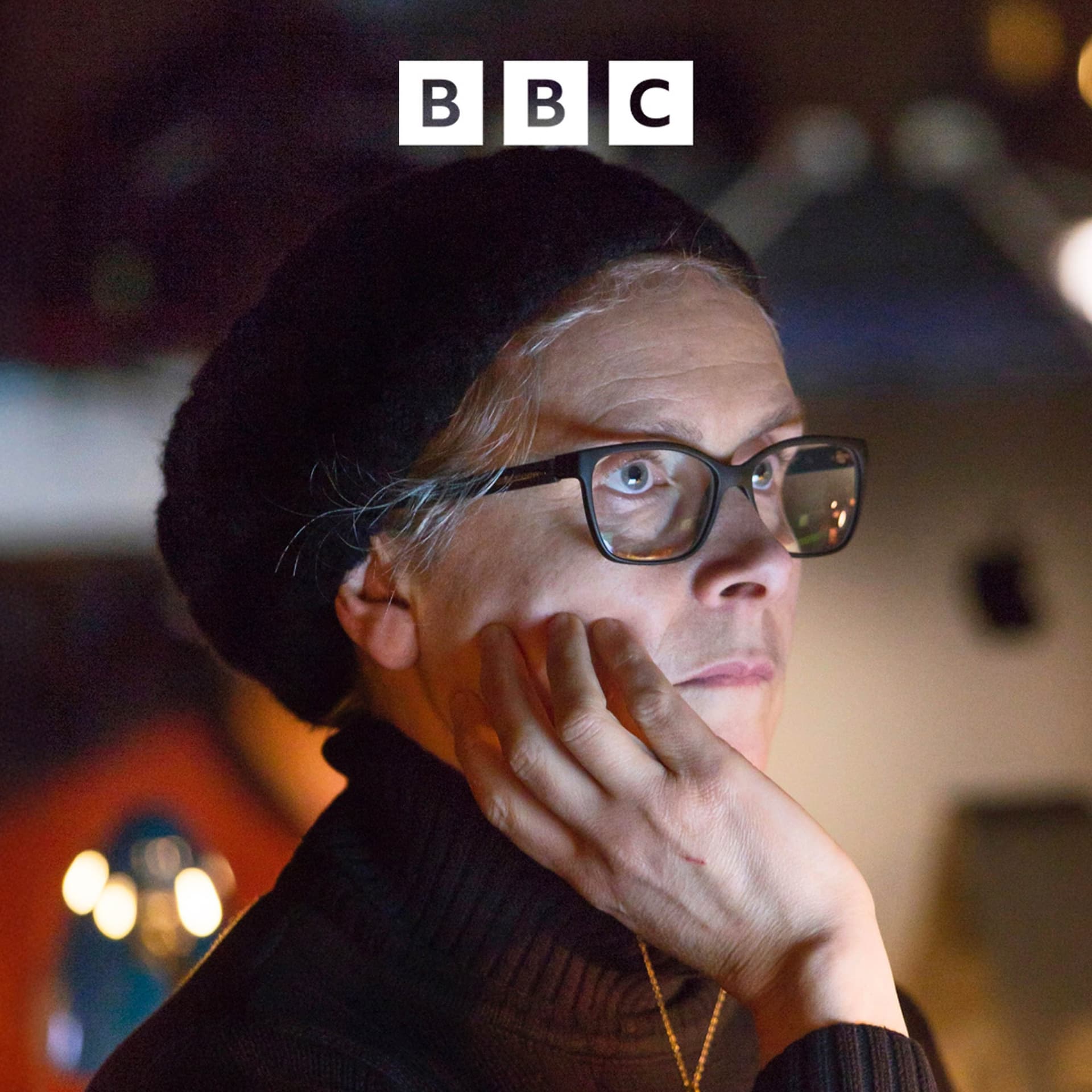
Podcast Title: This Cultural Life Host: John Wilson Guest: Katie Mitchell Episode Description: Theatre and opera director Katie Mitchell discusses her career, influences, and innovative approaches to storytelling, emphasizing her feminist perspective and contemporary adaptations of classic plays.
Key Takeaways
Introduction to Katie Mitchell
- Career Overview: Katie Mitchell is an acclaimed theatre and opera director with over 30 years of experience and more than 100 productions to her name.
- Notable Workplaces: She has worked with prestigious institutions like the Royal Shakespeare Company, Royal Opera House, and National Theatre.
Significance of the Term "Auteur"
- Definition & Relevance: The term "auteur" is used to describe directors whose vision transcends the written material.
- Cultural Context: In the UK theatre scene, there is a strong focus on the play itself, making the role of an auteur director more nuanced.
Influences on Katie’s Creativity
Childhood in Wales
- Self-sufficiency Movement: Katie's family was involved in the 1970s self-sufficiency movement, deeply connecting her to nature during her formative years.
- Climate Awareness: Her childhood experiences in nature shaped her growing concern about climate change, which later influenced her artistic work.
Recent Productions
- The Cherry Orchard (2023): A unique adaptation viewed from the perspective of the trees; audience reactions showcased generational divides on environmental issues.
- Creative Experimentation: She emphasized the importance of radical approaches to traditional texts, such as revisiting Chekhov’s work to highlight environmental concerns.
Engagement with Climate Change
- Long-term Preoccupation: Katie has been exploring climate change in her work for over a decade, driven by insights from scientists about the ongoing environmental crisis.
- Audience Reactions: She acknowledges the mixed responses to her climate-centric adaptations, believing that artistic expression can provoke discourse.
Artistic Philosophy and Directing Style
Public Perception of the Audience
- Complexity of Audience: Katie emphasizes that the audience is not a monolithic group but a collection of complex individuals with varied perspectives.
- Managing Expectations: She aims to create a clear narrative while recognizing that audiences bring their own interpretations to performances.
Influences of Virginia Woolf
- Feminist Perspectives: Woolf's works, especially *The Waves*, significantly shaped Katie’s understanding of female experience and feminism.
- Adaptation Challenges: Mitchell discusses the difficulties of adapting Woolf's fragmentary narratives into stage productions.
Directing Techniques
- Rigorous Character Development: She employs a detailed analysis of character biographies to ensure high-quality performances over long runs.
- Conceptual Approach: Her directing style often leans towards conceptual interpretations rather than traditional naturalism, challenging audience expectations.
Themes in Katie’s Work
Critique of Canonical Texts
- Reworking of Classical Plays: She has reinterpreted plays like *Hamlet* and *Miss Julie* to address themes of misogyny, shifting the focus to female experiences.
- Misogyny in Classics: Katie argues against the repeated staging of plays like *Hamlet*, calling for a more thoughtful engagement with their inherent misogyny.
Challenges in Opera
- Feminism in Opera: Despite her attempts to introduce feminist narratives into opera, she faced significant resistance and eventually withdrew from the genre due to institutional sexism and misogyny.
- Legacy of Misogynistic Narratives: Katie reflects on the challenges of confronting the misogynistic themes prevalent in traditional operatic narratives.
Future Directions
- Transition to Writing and Teaching: Katie is focusing on writing a second book and mentoring younger artists, aiming to create space for new voices in theatre.
- Potential Film Projects: She expresses a desire to make a film, viewing it as an unfulfilled ambition.
Conclusion Katie Mitchell's conversation with John Wilson highlights her innovative and often controversial approach to theatre and opera. Her commitment to addressing climate change and gender issues through art reflects a powerful desire to provoke thought and foster change within the performing arts community. As she transitions to new creative endeavors, she hopes to support the next generation of artists in navigating the complexities of contemporary theatre.
Written by AI. May contain mistakes. Listen to the episode to check what was said.
Chapters
Tap a time to open that second in VOKatie Mitchell: A Theatre Auteur
0:45 to 1:58
Discussion on Katie Mitchell's influence and perspective in theatre.
“including Aeschylus, Virginia Woolf, Chekhov and Sarah Kane.”
Childhood in Wales: Nature's Influence
1:58 to 3:20
Katie reflects on her childhood in Wales and its impact on her creativity.
“a place where I think you spent a lot of your childhood.”
The Cherry Orchard Experiment
3:20 to 5:30
Exploration of Katie's innovative production of Chekhov's The Cherry Orchard.
“fishing in the mornings, collecting mushrooms, being with the farmers, the farm animals, walking the mountains.”
Climate Change in Theatre
5:30 to 8:15
Discussion on integrating climate change themes into theatrical work.
“and then it became an argument between the young and the old about what was happening to the environment.”
Audience Engagement and Expectations
8:15 to 9:35
Katie shares her thoughts on audience perceptions and expectations in theatre.
“Failed theatrically or failed to make any difference?”
Virginia Woolf: Catalyst for Feminism
9:35 to 14:00
Katie discusses how Virginia Woolf's writings influenced her feminism and creativity.
“so that you can look yourself in the mirror and know that you're trying to do something, making a difference.”
Discovering Feminism Through Virginia Woolf
14:00 to 15:00
Learn how Virginia Woolf's writing influenced the guest's feminist journey.
“did you regard yourself already as a feminist when you came across Virginia Woolf?”
Early Theatre Involvement
15:00 to 16:00
Explore the guest's early experiences and passion for theatre.
“What did you return to Britain having seen?”
Training in European Theatre
16:00 to 18:00
Hear about the guest's transformative experiences studying acting in Europe.
“So we spend a long time building the character biography and then we analyse where all the key changes or events happen in the play and we work out what the characters are playing from event to event.”
Reimagining Ophelia's Story
18:00 to 19:30
Discover how the guest reinterpreted Ophelia's character in Hamlet.
“Of course, there was no way that I could stop people staging Hamlet and there are many elements of that play that are remarkable and beautiful.”
Show all 22 chapters
Critique of Hamlet's Misogyny
19:30 to 21:00
Discuss the misogyny present in Hamlet and its implications.
“So if you're staging an old historical object like Hamlet, stage it with care and thoughtfulness.”
Adapting Novels by Female Authors
21:00 to 22:35
Understand the importance of adapting works by female authors for the stage.
“I think you probably put on as many productions there as you have in Britain.”
Directing in Germany vs. Britain
22:35 to 24:15
Learn about the different approaches to directing theatre in Germany compared to Britain.
“Again, there would have been a lot of people arriving at that performance of Miss Julie thinking, great, you're going to see some Strindberg tonight.”
Approaching Texts and Productions
24:15 to 25:55
Explore what the guest looks for in a text before producing a play.
“And you were allowed to use period costumes then?”
Impact of Motherhood on Theatre Making
25:55 to 28:00
Discuss how becoming a mother has influenced the guest's approach to theatre.
“So in the work that I've done, I've focused on particular ideas, war and violence, family, the oppression of women.”
The Impact of Motherhood on Creative Work
28:00 to 28:38
Exploring how motherhood has influenced work-life balance and creativity.
“My child has taught me a better work-life balance which has made me a better manager.”
Challenges of Directing Opera with a Feminist Lens
28:39 to 29:38
Discussing the patriarchal themes in opera and the challenges faced as a female director.
“After everything that you've said about wanting to bring new female perspectives to classic plays and the criticism that you've so often faced in doing so.”
Navigating Sexism in the Opera Industry
29:39 to 31:10
Katie shares her experiences with sexism in opera and its impact on her work.
“And let's just explore some of the ways that you're trying to change that narrative or had tried to change the narrative.”
The Misogyny in Opera Narratives
31:11 to 36:35
Analyzing the misogynistic narratives in opera and the need for change.
“You can change the misogyny that's baked into the art form.”
The Future of Opera: Balancing Tradition and Modernity
36:36 to 39:08
Discussing the balance between traditional opera and modern feminist critiques.
“Yeah, I mean that's a completely valid view and one that I completely am sensitive to but if the content of what is being sung is misogynistic then that is tangled up in the sound of the music.”
Katie Mitchell's Next Steps Beyond Opera
39:09 to 41:21
Katie shares her future aspirations in writing and teaching after stepping away from opera.
“I suspect there may be some people listening who would be thinking, you're the one who's policing the art.”
Introduction to Two Nottingham Lads
42:20 to 43:10
Paul Kenyon introduces the story of two men from Nottingham caught in the Ukraine war.
“I'm Paul Kenyon, and for Radio 4 and The History Podcast, this is Two Nottingham Lads.”
Transcript
Automatic transcript. May contain errors.0:06Welcome to This Cultural Life, the series in which leading artistic figures choose the influences and experiences that have had the biggest impact on their own creativity. I'm John Wilson and my guest in this episode is the award-winning and internationally acclaimed theatre and opera director Katie Mitchell. Renowned for her experimental storytelling on stage, her feminist perspective and for contemporary reframings of classic plays, she's directed more than 100 productions over three decades. She's worked at the Royal Shakespeare Company, the Royal Opera House and at the National Theatre where, as an associate director, she staged bold new versions of work by a wide range of writers including Aeschylus, Virginia Woolf, Chekhov and Sarah Kane.
0:51For many theatre goers, she is one of Britain's most important and innovative living directors. Katie Mitchell, welcome to This Cultural Life. Thank you, it's lovely to be here. You've been called the closest thing that British theatre has to an auteur. Do you enjoy that term? I mean, I do. It's lovely and very flattering. I mean, it comes from French cinema, doesn't it, in the 1960s? And as I remember, the definition is it's when the director's authorship of the written material overtakes the writers. In the UK, it's a sort of subtle thing, isn't it? Because we're so centering of writing. So there's a sense in which the theatre director should service the play.
1:34whereas an auteur director is going to come bringing their vision which may critique or undermine the play. But also it's lovely to be called an auteur. It's a real honour. We'll explore more about your work later on in this conversation. But you were born in 1964. You were brought up in Berkshire initially and your first choice of influence for this programme is Wales, a place where I think you spent a lot of your childhood. Why is Wales so important to your creative imagination? Yes, my parents were on the fringes of the self-sufficiency movement in the 1970s and we had a little house called Park Bedou.
2:12My dad built the house actually from just a stone ruin. And during that period of my life, from about sort of 7 to 16 when they had the house, I was very in touch with nature. And I was very aware of how small I am in the larger ecosystem. I then went back again and again all through my life actually to a valley called Camorgan and I suppose those constant visits to the natural landscape made me aware of the dangers as climate change began to occur to that environment What had your parents been doing up to that point? My father was a dentist and my mother was a cook And did they continue those professions when they moved to Wales?
2:54They did You say it was the self-sufficiency movement Yes, we were on the edges of it a little bit Maybe there was a little flirtation with it, but not a full commitment. So we weren't living there full time. Ah, right. I'm not sure that they were a particularly strong political, self-sufficient family, but they really did want to experience that difficult, hard life of living on the land. Did it feel difficult and hard for you as a child? Or was it fun? No, it felt completely beautiful as a child to be there in nature, fishing in the mornings, collecting mushrooms, being with the farmers, the farm animals, walking the mountains.
3:29It was completely beautiful. So my work was always fed by the beauty of nature. But as time passed, and as we all know, the existential crisis of climate change has arrived, my love of nature then grew into work about climate change. I want to ask you, in fact, about a recent production in 2023 in Germany. You adapted The Cherry Orchard by Chekhov. and this was a production scene from the point of view of the trees. How did you achieve that? Yes, it was a one-off experiment, one that you can't do again to do the cherry orchard from the point of view of the trees. And what we did was we put all of the actors playing the characters in a sound-sealed glass box and they spoke the whole of the play into microphones but we only turned the volume up when they were speaking about the trees or nature.
4:22At the same time, on the other side of the stage, there was a sound-sealed glass box with a string quartet in it, and they played the soundtrack for the screen images above, where we projected images of trees, natures, bees, wasps, cherries, etc., on the screen, in the silence, when we could see the performers mouthing the text, but we couldn't hear what they were talking about. So you weren't changing the text, You were just being very selective as to what the audience would hear. And it was only the reference, any reference to the trees, the mics were faded back up. That's right. At the end, there was a very intense response from the audience.
5:04Huge boos because people had turned up to see the Cherry Orchard and we'd turned the volume down on 60 % of the play. So this wasn't signalled in advance? People didn't turn up thinking... I think it was signalled, but no-one thought it would be this extreme. So there was lots of booing. and then bit by bit there was lots of cheering and it split between the older generation booing and the younger generation who were cheering. So it was this wonderful moment where the work that we'd done sort of stopped and then it became an argument between the young and the old about what was happening to the environment.
5:36You're suggesting that the older people in the audience were objecting to a desecration of the text of Chekhov and yet the younger audience members were supporting the environmental message. Yes, spot on. We were clear at the beginning. I think we had some text which was projected something like, if we keep desecrating nature like this, it will be destroyed, taking us with it. And halfway through the show, when in the Cherry Orch, you know, they get their chainsaws in our production out to chainsaw down the trees. We then rewound the whole show, including the text that we projected on the beginning through until the word if, as if we had the chance to maybe rewind that violence against nature and maybe think of a new way forwards.
6:27So you set out to make something radical, to challenge the audience. What was your reaction when you heard those boos? I'm very accustomed to booing. It's not something that alarms me. In fact, I quite enjoy it because it means that there's a very strong reaction, albeit negative, to a piece of work. And we knew we were doing something controversial and we knew it wouldn't be to everyone's taste. But, of course, the voice that was the most fantastic to hear was the young people's bravos and cheers at the end against the booing. That was very heartening and validated the whole experiment. So this has been an increasing element to your work in recent years, this exploration of climate change in particular.
7:14the effect and the way that you can express that and explore that theatrically. Yes, it has been a preoccupation for over 10 years since I encountered a scientist, Professor Stephen Emmett. And Stephen told me, like Cassandra, in fact, looking back, I know I met Cassandra, Stephen told me everything that was going to happen. The huge floods, the extreme weather, the fact that people would be coming across the North Sea on small boats. I laughed when he said that because it was so inconceivable all that time ago. And so he really changed my thinking about climate change and made me realise that actually I could probably do something.
7:52And so we started to make work. I see me and my creative team started to make work over the years, different types of work. Work where we put scientists on stage, work where we brought an environmental lens to canonical material, and also work where we explored taking shows off-grid. Lots of different experiments, all of which have failed pretty gloriously. But I'm very pleased that I tried. Failed in what way? Failed theatrically or failed to make any difference? Because that's the real question, isn't it? You say you set out to do something about the issue, but can you really do something when there are such huge prevailing geopolitical, financial, commercial vested interests?
8:36I mean, it's like you're shouting into the wind. Of course. I can't do anything. but I remember three important things when you were thinking about climate change. The first is what do you do in your private life? The second is what do you do in the workplace? And the third is what do you do as a citizen? So for me to live with this existential crisis, I have to be addressing it across those three categories. And so even in the workplace, I may fail with all of the shows, fail theatrically and also, as you so wisely say, fail to make any difference. I am least trying. So in the morning when I wake up and I look at myself in the mirror, I can say, well, at least you're doing something.
9:21I did also stop flying, which was quite an intense decision when you have an international career. So you travel everywhere, particularly by train. You must know all the timetables very well because you do a lot of work across Europe. So you say you do a lot of this work so that you can look yourself in the mirror and know that you're trying to do something, making a difference. How much do you think about the audience when you're conceiving a new show, bearing in mind that people are coming to the theatre paying money and, by and large, want to be entertained as well as enlightened? It's very strange that we use that phrase, the audience, to describe an unknowable collection of individuals.
10:01I don't think the audience is a clump. I think it's a group of very sophisticated individuals with very complex stories. So I try my best to make the work that I do super clear. We try through publicity to manage the audience's expectation, what they consciously or unconsciously are bringing with them to the event. We can't know it. So I just try my best and hope that there will be some connective tissue between their private life and what I'm doing that will maybe offer them something hopeful, some insight, some validation, some with climate change, attempt to soothe the pain that all of us are experiencing.
10:49Your next choice for this cultural life, Katie Mitchell, is the writer Virginia Woolf. Where did you first come across her writing? I first came across the writing of Virginia Woolf at university. Reading English at Oxford. I was reading English at Oxford. And it was amazing to open a book and inside the book for there to be a fantastically thoughtful description of female experience. It was breathtaking. What was the book? The Waves. And what was it about The Waves? So she takes six friends across their whole lifespan and we are only invited into the interior thought processes. She described it as a series of monologues.
11:35In other books, you'll be reading about events that happen, plot, story beats, but Wolf isn't interested so much in what happens. She's interested in the feeling that those events have, the interior feeling. And about 30 years after first reading The Waves in 2006, you staged your own production of The Waves and you say as a fragmentary narrative it's a difficult book to read. Does that mean it was a very hard play to stage? Because it's not a play, it's an adaptation of a novel. Yes. I set myself the impossible task of staging thought because that's really what the book contains. It's just pure thought.
12:17And so we use video cameras to project the images of the faces of the characters and then another actor would do the thoughts of the characters on a microphone and then another actor would do the Foley sound effects of the movement of their clothing or the way that they sort of jingled their necklaces around their necks. We didn't worry so much about the story. We just worried about capturing thought. This multimedia approach and the use of live video at the time was I think probably fairly unusual. We see it far more often in the theatre these days. You called it live cinema. Were you inspired by any particular filmmakers with those cinematic aspects on stage?
12:58I suppose film has always been more of an influence on me than theatre-making. And so I was brought up on a diet of sort of early Bergman, Antonioni films, all the fantastic European films that used to be on the BBC World Cinema, which I was watching from a very young age. And then later Russian cinema directors like Tarkovsky were very influential. Why did you not pursue a career as a filmmaker from an early age rather than a theatre director then? That is such a good question and one that I often reflect on. I love the liveness of theatre and even when we're using video in a very complex technological way, everything is still happening live.
13:42So that's something very precious to me, particularly now in the time of screens and our relationship is so isolated from each other. There's something about that collective event and its liveness that will always interest me and trump my interest in film. And going back to discovering Virginia Woolf at university, did you regard yourself already as a feminist when you came across Virginia Woolf? Part of going to university was discovering my feminism and one of the key catalysts in that was the writing of Virginia Woolf. Not only the fiction but also a room of one's own fantastic polemical book about what it is to be inside the female body and centring female experience.
14:31So she acted as a gateway into my feminism. And when you were at university, is that your first involvement in theatre? I'd been involved in theatre probably from when I was at primary school. I used to make radio plays on an old sort of cassette player. And then when I was at school, I was making theatre. And so by the time I got to university, I knew that that was the thing that I wanted to do. And actually, soon after university, I think you travelled around Europe studying European theatre. I mean, what did you see? Where did you go? What did you return to Britain having seen? I got a travel grant to study director's training in Poland, Georgia, Lithuania and Russia.
15:15My training there was incredible. I saw the work of practitioners like Lev Dodin, Anatoly Vasiliev, Yefremov, who were all the key Russian directors at the time. So these were the generation, just as the Berlin Wall was falling, who had inherited Stanislavski's legacy. so I was able to learn about the construction of very precise naturalism and psychological detail in a way that wasn't available to me in the tradition here in the UK. And what particular techniques did you learn there that you've taken through your career that you possibly first saw in the late 80s, early 90s in Europe? I learnt about a very rigorous practice for constructing lifelike naturalism on stage So we spend a long time building the character biography and then we analyse where all the key changes or events happen in the play and we work out what the characters are playing from event to event.
16:13And I suppose the thing about directing is you have to make work that can be repeated at a high standard over a very long run because after the audience are paying the same money for every show. And this system enables the high quality to be sustained over a very, very long run because it's very precisely calibrated in the rehearsal process and also in the performance. Can you give an example of a particular character and how an actor has been encouraged to develop that sense of biography? Can I give an example? When we were staging Ophelia's Zimmer, which was a production based on Hamlet, where we imagined what would happen in Ophelia's bedroom during all of the action of the play, we constructed a very sort of detailed back history for her character.
17:05It's so detailed that it would be hard to give an example that is useful and thoughtful. So what are we seeing? What is the revelation about Ophelia in your production of Ophelia Zimmer, your radical reworking of Hamlet? Well, I worked with the set designer Chloe Lamford and the playwright Alice Birch to evolve the story of what could have happened in Ophelia's bedroom during the action of Hamlet. Our shared aim was to stop people putting on the play Hamlet because personally I'm tired of plays about depressed, angry, misogynistic men. So we put this show on hoping to invite people into the misogyny in the play and to encourage them to reconsider their wish to repeatedly stage the play.
17:59You're not going to stop people putting on Hamlet, though, are you? It will continue.
18:07You're so right. Of course, there was no way that I could stop people staging Hamlet and there are many elements of that play that are remarkable and beautiful. However, it has misogyny built into its DNA. Are you talking specifically about the character of Hamlet himself because of his disregard for Ophelia's condition, the fact that he doesn't seem to care about where she's heading and her state of mind? Yes, definitely his lack of care for his girlfriend, Ophelia, his disregard for his mother, his general depressive tendencies and violent tendencies. All the things that I think need to be managed very carefully if you were to stage the play.
18:50I mean, it's often regarded as the greatest play ever written, isn't it? Not for me. It's a catastrophe from a gender politics point of view, and I genuinely don't think it should be staged as much as it is. Really? Genuinely, yes. So you would call on the National Theatre or the Royal Shakespeare Company to stop putting on Hamlet? Yes. OK. I mean, do you think it's actually doing harm to people to see that play? Or are you just arguing that there are better ways of analysing or exploring the narrative that's played out? I think there are risks in the play that it licences a certain type of aggressive, misogynistic male behaviour.
19:32So if you're staging an old historical object like Hamlet, stage it with care and thoughtfulness. Is part of the reason for adapting novels by Wolfe and other female authors authors, because there are simply not enough plays written by women. You're absolutely right. The reason for doing so many adaptations of novels is to increase the canon. My mission is consciously to centre female experience on stage. Why are there not enough female playwrights, do you think? I mean, is there something that's holding women back when it comes to writing plays? Patriarchy. Right. But it's not an inherently male art form, is it?
20:14Playwriting. It is traditionally in the UK. It's very blokesy. Shakespeare onwards, I'm being cheeky. I don't have the statistics to hand, so I really don't know exactly what the figures are. But of course there are fantastic writers like Carol Churchill and then a younger generation of remarkable writers like Alice Birch, Lucy Preble and many other fantastic female writers. But we can do more as an industry and we should do more. not only to make sure that there are more female playwrights, but more female directors, designers, etc., etc., so that we have a fair balance in our industry.
20:59You've spent a huge part of your theatrical career in Germany. I think you probably put on as many productions there as you have in Britain. What are the main differences directing in Germany to the work that you do in Britain? I think for various reasons which are historical, they're to do with the, in some cases, the aftermath of the Second World War and the sort of excoriating re-examination of the society that happened after that. It meant that the director got repositioned as the main artist whose work you were going to see in theatre. and because of that it gives you a freedom to experiment but also there comes with a huge pressure because you can't hide behind the playwright.
21:45You're much more exposed and because of that I discovered that I was naturally more a conceptual director than a naturalistic director. So I think the second show I did was Miss Julie by Strindberg and I wanted again to examine the misogyny in this canonical play So I used video and the live cinema technique to stage the show from the point of view of the least important female character, which meant that we didn't see a lot of the famous scenes because Christine the cook wasn't in them. So we used video to expose what happened to the least important female character during the action of the play.
22:27And I realised then that I have a natural interest in a sort of more conceptual way of thinking and working. Again, there would have been a lot of people arriving at that performance of Miss Julie thinking, great, you're going to see some Strindberg tonight. And you tear up the script. You present something totally new and unexpected. and I'm sure that wouldn't have been to everybody's taste. You have divided the critics many times. You have been called a vandal by critics, accused of smashing up the classics of, and I'm quoting here, overweening arrogance in the way that you treat texts. I mean, how do you take those criticisms?
23:08Well, all of those criticisms come from a much earlier period in my career and the sort of noughties, actually, and I welcome them because it's always interesting to be in conversation with the culture in which you're working and critics represent one of the voices inside the society that you're working in. What's really interesting is these very old reviews and positions have lasted, whereas there are views now in Germany where I'm told off for being conservative and not radical enough. Really? What? They regard you sometimes, the critics in Germany, think you're too British in your... Way too British.
23:46What, too respectful of the text? Too respectful of the text. When we were doing Miss Julie, we set the action in its historical period, which is around the 1880s, and my boss, Thomas Ostermeyer, came to watch a rehearsal, and I said, oh, Thomas, what do you think? He said, I'm feeling really sick. And I said, why? He said, because we have never and will never have period costumes in our theatre. it's awful, it's a throwback to the time of naturalism years and years ago, so old fashioned and I'm only allowing that to happen because of the use of the live cinema video technique so that gives you an insight into what the German audience would be expecting they're not expecting to see Strindberg's play done in its original setting they're expecting a radical conceptual intervention from the director So your costume conservatism was offset by the multimedia, use the video cameras and everything.
24:44That's right. And you were allowed to use period costumes then? We were allowed to use period costumes, but later I tried to use period costumes again at the Hamburg Schauspielhaus, and my boss, Karen Byer, came to watch it, and she said those old Greek costumes have got to go. She said the German audiences won't understand it. In general, what attracts you to a text when you are approaching a new production, when you're thinking, I need to put something on. Where do you start? What are the elements that you look for? The thing that is important for me is texts that contain very strong and powerful ideas.
25:20For instance, give us some examples. For example, Iphigenia at Aulus by Euripides will be addressing subjects like family, war and violence. War and violence, brutality are kind of recurring themes of a lot of your work. I'm thinking about, you've done several productions of the work of the late Sarah Kane also. very dark subject matter. Have you ever, and this is not a flippant question, have you ever considered directing comedy or musicals or are you firmly within your comfort zone with the sort of plays that you do? I don't think I'd be very good at comedy. I think that requires a different set of skills and I definitely don't have it.
25:59So in the work that I've done, I've focused on particular ideas, war and violence, family, the oppression of women. And this intellectual interest has drawn me to a particular type of text that hasn't been comic. Although I am quite a cheerful person. I'm not a sad person at all. I'm very cheerful. But the thing that is important to say also is that as a theatre maker, I'm trying to connect the work I'm making on stage with the society in which the work is being presented, the socio-political reality that I'm living in. So that also... There's a lot of joy, happiness and laughter in the world as well, though, Katie.
26:47There is. And maybe this should bring me to my wonderful daughter, who has definitely told me that I'm not allowed to do certain types of narratives any longer. and that she, for example, is wanting me to not ever stage a female suicide again but to do work that celebrates female agency and women surviving things. How old is your daughter? My daughter's 20. So she's encouraging you to be more positive about the female experience then? Yes. And have you taken that on board? She has a point. I take on board everything that my daughter tells me. She's also very, very negative about me having an OBE and very strongly wishes me to return it, which I'm having to consider.
27:30Are you seriously? Because what, you've become part of the establishment by accepting the order of the British Empire? Yes, and she feels that the word empire contains so much violence and historical oppression that being linked to it isn't good. So how far down that line of thinking have you got? Close. And what, in general, since you've become a mother, what effect has that had on your theatre making? You can't, well I can't anyway, watch news programmes about any woman suffering or children suffering without having much more intense emotional responses than I used to have before I had a child.
28:06My child has taught me a better work-life balance which has made me a better manager. I think that it's made me realise that the greatest creative act is the act of motherhood. and I can let go of my career in the face of having grown and being grown by a child.
Read the full transcript
28:36Alongside a very prolific theatre career, you've also directed many operas. After everything that you've said about wanting to bring new female perspectives to classic plays and the criticism that you've so often faced in doing so. I wonder why you would want to work within opera, an art form that is arguably even more patriarchal in its themes and its narratives, where women are so often victimised or objectified. Well, you're so right. And I've just stopped working in opera because of the very subjects that you're bringing up. I thought I could survive it. I thought I could go into opera with a feminist lens and revise the misogynistic content and build an opera practice for the future.
29:28But the dissonance between that idealism and sexism in the workplace made the task finally impossible. And I have joyfully bowed out now of my opera directing career because of the misogyny. And let's just explore some of the ways that you're trying to change that narrative or had tried to change the narrative. For instance, in your 2016 production of Donazetti's Lucia de Lammermoor, you introduced new narratives. Lucia herself gets pregnant, there's a miscarriage, neither of those elements there in the original. Did you not expect that to be a hard task to convince opera audiences to accept those changes to much-loved narratives that have existed for 200 years or so?
30:17The thing about opera directing that is misconstrued is that all of the choices that I'm making conceptually and from a feminist point of view have to go through so many checks. There are formal procedures where the senior management team license and refine those ideas. So I'm not a wayward artist allowed a free reign in any of these settings. I'm bought by the opera houses and I'm bought to do feminist work. I present those feminist ideas to a very large senior management team. They sign off on them and then I deliver them. You recently directed a production at the Royal Opera House of Janicek's The Macropolis Case and you say that's the last thing that you will do.
31:01Was that also to do with the conditions under which you work as a director with an opera? Or was it just because you can't change these themes which are sort of baked into the art form? You can change the misogyny that's baked into the art form. That is possible, and I've proved that. You can rewrite the stories through how you stage them. Not without a lot of resistance from a lot of people in the audience. There is audience resistance, you're absolutely right. But my problem and my reason for withdrawing from opera is sexism in the workplace and the dissonance between being brought in to do feminist revisions of the material, supported by the management and experiencing sexism in the workplace.
31:45And as a duty of care to the younger generation, I have to call it. Everyone knows that it exists in the sector. And as a female artist, you are a recipient of it on every single job that you do. So by calling it out, hopefully I will make it easier for younger artists growing through the art form to survive it and to be able to report sexism or any other form of misogyny to an HR department. Are you talking about general institutional sexism or are you talking about individual instances where people have been abusive or have resisted your ideas simply because you're a woman? I mean, how does it manifest itself?
32:26It can be at a very low level. So a rehearsal pianist could say to you, are you a happy girl now every day when you're a senior female artist in your 50s, or it can be a chorus member screaming at you because they don't agree with the conceptual choice, or it can be having furniture thrown at you. You say that wouldn't have happened if the director had been a man? I know it wouldn't have happened if the director had been a man. And then institutionally, the systems and structures are not yet fully secure in terms of the HR procedures in most of the European and UK houses. Things are improving, but there's still a lot of work to be done.
33:10And part of my withdrawing from the sector is to encourage an increase in the heavy lifting of making sure that the systems and structures for managing any reports of sexism or sexual harassment are really, really watertight and considered, plus getting the sector to agree that they have to tackle the misogyny which is in the canonical material which they do. We've got to agree about that and we've got to come up with strategies to address it to make it fit for the 21st century. Arguably, by withdrawing from opera, you are taking away a very powerful, respected voice who could be resisting that institutional sexism from within.
33:55I mean, would you not be better in there helping things rather than leaving opera and hoping that things change with the next generation of young female directors who are starting out. It's a really thoughtful reflection and one that I've spent a lot of time thinking about. Just personally, I find it very exhausting feeling on edge and unsafe in the workplace. So having weathered it for a long time, I just feel for my own sanity it's better that I step aside. I do a lot of work supporting women in the industry, but I just don't want to put myself in the firing line anymore. And just to be clear, it is about the opera world.
34:33I mean, those specific examples that you gave of somebody throwing a chair or shouting or using demeaning sexist language, are you saying that that is sort of something that you hear, have heard and experience more often in the opera world than in all the work that you've done in the theatre or elsewhere? Yes. It's unique to that sector. Why is that, do you think? I think the stories that are told... On stage? Well, if we imagine we've got a sector and it presents predominantly 35 to 36 fixed stories and a huge proportion of them are misogynistic, but that is its main diet. All of those texts could not be done in any theatre setting.
35:19It would be impossible to do them because of the misogyny they contain. So there's a problem in the stories that are told. And then the people who work in the sector tend to come from a very narrow sector of the community. I don't want to be the voice to disparage an industry which contains so many incredible practitioners and artists. And particularly with the music, the music in all of these canonical pieces is so beautiful and remarkable. But there are problems with the stories that need to be addressed. And there are problems with the staffing across the whole industry, from the technical crew through to the administration.
36:02The staff need to reflect more a diverse and balanced society. And they haven't quite got there yet. I can see masses of initiatives to address the canon, to improve the gender parity and to improve the staffing. But there's a long way to go for the sector. Arguably, most people go to the opera to listen to the music, not to see the narrative unfold. Those thematic changes that you set out to make, sometimes that was through interventions in the text, in the narrative. and many people would say and some of the criticisms that you faced were that those interventions were distracting from the music, that the music was the thing really when it comes to opera and that if you're changing the narrative it's slightly taking away from the overwhelming experience.
36:57Yeah, I mean that's a completely valid view and one that I completely am sensitive to but if the content of what is being sung is misogynistic then that is tangled up in the sound of the music. You can't have your cake and eat it. You can't have beautiful sound and misogyny. The misogyny has to be addressed. And I was trying to offer work where they had the beautiful music because I worked with exceptional practitioners on the musical side but a narrative which sort of just took away the misogyny. By often adding narrative layers. Yeah, and the narrative layers were designed to work with the music.
37:43So nothing that was staged was staged without reflecting on what the sound world was indicating. I mean, yeah. Does that make you think? I just think it's really sad, you know. I think it's just a really sad world where everything is so pitted against. There's the drama versus the music. There's the feminist versus patriarchy. And it would just be great if we could work together a bit more and try to create a modern version of what opera could be. Or we have to bin the canon and only stage new operas, which would also be a very exciting future. Would you like that to happen then? I think that any culture should have a very wide spectrum of work from the very traditional to the very radical.
38:35I just think we shouldn't police art there's enough going on in the world to be dealing with the crisis going on in the world we shouldn't waste our time policing art we should just welcome a very broad spectrum of ideas and presentations so we should welcome a traditional rendition of an opera and we should welcome a feminist critique of an opera and we should reflect dialectically on the meaning of those two things existing in a society together and which is the best representation of these wonderful historical musical objects. I suspect there may be some people listening who would be thinking, you're the one who's policing the art.
39:17The historical art forms, which, OK, may be outdated, they may continue to present very problematic themes, so your interventions are policing the art form, aren't they? No, my interventions are just because of the danger of watching the representation of extreme violence against women on stage. The danger, if that isn't framed thoughtfully, that it may license that behavior in the real world. So you had a good go with opera, didn't achieve what you wanted to do. and so you're not going to be working within opera anymore. That's an absolute... You're not going back. I'm not going back, but I did achieve all that I wanted to achieve.
40:05With your individual productions? With the work. Yes. So if not opera, where next for Katie Mitchell? I'm really enjoying writing at the moment. I'm writing a second book also about directing. Also, I am old now and I belong to an older generation and I'm enjoying the idea of sort of just stepping aside a little bit and allowing a younger generation, you know, creating space for a younger generation and I'm really enjoying the teaching work that I do and the writing and gardening and wild swimming. But looking back at the career and looking back at all of the plays that you've done and with this reputation for being bold and radical, pushing the art form forwards and being incredibly prolific though, I mean, what drives you on creatively as an artist?
40:54I think what drives me on creatively as an artist now is more as a thoughtful, supportive force for the growth of other people's creativity. But as you said earlier, I have one outstanding creative task, which I think I need to do, although I can't work out how to, which is I think I need to make a film. So that is the unfulfilled ambition. But it may remain unfulfilled. I may just dream it. And that may be enough. We look forward to seeing that. Katie Mitchell, thank you very much indeed for sharing your cultural life with us. Thank you. It's been a pleasure. Terrific. Thanks, Katie. It's a form of agony.
41:37God, it's so on the spot. Every question is so difficult. Oh, my God. How long was that? How long have I been sitting here? Not that long. Well I do hope that time flew by for you as I talk to Katie Mitchell the latest guest in a series in which so far we've heard from Ricky Gervais Oscar winning director Guillermo del Toro and one of the all time greats of photography Annie Leibovitz They join our ever growing archive packed with some of the world's biggest names in art and culture All the previous series are available on BBC Sounds or wherever you get your shows internationally and please do subscribe so that you never miss an episode.
42:15From me, John Wilson, and series producer Edwina Pittman, thank you very much indeed for listening to This Cultural Life.
42:25I'm Paul Kenyon, and for Radio 4 and The History Podcast, this is Two Nottingham Lads. When the invasion happened, it was completely hell on earth with the sounds. The sad thing about war is people lose their empathy and their humanity. I want to know how two men from Nottingham ended up on opposite sides in the war in Ukraine and what became of them after a chilling encounter in a prison in Donetsk. Out of all the places in the world where I meet someone from Nottingham, it's in captivity on two sides of the conflict. It's a story about how and why you pick a side in a war that's not your own.
43:05You can listen to two Nottingham lads first on BBC Sounds. Thank you.
From the publisher
Theatre and opera director Katie Mitchell talks to John Wilson about her career and formative influences. She is renowned for her experimental storytelling on stage, her feminist perspective, and for contemporary reframing of classic plays, she has directed more than 100 productions over more than 30 years. She has worked at the Royal Shakespeare Company, the Royal Opera House and the National Theatre, where - as associate director - she staged bold new versions of work by a wide range of writers including Aeschylus, Virginia Woolf, Chekhov and Sarah Kane. For many theatre goers, she is one of Britain’s most important and innovative living directors.
Producer: Edwina Pitman