In short
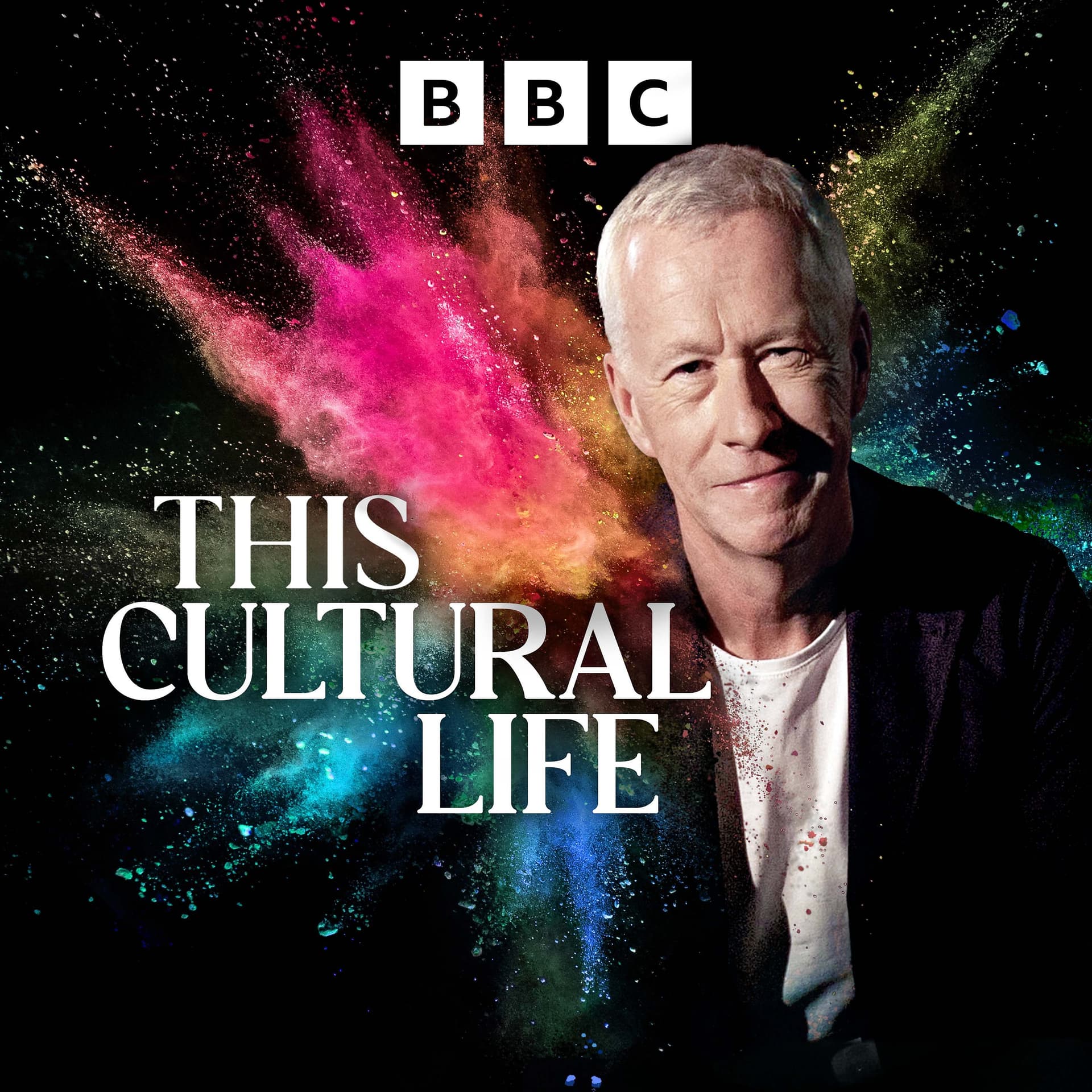
Podcast Episode Notes: This Cultural Life - Kerry James Marshall
Episode Overview Podcast Title: This Cultural Life Episode Title: Kerry James Marshall Host: John Wilson Guest: Kerry James Marshall, American artist and significant contemporary painter known for his explorations of African-American life through his art.
Key Highlights
- Kerry James Marshall's Influence: Marshall is recognized as one of the most important living painters, with over 40 years dedicated to creating large-scale, colorful paintings that reflect African-American experiences and culture.
- Record Auction Sale: One of his notable works, *Past Times* (1997), sold for $21 million in 2018, setting a world record for a piece by a living African-American artist.
- Upcoming Retrospective: A major retrospective of his work will be showcased at the Royal Academy in London in 2025, marking a significant moment in his career.
---
Themes and Discussions
Personal Journey and Artistic Ambition
- Marshall describes a lifelong dream of having his work recognized in museums, sparked by an early visit to an art museum during elementary school.
- He reflects on how the historical surrounding of the Royal Academy impacts the perception of his work, enhancing its gravity.
Influences and Inspirations
- Early Artistic Influences: Marshall credits his kindergarten teacher, Miss Mary Hill, for inspiring his early interest in image-making through her scrapbook of various artistic creations.
- He connects experiences from childhood, like church imagery and comic books, to the development of his artistic vision.
Reflections on Community and Identity
- Marshall grew up in a racially charged environment during significant historical events, including the Watts riots.
- He emphasizes the importance of representing African-American experiences not just as a reflection of trauma, but also as a celebration of life and community.
Techniques and Artistic Philosophy
- Marshall discusses his approach to painting, emphasizing that understanding art's fundamentals is crucial to creating meaningful works.
- His painting *Untitled Underpainting* is described as a reflection of his artistic journey and a homage to the old masters like Leonardo da Vinci.
Art as a Medium for Change
- He argues that art should transcend mere representation of one's identity, advocating for a broader understanding of artistic expression that resonates universally.
- Marshall's works often explore themes of visibility and representation within the context of African-American history, yet he remains focused on the quality and skill of his art rather than the market value.
Cultural Politics and Representation
- The conversation touches on current cultural politics affecting museums, including issues around ownership of artifacts and the representation of historical narratives.
- Marshall maintains a pragmatic view on cultural politics, advocating for the importance of artistic representation while recognizing the complexities of historical injustices.
---
Key Takeaways
- Artistic Legacy: Kerry James Marshall's work serves as a crucial narrative framework for understanding African-American life and history.
- Importance of Representation: Marshall emphasizes the necessity of diverse narratives in art, which should reflect the richness of the experiences of marginalized communities.
- Personal Journey: His artistic journey is marked by a self-driven desire to create meaningful, impactful work that challenges both the artist and the viewer.
- Optimism in Art: Marshall identifies as an optimist and pragmatist, believing that art should inspire and uplift rather than dwell solely on trauma.
---
Conclusion This episode provides an insightful look into Kerry James Marshall's life, artistic influences, and philosophical approach to painting. Through his experiences and reflections, he advocates for a nuanced understanding of art as a medium for storytelling and cultural representation. The conversation reinforces the importance of artists in shaping societal narratives and the ongoing quest for visibility and recognition within the art world.
Written by AI. May contain mistakes. Listen to the episode to check what was said.
Transcript
Automatic transcript. May contain errors.0:05Welcome to This Cultural Life, the series in which leading creative people choose the most important influences and experiences that have inspired their own work. I'm John Wilson and my guest in this episode is the American artist Kerry James Marshall. One of the world's most important living painters, Marshall's been making his large-scale, vividly colourful evocations of African-American life for over 40 years now. His figurative paintings are rich with symbolism, metaphor and visual references to both social history and his favourite artists from the past, A 1997 Marshall painting called Past Times sold at auction in 2018 for$21 million, setting a world record for a work by a living African-American artist.
0:55Kerry James Marshall, welcome to This Cultural Life. Thank you. You are in London this week for a major retrospective exhibition which is being held at the Royal Academy, bringing together paintings from more than five decades. What's the overwhelming feeling for you seeing all of your past gathered together like this? The overriding feeling is of satisfaction. I'm where I always dreamed I would be and where I always wanted to be, in a place where the achievement that I feel I've accomplished can be evaluated, experienced, recognized, and celebrated. And as I say, some of that work goes back decades, some of it to the 1980s.
1:43What was that ambition that you set out with, do you think? Well, I always, from the first time I found out there was such a thing as a museum, when I was taken there, like a lot of school kids are, on a school trip when I was in elementary school, the things I saw there were so amazing, so magnificent to me. I was so impressed. And I said to myself then, this is where I want to be. I want to make work that can be in a museum among the works that I was going to the museum to see at the time. And this would have been the fourth or fifth grade. Right. In Los Angeles. In Los Angeles, yeah. As we'll explore in this interview, so much of your work references art history.
2:27And this show at the Royal Academy, in fact, is called The Histories. The Royal Academy is one of the oldest arts institutions in the world, founded by Sir Joshua Reynolds amongst others in the 1760s. Do the historical surroundings of the Royal Academy give your works an added resonance, do you think? you can't deny that the building itself has a certain kind of gravitas. You know, it's like it's an important place. And the history, the legacy of the Academy is an important legacy. I mean, and the thing is that the Academy existed as a place where artists were supposed to be able to demonstrate their mastery of all of the principles, concepts, and ideas that were related to the making of the best kinds of works that could be made.
3:15So this was an opportunity when you were in the academy to demonstrate that you had mastered those skills and those concepts and those principles. And those skills and those concepts and those principles have been so important to you throughout your career as well. Well, they are because, I mean, it's undeniable that there are good pictures and there are bad pictures. What is it that makes a picture a good picture or makes a picture a great picture? And you have to have some sense of what that is before you can actually proceed. I mean, it's not just by happenstance. I mean, one has to know a few things in order to make that kind of work.
3:47It doesn't just happen by accident.
3:55Well, let's explore the roots of your work. On This Cultural Life, Kerry James Marshall, my guests choose the most significant influences and experiences that have inspired their own creative lives. Tell me about your kindergarten teacher, Miss Hill. Miss Mary Hill. This was at the Holy Family School in Birmingham. In Alabama. In Alabama. She kept the scrapbook of Christmas cards, Valentine's cards, postcards, clippings from magazines, all those things. And it was a scrapbook that she let a kid who was well behaved on that day look at while other kids in the class were taking a nap after recess.
4:40It was an incentive. It was. Yeah, it was an incentive to good behavior, I guess. I mean, the day that I got to look at that scrapbook really was the day that changed my life. What did you see? Because I saw it was I mean, all those things. And at that time, I didn't have the discriminating taste, you know, or knowledge that you would acquire later on. But a Christmas card was a magical thing. A Valentine's Day card was a magical thing. People who drew cartoons did magical things. So it was the image making. It's the image making. And you can tell by looking at them that they were made by somebody.
5:18And the variety of different ways in which those pictures could be made was impressive. Are you talking with retrospective recognition of that moment or did you feel it? I felt it then. because if you think about it, I mean, you're looking at a range of images in a scrapbook that go from reality to extreme fantasy. And in the space between those things, all kinds of other things are possible. And so you get to decide where you want to position yourself relative to those kinds of things. I could have wanted to become a cartoonist from looking at some of those. I could have wanted to become a photographer doing travel photography.
6:05You know, if you had images from National Geographic's magazine. That you'd clipped out from the magazine. That were clips, yeah. Or, you know, Life magazine. All those magazines at the time. But you could have wanted to become any one of those things based on the things you were looking at in that scrapbook. But you just knew you wanted to make images. I wanted to make images like those. In whatever medium, whatever form. In whatever medium. Well, and at the time, all I had was crayons and a pencil. Did it set you on that course? Did it make you start drawing from that moment, do you think? Well, you couple that with some of the books that we had available.
6:42You know, and most people had a Bible in their house. And when you went to church, one of the things you saw in church, not only were the stained glass windows, but you had images in church of the stations of the cross and the life of Jesus and Mary, all that information. And you look through some of those Bibles and some of my grandmother had a Bible that had illustrations by Gustave Doré. And those are heroic stories being illustrated. You get Samson, you get Daniel in the lion's den, you get all those things. I mean, those are really magical. I mean, it's the only word you could use at the time.
7:18Magical imagery. But the other important thing is they're telling stories. There are narratives being played. But there are narratives being played out. So you get a vivid picture of what the story is telling you by looking at the image that's associated with it. So this is Birmingham, Alabama. You were born there in 1955. Just tell us about your parents. What did they do? Well, my mother was a homemaker and my father, he had been in the army during the Korean conflict. He got out of the army. He was working in the kitchen at the VA hospital. That's where my father worked. So you came home from school one day with your mind bursting with these images.
7:51did your parents know? Did it change your behaviour at home? Were you wanting to create? Well, I was wanting to. It was of no interest to anybody else. Not even your mum? Nobody else. This is a pursuit and a journey I was on completely on my own. I was completely self-motivated, completely self-driven. And we're talking about you being at the age of five when you first saw this teacher, Miss Hill. Miss Hill, yeah. Did you keep in contact with her in later life? Did you go and find her? Well, it's not that I found her. per se, I had an exhibition that traveled to the Birmingham Museum for its last stop.
8:28And I was doing a lecture in the museum auditorium and somebody in the audience said, I know Ms. Hill and she is still alive. She was 85 years old at the time. And he told her that I had mentioned her name in my talk. And she said to tell me to come by her house. did you go i did i went by to see her and she said she had something for me it wasn't the scrapbook was it it wasn't the scrapbook well she had a roll of photographs of her first kindergarten class at holy family school and she was going to present that to me because she thought i was in that first class and were you I was not. My brother was.
9:19Right. She thought it might have been me on that roll of film, but it was my brother. You moved from Birmingham, Alabama to Los Angeles with your family in 1963. Of course, that was the year that the Ku Klux Klan had bombed the Baptist Church. At 16th Street Baptist Church. Yeah, and killed those four African-American girls. And then you arrived in L.A. at a time, well, I suppose it was a couple of years later, there were the Watts riots going on. How aware of all this violence and this tension in the air were you at that age? And I know, obviously, you were still very young. Yeah, in Birmingham, not at all.
9:52We wouldn't have known of any of it. We were too young for that. In 65, it was a different story because we were in the middle of it almost. We moved to Nickerson Gardens Projects and Watts when we first got to California. But we didn't stay there but a year. And then we had moved into a house that we were renting on 48th Street between McKinley and Avalon when in 1965 the riots broke out. In the Watts District. It started there, but quickly spread to where we were and well beyond where we were. And this was in response to police brutality that had been going on in the city. Who knows? I mean, honestly, we didn't know.
10:36And I suspect not a single person in my neighborhood knew what it was about. My brother and I were at home alone, actually. And you heard a story on the radio that something was going on in Watts. We're on 48th Street. Watts starts at 110th Street. That's more than 50 blocks, 60 blocks away. We could see from our house, you could see some smoke rising up further south of us. And then all of a sudden, running down the block, this was like two or three people went running down towards Avalon Boulevard, then five people, then 10 people, then 20, then a bunch of people running. And then the next thing you know, on Avalon, the stores that were down on the corner are on fire now.
11:29They really turned that thing over. Now they're going to burn it. It's all the way up. There it goes.
11:40Were you fearful? Was it scary or was it exciting? Well, it looked like a carnival was going on. That's what it looked like. You know, I stayed at the house and my brother went up to the corner to see what was going on. And then he'd come back and tell me, this is what I heard. He said there were people who were looting in stores. He said there were people outside saying, get everything you want because we're going to burn it down. It was chaos after a point.
12:12But of course, we had no idea what that was about. You didn't know at the time, but do you think that imagery... Well, this is where the imagery comes from. I was going to say, has it influenced the work? Has it fed into some of the paintings that you've made? I've never done a work that was about it, although at the time I thought I would. Of course, that afternoon when my parents were home, we went over to the block over where some other family friends from Birmingham had a house. You know, of course, people got together to follow the news and see what was going on. They had a second story in their house.
12:51and you could see to Central Avenue. On the corner of Vernon Avenue and Central, there was a Jack in the Box fast food. Jack in the Box was like the McDonald's of Los Angeles. Okay, right, okay. And that night, all the lights were out because the power had gone out. I'm looking out that window and there's like a wall of flames against the dark and that Jack in the Box clown on the top of a pole at the corner, just sort of rotating around against that wall of flames. That image was so... I couldn't even say it was shocking. It was mesmerizing. And I remember saying to myself while I was standing in the window, I need to make a picture of that.
13:39Really? Yeah. Because it's the absurdity. It was the absurdity. It's this stupid clown against the wall of flames, rotating around something. I have no idea what that situation is about. It just seems so ridiculous. And do you think that juxtaposition of the, I suppose, the terror and the destruction that was going on and the comic image, do you think that's fed into some of the paintings? I think... The tone? The way I look back on it, I say, this is where I develop my sense of irony. It's like, because this is like, this is completely crazy. In a more direct way, there is a painting called Nickerson Gardens, and that is the project that you lived in.
14:17That's where we lived. That's where you lived in Los Angeles. In fact, there's a whole series of paintings of these projects in Los Angeles and in Chicago, which sort of depict a kind of idyll, really. There's a sort of bucolic vision of what are now regarded very often as the kind of the slums, the ghettos. But at the time when they were built, and I presume when you were living there in the 50s and 60s, they were still very beautiful, kind of quite prosperous places. They were what they were designed to be at first. They were designed to be transitional housing, in part for GIs who were coming back from the war.
14:57Everybody who lived there worked, and people had a certain kind of pride of home and place. Because, I mean, if you're living in a place that's called the garden, there are aspects of it that felt like a kind of a garden spot. So those paintings, they're not idealizing the situation. They're actually reflecting the reality as you saw it at the time. Well, but also the contradiction between the way the housing complexes were named and what people came to understand them to be. When we moved into the projects in Nickerson Gardens, they really were, at first, a wonderful place to be. The apartment we were in was right next to this large athletic field.
15:44Our apartment was right next to the gymnasium. They had indoor basketball courts and all of those things, but they also had toy libraries. So you got a chance, you could play with all of the latest things that were on the market at the time. That's what it was like at first. And then things started to change. I mean, when you got large groups of people living in housing complexes like that, you have different kinds of factional tensions. and so kids who lived on the other side of the field somehow had some animus tours, people who lived on the other side of the field. I mean, there was like open warfare sometimes going on with slingshots between kids, you know.
16:28I got caught out in an apartment with some friends of mine with kids who were shooting at me with slingshots using nuts and bolts and screws and stuff. And this is even before the gang violence got really serious. This is before then. The interesting thing is all of those paintings of that series and actually so much of your work, which is depicting African-American life as you saw it and lived it, it's very happy, it's very aspirational, it's very romantic often, and there's a comic aspect to it. You have never set out to explore those tensions or the violence and the problems which beset so many of those communities in the latter part of the 60s.
17:07Indirectly, not directly. I mean, because there's no real value in dwelling on trauma, if you want to see it as trauma. There's no, where do you go from there? Except deeper into a kind of morose, I think, of a kind of hypochondriac kind of attitude towards life. I mean, pessimism is not a positive emotion to dwell in. So you're an optimist. Because at the same time, absolutely. So you have multiple things existing at the same time. There are always going to be kids who tend towards trouble. Always going to be. But that doesn't have to be the way you approach the way you live in the world. Or the way that you depict it.
17:55Or the way that you depict it.
18:04your next choice for this cultural life Kerry James Marshall is John Nagy's Learn to Draw now this was a children's television series which offered 15 minute art lessons and I think apparently you could get an accompanying art kit you could buy in the shop John Nagy was known as America's original television art teacher Hello, friends. This is John Nagy to prove to you that you can learn to draw by following these simple step-by-step drawing lessons. If you can draw these simple forms, the ball, cone, cube, and cylinder, you can draw a real picture the very first time you try. So what did you learn from him?
18:41Everything, actually. that 15 minutes on a Saturday, and you could follow along with him on the program, and he'd demonstrate to you how to use the basic shapes of geometry, allowed you to understand and then represent anything you could see. So he was teaching you about perspective and depth. It was right. You start out with the circle, the square, and the triangle. Then you learn how to put those shapes into perspective to make the square a cube. pyramid, a sphere. I mean, he showed you how, just like here with a few scratches of your pencil or your charcoal, you can make that circle look like it's round and three-dimensional.
19:25And I was there every Saturday to see it. And then continuing to practice it after the program was off. And were you already inventing your own characters and figures and stories with your, whatever you were drawing at that time. I have a brother who's a year older than I. And we used to draw wars with tanks and army men and airplanes. Then we used to draw wars with flying saucers and spaceships and stuff like that. As a teenager in the 1960s, how important were comic books as a source of inspiration for your visual imagination? They became huge, you know. when superhero comics came into existence that did change the game because that was adventure and action comics in a way that was so far beyond what was available in other kinds of comics so it's the marvel comics in particular marvel comics in particular but you dc you know batman was so i was familiar with that and when you're dealing with the extraordinary i just start orienting myself towards the extraordinary as opposed to the mundane and ordinary.
20:39So it's supercharged your imagination. It's supercharged. As an artist, you're known for your large scale narrative paintings, but you also have the series, the Rhythm Master series, inspired by comic book artworks. How much do they owe a debt to Stan Lee and Jack Kirby, the creators, Jack Kirby being the illustrator of Marvel and those superheroes? It's everything in a way. I think in 1964, I think it was, Jack Kirby Stanley introduced this character called the Black Panther into the Fantastic Four magazine. And before that moment, you had never really seen a black superhero character, even though I didn't start to try to create characters then.
21:26but it did point to the fact that there weren't any black artists I knew of who were making comic book images at the same level that the people who were making comics at Marvel and DC were making them. And at the same time that you were looking at these comics and soaking up all these superhero stories you took that trip to the LA County Museum that you refer to at the beginning of this program and you saw artworks for the first time. Right. Now was that the moment where you thought maybe those sketches I'm doing at home need to be worked up and that there is a canvas that I could be working with.
22:01Did it spark a thought there that you could possibly work on a larger scale? So two things had a profound impact on me on that trip to the museum. And one of them dovetails with the comic, my interest in comics. So there were two paintings by Veronese, these allegorical figures, one of navigation and one of something else. Those figures looked like superheroes. They were massive figures, massive figures. And those paintings were, at least the way I remember them now, they looked like they were nine feet tall. Which is the size of your paintings, usually. They were monumental. And then the other thing that had an effect was a small African figure, a Sanufo figure, the ones they called executioners, because that was the strangest thing I'd ever seen.
22:54It was a figure covered completely in burlap. It didn't have any features, no eyes, no nothing. It had two sticks for hands. Oh, yeah. It had feathers stuck in the top of the head. Like a sack. Right. It just was mysterious. A sack with sticks. With sticks. It was mysterious. For the arms and legs. Right. And so those are the two things that stuck with me the most because in both cases they had a certain kind of power that just gave them presence that couldn't be overlooked. Throughout your career, you have been making art primarily to be shown in galleries and museums. That's always been really important.
23:35That's always been the goal. But to what extent has your artistic practice been driven by a sense of representation in museums, to have more work by people of colour telling more diverse stories? for a more diverse audience. That's not what really mattered the most. I mean, what matters the most is to match the complexity, the skill, the sophistication. The way I saw it, if you match the sophistication and the skill and the complexity of the works that are already in there, then you will be in there too. It doesn't really matter what the subject matter of the work is. But for me, making images of black people to be in those spaces.
24:19Why wouldn't I make those images? That's what you're supposed to do. People are supposed to make pictures of people who look like them. There's a very striking work at the start of the exhibition at the Royal Academy. And in fact, I've got it open here in the catalogue. It's called Untitled Underpainting, which depicts young children on what looks like a school trip to a public art gallery, very much like that trip that you took. And an underpainting, of course, is that initial layer of brown paint which traces the lines and suggests the structure of the composition itself. Can you just explain the thinking behind this work, which is in fact a diptych on the wall, isn't it?
24:57Right. The thing you have to recognize is that everybody goes to the museum and everybody has an opportunity to be impressed by the things they see there. There's an assumption that black people are alienated from the museum because there are not many pictures of black people in there. That's not true. Because it's not just the fact that those images might look like you that makes the work compelling. The way I see it, the work has to be compelling to anybody who sees it, anybody who sees it. In the same way that those Veronese paintings, those were not black figures in those paintings, but those paintings were impressive and they made me want to do that thing.
25:42that's how people who are disposed to want to be in that arena that's how you arrive at it you don't arrive in it just because there's somebody that looks like you in it I don't like it when I hear people say that you need to see yourself in something before you can imagine yourself doing that thing that's just not the way it works not for me is that why when we look at this diptych, this painting, we see the kids sitting on the floor. They're obviously, the paintings around them are being explained. They look rapt. They look like they really happen to be there. But the paintings themselves are, they're sort of abstract.
26:22Right. We can't actually see what they're looking at. You don't know what those pictures are. So it's the experience of being in the museum that is important. Well, it's the experience of being in the presence of magnificent things. Simply put, you know, when Michael Jordan became the superstar of basketball, everybody wanted to be like Mike because the excellence of a player like Michael Jordan is inspirational to anybody who sees him do it. So what are you saying that Veronese was your Michael Jordan in that situation? In that situation, that was my Michael Jordan. I saw something that I thought was the best that could be done, and I wanted to be able to match that thing.
Read the full transcript
27:05And just explain the way that you have rendered this painting with the underpainting, so you'd have none of the chromatic colours in there, it's just shades of brown. Is that to point up the fact that you are sort of in awe or following in the footsteps of these old masters? Well, one of my favourite paintings by Leonardo da Vinci, I tend to be really captivated by unfinished works, the work that shows the structure and the way the painting is built up before the color and everything gets added. And so one of my favorite paintings is the painting of the St. Jerome underpainting of Leonardo da Vinci because it reveals the path forward.
27:49And reveals the work that's going into it. It reveals the work that goes into it, but it also shows the path forward. That picture underpainting is literally an homage to the Leonardo da Vinci St. Jerome painting. It shows you the path forward. It shows you the foundation on which everything else that happens later on can be built. And so what you're saying to us with this painting is that you are following a very similar path in terms of technique. Not only that, but also familiarity and knowledge. It's seeing it. It's being there. You know, in that crowd of kids, one out of 500 of those kids might end up being wanting to be an artist one out of 500.
28:32And you don't know which one of them it's going to be. One of your very first works, which was a breakthrough painting for you in 1980, is called Portrait of the Artist as a Shadow of His Former Self. It's a very small painting of a black person rendered almost entirely in shades of black with only the teeth and the eyes apparent, contrasting with the blackness of the rest of the painting. And from then on, all of the faces in your figurative paintings have been painted in black paint rather than the naturalistic, realistic skin tones that we see. Why that moment and what happened to your painting?
29:11Why that decision? Well, I count that picture as a new starting point, as a return to zero. That was your year zero painting. That's my year zero painting. After a period where I did a lot of abstract painting and mixed media collage work and things like that, and coming to the conclusion that working abstractly for me was the least intellectually challenging approach to making art I had ever experienced. it's almost impossible to sustain any long-term interest in that kind of work to look at or to make. And so I needed to reset my priorities and chart a new path that would get me to the other things that I wanted to do that I thought were more important, which is not only to develop a set of skills but to also be able to challenge.
30:11The thing with figurative painting is it challenges your capacity to make good work in a way that almost nothing else does. And since I'm trying to reach the highest levels of achievement that I recognise, that was the only way to do it. And really, that was a way of starting over from zero and to build up from there. And the technique itself, this portrait of the artist as a shadow of his former self, the figure that we see, the black face against a very dark background. So the figure, the face almost disappears there. Right. How influential was Ralph Ellison's landmark 1947 novel, Invisible Man, on the theme of that painting?
30:54That was important in terms of the choice of going black on black. Because that novel is about racism in America in the pre-civil rights era, in which the protagonist is just not seen by the white people around him. Right. He is the invisible man. Their simultaneity is a concept and a term where you're both present and absent simultaneously. That's why the black on black became a strategy for that picture. but it also is important in relationship to H.G. Wells' novel Invisible Man because there in which you can achieve total transparency and the things that one can do when you're in that condition as opposed to the things that one has to negotiate when you're both there and not there because the not there in the Ralph Ellison sense of the word is a psychological erasure.
31:49So it's a painting which sort of borrows a title from a James Joyce story, but is also alluding to or inspired by two other novelists, both of whom had novels called The Invincible Man. But I mean, the James Joyce reference is actually really important, too, because through the course of your life, you become a self-made kind of individual. And one has to be have a certain kind of self-consciousness and self-awareness to know where you mean to go and how you want it all to end up. One of the recurring motifs of your paintings are the references within the works to historical artworks. And if we take an example, there's a painting called Past Times, a work which references, it seems to reference the Surat painting Sunday afternoon on the island of Le Grand Jade.
32:36Tonight, this Kerry James Marshall painting, once on display at McCormick Place, has a new owner. CBS 2's Mai Martinez watched this Sotheby's auction live online and, Mai, it did not disappoint. And I'm going to start painting at$6 million. It's$6 million. $6 ,500 ,000. It sold for$21 million. Now, the art market boom in recent years has seen your work skyrocketing. Does that affect the practice in any way when you set out to make a new painting, knowing that it suddenly has monetary value? No. You have to just disregard that. Yeah, because, I mean, maybe I'm a holdover from a dinosaur age when artists never, I never expected to make a dollar on the works that I made.
33:21So making money was never the motivation. I always thought I was going to work on a job and make my work at home when I wanted to. When that painting sold for$21 million, was that a surprise for you? Yes, there was a surprise for me. I wish it hadn't gone that way because that auction price is an outlier outlier that distorts the market for work as opposed to really reifying the true value of the thing. I mean, the problem with auction houses is that auctions are a contest and you get people involved in auctions for a lot of different reasons. And some of them who just want to win in that particular circumstance, you had people who were fighting it out and somebody who just wanted to win and they didn't really care how much it was going to go for.
34:11They wanted to have it. I think that set a world record, that auction. It made you the most expensive living African American artist ever. You say it distorts the market. It pushes everything up but it pushes your prices up, doesn't it? Well, it could but I don't respond to the market like that. I don't respond to auctions like that. I don't respond to the market. I am always aiming for the lowest end of the market that makes reasonable sense, right, to do that. But I presume it also raises the question about where these works go in the world and bringing this exhibition together at the Royal Academy.
34:49It must be the first time you've seen many of these paintings for a long time. For some of them, it's been a long time since I've seen them, yeah. Old friends getting back together. In a way, but it's a chance for me to reassess the work I did in the past and see how well it holds up to where I think I am right now. And does it? A lot of it does.
35:12I mean, I don't have a problem trying to revisit work that I thought had some areas which had been unresolved. And whether somebody bought it or not is beside the point. If I think it needs to have some modification, my arrangement with them is often, if you don't like what I do when I make these changes, you can have your money back. The changes that you make, what, after the painting has been sold? Yeah. Yeah, because ultimately the resolution in the picture is more important because it remains as a record. It remains as a testament to what I've done. And what I try to do is to not have, I mean, I want to eliminate as many of the weaker links in my body of work as I can.
35:57And if I get a chance to do more work on it, even after it was sold, I would take that chance. And I would rather give the people their money back than to have the work existing out there as something that I'm not completely satisfied with. One of the biggest issues facing Western national museums is the question of ownership and restitution of artifacts that were either bought or stolen during colonial times and that are now contested by those countries of origin. As a vocal champion of public museums, do you have thoughts on that issue? I'm glad I got to see some of them before they had to go I mean these are all complicated complicated issues most of which I don't spend a whole lot of time thinking about myself these are negotiations between nations and governments however they feel like they want to resolve them I don't have much of an opinion about it I got a chance to see things in those museums.
37:03The things I saw there had an impact on me. I might not have been able to see some of those things had they not been where they are, because I'm not much interested in getting on a plane just to go around and look at some stuff. We were fortunate for the time that we live in that some of those things had been gathered together in the places that they were and in the time span that I was living in, I got a chance to see them. That was not a problem for me because they did things for me that I think I've been the beneficiary of. The real way to look at that is in those kinds of terms. Most of the people who are talking about the repatriation of things are people who often don't have any interest or care for those things at all themselves.
37:50But right now they're caught up in a political struggle that they want to succeed at. But it's not necessarily about the things that they're that concerned. There are political objectives that need to be reached for some people. And those are the things they're fighting for. Let me just ask you about another cultural issue, which is affecting institutions in America in particular. President Trump has called for a review of Smithsonian Institution museums criticising their portrayal of American history as horrible. He says it's horrible. He said there's too much focus on how bad slavery was. Now, earlier this year, as you know, he signed an executive order saying that Congress should not fund Smithsonian exhibits and the programmes that, as he said, divide Americans by race.
38:41what are your thoughts on what's happening within American cultural politics right now with regard to museums? Well these are also complicated issues it's too soon to have formulated a position on those things that for me would have any real meaningful resonance there's a lot we don't know about how institutions work and how decisions are made there's just a lot we don't know. I haven't spent a whole lot of time thinking about any of that. But with somebody who has made art which represents the African-American experience in a whole range of ways, often in very joyful ways, but as part of the Royal Academy exhibition there's a whole room dedicated to your paintings which are on the theme of the Middle Passage which are dealing directly with slavery.
39:33Sort of, indirectly. Indirectly. Indirectly. It's always indirect. But it doesn't worry you that There are these edicts coming from the White House, which seem to be pushing against that kind of representation. I don't know that it's pushing against those kinds of representations. I don't know that. Trump says it's horrible to see those representations. I don't know that. I haven't heard. I didn't hear that. I haven't heard that. But I understand that that's part of that's even also part of a much larger, much larger set of conflicts that have less to do with the specific fact of slavery as a history, colonization as a history.
40:18is the notion of whether or not the there's a notion of whether or not the United States as a as a national identity should exist. But those are those are contested ideas and philosophies and approaches that people other than me are going to have to wrestle with. Because I've had my go at life and I've passed halfway. And in the life that I had, there's not been an absence. I've not spent my life essentially fighting against facts of history that have already played themselves out and are no longer dominant in the life that I've had a chance to live. As we said earlier, you are an optimist. You're also a romantic, I think, aren't you?
41:15I think I'm in myself as a realist. OK. I'm a realist and I'm a pragmatist. And what drives you on creatively now? Well, I set out to be the best artist I could be. I guess I'm not done. There's still some things that I'd like to accomplish. There's never been a moment in which I have not understood that I was capable of doing anything that I wanted to do. There's never been a time. Kerry James Marshall thank you very much indeed for sharing your cultural life with us well I really hope you enjoyed my conversation with Kerry James Marshall who's just one of many of the world's leading contemporary artists who have been guests on the show people like Marina Abramovich Theaster Gates, Anthony Gormley Jenny Savile and in his last ever interview in 2024 the great Frank Arbach you can hear all of them and many more in our archives.
42:10Just search for This Cultural Life in BBC Sounds or wherever you get your podcasts internationally. And please do subscribe to the series so that you never miss an episode. From me, John Wilson, and series producer Edwina Pittman, thank you very much indeed for listening to This Cultural Life.
42:30I'm Rory Stewart, and I want to talk about heroes. When I was a child, I imagined a heroic future for myself in which I would achieve great things and die sacrificing my life for a noble cause before I was 30. But my experiences in the Middle East and in politics showed me that there was something deeply wrong with my idea of heroism. From BBC Radio 4, my podcast The Long History of Heroism explores ideas of what it meant to be a hero through time. How have these ideas changed? Who are the heroes we need today? Listen to Rory Stewart The Long History of Heroism first on BBC Sounds
From the publisher
American artist Kerry James Marshall is one of the world’s most important living painters. Marshall has been making his large-scale, vividly colourful evocations of African-American life for over 40 years. His figurative paintings are rich with symbolism, metaphor and visual references to both social history and his favourite artists from the past. A 1997 painting called Past Times, which evokes works by Seurat and Manet, sold at auction in 2018 for $21m, setting a world record for a work by a living African-American artist. In the autumn of 2025 a retrospective of his paintings opened at London's Royal Academy, his largest exhibition outside of the US.
Producer: Edwina Pitman