In short
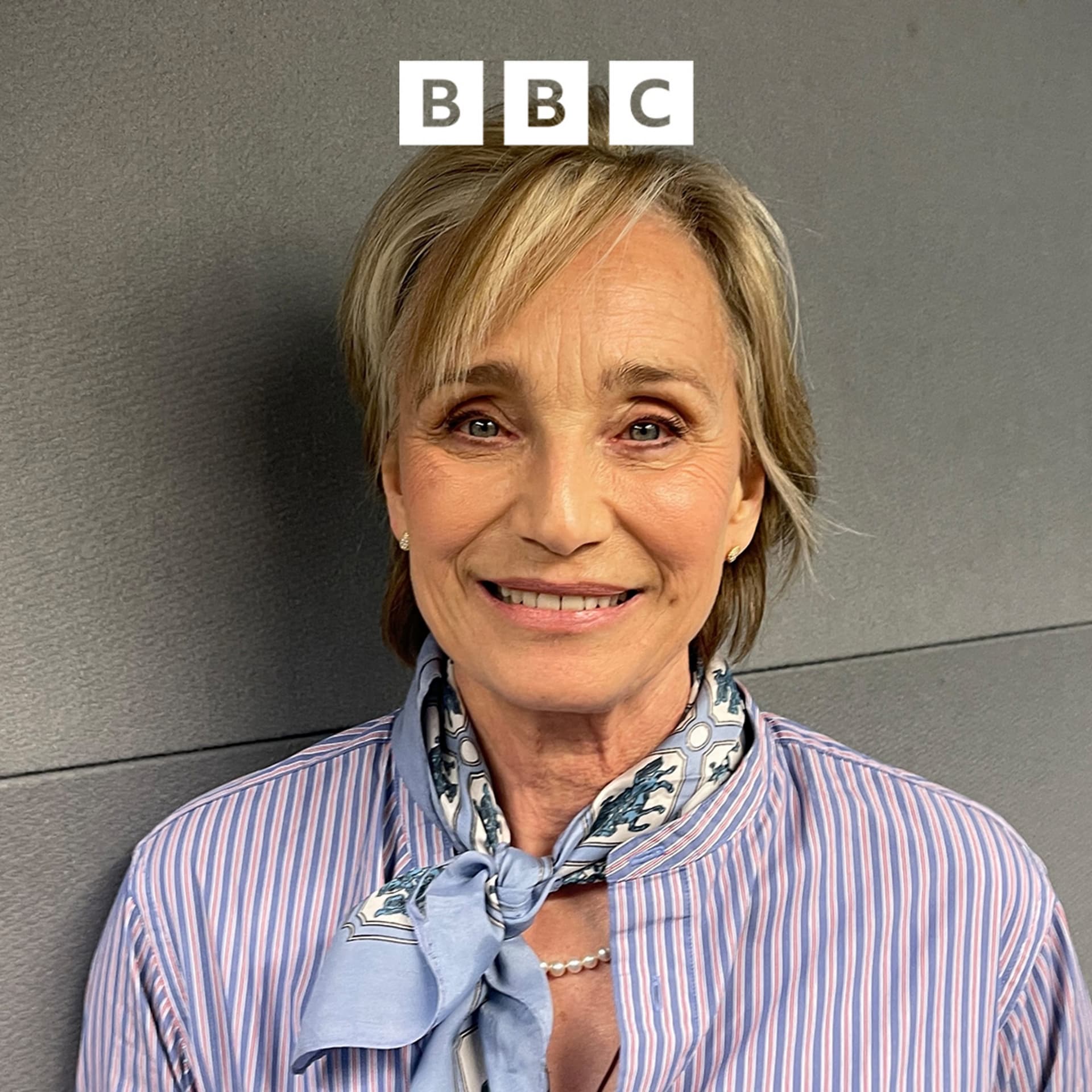
Kristin Scott Thomas discusses how her childhood grief (two Royal Navy air crashes killing her father and stepfather) shaped her acting, her Francophile upbringing, and her transition into writing/directing with My Mother’s Wedding. She also reflects on career choices, typecasting, and working across French theatre/cinema and English-language screen roles.
Guest background
Cornwall-born; educated in Cheltenham; raised in a military family; father and stepfather died in Sea Vixen Royal Navy accidents (she was 5 then 11). She built a career in France and England, won an Olivier for Chekhov’s The Seagull, and received France’s Légion d’honneur (2005) and a UK Damehood (2014). She later directed/wrote My Mother’s Wedding.
Key claims
Repressed emotion and “stiff upper lip” secrets informed her characters; trauma culture discouraged children from talking; French audiences demand more; she stepped back from Hollywood after Oscar nomination due to family and geography; theatre “put it to bed” after Electra.
Notable examples
Fiona in Four Weddings and a Funeral; My Mother’s Wedding (three sisters, mother remarries after two air-accident husbands); Under the Cherry Moon with Prince; The English Patient (Oscar-nominated as Catherine Clifton); Slow Horses (spy boss Diana Tavener).
Written by AI. May contain mistakes. Listen to the episode to check what was said.
Chapters
Tap a time to open that second in VOKristin's Early Life and Tragedy
0:45 to 2:15
Kristin discusses her childhood in a military family and the tragedies that shaped her life.
“Her extensive theatre credits include Chekhov's The Seagull, for which she won an Olivier Award, and she played the Queen in Peter Morgan's drama The Audience.”
Memories of Loss and Trauma
2:15 to 4:30
Exploration of Kristin's memories related to the loss of her father and stepfather.
“And yeah, he just died and my mother was pregnant And I had two little sisters and another person on the way.”
Coping Mechanisms and Expectations
4:30 to 6:00
Discussion on how Kristin's family coped with loss and societal expectations around grief.
“But I'm wondering whether you were, in the way that we understand it now, triggered about the loss of your father when you're...”
Impact of Personal Loss on Career
6:00 to 8:00
Kristin reflects on how her experiences with loss influenced her acting career.
“But I think in those days there was a very much a kind of culture of just don't mention it, keep going.”
Directorial Debut: My Mother's Wedding
8:00 to 10:00
Kristin discusses her film My Mother's Wedding and its personal connections.
“Repressed emotion, perhaps, but also things that children aren't supposed to know about.”
Developing a Personal Narrative
10:00 to 12:00
Insights into Kristin's creative process and the significance of her story.
“But you lot have never, ever let go of them.”
Exploring Early Cultural Influences
12:00 to 14:00
Kristin shares her cultural upbringing and early influences on her acting.
“I mean, I've been incredibly lucky in my career, particularly in film, where I've worked with such a variety from Nicholas Winding Refn to Sidney Pollack to Anthony Minghella.”
Transitioning from Tragedy to Joy
14:00 to 14:38
Kristin discusses her shift from performing tragedies to seeking uplifting narratives.
“Just doing that play really put it to bed.”
Cultural Upbringing and Early Inspirations
14:38 to 16:39
Kristin reflects on her childhood cultural influences and her early acting ambitions.
“What sort of cultural upbringing did you have as a child and cultural education?”
Artistic Journey to France
16:39 to 18:06
Kristin shares her challenging journey through drama school and to France as an au pair.
“But you left from what I understand, you left before the end of the course.”
Show all 22 chapters
Auditioning for Prince's Film
18:06 to 19:19
Kristin recounts her unexpected audition for the lead role in Prince's 'Under the Cherry Moon'.
“And I enrolled in this very difficult to get into school.”
Working with Prince and His Influence
19:19 to 21:52
Kristin discusses her relationship with Prince and how he impacted her career.
“How did you land a lead role in a Prince film?”
Grief and Reflection After Prince's Passing
21:52 to 22:38
Kristin shares her feelings of loss and reflection on her friendship with Prince after his death.
“What was your relationship with Prince like?”
The French Theatre and Dual Career
22:38 to 24:18
Kristin reflects on her dual career in French theatre and Hollywood films.
“because all the people who worked for him and knew him best were all in America.”
Typecasting and Career Challenges
24:18 to 28:00
Kristin discusses the challenges of typecasting in film and her desire for more complex roles.
“even Mission Impossible or Gosford Park.”
Navigating Complex Roles in French Cinema
28:00 to 29:04
Kristin discusses the challenges and nuances of playing complex characters in French films.
“It was deeply frustrating because that did not come naturally.”
Cultural Differences in Storytelling
29:04 to 31:18
Exploration of how British and French storytelling in cinema differs, especially regarding character roles.
“Is that to do with what you're offered or how you choose?”
The English Patient: A Career Milestone
31:18 to 34:21
Kristin shares her emotional connection to 'The English Patient' and the audition process for her role.
“Your next choice for This Cultural Life is Michael Ondaatje, the author of the 1992 Booker Prize winning novel, The English Patient, which of course was adapted by Anthony Minghella.”
From Hollywood to Family Life
34:21 to 36:28
Discussion on stepping back from Hollywood for family reasons and the impact on her career.
“I mean, I'd been a pretty good little soldier, doing My Mission Impossible, doing these sort of smaller roles where you might get a bit of a pat on the back, and then suddenly this monster role arrives.”
Balancing Roles: Theatre and Television
36:28 to 37:58
Kristin reflects on her return to theatre and the importance of selective role choices in her career.
“and focusing more on theatre, you now have television to thank for a whole new generation of viewers knowing you.”
Creative Drive and Future Aspirations
37:58 to 40:58
Exploration of Kristin's creative motivations and her future ambitions in writing and directing.
“And then Diana Tavener, oh yeah, I could do that standing on my head.”
Dramatic Narrative on Smugglers
42:35 to 43:12
A gripping narrative about the dangers and complexities of smuggling operations.
“I need to get out of here because I do not want them to see me.”
Transcript
Automatic transcript. May contain errors.0:05Welcome to This Cultural Life, the series in which some of the world's leading artistic figures choose the influences and experiences that have most inspired their own creative lives. I'm John Wilson and my guest in this episode is the actor Kristin Scott Thomas. After a breakthrough role in the film A Handful of Dust, she became a global star with four weddings and a funeral in 1994 and, two years later, was Oscar-nominated for The English Patient. Her screen roles in the years since have included Gosford Park, The Horse Whisperer, more recently Rebecca, and on television, Slow Horses. She's just made her debut as a director and screenwriter with My Mother's Wedding.
0:45Her extensive theatre credits include Chekhov's The Seagull, for which she won an Olivier Award, and she played the Queen in Peter Morgan's drama The Audience. Kristin Scott Thomas has also enjoyed a distinguished stage and film career in France, where she was awarded the Légion d 'honneur in 2005. In 2014, she was made a Dame for services to drama. Kristin Scott Thomas, welcome to This Cultural Life. Thank you very much. You were born in Cornwall and you were educated in Cheltenham at the Ladies' College. Yes. And grew up in a military family, But your childhood was shaped by a double tragedy.
1:23Two air crashes, five years apart, that killed both your father and then your stepfather. Tell me about your father, first of all. Who was he? Well, I wish I knew. That's part of the issue, part of the motor. The mystery of what is half of me is something that I'll never really know. I just never discover any more about it. It was very weird growing up, particularly when I was a sort of teenager or young adult. I'd go to weddings and these funny old men would come towards me and they were sort of balding and slightly portly and say, I was a great friend of your father's. And I said, well, you can't possibly.
2:01My father was devastatingly good looking and only 30. And you were five when he was killed. I was, yeah, five. Yeah. What were the circumstances? He was in the Royal Navy. and he was flying and at the time flying was a very, very dangerous job. I think it still is but I think then they had one particular aircraft called a Sea Vixen which was really a huge thing and they used to do these training exercises and the accident rate was really, really high and he succumbed to one of those. And yeah, he just died and my mother was pregnant And I had two little sisters and another person on the way. And do you have no memories of being told?
2:47Oh, I have lots of memories of being told. Yeah, they lurk. They lurk forever. I mean, that sort of event will inform who you become. I think nowadays, thanks to the sort of awakening of the idea of mental health not being something hideously embarrassing and sort of... I think trauma has become slightly overclaimed, but I think there's enormous progress being made. This was a long time ago. It was 60 years ago. So it was the time when people thought that children could take knocks and just get over them. And we do. I mean, here I am, you know. But it was unnecessarily difficult, I think. But it's trauma and grief in response not only to the loss of your father, but also the fact that your mother remarried, had more children, and then her new husband, your stepfather, was killed in, I mean, from what I understand, almost identical circumstances, also flying with the Royal Navy, the fleece air arm.
3:50Absolutely. I think that was possibly more damaging to me because I was only 11 and I just got my head around this new person who was in our lives. And, you know, then this thing happens again. I remember thinking and it's still, you know, sort of hurts to think about it, but thinking, how can this be happening again? I cannot believe that this is happening again. And the repetition of it was so devastating and unfair that I felt that really did actually damage me, I think. Possibly more than the first time. The word triggering wouldn't have been used at the time. But I'm wondering whether you were, in the way that we understand it now, triggered about the loss of your father when you're...
4:38Well, I think if we could go back in time and examine this child that has suffered one loss and then another loss, I think, you know, we would see a lot of things that we can now recognize and put names to. But at the time, you know, there was no pastoral care. There was no there was nothing. You know, my housemistress told me and that was that. And then I next saw my mother sort of six weeks later because she was a wreck and she had five small children. At least I was safe in a school somewhere and being looked after. You know, I really feel for her now. I mean, at the time, that's all we were told to feel for, was think about your mother, how awful it is for her.
5:14Nobody ever said, are you OK? Nobody ever did that. But do you think there was an expectation that you wouldn't talk about it? There was an expectation that we don't talk about these things because it's uncomfortable for everyone. That sort of thing has gone now. People kind of overshare. Here I am oversharing. You know, it's currency now. Whereas before it was a private event. And it's particularly when you come from a naval family where you know what the risks are. But I think nowadays there's far more attention paid to the families. In fact, I know there is because I help the charity called the Naval Children's Charity, which looks after people who are in trouble because they've lost a parent.
5:57because, of course, nowadays it's women and men, mothers and fathers, who are at risk. But I think in those days there was a very much a kind of culture of just don't mention it, keep going. And I think that was probably left over from the Second World War and, you know, you just keep going. But it's also the fact that it was a military family, so there's an expectation of a sort of stoicism, isn't there? Yes, absolutely. I mean, my mother was completely not from that world at all. How did she cope? Well, I don't really know. Did you never talk about it with her later? Yeah, we did, but it was always a bit fraught because it was the sort of conversation you'd have in the car, you know.
6:37And I would always be riding shotgun because I was a very good navigator and we'd have all the other children in the back. And so it was the sort of thing you'd talk about on long journeys, but it always got a bit, you don't want to dig too far. And she would get very upset and she was very, very emotional and would be triggered, as you say. You know, she'd watch television and suddenly burst into tears and we'd get a bit irritated by it, you know, sort of, oh, for God, I can't she just grow up, you know? But poor thing. I mean, I think now, having heard all my life, oh, just think about your mother.
7:10At the time, I was a bit fed up with thinking about my mother. But now looking back, I thank God, you know. And what about you? How do you think that experience of grief, loss, of trauma, how has that affected your personality and maybe the way that you project yourself and the sort of characters that you play? Well, it's given me something to work with. I think that it has certainly made me quite good at telling stories about people who have a secret suffering and have to keep the stiff upper lip and keep going. I was thinking, I mean, Fiona in Four Weddings, who is the sort of epitome of that.
7:49She has this secret that she keeps under wraps and won't tell anyone and then it all comes out. And I think I've been quite expert at that because there was very little acting required because I had all this sort of built up information. Repressed emotion. Repressed emotion, perhaps, but also things that children aren't supposed to know about. And funnily enough, I've always been cast as older people. Even when I was a very young woman, they wanted me, you know, I was 23 and they wanted me to play 35, you know, grownups. So I obviously had something within me that said knows too much or something.
8:24And after playing dozens of roles on stage and screen over the last 40 years or so, you've just made your debut as a writer-director in a film called My Mother's Wedding. Yes. And it's about three sisters whose mother is about to marry for the third time, having lost two previous husbands, both in air accidents. What made you want to fictionalise such a personal story? What do you think? Catharsis? Catharsis. No, not really catharsis, because that happened earlier when I did Electra. That was totally cathartic. No, what made me want to do it was that I realised that one of my brothers, in fact, both my brothers, have absolutely no idea about who their father was, no image in their heads.
9:10So I thought that I would make some little short films about what I remembered about Daddy and my stepfather, Simon. I got talking to somebody about this and they said, well, why don't you turn it into a fiction? I said, no, well, I don't want to tell the story of my life. You know, that's not it. No, but what you do is you take that and you use it as a sort of seed for telling another story. And that's what I did. Your fathers were not the perfect men you imagine that you've fantasised about all these years. Yes, they were brave young men who gave their lives for their country, but they were still just young men doing all the things that young men do.
9:53It didn't stop me from loving them desperately. And by God, did they love you. But you lot have never, ever let go of them. You are all still little girls, madly enough with your daddies. separate from them, just as you did with me. No, we didn't. That's what you're supposed to do. And what was the experience like of writing that story, of using those very personal experiences and first putting pen to paper? Well, I was very excited about being able to claim it as mine rather than seeing that dreaded paragraph in every profile, you know, tragic childhood, blah, blah, blah. I was actually quite happy to be able to say, no, this is what happened, and to describe the feeling of guilt that a child can have, even though they're completely innocent.
10:45The feelings of confusion, the feelings of having to just carry on, having to put one foot in front of another. It was actually very exciting to be able to explore that. And you have multiple roles on this film as writer, director, co-star, because you're playing the matriarch. What was it like being on the other side of the camera? It was the biggest thrill I've ever had. No, I mean, look at the cast I've got. I mean, it was like being given a fleet of Ferraris. It was absolutely amazing to have these incredible actors around me. Scarlett Johansson, Sienna Miller, Emily Beecham. Emily Beecham, James Fleet, Frida Pinto.
11:27But did you suddenly feel a different kind of agency on set, you know, a different sense of power, the dynamic of the way a film is made? Absolutely, yeah. I mean, I can't recommend being an actor in one's own film when it's one's first film, because it is very, very difficult to sort of separate and sort of observe the other actor while you're acting with them. I find that incredibly difficult. And when you headed to set, did you have any particular directors in mind, anybody that you wanted to emulate their style, their approach? Not really. I mean, I've been incredibly lucky in my career, particularly in film, where I've worked with such a variety from Nicholas Winding Refn to Sidney Pollack to Anthony Minghella.
12:12Robert Redford. Robert Redford to Robert Lepage, you know, and various French films with less well-known directors, but completely accomplished and brilliant and specific and needling and difficult. So I think it was a great big soup of all of that, if I can say that without sounding too dismissive. And making the film, you know, because I said, why did you want to fictionalise that such a personal story? Has it helped you make sense of those early years? Not as much as you might think, because I think that my work on that had been completed. You know, I've had to do a lot of personal work, as they say, you know, with a psychoanalyst and then therapy later.
12:54and I've done a lot of that to avoid deep and dark and debilitating depression. I've really had to work on that and come out of that, and it's taken a long time. And I think the culmination of that was working on Elektra, which is the ultimate sort of story of daughters and fathers and was written 2 ,600 years ago and is so unbelievably on it as far as emotion is concerned. It's extraordinary. She and Aegisthus split him open with an axe. A tree fell. And, Father, I am left to dwell alone in your house, my back against the wall, weeping for my father dead, mourning my dead father. But I swear, while my eyes see the sun or stars in the sky, I will never cease to cry out my pain and my complaint.
14:03Just doing that play really put it to bed. And actually, funnily enough, after doing that play, I decided, right, no more tragedies. I've spent it all. Now I want to tell happy stories and not stories about pent up rage or grief. so I don't want to tell those stories anymore I want to tell stories that make people feel warm and fuzzy basically instead of leaving the place in floods of tears
14:38What sort of cultural upbringing did you have as a child and cultural education? We lived in the depths of Dorset and with very little access to anything apart from television and my mother was really good at sort of taking us to places and she would take me to shows that she wanted to see, maybe in Bath or in Bournemouth or wherever. When did you first start thinking that acting might be something you could do? I think I was about four. Right, OK. And I would go down to the village shop when I was about eight, convinced that the lady running the village shop, Mrs Vendiback, wouldn't recognise me because I had a headscarf on and dressed as the Queen or something.
15:16And I was going down to the village shop. You were already playing characters? Yeah, already playing characters. I must have been insufferable, actually. Did you, when you started thinking, actually, I want to act, were there particular actors that you emulated or who were your favourites? I mean, who were the role models? I remember seeing French films. I don't know how. It must have been very late at night. I shouldn't have been awake. On television and seeing Anouk et me in A Nommé infame and thinking, oh, that is what I want to do. I want to run along beaches in Mackintoshes and look like Anoukéme and be, you know.
15:51But you've had such a lifelong association with France. Do you think it goes back to seeing those early films, Anoukéme? Yeah, I do. Did your mother introduce you to those French films, do you think? She certainly introduced us to French. I mean, it was packed off to French lessons with the nuns at seven. Oh, so she was a Francophile. She was a Francophile. She was an everythingophile. She was a very, very curious, greedy for knowledge, greedy for experience. I think it must have been very difficult for her stuck in the country with five small children. But, you know, she learned Greek. She learned French.
16:23She spoke Italian. She was interested in words and the musicality of words. I mean, obviously, I'm talking about her nonstop. So she must have been a very big cultural influence in my life. And I'm proud of that. You know, she was a great person. After school, you enrolled at the Central School of Speech and Drama. Yeah. But you left from what I understand, you left before the end of the course. I did. What happened? Well, what happened was that when I declared that I wanted to be an actress, it was deemed a very unwise decision and that I needed to get a degree. So the next best thing would be to get a teaching degree and become a frustrated actor teaching small children.
17:06No, that would be awful. Anyway, I enrolled in this audition and miraculously got in. And then it became evident that this was not for me and that I really needed to man up and try and become an actress. So I did try and get onto the acting course. But then I was told that if I put one foot in the acting director's office, I would be out of the school. So I didn't. So and then I went to France. So you went to France to work as an au pair. I did. But enrolled in a drama school there instead. Yeah. And that was also a miracle. And that was also always due to these really brilliant adults who I was surrounded by.
17:45And this was another woman who was my boss. And she said to me one day, what are you going to do? And I said, well, I really want to be an actress, but I know I can't because I'd just been told I can't. And she said, well, why? Because it's too hard, blah, blah, blah. And she said, no, no, no, absolutely not. Here, go here. And she sent me off to this acting class, which is an evening thing. where I met the man I married. And I enrolled in this very difficult to get into school. I mean, there were sort of 2 ,000 applicants from 20 places. And I got through the first round and I couldn't believe it.
18:19And the morning of the second round of auditions, I was in the kitchen doing the washing up, as all good au pair girls do. And she comes in and said, what are you doing? I said, well, there's no point in me going. I'm never going to get in. There's no point. And she was furious. She grabbed my wrist, pulled me downstairs, hailed a cab, gave the man 50 francs, said, take her to the whatever the theatre was. And I got in. I couldn't believe it. Something that I'd managed to do. But also your life could have been so different if she hadn't grabbed you by the scruff of the neck and thrown you towards that audition.
18:52I think that was a very, I mean, a total turning point. Yeah.
19:00Your next choice for this cultural life, Kristin Scott Thomas, is the musician Prince, who, in 1986, cast you in the lead role of a film that he directed and starred in, called Under the Cherry Moon. I'll die in your arms, under the cherry moon How did you land a lead role in a Prince film? Well, I was actually doing something which was I was much more drawn to. I was theatre and I didn't really want to be a film actress. I wanted to carry on in the theatre and I was doing a play by Marguerite Duras in a field in Burgundy. I got my first review, which was the best review I've ever had. Downhill since then.
19:43And then I listened to my aunt's phone and said, they want local actresses who live in France to play bit parts in the Prince movie Do You Want to Do It? of course I wanted to do it. You know, I was listening to Prince on repeat all summer. So I trotted along to that and suddenly there was a sort of kerfuffle around the camera and they said, would you like to audition for the lead? And I, you know, I nearly fell over. Of course I would audition to the lead. So I auditioned, did a little bit of the lead bit and they said, and would you like to meet Prince this evening? So, yeah, but I mean, it was sort of unbelievable.
20:17Another kind of enormous turning point. and I went off and did the film and learnt so much. I didn't even know you had to do the same thing twice when you did a close-up or a wide shot or a close-up. I didn't know you had to match things. Under Cherry Moon, Prince plays one of a pair of brothers who are sort of... They're kind of doing cocktail bar, pianist, and they're taking out old ladies. They're kind of on the make, aren't they? They're on the make, and I'm a very rich girl. They're sort of grifters in a way. Yeah, you've got it. So what did you make of the role, or did you not care? I didn't really care that much.
20:49I mean, it was it was it was no I did care at the time. I did care, absolutely did care, because I knew it was a sort of important thing for me to do. Don't forget, this was just after Purple Rain, which was a huge hit. But I still couldn't quite believe that I was actually there. And I knew that some of the lines were a little bit dodged. But you have to kind of just grit your teeth and get through them and just do my best and try and cry at the right point. and try and laugh at the right point and just be as good as you can and learn it as you're doing it. Were you a Prince fan at the time? A huge Prince fan.
21:26All the time when I was doing this very serious Marguerite Dioras play, I was listening to Around the World in a Day on repeat. I mean, I hope you won't mind me saying that Under a Cherry Moon is probably not the greatest film on your CV in terms of quality. No, but it's one of the most interesting. And at the time, he was 24, I was 23, and he was allowed to do whatever he liked, which is a bit odd, really. No, he was a massive star. He was a massive star, but at 24. What was your relationship with Prince like? It was great. I mean, we stayed in touch for years. Until he died. Yeah. Absolutely blown away when he died because I had nobody to kind of...
22:07I mean, often when you go to funerals and things like that and somebody stands up to say something, they will very often not talk about the other person, but they'll talk about themselves and their relationship with that person. And that's what I'm about to do because it was very hard when he died because he'd been so important to me as a sort of setting me off on my path and had enormous faith in my talent, which I was flattered by. And I had no one to kind of share the sort of grief with because all the people who worked for him and knew him best were all in America. And then I kept getting people who I knew were Prince fans ringing up and saying how sad it was.
22:47And yes, the fan in me is sad, but the person who was a friend is even sadder. Didn't he write a song about you once? Yes, he did. Did you know at the time? Because it was years later, I think, wasn't it? Yes, it was. It was much later. He came to see The Seagull on Broadway and a film called I've Loved You So Long, which is a French film that I made, came out at the same time. And he wrote this wonderful song called Better With Time. Which was really, really kind. Like fine wine. Like fine wine. Age is not a cage. Like one, you get better with time. So young and so naive That I never once believed I believe that the memory of you will go through me Like a wind going through the tree I mean, God, what a privilege.
23:55Yeah. Sometimes I have to pinch myself and think, you know, things have been pretty extraordinary.
24:05Your next choice, Kristen Scott Thomas, is French theatre and some of the directors that you've worked with in France. And you've always had this dual career in France, the French dramas alongside some of the big Hollywood parts, even Mission Impossible or Gosford Park. Was it always important for you to maintain that French connection that you started with? Well, my Frenchness was, for 42 years, the first thing that came out because I lived there, my children were there, my whole life was there. I mean, it's only recently that I've moved to the UK. all the nourishment I was getting as a young adult was all coming from France.
24:44In the 1980s and 90s, it was a wonderful period for French theatre. You had people like Patrice Chéreau. You had Luc Bondy, who's in fact Swiss. You had this great conversation going between the German theatre, the French theatre, the Italians a little bit. I would come back to England and I'd go to the theatre and everything would be so beautiful and completely precise and for an audience. and you go to France and as an audience member, you better keep up. You're being after a lot more. And you found that exciting? I found that really thrilling. And stimulating as an actor as well because it offers you a different kind of channel.
25:21Yeah, I mean, I didn't work that much in the theatre in France before. I mean, Prince basically put a stop to that. But then when I really went back to the theatre, when I was 40 the first thing I did was Berenice which is a Racine play in Alexandrin. I absolutely loved it I probably murdered it I was probably disastrous but it was an extraordinary thing to do and it opened of course it opened the door for the theatre here so I was able to come back to England and the first thing I did on stage in England was a check-off which was the three sisters with Michael Blakemore. The Racine that you did, which in effect is your introduction to the stage, in French, how did that go down with the French critics?
26:08Oh, I don't think it went down at all well. I mean, the first night there were like seven people from one newspaper. I think the person in Le Monde was very happy, but I genuinely don't read reviews because there's no point because it's always going to be a nightmare. If they're good, you're going to be waiting for the moment they all loved and I know I'm going to mess it up this time or if they're bad, you're just too miserable. Anyway, don't do that. However, people around you will always let you know whether they're good or bad somehow. It's the way they can't quite look at you or they come in with a beaming face.
Read the full transcript
26:44And my children were incredibly upset and my children and their cousins all wanted to write in to the figure or to tell them how wrong they were about their aunt and their mother. Very sweet. In terms of the film roles, you've said in the past that you get frustrated sometimes by being typecast with that sort of ice queen, Aristo-English role. But, of course, your breakthrough was in Four Weddings and a Funeral. How about you, Fifi? You identified a future partner in her life yet? No need, Ray. Deed is done. I've been in love with the same bloke for ages. Have you? Who's that? You, Charlie. Did that set the template for those sort of roles?
27:30I think that's what happens. I think that you are going to be the victim of your first success. So my first real success was before that, which was in an adaptation of an even war novel called A Handful of Dust. And that sort of put me on the map as far as filmmakers were concerned, perhaps not the public so much, but filmmakers. And that was playing Lady Brenda Loss. So once you've done that, everyone thinks, oh, she can do that accent or she can do that. She's got the poise, she's got the cheekbones or whatever. It was deeply frustrating because that did not come naturally. It was work to create that character of Brenda Larson.
28:12What, the glass poise, the English? Yeah, all of that stuff was not, you know, that was something I had to concentrate on. Absolutely. Well, you see, I've been in France for the past 10 years. What's interesting is that in France, you seem to play more complex, emotional women, often in psychological dramas. Films like Tell No One, Leaving, Patia. I love that film. Woman in the Fifth. Yeah, Woman in the Fifth, the Pavel Pavlokowski. The kidnapping thriller, Contre Toi. I don't want to. But it's enough. You had done what you wanted. You had sequestrated the bad medical officer. You can be proud of yourself.
29:04Is that to do with what you're offered or how you choose? Oh, it's definitely what you're offered. Definitely. If I could do the roles that the French make me do, or telling the stories that the French tell, I suppose, If I could do those in English, I would be so happy. Why are you perceived so differently? I don't know. I don't know. I think what has happened, as far as I can see, looking back, is that British TV in the 80s, 90s, 70s, has always been absolutely amazing. And we have told in the UK, we've told domestic and psychological sort of dramas, if you like. We've told them for television.
29:50Now, in France, those stories are told on screens in cinemas. Dramas of that quality. Yeah. Does the French language make you a different actor, do you think? I think probably it does, although I'm not the right person to ask that. Are you told you have an accent in France? Yes, I do have an accent, but they don't mind accents. They're very funny about accents because it's Europe and European cinema was so tightly knit. You get all this French-Italian productions from the 50s and 60s. So you get Claudia Cardinal and she has a funny accent. You get Jane Birkin, who was massively successful in France as an actress.
30:25Huge star with her very, very, very strong accent anglais. And Charlotte Rampling. I mean, there are lots of us who all have slightly foreign accents, but they don't mind. And in terms of inhabiting a character, understanding the character, it all starts with the script. But in the language itself, do you feel as at ease with the French when you're acting as you are? I think after a while, I've just done a film in France, actually, funnily enough, in October last year. And it took me a while to kind of trust myself again with the words. I do get a little bit confused and I do speak terrible for anglais.
31:04And I will start a sentence in English and end it in French. And I'm fishing around for words that I can't find. and people think it's incredibly pretentious, but it's just because my brain's a bit slow. You know, once I get into the swing of it, a couple of weeks I think it takes, then it's all perfectly natural again.
31:22Your next choice for This Cultural Life is Michael Ondaatje, the author of the 1992 Booker Prize winning novel, The English Patient, which of course was adapted by Anthony Minghella. And you were Oscar nominated. Your role is Catherine Clifton. Opposite Ralph Fiennes. Had you already read the book then when you were cast in The English Patient? Had I read the book? I read it literally cover to cover, back to back. And I heard that someone was making a film about it. And I said to the person who told me, if you can get me a job on that film, I'll do anything. Any of the parts? No, anything. I would bring in coffee.
32:02I would be a runner. I just wanted to be there. I wanted to be part of that story. It really deeply, deeply affected me. I think that was probably the beginning of the curing, because I think it was probably the stuff to do with abandonment, just sort of knocking that one on the head. When he leaves Catherine in the cave, for God's sake. Well, after a plane crash. Yes. Yes. After a plane crash. Did that resonate with you? I think it only must have done, you know. Yeah. Yeah. But everything resonates. It's, you know, everything is a reference to something else, isn't it? So you read the book, you loved it, you wanted to be in the film, then you heard Anthony Minghella directing it.
32:44How did you get the role of Catherine? Well, then somebody said, I think it was my agent sent me a script, said, you know, do you want to do something in this? And I said, yes, I want to play Hannah. Let me play the nurse. I'd be really good at the nurse. Played by Julia. Played by Julia of Nosh.
33:02Brilliantly, brilliantly. She's been in the studio on this programme talking about that. I know, I know. She's so clever. She's absolute. She's such an amazing actress. She really is. And she's gone from sort of strength to strength. And it's fabulous to watch. Anyway, enough about Juliet. It's interesting. It's very revealing that. You wanted the role of Hannah first. Yes. I never even imagined. I mean, why would they choose me to play, you know, this sort of amazing creature? What, Catherine? The love object. Why would they choose me? I just could not. Why would they not? Well, that now, because it was made into that, but I couldn't imagine that then.
33:38So was there an audition? What was the process with Anthony? Well, there was. Then I went, oh, they want me to play Catherine Clifton. Oh, OK. So I trot along and have a lunch with Anthony. He was absolutely charming. And I sat down and basically told him why I shouldn't play Catherine Clifton. And then I had to write a letter, because I came back and kicked myself. Why were you so negative? Why were you so self-deprecating? And I wrote him a letter, and in the letter, I think this is what clinched it. I wrote, I don't know why I did that, but this is why I should play Catherine Clifton. I am Kay in your book.
34:17I put that at the end of the letter. Which is in the Michael Ondaatje book, which is also in the screenplay. Yes. Am I Kay in your book? I think I must be. What did that role do for your career? Oh, it exploded after that. I mean, I'd been a pretty good little soldier, doing My Mission Impossible, doing these sort of smaller roles where you might get a bit of a pat on the back, and then suddenly this monster role arrives. Although Antti Minghella had had to fight for the film, hadn't he? Because I think from what I understand... Oh, they didn't want me. ...20th Century Fox were quibbling over the money and also were arguing that Demi Moore should be playing Catherine Clifton.
34:58Yes, yeah, yeah. Were you aware of that at all? Well, I knew they didn't want me. What's interesting is you were Oscar nominated for that role. You won huge acclaim, so many parts. I think the Robert Redford film The Horse Whisperer was after that, wasn't it? So the door is opened to Hollywood offers. But then famously you stepped back from the film industry. I mean, it was all there on offer, on a plate, but then you sort of made it clear that it wasn't for you. Why was that? Well, because I had two small children and a husband who was having a wonderful career in France as a very, very good doctor.
35:37Don't get me wrong. This is not a sacrifice. I didn't give everything up for them. It's just it didn't work with it. And I wanted to bring up my children in Europe. And I just felt very nervous about pursuing a career in America and everything I would have to do to be like them. And I noticed the moment I, because I was doing a lot of little French things at the time, and I noticed as soon as I got my nomination, those all dried up. No one dared ask you anymore. Because they thought you were suddenly too big. Yeah. So for a number of reasons, geographical concerns about how ambitious was I? Was I really going to be able to fight as much as you do have to?
36:19Was I really going to be able to put up with the doubt, the criticism, everything? I think I preferred to kind of carrying on doing what I was doing. And after stepping back from film or Hollywood in particular and focusing more on theatre, you now have television to thank for a whole new generation of viewers knowing you. I mean, there's a fantastic cameo role that you had in Fleabag. Yeah. But also playing the spy boss in Slow Horses. Yes. Do you feel now you can cherry pick the roles? I mean, I've always done that. Have you? Yeah, believe me, I said no to quite a lot of them. And some I regretted immediately, you know, think, oh, God, why didn't I do that?
36:59That was so stupid. I shot myself in the foot. But, you know, as I say, it's a balance between real life and pretend life. So I've always been in a very lucky, but also I've worked very hard to get there of being able to think, no, I don't want to go off and do that. And have I done this role before? Yes, don't do it. And that's happening a lot at the moment. What was the appeal of playing the spy boss, Diana Tavener, in Slow Horses? I mean, it looks like a lot of fun to start with. Yeah. I hadn't worked on film for four years, and Joe Wright persuaded me to go in and do, in The Darkest Hour, a play opposite Gary Oldman, and that's an extraordinary experience.
37:41This is the Churchill War. The Churchill War. Yeah, yeah. So working with Gary was just so exciting. And I loved it so much that when this arrived, by then I was living in England and everyone around me was talking about Mick Heron, Mick Heron, Mick Heron, Mick Heron. And so I, you know, became intrigued. And then Diana Tavener, oh yeah, I could do that standing on my head. Slightly harder than that. Service standing order, whatever the hell it is. 27-3. If you say so. The three's in brackets. I don't care if it's in Sanskrit. It is therefore a reason. If there's a hit on one of your team, you report it upwards, in this case, to me.
38:20Ordinarily, I would have done, but there were special circumstances. Which were? I couldn't be arsed. That's not a special circumstance, Jackson. That was your prevailing condition, and this time it might just prove terminal. But having written and directed your film, My Mother's Wedding, actually, I think the production was about three years ago. So have you brought a new sensibility when you were on film set as an actor now? Completely. I understand much better how everything's constructed and why they want me to do that again and why this, you know, and people claim that actors are very narcissistic.
38:54I'm not going to say anything about that. But I do think we do have to kind of protect and watch our own patch. You know, I do my patch, you do yours. I mean, because filmmaking is such a collaborative experience. so as an actor I'd always learn to kind of make my performance not as varied as possible but give a lot of choice to a director so I always get a bit cross when they want me to do the most obvious thing it always kind of goes against the grain What, you mean in the way that you deliver a particular line? Yeah, yeah, yeah, but now I understand why especially when you're not playing the lead because you've just got to shunt along that story you've just got to keep it going so I understand my function, what I'm there for.
39:39You have more sympathy for directors. I have much more sympathy for directors and for producers now. And what about theatre? Because you're about to be back on stage in the Cherry Orchard, Chekhov's Cherry Orchard. What's brought you back to theatre? Just the love of it and just the need. And I work with Ian Rickson very, very happily. The director. The director, yeah. Oh, he directed Electra as well about 10, 12 years ago. Yeah. And before that, I mean, I've done everything. I've done all the pinters with him. We did the seagull. Yeah. In 2014, you were made a dame by Queen Elizabeth, who you were playing on stage at the time in The Audience, which was the play by Peter Morgan.
40:17Did the damehood reconnect you, do you think, with a sense of Britishness? Or do you still feel that sort of binationality? I still feel that very, very strongly. Yeah. I spent most of my life in France. If I live a bit longer, it'll be half-half, but most of my life I've spent in France. Do you think in French? When I'm speaking in French, it does take a little bit of adjustment to kind of plunge yourself into the world of the language and attitudes and everything is a bit subtly different. That's why it's really great to bring up your children bilingually. It's hard work because you have to concentrate.
40:57and if you've got anyone else involved in the child rearing, you've got to repeat everything. So it's hard work but it's really worth it. And what drives you on creatively? Curiosity, a hunger for experience and to push myself. I like doing things that I don't know how to do. So more writing and directing in the future? Yes. Can you see yourself moving away from acting completely? I think if people continue to offer me roles that are challenging, then I will continue to be an actor. If I get drawn into this as a threat, if I'm just asked to play spy chiefs for the rest of my life, I won't do any more of those, even though I'm having great fun.
41:46Kristen Scott Thomas, thank you so much for sharing your culture. It's an absolute pleasure.
41:58Well, I really hope you enjoyed that conversation with Kristin Scott Thomas, who now joins a really starry cast list of previous guests on This Cultural Life, award-winning actors including Nicole Kidman, Glenda Jackson, Judi Dench, Juliette Benoche, Julian Anderson, Jennifer Lawrence, and many more. You can hear them all on BBC Sounds or wherever you get your podcasts internationally. And please do subscribe to This Cultural Life so that you never miss an episode. from me, John Wilson, and serious producer Edwina Pittman. Thank you very much indeed for listening to This Cultural Life.
42:34This is a nightmare. I need to get out of here because I do not want them to see me. A search across borders in some tricky situations. Shoot, there's a boat in the back of that car. Yeah, there is. No, no, no, don't get out. Watching smugglers who bring thousands of people to the UK. They have gun, they have knives. They have no shame. And at the top, a man who keeps his identity well hidden. If they know I'm talking about him, they come tonight, they will kill me. Pop, pop, pop, pop. Can we find out who he is? From Radio 4, this is Intrigue to Catch a King. Listen first on BBC Sounds.
From the publisher
Award-winning actor Kristin Scott Thomas talks to John Wilson about her career and cultural influences. After a breakthrough role in the Evelyn Waugh film adaptation of A Handful Of Dust, she became a global star with Four Weddings and a Funeral in 1994. Two years later, was Oscar nominated for The English Patient directed by Anthony Minghella. Her screen roles in the years since have included Gosford Park, The Horse Whisperer and more recently Rebecca and on television, Slow Horses. She has just made her debut as a director and screenwriter with My Mother’s Wedding, inspired by her real life family story. Her extensive theatre credits include Chekhov’s The Seagull, for which she won an Olivier Award, and she played The Queen in Peter Morgan's drama The Audience. Kristin Scott Thomas has also enjoyed a distinguished stage and film career in France, where she was awarded the Legion of Honour in 2005. In 2014 she was made a Dame for services to drama.
Producer: Edwina Pitman