In short
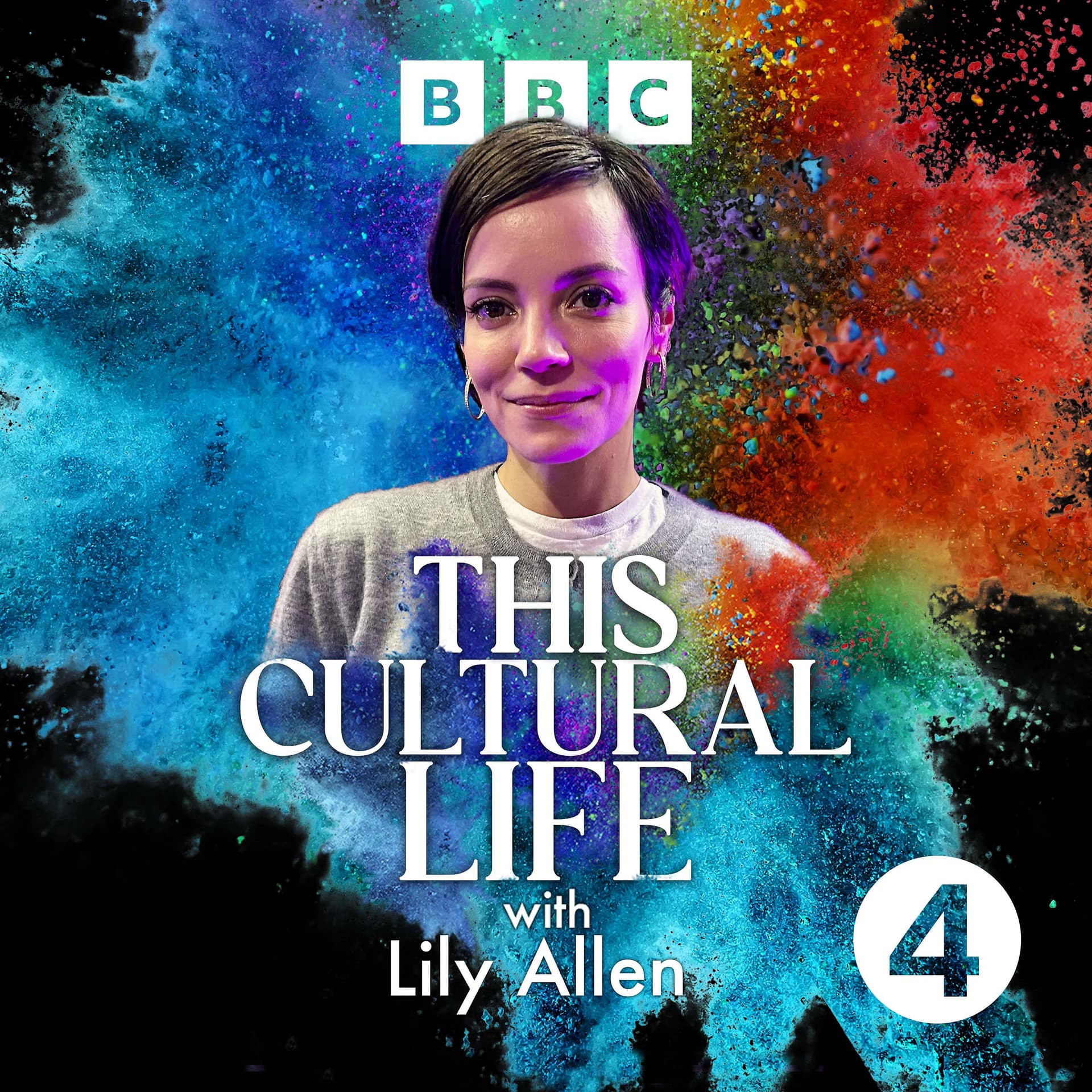
Podcast Summary: This Cultural Life - Lily Allen
Episode Overview In this episode of *This Cultural Life*, host John Wilson interviews Lily Allen, the acclaimed singer-songwriter and actor known for her candid lyrics that explore themes of fame, motherhood, and personal struggles. The discussion spans her childhood, musical influences, career milestones, and her recent ventures into acting and podcasting.
---
Key Themes and Discussions
- Childhood and Family Background
- Parents: Lily describes her mother, Alison Owen, as a film producer who was a single mother with multiple responsibilities, while her father, Keith Allen, is an actor and comedian who left the family when Lily was four.
- Complicated Home Life: Lily reflects on a non-traditional upbringing with little parental presence, often being looked after by nannies while her mother was working.
- Early Musical Influences
- First Performance: A pivotal moment for Lily was singing "Baby Mine" from *Dumbo* at a school concert, which made her feel seen and affirmed her desire to perform.
- Influential Songs:
- "Up The Junction" by Squeeze: Resonated with her due to its relatable storytelling and depiction of life in London.
- "A Grand Don’t Come For Free" by Mike Skinner (The Streets): Impacted her by portraying contemporary British life.
- Career Beginnings
- Songwriting: Lily shares her journey into songwriting, beginning with her first single "Smile," which drew from personal relationships.
- MySpace: This platform was crucial for her early career, allowing her to share her music directly with fans, circumventing traditional industry gatekeepers.
- Fame and Public Persona
- Tabloid Culture: Lily discusses the challenges of navigating fame, particularly as a woman, and reflects on the superficial nature of celebrity culture.
- "The Fear": This song critiques both celebrity and internet culture, highlighting the pressure to present curated versions of oneself.
- Motherhood and its Impact
- Creativity and Challenges: Motherhood has significantly influenced Lily's creative output and personal identity, often complicating her artistic pursuits.
- "No Shame" Album: A deeply personal album addressing her experiences as a mother and the complexities of her life during a difficult period.
- Transition to Acting
- Stage Debut: Lily ventured into acting with her role in *2.22 A Ghost Story*, which she took on as a creative challenge during her early sobriety.
- Future Projects: She confirms that while she is acting, she is also working on her fifth album, indicating a continued commitment to her music career.
- Artistic Identity
- Underestimation: Lily expresses feelings of being underestimated artistically and her desire to be recognized as a serious artist.
- Storytelling Focus: She views herself primarily as a storyteller, wanting to articulate human experiences through her art.
---
Key Takeaways
- Influential Experiences: Lily's early experiences in performance and her family background shaped her artistic voice.
- Honesty in Art: Throughout her career, she has prioritized authenticity in her lyrics, often drawing from personal experiences and societal observations.
- Ongoing Evolution: As she balances motherhood and her evolving career, Lily remains committed to exploring complex themes in her music and acting.
Conclusion This episode offers an insightful look into Lily Allen's life, her artistic journey, and the challenges she faces as a mother and an artist in the public eye. Her reflections highlight the importance of authenticity and resilience in creative expression.
Written by AI. May contain mistakes. Listen to the episode to check what was said.
Transcript
Automatic transcript. May contain errors.0:00BBC Sounds. Music, radio, podcasts.
0:11Welcome to This Cultural Life, the series in which leading creative figures reveal the most significant influences and experiences that inspired their own work. I'm John Wilson and my guest in this episode is the singer-songwriter and actor Lily Allen, renowned for the autobiographical candor of her lyrics. Lily has sung about the pitfalls of fame, drugs, broken relationships and motherhood. She was nominated for a Grammy Award for her debut album All Right Still and in 2010, after the release of It's Not Me, It's You, won a Brit Award and three Ivor Novello Awards, including for Songwriter of the Year.
0:48In 2021, she embarked on a stage acting career, starring in 2.22 A Ghost Story, for which she was nominated for an Olivier Award. More recently, with her childhood friend, Makita Oliver, she launched her BBC podcast series, Miss Me. Lily Allen, welcome to This Cultural Life. Hello. You were born in London in 1985, the daughter of people who worked in the creative industries. For those who don't know, just tell us about your parents. Well, my mother is called Alison Owen and she is a film producer. She is an extraordinary woman, actually. She had my sister when she was 17, moved up from Portsmouth and then went to UCL here in London.
1:34She had three kids by the time she was 24. And she was a single mother. My dad left when I was four years old. So she's done amazing things under some quite complicated circumstances. And your dad? And my dad is Keith Allen and he is an actor, comedian and, you know, writes the odd football song.
2:04And, yeah, he's my dad. You say he left when you were four. When I was four years old, yeah. Do you have memories of all of you together? The only memory I have of us all together is when he left, actually. The day that he left. I remember us all kind of being in a hallway of the flat that we lived in, in Bloomsbury and my mum saying you know dad's going I remember thinking do we get a new dad I didn't he's saying my dad but yeah that was that was the only time I can sort of visualize all four of us together I remember him sort of being there I remember we only had one bathroom one toilet in that flat so I remember on a Sunday my dad would get Sunday papers and he'd lock himself in the toilet no one could use the bathroom all day yeah that's my early memories of dad living with us and how would you describe home life as a child I mean it's it's complicated it wasn't you know traditional in any sense of the word you know my mom was bringing up three children single-handedly and she didn't come from money you know so she had to do it all on her own and it meant that she wasn't there that much you know so I don't really have much memory of her in my childhood at all.
3:23I kind of, I mean, she used to travel a lot. She'd go to America and stuff. So I sort of remember her, the anticipation of her coming back. And who was looking after you at the time then? Your dad? No, nannies. Yeah, we have like au pairs. They were sort of students kind of passing through. Did you spend much time with your mum on film sets? Or was that just her? Was that a totally different life for her? She did a film called Rosanna's Grave, which was shot in Italy. And I remember going to that for a bit. She did a film called Hear My Song in Ireland and we moved over to this little town called Leakslip and went to school there for a few months.
3:59But not on set. You know, film sets are not really very child-friendly places. You know, children make quite a lot of noise. But because they were in the creative industries, was there any idea at a young age that you would follow into that sort of world, do you think? No, not really. I'm actually quite a shy person, So the idea of standing in front of a camera and being vulnerable like that felt really intimidating. So at that early age anyway, I didn't think this is what I want to do.
4:32On This Cultural Life, Lily Allen, my guests choose the influences and the experiences that had the biggest impact on their own creativity. And your first choice for this programme is the song Baby Mine, which is from the 1941 Disney movie Dumbo. Baby mine, don't you cry
4:56Baby mine, dry your eyes Rest your head close to my heart Never to part, baby of mine So why this one? Well, I was at a school in Camden and my mum was away. She'd gone away for a long period of time and I think that everyone in the school kind of knew that I was struggling. And I was in the playground listening to Oasis, I think it was, Wonderwall, on my Walkman. And this teacher of mine called Rachel Santesso, who was Canadian and really young, and she walked by and heard me singing along with it. and she said, you know, you've got a beautiful singing voice, why don't we do some lessons together?
5:47And so we did and we prepared this song called Baby Mine, which is the song that the mummy elephant sings to Dumbo in the film Dumbo and we worked on it for a while and I sang it in a sort of, you know, parents concert and it completely brought the house down. It was, you know, people were really, really moved by it and I'd felt pretty invisible up until that point And it was the first time, so I'm actually getting a bit emotional talking about it. It was the first time where I felt like I could be seen, you know, and affect people. You know, it was a very powerful moment for me. And I really liked it.
6:28I was like, wow, I can move people and I can do something powerful. I can change people's emotions with something. And, you know, from that moment onwards, I was like, okay, this is the thing that I want to work on and develop. So what was the response in the room? You were aware that people were moved by your voice? Yeah, I think it was because it had meaning. It wasn't like I was just getting up and singing like a love song. It was specific to what I was experiencing at the time, which was that my mum was away and I was staying. I think there was even like a conversation about me maybe going and moving in with the headmistress for a bit.
7:07Like it was, you know, it was a really tough time. So, sorry, how old were you? About ten? I think I would have been about, yeah, nine or ten. It was primary school and it was a very small school so I think everybody was aware that, you know, I was this sort of child that was going through something quite complicated and then, you know, I stood up and sang this song that was very meaningful and people were moved by it. Well, it's a really loaded choice of a song, isn't it? Yeah, I don't think I chose it. I didn't know what it was plus I think maybe Rachel knew what she was doing. Had you seen Dumbo?
7:41You must have seen... Yeah, yeah, I'd seen Dumbo, but I... You didn't register that scene. When you think about it, Dumbo has been separated from his mother who is in a cage, chained. I think there's a sign on the wall that says Mad Elephant and he's reaching in with his trunk and, you know, they're sort of touching and having this moment, but then it cuts away and you see all the other animals in the circus all cuddled up with their mothers. I mean incredibly poignant for you to be singing that song It really was Did you feel emotional singing the song or did you feel happiness because it had a sort of a tangible effect on the people that were listening to it?
8:19No it was definitely to do with being in front of an audience and realising that I could change the atmosphere with what I was doing and that made me feel powerful at a time in my life when I felt completely invisible and also it was positive because I think you know I felt like I was a problem really because nobody knew what to do with me or where I was going to go so I think for the first or you know in this particularly difficult period of time when I'd felt like a nuisance and something that needed kind of sorting out was was an inconvenience to people suddenly I was like there was a reason for me.
8:57And this was a performance for parents? Yeah, I think so. But your parents weren't there? I mean, my mum says that she was. I don't remember her being there. But you know, she does. She says that she remembers it. So I would say that she was there. Maybe she came back for it. I don't know. What lasting effect do you think did that evening have on the rest of your schooling? Well, it became, you know, that was like my thing at school from that point onwards. So where I'd been like overlooked in school plays and things up until that point suddenly I was in the running for lead parts and you know I think I went up for scholarships and things for different places on the basis of my singing so it became my calling card.
9:39It was a step up in terms of education. I've read though that you went to 13 different schools. I think roughly yeah. And you were expelled from quite a few of them. I think so. You think so? I mean I definitely was asked to leave a few. What was going on looking back now and having the perspective? I just didn't really understand the point of it. I think maybe because I'd been in the creative industries and it didn't really seem like you needed an education to do those things. And I've been diagnosed in adulthood as having ADHD. I know lots of people have and people sort of slightly roll their eyes at it now.
10:21but I still find it really really hard to concentrate and to focus on things and so I found school a real struggle I had one teacher this guy called Alistair Langland at B-Dales which I was at for a couple of terms before I was asked to leave but he taught classical studies in English and he was the first teacher that really captivated me because he had a completely different style of teaching and it really made sense to me but apart from that yeah I wasn't interested B-Dales though, that's, I mean, it's prestigious. Yeah. Private school, isn't it? And you were there only for a couple of terms?
10:58A couple, two terms, yeah. And you were asked to leave, why? I think it was something to do with Glastonbury. I sort of remember running away and going to Glastonbury. We had asked the school permission for me to go early and leave early and go to the festival. And they were like, no, don't be ridiculous. and I just ran away and went anyway. But Glastonbury, you'd sort of been brought up at Glastonbury, hadn't you? I mean, you'd been going there since you were a baby. Yes, I mean, I sort of make a joke about it, but I'm more likely to see all my family members at that festival than I am at Christmas dinner, you know?
11:35So that's where we sort of congregated. Well, your father always famously had a sort of encampment there, didn't he? He was quite an attraction. He had his own field in a way. Yeah, he did. And it was always, I mean, I didn't know it at the time because I was so young, but the people that were there were really amazingly, you know, important people culturally. We'd sort of share a camp with Joe Stromer and other members of The Clash and Damien Hirst would always be there and the Happy Mondays and some of the Stone Roses would drop by. You know, it was exciting. Yeah, it was raucous, but it was exciting.
12:13that moment of singing baby mine from dumbo at the age of 10 or 11 that was your first moment in the spotlight when did you first start writing your own songs do you think i know exactly when it was because i had a manager called george lamb he was a tv presenter and i think he's done some stuff on radio as well we'd met in ibiza one summer and he managed a band called the audio bullies and he said you know i think i maybe i'd given him a demo of like me singing cover versions because that's all I did up until that point. And he said, would you be up for me managing you? And I said, yeah, that'd be absolutely brilliant.
12:45And he said, well, you're going to have to write songs, otherwise there's no point in us doing this. And I was like, OK, OK, I guess I'll have to start writing songs. And he sent me up to Manchester to work with these guys called Darren and Tunde. And I wrote, I think, Smile, which was my first big single, certainly the first thing that went to number one, was the first song I ever wrote.
13:19The first song you ever wrote? Can you remember writing it? Yeah. It was about, you know, an ex-boyfriend of mine. And I was so nervous. And I sort of remember we'd been building this backing track and finding the samples. and then I was writing the verses with just my pen and a notepad and I just didn't know what I was doing and I just thought of the first big song that came into my head which was Hit Me Baby One More Time by Britney Spears and I just kind of followed that tempo. I changed the melody but in terms of the speed at which the top line melody went it was that or it originated from that.
14:01and then they said okay we've got a verse and chorus we need a middle eight now and I ran out of the studio and went and called George and I said they've said that I need to write a middle eight what's a middle eight and he said oh it's just a bit it's not the verse and it's not the chorus and it sort of connects the two it's like a breakdown in the middle and I was like okay and so I went back in and I just went la la la la la la and that was the middle eight
14:34and it went to number one it did i mean it's funny because i you know i was signed to parlophone i had a deal and um so quite soon after that i started putting the things up on myspace and the record company certainly had songs like smile and ldn and whatever else i'd written up until that point but they weren't they definitely weren't convinced that these were songs that were going to make it onto an album i was very much in development um and these were the first people that i'd ever worked with so they were just like you know well thank you very much that's great let's you know keep going then a single will reveal itself at some point hopefully and then i put my songs up on myspace and they just took on a life of their own and then the observer Music Monthly, RIP, got in contact with them and said, we'd like to put your artist Lily Allen on the cover.
15:25And they said, we don't know who that is. And they ran down to the A &R department and said, have we got someone called Lily Allen on our books? And they said, yeah. I said, well, the Observer want to put her on the cover this weekend. They want to do a photo shoot. And the rest was history. Interesting. You talk about MySpace, largely forgotten now in the era of Spotify and Apple music. What did that platform offer you as an emerging artist, do you think? It just seemed like this new world where, you know, up until that point, I guess artists had always been looking for publications like the NME or Melody Maker or whoever else to feature them.
16:03And that was how they would get their point across to their fans. But this just took all of that away. MySpace. Yeah, MySpace took the power away. It's a streaming platform in which you had direct access, I guess, to your fans. You could upload your songs onto there. And this was before record companies understood about, you know, the internet. I mean, now it's only the internet. But it was, you know, they were still very much focused on CDs and vinyl at that point. And then also it gave you the opportunity to put updates, blog updates. And so I would take photos and upload them onto there and accompany them with like little blurbs about what I was doing or reacting to things that were happening in the world and talking about them.
16:44and slagging people off. I did quite a lot of that. It was, I think people found it really refreshing because there wasn't that middleman. It was a direct dialogue with your fan base. But you were singing about the sort of things that the people that were listening to you were also doing. That was the point, wasn't it? That you were kind of just sort of singing about young lives. Yes, I mean, you know, when I wrote those songs, I didn't have an audience, right? So I wasn't writing for anyone other than myself. And I didn't play musical instruments well enough to, for me to come up with backing tracks or chord progressions.
17:16So I was very heavily reliant on the producers and the people that I was working with. But I felt like the thing that I was good at was taking things that I had observed, whether it was relationships in my own life or things that were happening in the world around me, and vocalising them in a song. And so that's what I did. I was just being me.
17:40Your next choice for This Cultural Life is the 1979 single by Squeeze, Up the Junction. This was released five years before you were born. So would you have heard it growing up as a child or later? No, I don't think so. I can't remember where I first heard it, but I definitely remember revisiting it when I got home and once I had heard it. There was just something about it that I guess maybe because it was written or released five years before I was born, it really made me think of my mum, who was going through a similar experience at the time that it was written, which was when she was pregnant with my sister and coming to London.
18:28And it just felt real. Just describe the song and the scenario that's played out. Well, it's about a couple that he sees her, they meet up and they fall in love and she has a baby. she gets knocked up and it's a love story, you know. But I guess maybe it was a bit of a fantasy. My parents' marriage didn't end very well and it seemed like a happy song that I could rewrite my parents' history.
19:04Does that make sense? Yeah, but the song doesn't end well either though. No, but... The guy is left alone by the woman who has had the baby and then leaves him. But it feels upbeat and happy, though, the song. Musically. Yes. Which is kind of what you were doing in all of your stuff as well, with London in particular. Exactly. There was a little old lady who was walking down the road She was struggling with bags from Tesco There were people from the city having lunch in the park I believe that is called al fresco When a kid came along to offer a hand But before she had time to accept it Hits her over the head Doesn't care if she's dead Because he's got all I jewelry and wallet And Up The Junction is very much a London song.
19:47It's like a kitchen sink drama. It's a kitchen sink pop song, isn't it? So do you think it was the storytelling aspect that appealed as well? Yes. The reason that I sort of chose it was because it feels very real. It's not just like trying to explain the feeling of love. It's very specific. and it's very visual and I don't think I'd really heard any songs up until that point. Maybe some sort of country and western songs but maybe because it was so London centric it felt to me like oh okay you can do this. You can paint a picture that can ring true about something so simple. When you started writing and you started having that early success did your parents encourage you?
20:27They must have been happy that suddenly you were heading in this new creative direction. They didn't, but not because they were mean. It was because I'm quite closed off person. So I wouldn't come home and be like, listen to this. You know, I just sort of got on with it. I have sort of very complicated feelings around that. But I think, you know, we sort of touched on it earlier a little bit. I felt very invisible in childhood. And I think in adulthood, I was always trying to sort of prove my worth. And it wasn't necessarily in the writing of the songs. it was in that I can make myself a success I can prove to the world that I am I am worth something and then that did happen and it all got a bit too much actually and then you know I've sort of stepped back a little bit when I had my kids and you know the attention and the sort of tabloid prying into my private life and all of that stuff went away as well and I and I definitely felt my sense of self-worth drop off as a result of that and I find you know when I talk when I do these kind of interviews or even you know stuff about the podcast that I'm doing at the moment I I talk about that period of time a lot and I think it's because that's when I felt like like the most
21:51worthy I don't really want to talk about now because I don't really feel important anymore. So sad. But if I'm being honest, I think that's, yeah, I feel like it's not really, yeah, I don't know. Because you were in the spotlight, because, is it as simple as that? Because suddenly, people knew who you were, including your parents? Yes, people wanted things from me, people wanted to be around me. And even though it felt very superficial and superficial attention felt crappy it was intoxicating I mean I'm not saying that it's a healthy relationship to have with it but if I'm being truthful there were things about it that were addictive.
22:34You became famous very quickly and you were known in the tabloids for the drunken behavior swearing on television being the bad girl of pop having grown up with your dad in the papers and on television do you think you were more prepared for stardom no I thought I would be maybe but I think stardom as a female is very different than stardom as a male I was brought up to think that you could do anything that you wanted as a woman so I was very confused when I got the sort of backlash that I did purely because I'd I'd been surrounded by men who behaved 10 times worse than I did and seemed to be lauded for it including your dad including including my dad and other people.
23:20Yeah, it was a bit of a shock. On your second album, which is called It's Not Me, It's You, released in 2009, there's a song called The Fear, which was released as a single, which explores the pitfalls and the contradictions of celebrity life. I want to be rich and I want lots of money I don't care about clever, I don't care about funny I want loads of clothes and I want loads of diamonds I heard people die while they're trying to find them And I'll take my clothes Yeah, I mean, I think people often think that that song is about celebrity culture and to me it was more about internet culture. You know, I spent so much time on MySpace and Twitter and Facebook at the time that I could really see the beginnings of what has become the norm now, which is people presenting a version of their lives that isn't necessarily true and the internet being this sort of smoke and mirrors playground.
24:18And, you know, the chorus is, I don't know what's right and what's real anymore because it sort of felt like propaganda, but not on a political level. It was sort of people's personal propaganda that they were putting out. And it was fascinating to me. Still is. I don't know what's right and what's real anymore I don't know how I'm meant to feel at all You became a target for the tabloids very much and you were really criticised, so you took a lot of flack in the press. Did you caught the attention though, do you think? Yeah, I'm sure. If I'm being honest with myself, I probably did. I mean, I don't think I would wake up in the morning and think, right, I want to be on the front cover of the Evening Standard tomorrow.
25:07I'm going to go and do this. But, you know, I'd certainly say things or do things that I knew would rub people up the wrong way. Or I don't know if it was necessarily to increase my visibility. I think it was more that I just wanted to sort of push boundaries. I just wanted to do things that people didn't do, you know, piss people off and say things that people hadn't heard before. it was sort of frowned on. I felt like that was my job, was to normalise normalness. Well, what I saw as normalness, you know, just the way that we would speak in the pub as friends, I didn't see why we couldn't speak like that publicly.
25:48Because a lot of the time that was slagging off your peers. Maybe, not necessarily, but yeah, or like talking about dissatisfaction with things that were going on politically at the time or, you know, just things that pop stars weren't meant to talk about.
26:11Your next choice is the 2004 album A Grand Don't Come For Free by Mike Skinner otherwise known as The Streets another storyteller
Read the full transcript
26:26So why this record? I mean, this record was so important for me. I think, you know, he is somebody that has totally spoken a language that me and my friends spoke in, and he did all of the, you know, what we were talking about before, the sort of kitchen sinkness, but whereas the Squeeze song was written in 1970, Mike Skinner was in real time. It was my generation, and he was talking about Reebok classics and nightclubs that we went to and the brand of cigarettes that we smoked, and, you know, he took the same drugs that we were taking, and it was very conversational, but he was also sort of saying so much but without trying to make ground points.
27:06I'm still not feeling anything. This has got to be a dog. It's been ages since I'm acting. I smoke six tabs to the knob. Belly's not even tingling. I just feel a bit pissed. No one looks like Minglin. I can't see her or him. This album, I mean, it completely blew my mind because not only is he telling individual stories with each song, the whole album as a whole is a story from start to finish. And although I've never been able to do anything like that yet in my career, I just find him so inspirational. And I'd never heard of anyone doing anything like that before. I just couldn't believe it. I couldn't believe that it made sense.
27:44And it was so satisfying, the end of the album, when he finds the money in the TV. And it was like listening to a film in music that we could dance to. I looked down the back of the TV and that's where it was In all its glory, my thousand quid And again it's about the relatability, isn't it? Yes. I think that what I've always tried to do in my music is just tell the truth. I feel like that's the thing that I can do best and I think that's also the thing that people seem to respond to the most as well. She's thinking they're all the same Yeah, you all right, baby, you look all right still. Yeah, what's your name?
28:26She looks in her bag, takes out a flag, tries to get away from the guy on a bag, can't find the light. Yeah, he's mine. See, the thing is I just don't have the time. Come on, come on. Your debut album, All Right Still, was released in 2006, so two years after the Streets album. Mm-hm. And it went on to sell nearly three million copies globally, was nominated as an album of the year at the Grammy Awards. Alternative album of the year, I think. Right. Not the... Not the big one. Not the big one. No. Still, Grammy Award nomination. Yeah. For a debut album. Yeah. How do you regard that album now and the person that made it?
29:04I have a lot of respect for it and I think it's a great record. It's not one that I really revisit. You know, when I play live gigs, people always want me to play the old songs and I know that's what people want to hear. But I just try to explain to people that, you know, if you had to go back to when you were at university and listen to yourself putting the welter rights in the student union, you would run a million miles, presumably, because you sound like a moron. And I feel like, you know, although I'm proud of what I did at the time, I just, that person is, she hasn't experienced anything.
29:38So it's kind of painful for me to listen to. It's like, shut up. Do you look back at that whole time? Because, I mean, it came with the fame, going out a lot, becoming a very public figure and having this huge success. Do you look back at that time with any regret? I mean, maybe certain, you know, little things that if I'd known then what I know now, then perhaps I'd have done things slightly differently. But I try to stay away from regret. I don't think it's particularly helpful attitude or emotion to carry around with you. You're now a mother, of course. I am. What effect has motherhood had on your creative life?
30:15a huge effect you know I think that being a mother and working in the creative world is I find it really hard you know making music is always collaborative for me and so even just being able to find the time to sit and immerse myself in a musical project is really difficult you know I'm not one of these songwriters that wants to go into the studio and churn out a song a day you know I really want to get stuck in and come up with concepts and and build relationships with the people that I'm working with so that I can be vulnerable and truthful in front of them. And, you know, the kids finish school at three o 'clock, so we haven't really even started the day by the time the day's got to finish.
30:57That's the practicality of motherhood. But what about the emotional impact? Your fourth album, No Shame, which was released in 2018, was really critically acclaimed and got a Mercury Prize nomination for Album of the Year, although it didn't sell very well at all. It did not. But in a way, that is your most personal album, isn't it? Because it addresses motherhood and the changes in your life. Yes, I had not been a very emotional person until that period of my life. So when you listen to my first two albums, everything is very observational and conversational. It's not really about feelings. Feelings were just never really a language that we used in our house growing up.
31:41I didn't really know how to like name my feelings or certainly articulate them but when I was writing No Shame I was in an incredibly painful part of my life and it was a it was a real outlet for me to be able to talk about what I was experiencing and what I was going through it was the first time that I'd ever sort of looked inward for a whole project I was trying to make sense of what was going on inside me um and what was going on inside your marriage as well yeah my marriage was breaking down I'd had a stalker for seven years that broke into my house who you know got sent to jail and you know I was had some quite complex feelings around motherhood I was you know starting a new relationship with somebody else and I was you know clinically depressed and I was not sober yet so I was using on those feelings of depression and self-medicating so it covers all of those things it's not a um upbeat listen if i need stretch the word it's difficult but it was truthful and yeah it was a commercial failure but was it cathartic though did it help you yes it really helped me i think it's my best work i really do i stand by it This afternoon I made a papier-mâché fish, mum I made it just for you Please don't go Stay here with me It's not my fault I'm only three, I'm only three, I'm only three You've moved into acting recently.
33:32You appeared on stage in London in 2.22, A Ghost Story. Yeah. And then The Pillow Man. Yeah. The Marcy Madonna play. And in Dreamland, a drama on television. Was acting always an ambition? No, not at all. But actually, there's a song on No Shame called Three, which is a song written from the perspective of my daughter, who was three years old at the time. And 2.22, which was the first play that I did, the director Matthew Dunster was you know looking for somebody to play the lead role Jenny who is a young mother and that song came on and he thought oh maybe Lily Allen would be good for this and then he got in contact and convinced me to do it but yeah it wasn't an ambition of mine but I was feeling like I was coasting a little bit at that time in my life and I was in the quite early days of sobriety and a big part of you know the 12 steps is surrendering to a higher power and letting the world kind of take care of you.
34:32And so this opportunity came along and I thought, you know, maybe this is what I'm supposed to do. Just do it, go along with it, see where it takes you. And I really enjoyed it. Is that an end to the music career, though? No, I'm working at the moment on a fifth album. Are you writing songs at the moment? I'm writing songs. I'm here in London now and I've got a couple of days writing this week and then next week I'm going to Nashville for two weeks to go and write with some country writers. Are you finding it harder to write now that you're happy, stable, sober? Yes, I am. Yes, it's tricky, you know, not writing about heartbreak and pain and negative things I find much easier to write about than positive things, you know.
35:19Yeah. I do think that motherhood is a really interesting route to go down because, you know, why are 95 % of songs about romantic love when there's this other relationship that is so complicated and layered and changing the whole time? And I might just write a whole album about being a mum, which will do really badly. But you know what? Who cares? That's not why we write music. But in the past, songwriting has been a way of understanding yourself, hasn't it? And so if it's understanding your life now as a mother, Has it given you, and this experience of being a mother, has it given you a greater understanding or a different perspective on your own upbringing?
35:57Yeah, I mean, the world is a very different place, you know. I'm just absolutely flabbergasted that my mum was able to achieve all the things that she was able to achieve by the age that she, you know, my mum was nominated for an Oscar by the time she was 30 and she'd had three children by the time she was 24 and I just cannot fathom in this day and age how that would be remotely possible. But she says, you know, there was much more of a sense of community in the 80s, especially within, you know, the world that she lived in. We lived in this little place called this flat and berry place and we were surrounded by authors and artists and musicians and actors.
36:33And so those people would, everyone would muck in and they would help out. And I just don't think that that's there anymore. I mean, when I say that I would like to write about motherhood, I don't really want to write about like making packed lunches. But I think it would be interesting to talk about how hard it is, because that's something that we as women are not really allowed to talk about how hard parenting is because I can get myself into trouble. it's something that is a gift and we should all be really grateful for the fact that we get this lovely relationship but we never really talk about the sacrifices that we make in terms of our career our sense of self-worth our bodies changing the realities of what happens to your life when you have children although there are many many positives there are also a lot of negatives which nobody really talks about and I think that that would be interesting to try and cover in pop music.
37:33Well, no, I do. I think that's really interesting. It's the psychology of motherhood as well, isn't it? The emotional impact of it. And parenting. It reminds me that you once wrote a song about your dad called He Wasn't There. He wasn't there when I needed him Now he was never around His reputation was preceding him And he was out on the town It didn't matter if he let me down I didn't care about the lies All I knew was that he loved me very much He was my hero in disguise So what effect did that have on him and did that lead to a kind of conversation with your dad about your relationship? No, it did not.
38:24Was he not happy about that exploration of your relationship in a very public way? No, I don't think so. He doesn't like it when I talk about him publicly, so I'm not going to. Oh, really? Yeah. I have to respect his boundaries. That's fair enough. You've had a very varied career and you're still in your 30s. Yeah. Do you think in a way that you've been underestimated artistically, that maybe people didn't take you seriously enough early on? You know what? There are these two things. there's this thing called Tiny Desk, which is like a performance that people do on the internet. It's an NPR show, isn't it?
39:04Yeah, and another one called Colours. And I know that my record companies have pitched me for both things and I've been turned down from being able to do them. And I think it's on account of her not being a serious enough artist and that kind of thing hurts, yeah, because I do really think about what I'm doing and I've seen other people play on those shows that really don't. And so, yeah, I try not to spend too much time considering that. And I'm so lucky that so many opportunities come my way. And I really do, I get to experience a whole wealth of different things. But yeah, that irks me somewhat.
39:45It does irk you. A little bit. It bothers you. Yeah. Although saying that, when I was first started, I was really uncomfortable when people would refer to me as an artist. Because I didn't feel like an artist. So, you know, six of one and a half dozen of the other, isn't it? Are you an artist these days? I think I'm an artist, yeah. And first and foremost, a songwriter? I think I'm just a general storyteller and somebody that wants to try and make sense of the human experience and help others make sense of it too. So we know or think there's another Lily Allen album on the way. Yeah. But what drives you on creatively?
40:23You know, when I release a new project and I perform it live for the first time, I'm always astonished at how quickly people have learned the words. And that's a moment that really excites me and something that is always in the back of my mind is I can't wait to get on stage and see, make eye contact with somebody in the first few rows who's already memorized everything. because that's like, you know, those words have hit home for somebody and that means something. You were a kind of voice of a generation when you first emerged. Do you sense now that you're becoming a voice of a previous generation for the current generation?
41:04And I say that because you performed at Glastonbury with Olivia Rodrigo. Because we hate what you do and we hate your whole crew so please don't stay inside. Yeah, it's really interesting. and seeing with platforms like TikTok a new generation of kids discovering my music for the first time is great. I love it. And also I can see that it makes my kids proud, which is nice. They didn't really understand it. The Olivia Rodrigo thing at Glastonbury was the first time they'd seen me on stage, I think, when they'd been sort of conscious people. And, you know, they thought I was cool for the first time, which was nice.
41:42Lily Allen, thank you very much indeed for sharing your cultural life with us. It's an absolute pleasure. I hope it was okay. I was quite intimidated. It seems like quite an intellectual endeavour and I left school very early and I don't read very many highbrow books or anything so I tried my hardest.
42:06And if you enjoyed my conversation with Lily Allen there are many more singer-songwriters to be found in our archives including Jarvis Cocker, Sting, Eliza Carthy, Anjali Kidjo Neil Tennant and Paul McCartney. To hear them and dozens more artistic guests from our previous series, just search for This Cultural Life in BBC Sounds and please do subscribe to the series on sounds or wherever you get your podcasts internationally so you don't miss an episode. From me, John Wilson, and producer Edwina Pittman, thank you very much indeed for listening to This Cultural Life.
42:42Hello. I'll start. No, I'll start. No, I'll start. Go on then. Who are you? I'm Mikaeta Oliver. And I'm Lily Allen. Our podcast is called Miss Me. Miss Me! We're going to talk about everything you talk to your best mate about and everything that's affecting all of us. What she said. I don't want to be like, I'm a single girl in East London and you're a married mother in Brooklyn, but that is kind of what the truth is. Basically what we're doing here. We'll be talking about things like early crushes, rude children, techno, personal finance, grief. and ambition. Miss Me. Miss Me with Lily and Makita.
43:20Listen on BBC Sounds.
From the publisher
Renowned for the autobiographical candour of her lyrics, Lily Allen has sung about the pitfalls of fame, drugs, broken relationships and motherhood. She was nominated for a Grammy Award for her debut album Alright Still and after the release of It’s Not Me, It’s You in 2010 won a Brit Award and three Ivor Novello Awards, including Songwriter of the Year. In 2021 she embarked on a stage acting career starring in 2.22 A Ghost Story, for which she was nominated for an Olivier Award. More recently, with her childhood friend Miquita Oliver, she launched her BBC podcast series Miss Me.
Talking to John Wilson, Lily recalls a sometimes sad and troubled childhood. Her father, the actor and comedian Keith Allen, had left the family home when she was four, and her film producer mother Alison Owen was often away working. She chooses as her first formative experiences a school concert in which she performed the song Baby Mine from the Disney movie Dumbo and captivated the audience. She recalls how the first started writing and recording her own songs, and built up a fanbase with the on-line platform MySpace. She chooses, as key musical influences the 1979 song Up The Junction by Squeeze, and the 2004 album A Grand Don’t Come For Free by Mike Skinner, otherwise known as The Streets. Lily Allen also reflects on the pressures of juggling life in the spotlight with motherhood, and how theatre acting has offered her a new creative challenge.
Producer: Edwina Pitman