In short
```markdown
Podcast Summary
This Cultural Life - Episode with Linton Kwesi Johnson
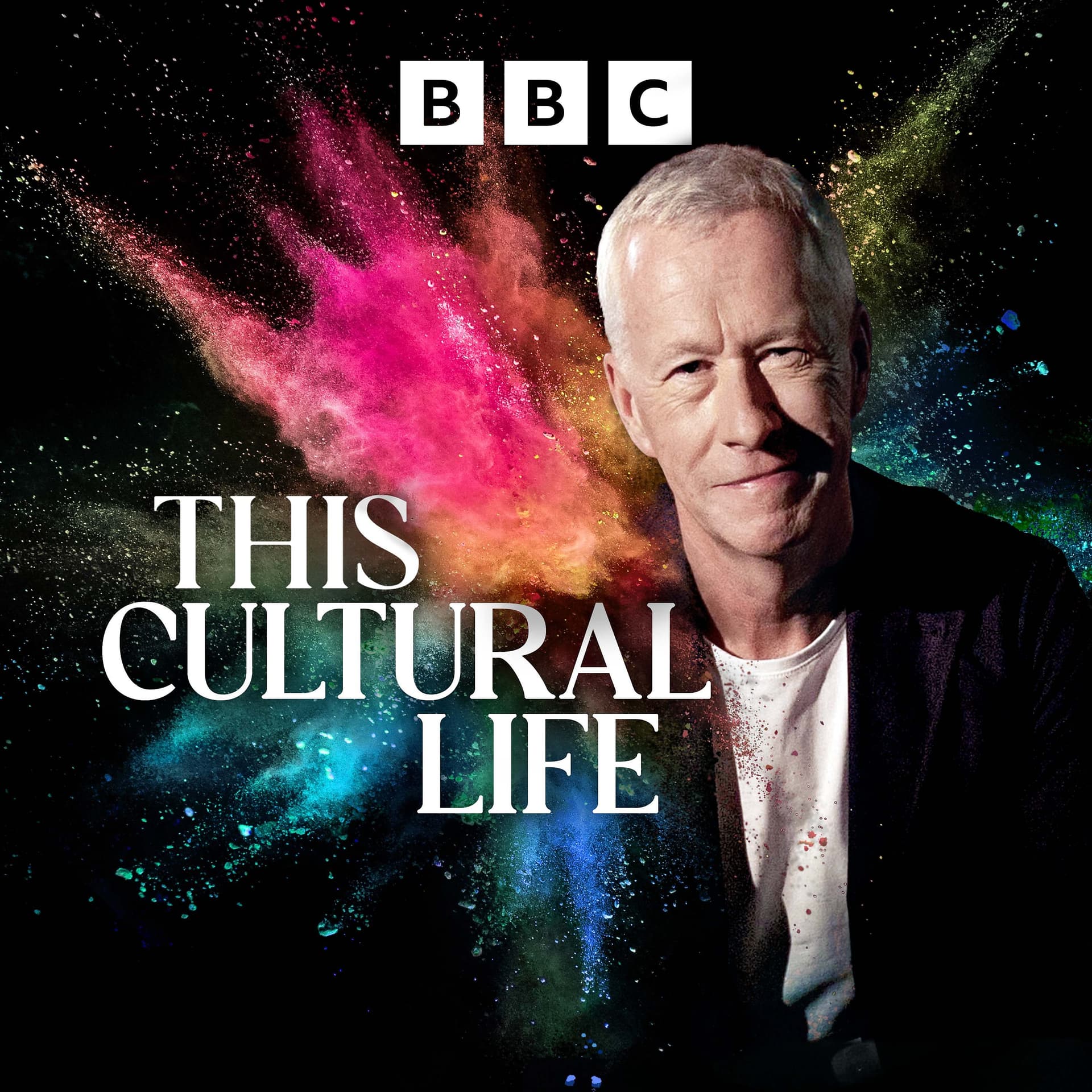
Podcast Overview Host: John Wilson Description: In-depth conversations with leading artists and creatives across various fields including theatre, visual arts, music, dance, and film.
Episode Title
Linton Kwesi Johnson Episode Description: Reggae poet Linton Kwesi Johnson discusses the influences and experiences that shaped his creative journey. Known for his politically charged poetry set to dub-reggae rhythms, Johnson rose to prominence as a voice against racism in 1970s Britain. Highlights include his childhood in Jamaica, his activism, and notable works.
Key Themes and Discussions
Early Life and Influences
- Childhood in Jamaica:
- Raised in poverty in rural Clarendon, Jamaica.
- Influenced by his grandmother's storytelling and singing, which included Jamaican folklore and Biblical passages.
- Emphasis on the oral tradition of storytelling and cultural heritage.
- Education:
- Attended an elementary school that focused on ability rather than age.
- First exposure to poetry through the Bible, developing a love for the language and rhythm of scripture.
Migration to the UK
- Arrival in London (1963):
- Moved to South London at age 11, feeling a stark contrast to his rural upbringing.
- Initial impressions were of a racially hostile environment, facing discrimination in school and daily life.
- Involvement in Activism:
- Joined the Black Panthers in the late 1960s due to experiences of racism.
- The movement introduced him to literature by African-American authors, which shaped his understanding of race and identity.
Career as a Poet and Performer
- Artistic Development:
- Inspired by reggae artists such as Prince Buster and The Last Poets.
- Transitioned from writing poetry to performing it set to music, using Jamaican Patois.
- Notable works include "Five Nights of Bleeding," "Sonny’s Lettah," and "England Is a Bitch."
- Political Messages:
- Johnson views poetry as a reflection of social struggles rather than a means for change.
- His works often respond to personal experiences and wider racial issues in Britain.
Significant Events
- New Cross Fire (1981):
- A tragic incident resulting in the deaths of 13 black British individuals, leading to widespread community mobilization.
- Johnson commemorated this event in his poem "New Craas Massahkah," capturing the anger and grief of the community.
- Brixton Riots:
- The uprisings following the New Cross Fire were a response to systemic oppression and police brutality.
- Johnson's poetry from this period emphasizes resistance and the ongoing struggle against racism.
Reflections on Legacy and Current Events
- Continued Relevance:
- The Black Lives Matter movement has reignited discussions about racial injustice, connecting Johnson's work to contemporary activism.
- He expresses a sense of hope seeing youth actively engage in the fight for justice.
- Current Status:
- Although he has slowed his output in recent years, Johnson reflects on his long career and ongoing relevance as a political voice in poetry.
Conclusion Linton Kwesi Johnson's conversation highlights the intersection of art and activism, revealing how personal experiences and historical events shaped his creative expression. His work remains a powerful testimony to resistance against racial oppression and a call for social justice.
---
Producer: Edwina Pitman ```
Written by AI. May contain mistakes. Listen to the episode to check what was said.
Transcript
Automatic transcript. May contain errors.0:00BBC Sounds. Music, radio, podcasts.
0:12Welcome to This Cultural Life, the series in which leading artistic people reveal the influences and experiences that inspired their own creativity. I'm John Wilson and my guest in this episode is the reggae poet Linton Kwesi Johnson. Born in Jamaica, he moved to South London in 1963 at the age of 11. He made his name as a performance poet reciting politically motivated verse to a dub reggae backbeat and became a powerful voice of resistance and protest in response to racism on the streets of Britain in the 1970s. He became the first black poet to be published in the Penguin Modern Classics series, was awarded the Penn Pinter Prize in 2020, and recently published a collection of prose under the title Time Come.
0:57But he remains best known on stage and on record for angry and uncompromising works such as Five Nights of Bleeding, Sonny's Letter,
1:12and England is a Bitch.
1:20Linton Kwesi Johnson, welcome to This Cultural Life. Hi. You were born in Clarendon in Jamaica in 1952. What are your earliest memories of storytelling and music when you were growing up? Oh, my earliest memories of storytelling when I was growing up is my grandmother. When I was about seven, I went to live with my grandmother in a rural part of Jamaica in Clarendon, a place called Sandy River, which was, I mean, bush, really. You know, there were no streetlights, no running water, no electricity, no radio, no television, nothing like that. So we had to make up our own entertainment. And the old people, like my grandmother, would tell us stories which would entertain us, especially on moonlit nights.
2:21She would tell us stories about Anansi. Anansi is this spider character who uses his brains to outsmart all the bigger creatures. It's a character brought from Africa by the slaves, and you'll find it in Ghana and other parts of Africa, Anansi. Delightful stories, you know. And she would also entertain us with ghost stories. sometimes you know you'd get nightmares when you when you went to your bed after she told you those stories uh isn't it a duppy the jamaican duppy stories yeah with jamaican ghost yeah duppy stories yeah like the butcher who died and became a rolling calf you could hear his chain but you couldn't see him and all this kind of stuff it's still haunchy doesn't it yeah and then she would sing, a lot of times she would sing old Sankey hymns, especially if she was troubled about something or the other.
3:22That was her way of release to sing, you know, I'm going to sit down beside my Jesus. I'm going to sit down beside my Lord. And of course I grew up among, you know, listening to folk songs. Kids sing these folk songs. You know, So, Kerame Akegwa, Linstead Market, Nata Kwati Wotsel. That's the most obvious one that comes to mind at the moment. But it's an oral tradition, obviously. Very much an oral tradition. I was steeped in Jamaica's oral tradition before I came to this country, age 11. Were there any books at home? No. What were your grandmothers? No, absolutely no books. I think my grandmother had a Sanky hymnal.
4:06What is Sanky? It's a hymnal. It's a collection of hymns. But no storybooks. But no storybooks. But we had the Bible. My first introduction to poetry was from the Bible, from the Old Testament, because as a boy, my grandmother was illiterate, by the way, and I was required to read certain passages to her from time to time to comfort her sometimes when, you know, she was troubled. and I got to like the language of the Old Testament. So the first verse I wrote when I actually started writing verse was just full of thee and thou and thy and this kind of stuff. And I got to like Proverbs, Songs of Solomon and the Psalms.
4:55And of course, some parts of the Bible have become part of the oral culture because they've been memorized. You hear a lot of it in Bob Marley's songs, for example. And, of course, there were the games that we played. There was one game where we would sit in a circle with our hands on the ground and a stone would be passed from hand to hand, but you had to move your hand away very quickly, otherwise you'd get smashed. And there was a song that went with it. Go done a man you will rode,
5:40These are such vivid memories for you, clearly, and you're reaching back quite a long way. So a really happy childhood then? Yes, especially the time I spent with my grandmother. I mean, we were dirt poor people. I mean, peasants. We lived off the land. Did you know you were poor? No, no. We never went to bed one night without something to eat. We never went to school without, you know, if it's even a roast banana or something. My grandmother, sometimes she would wake up and then she would know what she would be preparing for dinner. And she said, hmm, today is Ben Johnson Day. I don't know why they called it Ben Johnson Day.
6:24But by lunchtime, she would find something. Maybe a neighbor would pass by and give her some yama or a breadfruit or something. But something always turned up. And it was the happiest time of my life because it was my grandmother, myself, and my older sister. So I was the man of the yard, you know. I was the man of the yard, and my grandmother, she was a sweetheart. She used to call me her husband when she wants me to do something. So she said, come here, my husband. Run to the shop and buy me some flour, and be back soon, you know. And she said, make yes. I run all the way to the shop and run all the way back and when I come back she said you come back already God bless you I don't know what I would do without you my husband So there's a responsibility which is being passed to you as a child and also you're saying about reading to your grandmother so clearly you were at school in the daytime were you a good pupil early on?
7:29Yes I was always avid for learning you never had to tell me to go and read my book or go and do my homework. I was on it. In the elementary school that I went to, the class you were in wasn't solely determined by your age, it was determined by your ability. So by the time I was 11, I was about two classes above my sister, who is two years older than me, because I was a bright kid. Well, that's what I was told, I was very bright. At all subjects or particularly English and writing? English and arithmetic, yeah. I said we didn't have any books. That's only partially true, because once in a blue moon, a mobile library would drive through the village, and you could borrow a book for maybe a month or two months or something.
8:21I think there was one about a boy in Borneo or something, and the kayak, the boy with the kayak. Another one about the Eskimo boy. There were stories of far-off lands then. Yes, yes. Very different places to the one that you were growing up in. Absolutely. But the mainstay of what we did for English was the Nelson Reader. That was a textbook that was used all over the island. The grammar was very rigorous. When I came to this country, I was surprised when I went to school, secondary school, and realised I didn't teach grammar. I went to a comprehensive school. And you arrived, just to backtrack, because you arrived in this country, I think, from what I understand, your mother had come in 1962, and then you followed a year later with your father in 1963.
9:07No, not with my father. My mother and father had separated. Oh, I see. In fact, that's why I was living with my grandmother. From the age of about seven, my mother and father had separated, so I was sent to stay. My sister and I went to live with our grandmother, our maternal grandmother. And then you came here to Britain and you were living in Brixton. So tell us about the school. I mean, that very different school then to the one that you'd been going to in Jamaica? Yes, couldn't be any different. I mean, our school in Jamaica was on one level. Tulsa School was an eight-storey building, and you had to take the elevator to get to some lessons.
9:43I think there were about 2 ,000 boys on the roll. I fitted in quite easily, actually. The things that were new to me were science, you know. But the rest of it was, I just took to it quite naturally. In fact, in the entire first year, I won the prize for English. And you say that it couldn't have been more different from your schooling. But what were your first impressions, given that you'd grown up largely in very rural Jamaica, to arrive in Brixton, in South London, in the early 1960s? What were your first impressions of this country? Well, it was a bit strange, you know. in your childhood imagination coming from the colonies you go into the mother country and you literally expect the streets of London to be paved with gold and you expect that you know, people were living in beautiful mansions and all of that I was in for a bit of a rude awakening when I arrived in South London and I thought, why is all this smoke coming out of these chimneys and these buildings look like factories.
10:50They don't look like houses. And were you taught poetry? Were you encouraged to write at school? Or was it... Actually, you say you were going backwards at the British school that you arrived at. Well, in Jamaica, you know, children make up nonsense rhymes to go along with games. And that was great fun, you know. The girls always had these skipping rhymes to go with their skipping. I was one of those boys who joined in with the girls when they were skipping and joining with the rhymes, you know. Mosquito one, Mosquito two, Mosquito jumping a hot colour loo, and so on and so forth. You know, Cinderella, Cinderella dressed in yellow, went downtown to meet her fellow.
11:33How many kisses did she get? One, two, three, four, five, and so on. And were you skipping as well? Well, of course.
11:49On this Cultural Life, my guests discuss the most important influences and experiences that inspired their own creativity. And your first choice for this program is joining the British Black Panther movement, a radical political group that was formed in the late 60s to campaign for the rights of black and other ethnic minority people in this country. So you joined at school. When did you join and why? It was around 1969, 70. I was beginning to become aware that I was living in a racially hostile environment because of my everyday experiences and being called a black bastard and people don't want to sit next to you in the bus and all this kind of stuff.
12:34You know, just being racially abused by other kids at school. Why don't you go back to where you come from, you know, or go back to your tree, you black monkey, and this kind of stuff. And some of the attitudes of some of the teachers was quite distasteful. Then there was 1968 Olympics.
12:59Well, the medal ceremony which followed that victory gave the advocates of black power the first opportunity of a demonstration with Tommy Smith and John Carlos up on the rostrum.
13:15Tommy, can you tell us the significance of the black glove on the right hand and the black socks that you've been wearing? Black glove ever since black America, and so does the black socks. I'm proud to be a black man, and all my people back home know that it's very significant. In those days, when you saw anybody on television black, it felt great, you know, because it was very, very alienating, You know, a deep sense of alienation because you came here, you thought you would fit in. You thought, oh, I'm going to be British, you know, and you're in for a rude awakening. And then a friend of mine, Tony Sinclair, he was already in the Panthers youth section.
13:56I don't know if it was through him, but somehow we had a debate in society. And Althea Jones-LaQuant, who was the leader of the Black Panthers in Brixton, South London chapter came to our school and then I became a proper member it was life changing for me because there my education began really I didn't know that black people wrote books for example because there was nothing on our curriculum at Tulsa School that gave you any such indication and I found these books mostly by African-American writers. Poetry, novels, history books. The great thing about the Black Panthers is that they had an education.
14:47It was educationally oriented. And a library? And a library. And it was in the library that I discovered W.E.B. Du Bois, Souls of Black Folk, a book which was published around 1901 talking about the experiences of African-Americans in the post-emancipation period. What effect did that book in particular have on you? And that book stirred something within me. I found it very moving. I found the language as beautiful as some parts of the Old Testament. It made me want to write. It is a peculiar sensation, this double consciousness, this sense of always looking at oneself through the eyes of others, of measuring one's soul by the tape of a world that looks on and amuse contempt and pity, one ever feels his two-ness.
15:36An American, a Negro, two souls, two thoughts, two unreconciled strivings, two warring ideals in one dark body, whose dogged strength alone keeps it from being torn asunder. We were studying another book by Du Bois called The Black Reconstruction about what happened to black people after slavery. You say we were, you mean the Panthers? Yeah, in the Panthers, you know, the youngsters like myself. We also studied capitalism and slavery by the Trinidadian scholar who became Trinidadian's prime minister, Eric Williams, and The Black Jacobins by C.L.R. James, and another book by an English author called E.P.
16:25Thompson, a book called The Making of the English Working Class. So it wasn't all about black people. It was also about race and it was also about class. And in addition to that, records, speeches of Malcolm X, album called Message to the Grassroot. You don't have a peaceful revolution. You don't have a turn-the-other-cheek revolution. There's no such thing as a non-violent revolution. And another album which had a big impact on me was by a group of poets called The Last Poets, African-American poets, talking in real hip language, using the language of the ghetto, the language of the street, as a vehicle for poetic discourse.
17:16With the drum backbeat as well. Accompanied by a percussion, yes. Here's to you, black soldier Fighting in Vietnam Helping your oppressor Oppress another man Here's to you who volunteer Your precious lives to give While we here in the ghetto Are struggling to live And when you were listening to a group like The Last Poets then did you start thinking that is a possibility for me to be able to write and then to perform, or had that not occurred to you at that time? That had not occurred to me at that time, but it helped with my formation, the formation of my poetic, so to speak. Eventually I was able to feel comfortable writing in the Jamaican idiom, using Jamaican speech, using Jamaican language.
18:19thing. Heal Boza, I greet him. Love, I greet I back. I look at money, Boza, come forward with something done, you know. The brother say him broke, him say him now work, him say him woman. I don't believe that poetry changes anything. I don't believe that art changes anything. Art reflects changes within the wider society. Changes come out of people's material struggles in life. You could write a thousand songs depicting the most terrifying conditions of human existence. That won't bring about the revolution. So you're driven really by activism rather than art at this stage. And you say it was all about experiencing racism.
19:04I'm not sure if it was around this time, but I know at some point you were arrested by the police, you were charged with assault, but acquitted in court. What happened? November 1972, I was walking through Brixton Market and I saw a police officer, plainclothes police officer, with a guy in a stranglehold. There were a couple of other police officers around, plainclothes, three of them. They were dragging this boy. I thought they were going to kill him. Anyway, they were dragging this boy and taking him outside to Atlantic Road where a black Mariah was parked. So it was obvious they were undercover police.
19:48You knew they were police. Yeah, yeah. So I said to the guy while he was being dragged off, I said, give me your name and address, because that is how we were trained in the Black Panther movement. If you see someone being brutalised by the police, try and get some details of who they are and where they live so you can inform their relatives. And I presume this young man was black. This guy was black, yeah. He gave me his name and address. and I followed them to the Black Mariah and I began to write down the license plate. This is how we were trained in the Panthers. If you're going to be called upon to give evidence in court, you should get all your details correct.
20:31So I started writing down the license plate of the Black Mariah and the numbers on the shoulders of the uniformed officers who were there. and they grabbed me and manoeuvred me to the Black Mariah. Luckily, I saw somebody who I knew and I slipped a piece of paper to them with the guy's details and they threw me in the Black Mariah and I realised when I was thrown in that there were two other people in there already and they started kicking the... I can't use their two words on the radio. They gave us a good kicking, put it that way. When we got to the station, I was charged with one count of assault and two counts of actual bodily harm.
21:17Or maybe it was one ABH and two assault. Anyway, within minutes, a crowd had gathered outside Brixton Police Station. I asked to see a doctor. Were you hurt? Of course, I was kicked, you know, in my head, in my hips, on my legs, badly bruised and all that. After about three hours or so, I was released and charged, and the others were charged. Luckily for me, there was maybe one or two black people on the jury. I was acquitted. and one of the members of the jury, I saw him sometime afterwards on a bus, he was a bus conductor, and he said to me, boy, they wanted to send you to prison. They said, we can't have these people coming over here assaulting our police officers and blah, blah, blah, blah, blah, and they were racist and, you know, we had to fight for you, kind of thing.
22:19And this is an event that happened over 50 years ago and it's still obviously still... Oh, you don't forget those things. It obviously still resonates. But at the time, what did it do for you? At the time, what it did for me, it made my verse political. It began to help to shape my aesthetics because not only was I focusing on our struggles in the verse that I was writing, I was drawing on my Caribbean roots and using Jamaican speech. That was when I wrote poems like All We're Doing Is Defending, Five Nights of Bleeding, Dreadbeat and Blood. Brothers and sisters rocking, a dreadbeat pulsing fire, burning, chocolate power and darkness creeping night.
23:11What had influenced me along that road was not just my experiences, but also listening to the lyricism of reggae music in general. because reggae music around that time was quite militant and dealt with themes to do with the historical experience of the African diaspora. I was very, very excited by the reggae DJs. Like who? You, Roy? Like you, Roy, and Big Youth. He says my mama like it, I turn my dad like it cold. Well, I like it in about nine days old. And especially Prince Buster. Madness. Madness, they call it madness It was more or less associated with ska in this country and skinheads and all that.
24:00Prince Poster had a big impact in this country. I influenced bands like Madness. Madness, madness, I call it flatness I love these early talking tunes, you know. First, allow me to introduce myself. My name is Judge Hundred Years. He didn't intone his lyrics like the DJs did. He just spoke plainly, and there was music going on in the background. And I just loved this combination of speech and music. He was certainly a big influence. It's only years later, when I thought about it, that I realised what an impact he had had. Madness. Madness. Madness tight on the heads of the rebels The bitterness erupts like a heart blast Broke glass Dreadbeat and Blood is the name of not only your debut poetry collection but also your debut album.
25:02Yes. You were signed to Virgin Records in 1978, signed by Richard Branson, personally, I think. Yes. So I presume that was your first experience in a recording studio. Up to that point, you had been a published poet or a poet on the page. Did you know at the time what you wanted your records to sound like? I had a rough idea. I wasn't a musician. I didn't know the difference between a crotchet and a mimim and a quaver and a semi-quaver. I couldn't play anything apart from a bit of percussion, really. But I wanted to do something in reggae that was a cross between Prince Buster, Big Youth, and The Last Poets.
25:43So I had a rough idea of what I wanted to do. The basis of it all was bass lines. to combine the speech with the bass. Night number two down at Shepard's Right up Railton Road It was a night named Friday When everyone was high on brew It so happens that a very good friend of mine was actually a musician who could play guitar, a bit of piano and bass and so on. And so when I got the opportunity to make a record, I didn't know what to do or where to go or anything about recording studios. So I asked them and they said, OK, if you're going to make a reggae record, you have to find Dennis Bovell because he's the only black sound engineer we know who knows how to record reggae music because the English sound engineers, they don't know how to make the drum and bass sound like yard music, like music coming out of Jamaica.
26:48The depth. The depth of it, yeah. And Dennis Beauvel was not only an engineer, he was a producer, he was writing and performing. He's a legendary reggae figure, even at the time, I presume. At the time, he had a band called Motumbe, one of, if not the premier British reggae band. Squeeze a little loving out of you I said I knew too Squeeze a little more loving I knew you Did you regard yourself as a poet first and foremost? Absolutely, because I always began with the word and then tried to find, in the saying of the poem, tried to find the music. I mean, my first album on Virgin was Dreadbeat and Blood, not by Linton Kwaesie Johnson, but by Poet on the Roots.
27:38That was my name. But did performing come naturally when you arrived in the studio? Because you have a remarkable timbre to your voice. Yeah, yeah. I took to it like Dr. Water. Come we go down there Make we take a ride down there He helped us with structuring the music. Played the guitar, for example. And Dennis would even play a bit of the keyboards himself, as well as being the sound engineer, because he was really only there to record us. But he, you know, he helped us to produce the album. And it was voted Reggae Album of the Year in one of the newspapers. I think it might have been Sounds.
28:17But this is also quite a politically charged time in British music as well. And I know that you played with some of the punk and new wave bands in the late 70s. You toured with Public Image, the band that was fronted by John Lydon after he left the Sex Pistols, and you played with Ian Jury and the Blockheads. A very different audience, I presume, when you were playing with those bands, the ones that you were used to in the poetry workshops. Yeah, we were basically playing to white audiences, and it was very challenging. But I was up for it because I thought, this is an opportunity to bring the black experience to people who didn't know anything about it.
28:54an opportunity to reach white audiences, and it was precisely that. Could you give us an example of one of your poems, for instance, Sonny's Letter? Yes, Sonny's Letter is a poem about... It's a fictional poem. There's no such person as Sonny. Sonny could be any youngster picked up for sus. Sus is...? Sus is the law in England. A vagrancy act of 18-something or the other. There's a law passed in the 19th century, which enables the police to arrest a person, not for committing a crime, but for being suspected of intending to commit a crime. And of course, it's a very easy way of racist policemen for railroading innocent young blacks into prison.
Read the full transcript
29:42And the poem is just, rather than being propagandist about the whole thing, the only way I felt I could have dealt with that was to do a dramatic kind of monologue. in the form of a letter. Can we hear it? It goes like this. Brixton Prison, Jeb Avenue, London Southwest 2, England. Dear Mama, good day. I hope that when these few lines reach you, they may find you in the best of health. Mama, I really don't know how to tell you this.
30:28One of the most powerful stories of oppression is told on your second album in 1979, Forces of Victory, and it's a track called Sonny's Letter. And this is the story told by a prisoner to his mother about that similar sort of experience, but now he's facing a murder charge.
30:54Crash and dead.
30:59Mama, more policemen come down and beat me to the ground. Them charge Jim for sus. Them charge me for murder. Mama, don't fret. Don't get the person down at it. I wrote it early to mid-70s. It was after my ordeal with the police anyway. Maybe it was my way of coping with the experience. Maybe it was a psychological... I don't know, I'm not going to analyse myself. A catharsis? A catharsis, absolutely. That's the word I'm looking for.
31:42The next event that you've chosen for this programme is the New Cross Fire in 1981, an appalling tragedy in which, at the time, 13 young black British people, mostly teenagers, died in a fire during a house party. Eventually 14 people died because somebody died later in hospital. Why have you chosen this event?
32:07Because it was a turning point in the history of the black experience in this country. It was a watershed moment. People were traumatized by what happened. and the extraordinary response of black communities up and down the country was something that I'd never imagined or had never seen. In spite of all the black power activism and all that, we could never ever have mobilized the amount of people who came together for the Black People's Day of Action on the 2nd of March in 1981 in response to what had happened to the young people, in spite of the fact that there were so many lies and disinformation in the media about the facts of what had occurred on the 9th of the 17th of January.
33:04It's never been conclusively proved what caused the tragedy. And two inquests were held in 1981 and 2004, and both of those recorded an open verdict. nobody has ever been charged, but many within the local community believed that it was a racist attack. This result is disgraceful. How can a coroner sit on his backside in there and come with open verdict? Oh, I ain't got words to tell you how I feel. We're not going to stop here. It'll be murder, murder, murder for my son and the rest of the 13 kids. This is disgraceful. I think it's very unfair. Very, very unfair. It's as though they think black kids died and they were all born in this country.
33:49And nobody seems to care what happened to them. No one could believe that was an accident. And initially, at least the police were also following that theory. They began to backtrack. As soon as they saw that, you know, people were being mobilised through the New Cross Massacre Action Committee, They began to change tact. I think at the time, the powers that be were afraid of a racial conflagration. You responded to the tragedy? I was a part of the organisation. I was a part of the New Cross Massacre Action Committee. I was one of the organisers of the Black People's Day of Action. Yeah, so you responded as an activist, but also as a poet, because you wrote, again, one of your most famous works.
34:34It's called New Cross Massacre. Yes. when we get the coal facts about that brutal attack, when we find out about the fire over New Cross, about the innocent life them will last, about the physically scared, the mentally marred, and them relatives who take it so hard. And you know... I wanted to chronicle that experience because it was the most horrific experience we've had of racial terror in this country. I mean, firebombings and arson attacks and all that, that was going on from the 50s, the 60s. It's the first time that so many people have died. But the police, though they did eventually admit that the firebombing could have been a racist attack, said they'd no evidence to prove it was.
35:32That did not convince the quickening pace. Lewisham's black community, though, had already seen the Moonshot Club burn down in 1977. The neo-Nazi Column 88 had claimed responsibility for burning down the Albany Empire in 1978. And in 1980, there was another fire at the Lewisham Way Centre. The police, though, can find no connection between those attacks and the fire at Mrs Ruddock's. South London's young blacks take their protest to the streets of the West End. They feel let down by both press and politicians. The New Cross Massacre Action Committee has delegated us to protest at a failure of the House of Commons to reflect the outrage and deep feelings of the black community at the murder of 13 young blacks at 439 New Cross Road on Saturday 18th January 1981.
36:20The delegation also went to Downing Street. They'd noted that Mrs Thatcher had responded immediately the Dublin fire had killed Irish children, but took much longer to respond to British-born black children dying.
36:37There was no expression of sympathy, you know, from the media or from the British public or, you know. When Grenfell happened, there was such a wide outpouring of sympathy and all that nothing like that during the New Cross fire and your response musically just take us back to what you were doing with that track because obviously written out of a sense of horror and anger and yet there's an upbeat tone to the verses a reminder that these kids died at a party well the poem is structured as narrative recounting what had happened and then verses, which are musical, which I'm trying to capture the atmosphere of the party itself and the kids enjoying themselves.
37:26The moving and the grooving and the dancing to the disco Then the panic and the pushing and the boring through the fire The running and the jumping and the flames them rising higher The weeping and the moaning or the harrow of the fire In the note that you sent to us before you arrived here in the studio today, You said you chose the New Cross fire, but also the uprisings that happened in 1981. And you talk about the riots in Brixton and elsewhere that exploded in the months after the New Cross fire. You celebrated those acts of violence in some of your poems. Do you stand by those works now? Of course I stand by them.
38:07Celebrating acts of violence. I'm celebrating a culture of resistance. I'm celebrating fighting back against racial oppression. That's what I'm celebrating. I'm not just celebrating violence per se. I'm not a violent person. I mention those events because they're all related. And the anger and the rage and the resentment about what had happened in New Cross expressed itself in those uprisings. I mean, of course, the pressure had been building up over a number of years. There were further uprisings in 85. They're all interrelated. And I thought it was part of the job of a poet is not just simply to be a witness, but also to take side and to chronicle.
38:59And that's what I felt I was doing. It was in April 1981 Down in the ghetto of Brixton That it happened on them car, such a friction That it bring about a great insurrection And it spread all over the nation It was truly an historical occasion It was the end of the year And I wish I had been there When we run riot all over Brixton When we mash up plenty of police vans When we mash up the wicked one plan And that was over 40 years ago and to an extent you were a pioneer. What have the events of recent years and particularly the Black Lives Matter movement done for you as a poet who has been over the years so associated with activism?
39:43Well, it hasn't done nothing for me. What it's done is to, I hope, for the younger generation to provide some continuity between generations, a continuity of activism against all forms of oppression, especially racial oppression. And it's very encouraging. After the George Floyd murder, it was really, really uplifting to see so many young people all over the world, all over England, and black and white youngsters standing up for truth and rights and for justice. But those events of New Cross and some of those other uprisings sort of galvanised you as a poet, but seeing these more recent events, did it make you...
40:31What is your instinct to reach for... It just brought back some very bad memories. But not to reach for the pen and to respond in verse? This is the time for the new generation, for the younger generation. This is their time now. I was very encouraged by the youngsters in response to the Black Lives Matter.
40:55You were so prolific back in the day. I mean, it was an album every year. You're not putting out so much work so often anymore. Are you still working or are you retired now? I've been trying to retire for about 20 years or more. Do you know, I never set out to become a musician. I'm lucky to have had a career in music spanning over 40 years and I've earned an half-decent living out of it. But it all began as an idea. why don't I try and set my verse to music? Perhaps it might reach a wider audience. That's all that was. And then one thing led to another. You know, I wasn't just a commentator. I was a serious political activist.
41:46I was in the Black Panther movement. I was part of the Race Today collective. I was involved in the Black Parents movement and numerous campaigns for justice. To come back to the writing side of things, I didn't have anything new to say, and I wasn't going to contrive verse, because that's why I turned down a six-album deal from Island Records. I couldn't see myself just going out and sort of composing, writing poems to make a record. Well, you mean originally when you were working for Island and Virgin? They were offering you these long deals? Yeah, yeah, yeah, and I thought, no, no, no, no, this is not for me, you know, and was enticed back on the road by Dennis Bovell, who had a band called the Dub Band, and he wanted a front man.
42:35We'd been touring for 40 odd years, and then I just decided, you know, I've just gotten tired of it. So you're happy to be the elder statesman now? I'm an old lesbian, mate. You're not. Linton Kwesi-Johnson, thank you so much for sharing your cultural life with us. Thank you.
43:08What happens when a life coach takes over your life? For the last 18 months, I've been investigating claims that a UK mentoring company is actually a cult. What we're doing is helping human beings actually gain control of themselves, not for us to gain control of you. I don't know who I am anymore, though. Absolutely no idea. The only money he had to give them was his house. Controlling its members. It was more about apportioning blame to my parents. These toxic groups called families. Intimidating critics. When I'd ask questions. They said, if you leave and you turn against us, we have all those personal recordings of yours.
43:49We'll come for you next. How do you feel, Paul, about the fact that so many people think you're running a cult? We're not running a cult. Because they don't know what a cult is. They're slewing us. They're smearing us. I'm Katrin Nye, and from BBC Radio 4, this is A Very British Cult. Listen on BBC Sounds.
From the publisher
Reggae poet Linton Kwesi Johnson reveals the influences and experiences that inspired his own creativity. Born in Jamaica, he moved to south London in 1963 at the age of eleven. He made his name as a performance poet, reciting politically motivated verse to a dub-reggae backbeat, and becoming a powerful voice of resistance and protest in response to racism on the streets of Britain in the 1970s. He became the first black poet to be published in the Penguin Modern Classics series, was awarded the PEN Pinter Prize in 2020, and recently published a collection of prose under the title Time Come. On stage and on record, he is renowned for angry and uncompromising works such as Five Nights Of Bleeding, Sonny’s Lettah, and Iglan Is a Bitch.
For This Cultural Life, Linton Kwesi Johnson recalls growing up in poverty in rural Jamaica, where his grandmother told him ghost stories and read The Bible. Appalled at the racism he experienced, he joined the Black Panthers whilst still at school and became a political activist. He began to write and perform poetry, set to music and delivered in Jamaican patois, after being inspired by reggae artists such as Prince Buster and U-Roy, and the American group The Last Poets. Johnson also talks about the tragic fire that killed 13 young partygoers in New Cross, south London in 1981, an event that he commemorated in one of his best known works, New Craas Massahkah.
Producer: Edwina Pitman