In short
Lubaina Himid discusses her artistic influences and experiences on This Cultural Life, linking her theatre-design training and painterly practice to narratives of race, history, and identity. She reflects on winning the 2017 Turner Prize (oldest winner; first Black woman) and how it changed public visibility, her activist approach to “agency” for viewers, and her preparation for representing Britain at the 2026 Venice Biennale. She also recounts her role in the British Black Arts Movement, especially the 1985 ICA show The Thin Black Line, and her critique of art-world gatekeeping by critics, markets, and funders.
Guest backgrounds
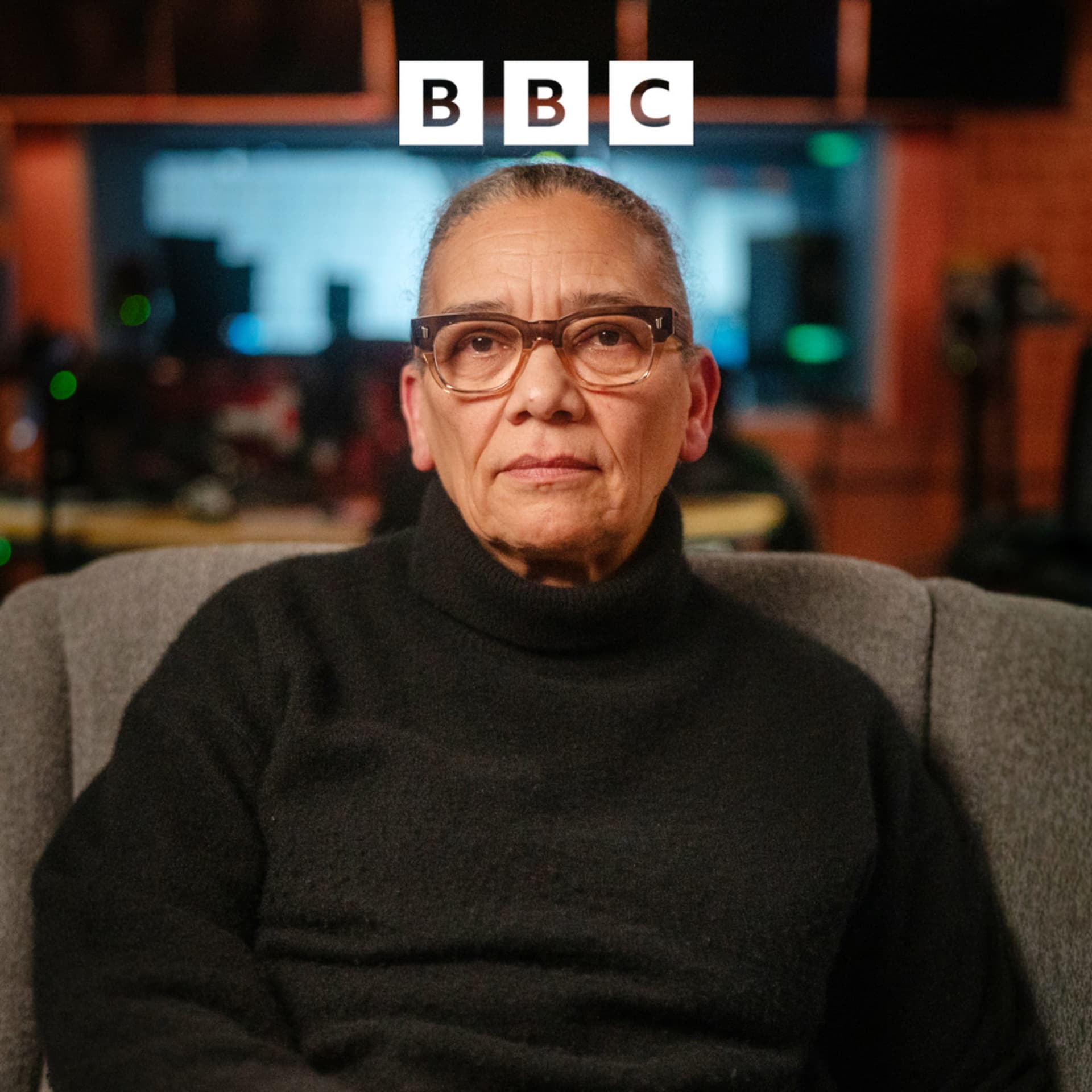
Lubaina Himid is a British artist and pioneering member of the British Black Arts Movement; trained as a theatre designer; works across paint, sculpture, textiles, sound, and found objects.
Key claims
museums and the V&A expanded her sense of mixing global design elements; her work renames enslaved people to restore identity; the Black Arts Movement prioritized showing art over selling it; prizes can feel tokenistic but she kept making work regardless.
Notable examples
Naming the Money (2004) with 100 life-size cut-out Black figures; A Fashionable Marriage (1986) referencing Hogarth and Thatcher; The Thin Black Line (1985).
Written by AI. May contain mistakes. Listen to the episode to check what was said.
Chapters
Tap a time to open that second in VOThe Journey to Artistry
0:45 to 2:04
Discussion about Lubaina Himid's early career and winning the Turner Prize.
“as well as the first black woman to do so.”
The Role of Identity in Art
2:04 to 4:08
Lubaina discusses the main mediums of her art and the impact of personal experiences on her work.
“but I've sort of, over the decades, got a bit more confident about describing myself as a painter.”
Family Background and Influences
4:08 to 6:46
Exploration of Lubaina's family history and how it shaped her artistic vision.
“And she sailed around the Horn of Africa, that way round, because the Suez Canal was shut and married him in Zanzibar.”
Childhood Memories and School Experience
6:46 to 8:33
Discussion about Lubaina's childhood, school experiences, and artistic inspirations.
“you were looking out at either other classrooms or you were looking out onto the playground.”
Artistic Encouragement from Her Mother
8:33 to 11:01
Lubaina shares how her mother influenced her love for color and art.
“where she was the head of many other textile designers and work with them all day, like a job, rather than wafting about a studio in a kind of floaty dress.”
The Role of the V&A in Shaping Creativity
11:01 to 12:19
Lubaina discusses her experiences at the Victoria and Albert Museum and its impact on her work.
“So that was the direction of travel at the time.”
Exploring Themes of Empire and Identity
12:19 to 14:03
Discussion on the themes of empire, slavery, and ownership in Lubaina's work.
“If you wanted to express the character of someone in a play or someone in an opera, you could kind of mix those things and have something exciting.”
Reinterpreting Historical Figures in Art
14:03 to 17:04
Learn how the artist reimagines marginalized figures from European art.
“or all at a market or all together in a room.”
The Impact of Motherhood on Artistic Success
17:05 to 19:34
Explore the artist's relationship with her mother and its influence on her career.
“Yeah, it's not something that's over there.”
The Formation of the Black Arts Movement
19:35 to 24:51
Discover the origins and significance of the Black Arts Movement in Britain.
“just completely understanding the quality of it.”
Show all 18 chapters
Challenges Faced by Black Women Artists
24:52 to 28:02
Understand the struggles and resilience of black women in the art world.
“Were you saying that was an artistic choice, though?”
Recognition in the Art World
28:02 to 28:33
Learn about Lubaina Himid's recognition and the quality of her contemporaries' work.
“But I did it that way and other people did it another way.”
A Fashionable Marriage: Artistic Influence
28:33 to 30:56
Explore the significance of Hogarth's work and its influence on Himid's 'A Fashionable Marriage'.
“I think it's one of the first pieces that you made using the cut-out figures and using a variety of media.”
Critique of the Art World
30:56 to 33:29
Himid discusses her critique of the art world and the issues of power and representation.
“The very basic thing I was trying to do was show that the art world was as rotten and corrupt as the negotiations between Thatcher and Reagan.”
Transition to Teaching and Success
33:29 to 34:29
Learn about Himid's transition to teaching and winning the Turner Prize.
“who had much too much power to say what was good and what wasn't.”
Reflections on Winning the Turner Prize
34:29 to 37:00
Himid reflects on winning the Turner Prize and her feelings about the recognition.
“and you've lived and worked in Preston since that time.”
Preparing for the Venice Biennale
37:00 to 39:51
Discover the process behind preparing new works for the Venice Biennale.
“What I won the Turner Prize for was a series of three exhibitions that were all on at the same time, some of which were kind of surveys of work that I had made decades before.”
Art's Impact on Change
39:51 to 41:26
Discuss the potential of art to influence societal change and personal agency.
“The Venice Biennale is a global gathering of the art world.”
Transcript
Automatic transcript. May contain errors.0:08Welcome to This Cultural Life, the series in which leading artistic figures reveal the influences and experiences that most inspired their own creativity. I'm John Wilson and my guest in this episode is the artist Lubaina Himid. She made her name in the mid-1980s as a pioneering member of the British Black Arts Movement, organising exhibitions to champion the work of fellow women artists. Having trained as a theatre designer, her paintings and installation pieces often have a strong narrative aspect, telling stories of race, history and identity. In 2017, at the age of 63, she became the oldest artist to win the Turner Prize, as well as the first black woman to do so.
0:49The following year, she was made a CBE for Services to Art. And in 2026, Lubaina Hameed will represent Britain at the International Arts Festival, the Venice Biennale. Lubaina Hameed, welcome to This Cultural Life. Thank you. As we'll explore in this interview, you've been making art since the 1980s. In 2017, though, you won the biggest domestic art prize, the Turner Prize. Looking back at that now, does it feel like a watershed winning the Turner Prize? Was there a sort of before and after Turner aspect to it? I think there was. Winning the Turner Prize meant that people on the streets of Preston would say, are you that person who's up for that prize?
1:34And I'd say, yeah. And they'd say, I hope you win it. So I knew something was different then. You've always worked in a variety of media, whether that's paint or sculpture or textiles, even sound or found domestic objects. But is it fair to say the paintbrush is the main tool that you reach for every morning? Is it the main means of expression? Yeah, I'd say so. I would really describe myself as a painter. I wasn't trained as a painter. I was trained as a theatre designer. but I've sort of, over the decades, got a bit more confident about describing myself as a painter. And when the work is done, when it's shown, what do you hope generally that people take away from your work?
2:17The feeling that they have agency, they can make a difference, they can do something that they had never done before and in a way that they only need to do a sort of small thing. Together we're all doing these small things and then they add up to something. So they play a big part in the art? Yeah, I mean, I think because I trained as a theatre designer, I'm absolutely convinced that visitors to the shows or to the projects that I'm working on are kind of bringing themselves and all their lives and their loves and their everything to that space and animating it like an audience would to sort of a performance.
3:00Well on This Cultural Life, Lubaina Himid, my guests choose the influences and experiences that have most inspired their own creativity. And your first choice for this programme is your mother, who is a textile designer. Before we hear about her work, a bit of family background. You were actually born in what's now Tanzania, which was known as Zanzibar in 1954. where and how did your parents first meet? Oh, they met in London. My father, who's originally from the Camoran Islands but lived in Zanzibar, was in London at London University. My mother was at the Royal College of Art doing textile design there and they met because my mother loved to party and they knew lots of East African political people, musicians, journalists, those sorts of people and they met at parties and went to parties.
3:58And they went back to Zanzibar then? Well, my father went back to Zanzibar first and then he, in that old-fashioned way that they used to speak in the 20th century, he sent for her. And she sailed around the Horn of Africa, that way round, because the Suez Canal was shut and married him in Zanzibar. And what was he doing there? He was a teacher by then. It was sort of like an education training college. And you were born in 1954. Yeah. But he died only a few months after you were born, I believe. Yes, he used to get malaria, as you do, every year. And then that year, when I was four or five months old, he just contracted it much worse than he'd ever done before.
4:45and he died on the 5th of November. And he was 33. Your mother had gone to Zanzibar from London and suddenly she's alone there. I presume that must have been absolutely devastating for her. I guess it was really bad for my mother, but she wasn't quite alone because her sister was here in London. I think I was about seven before my auntie had my first cousin. So, you know, I thought of them as like my parents and my mum and my auntie. And in the house that we lived in, in Maida Vale, lots of people came and went and people were lodgers there. And as a child, I understood that she was unhappy, but my childhood wasn't unhappy.
5:32Does she never talk about the emotional impact of losing her father? Well, certainly not when I was so young. but I kind of am a bit of a sort of sponge person and I think I felt her sadness somehow. What was school like for you? First primary school when you first started going to school. Was the art room important? I can remember, you know, collecting leaves, drawing them, drawing stuff, putting paintings on the wall, making things with clay. And this was a state primary school in central London which had been designed by Dennis Lasden who was the architect behind Brutalist Architect, behind the National Theatre.
6:12Well, I was going to say, I guess that school must have only been open for a few years before you joined, so it was very new, very modern. Did it affect that environment? Did it affect your creative outlook, do you think? I think so, because it wasn't a Victorian school, so there were classrooms where you could look out of the window, you know, rather than that Victorian thing where there's still lots of those schools still about, where you're sitting at your desk and you can see the sky, but you can't look out of the window. But this school was designed so that when you were looking out, you were looking out at either other classrooms or you were looking out onto the playground.
6:51I didn't realise I was sitting in a Brutalist masterpiece, but it was a lovely place. What sort of student were you? A bit hopeless, a bit dreamy and vague. I had lots of friends, but I never felt very clever. But when you moved to secondary school, I read that you became head girl, voted head girl. Yeah, but that was my charm, not my brains. So you weren't an academic student? No, not at all. Not at all. I think I didn't really understand that I had something to say until much, much later. I mean, after art school, even. In the notes that you sent us, you say that your mother encouraged you to love colour and pattern and do whatever you wanted to do.
7:41Now, that sounds like a description of your whole career as an artist in the years since, but how did she specifically? How did she encourage you as a kid? Well, the whole flat was always filled with art, the sculptures, small sculptures or prints or paintings, there were fabrics, you know, there were fabulous curtains, or there's plain carpets, I have to say. She never went in for pattern carpets. Funny that. You know, beautiful cushions. So everything was very simple and not really expensive, but well-found, you know, well-chosen. Tasteful. Yeah, I guess so. She had good taste. Yeah, she did.
8:26I've often described that every weekend, because she worked as a textile designer, you know, five days a week. She'd go out in the morning, go to the studio where she was the head of many other textile designers and work with them all day, like a job, rather than wafting about a studio in a kind of floaty dress. She was like going to the office. So in the afternoon on Saturdays, we'd either go to a museum or an art gallery or we'd go to department stores like Whiteley's or Selfridges and we'd just wander around. It didn't matter whether we were in museums or whether we were in department stores.
9:03We'd just wander around and look at fabric. We'd look at dresses. We'd look at furniture. We'd look at curtains. We'd look at ceramics and just talk about them. Even as a kind of really young teenager, that's what I was doing with her. And if she was going out, she would be looking for something to wear. She would be sometimes trying to persuade me to wear something bright and colourful, which I didn't want to do. You are often described as an activist artist. How much did your mother encourage at an early age a political sensibility or a social awareness in you? She certainly didn't discourage it.
9:42You know, she was very aware of... You know, in the 60s, we were at all those big celebrations of East African countries getting their independence, So that was an incredibly political moment. It was a lot of parties, but it was for a political reason. You know, so we would talk about the situation in South Africa. She knew lots of South African musicians, filmmakers. So in that kind of creative route to political change, she was very aware of it and surrounded me one way or another with those sort of people. But she wasn't a particularly political person herself. Did she know that you were harbouring artistic ambitions from a young age?
10:29Was she encouraging that? Like all parents, she wanted me to have a proper job. So she didn't encourage me in that fine art direction. but I was interested in theatre and I was interested in opera and so when I sort of leaned towards theatre design I think she thought, well, that's a proper job. Steady job, yeah. Yes, even if it isn't sort of, you know, steady and reliable in some ways, it is. And you trained for theatre design at Wimbledon School of Art, I believe. So that was the direction of travel at the time. You weren't thinking this is a means to an end because ultimately I want to make my own work.
11:08No, not at all. It was absolutely the direction of travel. It's just that I wasn't that good at it. Whoops. And I wasn't that good at that way that you do need to connect into the industry. You also mentioned in the notes that you sent us the importance of the V &A, the Victoria and Albert Museum, in helping to establish your creative outlook. When did you first go there? With your mum? With my mum, yeah, definitely. I still find it, it's like walking in the park you know, it's somewhere that's inside but outside for me it has everything a museum should have and you can read the labels or you don't need to There's so much stuff but there's a huge range of stuff as well you know, the craft, the ceramics, the textiles, the jewellery, the fashion how much can the diversity that we see in your work the range of materials and styles How much can that be traced back, do you think, to those early visits to the V &A?
12:08I think so. I think I could see that it was possible to design a piece of clothing or a costume that had some Japanese elements and some East African elements in it. If you wanted to express the character of someone in a play or someone in an opera, you could kind of mix those things and have something exciting. And it's all available to you there. You know, you can just walk into that place off the street and for free, in some senses, the whole world of making is there for you. You know, from ironwork to tiles, from furniture to fabric, as you say. Did the museum also encourage an understanding of the, I don't know, the socio-political subtext of a lot of that work?
12:57The wealth, the power, the ownership of cultural objects? I think, you know, growing up, I was aware, clearly, that these things had come from somewhere else. But I think it was well into my 20s before I thought, I'm not entirely sure how these things got here. I still am glad that they're in those museums. But I do a bit of a job on labelling, if anybody was ever interested. You know, just how did, even if it was sort of something that was information that was in the archive, it is interesting to know how museums come by things. You know, OK, probably the V &A probably bought a lot of those things.
13:43But whether they bought them for the going rate is another matter. So much of your work explores aspects of empire, of slavery, of ownership, and the notable example being a piece called Naming the Money from 2004, which features 100 life-size cut-out figures, all of them black. Who were these people? Well, to be honest, I made them up. In a sense, what I was doing was taking people out of European paintings, the people who were squashed in the very edges of those paintings of fabulous landowners, aristocrats across Europe, and in a sense, taking them out of those paintings and making an installation, a painting, if you like, with them, as if they were all at a wedding.
14:34or all at a market or all together in a room. When African slave servants were working in European houses and courts, they would often be called just a convenient name, like lots of the white servants. If you wanted your footman to come, you'd shout John. Right. Because the footman knew, all of them, the white ones and a few black ones, that if the master of the house shouted John, it was a footman. So you're renaming these characters then? Well, yes. You're giving them an identity. Yes, I'm saying that they had real names and I wanted to show that having been kind of wrenched from who they really were, that they still held on to who they really were, despite the fact they'd been given a new name.
15:24So it's like, you know, lots of people's mothers are called Bobby's mum. They're not called their actual name, Susan. because they're just known as Bobby's mum. But those Bobby's mums know that they are really Susan and they are interested in ballet or space travel, but they're just known as whose mum they are. So you're investing them with an identity, with a skill set as well, very often. Absolutely. So these characters are musicians or gardeners and they have all of these attributes. What was the inspiration behind the piece? Well, I know that as those captured Africans were captured, they were busy doing something.
16:07They weren't just sitting about waiting to be taken from their homes. They were doing something. They were growing stuff. They were hunting stuff. They were making things. They were making houses. So they had skills. They were doing something. So I wanted to sort of also imply that if a different set of people came to, I don't know, a cinema near you next week and took all of us and, I don't know, put us in a spaceship, took us to somewhere else, we were not just sitting there waiting for that to be happening. I was a painter, you were a broadcaster, journalist, other people were dustmen and doctors.
16:51Those enslaved people, those captured Africans, were somebody. They had names, they had families, and they were doing something. And these are painted figures, but not painted on canvas or on the wall. They're freestanding and life-sides. So what's the significance of the cutouts? Well, you can walk amongst them. You can be part of that scene. Yeah, it's not something that's over there. It's something that's in the room with you. We started off this section talking about your mother and she wanted you to get a proper job when you were growing up. What does she make of your art career and your success as an artist?
17:27Well, she was quite elderly by the time I won the Turner Prize. You know, she died in 2020 and I won the Turner Prize in 2017. She got to see it then? She got to see it on the telly. Well, that was all right. And she was really enthusiastic and supportive. And even when she was really quite elderly, I'd go and see her. And on my phone, I'd show her what I was painting. And she still, you know, had a comment to make about, I think his nose could have been painted a bit better than that. Or something made her laugh. Or she liked it. Her enthusiasm was still there, really. And pride. Yeah, amazingly.
18:11That did kind of surprise me, but yeah.
18:21Your next choice for This Cultural Life is meeting fellow artists Claudette Johnson and Sonia Boyce. Both now, of course, very well-known, very acclaimed artists. Claudette, known for her absolutely beautifully rendered portraits of black figures and Sonia for her multidisciplinary approach. I mean, she makes all sorts of things, drawing, printmaking, photography, collage work, textiles like you as well. When and how did the three of you first meet? Well, all three of us come from a completely different sort of direction, if you like, but I was trying to make a difference and I was at the Royal College of Art doing cultural history, an MA in cultural history, and writing about young black artists in Britain in the early 1980s.
19:07And I came across the Black Art Group who were working in the Midlands and I thought that there was something that I could try to do at the same time. I was interested in showing the work of women artists. So I kind of gathered a few artists and started to put on exhibitions of their work and two of them were Claudette Johnson and Sonia Boyce. And I was absolutely, from the first moment I ever saw their work, just completely understanding the quality of it. And they were really young. They're sort of about five, six, seven years younger than me. And as I say, they didn't know each other. They clearly very quickly came to know each other.
19:54And I could see then that the secret of this was that every artist you met, they might be black, but we're all, of course, completely different and wanting to make completely different work. And, of course, that's not surprising if you think of black people as artists, but when you think of, you know, as this was a sort of thing at the time where black people are, like, all the same or, you know, no one could imagine that two black people would be making art that was so different, coming from such different directions, you know. So I wanted to show that what we were making was art. I think for a long time there was a stark answer that one gave when one talked about black art, and that was, there aren't any black artists.
20:42Black people don't make pictures. Now, I think we've, together, because we've all come from all sorts of different directions, I've been working up and down the country, a lot of us have managed to disprove that. But, you know, fancy having got to 1986 and managing to prove that you exist. And so the second hurdle was then to sort of, for me anyway, was to try and present a package and call it a black art show, but then prove that there were as many different things going on as there were artists in it. A huge variety of styles, but there were shared concerns. I'm just wondering whether when you first started showing work together with Claudette and Sonia, as black women, when the work is often underpinned by a sense of the political, challenging the racism, challenging social injustice that was there implicit in so much of the work.
21:33Did that make it often a struggle to get the work shown? Well, I think all artists in Britain have a struggle to get the work shown. But we wanted to show the work to other black people, to our friends, to our families. And so we were showing in art centres and actually that wasn't so difficult. because art centres were kind of more open places. There wasn't so much gatekeeping, if you know what I mean. They were much more interested in what would be interesting rather than what's the provenance. And in 1985, you showed at the ICA, the Institute of Contemporary Arts in London. This was a landmark show now, I think, when you look back at it, called The Thin Black Line.
22:18Claudette Johnson and Sonia Boyce both showed with you there. What are your memories of that exhibition? Well, the absolutely packed opening, the kind of slight shock, I think, on the part of the ICA establishment then, that there were so many young black people in this space engaging with this work. All our friends and our families who were other things, filmmakers, musicians, whatever. and the sort of aggression, there was a kind of aggression from critics, there was a dismissal from the art establishment, but there was a sense of real, I don't know, fighting spirit on behalf of the artists and we used that corridor that we had to talk to each other and to make ourselves visible.
23:12What do you mean the corridor? so the work was not shown in the main gallery, it was shown on the way to the gallery. Yes, it was a sort of corridor between the foyer and the bar. Was that your choice? No, I was into taking over the entire place, you know, with film stuff and performance and all sorts of things. But I'm one of those people that I got offered a thing, I said what I wanted, and they said, no, you can't have that, you can have this. And I'm more the sort of person who thinks, OK, I'm going to take this and make the most of it that I can make. You, Claudette Johnson, Sonia Boyce and other artists got grouped together, got known as the Black Arts Movement.
23:53What did that title mean to you? Did you did you mind being grouped together in that way at a time when you're being separated from so many other young British artists? I'm thinking Damien Hirst, Tracy Emin, you know, who weren't black artists. There was a kind of divide there, wasn't there? Yeah, we were kind of active before they were active, but I think we were pushing our own agenda. You know, we were interested in being artists, making a kind of statement about what our personal slash political lives were like. And we didn't know anything about selling work. And that, in a sense, was what divides us from the YBAs, is that they absolutely understood, because of the way they were taught, they understood the nature of the market.
24:41And we didn't. We were interested in showing rather than selling. So we were making an impact in a completely different way. It wasn't really a competition. Were you saying that was an artistic choice, though? Yeah, absolutely. That it was all about the work rather than the price tag? Yeah, I don't think we, I mean, you'd have to ask them, but I don't think we were thinking, can we sell this drawing? We're thinking, how good is this drawing? What will it do while it's on the wall? How much strengthened joy or horror or fear will this drawing give? And you suggested earlier when, particularly with that ICA show, there was resistance from the critics and the art world.
25:30Yeah, they thought you're just a bunch of loud people being angry. And my point was always, we're artists. We're artists first. That's how we do it. We're not writing books or getting elected to Parliament. we were artists and we wanted to be engaged with as artists. And I think audiences leaned in. I just think that that kind of market and the press, we just thought that we'd go away. What sort of impact did that ICA show have at the time, do you think? I think it seemed to have no impact, which is kind of peculiar considering how iconic it's become now. We didn't suddenly get jobs in art schools or get taken up by dealers or anything like that.
26:24We just kept going, making other shows in other places, community centres and places like that. It didn't seem to have an impact. That's why it's so funny now. Did it make you angry at the time? And does it now look at you? I was kind of upset that something, such a jewel, was not taken seriously. It's interesting, isn't it? Because 40 years later, you are that group of artists, and particularly Claudette and Sonia, Dame Sonia Boyce. Absolutely. And, you know, the honours bestowed upon you. It's interesting, in 2010, I think it was, you were made an MBE, but that was for services to black women's art.
27:02How did that feel? Well, I was taking it, you know. My mum and my auntie could come with me, and I thought, well, I've spent all these years trying to make us visible, I was going to take the medal for it. Was it bittersweet, though? And I say that because when you, remembering the ICA, you wanted that group of artists to be regarded as artists rather than black artists. And here you were being honoured with the MBE, but you were still grouped as a black artist, black women's artist. Yeah, but we had called us, I mean, I called the shows that I put on five black women at the Africa Centre, Black Woman Time Now, which is a Battersea Arts Centre, and the Thin Black Line.
27:47I felt at the time, rightly or wrongly, that I needed to make a box so that we could be seen and heard. And we have had to spend quite a few decades sort of jumping out of that box to make it work. But I did it that way and other people did it another way. We should say you were upgraded in 2018 with a CBE. Indeed. And that was for services just to art. Yes. I think probably by then, whoever sorts out these things was understanding much more about the artists that I was surrounded by and that were my colleagues and my friends, that they actually were all making work of deep quality. I think it was finally acknowledged by a lot of different people.
28:32One of your most important works from this period in the mid-'80s is called A Fashionable Marriage. I think it's one of the first pieces that you made using the cut-out figures and using a variety of media. You've got the textiles, the collage work on those figures. And it was a reference to Marriage à la Mode, which was a series of paintings made in the 18th century by the English artist William Hogarth. Why Hogarth, first of all, for you? Well, he's kind of a bitter, nasty man. And in the process of being pretty much a realist, I suppose, of London life, being rude about the French, about the Italians, about the aristocracy and about what he saw as black people, you know, hanging out, doing nothing on the streets of London.
29:22He showed me that there were black people here before the 1950s and the 1960s, clearly part of British culture. I love the way he makes engravings in series, in kind of dramatic play-like series. I love the fact that everyone gets it. You know, everyone is rubbished in that way that British caricaturists used to do. Crookshank, Gilray, all those guys are rude about kings. They're rude about politicians. They're rude about women. They're absolutely vile. I think it's a kind of cornerstone of what British visual art is. It started then, to be honest. So I love the way that in that process of being so critical, he was actually doing us all a favour and giving a true picture of British life.
Read the full transcript
30:18I love the drama of it. You can see yourself in every one of those scenes, you know, The Rake's Progress or Marriage a la Mode or, you know, any of those. And Marriage a la Mode, which you reference specifically with your fashionable marriage piece, there's a tableau quality, there's a narrative being played out in those Hogarth, a series of paintings, I think. I don't know, six or seven of them, aren't there? But you were updating the characters that he portrayed and you found similar, or sort of analogues, that were existing in the public consciousness in the mid-1980s. What were you trying to do with that piece?
30:56The very basic thing I was trying to do was show that the art world was as rotten and corrupt as the negotiations between Thatcher and Reagan. so that this was a kind of insider, rather vulgar, repulsive marriage that was going on. So in the original, in the Hogarth, there's a duchess who holds court, but you turned her into Margaret Thatcher. That's right. The scene I depict is the Countess's morning levee, and the Countess has been sleeping with her lover, Silver Tongue, the night before. The Count is away, and in order to sort of cover up what she's been doing, she invites all sorts of people to her bedroom to a kind of breakfast party.
31:38Silver Tongue is still there, but also a castrati is there. He's singing. There's an eager listener. There are all sorts of sort of courtiers and country bumpkins. You know, she's just filled the room with people. A couple of black figures there as well, in her boudoir. Yeah, not as invited guests. So they're in the boudoir, but they are her servants. One, she has a little boy, black servant, and she has a man who is serving hot chocolate to the eager listener. And the eager listener is listening to the castrati. So I turned these two servants, who are still servants in mind, but the black woman artist replaces the man serving the hot chocolate.
32:21She's giving energy to the feminist artist who is listening eagerly to the critic. so you know I fell out with a lot of people making that piece because I was rude about dealers, rude about critics the critic was the castrati and I wonder since why critics you know, not so keen on that sometimes things I do but I often forget that I was rude in the first place You were asking for trouble then I was, I was but I sort of didn't I did it because I was full of kind of energy for making the boldest statement I could make. I probably was naively didn't really know that I was asking for trouble because I think I thought that people in the art world who moved and shook in that world understood what they were doing.
33:11But you were biting the hand that fed, in effect. Well, it wasn't feeding me. It wasn't feeding you anyway, so it didn't matter. But what was the basis of the critique then? I mean, what was wrong with the art world as far as you could see? I think I thought it was run by critics who had too much power to say what was good and what wasn't. I thought it was run by the market, who had much too much power to say what was good and what wasn't. It was run by the funders, who one year would think, oh, I think this year we'll give money to people who are less abled, then the next year we'll give to people who are from somewhere else.
33:48It was the same kind of lottery that the rest of the artwork was dealing in. This is a piece that you made in the mid-1980s. Arguably, it's a lot worse now. Isn't there even more money being made in the art world? Yeah, there is. But I was a 30-something and I wanted to tip it upside down. I was much more angry about the fact that we didn't have enough spaces to show in or that we weren't being critically talked about. my protest, my anger wasn't really about money. It was much more about visibility. In the 1990s you became Professor of Art at the University of Lancashire and you've lived and worked in Preston since that time.
34:39Was that a deliberate decision to move away, to make your base away from the noise of the London art world? It was a conscious decision to move away from being poor in London. and not having any work except waitressing work. So, yeah, that was a conscious decision. And I really thought that teaching would give me that stimulation and dialogue every single day. It took a while to be the professor, but, yeah, it was an absolute conscious decision to stop being broke. The winner of this year's Turner Prize is Lubaina Himid. When you won the Turner Prize in 2017, you became not only the first black woman to win the prize, but I think you were, at the time, the oldest person to win the Turner Prize because they'd just changed the rules.
35:34Up to then, you had to be under the age of 50. Did it feel like my time has finally come? Did it feel overdue? I think I thought it felt a bit tokenistic. I mean, we're a very worthy and brilliant set of judges. and I think they would say, no, that's not what we were doing. But I think that, yeah, I was ready to win it at 49. You know, I made Naming the Money when I was 49. I should have won it when I was 49. To the art and cultural historians who cared enough to write essays about my work for decades, thank you. You gave me sustenance in the wilderness years. Thank you, Susan, for never allowing me to give up or throw away my work.
36:25And I think I thought, to hell with prizes, I'm just going to keep going. But I was always very aware of those sorts of prize things, but I had no comprehension whatsoever how any of it worked. I was sort of disconnected from that. And I think that helped, because I just kept making work, but never thought that I would win it, because I was very aware that you had to be under 50. But that acute awareness of where you had been and the work that you'd done in the past, does that explain why you included A Fashionable Marriage, a piece from 1986, in the Turner Prize show that year? What I won the Turner Prize for was a series of three exhibitions that were all on at the same time, some of which were kind of surveys of work that I had made decades before.
37:19So in order to show what it was I'd won the prize for, the curators decided they would show old work, which was awkward for me, and also because I don't really like survey shows, I like shows where I'm making new work. You like to look forward. Yeah, absolutely. You've been making work for over 40 years. In 2026, you were commissioned to represent Britain at the Venice Biennale, commissioned by the British Council. How do you go about preparing a brand new work or a series of works that will have, in effect, a global audience? I'm not quite sure, actually, how you do it. The way that I did it was to think, this is just another show.
38:03I had about a year to make it, so I have to think about the space that I'm making it for. The British Pavilion. The pavilion itself, those practical things of how big is it? How do audiences move around it? Then what am I interested in at this moment? And I'd had a few ideas for what I might do for the British pavilion, if anyone ever got round to asking me. And when they did ask me, I thought I had to throw those ideas out. I realised that those ideas were for then and that the idea that I had is for now. And that's... About your life now or about the state of the world now? About the state of what it is like to be in this place now.
38:51So that's where the personal kind of crashes into the political. It's also an installation that's about making and what making can do. What can you tell us about what we will see? You'll see a lot of paintings. Freestanding figures? No freestanding figures. They have a very precious floor and they don't like you to screw things into the floor. So no, they're paintings and there's a multi-layered sound work that permeates throughout the building. You can see references to paintings that I've made before or motifs that I've made before. And you're encouraged really to ask questions about yourself, who you are, whether you feel like you belong, whether you want to leave the place you're in or stay in the place you're in and how you got there.
39:51The Venice Biennale is a global gathering of the art world. It's almost like, you know, the United Nations of the art world. After 40 years of making art, even for years as a relatively unknown artist, looking back now, do you think that art can change things? Well, I think that people essentially change things. Some of those people who engage with art in a way that they lean into it, they want to find themselves within it, understand situations within it, see that how artists have made something from nothing. I think those people can understand that things could be different. And I absolutely believe that if enough people think that things can be different and that they can have a tiny sort of part in that, that things can change.
40:47There's always been a political dimension to your work. Is there a sense that now you have this global stage in effect? There's a kind of responsibility, almost an obligation to drill down further, to present something which is political in that way. But it's always being political in that way. It's always about giving the visitor agency to understand that they and I have the ability to understand what's happening, understand how we can be a part of making it better. And what drives you on creatively? Well, I just can't stop. I just can't stop. Every day I think, oh, this would be a really good idea.
41:31I'll try that. When you wake up in the morning, it's just you have no choice. You have to make art. I'm afraid so. Lubaina Hime, thank you very much indeed for sharing your cultural life. Thank you very much.
41:49Well I do hope you enjoyed that conversation with Lubaina Himeed who's just one of several leading artists who have been guests on This Cultural Life including Tracey Emin, Rachel White-Reed Jenny Savile, Marina Abramovich Kerry James Marshall and many more to hear every episode from all of the previous series search for This Cultural Life in BBC Sounds or wherever you get your podcasts internationally and please do subscribe so that you never miss an episode. From me, John Wilson, and series producer Edwina Pittman, thank you very much indeed for listening to This Cultural Life.
42:25I told my dad, stop immediately, this is a scam. Scam Secrets with me, Shari Vahl. He had actually paid£209 ,000 to the scammers. Each week we expose a different scam in detail to help you spot the red flags. I'll say things like, I carried on with it and I got great returns. With special insights from experts including criminologists and a former scammer who now works to help prevent fraud. When it's successful, it completely wipes people out. Scam Secrets from BBC Radio 4. Listen now on BBC Sounds.
From the publisher
Turner Prize-winning Artist Lubaina Himid talks to John Wilson about her formative influences. She made her name in the mid-1980s as a pioneering member of the British black arts movement, organising exhibitions to champion the work of fellow women artists. Having trained as a theatre designer, her paintings and installation pieces often have a strong narrative aspect, telling stories of race, history and identity. In 2017, at the age of 63, she became the oldest artist to win the Turner Prize, as well as the first black woman to do so. The following year, she was made a CBE for services to art. In 2026, Lubaina Himid will represent Britain at the international arts festival, the Venice Biennale.
Producer: Edwina Pitman