In short
Podcast Summary: This Cultural Life - Margaret Atwood
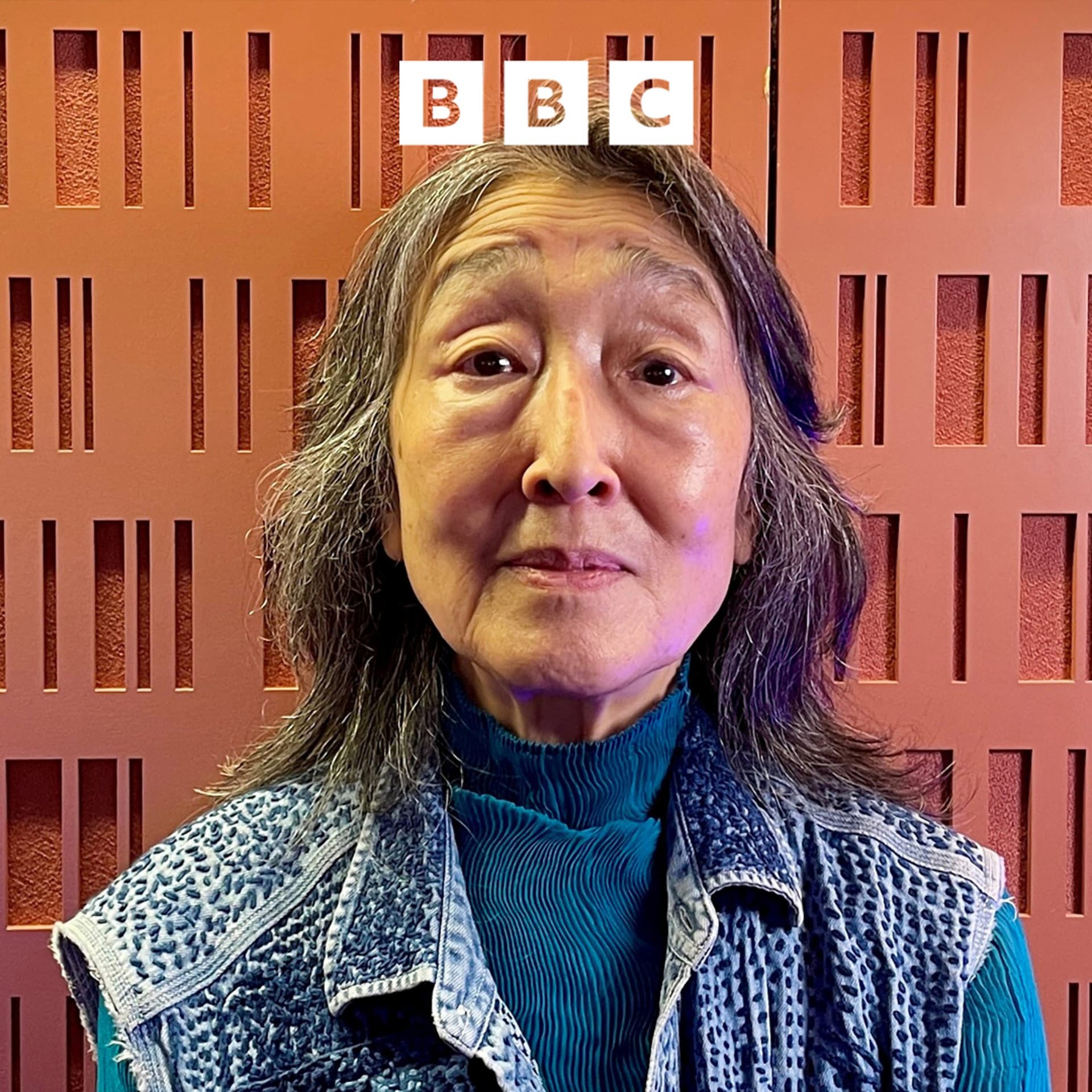
Overview In this episode of "This Cultural Life," hosted by John Wilson, acclaimed author Margaret Atwood discusses the influences and experiences that have shaped her prolific writing career. With over 60 published works, including the iconic *The Handmaid's Tale*, Atwood reflects on her childhood, literary inspirations, and the socio-political contexts that inform her storytelling.
Key Points
Early Influences
- Family Background: Atwood grew up in rural Quebec, with scientist parents who encouraged creativity and exploration.
- Her father was a forest entomologist, and her mother a dietician.
- The freedom of a remote upbringing allowed her to engage in imaginative play without strict limitations.
- Childhood Creativity:
- Atwood began storytelling in early childhood, inventing sagas with her brother and creating her first "novel" at seven.
- She created puppet shows and wrote an opera for a home economics project in high school.
Literary Inspirations
- George Orwell's Impact:
- Atwood's reading of *Nineteen Eighty-Four* significantly influenced her understanding of totalitarianism and oppression, themes that recur in her own work.
- Her first encounter with *Animal Farm* left a lasting impact, highlighting the dark realities behind its allegory.
- Inspiration for *The Handmaid's Tale*:
- The novel was conceived during a period of political change, particularly the election of Ronald Reagan and the rise of evangelical politics in America.
- Atwood drew parallels between historical and contemporary authoritarian regimes, referencing her studies of Puritanism and her travels in repressive societies.
Writing and Themes
- Exploration of Oppression: Atwood's works often delve into human struggles against oppression, drawing from her formative experiences and literary influences.
- Character Complexity: Her narratives frequently feature unreliable narrators and intricate plot twists, urging readers to question initial perceptions.
Continued Relevance
- Atwood discusses how *The Handmaid's Tale* has taken on new significance in light of contemporary social and political movements, particularly regarding women's rights.
- The story resonates with ongoing global struggles against authoritarianism, with readers from various oppressed regions commenting on its relevance to their experiences.
Notable Quotes
- Atwood reflects on her upbringing, stating, "You don't send very small children out into the woods by themselves because they're bite-sized," illustrating her unique childhood experiences.
- Discussing writing, she states that the first five pages of a book must captivate the reader, emphasizing the importance of engaging storytelling.
Conclusion Margaret Atwood's conversation with John Wilson reveals the intricate web of influences that have shaped her as a writer. From her formative experiences in rural Canada to her profound literary inspirations, Atwood's insights provide a deeper understanding of the themes that permeate her work, particularly those surrounding human vulnerability and resilience in the face of oppression.
Written by AI. May contain mistakes. Listen to the episode to check what was said.
Transcript
Automatic transcript. May contain errors.0:00BBC Sounds. Music, radio, podcasts.
0:12Hello and welcome to a new series of This Cultural Life, the show in which leading artistic people reveal the most important influences and experiences that have inspired their own creativity. I'm John Wilson and my guest in this episode is Margaret Atwood, one of the world's best-selling, critically acclaimed authors. She's published over 60 books, novels, short stories, children's fiction, non-fiction and poetry. She's known for stories of human struggle against oppression and brutality, most famously her 1985 novel The Handmaid's Tale, a dystopian vision of America in which women are enslaved.
0:48She's twice won the Booker Prize for Fiction, in 2000 for The Blind Assassin, and then again in 2019 for her sequel to The Handmaid's Tale, The Testaments. Hello, Margaret. How are you? I'm doing well, thank you. Hi, lovely to see you. Can I get you a drink, Festival? Just water. There is water here. I've just got that. That's fresh. What would you do if I said gin? Let's go to the BBC. Gin on top of it.
1:14Margaret Atwood, welcome to This Cultural Life. Thank you very much. Happy to be here. On this programme, I ask my guests to choose the most significant influences and experiences that have shaped their own creativity. And your first choice is your parents. Yes. Tell me about your parents. Well, first of all, they were very innovative and able to improvise because, of course, if you live in the woods and there aren't any shops, you have to be. They're both very outdoorsy, but they also allowed us to make messes in our rooms and didn't make us clean them up. By messes, I mean projects, which always begin as messes.
1:56So just to set the scene, this is rural Quebec, because your father was an entomologist. Oh, yes, he was a forest entomologist, and his research station, spring, summer and fall, was up in the woods, north, north, north, north, north of Ottawa, up the Ottawa River, and this would be in a house that he built himself because he was of a rural background and knew how to do all of that. Therefore, we had a lot of edged tools, which we used to play with as children. Edged tools. Yeah. Sharp edged tools. Yes. You know, and other things like hammers, things you could do yourself a serious injury with if you weren't careful with them.
2:38And your mother was a scientist as well, wasn't she? She was a dietician. So this would have been the 30s and 40s. So I think she was a dietician simply because it was a job you could get in the Depression. She wasn't very interested in any of that, frankly. Did you have scientific ambitions as a child? I was good at science. In fact, I was better at science mark-wise than I was at English because they took marks off for spelling in English, but not in science. So this was a really rural upbringing that you had for most of the year. Rural makes us think of farms. We're not talking farms. More remote than that.
3:16We're talking wolves. actually we're more likely to be talking bears because you'd be more likely to see a bear did you oh yes and you heard the wolves yes what does that do for your creative imagination well you just know they're there gives you respect and you don't send very small children out into the woods by themselves because they're bite-sized this is the stuff of fairy tales of course as well yeah wolves in north america are less likely to eat people but in in europe there's something to it because early humans grew up with wolves for a long time and I expect a number of small children did get eaten by wolves.
3:57So you had to be on your guard you had to be aware there was just respectful you had to be respectful. Does that make you a tough kid? Oh tough as relative so tough in relation to that kind of thing yes tough in relation to well for instance what was frightening to me as a small child, flush toilets. Things went down them and never came back. You didn't know where they went. So it just depends what you're used to, doesn't it? Cities are actually a lot less safe. You're hit by a car at any moment out in the woods. As long as you're respectful and always look behind to see where you've just been, then you won't get lost.
4:40I mean, my big fear would be a bear, but you're still thinking back to a flushable toilet. Are you suggesting you didn't have flushable toilets when you're out in the woods? Of course we didn't. We didn't have electricity. So when you first came across a flushable toilet, that was back in the city? Small, yes, in the city, yes, because we didn't stay out there in the winter. Insects do nothing in the winter. They're not active because it's really cold. Sorry to have to break these facts of life to you in this harsh manner. I also read that you weren't sent to formal school until you were 12, so you were homeschooled.
5:15No, no, I didn't spend a whole year in school until I was 12. Of course we went to school in the winters. I was treasurer of the Red Cross Club in grade three, I'll have you know. When you did spend time in the city schools, did you feel different to the other kids, having had this very remote upbringing where you have to be aware of bears and sharptools? Well, first of all, I could read and they couldn't. Really? Yeah, well, not much to do up there. And I had to learn to read so that I could read the funnies. Those are the comic strips in newspapers that we would occasionally have because other people wouldn't read them to me.
5:53Did you create your own comic strips? Then we created our own comic strips, yes, for sure. I'm thinking of your novel Cat's Eye, which is partly set in a Canadian school in mid-century. Absolutely, every detail is true. Right, OK. Yes, there was a boy's door and a girl's door. And yes, I did have a really terrifying teacher who used to go to the back and take off her bloomers. He wore these bloomers because it was cold, an object of great mystery. The aura of Miss Lumley's dark, mysterious, repulsive bloomers clings around her and colours the air in which she moves. It makes her more terrifying, but she is terrifying in any case.
6:36She does not send children to the principal for the strap, but does it herself, in front of the class, holding the hand out flat, bringing the black rubber strap down in sharp, quick, efficient strokes. Her face white and quivering while we watch, wincing, our eyes fill with involuntary tears. You say the boys' door and the girls' door, it's signified on the side of the building, in fact. Big, big engraven in stone. There are schools like that here. It was the model of a school. There was some horrifying penalty if you went in the wrong door, but we never found out what it was. What about the toxic relationship between girls which is exploding cats?
7:17Well, I got a lot of mail on that, a lot of letters, and the letters were of these kinds. Number one, my little girlfriends did much worse things to me, and here's what they are. Number two, from children who were boys at that time, saying, now I finally know what was going on in the fourth grade. I never could understand it. And the third kind was from parents. What do we do? So it's a fairly common thing at that age group. Did you experience that? I certainly experienced that. And I certainly exploited it in my book. It's about power dynamics, isn't it? It's about power dynamics. And I think some of these children are doing unto other kids what has been done to them at home.
8:04So they just repeat their experience, except that this time they are the ones in control. Do you have particularly strong memories of the school gymnasium? Oh, okay, that would be the high school gymnasium. The younger school didn't have a gymnasium. It had schoolyards, a boys' schoolyard and a general schoolyard. So the boys were allowed to come and play marbles on the girls' schoolyard, but the girls were not allowed to go and get their front teeth knocked out in the boys' schoolyard. But when you went to high school, and you know, obviously, it's a leading question with the gymnasium, because The Handmaid's Tale starts famously in the school gymnasium.
8:45Absolutely, my school gymnasium. So in order to write about something, I usually have to have a physical model of it. So this was a new school. It would have been built really in the late 40s. and it was still quite sparkling new and I went to it and the principal was very conscious of its newness and that we should not deface it by, you know, sticking chewing gum on it or anything like that. But we did have our dances in the school gymnasium. In those opening pages of The Handmaid's Tale, when those women are being held and trained and punished, that's a place which... What better setting? Yeah, so a lot of buildings were repurposed, as you know, in the war in various countries.
9:31I've stayed at a hotel, which was once an SS headquarters in Paris. And Pinochet in Chile famously is football stadiums for these purposes. So anything that has a large space, it's good for hurting people. We slept in what had once been the gymnasium. The floor was of varnished wood with stripes and circles painted on it. for the games that were formerly played there. A balcony ran around the room for the spectators, and I thought I could smell the pungent scent of sweat shot through with perfume from the watching girls, felt skirted as I knew from pictures, later in miniskirts, then pants, then in one earring with spiky hair.
10:17We tried to sleep in the army cots that had been set up in rows with spaces between so we could not talk. The lights were turned down. Aunt Lydia patrolled with an electric cattle prod. No guns, though. Guns were for the guards. Taking us back to home, and you mentioned a moment ago that your mother allowed you to be messy at home, creating projects. So what were you making? You were a practical chair. Usually I was either constructing something out of materials such as paper mache, or I was painting or I was sewing. So craft work then. Oh, we didn't call it that, dear. That's a newfangled term.
11:01A few years later when you self-published your first book, The Book of Poetry, Double Persephone, I think you made, you hand-printed and typeset. Yeah, it was flatbed press. And I did the cover with a lino-block print. Do you know what that is? I've got some idea because you're cutting out the shape and then printing and the negative... Yeah, so the linoleum block, you roll it with a roller. Do you have one of these books? Yes, I should have kept more.
11:32Your next choice for this cultural life is your brother's novels, which he wrote between the ages of seven and nine, you told us. So what were these stories? It was very prolific. He even had it in the inside of one of the covers by the same author and then he put the other books he had written. Yes, they were adventure stories and illustrated. And at the beginning, they all concerned his imaginary world, which was at war constantly because, of course, it was the war. And we traded our colored pencils. He traded me the pink, the silver, and the gold, useful for princesses. And I traded him the red, the orange, and the yellow, useful for explosions.
12:17He was quite prolific as an author and they were very well done and at the end it would say the end. Then he segued into, instead of the adventure stories, he started doing the botany and the zoology of these planets. One of his books is called What's on Saturn? You don't want to go there. Everything is toxic. So these were his books with his name on them. Were you contributing as well? Were you a co-author? No, I was not a co-author. I made some rather wimpy, not nearly as violent and kind of smiley books of my own. Doesn't sound like you at all. Well, you know, I matured as an author. On the note that you sent us, though, Margaret, you also mentioned oral storytelling.
13:03Yeah, we did a lot of that. As a family or you? Oh, no, my brother and myself had an ongoing saga. It was always escapes and adventures of monsters. Recurring characters? Yes, recurring characters. We aren't in Bronte land here. We were much younger. But it was a continuing saga. And when one of us would get tired, we would just hand over to the other. And when would you tell these stories? Was it a sort of bedtime story? In our spare time. When it was raining. And you were trading the narrative backwards and forwards? Yes. Yeah, I have to say most of it was him, but I would get a turn once in a while.
13:45I was almost three years younger. Did you have any thoughts that you might want to be an author? Of course not. You weren't writing anything down at that time? He evidently did, because he had the form of the book, so we would make these books out of, you fold the paper, you put the cover on, you sew it up, and then you have to put something in it, don't you? So the physical object was really important. The physical object was important. So I did write my first full novel about Seven, and it was about an ant. It was a good lesson because it's sort of how not to do it. Ants don't do much for the first three quarters of their lives.
14:25So it was quite inert at the beginning. I wouldn't suggest this as a way to open a story. Eggs do nothing. Larvae do nothing. and not until the ant finally emerges towards the end of the story and has legs, does anything happen. Oh, I see. So you were taking the life story of the ant quite literally. Yeah, it was sort of Tristram Shandy, only not so amazing. Did this ant have a name? Annie. Most ants are girls. You say it was a novel. How long was it? About ten pages. And did you at some point at school, when you're looking forward in life and thinking, you know, I'm going to have to at some point be a grown-up and have a job, Oh, that comes much later, when I entered what we would call high school.
15:09So then they gave you a book called Guidance. We had a class called Guidance, which was supposed to be guiding us to our future careers. So there were lots of future careers for boys, so doctors, lawyers, rocket scientists, what have you. And there were five for girls. Let's see if you can guess what they were. Secretary. Yes. Nurse. Yes. Teacher. Yes, but not a university teacher. No. No. School teacher and probably younger kids. Got it. Yes, that's three. I don't know. Was it a housewife? Did that count? That's not a career. That was not considered a career. Yes, but domestic science. Otherwise known as home economics.
15:57Home economics, right. And the fifth one, which is a bit surprising that early, it was airline stewardess. Right, of course. Yeah, so there weren't transatlantic flights yet. So which box were you ticking at that? Well, I was a mercenary little child. Stewardess then? Oh, no. No, no, no. The one that made the most money at that time was the home economist. So although I was not really very interested, I took that in high school instead of what I should have taken, which was secretarial sciences. I should have taken typing. what was the result? I still could not touch type after look. Are you two fingers?
16:39Four. Do you type the books, though? Or is it written longhand first? I kick myself off with handwriting, and then I translate that into typing. And let's just get back to the writing ambitions, which, I mean, obviously you started with that novel of Anna the Ant at the age of seven. Yes, but then I stopped writing and took up painting for quite a while. Narrative painting? Figurative painting? Figurative painting, yes. Do you still paint? A bit. I draw more. Design book covers sometimes. But was there a moment at school when, OK, you're looking at home economics, should have done secretarial things.
17:14I was doing home economics right there in school. But when did it occur to you... I can set in your zipper if you ever have a problem with that. My zipper? Any zipper. OK, right. Yes. My zipper's fine at the moment. Well, that's good. Yeah. because you're on TV. Was there a moment, though, where you suddenly thought, actually, I need to write? Yes, that would be when I was 16. Yes, I started writing at that time more than I had been. We had a very good English teacher called Miss Bessie Billings, whom I have immortalised under her real name in a story called My Last Duchess. She was quite famous for getting good results on the final exams out of her students because she took us like point by point.
18:07She dragged us through the curriculum. And in those days, we had to read quite long novels in school, so Thomas Hardy was a feature. A-M-A about Thomas Hardy. Ask me anything. We had a Shakespeare play a year. Particularly we had a dramatic group that would come to the school called the Earl Grey Players, and they would put on plays that were in the curriculum, and they had about maybe five actors. And then the students could be the soldiers in Macbeth, or they could be Romans in Julius Caesar. You had to bring your own bed sheet or your own plaid rug, but you could be in the play, which was pretty good.
18:49You were doing a bit of acting as well then? I was doing some acting because it was the age of skits. People did a lot of skits. So what I eventually did with home economics was I put on a home economics opera.
19:07How does that play out? Well, it played out like this. The well-meaning but rather humorless home economics teacher made the mistake of letting us vote on a special project. this is the downside of democracy and she wanted us to vote on making stuffed animals for sick children in hospitals a very worthy project and I felt why not just buy them I knew about those curved seams I wanted to have nothing to do with them we'd already done smocking that was enough of that so I subverted part of the class and got them to vote on the home economics opera she was a little bit dismayed by that but because it was a vote she said yes we could do it as long as it was on a home economic subject so it was, it was about fabrics Orlon, Nylon and Dacron were their names That's quite operatic names actually Who was writing the songs?
20:08Me, I used pre-existing melodies so people would actually be able to sing them Operatic melodies? No, dear, just any old melodies I can get my hands on. One of them was a mangling of the Barker roll from Tales of Hoffman. It was about washing. Can you remember how it goes? Fabrics need a swim in the suds. It makes them feel just like new. Plink, plink, plink, plink. It goes on from there. So I had the director of the Canadian. and I sang it to him in an elevator and he said I'd ruined Hoffman's Barker role for him forever. So did you perform as well? Yes, of course. Yes, I played Orlon. I performed, I directed, and for years afterwards people who had been in this opera would turn up at readings and say, I was Dacron!
21:06Weren't you also putting on puppet shows at school? Yes, yes, that was not at school. It was a commercial venture that was outside of school hours. We charged money. So I had a partner, and we started out with kids' birthday parties. We did not charge nearly enough, I'm telling you. We were a bargain. So we did everything. We welcomed the little party-goers. We helped open the presents. We dried the tears. We passed the sandwiches. We helped with blow at the candles on the cake, and then we put on a puppet show. This was for the five-year-old to six-year-old cohort, so all of the plots were about cannibalism, which is what children of that age like.
21:54Plots that you were making up? No, no, they were classics. Oh, right. Classic. Three Little Pigs, cannibalism. Little Red Riding Hood, cannibalism, and Hansel and Gretel, also cannibalism. and the other beauty of them was that there were only three or four characters on stage at a time because we only had two hands each. I mean, I knew those fairy tales were dark but you've made me think about them in a completely different way now. Well, that's the threat in them, yes. Absolutely. What did that do for your own, later on, for your sense of storytelling? Well, you can make anything into a character.
22:30For instance, Hello. What's your name? I should say, for the benefit of radio listeners, you are miming a small animal with two ears, possibly. That's right. So if you have a small child in a restaurant, you can animate the silverware quite effectively, plus the salt and pepper shaker. When you started writing poetry, that was around this age as well, in the teens? In my teens, yes. In your teens. So there had been a lead-up before Double Persephone, which you were probably, what, 20 or 20? Oh, yeah, I wrote a lot, yes. So what were the poems about? Oh, they were quite bad, so I don't think I'm going to tell you.
23:08They were very dark and sort of Byronic and Poe-ish. For some reason, the collected works of Edgar Allan Poe was in the elementary school library. Terrifying. But obviously it had a big impact on you. Oh, yes, people being mesmerised, and then when they're brought out of the trance, they dissolve. You know, really quite frightening. but there was no sex in them so they were permissible for small children. So these were macabre poems that you were writing? Some of them were, yeah. About sort of real-life scenarios or were they fantasy? No, no, no, they were quite fantasy. There are similarities.
23:45I notice that the hills, which the eyes make flat as a wall, welded together, open as I move to let me through, become endless as prairies, that the trees grow spindly, have their roots often in swamps. It goes all the way back then, doesn't it? I mean, these sort of obsessions, tropes of your work, some of it is there right at the start. Well, some of it is there in world literature.
24:17Your next choice for this cultural life is reading sci-fi in the cellar when you were supposed to be doing your homework, and especially reading George Orwell. When did you first come across Orwell then? Well, my dad liked science fiction because he was a scientist and he used to get a big kick out of it. So he had quite a collection. But the Orwell that I remember, this was in the days when you could get classic world literature in the pharmacy. They had big racks of these paperback books with lurid covers on them. And I think a lot of people were enticed into reading pretty good books because they thought they were going to be lurid.
24:56and filled with, you know, sex and violence. And then they would find themselves reading War and Peace, or, for instance, 1984. But I first read Animal Farm because it was in the house, and I thought it was going to be, oh, good, animals, just like Wind in the Willows. Talking animals. Talking animals. What fun. And, of course, I didn't understand that it was an allegory of the Soviet Union at that time, based on the show trials and so forth. Because you were, what, 9, 10? Yeah, I had no knowledge of those things. So it just ruined me because here were these nice animals, particularly the horse, and they came to tragic ends.
25:39All the animals took up the cry of, Get out, Boxer, get out! But the van was already gathering speed and drawing away from them. It was uncertain whether Boxer had understood what Clover had said. But a moment later, his face disappeared from the window and there was the sound of a tremendous drumming of hoofs inside the van. He was trying to kick his way out. Too late. Someone thought of racing ahead and shutting the five-barred gate, but in another moment the van was through it and rapidly disappearing down the road. Boxer was never seen again. It was very, very upsetting. I've met other people who had the same experience.
26:19But then I went on to 1994, which I must have read just shortly after it first came out. Came out 49, didn't it? Yeah, but it was in paperback, so it must have been 50-51 around that time. And similarly, I didn't quite get the context of it either, but it was very compelling. What was it about that book that gripped you so much? Having been born in 1939, two months after the onset of World War II, I've always been pretty interested in dictatorships and also World War II. By the time I got around to being plunged into history, which would be in the 50s, I had a context for all of this. and one of the things that has occupied me really quite a lot over time is how do these dictatorships get going and how do they maintain themselves and also how do they fall apart when they fall apart.
Read the full transcript
27:22I've been pretty interested in that really for a long time. The black mustachioed face gazed down from every commanding corner. There was one on the house front immediately opposite. Big Brother is watching you, the caption said, while the dark eyes looked deep into Winston's own. In the far distance, a helicopter skimmed down between the roofs, hovered for an instant like a blue bottle, and darted away again with a curving flight. It was the police patrol snooping into people's windows. The patrols did not matter, however. Only the thought police mattered. So this interest in totalitarianism, it was already there when you read 1984 then?
28:07Nascent. So we were all still pretty much interested in the war, as I've said. I don't think that period was really over until about 1950. But there were people that we knew, and people, actually my high school history teacher, had been in the war and he subjected us to a lot of... He got hold of the original propaganda films that were shown to us, not to the Germans, but to us as newsreels and things. So all of that was pretty interesting. And remember, there was the radio. It would be bong, bong, bong, bong, bong. This is the BBC calling off a medical. Here is the BBC news. Like that. So we had all of that.
28:53It was very anxiety-producing. And little boys at that time collected cigarette cards. Do you know what those were? They were sports stars? No, they were airplanes. Oh, right, OK. Airplanes and ships. Any little boy collecting airplane cards knew the different airplanes, knew it was likely to be on the wings. They'd had all of that lore. That's why there were so many explosions in my brother's novels. This is the context of the times. It's the context of the times. When you read 1984, at the heart of which is this protagonist, Winston Smith, did you identify with him in any way? Well, you have to identify with him.
29:31He's leading such a miserable life. He doesn't have any real chocolate. I mean, what kid would not identify with no real chocolate? How important was it to you at the time reading 1984? It made a huge impact. Huge. Yes, and my first reaction to it was the one that everybody has. This is a really gloomy book and it's very pessimistic. But thinking about it later, I realised that he'd put this coda at the end and it's a very hopeful thing because it's an essay on newspeak written in standard English in the past tense. So the message is it ended. It fell. The regime fell. It was gone in some way.
30:13We're not told how, but we know it's gone because here are people writing about it as if it's in the past. And the same thing happens at the end of The Handmaid's Tale where the reader realises that the narrative that has played out is being discussed at a symposium sometime in the future, so you come to the same conclusion that the regime has fallen. Well, yes, I mean, that's my model. That's how you deal with knowledge that you can't put in the main narrative. Historical notes. A partial transcript of the 12th Symposium of Gileadian Studies, which took place on June 25, 2195. Professor Piazzotto, Director, 20th and 21st Century Archives, Cambridge University, England.
30:57The title of my talk today is Problems of Authentication in Reference to The Handmaid's Tale. I wish to consider some of the problems associated with... The Handmaid's Tale became, in effect, your generation's 1984. Well, maybe, sort of, but, you know, at the time, it wasn't considered very plausible. So in 1985, it was not seen as a real possibility. That's interesting. You wrote it in 1984. I did. Wasn't that corny? Not only that, I was writing it in West Berlin, surrounded by the wall. What were you doing there? I was with the Deutsche Akademische Austausdienst, which they set up to bring artists in from outside so the people in West Berlin wouldn't feel so isolated.
31:44And they also provided you with a German teacher if you wanted one, which, of course, I did, already having had some German in my past, because you needed it, right? you needed it to be a graduate student. You had to have one ancient and two modern languages. So living in West Berlin, you were, I presume, very aware of what was happening on the other side of that wall. Yes, they made sonic booms every Sunday just to remind us that they were there. And you were writing The Handmaid's Tale in Berlin at that time and that atmosphere, that sense of difference was then feeding into the words that you were writing.
32:22Yeah, more through actually visiting those places. So we went to East Germany. That was easy for us. We were Canadians. And that was where the bad chocolate was. Then there was Czechoslovakia, fairly tightly sewed up, but you can talk to people as long as you went into a field. And then there was Poland, which was already pretty loosey-goosey. So those experiences of talking to people who had to be very careful about what they said, and you had to be very careful about what you repeated. So that's creating an atmosphere, I presume, in the narrative, that sense of a repressive society, and you have Orwell, who has kind of led the way, and is there in your imagination as well, I presume.
33:09But what was the catalyst for writing The Handmaid's Tale? The election of Ronald Reagan. There you see the new first family of the United States. Governor and Mrs. Reagan, their four children... 1980, at which there was a big pushback against what the 70s had been doing, particularly in the expansion of women's rights. So 70s, quite expansionist, you could have your own credit card, stuff like that. And then you get this pushback and that was when they started activating the evangelical religious right as a political force. I believe there has been and continues to be a great hunger in America for a moral and spiritual revival, a searching for spiritual moorings, a desire for a deeper understanding of one's faith.
34:05Well, we've been seeing signs that family life is making a comeback. We're remembering that with freedom comes personal and parental responsibility. How significant was it that you'd also traveled through Afghanistan in a couple of years? I think in what, in the late 70s? Iran, Afghanistan. Yeah, it was significant, but this is not the only story. Significant also is the fact that I had studied 17th century American Puritanism as a graduate student in the early 60s. And I get to say bad things about those people because they are my ancestors. Literally. Yes, literally. They were Puritan New Englanders, some of whom went to Nova Scotia.
34:51One of whom was hanged. They didn't succeed in hanging her. That's why it's interesting. She was called Half-Hanged Mary. They tried to hang her, but they hadn't invented the drop, so they just kind of strung her up. And she must have had either a very tough neck or been very light because the hanging did not succeed. I don't think she was very tall. But she was literally left dangling overnight. She was left dangling overnight, yes. But survived. She did. Isn't that interesting? I wonder what she thought about while she was up there. But it's interesting that you witness what's happening in Germany.
35:25You've seen Afghanistan and Iran. Ronald Reagan is elected, so you start imagining the possibilities of a future totalitarian American regime, but then you reach back. Well, these regimes are never made out of whole cloth. They're always based on something that was there before. They change the outfits, the names, the flags, and the slogans, but it's the same infrastructure, if you like. And the way I explain it is in the middle America, if you wanted a new pyramid amongst the Aztecs or the Maya, you didn't tear down the old one. You built a new one on top of it. Why would you waste a perfectly good pyramid?
36:09So these things have underneath them. So China was a very developed state bureaucracy under the emperors and turned into a state bureaucracy under the new regime. Russia had absolutist czars and you'll notice how rapidly they revert to having absolutist czars. Different name. Same idea. So what would the Americans have? They go back to the Puritans. That is certainly my theory. It was my theory in the 1980s, and you can see it in action now. It's what the right wing wants. It wants a hierarchical Puritan theocracy. Which is why The Handmaid's Tale has taken on new resonance and relevance in recent years, but also...
36:55I didn't do it. But it has also, of course, taken on new life in the form of a television series. I was asleep before. That's how we let it happen. When they slaughtered Congress, we didn't wake up. When they blamed terrorists and suspended the Constitution, we didn't wake up then either. Now I'm awake. You girls will serve the leaders and their barren wives. You will bear children for them. Are you surprised, or maybe disturbed, at the continuing relevance 40 years after you wrote that book? Well, it had periods of not being so relevant. 90s, wall down, communism over, we're all going shopping, end of history.
37:43I never believed that, did you? No, you didn't. Because something else was going to happen, and then it did. So it's newly relevant because of political changes in the United States. At the time it was published, the West Coast, always in a culturally alert place, somebody spray painted all along the wall at Venice Beach and Los Angeles the handmaid's tale is already here but not just America though of course oh well no of course not political changes throughout the world yeah well the thing that people didn't believe at first was America yes some of those places have not changed anyway they still are that kind of thing and I'm I do get messages all the time saying this is our life.
38:33You know, the Handmaid's Tale is what we are living now and particularly from places like Iran and Afghanistan. I'm just thinking about some of the themes that you address and some of the themes that you've been talking about in this programme. The influences that you've chosen for this programme, with the exception of Orwell perhaps, are all quite jolly. You've got your loving family. Well, I think Orwell is quite jolly. He's much more jolly than people give him credit for. Yeah. Come on. Yeah, not on the page. Well, he was a great gardener. He loved growing roses, yes. But in terms of your life and your influence and what you've been discussing tonight, almost at odds with some of the themes of the novels which explore, you know, the really dark aspects of humanity and the human experience, totalitarianism, rape and murder and all of these things, what compels you to immerse yourself?
39:23I don't particularly immerse myself. You know, I just read the newspapers. You read the newspapers and a lot more, I presume. I mean, it's a lot of watching, a lot of reading. I do read a lot more. It's research, though, isn't it? Well, I do research the details, because if you don't and you get them wrong, you are going to get a letter beginning, you idiot. And nowadays it wouldn't be a letter, it would be somebody yelling at you on social media. There is not a telephone booth on that corner, you idiot, at which point you have to be able to say, but there was in 1957, you idiot. There's never been one person's truth in a Margaret Atwood novel, whether it's The Blind Assassin or Alias Grace or The Handmaid's Tale.
40:07Your narrators, your protagonists are rarely what they seem at first. That instinct to almost pull the rug underneath the reader's expectations, where does that come from, do you think? Well, I think it comes from storytelling. So you don't want the first five pages of your book to give away the entire plot, do you? I don't, particularly if it's a murder mystery. I don't want to think, oh, well, I know who did that. It's very obvious. I wonder if it's something to do also with scientific parents of needing to kind of look at everything from every angle to really interrogate the evidence. You need to test your hypotheses.
40:45So let me put it this way. There's belief, no evidence required. There's fact, evidence required. and in between their opinions. Opinions are either based on beliefs, no evidence required, or they're based on facts, evidence required. So when I'm talking to younger writers, first of all, I only look at the first five pages, because that's reality. If you can't get the reader past the first five, that's it. Your beautiful theory of truth and beauty on page 76, they will never read it, because they won't keep going. so hook me in present me with the mystery make me want to know more and that's a good beginning of a book it was the best of times it was the worst of times oh tell me more in what way call me ishmael why should i call you ishmael and and who are you talking to the past is another country they do things differently there how differently tell me more It was a bright, cold day in April and the clocks were striking 13.
41:56Exactly. So you bring us back to Walwell. Absolutely. More than, well, it's around six decades since you first read him. But in your most recent collection of short stories, you summon him up from beyond the grave. You have an imagined conversation via a medium. He's still very important to you. Yes. And I'm allowing him to smoke in the afterlife because I'm a kind person. You're now in your 80s, Margaret, and you're still as prolific as ever. What drives you on creatively? Well, what else am I going to do all day? You know what Samuel Beckett said, not good for anything else. It's too late for me to be a ballet dancer.
42:35Oh, alas, a vanished career. But you've told us about your other skills, painting, handicraft, book design, all of these things. Yes, but... But you write best. Well, I'm a freelancer. And that's a good thing, because I don't have a boss. Margaret Atwood, thank you so much for sharing your cultural life with us. Thank you.
43:02Hello, I'm Lucy Worsley, and I want to tell you about Lady Killers from BBC Radio 4. It's a programme that mixes true crime with history, but with a twist, With our all-female team of experts, I am re-examining the crimes committed by murderesses in the past through the eyes of 21st century feminists. What can we learn from these women and would it be any different today? Lady Killers. Listen first on BBC Sounds.
From the publisher
Margaret Atwood talks to John Wilson about the formative influences and experiences that shaped her writing. One of the world’s bestselling and critically acclaimed authors, Atwood has published over 60 books including novels, short stories, children’s fiction, non-fiction and poetry. She’s known for stories of human struggle against oppression and brutality, most famously her 1985 novel The Handmaid’s Tale, a dystopian vision of America in which women are enslaved. She has twice won the Booker Prize For Fiction, in 2000 for The Blind Assassin and again in 2019 for her sequel to The Handmaid’s Tale, The Testaments.
Growing up in remote Canadian woodland with her scientist parents, she traces her career as a story-teller back to sagas that she invented with her older brother as a child, and her first ‘novel’ written when she was seven. She recalls an opera about fabrics that she wrote and performed at high school for a home economics project, and how she staged puppet shows for children’s parties. Margaret Atwood also discusses the huge impact that reading George Orwell had on her, and how his novel Nineteen Eighty-Four especially influenced The Handmaid’s Tale. She reveals how that novel - written whilst she was living in Berlin in 1985 - was initially conceived after the 1980 election of President Ronald Reagan and the resurgence of evangelical right-wing politics in America.
Producer: Edwina Pitman