In short
Podcast Episode Summary: This Cultural Life - Margaret Drabble
Episode Overview Host: John Wilson Guest: Dame Margaret Drabble Air Date: [Not specified in transcript] Producer: Edwina Pitman
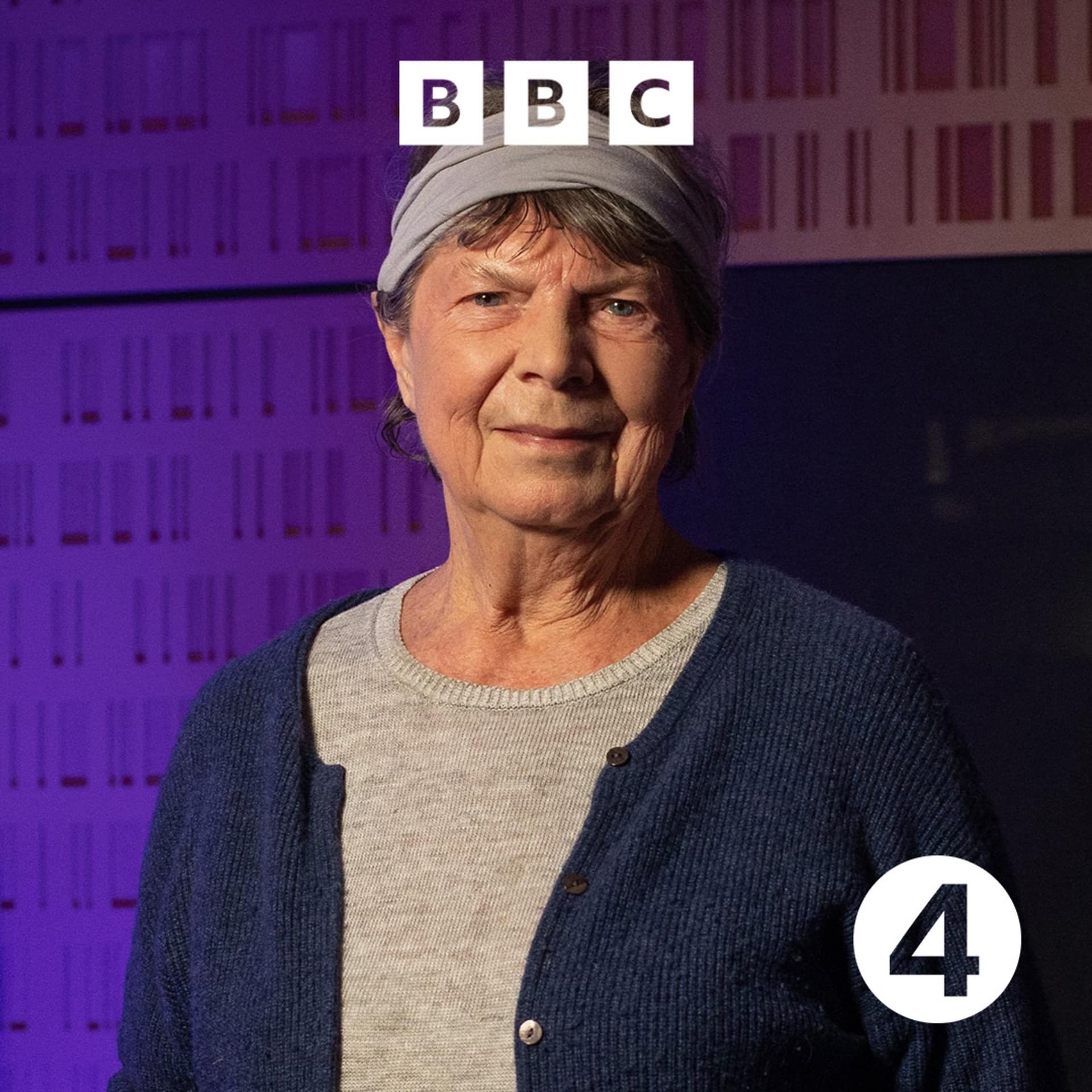
Dame Margaret Drabble is a celebrated novelist, biographer, and critic who is known for her contemporary realist stories that often reflect the lives of modern women. This episode explores her literary journey, family background, and significant influences on her writing.
---
Key Themes and Discussions
- Literary Upbringing
- Family Background:
- Born in Sheffield, 1939, in a literary household.
- Father, John Drabble, was a county court judge who began writing novels post-retirement.
- Mother was an avid reader who aspired to write but never did.
- Influence of Education:
- Scholarship to Newnham College, Cambridge, significantly shaped her literary tastes.
- Exposure to lectures by F.R. Leavis and contemporary authors like Angus Wilson and Saul Bellow.
- Early Career
- Acting Background:
- Worked with the Royal Shakespeare Company (RSC) before her writing career took off.
- First novel, *A Summer Birdcage*, published in 1963, was inspired by her experiences and sibling rivalry.
- Relationship with Sister:
- Discussed her relationship with her sister, A.S. Byatt, which was marked by jealousy and rivalry, especially regarding their writing careers.
- Literary Influences
- Impact of Doris Lessing:
- Described *The Golden Notebook* as a pivotal work that addressed women's experiences and independence.
- While Lessing's style did not directly influence Drabble, the content resonated deeply with her.
- Thematic Explorations in Writing
- Themes of Motherhood and Women’s Experiences:
- Explored the challenges of motherhood in her novels, addressing issues largely overlooked by male authors at the time.
- Recognized the struggles of balancing career and family life, leading to candid explorations of female identity.
- Social Commentary:
- Drabble's works frequently reflect on social inequality, changing societal norms, and the evolving role of women.
- Later Life and Reflection
- Personal Loss:
- The death of her daughter significantly impacted her desire to write, leading her to prioritize family and personal reflection over her literary career.
- Current Writing:
- Although she has ceased writing novels, she still engages in memoir writing, planning to leave it unpublished in her lifetime.
- Views on Literary Recognition
- Rejection of the Booker Prize:
- Drabble opted not to submit her novels for the Booker Prize, viewing the prize culture as detrimental to the artistic integrity of literature.
---
Conclusion During the conversation, Dame Margaret Drabble reflects on her literary journey, personal life, and the complexities of familial relationships. Her story reveals the intertwining of personal and professional influences, the evolution of her literary voice, and her commitment to portraying women's narratives. Despite facing personal tragedies, Drabble maintains a profound connection to her literary roots and the importance of storytelling.
---
Key Quotes
- "I just thought I must fill in the evenings because I was on my own."
- "I think it's very beautiful. The ideal relationship is a happy marriage."
- "I suppose my parents gave me a social conscience, so I've always worried about inequality."
---
For more episodes featuring renowned authors and their cultural influences, subscribe to *This Cultural Life* on BBC Sounds.
Written by AI. May contain mistakes. Listen to the episode to check what was said.
Transcript
Automatic transcript. May contain errors.0:00BBC Sounds. Music, radio, podcasts.
0:10Welcome to This Cultural Life, the series in which leading artistic figures reveal the most important influences and experiences that inspired their own creativity. I'm John Wilson and my guest in this episode is the novelist, biographer and critic Dame Margaret Drabble. Having published her debut, The Summer Birdcage, in 1963, she went on to become a best-selling and critically acclaimed chronicler of the lives of modern women in a series of contemporary realist stories, often based on her own life and experiences. Her 19 novels include The Millstone, The Waterfall, The Ice Age and The Radiant Way.
0:48And her non-fiction includes books on Thomas Hardy, William Wordsworth and Arnold Bennett. She's also edited the Oxford Companion to English Literature. Margaret Drabble, welcome to This Cultural Life. Thank you. You were born in Sheffield in 1939. Your father, John Drabble, was a county court judge, but he also wrote novels. So was it a very literary household growing up? It was a very literary household. All we did was read. We never went to the theatre. We never went to the art gallery. We just read books. My father didn't publish till I'd already published and he was already retired. But they'd always been great readers, both my parents.
1:28Was he writing? I mean, he wasn't published till later, but was he writing? No, no, he waited till he'd retired. I mean, he had a very full career as lawyer and finally county court judge. And when he retired, he thought he'd write a novel and I thought it was rather good. So with my encouragement, on he went. So he was inspired by you? I think he thought he could, yes, yes. He had been in the RAF during the war. I know he'd served abroad. So what are your earliest memories of him? Well, I don't remember him until he came back from the war. I remember his homecoming because we were living in a council house in Pontefract.
2:08And I remember his coming home. And my older sister remembered him and was very excited. But I apparently burst into tears and hid because I didn't know who he was. And then he spent a lot of time getting to know me and teaching me to read. I was three and a half, four. I remember sitting on his knee and his teaching me to read. And what about the creative influence of your mother? She was a great reader and she always used to say I could always have written a novel if only I'd had time, but she never did. So we tended to think that she should have tried a bit harder to find the time. But we were very much the kind of family.
2:44I mean, my parents were both from very ordinary working class backgrounds. And it was the kind of family that stepped up the ladder through reading and getting scholarships and going to university. That's how you did it. And painting and theatre didn't come into that at all. It was just reading, like the kind of Richard Hoggart pattern. You just worked away and you got a scholarship. Your older sister, Antonia Susan, better known later in life as A.S. Bayard, she sadly died late last year. What was your relationship like with her when you were children? We were fine when we were children. I mean, she was a great reader and writer as well.
3:27We used to do little pantomimes at Christmas and we used to write our own pantomimes. And my other sister, my younger sister, Helen, we always took part. So there was quite a creative atmosphere and we were very friendly in those days. I looked up to her and she got annoyed with me tagging along around behind her. But we were friendly. Over the years, the relationship was the source of so much media fascination, wasn't it? And the speculation was that it was a competitive relationship. But thinking back to childhood, were you competitive then? I don't think we were. I mean, no, I just think we all felt we were unattractive little girls because our mother never told us we looked nice.
4:09She only told us how clever we were. So we always felt that we were kind of scruffy looking and she was always criticising us for looking scruffy. And I don't think we were jealous of one another at that stage. but unfortunately I got a better degree than she did and I published before she did and that was the beginning of a very bad relationship. Oh, so that's what started it. You think that she was jealous in a way then? I'm quite sure she was, yes. That's interesting. She was the older sibling, wasn't she? Yes, but I... Often it's the other way around. Is it? I don't know. I don't know. I mean, I did make my mark at Cambridge and I think that did annoy her.
4:55She welcomed me there and then she was annoyed with me for making my mark.
5:04On This Cultural Life, Margaret Drabble, my guest, choose the most important influences and experiences that have inspired their own creativity and your first choice is going to Cambridge University in 1957. So chosen for academic or extracurricular reasons. For both. I loved the curriculum and I was very well taught, not in Newnham. In fact, I wasn't all that well taught, but I could go to lectures and I loved the subjects. Newnham College. I was at Newnham College. It was a women's college, but we were farmed out to various other male lecturers. And I went to the last lecture of Dr Leavis and I remember his lectures very well.
5:46But to me... The last lecture he gave? The last lecture he gave in Cambridge, yes. We all trooped out to watch his farewells. I remember his lectures very clearly. And I remember his lecturing on Wordsworth and debunking A.E. Howesman and speaking very dismissively of Mrs. Wolfe. That was Virginia Wolfe, Mrs. Wolfe. So I do have good memories of Leavis, who actually taught my mother. And that F.R. Leavis valedictory lecture then, what do you remember of that? I think it was about Dickens, who he disapproved of. But I think his very last sentence, I could be disproved on this, was something like as he walked up the steps and out.
6:24He said, but I'm beginning to change my mind about Dickens. And I thought, that's a good cliffhanger. You were studying English at Cambridge. So which authors were you introduced to there that you maybe hadn't read before that had the biggest impact on you? Well, we were studying the great tradition which Leavis laid down. And so we read Conrad, we read Hardy. Actually, I don't think he approved of Hardy. I loved Hardy. George Eliot, Henry James. That was the great tradition. And then newer, more contemporary novelists? Well, I discovered for myself, and this made a huge difference to me, I started reading recommended by friends.
7:03I don't know how I came across them. I read Angus Wilson while I was there. And I read Saul Bellow while I was there. I remember exactly who recommended him. He said, read Henderson, The Rain King. It's a great novel. And there was something about these novels being set in a contemporary world and describing things I knew that meant more to me than George Eliot. Though I greatly revere George Eliot and reread her. But there was something about the idea that you could write about the here and now that was very exciting to me. So that Saul Bellow book, Henderson, The Rain King, that was published in the late 50s, wasn't it?
7:40So that was literally a new book that had just come out when you were studying. Absolutely. And only yesterday, my first husband left all my letters to him in boxes. And I was talking to the archivist and I looked. And there's a record of me in 1958-9 reading the middle age of Mrs Elliot, Angus Wilson's novel, and saying how wonderful it was. I don't know how I knew these books were there because certainly we weren't taught them. Your first husband was Clive Swift. Was Clive Swift. The actor. So you met him at Cambridge as well. I met him at Cambridge. And indeed, he spent all his time acting and I spent a lot of my time acting.
8:18I was very fortunate to be in Cambridge at a time when the theatre was going very strong. My theory is that Dr Leavis put a kind of a dampener on creative writing and all the talent went into the theatre with Peter Hall, Trevor Narnie, Ian McKellen, Derek Jacoby, all those people, my husband Clive Swift. It was a wonderful time. So when you arrived at Cambridge to study literature, did you already have an idea about being a writer then? What did you think you were going to do with this degree? I had no idea. No, I didn't think beyond getting a degree. But I do remember sitting, waiting for the interviews at Newnham, and sitting next to me was Margaret Forster, who actually went to Oxford, and my friend Bernadine Wall, who became Bernadine Bishop.
9:06and we all agreed that we'd quite like to write novels one day. But we were just joking, but all three of us did. But I do remember when I started my first novel, I thought I won't try and write a big, heavy Victorian, omniscient novel. I'll just write a little chatty novel. And my first three novels are very chatty. They're just sort of informal little chatty books about the way we live now. And Saul Bellow may have played a part, but later you actually, I think Saul Bellow had a kind of, or a fictionalised version of Saul Bellow, had a walk-on part in one of your short stories, didn't he? Yes, he certainly did.
9:41Yes, I think he read it, unfortunately, and was very annoyed about it. What had you written about him? I said he was a womaniser, which he was. That's not controversial. End of story. But that was based on your own experience. Yes, but it was not a unique experience. I greatly admired Saul, and one of his later wives became a very good friend of mine. and I was on holiday with him in the south of France with our publisher and so I did spend a bit of time with him which was quite amusing. And he made a pass at you? Yes.
10:20Your next choice for This Culture of Life is your love of theatre and Shakespeare in particular. So when did theatre start? I mean you said earlier it was all about books, you never visited the theatre But when did this kind of love of theatre first become apparent? Of course, Shakespeare is books as well as theatre. But I fell in love with Shakespeare as theatre at school, as I was at school with Judi Dench. And she played while I was there. She was two or three years older than me. I think she was the same age as my older sister. But she played Ariel and Titania at school. And her Ariel, I can hear it now.
10:57I can hear her voice now. I can hear her Titania. but then I did go on to understudy her at the Royal Shakespeare Company. But Judy was just a most wonderful live performer. I don't know where she got it. Her instinct was extraordinary. And that was apparent even at school? Even at school. She would have been 17, I suppose. And I think she went straight from school to the professional theatre. I played a fairy when she played Titania at school and some years later I played a fairy at the Royal Shakespeare Company in Stratford and she was playing Titania. Really? That's amazing. So it was like a sort of weird follow-through.
11:35Therefore the winds piping to us in vain, as in revenge have sucked up from the sea contagious fogs, which falling in the land have every pelting river made so proud. I've always been very impressed by Judy. She's just an extraordinary actress. And then when you got to Cambridge, as you say you met your husband, your future, your first husband, Clive Swift, who was directing there, I think, wasn't he? So this was part of the Drama Society, the Amdram Society at Cambridge? It was the Amateur Dramatic Society and the Marlowe Society. And Clive, the first time I saw Clive, I think he was in an Arthur Miller play.
12:12And I just thought he was brilliant, which he was. And we started going out together. He did direct me in one play. He wasn't a very good director. He was a wonderful actor. So who were the contemporaries that you were sharing the stage with? Well, there was Ian McKellen. There was Derek Jacoby. there was Eleanor Braun there was a guy called Richard Kay who died far too young they were very distinguished people Were you a good actor? I was I was limited I was a tragedian I wasn't very good at comedy that's my vial I was hopeless because I couldn't do the jokes but I was very good at tragedy So you imagined at that time when you started acting on stage even though it was Amdram that this was possibly going to be your life and your career Yes I did and I knew that Clive was going straight into it so I thought that I would do that too.
13:00And then you did turn professional. You joined the RSC in 1960 for I think for what, just for a couple of seasons? Just for a couple of seasons but then I married Clive and I got pregnant and that took over and also I wrote my first novel and that was accepted. So I began to see that writing novels was a much easier thing to combine with bringing up children. The first novel was A Summer Birdcage which was published in 1963 but you were writing it in your spare time when you weren't acting or maybe at the theatre. I wrote it at Stratford and I wrote some of it in the evenings when Clive was on stage and I wasn't and I wrote some of it in the dressing room.
13:38So you had some spare time, you were writing this novel which is set in contemporary times in the early 1960s and you're exploring issues of women's freedom and choice and the restrictions of society. What prompted you to start writing it? I just thought I must fill in the evenings because I was on my own. Clive was on stage every night. And I thought I must find something to do. And I wrote a novel. But the main thing about the main theme of that novel really is sibling rivalry. So had that been your own experience of life with your sister? Had that been one of the reasons you started exploring that story?
14:18I think it probably was. I think writing about two sisters. I mean, she did it too later. far more disagreeably than I did. Because in my novel, the younger sister looks up to the older sister and describes her as very beautiful and talented and all the rest of it. I was trying to think that maybe my sister and I could be better friends. But of course, the actual publication of my novel didn't go down very well with her because she hadn't published a novel yet. With everybody else being in such a bad temper about one thing and another, I managed to hit the right note of irritation by getting really annoyed about my bridesmaid's dress.
14:51It was very smart and it fitted perfectly, but I thought it was rather tarty and was surprised at Louise until I remembered that she wasn't wearing it herself. Her dress was quite lovely, or seemed to be through its plastic bag in the cupboard. It was made of wild silk and was simple and floating. I knew she would look so extraordinary that I wished I could be generous and admire her just for a couple of days without grudging it. But she was so ungenerous herself that I couldn't. Until I went up to Oxford, I always believed that the defensive, almost whining position that she invariably pushed me into was entirely the fault of my own miserable nature, as I admired her fanatically.
15:34It was only at university that I realised that it was she that forced me into grudgingness. I know in that book you're not talking about you and your sister, A.S. Byatt, but how did she take it? Did she give you any notes about when she, or did she read it? I don't know if she read it or not. She never talked to you about it? No. The only novel she ever mentioned to me was a novel called The Waterfall, and she said it was structurally interesting. But she wrote a novel which I read, which I didn't like at all, and she did finally say, I think I owe you an apology for that novel, which was about two sisters.
16:08That was her second novel, I think, wasn't it? I can't remember where it came. It was called The Game. Yes, The Game. Did you read that when it came out? I was very shocked. She gave me a copy, inscribed with her love, which I thought was quite ironic. And I read it and I didn't like it at all. Did you let her know? I don't think I ever talked about it, no. Really? And you didn't like it because of the portrayal of the younger sister? Yeah, I think one of the sisters drives the other to suicide and that's not a very nice thing to fantasise about. But as a novelist you know that she's not necessarily writing about real people.
16:43She's not necessarily thinking of you when she's talking about a younger sister. She did say to me, I think I owe you an apology for that book. That can only mean one thing. Over the last 30 years, A.S. Byatt has published short stories, essays and novellas, and six full-length novels. There was a wonderful moment when my sister did an audition, my sister Margaret, did an audition for the Royal Shakespeare Company and actually got into it, and I thought, this is great, she will go and be an actress and I can be a writer and everything will be wonderful. and then she had a baby and wrote a novel and it wasn't wonderful again because you do feel that there isn't space.
17:24I think you find in most families that if one does something very well, the other will turn away and try to do something else. And the truth is that both of us wanted to write novels, but then both of us have. And now it is perfectly clear that we both write novels and that the novels are, in my view anyway, extremely different from each other. And about this relationship with your sister, because you got your debut novel out there first, that was a kind of a source of resentment for her as well, do you think? Yes, it was. Did you know that she already had ambitions to write? I don't know. I didn't care.
18:00I mean, I was doing my own thing. I really didn't care what she thought about anything at that stage. I was just leading my own life with Clive and a baby and finding my way as a writer. And that really was the kind of the end of the relationship? Well, no, no. We had rapprochements as time went on. There were times when she sought my help and advice, rather to my surprise. But we never were close again. No, I'm quite close to my younger sister. But with Antonia, there was always this sense of difficulty. I mean, my father used to warn me. He felt she was very jealous, my father felt. And he said, I'm going to give you this drawing, beautiful drawing, for something I did for my mother.
18:50He said, I'd like you to have this, but don't tell your sister. And I thought that was quite interesting, that he was warning me off, letting her know that he'd given me a present. So do you think it was just a personality clash then? You just didn't get on as people? No, no, I think it was to do with professional jealousy. Oh, really? Oh, yes, I think that's what it was. Did that make you sad? Did you try and... It made me very, very sad, then it made me very angry, and now I never think about it at all, except when you ask me questions about it. I never think about her now. It's gone. You had your first child around this time, so what impact did motherhood have on this burgeoning career as a young author?
19:31Well, it stimulated me tremendously, because one of the things that young mothers have is quite a lot of housebound time. I gave up trying to run on and off the stage. I mean, it really... I only did that for two seasons. And then I realised... And also, my first novel was published, so my career was going somewhere. And I realised that actually writing about motherhood was an important thing to do, and there wasn't much of it. I mean, women didn't write that kind of book. They write them all the time now. But in those days, there was no kind of, no sort of extent of people to turn to who I felt were writing the kind of book I wanted to read.
20:13As I continued with my career, a lot of them became my friends and they were writing, but they were quite isolated. I mean, people like Nell Dunn and Faye Weldon, they were all doing their own thing and they didn't know that anyone else was doing it. It became a movement later in the 60s. In the early 60s, nobody knew what anyone was doing. It was quite interesting now to look back at that. Margaret Drabble is 28. She's also married and the mother of three children. She's written four novels and a book about Wordsworth and is now completing her fifth novel. I imagine most married women make a choice between a career of some sort and their home.
20:54Why have you done both? Why are you both the mother of three children, a wife, and a very busy professional novelist? I don't know, because in a sense I can't do without any of them. I didn't think when I was younger that I would want to have children, but having had one, I knew that I wanted them very much. And yet I couldn't, because I'd got children, spend my life wheeling pushchairs around the park. I had to do something else as well. So in a sense, I've always felt that there was no choice for me, that I simply had to do both. And I've never decided between them. My life is a continual and absolutely exhausting compromise I'm always rushing from one to the other and never knowing knowing where I ought to be and feeling totally guilty about every part of my life And so really it's a question of me worrying about what hours I spend doing what in other words You try and do both exceedingly well I try and do everything well, and I'm always failing There's nothing I dislike more than failing for sort of silly practical reasons like being unpunctual because a child was crying or leaving a child crying because I've got to get to a place on time.
21:58And this kind of thing is always happening to me. I feel terrible about it, but there's nothing I can do about it. I ought to be able to give up, I suppose, my professional life, but I can't do it. And I know I'm not going to. You were exploring quite difficult subject matter as well at the time, weren't you, in these books about motherhood. As you say, now it's well-trodden territory, but was there a sense that you shouldn't really be that candid, even in a fictional story, about some of the travails of motherhood and the difficulties. I mean, there's a scene in The Millstone, I think, when the young baby accidentally eats the novelist's book.
22:36She rips up her flatmate's book. It's not her own book. I think it's the novel that her flatmate is writing. And I think that was just a sort of joke, really, about how you can't let babies into your study but you do because there's nowhere else for them to go. It was a kind of joke. It wasn't a profound image of the destructiveness of a baby. And anyway, I think she says at the end of that, you can always stick a book together again.
23:06Your next choice for this cultural life, Margaret Trouble, is the Nobel Prize winning novelist Doris Lessing. So when did you first read her work? I read The Golden Notebook when I'd already published four novels I published The Jerusalem, The Golden, and I can't remember when that was published, the late 60s, I think. But I sent her a copy, which was a creepy thing to do, really. I sent her a copy and I said I would like to meet her. And I think she did invite me to lunch. And we had quite an interesting conversation or two. And then we drifted apart and then we became really quite good friends.
23:46I mean, she used to come and stay with us quite a lot in later years. How had her book, The Golden Notebook, had such an impact on your creative imagination then? Well, I think because I was writing, I wasn't really a kind of fully developed feminist in those days. I was trying to reconcile everything with everything. And Doris's book, which people have told me has ended many a marriage, and my marriage was breaking up at that point. So I found reading Doris and feeling that there was a world elsewhere, there was a world where you could live and be an independent woman. And I didn't want to lead the kind of life that Doris had led because I was very committed to looking after my children.
24:34And Doris, in order to find freedom, had left two of hers in South Africa. So I knew that what Doris did was not for me, but talking about it, reading Doris, and seeing that there were huge possibilities of independence that I hadn't thought about really. Living alone, being a single mother, living alone, having relationships outside of marriage. So her lifestyle was empowering then? Her lifestyle was certainly empowering. What about her literature? What was she doing thematically and stylistically in the Golden Notebook that had such an impact on you, do you think? Well, to tell you the truth, it wasn't really the style or the kind of structure.
25:15It was just that she was talking about things that nobody ever talked about, about women's experiences. It was the content of that book that knocked me over. So do you not think it had an influence on your work? Yes, it's had an enormous influence on my life and therefore on my work, but it wasn't stylistic. I mean, Doris, when she went into her science fiction, her space fiction phase. She used to say, oh Maggie, you really ought to look ahead and set something in 100, 200, 1 ,000 years. I just don't work like that. And I said, no, that's not how I write at all. I write about the here and now or about next week or next year, but I don't write about space.
Read the full transcript
25:56So stylistically, she didn't really affect me at all. It was her subject matter that meant so much to me. The fact that she went into areas that women hadn't written about at all, pregnancy, menstruation. In fact, if you look at the Golden Notebook now, there are bits of it that are quite old fashioned. I mean, there are some anti-gay scenes, which even then I didn't particularly like. But there was also so much there that was completely new as content. I mean, stylistically, the whole thing has been tremendously analysed as being the golden notebook and then the different notebooks covering the different periods of her life and written in different styles.
26:37That didn't interest me. What interested me was her search for the truth through any medium she could search for and not being afraid of saying what you needed to say. What I was thinking was that The Golden Notebook, of course, regarded as such an innovative novel stylistically because there is this narrative which is interspersed with the notebooks, which are almost like observations on the action. And you published a book probably soon after reading The Golden Notebook, a book called The Waterfall, about a woman who begins an affair soon after having her second child. But that's switching from first to third person narrative.
27:14And then there's this kind of exploration of bodily functions. And, you know, it seems to share some of those themes and the stylistic verve of The Golden Notebook. Yeah, I must have been writing that because it's the one after Jerusalem. I must have been working on that after I'd read The Golden Notebook. But I think that The Waterfall is a failure because I tried to write it in the third person and then I couldn't. So I went to the first person and then I thought, aha, this is experimental. But I didn't like it. I didn't like what I was doing. Oh, really? It was against your sort of instincts?
27:50It was against my view of the way I wrote novels. But it works, but I wasn't really interested in it as an experiment. I'm not an experimental novelist. I'm much more interested in content than form. What about the simple institutions like marriage? I mean, you seem, over reading the books, effectively to portray marriage as some sort of inescapable battleground. I mean, do you actually think it's a good or a bad institution? I think, on the whole, it seems to be these days a bad institution. As an institution, it's bad, because it ties you to things that you don't know you're going to be tied to and you might not like when you get there.
28:28as a concept, I think it's very beautiful. The ideal relationship is a happy marriage, and whenever one meets one, it is indeed extremely... a joyful experience. You seem to actually like the sacrificial element in that kind of relationship. I mean, even taking a simple example from your own career, if you like the giving up of the theatre, you'd started as an actress, and it would seem to be closely related to the fact that you were married to a member of the same company that you gave up acting and became a mother. Did you say I liked the sacrificial element? I was absolutely furious about it.
29:02I mean, I may have put a good face on it, but I thought this was a ridiculous, ridiculous sacrifice, and I was extremely annoyed about it at the time. I think the sacrificial element is absolutely infuriating. And I feel very strongly that it's most unfortunate that it's always the woman who has to give in. I mean, there are very few relationships in which the man will, for instance, move his place of work or go and do something else because his wife has got a decent job elsewhere. And I think that, I mean, if one looks at that calmly, it is ridiculous. You said that after reading The Golden Notebook, you wrote to Doris Lessing, you got to know her.
29:38Did you become close friends then? We did. She was very hospitable. She would give big parties and I used to give big parties in those days and just invite anyone we happened to know. So we had a kind of similar, I suppose slightly bohemian lifestyle. We were both very good friends of Arnold Wesker. And in those days I couldn't drive and Doris was always driving me over to Highgate to Arnold's parties. I didn't always agree with her, but I always was very interested in what she said. Did it ever frustrate you that there was that sort of, you know, Hampstead novelist tag attached to you? I mean, it was a sort of cliché about your novels for a while, wasn't it?
30:17Well, yes, it seemed ridiculous to me because I never really set novels in Hampstead. But you lived there? I did live there, yes. It was wonderful. It was a wonderful place to live. But, I mean, at the heart of your novels, your protagonists are struggling very often, aren't they? with changes in society and the kind of perceptions and the expectations of them as women primarily? Yes, things were changing very rapidly during my life and on the whole things for women were getting better. I think I was always writing about inequality and how some people have life so much better than others. Some of us are privileged and some of us aren't.
30:56Social usually. I mean, I did write one book which was set against the backdrop of the miners' strike. And I wrote one that was about the oil crisis and the property slump. It was the Ice Age. And I did a lot of research for that. I mean, I really used to love doing research. I'd kind of get in touch with people and pretend I was a journalist. And it was very interesting talking to experts in the field. So over the course of 19 novels that you have written over 50 years, your protagonists have always aged with you, haven't you? Yes. In tandem with your own age. They have. So looking back over that time, how do you feel now about those different social concerns that you may have had at the time that you then gave, that you bestowed to your characters?
31:43I just feel so depressed now. I mean, I sometimes tell myself it's because I'm so old, but I think that it's also because life is so unequal and uneven now, and this country, which is so rich, is at the same time so poor. whereas in the 70s in fact until Mrs Thatcher really we thought things were evening up leveling they were really leveling up and then they froze they ice aged and then they went back down again and now they're back down to a degree so ridiculous that I can hardly believe I'm living in this country. Are you an angry novelist do you think? Yes I was angry in some of the novels I think I I was quite angry in the Radiant Way trilogy.
32:27I was quite angry, but I'm also curious as well as angry. I've always had a... I suppose my parents gave me a social conscience, so I've always worried about... Inequality has really obsessed me as much as feminism, really. You have never allowed your books to be submitted to the Booker Prize, I think. Why? I could foresee that it was going to be the bone of contention forever for writers, whether they'd won the Booker or not. And at that time, I think John Fowles and one other writer and I said we weren't going to submit because it was divisive and was bad for people. So I didn't. I didn't submit my novels.
33:11And you stand by that decision. I mean, surely if you'd allowed your publishers to submit some of them to the Booker Prize, I mean, you would certainly, I would have thought, have been on the shortlist somewhere along the line, possibly have now been a Booker Prize winner. What difference would that have made to me? The books would have been exactly the same. It's the books that matter, not winning the prize. The sales would have been bigger. I don't care about the sales. I've done fine. I mean, you know, I've had a perfectly comfortable life. I'm not interested in the sales. I'm really not interested in competition.
33:42And I don't think writers are kind of racehorses trying to win a race. I think the booker, I think the prize culture has had a really bad influence on writers. Because of that, competitive, because it's passing sort of judgment on books when they should be more subjectively enjoyed. Yeah. I mean, Martin Amis, a very fine writer, people never commented on him without saying, but he never won the booker. It's like when Peggy Ashcroft died, she never won the Oscar. I mean, it's just a ridiculous way of looking at talent and genius. You didn't put in for the Booker, but your sister Antonia, of course, won it for Possession.
34:22Were you there that night? I was there the night when she won Possession. And I was very, very pleased for her because I thought she'd suddenly start to be nice to me again. That's literally true. Didn't you go over and congratulate her? Yes, I did. No, no, of course I went over and congratulated her. A public show of sibling celebration. No, of course, of course. And then I wrote to her and I said, I've saved my very most beautiful card to send you. And she sent me a very nice card back. And then things went back to be just as bad as ever. Had you read Possession? Not then. I did read it. I stopped reading her books very early because the game put me off.
35:00I thought, I don't really want to find stuff in there that I don't like. But Possession, I knew, was set in the past. Well, most of it is. and I admired it greatly. I thought it was a very fine book. But you only read it after it had won the Booker Prize. Yes, yes. And I read it about ten years after, actually, because I didn't really want to read her books after I read the game. And did she read any of your books, do you know? I think she must have done because she made comments about them. In public, during interviews, you mean? Yes, well, to other family members. Oh, see, it's sort of filtered backwards.
35:37and back and forth then. Yeah. But you never picked up the phone and said, Antonia, what was that all about? My daughter did. My daughter would confront my sister. She was brave and I was cowardly, really. I didn't want to go into there. It's very sad, isn't it, really? It's so sad. It's so sad. But what I do rejoice in is that the younger generation, all the cousins, get on just fine. so it was just my sister and me who were tricky and the younger generation on the whole were good friends Do you have any regrets that you didn't play it better that you didn't make, I don't know I mean maybe you feel that you did all you could to repair the relationship or make it better but do you feel that you could have made it work?
36:26I think I did as much as I could and she did nothing in return
36:39You're still writing regularly for magazines, I think. Is there another novel on the way, possibly? No, no, I will never write another novel. That's an absolutely hard and fast decision. Yes. Because it's too much work, I guess, is it? I'm too sad. Oh, really? Far too sad. About what? Seven years ago, my daughter died, and I've had no desire to write a novel ever since. That was the most important thing in my life. And I don't want to write anymore. I can write when I'm asked to write, when the subject matter is something other. But I don't want to create a novel. Your daughter died, I think she had cancer, didn't she?
37:25She did. And she was only in her 50s. She was in her 50s, yes. That's a terrible thing to have to deal with. does that mean you just couldn't face that sort of bleak outlook in life or you just couldn't address that subject? I couldn't address the subject and I couldn't construct. It's as though my brain can only work in... My brain is fine, you know, it works in short stretches not in a big cumulative way. I was in the middle of a novel when she died and I just turned against it so much I really didn't like it at all. And I just thought, I don't want to do that anymore. You've talked in the past about having depression at times, haven't you?
38:09Yes, I did see writing as a kind of occupational therapy. It was a kind of way of, and I did write my way out of things. And in the middle of a book, there was always a patch where I got very stuck and got very depressed indeed. But I do have a depressive temperament. And so I go down quite quickly. I mean, luckily, I kind of tend to bounce up again quite quickly if something pleasanter happens. But I think I do have a depressive temperament, yeah. You sent a note to us to say that one of your other creative stimulations in life is landscape. Yes. I know you have a house in Somerset as well, don't you?
38:45So, I mean, you know, those big, wide-open skies of the West Country, that must be some kind of therapy. That is absolutely wonderful. I mean, I can't really get there now because my husband is in London, so I can't really do that journey. Your husband is the biographer, Michael Holdroyd. Yes, and he's not well at that. He won't be well. So I can't really go with him because he needs medical attention in London. But I did go with the entire family, with my children, my great grandchildren, for a long weekend about three weeks ago. And the landscape is just so uplifting. And sometimes when I go for a walk there, it's by the sea, it's on the Bristol Channel.
39:25I kind of, you know, you have to force yourself to go for a walk, particularly in bad weather. But occasionally you see a kingfisher or an egret. And I just feel completely transformed in a kind of Wordsworthian way. I mean, Wordsworth and Coleridge spent a lot of time in this bit of Somerset. And I think of them all the time. I just find that immensely restorative. So many of my guests on this programme who are in their later years, artistic guests, have said that that creative urge doesn't diminish at all. And you've said that you made that decision a few years ago when your daughter died not to write another novel.
40:05So what do you do with that creative urge that must still be there? Well, I do write some memoir. I'm not going to publish it in my lifetime because that wouldn't be at all a good idea. I mean, I started writing it during lockdown in a more conventional way. And some of it is quite good. I mean, there's some very good stuff in there, but I don't want to publish it. Somebody else can publish it when I'm gone. But so if I do feel creative, then I suppose I will write a paragraph about something that has moved me. But I've lost the desire to construct it into a shape and turn it into fiction. So that memoir, how far off are you from finishing it?
40:49Well, I write a bit of it nearly every day, so I'm never going to finish it till I die. I mean, it's thoughts and ideas and bits of memory. I bet it's got some great stories in there. There are some good stories. I mean, there are some stories that in some way you feel you don't want to tell. I mean, my agent knows it exists, and my oldest son has said he will deal with it when I die. And my grandson has promised to sing at my funeral. He has the most beautiful voice. And this always cheers me up. When I think of Danny singing at my funeral, it kind of makes me feel quite cheerful. I feel this.
41:28None of our family could sing. The Drabbles were so unmusical and they could never sing. But my daughter had a lovely voice. Grandson has a really beautiful voice. And somehow I feel that that is kind of hope. It's nothing to do with me. It's them and they can sing. Margaret Drabble, thank you very much indeed for sharing your cultural life with us.
41:57Well, if you enjoyed my conversation with Dame Margaret Drabble, just a reminder, there are many more literary heavyweights to be found in our archives. Interviews with writers including Margaret Atwood, Saman Rushdie, Ian McEwan, Bernardine Evaristo and Zadie Smith. We've made more than 100 episodes so far. They're all available as podcasts. Do subscribe to This Cultural Life on BBC Sounds or wherever you get your podcasts internationally. From me, John Wilson, and series producer Edwina Pittman, thank you very much indeed for listening to This Cultural Life.
42:34It's election time in the United States, but this is social media's world, and the election is just living in it. Accurate information about elections. Unfortunately, it's not as entertaining as false information. Join me, Marianna Spring, as I uncover how life online is shaping American people and American politics. None of us know what's going on, but we do all know that something isn't right. Deepfakes, polarising algorithms, hate and conspiracy theories. To me, there's no other logical explanation. That entire thing was staged. Why Do You Hate Me USA? From BBC Radio 4. Listen now on BBC Sounds.
From the publisher
The novelist, biographer and critic Dame Margaret Drabble published her debut novel in 1963. She quickly went on to become a bestselling and critically acclaimed chronicler of the lives of modern women in a series of contemporary realist stories, often based on her own life and experiences. Her 19 novels include The Millstone, The Waterfall, The Ice Age and The Radiant Way, and her non-fiction includes books on Thomas Hardy, William Wordsworth and Arnold Bennett. She has also edited the Oxford Companion to English Literature.
Dame Margaret tells John Wilson about her upbringing in Sheffield and how winning a scholarship to Newnham College, Cambridge, shaped her literary tastes. It was there that she heard the lectures of the academic F R Leavis and first discovered contemporary novels by Angus Wilson and Saul Bellow. She became an actress and worked for the Royal Shakespeare Company before her first novel, A Summer Birdcage, the story of the relationship between two sisters, was published in 1963. She recalls how her literary career began in the wings of the RSC and talks candidly about her often strained relationship with her older sister, the late novelist A S Byatt. Dame Margaret also discusses the influence of her friend, the Nobel Prize-winning author Doris Lessing.
Producer: Edwina Pitman