In short
Podcast Notes: This Cultural Life - Episode Featuring Marina Abramović
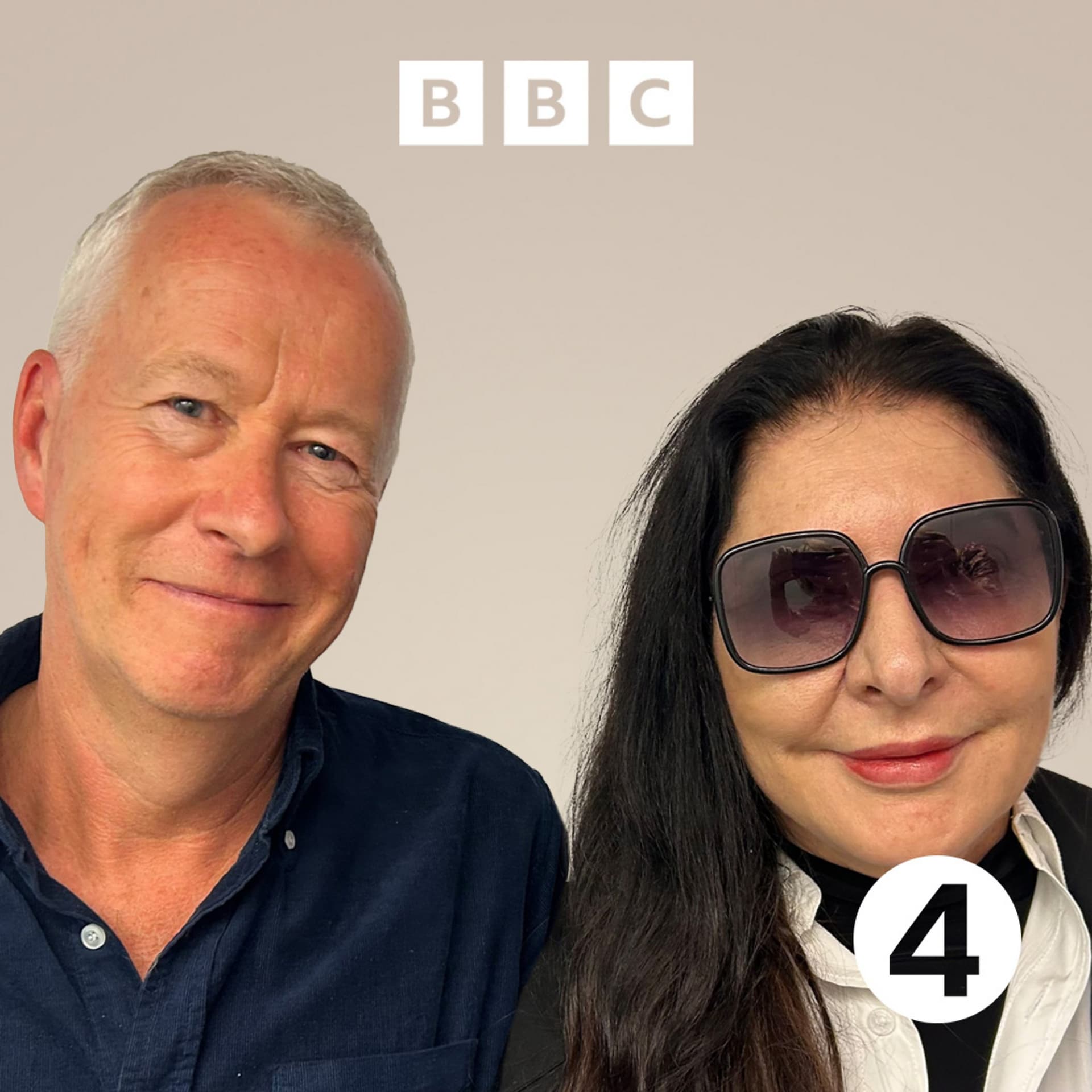
Episode Overview Podcast Title: This Cultural Life Episode Title: Marina Abramović Host: John Wilson Producer: Edwina Pitman Description: An in-depth conversation with Marina Abramović, an influential Serbian conceptual and performance artist known for using her body as a medium to explore the human condition through endurance and pain.
Key Themes and Discussions
- Marina's Artistic Identity
- Dual Perception: Abramović describes herself as both a humorous individual and a serious artist, creating an enigmatic presence.
- Introduction to Art: When asked to describe her work to someone unfamiliar, she humorously claims to be "a nurse from New Zealand," underlining the complexity of her art.
- Childhood Influences
- Early Life in Yugoslavia: Abramović was born in Belgrade in 1946 and describes her childhood as gloomy and filled with strict discipline from her war-hero parents.
- Emotional Landscape: She shares that her upbringing was devoid of love, leading her to feel melancholic but fostering resilience.
- Literary Influences
- Dostoevsky's Impact: A pivotal moment in her youth involved a dangerous game of Russian roulette, prompting her to read Dostoevsky's *The Idiot*. The novel's themes of sacrifice and the exploration of consciousness resonated with her artistic journey.
- Exploration of Extremes: She discusses how literature helped her understand the extremes of human experience and shaped her artistic vision.
- Film Inspirations
- Pasolini and Resnais: Abramović cites *Teorema* and *Last Year at Marienbad* as films that had a significant influence on her work, particularly in exploring themes of symmetry, desire, and emotional detachment.
- Performance Art Philosophy
- Understanding the Body: She emphasizes the importance of the physical body in her work as a means to explore consciousness without the use of drugs.
- Public Interaction: Her performances often hinge on audience participation, such as in *Rhythm 0*, where she exposed herself to the crowd's actions, highlighting the darker facets of human nature.
- Significant Works
- Rhythm 0: A notable performance where the audience was given objects to interact with her, demonstrating both vulnerability and the unpredictable nature of human behavior.
- The Artist is Present: An extensive performance at MoMA where she sat silently with attendees for hours, showcasing endurance and the emotional connections forged through stillness and presence.
- Artistic Evolution and Reflection
- Shift from Physical to Emotional: Over the years, her work has evolved from physical endurance to exploring emotional depth, often reflecting on her past experiences and relationships.
- Future Projects: Abramović expresses excitement for upcoming projects, including *Balkan Erotic Epic*, indicating her ongoing commitment to challenge societal norms.
- Personal Resilience
- Health Challenges: She discusses a serious health scare with pulmonary embolism but expresses a strong desire to continue creating art.
- Creative Drive: Abramović speaks about her excitement for life and art, emphasizing the importance of living fully and creatively even in older age.
Key Takeaways
- Marina Abramović's work is deeply intertwined with her personal history and philosophical explorations of the human condition.
- Her performances challenge societal norms and provoke thought about audience interaction, vulnerability, and the nature of art itself.
- Literature and cinema serve as significant sources of inspiration, shaping her understanding of existence and artistic expression.
- Despite facing health challenges, her passion for art remains unwavering, signaling her commitment to continual evolution within her craft.
Conclusion Marina Abramović’s conversation offers a profound insight into the life of an artist who courageously confronts the depths of human experience through her work. Her reflections on childhood, literature, and the transformative power of art resonate deeply, making her a vital figure in contemporary art.
Written by AI. May contain mistakes. Listen to the episode to check what was said.
Transcript
Automatic transcript. May contain errors.0:00BBC Sounds. Music, radio, podcasts.
0:12Welcome to This Cultural Life, the series in which the world's leading creative people choose the most important influences and experiences that have inspired their own work. I'm John Wilson, and my guest in this episode is the internationally renowned conceptual artist Marina Abramovich. For over more than five decades, she's used her own body as her artistic medium, exploring the human condition in works that are often feats of endurance, exhaustion and pain. She's put herself in danger at the mercy of audiences, sat in silence in a gallery for weeks on end and once walked the Great Wall of China, all in the name of art.
0:49We met when she was in the UK for the opening of a solo show of her work, the inaugural exhibition at a new London gallery called Moco Museum.
1:02Marina Abramovich, welcome to This Cultural Life. I'm really very happy to be here. It's great to have you here. For over 50 years, you have put yourself at the centre of your work and you have very often put yourself in some very dangerous situations. If you met somebody who didn't know you or your work, how would you describe your art? you know most of the people who know the work but don't know me they're afraid to meet me the most of people who know me but they don't know the work they are shocked because it's always like almost like two different persons because in real life i'm hilarious funny i am normal actually in almost old-fashioned way but then you come with the work and it's something different so it's really enigmatic you know but if you met somebody on a plane and they said who are you what do you do how would you describe it in a nutshell i always say that i'm a nurse from new zealand a nurse yeah nurse from new zealand who i come to your country to study health program and then nobody asked me anything because there's no way that i can describe what i'm doing and this is like really end of every conversation is it just too hard to explain the sort of work it's very hard to explain but you know i love my work and i will never do anything else we'll explore the work over the course of this conversation but let's start at the beginning you were born in Belgrade in 1946.
2:21Tell me about your childhood and what was then at the time when you were born communist Yugoslavia. You know I didn't know better but looking backwards when I you know left I saw this very gloomy place very dark and very grey. Everybody looked like a liver sick or something with some kind of strange disease and the walls was always painted kind of greyish so doesn't really help. So this was really, you know, the childhood with my mother and father who was constantly, you know, busy with their job, their most politicians and working. They were politicians. Yes, and also they've been national heroes and been partisans in the Tito time and so on.
3:03So when I was born, I was giving immediately to my grandmother until I was six. My grandmother hated communism passionately, been in the church all the time, which was completely not loud in those days, but she didn't care. And I with her. So I was brought to the family only when my brother was born, when he was six. And then, you know, I didn't really experience much love. And I was very lonely, a melancholic child. Just tell me something about your parents, because as you say, hailed as national heroes after the war, because they had both been anti-fascist fighters, partisans. My father was communist before the war.
3:39He was in prison of his communist ideas. And And he came from a very poor family and true communist. My mother came from a very rich family, very bourgeois, and she was in Switzerland to study. And then she got communist ideas because it was very fashionable in Switzerland to be communist at that time. They met him during the war. And how much of their stories about fighting in the war as being part of the partisans did you know about when you were growing up? You know, my father was only talking about war, and I know everything. and we have to look at all these partisan movies and Nazi movies.
4:14And, oh, my God, I was, like, full of this. It was only television. You start eight in the evening and all it was about war. And so I know the stories by heart. My mother never talked about war, absolutely never. And only when she died I actually realized how brave she was, but she didn't want to talk about it. How did the stories of your mother's bravery impact on you and the work that you went on to make in later life, do you think? I got the courage from mother and father and also this entire kind of education that actually my private life doesn't mean anything. That really is important to sacrifice for the cause, for the greatest ideas than your own private thing.
4:53So that was really in my bloodstream, you know, what I'm going to do in this life, what is my message, what I, as an artist, was very important. And then incredible discipline that I went through, you know, my childhood. that was posed by my mother actually. By your mother? Yeah, by my mother, that I have to be always the best and it's always somebody better than me and I have to achieve so much. The discipline, so she was particularly strict. Absolutely strict. And harsh with you? And harsh and strict and everything else. But the looking backwards was so hard. But at the same time, I'm actually so glad that I actually have all this because I really have stamina and I really have courage and I really have determination.
5:33And that keep me all my life sane, especially what I'm doing in my work. Looking back now, was it a happy childhood, do you think? No, it was a terrible childhood. But my theory, the worse childhood you have, the better artists you get. I mean, who made anything from happiness? Nobody. I mean, look, history of art, all these artists. To have a terrible childhood, there's always some disasters that you have to overcome. Are you now looking at your childhood through the prism of adult experience? Yes. Or did you know at the time you were unhappy as a child? I was always crying and I was always unhappy.
6:05And I remember that for me the most important was my books. And I was writing poetry and I was painting very early. My first exhibition was I was 14 years old. I was painting my dreams. All of these things was really important. And one thing about my mother, that she gave me all this education. I can see the theatre, I can see the opera, I can see the classic concerts. So I was very much involved in the culture. And your mother took you to those cultural events? Never, father. Father was interested always in the war stories and talking to the soldiers and maybe roasting the pig in the backyard.
6:41Your mother was introducing you to opera and music and theatre, but also, as you say, was very harsh with you. I'm wondering, because in so many of your works you have inflicted pain upon yourself, cutting yourself with knives, risking self-immolation, making yourself lose consciousness. Was that work, do you think, at the time, a way of dealing with this pain of childhood? First of all, for me, I was very, very lucky to discover body as a center of my work. And I discovered in very early stage. And I never doubted it was the right thing. Even in that time, performance was seen absolutely like no any form of art.
7:20And it took me 55 years to actually become any form of art. And I'm very proud of that. But it's very important in that time, my study of the other cultures, talking about shamanism, Australian Aborigines, talking about rituals in old cultures, that all the ceremonies go through the very, very difficult, actually physical stages, even clinical death sometimes, in order to jump to another state of consciousness. I was interested in that, how a physical body can go push to the limits without dying, but experience that kind of different state of consciousness, without using drugs, as I never use drugs, I never drink, stuff like that.
7:58So this was the really reason to me. Not anything that I'm punishing myself for because of my mother or all the bullshit. It's not reason at all. To me, it was interesting what body is, human body, and my body was closest to me to understand. You don't think there's any link at all to your childhood? No, absolutely not. Because you've written, even in your memoir, about having been beaten by your mother as a child. So what? Many kids have been beaten, but I didn't create my career because I've been beaten by my mother. Definitely not. It's so much deeper than that. You know, like the very famous piece, Rhythm Zero, when I put the pistol on the table and you can do whatever you want, including killing me.
8:35It was not because of my mother. This was because I was so outraged how performance was not seen as a really important form of art. So I was saying, what if I do absolutely nothing? Let's see what public going to do. Is public really going to kill me? We should just explain this piece. You're lying in a room surrounded by objects. The audience were invited to come in and do whatever they wish to do with you, using the objects that surrounded you. For six hours, and they are for pleasure and for pain, and pistol with a bullet. And so there's a pistol, a loaded gun? No, bullet was there. Outside, they have to load it.
9:13So some people were stroking you or spraying you with perfume or being very gentle. But then ultimately, somebody picked up that gun, loaded the gun with the bullet. Not only they cut me, they drink my blood. They try to burn the cotton around my neck. They put the water on me. They carry me around, you know, and put me on the table and stop the knife between my legs. I mean, it was very violent. And this is the public, not me. So I just wanted to reflect public on themselves, you know. And those really liberate me from that kind of criticism. Okay, you know, I'm absolutely doing nothing. It's up to you what you're going to do.
9:49And I was 23 years old. But what were you hoping to reveal to either yourself or to the public? Exactly that actually public can kill you if they give them tools. I was lucky I was not. I will not do this performance again. But why did you do it at the time? Because I had the courage. I had determination. I want to die for my art. I was young, all the right reasons. You were prepared to die for your life. I was prepared to die. You see, I had so many different periods in my work. The first period of my work, when I discovered that I want to work with my body as a main object, the subject of my work, because when you understand your body, you understand the universe.
10:31And then when I really, you know, experiment with pushing my body to the limits and then finally working with Ulai, after that, my work completely changed. Ula is your ex-husband or was your ex-husband? We never married. Oh, sorry, your partner? Just partner in the work and love. And then after that, I understand that actually anything physically you do, it's so easy. Everything emotionally is so much more harder. So my entire work turned into much more static and emotional, exploring emotional subjects of my body.
11:09on this cultural life marina abramovich i asked my guest to choose the most significant influences and experiences that have inspired their own work and your first choice for this program is a book the idiot by dostoevsky when did you first read it i started reading idiot when i was finish it and it's a big book because the reality of the book becomes my own reality. We have lots of books in the house. My entire Russian library was by my father. And entire French library was by my mother. So I was reading both. But Idiot, I remember at that time he was on the shell. And when I was 14, you know, my boss' parents slept with the guns next to their beds.
11:57I mean, they always slept with weapons. This was normal. Because you never know. I mean, we are talking, they just came out of the war. So to me, that was like a normal thing in our country. Everybody had weapons. So my father, when I was 14, gave me first time the pistol as a present for my 14th birthday. It was very small. Handle was made of ivory and silver, the rest. And it was called this opera pistol that you can actually have in the opera a little back. I mean, right now thinking about this, why I should have a pistol in opera? That was very funny. But anyway, and then he wanted to teach me to shoot.
12:37It was winter. We went to very deep snow. And I lost in the snow the pistol. And we never found it. You lost it? Yeah, in the deep snow. Your 14th birthday present. So that's the first one. Then I took the pistol from my father and with my friend. The one by his bedside? By the bed. Yeah. And we put one bullet and we play Russian roulette. So we turn the thing and we click. Nothing happened to me. he turned, he clicked, nothing happened to him and then I took the pistol for fun and I shot and the bullet went straight to the idiot of Dostoevsky You shot at the bookcase and it went right through Idiot Dostoevsky and then I Had you read the book at this time?
13:20No So this led you to the book? First I shot and then I read and then I remember I start trembling uncontrollably because I re-understood what actually we did You could have killed yourself Yeah. Okay. But hang on. Sorry. Not bad story. Yeah, but I need to just rewind. A, it's quite shocking to hear that you were given a pistol for your 14th birthday. Opera. For an opera pistol. Small. But it still worked. It was still something that could kill. Yeah. But then you play Russian roulette with a friend and you're still around the same age, 15, 14, 15. And then I read the book. What would possess you to play Russian roulette knowing the possible consequences?
14:03You know, but you're a child and you kind of like to play and it's dangerous and whatever, you know. For the same reason, I will wait when I cross the street that light goes red and then I run. It's just a kind of adrenaline thing. So the bullet went through the idiot Dostoevsky. Did you feel like you should then read the book? Yes, it was kind of a sign. And there's something that's really incredibly important to me, the discovery, that one of the main characters have epileptic attack. And he described the state before this epileptic attack. And the state he described, the state of complete luminosity, that everything around him is in perfect balance.
14:45And everything has its space and symmetry. And that's so overwhelming that the body can't take it and then turn into epileptic attack. And that was such an interesting thing to me to talk, thinking about, because much later, when I'd done very, very long durational work of art, I came to that kind of states too, but without epileptic attack. But that idea that actually there is a body have to be prepared. You can't just do it at once. But this was really interesting that actually the state of complete synchronicity is possible. And this was a reflection of that little passage that I read in Dostoevsky.
15:27So that book, Idiot, has so many aspects in my life. This is why I mention it. And the protagonist of Dostoevsky's protagonist is the idiot. He's actually a very simple character, very happy and guileless character, and people presume he must be an idiot. Yeah, exactly. Did The Idiot lead you to other Dostoevsky novels? You know, then I read everything, you know, especially his diaries. You know, this whole Russian story and Slavic soul is so connected to me. We have this permanent melancholy. We are not happy when you're in our country. We are also not happy when outside of the country. There's all this kind of cosmic search for whatever perfection and happiness which never comes.
16:10You know, Dostoevsky's story is incredible that he was so poor. And he would always go to the different rich Russians, you know, to get some money to survive. And he was a great writer, so they would give him the money. The daughter is sick and wife have tuberculosis and it's all misery. And he loved to gamble. And he always, you know, can't resist to gamble. One of these accounts give him a huge amount of money. And he say, you know what, I'm sick and tired that you come. I give you this and this will solve all your problems. And just pay the rent, pay the medicine for your family and just get better.
16:41So he got this really serious money. He's passing gambling house and he looked and said, but maybe just once. You know, I will put everything on one something and if I get dinner, my problem will really be solved. So he go there and he lose, of course. So he's miserable again. But one thing that he writes in diary, and this is so mind-blowing for me, that every time he loses, he have orgasm. What? He have orgasm. What, spontaneously? When you lose. Right. He just had, he just come. Right. But not when you win. Okay. So this is plain entire Russian situation. But what? I have no idea how we're going to put this in the program.
17:28You put it in there, Marina. But the kids are interested. In what way was Dostoevsky, and the idiot in particular, an influence on your work? What did you take from him, do you think? First of all, I hate world influence because I don't think that anything influences my work. You know, artists always influence with something. So if you're influenced by any artist, that means you're influenced by second hand, but not by source. For me, the source is really nature, nature and ancient cultures. That's a really serious influence for me. So you have inspirations rather than artistic influences then?
18:03Yes, because for me, I hate studio to start with. Studio is, for me, the trap. You go to studio like a banker, employee, or the, you know, like in post office, and then you sit there rationally thinking how great work I'm going to do and how inspirational it's going to be. And bullshit doesn't happen. You just produce more and more work and become art pollution. For me, the work comes from life. So I do life, I get the idea, and only the idea who really disturb me and I'm afraid of, not the one I like, I don't like, I don't give a shit because it's always the same, you're repeating yourself constantly, but something that is like so demanding that can stay for a long time obsessional in my system that's the idea I'm going to do then I go to studio and I realise but I will never enter the studio before that
18:55I'm going to move on to two films that you have chosen for this programme and I hesitate to call them influencers now given what you have just said I have to interrupt you you set up this programme and they have to call influence. I will do everything to destroy this idea. There's no influence. Inspirations then. Are there artworks that maybe have inspired you in some way? Let's talk about two films that you have chosen. One is Teorema by the Italian director Pasolini and the other one is Last Year in Marienbad by Alain Rene, the French New Wave director, which was made earlier, I think, 1961.
19:31Let's start with that one, the Alain Rene film. When did you first see it? When it came out? Yeah, I was very lucky that we had a cinema in Belgrade and the director of this, Kinett Take, was so passionate about film. So everything new come, we will have a chance to see it right away. So I will go there to see all Kurosawa, Paragiano, wherever the films, and then came Marienbad, I went to see. So I love this film. It's really something wonderful about that. Un grand palace international, immense, baroque, We should just explain it's a very stylised film, beautifully shot, black and white. It's a very luxurious hotel, and three main protagonists, there's a woman and a man who arrives, and it's clear in his mind they have had some kind of relationship and an affair the year before.
20:23Exactly. I don't know which room you were talking. I never was with you in any room. I don't want to remember you. Because you lost. But this one scene that I like so much that stay in my mind, this is talking about symmetry. This is this huge park and everything is symmetrical. And then he said, I was walking this road and everything was symmetrical and I got lost. Actually, I have occurred in the dreams about symmetry in my life, that I'm always actually have this nightmare that I'm breaking symmetry somehow. and there's no loud to break symmetry and then I wake up in completely a nightmare.
21:04Like I will go to the kind of military, you know, thinking about my mother and father, the military parade and I will just walk and all soldiers have a perfect uniform and everybody's perfect. And I will take from each of them a bottom and throw it away and create this symmetry. And then breaking the symmetry, thinking about my own work, I really have the kind of affinity to symmetry but I'm also interested in breaking it and just to actually confront the nightmare. But it came from Maribald, you see. It comes from the Maribald, which is, as I say, very stylised and it's a very beautiful film and full of symmetry.
21:39The scenes of a large staircase and the shot is right from the middle of the staircase and the room, of course, is symmetrical. So that impacted on your imagination. And then missing the point and losing yourself in the park. What about the other film that you have chosen? The Pasolini film. Pia Rema, which is set in a grand Italian house, the British actor Terence Stamp, looking absolutely beautiful, arrives as a... Young Terence Stamp. Young Terence Stamp. Very young. Nameless, I think he's just known as the visitor. And he seduces everybody in the house, the maid and then the mother and the father, the son and the daughter, and then leaves.
22:16It was a very controversial film. I think the Vatican denounced it, and the Italian government even tried to prosecute Pasolini for obscenity. This is an incredible, wonderful movie. I love it. I mean, he arrived and he's so sexual and so young. The son's tempered look fantastic. And then everybody fall in love. And he make love to the mother, to the father, to the brother, to the sister. They're all desperate and all unhappy in this family situation. And he's doing something which is good, but complete absence of morality. That's what is wonderful because he didn't do anything wrong. But looking from outside is kind of outrage, you know.
22:55And then comes the maid. And to me, the maid is like absolutely the crown of this movie because she's virgin. But she just noticed incredible desire, sexual desire, that she only had for Jesus but nobody else. And then she literally goes to her room and opens her legs and he makes love to her too.
23:28And that moment she leaves the house, she actually stops eating. At that moment she becomes saint. And she went to the roof to levitate in her village and eat only green grass. It's a very strange film, we should say. That was like amazing that the desire can go into the kind of supernatural power of levitation. The sex as an actual revelation. It's fantastic. And this, you know why I'm interested in that one. Because right now, in the 11th of October next year, in a big factory space in Manchester, you know, during the festival, I'm doing this huge project called Balkan Erotic Epic. And that's really based on my study of paganism and communism and all of this in Albania, Bulgaria, Romania, Slavic cultures.
24:13how the sexual organs, vaginas, phalluses, actually been used, not in pornographic, you know, way that we are, how we are seeing it, but in old-fashioned way, how to create with the divine forces and nature, you know, how the woman showing vagina in the rain can stop the rain. I mean, that's... And you want to try and stop the rain in Manchester? Oh, definitely. I hope all England. You know it rains in Manchester more than anywhere else in this country. You've got a... That's a tough task. But it's going to be such a scandal in Britain because now at Royal Academy we had just two nudes already.
24:45There was so much discussion about that. But this was going to be much bigger. Do you set out to shock people? No. My entire work is really to open questions, not to have always right answers, but really put your mind to see things in a different way. So many people are not ready for that and become shocking. But actually, what's the problem with nudity? Absolutely nothing. And yet the subjects or maybe the approach to those questions, you're sort of kind of always kind of skirting around or using taboo subjects. And you do provoke extreme reactions in people, don't you? But one thing that I have to tell you, you can't put me in any box.
25:23Because, you know, artists, when they develop their career and that one work is successful, they used to produce this work forever and ever and ever, you know, because the public understand the consumer buying it. But I don't do that. My art is nothing to do with commodity and art ever. You say you don't like being put in a box. I mean, if you were to ask many people, what does Marina Abramovich do? They'll probably say she's a performance artist. Do you not regard it as performance art? I think I'm really artist because performance is one thing, but I'm making interactive objects. I'm making video.
Read the full transcript
25:56I'm making photography. I'm making opera. I'm making theater. I mean, I just do whatever really excites me and I put my heart into it. That's the most important. And this is 55 years of career, you know, that's a long time in Korea and I'm still around and working. and working. Your very first international show was in Britain at the Edinburgh Festival, I think in 1972 and you staged a performance, and that was a performance piece, called Rhythm 10. With Richard DeMarco, who's still live. Ricky DeMarco, who was running the Edinburgh Festival at the time. Yes, that time. Legendary. Right, so he had spotted you in Belgrade, brought you to Edinburgh, and from what I understand of this show, you spread your hand wide on a table, your fingers wide and then you took a knife and then then you jabbed at the gaps between your fingers repeatedly.
26:45And this is based on the idea of an old Yugoslav drinking game. Russian 2. And Russian 2. Was it a bloody debut? Yeah, but this is just only explained the beginning of this performance. First of all, it was 10 knives and I take two tape recorder. And every time I take one knife, I do as fast as possible. And when I cut myself, I change the knife. And then I all record this. Then I put the tape recorder on and I put second tape recorder to record and I listen the sound from previous thing. And I repeat the entire game one more time to actually cut myself in the same place by mistake twice. Because the idea of this piece, how to put time past and time present with mistake together.
27:27I mean, that's a big deal. So this was such a very bloody and pretty crazy piece. It was bloody then, wasn't it? Yes. And you cut yourself all over your hand. Who cares? This is the body I present. This is the whole thing. Why are British always focused on nudity and blood? But it doesn't matter all that because the thing is about concept. You know, it's very interesting that all this bloody work and all this difficult work that's so shocking people in my early period of my work, it was not difficult. You heal. It's much more difficult to sit three months, eight hours in the Museum of Modern Art and not move.
28:01That's difficult. We'll talk about that piece later. But I want to say what's really difficult. this was not difficult the concept bloody was true but was really also looking very spectacular did it hurt again the wrong question in that time when you do performance you're completely in a different state of mind doesn't matter hurts after but not that time that time you're concentrated on concept and constant delivery and concentrate to take all energy for the public to actually create the work so the hurting is not right but that's right question well it's the right question because it's an elicited, a really interesting answer.
28:37And I had a question about the idea. Because the answer is that you didn't feel pain because you're in the moment of the artwork. Yes. I mean, most people, if you cut yourself by jabbing yourself with a knife, it would hurt. It hurts me if I cut the garlic in the kitchen. Yes. Or the onion. What was the reaction of the audience? And you have people around you. It was really interesting. Joseph Beuys, which was really, at that time, the first time that he left Germany, he was in audience. And after that, he really helped me in my career. So that was a really kind of starting point in my career internationally.
29:06And at the risk of asking another wrong question, did people cheer when you finished the piece or did they applaud? Were they horrified by what they'd seen? No, I don't know. It's like, you know, performance artists don't like cheering. This is not opera. This is not circus. Many artists say, I never think about potential viewers. The work is just for me. But with you, the audience is integral to the piece, isn't it? To me, absolutely. It would be incredibly selfish to say such a statement that I'm doing for myself. For me, public is so important. But right now, my public is my work. Public became the work.
29:42You know, this transition happened really in recent years. But, you know, if I would do any of these performances without public, I could never do it. I will not have stamina. I will not have concentration. I will not have reason to do it. So the more people, the better work is. And this approach culminated in your 2010 work, The Artist is Present, which was staged at MoMA in New York. You're alone in a gallery, sitting on a chair, facing another chair across a table. And gallery goers who were there surrounding you were invited one at a time to come and sit opposite you. Unconditional amount of time, whatever they want and how long they want.
30:21So it wasn't just you've got five minutes in front of Marini. They can do all day if they want. But the instruction was they had to sit there in silence looking at you, not allowed to touch you. And it lasted two and a half months, a feat of incredible endurance as much as a work of art. I just want to mention that 850 ,000 people came to see it. 1 ,550 people sit with me and I never leave. I never drink the water. I never actually moved. This was one of the most difficult pieces in my life I ever made. You were sitting there for eight hours, sometimes ten hours at a time. Did it get easier over the weeks that you did it?
31:01Every day could be the last. It was so hard. The first months, it was getting difficult. Then second months, it was so difficult. It's so painful. My whole body was in pain because it was bloated. And, you know, it was really difficult. You were sitting in the same position every day. Same position, never changing. and then the last months I asked to remove the table for the security was huge problem just space between just the space that was the time that I actually really start having out-of-body experiences this was the time of synchronicity this was the time that I completely got out of of the idea of pain because one thing that I discovered I mean just sit three hours without moving to see what happened then you know there is a point that's so painful that if you don't move a little bit You think you're going to lose consciousness, but you have this will, power, and you say, no matter what, I'm not going to will.
31:58And the body say, I'm going to lose consciousness. And then you say, okay, so what? Lose consciousness. Pain disappear. Did you lose consciousness at all? No, because I say to myself, okay, I lose the consciousness, then I will stop. But then when I say to this, you go to that kind of real end. I experience every single time the pain disappear. you actually can control the pain but also you understand that your own body is full of space you can move without moving inside there is a space between lungs and kidneys the kidney and the stomach between liver, everywhere is a space you understand what pain it is and you can control it it was a huge discovery what pushes you on to do something like this?
32:42what's the motivation? I really love to make art I sometimes made for. But this is redefining art, isn't it? I mean, a lot of people would walk in there and say, why is this art? How is this art? I don't care what they're saying. You know, there are also people who come to me and say I changed their lives. You know, there's always different sides to everything. Did you communicate with those people who were opposite you? Because you say there was no time limit. Some people, I presume, sat down and spent, what, a minute? And some people... What was the longest time anybody sat down? Seven hours.
33:12One person sat for seven hours? Seven hours. Was the connection with that person different? This person came and sit another 21 days. I had 76 people who came to sit more than 20 times with me and create a club. But this really deals with emotion. Everybody cries. People cry all the time. I mean, it was crazy. Have you met any of the people since? I've met so many all the time. What about the guy who sat for seven hours? He must have been really annoying for the people who had been queuing all day. I don't know. This is all not the point of the work. You know, he's annoying, annoying, whatever.
33:43I don't care. Sure. The important is to make the work. So you go in there with a concept. Yes, and I deliver the concept. No matter what. And came out with what sort of realization? I stand up from that chair, changed. When you do something long durational, one month, two months, three months, that amount of time, it's life itself. And something really changed. You show vulnerability, you show imperfections, you show to audience your guts, everything. And then I understand that the public is my work. Then I came to London and I make a Serpentine Gallery 513 hours, working directly with the public.
34:23And then comes Glastonbury, the latest thing that I've just been doing. You performed, Glastonbury is a festival associated with noise, and you brought silence to the main stage. You know, after the Royal Academy show, they invite me to do something for the piece. And when I say that I do seven minutes, everybody told me this will be a huge fiasco, that nobody, seven minutes too long. Seven minutes of silence. Silence, I mean, people drinking, drinking drugs, I mean, taking mushrooms, I mean, come on, it's a music festival. And everybody was saying, like, no, it's not going to happen. Only way to change yourself, we can change the world.
35:03Put your hands on your neighbour, just one hand on the shoulder, right now, let's start. Close your eyes, and we see how we can create positive energy in the entire universe. And thank you for your collaboration. And we start now. One, two, three.
35:26I want to go out of this art world into the world. We are talking 275 ,000 people and I have a dress made by Ricardo Tisci, which is slowly opening and became this huge sign of peace. There was no baby crying. There was not anything. There was total silence. And I knew it after 30 seconds. Yes, it's happening.
36:00Over the decades, you have reinvented the form. You've created your own genre of art in a way. You seem very sure of yourself. Have you ever had artistic self-doubt? I have the moments when I didn't have ideas for a long time, and then I panic, but then I just went to live life intensely. And as I always say, the ideas come from life, and then I come back. But now, you know, when you get my age, you understand that actually the period comes and goes, but what you have, you can't lose it. You say your age. I think you're 77 years old now. In November 78, my dear, this is almost there. 78 but and then it's wonderful in old ages wisdom wisdom is everything because you have to just be healthy that's very important sick is not fun well you were hospitalized last year i think and you nearly died having suffered a pulmonary embolism now do i look dead to you you look incredibly healthy now it's all good but was that hospitalization was that that condition partly caused by the stress that you have put your body under no no no it was very simple i i was i had the lingament problem my knee i went to operate and the operation created the clock went into my lungs yes and and i had a you know i went to coma and it was very dangerous you can die from that you can't control everything else i control all my life i control everything but that i could not control so when i it was really incredible how happy i was when i didn't I took the boat, Queen Mary, arrived here.
37:37And in five months after that, here in London, I made opening Royal Academy. I made opening South Bank of my institute. I made the opera Seven Deaths. I made the two books, inauguration and signing. I make 16 public speeches. I mean, I've been busy. Busier than ever, arguably. This was like a wow. The only thing that I'm worried to have enough time. I have so much to do. honestly is insane like right now i'm going to china i walk with ulai great wall of china in 1988 and we split on the great wall of china we should explain he this is your former artistic partner and life partner and you created this epic work where you walked from opposite ends of the great wall of china met in the middle and agreed at that moment say goodbye to split up also each of us walked two and a half thousand kilometer which probably why i had a little problem with my leg later on.
38:30But anyways, it was a big walk. So it's the first time going back to China. Just to clarify, before you set off on that journey to meet Yulai in the Middle, had you already agreed together that you would be splitting up? You know, our relationship and our work together is 12 years. We discovered that the Chinese wall is the only construction, including pyramids, that could be seen from the moon. And we wanted to walk this Great Wall of China. And we started a negotiation with the Chinese government, which took eight years, and it was very, very difficult. And in these eight years, our relations fell apart.
39:06But as we never give up anything, we say we're going to walk anyway, and we're going to walk 2 ,500 kilometers each, come to the middle, say goodbye, and that was the ending of our relationship. I remember our American friends say to us, but why you just didn't make a phone call? This is the whole fucking point. Never mind. We walk this walk. It's operatic, isn't it? In scale, in ambition, in terms of romance and tragedy, it's operatic. It's perfection. I mean, what you're talking about, this is exactly how it should be. You know, and then this is why when Ulay came as my guest of honor in the artist's presence to see the MoMA show, that moment when he came, you know, completely surprised and we touch each other's hands.
39:52You didn't know he was there and the audience was going to come and sit opposite you? You know, because I invite him for the show, but I never know that he's going to sit in front of me. This was 12 million viewers. Every time anybody I go to the street, they say, ah, we saw that moment. Because, you know, people really react and they reflect their own relationships because that moment was so true. There are very few contemporary artworks that go viral, as they say, but that is a moment from the film that you made of that performance where Yulai comes and sits opposite you and you didn't expect to see him and you reach out and touch him, breaking your own rules.
40:24I never break rules in my life.
40:39But this, he was not just another visitor. He was somebody that was love of my life. So I had to touch him. And that was that moment in time when everything stops. We saw both our lives like in a fraction of seconds. It was a very emotional moment. And that's why, you know, have such an impact to people seeing it. Because people can feel the truth. That's the truth.
41:12So you're not going to stop. You're not going to retire. You are an artist for life. I'm not even thinking. This is the worst concept ever. No, I'm die working. That's perfect. Die working. What drives you on creatively? I wake up in the morning and I am so happy. This is one thing that happened to me after all these years. Every day, it could be the last, but every day is so full of things to happen. And my motto, if you say no to me, is only the beginning. Because you'll fight back. Oh, yes. I never take no for no. Marina Abramovich. Thank you very much indeed for sharing your cultural life with us.
41:52It was really wonderful talking to you.
42:03Well, that was one of the most extraordinary conversations I've had on this program. And if you enjoyed Marina Abramovich, a reminder that among the other artistic guests that we've had on this cultural life are Tracy Emin, Maggie Hambling, Shirin Nershat, Jeremy Della, Gilbert and George, and many more. You can hear all previous episodes and subscribe to the series on BBC Sounds or wherever you get your podcasts internationally. From me, John Wilson, and producer Edwina Pittman, thank you very much for listening to This Cultural Life.
42:49lived this double life. They had no idea that she was Britain's top female codebreaker. We'll hear of daring risk takers. What she was offering to do was to ski in over the high Carpathian mountains in minus 40 degrees. Of course it was dangerous, but danger was his friend. Helping people was his blood. Subscribe to History's Secret Heroes on BBC Sounds.
From the publisher
For over more than five decades the Serbian conceptual and performance artist Marina Abramović has used her own body as her artistic medium, exploring the human condition in works that are often feats of endurance, exhaustion and pain. From her earliest works such as Rhythm 0, in which Abramović invited audiences to freely interact with her however they chose, to her long-durational work The Artist is Present, she has put herself in danger at the mercy of audiences all in the name of art.
Abramović talks to John Wilson about her unhappy childhood in the former Yugoslavia with strict parents who had both been war heroes. She recalls how at age 14, a dangerous game of Russian roulette led her to Dostoevsky's novel The Idiot and how the book and its author's life sparked her creative imagination. She also reveals how two films, Alain Resnais' enigmatic 1961 French New Wave classic Last Year at Marienbad, and Pier Paolo Pasolini's 1968 movie Teorema, starring Terence Stamp, have inspired aspects of her work. Producer: Edwina Pitman