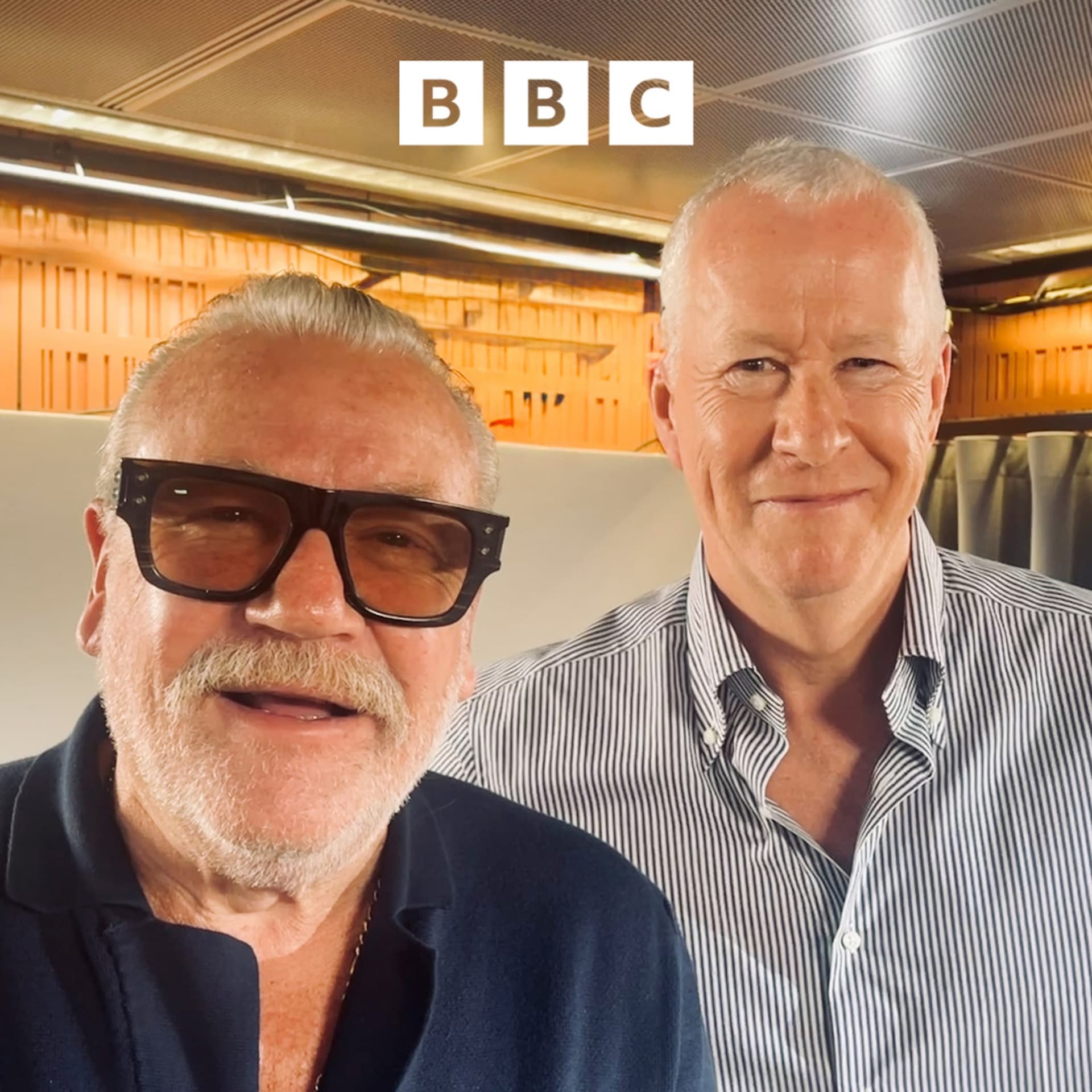
In short
Podcast Summary: This Cultural Life - Michael Palin
Episode Overview In this episode of *This Cultural Life*, host John Wilson converses with Sir Michael Palin, a celebrated actor, comedian, broadcaster, and author. Known as a founding member of the iconic Monty Python comedy troupe, Palin’s work spans television, film, and documentary presentation.
Key Highlights
- Early Life and Influences: Michael discusses his childhood experiences in Sheffield, influenced by his father's struggles with a stammer and his mother's nurturing nature.
- Comedy Beginnings: Palin recalls how his love for comedy was sparked by radio shows like *The Goon Show*, leading to key meetings with Terry Jones at Oxford University, which changed the trajectory of his career.
- Monty Python's Formation: The episode delves into the evolution of Monty Python, detailing how the group formed through their collaborations on *The Frost Report* and other shows, aiming to innovate comedic television.
- Acting Career: Michael reflects on significant roles, including his departure from comedy with the serious drama *GBH*, and the balancing act between acting and documentary work.
- Personal Insights: The discussion touches on Michael's personal life, including the impact of losing his wife and his ongoing creative endeavors despite age.
Detailed Notes
Childhood and Family Background
- Born in Sheffield, 1943.
- Early memories include shopping during the ration book era.
- Father worked in the Sheffield steel industry and had a lifelong stammer, impacting family dynamics.
- Mother was nurturing and supportive of Michael’s early storytelling and creative expressions.
Influence of Radio Comedy
- Family bonding over radio programs like *Take It From Here* and *Much Binding in the Marsh*.
- The Goon Show was pivotal, inspiring Michael's comedic style; he treasured its absurdity and surreal humor.
Oxford and Early Collaborations
- Met Terry Jones in 1962, which was crucial for his career.
- Collaborated in comedy acts, leading to involvement in the Oxford University Review at the Edinburgh Festival.
- Recognized by David Frost, which opened doors to television comedy and collaboration with other future Python members.
Monty Python's Evolution
- Formation of Monty Python: Initiated from a mutual appreciation for innovative and absurd comedy.
- Worked on distinctive sketches that didn’t rely on punchlines, but on disorderly humor.
- Discussed the creative process and dynamics within the group, highlighting both collaboration and competition.
Acting Beyond Comedy
- GBH (1991): A transformative role where he played a conflicted headmaster, marking a shift towards serious drama.
- Explored the character's complexities, including the influence of his father's struggles.
- Reflected on the reasons for not pursuing more serious acting roles post-GBH.
Documentary Work
- Transitioned to documentary filmmaking, highlighting art and culture, including a notable program on Danish painter Vilhelm Hammershøi.
- Expressed his love for exploring quieter, minimalist art that evokes deeper emotions.
Personal Reflections
- Openly discussed the loss of his wife Helen and how it shaped his current life.
- Maintains a positive outlook on continuing his creative journey, acknowledging the importance of good health and vitality at the age of 80.
Concluding Thoughts
- Michael Palin’s journey is a testament to the power of comedy as a form of expression and connection.
- His experiences showcase the intersection of humor, art, and personal growth, leaving a lasting impact on audiences through various mediums.
Key Concepts and Themes
- Absurdism in Comedy: The importance of surreal humor as a vehicle for social commentary.
- Cultural Influences: The role of family, education, and early exposure to artistic forms in shaping creative identity.
- Balance of Career: The intersection between comedy, serious acting, and documentary filmmaking.
- Personal Resilience: Coping with loss and finding creative outlets in later life.
---
This summary captures the rich conversation between John Wilson and Michael Palin, emphasizing the key themes and insights shared throughout the episode.
Written by AI. May contain mistakes. Listen to the episode to check what was said.
Transcript
Automatic transcript. May contain errors.0:00BBC Sounds. Music, radio, podcasts.
0:12Welcome to This Cultural Life, the show in which leading creative figures reveal the inspirations and experiences that influence their own work. I'm John Wilson and my first guest in this new series is the actor, comedian and television presenter Sir Michael Palin. A founder member of the groundbreaking and hugely influential comedy troupe Monty Python's Flying Circus, Michael wrote and performed in its five television series and three feature films, including The Life of Brian. Other big screen credits include A Fish Called Wonder, Brazil and The Missionary. Michael is also a globe-trotting documentary presenter and best-selling author.
0:50A lot of wiring. A lot of wiring. I thought it was all sort of digital now and didn't need wires. Well, we're ready. We're rolling. Terrific. Tell me when to shut up, because I did go on a bit. Take one.
1:07Michael Palin, welcome to This Cultural Life. Thank you. You were born in Sheffield in 1943. What are your earliest memories of childhood, home life? I think it was shopping in the ration book era. and I can remember being allowed to give the little tear-off stamp, ration book stamps, to the person who was giving us butter or marmalade or whatever we were allowed to have at that time. Your father was an engineer in the Sheffield steel industry. What sort of man was he? What was he like? He was quite a difficult man in a way. He could be quite cantankerous and I think a lot of this went down to the fact he had a stammer all his life.
1:48And he was a man with a good sense of humour but probably unable to tell jokes because of the stammer. So I think there was a bit of frustration there. I also think that he was happy to be working in Sheffield but he didn't really enjoy the North. He was a Southerner. He came from Norfolk. I think his ideal life would have been a church organist because he loved playing the organ and all that sort of thing. And there he was in a part of the country he didn't know very well and their job I don't think was very fulfilling. and I think if you have a stammer that's what happens. People, when you make speeches and deliver assessments of what's gone on, then, you know, you have to be able to do it fluently, especially then when people are much less sympathetic to the causes of stammering or the fact that people who stammered are perfectly normal people.
2:37Did it make him angry? I think it did make him angry at times, yes. And my mother, who must have lived with it all her adult life, was very good, just carried on doing whatever had to be done. She had a terrific sort of practical, pragmatic, functional way of doing things, but was lovely and funny too. Many years later, you played a man in a film called A Fish Called Wanda. Yes. A man with a severe stammer. Yes. Were you drawing on your father then? Oh, yes. John Cleese had asked me very early on, he was writing this heist movie, and one of the people in the gang had vital information also had a stammer, which is, of course, you know, whatever you may think, is a very funny idea.
3:21And he said, look, I want the stammer to sound right and realistic. He knew my father. And he said, can you sort of deliver that? And I said, well, yeah, I think I could. And I wanted to make sure that the stammer wasn't a sort of comic stammer, but just a kind of frustration when you have very important things to say. And this is John. I said, yes, come on, come on. So I think it kind of worked. The car. The car. The car. The car. Put your time. Car. Car. The car. Oh, come on! I'm sorry. I'm sorry. Here, write it. Write it.
4:07Cathcart Towers Hotel? Cathcart Towers Hotel. And it certainly got me involved in stammering. I was asked by a stammering charity to help them, and I wanted to learn much more about stammers and why my father had had a stammer, what he could have done about it, how it was treated. And so to this day we have the Michael Palin Centre, which is, I'm very proud to say, one of the most centres of excellence for study of stammering. So there we are. But was your father still alive when the film came out? No, I wouldn't have done it if he'd still been alive. It would have just been a bit too painful.
4:40How did you feel about it afterwards? I mean, having set up the charity and having, I presume now, a greater understanding of that impairment. Well, I'm quite glad that I did the part because it would have been done by somebody anyway. And I thought I did it quite sympathetically. But from what I know now, it's quite difficult. Half the stammering community, if you can call it that, thought it was great that you should have a stammerer as one of the heroes of the film. albeit a very bad man but he's not the worst of a group of very bad people and others thought no you shouldn't do this this is laughing at the stammer but it was laughing at the character who you know was more than just the stammer that was the way he played it and there was a way he actually in the end becomes one of the heroes of the film because he crushes Kevin Kline with a steamroller always nice to do What sort of cultural upbringing did you have at home?
5:38Was it an artistic household? Musically, yes. My father played the piano a lot, and big stuff and Bach and all that sort of stuff before supper. But really, it was a fairly sort of conventional middle-class household. I mean, the paintings on the wall were also reproductions of Raphael and stuff like that. Books, a few books, but not a lot. I loved reading and I actually used to go to the Sheffield City Library with my father and he would go upstairs and I'd go downstairs to the children's library. And I just thought that was absolutely wonderful. You know, big old war stories, school stories, all the sort of thing we used to read in the 1940s.
6:22What about your mum's influence? What was her influence on your creative imagination? She was just very sympathetic to anything new. I wanted to tell her a story about something she'd listen rather than be too busy. She was very nice that way, indulged me probably a little bit. It was my father used to go, he was a bell ringer at the local church. So he'd go down and do bell ringing on Friday night and that was a bit of a relief because he was out of the house and we could do, and I remember my mother was so, she was so indulged. I would read Shakespeare plays to her, playing all the characters.
6:56At home? Yes, yes, I'd just go through it and all and do bits of Shakespeare. own and she never told me to stop. She made me feel I could sort of express myself at home in a way which my father wouldn't have had the patience to allow. That was your first experience of performance then I guess? Yes I was in a couple of plays at school but not much more than that. I was a little nervous about acting in front of an audience. Was there any particular moment when you realised that you were funny, that you could make people laugh. Well, at school I could, in the playground, there'd be fights and all that.
7:35I would get away without being beaten up by making people laugh. So, yes, I knew I could do impersonations, for instance, of teachers and all that. What about radio comedy? How important was that? Radio comedy was very important in our family. It was a nice thing we could, all of us, my mum, my dad and me, and my sister, if she was back, would sit round and listen to Much Binding in the Marsh, or Take It From Here. Take it from here, or go away when you can take it from here. It was one of the few things that as a family we just all enjoyed, and to be a multi-group of people who were just making you laugh for half an hour, often hysterically.
8:15Well, Jim, do you realise we've been together for seven years? Yes, I knew I shouldn't have broken that mirror. I mean, although I'm perfectly healthy It's quite possible I could walk out of the studio tonight And a coping stone fall on my head Oh, it's very unlikely I'd never get up those steps fast enough That was a very important Sort of bringing the family together Yes On the other hand, the goon show Which I really, really liked I could only listen to on my own You shouldn't be up here No, don't throw me down I'm always up here
8:54Even my mother was moonshine proof. My father thought that, you know, the radio had broken when he came in and said, Why did I put it like that? He couldn't understand it at all. At all. This man is completely S-T-U-P-I-D. I heard that. Oh, you think that I'm S-T-U-P-I-D, eh? Calidly, yes I do. Well, it's a good job for you, I can't spell. The Goon Show was actually the first time when I discovered something on my own. Of course, my friends at school, some of them absolutely loved it. Not all of them. Oh, really? People who couldn't suspend their sort of seriousness found it quite hard. What's the point of it and all that?
9:42And I said, well, there's no point, that's the point. it's just the goon show is just something you listen to and it appeals or it doesn't but the great thing is people are doing extraordinary silly things and there's no sort of particular theme to it or anything like that there's just a lot of characters played by sellers and Milligan the Seacombe and all that who you grow to love and you can't quite think why because the stories are not they don't have a serious point on the beach barely visible in the moonlight i saw a body hello jim hello jim it's my body jim i always bring it with me jim always bring it with me
10:28it's interesting though with the absurdity and the surrealism the goons were clearly paving the way for python did you end up working with spike milligan ever yes i did end up getting to know Spike quite well, which was an extraordinary thing really. And in fact, I did a programme for the BBC called Comic Roots. And in one of them, I asked Spike if he'd come along and sit with me in a room, which is sort of designed like our house at home. And I got the same radio, huge great radio with three vowels, which I used to listen to the goon show on and just play a bit of goons together. Like I could not quite believe what was actually happening here was spike in the room you know spike i live for the show i mean that the the day of the week so we had the goon show kept me going for for the entire week i mean we kept me going for six years but did you know via letters or any feedback at all there was this generation growing up who had been totally liberated by no the bbc kept the kept england secret from us totally the voices isn't interesting i mean your your voices that they're crumbs i mean i'm not going to do them.
11:37Where did the voices, do you just sort of think about those as you were madly drunk one evening? I don't know, I think that Colonel Chinstrap in Itmar was the basis of the inspiration for Major Bloodnock. Ah yes. Where did Eccles for instance? I often wonder. The last character was the little Jim one. He's falling in the body. That little one, little Jim is one of his brother. they just just by chance like a we had a good summer yeah that's how it was one good summer I thought was a very nice because you know spike was a little bit on the manic depressive side he found it very hard work writing these brilliant scripts that we all laughed at really took it out of him he had nervous breakdown so one good summer was I know what he meant you know you look back nostalgically and say ah everything was just perfect and of course it wasn't if you were writing it.
12:30It was bloody hard work.
12:36On This Cultural Life, I ask my guests to choose the most important influences and experiences that have inspired their own creativity. And the first moment you've chosen, Michael, is meeting Terry Jones in 1962 at Oxford University. How did you meet Terry? It was the first day there and we were all sort of in the front quad, getting to know each other, all the people in the history set. And there was a man called Robert Hewison who thought he was very funny. And I thought, come on, I'm the funny one. I tell the jokes here. And the thing about Robert was that he made sure that I didn't become a hearty, as he called it, and go off and play football and get dirty.
13:16And that's what he said. There's other things we've got to do. And we shared a love of the goon shows and Peter Sellers and all that. And he said, what we've got to do is do a comedy act together. I mean, what do you mean? In front of people or just for ourselves? No, no, in front of people. In Oxford you can get money, you get£30 a night if you're doing cabaret at a big party. Big money. Yeah, big money. Very big money. And maybe it was£3, I can't remember. There was a three in it somewhere. Anyhow, what Robert did and what was so important was that he moved me away from, I suppose, the sort of career path that my father was kind of thinking of me doing, getting a good job as a sort of you know doctor or manager or something like that.
14:02And Robert moved me away for three years into a world where I met other actors and other writers and the most important meeting I had of course was Terry Jones. Terry and I got on very very well right from the start and he was he was a a marvellous performer, very, very bright. So Robert, myself and Terry Jones used to sort of get together. I was chosen in 1964 to be a part of the Oxford University Review at the Edinburgh Festival, quite a big thing. And sort of, I suppose you could say the four funniest people or five funniest people in the university were sort of chosen. And I was selected for that.
14:43And that, Terry was in the review as well. This completely changed my life. because there I was with a slight worry about performing in front of large audiences, performing to full houses every night. The review was very, very popular. David Frost came to see us, you know, some talent spotting and all that. Who would have been a massive star at the time because he was hosting... That was the week that was. That was the week that was at that time. What does our failure to get into the common market really mean? Let's find out. Now, sir, you are a government spokesman. Yes, darling. Imagine you're downcast.
15:15No, no, I'm poking. But getting into the common market has been one of your policies for 18 months now. It has been the government's policy, yes. Your only policy? Yes, yes, it has been the government's policy. But never mind about that. There's plenty more where that came from. Were you aware that Frost was in the audience? Oh, yes, yes. Later he came backstage and met us all. And I suddenly realised that there was a possibility of my using the things I could really do fairly well, which were sort of tell stories, make people laugh, and do good impersonations, which seemed, you know, the sort of thing that my father would have said was completely irrelevant and a waste of time.
15:56But no, suddenly there was a little glimpse that perhaps there was a future in just writing and doing comedy. And that's the way I went in the end. Were they sketches that you were doing? Yes, it was sketches. It was quite different from what David Frost was doing at the time, which was satirical stuff. we were doing, I suppose it's slightly more surreal I felt more confident doing characters who were funny rather than just jokes It was probably a couple of years later that you ended up writing for David Frost on The Frost Report
16:35So this is one of your first jobs in television and put you in the room with Terry Jones but also with John Cleese and Graham Chapman as well. And Eric Idle. And Eric Idle. Just tell me something about working on Frost. That's a different kind of comedy that you're having to explore there. Thank you very much indeed. Well, Frost gave us quite a bit of freedom. I mean, it was only a half-hour show and had all the best writers around, you know. And it was strictly the material. If it was funny, it was in. if it wasn't funny it wasn't in but there were different kinds of things there was little bits of film Terry and I wrote little bits of film which no one else did other people did very good Barry Cryer was there of course wonderful one-liners the two Ronnies and John Cleese doing the three classes one written by John Law I'm upper class I look up to him I have got innate breeding but I have not got any money so sometimes I look up to him I still look up to him because although I have money, I am vulgar.
17:46But I'm not as vulgar as him, so I still look down on him. It was really kind of a very good area for experiment. It was a short programme, so you had to be quick. You had to deliver very fast. The longest item would be three minutes, something like that. So how do you go from Frost Report alongside your future Monty Python teammates to actually forming Python. I mean, how was it commissioned? Well, Cleese rang me up in, I think it would be 1969, and said, look, we've enjoyed... There was a series that I'd done with Terry and David Jason and Eric Idle called Do Not Adjust Your Set, which was for children.
18:27I'm the fantastic Eric Idle. And I'm the short David Jason. I'm the violent Michael Palin. I'm the round and cuddly Terry Jones. And John had been doing, at last, the 1948 show, which is very similar stuff, but for adults. And he said, you know, we like what you're doing, and I said, I love what you're doing. He said, shall we get together, let's do something that's fresh and different and new. That was the basis on which we started, which was to try and carry on the evolution, if you like, without sounding too pompous, of television comedy by using film cleverly, by doing away with sketches that have to have a punchline, and generally shaking it all up, you know, being quite disorderly.
19:15And that's what Python really was. I mean, people say, oh, it's very rude and disgusting and all that sort of thing, which it wasn't really. It was just disorderly in terms of comedy. Yeah. Well, we had Gilliam, of course, by that time, Terry Gilliam, terribly important in bringing that quality of the animation. Very sharp, very funny. So we were able to experiment. How did it work in the writer's room then? Was there a kind of a creative hierarchy? John and Graham and Eric had all been with the footlights. Terry Jones and myself had done the review at Oxford. Cambridge, of course, as ever, were much better organised, ruthless and aggressive but we'd all honed our material quite well so there's a certain similarity there Gilliam was a sort of wild card and in the writing it was very democratic we would have a morning of silly ideas which was just great and someone would have to write them all down and then at the end of the morning you'd say well you go and write that and I'll go and write this and we'd go away and write in our separate groups Terry and myself Graham and John Eric on his own and Gilliam on his own and you'd then work up material that we sort of discussed and bring it in, see if it played and at the next meeting it would be read out.
20:36Interesting though that it continued to be factional in a way, that you continue to write alongside Terry Jones and then the Cambridge boys stuck together. Yeah, we did try breaking away from that but it's a very interesting point. I mean, I knew Terry so well and we had written comedy material for three or four years together and writing with John I found a little more difficult. We did try, but John had a different way of working, a more systematic, careful, thorough, line by line, let's get this right thing, whereas Terry and I were just, oh, that's funny, and he pulled, on to the next. But characters were always important for you and it's interesting thinking back to the series and also the films, Life of Brian and The Holy Grail, your characters are often mild-mannered, they're polite, frustrated, and sometimes the roles that they play, it's the accountant, the bureaucrat, the bank manager, is it the chartered accountant who wants to become a lion tamer?
21:34Oh, yes, that's right, yes. Were you channelling aspects of your own character into those characters, do you think? Probably. I could do them, that's all I can say. I could do shopkeepers very well. And John and I did a lot of shopkeeper material, dead parrot, cheese shop, all that sort of thing. and I could be the boring shopkeeper. I wish to make it complete. Sorry, we're closing for lunch. Never mind that, my lad. I wish to complete about this parrot that I purchased not half an hour ago from this very boutique. Oh, yes, the Norwegian Blue. What's wrong with it? I'll tell you what's wrong with it.
22:05It's dead. That's what's wrong with it. No, no, it's resting. Look. Look, my lad, I know a dead parrot when I see one and I'm looking at one right now. No, no, it's not dead. It's resting. Resting? Yeah. Remarkable bird, the Norwegian Blue. Beautiful plumage in it the plumage didn't enter into it. It's still dead. No, no, it's resting All right, then If it's resting I'll wake it up Hello, Polly, I got a nice cuttlefish for you when you wake up, Polly Parrot No, it moved That was you pushing the cage I did not Yes, you did And these characters were quite good because I could play in partnership with John with John sort of aggression and impatience.
22:48Getting increasingly irate. Yes, getting increasingly irate in a very funny way. And me being rather difficult and impeding his sort of whatever he was trying to do. That worked very well. So, I mean, I think John wrote a number of the shop sketches. And I was always cast as the shopkeeper. But I also, I just liked people who, I don't know, under pressure as well. I mean, oddly enough, the Spanish Inquisition, which is very well known, is just about someone who can't get it right. Our chief weapon is surprise. Surprise and fear, fear and surprise. Our two weapons are fear and surprise and ruthless efficiency.
23:24Our three weapons are fear and surprise and ruthless efficiency and an almost fanatical devotion to the Pope. Our four, no, amongst our weaponry are such elements as fear. I'll come in again. So that's a character observation. It's also about affability, isn't it? It's a kind of recurring trait of so many of the characters. And that really is you. You are famously the nicest man in Britain. Now's the time to change that. Come on, what makes you angry? You know, lots of things make me angry. But they're tiny things like everybody else finds. You know, people who drive very close behind you on the motorway, people who throw litter out of car windows, silly things like that.
24:07And they get me very ratty. But generally speaking, I find you get far more out of people. and the relationships I've made have worked much better because we've become friends. Did the comedy ever become competitive in the writing room with Python? Yes. I talked about it being factional, but was it fractious as well? Well, like every bit of creative work, of course they're at fractious. I mean, with Terry, I didn't always agree. That's not the way to produce good material. You've got to have someone saying, that's not funny, this is. And yes, there were real problems sometimes. I mean, I remember the wonderful sketch that Terry wrote about Mr.
24:47Creosote, the diner who's huge and explodes. That's in The Meaning of Life. Yeah, The Meaning of Life. It didn't go down particularly well the first time it was read and all that. I think I read it and I didn't read it terribly well. And then a bit later on, John came back to it and said, remember that thing about the exploding man? There were things I quite liked in that. So I said, well, look, let Terry read it, because Terry wrote it. And from then on, it became one of the great star sketches of that film. Finally, monsieur, a wafer-thin mint. Oh, sir, it's only a wafer-thin. Well, I couldn't eat another thing.
25:29I'm absolutely stuffed. Bugger horse. There were other things that we wrote sometimes that John and Graham and Eric didn't like and vice versa. That competition was very, very important. And we set our standards fairly high. You wouldn't think so from looking at some of the Python materials, dreadful, but generally we set our standard fairly high. And when it was good, it was great and it was breaking new ground. It brings to mind, there was a late-night discussion show in 1979, I think it was called Friday Night, Saturday Morning, in which you sat alongside John Cleese and had to defend the life of Brian in the film against this sort of complaint that it was sacrilegious, laid by, I think it was a Bishop of Southwark and Malcolm Muggeridge.
26:09Yes, yes, yes. Would you imagine that your scene, for instance, of the Sermon on the Mount is not ridiculing one of the most sublime utterances that any human being has ever spoken on this earth? Of course it is. No, no, it's making fun of the guy who's remembered it wrong and of the people who don't understand it and miss the point. I think that's really unfair because I think that a lot of people looking in will think that we have actually ridiculed Christ physically. Christ is played by an actor, Ken Colley. He speaks the words from the Sermon on the Mount. He's treated absolutely respectfully.
26:39The camera then pans away. We go right to the back of the crowd to someone who shouts, Speak up, because they cannot hear. Speak up! Shh, quiet, Mum. Well, I can't hear you a thing. Let's go to stoning. Shh! You can go to a stoning any time. Oh, come on, Brian! Whoa, you'll be quiet! Now, if that utterly undermines our faith in Christ, I started off by saying that this is such a tenth grade film that I don't believe that it would disturb anybody's face. Yes, I know, you started with an open mind, I realise.
27:14Is that the closest we've come to see you riled in public, do you think? Well, people were quite surprised. They said, oh, you look really angry. I said, well, yeah, I do get angry. It was because the two people representing, if you like, the conventional religious view, that this was a film of making fun of Jesus, which, of course, it wasn't. all our protestations were dismissed, you know, because they knew they were the people from the religious hierarchy. And, you know, Malcolm Muggerie saying this was just a tenth-rate film and all that. And I said, this is not a sort of discussion. That's what got me angry, you know?
Read the full transcript
27:44It's not actually letting us say what we want to say. It's just assuming that everyone's going to listen to them. It was a key moment, I think, in broadcasting. I don't think it's too great a thing to say. When suddenly the establishment was seen to have got it wrong. and they thought they got it right. The audience knew that by the end. And I'm only amazed that you didn't get some comic effects out of the Crown of Thorns. That's the only thing that puzzles me in the film. If you wanted to make a joke out of Jesus, Jesus would have appeared on the cross. He was an actor, he was there in the film, he does not appear on the cross.
28:16Nowhere at all. It's a gang of thieves, of common criminals, who were at that time crucified in hundreds day by day. I mean, that's... I'm sorry, I know you think I'm wrong, but that's what I feel. I think it's a ludicrous thing. What you've done, you've succeeded in doing, and for that reason it will have absolutely no influence in the long run, you have succeeded in reducing something which has inspired the greatest art into something which is presented in terms of the lowest art. That's your feat. You set up your own terms that we have to influence people. We're not saying we want to influence people.
28:48No, I don't. We're trying to make them laugh, make them happy. I mean, it's delicious. Always look on the right side of life. There were so many great Monty Python sketches and scenes in those films. Can you bring it down to what? Do you have a favourite Monty Python moment? Yes. It's the fish slapping dance. It lasts about a minute, which just involved me and John, you know, sort of by the side of the water. And the music plays, doodle-doodle-doodle, and I go up and slap John on the face with his two little pilchers. Doodle-doodle-doodle-doodle. I slap him a few times, knowing that this was great, John was getting quite angry being slapped with fish.
29:28And then we bow, and then he picks up this enormous fish, a pike, and whacks me on the head, and I fall in the water. It's about a 15-foot drop, and it's a very good fall. And I tell you, that works anywhere on the planet. Even in North Korea, I've had laughs. You tried that out? Yeah. Didn't you open a laptop and show it to some Korean people? We showed it to our wonderful guide. And she laughed, just broke up with laughter. and then she said so this is what you do the whole time you lost graham chapman um many years ago and then terry jones died very sadly more recently and the remaining pythons i mean you had that reunion i was going to say tour but it was about 10 nights at the o2 in london wasn't it but you're still close as friends?
30:20Yeah, I mean, we share so much, including income, which has to be sort of worked out. And Python is still selling around the world, not the way it used to, but it's still achieved a success none of us would ever have dreamed of when we were writing this very silly anarchic stuff. So, yes, we see each other, not as often. I mean, I see Terry Gilliam because he lives just near me in London. John lives in various parts of the world so I'm never quite sure where Eric is in America so we're not that close anymore but we're close when we get together and when we talk there's that thing it's like a long affair that took place many years ago and you get together and you're rather tearful
31:14Your next choice for This Cultural Life, Michael Palin, is the 1991 Channel 4 television drama GBH, written by Alan Bleasdale, in which you starred alongside Robert Lindsay. It's a serious drama about political extremism, about power, about local politics, and therefore, in a way, new creative territory for you at the time. Why have you chosen this for this cultural life? Well, precisely for the reason you said. It was absolutely new territory. I mean, throughout my life, I've enjoyed doing different things and taking on different challenges. I think that's what keeps you fresh. This came rather out of the blue and Alan Bleasdale is one of the great playwrights we have.
32:00And, you know, Boys in the Black stuff and all that was absolutely marvellous. So to get the call from Alan Bleasdale, he wanted you'd play one of the two leading roles. It was a sort of recognition of an acting talent which I hoped I could live up to. I mean, I'd done lots of acting and people tend to forget, you know, that Python, you'd do, in a Python film, you'd play 12 parts and you'd have to play them very quickly, you'd have to get the essence of them very quickly. But this was a very different sort of thing and it was just one of the most rewarding piece of acting I've ever done. And let's just talk about your role, you're playing Jim Nelson who is a headmaster of a school who is brought into conflict with the sort of preening, narcissistic and corrupt leader of a city council in the north of England.
32:46Jim, isn't it? To some, not all, please to meet you. This is a school. You're not a member of this school. I'd like you to leave. Oh, come on, Jim, you know who I am. Wouldn't interest me if you were Bishop Tutu wearing one. I realised what Jim Nelson was all about. And in a way, he was rather... You go back to the affable characters I played. He was a man who sort of got on with people. But there were many other levels to him. He's also slightly twitchy. He was hypochondriac. He was committed to a school with special needs. But there was a lot of anger there in the character and rivalled Robert Lindsay's anger.
33:29It wasn't sentimental ever, because Alan doesn't really do that. So I had to kind of work out, why should this character be interesting? What makes him, on the various different levels, work to achieve what he achieved in the end? I haven't thought about this until you just described the character then, but you talk about the frustrations. He's working there within a structure, an organisation, and there's a sort of anger at the pressures that are being exerted upon him. I mean, it sounds almost like you could have been drawing on your father again there. Yeah, possibly. I mean, I've always been able to do frustration.
34:04I think that's a very important thing to be able to sort of put across. So possibly with my father, I don't know. I could certainly tap on the unease that there was in the house sometimes when my father was particularly stressed. And being in a house where that was the way things were. I remember we had neighbours next door to us in Sheffield and his father was a top doctor or something like that. And they became a second family to me because the atmosphere in their house was completely different. He would come home in the evening, you know, and give his wife a kiss, you know, on the lips, in the kitchen, in front of us all, you know, that sort of thing.
34:45That was quite different from how I'd been brought up. So I suppose, yes, I could understand people pushing against limits but not being able to sort of move them. and I think playing Jim Nelson brought things out of me that I'd never brought out before and I mean, it's part of the reason why I haven't done much acting since because it was such a significant series demanding so much of all of us who were in it. Well, it begs the question, because you were so good in it and it was such an acclaimed series, why you haven't done more serious drama? Because there was nothing else like it. But things like that were not written very often.
35:27Well, about 25 years after GBH, you were in The Death of Stalin, the Armando Iannucci black comedy. Yeah. Well, I played Molotov, as this was slightly put upon. He was the arch-loyalist. He was the arch-loyalist, who was very, very devious and nasty, but also kind of loved his wife and all that sort of stuff, even though he put her in prison. It was brilliant comedy with a very serious sort of underbelly to it. Stalin and Beria put you on a list. Stalin? I must have wronged him so badly. What did I do? No, nothing. Don't you see? Beria, he wants you out. I've been talking with Comrade Vulganan.
36:13I think he's right. We can outvoke them. No, no, no. This is factionism, Nicky. Stalin didn't like factionism. Stalin is dead! We have to act! I can't believe he's gone. Oh!
36:32You have to wait for it to fill up. I mean, I put Armando along with Alan Bleasdale as one of the great... I feel very pleased that I've acted in films Armando wrote, Bleasdale and also Alan Bennett when we did private function But was there at the time when you were working with Bleasdale with Bennett or later with Armando were you not thinking I could and should be doing more of this what was the game plan? Well, here you've got me really because I had morphed into this world traveller from the late 80s so there was always work associated with that I'd also begun to get a certain amount of freedom in what I was asked to do and I made a series of arts documentaries and so you know I was doing quite interesting stuff I didn't feel the need to act and in fact the last film I did after GBH it was Fierce Creatures a follow-up to Fish Called Wanda it just wasn't as good unfortunately and I suddenly realised that filming especially when there's a lot of money around you're sitting around you're waiting about it can waste a whole day if the light's not right and they suddenly say, off you go, get your make-up off, come in tomorrow.
37:45You don't like sitting around. I didn't like that. I mean, the great thing about GBH and indeed Armando's Death of Stalin, when you were there, you were there and you were going to work that day and something was going to be shot. I wasn't particularly good at seeing time wasted. I thought during this time I could be writing a book or whatever. And I did write a few books because I was sort of rather hyper at that time. As well as the travel documentaries, you've made many arts documentaries as well. including one about the Danish painter Wilhelm Hammersoy. Yes, I mean, we were working on another arts programme in Paris, and in one of the little markets I'd found a catalogue of an exhibition that had been in Paris about Wilhelm Hammersoy.
38:26What did you like about Hammersoy? Ah, well, I liked him, actually, because he was very spare in his painting. There wasn't a lot of noise and chatter, just being in rooms, and it was very Danish, the doors were open down the corridor and all that. Occasionally his wife would appear. Now his wife, as we now know, had depression herself. So there are no very happy pictures of her. Very often she's painted from behind. But it's the same room, sort of very thin northern light coming in, sunbeams on the floor and all that. I don't know, there's something that's so minimal and yet so powerful because you have to concentrate on that.
39:07The stillness, the calm. They're quite sad as well, in a way, aren't they? They are quite sad. It was just, how can you make a room or a series of rooms so bewitching? And I say bewitching because it was like something had happened in that room. You know, someone had gone out, someone had left it. So it was about what wasn't there and what was left afterwards. So the room's very, very vibrant and yet completely still. So I'm back where I started, with the painting that set me off on my journey. It was on exactly this spot that Ida, mysteriously absorbed in something, was painted by Hammershoy in the last year of the 19th century.
39:50And he had sort of been forgotten, hadn't he, since the late 19th century when he was painting? And suddenly there was exhibitions of Hammershoy and you seemed to become the global expert. I remember Terry Jones saying, Michael's very clever. He buys a painting by some unknown artist, makes a programme about them, and then he sells it afterwards, which wasn't true. I could never afford a hammer sword. No, it did. That was one of the most fulfilling things I did, really, because it appealed to a side of me which I still can't quite work out because I'm quite gregarious. I like company. But I also like being on my own, and I like how you see the world when you are on your own, how you deal with that, with the fact that it's just you and a room.
40:33and you think of all the things that have happened in that room and he's chosen to paint it, just the furniture, just still and the light coming in. It's quite strong stuff, I think. You lost your wife, Helen, last year. I know you've been together since you were teenagers. Yeah, yeah. How have you been, Michael? Well, it's not easy. It's an unreal world you enter. You know, someone who you've been with for so long and every reference point in your life is sort of connected with that person. And suddenly they're not there. And you kind of fool yourself that they are there. I haven't changed much in the house and all that.
41:18The family has still come round. We have birthday parties and all that, which Helen would have been part of. And it's kind of dealing with the foreverness of it. you know, then it's forever. What drives you on creatively? And I'm presuming that it hasn't come to an end. Manic egotism. No, I've enjoyed nearly everything I've done. Some things have not worked, but I've enjoyed most things I've done, and building on that is part of what I really enjoy. But I'm also aware that I'm 80 now, you know, And there has to be a sort of point where you sort of leave it to the younger generation. You seem incredibly fit, though.
42:04You look fantastic for 80. Thank you, Will. I've always kept fit, especially with the travels. You've got to be fit. I mean, you really have. And I had a heart operation, open heart surgery in 2019. And that sort of sorted my heart out because I had a little problem with the valves being a bit loose and being short of breath. that's all been sewn up now and I've got a pacemaker in and all sorts of wonderful stuff you know like we had in one of the python films a machine that goes bing I've got in there so as long as I can I will use my good health touch wood to carry on being able to travel if I can or just all right I mean there are a lot of options open Michael Palin it's been an absolute pleasure talking to you thank you for sharing your cultural life with us thanks
42:58Well, I hope you enjoyed that conversation with Michael Palin, my first guest in this new series of This Cultural Life. Don't forget you can hear every episode from previous series with guests including Judi Dench, Stephen Fry, Nick Cave, Whoopi Goldberg, Margaret Atwood, Werner Herzog, Frank Auerbach, and many more. They're all on BBC Sounds or wherever you get your podcasts. From me, John Wilson, and producer Edwina Pittman, thank you very much for listening to This Cultural Life. Hello, I'm Greg Jenner. I'm the host of You're Dead to Me. We are the comedy show that takes history seriously and I'm thrilled to say we have a brand new live episode to finish the series.
43:35It's all about the life and music of Wolfgang Amadeus Mozart. I was joined by the comedian David O'Doherty, the historian Dr Hannah Templeton and the BBC Concert Orchestra, all 54 of them, and their conductor Gavin Sutherland as we played songs and music from Mozart's life as well as telling jokes and having a lovely time learning about him. It's one of our best ever episodes and I'd love you to hear it. You can hear it on BBC Sounds. Just type in, you're dead to me.
From the publisher
John Wilson talks to actor, comedian, broadcaster and writer Sir Michael Palin. A founding member of the hugely influential comedy troupe Monty Python’s Flying Circus, he wrote and performed in its five television series and three feature films including The Life Of Brian. Other big screen credits include A Fish Called Wanda, Brazil, The Missionary and The Death of Stalin. Michael is also a globetrotting documentary presenter and bestselling author.
Michael recalls the early influence of listening to radio comedy as a child, especially the absurdist humour of The Goon Show devised by Spike Milligan. Meeting Terry Jones at Oxford University in 1962 proved to be a life-changing event as the two soon started working on sketches together and after graduating were hired for David Frost's satirical television show The Frost Report. It was on this programme that the duo first worked with future Python members John Cleese, Graham Chapman and Eric Idle.
Starring in Alan Bleasdale's 1991 ground breaking television drama GBH allowed Michael a departure from comedy but also set the bar high for future acting roles which he increasingly forwent in favour of writing and presenting documentaries, including a particular favourite about the Danish Painter Vilhelm Hammershøi.
Producer: Edwina Pitman
Archive :
A Fish Called Wanda, Charles Crichton, 1988 Take It From Here, BBC Light Programme, 1954 The Goon Show, The Man Who Never Was, BBC Light Programme, 1958 Comic Roots, BBC1, 1983 That Was The Week That Was, BBC, 1963 The Frost Report, BBC1, 1966 Do Not Adjust Your Set, ITV, 1967 Monty Python’s Flying Circus, BBC1, 1969-1970 The Meaning of Life, Terry Jones, 1983 Friday Night, Saturday Morning, BBC2, 1979 The Life of Brian, Terry Jones, 1979 GBH, Alan Bleasdale, Channel 4, 1991 The Death of Stalin, Armando Iannucci, 2017 Michael Palin and the Mystery of Hammershøi, BBC4, 2008