
In short
Mitsuko Uchida’s life and creative influences, from wartime family history and early piano training to her European musical formation, Mozart-centered career, and her score-and-manuscript approach to interpretation.
Guest backgrounds
Born 1948 in Atami, Japan; father was a Japanese Foreign Office diplomat and German speaker during WWII; Uchida began piano at age three, initially as a “girl” lesson. Moved to Vienna at 12 when her father became ambassador; studied at the Vienna music academy under Richard Hauser; later moved to London in 1973.
Key claims
She plays primarily for herself, not for audiences; competitions mostly provide a spotlight, not confidence; performances begin from “silence” before the first note; interpretation comes from listening and from manuscript details (even tiny phrasing/note changes).
Notable examples
Hearing Wilhelm Kempf play Schubert at 16 “moved” her into music; Aida at the Italian opera as a formative sound; Mozart recordings took off after the film Amadeus; she re-recorded Beethoven sonatas by listening more, not by rethinking.
Written by AI. May contain mistakes. Listen to the episode to check what was said.
Chapters
Tap a time to open that second in VOMitsuko's Early Life and Family Background
1:01 to 3:00
Mitsuko shares insights into her family's history and her father's career.
“You were born in Atami in Japan in 1948.”
Father's Wartime Experience
3:00 to 5:26
A detailed account of Mitsuko's father's experiences during World War II.
“The Russians are about to take over Berlin.”
Introduction to Music
5:26 to 6:30
Mitsuko discusses her early exposure to music and her father's influence.
“And Japanese women in those days never said anything straight.”
Hated Performing, Loved Music
6:30 to 8:04
Exploration of Mitsuko's conflicting feelings about performing for others.
“So you started playing the piano at the age of three.”
First Experience with Opera
8:04 to 9:10
Mitsuko recalls her memorable first experience attending an opera.
“There were a certain number of 78 recordings in the house because he never moved this glass to there.”
Moving to Europe
9:10 to 10:46
Mitsuko reflects on the challenges of moving from Japan to Europe at 12.
“And what are your memories of that night?”
Studying Music in Vienna
10:46 to 13:20
Mitsuko shares her experiences studying music at the academy in Vienna.
“On This Cultural Life, Mitsuko Uchida, my guests choose their most significant creative influences and experiences.”
Struggles with Musical Identity
13:20 to 14:00
Mitsuko discusses her internal struggles with her identity as a musician.
“And you don't understand how slow I am, but I know when I understand something.”
Early Musical Discoveries
14:00 to 18:01
Mitsuko Uchida reflects on her early exposure to music and learning challenges.
“I didn't know that there were Beethoven string quartets, Haydn string quartets.”
The Impact of Competitions
18:01 to 22:20
Discussion on the role and influence of piano competitions in Uchida's career.
“But you hadn't heard any pianist who had that emotional, provoked that emotional reaction until who?”
Show all 19 chapters
Life and Music in London
22:20 to 24:25
Uchida discusses her move to London and the cultural differences that shaped her.
“And it is about the honesty and understanding.”
Piano Ownership and Characteristics
24:25 to 27:08
An exploration of Uchida's piano collection and the unique qualities of each instrument.
“And he would say, oh, no, oh, no, you are too kind.”
Interpretation of Mozart
27:08 to 28:00
Uchida shares her approach to performing Mozart, emphasizing clarity and listening.
“And every performance starts from the silence just before the first note.”
The Role of Silence in Music
28:00 to 28:34
Explore the significance of silence in musical performance and interpretation.
“You listen to the silence and then you're filling that silence.”
Challenges of Playing Different Composers
28:34 to 30:22
Understand the physical and emotional challenges of interpreting works by Mozart, Brahms, and Beethoven.
“Each one is just so differently difficult.”
Women in Classical Music
30:22 to 32:16
Discuss the experiences of women in classical music and Mitsuko's own journey.
“Did it not feel like you were trailblazing in a way?”
Investigating Musical Scores
32:16 to 34:18
Gain insight into Mitsuko's analytical approach to interpreting music from various scores.
“Can you explain something about that approach?”
The Evolution of Performance
34:18 to 36:48
Learn how Mitsuko's approach to performing Beethoven sonatas has changed over 20 years.
“Or did he really mean something special?”
Cultural Identity and Musical Inspiration
36:48 to 41:20
Explore the intersection of cultural identity and artistic expression for Mitsuko.
“You are one of the world's greatest pianists.”
Transcript
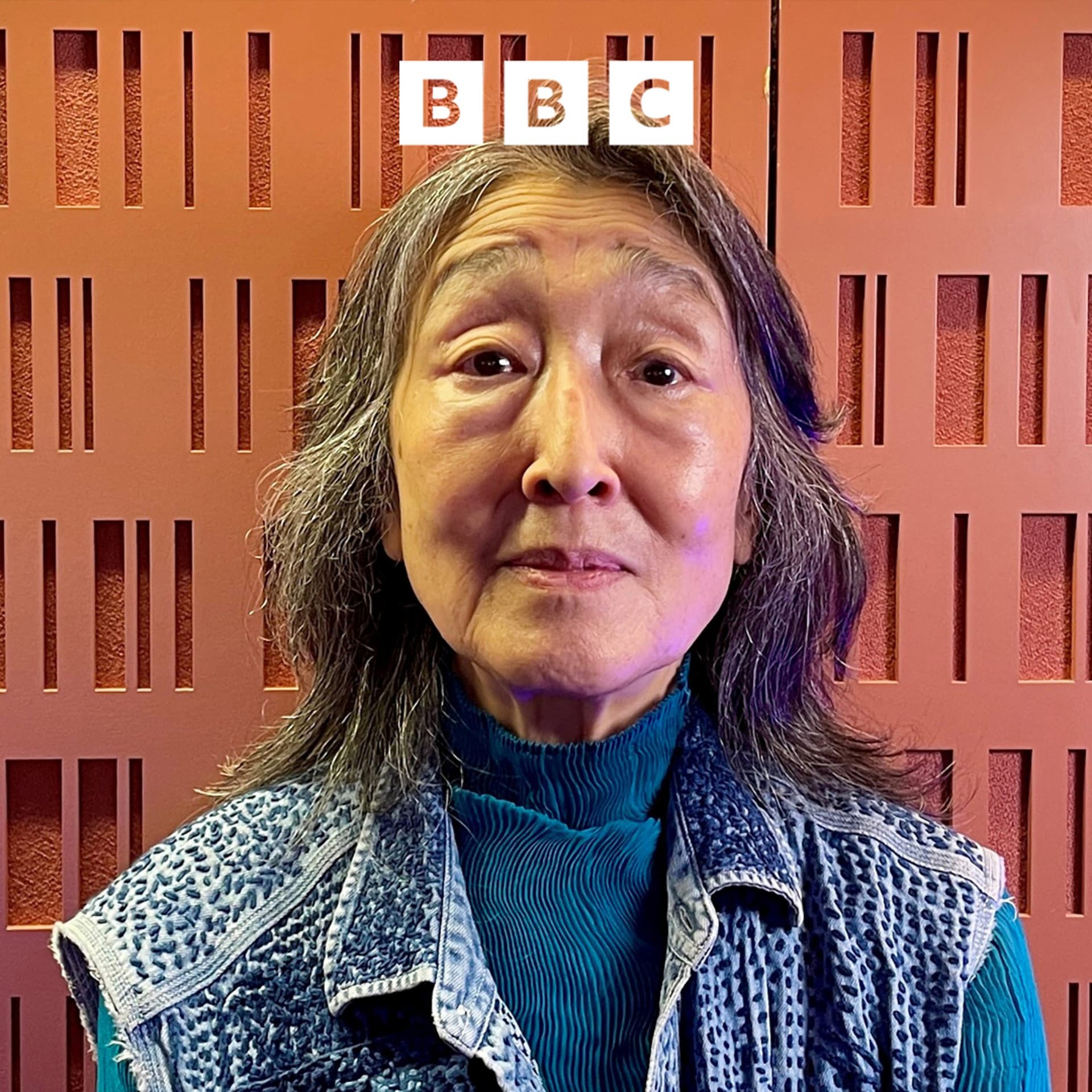
Automatic transcript. May contain errors.0:05Welcome to This Cultural Life, the series in which leading artistic figures reveal the influences and experiences that have most inspired their own creativity. I'm John Wilson and my guest in this episode is one of the world's greatest living pianists, Mitsuko Uchida.
0:26Born in Japan and a British citizen for over 25 years now, she's renowned for her interpretations of work by Schubert, Mozart and Beethoven and for the intellectual rigour of her approach to musical manuscripts. She's won two Grammy Awards, three Gramophone Awards, the Premium Imperiali, presented by the Imperial Family of Japan, and the Gold Medal of the Royal Philharmonic Society. She was made a dame in 2009 for her services to music.
1:01Mitsuko Uchida, welcome to This Cultural Life. Hello. You were born in Atami in Japan in 1948. Just tell us something about your background, your family background. What did your parents do? My father worked and my mother was housewife. But what was your father's work? Well, when I was born, he was a lawyer. Up to the end of the war, 1945, he was working for the Japanese Foreign Office. He was a very good German speaker. And as you may know, or some people do know and some people don't know anymore, it is a past history, but Japan and Germany were allied countries. He was a very good German speaker.
1:45And once Japan sent a military person as an ambassador to Germany. So he needed a good sidekick. And my father was asked to go for one year. And 1940, sort of springtime, he headed towards Germany and mother was to follow. But she didn't quite make it because Hitler started a little attack. And he stayed throughout the war. Therefore, he couldn't come back. So he was a diplomat, working alongside the ambassador. He was alongside the ambassador. So he was probably going up to the front door of Hitler's bunker. He was too small a fish to get in. But up to there, he was probably all the time there.
2:31And then after each meeting, he took a note. So he was really involved in the politics, the wartime planning throughout the war. For involved, I wouldn't say, because what is a third secretary involved in making politics? So he was more like a clerk, a diplomat. He was involved in the ambassadorial services. Yes, exactly. And then he left Berlin, I think, on the day before the suicide of Hitler. So this is just as the Russians are advancing as well. Yes. The Russians are about to take over Berlin. The story goes, he, somebody from the accounts and then somebody else, an ambassador was long flown to somewhere.
3:12And they received a phone call. And he said, if you want to leave Berlin, escape the Russians. Today might be the last day. Go through Czechoslovakia to the south. And he knew what it meant. we must try to be caught by the Americans rather than the Russians. And that's exactly what they did within half an hour. They threw everything in a tiny little bag per person and then took as much petrol as they could. And they drove through a totally empty Czechoslovakia. So that's extraordinary. He escaped in the nick of time. Nick of time. If he had stayed there another couple of days, he probably would have been caught by the Russians.
3:56He went by the Russians and disappeared into a gulag and I would never be here. So he went to Czechoslovakia, was caught by the Americans knowing that he would then... The trip is very interesting. One person would be driving. The other two would be having the head out of the window, watching the sky. If there was an aeroplane, British probably, then stop. And they move only when there was no aeroplane there. And they reached Bartgerstein in Austria. And probably they ran out of petrol. And he stayed there. And years later, when we were in Austria together, he took me for a walk. And he said, those two weeks I was here, it was possibly the most peaceful two weeks of my life.
4:42Wow, that's extraordinary, isn't it? As an image of three young Japanese men fleeing for their lives through Germany into Austria. Peaceful in what way? There was absolutely nothing happening. And he was hoping that he would be caught by the Americans. And he was lucky enough. And then he went to America as a prisoner. And after two months or I don't know how long, he was released because he was too small a fish. And he came back. And a week later, he put on his only suit and went to Tokyo. And two days later or something, came back and said, I just resigned from the foreign office. And mother said, oh, and what are we going to?
5:30And Japanese women in those days never said anything straight. But she wanted to have said, but what are we going to live from? He said, I will become a lawyer. And you were born, as I say, in 1948. Were you born into a musical family? No, not at all. Music didn't exist. First thing when he came back, he said to mother, Why isn't my daughter yet playing the piano? Because he saw house music in Germany and loved it, the idea. For him, it was all ideas. The idea of a family playing together or children playing for the family. Or children playing and mother sort of, well, because we had war. We were quite busy.
6:16Nobody thought of piano lesson, such things. So he had seen what happened in Germany, that families would play together, the children would play for the father. But he didn't want to play together. He didn't want to do anything together, but he wanted to show off kid. And then he was lucky to have me as a show off kid. So you started playing the piano at the age of three. Everything is by chance. The piano teacher of my sister one day asked my mother, can she borrow my brother who was four and I was two? Because she had a four-year-old boy. Men didn't play the piano then. It was just a girl thing to do, flower arrangement, tea ceremony and piano lessons.
6:59And you plinky-plunk the piano, you can maybe in due course teach children. Yeah? So that was their idea. So this was expected for young ladies? Yeah, young ladies. And the teacher started apparently saying to my mother one day, the baby that you bring in, and by then I was three probably, she is more interested in music than those both boys put together. I want to teach that one. So when you started being taught properly, were you expected to play for the family or for other people to perform from a young age? it at home. But I remember sort of aged six, seven, eight. Father wanted to show me off.
7:40Did you enjoy that? Hated it. I hated it. Why? Playing the music was for me and not for other people. And we didn't go to concerts. The only orchestra I have heard was the Italian opera. and Aida came to Japan and at that point father was seconded to the home office or something. So he loved opera. Opera more than anything else. There were a certain number of 78 recordings in the house because he never moved this glass to there. What do you mean? He never moved that? He never moved. Mother had to pour soya sauce on his pickles otherwise he wouldn't eat it. Oh, I see. He wouldn't do anything. He wouldn't do anything.
8:27She would do everything for him. Exactly. So men did nothing except for work, and women did everything else. Anyway, but he wanted so much to hear the Italian opera, and he put in enormous effort. He was given a pack of tickets, and there was no money. Nobody had money. So that was bribery. But he was very careful about it. But this time he kept two tickets. One ticket for my sister, who was the oldest one. She got the entire ticket. I sat on his lap for the first half of Aida. And then we switched halfway and mother and brother went on the other seat. And that way the entire family heard the Italian operas Aida.
9:10And what are your memories of that night? It was staggering.
9:25And I couldn't associate this incredible event, an incredible sound. I had no association between that and the awful plinky plonks that I was doing. Because it was a symphonic sound. Was it the power of the music then? That was, and I still love Aida. I still love Verdi. But what was it about the experience? It was a huge experience. But I never associated it at that music with what I was pinky plonking. And I heard not a single pianist that I liked. But you must have had very special talent from a young age because everybody around you recognised it. You hated performing for other people because you said to me you were playing for yourself first and foremost.
10:19Do you still do that? Yes, primarily, yes. But when I was in the kindergarten, the kindergarten teacher stopped mother and said to her, Mrs. Uchida, I have to tell you something. Your daughter, she spends all day long at that upright piano and plinky plonks the piano. I never had such a kid. She must really love music. Do something about it.
10:52On This Cultural Life, Mitsuko Uchida, my guests choose their most significant creative influences and experiences. And your first choice for this programme is moving to Europe at the age of 12 from Japan. So what took the whole family to Vienna initially? Your father's work? Because of his work. So he was a Japanese ambassador to Vienna. And then four years later, Japanese ambassador to Germany. And then he retired proper. So what was that like for you being uprooted from your home, from your homeland? But yes, I hated it. In the first place, I hated it because I belonged to Japan, I thought, and I spoke only Japanese.
11:33And it was a horrendously difficult matter to just change one's life because Japan is such a secluded place. And Japanese concept is still now up to a point. is still so. But Britain is a little bit like that too. It's an island. And new language. And then mother, who was a centre of the household, she knew nothing. My father didn't prepare her, neither properly in English nor in German. So to be an ambassador's wife, she has had a difficult time. One week into Vienna, my father decided that he would take me to the music academy. This is a very prestigious establishment in Vienna. And you enrolled there at the age of 12 years old.
12:23I presume all the other students were much older then, were they? Yes, most of them. And I was sent to a teacher. And I didn't speak a word of German, so I didn't know what went on. And the president, president of the academy, he phoned a certain Hauser, Richard Hauser, who turned out to be my teacher. The conversation must have gone something like, well, there is this Japanese ambassador's daughter who plays the piano. And then Hauser must have been saying, oh, no, no, no, I have enough of these ambassador's daughters. You sent me a horrible one last time and I'm not going to have it. But that sort of thing.
13:00But anyway, I turned up and I played a few things to him. And he said, yes, I take you on. So was this the moment then when you realised that music would be your life? Absolutely not. This was a serious... No, no, no, no, no. What? What does it mean? I didn't know what it means to be a musician. Oh, I see. So you had no role models at this time. You didn't realise... No, no, no role models. So I didn't understand. And you don't understand how slow I am, but I know when I understand something. And my life consisted of constantly thinking what I hear from my own fingers, I disliked. What, the way that you were playing?
13:41The way I was playing, I knew it was wrong. There were some things that were right, but very few. Few composers. It's composer-related and even culture-related. And in Japan, it was about how fast and loud. And there were exams in Hanon exercises. Excuse me. It is so unmusical as you can have it. So I didn't hear much music. I didn't know that there were Beethoven string quartets, Haydn string quartets. This was all yet to be discovered. Mozart concerti, Mozart operas, never that, never. But what's really extraordinary is the way you're describing it, is that you knew instinctively that you could be better, that you weren't playing it right at that moment, but you had the potential.
14:32Yes, I tried because there were certain pieces of music I so loved, but those I was not allowed to play. Like what? When I was given a Schubert impromptu number two, E flat, which is an extraordinary piece. But I didn't understand what it was. And what did my teacher, of course. And so for her, it was a finger exercise. But there was one single LP that we had, a small LP that was played by Schnabel, the first set of Schubert impromptus. and my mother has, out of nothing, squeezed out money to buy this record so that I could hear possibly she did have some notion of greatness of Schnabel. So there was this and I loved the number one C minor.
15:38I listened to it again and again, and I asked my teacher, can I play that one instead of this? And she said firmly no. Why? Because she thought you weren't ready for it, or the teacher couldn't understand? I have no idea. I still don't know. So life was not easy. And then when I was in Vienna, there were certain pieces that I could play, I realised. And because my teacher Hauser spotted immediately that I had extremely fast nervous system. So my fingers moved very lightly and fast. So it was in Japan, fast was important, loud was important. And I was not interested much in loud anyway. And I won the game once, probably that was when in mid-30s or even early 40s that I must have been.
16:28One reviewer wrote, Mitsuko Chida's virtuosity starts below piano to pianissimo and piano pianissimo. I thought, that's it. Yes, somebody understood what actually my sound world. Which is very, very quiet, very, very subtle. And people complained, I must play louder. And I didn't. At the age of 16, your father was transferred to West Germany for a new job. But you chose to stay in Vienna. Yes, I did. Alone? Yes. Who was looking after you? I was living in a student hostel, lying my age probably. My teacher, how was I wanted so desperately that I stayed? And I sort of instinctively knew being in Vienna is slightly better than in Cologne.
17:16Was it a difficult decision to have to choose between your family and your music? No. I was very happy to get out of the house. To have independence? Sort of, but I was not independent, that I knew, because somebody had to pay for my student hostel and my survival. But at that point, in that few months between those two jobs of father, I had had an extraordinary experience. For the first time in my life, I was moved by somebody playing the piano. Until then, I wasn't. I was never. I went to concerts, and I don't name names, There were famous names. I was not moved at all. So I thought I was unmusical.
18:02There were singers, yes. But you hadn't heard any pianist who had that emotional, provoked that emotional reaction until who? I was 16 and playing the piece that I was then studying and I was stuck in the first chord. So I couldn't go further than first page for almost all the time. It was Wilhelm Kempf playing the G Major Sonata, a Deutsch number 894, the Weiss Schubert.
18:45He played extraordinarily beautifully. That happened while I was struggling. And I thought, if this can be piano playing, then I might give it a try.
19:13But what was it about the Kempf playing that you heard that was so different to everything else that you'd heard at that point? If I could describe why music is so moving, I would not be a musician. Then I would talk about music. But you must recognise certain techniques that he was employing. No, it is not a technique. It is the vision of his and probably the vision of the soul of Schubert that I could hear.
19:50In the late 1960s and early 70s, Mitsko, you won several very prestigious piano competitions, including the Vienna Beethoven Prize, and you came second in the Leeds Piano Competition. What did these very important awards do for your career, do you think? Not much. I mean, it is all wrong to think that these matter. So competitions are run by people who haven't won. But they shine a spotlight on you. They give you a platform, don't they? Kind of, but it depends how cerebral you are. And I was not very cerebral and I was still searching and searching. But did it not boost your confidence about your abilities and your potential as a pianist?
20:33No. Why? Why not? Why? I know when it is right and not other people telling me so. And then in 1973, at the age of 24, you moved to London. Why did you choose the UK? Because I grew up in Vienna. Viennese knew everything about music. And everybody talked about the same issue differently. And everybody was right. So I felt, no, they are all wrong. I thought if I went to Germany, they would say, we are the Germans. Only we know about Beethoven and Bach. and I felt that England was much more tolerant. So were you attracted to the UK because of the possibilities for you to explore music? Music and in a more tolerant place.
21:27And London, I felt, had also many musicians. So it was culturally and socially attractive as well? Yes, yes. And I still love being in London. But just for musical reasons? No, no, no, no. Well, there are other places which are musically interesting, equally or more even but because also it was more tolerant than today and I don't want to say that too loudly Britain is not part of Europe anymore and that is for me a disaster we are all Europeans I think and here we are so I am not going too loud about it but the British people was more tolerant And that spirit of tolerance, open-mindedness, musically and culturally, how did that inform your playing?
22:18Did it change? It didn't. No, no, no. It didn't. Look, it is not something that changes. Every day is a day of discovery. And that adds up. And it is about the honesty and understanding. Physically, the piano is such a difficult instrument in many ways. Everything is difficult. Violin is even more uncomfortable. But let me just talk to you about when you first started finding success, particularly here in London, you were a relative rarity. There weren't too many women pianists, particularly at the level that you were working. I wouldn't know whether a man or woman, I don't care. I never look left or right what other people are doing or not.
23:06I seek music. But was there an added challenge, a physical challenge to playing the piano? It's different. Oh, yes. I mean, because they were changing as well. Pianos were changing. If you take the piano of 1780, I wish that one piano maker that I really, whose piano I would love to have original of, if well repaired. That is Stein from Augsburg there. I know you're an expert in pianos because you collect pianos. I don't collect. Well, you have several in your studio, don't you? I play them. I don't collect. I play them. How many pianos do you have? What types of pianos are you talking about? Well, pianos that you own at home in your studio.
23:50I mean, I've read that you have three or four. They all have very different characteristics. I have a small 1964 piano that my father bought for me, hoping that when he retired, I would go back with him to Japan and teach children and then possibly good enough to play one recital a year in Tokyo so he can show up and then show off. And people would come to him and say, oh, aren't you lucky to have such a talented daughter? And he would say, oh, no, oh, no, you are too kind. So that was his ideal. so he bought for me a Model O that is 1 meter 80 a little piano and that went back with them to Japan The pianos that you have in your studio you use them for different concerts or different recordings They're recording different halls different purposes one character is different and so on at the moment there is one too many I have four concert grounds and one little piano and one little Bozendorfer that I have bought for myself first big purchase of my life.
25:02And do they all have different musical characteristics and personalities? Of course. Instruments, there is a colour of the sound. There is one that has rather the tendency to suit the French music. I have one 1962 old piano that is the oldest. It has got a different charisma from any other. Don't you give your pianos different names as well? I don't anymore. Because these things, that is so easy for people to remember. I don't want, I want people to be open to listen to music.
25:55Your next choice, Mitsuko Uchita, is Mozart, a composer who you are most widely associated with, I think. And you've spent decades performing and recording his works, including a landmark complete cycle of his piano sonatas and concertos. What initially first drew you to Mozart? I don't remember the first because I did play very few Mozart pieces in Japan. And then the first serious Mozart piece that I played at 12 in Vienna was the very last piano concerto he wrote in 1791 January. Number 27. Yes.
26:49Your interpretations of Mozart have always been praised for their clarity and their lack of sentimentality. Is that your approach to the music? Is that the intention? I don't intend anything. I listen. I don't decide not to be sentimental. Well, sentimentality I dislike anyway. But I don't decide it. I listen. And every performance starts from the silence just before the first note. And then you follow. What happens in that? I was looking at videos of you before we started this interview of several performances on live stages. And that happens very often, that there is that silence. You close your eyes.
27:31You seem lost in the moment of preparation. Are you hearing the notes that are about to be played or do you hear them only as you're playing them? I hear the note sounds the moment it sounded. It's not that you can decide. It is the same thing as somebody else may be able to say, my child will decide this today. No, you cannot. But what's happening in your head in those moments of silence, just those seconds before you play that first note? I listen to the silence. You listen to the silence and then you're filling that silence. I don't feel it. It starts. So the silence is obviously part of the music in that case.
28:13Yes.
28:33Physically, how different or difficult is it to play Mozart to Brahms or Beethoven, for instance? Each one is just so differently difficult. So there are technical differentiations and also mental and spiritual and intellectual total differentiations, particularly when you bring in Brahms. I was stupid enough to do even the D minor concerto of Brahms at some point and I was talking to a sorely missed great friend of mine, great, great musician, Radulupu, whose Brahms I thought was so, so incomparably wonderful. But when I was telling him that, you know, I'm doing the Brahms D minor and I'm an idiot, so therefore I'm trying it.
Read the full transcript
29:26He said, well, you have got to grow a belly. And he was right.
29:49A belly? Belly, yes. So was he suggesting it was more masculine music? No, no, belly, but I have to be a bit heavier than I am and I eat as much as I like. I eat more than I really want and I can't put on weight. You mentioned Radulupa saying that you need a belly to play Brahms. Does being a woman determine your repertoire? No, no. It was quite unusual when you first arrived and when you were first on the classical stage, having the success to be a woman. Did it not feel like you were trailblazing in a way? Not at all. Why? It doesn't interest me. But there were many men who were making waves as pianists.
30:33I don't know. I don't count how many men and how many women. It doesn't make any difference to you? No, no. But it happened to be that it was all by chance when I started recording Mozart. That really changed the career that I know. And I remember one evening in Soho after a concert of having played a Mozart concerto, probably very badly. I was with Eric Smith, then the head of A &R of Philips. But we had a nice little pasta and then we stood outside on the street corner and he said to me, well, we talked about Schubert, didn't we? And we did discuss that I was interested and he was very interested in recording Schubert with me.
31:21But now as that play, Schaefer play, Amadeus happened and everybody is so interested in Mozart. the first recording of ours is going to be Mozart. I'm terribly sorry about that. He was apologetic. And I said to him, are you making a recording offer to me or what? And he said, yes. And so it started. And I recorded the first recording and first couple. And then he came back to me and said, you know, I'm terribly sorry, but your Mozart is selling like popcorn. So we have to continue this Mozart. so maybe he might have said warm semel that's the Viennese way of saying it so anyway so it continued so you're saying that you were encouraged to start recording Mozart and had that initial success partly because of the success of the play and then the film Amadeus absolutely
32:32You said in the notes that you sent to us that everything comes from the score and your approach to music often involves a kind of forensic and scholarly investigation of the repertoire that goes way beyond just reading the printed score. Can you explain something about that approach? But some of the printed score is becoming really very good and you have to explore many. Tell us about your detective work that you do. I don't do that much detective work. I hope that an academic might have done the detective work on my behalf because I haven't got that much free time apart from playing the piano.
33:12If it is possible, I do look at the facsimile of the manuscript if it exists. But many of them don't exist. Do you ever go and look at the actual autograph manuscript? I have done it, yes. Some autographs make a difference because you see the difference between a pencil and faint ink. And in the facsimile, it might not make a difference. Have you ever found anything in an autograph manuscript that has led you to change the way that you play? Oh, many, many. Oh, yes. Changing notes? Yes, notes. Oh, really? Oh, yes. Oh, yes. And phrasing. Oh, galore. Because even I wouldn't know. So it is a matter of decision making of whether the phrase goes one slightly half a millimeter further or half a millimeter before or not.
34:05Look, they didn't think that 150, 200 years later, some idiots are thinking, oh, is that really rather a dot? Or is that just an ink that dropped? Or did he really mean something special? No composer ever thought that. So you're actually having to follow your instinct. Of course. I mean, at the beginning, it starts with instinct, loving it. And then at the very end, it is just the instinct. In between, you study. But this is what I'm talking about, the detective work, because you're looking at these marks on a piece of paper, trying to work out the intention of those marks. I always believe in the handwriting of the composer, if there is.
34:49And very many times there isn't because those were unimportant because they said, if you ever seen Beethoven's handwriting, how can anybody read that? And he complained that all those idiotic copies are always constantly making mistakes. I think I had off to all those copies. Of course, they make mistakes and then printing make mistakes. So I prefer to decide myself whether it was really meant or what was a writing mistake and not somebody else decided on my behalf.
35:43You've just recorded the final three Beethoven sonatas, recorded live at the Suntory Hall in Japan last year. Although in a way this is a re-recording, the second recording of these works that you've done, the first one being I think in 2006. So 20 years later, what was the difference in your approach to the sonatas? I didn't approach them. I tried to listen and I listened more. When you say listen, you mean listen as you're playing? Yes, but also score reading is listening.
36:30When you listen to the two recordings 20 years apart... I don't listen to them. You don't? No, why should I listen to what I did in my past? Do you know instinctively how different they might sound to people listening to them side by side? I don't need to know. It's not important. That is not important to me.
37:00You are one of the world's greatest pianists. No. You say no. No, I am just one of the many. And once I am dead, that should be it. Off. Objectively, you are regarded as one of the world's great pianists. I don't know. Well, I think many people would say you are. It all started at the age of three at home. What did your parents think of your incredibly illustrious career? Well, there is one actually rather poignant moment. I was playing the B-flat Deutsch 960, the last Schubert Sonata in Tokyo. And my father was still alive. It must have been 91. And I was staying in a hotel near the concert hall and I was visiting my parents.
37:54And he said to me, do you mind if I don't come to your recital? And he was not very well, but he was also lazy always. and he would prefer to sit at home and everybody else goes and then come to visit him and say, oh, your daughter played wonderfully. And I said, do I mind? Yes, I mind. What do you think? I came back to Japan to play. This time, certainly, I came because you are here and mother is here. If you are not bothered to come to my recital, this will be my last recital in Tokyo. And he believed in me and he came. and on the way back in the taxi he apparently said to mother and you must know that Japanese is not very clear it is clarity is not important it is about agreeing so I love you you don't say I love you love and you have to guess who is loving whom and so he must have said something like how come that one is our daughter?
39:06So what he meant was that person who was playing tonight, that that one is our daughter. And mother said, what are you talking about? She's my little daughter. This is normal. And he was mind boggled that he knew at that point that I was outside his vision of his daughter being the little one who would be teaching in Tokyo that he would show up at once a year recital. Because he went to many opera performances and concerts even. His conductors were Furtwänglers and Toscaninis and Bruno Walters and you name them. So he knew what serious music making was about. and he understood that I was a serious musician.
40:00What he had seen was something that he couldn't express. Maybe it was just a very understated expression of his pride. I don't know. I don't know, but it was very interesting. And for mother, it was normal. He accepted it very nicely. What's interesting also is that you're sort of alluding to the cultural differences between your Japanese heritage and the culture of your parents and the life that you have lived most of your life and certainly for the last 53 years in London. Yeah, 50 years, yeah. So do you feel culturally, socially, do you feel more European now than Japanese? Yes, well, music-wise.
40:43But what about within you, spiritually, socially, culturally, do you feel more European? Well, I'm a European. I won't say I am a British. I am British, but I'm also German. And I am European. And what drives you on creatively as a pianist? Because I'm not good enough. If I was good enough, I stop. I am not good enough. I want to discover some more. From yourself? No, from the music. From the music. but how could you get better? I don't know. I try, I listen. Are you unsatisfied with the way that you play? Is there a sense of dissatisfaction or is it just knowing it's a sort of endless process of discovery?
41:39There's endless discovery. Isn't it wonderful? Mitsuko Uchida, thank you very much indeed for sharing your cultural life with us. Thank you very much.
41:56Well, I do hope you enjoyed that conversation with Dame Mitsuko Uchida, who's just one of many world-class classical musicians who have been guests on This Cultural Life, Kirita Karnowa, Antonio Papano, Nicola Benedetti, plus fellow pianists Vickenga Olufsen, Stephen Hough and Imogen Cooper, to name just a few. You can find them and every guest from all the previous series on BBC Sounds or wherever you get your podcasts internationally. And please do subscribe so that you never miss an episode. From me, John Wilson, and series producer Edwina Pittman, thank you very much indeed for listening to This Cultural Life.
42:37I'm David Dimbleby, and from the History Podcast and BBC Radio 4, this is Invisible Hands, The American Century. It's the story of how, in the ashes of World War II... Flash, Washington. The White House announces Japanese attacks on Pearl Harbor. America rose to become a global superpower. The United States, whatever our faults may be, is the hope of the world. And the invisible hands who made it happen. He's probably the most important person nobody ever heard of. Listen to Invisible Hands The American Century First on BBC Sounds
From the publisher
One of the world’s greatest living pianists, Mitsuko Uchida, talks to John Wilson about her cultural influences and her career in music. Born in Japan, and a British citizen for over 25 years, she is renowned for her interpretations of work by Schubert, Mozart and Beethoven, and for the intellectual rigour of her approach to musical manuscripts.
She has won two Grammy Awards, three Gramophone Awards, the Praemium Imperiale, presented by the imperial family of Japan, and the Gold Medal of the Royal Philharmonic Society. She was made a Dame in 2009 for her services to music.
Producer: Edwina Pitman