In short
Podcast Summary: This Cultural Life - Nick Cave
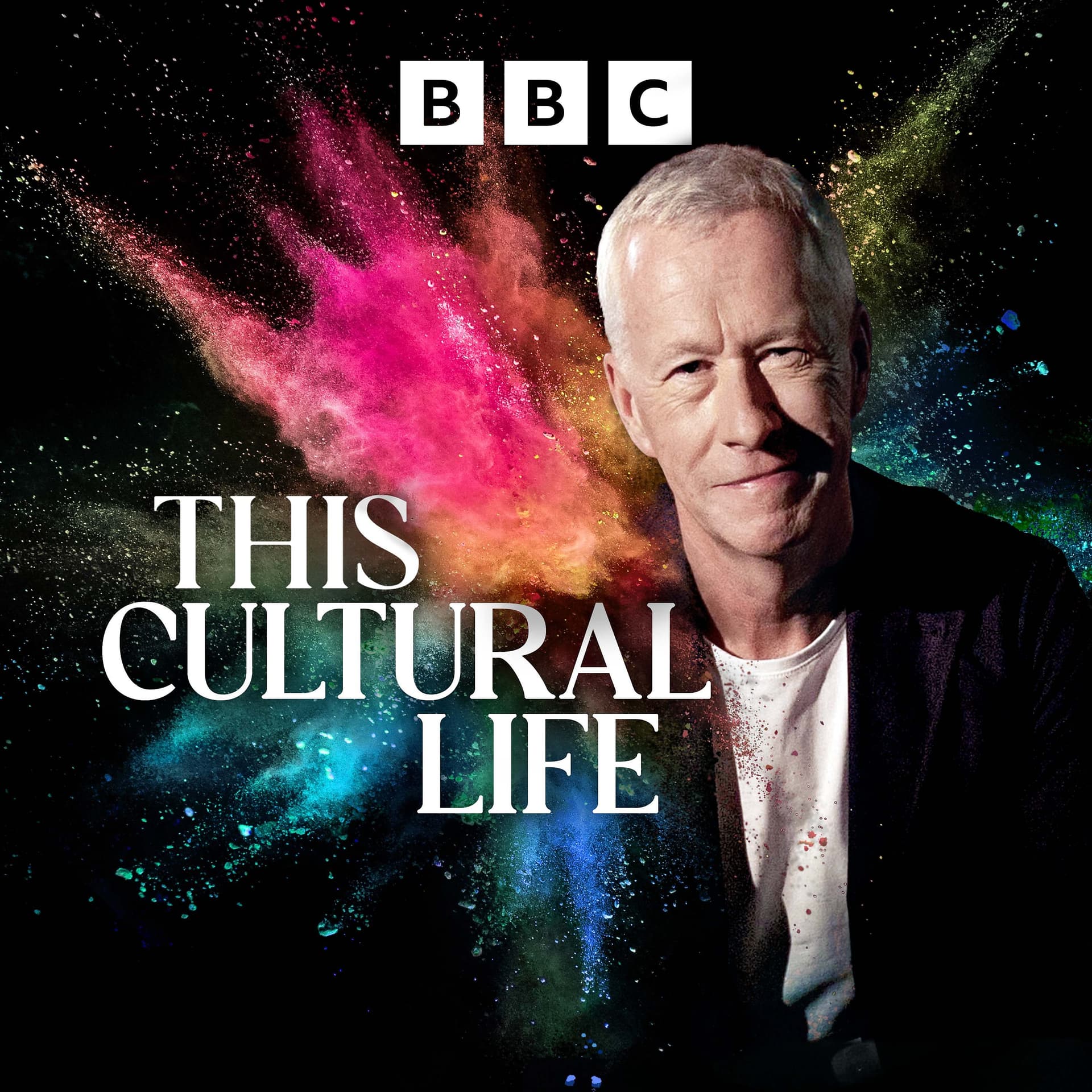
Episode Overview In this episode of *This Cultural Life*, host John Wilson interviews renowned Australian singer-songwriter Nick Cave. The discussion delves into Cave's formative influences, his artistic journey, and the profound impact of personal tragedy on his creative output.
Key Themes and Influences
- Early Life and Family Influence
- Nick Cave was born in 1957 in Warwicknabil and grew up in Wangaratta.
- His father, an English teacher, introduced him to literature and radical ideas.
- His mother, a school librarian, instilled a sense of fairness and unconditional love, shaping Cave's moral compass.
- Musical Influences
- Johnny Cash: Cave recalls being captivated by *The Johnny Cash Show* at age 10, realizing music could be "dangerous and exciting."
- Leonard Cohen: Encountering Cohen's *Songs of Love and Hate* at 15 sparked Cave's desire to write deeply personal and poetic lyrics.
- Barry Humphries: Attending a Dame Edna show introduced Cave to the anarchic spirit of Australian performance art, influencing his own artistic ethos.
Personal Tragedy and Its Impact
- The death of Cave's 15-year-old son, Arthur, in 2015 profoundly affected his work.
- Recent albums, *Ghosteen* and *Carnage*, explore themes of loss, grief, and spirituality.
- Cave emphasizes the connection between personal experiences and creativity, asserting that life events often reshape his artistic direction.
Writing and Creative Process
- Cave approaches songwriting as a disciplined craft, writing from 9 AM to 5:30 PM each day.
- He speaks candidly about the challenges of creativity, noting that the process has become more serious and weighty with age.
Relationships and Collaborations
- Cave's relationship with his wife, Susie, plays a significant role in his artistic life.
- He describes their bond as deeply intertwined with his creativity but is cautious about labeling her as a "muse."
- Their love story and shared struggles with addiction have influenced many of his songs.
Spirituality in Music
- Throughout his career, Cave's work has been imbued with religious and biblical imagery.
- He discusses his evolving relationship with faith, suggesting a journey towards a more structured spiritual understanding following personal losses.
Conclusion
- Cave reflects on his legacy and the possibility of retirement, indicating a continued commitment to creating meaningful music as long as he feels it's worthwhile.
- The episode concludes with a sense of hope and an appreciation for the complexities of creative life.
Key Takeaways
- Nick Cave's work is shaped by a blend of literary influences, personal tragedies, and rich familial interactions.
- His creative process is a disciplined routine that confronts the challenges of aging and emotional depth.
- The intertwining of personal life and artistry is central to Cave's music, making his storytelling resonate with profound authenticity.
Notable Quotes
- "Music is extremely powerful... it can change the course of your life."
- "Life events are the radical engines of my creativity."
- "The lyrics become kind of weighted down... you need to reinvent the playfulness of the creative process."
Producer
- Edwina Pitman
Written by AI. May contain mistakes. Listen to the episode to check what was said.
Transcript
Automatic transcript. May contain errors.0:00BBC Sounds. Music, radio, podcasts.
0:12Welcome to This Cultural Life, the show in which the world's leading creative people reveal the formative influences and experiences that have inspired their own work. I'm John Wilson and my guest in this episode is the Australian-born singer-songwriter Nick Cave. Over four decades leading his bands The Birthday Party and then The Bad Seeds Cave has been renowned for the darkness and drama of his lyrics He's a storyteller whose songs are often populated by flawed people doing bad things but seeking redemption His grief following the tragic death of his 15-year-old son has informed recent work including the album Ghostine Nick Cave has also written novels, poetry, a screenplay and has recently published Faith, Hope and Carnage, a book exploring his ideas about creativity and belief.
1:01So Nick, the thing I need to know before we do anything, how was the coronation? I enjoyed it, actually. I was as far away as you could get. So there are TV monitors and stuff. Oh, right. So I basically watched it on TV. Everybody else. But you guys had a better view. Nick Cave, welcome to This Cultural Life. Lovely to be here. You were born and spent your early childhood in Wangaratta in southeastern Australia, born in 1957. I was born in Warwicknabil, actually. No, right, but grew up in Wangaratta. But grew up in Wangaratta, yeah. The Warwicknabil contingent would kill me if you said I was born in Wangaratta.
1:37And what was home life like? Well, the way I remember it, it was kind of an idyllic, free-range, unparented country boy life. there was four of us kids and we were just sort of kicked out of the house in the morning and told to come back for tea. You know, we rode around on our bicycles and did all that sort of thing. Your father was an academic and he taught English. Taught English literature and maths. At the local school. How did he directly influence your love of literature? Not just literature actually, but he introduced me to all sorts of stuff that when I think about it now were extremely radical.
2:17For example, he read me the first chapter of Lolita when I was 13 and explained why this was great literature and went through it line by line. And I mean, that was a huge moment for me because of the closeness I felt with my father at that time. But he also took me to plays. He took me to the plays of David Williamson, who's an extremely confrontative, radical. And I was just a teenager and took me to foreign movies that were challenging in the way. So I think he died before I could understand any of this sort of thing. But I think he was sort of instilling something in me by doing that, which was that art could be thrilling and challenging, you know, mischievous and problematic and all of these sorts of things.
3:07They were the things that I think he valued, even though actually he had quite a conservative idea of what art was too. You know, he had a hierarchy where the poetry of Shakespeare were at the top and you needed to know that stuff. And it sort of ended up with rock and roll being... At the bottom of the pile. At the very bottom of the pile, unfortunately. Although, weren't you suggesting that his choices of cinema and theatre were actually more radical and challenging. Very radical. But literature, when it came to books and literature, there was almost like a prescribed reading list that he gave you.
3:44Well, you know, I might have been reading a piece of crime literature and he says, look, if you really want a high body count, you know, and he gave me a piece of Shakespeare to read, you know. I was in some way his project and was hugely influenced by him in that respect. There were three siblings, but it was you in particular. I felt that, but maybe they all got a bit of it. But certainly we vied for his attention to some degree. He was a big, gestural, sort of arty human being, and we all wanted to be a piece of him. Your mother was also a school librarian. She was the librarian, yeah. So what was her influence?
4:26She was a stoic, decent, civil human being, and she instilled in us a kind of fairness about things, I would say. I mean, in the end, I think I owe more to my mother on some level about how to behave in the world. I didn't know that when I was younger, but I've sort of grown into my mother a little bit as I've gotten older. Well, I was going to say somebody who had a reputation for behaving badly in your younger years to an extent. I mean, were you saying there was a kind of a moral compass that she... She did, yeah. And also that she loved me unconditionally. And it didn't matter how bad the things I did or how obviously I was in the wrong, she always took my side.
5:14So if I was arrested for something which I frequently was, it would always be those bloody cops, that kind of thing. You know, even though it was obviously that I was the problem. You were the wayward youth, but you were her son. Did she encourage your creativity in the way that your dad was doing? She did until I went to art school. And then she thought that art school had kind of perverted me. And my beautiful paintings that I did at school turned into these kind of postmodern atrocities. And she was probably right, to be honest. And I failed art school. So she probably had a point. And did she have a similar attitude to some of the more garish imagery and particularly some of the early songs that you were writing with the birthday party?
5:59I think she just worried deeply about me in general. She wasn't so concerned about my creativity, but just whether I would stay alive, you know, generally terrified of my lifestyle. But she came to visit me when I moved to London and she came to visit me in London and we were getting a few gigs with the birthday party and I was on a train and reading the NME and she saw an ad in the paper for the birthday party and the kind of look of joy and relief on her face that I actually was doing something that may amount to something was palpable. Did she saw? Oh, yeah, she saw everything. She went to every concert she could and sat through many, many versions of Stagger Lee.
6:47Ha!
6:57She had the same attitude to that song as she had to When You Were Arrested by the Police. No, no, she loved all the work. She didn't like the book Bunny Monroe. It's a particularly graphic book about a sex maniac. She didn't like that book. I hear stories from the chamber How Christ was born into a manger Like summer reggae straight He died upon the cross And might I say it seems so fitting In his way was a coffin to battery For eggs, that's what I'm told So many of your songs over the years have been steeped in religious imagery, biblical imagery. Did you go to church as a kid? Yeah, I was in the cathedral choir for three years and that also had a massive influence.
7:49I don't know if it ignited something in me, an interest, or that the interest was weirdly there. I had an uncommon attachment to religious matters, especially the figure of Christ. He just always fascinated me. As a kid, I used to like the biblical stories. I used to be genuinely intrigued by them. So church choir was your first musical experience as well? Yeah, and it didn't do much for my confidence, I would say, because I have famously certain issues with intonation and such things. which has gotten better, weirdly enough. Well, you mean you're singing the way you sing? I would sing out of tune, which is, if you're a singer, it's not such a good thing.
8:37You know, when you're in the choir, you get solos and that sort of thing, which I never got. I started to notice after a while that there were these little kids coming in and sort of rising up the ranks and passing me by.
8:53On This Cultural Life, I ask my guests to discuss their formative influences and experiences that have inspired their own work. And the first choice that you've brought to this programme today is watching The Johnny Cash Show as a ten-year-old boy. Hello, I'm Johnny Cash. A music and chat show hosted by the country music superstar Johnny Cash. Welcome to our show coming to you from the home of the grand old Opry in Nashville, Tennessee. What drew you to this program in particular? Well, I didn't really have any understanding of music particularly up until that point. I didn't have a huge interest in it even.
9:33But Australian TV started to show imported American shows. And the Johnny Cash show was one of those. And I just remember sitting and watching that as a child. And understanding suddenly by watching Johnny Cash that music could be some other thing, that it was dangerous and he was this outlaw guy and the man in black and kind of evil. And I think I just started to see music in a different way, that it was exciting and dangerous. So it was the image of Cash himself first and foremost? Yes, yeah, and the voice, that dark, rich, foreboding kind of voice that he had, I found really exciting. And the beer I had for breakfast wasn't bad, so I had one more for dessert.
10:28Then I fumbled in my closet, threw my clothes and found my cleanest dirty shirt. I actually, I think from that, have had an abiding interest in country music. Even in the punk rock days and stuff where we tended to dump everything, I was always listening to a lot of country music. I'm also thinking about a lot of the songs that you got known for early on in your career, the murder ballads, where terrible things are happening to people. I mean, just to take you back to that Johnny Cash line, I shot a man in Reno just to watch him duck. Yeah, what a great line. When I was just a baby My mama told me, son, always be a good boy Don't ever play with guns But I shot a man in Reno just to watch him die He was a huge influence in that way, that's right.
11:22The narrative ballad was something that I just started to write a lot of. My name is Loretta, but I prefer Lottie I'm closing in on my 15th year If you think that you've seen a pair of eyes more green Then you sure haven't seen them around here Well, my hair is yellow and I'm always a cold man La-la-la-la, la-la-la-la-la My mama told me that we all got to die And you say at that time when you saw Cash you hadn't had musical ambitions beyond the church choir. Did that make you think, actually, I want to be that sort of person? you know I wasn't or I'm not particularly musical I know that sounds like a strange thing to say after all this time but I'm not inherently I'm not musical in the same way as my musical friends are musical they hear the world I'm much more visual and I see the world you know so music was never the thing that I that I had some great desire to pursue I I got into a band when I was at school, which became the birthday party.
12:33But I was just kind of dragged into that because no one else wanted to be the singer. Why did you want to become the singer at that point? I don't really know. It just felt like a good idea. I mean, I wasn't a very good singer, but I had a kind of unsubstantiated belief in myself, I would say. There's no evidence that I was talented in any way other than a kind of weird confidence in my own genius or something like that, which didn't exist. So there was something going on that I didn't mind getting up on stage and I didn't mind the attention. You liked being the centre of attention. Yeah, I mean, I think growing up with two elder brothers and a young sister, I had to fight for that space.
13:21And I found that I could get attention through behaving badly. On and off stage? Yeah, it's a common thing. And all things either good or ungood And the mercy seat is waiting And I think my head is burning And in a way I'm yearning To be done with all this weighing of the truth And I pour an eye and a tooth for a tooth And any way I told the truth One of the final albums made by Johnny Cash with the producer Rick Rubin featured a cover of your song, The Mercy Seat, about the condemned prisoner about to face death in the electric chair. What did you think when you heard his interpretation of your song?
14:04Oh, I was thrilled, really. I thought it was an extraordinary version of it. I think in Johnny's version, the guy's innocent, which is much more Johnny Cash-like. My guy's obviously guilty. It's got a different sort of philosophical flavour. And I think my head is smoking For him to have been an early hero of yours, to be singing your song... And to do a beautiful version of it was something. And I've got nothing left to lose And I'm not afraid to die And some years, I think a couple of years later on, possibly the final album that Johnny Cash ever recorded, you did a song together, you did I'm So Lonesome I Can Cry, which is a Hank Williams song, isn't it?
14:48Yeah, that's right. Hear that lonesome whippoorwill He sounds too blue to fly That was an extraordinary thing too. You know, Johnny was very, very old. He was very sick. When I saw him, I wondered how he would even be able to perform a song. He was blind because he had some problem of moving in from sunlight into darkness. He would be blind for a while and he was moving sort of towards me. I was in the studio with his hands outstretched going, Are you there, Nick? It was a strange, bizarre thing. And I just wondered how this man was going to be able to record a song. And it was one of those times where you see the spirit of music rejuvenate somebody and he's just started to perform this song and just came alive.
15:52The silence of a falling star And daunting for you to be singing with him. Oh, yeah. I was terrified. I hadn't slept the night before because I was so worried about my voice that I wasn't going to be able to sit next to this great voice that I'd listened to all my life comfortably without sounding unbelievably diminished. And not only that, that I would sing out a tune. I was really worried about that. And we performed the song and Rick Rubin says, look, we've got to do that again. And I said, I'm flat, right, Rick? And he goes, no, Johnny's flat. And I was like, yes!
16:40And Johnny's like, yeah, I was a little bit off then. I'm like... But, you know, these are the days, and you don't have them often, that can't be taken away and mean a huge amount. I'm so lonesome I could cry
17:07Your next choice for this cultural life is seeing Barry Humphreys performing his Dame Edna Everett show in Melbourne in the early 1970s when you were 15. No, no, he's a Dame Edna Everett, housewife superstar, but don't be intimidated by me. Why have you chosen this performance? I chose that for a couple of reasons. One, he's recently died, and he was a hero of mine, And once again, my father took me to this. And I don't know if you've ever seen one of Dame Edna's shows, but they are extreme, extremely politically incorrect and offensive on every possible level. And she just lets loose. And it's mostly a satirising of a particular Australian-ness, which I think Australia outlived.
17:52And maybe Barry started to grate, I think, to some Australians after a while. But it was so thrilling. Hold your glady by the end of the stem, the maximum glady thrust. Get ready to tremble. Not too much, you might go blind, darling. It was these sorts of people for me growing up that were my great inspiration, particularly a group of Australians from his generation, that were just troublemakers and that stirred the cultural pot, that were social irritants. Like who? Jermaine Greer. Clive James to some extent, David Williamson that I'm talking about, the cartoonist Michael Lunig, the artist Brett Whiteley.
18:38These people were my heroes because they were just a thorn in the side of Australian culture. Other than the fact they are Australians of a certain generation, there's something anarchic about their attitude and their performance. And is that something, again, that you've inherited? Yeah, I would say that that was more than my musical heroes to some degree. it was these people that taught me about not just the need to push against things, but the great pleasure in doing that. I got to know Barry a little bit. He'd gone through a similar thing when I was in my first rehab, and he was a recovering alcoholic.
19:18This was a long time ago, and I kept looking around at other musicians or people that had stopped taking drugs and that still did good work and all of this sort of stuff, and it wasn't very encouraging, to be honest, you know. And you need this, you need this when you're trying to get clean. And I always remember seeing this footage of Barry Humphreys talking about his sobriety and saying that life got funny. And all of his great work really happened in his sobriety, and so that meant a lot to me. It breaks my heart that we have to part When I leave the stage But when we're all in Betty By soon Remember old fiddles play the best tune And I hope you keep it up As long as I can At my end
20:21What about the idea of the alter ego? I mean, Nick Cave is not a character, but you do have this very strong visual persona. Do you think how much of that have you taken of realising that you have to create something which goes out there into the world? Yeah, part of the way that I look and part of the way that I dress and all that is mostly because I'm kind of lazy. and I don't have that much interest in it as someone that's always changing there and having to come up with a new idea. I'm just Nick Cave. You mean it's easy to put a suit on in the morning? Yes, it's easy to put a suit on in the morning.
21:01I don't have those thoughts about what do I wear, I just wear a suit. And I kind of think that, I guess, you know, rock stars need to be simply drawn. They can't be too complex. Take me back to seeing Barry Humphries at 15 It was around then that you're working out your place in the world, I guess And you went to art school soon after that That's right, yeah Where, as you mentioned, you studied painting What was the work like then? You've sort of alluded to it before What sort of paintings? I did figurative art that was narrative It was deliberately, perversely, self-consciously bad It was ugly Violent?
21:45Yeah, there was violent imagery, dumb sexual stuff. The thing about art school for me wasn't really what I did, was who I met. I just fell in with a bunch of actual artists coming out of an all-boys school where the other students, they were highly suspicious of anybody being involved in art. And then I went to art school and suddenly fell in with all these people who loved art and worked hard I learnt so much from these people and most of that was learnt sitting around drinking and talking about art and learning about art and I happened to be in a band but I wanted to be a painter I just wasn't very good at that either and so the band just kept going and then I failed art school and carried on with the band and the band took off a bit The band was called The Boys Next Door and then became the birthday party and then you moved to London and you had some success in that post-punk scene.
22:47And looping it back to Barry Humphreys, I'm wondering whether that generation of anarchic Australians was the birthday party almost in that Australian tradition that you're talking about. Yeah, I think so. Yeah, and I think our behaviour was similar, you know. We found some weird power in separating ourselves from everybody else. And so I think the Birthday Party were more concerned with reacting against our peers than we were of taking down the establishment or the status quo or whatever. More chaos, let's say, than anarchy. I am a figure of time
23:36The next formative influence that you've chosen for this programme is the work of the Canadian poet and songwriter Leonard Cohen. When did you first hear him? That was back in Wangaratta, and I was 15 or something like that. The sister of my best friend told me to come over, I found this thing, you've got to hear it. And she played me Linda Cohen's Songs of Love and Hate. It's four in the morning, the end of December. I'm writing you now just to see if you're better. New York is cold. I just heard this incredible voice, these incredible words. and I think that was probably when I first thought maybe I could do something like this.
24:24I hear that you're building your little house Deep in the desert Something within his voice chimed with a feeling that I always had inside of me, a kind of melancholy that was always at odds with the Australian country town that I grew up in. And Jane came by with a lock of your hair She said that you gave it to her I always had this sort of weird feeling and Leonard Cohen's voice seemed to sum it up. There was a darkness to it, a morose humour and deep melancholy and I responded to that really well. But it's interesting you talk about your childhood as being idyllic. You used to talk about that growing up.
25:19That's right. And up until about 10 or 11 years old, it was. And then my behavior, for whatever reason, I'm not really sure why, started to change. Hormones. Hormones. Okay. That's it. It's been a mystery all these years, hasn't it? All that therapy. No, hormones. Something happened and I just needed to get out of Wangaratta. I felt that there was something else out there. Eventually got kicked out of the high school and my parents sent me to Melbourne. Songs of Love and Hate was the album. That particular record. What particular songs did you hear? The first song I heard, which is Avalanche, I couldn't believe what I was hearing.
25:59I stepped into an avalanche It covered up my soul As a young boy, you know, I stepped into an avalanche and it covered up my soul and I was just like, what? You know, and that line to this day brings the hair up on my skin. You strike my side by accident As you go down for your gold I don't know if this has happened to you, but there are times when... Well, it's something where the sort of gears of your heart or whatever but just shift in a way that things are just different from then on. You're just not the same anymore, and there's no going back. And music is extremely powerful in that respect.
26:54I believe it can change the course of your life, and I believe that as a musician, I have a responsibility in that respect to honour the art form itself and understand the power that it actually has and use it in the right way. Like a bird on the wire Like a drunk in a midnight choir You talk about hearing Leonard Cohen's voice and the darkness there and something about the timbre and the tone of his voice. Was he an influence on the way that you presented, the way that you sang or wrote songs? Yeah, probably. Yeah, I never tried to sing like Leonard Cohen, but, you know, he had that lugubrious, low, unpushed tone that was this kind of roundness of dark crooning almost that was very original, very original.
27:53It wasn't like Johnny Cash's darkness. Johnny Cash had this edge and, you know, I can't help but think there's some of that in the way that I sing. I mean, I sing like that naturally anyway. People just ain't no good A thing that's well understood You can see it everywhere you look People just ain't no good Did he influence your lyrics as well? He, well, yes, yes, he did. I think rather than influence, he put a kind of lyric writing on the table, you know, that allowed other people to write in that kind of way. There was a courage that he was prepared to go to dark places. Did you ever meet him?
28:48No, I never met Leonard. I'll tell you one other thing that he did when, which is an extraordinary moment and healing moment for me. I'd never met Leonard, but when my son died, he sent me an email that said, I am with you, brother, Leonard. And at the time that was out of the blue, it was a compassionate act. These things kind of changed the way you see the world and understand your own potential, that these small acts of kindness can have huge sort of reverberating impact on things. And I think that helped me enormously. I remember that, you know. I mean, that must have been, it was one probably of thousands of notes that you must have got after you lost your son Arthur in 2015.
29:54Yeah. You died tragically. did that kind of response that you got from the fans as well as people like Leonard Cohen, did that help the healing? Yeah, it was hugely helpful. It was also, I got a lot of letters from people that, look, this has happened to me and this has happened to our family. These were extremely helpful to me and to Susie, to us all. And I'm by your side and I'm holding your hand
Read the full transcript
30:27Ride horses of wonder springing From your burning hand
30:39In terms of songwriting, which I think has changed, particularly in the last couple of albums, Ghostine and Carnage, that seem to be not written along the same way that you've written down the years, the less conventional. but is there a particular environment, a time of day, a state of mind that you have to go into when you are starting either a new album or a set of songs? Yeah, I start writing at 9 o 'clock in the morning and finish at 5.30 and have a lunch break. It's like going to the office. It is, yeah. It's the only way I can get a record written. The last thing I want to do on any day is try and write a song.
31:17It's not fun. there are other aspects of of being a musician that are incredible fun like going on tour and playing concerts and and making a record and being with other members of the band and creating music this stuff is wonderful but being alone and trying to write lyrics to me is uh you're confronted with the least attractive aspects of your personality and you're also confronted weirdly with your own mediocrity because most of the stuff you write's bad and occasionally there are these things that just sort of shine that bit brighter than the dross around it how do you know when that's happening yeah it's it's what tells you to me it's a visual thing these lines they start to almost lift slightly off the page.
32:14You just keep turning the page and going back and seeing that line and it's sitting there and it's collecting meaning just by sitting on the page where other lines you've written are falling away. And has the process of songwriting itself changed, over the years? Not really. It just gets a bit harder. When you're young, you don't understand the ramifications of what you do. So you just write stuff and it's a bit of a laugh and this is great and whatever. And that's what makes young people's records so wonderful, to be honest. As you get older, I find that sense of play can dissipate because life becomes a serious matter, to quote Ordon.
32:59So the lyrics become kind of weighted down and that's not good. You don't want your words to be like that. And a lot of Bad Seeds music, especially mid-period, they're heavy lyrics and I don't like those lyrics. You need to sort of reinvent the playfulness of the creative process each time and I think that gets harder as you get older.
33:25Your next choice for this cultural life, Nick, is meeting your wife Susie in 1997. In the note that you sent us, it says, the true influence of fortuitousness and contingency on the artistic process. What did you mean by that? I must have had too many coffees when I wrote that. I guess what I'm trying to say is that the things that I find that really do influence me are not so much other creatives but things that happen in life. And certainly meeting my wife and having children and some of my children dying and these sorts of events are the radical engines of my creativity. And that's the accidental nature of life.
34:11And so you can't really predict the trajectory of one's work because things keep happening. And I think what is the reason why I continue to make records and they continue to be different and new sounding is that I'm interested in the ordinary things that happen in my life. They may be terrible things, but they are essentially the things that happen to us all, life and death and marriage and all these different sorts of things. When Susie walked into my life, I kind of found my theme, I would say, in some way. Do you regard her as a muse then? I don't know. The muse, we're a little uncomfortable around the word muse.
35:02She's certainly uncomfortable about the word muse, is that my life isn't spent sitting around animating your creative process. I have my own creative process. You know, she's like, you're my muse. So I don't use that word. But certainly our relationship is deeply entangled, maybe problematically so. and I often find I don't know who I'm writing about, her, me, or whose voice I'm using. So she's deep inside a lot of those songs and the influence is huge. And also the support, I guess, as well, because you mentioned earlier, you sort of said it in an offhand way, the first rehab I went through. Oh, yeah.
35:45So there were several periods of rehab. What state were you in, given that you had been quite a heavy heroine user from what I understand? but I mean what state were you in when you met her? I wasn't so good not in showroom condition as Barry Humphreys would say but you know we we met each other and we fell in love it was very much love at first sight I think for us both but I had my problems and I was a heroin addict and Susie herself is a recovering drug addict but had been clean for some years three years or something like that. You know, her friends, people who looked after her, it was all considered not a very good idea to get involved with me because I was kind of out of control.
36:33And eventually Susie left for a while and then came back and said, look, I'm here and I don't care what you do. I'm here and I love you. And I was quite happy about that for a while but it became clear at some point that I couldn't do both have a meaningful relationship with someone and be a heroin addict at the same time it just it didn't feel like it was gonna it felt felt like I was just gonna fuck the whole thing up and so I got clean and that's that you said a few moments ago about the death of children you lost Arthur in 2015 and more recently your son Jethro has died and I think to an extent your album Ghostine was addressing some of those issues of loss, of grief of searching for spirituality and making some connection which I presume sort of helped your grieving process in a way.
37:28Did it help Susie as well? You know Susie's reserved, shy individual and so to have our life dragged into the limelight in that kind of way because I had a different approach to the grieving process. I think she probably found difficult to some degree, but she also saw its benefits, I think. So she never said to you, I don't want you to be talking about our son's death in song? No, no, she didn't. I think she found it helpful and I think she also found it, that she understood it was helpful to others you know people would contact her and say look you know this has happened to me and my son's died and I don't know what to do and because she seemed to have a to be dealing with it in some kind of way and that she was still you know that she was you know heading this fashion brand and and that you know that she was someone they could talk to.
38:36And so I think she saw or she sees in some way that she can be helpful to people in that way as well. Your soul is my anchor, never asked to be freed. Well, sleep now, sleep now, take as long as you need Cause I'm just waiting for you Waiting for you Waiting for you Waiting for you Waiting for you Waiting for you
39:24To return
39:31There's always been religious imagery in your songs, but I think arguably on Ghostine in particular, there is this kind of sort of layer of spirituality which is going on more than probably any of your work. Has your faith deepened, do you think? Yeah. I would say...
39:51..the idea of God is a kind of general direction. My life has always been taken. and whether we can agree on whether God exists or not. I just feel I move more and more in that direction. I think I always have been on that road. And I guess these days I make more practical attempts to sort of bring together the fragmented spiritual thoughts that are in my mind into some systemised way, which means I try to go to church and some of these things. But I'm sceptical too, I would say. And you've always been known for those sort of narrative-driven, character-based songs. Do you think the songs now are more directly personal?
40:41Oh, they're always personal, yeah. Even when there are characters used, I can't stand back from the characters, even the terrible characters that I've written about. You know, I'm implicated. I wrote them up and I feel like they are part of me. You chose Johnny Cash and Leonard Cohen as major influencers in this program, both of whom recorded very powerful final albums in old age where you can hear the age and wisdom possibly and the frailty. Is that something that you can see yourself heading towards eventually or is retirement an option? Seeing I'm working office hours, I should be able to retire, right?
41:23I don't mind the idea of a retirement. And I often talk to Susie about like, you know, because it's difficult sometimes, all this stuff, you know, and at times it's extremely intense to be in my business. And let's say I'm on tour. The amount of times that you have to look in the mirror when you're on tour just to be in the presence of yourself, it's kind of nauseating. And after a while, you just want to be able to back off, you know, with the whole Nick Cave thing and just sort of disappear in some way. Well, that's what I was getting at earlier in terms of that image. I mean, you could stop wearing the suit, stop dyeing your hair.
42:04You could just be a totally different person. Allegedly dyeing my hair. Oh, right. Sorry. Yeah.
42:12Well, I'm not sure that's possible. and I don't feel, you know, I feel that I just am this, whatever it is, this creation, if that's what it is. This sort of desire to just step back from the public eye is immense sometimes. But I do feel a duty, I would say, to my audience and to my craft to continue for as long as it feels like I'm doing something of value. If you're just starting to make a lot of bad records, maybe it's time to do something else, but I don't feel I'm doing that. I feel proud of all my records, but I feel particularly proud, I think, of the last albums that I've made. So there's a few years left in this game?
43:00I hope so, yeah. Nick Cave, thank you so much for sharing your cultural life. Thank you very much. I enjoyed myself. Thanks.
43:14Hello, I'm Jeremy Bowen, the BBC's international editor. For nearly 40 years, I've been reporting from some of the most complex and dangerous places in the world. In my new 10-part series, Frontlines of Journalism, I'm taking you to some of the most difficult stories I've had to cover. Six mortar rounds landed in or around the graveyard. Get a bit emotional about it, actually. To look at the obstacles that get in the way of the truth and how journalists like me navigate around them. It is never definitive. We can have this argument. Journalists tend to argue. Every word that comes out of your mouth is a form of opinion.
43:50If the world saw, the world would react. Subscribe to Frontlines of Journalism from BBC Radio 4 now on BBC Sounds.
From the publisher
Nick Cave, the Australian born singer-songwriter and author, reveals the formative influences and experiences that have inspired his own creativity. With his band The Bad Seeds, Cave is renowned for the darkness and drama of his narrative based work. His lyrics are often populated by flawed people doing bad things, but seeking redemption in love or God, or both. His musical output is diverse, ranging from rock’n’roll, to piano-based love songs. The tragic death of his 15 year old son Arthur in 2015 has informed recent work, with songs about devastating loss, grief and love explored throughout the albums Ghosteen and Carnage. Nick Cave has also written novels, poetry, a screenplay, and has recently published Faith, Hope and Carnage - a book exploring his ideas about creativity and belief.
Nick Cave talks to John Wilson about the influences of his father, an English teacher, and his mother, a school librarian, in encouraging his love of literature from a young age. He recalls seeing The Johnny Cash Show on television at the age of 10 and being spellbound by the country music star, with whom he later worked. He also remembers the life-changing effect of hearing Leonard Cohen’s Songs Of Life and Death album for the first time, and the profound influence the Canadian poet and songwriter had own his own lyrics. He reveals that fellow Australian Barry Humphries was another artist who inspired his own work, having seen a Dame Edna Everage show in Melbourne in the early 1970s. Nick Cave also discusses the impact that the death of his son had on his life, work and marriage.
Producer: Edwina Pitman