In short
Podcast Summary: This Cultural Life - Nicole Farhi
Episode Overview In this episode of *This Cultural Life*, hosted by John Wilson, the renowned fashion designer and sculptor Nicole Farhi discusses her life, inspirations, and artistic transformations. Farhi shares her early influences, career milestones, and the pivotal shift from fashion to sculpture.
---
Key Topics Discussed
Early Life and Influences
- Background: Born in Nice, France, to Turkish parents, Nicole describes her childhood as vibrant and culturally rich.
- Family Influence:
- Her glamorous aunt, Visa, ignited her early interest in fashion by introducing her to Parisian couture.
- Contrasting styles between her mother and aunt shaped her fashion perspective.
- Jewish Heritage: Explores her family's Sephardic Jewish background and its cultural implications.
Career in Fashion
- Fashion Education: Nicole pursued fashion studies in Paris to escape her family while still engaging with her artistic side.
- Meeting Stephen Marks: Key partnership that led to the establishment of the French Connection brand in the 1970s.
- Design Philosophy: Focused on creating clothes for the youthful and unpretentious, rooted in her personal style preferences.
Transition to Sculpture
- Artistic Awakening: Inspired by Giacometti's work at the Meg Gallery, she felt a deep connection to sculpture.
- Mentorship by Eduardo Paolozzi: A significant figure in her artistic journey who encouraged her sculptural endeavors, leading her to explore new mediums.
Reflections on Fashion Career
- Success of Nicole Farhi Brand: Launched in 1982, became synonymous with elegant, practical fashion.
- Economic Downturn: The brand faced challenges leading to administration in 2013, which prompted her shift away from fashion.
- Emotional Impact: Although the brand’s collapse was painful, it also marked the beginning of a new chapter in her life as a sculptor.
Current Artistic Endeavors
- Focus on Sculpture: Nicole discusses her dedication to sculpting, particularly creating abstract forms and figurative works.
- Influence of Personal Relationships: The role of her husband, playwright David Hare, in her creative process and the impact of their relationship on her art.
Future Aspirations
- Continued Growth as an Artist: Nicole expresses a desire to keep evolving in her artistic practices while reflecting on her past.
- Legacy: She acknowledges her fashion career as a fulfilling chapter, but now finds satisfaction in her sculptural work.
---
Key Takeaways
- Cultural and Family Influences: Farhi's diverse background played a crucial role in shaping her artistic sensibilities.
- Fashion to Sculpture Transition: Highlights the importance of personal passion and mentorship in navigating career changes.
- Artistic Exploration: Emphasizes the ongoing journey of self-discovery and creativity in both fashion and sculpture.
- Personal Relationships: The influence of close personal bonds on artistic expression and personal fulfillment.
---
Conclusion Nicole Farhi’s journey from a celebrated fashion designer to a dedicated sculptor illustrates the fluidity of creative expression and the impact of personal experiences on artistic pursuits. This episode encapsulates how diverse influences can inform one’s career, leading to profound transformations and new beginnings.
Written by AI. May contain mistakes. Listen to the episode to check what was said.
Transcript
Automatic transcript. May contain errors.0:00BBC Sounds, music, radio, podcasts OK, I'm not going to explain now, but just hear me out. Listen to this. Strap it. This is BBC Radio 4. I remember hearing this and I was like, hold on for dear life. UK Station of the Year. I'm coming out. We're going to interrupt you because Christmas knows news. The Prime Minister has agreed to stand down. A year to remember. What the hell just happened? With powerful documentaries. They say at the heart of every conspiracy theory, there's a kernel of truth. Hard-hitting interviews. How did you survive, Nuzli? I think it was my faith. And innovative entertainment.
0:47Screaming, like pushing hard and then... This is our playlist on BBC Radio. Winner of UK Station of the Year. My cast away this week is the singer and songwriter... Hear it on BBC Sounds.
1:06This is BBC Radio 4. To me here at Woman's Hour and to you at home. Yes, when I saw him there, I just said, you've got a hell of a job, the best of luck. What I really wanted to see. Don't tempt me.
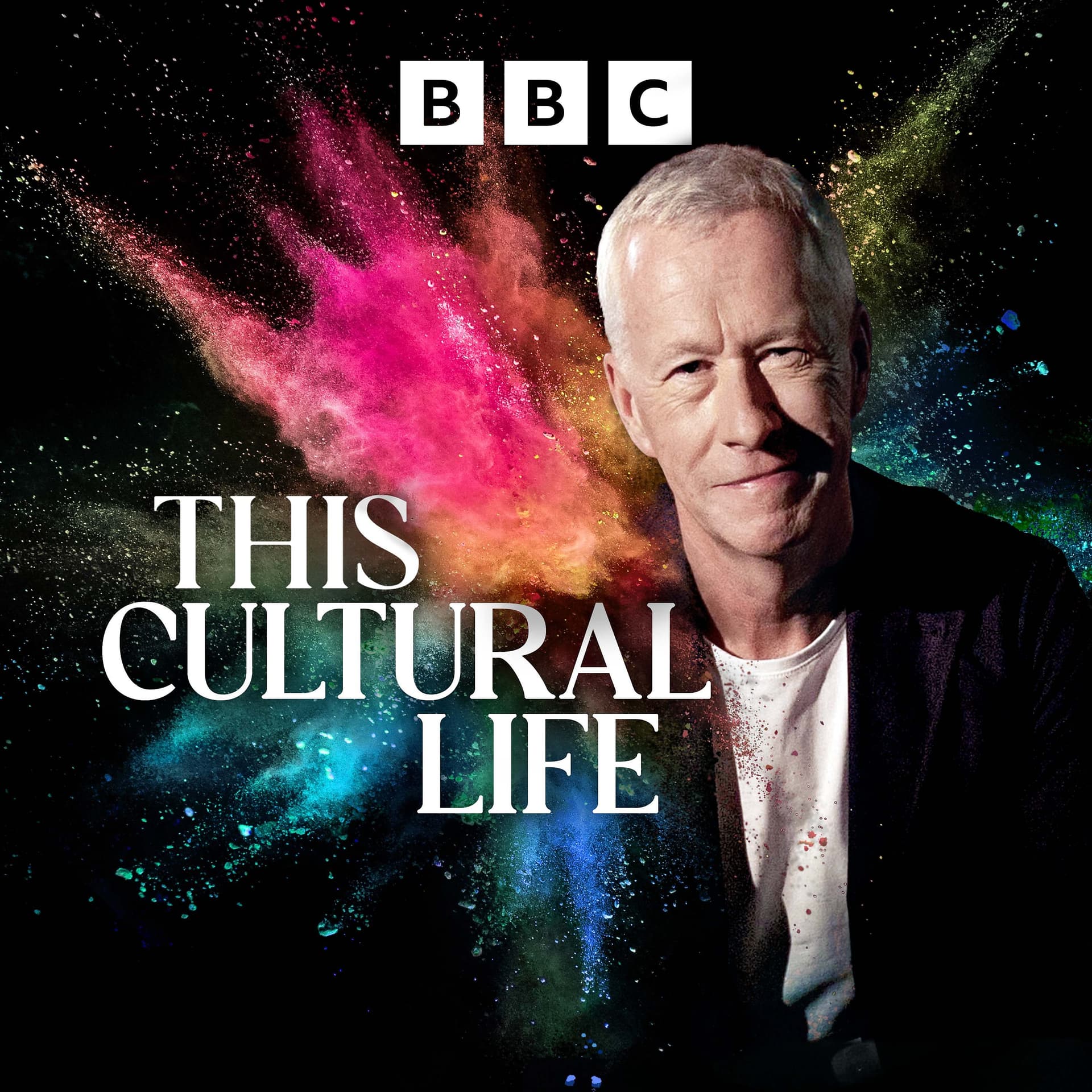
1:36Welcome to This Cultural Life, the show in which leading creative figures reveal the formative influences and experiences that inspired their own creativity. I'm John Wilson, and my guest in this episode is Nicole Fahy, someone whose name was once synonymous with international fashion, but who now works as a sculptor. Born in the south of France, she designed for various labels before teaming up with Stephen Marks in the early 1970s to establish French Connection as a worldwide clothing brand. She launched her own label, Nicole Fahy, in 1982 and was one of the biggest names in UK fashion for three decades.
2:12Nicole started studying sculpture while still in the fashion world and staged her first solo exhibition in 2014. She's been married to the playwright David Hare since 1992.
2:26Nicole Fahri, welcome to This Cultural Life. Thank you. You were born and raised in Nice in the south of France. Tell me about your parents and home life. My parents were both from Turkey. My mother was born in France from Turkish parents, but my father was born in Turkey and came to France in his 20s. My family was very colourful, And growing up in an Oriental family was, you know, I like the difference between my friends at school who were classic French people. I had a very colored family. They were quite loud. They expressed their feelings. They love you. They hated you. It was wonderfully alive that my child, you know, and I love that.
3:18And we had a large family and every weekend we would be with both grandparents from both sides and aunts and the cousins. They all loved each other and wanted to be together. Jewish parents as well, weren't they? Sephardic Jews? Sephardic. So how did you identify as a child? Did you feel French? Did you feel Turkish? No, I felt different. I did not feel Turkish because I did not resemble them, friendly enough. They were all quite dark, dark hair, dark eyes, and I was the blonde. I had the green eyes. I did not look like my family, but I was proud of being part of that family. I loved my childhood.
4:04And just to talk about your Jewish heritage, were your parents practising? One of my grandfathers on my mother's side was practising, but did not force anyone else in the family to do what he was doing. we would go to the synagogue once a year for Yom Kippur because that was a moment where he wanted everybody to be there and that was fun as well. The children were allowed downstairs, the girls, because the women had to be upstairs and it was always a reason to have a giggle and laugh and be happy. And your father was a tradesman, wasn't he? Did he sell rugs, carpets? Yeah, he left Turkey with some rugs, Persian rugs, and a friend of his said, come to the south of France, come with some rugs and we'll sell rugs.
4:53And so he did and eventually met my mother. So he was in his 20s when he arrived in France. So was that before the Second World War? It was before the Second World War. He should have gone back to Turkey to do his military service and he didn't want to go back. So he became apatride. I don't know how you say that in English. He had no nationality for a few years until he became French after the war. So during the war, the whole family was hiding in a farm in the center of France. He was hiding? Yeah, because the Germans invaded the south of France and France. And because my grandfather was somebody who did a lot of good for the Jews, He was researched by the Gestapo.
5:40So when he realised that they were looking for him, somebody knew some farmers and said they will shelter you during the war and they went and became farmers.
5:57On This Cultural Life, I ask my guests to discuss the formative influences and experiences and the people, the places, the events and cultural works that have inspired their own work. And the first choice, Nicole, that you brought to this programme is one of your Turkish aunts, Aunt Visa. Why have you chosen her? I chose her because she was fascinating. She lived in Paris at that time, but she came every year to visit her mother, my grandmother, and my father, her brother. And she was a very good-looking woman, very beautiful and very well-dressed. and I had such pleasure in looking in her suitcases and see the outfits.
6:42She was always going on a cruise once a year with my uncle who was also very well dressed, I must say. And they had their wardrobe made for the cruise. That was after the war, obviously. I was already 10 or something like that, 10, 12. Because my mother was always dressed in trousers and jackets and shirts which actually became my kind of uniform. But I was fascinated by my aunt who wore dresses, high heels and... More flamboyant. Much more flamboyant, very colourful, but not flashy. It was really beautifully put together. So she was stylish, really. Very, very stylish. And very different to not only just your mother, but a lot of the women that you knew.
7:26Yeah, because probably she was wealthier than all my other aunts from Nice. But my mother, I realized, was very stylish. But I didn't get that at the time. For me, it was obviously much more obvious to look at a woman who would put together herself with lipstick and earrings. But my mother, until she died at the age of 102, wore a shirt, a matching scarf, a pair of trousers, flat shoes, very short hair. And I realised she was actually much more stylish than a lot of women I knew. That's really interesting because later the sort of fashion, the designs that you were making for your label, Nicole Fari, were often seen as very pared down, as sort of austerity.
8:16Exactly. Muted tones. And it's talking to you that I realised that the influence my mother had, much later, but deeper probably, because I've never been able to do pretty dresses. I was absolutely useless with skirts and dresses and I had to force myself to do a dress because I never wore them. So I had this fantasy woman in my eyes when I was growing up, which made me want to design clothes. And when I started designing, I was designing the clothes my mother wore. Isn't that strange? That's really fascinating. It was sort of a long, almost buried influence. Yes, it's so... Unacknowledged, in a way, for years.
9:01But just getting back to your Aunt Visa, so she was glamorous, she was beautiful, she was flamboyant. Did she spark a kind of interesting fashion and creativity in you? Yeah, she had her clothes made by a couturier. And every summer I would go to Paris. There used to be the haute couture shows then. It was in August at the time. And she would take me and she would take a couturier with her. And then you could buy paper patterns of the couture clothes that you sew. So she would buy Dior or Balenciaga and then she would ask her couturier to do it. it formed me because I saw this is an incredible world and I want to be part of it.
9:47Did you start making clothes at that time or making your own designs at a young age? I was designing clothes for my dolls. I made some paper dolls and I was doing their wardrobe. I had boxes full of paper dolls and their outfits. I was 13, 14 when I did that. Do you still have some of those designs? Unfortunately, my mother threw away everything. And what about your artistic interest? When did that first start? When did you first start going to galleries and museums? I think 14, 15, around that time, the Meg Gallery in St Paul de Vance opened and they had a fantastic show with Giacometti. And that was a revelation for me.
10:32That's when I realised the sculpture, more than paintings, was really touching me deep, deep, deep down. But, you know, it was like a dream. I didn't dream I would become a sculptor one day, but I knew that moment that I was touched by it. It was visceral. I was shaking just to think about what you could express just with forms. And it was Giacometti, and seeing these Giacometti sculptures at the Meg Gallery, which is not far from Nice. From Nice, no, it was easy. Then I started going there every time they had a show. they were very dramatic also I mean it was one particular sculpture that touched me which was called Women with Throat Cut which was about these sculptural abstract shapes of a female body half insects half leaves they were leaves instead of ribs and she had a cut throat her arm was like that and she was spread eagle and she was actually it was about a rape and that's how I read it and this is Giacometti it's a very early sculpture that he did it was lying on the floor that's how he wanted it to be shown and I've seen that sculpture time and time again in America and it always has the same impact on me it's incredible And what about the very first time you saw it?
12:07I mean, it had an absolutely life-changing effect on you. Well, yes, but I didn't know it would be life-changing. But I knew art was really entering my life. So a little bit later, I was 15, 16, I went to art school in Nice in the evening or after class. But there I painted. I didn't sculpt because I thought painting was more approachable. For me, sculpture was something I could not touch. It was something I loved. You couldn't imagine how you could do it yourself. How can I ever do that, you know?
12:46Your next choice is moving to Paris to study fashion in the mid-1960s. What made you decide to study fashion rather than pursue an artistic course? Well, there were art schools in Nice. they were at school in Lyon, Marseille, much nearer the house. And although I loved having my family around and I had a very good upbringing, I couldn't wait to leave them and be free. And my aunt, Visa, was living in Paris. And also the main thing was fashion, you couldn't learn. It was the beginning of prêt -à-porter and there were no schools in the south of France where I could have learned to become a designer.
13:30So I thought I'm going to choose fashion because if I choose art, they will send me to Lyon or to Marseille, which is closer. But fashion, they couldn't say no because I had to go away from that. So you were steered towards fashion just because you wanted to put distance between yourself and your family. Yeah, to get out. So I went to Paris. I went to a fashion school and I went to an art school as well. So I did both when I was there. Oh, so you were still juggling at the time. And were you unsure which path you might eventually take then? Maybe the first year. Then the second year at fashion school, I realised that I understood what you had to do to show your work and it was easy.
14:13At least for me, it has been such an easy way. I sold my sketches straight away. I was still at school. I had realised that you just rang people, companies, and say, I have a portfolio. Do you want to see? And they'll say yes. And they would buy them for 50 francs. Sketches of what? What were you designing at that time? Well, whatever. I was designing trousers for a trouser company. I was designing socks for a socks company. And then I prepared a little portfolio and I'll ring the bells. And it worked. I was welcome everywhere. How would you characterize the French fashion world at that time in the sort of mid to late 60s?
14:59It was late 60s. It was a time of change, wasn't it? Yeah, it was changing because there were couture, obviously, and it was the beginning of the prêt -à-porter. So young designers were welcomed everywhere, especially if you had some idea and if you did things which were different. and I was also well formed by a guy who used to work for his family business called Pierre Dalby. And he said to me, I want to see things that nobody's done before. So I was doing belts in fabric of the coat, for example, with a belt attached in the same fabric. He thought that was fantastic. So he got me into this company freelance.
15:44but as long as I was inventing things that he had not seen, he was pushing me all the time to do different kind of clothes. It was great. So it wasn't the ambition to kind of become part of one of the big fashion houses? No, I could have gone to Balenciaga then. Sometimes I thought it would have been a different route but I like the freedom. I like the freedom of doing always different things or different people.
16:20Paris was such an exciting time in the late 60s. You think of what was happening on the streets in 1968, everything changing culturally and politically. How engaged were you in the activism and the protests? I was part of it. I was anti-everything, like all the young people at the time, to a point that you didn't even know why you were anti, but you had to be anti. Do you remember those riots in 1968? Yes. Where were you? I was in Paris. So you remember those clashes, you remember the conflict on the streets? I remember the barricades. Sometimes it was quite frightening because I could hear the noise in the street from my little bedroom at the top of a building, and people would say, don't go, Nicole, on the barricade, it's dangerous.
17:13But I went. Now as the water cannons are hosing down onto these students, here come the rocks, here come the pieces of paving stone that are being hurled through the air. Oh, a man's just been carried past me, streaming with blood, wounded in the head by one of these paving stones. The time of such seismic change in society Did it feel also that something really interesting was happening creatively? I didn't realise that. I think fashion had started to change before even May 68. I think when I came to London, 69, it must have been that time. Here it was very exciting that time for me as a French person.
17:57And I liked the King's Road and I liked the music here. And I like, I don't think in Paris, I didn't think it was that creative. In Paris? Well, not on the fashion term, you know, or the music. But here I could see it was obvious for me. The next major turning point that you've chosen for this cultural life is meeting Stephen Marks, with whom you set up the fashion company, French Connection, in London. Where did you meet? I met him in Paris. I think he had a licensee from Pierre Dalby. So he was selling clothes that I had designed for Pierre Dalby in this country. And we started having a relationship and I used to come here and back and forth.
18:42And he went to India one year, 1970, came back and said to me, Nicole, this country is incredible. You could do something fantastic. He had started by doing some dresses when he was there and he showed me and they were embroidered. and they were fabulous, good fun. And then he took me to India the next time he went and French Connection was born and it was a great success and a great, great, great fun for me to do. And when you set up French Connection with Stephen Marks, what was the ethos and the sort of clothes that you were going to be making? Well, he set it up, the company, and he said, you do what you want.
19:21He gave me a free reign to design the clothes for young people. Obviously, I was young and I always thought of myself when I designed and when I did menswear, I thought of the men who were in my life. You know, it's much easier this way for me anyway. So I never liked the mini skirts, but I like long, flowing skirts. So I did this in chiffon and I did what I wanted and it worked. It was easy, it was young, it was unpretentious. And who were your fashion role models at the time? Which designers were you looking at for inspiration? Or did it not work like that? No, no. So you were just following your instincts mainly then?
20:12Yeah, because I think, I don't know, you know, French Connection became an incredible success because not a lot of people was doing what we were doing. You know, I was travelling all around India and picking up fabric from markets and very happy designing and it was great. You said a few moments ago about how London seemed more exciting culturally in terms of the fashion and the music and what was happening just on the streets. How important was that to your sense of creativity, suddenly living in London? It was fantastic to see that what I was doing for French Connection was in the street very quickly, where when I was working in France, because I was still working for French companies, it was a different kind of fashion.
20:59They were not dressed the same way, the girls. How? You know, the French, they always had, at the time in the 70s and 80s, the French women wanted to be chic, where in here, it was much looser. I found that very attractive. You know, I remember doing men clothes and people saying, what are you going to do for men? Men is a jacket, a shirt. But we managed to make clothes that were softer for men, bringing a colour palette that they didn't use to wear then. And it was simple, but it's not that easy to do simple. So what's Nicole Fahri Men going to do for men that they haven't got already? I mean, what can you do for me?
21:43I could do a lot for you. I would take this shirt off your back. Seriously, what have you got as a woman's observation that you can do for a man? What are you going to do for us? Although I know that a lot of men have to wear suits, I just think if I could give them some ideas about putting colours together and not restrict their body. and they can wear a double-breasted jacket, but they don't have to wear shoulders like if they have a hanger inside the jacket. You know, they could just be soft. And I think it's just little things like that that I could give them some ideas on. You set up your own label, Mikkel Fahri, in 1982 and became known for a certain look and aesthetic.
22:27There was a Mikkel Fahri style. And as you say, there was a kind of simplicity to the lines. Is there a particular collection or even just a piece that you designed that you're most proud of that sort of epitomizes your style at that time, do you think? You know, it's not one piece. There are many, many pieces that I've designed that even today when I meet somebody and I give my name, and not so long ago, last week, I went for lunch and the woman said, oh, you are Nicole Fahy, but I still wear that raincoat. I still wear that coat. and this is now all 20 years old, you know, the clothes they're talking about and they still wear and I still wear.
23:09But there was a different look, there was a different aesthetic. Yeah, I was getting older. That's where probably my mother's influence came along and I did think a good shirt and a good pair of trousers on a woman is fantastic and I liked sweaters and cardigans. so I was doing a knitwear collection with a lot of cardigans and people then rediscovered the cardigan. Well, they're very elegant clothes, weren't they? But they were, I don't know, how do we describe it? They were practical. Yeah, I had to be proud of putting my name on something, you know, and I could never have done something that I would not wear myself.
23:50So when it was fashion to wear shorter skirts, no way would have put short skirts. And people were saying, you must make dresses, Nicole, because women like dresses. But I did not know how to make dresses. So luckily I had some nice assistants, very clever girls who could do the dresses because I did not know. I did not move well in a dress. After many successful years, Nicole Fahri, the label, suffered the fate of many high street fashion brands in the economic downturn and went into administration in 2013. what impact did that have on you personally? I'm always surprised it went in administration because I was kept out of the business the running of the business thanks to Stephen it's the French connection which went I think and Nicole Ferry was part of the public company I did not know exactly what was happening but I knew that one day Stephen called me in his office and he said, we had an offer to sell Nicole Fahry.
24:59What do you think? And meet the person who wants to buy it first. If you don't want, we won't sell it. But just think. And I met the guy who was young and said, oh, but I'm going to take Nicole Fahry Global and you're going to be everywhere in America. We're going to open stores everywhere. It's going to be fantastic. And I thought, well, he's young and he wants it and maybe it's not a bad idea. I said to Stephen, maybe it's a good idea for Nicole Farris to do that. But after two years, I will stop. Because already I had started sculpting and already thinking maybe it's my chance to get out, you know, eventually.
25:50and I have to say the last two years of my life as a designer were the worst thing because you're no longer your own boss because what was wonderful with Stephen was we were a team and he was backing me on everything and he was not just a business partner he had been your partner you had a daughter to get yeah but we were separated by then but we were still and we are still such good friends You know, we are family, really, he and I. So all the years I worked with him for French Connection and Nicole Fahry, he opened shops. He would just take me, would you like it? We'll open this. We're going to do menswear.
26:33What do you think? We're going to do homewear. Do you agree? So he gave me such freedom to express my creativity. And that is a chance that not a lot of people have, you know. But you were protected from some of the downsides of the business then? Completely. I never... You didn't know what was going on? No, and I didn't want to know. And he didn't want me to know because he wanted me to feel completely at ease, creating clothes, making shops beautiful. Also, I didn't understand anything, you know, probably. And he didn't want to bother me. You know, my head was not in the numbers. I could not read, I don't know how they call them.
27:17Spreadsheets. Spreadsheets, exactly. But just as you felt a sense of real pride having your name in your clothes, the fact that the name Nicole Fahre was associated with a company which then collapsed, that must have hurt. I mean, that must have been really difficult for you. Yeah, but it did not really collapse when I was there. But it was the end of... Well, it was boat and carried on. Because then when people come into your business, they start telling you, you should do this. This will not sell. So let's not do that. They were giving me a shit with saying, we need five coats. We need four suits.
27:59We need so many dresses. You were working through the sheet. And I just never had worked like that for 20, 30 years. I've always done, if I felt it was a coat season, I'd make a lot of coats. So I started not liking what I was doing. And they were the owners, no longer me. So I couldn't wait to get out. It felt like a relief, did it? Yeah, it was the end. I had had a very good run and I had been very happy in the fashion world. And I was very happy to get out.
28:42You started sculpting around this time, and your next choice for this cultural life is the Scottish-Italian artist Eduardo Paolozzi. Now established as one of the great European artists of our day, he was one of the founders of pop art, he is Sir Eduardo Paolozzi. Do you use the title Sir Eduardo? Only if it's necessary, only if one's trying to be correct. Who became a friend and an artistic mentor to you? When did you first meet Pallotzi? I met him in the late 80s. So I had started sculpting maybe five years before I met him. And I think it was 85, 86 when I met him. I went to evening classes.
Read the full transcript
29:24That wonderful woman called Jean Gibson was giving lessons, evening classes, Saturday classes. And when I went there, she gave me a lump of clay and she said, do me some torso. I didn't even know what she meant by that Torso Anyway, I touched the clay and I had a revelation and I thought that medium, you know, it's like touching the earth, it's like suddenly you're in contact with another force and I did two torso in that morning when I met her and she looked at them and she said, keep those torso, I'm going to teach you to cast them and you're going to keep them for the rest of your life because this is the beginning and you're going to carry on.
30:14She saw something in those little torso and she taught me to cast. And when you met Eduardo Palozzi, you'd already started learning about sculpture. Did you know his work? Were you a fan of his work already? I didn't know him either. I went to the foundry at the Royal College of Art to cast my first bronze and he was at the time teaching students ceramics. And Eduardo came and he looked at the piece, which was an abstract piece and it was called Orgasm. I called him Orgasm. He said, what's the name of that piece? He said, Orgasm. And he smiled and he said, I like it. And he said, come and see my studio and I'll show you what I do.
31:02And then he said, do you do other work? And this was a kind of work I was doing at home. My teacher did not like it. Jean didn't like that kind of work I was doing. So I would bring it back to the house and carry on working on this kind of erotic, sensual work. And he liked it very much. So it was very good to have the two teachers. And he became my mentor. and he never criticized my work where she was really a much more formal teacher. Interesting that you say the work had that sort of physicality, it was erotic. It's not the sort of thing he was known for, even though sometimes he had busts or heads figuring in his work.
31:46There was a sort of technology, there was something about structures. He was very sensual himself. What sort of person was he? Describe Paolozzi. He was an incredibly generous man. He was interested in everything. He would take me out and he'd make me look. Look at buildings, look at windows, look at pavement, look at rubbish on the floor. You know, everything was a discovery. I think it's probably one of the most important things. He taught me to look. Look at people, but look beyond the face. Look deep down. And he was incredible. I had the biggest chance in my life to have met him, really. ...were very approachable.
32:32One just rang up and one went to see them. They had practically opened studios. Whom would you single out among the artists you met? Giacometti, Brancusi, Tristan Zara, Dubuffet. Whom would you single out as the one artist who meant most to you? Well, I think that Giacometti meant most to me in a sense Because he was quite poor and unaccepted, I saw most of him. And I was unbelievably persuaded that he was a real artist because he was obsessed about his ideas and worked all night. And everything else in life for him was just a grey shadow. So he taught you about art. He taught you, as you say, how to look at the world.
33:13Was he hands-on in his teaching as well? He did because when I met David... David Hare, who was your husband? David Hare, who became my husband. Edouard, by then, had become, you know, an habitué of the house. I would cook for him. He loved his food. So he would come very often to the house every week or every other week. He was not yet teaching me physically. He was just taking me out. But when I met David, and I was so happy because he was also a huge influence in my life, David, I stopped sculpting and Eduardo was very upset and he said what's happening and I said well I don't know I don't know I'm happy he said well happiness is not good for your sculpting and he said I'm going to come now once a week I think you should change medium he said you've been working in clay for so long and he showed me how to work in in works then he told me to work in plaster and I didn't like any of the medium he was trying to get me but I went back to the clay because that was my medium.
34:24So he got you working again clearly he saw you as a protege then. Maybe I think he believed that I could become a sculptor or that I was a sculptor when he introduced me to his friends he would say Nicole Faris she's a sculptor he never said she's a designer. Even though you were a big name in fashion still. And he knew what I was doing because he would come always with a folder for Nicole. It was written on the front and inside were cuttings of some dresses, some cars, everything that brings an idea to your head, you know, a print. He likes the fact that there was somebody like him who touched so much of different things.
35:08Did your sculpture, did the work that you were doing in the studio with the clay, did that inform at all the sort of clothes that you were still making at that time in design? Was there a crossover between the two medias? No, I cannot say that. It's a human being that I was obviously, because for 40 years before, I dressed people. I loved people. I had a connection with the human. And when I was sculpting, I was doing portraits. I was doing bodies. It was always something about life and about humanity that interested me. That's interesting because your sculptures are often depicting abstracted human forms, bodies, torsos still.
35:54And you are, as a fashion designer, creating work to be worn around the body. But are you suggesting that it comes creatively from a different place, a different part of your brain even? I certainly had a lot of pleasure at undressing the people and doing the body, you know, and I still love looking at bodies and having models. And now I look at abstracting their bodies because there's so much to take in the form of a body. But is it because of my past career? I don't know. I don't know. As a fashion designer. You might say, but they were two different worlds for me, the fashion and the art. If you were juggling these two creative disciplines at the time, fashion and sculpting, in the studio, did you have to get into a particular mindset with the art?
36:51Yes, I think at the time I used to put some music on just to empty my head from the fashion world. I want that to be out of the studio. And I used to listen to La Calasse every day. I mean, every time I was in the studio, which was three, four times a week.
37:23Her voice was touching my guts. I could empty my brain, really.
37:40Maria Callas, what particular arias were you listening to? Or whole operas? Yeah, all of them, but the Catalini piece that I really liked, they were a tragic tragedy in her voice, as well as in her life, obviously, that really touched me deeply. I had them all, but that one was, I did the job. She helped wipe your mind clean of fashion. Yeah, completely, completely.
38:26So is it far more satisfying, the work that you do now? Yeah, completely. I think I became a different person when I started really seriously to sculpt. And the sense of satisfaction, is that while you're making the piece or when it's... I'm not sure if I'm satisfied, if I'm ever, you know. I think it's just important to do it for me, to be there with my thoughts, to be alone and to be expressing what I think. And you mentioned your husband, David Hare, the playwright, who I think you first met in 1991. What role, if any, does he play in your creativity? I think it's very hard to put it in words, because I met David and he was my dream.
39:15I never thought, I always wanted, and I believed there is somebody somewhere that is exactly who you want and who you need. A friend of mine was doing the set for Murmuring Judges and asked me if I could help him designing the clothes for the leading lady. So I did it and I was invited to the opening of the play. And the night before, David was on television and a friend of mine who knew I was going to see the play the next day said, oh, you should listen, it's interesting. So I put the TV on, listened to David. Our feelings and our characters are all mixed up together in a very complicated way.
39:55We're not our thoughts. We're not our opinions. We're much more than that. And that's the joy of the theatre. But isn't there some sense that it's television that's become... Then I had this revelation, like the clay, you know. This man, I need a man just like that in my life. And the next day I met him. I saw him walking in that room and he looked at me, I looked at him, and I knew. He said, oh, no, no, you could not have known. But he knew as well, though. when he looked at me. And that's it. And I've got him in my life. And how can you say, he's my breathing air, you know. And everything I do, he's the first one to look at what I do.
40:41And it's very important what he says.
40:48It's difficult to put in words what you feel when you meet someone which is just perfect. I think you've articulated it pretty well, actually, there, Nicole. I mean, it's one thing to see somebody on television and find them interested, but then to meet them and know straight away. It does influence my work. You know, I've done a series of mini heads. There's 120 heads, tiny, tiny little portraits. They're figures from all walks of life, but well-known characters. The little heads, well, all the portraits are usually people that I meet or that I don't know sometimes, but whose life interests me and I dig in to find out more about them.
41:33I always like doing portraits and I always, whatever I do, I go back to portraiture. and David was having a first night for a play he wrote about Oscar Wilde, The Judas Kiss and I thought I'm going to give him as a first night present a little mini head of Oscar Wilde and he loved it and he was really happy with it and so then he did a version of a play by Chekhov I gave him a little head of Chekhov then he did an Ibsen and then I thought this is really nice and interesting and I'm going to do a series of literary figures. You know, it's very nice to have somebody who comes to your studio and is excited and he likes to see my hundreds of little heads and he says hello to them and he, you know...
42:24He's your audience? He's my best audience. And where's it heading? I mean, are you developing all the time as an artist, do you feel? I hope so. I hope so. It's funny because I've always been working on a very figurative way. Lately, I have been going back to more abstract and it's taken me a long time. But I think I can now see things in an abstract way. I couldn't for many years. It's interesting, isn't it? Your life you now foresee as being sculpture, working as an artist. it takes you back, I guess, to seeing that Giacometti sculpture for the first time in Vance. And what I liked also in this, it's that mixture of figurative and abstraction that he had in his work, Giacometti.
43:15And I can see, you know, when I say I'm not influenced, but I have been influenced. You are influenced by, you don't realise. Do you miss the fashion world at all? No, not at all, no. Do you still take any interest in what's going on in the catwalks? I don't know anything. Do you ever wonder what would have happened if you had gone to Paris and pursued art and sculpture at the age of 18 rather than fashion? I think I would have become perhaps a better sculptor than I am today. Certainly better known as a sculptor and not Nicole Ferry, the fashion designer. But I started late, so... Is that a regretful wish?
43:53No, I don't regret anything. No. I enjoyed that life as a designer. I think I was very lucky to have had the success I had then. It's great that people like what I did, bring a bit of pleasure. Why not? Nicole Fahri, thank you so much for sharing your cultural life with us. Thank you.
44:23Hi, I'm Rylan, and I'm here to talk about men. because in recent years we have all seen the man in Britain undergo radical change as the rule book has been well and truly ripped apart. So I'm going to talk to a range of prominent figures and celebs who have each got their own diverse and contrasting takes on what it means to be a man today. I want to prise open the fault lines of modern masculinity and get to grips with the changing landscape and try to get some answers so that we can pass them on to the next generation. This is Rylan, How To Be A Man, from BBC Radio 4. Listen on BBC Sounds.
From the publisher
John Wilson talks to fashion designer and sculptor Nicole Farhi. Born in the south of France, she designed for various labels before teaming up with Stephen Marks in the early 1970s to establish French Connection as a worldwide clothing brand. She launched her own label Nicole Farhi in 1982 and was one of the biggest names in UK fashion for three decades. Nicole started studying sculpture whilst still in the fashion world, and staged her first solo exhibition in 2014. She has been married to the playwright David Hare since 1992.
Nicole recalls the influence of her glamourous and well-dressed aunt Visa who sparked Nicole's early interest in fashion by taking her to the Parisian couture shows. Meeting her partner Stephen Marks proved to be a major turning point and they went on to found two successful fashion labels together. But alongside her life as a designer, Nicole also had a passion for sculpture which had been ignited seeing the work of Giacometti at the Fondation Maeght in the south of France. Her own work in clay was encouraged by the Pop Art pioneer, sculptor and printmaker Sir Eduardo Paolozzi, who became her friend and mentor.
Producer: Edwina Pitman