In short
Podcast Notes: This Cultural Life - Patricia Cornwell
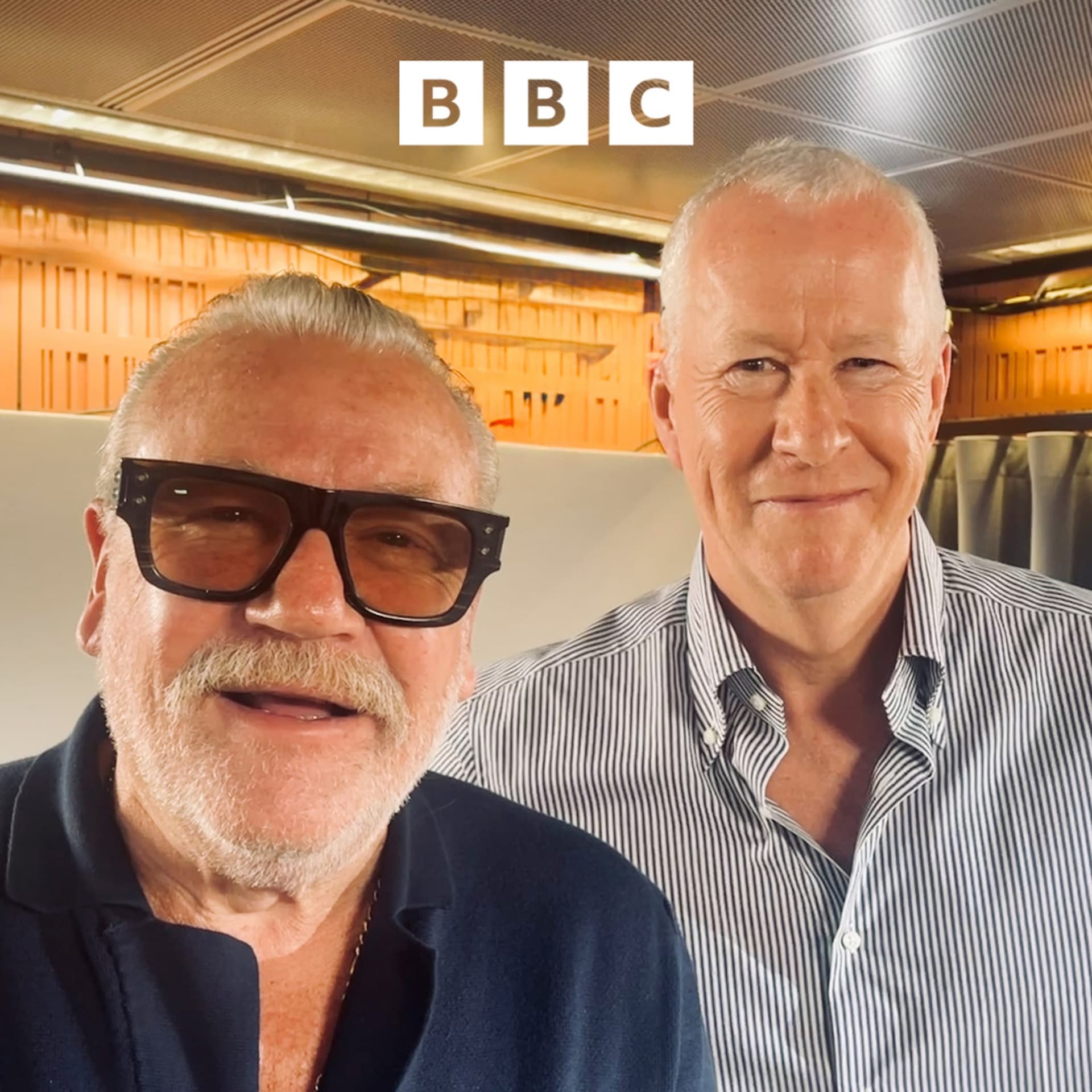
Episode Overview In this episode of *This Cultural Life*, host John Wilson interviews Patricia Cornwell, a bestselling crime author known for her forensic scientist protagonist, Kay Scarpetta. Cornwell shares insights from her life, literary influences, and her career in writing, revealing how her challenging childhood and personal experiences shaped her work.
Key Points
Patricia Cornwell's Background
- Early Life: Cornwell was born in Miami, Florida, and raised in North Carolina. She faced a turbulent childhood after her father's departure when she was five, which left a lasting impact on her and her family.
- Parental Influence:
- Father: A pioneering appellate lawyer whose attention to detail influenced Cornwell's analytical writing style.
- Mother: Faced significant hardships, including the loss of her parents at a young age, which contributed to her struggles with depression.
Literary Influences
- Uncle Tom's Cabin by Harriet Beecher Stowe:
- Cornwell is a direct descendant of Stowe and was profoundly impacted by the themes of power and inhumanity in the novel.
- She feels a kinship with Stowe's writing style and its moral focus.
- Lord of the Flies by William Golding:
- Cornwell was horrified by its brutal depiction of human nature, reinforcing her interest in themes of power dynamics and societal collapse.
Writing Career
- Kay Scarpetta Series:
- Scarpetta is a forensic scientist who investigates murders, primarily through the analysis of evidence left on victims.
- Cornwell emphasizes the importance of authenticity in her narratives, often drawing from real forensic practices and technological advancements.
- Research Process:
- Cornwell dedicates substantial time to research, often working with experts to ensure the accuracy of her storylines.
- She integrates current events and technological advancements into her narratives, making them relevant to contemporary readers.
Personal Reflections
- Impact of Writing on Life:
- Cornwell discusses her hyper-vigilance and how her career has affected her perception of danger and crime.
- Despite the dark themes of her work, she feels a sense of purpose and fulfillment in writing.
Current Projects and Future Outlook
- Latest Work: Her recent novel, *Unnatural Death*, touches on themes of mythology and folklore while maintaining a strong forensic grounding.
- Character Development: Cornwell explores the evolution of Scarpetta and her consistent moral compass, stating she will never let her character deviate from her core values.
Conclusion Patricia Cornwell’s life experiences, from her difficult childhood to her literary influences, heavily shape her writing. She remains committed to exploring complex themes of humanity and justice through her work, ensuring her stories resonate with both her audience and her personal beliefs.
Key Quotes
- "I wouldn’t be who I am today because what I did was I didn’t like the world I lived in, so I made up one of my own."
- "You can't trivialize this; you've got to show it the way Scarpetta sees it, which is a crime against all of nature."
Listening Recommendations For more insights from leading creative figures in various fields, listen to previous episodes featuring notable authors and creators like Ian McEwan and Margaret Atwood on BBC Sounds.
Written by AI. May contain mistakes. Listen to the episode to check what was said.
Transcript
Automatic transcript. May contain errors.0:00BBC Sounds. Music, radio, podcasts.
0:11Welcome to This Cultural Life, the series in which leading creative figures reveal the formative influences and experiences that inspired their own creativity. I'm John Wilson, and my guest in this episode is one of the world's biggest-selling authors, the crime writer Patricia Cornwall. For over 30 years, her protagonist, the forensic scientist Kay Scarpetta, has been investigating murders across America, tracking down criminals by analysing evidence left on the bodies of victims. Since Cornwall's first book, Postmortem, published in 1990, she's sold over 100 million copies worldwide. Her latest novel continues the grisly theme with the title Unnatural Death.
0:55Patricia Cornwall, welcome to This Cultural Life. Well, thank you. So great to be here. You were born in Miami, in Florida, and spent your very early years there. What did your parents do? Well, it's funny you would ask because, you know, I don't believe anybody's ever asked me that before. Ever. In all these years, what did your parents do? That is hilarious. And it's kind of an obvious question. My father was very unusual. He was an appellate specialist, a lawyer. And in fact, he was the first person, I think, in the United States who became an appellate specialist as a profession in law. Basically, what he did is, you know, after there was a trial, whatever the verdict was on appeal, these kinds of attorneys are brought in to basically do an autopsy on the law.
1:40And so it's kind of funny that his attention to detail like that, I feel like that's a little bit where I get some of my very analytical qualities from is from my dad. He wasn't a great father, to say the least, but he was quite a human being. My mom, she started out modelling and then she was a mom. She had three little monsters to raise. Homemaker. Yeah, she tried. And then had to do it on her own because your father left when you were five years old. Yes. What do you remember of that? Well, I remember it very well. It was Christmas morning, which was down in Miami, and I was always the first one up and I was sitting under the tree looking.
2:19I'd always like to look up through the branches. Can I lie under there looking at them? And at everything else, wondering what was for me. And I remember, I knew for sure. I recognized, obviously, that one was a bicycle. That was when I got my first bicycle was at Christmas. What I remember is being out there, and I heard footsteps in the hallway, and I could hear my mother was upset. My dad was walking through the living room with his suitcase. And so I knew that he was leaving. I could tell from everything going on. And my mother was crying and rather hysterical. I remember grabbing him, screaming, don't leave, don't leave.
2:53And he just ignored me. And so I wrapped around one of his legs like yelling at him, please not to leave. And he just kind of freed himself of me and went out the door. And the next few days, because he came over, picked us up several days later and took us to a park. And we met this woman there who I think is the reason that he was leaving my mom. You know, it was pretty awful, actually. My brothers don't remember it. For you as a child, that must have been, well, probably even more difficult because it was Christmas Day when you're expecting good things and gifts. Does that mean Christmas is always tough for you?
3:28If you want me to be honest, it is. I've never really liked Christmas. When I was growing up in Montreat, you know, in North Carolina, Christmas was always for everybody else. My mom was the only divorced person in that little town. And I was always wistful about families gathered around the table and realizing that our house didn't feel like that. What impact did it have on you as a child, do you think, in the years afterwards? Well, you know, I think I wouldn't be who I am today because what I did was I didn't like the world I lived in, so I made up one of my own. And I created characters and I wrote stories.
4:01As a child? As a child. As soon as I could hold a crayon and could write anything, I started writing little books and I would illustrate them and I'd make little covers and I'd sew them together like with a piece of rawhide or a shoelace or something. And I got to be really good at it, of escaping. Did you need an audience or were you writing for yourself? No, I didn't have any audience back then. It was just me. You weren't reading the stories to siblings or to friends? I wasn't. Now, when I started babysitting at the age of nine or ten, that's what I did is I told stories to all the kids. And I was a very popular babysitter because that's all I would do and they wouldn't let me stop.
4:36At nine or ten, that's a very young age to be babysitting other people's children. Nobody should have ever been letting me babysit at that age. I mean, for God's sake, I needed a babysitter myself at that age. Your mother moved you and your siblings to North Carolina. What was the effect of all of that family split on her personally? Oh, well, my mother had trouble anyway. You know, my mother had a terrible life. I mean, when she was nine, her mother died suddenly. When she was 12, her father either fell or jumped off the 17th floor of a building in Chicago. and I'm to this day not sure he wasn't murdered, if you want me to be honest, because he was an inventor.
5:17He and his father were inventors from Germany, and they were very early into the air conditioning business, which was also at the same time Al Capone was that there was terrible organized crime in Chicago. And my mom's father, my grandfather, had just had a meeting on the 17th floor of what was sort of like the Flatiron building, you know, sort of like the sister to that in Chicago. And it was going to be the first building in Chicago that was air conditioned. And mysteriously, he went out the window, but his partner didn't. And my mom and her two sisters were orphans at that point. My mother went into an orphanage.
5:49I don't know whatever happened to the grandfather's business. It mysteriously vanished, right? Something very strange about all that. So my mother was in an orphanage. All those years that I would try to talk to her about her past, she has no memories, really, of whatever happened in that place. And I think that some stuff happened to her. So she had a lot of issues. and then she got with my dad and my mom was very beautiful and she was modeling down in Florida and they were pretty crazy about each other but I think it started going badly very quickly and they were terrible for each other and she had massive bouts of depression.
6:26She was in her bedroom with the drapes drawn and the door shut a lot of the time. And that possibly goes back to the death of her own father. It very well could. And you say there's so many questions unanswered about that death. Have you not ever looked into it? Have you not investigated? I've not investigated it, but I have looked up things that I can find, anything that was in the news about his death, and it was mysterious. For example, the newspaper story said that his coat was folded and left on the windowsill as if, you know, oh, I'm going to take my coat off and fold it before I jump. No, no, I don't think that's what that's for.
7:00I think that somebody decided it would be best if he wasn't around and they put his coat there to make it look like he did that. I mean, you know, you have to really look carefully at a crime scene because people plant things and they manipulate things to make you think what they want. And usually it just it's like a gong. Boom. It's off tune. You see something, you go, that's not right. That doesn't fit with human nature. Something's bothering me about that. And clearly you are still bothered about it. I am bothered about it because it ruined my mother's life. So why have you not investigated?
7:31I mean, this is the stuff of a great book, isn't it? Well, I'd have to, that would be a very big thing to do, to go to Chicago and try to dig up all those records. And I don't think you'd ever be able to prove anything. I'd be very curious who ended up with my grandfather's business. But here's the other weird thing about that. His father died from falling down an elevator shaft. And once again, the same business partner, from what I understand, was in the area. What, not the same one that was involved in your father's death? Mm-hmm. I didn't say he was involved, but, you know, there's some suspicious about it.
8:05Well, he was there when your father died or involved in the residence. I think he was present when both of them did. It's very weird, isn't it, that both of them fell from heights and died. I don't know. The thing with investigating stuff is that you also have to know when there's probably not anything you're going to find that's going to really help you at this stage of things, and I don't think I want my life consumed by that either, you know? But I did talk to my mother before she died. She died this past summer. And I told her, because she used to get very upset and say, why would he leave us?
8:38Why would he leave us like that? Us three girls. He was all we had. And when they came, after it was over, all the blinds were down. It was a shameful thing. You don't commit suicide. They were Catholics. And that was like a terrible sin. I told her, I said, Mom, based on what I've looked into, and this may be as much as we ever know, I think there's a very good chance your father did not kill himself. I think he either fell, maybe he was trying to show somebody leaning out the window where the outside unit was going to go and it was very windy. Or maybe somebody did something to him, but I don't think he did it to himself.
9:11Either way, she lived her whole life having lost her father and then she lost her husband and then she struggled to bring you up and your siblings. And she dealt with a lot of humiliation because if you live in a very... Where we moved in North Carolina, there was no such thing as divorced people. And then when she had psychiatric problems and had to go to the hospital and be there for months, that added to the shame factor. It was so stigmatized back in those days, particularly. She didn't need to have some of the suffering that she did. And then the evangelist, Billy Graham, and his wife, Ruth, were involved in your upbringing, which is a really interesting twist in your tale.
9:51Well, it's bizarre because my mother moved us to that town because Billy Graham lived there. So to be close to him? Yes. I mean, she was listening to him down in Florida, and she started going to church and all this, and she thought, I've got to get my children out of Miami, and I want to raise them in a place that's safe, and she figured wherever Billy Graham lived, that would be a safe town. So she put us in the car, and we headed there without even knowing where we were going. We had no place to stay. We just had a map. And then how did Billy Graham play a part in the upbringing? Well, okay, well, when I was nine, my mother had her first really big breakdown.
10:28My father had driven up to North Carolina to see us, and he brought this woman he was going to get married to. And I think she was pregnant, too. And that put my mother over the edge. And by the end of the year, she was acting very strangely. She was hallucinating, and she burned all our clothes in the fireplace and started walking us up in the snow. The Graham's caretakers coming down in his Jeep, because he plowed the streets around there when they snowed. They would do that for the neighbors. And he stopped the Jeep, and he knew who my mom was. And he said, Mrs. Daniels, where are you going?
11:02Because oddly, obviously, it looks strange, right? And she said, well, we're going up to the Grams. They're expecting us. Well, he knew that wasn't true. So he put us in the back of the Jeep and drove us up there. I still remember sitting in the back of that Jeep. I could smell the spare tire back there. Drove us up. Ruth came out. Most beautiful thing you've ever seen. Smoke coming out of the chimney. This house built out of split logs and stone. and we sat in front of the fireplace while she went and made a bunch of phone calls. My mom had given her a note that said, there's going to be a flood and I'm sailing away.
11:32Please raise my children in your kingdom. They, of course, could not do that, but Ruth made calls. We ended up going down the mountain and staying with these people who'd just come home from the mission field in the Congo. And that was not a good experience. They became a foster family. Yes, and we stayed with them for about three months or so. And it was pretty awful, to be honest. We were very strict and oppressive, and the woman was not a kind person. I had a very difficult time with that because she picked on me for some reason. I was just terrified all the time of her. And Mom finally came home.
12:08We were not allowed to see her or talk to her the whole time she was in the psychiatric hospital. And then, unfortunately, four years later, it happened again, and we had to go back to the same foster people. You know, she was never exactly, she was never, I don't know how to say it. She wasn't someone that really could be a friend and she wasn't someone who could really be a parent. I felt like I took care of her. And in fact, the first time she got sick, the woman we stayed with said that my mom would have been fine if I did a better job of taking care of things. And I was nine, so I'd learn how to embroider and do laundry and cook and set the table and all these things, which is fine.
12:41I didn't mind learning all that. Embroidering I could do without, thank you. I don't need to do that on pillowcases when I could be out climbing a tree or doing something useful, right? But this sounds like a traumatic childhood and still the memories are obviously very difficult. No wonder you escaped into storytelling. What was happening at school at the time in terms of cultural education? What were your interests in? Well, there wasn't much culture in that part of the world, my dear. I mean, I never took a book home the whole time I was in high school, ever. I never had to study. No, I didn't get much cultural experience in school in the early years.
13:18On this programme, Patricia Cornwall, I ask my guests to choose the most important influences and experiences that have inspired their own creativity. And you've chosen the 1852 novel Uncle Tom's Cabin, written by Harriet Beecher Stowe. Why this book and when did you first read it? I don't even remember how old I was when I first read it, but I'd heard about it my entire life because Harriet Beecher Stowe is an ancestor of mine. And my grandmother on my father's side is a direct descendant of the Beecher family. And the weird thing is, when I was nine years old, I wrote a poem about the assassination of Abraham Lincoln.
13:52I was very upset about all this and slavery. And it must be from hearing my grandmother talk. And then I started looking into more of it myself. And when I read her book, I was really blown away because for lots of reasons. But some of the way she described things reminded me weirdly of a little bit of the way I think. It was real strange. I felt a familiarity with her writing, and I don't mean to sound arrogant. I just felt a kinship with it that was strange. And I also realized we write about the same thing, which is the abuse of power. And it is about inhumanity as well, isn't it? It's about brutality.
14:27Her descriptions of someone being sold into slavery and the families, and nobody had ever done that before. They'd taken on the point of view of these people. And, of course, it was incredibly controversial at the time. The men and women to be sold sat in a group apart, talking in a low tone to each other. The woman who had been advertised by the name of Hagar might have been 60, but was older than that by hard work and disease, was partially blind and somewhat crippled with rheumatism. By her side stood her only remaining son, Albert, a bright-looking little fellow of 14 years. The boy was the only survivor of a large family who had been successfully sold away from her to a southern market.
15:11The mother held on to him with both her shaking hands and eyed with intense trepidation everyone who walked up to examine him. How much of an influence has it had on the moral universe that you have created within the Scarpetta novels? I think it's a huge influence because you never want to act like you're teaching anybody anything or they won't participate. But I know that my work can teach you things if you want. And I know that Scarpetta is a moral force. I would never let her be anything other than that. She does not abuse power. She doesn't always play by the rules, but she does not abuse power.
15:45And humanity first, last and always. Uncle Tom's Cabin is a book, as you say, about 19th century slavery. And it's about survival and overcoming all this appalling adversity, mainly because of a Christian faith. I mean, in a way, it's a very deeply sentimental view of slavery as well, isn't it? I suppose so, and Charles Dickens certainly thought so. And compared to other things that had been written, it was. But to me, it's more what you're really saying is she gives pathos to it. She gives feeling to it. She humanizes. She puts a face on these people. You see someone whose wife or child are being sold.
16:21And lots of these people were not good people. Although many African-American writers have argued that it goes further than that. It's more than sentimentality. It's about creating stereotypes which have endured. You know, James Baldwin said this and Ralph Ellison. How do you feel about that sort of criticism? Well, I don't know. But you've got to remember you're looking in the rearview mirror. And at the time that she wrote this, you know, very different landscape and very different way of expressing oneself. You know, if she were to write something today that's putting a microscope on something like that, I'm sure she would express it very differently.
16:55But I know what you're saying. It's the very thing when I started writing what I'm writing today. When I was in the morgue and I'm looking at dead bodies on a table who've had terrible things done to them. and I'm going, you can't trivialise this, you've got to show it and you do not want to trivialise it by making it a puzzle to be solved, you've got to show it the way Scarpetta sees it, which is a crime against all of nature. Harriet Beecher Stowe is the person who supposedly, Abraham Lincoln when he met her said, oh, the woman who started the American Civil War and you say as a child you wrote a poem about Abraham Lincoln.
17:30I did. Was that with your ancestor in mind? I don't think so but it must have been in the context of that because why else would I be thinking, you know, he roamed the lands here and there and set slaves free everywhere and then one day he was shot in the head and the next day poor old Abe was dead. Now, why would I write that at age nine? Is that what it was? Yeah, I'm just quoting it for you. Is that the whole thing? No. No, there was a man, his name was Abe, he lived in the cabin when he was a baby, he roamed the lands here and there and set slaves free everywhere and then one day he was shot in the head and the next day poor old Abe was dead and now he's in heaven sitting on a golden ladder because the devil didn't get him, the devil's even madder and nobody's going to give me a Nobel Prize for that.
18:13Seamus Heaney's crown is safe. That last line wasn't part of the poem, that was you. No, it was part of the poem, Mr Kicker. What, seriously? Seriously, I'm just quoting the whole thing to you. That's amazing, at nine. Well, I have very few poems that I remember from way back then but I remember that one. But when you were writing these stories and these poems, did you want to write? Did you think? I just did it. I didn't know I wanted to. As a living? No. I didn't know what I was going to do because there were so many things I wasn't good at. And so the only thing anybody had ever given me praise for was writing.
18:49And then for a long time, I was pretty sure that wasn't going to happen either.
18:58Let's move on to another influential book, Your next choice for this cultural life is William Golding's Lord of the Flies. Where and when did you read it? I read that when I was a reporter at the Charlotte Observer. I had the paperback and I'd sit at my desk when there was nothing going on. I was waiting for the next police call and I would read and I couldn't put it down. And I was horrified by it because it is such a shocking view at human nature. Well, now that is an example of not sentimentalising something. It's pretty savage. It's another book about abuse of power again, isn't it? Oh, absolutely.
19:32Power structures and hierarchies. Yes. Meridue turned to Ralph. Aren't there any grown-ups? No. Then we'll have to look after ourselves. Ralph turned to him quickly. This was the voice of one who knew his own mind. Jack spoke. We've got to decide about being rescued. Ralph lifted the conch. Seems to me we ought to have a chief to decide things. A chief! A chief! I ought to be chief, said Jack with simple arrogance, because I'm chapter chorister and head boy. So you were reading this book whilst you were working as a reporter. What desk were you on? What was your speciality? Well, when I first started, I was actually a clerk for the TV guide.
20:17And then I was advanced to general assignment. And I wrote a lot of obituaries. What a surprise, right? Within six months of being at the paper, they advanced me then to the police beat. So I probably was on general assignment sitting around reading. Usually when the police beat, I was out running around in the car somewhere. But I was definitely reading it at the newspaper. And I don't even know why I started reading it. But that really distills the worst part of human nature. And it reminds you, don't ever think that you're not born with certain tendencies that you need to curb as you get older.
20:49Because it's our nature to grab, to take and to want and to complain. It's a book which details abuse and brutality and putrefaction as well. I mean, there is a head which is decaying, which is interesting, given what you were writing about later. Were you drawn at that time to crime? And is that how you ended up on the police beat? You know, I wasn't drawn to crime, but I was horrified by anything that was shocking, whether it was crime or somebody dying in a car accident. I think the horror of it compels me to be insanely curious. Maybe if I see everything and understand it, it won't be as horrible to me.
21:28I didn't get exposed to crime, though, until I started doing the crime reporting, and I didn't realize how relentless I was going to be about it. I mean, I had to find out everything I possibly could. And I'll never forget my first introduction to the morgue was when I was doing that crime reporting. And a couple of death row escapees had broken out of prison. And they killed one of their compatriots whose body was fished out of the river. And I was doing all these stories. It was front page news, running around trying to find these people who had escaped, which was really stupid. But long story short, I wanted to know what had happened to this murdered person, the guy that they had been with.
22:02And so I just, you know what, I'm going to call the hospital. And I just started making phone calls. and this nighttime nurse got on the phone. And I don't know why she did this. I said, well, what were his injuries? She said, I don't know. I didn't really get that good a look at him. And I said, well, where is he now? And she said, well, he's down in the morgue in the refrigerator. And I said, well, can you look? And she said, okay. I went, you know, I'm holding on the phone. I can't believe this person's going to do this. So I hold and she comes back upstairs and she says, well, he had this and this and this.
22:32So I basically inferred that he was kicked to death with their dingo boots, so to speak. You know, look, he had blunt force trauma. I didn't know what it was called back then. But I got all the gory from the morgue. And see, the medical examiner would not talk to me. Well, that was a mistake, because as soon as I moved to Richmond, Virginia, I said, I'm going to find a medical examiner who will. And I did. And just to be clear, your literary heroine, Case Garpetta, is the chief medical examiner, the person who in American law oversees the post-mortem investigations in cases of... Like the coroner over here.
Read the full transcript
23:03Exactly, the coroner here, but it's in cases of suspicious or unnatural death. Right. I step off the elevator on the morgue level, the air foul beneath a cloying patina of deodoriser, the white tile floor blood-dripped and dirty. Cinder block walls are scuffed and smudged, the red biohazard trash cans overflowing. I'd be inside the autopsy suite right now if I hadn't been summoned to a scene that promises to be a nightmare. Two campers have been killed near an abandoned gold mine 60 miles southwest of here. Virginia's office of the chief medical examiner hasn't had a case from there in its 80-some year history.
23:44That doesn't mean there haven't been fatalities no one knows about. So there's one thing to be on the phone having a dead body described to you. You then were in the morgue. Did you have no qualms about death? No, I didn't have any qualms about it because I knew I was there for the right reason. I wanted to learn. And I also would work while I was there. I would scribe because their hands are messy, you know. And I'd write down everything, the weights of stuff or how much the coronary artery had narrowed, what percentage, whatever it is they told me. You were the clerk? Yeah, I was the clerk and I'd scribe and hang up bloody clothes to dry or do whatever they wanted because I wanted to write crime novels and I thought I've got to know...
24:25This was after I'd left the newspaper and all that and done the Ruth Graham biography and I said, I want to write books but I want to write about crime. Just to be clear, you wrote a biography about Ruth Graham, Billy Graham's wife who helped place you in those foster homes. Right, who also in many ways saved our life. I mean, she got the church to help us. We were going to be put in social services. And that was your first book? Yes. But then you started writing crime, or you wanted to write crime fiction. Well, my then husband wanted to move to Richmond, Virginia to go to seminary. So I had to quit the newspaper.
24:57And I took that as an opportunity to write about Ruth. And I got a contract with Harper and Rowe to do her biography. And so that happened. And then I thought, now what do I do? We're living in seminary housing and the book is out. And my agent had fired me because he didn't want anything else from me. And I thought, I want to write books about crime now. I mean, it's the only thing I know. So I started doing research and I got to go to the morgue. And my first time there with Dr. Fierro, Marcella Fierro, I said, what is coming down the road? What's going to be new besides dead bodies? I mean, I imagine it's not that different than it's ever been done, which it isn't for the most part.
25:31She said, well, there's this thing called DNA that's coming down the track and also using lasers to look for evidence on bodies. And I said, ooh, I want to learn about this. So that's how it all started. And then I started working there, and it took me six years to get published. And by then I knew a lot. And she was your model from the start then? Well, she was my intellectual inspiration, but Scarpetta's not based on any real person. Doesn't look like anybody I know, doesn't really act like anybody I know. Well, hang on. From what we know of her, she's fairly small and blonde and determined.
26:03And, I mean, I imagine she looks like you. Well, you know, when I first came up with her, which was before post-mortem, I had three books before that that got rejected, and she was a minor character. And that was at the time when Geraldine Ferraro was on the ticket to be vice president. And she was this very dynamic, small, blonde woman. And I thought, I bet Scarpetta would look a little bit like that because she's Italian. Interestingly to the fans, they have all kinds of descriptions of her. Most of them think she's dark because she's Italian. They think she's dark. Yeah. Now we'll see what they think when Nicole Kidman plays her, I guess, right?
26:37She's not small anymore. She's very tall. That's just been announced. And with Jamie Lee Curtis playing Scarpetta's sister, Dorothy. Did you have a say in casting, by the way? Was Nicole Kidman your choice? Oh, gosh. I mean, who wouldn't want Nicole Kidman? Former guest on this programme, by the way, Nicole Kidman. And that must have been fun. You kind of have to have her again when she can talk about Scarpetta. That would be great. I'd love to hear what she says. I'm really interested that when you had this idea and you were in the morgue talking to the coroner, the chief medical examiner, she said, what's coming down the line in terms of technology?
27:09That's what's always driven your books. It's not just about the case, the investigation. It's about how it's investigated. OK, you want to know the truth? I don't like writing autopsy scenes. I find autopsy scenes are boring unless I do something to really shake it up, because it's the same thing. It's the liver and the lungs and the stomach and what's in it and the brain and how much it weighs, which doesn't reflect whether someone's smart or not. I mean, it's just the same old same old that's been going on since Da Vinci was doing it. Ghoul bull. But what it tells you and more important is the evidence that's transferred that you can't see.
27:48I'll give you a good example. You know, when you find a piece of chewing gum in a stomach and that person didn't have chewing gum. Well, why has he got chewing gum? Well, someone gave it to him. Well, who did that? all these little things that make you ask a question, you know, especially in cases where someone's been abducted or a child has been taken and done something, something awful has been done. You look at these things because it's telling you more about where they've been and who they've been around. And then we get to that's what's going to start solving something. The autopsy is important and pattern injuries are important because, and they're hard to see, you have to learn, but that's going to tell you what instrument inflicted this injury.
28:27And if it's a belt, for example, you see the little holes that were in it? I mean, because it leaves little sparing marks. You can start piecing together what it was, well, where did the belt come from and who's going to use the belt? Given that the books are so incredibly detailed in terms of the forensic analysis, the science, and the police investigation, the homicide investigations, and with roughly a book a year, what proportion of your time is spent researching to the actual writing? You would think that I write quickly. I don't write quickly. I write, I spend a lot of time writing. I'm a typical 10-hour day person.
29:02And if I'm alone, it might even be more than that. Like if Stacey's out of town, then because it takes me, I'm very, very precise and I go over things and over things and over things. But the whole time I'm writing, I'm also researching. I have consultants who are experts. It's like NASA people that if I'm dealing with electromagnetic energy, or surveillance devices or, for example, in Unnatural Death, where there's the whole thing where they're hearing weird things in the woods, what the kinds of sounds that Bigfoot might make. But I can also tell you there are technologies that would stun people that are out there these days where you could explain something.
29:37But then again, I'm not saying Bigfoot didn't do it. This is the aspect. Everything so far in the Scarpetta novels really has been about technology and fact. But in this latest book, Unnatural Death, I think probably some listeners will be. surprised to see that you are veering into the territory of mythology, the unknown and folklore. I wasn't going to say Bigfoot, but you have. Well, I don't mind it because Bigfoot is it's a thread that runs through it. It's not about this whole story is not about Bigfoot at all because a Bigfoot footprint is found close proximity to a dead body where these two people have been savagely murdered out in the middle of the forest.
30:15You can believe in Bigfoot or not believe in Bigfoot and read this book. I know that having done the research and knowing that Bigfoot did used to exist in China. It's Gigantica pithicus is the name of the creature. It means giant ape. And they found fossils in caves in Asia that they pieced together from the teeth and parts of the jawbone the size of this primate. That's how we know about it. What they don't understand is how it could be in North America because we don't have those same fossils and we don't have them found a body. There have been sightings, but are they real? What's your feeling?
30:48What's your hunch? I think there's a lot of things out there that we don't know about, that we'd be baffled by if we knew. But I will quote what Scarpetta always says, which is when I am looking for a predator, almost always it's of the two-legged variety. And she doesn't mean Bigfoot.
31:07Your next choice for this programme is the Parthenon sculptures, otherwise known as the Elgin marbles, the ancient frieze sculptures that adorned the walls of the Parthenon in Greece and which have been housed in the British Museum since the early 1800s. When did you first see them in London? Sometime in the 90s when I was over here for something and I don't remember why I was over there, but when I saw them I was mesmerised because it's all a medius race. It's in the middle. You know, someone's turning, making a point, someone else is saying something, someone's looking and it captures the action midstream, midway and it makes your curiosity go nuts because I went, what is he saying to you?
31:49What's going on here? Why are you gathered? And so I learned from that. And I thought, never start your books at the beginning. Always start with something going on. And I tried to do that. Like in Unnatural Death, Scarpetta's on her way out of the building. You know all hell is broken loose and she's flying out the door. And I was like, whoa, whoa, whoa, what's happening? And is that the way that you write? Are you setting a scene and asking yourself what's happening? Oh, I do that all the time. I have her find things and I don't know why she found them. Then I've got to figure out what it means.
32:23So you don't lay out the plot in advance before you start writing? No, I don't. I start thinking about it, but I get surprised. I'll give you a good example. An unnatural death when Scarpetta gets to the scene in the woods and she has to go get the one body out of the mine shaft, get this other body out of a polluted lake where there's all kinds of big creatures swimming around. And she's looking at it and she finds that there's these long gashes to the hands that almost look like claws. And I saw that and I go, what are these? Why are you finding these? OK, well, because now I'm supposed to figure out what it means.
32:55I think that's not fair. You know when I don't. So you're retrofitting the crime to the evidence. Then I figured out what she was looking for, what somebody was looking for, not her, somebody. I don't want to give a spoiler, but there was a reason that those incisions and they were incisions were made and just to go back to the path non-marbles because that is storytelling set in stone a moment frozen in time and as you say you haven't got the beginning of the story there and you haven't got the end you've just got a part of it so that did actually make you think this still does this is the way i can write and start a story make those marbles come alive then paper and ink can come alive too those things still make me curious i still wish you would tell me exactly what those people were talking about.
33:38You know, were they talking about dinner? Or did you know that so and so? Or I want to know. And if something like that can still make me curious after all these years, then it's pretty powerful. Your very first Scarpetta novel in 1990 was inspired by real murder cases. How much are you looking out for real world events as possible plot lines? I look at it all the time, especially things that are happening in the world at large that affect us on a daily basis. And of course, in A Natural Death, there are allusions to the war in Ukraine and Russia's shadow army. And the rise of the right-wing extremists.
34:14Oh, yes. Yeah, the January 6th and the stuff going on in America. So I put her smack right in the middle of the same world that we live in. What I don't necessarily do is like, because there's been, you know, like some huge crime case is that I'm going to maybe necessarily think of that as fodder. Now, I did more in the early days because I was part of it. I was working in the morgue when those serial murders happened in Richmond and it had a huge impact on me because I was terrified. You know, I was working in the morgue and everybody was afraid. They didn't know who was doing this. You have sold over 100 million books worldwide and you have a lot of very loyal readers.
34:53How much do you have to write to satisfy their expectations, not to disappoint them? I'm always mindful of that. I don't want to disappoint my readers. I remain pretty true. Most of us, be true to the characters. If I'm true to the characters, then everything else will be within the range of normalcy that it needs to be in. But is that ever frustrating for you as an author in having to satisfy those expectations? It's a challenge, but I wouldn't want to present Scarpetta out of character. I wouldn't. And it's funny, television show will be able to get away with things I cannot. Like, I really don't have scenes where Scarpetta and Benton are having, like, a huge marital fight.
35:32So we're slamming doors and dishes broken and storming out. My fans don't want to see that. Now, I don't know if they fight that way. I don't think so, but I'm sure they have their moments. And I don't usually, they don't usually let me in the bedroom either. I don't usually, whatever they're doing in there, they keep that door shut most of the time. I've gotten peaks now and then, but I do make mistakes. I admit it. There's some things I've done in my series that I wouldn't do. I'd undo it. I wouldn't have ever killed off Benton. I wouldn't have ever had Marino get his, he was a pill and it was either kill him off or do something where he has to reinvent himself.
36:04And I chose the latter, but it was a really bad thing he did. And so I look back on those things, I'd handle them differently today. I would not let them get to that stage to begin with. But you know, I didn't, I'd only, this is the first time I'm doing all this, I'm still learning. You chose the Parthenon marbles in the British Museum as a cultural inspiration and London has had a recurring fascination for you, clearly, because 20 years ago you published a book in which you detailed your investigation into the Jack the Ripper murders and you concluded that it was the artist Walter Sickert who was the Ripper.
36:38You still believe that? Yeah, I do. I'll tell you this definitively. If he didn't do it, then he is the one who created the whole Jack the Ripper myth. But with the letters that were written that Jack the Ripper wrote, I mean, it would be very hard to prove that he did not write some of those letters. When you have watermarks that there are five pieces of paper out of 24 that were ever milled in this hand-cut series of pieces of paper for stationery, and three of them are letters that Walter Sickert wrote on his mother's stationery, and two are Jack the Ripper letters. And they are the exact run of paper.
37:16A very unusual and expensive handmade paper, by the way. And there were other matching watermarks in the paper. And Peter Bauer, who is the world's foremost paper analyst, he's the one who did all that. Not me. I'm not a paper person. I'm not a scientist. I didn't do the DNA in this case. I didn't do any of the science. I simply reported on what the scientists did. So Sickert, for sure, wrote some of these confessional letters. And there are many other reasons that I believe he was Jack the Ripper. but you are never going to definitively prove that unless you find something. I don't even know what that would be anymore.
37:52You are never going to really know for sure who Jack the Ripper was. I know what I think but I understand why a lot of people would have their doubts. There is very compelling evidence that links Walter Sickett to the case but you admit there's no bang to rights evidence that would convict him. No, there's not. You'd have to be able to put him at a crime scene and I don't see any way you're going to ever do that. You've written two books about your Jack the Ripper theories now. Because the first one was my first attempt and the second one was better. Have you not considered writing a historical novel about the Ripper or about Walter Sickert himself?
38:26No, I don't want to write any more about him. You let other people look into it now if they want to. I feel I've exhausted it. There's always more minutiae you could get. But in terms of, like you say, a smoking gun type thing, I'm not going to find anything more than I have. You know, if you even exhumed, if there was anything left, like if you could exhume Mary Kelly's grave, and first you'd have to find it because a lot of these graves are not where you think they are and what would be left of it. And even if, let's just say you had a very good intact skeleton of Mary Kelly, the best you could hope to find is a lot of cut marks on bone because of the dissection that was done on her body by the killer.
39:01But that's still finding cut marks and things like that are not going to tell you who did it after all these years. You know, I think it's always going to be elusive. Violent crime has played such a huge part of your life for 30 years or so. What effect has all of that had, writing about such gruesome and terrifying subjects? What effect has it had on you personally? Well, I don't really think about it much, but I'm hypervigilant. I cannot help be hypervigilant. Everywhere I go, I look for something that's dangerous. I don't even think about it. I just, I know it, whether it's something on the sidewalk that could trip you and you could get hurt, or an electrical wire that doesn't look right.
39:37I'm just very lightning flashing outside. I'm mindful of things that can kill you because I've seen it. Vigilant or fearful? No, vigilance. I don't walk around fearful. In fact, when it comes to fight or flight, I'm a fight person. The few times anyone's ever chased me, I turn around and chase them back. I'm not saying I wouldn't run from something if I can get away because that'd be the smart thing to do, but if I can't get away, then I'm going to confront it. And I have before, stalkers and things like that. You've had that problem. I have had that problem, and I hope I don't have it again. Do you think they're attracted because of the subject matter you write about?
40:09I don't know. Just because if you become very well-known at something, I don't know. It's an irony because I'm not a good person to do that to. No, because if I don't take care of it myself, I have people who will. Well, I've got to say, I think you are the first guest to have arrived in the studio with Bodyghast. I've done that forever. From the first few years I was out, I'll be honest with you, the crowds got so big at book signings in Richmond, and then with that many people crowding around me and then I started having stalkers and things like that. I just, I had to have security. It's prevention.
40:40It's just being smart. You've written 27 Scarpetta novels, several other works of fiction and other books. Kay Scarpetta, well, if we were following it in a logical way, would be in her probably mid, late 60s by now. Will she retire? No, she will never retire. Even if I do, I don't think she will. I tried it after Chaos, the last book that was during the presidential election for Trump. I thought, I'm not doing this anymore. I've had enough of it. I don't have anything new to say. I went away and then COVID started and then all the unrest in America. And I thought, what would Scarpetta do? Is this a chance to bring, would she want to come back?
41:18And I had to talk to her about it, so to speak. I imagined, where is she? Because I had to find her first. And I saw her in a garden in Northern Virginia, old town Alexandria, old, old home she's living in with an old garden that she's at a wrought iron table. I imagine myself saying to her, you want to work another case? She says, well, maybe, depends on what it is. And she had retired, in your mind? Well, I'd retired her. What she did sent me back to graduate school. She said, you're out of ideas because you need to go learn something new, you idiot. So go hang out with NASA for four years. I did.
41:50Go write two space thrillers, whatever. And then that gave me a whole new toolbox for technologies I can use in the new books. You've sold so many books. And you've made a lot of money. You don't have to work anymore. You don't have to write anymore. What drives you on? It's who I am. It's my safe space. It's my sweet spot is sitting at my desk working as hard as it is and as frustrated as I get. And there are some mornings where I'm filled with dread when I walk down the hallway to my office. But it's where I feel that I'm whole, that this is what I'm supposed to do. and as long as I feel that way and there's an audience for it then I'll keep doing it.
42:30If people didn't want it anymore then I'd have to stop just like I did Captain Chase. They didn't want the space books and she's still up there 22 ,000 miles above the planet orbiting in the geosynchronous zone where all the satellites are way up there and she's stuck up there because I haven't brought her home because I didn't do a third book. Sorry! I hope you like the view. Patricia Cornwall, thank you so much for sharing your cultural life with us. Well, thank you. This has been great.
43:02I do hope you enjoyed my conversation with Patricia Cornwell. She's just one of many novelists that we've had on the show. Booker Prize winners Ian McEwan, Bernadine Evaristo, Penelope Lively and Margaret Atwood are among our previous guests, along with Ali Smith, Leila Slimani, Donna Leon and Nobel Prize winner Abdel Razak-Gurna. They're all available on BBC Sounds or wherever you get your podcasts. From me, John Wilson, and series producer Edwina Pittman, thank you very much for listening to This Cultural Life.
43:35I'm John Ronson, and I'm back with season two of Things Fell Apart, my show for BBC Radio 4 that unearths the origin stories of the culture wars. This time around, the stories are all about the battlefronts that engulfed us during lockdown. The stories twist and turn until each one ends with the explosion of a new, far-reaching culture war. If you tell me that my nephew had superhuman strength, if you tell me that he didn't feel any pain, well, he's dead now. That's Things Fell Apart, Season 2. Listen on BBC Sounds.
From the publisher
Patricia Cornwell’s books have sold over 120 million copies in thirty-six languages in over 120 countries. She’s authored dozens of New York Times bestsellers. For over thirty years her protagonist, the forensic scientist Kay Scarpetta has been investigating murders across America, tracking down criminals by analysing evidence left on the bodies of victims. Cornwell has won the Sherlock Award, the Gold Dagger Award, the RBA Thriller Award, and the Medal of Chevalier of the Order of Arts and Letters for her contributions to literary and artistic development. She's also authored two books on the identity of Jack the Ripper. Her latest Kay Scarpetta novel is Unnatural Death.
Patricia talks to John Wilson about her challenging childhood and upbringing in North Carolina. She reveals the influence of two works of literature on her own writing; Uncle Tom's Cabin by Harriet Beecher Stowe, an ancestor of Cornwell's; and William Golding's Lord of the Flies. She also talks about her interest in the Parthenon Sculptures and her fascination with the identity of Jack the Ripper.
Producer: Edwina Pitman