In short
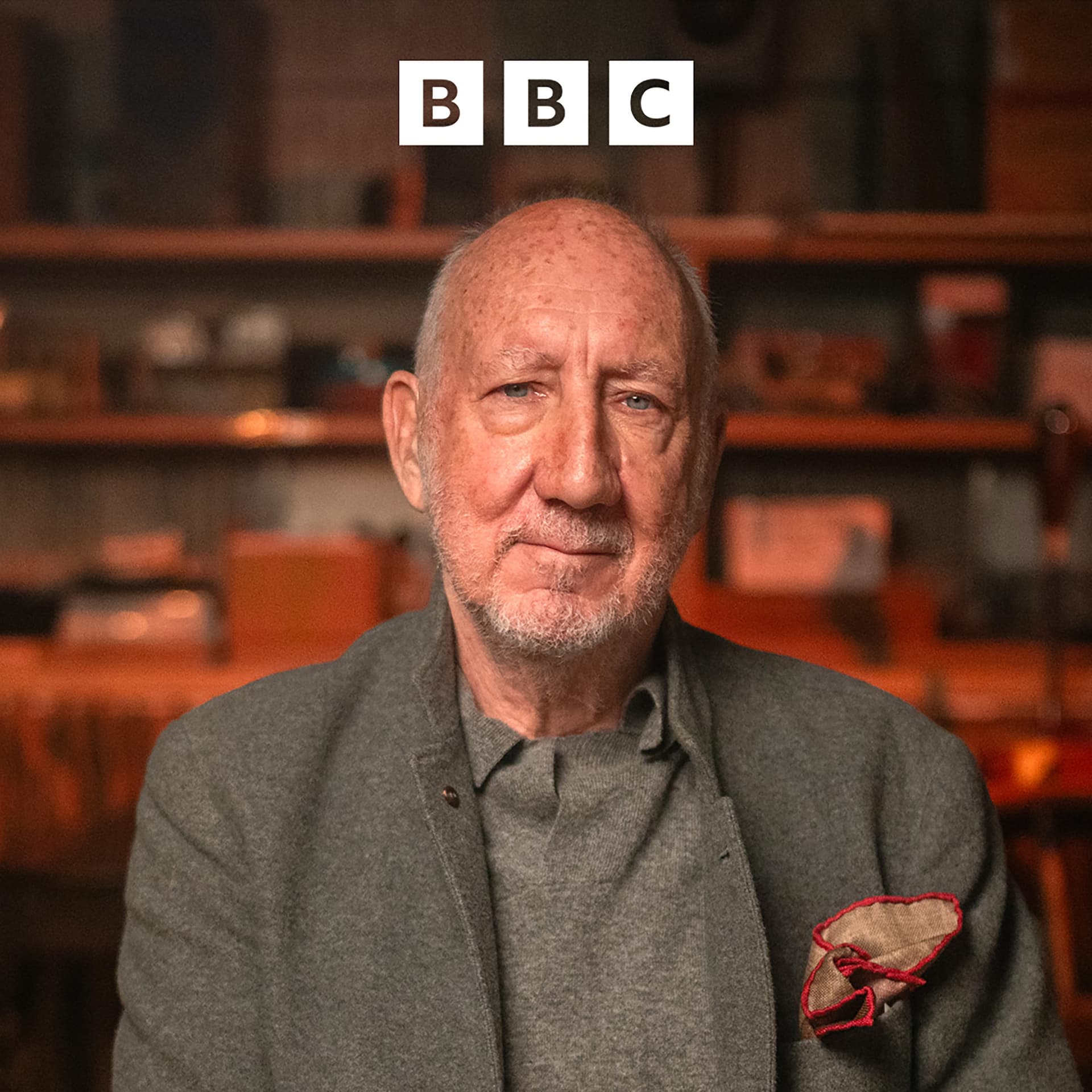
Podcast Notes: This Cultural Life - Pete Townshend
Episode Overview
- Host: John Wilson
- Guest: Pete Townshend, co-founder and guitarist of The Who
- Key Themes: Influence of family, songwriting process, artistic evolution, legacy of The Who
Introduction
- The episode features Pete Townshend, known for his role in The Who, which revolutionized rock music with hits like "My Generation" and concept albums such as *Tommy* and *Quadrophenia*.
- The discussion delves into Townshend's early life, creative influences, and reflections on the legacy of The Who.
Key Influences Family Background
- Parents: Both were musicians; father (Cliff Townshend) a saxophonist and mother (Betty) a singer.
- Impact: Early exposure to music contributed to Townshend's artistic development.
- Traveling: Accompanied parents on tour from a very young age, shaping his view of performance and music.
Artistic Education
- Roy Ascot: Art tutor at Ealing Art School who introduced innovative concepts in visual arts and communication.
- Inspired Townshend to think differently about creativity, eventually influencing his approach to songwriting.
Literary Influence
- Jorge Luis Borges: Read *Labyrinths* during The Who's first US tour.
- Borges’ exploration of time and narrative influenced Townshend’s songwriting, particularly in moving towards more complex storytelling.
Evolution of The Who
- Townshend's journey from a pub band to global rock icons.
- Key Projects:
- *Tommy*: A rock opera that tells the story of a deaf, dumb, and blind boy who becomes a 'pinball wizard'.
- *Quadrophenia*: A concept album exploring identity and youth culture, adapted into a ballet.
Performance and Presence
- On Stage Persona: Discussed the duality of his identity while performing; often felt detached from his on-stage self.
- The act of smashing guitars became a symbolic expression of chaos and rebellion.
- Memories of Woodstock: Reflected on the chaotic organization but acknowledged its impact on The Who's career.
Contemporary Reflections Career Transition
- Discussed a pivot towards new forms of artistic expression, such as ballet and classical opera.
- Emphasized a desire to explore new creative avenues as he approaches a significant age milestone.
Thoughts on Legacy
- Townshend is proud of The Who's contribution to music and culture, recognizing their influence on future generations.
- Final Tour: Announced farewell tour in America, contemplating the end of an era for The Who.
Conclusion
- Townshend expresses a continuous need to create and evolve artistically, indicating that he will not rest on past successes.
- The episode closes with reflections on his journey, remaining challenges, and the relentless pursuit of innovation in his art.
Key Takeaways
- Influence of Family: Early support from his mother and experiences on the road shaped Townshend's musical journey.
- Education's Role: Art school education provided a foundation for creative experimentation.
- Literary Inspirations: Borges’ complex narratives opened new pathways in songwriting.
- Legacy of The Who: Acknowledgment of the band's significant cultural impact and Townshend's desire to continually redefine his artistic identity.
---
This markdown document encapsulates the key discussions and insights from the podcast episode featuring Pete Townshend, offering a structured overview of his influences, career, and reflections on music and art.
Written by AI. May contain mistakes. Listen to the episode to check what was said.
Transcript
Automatic transcript. May contain errors.0:00Hello, I'm John Wilson. You're about to listen to This Cultural Life. Episodes are released weekly, wherever you get your podcasts. But if you're in the UK, you can listen to the latest episode first on BBC Sounds, seven days earlier than anywhere else. Do subscribe to This Cultural Life on BBC Sounds and make sure you have push notifications turned on and we'll let you know as soon as new episodes are available.
0:32Hello and welcome to This Cultural Life, the series in which some of the world's leading artistic figures choose the most significant influences and experiences that have inspired their own creativity. I'm John Wilson, and my guest in this episode is Pete Townsend, songwriter and guitarist with The Who. The band first stormed the pop charts 60 years ago with teenage anthems including I Can't Explain, Substitute and My Generation. People try to put us down. Talking about my generation. Broader songwriting ambitions led Pete Townsend to create the rock opera Tommy in 1969 and the concept album Quadrophenia four years later.
1:11Both projects were adapted as films and now Quadrophenia has been staged as a ballet by Sadler's Wells. Throughout the 70s and 80s, The Who were regarded as the biggest and loudest live act in the world. They played at Woodstock, at Live Aid, at Live 8, and the 2012 Olympic Closing Ceremony. Despite the deaths of drummer Keith Moon and bassist John Entwistle, Pete Townshend and singer Roger Daltrey continue to perform as The Who.
1:43Pete Townshend, welcome to This Cultural Life. Thank you. You were born in London in 1945 into a very musical family. Your mother and father, Cliff and Betty, were both working musicians and you've chosen both of them as your first creative influence for this programme. Just give us a sense of what were they playing and how big an impact they had on you. Well, my dad was a professional musician, a clarinetist in little jazz groups. My mum was a young Irish girl, I think you would call her, living with her grandmother. and I was born right at the end of the war in May, right when things were winding down.
2:21And my parents did their best to run a family, but it was difficult because my mother wanted to be a singer and my dad was really busy. If you were in an Air Force orchestra, you were still in the Air Force. And my mum was left behind and tried to build a career. And then my parents started to take me on the road. And that's when the good stuff started to happen. So this is a post-war jazz band or swing band? They were a dance band. The Squadron Airs, they were called. They were a very famous and very popular dance band.
2:59Did you see your parents perform on stage a lot? Oh, yeah. They would take you along to the shows? Yeah, I travelled with them from the age of around 13 months. I started to travel with them on the band bus. And that's a glamorous life, I guess, through the eyes of a young child. It was glamorous. And when I was a little older, from about 13 months old, I've got an extraordinarily clear memory of many big events, like being on the band bus, passing out beer bottles to trumpet players, riding at the front, pretending to drive. When The Who first started to tour in the UK, I knew my way to all of the gigs because I'd done it so many times with my dad.
3:39That's extraordinary. And did you at that age, did you want to emulate your parents, do you think? I think it was too early for me to really tell. I think the hiccup that happened to me was that my mother got a job with a guy called Leslie Douglas, who was doing shows for the American Air Forces, and he was in love with my mother. And she started to tour with him, and she sent me to my grandmother, who had abandoned her when she was seven. Why she sent me to live with this woman, I don't know, but I went to live with this woman. I left my friends at school behind. I left the gang from Acton behind.
4:19And you were living, this is by the sea? Yeah, I went to live with her in Margate and it was just horrible. And I don't remember, and I kind of black it out. I tend to black it out. It was so horrible. You described it in your memoir a few years ago as the darkest part of my life. Yeah, I think dark is the right word because I don't remember a lot about it. So she was nuts and abusive and cruel and surrounded by extremely pervy men all the time who interfered with me. I had no friends. I wasn't allowed to have friends. Anyway, it was a really shitty time. And in the end, somebody reported my grandmother for abusive behaviour.
5:03My mother and her lover, she had a new lover as well, they came down and rescued me and they brought my friend Graham, who had been my best friend. So I came back to Acton and at that point my father stepped in and said to my mother that she couldn't take me away. Right. And had to rebuild the relationship. And as far as I was concerned, that was where my childhood began. So this is a childhood of great uncertainty. Did music offer some kind of escape for you? Having seen your parents on the road and audiences cheering them, when did you start thinking, I want to make music myself? I think that happened when I was in my early, lucky 10, 11, 12.
5:48You've talked before about an aunt called Trilby who had a piano. That's right. Who would allow you to play, but it was an out-of-tune piano, so it created strange resonant tones. Yeah, she was fabulous. She was fabulous not because she encouraged my meanderings, but she was just fabulous anyway. One day I was playing the piano just clunking away and I went off into a dream, a fantasy. I could literally hear the most incredible music. It wasn't what I was playing. I was hearing something else. Channeling, I suppose. Anyway, I finished and I went very quiet and she was knitting or something and she said, that was very nice, Pete.
6:24And I said, I know. And I wondered how she knew. So she encouraged you then? Yeah, of course she did, yeah. And that was a place, a great haven of love and safety for me. Were you getting any musical encouragement from your father? No. Do you think he worried that if you followed in his profession it would be too precarious? He knew that it was an uncertain life to be in? No, I don't know why. I think it may be that my parents knew that I was damaged because I do feel that I'm damaged. You know, I've done all of the things that people do that have fallen into addiction and bad behaviour and, you know, all of the counselling and the AA and the psychotherapy and inevitably I feel like a diamond with a floor.
7:15You know, I feel in a sense that some of the suffering that I had when I was really small with my grandmother shaped me and gave me real edge. You know, I'm a dangerous fucker. There's no question. You know, when I work, I am charged. And I feel that that came from the time with my grandmother where I had to build up some level of resistance. You know, I was saved by my parents. You know, they did in the end save me because they got together for my benefit. And eventually, after a while, I had two brothers. But it took a long time. You say got together because they'd split up. They'd split up.
7:52She'd gone off with the other musician. And he had a girlfriend too, of course. He was a very handsome fella. And they remained together then? Yes, and seemed to be quite happy. Did your father... I think he died in the mid-'80s, didn't he? Yes, yeah. So did he watch your career from afar, or was he encouraging when you got that huge global success? You know what's so interesting? It was my mum that was the most encouraging. He just thought that I had no musical talent, But my mum was the one who, when the school band started with Roger Daltrey and John Embersole, which was when I was 15, swung behind us and started to help us deliver gear, got us auditions for gigs and used some of her old romantic connections.
8:40She contacted Leslie Douglas. And Leslie Douglas, who's the man I think who was most in love with her, got us a job at the American Air Force canteen kind of place in Kensington. And we were paid about probably the equivalent in today's money of about a thousand quid. Wow. It was huge. We bought gear. We bought guitars. We bought a van. In my case, we drank. You know, we were wealthy because of that. And then it also gave us a contact with an American audience. One, two, three o 'clock, four o 'clock, rock. Five, six, seven o 'clock, eight o 'clock. Your next choice for This Cultural Life, Pete Townshend, is seeing Bill Haley and the Comets in London in 1957.
9:27Of course, Bill Haley's hit single, Rock Around the Clock, had been the first big international rock and roll hit in, I think, 1954. so do you remember hearing that song on the radio? Yeah, yeah. You know, funnily enough, for a lot of people like me who had dads that liked the Goon Shirt, that was where we heard the first attempts at rock and roll. Very well, pay your ransom of a thousand golden splonders or hang. Ye gulp. Give me till the end of Ray Ellington's number. Not a moment longer.
10:00Because Ray Ellington, who was the MD, a drummer, He was a big fan of black rock music and he used to play rock songs on the Goon Show.
10:14And had you seen Rock Around the Clock, the movie spin-off? I saw that on the Isle of Man. My dad took me to see it with my best friend Graham Jimpy, his nickname was. Seeing Bill Haley in person, though, must have been a really life-changing event. You know, it was scary. My dad dropped us off. We got tickets at the very last minute, so we were right at the back of the Odeon. Where was this? This was at the top of Edgeware Road. It's gone now. The building was falling down when we were in it. And the chairs that we were sitting on were going up and down like this because the people were jumping and jumping and jumping.
10:52and I remember the bass player had a proper double bass and he would turn it on his side and ride on it like a horse and it had this thumping swinging. And I remember when my dad took us to see the film, which would have been the summer before, I remember saying to him, do you like this, Dad? And he said, sort of quite politely, he said, well, it swings. It swings. That's all he would say. Did it encourage you to get your first guitar, seeing Bill Haley? Both of us, both me and Jimpy. And Jimpy got the first guitar. His dad made him one. And Graham would stand in front of the mirror. And standing in front of the mirror is a big part of rock and roll.
11:34You know, it's a huge part of it. You have to do a lot of standing in front of the mirror. And one day I was with him and I picked up the guitar and I played a tune on it. And Jimpy's dad said to my dad, Cliff, he's playing this thing I made and he's making a tune. and my dad went, yeah, yeah, yeah. I mean, literally dismissed it. But that Christmas, he persuaded my awful grandmother to buy me my first guitar and she found one on the wall of a Greek restaurant which she pulled down. And I had that for about two years and eventually I got my own guitar. But your dad could clearly see your enthralled to rock and roll.
12:12Do you think his indifference to your musical ability was because he saw rock and roll as a threat to his own life? He said so. He said so in so many words. You know, with three lads and these big amplifiers that we had, we could make an equivalent noise of a 20-piece dance band and we could fill the halls. So it was inevitable that we were going to put them out of work. And it was in that period that the shift happened. And the shift happened with my generation. I often say, with pride and with bombast, I drew the line. with my generation. I drew the line. With that song? Yeah. People try to put us to death Talking about my generation Because I was so conscious of it with my dad, there was this music...
13:04Which was his generation. Yeah, which was about rebuilding, about falling in love, about finding romance, about finding something in life which was better than war, I suppose. And on my side, it was, you know, we don't have that reason for being. We are kind of useless. We need to reinvent ourselves and have a new future. And that turned out to be the case. You know, rock and roll replaced the dance music of the previous era. In every respect. You overthrew your father. Yeah.
13:46Your next choice of creative influence for this cultural life, Pete, is the artist and academic Roy Ascot, who taught you at the Ealing School of Art, where you were a student, I think 1961, 1962. Were you planning a career as a visual artist at that time, do you think? Yes. And I thought that the band that I was in at the time was the band... So I started in September of 1961. I was 16. And in that summer, just at the end of the school term at Ealing, Roger Daltrey came back. He'd been expelled. He came back in his rocker gear, took me aside and said, I've heard from your buddy, John Entwistle.
14:31I was in a band with John playing jazz. At school? At school. And I want you to join my band. And I went for an audition with him and he included me in his band. So I'd spent the summer playing at pubs with Roger and his band, which was called The Detours. The Detours. And we were good. We were really good. And we got lots of gigs at pubs. And we made a bit of pocket money. But for me, it was a game. It was a hobby. It was nothing to be serious about. I didn't see myself as being creative. I wasn't the lead guitar player. Roger was the lead guitar player. He wasn't a particularly good player, but he was the lead guitar player.
15:09I was the rhythm player. I was a gawky kid with a big nose that sat at the back and strummed. And Roger was tough and cool. Yeah, he was the anchor. And we had a singer, a glamorous sort of Cliff Richard-type singer who the girls liked. And so you went to Ealing Art College expecting not to be a musician but to be an artist. Who was Roy Ascot and why was he so influential? He was the shock because I'd been at art classes and those classes were very conventional. What followed with Roy Ascot was a much, much, much more orderly course of breaking down students' preconceptions, yes, but also of setting us up for a future in which communication was almost more important than artistic expression.
15:55So he was a pioneer of the understanding of digital art as well. Digital art, but also the way that digital art, when it came, and it was many years ahead, would change the function of art. Roy Ascot was far more than a lecturer then. He was a kind of a... He was absolute visionary. He was like a philosopher. Yes, a visionary, and still is. He's still alive. He was only 10 years older than I was. He was only 26. As you say, you were already playing in the band The Detours, which became The Who with Roger Daltrey, John Entwistle on bass and then Keith Moon joined on drums. To what extent was your art school education informing the identity of The Who and the sort of mission statement of The Who?
16:36To begin with, not at all. What actually happened is we were still the pub band. You know, we were doing parties as well and Jewish weddings and things like that. We were making good money, but I kept it secret and I pretended I was in a jazz band. I never let any of my friends come and see the band. You were embarrassed by it? I was earning more money than the lecturer in charge of the course, so no, not particularly. I just felt... I felt I was juggling, to be honest, and I wasn't sure which way I was going to go. I was really, really, really affected by this idea that one day we would have these things called computers, which would do for us what we couldn't do for ourselves.
17:21And, of course, this is 1961, 62, and, of course, it took to 1985 before I had my own personal computer. And yet, ten years after you were in these lectures with Roy Ascot, 1971, you recorded the Who's Next album, on which you were using synthesizers as a compositional tool, which was really kind of ahead of the game in many ways, and we hear that most obviously on Won't Get Fooled Again.
17:53To what extent was Roy Ascot responsible for those experiments? Sort of directly responsible. Yeah, directly responsible. Because he opened your mind to the possibility of, or your mind in particular, about the possibility of technology? Yeah.
18:19the synthesizer felt to me a way that i could in a sense in fact i think at the time i said i will be the computer i will feed back what i see in my audience members i was one of the proponents of rock and roll as a, what would you call it, a philosophy. Your earlier songs Can't Explain, Any Way, Any How, Any Where, My Generation, The Kids Are All Right, all of those songs expressing ideas of teenage rage and frustration. I can go anywhere, won't you? I can live anywhere, won't you? I can go anywhere, or something new, Any way, any how, any way I'll choose Were they autobiographical lyrics or were you writing about and for your audience?
19:10I think more for my audience than about my own. There was a bit of rage there, but I don't think very much. I think where I started to explore the inner darkness that I spoke of that was instilled in me when I was an infant was on stage, where I became somebody, I dare say, somebody that I'm not. I would prefer not to be that person. I don't know who that person is. The theatrical performer? Yeah. I don't know how I do it. I don't know if I do it well. I don't know if I'm acting or whether it's real. It's just I don't know who it is.
19:51Well, you're talking in particular about your stage persona somebody who in the public imagination gets on stage, turns the guitar up very loud and at the end of the show smashes the guitar. And from what I understand, Roy Ascot, who's one of your key creative influencers, had also introduced you to the artist Gustav Metzger who had come to Britain in the 30s as a refugee from Nazi Germany and he established himself as an artist, a proponent of what he described as auto-destructive art. As a man so well known for smashing guitars on stage yourself, how influential was Metzger? Hugely. If I had a sense that what I was doing on the stage was driven by animal instincts, I don't think I would do it.
20:36I was very detached. I never enjoyed doing it. I never felt... Because, of course, as soon as I'd done it, I would have to buy another one or repair the one that I'd smashed. It was a very expensive stage act. Yeah, but it felt to me part of my own manifesto. When I was at art school in 1963, I moved from the ground course into graphic design. I wrote myself a manifesto, which was that whatever I did with the band would last six months. It was a punk manifesto. It was my first public statement to Fabulous Music, which was a teen magazine, was The Who are a band that are chopping away at their own legs.
21:14An auto-destructing band. So Gustav Matzka was interesting because, of course, I read him wrong. I thought that what he meant was that artists should destroy the tools of bourgeois art which in my case was my guitar in fact he was a climate change advocate he believed that art was responsible in part for creating pollution and creating too much travel and it definitely was an anti-bourgeois manifesto that he had Did you regard The Who as an art project as much as a pop band? Yes. And what was difficult was that the other three members and Roger still today, they didn't and they don't. If Roger and I were sitting together and I was doing an interview about this cultural life, he would spend most of his time laughing.
22:11Did he see it as a pretentious view of the band? Yeah, and of course that was a theme that I had to live with and still have to live with to this day about my own work. I think if you're lucky enough to be a rock star, you're supposed to put up and shut up. So Roger Daltrey sees it as a rock and roll band. He puts up and shuts up. He also sees it as his band to this day. He started it. And I feel in a sense that, yes, of course that's true. I accept that. and I'm very grateful for him giving me this job because it's a great job to have and it's extremely well paid. But for me, the beginning of my life as a musician and an artist was when I wrote the first song for The Who Can't Explain and I'm driving home in my mum's little yellow van for her antique shop and I heard it on the radio and I thought, my manifesto is not going to work.
23:08You know, I'm not going to get past this. I want this band to stop. I badly, badly don't want it to last for the rest of my life. This is not what I want to do. I don't want to be in a rock band. 60 years later. Yeah, and hearing that record on the radio, you know, the creative in me just thought, wow, you know, people are listening to this. Can't explain, I think it's love, trying to say it to you. When I feel blue, girl, can't you believe? Can't explain to you You say you were writing about the audience and it wasn't about yourself, but that recurring theme of those songs, that frustration, is that something you recognised that you felt you then had to write about?
23:53There was an expectation. There's a story which signifies this so well. Can't Explain was on the radio. We had a regular gig at a mod club called The Goldhawk in Shepherd's Bush. A guy called Irish Jack, Jack Lyons, has been a constant fan of The Who, who's still alive, still proselytising to this day, summoned me and said, can a group of us come back and talk to you after the show? And I said, so what's up? And they said, we just want to tell you that we really love this song. And I said, well, that's great, thank you very much. Can't explain. Yeah, can't explain. We like it because it is how we feel.
24:31And I said, well, how do you feel? And he said, we feel we can't explain. and about a week before I'd had a conversation with the head of the commercial art course saying the most important thing for a commercial artist is having a client and having a brief. And I thought, there's my client, there's my brief. You were writing to a brief from then on then? Yeah, yeah. You were writing, giving voice in effect to people who couldn't explain their lives. Yeah, I mean, that sounds patronising, doesn't it? but that's what I suppose writers do. It felt like a commission.
25:14Your next choice for this cultural life, Pete, is a collection of short stories called Labyrinths by the Argentinian writer Jorge Luis Borges. When did you first read this collection? I read it on tour in 1967, our first tour of America, when we were supporting an artist called Herman's Hermits, who, he was a number one star. Peter Noon. Yeah, Peter Noon. And I carried this book with me, and I read it slowly but surely all the way through the tour, and it was towards the end of that tour that I started to think about writing something that was rather more esoteric, I suppose is the word, than the kind of songs that I'd been thinking about before.
26:01It was on that tour, for example, that I first wrote the song. It's a girl, Mrs Walker, it's a girl about a plane crash. All you wanted from me All I had to give Nothing matters, you'll see When in paradise you live The plane is diving faster Which I suppose was about reincarnation. and although Borges didn't refer to reincarnation, all of his stories were refutations of time. He didn't write it like a quantum physicist, he wrote like a writer, but he wrote a lot about time being something which is abstract. So a lot of the stories are non-linear. That's right, yeah. But he actually talks about time as well, he describes time, he tells stories about time and I had a quick look back at it before I came today just to remind myself I was surprised how bloody difficult a lot of it was, but I really loved it and I really was inspired by it and I carried it.
27:04I've still got the book. And so those ideas then started to directly influence your songwriting? Absolutely. I started to feel that he was a storyteller with a unique mandate. I needed, in a sense, something outside the music world. I needed something that was difficult and I think his writing is difficult. I think if I recommend this book to people to read and they buy it, they're going to hate me because it's bloody difficult to read. So 1967, you read this book whilst travelling across America and this is the time when your songwriting is changing with the Who Sellout album. The Who Sellout album, but also the fact that I was definitely working on opera, without question.
Read the full transcript
27:49Around that period, I'd written the mini-opera, which was on the second Who album. The one called A Quick One. Yeah, a quick one, which I realised later was about my days with my grandmother. It was about childhoods. Down your street you're crying is a well-known sound Your street is very well known throughout your town So from the late 60s you became a songwriter really associated with storytelling, with those extended narratives in a song cycle, particularly with Tommy. which is the story of the deaf, dumb and blind kid who becomes the pinball wizard, the messiah for a whole generation of people in the story.
28:34Did you feel at the time, and bearing in mind we've started talking about Borges here, did you feel like a frustrated novelist or a wannabe opera composer? Definitely a wannabe novelist. The storytelling was already starting to grip me. Ever since I was a young boy, I played a silver ball From Soho down to Brighton, I must have played them all But I ain't seen nothing like him in any amusement hall That deaf don't like it, sure plays a mean pinball What had happened to me also on that tour was that I'd heard about this Indian teacher called Mahababa. He was a guru figure. Yeah, a guru figure. So when I started to work on Tommy, I was, in a sense, trying to write in the Sufi tradition, which is that the story has an unfolding spiritual message which is that wherever we go, whatever we do, we are going back in a sense.
29:33We're not going forward. And again, that time is something that is static. Tommy, can you hear me? Can you feel me near you? Tommy, can you see me? Can I help to cheer you? So with Tommy, I was grappling with elements that I'd been inspired by with Borghese, which is trying to write into the story something which meant that the background, the substance, the issue of Tommy's great career, if you like, was an immovable, in a way, a kind of an atmosphere rather than an event. And I think I came close to achieving it. I think I went a bit sideways a couple of places. I think I went sideways when it became about pinball because originally it was about a rock star.
30:31It was just about a rock star. And communal gathering and a belief in something. And, of course, one of the most powerful... But also, sorry to interrupt, but also, yes, communal gathering, but also the fact that you can't trust the mass. Well, I was going to say, the reason I mentioned communal gathering is, of course, one of the most powerful renditions of Tommy of those set of songs was performed by The Who in 1969 at the Woodstock Festival, and the whole set climaxing with See Me, Feel Me. You know, the sun is rising as you're performing. See me
31:06Feel me Touch me
31:14Feel me What are your memories of what is regarded as one of the most powerful moments in rock and roll? We'd been delayed. We were supposed to go on, I think, at 9 o 'clock at night, and we'd been delayed and delayed and delayed, but we went on 3 or 4 in the morning and did our two-hour set or an hour-and-a-half set, and I noticed as we were starting, Tommy, that the song was beginning to rise and so we started to play Listening to You, I Get the Music, which is the prayer at the end of Tommy and I kept playing it until the sun came up.
32:02Given that you'd written about the power of a communal gathering, and you were seeing half a million people there in front of you. I mean, is that a fond memory you have of that festival? I don't have good memories of Woodstock, I'm afraid, but that's for a whole load of reasons. I think the main thing was it ended up being very, very badly organised, but obviously the film of it was a great success, and it actually helped bring Tommy back, it helped bring The Who back, and it helped make the careers of a lot of fabulous bands who wouldn't otherwise have been noticed. So it was a great event.
32:42In 1973, you released the album Podrophini, another song cycle. I went back to the doctor to get another drink. I sit there and tell him about my weekend. But he never changed what he thinks. Can't seem a real baby doctor. This one, sort of going back a decade earlier to your original subject, the mods, and this was about a young guy suffering an identity crisis and mental illness as well. What was the initial inspiration for Quadrophenia? It was pretty basic stuff. You know, the band had turned into a prog rock outfit. Lifehouse had turned into Who's Next with Barbara O 'Reilly and Won't Get Forward Again and Behind Blue Eyes, these big, big songs, which had actually affected our transition from an arena band to a stadium band.
33:36We were playing stadiums a lot of the time. You were writing anthems. Yes. And we lost ourselves. I looked at the band and I thought, you know, who are they? Who am I? What are we doing here? You know, we're just going out. And I felt I had to reconnect the members of the band with their roots. And so it was a neighbourhood stunt, really. and the neighbourhood that I thought of was Shepherds Bush, Hammersmith, Acton, where we grew up. Your stomping ground. Yeah, and morphed the four members of the band into one kid who looks at himself in them, and my counsel was that we look at ourselves in him.
34:14That was a tricky one. I don't think the other guys in the band identified themselves inside Jimmy at all. Every year is the same And I feel it again I'm losing No chance to win Leaves start falling Come down, it's calling Loneliness starts sinking in But I'm one I don't know that the band cared about the manifesto that was buried in the middle of it all. They just let me get on with it. It was the first album who had allowed me to produce. Technologically and musically, I touched everything, I did everything. It led to the only incident in which Roger and I have actually had a physical fight, which was that I'd been working all night on stage tapes and was late for rehearsal and we had an argument and I behaved badly and he knocked me out.
35:15But when I finished it, I thought, wow, you know, they've let me do this. They trusted me. It was your vision and your album, in a way. It got great critical reviews, I think, when it was released. It was then adapted as a film in 1979. And now you're involved in a new iteration of Quadrophenia as a mod ballet. Why ballet? You know what's interesting? In the first workshop, where we had a room playing the orchestral backing tracks with the dancers dancing a group of boys, was that suddenly I realised that the universality of dance, the timelessness of it, of the poetry of dance, is such that you can apply it to almost anything.
36:00And in this particular case, it became about Jimmy being vulnerable. Jimmy being the protagonist of the story. Yeah, just being vulnerable, that's all. It just expressed the universality of what teen boys seem to go through. There's been quite a bit of stuff about that in the current wave of entertainment. So it has new relevance in a way, yeah? It goes back and it's come full circle. I would love to think that it does. I think it's one of the most exciting explorations of my music that I've ever seen.
36:43How significant is it that this is a piece which is reaching back to your early days in the mod movement at a time when The Who were managed by Kit Lambert who was the son of Constant Lambert, the composer and a founder-director of the Royal Ballet? He was indeed and Kit had a box and I used to go and sit in it at Covent Garden. Watching ballet? Yeah, watching ballet. And listening to opera as well. The interesting thing is, really, when you actually create that arc, is that everything in an individual's career has that cycle of, you know, from when you evolve from the egg of adolescence into wherever you end up and I'm 80 next birthday.
37:22For me, if I can just close on this with respect to caudophilia, I decided about two years ago that as I approached the age of 80, I was going to swerve. I'm going to avoid this arcing. I'm going to avoid this cycling and try to avoid the fact that because one has done something good in the past that you have to keep revisiting. I'm not saying I'm disowning my past, but I'm actually moving into other areas. I'm moving into creating art, into producing theatre, into producing ballet, into writing very serious classical opera. I'm grasping all of the attributes that I know that I have and in a sense, I think it was when I did the Daily Mail interview recently, I must have said at some point, I'm above the who.
38:20I think that was the headline. I don't think that's what I meant. I think what I meant was it's time for me to look at maybe the next five to ten years of my life and try to do something different. 58 years after you first toured America, you've just announced that you're heading out to America on a farewell tour. Yeah. So this is the end of The Who then? Well, whether it's the end of The Who, it's certainly the end of touring in America. And will it be followed by a farewell UK and Europe tour? You know, that's another question. and I asked Roger that and he said, we'll have to wait and see. So it's down to Roger then?
38:55Oh, yeah. The Who is a clumsy machine for us because we're missing two members. You know, we're missing John Entwistle and we're missing Keith Moon and we've been missing them for a long time. We're very, very dependent on each other but we're getting old and so we have different needs. So if Roger Daltrey says to you, we carry on touring as The Who until one of us keels over on stage, you're quite happy to go along with him? He has said that often in the past, but I think the needle has shifted. It was always me that said, you know, I reserve the right to stop. And I have stopped, of course, twice in The Who's career.
39:32Once for 11 years, I didn't work with The Who. And I went to work for Faber & Faber as a book editor. So I think, you know, I've always felt that I was holding the cards. I think Roger holds the cards now, because I think if he wanted to perform my music, if I can put it as bluntly as this, I would be honoured. So I don't think it's about there being an argument between us, it's just about the fact that we're accepting our current situation. And we've never agreed, really, on very much, but it's not to suggest that there's a war on because there isn't. I hope I die before I get old is one of your most famous lines.
40:13Do you feel old now? No. I've just got a new knee. So age is a state of mind in that song then? No, it's nothing about a state of mind really. It's a threat, isn't it? It's one of the songs that made you a global star. It made The Who one of the biggest, certainly the loudest band in the world for many years. Looking back, what is the legacy of The Who as far as you're concerned? What are you most proud of? I think it's the fact that in the chaos of the 60s, all of these fantastic creative people, that we were able to help create a form of music which seems to have lasted. I know all of those hundreds of songs that you have written over the last few decades, is there one that you would like to be remembered by?
40:56Love Rain On Me. Which is from Quadrophini. Yeah.
41:05Love rain on me Why that one? I don't know, I just like it. Love
41:18Brave R.B. And what drives you on creatively, Pete? Just the need to be creative. So for me, the idea that I could today, for example, just retire, go sailing or something and just stop writing music at all, it feels to me like a waste of time. You know, I might have five years left, I might have ten years left, I might have 15 years left, if I'm really lucky, of being able to work with music and work with art. And with this swerve that I'm taking, what I'm actually doing is I'm telling myself that nothing is off the map. Nothing. I may actually do some dancing when I get my other knee done. Pete Townsend, thank you very much indeed for sharing your cultural life.
42:02Thanks, John. Thank you for having me. I enjoyed it.
42:13And if you enjoyed my conversation with Pete Townsend, just a reminder that Paul McCartney, Sting, Niall Rogers and Nick Cave are just some of the many songwriters who we've had on the show in previous series. You can hear them and every other guest if you just search for This Cultural Life on BBC Sounds or wherever you get your podcasts internationally. And please do subscribe to the series so you don't miss an episode. From me, John Wilson, and series producer Edwina Pittman, thank you very much indeed for listening to This Cultural Life.
43:05I mean, that's all quite a weird kind of story, you know. And so we call it, like, the curse of this memoir. An eight-part podcast about how the past lives on inside us. I wonder how you feel after all of this. Even when we try to ignore it. All of the bombs will detonate sooner or later. Listen to Half-Life on BBC Sounds.
From the publisher
Pete Townshend is the songwriter, guitarist and co-founder of The Who. The band first stormed the pop charts sixty years ago, with teenage anthems including I Can’t Explain, Substitute and My Generation. Broader songwriting ambitions led him to create the rock opera Tommy in 1969, and the concept album Quadrophenia four years later. Both projects were adapted as films, and Quadrophenia has now been staged as a ballet by Sadlers Wells. Throughout the seventies, The Who were regarded as the biggest and loudest live act in the world. They played at Woodstock, at Live Aid, Live 8 and the 2012 Olympic closing ceremony. Despite the deaths of drummer Keith Moon and bassist John Entwhistle, Townshend and singer Roger Daltrey continue to perform as The Who.
Pete Townshend talks to John Wilson about the influence of his parents, who were both musicians. His father, the saxophonist Cliff Townshend, played in the popular dance band The Squadronaires, but it was his mother Betty, a singer, who was most supportive of Pete's early musical talent. Seeing Bill Haley and The Comets at Edgware Road Odeon in 1956 was another formative moment that introduced the teenage Townshend to the possibilities of a rock 'n' roll performance.
Pete also reveals how his art school tutor Roy Ascot, who was head of the Ground Course at Ealing Art School, shaped his his approach to his band that was to become The Who. He also recounts how reading Labyrinths, a book of short stories by Jorge Luis Borges on the first US Who tour in 1967 opened his imagination and helped him expand his musical storytelling.
Producer: Edwina Pitman