In short
Podcast Episode Notes: This Cultural Life - Robert Harris
Overview
- Podcast Title: This Cultural Life
- Episode Title: Robert Harris
- Host: John Wilson
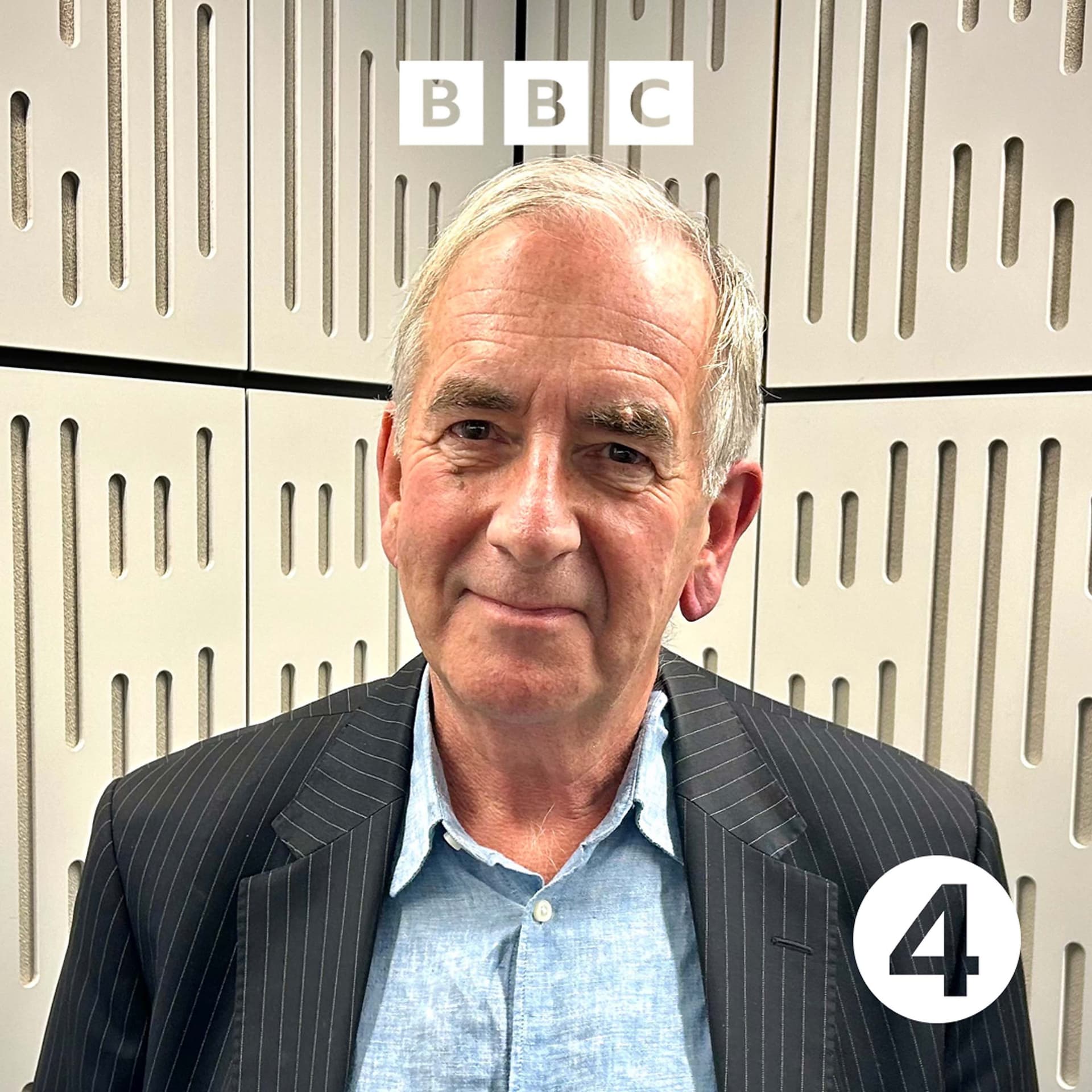
- Guest: Robert Harris, acclaimed novelist and screenwriter
- Release Frequency: Weekly
Episode Description Robert Harris, a former BBC journalist and political editor for the Observer, discusses his career as a novelist, including his notable works such as *Fatherland*, *Pompeii*, and *The Ghost*. The episode explores Harris's influences, particularly his fascination with history and politics, and how it shaped his writing style.
Key Themes and Concepts
Early Life and Background
- Childhood: Born in Nottingham in 1957; raised in a culturally engaged household.
- Father's Influence:
- Printer by trade; instilled a love for words and politics.
- Inspired Harris’s early interest in history and storytelling.
- Education: Developed a passion for history during school years, reading extensively outside the syllabus.
Influences on Writing
- A. J. P. Taylor's *The Origins of the Second World War*
- Sparked Harris’s interest in viewing history through a critical lens.
- Taylor's revisionist perspective challenged conventional narratives concerning World War II.
- George Orwell's Impact:
- Influenced Harris’s writing style and approach to political themes.
- Emphasized the importance of turning political writing into an art form.
Career Transition
- From Journalism to Novel Writing:
- Began as a journalist, covering significant political events.
- Transitioned to novel writing with the success of *Fatherland*.
- Emphasized the blend of research and storytelling in both journalism and fiction.
Notable Works *Fatherland*
- Premise: A counterfactual novel imagining a world where Nazi Germany won World War II.
- Impact: Became a bestseller, marking Harris’s shift from journalism to fiction.
Historical Novels
- Pompeii: Focuses on ordinary individuals in ancient Rome amid political and natural upheaval.
- Cicero Trilogy (Imperium, Lustrum, Dictator): Explores the political machinations of the late Roman Republic through the life of Cicero.
Recent Works
- Act of Oblivion: Investigates the restoration of the monarchy in 17th century England.
- Precipice: Delves into the romantic relationship between Prime Minister Herbert Asquith and Venetia Stanley during WWI.
Writing Process
- Research Methodology:
- Conducts extensive research without employing assistants, focusing on primary documents.
- Prefers to absorb material and then create narratives that reflect historical truths.
- Daily Writing Routine:
- Aims for 800 words a day, maintaining a consistent writing schedule.
- Operates with a sense of urgency akin to journalistic deadlines.
Reflections on Politics and History
- Connection to Current Events:
- Draws parallels between historical political dynamics and contemporary issues, particularly in the context of populism and leadership.
- Personal Motivation:
- Describes writing as an existential necessity; finds fulfillment in crafting stories that resonate with real-world themes.
Conclusion
- Cultural Life Reflection: Harris expresses his lifelong dedication to writing, asserting that his work is inherently linked to his experiences and observations of the world around him.
Additional Notes
- For further exploration, consider past episodes featuring other authors like Lee Child, Margaret Atwood, and Ian McEwan.
- Producer: Edwina Pitman
---
Listening Recommendations
- If you enjoyed this episode with Robert Harris, check out other episodes of *This Cultural Life* available on BBC Sounds.
Written by AI. May contain mistakes. Listen to the episode to check what was said.
Transcript
Automatic transcript. May contain errors.0:00Hello, I'm John Wilson. You're about to listen to This Cultural Life. Episodes are released weekly, wherever you get your podcasts. But if you're in the UK, you can listen to the latest episode first on BBC Sounds, seven days earlier than anywhere else. Do subscribe to This Cultural Life on BBC Sounds and make sure you have push notifications turned on and we'll let you know as soon as new episodes are available.
0:29Welcome to This Cultural Life, the series in which the world's leading artistic figures discuss the most important influences and experiences that have inspired their own creativity. I'm John Wilson, and my guest in this episode is the novelist and screenwriter Robert Harris. Having worked as a BBC television journalist and as political editor for the Observer newspaper, he published his debut novel Fatherland in 1992, a counterfactual story set in the 1960s that imagines Nazi Germany had won the Second World War. the book was a global bestseller. Since then, Robert Harris has written 15 novels, mainly historical fiction, ranging from the ancient Roman politics of Pompeii and his Cicero trilogy, to the Restoration-era manhunt of Act of Oblivion and the papal thriller Conclave.
1:17His most recent novel, Precipice, is about the romantic relationship between Prime Minister Herbert Asquith and young socialite Venetia Stanley during the First World War. Robert Harris, welcome to This Cultural Life. Thank you for having me on. You were born in Nottingham, 1957. Tell us about home life, your early years. Well, my father was a printer and my mother was a full-time housewife. She'd also worked at the printing factory, which is where my parents had met. I was brought up in a council house, which my father had grown up in in the 1930s. Same house? Same house, yes. He was allowed to keep it after his parents died.
1:58And that's where I spent the first six years of my life. It was a happy kind of childhood, I must say. I've got nothing but happy memories of it. And you say your dad was a printer. Words on paper, then? Yes. One of my earliest memories is that he used to go in on a Saturday morning for overtime. And that's when he used to take me in and sit me next to these giant Heidelberg presses he worked on. and my earliest memories are the thunder of the presses and the smell of the ink and the paper and he used to give me a great pile of paper, not like anything you could get in the shops, you know, and I would sit there happily with that for an hour or two and I think it was quite a formative experience, actually.
2:37Was it a cultural household? Yes, it was, actually. I mean, both my parents left school at 14. My father in particular was a sort of autodidact. I remember coming downstairs once and he'd been up all night finishing Arnold Bennett's Clay Hanger. And he read Joyce, he read Graham Greene, George Siminon, and we watched the BBC, the documentaries, and my mother was interested in music. So, yes, they were not brought up to it, but they'd come to it themselves. And we'd go to museums and historic sites, that sort of thing. And also my father had had polio in the 1920s, when he was 18 months old, which had left him one leg very weakened, and therefore sport was out for him.
3:26He never was able to play it. And politics became our kind of... or current events or history became our kind of football, the things that we... what we talked about and what we spent time doing. What about your formal education? What were you like at school? I was one of those people who got better at school as it went on, as it narrowed down to the things I was interested in. One would imagine that history would have been a big deal for you at school. History was a big deal. I read a lot of history completely outside the syllabus. I remember astonishing now. In fact, I think now it would be a disaster.
3:57But for O-Level, I had read myself, so what would I have been, 15 or 16, Robert Blake's biography of Disraeli, a huge tome, and there was a question on the paper about the personality of Disraeli. I hadn't been taught it, and I thought, well, what the hell? So I wrote that. Now you wouldn't get all the ticks for the various things you have to learn, so I think that would have been a disaster. But no, history was very much the thing I was most interested in. Was it a particular interest or ambition for you to be a writer from a young age? Yes, it was. From about eight or nine, I think. In fact, I remember sitting in a classroom when I was still in Nottingham and thinking...
4:32Essays were being handed back or stories or whatever and thinking, this is what I want to do. I used to make imaginary countries, draw maps of imaginary countries or towns, street plans of towns. I would do imaginary newspapers. It was curious, but it was always sort of centred on reality, but imaginative. That's what you're still doing. I know. I know. It's terrifying, actually. Yes, I've been on a fairly straight, predictable trajectory.
5:07On This Cultural Life, Robert Harris, my guests choose the most important influences and experiences that have inspired their own work. And your first choice for this programme is reading The Origins of the Second World War by the historian AJP Taylor. And you told us you read it as a teenager. How did you come across it? What led you to it? Well, you know, I had a wonderful education. I just went out through the state system, but I don't know, it was marvellous. And the school that I went to when I was 14 to begin O-Levels was in Melton Mowbray because we lived in Leicestershire. and the school library had a separate area where they just sold Penguin books and there was the orange-spined edition of AJP Taylor's The Origins of the Second World War and I still have it, actually, and I bought it and I read it and my father read it and it was a controversial book at the time.
6:04This is the early 70s. I bought it when I was about 15, I guess. But it had been published in 61, I think. Yeah, it began with a startling assertion that the Munich Agreement represented all that was best in British public life. It was a kind of ironic comment, but he said that on the Second World War, we betrayed Czechoslovakia and 250 ,000 Czechs were killed in the war. We went to war to save Poland and six million Poles were killed in the war. Which was it better to be, saved as a Pole or betrayed as a Czech? And this paradox really struck me. And in a way, I've kind of been working it out for most of my professional life.
6:46I mean, it was, as you say, it was a hugely controversial book right from the moment of publication, because it was a revisionist interpretation of the causes of the Second World War. Were you aware of the controversy when you first picked it up? No, I wasn't. The controversy had really happened much earlier. There was a famous debate between Taylor and Hugh Trevor Roper on Panorama. Those were the days when Panorama would host a debate between two Oxford historians. One of the most staggering things about the history before 1939 is how incompetent, second-rate, casual German preparations for war were.
7:25And yet, I must point out, the proof of the pudding is in the eating. and however incompetent and second-rate his preparations for war with the West were, in fact, he won the war not only against Poland but against the West in 1940. Because he was a gambler, because... That doesn't mean that he wasn't prepared, he was prepared for his gamble. He was not prepared for his gamble. We've only got to look at the figures. You see, the difficulty in arguing you is that you don't know the figures. But I want you to look not at the figures but the facts. I want you to look at the German record of rearmament before 1939.
7:59I want you to look at the German record of victory in 1939 and 40. Curiously enough, I think that Trevor Roper was right and that Taylor was wrong where he just saw Hitler as an ordinary politician. I'm not sure that that's true. So that was the argument that Hitler wasn't necessarily just this evil centre who had led Germany to war. There was a series of causes. Yes, exactly. Anyway, it set one thinking. because I was born in 57, as you said. It was only 12 years after the war, which is the same distance between us sitting here now and the London Olympics. It's no time, really. There were still a lot of bomb sites.
8:37Of course, one's parents and their friends had all been through it. It was a main topic of conversation. The earliest programme I can remember on the BBC was a documentary called The Valiant Years, all about Churchill. So I grew up in this atmosphere. and someone like Taylor challenging the consensus. That was fascinating to me. And when you say Hugh Trevor Roper, you think now was probably right in his argument. What were the two positions that were being taken in that debate? Essentially, Taylor thought he was a pragmatic politician and sort of was making things up as politicians do. Who hit along.
9:11Yes, and Trevor Roper said, no, he was messianic. We can't treat him as an ordinary politician. He wasn't like that. That is my understanding of the debate at any rate. and having now worked on the period more and re-read the origins of the Second World War I'm not sure that Taylor got it right quite honestly but it was a tremendous book to read But is the way that history is taught now in schools and particularly that period of the Second World War not more in line with the AJP Taylor school of thought, that there is a multiplicity of reasons that caused the Second World War I can't really speak to how it's taught in school now.
9:49I would say that there remains about the Munich Agreement in particular a general consensus that it's quite hard to challenge even now. The Churchillian interpretation of history still weighs very heavily on this country. I mean Churchill was a brilliant man and a brilliant argumentative figure and he created a kind of vision of the pre-war world which I'm not sure stands up to inspection. At any rate, it seemed to me that what Chamberlain faced in 1938, almost any responsible Prime Minister would have had to have tried to postpone war. Now, whether he was gullible about Hitler, obviously he was, but nevertheless I don't think he had much alternative and I think that it was probably the saving of this country because I think you can make a very strong case that if we'd fought in 1938 I'm not saying we would have lost, but I think we would have given it up because we were fighting to keep sedating Germans out of Germany and it wasn't a very good cause on which to fight whereas when Hitler pushed into other countries was clearly trying to dominate Eastern Europe and we'd gone the extra mile for peace or Chamberlain had then I think the country united around Churchill in 1940 in a way they wouldn't have united in 1938 or 1939 that is my view as well as the traditional argument that we got the Spitfires and we got radar and so on in the year's grace that he bought us.
11:14You say you've re-read AJP Taylor's book in the years since and you probably have a more informed view of it, but what impact did that book have on you at the time? Well, it just made me very interested in politics and in the first three novels that I wrote, Fatherland, Enigma and Archangel, all traced through those issues, which first struck me as a teenager. Did the AJP Taylor book have an influence on that counterfactual narrative, particularly of fatherland, which is set in a world in which Germany has won the Second World War and Hitler is still alive and ruling as Chancellor? It did in this way that I had always been interested in the phenomenon of Hitler and the Nazis, and Taylor really stimulated that.
12:02And I wrote a book, a non-fiction book, called Selling Hitler, which was all about the Hitler diaries, and that came from the fact that I had covered that for Newsnight, where I'd become a reporter, out of this interest. Such is the notoriety of the man who forged 60 volumes of Hitler diaries, for which Stern magazine paid almost£3 million, who crippled the reputations of a score of academics, journalists and businessmen, who was, in short, at the heart of the biggest publishing fraud in history. And we should just remind people selling Hitler about the Hitler diaries, which were fake diaries, which had come up for sale and had then been exposed as a very elaborate hoax.
12:46Yes, exactly. It was a marvellous story. So I wrote a book that came out in 1986 about that. And whilst I was doing it, I read Hitler's Table Talk, which I hadn't read before. This were his mealtime monologues where he described to his cronies what the world was going to be like. And I thought, well, this would make a wonderful nonfiction book, wouldn't it? What the world might have looked like. So I thought I'd do that. And then I thought, why don't I do it as a guidebook, a kind of Baedeker guide? Because there were so many Albert Spears, he said, architects' plans for buildings and photographs and models of them and so on.
13:24And they were going to have 20 million, 100 million German settlers in Ukraine linked by roads and in huge cities. and then I thought, would they have wanted to live there, actually? And also, what would the Nazis have said about the disappearance of European Jews? How would that have played? And the more I pondered that, the more I realised I couldn't write it except as a work of fiction. And suddenly I found myself writing a novel and it was purely as a tool to get at something I was interested in or had been, in a sense, interested in since my teenage years. And as you say, you were the political editor of The Observer.
14:03You previously worked as a reporter on Newsnight. During that time in journalism, had you always harboured ambitions to write fiction? No. What do you think is the overriding journalistic legacy in your fiction? A desire to communicate ideas and stories to a large audience and behind the scenes a willingness to research, ring people up, go and see them, go places, investigate, even though it's historical. Most of my friends are journalists to this day, either from newspapers or from television. I don't know many novelists, to be absolutely honest with you. And it was a huge success, Fatherland.
14:42I mean, massive success, sold millions of books. Did you give up journalism straight away? Did you think, this is my calling now? Yes, I mean, there was an auction for the American rights, and seven publishers bid for it, and we were on holiday with our one-year-old, just the one daughter we had at the time, in France, and the auction took place in the summer, and that night my agent rang, and the American hardcover rights had sold for more money, and I was, what, 34, than I'd in my entire career put together up to that time, books, journalism. And so, yeah, I mean, I had to give up. It would have been insane not to give up journalism and try and write another novel.
15:25Well, that's the problem, though, isn't it? You could afford to give up at that time because it was suddenly lucrative, but you've still got to have the ideas for the subsequent books if there is going to be a long-term career. Did you have other stories lined up ready, do you think? Well, just weeks before Fatherland was published in 1992, there was a documentary on the Horizon programme on BBC Two about Alan Turing. As I watched it, I thought, that would be interesting to write a novel about a codebreaker who sees something, breaks a code and he's not supposed to read. And that was the genesis of that idea, Enigma.
15:59But I didn't really know how to write a novel. I mean, I'd had this fluke with Fatherland. Well, you say fluke, but you must have known as you were writing it that something special was happening, didn't you? I started writing it, I remember, on a Saturday afternoon, and it's exactly as the novel opens, with in the rain in the early morning in the suburb of Berlin in a lake where a body is floating and a policeman arrives and fishes the body out and it's only got one leg. The corpse's leg ended at the bottom of the calf. Still holding the umbrella, Eisler bent stiffly and ran his fingers around the stump.
16:39A propeller? asked March. He'd seen bodies dragged out of busy waterways, from the Tegelsee and the Spree in Berlin, from the Ulster in Hamburg, which looked as if butchers had been at them. No, Isler withdrew his hand. An old amputation. Rather well done, in fact. He pressed hard on the chest with his fist. Muddy water gushed from the mouth and bubbled out of the nostrils. Ringo Mortis, fairly advanced. Dead. Twelve hours, maybe less. He pulled his glove back on. I wrote that, that Saturday afternoon, and it was so exciting. I actually had to go and lie down. I was dizzy with it because I'd only ever written non-fiction.
17:26I thought, I can make anything up here. And it was so thrilling. And those few paragraphs remain the opening of that book. They were the first paragraphs of fiction I ever wrote. And then I thought, but I didn't really ever probably sketched out idea for the book. So I went on writing. The policeman went back to headquarters and filed a report about the body and then various people came into the room. I suddenly realised I didn't know why these people were in the room and they didn't know why they were in the room and the whole thing fizzled out and I put it to one side and then picked it up again a few months later and this time I read what I'd written, I thought it's all right and I need to know what's going to happen next.
18:11So I plotted out to the end and from that point on I was on my way. I mean there were a lot of, you know, I threw away a lot of stuff that was not right but I was on track and really I do think you have to know pretty well how your story is going to end. You have to know the shape of a novel otherwise it's a bit like embarking on telling a joke without knowing the punchline. I mean you can ramble on, you might be quite amusing but really it's not a good idea. It's lovely the way you described that Saturday afternoon, in that eureka moment, having to have a lie down. But it's interesting that that opening of Fatherland, the book starts to unfold almost like a gumshoe, like a police procedural, and doesn't really give a hint of all of the kind of big, widescreen historical novels that were to come over the years.
19:00No, it was just a lucky thing. I mean, I started it probably in 1989, I think. It was three years before it was published, anyway. When the war came down, then? It was before the war came down, And I actually thought that one of the selling points that would be interesting about the book of a victorious Germany would be a single, huge, pulsing, rich Berlin with no wall down the middle. So I watched with slight horror when the wall came down. I thought, well, now there is a single German capital and or main city. Maybe my book won't be so original now. But what happened, of course, was that people became very frightened of a reunified Germany, of its power, Margaret Thatcher in particular.
19:45And I think that fuelled the interest in the book. It hit its moment. It was a time when people were frightened about Germany. They remembered the past. And here was I coming along with a book which posited a united, powerful Germany in the heart of Europe.
20:07Your next choice for this cultural life, Robert, is George Orwell. When did you first read any of Orwell's work? I read 1984 when I was still at school, and just before I went up to Cambridge, it was a hot summer. I worked in a chemical factory to earn some money, and in the breaks I read Orwell's essays, journalism and letters, brought out in four volumes by Penguin. and, you know, Orwell just got into my bones, really, the way that he wrote the simple declarative sentences, the extraordinary imaginative feat of 1984, the way it combines Swifty and satire and political analysis and, of course, Animal Farm as well.
20:53Would those books have been taught at school or did you just come across them yourself? I wasn't taught them, no, I came across them. They weren't on the syllabus at that time. 1984 in particular blew me away, and so did the journalism, which is, in a sense, his masterpiece. But we would not be reading his essays, letters and journalism were it not for the success of 1984 and Animal Farm. But it's interesting that you're reading those essays, which are dealing with a diverse array of subjects, and you're still at a relatively young age. But you'd said earlier, during this conversation, the politics discussed with your father.
21:29So he was politically engaged. he was a printer. Does that mean, was he a trade unionist? How politically committed was he? He was in the NGA when I was very young, and I couldn't remember. There was a print strike, and he was on strike for a couple of months and went to work in a nursery, you know, plants, I hasten to say, rather than children. So, yeah, he was of the left, a sort of Jenkins-like, Callaghan-Healy-ite left, not a radical left. When I was six years old, my parents went to the infant school for an open evening to see my work, and everyone's essays were pinned up around the classroom.
22:06You know, My Hamster, where we went on holiday. And mine was Why Me and My Dad Don't Like Sir Alec Douglas Hume. And to have written that at six years old is pretty frightening, but it's evidence of my father's political views. Alec Douglas Hume, in the 1964 election, came to speak in Nottingham, and my father went and heckled him in the town square. So would you have picked up that your dad didn't like Sir Alec Douglas Hume by osmosis or did you sit down and have a conversation with him that would have fed into that essay? I think he would have told me why he didn't like him and he liked Harold Wilson and that was our side.
22:47I mean, politics was our football and there would be a lot of talk of politics around the kitchen table. As you say, Orwell was an amazing essayist, but he is best known for 1984. What influence, if any, do you think has that book had on your fiction? Oh, huge, I think. Absolutely enormous. Not just on mine, but on any political writer, I think. In one of the essays called Why I Write, he said that his ambition was to turn political writing into an art. That's really what he does in 1984. It was a bright, cold day in April, and the clocks were striking 13. Winston Smith, his chin nuzzled into his breast in an effort to escape the vile wind, slipped quickly through the glass doors of victory mansions, though not quickly enough to prevent a swirl of gritty dust from entering along with him.
23:42The hallway smelt of boiled cabbage and old rag mats. At one end of it, a coloured poster, too large for indoor display, had been tacked to the wall. It depicted simply an enormous face, more than a metre wide. the face of a man of about 45 with a heavy black moustache and ruggedly handsome features. It was one of those pictures which are so contrived that the eyes follow you about when you move. The caption beneath it ran, Big Brother is watching you. The ideas in it were to do with how corporations might take over the world, or it was about management theory and the world being divided into three power blocks and so on.
24:24He did write an essay about it, which obviously almost nobody ever read. But by applying his imagination to it, by inventing the characters and Big Brother and Newspeak and all the rest of it, which is very like Swift's Gulliver's Travels, he elevated the ideas into something that was universal and timeless because stories, characters, acts of the imagination are timeless in a way that journalism is not, unfortunately. Some journalism lives on, but not very much. And by and large, the journalism that lives on is by writers who wrote fiction and are better known for that. So I think he is enormously important, and the breathtaking application of the imagination and the creation of what is really a thriller or kind of detective story within, as Winston is recruited by the rebels and so on and is tricked, It is a thriller, essentially.
25:26When I came to think of writing about a victorious Nazi Germany, I similarly thought the way to do it would be to write it as a story, a thriller or a detective story. But it's interesting that of all the eras of time that you have written about, it's those series set in ancient Rome, which most explore the machinations, the politics, the corridors of power, the power shifts and the dynamics. Pompeii, I think, was the first of those books of that era. What was the starting point for that book? Well, it was completely from left field, really. I'd written in novels about... I'd written Fatherland, Germany, Enigma, Britain, Archangel, Russia, and I thought, oh, now I should write about America.
26:07And it was America at its zenith at the end of the 20th century, and I thought I would write a novel about a utopian community of the sort that Walt Disney World established in Florida. but I could not make it work. And I came home from Florida feeling very down and then there was a story in the Daily Telegraph. I can see it now. New research on the destruction of Pompeii. And I read this and I thought, oh, why don't I write an allegory about America set in ancient Rome? Instead of having Florida, I'll have the Bay of Naples and the external threat will be the volcano. and I went out to Pompeii.
26:52It was August, very hot, and I thought it was a crazy idea, actually, togas and, you know, Frankie Howard up Pompeii, Primus Stovus and all those characters. I thought, this is ridiculous. But I walked through the centre of the town. I felt the sun on my back. I smelt water drying somewhere. I could see the mountain up ahead of me framed against the blue sky, and I thought everything I'm experiencing now, a human being would have felt 2 ,000 years ago. I could do this. And the smell of water, I've traced to where the aqueduct came into Pompeii. The aqueduct was ruptured in the weeks or days before the eruption and I thought, here's my central character.
27:37I'll write about a Roman engineer. And so that's how it came about. A complete about turn on what I'd written before in a way that I think would be very hard for a writer to get away with these days, but I took the risk. But it was starting with the ordinary man, the man who had the everyday job, who sensed the bigger seismic shift that was about to happen through a change in the water systems. Exactly. I mean, I love... One of my favourite features in journalism is that Sunday Times, A Life in the Day Of. I love a day's life. When I was writing Enigma, I talked to these senior codebreakers and they'd want to talk to me about Africa and the North Atlantic and so on.
Read the full transcript
28:17And I'd say, no, tell me where you sat, where you hung your hat, what do you do as a codebreaker? What is the daily routine? And this is a great question, journalistic question to ask. And so for that it was, what does a man who runs an aqueduct do? And gradually I pieced together how the whole system worked. You know, the man who ran the aqueduct was called an Aquarius. The line was called the Matrix. the gradient of an aqueduct was almost it was like one inch in a hundred yards it was very very slow slight flow but enormous and they were built of waterproof concrete which the Romans had discovered and it changed the course of human history because for the first time people could live where there was no water it was brought in from 80, 90 miles away this was a huge step change in civilization which is never written about.
29:11We only talk about gladiators and emperors. But engineers and scientists, they really changed the world. And that was taking a sort of micro-focus in your first view of ancient Rome. But then with the series of Cicero novels, he is a figure who features in Imperium, in Lustrum and in Dictator, that trilogy of books. He is a far bigger historical figure. Why did you focus on Cicero? I was always thinking I must write a political novel. But I was put off because they all seem of a type, you know, a scheming, cunning chief whip, the Minister of Agriculture's having an affair with the Chancellor of the Exchequer or whatever.
29:52And it just didn't really appeal to me. And I didn't really want to invent a president of the United States. As I was finishing Pompeii, a very good book by Tom Holland called Rubicon came out about the end of the Roman Republic. And I thought, as I had with Pompeii, why don't I universalise it by writing about these amazing politicians at the end of the Roman Republic? Pompey, Caesar, Crassus, Cato and above all Cicero. And because Pompey was unexpectedly a commercial success my publishers said okay when I said this is a huge book it will require a trilogy. And my catchphrase to myself and to them was this was West Wing on the Tiber.
30:33I was going to invent a whole political culture how it worked, the elections, the courts, the whole thing, and see it through the eyes of Cicero, who was a very modern, really, figure in that era. And because you were working as the political editor of The Observer and spending a lot of time in the corridors of power, was it as much Whitehall on Tiber as much as it was West Wing on the Tiber? It was. There was certainly a bit of that. Yes, definitely. I got to know Tony Blair pretty well. How close were you to him? Well, pretty close, physically pretty close, actually, in the 97 election. I was standing next to him when the exit poll came in.
31:10I was standing in his living room. I was given extraordinary access, which I'll always be very grateful. So I saw him really close up. Yes, I used to have lunch and dinner with him. So I watched a really successful, really a towering politician, whatever you may think of him. He was a hugely important figure for 10 years as prime minister. and I saw it close up and that was very important. Of course he was a lawyer turned politician, a great orator so therefore it was quite a leading question to ask how close you were when you were coming up with this idea, this character of Cicero who was of course the lawyer turned politician, great orator.
31:49Yes and also an outsider, a provincial outsider. A friend of mine said when I said, at least now I can say I've been writing about myself and he said, a provincial outsider with no connections whose only talent is putting words together, come on. And I'm not comparing myself to Cicero, but it really brought me up with a jolt that although I seem to write books about very different things, in the end, most books are so much about your own experience that I think that that quality of Cicero, of just having to rely on his wits to get on, and his voice and his pen, that's what I like about him. And most of my figures, they're not supermen at all.
32:28They're people who want to keep the show on the road. They're pragmatic. They're flawed. and I like writing about power and what it does to people. Tony Blair, of course, became a more direct or more explicit inspiration when you wrote your 2007 novel The Ghost, in which a former British Prime Minister is facing war crimes charges. Was that a novel written in anger? No, not at all, but it was. There were five years between Archangel, my third novel, and Pompey, my fourth, and during those years I toyed with lots of ideas, one of which was a ghostwriter, but I could never find the figure, nor a setting.
33:08And then when the Iraq war really began, the investigations into all the crimes began, someone said, well, Tony Blair will end up having to go and live in America to avoid prosecution. It was like a kind of bell went off. I thought, oh, well, now I see the kind of ghostwriter figure I could have. We left the window just in time to meet him as he came in through the arrivals gate. Hi, darling, he said, and stooped to kiss his wife. He noticed me. Hello. He said, who are you? I'm your ghost, I said. I regretted it the instant I said it. I conceived it as a witty, self-deprecatory, break-the-ice kind of line, but somehow out there in that deserted airport, amid the greyness and the quietness, it hit precisely the wrong note.
33:54Right, he said doubtfully. and although he shook my hand, he also drew his head back slightly as if to inspect me from a safer distance. Don't worry, Ruth told him. He isn't always such a jerk. And I wrote that book incredibly quickly. I had the idea in October and it came out the following September. But am I right in thinking that, I mean, as you say, you were close to Blair, you were shadowing him on the campaign trail, but you became friendly and then you disagreed with him profoundly about the invasion of Iraq. Disagreed with him about Iraq, disagreed with him really about the way he treated Peter Mandelson, who was in charge of Labour's communications and press relations when I first joined The Observer.
34:32So, yeah, there was a falling out, not in a kind of great row way, a kind of, you know, sort of disenchantment drifting away, and that book was the result. Have you ever talked to Tony Blair about the ghost? No, I have seen him briefly since, but Cherie who also the Prime Minister's wife figures quite importantly in the novel and in the subsequent film she said of the film that she'd enjoyed it because she got to sleep with Pierce Brosnan and Ewan McGregor so and I think that that's the way that's certainly the way that she took it and I think one of the things you have to respect about a really top front line politician is they don't really hold grudges.
35:22If you did, you'd never be able to function. And I think that he separates himself from the political persona. That's my view anyway. He certainly never upbraided me. Dictator, the last of the Cicero novels, was published in 2015, the year before the election of Donald Trump. Did you sense what was going on in America as you were writing that book? Did it give that book new resonance, do you think? I think it did to a degree. I can't say that I foresaw the Trump phenomenon. Once he'd been elected, though, I saw the parallels in ancient Rome. And really, the fall of the Roman Republic was to do with very wealthy demagogues leading the masses against an elite of which they themselves were a part.
36:10Caesar, to some degree, crass as well. They were part of the ruling elite, but they mobilised themselves against the other members of it. And that's almost a perfect description of what's happened, so that Rupert Murdoch and Donald Trump are on the side of the masses, the working guy, and teachers and kind of middle-class sort of people like that are part of the elite. It's a curious sort of mirror thing, And this is what happened, I think, in the Roman Republic. Is it more satisfying and rewarding to write political fiction than political journalism? Oh, my God, rewarding in every sense. Yes.
36:52I mean, I love making up stories. I mean, as simple as that goes back to childhood. But you say make things up. The books are usually rooted in fact, in documented fact. In fact, your last two novels, Act of Oblivion and Precipice, are both about real-life protagonists who are at the centre of pivotal moments in British history, the restoration of the monarchy in the 17th century and then in precipice with the lead-up to the First World War. Both are steeped in really deep research and they both reference primary sources. Does a novel normally start with a document? To a degree, yes. I mean, I've been thinking about this a lot.
37:30A novelist, you know, take Graham Greene or Somerset Maugham. after a while you have to go in search of material. You know, you run out. And they used to go travelling. Haiti, Indochina, Malaysia. You know, they would turn up somewhere with a notebook and spend time there and go back with stories and ideas and inspiration. Well, I'm too lazy, really, to travel a lot. So I visit eras, I think is the best way of putting it. You are a time traveller. I am. I visit 17th century England. Never thought I'd do that. I visit 19th century France. Never thought I'd do that. I don't employ a researcher. I go there with an open notebook and I just find out all that I can, like a visitor, and create a story.
38:17It's normally something's lured me in, like the greatest manhunt of the 17th century. I saw that phrase and I thought, oh, that's interesting. Let me invent the manhunter. How did he do that? Which was the genesis of that novel. and with the precipice, the most recent, I just thought Venetia Stanley wrote Asquith 300 letters or so. She must have done. He destroyed them all. She preserved all his and I thought, well, this is something a historical novelist can do. I'll write her reply. The John Grishams or the Clances and the big American novelists would employ teams of researchers. You say you don't have a researcher at all.
38:57Never have, no. So you're still enjoying the journalistic chase of a story then? I do, and 80%, 90 % of what I discover will never be used. But I think if you're lucky, the reader senses you know more than you're putting in the book. And if you've really researched a huge amount, in a funny kind of way, there comes a point where you just let it go and write without constantly parading facts that you've discovered in front of the reader. And when you've come back with this accumulation of facts and you sit down, you start writing, what is the routine? My routine is, this is an ideal routine, is to begin a novel in January, to try and write about 800 words a day, often six or even seven days a week.
39:40So to try and write four or five thousand words a week, 20 ,000 words a month, and at the end of six months you would have 120 ,000 words. Just in time for summer holiday. Yes, exactly. As you write, the days get longer. And this journalistic deadline is important to me because of that sense of adrenaline speeding up your mind. You see things you otherwise wouldn't. Whenever I was writing a column as a journalist, the best ones were always the ones where I sat down with no idea in my head in a panic because it had to be into the paper in four or five hours. So I like to get into a state of mild panic.
40:16I'm fortunate in that my working habit is that when I finished a chapter, that's it. I don't want to go back to it. Hopefully I've got it right, because translators are working to translate it into foreign language as I go. So I show it as a sort of 19th century part work to my publishers, like Dickens used to write for Blackwoods magazine or something. I sort of do that. Did you say the books are being translated as you're writing them? Yes, and that's just a product of the age we live in, where a book comes out in London and you can have it in Berlin three days later. So how much editing time is it then?
40:52Because that sounds like the turnaround is very, very quick. None, really. My poor publishers, you know, they've learned to live with it. And one day one will become a terrible cropper. But, you know, if I know what I'm going to write, I've talked over what I'm going to write. And you're a good first drafter, obviously. Yeah, that's it. If I got to the end of the book and said, you know, which a lot of writers do and quite, you know, if this is their method, that's good for them. You know, they write a book and then they throw away the first draft and they start on the second. I couldn't do that.
41:24I mean, I need to move on to something else. You've written 16 novels and you earn a very good living. What drives you on creatively? Well, my wife says I'm an existential writer, by which she means I exist to write, really. And I have done for 60 years pretty well. and I can't imagine an existence in which I didn't for a chunk of the day write. So for me, it's just natural. I don't have any hobbies, it's a terrible thing to admit, but I don't. What on earth would I do otherwise? I'd been interested in gardening. Golf, what an appalling idea. It's this or nothing. Robert Harris, thank you so much indeed for sharing your cultural life with us.
42:07Thank you. I hope you think I have a cultural life. I rather worry that I've come across as someone without one.
42:21And if you enjoyed my conversation with Robert Harris, you might like to know that other best-selling novelists who have been on This Cultural Life include Lee Child, Margaret Atwood, Zadie Smith, Ian McEwan, Patricia Cornwall, and many more. You can find them all in our archive of previous series. Just search for This Cultural Life in BBC Sounds. And while you're there, please do subscribe to the podcast so you never miss an episode. From series producer Edwina Pittman and me, John Wilson, thank you very much indeed for listening.
42:52I'm Matthew Side and Sideways, my podcast from BBC Radio 4, brings you stories of seeing the world differently. From that moment on, I feel like my life and the way that I view life itself just shifted, literally. Stories about the ideas that shape our lives. If a missile had come down and killed us all, it wouldn't have mattered. It was just me in a moment of bliss in the middle of a war zone. Stories about everything from the ethics of using AI to simulate conversations with the dead to viewing decay as a vehicle for rebirth. Listen to Sideways first on BBC Sounds.
From the publisher
Having worked as a BBC television journalist, and as political editor for the Observer newspaper, Robert Harris published his debut novel Fatherland in 1992. A counterfactual story set in the 1960s that imagines Nazi Germany had won the Second World War, the book was a global bestseller. Since then Robert Harris has written 15 novels, mainly historical fiction which ranges from the ancient Roman politics of Pompeii and his Cicero trilogy, to the Restoration era manhunt of Act Of Oblivion, and Papal thriller Conclave. His most recent novel Precipice is about the romantic relationship between prime minister Herbert Asquith young socialite Venetia Stanley during the First World War.
Robert Harris tells John Wilson about how reading The Origins of the Second World War by the historian A. J. P. Taylor, as a teenager ignited his interest in looking at history from perspectives that challenge the accepted narratives. Later, reading both the fiction and non-fiction of George Orwell inspired him to attempt to make writing about politics into an art form, as Orwell had done in works including 1984.
Producer: Edwina Pitman
Archive used: Did Hitler Cause The War?, BBC1, 9 July 1961 The Hitler Diaries, Newsnight, BBC2, 8 July 1985 Reading from Fatherland, Robert Harris Reading from 1984, George Orwell, BBC Radio 4, 2 January 1984 Reading from The Ghost, Robert Harris