In short
Notes on Podcast Episode: Sally Potter on This Cultural Life
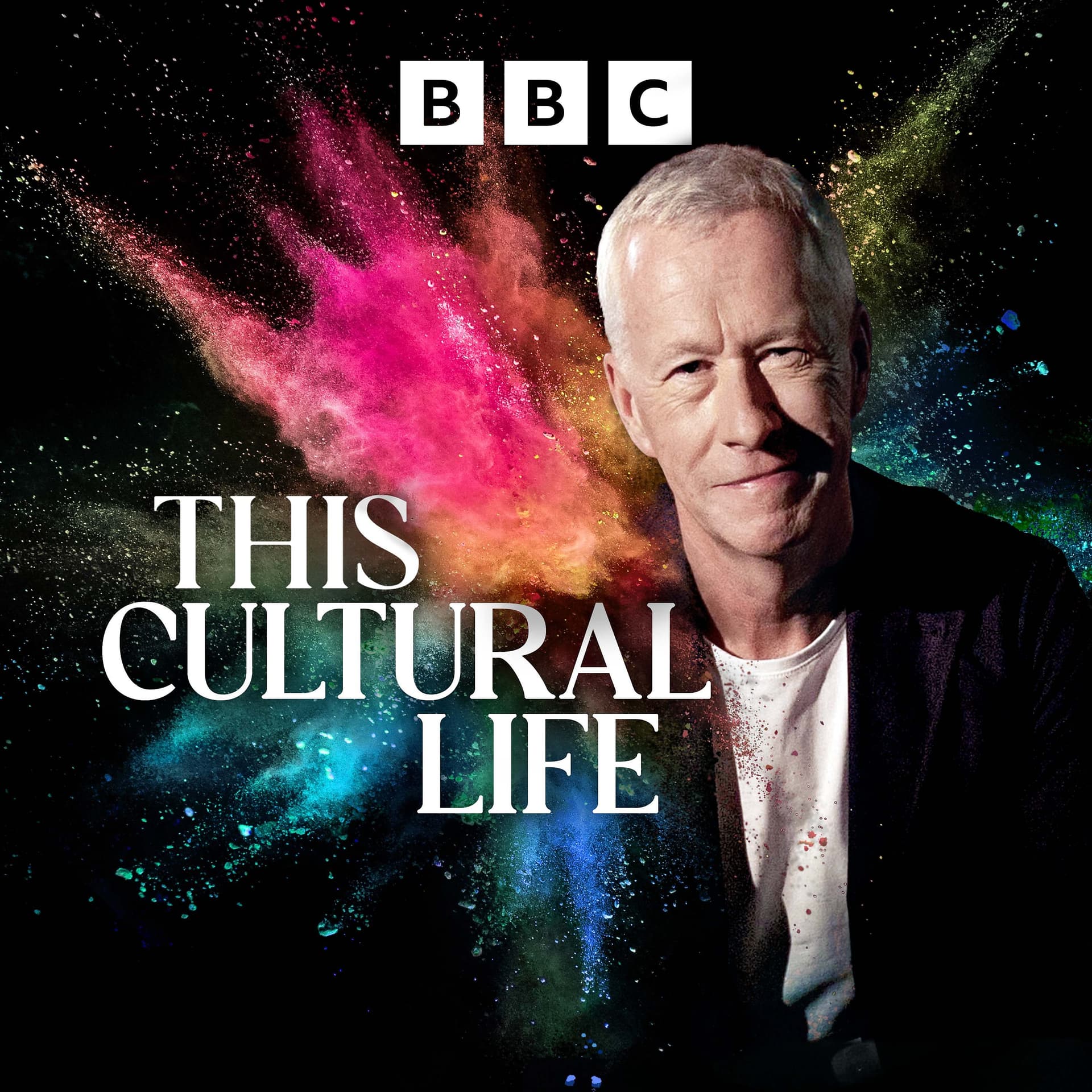
Podcast Overview Podcast Title: This Cultural Life Episode Title: Sally Potter Host: John Wilson Producer: Edwina Pitman
Description: In this episode, filmmaker Sally Potter discusses her artistic journey, influences, and notable works, including her adaptation of Virginia Woolf's *Orlando*. Potter's groundbreaking contributions to independent cinema and her radical filmmaking style are highlighted throughout the conversation.
---
Key Themes and Discussions
- Sally Potter's Background
- Upbringing:
- Grew up in a liberal and creative household in London.
- Parents instilled a sense of artistry and craftsmanship; father's views blurred the lines between craft and art.
- Father was a carpenter turned designer; mother became a music teacher later in life.
- Influences:
- Early exposure to music, particularly Beethoven, shaped her focus and listening skills.
- Childhood creativity manifested in drawing, writing poetry, and a strong drive for artistic expression.
- Family Dynamics:
- Experienced parental separation early, but maintained a relationship with her father, who was an anarchist and pacifist, influencing her worldview.
- Introduction to Filmmaking
- First Camera Experience:
- Received an 8mm camera from avant-garde filmmaker Sandy Daley at age 14, igniting her passion for filmmaking.
- Emphasized the importance of encouragement and mentorship in nurturing creativity.
- Film Education:
- Self-taught and learned the craft through the London Filmmakers' Cooperative.
- Emphasized a "barefoot filmmaking" philosophy, using minimal resources to create meaningful art.
- Career Milestones
- Debut Film: The Gold Diggers (1983)
- Featured an all-female cast and crew, marking an important step in independent cinema.
- Adaptation of *Orlando* (1992):
- Adapted Woolf's novel, overcoming skepticism about its filmability.
- The film starred Tilda Swinton and was notable for its exploration of gender and time.
- Faced challenges in production, including financial difficulties but ultimately achieved critical acclaim.
- Innovative Projects:
- *Yes* (2004) scripted entirely in iambic pentameter.
- *Rage* (2009) became the first film to premiere on mobile phones.
- Thematic Explorations
- Creative Process:
- Discussed the transcendence experienced during creation, likening filmmaking to a form of listening.
- Emphasized the importance of focus and the creative impulse that drives her work.
- Musical Influence:
- Incorporation of her own music in films and a recent album reflecting on her teenage experiences.
- Expressed the appeal of songwriting for its simplicity compared to filmmaking.
- Philosophical Reflections
- Meaning vs. Happiness:
- Reflected on the pursuit of meaning over happiness, prioritizing depth in her artistic endeavors.
- Discussed the significance of artistic impulse and the role of discipline in her work.
- Impact of Success
- Response to Recognition:
- Found success disorienting, feeling pressure after *Orlando*'s acclaim and awards.
- Chose to pursue projects that felt authentic rather than conforming to industry expectations.
---
Key Takeaways
- Artistic Identity: Potter emphasizes the importance of questioning traditional definitions of art and creativity, advocating for the recognition of all forms of creative expression.
- Mentorship: The role of mentors in fostering creativity is pivotal, highlighting the impact of encouragement on aspiring artists.
- Philosophy of Filmmaking: Potter's approach to filmmaking is rooted in a philosophy of minimalism and inventiveness, celebrating the potential of filmmaking with limited resources.
- Personal Connection to Art: Potter's work reflects her personal experiences, philosophical reflections, and a quest for meaning, positioning her as a unique voice in cinema.
---
Conclusion Sally Potter's insights into her upbringing, creative process, and filmmaking philosophy provide a profound understanding of her contributions to cinema. Her journey illustrates the interplay between personal experience and artistic expression, making her a significant figure in independent filmmaking.
Written by AI. May contain mistakes. Listen to the episode to check what was said.
Transcript
Automatic transcript. May contain errors.0:00BBC Sounds. Music, radio, podcasts.
0:13Welcome to This Cultural Life, the series in which leading creative people reveal the formative influences and experiences that inspired their own work. I'm John Wilson and my guest in this episode is the filmmaker Sally Potter. A groundbreaking writer and director, she's best known for her bold 1992 adaptation of Virginia Woolf's novel Orlando. Starring Tilda Swinton, it was nominated for two Academy Awards and won more than 25 International Film Prizes. With her 1983 debut feature The Gold Diggers, which starred Julie Christie, Sally Potter led an all-female cast and crew, establishing herself as a trailblazing figure within independent cinema.
0:54She's renowned for her radical and experimental approach to filmmaking. Her 2004 love story, Yes, was scripted entirely in iambic pentameter. Rage in 2009, set backstage at a fashion show and starring Jude Law, Steve Buscemi and Judi Dench, became the world's first movie to premiere directly on mobile phones. A multitasking filmmaker, Sally Potter's screen credits also include actor, editor, choreographer and composer. Sally Potter, welcome to This Cultural Life. Thank you. You were born in 1949, grew up in London. Was it a very artistic family? Yes, I'm just hesitating over the word artistic because one of the things in my family was defining what art was actually.
1:45and that anything worth doing was worth doing with close attention and therefore artistry. But, yeah, both my parents were very fond of music and liked to listen or even make music. And teach your mum was a music teacher, I think. She became a music teacher in later life, yes. So they were creative people. Again, I'm hesitating over the word creative because for good reason, I think, because what my father always used to say was that there were false divisions between craft and art and between working people and people who were supposedly doing something creative. And his attitude, and I remember this being instilled very strongly in me, was that anybody who does anything is using a creative impulse or using inventiveness or using their intelligence and these other things in a way were almost like class divisions or hierarchical divisions about what was creative and what wasn't or what was art and what wasn't.
2:44What did your father do? In my early life, he was a carpenter who became a designer. And then he taught design and he wrote a couple of books about interior design and furniture design. Which is creative, arguably. Yes. Artistic, possibly. He never used the word artistic, but he certainly wanted to know how things were made and from what perspectives they were made and what was the thinking behind the form. And so I grew up in an atmosphere of a lot of questioning, as I think you can probably tell already, linguistic questioning about definitions and categories of activity, but also about the whole area of making things and how you think and how you apply yourself.
3:30The form follows function was a phrase that often came out of his mouth, rising out of the bat house ideas. So he was a thinker. Was he encouraging you to be that analytical? I think he probably was. I'm talking about my early life now because my parents separated when I was about seven, but I did see him regularly after that. I think there was a kind of respect for mind that wasn't about being a particular age, background, education or anything else, but a real relationship with ideas that transcended all of those categories. And I think that was a great gift to me as a child. You said that both your parents loved music.
4:13So a lot of music played at home. What would you have heard? Well, my father had a huge horn gramophone and a collection of 78 records. He couldn't play music, but he in effect played his gramophone. He would literally listen and conduct to some of these. and my memory is of being, as a very small child, sitting next to him, observing him listen to, in particular, Beethoven, actually, Beethoven, the late quartets.
5:07The most esoteric and difficult writing of Beethoven, really, but I experienced it as rock and roll. You know, this was just thrilling sound. And what I loved was this atmosphere of total, dedicated concentration. You know, this was a sacred thing that you learned how to do. You learned how to sit, focus, listen, absorb. and you couldn't interrupt that process in any way except to turn their 78 over or sharpen the needle.
5:55I think that listening training was incredibly important to me and has really, really stayed with me as a state, a sort of zone of pure focus, which I have. It often takes me an effort to get into it, but, for example, when I'm writing, when I'm writing a script or writing music now, I have to go into that zone, and when I'm in it, I can recognise the feeling because it's absolute focus of something outside of myself. It's almost as if I'm not involved anymore. I'm not aware of me. I'm aware of what I'm focusing on only. And crossing that threshold into this zone, this world that I'm either listening to or creating is a very magical feeling of pure focus.
6:48You're talking about a kind of transcendence there, aren't you? Of experience. And you're in the same state, whether you're listening and experiencing, as to when you are creating. Yes. And I often experience writing or creating as a form of listening or looking at something which somehow pre-exists and I need to just see it or hear it and make it into physical existence. so I feel I'm not really inventing I'm not really writing something I'm in a way the secretary the notator of something that I can see through a glass darkly You're a transmitter or a receiver A receiver, yeah, a receiver, a listener What I'm talking about the listening is it's like listening to something that is beyond this noisy self that gets in the way With a music teacher mother and a furniture designing father, did you have artistic ambitions at an early age?
7:56Or when did they kick in? As far as I can ever remember, I was drawing or painting or writing little poems. In terms of ambition, if that's the word that you used, the feeling of an end goal wasn't a feeling of I'm ambitious for a career or for reward. I'm ambitious to do this particular thing that I'm focusing on so closely to its zenith. from the earliest age? I mean, these are sort of formative thoughts. It sounds like quite a serious childhood. Yes, in a raucous kind of a way. But yeah, I mean, I did stay up often through the nights working on little stories or poems or something to the point of my mother's despair.
8:45She said at a certain point at around 1am she would just give up and go to bed and I would still be at the table drawing or something. So your mother didn't say, put that down, go to bed. She may have tried. Was it a very liberal household, socially and politically? I think what we would call now extremely liberal. I don't recall too many boundaries and I don't remember too much supervision. It was an atmosphere of independence. Politically, yes, left. My father named himself an anarchist and an atheist, and it was not a household of money. We were, I guess, what one would think of as poor, but music-rich and book-rich.
9:31How did his anarchism manifest itself? A refusal to bow to authority, an absolutely resolute, complicated form of pacifism. So he was a conscientious objector in the war, but he also refused to do the conscientious objector things you were allowed to do, like work on a farm or drive an ambulance. He believed that war couldn't exist if people would refuse to obey. The obedience was in a way the evil because it allowed things to be carried out because people were refusing the power of independent thought and conscience. So this was a really, really rigorously principled point of view, which led to all kinds of problems in daily life.
10:19So those ideas were circulating around a lot and the concept of mutual aid. I mean, I think there was a blind spot, which was that women somehow weren't included in that. Although I do recall mention of Rosa Luxemburg and big figures in the historical left. but in daily life he was not somebody, let's say, who ever did the washing up. And you say his anarchism got him into trouble as well, in sort of day-to-day life? He came up against, you know, wherever it was and whatever he was doing, he was against most of the structures. This sounds like quite an unconventional childhood in many ways. Was it a happy one?
11:01Well, happiness. I think there were many, many moments of happiness. I certainly remember laughter and happiness in reading, in doing stuff, playing. And I also remember unhappiness. My parents were both unhappy in their own ways, unhappy with each other and unhappy in a way in life, disappointed. And I remember the feeling, the weight of their unhappiness. But it would be wrong to say I had a relentlessly unhappy childhood. I didn't. There were many aspects of it that were happy. Later in life, when I came against Buddhist philosophy of the pursuit of happiness and so on, I found myself questioning it again and again, saying, why pursue happiness?
11:50Isn't it meaning we should be pursuing? And I always thought if I had to choose between meaning and happiness, it would be meaning. A happiness felt to me somehow superficial or at least ephemeral or very, very transitory. Whereas if you could locate meaning in what you were doing, it would be a premise that was of longer duration. That's probably not what you're feeling at seven or eight years old, though, is it? Kids just want to be happy and they want their parents to be happy. They certainly want their parents to be happy. But do they just want to be happy? No, I'm not sure about that. I keep coming back to this atmosphere of focus, whether it was like doing a drawing or a painting or writing a poem.
12:29Well, I suppose you could say that brought me happiness. OK, so that kind of focus brought me happiness. I wasn't looking for happiness minute to minute in my everyday life.
12:43On This Cultural Life, my guests reveal the formative influences and experiences that inspired their own creativity. and your first choice Sally is at the age of 14 being lent an 8mm film camera by whom? This was by Sandy Daly who was an avant-garde independent filmmaker American who was at that point linked with my uncle my maternal uncle and she had an 8mm camera and she recognised something perhaps she just recognised the look of longing in my eyes when I saw her holding the camera anyway she handed me the camera and I picked it up and started to shoot little 8mm film and was utterly entranced by the process by the act of framing by the feeling of seeing the world in a different way partly by what you exclude as much as what you include in the frame I think what she gave me as well as this very practical thing.
13:47If somebody hadn't practically handed me an actual camera at that age, would I necessarily have gone into film? I don't know. But she did. But she accompanied the act of handing me a camera with something that I've come to value more and more and more, which is words of encouragement. And I think that if I think there's key people, key moments in my life when somebody said something encouraging, not necessarily for hours and hours, it could be a sentence, it could be just two words, but that act of encouragement can nurture you for years, possibly even a lifetime. And I think the fact that Sandy as an adult looked at me as a 14-year-old and saw an artist recognize something and said, you're good, you can do this, was like fuel, nectar, sort of illumination, you know, the generosity of her impulse.
14:49So it wasn't just handing the camera, walking away and saying get on with it, she was teaching you as well? She was teaching me by not saying do it like this or do it like that, but rather saying take the space, you know, own this, do it, you can do it. I mean, she wasn't saying, now go and make a two-hour film. You know, these were two-minute, eight-millimeter things determined by the length of the little spool. But there was a sense of ambition in that the way she was expressing herself somehow was about taking it seriously, that this was as serious or as close to the essence of cinema as anything else or as anyone else.
15:31It was a validation. It was a validation, but it was more than a validation. It was almost like a command to go beyond any perceived self-limits or modesty, shyness, fear, embarrassment, can't do it, all those kind of feelings that teenage people seemed to have. Were you already interested in film? What sort of films were you watching at that time, at 14? I'd already watched most of the big American musicals, tons of Ealing comedy, black and white comedy at 14 would I have already been starting to watch French New Wave, possibly some and as I moved through into 14, 15, 16 I was certainly watching early Russian cinema since I joined a film society and was watching a lot of the great classics so I'd seen some good films already So you started making, as you say these two minute vignettes did they have stories, did they have characters or were they sort of more abstract?
16:31They didn't have stories. Sandy herself performed for me sometimes. Otherwise, they were pretty abstract. They were very visual, you know, a shadow on a white wall or a reflection in a car hub or, you know, whatever. I think I thought of them as visual poems. I certainly never thought of them in storytelling terms. They were probably allied to still photography. I was very influenced by a book we had at home called The Family of Man, which was a publication of an exhibition of the same name, which was an extraordinary collection of black and white photographs. And I studied those endlessly, endlessly, endlessly.
17:13So I think when I got a movie camera to my eye, I was looking for composition, photographic composition as much as anything else. Did anybody apart from Sandy see these films or were they very personal projects at the time? Oh, personal projects. I mean, one or two close family members, I suppose, saw them, but that was as far as it went. And did it make you think at that point, this is it, I'm going to be a filmmaker now? Yes, I know that when I had a passport at 16, in those days you had to write who or what you were, and I wrote filmmaker at 16. Even though you were still at school? I'd left school at 16.
17:49You left? I left school at 16. Voluntarily? Voluntarily. You could have carried on, I presume? I could have carried on. It was a complicated situation where I wanted to go and live with my father before I finally left home, home, home, home, and he wasn't living in London. So I left the school I was in in London and went to live with my father, who was living in Bristol at that point, for a year. But it coincided with unhappiness at school as well and frustration. So I made independently a very precipitous decision to stop my education at that time. in quotes to be a filmmaker without any college to go to any training any anything it was like projecting myself like into the world on a kind of grand hope of something and it was it was hard because a year later at 17 I was living in a rented room in country town with no income and no training and not knowing what to do and I'd you know left the whole pathway that somebody like me would be expected to take through university or whatever.
18:57It's one thing to experiment with 8mm films at home, another thing to learn how to compose shots, to process the film, to print the film, to edit the film. Where did you learn the craft? I learnt it in a very, very haphazard autodidact fashion by joining the London Filmmakers' Cooperative, I guess when I was about 17, which was a sort of raggedy but wonderful organisation within the arts laboratories at the time, a sort of rather short-lived kind of building in which lots of different things would happen. And part of what was happening was there was a printing and processing outfit, some editing machines, rather rusty, a camera somebody could lend you and so on, and then you figured it out for yourself, basically, how to make everything work and did it.
19:51And this is sort of late 60s, early 1970s then? This is, yes, it is. So in terms of filmmaking training, that was as good a training as any in that I learnt by doing it, learnt by making mistakes, you know, film something, it came out black. Why? Oh, God. I would try and edit, everything would fall on the floor. Oh, that's why you organise an edit room in this and that way. You know, so on and so forth. And I think also learning how to do a little bit of all the physical aspects of filmmaking was, I discovered later, incredibly useful in terms of delegating to other people working with crews. When you know what somebody is really doing, what they're up against, technically, it's incredibly helpful as a director later on.
20:37And at that time, you'd left home, as you say, at 16. So over those years, 16, 17, 18, in your late teens, you've got an independence there. what did that do for the aesthetic for the sort of films that you were making it's a philosophy of poor filmmaking what I came later on to think of as barefoot filmmaking which is in other words you make something with what you have you don't complain about what you don't have even think of that as an astringent advantage mother of necessity invention and so on to always try and turn this lack to a kind of advantage and also by not having if you like the luxury of sort of fat you know stuff to spend then every single aspect becomes incredibly precious and incredibly important and incredibly revealed to you you learn what you can do if you've got 10 minutes of film not an hour of film or when you've got the use of somebody's cutting room in the night because that's when it's empty and free of charge and so on so I think it almost became like a celebration of an aesthetic of austerity.
21:44So how you can say the most with the least, that philosophy of inventiveness around with minimal means has continued. The party, the great cast, but it was shot in two weeks in one place. That's very quick for a feature film. Which was a film about a government minister who is celebrating her appointment to cabinet, played by Christine Scott Thomas. April. Janet, congratulations. You did it. My condolences, Janet, because once you've reached the top of the mountain... Shut up, Godfrey. It's fair as the aphorism. You're a star, Janet. I'm proud of you, even though I think democracy is finished.
22:30Thank you, April. You're consistent. That was a very low-budget film. It looks like a fairly big feature film, albeit rather short, but it was shot very fast. I mean, shoots have got shorter and shorter in my experience anyway, but two weeks is really, really short.
22:49Your next choice for this programme is studying dance at The Place, a dance school in central London, which you joined when you were 21, so relatively late to become a dancer. What prompted that decision? I had already by then made quite a few short films. They'd been shown in what were then called underground film festivals and so on. But it was a rather chaotic hand to mouth existence in which I was trying to make my way. And I was very attracted to dance as a way of getting into my body, getting literally getting into my body out of this kind of purely conceptual world and in which I was also really struggling financially.
23:33And initially I went to the place for what was a one-year course in choreography and I felt it would be a training, a training that I lacked. And what I discovered was that by learning to dance every day, what I had really intuitively realized I needed to do was understand good habit, understand discipline, understand how you work every day consistently. And that's what I learned through dance, as well as how to work with people. So it wasn't just me and a camera and looking at a shadow on a wall. It was me organizing groups of people in space, in time, with music, the psychology of interaction and so on, and a feeling for movement.
24:23André Bazin, the French theorist, said, you know, the essence of cinema is movement. And I felt that, but didn't kind of quite understand what that really meant. But through working with dance choreography and with my own body as well, I did come to understand very much. it felt like as good a training to be a film director as any other actually going to a dance class every morning and then choreographing pieces, live pieces Being a choreographer and a film director, they're similar They're very linked Well, you constantly make choreographic decisions as a filmmaker You make decisions about people in the frame Are they going to be sitting, standing, moving?
25:03If they're moving, is it left to right, right to left, far to near, near to far? You're constantly making these choices then you're making choices about the camera. Is it static? Is it on a tripod? Is it handheld? Is it a track? If so, are you moving with the person or against them? All these things. These are choreographic decisions. So I think that feeling for movement that I learned through dance was key. But I also think that coming out of, in a way, the anguish of these teenage years of who am I? What can I do? How can I ever do what I want to do in life and the world? I'm outside the system.
25:42All these other people are in university or Oxford, Cambridge. They seem to have all these networks and people they know. I don't know anybody. I'm alone. It felt like dance was kind of saving me by putting me into my body, rooting me on the earth and saying, you work every day like this, whatever you feel like. So very different than going and, I don't know, studying English literature or Oxford or something. Had you danced as a kid? You know, danced about, but I'd never had ballet lessons or anything, any such thing. So you were starting afresh, in effect? Yeah, yeah, totally. And you could do it?
26:14I mean, do you feel you had an aptitude for it? Badly. I mean, I don't know how I ever got in through the audition, quite frankly. Really? I had a feeling, I had energy and a kind of lust for movement, you know, but very little training. It was an interesting time in this particular place, London School of Contemporary Dance was its other name, but it was the place and it was early in its life as an organisation and they were taking in a very mixed bag of types, which was great. So it wasn't all like, you know, perfect figures in lycra or anything like that at all. It was a really kind of weird bunch.
26:49Many of whom became close friends and collaborators.
26:56In 1997, something like 25 years after, You wrote, directed and starred in a film called The Tango Lesson and you played a filmmaker called Sally who goes to Paris, meets an Argentinian tango dancer called Pablo and forges, a kind of a pact with him. If he teaches her how to dance, she will cast him as a star in her next film. Nothing. You should do nothing when you dance. Just follow. Follow! It's you who've been using me so that one day I might put you in a film and make you into a star. Had you done any tango? Or are we seeing you learn tango for real in those scenes? I'd learnt tango for a couple of years, or certainly an intensive year before I started to shoot.
27:45So what you see in the film is me acting somebody, learning to tango. But also what you're really watching is a filmmaker sharing the process of making the film that we're watching. So for me, it was a kind of metaphysical puzzle in which I assumed everyone would realise that this version of myself that I was playing was just that, a version, a possible self, not my sort of actual self. I thought that's a good reason to use my actual name because then people will realise it's a double-blind bluff. Absolutely naive. People took it completely literally that this was a portrait exactly of myself, or a documentary, which it was not.
28:29It was a highly structured piece of fiction and very, very difficult to do. Yeah, well, there's a very highly charged and passionate relationship, which is forged with the dancer himself. Not autobiographical in that way. No. I mean, I fall in love with everybody I work with. That would include all those dancers. But really, I'm serious about this. I call it falling in work. When I'm working with people, whether it's people behind the camera or actors I'm working with, it's an incredibly sort of intense process that you go into with people. And certainly I was with Pablo, but these were fictitious versions of him, of myself, and all the other people who appeared in the film.
29:12Very structured, very written fiction. You don't still wish you'd become a dancer rather than a filmmaker? Well, you could say I was a dancer. I mean, I danced in that. By the time I left the place, I was in a company. I had formed my own company. I have danced through my life, let's say. But as for becoming, in quotes, a dancer as opposed to a filmmaker, no. It's always been authorship that is the great seduction. It's the making something from nothing until it becomes something and controlling that, shaping that, making this thing happen. I mean, it's always a miracle to me that I start a film with a blank page.
Read the full transcript
29:54I write by hand on literally a white piece of paper classic situation. I stare at it on day one. There's nothing there. A few years later, I'm sitting in a cinema, say at the Berlin Film Festival, 3 ,000 people watching a finished film. I think, how did that happen? Magic! and of course it's daily work discipline that makes it happen but it's that journey from nothing to something that is the most thrilling. With the tango lesson obviously the soundtrack to that film is tango music but most of your films that you've made feature your own music either in the soundtrack or the score.
30:53And you have just returned to songwriting and released an album of songs which seem to many of them reflect on your teenage years, on some of those things that we've talked about here already. Yes. Short skirt, black tights, Wander in the streets at night So exciting, but at home I'm fighting with my mum I'm right, she's wrong I cannot bear to see her long To be young She's 33, she has a teenage me To haunt her, often taunt her Housewife, what a life Meals and cleaning, where's the meaning? What can I do to never be like you? Pile on that black mascara Why an album rather than a film? Oh, well, I think that there's a great appeal in the simplicity of the song form when you're a feature filmmaker.
31:50feature films take forever and are so complicated and involve so many people and so much money even when they're really low budget and times are hard and it's difficult to raise money and you have to talk to a thousand people and go through a thousand gates in order to finally get your hands on the situation of shooting the film and so on a song you can sit down alone at a keyboard if you've got a microphone and record it and you've got a song. You've got this nugget that can in itself incorporate a world. So the minimalism of means, the simplicity, the emotional directness is very appealing.
32:34Your next choice for this cultural life, Sally Potter, is Virginia Woolf's Orlando, her story of an Elizabethan nobleman who travels through time 300 years into the future, changing sex along the way. You made an Oscar-nominated film adaptation of Orlando in 1992, starring Tilda Swinton as Orlando, with a memorable role for Quentin Crisp as Queen Elizabeth I. For you and for your heirs, Orlando, the house. Your Majesty, I am forever... But on one condition. Do not fade. Do not wither. Do not grow old. When did you first read Orlando? I was about 14. I think it's really stuck in my mind. Interestingly, actually, about the same age as when I first held a camera in my hand.
33:33And I think when I read it, I recall the feeling of seeing it. It was written so vividly, and in fact, Virginia Woolf in her diaries refers to it as a wish to exteriorize consciousness. That's the phrase she used. It was a serious book about the nature of time and gender, of course, immortality and property. So that was the feeling of it burning into my mind visually. And so I don't remember the exact year that I decided I needed to make a film of it. But I know that the day after I finished making the first feature film that I directed, The Gold Diggers, I started writing a synopsis of what I could do with Orlando.
34:18It took a very, very, very long time. What impact did the novel have on you? I think it was an education because I read it so deeply and so many times and then read everything else she'd written, including all her essays or her diaries or her letters, anything I could find that would help me to understand what she was really doing and not what it appeared to be doing. that it became a portal, a sort of a point of entry in a way into understanding how a writer as great as her structured ideas, worked with subtext, worked with tone, with irony, a direct address to the reader, all kinds of things.
35:01And I also had to make my way through the thickets of things in it that I didn't like and understand how to make it a viable adaptation and cinematically alive I had to cut out a lot of what was in the book Well I was going to say on paper at least it's a book which seems unfilmable Everybody said it was unfilmable that's why it was so difficult to raise money for, I mean almost impossible people again and again said look you can't do this, I mean Frozen River, how on earth you can't film that, how can you believably have somebody living for 400 years and changing sex halfway through, are you going to have two people playing this character Sure.
35:39And so on, a real scepticism and also a feeling that Virginia Woolf was a highbrow, boring kind of an author. Her work could never be the basis of anything anybody would ever go and want to see. Somebody even advised me at one point, you have to change the name from Orlando. That will really put people off. Why don't you call it Rolando? Rolando. Rolando, they suggested, so that people weren't put off by the idea that it might. Anyway, many, many such stories, but the process of adaptation was as good an education in script writing because I did so many revisions because it took so long. I think I had 200 drafts or something and multiple searches for locations in Russia and the former Soviet Union.
36:23And it was a very, very, very rich subject to study. And then the shoot itself must have been incredibly complex as well. It was reported to have cost$4 million to produce, and I've read that it went on to make$13 million at the box office. Not sure how accurate those figures are, but did you expect it to be a commercial success, which it was undoubtedly? It cost$2 million to make. It had originally been budgeted at$30 million was the minimum it would take. so it was a combination of circumstances and inventiveness and very low fees for everybody and you know costumes being made in my flat and stuff like that and debt we were in terrible debt the bailiffs came twice to try and seize things in my flat while we were shooting you know because so many loans had been taken out so it was a kind of skin of the teeth kind of affair and made for next to nothing but it doesn't look like it it looks amazing because all the people from Sandy Powell with the costumes to the designers all did amazing, amazing work, and the Russian cinematographer.
37:25So none of that difficulty and, if you like, poverty in the background shows. Yes, it did make a lot of money in the States, not for us. The deals, because of the nature of what happened, were very poor. So we ended up not making any money from it, but it became, how can I say, its own value. It has endured, and it continues to be shown. It's just been revived again by Sony, who've made it part of their box set of their 11 best films and so on. And when you watch it now, how do you regard it? I guess I've just about, after 30 years, got enough detachment to see it as a thing. Normally when I watch a film I've made, I'm still working on it.
38:04When I look at it, I go, oh, I should have done this there. Oh, a little bit too much light there or, you know, something. But I've kind of let go of it by now. and I can admire in my younger self the ruthlessness of intent and some of the aesthetic choices that I made, some of which people wouldn't guess at. But, for example, in standard filmmaking, there's this thing called coverage. In other words, you shoot a scene, you shoot it maybe wide shot, then you shoot medium shot and close-ups and different angles so that then in the cutting room you've got coverage. You can choose which point of view to put the thing together.
38:41There was no coverage in Orlando. The film was shot one way, and that was the way it was going to look in the final thing. So that's very, very bold. Now I usually play a little bit more safe if I'm in a shooting situation. But that wasn't an aesthetic choice. That was because you didn't have money to do the coverage. No, there was enough money to shoot the film, although it was film, so it wasn't like shooting digitally where you really can shoot on and on and on. But it wasn't so much that. It was more a sense of time, you know, having to catch the ice in Lentum and the desert in Uzbekistan and, you know, very complicated schedule.
39:15We had to shoot fast. So it was like, OK, in the time I have, I must go to the core of the scene and that only and not hedge my bets about what shape it might eventually take. It's just a different shooting strategy.
39:33You're hurt, ma 'am? I'm dead, sir. Dead? That's serious. Can I help? Will you marry me? Ma 'am, I would gladly. But I fear my ankle is twisted. It's a film which established you as a very bold and idiosyncratic filmmaker. It premiered at the Venice Film Festival, took great critical acclaim, and then was nominated for two Academy Awards. How did that relative success for you of Orlando, How did that affect your fiercely independent filmmaking spirit? Well, it's a really interesting question because I found, in fact, in quotes, success, really disorienting. I was so used to sort of forging my way on the outside of thinking of myself as an outsider or, you know, somehow in opposition, aesthetically, politically, whatever, that to suddenly be welcomed with open arms and in all these different awards all over the place, 40 or 50 awards, finally, I got, I think, internationally.
40:39It was really confusing and I didn't know which way to turn. It was perceived as my first feature. It wasn't as it was my second. In a certain sense, it was my first. And it's notorious that what you then do when you've had something that's very, in quotes, successful. We know success is the same kind of illusion as failure. We have to say that out loud. But nevertheless, it's different in texture when it happens. You don't know where to go. and where I went was not the route that was kind of expected and being sort of offered to me, which was to go to Hollywood. I had quite a few offers of big films to do, but I read them and I thought, I don't want to do that.
41:21No. What sort of films? Any films? Well, there were films, several films, that seemed to be very thematically linked to Orlando. They were either a big costume drama or they had... There was one that was about a woman disguised as a man. I mean, it was like I've spent seven years of my life on these themes. I'm ready to move on. And plus it was a kind of feeling of, well, if I go and do something supposedly to advance this thing called a career, but don't really follow this feeling that I had had in the making of Orlando, that this was something I must do for sort of poetic and metaphysical and political reasons, I'm going to basically learn or practice how to be alienated from the very form about which I'm so passionate.
42:12Anyway, I ended up making the tango lesson, so, you know, a black and white film in which I put myself, which is really the opposite of a clever career move. But it was something that at the time I felt compelled, compelled to explore. Is your creative drive as strong as it ever was? oh, yeah, stronger. The feeling of urgency has always been there, but perhaps as one gets older, urgency becomes more urgent. It's like time is not eternal, despite Orlando's story. Time is limited in the physical body, and if you have a feeling that you have work to do, the desire to do it is irrepressible. Sally Potter, thank you so much for sharing your cultural life with us.
43:00Thank you.
43:27We'll be back. Proceeding in helping their best pal through the most important day of their lives. And, crucially, those that have failed. Hearing some unbelievable stories of stag-do disasters, of speeches that have silenced the room, and about friendships that were never quite the same afterwards. We'll also be trying to help those going through this particular trauma over the coming months, as well as exploring the importance of that special friendship between best man and the group. And hopefully having a bit of a laugh along the way. A bit of a laugh. It's a bit like a good wedding. You will not want to miss it.
43:57So give it a listen and you can subscribe to Best Men right now on BBC Sounds.
From the publisher
Sally Potter is a ground-breaking film-maker, best known for her bold 1992 adaptation of Virginia Woolf’s novel Orlando. Starring Tilda Swinton, it was nominated for two Academy Awards and won more than 25 international film prizes. With her 1983 debut feature The Gold Diggers, which starred Julie Christie, Sally Potter led an all-female cast and crew, establishing herself as a trailblazing figure within independent cinema. She is renowned for her radical and experimental approach to film-making. Her 2004 love story Yes was scripted entirely in iambic pentameter; Rage in 2009, set backstage at a fashion show and starring Jude Law, Steve Buscemi and Judi Dench, became the world’s first movie to premier directly on mobile phones. A multitasking filmmaker, Sally Potter’s screen credits also include actor, editor, choreographer and composer. She has written and directed nine feature films including The Party and The Roads Not Taken.
Sally Potter tells John Wilson about her upbringing in a liberal, creative household in London. She recalls how she was given a 8mm cine camera by the artist Sandy Daley when she was 14, the start of her fascination with film-making. After learning more about the craft of cinematography, processing and editing film at the London Film Cooperative, she studied dance and choreography at The Place, an experience that later inspired her 1997 film the Tango Lesson. Having recently released an album of songs, she talks about the creative impulse that inspired them. She also discusses reading Virginia Woolf’s Orlando and the struggle to make her screen adaptation in the face of warnings from film producers that the book was ‘unfilmable’.
Producer: Edwina Pitman