In short
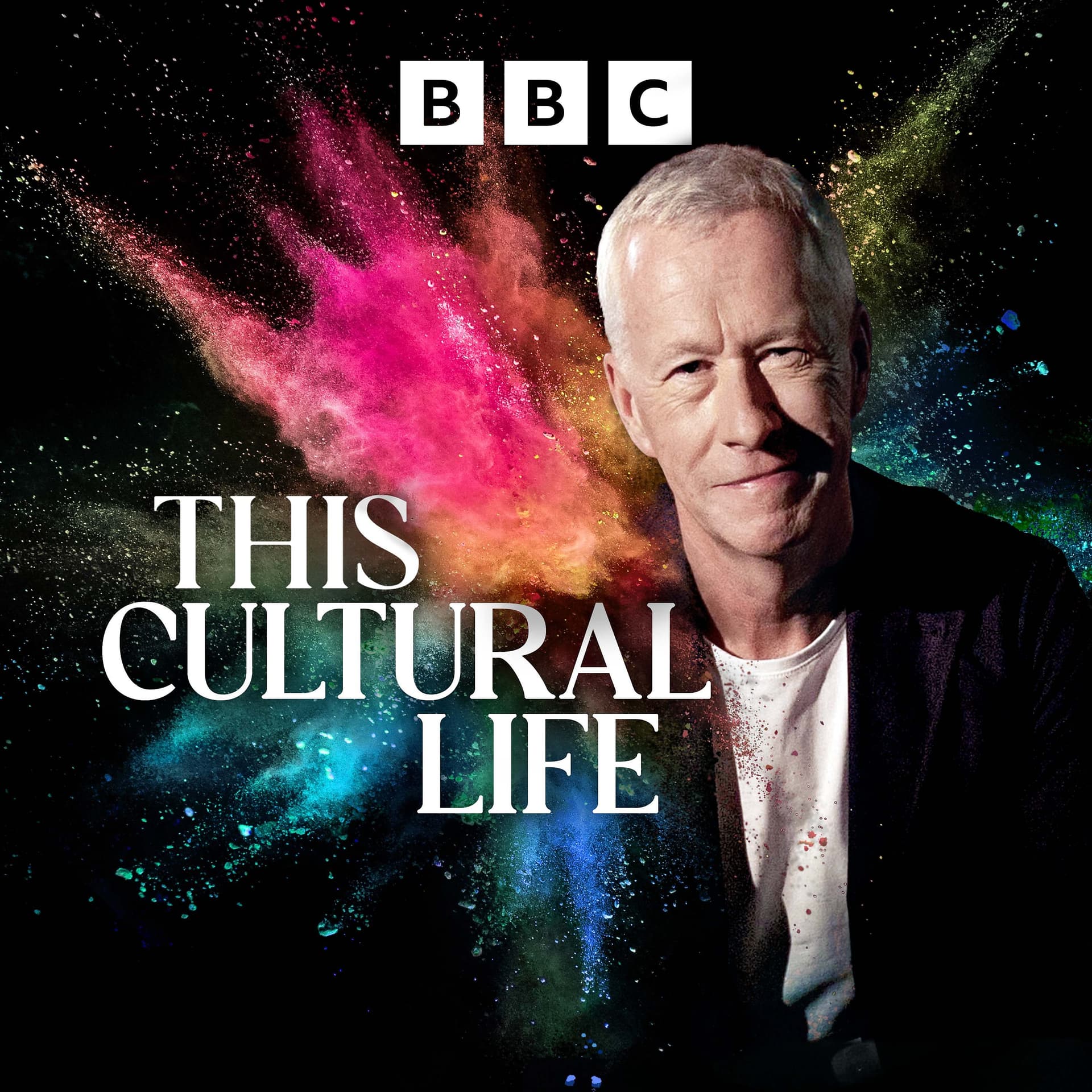
Author Sebastian Faulks discusses how family culture, reading, mental health, and experiences in France shaped his historical fiction, especially Birdsong, Human Tracers, Engelby, and the France-set trilogy (The Girl at the Lion d’Or, Birdsong, Charlotte Gray). He also explains his methods: themes, avoiding cliché, research, and structuring novels like symphonies. He links his own panic attacks/agoraphobia to later interest in psychiatry and personality disorder.
Guest backgrounds
Born and raised in Berkshire; father a local lawyer and book-club reader; mother (Pamela) a self-educated reader and theatre-goer who tried writing plays. Educated at Wellington College; later studied at Cambridge; worked as a journalist (The Telegraph and Independent).
Key claims
Art reveals the universal in the particular; unfamiliarity liberates writing; mental illness is real and bodily; novel structure can follow musical form (theme/variation/recap).
Notable examples
Mother’s National Gallery/Tate trips; Cambridge panic attacks; Bristol psychiatrist; Human Tracers’ psychiatry history; Engelby’s voice and unreliable narration; Jeux de Paume inspiring Impressionists (Pissarro); Birdsong’s “how far can you go” theme, researched via Flanders veterans and Imperial War Museum documents; Farewell to Eden set in the Palestine mandate.
Written by AI. May contain mistakes. Listen to the episode to check what was said.
Chapters
Tap a time to open that second in VOSebastian Faulks' Early Life
1:00 to 3:00
Faulks shares insights into his childhood and family background.
“Sebastian, folks, welcome to This Cultural Life.”
Cultural Upbringing and Literary Influence
3:00 to 5:00
Discussion about the books and cultural activities that shaped Faulks.
“So you talk about this unhappiness and this difficult childhood that your mother had.”
Mother's Impact and Creative Ambition
5:00 to 9:00
Faulks reflects on his mother's struggles and her influence on his creativity.
“your mother was trying to write and clearly it's been passed down in some way through the genes.”
School Experience and Discontent
9:00 to 11:00
Faulks discusses his negative experiences at school and its effects on him.
“These conditions are in themselves not serious, but they're very, very painful at the time.”
Mental Health Struggles
11:00 to 13:00
Faulks opens up about his mental health challenges during university.
“The question people asked was, is it real or is it all in his mind?”
Writing and Psychological Themes in Novels
13:00 to 14:00
Faulks explains how his experiences influenced his writing, particularly in 'Human Traces' and 'Engelby'.
“I didn't know that he was going to have done these terrible things when I started writing it, but about halfway through it became clear that he had.”
Exploring Character Pathology
14:00 to 14:35
Sebastian discusses creating a complete pathology for a character.
“so I felt very pleased that I'd actually created a complete pathology for a fictional character But then I thought perhaps I'd better sit this as myself as well, just to make sure.”
First Encounter with the Jeux de Paume
14:35 to 18:14
Faulks reminisces about his first visit to the Jeux de Paume Gallery in Paris.
“When I was 17, I left school and I had a year before going to university and I went off to Paris because it sounded like a good idea.”
The Allure of France
18:14 to 20:00
Faulks reflects on his complex feelings about Paris and France as a whole.
“what Henry James called the puerile dread of the grocer, which has sterilised a whole province of French literature.”
Literary Inspirations and Historical Context
20:00 to 22:35
Discussion on the historical context of his works set in France and their inspirations.
“And it didn't really interest me at all.”
Show all 18 chapters
Researching Birdsong
22:35 to 26:37
Faulks describes his research process for the novel Birdsong and connects with veterans.
“And I says, where are you standing when my best friend was killed?”
Writing with Emotional Depth
26:37 to 28:00
Faulks shares his emotional journey while writing Birdsong and the challenges involved.
“rather graphically described sexual love story.”
Journalism's Influence on Fiction
28:00 to 29:49
Explore how journalism shaped Sebastian Faulks's approach to writing novels.
“How did your experience of journalism and reporting feed into the fiction?”
The Structure of Novels and Symphonic Influence
29:50 to 30:52
Learn about the parallels between musical structure and novel writing.
“And if you think, I mean, a book like Charlotte Gray is very much written on those lines.”
Emotional Depth in Writing
30:53 to 33:18
Discover how music informed the emotional depth in Faulks's writing.
“What they really mean is when is it set and what are the names of the characters?”
Impact of the Old Testament on Literature
33:19 to 36:55
Understand how the Old Testament influenced Faulks's storytelling.
“religious and we had two services on Sunday and prayers morning and evening every day during the week.”
Setting the Novel in Historical Context
36:56 to 39:49
Explore the historical context of Faulks's forthcoming novel set in Palestine.
“after the Second World War and follows a soldier who's been part of the or is part of the British peacekeeping troops there in Palestine.”
Parental Influence and Literary Success
39:50 to 41:46
Learn about the impact of Faulks's parents on his writing career.
“We started this whole conversation, Sebastian, in talking about both your parents and their influence, the influence particularly of your mother.”
Transcript
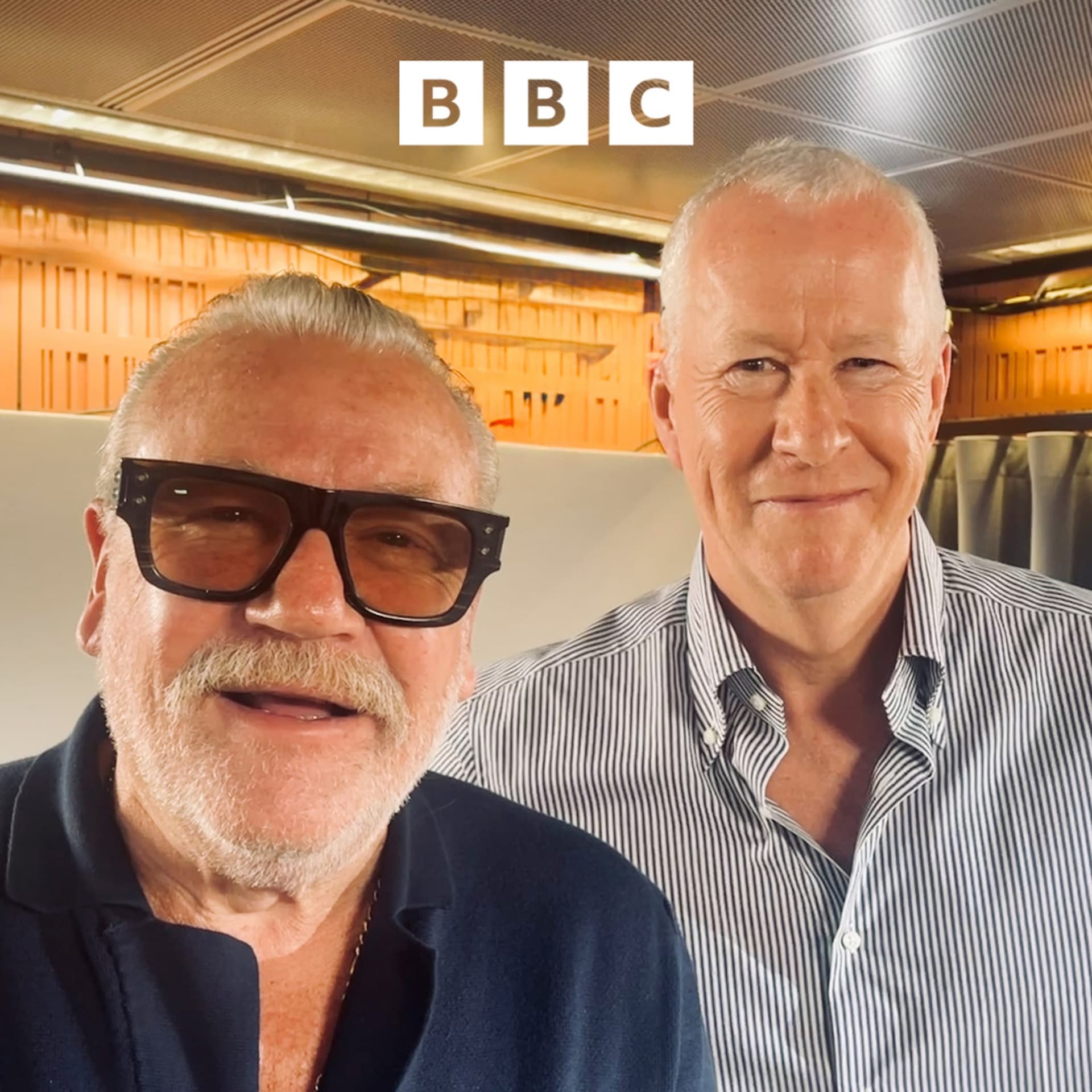
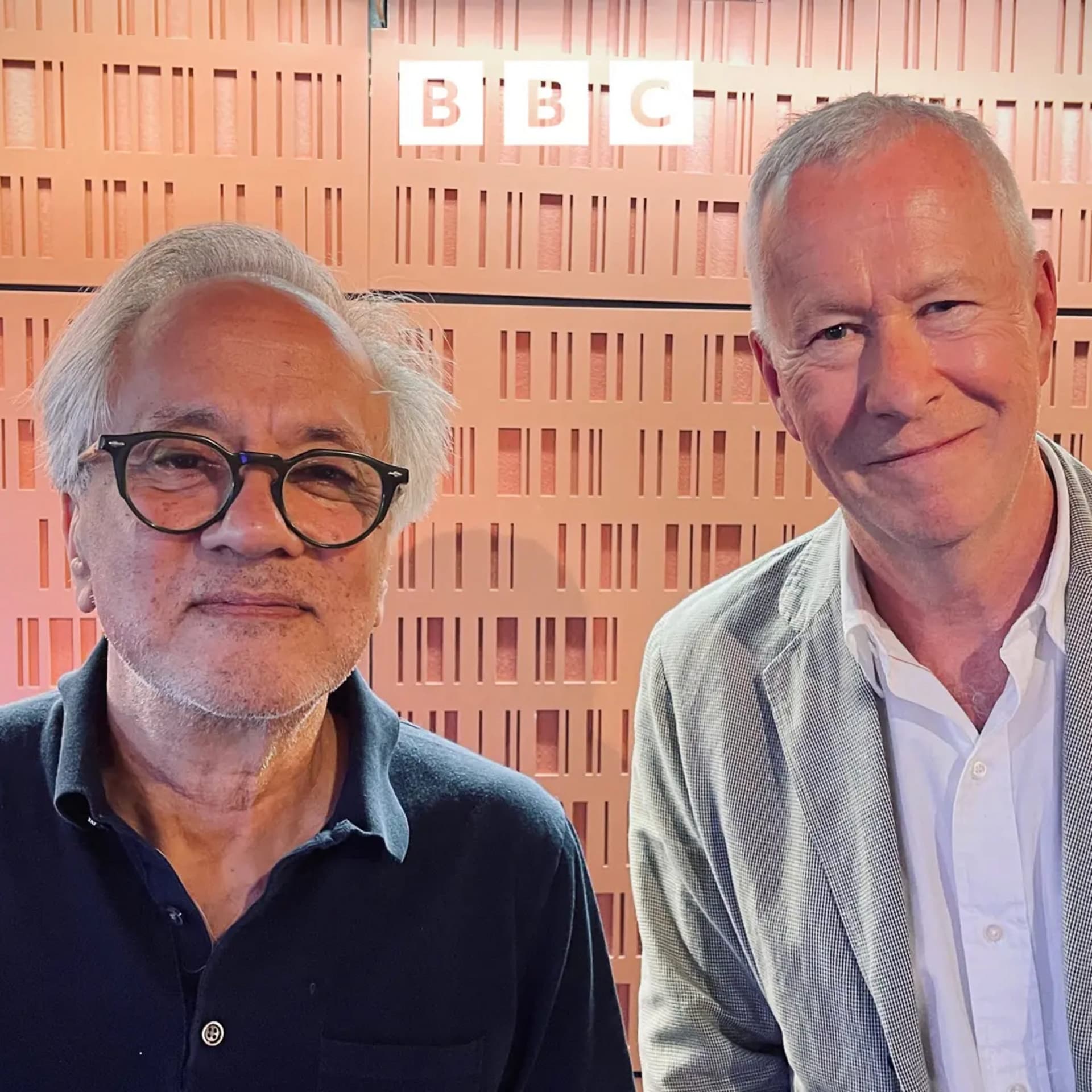
Automatic transcript. May contain errors.0:04Welcome to This Cultural Life, the series in which leading artistic figures discuss the influences and experiences that inspired their own creative lives. I'm John Wilson, and my guest in this episode is the author Sebastian Faulks. He won huge acclaim for his first World War story, Birdsong, which, along with the girl at the Léon d 'Or and Charlotte Gray, forms part of a trilogy of historical novels set in France. Since it was first published in 1993, Birdsong has gone on to sell more than 3 million copies worldwide, and he's taught in schools and universities on both English and history syllabuses.
0:40His other novels include Human Tracers on Green Dolphin Street, Engelby, and most recently, Farewell to Eden. A team captain on the Radio 4 literary quiz show The Right Stuff for over a decade, Sebastian Foulkes was made a CBE for Services to Literature in 2002. Sebastian, folks, welcome to This Cultural Life. Thank you. On this show, my guests discuss the most significant influences and experiences that have informed their own creativity. And your first choice is your mother, Pamela. But before we talk about her influence on you, let's set the scene. You were born and brought up in Berkshire.
1:19What was early family life like for you? It was great. We're talking about a time after the war when people are trying to put their lives together again, rather. My father had lost all his 20s to the war and had rather reluctantly become a lawyer in the local town, Newbury. And my mother had been in the Women's Air Force and she'd had a rather difficult childhood but was very happy to be married. I had an older brother born in 1950 and he was a great influence on me because he was that bit older than me. So it was a very ordinary, tranquil, modest childhood. No one had any money. We didn't have any money, but that was fine.
1:58And, you know, we made our own fun in those days. What about cultural upbringing? Were there books in the house? There were a lot of books in the house. My father had had a pretty straightforward education and he read a lot. And he belonged to a book club, which in those days was a very normal thing to do. And you were sent the book of the month choice. Frequently seemed to be Evelyn Waugh or Graham Greene, that kind of writer whom he liked very much. But my mother was much more sort of culturally active, you would say. Her mother had been an actress of really no great distinction, I think. But my mother had a gramophone and she had quite a big record collection.
2:35You know, the sort of fairly cut price boots or Timothy White's purchase of there was Mozart, Beethoven. If you asked her, have you got any Mahler? She said, well, I think I've got some somewhere. And she was a very keen reader, largely self-educated, really. but she had discovered Dickens when she was young and I think quite unhappy and found in Dickens stories and characters which rather spoke to her. So you talk about this unhappiness and this difficult childhood that your mother had. What were the circumstances? Well, simply that her parents divorced when she was a baby and neither of them really wanted to look after her.
3:10Care of the child was given to the father because it was very much a fault divorce in those days. But the father was a sports reporter, my grandfather, and he was out and about all the time in Scotland, you know, reporting on golf or in France, reporting on rugby, whatever it was. And so my mother was brought up mostly by her grandparents in a rather sort of haphazard way. Did they encourage Dickens, do you think? I don't know where she picked up Dickens and indeed all the others, but even when I was a child, I remember her coming to pick me up from the village school when I was about six, and she would always get there early and she'd always be reading a book in the car, trying, I think, in a way to sort of make up for the gaps in her education.
3:48She also would take us to the theatre whenever she could. And then one day she took my older brother Edward and me to the National Gallery. I mean, this was excitement beyond belief. And then we did the Tate in the afternoon. So she was quite sort of active in encouraging us. She recognised the empowering qualities of art and culture then? I think so. When she read to us every day after lunch, clearly books meant something. and then I would see her sitting at her little portable typewriter typing away and she was trying to write her own plays. I don't think they ever got very far. She'd send them off to the BBC and the BBC would send them back again and she was constantly being disappointed but constantly trying again.
4:31Did you ever read them? No, I never read one of them. You don't know what she was writing about? I suspect they were sort of fairly middle-class family comedies with a slightly sad touch probably but it did make me feel that having some sort of creative ambition was a possible thing to do. It wasn't completely weird. And certainly of the little boys and girls at the school, I was the only one whose mother was trying to write a play before she came to pick us up. But there's a lineage there, isn't there? Because your grandfather was a writer, sports reporter, your mother was trying to write and clearly it's been passed down in some way through the genes.
5:04What age did you think, hmm, that's the life for me as well? I think when I was about 14 or 15 and I'd read a lot of adventure stories as a child and then I sort of moved on to Sherlock Holmes, who I loved a lot, and then Agatha Christie, Alastair MacLean, who was a sort of great thriller writer, Night Without End, Where Eagles Dare and so on. And then I hit a bit of a sort of block. And I think this can happen when you're about 13. You finish with children's stuff, but you're not really ready to go on to, you know, Henry James or whatever. But then about 14 or 15, I started with Pride and Prejudice and then David Copperfield and then D.H.
5:42Lawrence, Sons and Lovers. And I was quite unhappy at this time. I didn't really like the school and I felt very rebellious. And I found in these characters people who really spoke to me. And all these authors, even Jane Austen, was very anti-establishment. And I thought that she was going to be very boring and so on. But she wasn't. She was right with me in her mockery of posh people and vicars and so on. So you're in senior school. You went to Wellington, didn't you? I did, yeah. And it was really then, not now, a very second-rate school. It didn't really reward accomplishment. It really was there to turn out people who'd go off to the colonies and administer and not make a fuss.
6:24But, you know, that might have been OK in 1860, but we're now in, you know, 1969. And, you know, that really didn't cut the mustard anymore. and I ran away from school and I made a tremendous fuss and wanted to be removed. But we came to an agreement, which was that I could leave the school basically and go and live with a retired master in the village nearby and then I would bicycle in every day for a sort of tutorial. And finally, in my last year, I was lucky enough to have two extremely good teachers. Finally, the school came up trumps and I just had a lesson a day with them on English. Was it disdain for authority or were you unhappy there?
7:06I hated the school. I thought it was utterly second rate. And I have to say it isn't anymore. It's now a sort of model of what a private school can be. It's co-ed and very good academically, very good in every way. But hang on, you say second rate. What did you have to compare it to? Well, I suppose compared to the school I'd been to before, where if you did well and came, you know, top of the class, you've got a chocolate bar and a pat on the back and a pair of striped socks if you did well at football. and it encouraged you a lot, whereas Wellington didn't encourage you. But it suggests that you knew you were clever and you sort of deserved a bit better in terms of education than the teaching that you were getting at Wellington.
7:41Well, I suppose that's right because I'd won the top award going into the school and I'd been top of the class in the previous school. So, yeah, I suppose I felt, you know, this could be better. This could be more enlivening and enlightening, yeah. Was there anything that you came away from that school with that steered you towards this path of writing? Yes, I think the fact that one couldn't do anything in the evenings except read. There were televisions, but you weren't allowed to watch them. You could listen to your radio for about 15 minutes. So essentially between about 6.30 and 10.30, all you could do was read books.
8:16And so obviously I read an enormous amount. And also my last year was fun, and I don't want to sound too cruel about the school. I did get something from it in the end. You talk about the unhappiness there. And later, when you're at university and after university, you suffered bouts of mental health issues and further unhappiness. What were the circumstances? My issue started in my second year at university in Cambridge and it consisted of panic attacks, agoraphobia, insomnia. And, you know, it was in a bad way. There was nothing sort of deep down wrong with me. There was nothing genetic inherited or any serious psychiatric illness at all.
8:57But when I look back at it, I think it's a bit like having cramp or gout. These conditions are in themselves not serious, but they're very, very painful at the time. Try telling somebody with gout that, you know, your pain is trifling and they won't believe you. But actually, it isn't a very serious disease. And so anyway, my crisis passed over after about a year or so. But how did the crisis manifest itself? Just fear of going out, really. I mean, agoraphobia and thinking I couldn't get to the end of the street without having a massive panic attack. And so I was taking quite a lot of prescribed pills from various doctors.
9:38But eventually, after I'd left Cambridge, I spent a year in Bristol and I came across a very good psychiatrist there. And he helped me a great deal. Your 2005 novel, Human Traces, is very much about the evolution of psychiatry in the late 19th century and early 20th century. What was the inspiration for that? But were you drawing on your own experience? I think at that time I thought when I got better, I used to go to this hospital for twice a week as an outpatient for treatment. In Bristol? In Bristol. And there were people in there who were seriously ill. And I just thought to myself, if what I've been through is so trivial, I mean, what must it be like to be really, really ill?
10:18And I think I put that in the back of my mind as something I would return to one day. It took a long time for me to get back to it, to feel ready to tackle it, because it's such a huge subject. I had to learn a lot about neurology and evolution, psychiatry, the history of it. And for someone with almost no scientific background at all, this was extremely hard work. But I think I was also drawn towards it by the fact that I had met a number of people who suffered from schizophrenia. One of our best friends when we were children, my godmother's son, our next door neighbor. So I think just knowing these people and feeling that there was very little help or understanding available for them.
10:58In fact, more than that, that their condition had been fundamentally misunderstood. The question people asked was, is it real or is it all in his mind? And to me, that was a completely false antithesis, you know, because the question was, is it real or is it not real? Or is it all in the mind or all in the body? Well, actually, the answer is, A, it's real and B, it's all in the body because your mind is only a function of your brain, which is obviously part of the body. Part of the body and an organ. But it took me a long time to work this out. A lot of work. Yeah, I can imagine. I mean, historically, you are drawing on sources and science.
11:30But two years later, 2007, you wrote a book called Engelby, in which the protagonist is mentally ill, but he's an unreliable narrator. His biography is very closely aligned to your own. He's kind of schooling his university education and then his work on a Sunday newspaper. What were you trying to achieve with Engelby? I wasn't positively trying to achieve anything because the book kind of wrote itself. I was waking up one morning and this voice started up in my head. My name is Mike Engelby and I'm in my second year at an ancient university. And when I got to my desk an hour or so later, I found I could sort of dial in and this voice just continued.
12:12And I didn't know where it was going at all. I won a prize to come to my college and it pays my fees My family's poor I took a train from school one day after I'd sat the exams and had been called for interview I must have stayed in London on the way but I have no memory of it My memory's odd like that I'm big on detail But there are holes in the fabric It was like a sort of, I suppose, a Jekyll and Hyde or some weird alter ego and I found that I was able to sort of drop a sort of pipe or pump down into sort of the very dark regions of my unconscious and this is the voice and this is the story that came out.
12:52But I'm very happy to say that, you know, I remained uncontaminated by Mike Engelby. Yes, he is a very disturbed individual, isn't he? And a possibly murderous one as well. I didn't know that he was going to have done these terrible things when I started writing it, but about halfway through it became clear that he had. And then I went back to the beginning of the book and made sure that it was all fair with the reader. And it was all in there. It was all buried. It was quite clear all along to an attentive reader, unreliable though he is. But then I thought to myself, well, if he's done these terrible things, what's the matter with him?
13:23And I'd been to visit Broadmoor when I was researching human traces and I'd become quite interested in the question of personality disorder, which is a very strange, very controversial diagnosis, which is basically done on a questionnaire. and I sat the questionnaire, I found it and I sat it first of all as Mike Engelby and it came back that there are about 10 different types of personality disorder and he was at very low risk on all of them bar one. You were channeling his answers, the answers he was likely to have given. That's right, I sat it in his persona as it were but he was off the charts for schizoid personality disorder so I felt very pleased that I'd actually created a complete pathology for a fictional character But then I thought perhaps I'd better sit this as myself as well, just to make sure.
14:12I scored very low on all personality disorders bar to my wife's amazement and amusement, narcissistic personality disorder, which there was a sort of mild risk.
14:29Your next choice, Sebastian, folks, is the Jeux de Paume Gallery in Paris. When did you first visit it? When I was 17, I left school and I had a year before going to university and I went off to Paris because it sounded like a good idea. And I found this little room off the Avenue de la Grande Armée, which is not a very fashionable or interesting part of Paris, really. And I had no money, but I could just about speak French. And then I learned how to speak French by imitating a Frenchman speaking French, which was fine, except that they then assumed I was French and then rattled off at a million miles an hour, which I couldn't really understand what they were saying.
15:10So I just walked around all day, really, and I was in theory doing a course at a college for an hour a day. But really I walked and walked and walked, and I went to cinemas, and I joined the American Library in Paris and read yet more and more and more books. But the Jeux de Paume was a gallery in the Tuileries Gardens. It was a kind of offshoot of the Louvre. and they had in it basically all 19th century French art, including the Impressionists. I mean, the pictures which are now... In the Musée d 'Orsay. In the Musée d 'Orsay, yeah. So it was the precursor of that. And I didn't know much about painting at this time, but I went in and I was just sort of enraptured by the whole century, but particularly by the Impressionists.
15:51I think Pissarro was my favourite. And what I liked about them was that they seemed very personal, these paintings. They were impressions of a moment in a house in the countryside outside the streets of Louvciennes under snow. But also they seem to get at something eternal or something universal. And not just of that place, but of all of France itself. That rather chimed with something that I suppose I had stumbled on while reading books at school was the idea of the emergence of the universal in the particular. And I've always thought, really, that's what art is, actually, whether you're talking about paintings or musical books.
16:32In the years since you have been so closely associated with France thematically, and clearly you have a great love for the country, did it start there with that first visit to Paris? Did you feel immediately at home and think, you know, this is the place for me, these are the people that I want to be part of? Yeah, well, I sort of didn't really like Paris, but you don't have to like it. You have to be interested by it. It was certainly interesting. And, you know, so this is in early 1971, and there are still people with no legs from Verdun, from the First World War on the metro. Everyone's smoking in the metro, by the way, at this stage.
17:06There was one non-smoking carriage. And I didn't particularly like Parisians either, but I liked the cars. I liked the Citroën, DS in particular. I liked the food. I liked the wine. I adored the landscape. But I think really for me, France was, it was like Narnia. Here is this place, it's 20 miles away, and you go into it, and everyone, all their presumptions, their way of living, their way of thinking, their way of speaking, are completely different from ours. To me, that's been one of the great things about living in London or in England at all, this proximity to this wonderful, almost sort of Disney-like world to me.
17:44But then the more I thought about it, the more I studied, the more I read about it, and I understood the great tragedies and difficulties of France in the 20th century. and I began to understand why it had this rather shuttered, closed, post-traumatic feeling. So you're talking about the landscape, the food, the wine, the art. What about the literature? Yeah, I wasn't really 100 % on French literature. There seemed to be a lot about hating the bourgeois in it, what Henry James called the puerile dread of the grocer, which has sterilised a whole province of French literature. But I hadn't read a lot.
18:25I had done, I snuck in an extra A level at school in French, so I'd done a bit. But it wasn't really the literature at that point. It was the painting. Perhaps your most famous works, the trilogy of The Girl at Léon d 'Or, Birdsong and Charlotte Grey, of course, are all set in France during different periods of the early part of the 20th century. You once said that going to France, you could write the sort of novel that you wanted to write. What did you mean by that? I found living in England just didn't inspire me. And looking at the kind of writers that were being published at that time in England in the early 70s, late 70s, I wasn't really very enthusiastic about them.
19:07But I found that if I went to France, particularly in the Citroën DS, which I now possessed, having bought for 600 quid, I just would roll off the Route Nationale onto some sort of back road. and strange stories began to suggest themselves to me. I just found the whole culture, the whole landscape, inspiring and liberating. And to me, I think the real liberating breakthrough was to realise that I was not going to write about myself or some version of myself, despite what we've been saying about Engleby. But The Girl at the Lyon d 'Or is set in 1936. It's about a 22-year-old girl from a different country from mine, living in a different time, having had experiences completely other than mine.
19:48And somehow this tapped into a part of my mind and it just freed me to write. Do you think that means that as a writer you needed the challenge of unfamiliarity? Yeah, absolutely, yes. And I really didn't like the sort of thinly disguised autobiographical fiction, which is what, to be, you know, without sounding too dismissive, a lot of young people do because they have this ambition but they don't, you know, they don't know what to say So they think they'll do a version of, you know, my breakup at college with so-and-so. And it didn't really interest me at all. Birdsong became such a huge word-of-mouth hit rather than a critical hit originally and was then later voted one of the nation's favourite books.
20:29What was the initial inspiration for the novel? Well, I suppose rather like Human Traces, which I first started thinking of when I was about 11 or 12, probably about the same age, having to read out at my little school the names of all the boys who'd been killed in two world wars and ending up with a throat so raw that I had to go and see the nurse. Because there were so many names to read? So many names to read. And this was only a small school. And then the fact that our teachers seemed rather reluctant to talk about it, they tended to rather hurry on through that and then on to the Nazis. You know, they're more at home with the Nazis, really.
21:04And I suppose they were of an age that they would have had an older brother or a cousin or a family friend certainly who would have been one among many of those who died. And then I got really into it when I was writing The Girl at the Lyon d 'Or and her childhood had to have been during the First World War. And I didn't really want to open that box. I thought it's too repulsive, too much mud and blood and lice and rats. No one's interested in that. But then I read a book by Alastair Horne called The Price of Glory, which is about the Battle of Verdun, which really shaped modern France. and it's just started up again in my mind and really the question that intrigued me the more and more I read about it was how far can you go?
21:44I mean, how many men would the politicians and the generals have tolerated being annihilated in Europe for no reason that anyone's really been able to determine? And so that was the theme of the book in my mind. How far can you go and still be human? And what does it mean to be human? With one minute to go, the realisation struck him as it struck all the men, there was no way back. He threw a glance of longing down the clogged communication trench, then turned to face the front. A whistle blew, and clumsily the men began to clamber up the ladders, weighed down by their heavy packs, into the metal air.
22:23Stephen watched their foolish, crab-like movements and felt his heart seize up with pitying love for them. He pushed his way through to follow. How did you go about researching birdsong? Did you talk to veterans of the song? I did talk to a few, and I went with a group of them to Flanders one time, and I think that was a big moment for me, standing in the mud with a 95-year-old, I suppose, and him holding my hand and pointing out to a pillbox on the horizon and saying, oh, that's still there. And I says, where are you standing when my best friend was killed? and he described how he'd picked him up, his friend had been blown apart, and he picked up the body parts and put them in a sandbag.
23:05And to me, I think it was the physical connection with this old man in the very place where he had stood, and I was standing in the footprints of his best friend. And somehow it seemed to be not so much history as something which was still happening. It was sort of concurrent in some way I can't quite explain. Was he telling you in a very sort of matter-of-fact way? Yes, very matter of fact. Later on that evening, I said what happened? He said, I don't know. He left his dog tag on the piece of wood that he'd marked the grave, or maybe there was a rifle upside down, I forget. But that evening, I was walking with him in one of those beautiful Commonwealth war grave cemeteries where every headstone is white and everyone has an immaculate little shrub at the foot.
23:49And we came across this name engraved on one of them. The name was Malthouse, which was the name of his friend. And that was the first time he'd seen him for 70 years. So they had found the body in the sandbag, all the bits of the body, and they had given him a proper burial. And I was with him when he saw this. And it was a very powerful moment. How did he react? He said, oh, I say, oh, I say. That's how a 95-year-old Yorkshireman reacts. But it's also about that stoicism, isn't it? That acceptance we were talking about. You just do your duty. That's right. And it was interesting talking to these old guys, but they tended to tell you the stories they thought you wanted to hear and really to get the contemporaneous feel of what it was like to be age 18, 19, 20, 21, you had to go back to the letters and the postcards.
24:41I went to the Imperial War Museum and read hundreds and thousands of documents from their rather ill-catalogued, at that stage, collection. Did Birdsong start with a single image in your mind or a single character or did the whole story, which interweaves between time and place actually, and there's a very important romantic relationship there at the heart of the story, Did it all sort of coalesce around a particular moment? It started with the theme, which is my preferred way, but you can't control these things. You're at the mercy of what comes in. And the theme being how far can you go? And I therefore needed a main character who was prepared to go all the way through the war.
25:22And then the next great thing as a writer you do is avoid cliché. So he wasn't going to be a blue-eyed officer and he ignored he was going to be a cheery cockney, pack up your troubles in your old kit bag type. I needed someone perverse and difficult, not necessarily altogether likeable, but someone whose curiosity would drive him on. So that is Stephen. A much more normal, natural response, really, to what they see is embodied in the other main character, Jack, who is a simple, devout, God-fearing man, who the more he sees, the more he loses his faith. He's the tunneler who worked digging the tube tunnels in London before the war.
Read the full transcript
25:58and he's a sapper and digging out the tunnels underneath the trenches. That's right. And eventually the two of them find themselves trapped together when a tunnel is blown in and they represent different approaches to the experiences they've been through. So that's really where it started with the idea of what this book was about. But then as well as it being about the extremities of human cruelty and evisceration and dismemberment, I felt that I needed to have a sort of parallel story about the extremes of the human body could be put to in peacetime. And so there is a love story at the beginning.
26:35That is the reason it's a very sort of physical, rather graphically described sexual love story. It's because it is supposed to sort of foretell or foreshadow in some way the extremes of physical existence that we're going to see. Readers find Birdsong incredibly moving. Was it an emotional experience to write the book? Yes, it was. I felt very angry. I felt very grief-stricken, really, on behalf of all those people, 10 million men who'd been killed. And I felt very much for their parents, I think. We had, at that time, one child, a small boy, and I just thought, my God, you know, there's 20 million parents of my son.
27:17That's what they went through. And when I was writing it, I had this rule that if I found myself becoming overwhelmed by emotion, I would stop writing because you can't transmit emotion to the reader by hammering the keys. You have to find a detail in the narrative that will spontaneously evoke in the reader the kind of emotion that you already have felt. So you have to be both passionate and involved, but also you have to be quite detached and I wouldn't say manipulative, but you have to be quite artful. Before you wrote Birdsong, you had been working as a journalist and a feature writer for many years, working at the Telegraph, and then the newly launched independent newspaper as well.
28:02How did your experience of journalism and reporting feed into the fiction? I think it was very helpful. For a start, you're not afraid of the blank page as a journalist, someone screaming at you, you know, deadlines in one hour, we need something. So you don't have that worry about blankness, you've just got to get words down. But I think above all, it taught me that people will help you and you can pick up the phone and people will tell you stuff and you can go to places and you can research and find and observe and people will talk to you, even though sometimes I remember as a journalist thinking to myself, God, I wouldn't confide in me if I were you.
28:41Are you sure you should be telling me this? Meanwhile, scribbling away. Not that I was writing sort of scurrilous gossip, but people were telling me things which were definitely going to be disobliging to the place they worked or to colleagues or to something or other. So yes, it taught me to ring up. It taught me to go to places and how much you can learn by just observing, really, and by reading a lot. In the notes that you sent to us before you came in today, you said that almost everything that you learned about how to structure a novel came from listening to classical symphonies. Can you just explain that?
29:13Yeah, I think I didn't go to a creative writing school, and I found it very difficult, really, to know how to write a novel. I don't think I was one of these people who naturally wrote short stories from the age of 19 and so on. So I just sort of figured it out, really. And I figured it out by watching a lot of plays and a lot of films and sitting in the cinema and seeing how dialogue worked and how late in a scene you can go in before you start people talking and what dialogue is for, which I really think in a novel dialogue is there to give the readers eye a rest. it's just a bit of fun but it's really it's a way of conveying information by another means so that they don't have constant exposition and as far as structure is concerned I would listen to Beethoven or Brahms or Sibelius from my mother's vinyl collection and I quite quickly worked out that there was the exposition of a theme and then there was the variation and then there was a secondary theme and then there was a recapitulation and then you could bring the whole thing together everything resolved in this glorious climax and this was immensely satisfying and then I thought back to the books I'd read and I thought well actually if you think of great expectations that's sort of what is happening there really and so that became a kind of template but I thought I think it's easier to think of it in symphonic terms as well four movements rather than a sort of three-decker Victorian novel where it's sometimes hard to see exactly where you are So that is how I then set out to write novels.
30:40And if you think, I mean, a book like Charlotte Gray is very much written on those lines. Are you applying that logic in retrospect? So were you consciously thinking that when you were writing the books? Yeah, very much. That's how I thought, well, this is what the book is about. This is its main theme. When people say, I say I'm writing a new book, they say, what's it about? What they really mean is when is it set and what are the names of the characters? But I would say it's about how you can break a cycle of despair. And then they look a bit, what? What? It seems to me that's how you start with a theme.
31:08But you can't have just one theme. You need two or three others that play into it and support it so you can get your variation and your complications. Do you listen to music as you're writing or do you need total silence? I used to. Well, I used to actually have headphones on and get some sort of white noise in my head and draw the curtains and I would have a thermos of teas at the desk so I didn't have any excuse to get up. and also when I was writing The Girl at the Lion d 'Or which was the first time I'd really been into sort of deep emotions I listened to a lot of Puccini and I noticed that in the sort of big arias you have this very moving music and I'm not so sure what the libretto is saying he doesn't really bear too close, but at the moment when your tears have started to come there's a pause and an in-breath and Yossi Bjorling then goes quite a lot deeper
32:26I think I learned from that that it's no good just trying to get the reader to have a little dab at the corner of their eye. If you're brave, you take a deep breath, you can go much, much deeper. And so I think music really showed me how to do that.
32:46Your next choice, Sebastian, folks, is the Old Testament, which you say was your first introduction to literature. So who first read you the stories from the Old Testament? I think I read them myself, probably. but I went to this great little village school and then when I was eight I went to a boarding school called Elstery which was near Reading and it was extraordinarily old-fashioned and it was you learned Latin and Greek and wore grey clothes with a black tie on Sunday and it was like being back in the 19th century but it was a fair school and it was very disciplined but it was quite religious and we had two services on Sunday and prayers morning and evening every day during the week.
33:28And the headmaster's wife, a woman called Mrs. Sanderson, was a very, very good teacher. And we'd do Old Testament on Tuesday, New Testament on Friday in the evenings. We'd go through basically the entire Bible in the course of a year. And so when you'd been there for four years, you'd been through it four times. But I think it was the first time listening to the prophet Nathan or the description of the passion in the New Testament that I realized that the words that were used to describe a story had a very big effect on the impact of the story itself. So if you told the story of Samson and Delilah or Daniel in the lion's den and just told it in colloquial English, it would be, you know, pretty, pretty exciting sort of superhero stuff, but it wouldn't really move you.
34:13But if it was told in the language of the King James Bible, then it had a completely different effect. And there were parts of, you know, the passion which were just impossible to read they were so moving my god my god why hast thou forsaken me and uh and so on and so forth and it fell upon this wise and you know it's just it was just those rhythms that made me realize first of all that it isn't the content it's how you tell it that that's what elevates things so it's the passion and the drama but also importantly you said they're the rhythm so it's about the construction of the words as well yes and i suppose the language um which is largely, it's a long time since I've read it actually, but there's not much romance language.
34:52It's quite Anglo-Saxon I think really at that stage, early 17th century. It is poetic undoubtedly and that's how you remember it so well and that is how poetry works. It's not words worth saying I'm standing on the banks of the River Wye at the ruins of an old abbey. I'm thinking about how I love my sister and how much we used to love walking in nature together. It's the words he uses. Did it inspire you at all to write your own stories or did it just fire the imagination? I think it just fired the imagination and it made me, it was very, these stories in the Bible were just so exciting to read.
35:31The story of, you know, King David in Bathsheba and then him sending her husband into battle in the front line so he can get killed. and Nathan the prophet coming to him and telling him the parable of the ewe lamb. And David is so outraged and saying, whoever did this terrible thing should be lowered and killed and punished. And Nathan turning to him and saying, thou art the man. And it's just so chilling and powerful. Are you religious? I try. I'm trying. My wife and I go to church most Sundays, following the fact that our daughter got married last year and we had to go to church for in order that she could be married in this church.
36:13And I think there's a possibility. But certainly I find it very restful being there. And it's a time when you can think about friends and relations who've died, you know, deeper matters, quieter matters. But not up until now. I mean, this is a newfound thing then. Yes, I've often tried. And, you know, when I've been in dire straits, you know, for instance, that very unhappy time in my early 20s, I did pray. but I found I was praying to a God I didn't really believe in but on the other hand I did get better so maybe he did help. So did psychiatry. Yes. Interestingly the stories of the Old Testament do feature in your forthcoming novel which is called Farewell to Eden set at the time of the Palestine mandate after the Second World War and follows a soldier who's been part of the or is part of the British peacekeeping troops there in Palestine.
37:06Why did you want to set a story there at this time? It's a very interesting period. My father was there very briefly in Palestine, and then he moved on. But he was there when the King David Hotel was blown up. I think two reasons. One is my great friend at university, Ian Black, who was a great scholar of the Middle East and had just written this wonderful book about the history of Israel and Palestine called Enemies and Neighbours. And then these terrible things happened in 2023. and I was very shocked by the response, particularly in this country and particularly among people younger than a certain age.
37:43There seemed to be complete ignorance of what had happened, how the state of Israel had come into being and what had preceded it. And I'm absolutely not an expert, but I listened to a lot of recordings in the Imperial War Museum of both the Palestine police and the soldiers who subsequently went out to help them in the last days of the mandate. And it is an incredibly complicated but very, very interesting and absolutely heartbreaking story. It's interesting. You say your father was there in Palestine, but he was there when that hotel was bombed because that scene is near the beginning of the book, the bombing of the hotel, which is done by the Zionist terror group at the time, Ergun.
38:20So had your father talked to you about his experience there? Not much. He didn't talk to us very much about the war at all, except one day my brother and I sat him down in an Italian restaurant and said, you've got to stop being so reticent and sort of British about this. Tell us what happened. So he did tell us the whole story. And then he also wrote a sort of memoir, not for publication, but just for his grandchildren, really. I don't think any of them have read it yet. But he had a very, you know, interesting war. He was wounded three times. He was left for dead, basically, after the landings at Anzio.
38:54He was shot in the head. So have you drawn on those diaries or that story that he bequeathed to his grandchildren? Not in Farewell to Eden, but I drew on it quite heavily in a book called Where My Heart Used to Beat about the Italian campaign and the terrible time they had in Anzio. I mean, they were living in slit trenches about two feet deep full of excrement. And they were being bombarded night and day by the Germans. And the Americans just wouldn't give the order to break out. So all the element of surprise that they had won by their surprise landing was lost. and he lost a lot of friends.
39:24I mean, it was an absolutely appalling experience. Was your father still alive when you wrote that book? No. My father died in 1998, but he had read Birdsong and I remember seeing him just after he'd read it and he was quite thrilled. And I said, are you sure? Were you OK with the sort of sex bits? And he said, oh no, I love them. So it was very nice that he did live long enough to see that. We started this whole conversation, Sebastian, in talking about both your parents and their influence, the influence particularly of your mother. What did they make of your literary success? Oh, I think they were very happy.
40:02My dad didn't see very much of it. My mother died in 2003. But I think, you know, in some ways, I sort of did what she'd wanted to do. And, you know, I think all the envelopes that came back from the BBC saying, dear Mrs. Folks, I'm sorry to say, but this is not the sort of play we're looking for. I think when she saw a book of mine reviewed in the paper saying this is fantastic, she would be going, yes! So I'd done it for her in a way. You've written so many books now. What drives you on creatively as an author? I think the fact that I can't do anything else. And I find a day in which I haven't written something very frustrating.
40:40So as I'm waiting for something to come in right now, before Farewell to Eden comes out, I'm actually writing a diary. I mean, I found, I published this sort of memoir last year, Fires Which Burned Brightly, and I'd found a way of writing about myself, which is, it's not quite me. It's somebody very like me. It's not Engelby either, by the way. But it's 98 % like me. I used to find it very difficult to write in the first person. But you just need an angle and you need a tone. I don't suppose I'll ever publish the diary, but meanwhile I'm tinkering around with that. And waiting to see what will come in from the ether.
41:15Is it compulsion or is there still a sense of ambition? Clearly, you're not that sort of writer that thinks, I've written some great books I don't have to do anymore. No, but I think there comes a time when you have to say, I've sung all the songs that I can sing, but I don't feel that. Well, for a start, I have a so-called Austrian trilogy, and I don't want to leave it as the only two-book trilogy in literary history. I have to write a third part to that. But no, you're always hoping that you can do something worthwhile, do something good, do something better, fail again, fail better. Sebastian Foulkes, thank you very much indeed for sharing your cultural life with us.
41:50It's been a pleasure, thank you.
41:57Well, I hope you enjoyed that conversation with Sebastian Foulkes, the first guest in our new series. He now joins a long list of best-selling and award-winning novelists who have been previous guests on This Cultural Life, including Isabel Allende, Lee Child, Salman Rushdie, Patricia Cornwell and Margaret Atwood, to name just a few. You can find all of them in our archives. Just head to BBC Sounds or wherever you get your podcasts internationally. And while you're there, please do subscribe to the series so that you never miss an episode. From me, John Wilson, and series producer Edwina Pittman, thank you very much indeed for listening to This Cultural Life.
42:36From BBC Radio 4. I've got one more question for CIA, and this is as big as it gets. I'm Kim Cattrall, and I'm back as the CIA trailblazer Eloise Page. I do solemnly swear. I do solemnly swear. It's 1964, and President Lyndon B. Johnson is in the White House. Just confirming that is the order. In the years that follow, the CIA is put to the test. A car with its hood up in the middle. Central Intelligence, Series 3. Starring Kelsey Grammer. You didn't even have the guts to tell me. David Duchovny. Pleasure's all mine, Miss Page. And me, Kim Cattrall. Your reputation precedes you. Listen first on BBC Sounds.
From the publisher
Author Sebastian Faulks talks to John Wilson about his influences and formative cultural experiences. Faulks won huge acclaim for his First World War novel Birdsong, which – along with The Girl At the Lion D’or and Charlotte Gray – forms part of a trilogy of historical novels set in France. Since it was first published in 1993 Birdsong has gone on to sell more than three million copies worldwide and is taught in schools and universities on both English and History syllabuses. His other novels include Human Traces, On Green Dolphin Street, Engleby and, most recently, Farewell To Eden. A team captain on the Radio 4 literary quiz show The Write Stuff for over a decade, Sebastian Faulks was made a CBE for services to literature in 2002.
Producer: Edwina Pitman