In short
Podcast Summary: This Cultural Life - Sheku Kanneh-Mason
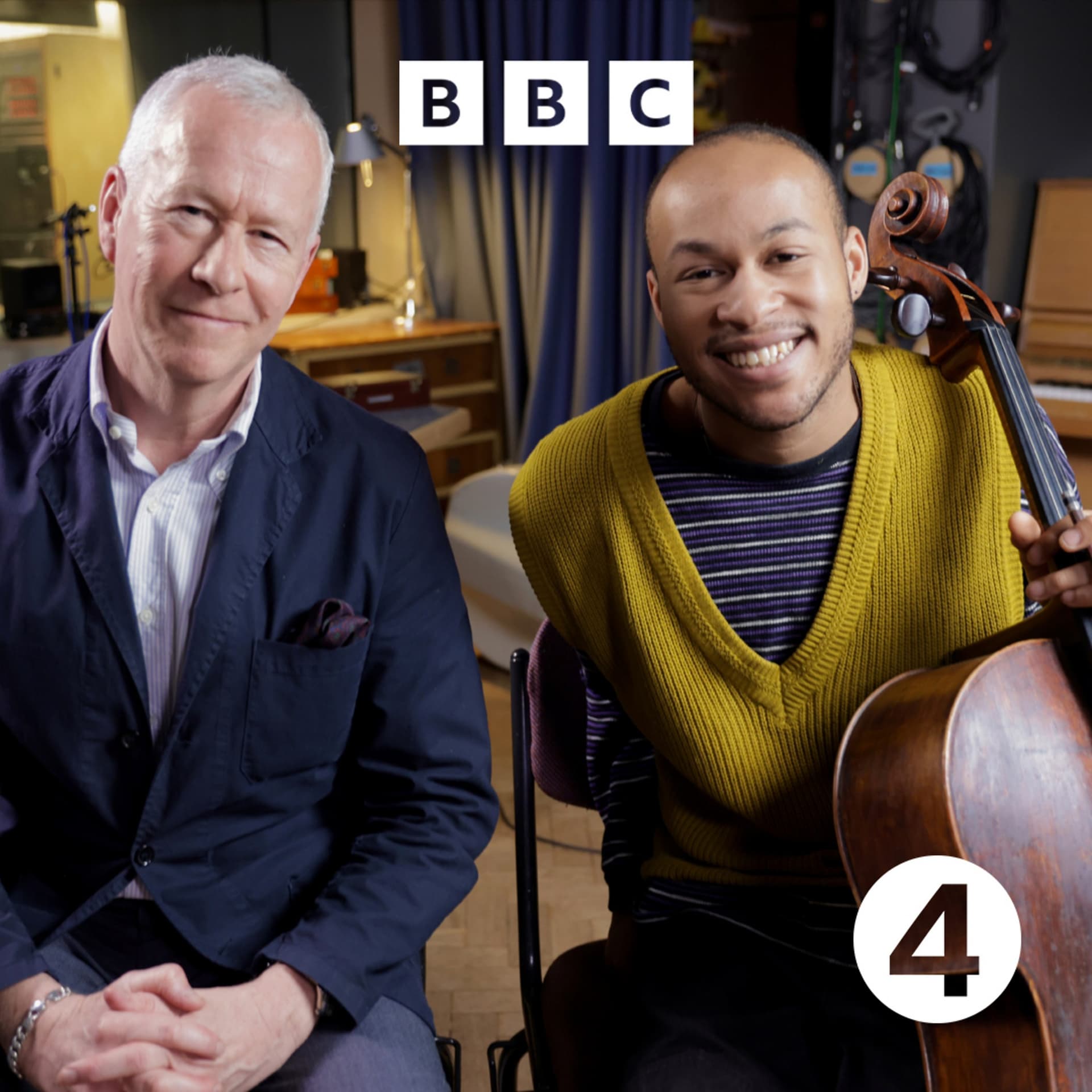
Episode Overview In this episode of *This Cultural Life*, host John Wilson interviews renowned cellist Sheku Kanneh-Mason, who shares insights into his musical journey, influences, and experiences. Born into a large musical family in Nottingham, Sheku rose to fame through various notable performances and accolades, including winning the BBC Young Musician of the Year in 2016 and performing at the royal wedding of Prince Harry and Meghan Markle.
Key Points and Discussions
Early Life and Family Influence
- Musical Background: Sheku was born in 1999 and raised in a family of musicians; all siblings learned classical instruments.
- Grandfather's Influence: His paternal grandfather, Arnold Mason, significantly influenced his musical appreciation, particularly for chamber music.
- Encouraged Sheku's love for classical music and specific composers like Rachmaninoff and Schubert.
- Notable shared memories of musical practices during childhood.
Musical Inspiration
- Cellist Role Models: Sheku cites Jacqueline du Pré and Mstislav Rostropovich as major influences.
- Emphasizes the emotional depth and technical mastery of du Pré, particularly her interpretation of the Elgar Cello Concerto.
- Rostropovich's expressive playing and personal connection to Shostakovich's works inspired Sheku's own performances.
Achievements and Recognition
- Breakthrough Performances:
- Achieved fame after performing at the wedding of Prince Harry and Meghan Markle, reaching a global audience.
- Won the BBC Young Musician of the Year in 2016 with Shostakovich's First Cello Concerto.
- Awards: Received multiple accolades, including two Classical Brit Awards and an MBE for services to music.
Music as a Personal Journey
- The Cello: Sheku discusses his deep connection to the cello, describing its sound and physical resonance as integral to his musical expression.
- Chamber Music: Highlights the importance of chamber music in fostering collaboration and shared joy within his family.
Musical Education and Advocacy
- Music Education in Schools:
- Sheku expresses concern about cuts to music education in UK state schools and the need for music to be part of the core curriculum.
- Argues for the value of music in fostering community and developing skills among young people.
Navigating Fame and Identity
- Response to Public Attention:
- Discussed the challenges of sudden fame while still being a full-time student.
- Emphasizes the importance of focusing on personal growth and musical development over public perception.
Reflections on Cultural Identity
- Controversial Comments on "Rule Britannia":
- Sheku faced backlash for expressing discomfort with the anthem's lyrics at the Proms, highlighting the broader implications of national identity in music.
- Stresses the importance of making music a celebration of diversity and inclusivity.
Closing Remarks
- Continued Passion for Music: Despite fame, Sheku remains dedicated to learning and exploring music.
- Final Performance: Sheku concludes the episode with a live performance, reflecting his deep appreciation and connection to the art form.
Conclusion This episode provides a profound insight into Sheku Kanneh-Mason's artistic journey, underscoring the interplay between personal influences, cultural identity, and the transformative power of music. His advocacy for music education and his thoughtful reflections on fame and representation contribute to a rich discussion about the role of musicians in society.
Written by AI. May contain mistakes. Listen to the episode to check what was said.
Transcript
Automatic transcript. May contain errors.0:00Hello, I'm John Wilson. You're about to listen to This Cultural Life. Episodes are released weekly, wherever you get your podcasts. But if you're in the UK, you can listen to the latest episode first on BBC Sounds, seven days earlier than anywhere else. Do subscribe to This Cultural Life on BBC Sounds and make sure you have push notifications turned on and we'll let you know as soon as new episodes are available.
0:31Hello and welcome to This Cultural Life, the series in which some of the world's leading artistic figures reveal the influences and experiences that have inspired their own creativity. I'm John Wilson and my guest in this episode is the cellist Sheku Kenne Mason. Born in Nottingham in 1999 into a big musical family, he and his six siblings all grew up learning classical instruments. They appeared on Britain's Got Talent in 2015. Sheik, who first made his mark as a solo performer the following year when he won the BBC Young Musician of the Year competition. In 2018, a global audience of over a billion people watched him perform live at the wedding of the Duke and Duchess of Sussex.
1:10Since then, he's received two classical Brit awards, an MBE for services to music, and he's performed at the proms every year since 2017. His book, The Power of Music, charts his creative journey, whilst his new album, his fifth release, includes recordings of works by Shostakovich and Benjamin Britten.
1:32Sheku Kenne Mason, welcome to This Cultural Life. Thank you very much. I'm delighted that you brought your cello to the studio with you today. Just first of all, tell us about this instrument. Who made it and when? Yes, it's an incredibly beautiful cello. It was made in 1700 by Matteo Gofrella, who was a maker in Venice, one of the great makers of particularly cellos, but violins as well. And this is a particularly special example of his work. 325 years old then. Yes. It's an incredibly good make, isn't it? It is, yes. I love that patina of age that you have all the way, the varnish. How does it sound?
2:09It has a particularly warm and sort of resonant and dark quality to the sound.
2:36How is it that something that old can get better with age? I mean, that sounds incredible, doesn't it? I think because it's been resonating and singing for so long, I think it develops these layers of sound and complexity to the sound, which I really enjoy kind of finding and exploring. It's also just incredibly well made. How long have you had it? I've had it for about five years. On loan, I presume? Yes. On a long loan? On a hopefully very long loan.
3:20On this cultural life, Sheikou, my guests choose their most important creative influences and experiences. And many people, of course, will be aware of the Canet Mason family history and the influence of your parents in particular. But I'm going to start by taking back two generations to your paternal grandfather, Arnold Mason, to whom you've dedicated your new book. Why was he such an influential figure for you? He was always incredibly supportive. My Antiguan grandparents were living in London, and so we'd see them very often in school holidays. And they'd also come to stay with us in Nottingham.
3:58And I have lots of memories of practising, and particularly my granddad. standing in the doorway or sort of lurking and humming along. And it was always such like a constant and genuine love of music that he had. And that enthusiasm I found to be very inspiring as a child. But he had grown up in Antigua, a big classical music fan. What, from his early years? He was, yeah, always really fascinated and in love with classical music. And it's funny now going to Antigua and chatting to our uncles who knew him when they were all young and they were sort of baffled by his love and fascination with this music that they didn't know or take to.
4:38But he was just, yeah, really drawn to this world of music. Because traditionally the rhythms of Antigua would be soca or calypso and very different kind of music. Did he play? He did play the violin a little bit in his youth, but not to a high level. And he would encourage you all the time as well? All the time, yes, yeah. He was a great lover of composers like Rackmannov for the piano and for the cello, Vorjak the cello concerto.
5:12He's always telling me, he wants to hear me play that.
5:23And he was a great lover of chamber music, and in particular Schubert's Trout Quintet. which was a piece that feels like it was always around in my childhood and I associate it a lot with him.
5:40That piece is particularly warm and gentle and characterful, which I think is very similar to his character and his response to music and so I have lots of memories of him responding to that music. There was a particular documentary made by Christopher Newpin In the late 60s, 1960s Yes, yeah, exactly, of the sort of preparations and a performance At the Queen Elizabeth Hall in London Of five, at the time, superstar soloists Of their individual instruments coming together It's Chak Perlman, Daniel Barenboim, Jacqueline Dupre, Zubin Mehta And Pinchas Zuckerman Five individualists with a single aim It's a wonderful collection of five characters Young characters as well That's the other thing, when you look at that You realise that those people are in their mid-twenties They're your age Yeah, I guess in their youth But very much at the height of their careers in many ways If you start a little sooner after the song One, two, three, and not Ah!
6:50Great difference
6:58We definitely were thrilled by seeing the way they would rehearse and perform and interact with the music as children and at that time we were all starting to learn our various instruments and actually wanted to learn the particular instruments that would form that quintet. In the end that didn't happen because double bass was a bit too big in my parents' opinion and Iseter, who's our pianist, was also playing the viola and so there was never a combination where we could, as a family, play that trial quintet, but we loved listening and watching and playing bits for fun. I wonder if it was also about the attitude because there's an amazing sense of joy in the music-making when they're rehearsing.
7:37The concert is at the South Bank, isn't it, mentally? Do you know that there's a serious public waiting outside? No, no, no, no. Come on, let's start. But they are in a rehearsal room and there's so much laughter and passion for the music. That must have been quite infectious for you. Absolutely. And that was always our first way into music was the idea of playing and fun and interacting. And that is, as you say, it's very infectious. But being a family of players, obviously chamber music is the obvious outlet for that, isn't it? Yes, chamber music. Well, for us, it felt very kind of similar in many ways to how we would live as a family, sort of inspiring each other, you know, talking, laughing.
8:19Playing in a series of chambers, the living room, the bedroom, the kitchen, wherever, I guess. Exactly. This is the hallway where we use our, like, whole practice, like if we're playing on our sextet or trios or quartets. Here's the lounge. Shaky usually likes to practice in here. And he always tightens the music, stands low, so you can never wind them up again to play the violin. See, sometimes you have to play the violin sitting down. That was always, and still is, such a big part of our family. And I love chamber music because it's sort of individuals, each coming with their individual personality and relationship with the music.
8:58And that's then amplified when you bring that together with others. And what happens when it is siblings playing chamber music together? What does that do for the dynamic, the sense of understanding? I think there is a wealth of common knowledge, understanding. It's really nice and often very easy. A lot of that is because we've spent a lot of time playing together, listening to music together and talking about music together. We've grown up kind of doing it together.
9:36In your book, the very first words on the first page are, I am a cellist. Can you remember the first time that you picked up this instrument and the effect that it had on you? My dad played the cello in his youth, and so we had a cello at home, and when I said that I wanted to learn, I took out his cello, which was far too big, of course, and I have a memory of looking down at the instrument at the fingerboard and drawing the bow across the string and feeling the instrument really close to me physically and enjoying that sensation. The resonance. The resonance, yeah, because it really sits sort of within you, and that's a really beautiful feeling.
10:13And the vocal quality of this instrument is something that I found to be, something that I wanted to be able to produce. You'd been playing violin before that? I was playing the violin, and my mum was teaching me, and my older sister Eyestone and Bremer, my brother, were playing the violin and the piano, so it was natural to also follow and do what they were doing. I don't have much memory of playing the violin, to be honest, but I don't think I got on very well. Was it expected of you that you just learn an instrument at a young age? Yes, definitely. I don't really... There was no choice in this festival.
10:43Yeah, I don't remember the choice, but I do remember seeing a youth orchestra in Nottingham. We have an Albert Hall, which is not the Royal Albert Hall in London, but the Nottingham Albert Hall. Not as big, but just as special to me. And I remember seeing a youth orchestra and being really excited by the cello section. I think at that age, it could have been I just wanted to play a bigger and cooler instrument than my older siblings. or maybe there was something special in the sound that I was really drawn to. Is that it as well, that the cello is cooler than the violin or the piano? That's certainly true.
11:11I'm sure others would dispute that. I think there is a personality to the instrument that I find more suited to me. You sit down and it kind of comes from, I don't know, from the floor or beneath often musically rather than singing from on top, which I found less natural for me. It underpins a lot of the music, doesn't it? But can also fly. But can also, yeah, have its wonderful flying moments.
12:09Jacqueline Dupre, of course, is the cellist in that 1968 documentary. At the time, she was already a big star, having recorded the Elgar Cello Concerto four years earlier, I think when she was just 20 years old. Was she a role model for you when you first started playing the cello? She was the role model. I was in awe of her playing. I think this commitment to every note and this utter kind of conviction with which she plays was something that I was incredibly drawn to. Did you study her and emulate her then? I definitely watched lots of videos and tried to get that vibrato and learnt from what she was doing.
12:48I think it's also a very individual way of playing that she has and so whilst I learnt some specific things I also learnt just from the approach to playing.
13:07It's often easy to think when someone plays like Jacqueline Dupre where it feels so spontaneous and that the character and the heart is at the front of everything that there isn't also a fundamental technique in order to be able to do that. I think she has one of the most phenomenal understandings of this instrument and that means that she is able to be very free and I try to have a real understanding of the inner workings of the music and then that allows my soul and feelings towards it to come out. And I think the stronger the relationship you have to the music, often the more individual the musician sounds.
13:59Your next choice for this cultural life, Sheikou, is another of your musical heroes. It's the Russian cellist Mislav Rostropovich. Do you remember the first time you heard him, heard a recording of him? Yes, I do. He has a few different recordings of Rachmaninoff's vocalese, but there's one, I think it's the second earliest, and the sound and intensity of vibrato and range of expression was something incredibly gripping, powerful and beautiful and touching.
14:44Where would you have heard that? At home? Did your parents give you a recording? At home it would be YouTube. back in the day was often my way of discovering a lot of music because of the combination of watching lots of old videos and new videos of musicians. Oh, so you'd gone down a cello rabbit hole and you'd come across Rostropovich eventually. Exactly. And actually, yeah, often when I probably could have been in bed, shall we say, I would go on these rabbit holes of listening to lots of different recordings of the same piece, lots of different recordings of the same artist, and I came to Rostropovich and have been in love ever since.
15:27Rostropovich was taught by the Soviet composer Shostakovich, who wrote both of his cello concertos for Rostropovich to play. In 2016, of course, you won the BBC Young Musician of the Year playing the Shostakovich first cello concerto.
15:52Why that one? Why that? Such a challenging piece for a competition, isn't it? It is challenging, for sure. It was a piece I was obsessed with, and I think that obsession is the great driver for being able to overcome the sort of technical challenges that are in the piece. There were lots of things in the first concerto that were very new technically for me, and so I think learning that developed all of those. So that fed the obsession with Shostakovich, the challenge. Yeah, yeah, I was into sort of like being able to play such a giant of a piece and one that has so many gripping things emotionally and there's a lot of tension in the music.
16:32A lot of tension, a lot of drama. Yes, and a lot of drama and that's like, yeah, it's a thrill to play, I think. Can you give us a sense of that passion, that drama? Just a quick burst of the... I can't. Put you on the spot here. Yeah, well, yeah, well, look at me.
16:53It's very intense, it's very percussive, and it's physically involved. In one of the heats for the Young Musician of the Year, you actually broke a string. Astonishingly, it was your C string, the thickest string, which gives a sense of how hard you were playing.
17:17Yes, I think I was just giving everything, perhaps too much in that moment. But it's nice to feel on the edge of possibility and tension and sound. Sometimes the music really demands that passion. Yeah, I think it really does. You've now recorded Shostakovich's second cello concerto. It's got that same sense of passion, hasn't it? And technical challenge. Yes, definitely has both of those things and some different technical challenges in the second one. And I find it different in terms of the patience of the music. In the first concerto, it's very immediate, whereas the second concerto comes from maybe a deeper and darker and more patient place, a more reflective place.
17:57That's interesting, because it's not a particularly lyrical piece, is it? It's, yeah, I mean, and particularly in the second movement, it's very, very angular. Sort of chromatic runs, sort of almost a dissonant quality to it. A massive dissonant quality, and a sort of weird and twisted quality, which I don't know why I'm drawn to, but there's something also very beautiful about the moments that are suddenly sweet in contrast.
18:30Can I suggest that because of your obsession with Shostakovich, it was when you were a teenager, this is quite angsty music, possibly the sort of music that would appeal to a teenager.
18:55Were you a rebellious teenager or an angsty teenager? I was... I find it hard to imagine if you were. I wasn't. I was kind of... And still I'm quite quiet and a lot of what I feel and think is internal and can come out in the music. But I think a lot of Shostakovich's music, a lot of the exploration is inward, which I was drawn to definitely as a teenager and still am. In an interview, your mum said that you were the naughtiest of the seven children. As a child, when I was like a child. I think now when I'm older, that's not so much the case. But certainly, yeah, as a child, I was always running around and climbing on things.
19:34And if there was a sign or an indication that I wasn't allowed to do something, that was often a motivation. I was then even more fascinated to do it, to climb on that, to go over that fence that says... It's that challenge again, isn't it? Yes, yes, maybe. You know, the Shostakovich cello concerto has become that bookcase that you're not supposed to climb up. Yeah, and I think it's because until I've climbed it, I don't know what the danger is and what it feels like to do it. So that was often my approach. Shostakovich was denounced by Stalin and Rostropovich himself was exiled in the 1970s from the Soviet Union.
20:13And both of those musicians are associated with political dissent, with resistance, with protest. How aware do you have to be of that history to understand the music, to play this music, do you think? You do have to be very aware because this is what is in the music.
20:39To know and to understand the feelings of resistance and often of desperation, of fear, is important in order to get to the core of what this music is saying. It's often a very dark and uncomfortable place to spend a lot of time. I remember practising before I was recording the second concerto of Shostakovich. I had about a month and a half off without any concerts. and so I was just practising this piece and I was really getting into it and I'd have to really take moments in the middle of the day to go for a walk and breathe because it was so consuming and such a dark and terrifying place to spend a lot of time with it has like a genuine effect of course and should on the performer and on the audience
21:35In 1968, on the very day that Soviet tanks rolled into Czechoslovakia, the BBC proms that night, Rostropovich played Vozhek's cello concerto. It was a hugely emotional, powerful moment, apparently.
21:55Yes, that is a performance that would have, of course, would have been special. and Rostaprovich has such a wonderful way of communicating emotion in a way that really feels open and generous.
22:17I think you've played that Wojciak cello concerto at the proms yourself. I have. 2021, I think it was. Yeah, it's a piece I've not performed that much and find very challenging, but I do love one that I would like to spend more time with What's it like walking out at the proms as a solo performer? It's one of the biggest thrills that I've had it's an amazing arena and to walk out into a space that you really feel that the love and celebration of music is so much at the heart of that festival and as a spectacle it's quite You're literally surrounded by people Yeah, it's quite overwhelming and very special
Read the full transcript
22:58APPLAUSE
23:04You've talked about the song Rule Britannia, which is sung every year at the last night of the proms, and you've said that it is something that makes a lot of people feel uncomfortable. And you said it shouldn't be sung at the proms anymore. Now, there was a backlash in the press, and particularly online, when there was some really vitriolic racist abuse directed at you. I mean, that must have been a huge shock, wasn't it? A huge shock because it's very disproportionate to my comments on it. I felt I was asked my feelings and I gave my honest opinion, but I also didn't expect something, I don't know, my honest and genuine and I didn't think very forceful opinion on it would be responded to with such anger and aggression.
23:50And that's very telling in itself. How did you cope with that? I mean, it's not very nice, but it's also, I wasn't affected very much in the long term, I guess, because in a way it was surprising and shocking, but also not unfamiliar, those kinds of attitudes. But it's sad and a shame to... Well, you didn't say very much about it at the time, But in your new book, you reveal that at the 2023 proms, when Royal Britannia was sung, you went backstage. It was very difficult for you to listen to. And you say that all of your family, of course, were in the auditorium. They couldn't leave. And you say that most of them were in tears by the end, all of them miserable and frightened.
24:38I mean, that's a terrible thing to read. Was it the lyrics and the tone of the song or the way that it was being sung by the people around them? I mean, yeah, I wasn't in the auditorium because I didn't want to be, quite frankly. But it's, yeah, it's the lyrics. I think as British people, and I feel British and my family do, with ancestors who were, and not so distant ancestors who were enslaved, singing a song that has lyrics that says that, yeah. Britons never, never will be slaves. Yeah, that's very, and sung with such determination and joy, that's really difficult to hear and uncomfortable to be in the presence of.
25:19Knowing where we have come from and also feeling British and then also feeling excluded and sort of excluded in that moment is a shame. And I think the Proms is a celebration of music. That's what I believe it is and should be. And there are so many wonderful things about music and about British music that we could easily celebrate in the place of something that I think is not necessary and actually actively harmful to a lot of people. I'm going to quote from your book. You say it's an embarrassing reminder of a Britishness that celebrates imperial glory and subjugation. And then you say that most musicians and those who decide the repertoire would dearly love it to be left behind.
26:01Most musicians. Have you had this conversation? Yes, with a lot, of course. And a lot of musicians, when I was having a lot of backlash about it, were reaching out and showing their support in lovely ways. And they are, I'm not, yeah, I'm not attacking the proms and I'm not attacking the musicians. And actually, yeah, I've been very kindly supported by them. And that makes it doubly as confusing and annoying.
26:37You also performed famously at the wedding of Prince Harry and Meghan Markle and an audience of over a billion people, I think, worldwide. You became a global solo star in that moment. that must have felt like a whole new level of fame for you. Definitely. Yes, I guess to be recognised outside of the circles of people specifically interested in and closely interested in classical music was a new thing. Was that welcome attention or was that quite hard to deal with at first? I mean, yeah, some nice things. I'm not so... Definitely at that time, I wasn't so constantly conscious of that. I think it very much helped that I was still a full-time student then.
27:22And so I remember the morning of that performance, I was picked up from my student halls and then dropped off back at my student halls afterwards and was at the academy the next day for my cello lesson. And that sort of, that side of things was enough to be occupied by that, such that the outside things weren't really, they don't take so much of my focus. That's really interesting because I was wondering how you have to navigate that sort of level of fame, whether you seek advice from other musicians but really it was just about going and becoming a student again. I mean that's quite grounding isn't it?
27:53Yeah absolutely. You're too big for your boots. Yeah and really important. I think this sense of development and getting closer to the music and closer to being able to play this instrument gives me that sense of purpose and something to really focus on and be obsessed with. I find that really helpful but also that's just what I want to be doing and thinking about. I'm constantly learning. Still learning. Yes, I hope so. What about other artists, fellow artists who had already been through that, people who were already in the classical spotlight? Do you take notes from them, seek advice from them, or did you at the time?
28:28Yes, definitely. There are a few key people in that regard that were very kind and gave me some wonderful advice. And Niki Benedetti was there for me. And a lot of her advice was this idea of constantly being focused on developing as a musician and taking the opportunities that I was offered always with that in mind of, is it going to be helpful and interesting for my development? And that's very difficult to navigate, I think, particularly in the early stages, because there's no experience to be able to draw on. Now I kind of know how I feel and how I can be sort of ready for concerts and how frequently I'm able to perform and how long it takes to prepare repertoire and bring back repertoire.
29:11Does it feel like a pressure now that, you know, there's a lot riding on you in terms of the future of classical music, in terms of record sales for a record label, in being a role model for younger musicians as well? Does that feel like a responsibility? Responsibility, yes. Not so much a pressure. I want to be able to perform this music as truly and as well as possible. And so I believe that as long as I'm focused on that. And of course, I understand there are things outside of just playing the cello and performing, but that is absolutely the main focus and drives everything else.
29:57Your next choice for this programme, Shake You, is the Jamaican singer-songwriter and reggae superstar Bob Marley.
30:07When did you first hear Marley? I would have been a young child, probably at my Welsh grandmother's house. I remember she had a CD. Your mum's mum? My mum's mum, yes, in Caldicott, which is a small town in South Wales. I remember she has a CD of Legend album, which is a collection... Like a best album, isn't it? Yeah, that and Kaya, which is also a really, really great album. I have lots of memories of listening to his music there, listen to it at home in the car and I yeah I have a great love of a lot of the songs isn't that great though that you talked about your Caribbean grandparents earlier but this is your Welsh grandmother that introduced you to Bob Marley yes yeah family sing-alongs then yes yeah I think all of my siblings my parents have this this this same love of of the music I would say that I have I don't know we would have to put it to the test but I think I have the most I don't know I know the most songs.
31:03Not that that's important. You're the biggest fan in the family. I think I probably am, but all of them are. And what is it about Marley? Is it the timbre of his voice or is it the music that appealed to you at that age? It's a combination of a lot of things. I think at that age, the music and the variety of songs and instrumentation was something I was drawn to, the timbre of the voice. And then, of course, later I would understand the meaning behind the songs. Marley's music, of course, can be sensual and romantic. It can be mystical. It can be militant. Is there any one particular aspect of his music that appeals to you?
31:40I like the sweetness in a lot of his songs. I love the song Time Will Tell, which is on the Kaia album. This has a very gentle and soulful feeling. I would never give the power to a forehead Run, come crucify the dread Which is completely different to Kaya, which opens the album mix, which has this dance and kind of motivating feel.
32:16Sun is shining, which again, I don't know. It's romantic Mali that appeals to you, isn't it? It's the range, I like that, yeah.
32:30You've adapted some of his music for your cello. You've performed and recorded some of his songs. I mean, how do you go about that process? Are you following the vocal melody primarily, or are you trying to capture in the cello a sense of the mood of him and the wailers? Yeah, it's often tricky to imagine a lot of his music on solo cello. But I think I can communicate the soul and the sentiment of the song. The reason is because I like this music and want to play it.
33:05It's interesting you say the soul, because you referred to the cello as a soulful instrument earlier. I mean, that's really the key to it, isn't it? Tapping into that soulful quality of Marley himself. Yes, because that's the element of music and communication that goes beyond things which we can articulate so technically. There are technical aspects that contribute towards that and can allow that to sing and to come out. Sometimes that's something beyond what's visible and describable.
33:45You and all of your siblings attended the Junior Royal Academy of Music every Saturday, I think. So, I mean, was that a trip from Nottingham to London every weekend? Yes, yeah, I remember very early Saturday mornings, getting up at 5.30 to get the 6.30 train to London, and then a day of cello lesson, piano lesson, orchestra, theory, choir. Huge dedication. Yeah, but it was the best day of my week. Was it? Because it was like, yeah, a day of being around other very enthusiastic young musicians, inspiring young musicians and great teachers. You've got perfect pitch, obviously, and you've always known that, I think, haven't you?
34:21Yes. That sense of music within you. Yes, I mean, I was lucky to have music all around me from a young age and it felt like also something that was very much inside me from a young age as well. I mean, obviously you are innately talented, as are your siblings, but what accounts for that huge success you've had as a family? The fact that everybody has this gift. Yeah, I don't know. I think the love for it is such a big factor in it all and has to be. And also the ideas of dedication and hard work. That can take you so far. You could be probably the most talented family in the world That can take you to the local talent show It can take you to Britain's Got Talent As you did with your siblings What does it take to get on to the next level To be a world class musician as you are now It takes so many things It takes a constant interest in exploring further and an understanding of really trying to get the most out of every moment that you are with it.
35:31It takes luck. It takes great teachers. And that innate talent we were talking about. Yes, yeah, which I, yeah, it's tricky to describe. You became famous as a family, but now you are a global solo star. Is there sibling rivalry? No, there's not, not within music for sure. With everything else though, board games. Yeah, we have so many competitions of other things, but with music that was never the case. Dedication, practice, hard work, talent, those are all, you know, you have to have those things. But what about when you are preparing for a really big concert? What happens in your mind? How are you preparing for that stage psychologically?
36:15Oh, I mean, I think it's maybe different for lots of people. For me, performing and sharing the music with an audience is a really important part of why I love doing it. I feel best on stage when I feel I've investigated a lot in the music that I'm playing. And that means spending hours and hours and hours. That means spending, yes, hours and years on trying to understand it and find a way to communicate that understanding to the outside. and then I also try to be as active in my listening as I'm performing and reactive therefore to what's coming out and what's happening where the story is going.
36:51Listening to the other players, listening to the room, during a rehearsal for instance. Yes, yeah. Listening to the sound that is also coming out from what I'm playing is important. There's an intensity to that preparation, isn't there? Do you also have to step away? Do you have to have times when you're decompressing where you have to leave the music behind, and go and watch some stupid television or play football or whatever. There are some, yeah, there's some things that I do outside of music that would certainly contribute to my playing and my music making. You are remarkably chilled, aren't you?
37:22I mean, when you are preparing for that next big concert, do you feel the pressure and the nerves? No, I feel the responsibility to the music to get there. But as I'm practising, it's not like I'm thinking about having to be on stage for this concert. It's more like I have this piece of music in front of me and let's get there. You have confidence in your ability then, clearly. Oh, I have confidence, yes. And confidence in my relationship with the music, if that makes sense. And confidence in the process as well. One thing that you talk very passionately about in your new book is music education in state schools.
38:00And you, of course, were lucky enough to have attended a school with what sounds like an amazing musical education department and the provision of musical instruments, but you witnessed big cuts that happened not long after you won the BBC Young Musician of the Year. How did those cuts impact the musical education in the school that you went to? Yeah, both the primary school and secondary schools that I went to, music was such a big part of the school community and that was a wonderful thing and it meant that there was such a feeling of togetherness and celebrating the excellence that can come from instrument learning and school orchestras and bands and choirs and performances.
38:42And I found that a very inspiring environment to be in and I think that was the case for a lot of the people I went to school with as well. Towards the end of my time there, there was a change of management and also of funding and it meant that the experience of people joining the school now is very different to what I was able to have. And it's really sad to see the palpable difference that that makes to all of those children at the school. And it's really sad. What difference does it make? Because music is such a wonderful thing. It gives us the opportunity to access a world of information, history, emotion that is incredibly valuable.
39:20And these are all your arguments for music to be part of the core curriculum. Yes. Which is not anymore. There is not an obligation on most state schools in the country to provide that musical education. Yes, and maybe it must come from an idea that music is not a valuable subject, which I believe to not be the case, because those long-term goals of dedication and focus that come from learning an instrument are incredible. Because I think the underestimation and underinvestment in our children and young people would be one of the greatest shames and losses to our society or any society. And that feels to me where our focus as a country and as people should be on developing the skills and lives of our young people.
40:07So I just, yeah, I just want to be able to play the cello music as much as possible. It's quite, yeah, it's kind of as simple as that. And if there's not a concert coming up with rehearsals or you're not heading into the studio, do you just play every day because you love this instrument so much? I do, I do. Do you have to play every day just to keep your hand in? Or is it just about the love of the sound of it? Yes, I do have to play every day and practice every day. But also I really want to. And there are, for example, last night I was together with my brother and a friend and we were reading some Handel trio sonatas because this is great music and we want to investigate it.
40:44We're not going to perform it necessarily, but we want to play this music. and I really enjoy doing that. And so for me, yeah, it's about my love of it and of course I'm professional about it and I know that I have concerts and stuff to prepare for and there is a responsibility in that. But that's not the main motivation. You just love the cello. I do. Would you like to play something? Sure, why not? Since it's here. What do you think? What are you going to play? I play Bach every day and I haven't yet played it today. Okay. Okay, now would be a good moment.
42:09Absolutely beautiful. Thank you. Sheku Kanemason, thank you very much for sharing your cultural life with us. It's a pleasure.
42:24Well, I really hope you enjoyed that conversation and performance from Sheku Kané-Mason. He's just one of many world-class classical musicians who we've had on This Cultural Life, including the violinists Nicola Benedetti and Nigel Kennedy, opera stars Kirita Karnawa and Joyce DiDenato, and composers including Max Richter, Errolin Wallen and John Adams. You can find them all in our archive. Just search for This Cultural Life on BBC Sounds or wherever you get your podcasts internationally. And please do subscribe to the series so you don't miss an episode. From me, John Wilson, and series producer Edwina Pittman, thank you very much indeed for listening to This Cultural Life.
43:06I'm Hannah Fry. And I'm Daryl O 'Brien. And we are back for another series of Curious Cases. Where we investigate the scientific mysteries sent in by you. Are crows capable of complex emotions? What happens to our brains when we fall in love? And I was wondering, why do we lie? I think that one might be aimed at you, Dara. How would you know? That's what a liar would say. We tackle the mysteries of the universe through audacious experiments and expert insight. Curious Cases on Radio 4. And available now on BBC Sounds.
From the publisher
Cellist Sheku Kanneh-Mason was born in Nottingham in 1999 into a big musical family. He and his six siblings all grew up learning classical instruments, and appeared on Britain’s Got Talent in 2015. Sheku first made his mark as a solo performer the following year when he won the BBC Young Musician Of The Year competition. In 2018 a global audience of over a billion watched him perform live at the wedding of the Duke and Duchess of Sussex. Since then he has received two classical Brit awards, An MBE for services to music, and performed at the Proms every year since 2017. His book The Power Of Music charts his creative journey, whilst his new album - his fifth release - includes recording of works by Shostakovich and Britten.
Sheku talks to John Wilson about the early influence of his paternal grandfather, a classical music lover who encouraged an appreciation of chamber music, including Schubert's Trout Quintet. Sheku also discusses his cellist heroes Jacqueline du Pré and Mstislav Rostropovich and explains how the music of reggae superstar Bob Marley has been an inspiration throughout his life.
Producer: Edwina Pitman