In short
```markdown
Podcast Summary
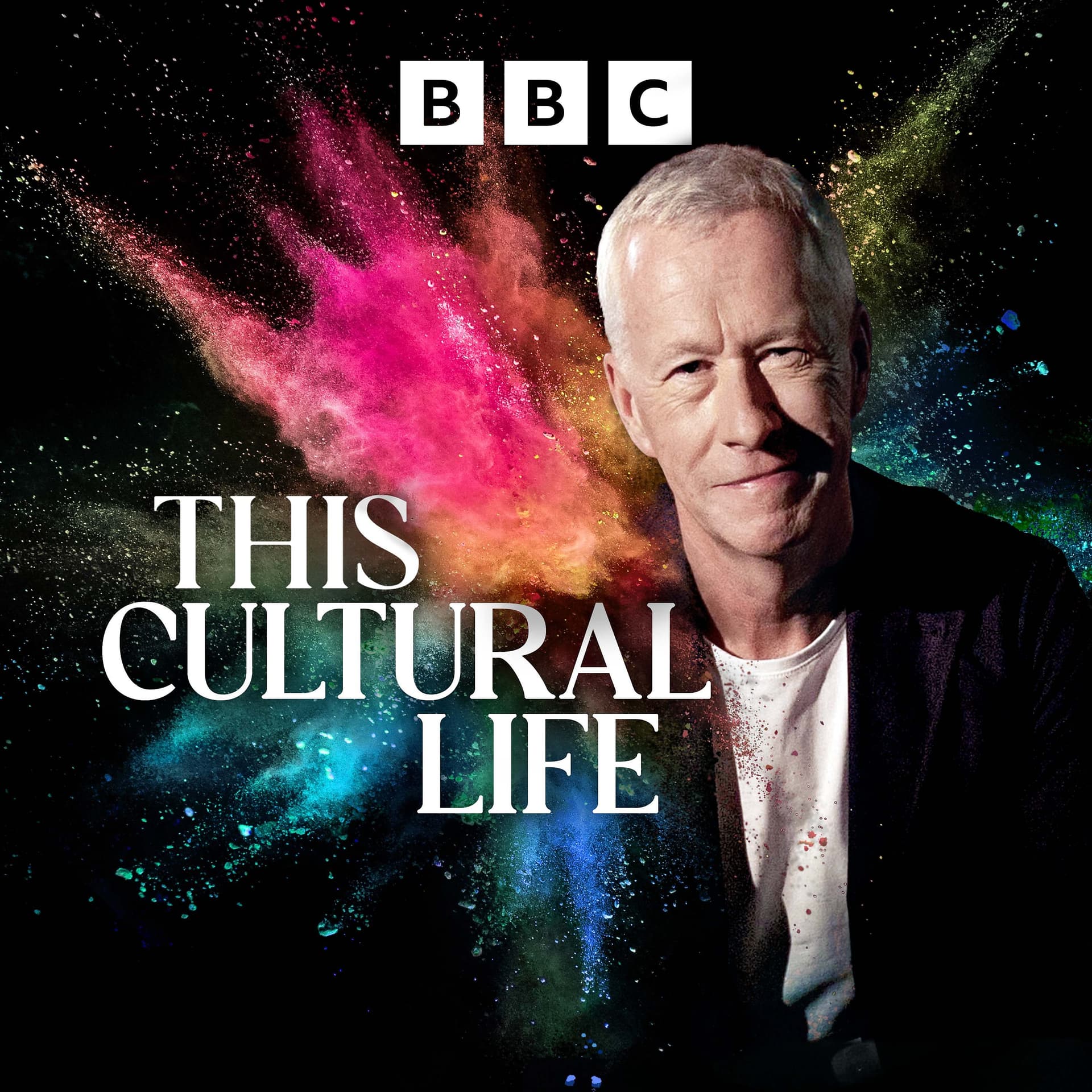
This Cultural Life - Simon McBurney
Episode Overview
- Host: John Wilson
- Guest: Simon McBurney
- Description: Simon McBurney, a renowned director and actor, discusses his creative influences and inspirations throughout his career, highlighting innovative works he has created with the theatre company Complicité.
Key Themes and Discussions
Early Life and Influences
- Childhood in Cambridge:
- McBurney describes his family home as a large, gloomy Victorian house filled with books and archaeological artifacts.
- His father, an archaeologist, instilled a fascination with time and memory, describing time as "vertical."
- His mother, a creative influence, organized family plays and performances.
- Formative Experiences:
- McBurney recounts attending a screening of Ken Loach's film *Kes* at a young age, which profoundly impacted him by exposing him to themes of social injustice and poverty. He felt a visceral connection to the film's portrayal of life in the North of England.
- Music also played a significant role; attending a The Clash concert opened his eyes to political engagement through art and music.
Key Influences
- Ken Loach:
- McBurney discusses how *Kes* influenced his understanding of storytelling and social justice.
- He appreciates Loach's modesty and humility in filmmaking, allowing the story and characters to shine without intrusion.
- Punk Rock:
- The energy and authenticity of The Clash's music resonated deeply with McBurney, marking a shift in his political consciousness.
- John Berger:
- Berger’s insights into culture and perception left a lasting impact on McBurney, especially regarding the relationship between art and society.
- Collaboration on *The Vertical Line* highlighted Berger's influence in merging different forms of storytelling.
Career Highlights and Theatre Innovations
- Formation of Complicité:
- Co-founded Complicité with a focus on experimentation and innovative ways of storytelling.
- Emphasized the importance of physicality in theatre, influenced by his training at the Jacques Lecoq Institute in Paris.
- Major Productions:
- The Street of Crocodiles: A breakthrough production that blended various theatrical influences; a significant success for Complicité.
- The Encounter: Inspired by indigenous Amazonian culture, utilizing binaural sound technology to create an immersive experience.
Reflecting on Art and Culture
- Culture and Life Interconnection:
- McBurney argues against the separation of art from everyday life, asserting that culture shapes our identity and existence.
- He emphasizes the need for continuous exploration and curiosity in the arts.
- Creative Process:
- McBurney describes his approach to theatre as a collaborative process, highlighting the relationship dynamics within the creative community.
- His experience in film (e.g., *Mission: Impossible*) provides a different perspective, allowing him to step away from directorial responsibilities and focus solely on performance.
Conclusion
- Continuing Influence:
- McBurney expresses an ongoing desire to learn and evolve as an artist.
- He reflects on the importance of storytelling in understanding ourselves and the world around us, suggesting that the act of creation is an essential part of human experience.
Key Takeaways
- The impact of early experiences with art and culture can shape creative foundations.
- The intersection of personal history and broader societal issues is a powerful theme in storytelling.
- Collaboration and engagement with diverse perspectives enrich the artistic process.
- McBurney's work emphasizes the importance of memory, consciousness, and the relationship between individuals and their environments.
Producer Information
- Producer: Edwina Pitman
```
Written by AI. May contain mistakes. Listen to the episode to check what was said.
Transcript
Automatic transcript. May contain errors.0:00BBC Sounds. Music, radio, podcasts.
0:13Welcome to This Cultural Life, the series in which leading creative figures reveal their most significant influences and experiences that have inspired their own work. I'm John Wilson, and my guest in this episode is the director and actor Simon McBurney, one of the founders of the groundbreaking theatre company Complicite. For over four decades, McBurney has created innovative and experimental works, from immersive stagings to the reinvention of classic texts. His works include A Disappearing Number, The Encounter, and Mnemonic, a landmark production which has recently been revived at the National Theatre.
0:52Simon McBurney, welcome to This Cultural Life. Thank you so much for having me. You were born in Cambridge in 1957. Take us back to home life. What was family life like? Well, it was a huge, gloomy, Victorian, semi-detached house. And there was a huge garden and curious people coming in and out because my father was a professor of archaeology at Cambridge. But the house itself is the thing, when you say that, that I can remember so vividly. all the smells come back and my father's study, which was completely chaotic with stuff everywhere and on the wall a huge section of a trench with earth on it of different sections and I remember him saying to me, it gets older as you go down, time is vertical.
1:46It was full of books everywhere, extremely cold, no central heating except once a year at Christmas, open fires, gas fires, my golly, it sounds incredibly primitive, and two Bakelite phones, one at the bottom of the stairs and one at the top. And you've already made a direct link between a memory and a work in Later, which I want to talk about later, the vertical line, which is a piece that you made in, I think, 1999. Yes. Which was about time. Yes. It being vertical rather than horizontal, how we would normally think. Did he encourage you to think like that and to explore archaeology as a kid?
2:25Well, my father was extremely absent-minded and when he forgot things, which he did frequently, my mother would say, Odell is thinking about his flints with great sort of approbation. My mother was incredibly present, incredibly creative. She had been secretary to Rebecca West and typed Black Lamb and Grey Falcon and the Fountain Overflows. and in fact Rebecca West was kind of like a surrogate grandmother to us because we didn't have any grandparents. But my mother would write little plays for us, would do pantomimes every year. She would adapt the music from the sound of music and then play it on the piano while we had a little curtain and then we would perform.
3:12So as early as I can remember, we were all playing and performing. Had she worked in the theatre or was this just... She wanted to work in the theatre. She had been sent away on what they called in the 30s finishing school for middle class girls. And she'd gone to Paris and she had classes with a doyen of the Comédie Française whose name was Denis Dinez. And he said at the end of the year that they were working together, Mademoiselle, vous pouvez avoir une carrière dans la comédie. You can have a career in comedy. So she went back home and she said to her parents around the brown table at lunch, and she said, I'm so excited, I've decided what I want to do.
3:57I'm going to go into the theatre and I'm going to specialise in comedy. And there was a dead silence. And her father put down his knife and fork either side of his plate. And everybody waited and he said, women don't work and they certainly don't go into the theatre. And she always used to say, and that was that. I was so stupid. But the Second World War, of course, changed everything because she had to work. She was in the women's RAF. Before that, she was a nurse. She saw the boys coming back from Dunkirk. I think she saw appalling things. And afterwards, immediately, she started looking for work and then fell in to become secretary to Rebecca West, which was where she met my father.
4:38They were cousins, in fact. I love the way you inhabited that memory there and dramatised it. Well, she died in 1982 and my father died in 1979. So when you asked about my childhood, it suddenly starts to... It's suddenly present. Yes, it's suddenly very present. So archaeological timelines and flints and... That's right, and going on digs every year in Jersey, an extraordinary place called La Côte de Saint-Brelade on the coast of Jersey in the early spring when the gales came up from the Bay of Biscay and we would all camp in this deserted quarry. And the site that my father was digging was a Neanderthal site.
5:16It was about 120 ,000 years old. And it was extraordinary, people digging in the cold and the rain and my father standing over the trenches and then us spending the time wandering down in the rock pools on the beach. That was a very powerful experience growing up. And I remember when I was 17 and knowing that I was going away for the last time I was on the boat going from Jersey to Weymouth, I think it was, and I saw the headland and my parents used to jump up and down and wave washing up cloths so that you could actually see it from the boat. And I remember actually bursting into tears knowing that that was somehow the end of something, the end of my childhood or the end of what I had grown up.
5:59It was marvellous because, you know, you were with young students all with long hair and who never washed for two or three weeks and slept in their boots. And these, for me, were heroes. It was sort of in the 60s, so there was a sense of disobedience as well with their hair long and their beards and their moustaches and their jokes. So you have this sort of entree into the adult world, but what about normal childhood things at home, you know, television and comics? Ah, yes, well, this is the thing. There was no television in our house. There was no television and very rarely was there radio. There was what my father called a hi-fi.
6:37so there were records but not even very many of those there was very little recorded material I complained regularly about the fact that I was missing out and I had to make up things at school so people would say did you see the episode of Doctor Who last night I'd go yeah yeah it was amazing and you know in fact I remember standing outside people's houses when the television was on and watching their television silently through the window, because it was sort of this mysterious thing. But certainly books, diving into them. Fiction? Yes, a lot of historical fiction, and then Tolkien and C.S. Lewis and all the usual suspects.
7:25Then suddenly a copy of Arthur Kessler's Darkness at Noon, which I read aged 11. It had a profound effect on me, the darkness of the world appearing to me for the first time, I remember.
7:43On This Cultural Life, Simon McBurney, I ask my guests to choose the most significant influences and experiences that have informed their own creativity. And your first choice is the film Kez by Ken Loach.
8:00So when did you first see that, given that you didn't have a television? Well, I was sent away to school and it was on in the town and I skived off to see it and sat in a small provincial cinema and I had never seen anything like it and I wept profoundly. The sense of injustice really profoundly affected me and also suddenly this extraordinary, totally visceral portrait of life in the North which I had never experienced and understanding in one film what it meant to live in that kind of poverty. Come on, tell us about this home. Where did you get it from? I found it, sir. Where? In the woods. Where do you keep it?
8:58In the shed. What do you feed it, son? Beef, mice, birds. Isn't it cruel to keep it in the shed? I mean, wouldn't it be happier flying free? I don't keep it in the shed all the time, sir. Fly it every day. Doesn't it fly away? I thought they were wild birds. Of course it don't fly away, sir. Train it. Are you going to tell us about it? How do you train it all? We have to be very careful with them, sir. I'm very patient. I loved birds of prey. I remember finding as a child, I remember finding a dead kestrel and being so fascinated by it that I took it to a taxidermist on the outskirts of Norwich because I wanted to keep it and he stuffed it.
9:39It had been killed by pesticides, I think. And so there was something about animals and nature and the wild And it was so extraordinary the way that then Ken Loach linked this with the sense of repression. And the young boy's, Casper's sense of freedom came from the hawk. But the hawk as well revealed something about the injustice of the nature of our country. I'm not putting it very well, but it was literally a visceral sensation. and I came out of the cinema and it was sort of the first time my eyes were opened to something else. It's interesting, isn't it? Because it's possibly Ken Loach's least overtly political film and yet what you're saying is that you got a sense of injustice.
10:28There was a kind of political engagement with the film, even at that age, was there? Absolutely, and the bullying in the school was astonishing. You know, Brian Glover leading the football field.
10:44Come on quickly, Casper. I've never seen such slack work in my life. I've never seen such slack work in my life. What's that for, sir? Slack work, lad, slack work. Let that ball out the field, Parker. And all of his films, really, the way they open a window onto something, the extraordinary way that it's filmed, in which you are there but you're not intruding on people because there's a modesty and a humility in the way that he films, which means the people themselves and the story is the thing. There is almost nothing in between you and what is happening, and that's what I felt. And that engagement with Kez, I mean, you know, it's not really a spoiler to say there is a heartbreaking ending involving the bird itself, but was there a connection, an emotional connection because of your own stuffed Kestrel at home, do you think?
11:35I don't know. But the denouement of Kez for me was absolutely devastating. Already there was something about how can we treat the living world in this way. I mean, I'm analysing it now, partly because you're sitting there and asking me about these things, but I suppose it was that. Do you think there was any direct influence of that film or of the work of Ken Loach on your own work? I mean, it's really difficult. I was trying to think so much coming onto the programme about what has actually influenced me. And it's wonderful to be able to choose and talk about these things. But it's the solution in which we all bathe.
12:19There's all these different elements. Yeah, he's always been in my soul. And so it's really curious sometimes I find to talk about culture as if it's a separate thing. I think this is a very modern idea and there is an attack on the idea of culture and the arts. In that attack, I constantly want to say, well, there isn't, you know, there isn't a sector called culture. There's no sector called the arts. It is who we are. It is the solution we bathe in. The fact that I can talk to you and I'm using words and I'm trying to find them from some place in my brain and make sense, That itself is a creative act.
13:03We are creative beings, eternally curious. And, unfortunately, the time that we live in, it's as if the arts and culture, they're a little sort of petit fou or something added on. No, they are the main meal. We are our culture, we are our language, and it is actually the most fundamental thing as human beings. Culture and life are one and the same thing, interchangeably. Which is why this programme is called This Cultural Life. Yes, very neat.
13:36Your next choice is punk rock, and specifically seeing the clash at the Cambridge Corn Exchange in 1977. So you would have been about 20 years old at the time. What the hell is wrong with you? What are your memories of that gig? A huge number of people. sweat, smell, kind of chaos in the audience, obviously no seats, people pushing, jostling, and just unbelievable energy. And there was, in my house growing up until I was 13, I never really heard any what my father would call pop music, let alone rock music. And then that sort of hurtled in on me in my teens, and, you know, hearing Marvin Gaye and Aretha Franklin and then David Bowie dressing up, of course that appealed to me because it was theatrical.
14:33And then cutting through all of that stuff was suddenly something else.
14:49To hear them coming on stage and Joe Strummer at the microphone and the spit, everybody spitting, and the sweat. It seemed to me suddenly incredibly truthful. It wasn't just about some sort of fairy imagination. It felt as if it was tearing into society. It felt as if it was challenging power.
15:16All of the 70s for me constituted a huge kind of political social awakening in which I suddenly realised, having been in this extraordinary, imaginative cocoon, you know, I had grown up in a situation of great privilege, but suddenly I felt trapped by that. And then to follow it all the way into the Rock Against Racism marches in Victoria Park, I mean, I was taken there essentially by that first Clash concert. Because the Clash headline of Victoria. Yeah, that's right, that's right.
15:58So you were at that gig and that was something which was responding to, not generally about the division in the country at the time, but specifically about the racism on the streets. That's right. And it became a very violent time. It had become an extraordinarily violent time. There was dissent in the country and all sorts of struggles started to join up. questioning what we were doing in Northern Ireland, questioning where are we going if we're not creating a new society.
16:38You'd moved to the university and you saw the clash there at around that time. What were you studying at Cambridge? I was studying English literature. You joined Footlights, I think, hadn't you? Is it really two years? It seems like about five minutes. Yes. How time flies. I mean, it certainly stood still when we were married, didn't it? So you'd had a thought to a theatrical career of some sort? Well, I think I went to university very simply because I wanted to please my father. I had done very badly in my A-levels and I then went to the Cambridge Tech and my brother, because I only then had one decent A-level in English, suggested I take Cambridge entrance.
17:23And it was the first exam I actually enjoyed. I got a place. But it wasn't really, because I had grown up there, it wasn't the sort of dreaming spires and extraordinary places. It was for other people. And I quickly found myself on the edge and I had already a sense that I wanted to make theatre. And so I just started at the university and I would do about three shows a term, I guess. I went to Edinburgh three times and I started to discover that I was funny. But my father died when I was at Cambridge. And I suppose the consequence of Cambridge was I knew that if I decided to go on a certain path, there was a kind of gravy train.
18:10I suddenly felt sort of constricted by it and I felt an overwhelming desire to escape, really. I left the UK in 1980 and I spent the next four years in Paris. Was this the Jacques Lecoq Institute? I went to the Jacques Lecoq Institute for two years and then I also performed with the French Theatre Company and that really, being in Paris, really changed my life considerably. Tell me about Jacques Lecoq, because that's a very different ethos, isn't it? Every week for two years we had to produce a piece of theatre that we made in a group. A group of people that you couldn't possibly get on with, so you were arguing and shouting and then cooperating, kind of.
18:53But you had to make something which was generally pretty awful every single week. But what it taught you was something about the fundamental organism of creativity, which is that creativity always is about an exchange, is about a relationship. And it was here that you met the co-founders of what was to become your theatre company, Teatro de Complicité, now known as Complicité, of course. Where did the idea initially start then, to form this troupe, and what was the ethos? There were four of us, Annabel Arden, Fiona Gordon, and my very good beloved friend, Macero Magni, who died two years ago. It was simply that we wanted to work.
19:36We wanted to play. We wanted to get on stage. And I used to perform on the streets as well. I just want to perform. I loved Beckett. In fact, I once saw him in Paris walking on the other side of the street. And so I wanted to find out something about a different voice. That was all it was to begin with. Nothing happened in the show, but it made people laugh a lot. I was sitting in a deck chair on a beach and Fiona was in another one and we just hung around on stage and it was completely ridiculous. We were very influenced by a Belgian group called Radayas, which means radish, who did these totally absurdist pieces in which there was no story at all.
20:16But one of the key components of Complicite is the physicality, isn't it? So just give us a sense of why and how much you took from Jacques Lecoq in terms of expressing stories and narratives through just physical presence. Well, that's the eternal question. You know, I've always slightly balked at the idea of sort of physical theatre because all theatre is physical. Perhaps sometimes we're a little tied up. We were certainly a little tied up in this country. And we can see that because we call the people who come to the theatre the audience. Whereas in France, they call them les spectateurs. So the people who watch, we call them the audience, the people who listen.
20:51But the point was that in Paris, what changed my mind is that I saw theatre from all over the world. so I got the chance to see, for example, the great Tadjusz Kanto from Poland and seeing The Dead Class and that was in their bodies. They lived it. It was the most terrifying piece of theatre that I had ever seen and that absolutely, seeing that performance, The Dead Class, changed my life forever.
21:30And I suppose the theatre that I saw in Paris at that time was not available in London, seeing Peter Stein's Oresteia, for example, and, of course, the work of Peter Brook at the Bouffier-Denor. I could suddenly see that the theatre was not something that I had grown up with, and I adored the theatre, although what I adored most as a child was the pantomime and Cyril Fletcher taking his teeth out. That was the most marvellous thing for me. But it sounded like it liberated your imagination and gave you licence to put on a work which The Street of Crocodiles is not an obvious source of material to stage.
22:06Based on the writings of Bruno Schulz, who was a Polish Jewish writer who died in the Second War, but an extraordinary Kafkaesque character whose imagination was absolutely wild, and yet at the same time he captured something of the 19th century and pre-war life in Eastern Europe and something about the nature of the inner world and the outer world was just marvellous. So there wasn't any gap between something fantastic happening and something utterly realistic. And this was something that really excited me. Was Street of Crocodiles the first big success then? For about five years, we made pieces that made people laugh, essentially.
22:52That was the fundamental thing. Behind them were different texts, but the second piece called A Minute Too Late was about my father's death, funniest piece we ever did, and more bigger snacks now, which was about the fact that we were living on the dole, we didn't have any money, please, please, please, which was about the fact that Christmas is always a disaster and everybody beats each other up, and then Anything for a Quiet Life, which was based on a Pushkin short play. So we'd done quite a lot of work, and I sort of thought, well, that's it. The company didn't really exist. We were a bunch of disparate animals sort of with energy firing off in every direction.
23:29And then I was given this book, The Street of Crocodiles, and something sparked off in my mind. Even if it was Polish, even if it was in another culture, I felt extraordinarily close to it. there was something about the Cambridge house and the dreaming and the imagination and the fantasy that I had, which was there in the writing of Bruno Schulz. Do we have any wind on carts that we could borrow from another show just to try it out this afternoon? Can I say something about the pans? I still don't hear the pans. I make a thousand more noise on the stove with Hayley. Don't worry about the pans. I'll deal with the pans later.
24:09I don't want to get into discussion about pans. We're running out of time. No, I want to say the pans go over my line, don't go out without your coat. Can you wait till I've said that? Yeah. Possibly. Yeah, OK. Other than that, let's shut up about the pans. César, that's much better with the Gale coat. Seems really making sense there. Was there a point where you made a decision to become the director, to become more of this sort of artistic driving force behind the company, rather than a performing member of the company? Not really, I just had a lot of energy. And what about when you were? because, I mean, you're adapting work, but, I mean, in terms of creating new work as well.
24:45Yeah, I didn't really want to be a director. I just wanted to be eternally somebody arsing around and making stuff and performing. I mean, very often the pieces we kind of discovered in performing them, they would be very loose structures and gradually as you perform them, they would turn into something. But we had an idea that I would lead the company for three years and somebody else would and somebody else would. but it sort of fell out that nobody else quite wanted to. So it's stayed with me and there is a kind of just a very big... The Complicity family is very, very wide and they come from all over the world and that, I suppose, as a child, that almost sort of reproduces the team on my father's excavation.
25:31It's a tribe of people that you have.
Read the full transcript
25:37Your next choice, Simon McBurney, He is meeting the writer and critic John Berger. How did you meet him and when? He came to see The Street of Crocodiles. And I was very excited because I was fascinated by his writing. And studied him at university, I presume? No, I didn't, actually. First time I came across him was on the television where he was talking about time and then I started to read things. I was too young for ways of seeing. I didn't actually see that in the 70s. This is the first of four programmes in which I want to question some of the assumptions usually made about the tradition of European painting.
26:14Tonight, it isn't so much the paintings themselves, which I want to consider, as the way we now see them, now in the second half of the 20th century, because we see these paintings as nobody saw them before. I remember standing in the Cottesloe, as it was there, it's now the Dorfman, right at the top on the gallery, looking down and watching John watch the piece, and he was leaning forward, listening. He came out and a lot of people said The Street of Cocktails had no story, had no narrative. And it was a bit arcane and slightly recherche. People said all sorts of different things. People loved it but they couldn't quite get a hold of it.
26:53It was very different to any kind of British theatre going on at the time. And one of the things when he came backstage afterwards, the first thing he said, marvellous, marvellous, it's so popular! Which was not a word that I had associated with. But I suddenly realised, actually, it was. There were kind of elements of music hall that had crept in. There were physical gags and extraordinary bits of magic. And so perhaps bits of Cyril Fletcher's pantomime had actually come back in a sort of very strange, mutated form. He meant pop culture had seeped in there. He meant... He adored variety. But I think what he particularly liked was the fact that there was no one, there was not a style.
27:33We had no style. We were interested in using anything at our disposal, be it projection, be it dance, be it music played very loudly. So you struck up a kind of a relationship and then you worked together on your 1999 show, The Vertical Line. Yes. Which we mentioned earlier, and it has a link back to your father's archaeological fascination and the way that time goes down rather than across. It was staged in the disused Aldwych tube station. Just tell us a little bit about that show and John Burge's involvement. Well, Michael Morris of Art Angel invited John and I to make something together and he also said, I think it would be possible for you to use, with whatever you make, the deserted Aldwych tube station, which he got sort of semi-illegally and John had written a piece about the origins of art and he said, yes, I've done it, I've already done it with a pot and a kettle in Germany.
28:38I don't think we need very much more. I said, John, I think we can do better than that. He said, really, really? I said, yes, let's try and restructure it and kind of with ridiculous arrogance to tell John Burgess, this is an incredible writer, I think, John, I think you should rewrite this, I think you should give it a different structure. I remember him getting slightly irritated with me. But in the end, he loved it. So we made this piece which was about going back in time. So you went down the staircase in groups of ten, led with a man with a torch, and you had a soundtrack at the same time which was going back through radio, through bits of radio in time, to the beginning of the very first, this is the BBC broadcasting from Alexandra Palace.
29:22And then it went into silence.
29:29And then you suddenly heard Corsican singing. If you listen carefully, we have just passed the Middle Ages. And you'd hear John's voice said, this is Corsican singing the harmonies pre-day Christianity. Then we'd go down and down and down. And it was your voice as well? My voice as well, me and the actress Sandra Vaux. so it was a trio of voices. And he talked about the Fayoum portraits in Egypt, a really beautiful text, and then he mixed it with his own experiences of being in London in the war. And so we then walked down and you heard an underground passing underneath and then you came into the station, it was deserted and we had created the noise and the vibration of the underground with vast speakers and everybody lay down on mattresses, as he remembered in the Second World War.
30:23and on the ceiling was projected clouds and there was wind that we managed to make come through the tunnel. You suddenly heard John's voice, Here I am in Corsica, I've just put my bike up, and he started talking about the men years and how the very first representations of human beings with a spine and what these actually meant. He had an extraordinary way of opening to make them feel utterly modern. And then finally we went into this tunnel, a deserted tunnel, and then we shut the door behind us and nobody could see anything, not even after ten minutes. There was no extra light at all. And we described the discovery of the Chauvet Cave and then sort of brought us back into the present.
31:19your next choice Simon McBurney is seeing a funeral ritual amongst indigenous people in Brazil and this inspired your 2016 show The Encounter so how did you find yourself initially at this ritual The director, Annie Castledine, she gave me the book, which was called Amazon Beaming, about the Amazon and about a photographer going into the Amazon and getting lost with an Amazonian people. This is Lauren McIntyre, who was the photographer, the photographer, who made contact with an uncontacted tribe, but then had his photographic equipment was lost and taken from him. And the most extraordinary set of circumstances meant that ultimately he survived it and it was turned into a book by Petro Popescu.
32:06Now, the people that Lauren McIntyre were with were called the Maiaruna. And I felt very uncertain about making it because I thought, well, the idea of an explorer in a jungle felt to me sort of inappropriate. but there was something in the book which really touched me. And so I went to Brazil and went to a Maiaruna community and told them the story and asked them what they thought if I was to make a theatre piece, what would they think? And they were so delighted that the name Maiaruna might actually be put out in the world somewhere, that people should know that they exist. And then I met an anthropologist and he said, well, I'm going to a funeral ritual in the Jingu.
32:59The Jingu was the first bit of the Amazon given back to indigenous people in perpetuity. So it's the national park of the Jingu. It's an area, I don't know about the size of Belgium, and there are about 16 different tribal peoples who live in it. And then he said, would you like to come with me? We were taken into, we slept in an ochre, which is the house that they built. Imagine a woodlouse, but on a vast scale. It's a sort of oval with two little entrances. And our hammocks were tied to the central pole. And we were there for a week. And the ritual took a week. But there wasn't really any sense of when it would begin and when it would end.
33:42Everything was continuous. So gradually over the week, other people would arrive from other villages on motorcycles and different ways. And the whole place filled up and up and up with masses of people. And there was no electricity. So you would go to bed when it was dark at eight and then wake at four. And at four, you would hear the bells and pipes of people coming round this huge, vast circle of houses. And then you would hear them singing and playing. And then they would come in to your ochre and they would dance round. The dancing and the singing was specifically a form of talking to the dead.
34:30And am I right in thinking that you conceived the encounter based on the book that you'd read, Amazon Beaming, but the show itself that you put on, which was a sort of very sensory show in which the audience is listening with binaural technology. ...cross onto this microphone. Now I'm going to change my voice. It's going to go down in pitch. So having been up at a high ten minute... ...tenance suddenly is coming all the way down to here and for some reason I want to speak with an American accent. But the point is that the protagonist, the man who is at the centre of this story, Lauren McIntyre, this is his voice.
35:10The story takes place in 1969. But as you watch and you listen to the voice, the brain rapidly adjusts. So much so that if I go on the other microphone... I suddenly sound like Mickey Mouse. Is that very much based on this experience that you're describing then, the ritual? I think all my life I've been interested and influenced by people seeing the world in a way that I don't see it. The piece, The Encounter for me, was really about consciousness. I'm redoing the show about memory, but I have become more and more obsessed with, you know, what makes John John or what makes Simon Simon, what's going on inside this head.
35:52Not just firing neurons, but there's something else much more complicated. And so I would very often ask people, you know, anybody I met and sometimes do workshops and say, you know, where is your consciousness? Where are you? And people would point to their head, perhaps, or their body. And when I asked this question of Takuma and the headman at the time, Aritana, they very simply put their arms towards the forest. and I thought it hadn't been translated quite correctly but they insisted on putting it outside of themselves and then of course I realised that I didn't really understand that as far as they're concerned there isn't a frontier between what is going on inside our heads and what is occurring in the forest.
36:41So this lack of frontier not only between me and the forest but also between me and you meant that in any community a decision is taken altogether. There was a sense in which they thought together. They didn't just live together, but the living was also their imagination, their consciousness, their dreams. There was no division, for example, between playing music when the music started, when the music stopped, when the dancing started, the dancing stopped, when the wrestling began. Nobody was in any sector. But you say that you went there partly to devise a show, but also to get their blessing for the show.
37:22I wanted to find out what they thought about my... But did they have any conception of what you were going to do with their experience there? No, I had no conception at that point. If you like, the story is about the failure of European consciousness. The fact that we seem to be unable to change, in that we can't quite cope and understand what is going on in the world. That, for me, is fundamental in that show. It is about stories. It is why my daughter asks the question of me aged five. So in the show, she says, why are you making this show? And I try rather cack-handedly to explain. So the show is not only about the Majoruna or Lauren McIntyre with the Majoruna.
38:09It's about why make this show? What is a story? What are the stories we're telling? Are we telling the right story here and now? And are you any clearer these days? Have your preoccupations as an artist changed since you first started making work, do you think? Yes. I think that one of the things that John Berger, the sort of explosion of 25 years, I call it an explosion, but it changed the way that I thought was about listening. He says at the end of his face-to-face lecture with Jeremy Isaacs... You've done so much. How would you like to be remembered? Um, maybe by what I've brought back. What did he mean by that?
38:54I think he meant that he could place himself in another situation and he could see it and then he could write about it. To be a witness to something and bring it back for us. then to make it into something whereby we feel we have been there as well, not to bring it back as a kind of baggage or a trophy. So I feel, how have I changed as an artist? You know, maybe you should ask me that after I've died because I feel it's a process. I need to go on learning, need to go on discovering. I made a show about mathematics because I know nothing about it and I needed to learn. This is the disappearing number.
39:31Disappearing number. Which is deep stuff, and a lot of your work is very complex, and it really asks a lot of an audience. So how does the work as an actor on the big screen fit with the complicity work and the theatre work? And I'll just throw out one example, as a villain in Mission Impossible, for instance. I'm afraid Prime Minister, Director Hunley, and I share responsibility for this. Ethan Hunt was part of a disgraced intelligence agency which has since been dissolved. And he's gone rogue, unfortunately, intent on dismantling an imaginary terror network. But New England, do you just go there, say the lines, come back, cash the cheque?
40:10It's marvellous. It's a kind of wonderful holiday, but also absolutely fascinating. The machine, the extraordinary construction of a film set, I find intoxicating. I love performing in front of a camera. It's a mysterious and strange thing because you have to allow yourself to be looked at. On the stage, you are the storyteller. And so for a moment, it's an enormous relief for me because I can leave everything else away, any responsibility as a director or a writer, which I find an incredible struggle. A real struggle. That must be really frustrating. Very, very difficult. No, not at all. Really?
40:58It's a marvellous feeling because you just go, right, my only responsibility is to be here. It'd be villainous very often. Maybe that my shadow side just simply is able to come out with these particular roles. But I love working on camera. And what drives you on creatively? It's compulsive. It's just I don't know any other way to be. You know, as I said at the beginning, I find it very odd sometimes to talk about it because as you can tell, I just spiral off in one direction and another. I can't pin it down and say, well, this did this and that did that. I don't see a barrier between one thing and another.
41:38I can't compartmentalise that and make a product. I have to be in process, you know, I guess until I die, you know. I can see why it was problematic having to make these choices for this programme. Very problematic. I've been talking about things that I didn't expect to talk about. So I think that's a testament to you and this programme. Well, Simon McBurney, thank you very much indeed for sharing your cultural life with us. Thank you for having me. It's a privilege.
42:08Well, I really hope you enjoyed that conversation with Simon McBurney. You might like to know that other theatrical guests that we've had on the show include Judi Dench, Sam Mendes, Kenneth Branagh and Andrew Scott. You can hear all of them and dozens more leading creative figures in our archive. Just search for This Cultural Life in BBC Sounds or wherever you get your podcasts, where you can also subscribe to the series. From me, John Wilson and producer Edwina Pittman, thank you very much indeed for listening.
42:39Hello, I'm India Ackerson and this funny thing happened to me once. I was born and so were you. And the thing is, from the moment egg met sperm, we've been shaped by our world in so many more ways than you think. And our series Child from BBC Radio 4 gets into that. The extraordinary life events of pregnancy, birth and the first 12 months tell us a lot about ourselves, our society and where we might be heading. The brain of a baby holds the secrets to the origins of human thought. Mothers undergo transformations we are only just comprehending. and the way attitudes to birth change affects every single one of us.
43:17Listen on BBC Sounds.
From the publisher
Director and actor Simon McBurney, one of the founders of the ground breaking theatre company Complicité, reveals his creative inspirations and influences. For over four decades McBurney has created innovative and experimental works, from immersive staging to the reinvention of classic texts. His works include A Disappearing Number, The Encounter and Mnemonic, a landmark production which has been recently revived at The National Theatre.
Simon McBurney tells John Wilson about his childhood in Cambridge where his father, an archaeologist, helped foster an early fascination with time and memory. For This Cultural Life he chooses the 1969 Ken Loach film Kes as a formative influence, offering an insight to a childhood very different to his own middle class upbringing. He recalls seeing the band The Clash whilst at Cambridge University, an experience that had a profound impact on his own creativity and political engagement through the arts. He also chooses the writer and critic John Berger as an inspirational figure, and recalls collaborating with Berger on the immersive Artangel project The Vertical Line in 1999. Simon McBurney also describes how the experience of meeting indigenous Amazonian people inspired his 2016 Complicité show The Encounter.
Producer: Edwina Pitman
Archive clips from: Kes, Ken Loach, 1969 The Clash Live at Rock Against Racism, Victoria Park, 1978 The Dead Class, Tadeusz Kantor, 1976 Friday Night...Saturday Morning: Cambridge Footlights, BBC1, Nov 1979 Ways of Seeing, Episode 1, BBC2, Jan 1972 The Vertical Line, Complicité, BBC Radio 4, 1999 The Encounter, Complicité, Barbican Theatre, May 2018 Face to Face, BBC2, Oct 1995 Mission: Impossible – Rogue Nation, Christopher McQuarrie, 2015