In short
Podcast Summary: This Cultural Life - Episode with Simon Russell Beale
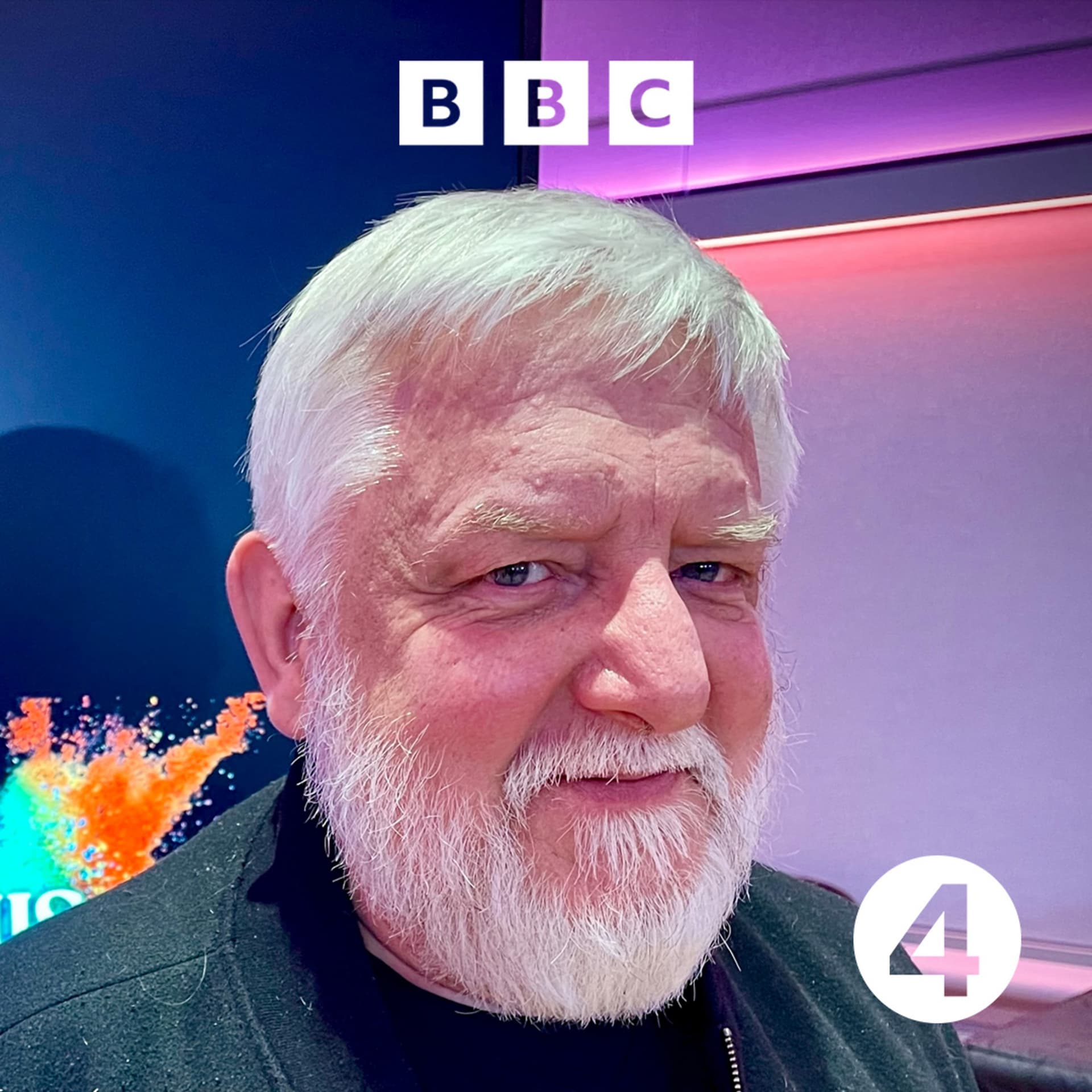
Overview In this episode of This Cultural Life, host John Wilson interviews Sir Simon Russell Beale, a highly acclaimed actor known for his roles in Shakespearean plays and significant contributions to theatre. The conversation delves into Beale's background, influences, and insights into his craft.
Key Themes and Discussions
Childhood and Background
- Early Life in Penang, Malaysia
- Born in 1961 in Penang, where his father served as an army doctor.
- Describes a unique childhood, marked by a mix of trauma and excitement from being separated from his family.
- Retains a child's map of Penang, symbolizing his connection to his childhood home.
- Boarding School Experience
- Sent to England at age 7, which Beale recalls as a mix of confusion and independence.
- He shared experiences of being left behind while his family relocated, which left a lasting impact on him.
Musical Influence
- Chorister Training
- Beale was trained as a chorister from an early age; music was integral to his upbringing.
- Bach's St Matthew Passion: He recalls this piece as pivotal, as it evokes profound feelings and memories associated with singing.
- Transition from Music to Acting
- Initially pursued a career in music, attending Guildhall to train as an opera singer.
- Shifted focus to acting after discovering his passion for theatrical performance, particularly influenced by Shakespeare.
Shakespeare and Acting
- First Encounter with Shakespeare
- The soliloquy from Macbeth marked his initial engagement with Shakespeare, which he learned for enjoyment at the age of 14.
- Exploration of Major Roles
- Beale has portrayed several leading Shakespearean characters, including Hamlet, King Lear, and Macbeth.
- Discussed his interpretation of these roles and the artistic choices made during performances.
- Expressed a desire to revisit roles for deeper exploration and understanding.
Pubs and Line Learning
- Role of Pubs in Acting Process
- Beale discusses how he uses the ambiance of pubs for learning lines, finding the background buzz helpful for memorization.
- Shared anecdotes about how the social environment aids in character development.
Personal Reflections on Roles
- Connection to Characters
- Beale reflects on the emotional weight of playing tragic characters and the psychological toll it can take.
- Discussed his approach to embodying characters like Iago and Titus Andronicus, emphasizing the importance of understanding their motivations and complexities.
Influence of Peers and Mentors
- Interactions with Other Actors
- Mentioned his admiration for contemporaries like Kenneth Branagh and Mark Rylance.
- Reflects on how the collective experience within theatre communities has shaped his perspective.
Intellectual and Creative Pursuits
- The Intersection of Acting and Academia
- Beale acknowledges the intellectual stimulation derived from acting, relating to his initial interest in academia focusing on Victorian literature.
- The dialogue emphasizes the ongoing exploration of themes and narratives in his roles, which keep him engaged.
Conclusion
- Enduring Passion for Theatre
- Beale expresses gratitude for the opportunities he has had in his career and the collaborative nature of theatre.
- He encourages the exploration of Shakespeare's work, highlighting its relevance and depth.
Key Takeaways
- Simon Russell Beale's journey from a childhood in Malaysia to becoming a leading figure in British theatre is marked by a blend of trauma, musical influence, and a deep love for Shakespeare.
- His reflections on the importance of understanding characters deeply, the role of social environments in the creative process, and the intellectual engagement of performing arts resonate strongly throughout the conversation.
- The episode illustrates Beale's humility and dedication to his craft, as he continues to explore and redefine his performances while engaging with fellow artists.
Written by AI. May contain mistakes. Listen to the episode to check what was said.
Transcript
Automatic transcript. May contain errors.0:00Hello, I'm John Wilson. You're about to listen to This Cultural Life. Episodes are released weekly, wherever you get your podcasts. But if you're in the UK, you can listen to the latest episode first on BBC Sounds, seven days earlier than anywhere else. Do subscribe to This Cultural Life on BBC Sounds and make sure you have push notifications turned on and we'll let you know as soon as new episodes are available.
0:29Hello and welcome to This Cultural Life, the series in which leading artistic figures choose the most significant influences and experiences that have inspired their own creativity. I'm John Wilson, and my guest in this episode is the actor Simon Russell Beale. Widely acclaimed as one of the greatest actors of his generation, he's played many of the leading Shakespearean roles, including Hamlet, Macbeth, King Lear, and most recently Titus Andronicus at the RSC. His many awards include three Olivier's, two BAFTAs, and a Tony Award in 2022 for his leading role in the Lehman Trilogy, which had transferred from London.
1:05Simon Russell Beale was knighted by the Queen in 2019 for services to drama. Simon Russell Beale, welcome to This Cultural Life. Thank you. Your first choice of influence that you've made for this programme is a child's map of Penang, in what is now Malaysia, which you say you had on your bedroom wall since childhood. Let's talk about the map in a moment, because you were born in 1961 in Penang. What were your parents doing there? Dad was an army doctor, and mum was a doctor, but not actually in the army, but she actually ran the practice on Penang Island for all the military people there. At the age of 23, amazing.
1:45Yeah, and you had this map on your wall when you were living there in Penang. The map was always around, and it's now on my bedroom wall. Oh, it's still on your wall? Yeah, yeah, oh yeah. And it's a kid's map and it has those sort of things like this is where rubber is collected, this is where the fishermen live, you know, little figures. And I had a very similar map of what's now Malaysia, Malaya then, a boarding school. And I used to look at it and, you know, think, oh, yes, that's my home country, bizarrely. And boarding school back in England then? Yeah, yeah. So most of the family stayed in the Far East.
2:17Yeah. And you were... Well, it was a bit more dramatic than that. They left for the Far East and left me in England. It's a sort of family story because they didn't really say a proper goodbye because it sort of wasn't done, really, it thought would upset me. So mum said goodbye, but my brothers and sisters just disappeared. And I was left with my grandparents in South Wales before I went to my first boarding school. And I was seven. You were seven when they left? Yes. Do you remember? Your face is looking, that must be very traumatic. And, of course, it is so odd now. And it was odd, and I wouldn't do it to a child of mine.
2:54But it was sort of more conventional then, I think. But is that memory bound up with a feeling of trauma and loss and being abandoned and any of those things? Or actually, was it a sense of freedom, liberation, possibly? Oh, no one's ever put it like that. I mean, I think I could trace the psychological impact of that probably quite clearly. But, you know, Mum said goodbye, and she was crying, I remember. and I was for one term to school in South Wales before I went to boarding school. So I went off to school and she, when I came back that day, she wasn't there. And I suppose inevitably I must have, I think I was just puzzled.
3:31But the whole family, yeah, got on a boat and sailed around the world to go to their new home in Singapore. And would you join them during holidays? Yes, yes. And the tug in my mind is that it was both odd, probably traumatic if I dared to admit it, but also rather exciting, which is why the map of Penang is a reminder of what it was like at school in London looking at a map of my home, which was pineapples and bananas and rubber trees and beauty. And you were one of six siblings? You've caught me out. I'm trying to count them. One, two, three, four, six, yeah. What number were you in? I was the first person to be sent to boarding school in England.
4:19And I had a little sister who died around that period. So there are five of us left. She was very young when she was four, yes. And part of the tapestry of that period is Lucy being ill. I mean, it was four years. She was ill all the time in and out of Grey Warden Street. and mum coming over to care for her on one occasion, certainly, and living in a Salvation Army hostel next to, which I think still exists, next to the hospital. What was wrong with her? She had a hole in the heart. I'm not medical, unlike the rest of my family, so they'd be more accurate, and I'm not quite sure quite what that means.
5:02And you were at school when she died? Yes. Yes. Yes, I was 11, so I would be coming to the end of my first school. Has that stayed with you at that moment? Were you too young to understand what was going on, do you think? It was all a bit, again, a bit odd, because this is the late 60s, early 70s, and I think the rule was that children were not to be exposed to that type of trauma, really. So I was at school and I was called down to the headmaster's study, And dad was there. And he said, I'm very sorry Lucy died this morning. Mum wasn't there, I remember. And then the headmaster said, well, I think you should go back to your class.
5:51And that was sort of it. And it sounds terribly brutal, but it wasn't really. It was to do with trying to protect us from that type of anxiety and pain. and you know I think probably seeing my mother distressed would have been very difficult to cope with but it is it is significant. And just getting back to this map of Penang which is still there on your bedroom wall you look at that map and does it evoke a sense of a happy childhood generally? Oh yes I think so I mean I we had very odd because I was at choir school we had very odd dates for our holidays so we spent Christmas at school and Easter at school.
6:31So I would then fly out from Heathrow on, I don't know, Boxing Day or the 27th of December. And I was the only child on the plane. It was so
6:44glamorous, I suppose is the word. It was so exciting. Grandma used to put me on the plane and then, and in those days, it was sort of six stops on the way. So you'd go to Zurich and Beirut and Pakistan and then India and whatever. And I used to get off the plane. walk round the, I don't know quite, they must have been keeping an eye on me, walk round the terminal in these extraordinary exotic places. And trust you to get back on the next place. Well, I presume there was somebody who would make sure I did, but I never saw them. It must have instilled a sense of independence, though. Yes. And confidence.
7:18I think that's absolutely true. I think there was independence, there was confidence, and also status. I was the boy who lived in Singapore.
7:39Your next choice for this cultural life, Simon Russell Beale, is the opening chorus of Bach's St Matthew Passion. Before you tell us how and when you heard this piece of music, just describe Bach's St Matthew Passion to us and why it's so special to you.
7:57Bach never writes a bad note, that's the first thing to say. I mean, there's nothing he wrote that isn't marvellous. And the Matthew Passion is the story of Christ's last days, and it's told through music, and it takes about three hours, three and a half hours, and every year at St Paul's Cathedral we would perform it. And the opening is that sense of anticipation of a story being told.
8:35CHOIR SINGS
8:47I don't think there's a better representation of being sat down to be told a story by a master. And even at eight, I knew there was something profoundly special about that three hours.
9:07The Matthew Passion was about we're going to dig deep for three hours and at the end of it you'll be tired and fulfilled in some sort of way. And that's what that piece always... It's like Pavlovian reaction whenever I hear those first notes. It's like, here we go, three hours of wonder ahead of us.
9:30My family was entirely... Dab was an amateur classical musician and a very active one. and so we were brought up with a lot of music, not a lot of literature, not a lot of art, but music all the time. And so I must have heard it before, but what I remember is first hearing it at school in order to sing it. It's magical to perform.
10:02So you studied music, you're a chorister a very prestigious music school and then went on to Guildhall to study music. Oh, that's a big gap. You're leaping. Well, you'd studied English at Cambridge, hadn't you? No, I went to university and then, yes, I went to the Guildhall. But the route was music, even from a young age. The route was music, yes. I think I sung a religious service every day of my working life from about seven, you know, and obviously there was lots of concert work and whatever. I wasn't a natural. I was never given a solo at St Paul's, ever. and then I went on as a music scholar to school and then as a choral scholar to university.
10:39So my job at both those places was a musician principally. But you imagine that would be your job in life, that would be a professional life after leaving university? Yeah, which is why I went to Guildhall as a postgraduate opera singer. And you trained in opera then? Well, for a very, very short time, I mean literally weeks. I had a wonderful teacher called Rudolf Pean at the Guildhall and he said, look, you've got to start from scratch again. and build up a new technique as a soloist. And I think I probably was too lazy to do that. And also there was this other thing that had crept in, which was acting on stage.
11:16So at what point did you make that shift? Because at Guildhall, they're training musicians and actors and the art of stagecraft in very different ways, I presume, in different parts of the building. Did you have to kind of cross the floor? Yes, exactly that. I was lucky enough to be at a college that did both. So I had a word with the powers that be and said, look, I'm in the wrong place. Had you done any acting up to that point? I did a bit at university and I had a brilliant English teacher at school who introduced me to the big man, Shakespeare. And I had sort of fallen in love with all that.
11:49And then I read English at university. So it was sort of, it was beginning to creep up on me that this was probably where my interest really lay. I mean, I didn't miss singing. When I gave up singing, I didn't miss it, which is very... I surprised myself. So you don't sing anymore? No. Even at home? No. As an actor, you are so renowned for your speaking voice, and particularly in the delivery of verse. Has that musical training helped, do you think, with the acting, and particularly the delivery? Well, I'm a little bit puritanical about the verse in terms of its structure and rhythm, and not the sound of it.
12:23I don't have a beautiful voice in the sense that... I don't know what that means, actually. But I mean, I know people who are known to have beautiful voices and I'm not sure I fall into that category. But I am very, very concerned that the structure of verse in verse drama is acknowledged. So I've been working on a very early Shakespeare, which is very regular in its rhythm. Titus Andronica. Titus Andronica's. And I've done late Shakespeare's like Tempest and whatever, which are much more fluid. but this one is like Marlowe in the sense that it's ba-dum, ba-dum, ba-dum, ba-dum, ba-dum, quite a lot of the time.
12:58But I think it has its power because of that, and you have to observe that. If that's a musical response, I don't know. It might be. I think also that you have a, going back to the Bach, that if you have the luck to play a part like Hamlet or King Lear or what was a very dominant part, that you have to be aware of the rise and fall of the macro structure of a piece, you know. here we are two and a half hours in we can't waste time we need to push on for the last hour so that's like a sort of schizo movement in a symphony i'm not interested in making a beautiful sound though and a great danger is if you start thinking oh that's a beautiful line i'll deliver it beautifully you know you say you don't sing anymore at home you don't sing professionally do you play i play the piano it's my only hobby and it's of such such importance in my life as a therapeutic thing, but also I love the sort of trying to...
13:52Fun enough, I'm doing Bach at the moment and trying to learn it off by heart, which I find very difficult with music. Words are easier. What do you play? I'm doing the Preludes and Fuse, the 48.
14:07It is such a therapeutic tool. I've always been embarrassed I don't have a hobby. When I first worked with the brochures for coming at Stratford, I wanted to see it have a hobby. They sort of made furniture and tapestries. and all sorts of things. And I thought, no, OK, no, just relax. You've got the piano.
14:33Your next choice, Simon Russell Beale, is a soliloquy from Macbeth, the one in which he considers the assassination of Duncan and its probable consequences. And you say this is the first Shakespearean speech that you learned for your own enjoyment. Yes. So when was that then? Were we going back to school again? I was 14, 15, and we were studying at Bethany. I was mesmerised by this play. I thought it was absolutely sensational. And this particular speech is such a strange, hallucinogenic speech. And you remember it off by heart, I presume. Well, can I do it now? If it were done when tis done, then to all well it were done quickly.
15:13if the assassination could trammel up the consequence and catch with his Circe success. I've forgotten it now. Anyway, it goes on, but it ends with this vision of a naked newborn babe. And pity, like a naked newborn babe, striding the blast, or heaven's cherubim, horsed upon the sightless couriers of the air, shall blow the horrid deed in every eye, the tears shall drown the wind. I have no smile.
16:11has led me through by the hand Shakespeare. Was it this speech in particular that was your kind of gateway? Macbeth was the whole thing. And then I did Lear when I was 17 at school. And that stuck in my head. And funnily enough, when I came to relearn it when I was in my 50s, when I was at the National Theatre, a lot of it was still there in the back of my brain, weirdly. And I think the same would be true of Macbeth. But it was a great teacher who I just thought, this is it. And as I say, my family were not literary in that sense. So I'd not been introduced to it at home. Particularly, they didn't read.
16:53Particularly, it was music. So it was a sort of new world to me, too. And you played Macbeth, didn't you, at the Almeida in 2005? Yeah, not one. I got it slightly wrong, I think. You got it wrong? Yeah. In what way? Well, I mean, I'd like to do it again. I mean, I think he can be played as an older man. And I'd like to do him as a man who's right at the end of his military career. I have this idea of him winding down to a sort of stasis. The famous speech, Tomorrow and Tomorrow and Tomorrow, it's a picture of a man who cannot move. And I had this idea, and I wonder whether I did it justice. Because I think it is a good idea.
17:35but the trouble about stasis on stage is quite difficult to do interestingly and I think I'd like another go. How would you do it differently? Oh I don't know a director I'm working with at the moment was recently done of course with the witches through headphones it's that sort of idea that I would love to have thought of when I did it in other words it's an internal journey I think it's for all its reputation for blood and it's a very very internalized part it's not just swords and soldiery it's a man who just collapses in on himself as does his wife of course famously and separate from him but in other words the internalization of guilt and pain and failure are quite difficult to do imaginatively i had him i had this image of him sitting on a chair for the whole of the second half of the play, sort of from when he becomes king, and not moving.
18:39And that's what you delivered, and that didn't... It didn't please me, no. It pleased the audience? What about the audience? I mean, it's the audience that matters, isn't it? Yeah, of course. I don't know. It didn't please some of the critics, but I don't know. People do come up to me and say they enjoyed it, but... At what point in the run did you think, actually, I've got this wrong, this isn't quite working as I thought it might. Quite early on, I think I'm not getting this right. And does that prompt you to think, actually, we need to kind of run back into the rehearsal room and think again about what I'm doing here?
19:14Or are things locked in? Yeah, if only. I mean, I think things are locked in. Also, I don't know how you would do that. I take responsibility for it. I mean, I think Emma Fielding, who played Lady Macbeth, I think would probably disagree. But I think, again, it was a private disappointment. I think, in my own ability. I also went very slow at some points.
19:39But there you go. Tomorrow and tomorrow and tomorrow. I do remember a critic. I don't actually read the critics anymore. I used to. But I remember a critic saying, honestly, it was interminable. And, you know, this one speech where the temptation to go very slowly is probably almost irresistible. You're taking a lot of responsibility for this, though, Simon. Surely at some point the director comes in and says, we need to speed this up. Well, perhaps he was pleased. I don't know. Who was the director? John Caird. He did the Hamlet I did, which was a different experience altogether because I... You're faster.
20:13I was faster. But I also felt happy with Hamlet because I thought, this is my Hamlet, you know, and I'm... It is interesting about those sort of parts because you create your own version of it, don't you? And they're so well-known. and they're so famous and so many people have done them that you're not aiming for the perfect, complete version of them. And I think with Hamlet it was like a sort of... I thought, yeah, this is my version. I'm confident in my version. And I'm confident in where I look, which is not conventionally romantic leading man look. I'm convinced by my own argument about him being a sweet prince, about it being an exploration of grief.
20:55I felt secure. I think probably if I did Macbeth again, I would use the same arguments, but find a different way to try and express them. You spent so much time at the Royal Shakespeare Company, at the National Theatre, associated with so many big, great, serious roles. But when you started your career, you were mostly playing comic roles, weren't you? Yes. Did you have a natural aptitude for comedy, do you think? If the script was funny, I think I could be funny. I don't think I've got a particular skill in physical comedy. I have had moments in my career when I've had to do a sort of a comic fall from a chair, for instance, and I think, I mean, I've done it, but it's not my strong suit.
21:34You know, something like I did a play called London Assurance, which was rewritten brilliantly by Richard Bean. You know, there's some crackers lines in that. And you think if you go have those sort of lines given to you, then I think I can get a response from that. It's an undeniable fact that plain people always praise the beauties of the mind. Excuse the insinuation. I had thought the First Lady Courtley had surfeited you with beauty. Oh, no, no, no, no. No, she lived 14 months with me. And then eloped with my best friend. And I miss him.
22:10And then there's physical comedy as well. I remember seeing you in Much Ado About Nothing. You fell into a pool of water. I mean, it was a genuine belly laugh. There were people who were crying with laughter. Yeah, it was. I take absolutely no responsibility for that at all. It was brilliant. Sometimes at the very beginning of rehearsals, designers used to show you a set model, you know, sort of 3D model. It's now more computerised. And there was this pool in the middle of the set. And you could see both me and, say, Wanamaker, who was playing, was thinking, well, somebody's going to fall into that.
22:45But the presumption is the pool is only a couple of inches deep. Yeah. Oh, no, it wasn't. The fact is you were up to your neck, actually. Oh, no, this was feet deep and heated. So it was marvellous. You could stay down there for quite a long time. But you're right, the laugh on that was one of the most satisfying because also the audience is sitting there thinking, at some point, surely, this man is going to end up in the pool. But you're right, I started off as a comic actor, really. Did you feel like you were being typecast in the early days with the comic roles, the character roles, those supporting roles?
Read the full transcript
23:16I think then, and I think it's changed now, I think then you were put into tighter boxes. So how did you break out from that box and become a more serious actor? I think I remember there was a chart at the Royal Shakespeare Company when I arrived in the casting department and the actors were put into leading man, leading woman, character actor. And I think I was in the clown section. I think I was in... I was there when Ray Fiennes started his career and he was the, quite understandably, Understandably, there's a heroic romantic lead of actors in their 20s in the company. Could you understand why you'd been classed?
23:50Oh, yes. Oh, yes. You didn't argue with that category. No, no. But I'm glad it's sort of gone. I mean, because then what happened is that the artistry director of the RSC said, would you do Konstantin in Chekhov Seagull? And that's not a funny part at all. It's a very, very, very serious part. And I think that was the first year when anybody had said, no, I think you could do more, something different. So when you were cast as Constantine in The Seagull and you're sort of changing lanes then, you're coming out of your box and playing this young, lovelorn, melancholy, wannabe playwright, what do you remember about that role?
24:30Oh, God, it was amazing. I just remember being, from my perspective, almost perfect as a production. there's a bit in the play when Konstantin ends up shooting himself which is horrible after a very long scene with the woman he loves and she goes off and he's left alone and I think I'm right in saying that Chekhov asks for two minute silence with him on stage I think that's right, anyway there's certainly some sort of indication that it's quite a long time for him to be standing alone on stage and Terry Hansley was directing and said one day can we just try this and see whether you can sustain such a long pause?
25:12And we did, and it stuck. It was quite interesting because I did things for the first bit of this particular gap. You know, I tied up my desk and I tried to break my pencils. I thought that was rubbish. I took on my glasses and put them in my pocket, my jacket. And then I ran out of things to do. And I thought, well, I'm buggered if I'm going to admit defeat and say to Terry I can't feel this. So I just stood there for a long time. And it was the most amazing sense of energy going inwards. And it stayed in, and that's how he did it. And then he went off, and the next thing you heard is the shot of the gun.
25:47But that idea, I can't quite explain it. It's like the energy all goes into your head. And you're standing there, you know, I don't know, 600 people, 700 people, just watching you. and all their energy is sort of going in through your head into the centre of your brain. Their anticipation and their expectation. Yes, what is he thinking? And of course what Konstantin was thinking at that stage is beyond description really. He was emptying out himself really. It felt as if that was the sort of area that Chekhov was asking for, or a sort of a loosing of the personality, a loosing of the ego or whatever.
26:34It was very, very powerful for me anyway. I can see it still moves you, thinking about that, not only just that role, but that moment, that silence, that moment where you are drawing on the energy of the audience. Did you know in that moment or during those performances that I have changed as an actor and I'm going to be heading in a different direction for now? Yes. And it was also somebody putting their faith in me that that was possible. because obviously Constantine's a famous role because it's one of the Hamlet derivatives, Oswald Engage, which I also played around about that time. Here's another one, you know, a man who has a difficult traumatic relationship with his mother.
27:10Hamlet's explicitly referenced in Seagull, isn't it? Oh, God, you're reminding me now. Yes, it is, is it? I can't remember. But I remember thinking this opens up a possibility. Who were your acting heroes at this point? Ah. The strange thing about my upbringing in the Far East and in North Africa and in Germany is that we never went to the theatre. And we never even saw much television because there wasn't any. So, for instance, when I did Spamalot, the cast that was around me knew much more about Monty Python than I did. Had you never seen it? I remember. I saw it as an adult. And, you know, I worked with Michael Palin on Death of Stalin.
27:55But no, I didn't know that. Fawlty Towers, I watched that late on as an adult. And I was surrounded by people at school who knew every single line, who could repeat them. The only television we ever watched was the Olympics because that was broadcast internationally and we became sort of religious compulsory viewing. In other words, I didn't have any heroes. Role models even? Not before I became an actor or as I started to become an actor. But when you're working at the RSC or the National, then you're surrounded by the great people. Yeah, but then I started looking at people, including people of my own age, you know, Ken Branagh or Mark Rylans or Alex Jennings or whatever, and you think, wow, that's amazing what they're doing, and also I'm going to nick that next time if I do that part.
28:46Your next choice for this cultural life is the Great English Pub. Any particular pub, Simon? All of them? Well, I don't know whether I'm allowed to say what my favourite pub in Malibu is. Other pubs are available. Other pubs are available. It's called the Barley Mo and it's great. And the pub in Wiltshire where I, in the high street in Marlborough. I was going around, I was in a car and I was looking at how many pubs I knew. I was in the passenger seat. I was thinking, God, I know that pub, I know that pub. But a lot of them were, oh, that's where I learnt Hamlet. They're an incredibly important part of my life in the sense that I need, I don't like learning by myself at home.
29:23I find it really impressive and silence is horrible, but if I have the radio on, then it doesn't work either. So what I like is the buzz in my ear. The background chatter. And so there are pubs in London that I can say, oh, I did Rosencrantz Girls and are Dead there. And also because when I did false stuff on television and everyone was going on about how marvellous false stuff is, and I kept on thinking, I know people like false. I've seen people like Falster and I'd run like the plague out of the pub if they come near me. A good sherry sack had a two-fold operation in it. It ascends me into the brain, drives me there, all the foolish and dull and curdy vapours which environ it.
30:05Makes it apprehensive, quick, full of nimble, fiery, and delectable shapes which deliver to the voice, the tongue, becomes excellent wit. The second property of your excellent sherry is the warming of the blood, which before, cold and settled, left the liver white and pale, which is the badge of pusillanimity and cowardice. But the sherry warms it and makes it coarse from the inwards to the parts extreme. Well, Falstaff is the great pub-based character, and you played him in that Hollow Crown series on BBC television. So is it about character development in a pub? Are you looking around at people, fellow drinkers?
30:43No. Are they ever thinking, oh, you know, when you're doing a Hamlet, you know, look at that gorgeous fellow at the bar there? No, I think it was rather limited canvas. It was just the pub. But it's more to do with things like character traits. There was a very... When I did Iago for Sam Mendes in Othello, I remember way into the run, and he just wanted to perk us up because we were getting it for a long world tour. We were just sort of getting a bit tired. And he gave us a set of notes which had nothing to do with the play itself, nothing to do with the words on the page or our performances, really.
31:19But there were sort of tangential thoughts. And I remember one of the ones he gave me was, when does Iago have his first drink of the day? And I remember thinking, that's brilliant. Because we never talked about that in the rehearsal. But suddenly I had a focus for his unhappiness and his behavior. and if I decide that he has his first whiskey when he gets out of bed or 11 o 'clock, it makes a difference to how I feel about the rest of the... So I think those sort of things I tend to use more than any sort of particular visual clue from somebody I'm watching. Was alcohol fueling his malevolence then in that case?
31:57Subliminally, yes. But it was just the idea that there was an angry man who had to go to the office every morning and just needed a bit of help. And you are taking these scripts to the pub and sitting there. How long generally does it take to learn a big role, one of the Shakespearean roles? Well, it's getting slower. It's getting longer as I get older. I used to pride myself on being able to... I used to learn what we were rehearsing the next day, the day before, you know. Now it takes a bit longer, and it's to do with... You've got to get the thoughts clear. I'm a little bit strict about this.
32:35sometimes when I'm asked to teach and things like that. Because it seems to me that until you get the thoughts, and this applies to other writers than Shakespeare, but Shakespeare isn't the most demanding of this, is until you get the series of thoughts right, and that takes longer than you think, you won't be in a position to consider your emotional life particularly. And you'll miss the opportunity for making decisions that are more unexpected. it. It's very difficult to explain, but it's, the example I give, this is a bad example, but in Winter's Tale, the jealous King Leontes looks at his wife flirting with his best friend and says, too hot, too hot.
33:17And I remember thinking that's different from hot, hot. Too hot, too hot is different. And if you can somehow locate why that's a particular, killer. It's like he's almost saying she can flirt up to a point if she has to but that, that's too much. That is a different thought I think than saying I'm just jealous. And you have played so many of the big roles, some of the title roles, you know Macbeth or Hamlet or Lear. When you're approaching those big serious heavy beatty roles, is there a different approach because you are driving the whole narrative. Well it's interesting with Titus, Antronichus, because Titus is very early played So it doesn't have that type of psychological hinterland behind it.
34:04And it needs a bigger punch with the verse than, let us say, Leontes, which is a very late one, which is very sort of sneaky. I think they are all slightly different. They all raise puzzles, don't they? I mean, Hamlet for me was about what the hell is this madness about? Why does everyone say he's mad? It's perfectly sane to me. And how much is he acting mad? and all actors take a different line and I took a very, very reductive line that he wasn't mad at all. Just in the eyes of everybody else? Well, yeah, especially Polonius, which is a character who is not the most accurate reader of human nature.
34:41And he's the first person who says, you know, Hamlet's mad. And you're thinking, no, he's coping with grief, I think. Is it harder, though, when you are channelling the malevolence of Iago or the tyranny of Titus? It's very interesting with Othello because I think the two men and the two women at the centre of the story, we did it for a year all around the world. So it was tiring. I never do a Iago after eating a pizza. That's my lesson to young actors, which I did once. What happened? Well, my diaphragm. I mean, it's like pushing great... I needed something. It was between the matinee and the evening show.
35:17So I had a pizza. And it's too big a part to do that. But I think the four, Desmond, Emilia, Iago and Othello, I think we all had moments. and we've sort of had enough because it's a peculiarly miserable play, I think, Othello. It's just horrible. And it can get you down. I remember when I was doing Constantine and the Seagull and I phoned Dad up one day and I said, I'm just feeling low. And he said, well, you're playing Constantine and the Seagull every night and you have to shoot yourself. So no wonder. And that never occurred to me, actually. I always thought I was the sort of person who just went out.
35:49But it does rub off on you because you have to, I presume, even when you're playing Titus Andronicus, You're having, to an extent, empathise with that person, however appalling he is. Yeah, well, the thing about Titus is that more appalling things happen to him than... I mean, the appalling thing about Titus is that it's... And it's so easy to say the world we live in now is reflected in Titus, but it is. And it's just that sort of sense of this whole story of rape and mutilation. and it's a lazy way to look at the place in the sense that, you know, everyone says, oh, Julius Caesar is particularly applicable now and you think, no, it's always been applicable and Titus has always been applicable but it is such a horrifying exploration of physical violence.
36:38You wrote a memoir last year in which you related some of those great Shakespearean parts to your own life and your experiences. I mean, how much are you drawing on your own life when you're planning the development of a character? It's almost impossible to answer, isn't it? Because other people were probably able to point it out better than I can, especially my family. I remember mum coming to see the seagull. She said, I found that difficult because I don't know where you got that from. And of course it's an unanswerable question in the sense that I haven't got a clear map of how you develop a man who ends up wanting to kill himself.
37:16But we've all been there, near there. and I think that's what you use isn't it if you go right back to what we're talking about about you know seven year old being left by himself well not by himself that's too self-dramatizing but being left yeah it's fairly it's not a long route to find what it's like to be craving affection or feeling lonely or whatever yeah do you think it was significant that your mother was asking about how you drew on that because she felt that maybe, oh, hang on, what has he experienced that can make him empathise with that sense of respect? She was a wiser woman than that.
37:55I mean, I think you're absolutely right. She probably was saying, OK, say. But I think she would recognise that that was part of the make-up of the son she'd produced. I mean, I've always been interested in those people who fail and I don't think a lot of actors are, but people who fail and people who are lonely and whatever. One of the most difficult, I've mentioned it already, London Assurance, which I had a fantastic time doing, but I was playing possibly one of them. It was so stupid. Awful man, but absolutely brimming with self-confidence and I had to make this big entrance as if I was a superstar.
38:42and I remember before I went on I used to have to pretend to be a different actor before I became the character, do you know what I mean? Just so the actor behind the person coming on and going, hello, aren't I fabulous? The person behind that had to also for a moment think, aren't I fabulous as well? That was very difficult. It's much easier to go on and go, no, I'm Constantine in the Seagull, I'm a failed writer. What about now when you are very often labelled the finest actor of his generation. Yeah, there are lots of us around. Not that many. I mean, it does get applied to you a lot, Simon.
39:19Oh, that's very nice. I know you're very self-effacing, but when you hear that... Well, funnily enough, I think now I work with a real good set of younger actors, and it was nice to be able to... because they ask questions about... mostly about technical things, actually, but it is quite nice to be able to say, yeah, I think I can help you. I think I know how that piece of verse works. You know, all our experiences are so different and I wouldn't presume to talk to actors about what they feel, but I do like the idea of saying, OK, we've got this huge gift as actors in this country of this amazing writer that has dominated our theatre for 400 years.
40:00Let's find out why he's so magnificent, really. I think I'm rightly saying that earlier in life you considered an academic career at one point or at least you started a PhD, didn't you? I got my English degree and then I thought, I was a bit lost, to be honest, I didn't know. And acting hadn't quite solidified in my mind. I'd sort of thought about doing, and this is very odd, about doing a PhD in Victorian literature and specifically the death of children. I'd made no connection with Lucy Seth at all, but I mean, there must have been something going on there. You think subconsciously that's what you're talking about?
40:38Yeah, I think there must have been. It was only ten years, I suppose, you know, since she died. But I didn't pursue it, and I'm grateful I didn't. Has acting been as intellectually stimulating as an academic career might have been for you? Oh, yeah. We found that differently. Oh, absolutely. And also the academic theatre relationship has changed in the 40 years since I started. I mean, it felt as if they started, the academics, to make approaches to actors and say, come on, tell us what it's like. There's a whole, whole school of performance criticism, which is taking what we do and looking at it as if it were a critical essay or comment, which it is.
41:20And what drives you on creatively? I think the main thing is a new subject. I did Tom Stoppard's play recently in Mention of Love, partly about classical studies in 19th century England. who knew that it would be so fascinating and it was very funny to watch a company of actors suddenly talking about famous editors of Catullus and Ovid and whatever as if we knew what we were talking about you know it was that for three months of our lives we were experts on classical scholarship in the 19th century we'll forget it in a year's time but that is what I find absolutely fascinating. So it's not what simply what you can do for other people in terms of entertainment, it's about what you can get from a part.
42:06You're making me feel very guilty. No, it's what I can get from a part. If a by-product is that I can entertain people, that's great. Simon Russell Beale, thank you so much for sharing your cultural life with us. Thank you, it's a delight. Thank you.
42:25Well, I really hope you enjoyed that conversation with Simon Russell Beale. Like him, several of our previous guests have chosen Bach as a creative influence, including the composer Max Richter, the pianist Vickinger Olufsen and Paul McCartney. Simon also mentioned his work with the director Sam Mendes. He's another previous guest on This Cultural Life, as is Armando Iannucci, who directed Simon Russell Beale in The Death of Stalin. All of those episodes, and in fact every guest from our previous ten series, can be found in the archive. Head to BBC Sounds or wherever you get your podcasts internationally to subscribe to the series so that you never miss an episode.
43:02From me, John Wilson, and series producer Edwina Pittman, thank you very much indeed for listening to This Cultural Life.
43:14I'm David Dimbleby, and from the History Podcast and BBC Radio 4, this is Invisible Hands, The story of the free market revolution. The free market isn't solving the problem of homelessness. Classic liberal values of free speech, free enterprise, free markets. A hidden force that changed Britain forever. Popular capitalism is a crusade. And the invisible hands that shaped it. I thought I was a conservative. I thought I was a conservative. There's a massive schism between those who believe in the continuity of our society and those who wish to destroy it. Listen to Invisible Hands on BBC Sounds now.
From the publisher
Actor Sir Simon Russell Beale is widely acclaimed as one of the greatest actors of his generation. He has played many leading roles at National Theatre and RSC, including Hamlet, Macbeth and King Lear. He is currently starring in Titus Andronicus at the RSC. His awards include three Olivier Awards, two BAFTAs, and a Tony Award in 2022 for his leading role in The Lehman Trilogy, which had transferred from London. Simon Russell Beale was knighted in 2019 for services to drama. Simon tells John Wilson about his childhood and his visits to his family in the boarding school holidays at their home in Penang and Singapore. Trained as a chorister from an early age, he reveals how J.S. Bach's St Matthew Passion evokes the thrill of singing at his choir school. Simon very nearly embarked on a career in music before switching to drama and tells John about the significance of the Macbeth soliloquy that began a lifetime love of Shakespeare. He also reveals the central role that pubs play in the learning of his lines.
Producer: Edwina Pitman