In short
Podcast Summary: This Cultural Life - Episode with Theaster Gates
Podcast Overview Podcast Title: This Cultural Life Host: John Wilson Description: In-depth conversations with leading artists and creatives across various disciplines, including theatre, visual arts, music, dance, and film.
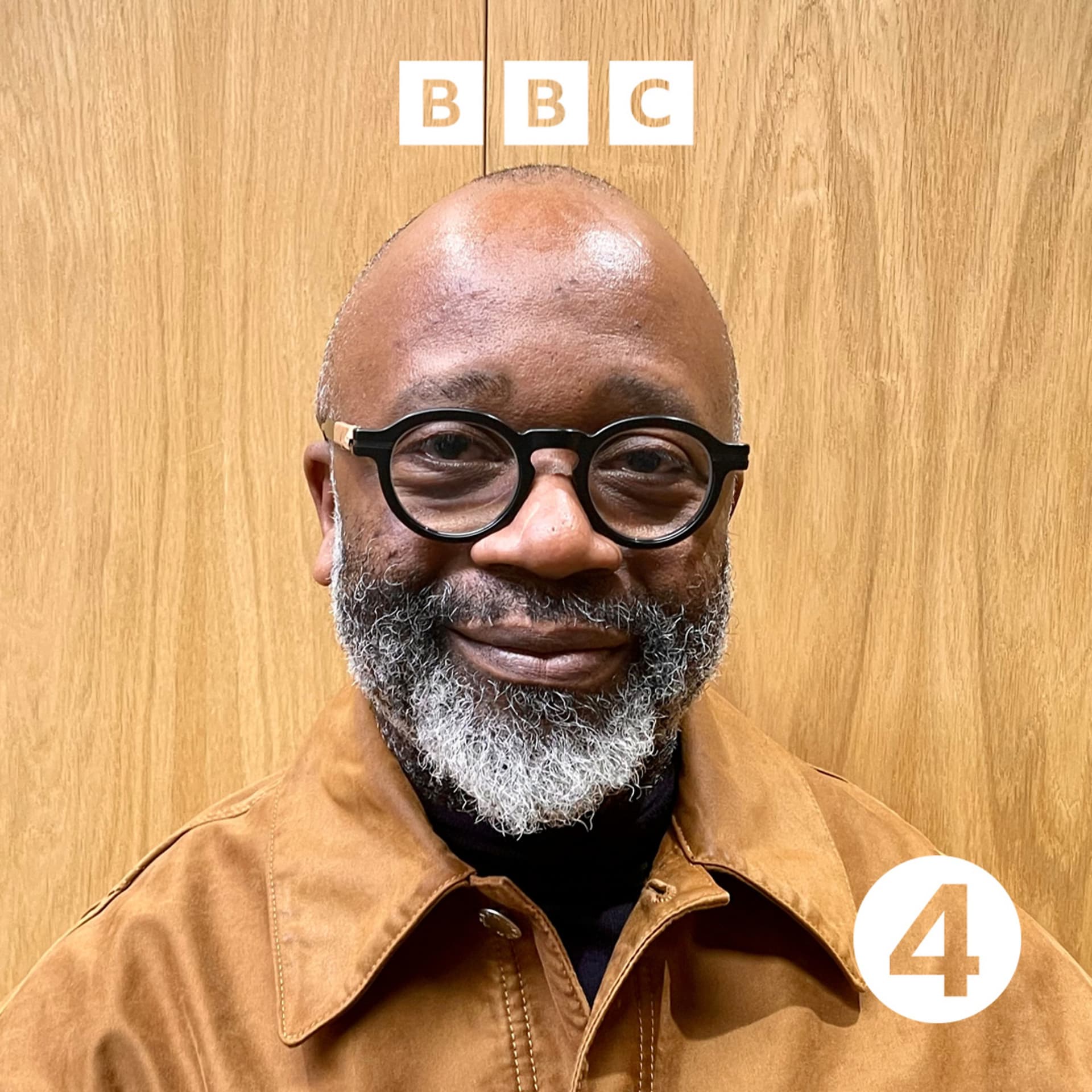
Episode Overview Episode Title: Theaster Gates Description: Theaster Gates, an influential artist based in Chicago, discusses his upbringing, artistic journey, and community-focused projects. He is known for transforming derelict buildings into cultural spaces and for his exploration of the Black experience in contemporary America.
Key Highlights
Introduction to Theaster Gates
- Background: Born and raised in Chicago, Gates is a multi-disciplinary artist known for pottery, painting, sculpture, and large-scale installations.
- Community Focus: He is recognized for redeveloping derelict buildings for community projects, using art to transform neighborhoods.
Influence of Family
- Upbringing:
- Gates is the youngest of nine children; his upbringing was filled with love and support from a large family.
- His father worked as a roofer and instilled a strong work ethic.
- His mother, a nursery school teacher, emphasized moral and spiritual guidance.
- Artistic Tribute: Gates honors his father’s labor by creating art using roofing materials, particularly hot bitumen for paintings.
Education and Early Experiences
- Busing to School: Gates reflects on being bused to a predominantly white school, which provided cultural opportunities but also created a sense of detachment from his local community.
- Cultural Impact: He notes the systemic issues where the best students from minority communities were taken from their local schools, leading to a decline in those schools' performance metrics.
Community Transformation Projects
- Urban Planning: Gates discusses his background in urban planning and how it informed his artistic practice.
- Community Projects:
- He purchased derelict properties in Chicago, transforming them into cultural hubs like the Listening House and the Archive House.
- His work aims to address social issues and create positive change within his community.
Artistic Philosophy
- Integration of Art and Activism: Gates sees his work not just as artistic expression but as a means to engage with and improve community life.
- Art as Reflection: His sculptures often use materials with historical significance, reflecting on past injustices and current social issues.
Recent Works and Exhibitions
- Black Chapel: Created for the Serpentine Pavilion in London, conceptualized as a monument to his father.
- Use of Fire Hoses: Gates uses fire hoses in his artwork to comment on historical civil rights struggles and ongoing issues of racial violence.
Future Aspirations
- Gates expresses a commitment to creating meaningful art and supporting community initiatives, while acknowledging the ongoing challenges faced by marginalized communities.
Conclusion Theaster Gates’ work exemplifies the intersection of art, activism, and community engagement. His reflections on family, upbringing, and social issues provide a nuanced perspective on the role of artists in contemporary society. The episode highlights his dedication to using art as a tool for transformation and healing within communities.
Key Takeaways
- Art as Community Engagement: Gates emphasizes the importance of art in addressing social issues and fostering community development.
- Cultural Heritage: His works serve as a bridge between personal history and broader cultural narratives.
- Social Responsibility: Gates advocates for artists to be active participants in their communities, using their platforms to effect change.
Written by AI. May contain mistakes. Listen to the episode to check what was said.
Transcript
Automatic transcript. May contain errors.0:00Hello, I'm John Wilson. You're about to listen to This Cultural Life. Episodes are released weekly, wherever you get your podcasts. But if you're in the UK, you can listen to the latest episode first on BBC Sounds, seven days earlier than anywhere else. Do subscribe to This Cultural Life on BBC Sounds and make sure you have push notifications turned on and we'll let you know as soon as new episodes are available.
0:30Welcome to This Cultural Life, the series in which some of the world's leading artistic figures choose the most significant influences and experiences that inspired their own creativity. I'm John Wilson, and my guest in this episode is the internationally acclaimed and hugely influential artist Theaster Gates. Born, raised and still working in Chicago, he's best known for redeveloping derelict buildings for community projects, using art to transform run-down neighbourhoods of his city. He trained as a ceramicist and still makes pottery, but is just one part of a diverse artistic output that also includes painting, sculpture and vast installations in works which often explore the black experience in contemporary America.
1:12Theaster Gates is part of the creative team behind the Barack Obama Presidential Centre, which is currently under construction in Chicago. In 2022, he created the annual Serpentine Pavilion in London, a piece called Black Chapel, which was conceived as a monument to his father. We met recently when he returned to London for the opening of a new exhibition of his work at White Cube Gallery.
1:38Theaster Gates, welcome to This Cultural Life. It's so good to be here. You're an artist known for large-scale installation pieces, but a lot of what you do would stretch the definition of what many people might consider art. You work as a social activist, you work as an urban planner. How would you describe what you do? I probably wouldn't even call myself a social artist. I would say artists have baked into our DNA awareness and sensitivity of the things happening around us. And sometimes I can't help but make in response to the world around me. So you work in various different forms, but the word artist is the good catch-all.
2:21That covers all the bases. That's right. I like wood and metal and clay, but I also like people. And I like knowing that the conditions of people are changed as a result of me being in their lives and that I'm changed as a result of being in theirs. You were born and raised in Chicago. You still live and work in Chicago. How important is the city of Chicago to your work? Chicago is very important. When I was faced with should I go to a bigger city or a city more known for the arts, Chicago was a place that was like it was an affordable, gritty, rough place where there was so much dynamism and so much affordability that I could grow and bloom, let's say, in the shadows of the art world.
3:04and so my maturing was a little bit slower but I had space and space allowed me to do more. You get more bang for your buck. More bang for your buck. In Chicago. Because of course, I mean the obvious thing when you're an up and coming artist in an American city is to think I've got to go to New York or Los Angeles. That's right. You never considered that then? I did in fact consider LA and New York but every time I thought about it the rents of the places and the idea that I would be so far away from the creativity and the community that I built it just made it seem like wasted resources to go somewhere else.
3:38So I stayed home, and over time I felt like I developed kind of a politic of staying.
3:49On This Cultural Life, my guests choose the most significant influences and experiences which have inspired their own creativity. And in the notes that you sent us, you talked about the influence, first and foremost, of your mum and your dad. You were the youngest, I think, of nine children. So set the scene. What was home life like? My mum and dad bought a four-unit apartment building before I was born. The older siblings, some had already moved out of the apartment building because there were so many of us, and then some had occupied apartments with their husbands because I have eight older sisters.
4:27And then others, we all lived with my mum and dad, you know, together. And so it was like having nine moms, you know, and they were all very loving. And my dad was kind of a practical, hardworking guy. My mom was like a spiritual saint. And between them and my sisters, I feel like I was surrounded in a house of love. Sorry, you're child number nine, but there have been eight sisters before you. Well, I was a surprise to everyone because I was seven years later than my youngest sister. They definitely stopped after me. So I feel quite lucky. And you say your father was very hardworking. He was a roofer, wasn't he?
5:09Practically, what was the day-to-day job? You know, my dad was a serial entrepreneur. Earlier in his life, he had a job making motors and building engines. But during my childhood, roofing was the thing that he was doing the most. in some light carpentry alongside the ownership and management of a cluster of small houses in our neighbourhood. So he was multi-skilled then? He was multi-skilled and I think that black men in the 60s and 70s had to find creative ways to keep themselves employed because it was a little bit just after certain kinds of factory works were going away that had been available more in the 40s and 50s.
5:51And did you go to work with him? I'm thinking specifically about when he was working on the roofs. Yeah. I mean, how much of his job did you see firsthand and soak up? He didn't really believe in an allowance. He believed that people should work for the money that they get. So I feel like I've been working from 12, but I was probably useless at 12. But at least it was the idea that I could work a little and make some money that made him feel better about giving me the money. And I think over time, that virtue or that value of kind of working hard for the things that you have was something that was firmly planted in me.
6:27The work ethic is still so important, isn't it? I think so, yeah. Did he regard his work as creative in any way? He didn't in any way imagine that roofing was creative. And in fact, when I told him later that I wanted to come back to this vocation as part of my artistic practice, he said, you know, I did this roofing so that you would never have to do this. You know, we send you the school and we try to get you educated. and then after all of that schooling, you come back to wanting to use hot tar as your creative practice. Don't do it. Let's just explore that a bit more because from what I understand, after he retired, he bequeathed you his tools and most importantly, his tar kettle.
7:09He cooked up this black bitumen in this kettle and then later you persuaded him to collaborate on a series of your tar paintings. Those canvases, large-scale canvases painted with that thick bitumen. So he was there with the brush, was he, helping you? Yeah, so it feels important to say that roofing, as I was growing up, there was nothing glorious about it. It smells horrible. It's extremely toxic. It's tough on the body. Slinging a 40 to 50 pound mop around a roof is very hard work. But when my dad had retired and my mom was near death, she asked that I find a way to reconcile my relationship with my dad and really honor him.
7:56That was her word. So I thought, well, how can I honor this man when the only thing that he values is work? And I said, OK, I'll pull him out of retirement and I'll try to get him to make some tar paintings as a kind of last hurrah where I'm leading the ship, not him. The paintings themselves would become a kind of honorific moment. You used to be his assistant. Now he's yours. Now he's mine. And I remember when I asked him, I said, Dad, I'd like you to make some tar paintings with me. He said, what would my pay be? And I said, your pay is going to be the same pay that mine was. $75 a day. And for$75 a day, my dad came and he worked as hard as he did before he retired.
8:39And he gave me the best artistic advice from just practical decisions around painting. Like he would say, if you're making a roof, you should make it so that it doesn't leak. Same should be true of your paintings. So let's cut the corners so that the corners could never leak. Let's put a drip edge and a gravel stop at the bottom so that water can be removed in the same way that you would on a roof. And it sounded like he was giving me art formalism 101, like pick a vocabulary and play the vocabulary out all the way. So he wanted me to make paintings that would not leak. They're paintings that would have served a practical purpose if they had been lined up on a roof and they could have stopped the water getting in.
9:29But that's not the point, is it? It's about the attention to detail, I guess. It was about the attention to detail. And I think my dad understood that artists can sometimes look for shortcuts. And he was convincing me that if I were to continue to live the life as a craftsman, that I might make a better formal painting. Did he like the works? He did not like the work. I don't mean the process of making the work. Did he like the finished paintings? Oh, he did not like the finished paintings. He liked the process. Did he not appreciate them as works of art? Did he say, what's the point of this? Because actually they're not up on a roof protecting a building.
10:09They're just there to be looked at. I think it was difficult for him to overcome stigma that no matter how precise we made these formal paintings, it was a constant reminder that he had to spend days on a roof and he didn't have the luxury of making a painting he had the burden of ensuring that the roof never leaked and for him it was just labor you know and there was the tremendous fear for a craftsman that you know if you give a 10-year warranty you don't want to be back on someone's roof every three months you know when it rains. And so he was really committed to trying to be a fixed man in a neighborhood where there were very few resources.
10:55And how would you characterize that neighborhood when you were growing up at the time? The West Side was, you know, I would almost say it would be like it was war-torn. The kind of heroin and crack epidemics of the 1980s and early 90s left people bereft. The redlining of the 1950s and 60s, the lack of investment by banks and the federal government left people bereft. The loss of manufacturing jobs and factory jobs by the 70s and 80s, people had lost hope. As a result of the lack of opportunity and the loss of dignity, you find yourself moving toward the bottle or the pipe or abuse at home. And all of those things were true.
11:44And I think that for my family, maybe where my mom was the kind of saving grace, was that she always had a moral fortitude and a social fortitude. and so her love was a kind of anchor against the truth of all of these violences and challenges but you know among those things there was also resilient culture great music generous people another kind of abundance that was forced to happen as a result of all of the catastrophe and your mother was a school teacher wasn't she my mom was a nursery school teacher right so So somebody right at the heart of the community. Right at the heart. And what are the values that she instilled in you, which do you think have been so important in your life and your work?
12:35My mom. My mom would always say, put God first. And I think what she meant by that was that there are my personal needs, and then there's the truth of the world's needs, the truth that you're a person that lives in the world and that some part of it should be about you and some part of it should be about something greater than you. This is really interesting, the way you're talking about your mother and your father, your father there at the heart of the community, maintaining the fabric of the community. And your mother is a sort of spiritual maintenance that you're talking about as well. That's exactly right.
13:09I imagine my mom governed the heavens and my dad governed the earth. And the roofs. Yeah.
13:20your next choice for this cultural life theaster gates is your experience of being bused to a school outside your home neighborhood so where did you go to school i lived in a neighborhood called east garfield park and then i was bused to frank w riley elementary school was a middle school about 45 minutes to one hour north of where I lived. And every day at 630, a bus would come and take me to school. And before school started, either I was playing a sport or I was in the gospel choir. But that experience of going from the west side to the far north side was a very important one. Riley Elementary was probably 80 % white, 5 % Hispanic, and the rest were black kids like me from the hood who had done very, very well on what we call the Iowa test scores.
14:19So you'd been picked to go to the school? I'd been picked. These magnet schools were taking the best and brightest from black and brown communities and bringing them to white schools where the kids were smart, normal, But then they were getting the best black and brown kids, which made the averages in those white schools higher, which meant that those schools got more money from the state. That was the underlying social policy, do you think? Absolutely. Maybe the top 20 percent of black students, we were leaving our local school. And by leaving our local school, it meant that the average grade and the average attendance dropped tremendously.
15:03Tremendously. In the school that you'd left? Yes. So it looked like black and brown schools were underperforming when in fact we were helping white schools overperform. They were creaming off then? Yeah, they were creaming off. Were you aware at the time that you were playing a part in some kind of social policy? Not at all. I was happy to go to a school that would ensure that I could get into a better high school. There are lots of implications to being bused. I had challenges of being different and having cultural differences from the people that I was around. But I had to kind of get a thick skin sooner in order to survive in that environment.
15:43How was it presented to you, though, at the time? And what was the reason you were given that you were having to drive 45 minutes to school every day? It was considered an opportunity. Hey, look at this great opportunity to go from your neighborhood school to a school where you might be challenged a bit more, where you're going to have access to like greater learning, where the learning curve is going to be a little bit steeper, but it's aligned with the fact that you've already been excelling in math and reading and comprehension. And that seemed like a good thing. And if you have a stigma of being in the hood, then maybe when you have an opportunity to go to a white school, it's like some kind of an ascension.
16:22And I think at fourth grade, I understood that this opportunity to be in an all-white school was a privilege. It was a privilege that if I didn't take it, maybe my outcomes wouldn't be as good if I stayed at my local school. And do you think they would have done? Where would Theaster Gates be now if you'd stayed at that local school? Would you have had the opportunity to go to college, to become an urban planner, to then have a life as an artist, do you think? I don't think the opportunities would have been the same, to be honest. So you must have very mixed feelings about that. Absolutely. You know, but this is the kind of the complexity that one lives with.
17:00And I think that when I'm making exhibitions, it's not like one is absolutely right and the other is absolutely wrong. But you live in this meld and you have to try to make sense of it. So I think my entire practice is muddying the truth that am I glad that I went to Riley so that then I went to a great high school that then allowed me to matriculate more easily? I'm absolutely happy. Do I have mixed feelings that I left my friends every day and that every year that I progressed, I could see that their lives were going in one direction and mine was going in a different? That's really complicated.
17:41Would I have loved for the resources that I had access to at Riley to be available at Richard Wright Elementary, my local school? I wish we had second languages. I wish we had computer technology. I wish we had after school programs that would build deeper camaraderie and keep us away from the gangs. And what about the art education? What sort of arts? Yeah, I went to a technical high school that allowed me to learn drawing and perspective and participate in choir and band. Was there a sort of cultural education program? Absolutely. And those were things that were just not afforded at my local elementary school.
18:22Did you have ambitions to become an artist at an early age? Not at all. Not at all. I knew that I was good at writing and math, but I had no idea that the visual arts would become as important as they've become in my life. You are as much a social activist in a way as you are an artist. And you're well known for having bought up a whole lot of derelict properties in Chicago and transforming them into creative spaces and art centers. In 2015, you gave a TED Talk outlining how you transformed these buildings to help regenerate the whole neighbourhood. Once I bought the building for about$18 ,000, I didn't have any money left.
19:05So I started sweeping the building as a kind of performance. And people would come over and I'd start sweeping, because the broom was free and sweeping was free. It worked out. But we would use the building then to stage exhibitions, small dinners and we found that that building on my block Dorchester we now refer to the block as Dorchester Projects that in a way as a young planner I always had a kind of critique of my vocation that we were too passive in our approach to planning and you should just point out you were actually working as an urban planner after you left college I was you'd studied urban I was And I really believe that planners help to shape the policy that determines how our cities look and feel, but who benefits in our cities.
19:55And I thought maybe there's a way that I could take the tools of planning and use them not through the bureaucracy or city government, but as a kind of citizen. And with resources that I would raise and grow, I could try to find ways to make my neighborhood a little bit better. The neighborhood that I moved to in 2006 was an area called Grand Crossing. It was on the south side of Chicago. I moved into a one-story building that was not the most attractive building on the block, but it was what I could afford. And I immediately just started trying to do small tactical projects that would help make life a little bit better for my neighbors and I.
20:37And starting off on a very practical basis by just patching up buildings, cleaning them up, stripping them back to the basics. And then my neighbours had difficulties with their building. We would help just clean and clean the alleys, mow the lawns. And some of these buildings were derelict and just abandoned, so you're picking them up for nothing. Yeah, so by 2008, the housing market crashed. And on my block, half the housing stock was available. and so I tried to take my planning skills, learn as much as I could about development and with an artist hand started renovation and then inviting friends to help me, to use the buildings with me.
21:18So what are these buildings individually? What are they housing? Just give us a sense of the range of cultural endeavour. So we have a building that we call the Listening House. We make music there. We have a building that we call the Archive House. And when our archive was small, we held our archive there, but we outgrew it. We have a space called Black Cinema House where we show films. And then we have, you know, spaces where artists can live and work. And then we've just finished a school called St. Lawrence. And St. Lawrence is a 40 ,000 square foot, a Wii U square feet, sorry, a 40 ,000 square foot school that shuttered probably 25 years ago.
22:03And that school will be a space for like helping artists who are already good become better. And you should just explain also how those individual buildings were being transformed with cultural objects, artifacts and collections. They became repositories, didn't they? Yeah, like after I would finish the building, I kind of asked myself like, what should happen in it? And alongside the buildings being available, I found that there was so much rich cultural stuff, you know, like friends who had libraries or archives that were available, you know. So you were collecting collections then? I was collecting collections.
22:44And it was possible to care for a set of things in a space because the spaces were much more affordable on the south side. So as I was renovating a building that we call the Stony Island Arts Bank, which is kind of my biggest project and the most beloved in Chicago, a dear friend of mine, Linda Johnson Rice, she was the heiress of a company, Johnson Publishing Company, that made the Ebony and Jet magazines along with other periodicals. and the company was sunsetting and Linda said oh it looks like you really like books I have a lot of books she was going out the family firm was going out of business that's right and the library had I believe the number was 26 ,000 books and so the books and the shelving and and other cultural artifacts eventually the furniture of Johnson Publishing she just allowed me to become the kind of steward of her family's material legacy.
23:51And the legacy being Johnson Publishing being the primary publisher of magazines, periodicals, specifically for African-American readership. That's right. You know, Johnson has an amazing story because he understood that news had the capacity to have bias. In the 50s, if there was a riot in Oklahoma, it was being told from, let's say, a conservative white position. The way that they articulated that riot was different from the way that a Black person would experience the riot on the ground. And so he built a kind of parallel publication for African Americans that could tell another story of America on the ground, documenting an alternative narrative of truth about the challenges that black people experienced in the United States.
24:43So otherwise that library and the collection, I presume there were thousands of magazines as well that you took on. Yes. They would just possibly have been polped. Yes. I'd like to imagine that maybe they would have been donated and scattered. Another 10 years has gone by since you gave that TED Talk, which is very much a sort of landmark, because it sort of awakened people to what you had been doing in Chicago. and how's it changed since then? How has it developed? Well, the block is beautiful now. The buildings are more active than they've been. The violence immediately around the block has lessened.
25:17So there's a long-term legacy already that you can see. But I think there's still a lot of work to do. The work still feels like a drop in the bucket relative to the need and the urgency of change. but I think what my drop in the bucket did was it it raised the alarm that normal people like me artists like many of us creative people can play a role in the significant transformation of their neighborhoods and as a result they could touch lots of lives not only in the museums or galleries which I love but also on regular streets and in their neighborhood and do you see all of this work as part of your artistic practice?
26:03Or are these offshoots from the main job of being the potter, the ceramicist, the painter? It's a complementary work to my practice. My primary work is to make art and then to use the platform that I have access to to create as much opportunity not only for myself but for others.
26:29your next choice is going to japan to study traditional ceramic techniques so what led you to japan so okay in undergrad i was a community and regional planning major and then i developed two minors one in religious studies the other in sculpture My ceramic instructor in sculpture, Ingrid Lilligren, she did the best she could, but I was a horrible potter. But I kept trying. Yeah, but what started you on pottery in the first place? I needed to take a design elective in the community and regional planning program. Ah, that's the opportunities offered by the American University. Exactly. It's unthinkable in Britain.
Read the full transcript
27:11You go to learn urban planning and do ceramics as well. Oh, yeah. We had like nine electives, and I decided that I would kind of try ceramics. and found myself really enjoying it, making these pots, which I would try to take home and offer as Christmas presents. Nobody really wanted them. So you're trying to make practical pots. Absolutely. Again, the legacy of your father. Exactly. Four or five years later, I went back to my instructor, Ingrid, and I said, you know, I continue to make pots, and I'd love to get better. And she said, I think it's time for you to go to Japan. So she wrote a letter for me to Mr.
27:46Ichihara in this small town, Tokunami. And they had a 30-year history of inviting foreigners to Tokunami to study among Japanese potters and do a homestay. When you say a homestay, so you were living with a Japanese family? I was living with a family. My family was actually, they produced pasteurized milk, the Tomita family, and they're still very dear to me. Pasteurized milk needs vessels. Yes. Of course. Did you make them any pots? I did. Did you? They're not their favorites. They had better potters over the years than me. So tell me about the process of learning these traditional ceramic techniques in Japan.
28:28Learning was in a true apprenticeship fashion. Every day we had guests come in to our workshop and teach us. They would do demonstrations. But really you got better because you spent time adjacent to masterful people and you watched. There wasn't a lot of explaining. This is how you trim a foot. This is what the lip should feel like. This is how you throw. This is what a shoulder should look like. You would just absorb by being present. And then there might be moments of critical adjustment. Say, oh, you're holding your hand wrong or you're using too much water. But that was it. And so I think being around excellence made me want to be a better maker.
29:16And joking apart, do you think the idea of part of the appeal of pottery is because of that functionality? I think part of the appeal of making is because if you can get better at a thing every day in your studio, you might be able to get better at a thing in your life. Making for me is not just about making pots, but it's a demonstration that if you commit to a thing, you can get better at a thing. That feels metaphoric in a way. And so it's the process. It's the commitment. It's the long-term commitment to something. That's right. So much of your work involves taking materials which serve a particular practical purpose and then turning them into artworks, giving them another meaning, possibly.
30:00One example would be Ground Rules, your sculptures made from recycled school gymnasium floorboards. Tell us about this work. Ground Rules was born because a school was being torn down. In Chicago? In Chicago. There was a gymnasium floor, and it just seemed like a great material. And this particular floor had multiple scrimmages. Like maybe they were playing dodgeball, floor hockey, basketball, soccer. And so all of the different scrimmages had different scrimmage lines. So you'd have yellows, blues, blacks, greens. The markings on the floor. That's right. And once the floor was removed, you would just have a two inch strip with a strip of color.
30:47And I just thought, oh, this is Bauhaus. This is modernism. You know, this is a painting. The markings, the delineation becomes abstract. That's right. So I started playing with the pre-existing marks and being intentional with their positions. and it became a kind of vocabulary for this body of work. And ground rules was kind of, it was speaking to the fact that play was being lost in black communities. You know, we had a moment where Chicago was closing lots of schools and the archdiocese was offloading schools. That in these moments where the schools are going away, play is going away, it means that we're also not learning fundamental rules about how to be human.
31:37You know, like, if you hit someone while playing, that's called a foul. A certain number of fouls, and then you're no longer in the game. Well, basketball in particular is about being more than the sum of the parts, isn't it? It's about passing. It's about not being the individual. Absolutely. But it's interesting that you started out and looked at it as a piece of almost abstract art. But you're saying that it has to be underpinned by that sort of social narrative that you can read into it or superimpose onto it. It seems that way in my practice. that material forms remind me of ideological forms.
32:09Does it go also back to what you were saying about being bused to that more privileged school? And you're talking about schools that are being demolished and those areas of play literally being erased. Yeah, I think I'm always trying to make sense of my past and I'm always trying to make sense of the complications of our world. It's very rare that commentary isn't loaded in the thing that I'm creating. There's another work which seems to illustrate that attitude as well, where you have made a series of works using fire hoses. Now, these, of course, are objects that are associated with saving lives, but which in the 1960s were used for violent purposes during the civil rights struggle.
32:50So again, is that the subtext of those works? Absolutely. I was able to identify these hoses from the 1950s and 60s and really wanted to use them as a reminder of the atrocities that happened to peaceful protesters in the 1960s. And not only in the United States, there have been moments in different parts of the world, including Ireland in some cases, where this idea of a kind of water bombing. The water cannons. Yeah, the water cannons have been used. And I thought there should be a reminder that the protests that black Americans led, that ultimately led to forms of affirmative action that probably led to the fact that I was able to get bused to this school.
33:43these were these moments of integration and that the great integration hope was that it would create a kind of on-par opportunity and I think that that is currently in threat of being dismantled and so I think the hoses really are a kind of reminder of the work people did and the challenges to that work. Those hoses directly reference events in Mississippi, Alabama, early 1960s. How have you as an artist or collector responded to the more recent civil rights struggles, Black Lives Matter, for instance? You know, I think that as long as we have a world where greed is valued, we need a world that resists that greed with other forms of solidarity prosperity and collective thinking.
34:38Around the period of Black Lives Matter, I remember getting a call from Samaria Rice, the mother of Tamir Rice. And she called me and she said, you know, we're in jeopardy of the gazebo where my son was killed. The city of Cleveland wants to tear it down. And Tamir, we should just say, he was 12 years old, I think, wasn't he, when he was shot? Tamir Rice was a 12-year-old boy playing with a toy gun outside in a playground across the street from his house. And a neighbor called the police and said, there's a kid with a gun. And the police showed up and killed him. And people were starting to go back to that site where he was killed as a way of mourning and honoring Tamir and organizing and rallying to see how they could ask the city to apologize more deeply for this atrocity.
35:32And the city, out of an articulated anxiety that the mourning crowd would turn into a mob and that that mob would in some way wreak havoc on the city, they decided that they would try to tear the gazebo down as a way of preventing them from having an object, a monument for their mourning. Samaria Rice called me and asked if I would be willing to come and deinstall the gazebo and keep it and say keeping until it could be resurrected again in memory of her son. And so, you know, my involvement with Black Lives Matter seemed to be a kind of operational logistical agent where I could protect this site of trauma, tuck it away for safekeeping.
36:23And then ultimately, we were able to, at the Arts Bank, reinstall the gazebo as a place where we could consistently reflect on the challenges of police brutality, the death of our Black boys and girls, the challenges of gun use in general in the United States. And in a way, I'm an artist that's committed to activists who are really doing that work. I would say that I am not the leader of this, but my job in that part of the struggle is to protect our things that remind us of the truth of that trauma as an artist. I can be an ally to these movements that continue to speak truth to power. We are talking within the first month of the second Trump presidency, and things are changing very fast.
37:17But given what we've seen already of Trump's social policies and his direct criticism, in particular, of diversity initiatives, how do you think your work as a cultural activist will be impacted in the coming months and years? The truth is Trump represents a regime that has always been active and present. I don't think the world has changed any. It's just the valences of democracy. Those valences are gone. And I think you can see the complexities of this political moment for what it really is. So the work won't change because greed, capitalism, racism, those things have never gone away. I think what I'm committed to is doing what I can in my life and working as hard as I can to be a great cultural leader.
38:14Politicians come and go. Their policies sometimes have lasting impact. Artists come and go. their work should have lasting and consequential impact. Do you not find it deeply depressing, though, as somebody who is so committed to these social initiatives, you know, through the means of cultural regeneration, that things seem to be going backwards politically?
38:40I've been depressed. The truth of capitalism's heel on the necks of black and brown people has been a truth for a very long time. I think more people will feel it sooner. But the conditions of black and brown people on the south side of Chicago, on the west side of Chicago, won't feel very different as a result of Trump being in office. I presume you have had some access to civic funds as well, though. Will that not be more difficult to access if, as we have seen already, Donald Trump is already targeting these sort of policies which are helping bring funds to socially excluded communities? What I hope is that the zeal that exists on the right, that that energy will be understood and reinterpreted as a kind of wake-up call to the necessary work that we all have to do to keep a balanced society.
39:38And the needs of the poor, I can't say that we've been deeply invested in the needs of the poor ever. great health care for all Americans has never been a goal. Better education, I can see it being done in other countries around the world, but not in the United States. And so we've been in the middle of a wake-up call, and now we're at the point of tremendous crisis. And maybe it takes this crisis in order for us to understand the severity of this moment. We've been talking about all of these various cultural outlets. You're a ceramicist, You're a painter. You're a planner. You're a kind of urban ringmaster, aren't you?
40:20Bringing all of these elements together. What is the day to day work, though? I mean, when you get up in the morning, are you thinking about what am I creating today? What is what is the process? It's a big administrative commitment to have a studio practice and have a charitable practice and have a set of responsibilities to a public. Well, there's a lot of paperwork involved, isn't there? But do you still have time to throw the pots? which is a messy business. Yeah, I have to make seasons for ceramics. So part of the reason that I now have a small atelier in Japan is so that I can get away from it all and go back and make pots.
40:58But I like the idea of, you know, working on tar paintings in the morning and having afternoon meetings and a dinner that kind of helps to keep the train on the tracks. I think I would be less than myself if I committed to only making pots or only making paintings or only administration. And what's driving you on creatively? Earlier when I mentioned the pursuit of getting better at making a single thing, that idea is becoming more and more romantic for me and more and more my desire and my reality. I want to be able to make a pot and then come back to that pot the next day or come back to a mound of clay and make it just a little bit better.
41:45And better doesn't mean bigger or more luster. It means that the pot means more to me, that it has more depth. It moves others more. and that may mean that they go from really ostentatious pots to quite humble vessels. I feel myself becoming a much more humble vessel than I was in my 30s and 40s. Theaster Gates, thank you very much indeed for sharing your cultural life with us. It's my pleasure. Thank you.
42:48Producer Edwina Pittman, thank you very much indeed for listening.
42:58Hello, Greg Jenner here. I am the host of You're Dead to Me from BBC Radio 4. We are the comedy show that takes history seriously and then laughs at it. And we're back for a brand new series, Series 9, where we're covering all sorts of things, from Aristotle to the legends of King Arthur to the history of coffee to the reign of Catherine of Medici of France. We are looking at the arts and crafts movement and the life of Sojourner Truth and how cuneiform writing systems worked in the Bronze Age. Loads of different stuff. It's a fantastic series. It's funny. We get great historians. We get great comedians.
43:28So if you want to listen to You're Dead to Me, listen first on BBC Sounds.
From the publisher
The internationally acclaimed and hugely influential artist Theaster Gates was born, raised and works in Chicago. He trained as a ceramicist, and still makes pottery, but it’s just one part of a diverse artistic output that also includes painting, sculpture and vast installations, in works which often explore the black experience in contemporary America. He is best known for redeveloping derelict buildings for community projects, using art to transform run-down neighbourhoods of his city. A recipient of the prestigious Artes Mundi Prize, Gates is a professor at the University of Chicago and received the French government’s prestigious Légion d’Honneur. Theaster Gates is part of the creative team behind the Barack Obama Presidential Centre currently under construction in Chicago. In 2022 he created the annual Serpentine Pavilion in London, a piece called Black Chapel which was conceived as a monument to his father. His most recent exhibition is 1965: Malcolm in Winter: A Translation Exercise at White Cube gallery.
Theaster Gates tells John Wilson about the influence of his family upbringing. The youngest of nine siblings, and the only boy, he recalls assisting his father as he worked as a roofer. Later, when he was an established artist, and having inherited his father's tools and tar kettle, Theaster began to make paintings using hot bitumen in tribute to his father's labour. He also explains how, as a high achieving pupil, he was 'bussed' to a predominantly white school far from his home neighbourhood, and benefited from cultural opportunities that he may not have received otherwise. He also chooses the experience of spending a year in Japan learning ancient pottery techniques, and beginning his practise as a ceramicist.
Producer Edwina Pitman