In short
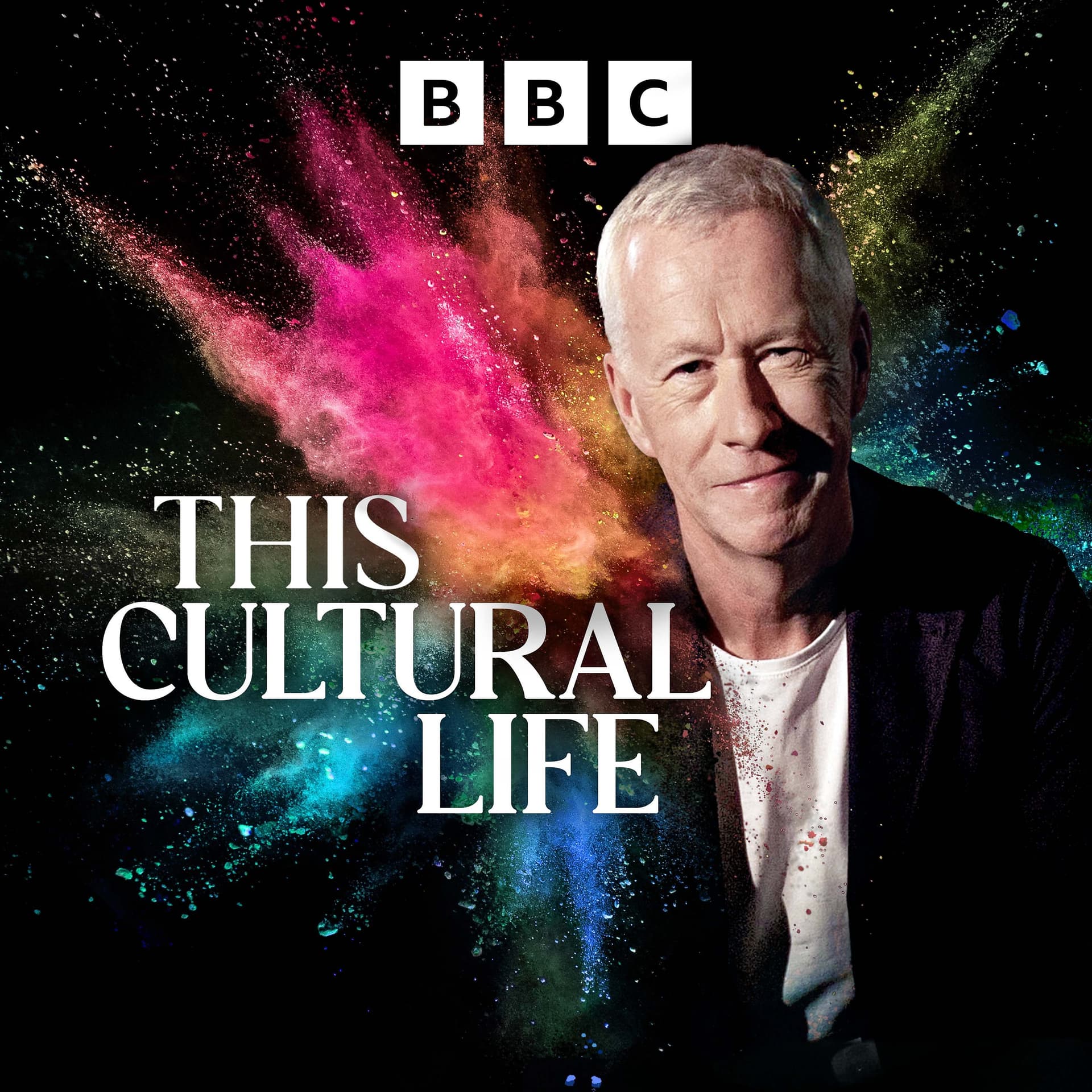
This Cultural Life: Yorgos Lanthimos Episode Summary
Episode Overview In this episode of *This Cultural Life*, host John Wilson engages in a deep conversation with filmmaker Yorgos Lanthimos, known for his unique style marked by unsettling themes and absurdist humor. Lanthimos discusses his upbringing, influences, and the creative processes behind his acclaimed films, including *Dogtooth*, *The Lobster*, *The Killing of a Sacred Deer*, *The Favourite*, and his latest project, *Poor Things*.
Key Themes and Discussions
Early Life and Influences
- Background: Yorgos Lanthimos was born in Athens in 1973, the son of a professional basketball player.
- Cultural Education: Grew up in an environment where filmmaking was not a common aspiration, given the limited Greek film industry at the time.
- Personal Loss: The death of his mother when he was 17 influenced his decision to pursue a creative path without parental pressure.
Career Development
- Commercial Work: Initially focused on creating commercials and music videos, which provided him with technical proficiency and financial support to make films.
- Film School Experience: Influenced by directors like Robert Bresson, Tarkovsky, and Godard during his film education, which opened his eyes to diverse filmmaking styles.
Distinctive Style
- Absurdist Elements: While Lanthimos's distinctive non-naturalistic performances and dark humor are now hallmarks of his work, he did not consciously strive for this style from the outset.
- The Greek Weird Wave: While initially grouped with other Greek filmmakers, Lanthimos does not identify with the label, viewing it as limiting to artistic diversity.
Influential Artists
- Diane Arbus: Lanthimos cites the American photographer for her ability to capture unsettling, vulnerable moments, paralleling the emotional undercurrents in his films.
- Sarah Kane: The British playwright's work greatly influenced Lanthimos, particularly her ability to blend violence with humor and emotional depth.
Filmmaking Process
- Collaboration: Works closely with co-writer Efthimis Filippo, often brainstorming ideas based on observations of human behavior and societal norms.
- Rehearsal Techniques: Emphasizes the importance of rehearsal in creating a bond among actors, allowing for a more relaxed and exploratory performance environment.
Latest Work
*Poor Things*
- Adaptation: Based on Alasdair Gray's novel, Lanthimos was captivated by the character of Bella Baxter, deciding to frame the film from her perspective.
- Choreography and Movement: Incorporates dance and physicality in his films, influenced by choreographer Pina Bausch, resulting in emotionally resonant yet non-sentimental performances.
Key Takeaways
- Artistic Freedom: Lanthimos stresses the importance of creative freedom and exploration over conventional storytelling.
- Emotional Complexity: His films encourage audiences to form their own emotional responses rather than guiding them toward a specific interpretation.
- Continual Evolution: He views filmmaking as a continually evolving process; each project serves as an opportunity to learn and grow creatively.
Conclusion Yorgos Lanthimos's insights into his life and work reveal a filmmaker deeply influenced by his personal history and the artistic works of others. His approach combines technical proficiency with a distinct emotional and philosophical depth, culminating in films that challenge the audience's perceptions and expectations. Through this conversation, listeners gain a deeper understanding of Lanthimos's creative journey and the cultural influences that shape his unique cinematic voice.
Credits Producer: Edwina Pitman Host: John Wilson Podcast: This Cultural Life, BBC Sounds
Written by AI. May contain mistakes. Listen to the episode to check what was said.
Transcript
Automatic transcript. May contain errors.0:00BBC Sounds. Music, radio, podcasts.
0:11Welcome to This Cultural Life, the series in which some of the world's leading creative people reveal the most important influences and experiences that inspired their own work. I'm John Wilson, and my guest in this episode is the filmmaker Yogis Lanthimos, emerging from the so-called weird wave of Greek cinema. He's known for unsettling themes and the absurdist humour of his films. Lanthimos first made his mark internationally in 2009 with Dogtooth, which won a Cannes Film Festival Prize, and was nominated for an Oscar. Shifting into English-language cinema with The Lobster, starring Colin Farrell and Olivia Colman, he continued to win awards and acclaim with The Killing of a Sacred Deer and his historical comedy-drama The Favourite.
0:55His most recent film, Poor Things, starring Emma Stone, has been nominated for 11 Academy Awards, including Best Film and Best Director. I had a double espresso, and I backed up my iPhone, which broke last night. Did you drop it? I dropped it, yeah. Cracked screen. Totally half of the screen you can't see, and it's even more annoying because you can see half of the text, but you can't see the rest of it, and you're like, ah, I can almost see it. It's almost a metaphor for your films, isn't it? Right. How are we sounding? Good. Excellent.
1:33Yorgos Lanthimos, welcome to This Cultural Life. Great to be here. You were born in Athens in 1973. Tell me about home life as a child. Well, I grew up in Athens. My father was a basketball player and later on he became a gym teacher. Is basketball big in Greece? He's very big. We're very good, yeah. He was good as well, wasn't he? He played at national level? Yeah, yeah, he was good. I played a little bit too, but I decided early on that it wasn't for me. And yeah, I decided to become a filmmaker. Well, as you walked in, I'm thinking you're six, what, two, three? Yeah, I'm not good with feet.
2:14I'm 187 centimetres. Right, OK. We'll let listeners work out. Yeah, I think six one or something. OK, but you did play. Were you encouraged by your father to play? Not really. It just happened. Because basketball is quite popular in Greece, and I grew up in the neighborhood where the team that he was playing, I mean, I still really love it, and I watch the EuroLeague and things like that. But yeah, I decided that it wasn't the career that I wanted to follow. I think basically because I didn't think I was going to be as good as my father or very good in the end. So I decided to do something else.
2:54But you were setting yourself a high standard. You could have made it. You could have played professionally, I guess. Well, I guess, yeah, at that point. I mean, basketball has changed quite a bit since then. What did you learn? I would have been very short, I guess. Relatively? Relatively short. What did you learn from your short basketball career? Things, elements of teamwork maybe that you took into filmmaking? Well, yeah, there's that teamwork. There's, you know, just hard work in general. And there's an aspect which I don't necessarily think it's only positive, but like being competitive, which, you know, it has some positive aspects to it, but also negative.
3:36You know, you can get lost into that and lose the focus of what's important, which is not always just being, you know, the best and what does it even mean? I guess it also makes certain things difficult because what I'm doing now, making films, there's no absolute barometer of if you're the best or not. Or, you know, there's no scientific judgment on, you know, what is the best and who's first or second. Only your own judgment, I guess. Yeah, and certain other people and it's people's opinion and it's the people you like and trust and admire that count more. So it's more complicated than, you know, I'm the first in sports.
4:22How important are the film awards, though? You're nominated for Oscars at the moment. Yes, we are. I think it depends on the people that are in the jury that makes you feel a certain way. Like if there's people that you admire, you do sense a certain kind of achievement. And of course, you know, the obvious thing is that it's very good for the film. Helps you raise money for the next film as well. Of course, there's that. And taking back to childhood, what sort of cultural education did you get? What were your interests as a child? I was more into sports. I mean, I did learn to play the guitar a little bit.
5:00But you weren't thinking at that time you would have some kind of creative career? No, not necessarily. And, you know, in Greece, it's kind of especially back at that time, if you were to say that I'm going to become a filmmaker, it would have been quite absurd because there was so little films being made and there was no industry and financing was extremely difficult. was only through the Greek Film Center. There weren't even many European co-productions back then. So it wouldn't be a sane thing to say back then. So I think when I decided to get into it, it was more through the lens of, I'm going to study filmmaking, but I end up doing commercials to earn a living.
5:48So you had your eye on the commercial possibilities rather than the creative potential. Yes, because I didn't think it was possible to do that in Greece. I talked to people that were in the business and they said, like, oh, there's this film school, which I'm sorry, but it's not great in Greece. And, you know, now there's a film school in the university as well. But back then, I mean, the choices were very limited in order to study filmmaking. And by this time, I think you'd lost your mum, hadn't you? You should die when you were 17. Yeah, as soon as I finished school, yeah, she died. And they were separated with my father.
6:25So I was kind of on my own from that point on. Well, I was going to say, what effect did that have? Do you think that sort of pushed you in a particular direction? Well, I think in a weird way it freed me because I think the consensus back then was the conservative version of it. You need to study and become a lawyer or a doctor or something along those lines. And actually I did get into the School of Economics in Athens, which I couldn't be further from that. I went for like a year and playing basketball at the same time. And after a year, I think I decided that this is definitely not for me.
7:09But I kind of followed it blindly, like, OK, this is what I should do. But, you know, after a while, I just I think I was freed by not having in a weird way any pressure from parents or anything to what I'm going to do with my life and expectations. Like life is short also. So, you know, I learned that lesson and, you know, it could end at any time. So I better do something that I'm more interested in. But I think there's a fantastic irony in that you went into film with this commercial potential in mind and also having studied economics and business. And yet your reputation initially at first was for making films which were in the conventional sense, very uncommercial.
7:50Yeah, which is also kind of interesting because I did go into commercials and I made a lot of them.
8:04But that was what enabled me to do exactly what I wanted with film. It just freed me from the technical aspect. I became very proficient technically. I got a lot of experience. And we also, me and my friends that were making commercials, that we ended up making the first Greek films. We earned good money to be able to even stop working for a period and concentrate on a film or even pay for certain aspects of the film. That's how we were able to make the first Greek films and finance them. And they were like, when we're talking about low budget, we're talking about seriously low budget, costing 150 ,000, 200 ,000 euros in total.
8:51And most of the people working for free out of the love of film were, you know, very small fees and just paying for the necessary stuff and borrowing everything else. And having been to film school and studying cinema, who were your role models? Which directors had you seen and wanted to possibly emulate at the time? Yeah, when I got into film school, I get to know filmmakers like Robert Bresson, that I was very in love with his work, and Tarkovsky and Antonioni and Godard and Buñuel. And it just opened up a different world to me, because when I was younger, I wasn't really watching those kind of films.
9:31Which films in particular do you think would have influenced you at that time? Films like Oasar, Balthazar by Bresson, for sure, is like a film that I revisit all the time.
9:51Again, back then, it was unlike anything I'd seen before.
10:05There's Miklos Yangtso, The Red and the White, for example, which is, you know, again, something that I try to look at almost every time before I make a film. And it's not, there's nothing specific, I think, that, you know, I transfer from that or the experience. It's just the inspiration of seeing something so great and so unique and unusual and impressive in the end that drives me to want to make something that could be that. And of course, fail, but then try again. I think as Beckett said, fail, try again, fail better or something like that. And you are now renowned for this absurdist style for the non-naturalistic performances in most of your films.
10:57Was that style apparent in those very first films that you were making with your friends or did that develop later? I never was too conscious about what we're trying to do. A lot of it is very instinctive.
11:14But it's interesting now, looking back at those early films, it was grouped as part of what was called the Greek weird wave.
11:24Did you welcome that? Did you feel you were part of a group of like-minded filmmakers at the time? No, I actually thought that it was a relatively lazy way to label, well, a couple of films basically in the beginning. Because there weren't that many films coming out of Greece and all of a sudden there was this generation of filmmakers that decided that they didn't need all this financing and structure and they could make films, you know, with less. but I don't think there was a very like-minded approach in terms of the creative aspect of it and artistically. I think the films are very different that came out of Greece so, you know, labeling them as, you know, the Greek word wave I think feels like quite limiting.
12:15Yeah, I never was very fond of the characterization.
12:25On This Cultural Life, Yorgos Lanthimos, I ask my guests to choose the most significant creative influences and experiences that inspired their own work. And one of your choices is the American photographer Diane Arbus, who best known for her often unsettling portraits from the 1950s and 60s. And there's an underlying tension, a strangeness to many of her images. When did you first see Arbis's photographs? I think I was around 22 years old and I was lucky enough to start already working in the film industry so I was looking eagerly looking for you know references and other artists and came across her work and you know I was astounded like I hadn't seen anything like it and it felt very powerful but very fragile at the same time this you know these moments and these people that she captured, they felt very vulnerable, but they're very open to her as well.
13:25And, you know, visually it's striking. The people are so special and their presence is astounding. So I always go back to look at her work. And for our listeners, just conjure one or two of those images up. If you think of an Arbus photograph, what do you see? Oh, it's so many. I mean, there's, well there's that boy with a hand grenade for example in the park in the park you think that something terrible has happened to him but it was just the expression he's grimacing yeah he's grimacing but you you think there's something wrong with him but he was just like a you know normal kid and she just captured this moment that became iconic you should explain it's a toy hand grenade as well a toy hand grenade yes sorry but he does look he's got this image but it does look The way his expression makes it feel real, like it's real.
14:17Oh, and then what else? I mean, there's this older woman in her living room who was all made up, and I mean, there's so many. Often domestic scenes, aren't they? Domestic scenes, like there's also these images of the children, twins as well, that looks almost like out of a Kubrick, you know, out of The Shining. If you scrutinize reality closely enough, if in some way you really, really get to it, it becomes fantastic. You know, it really is totally fantastic that we look like this, and you sometimes see that very clearly in a photograph. Something is ironic in the world, and it has to do with the fact that what you intend never comes out like you intend it.
15:02What I'm trying to describe is that it's impossible to get out of your skin into somebody else's, and that's what all this is a little bit about, that somebody else's tragedy is not the same as your own. With her photographs, I feel it's almost the undertone, the subtext, the suggestion and an atmosphere. All of those things could be applied to your work as well. Do you set out to unsettle viewers to make people feel awkward? Is that part of the approach to your films? Well, yes and no. I think I like it when it happens. I don't think that you can do it so consciously because it would feel much more constructed as well.
15:44But I think there's an intuitive, I guess, it's a word that I'm using a lot, but it's kind of true. It seems like you're trying to get away from answering too specifically. I just try to allow myself to understand it not intellectually and see how it feels. And when I feel that there are more possibilities of how you perceive the image or the sound or the dialogue or the story, that's where I feel more comfortable. Like there's the opportunity and the space for people to enter this world and experience it in their own terms. Is that why there is often a lack of sentimentality in your films or even that sense of empathy for the characters because you are wanting us to make our own minds up rather than being sort of nudged emotionally in a particular direction?
16:40Yes, that's true in terms of emotion, emotionality and sentimentality, because I never want to be pounding on people to feel a certain way. I always try to allow the space to feel however they want to feel about things that are presented to them. Listen, Martin, I don't have time for this. Okay, I'm going to explain this very quickly so that I don't hold you up. Yes, it's exactly what you think. Just like you killed a member of my family. Now you gotta kill a member of your family to balance things out. Understand? I can't tell you who to kill, of course. That's for you to decide. But if you don't do it, they will all get sick and die.
17:23Bob will die. Kim will die. Your wife will die. They will all get sick and die. One, paralysis of the limbs. Two, refusal of food to the point of starvation. Three, bleeding from the eyes. Four, death. One, two, three, four. Don't worry, you won't get sick. You just gotta stay calm, that's all. there I said it as quickly as I could I hope I haven't kept you too long do you recognize that that lack of sentimentality that I've just mentioned lack of sentimentality for sure I try to avoid it at all costs but I don't think there's lack of you know sentiments or empathy about characters or stories.
18:03I think there's very strong emotions, but they are allowed to shift to whatever direction the viewer will take them to. Your next choice is the British playwright Sarah Kane, whose works included Blasted, Crave, 448 Psychosis, known for very bleak, violent and disturbing works very often. But also great sense of humor, I'd add to that. Why have you chosen her? Why would she be an influence? I think she was just an incredible, unique writer. I mean, she died very young and had not that much work available to us. But, for example, Fedra's Love, one of her plays, was a reference that I gave to Tony McNamara that wrote The Favourite and Poor Things.
19:01But I gave it to him while we were writing The Favourite in terms of showcasing a certain kind of tone that can be very strong or even bleak and dark, as you say, but also have a sense of humour and a lot of emotion. how she achieved that kind of very complex dialogue, basically, which I think helped as a reference to be able to form those characters, which, you know, at times can be very, you know, harsh to each other. There's a darkness throughout the film as well, but it's also very funny and humorous, and that's something that I found in her in a way that I hadn't found anywhere else. I'm ready for the Russian ambassador.
19:53Who did your make-up? We went for something dramatic. Do you like it? You look like a badger. Oh. Are you going to cry? Really? Well, what do you think you look like? Badger. Do you really think you can meet the Russian delegation looking like that? No. I will manage it. Go back to your rooms. Thank you.
20:24Did you just look at me? Did you? Look at me! Look at me! How dare you! Close your eyes! Possibly one of the other similarities in the work are those scenes of shocking violence as well. violence when it's almost unexpected and it comes out of nowhere. Which doesn't exist that much in The Favourite, but I guess in other works of mine. But in Dog Tooth, Killing of a Sacred Deer, there are moments when the audience does sort of recoil in shock. And, you know, at the time that she was writing those plays, I don't think anything else like it existed in theatre. So it's also like the other artists that we're talking about before.
21:06It's just an inspiration in general of doing something different or not being afraid to be true to what your thoughts are about a certain aspect. Push things further and test your characters, the stories and even the audience itself. Sarah Kane suffered from mental health issues. She killed herself at a very young age. Harold Pinter, I think, at her memorial service said she was a poet. Is it the words, first and foremost, for you? Yes, it is her words, but also the conflicts and how the conflicts can be so complex. And they're not just, you know, right and wrong or good and bad. Everyone's so flawed.
21:51So, yeah, I just think it's extremely complex and beautiful work in a very dark space. Sarah Kane, aged 23, who also joins us, raised an extraordinary critical barrage herself for the violence of her first full-length play, Blasted, which ran recently... I think that the seeds of violence and the seeds of war atrocities can always be found in peacetime. But I think if we want a theatre, and I do, which is able to deal with the full range of human emotion, then it must be able to represent the full range of human experience, no matter how violent and supposedly degrading that is. You've spent time in the theatre as well, I know, and you've directed plays.
22:36It was never my main thing, but what helped me with going into theatre and doing those plays was figure out a way to work with actors, And especially in Greece, you get a lot of time to rehearse before you actually put on a play. I don't think it's as common elsewhere. So you get like two or three months of rehearsal. So it allows you to really explore things and not be pressured by time to have the play in mind beforehand. So you can actually discover it with the actors and start staging it while you're rehearsing. so that helped me with coming up with ways rehearsing with the actors that would produce a certain kind of atmosphere that was beneficial to the play and now to the films that I make.
23:30So you transfer that technique and that sense of long rehearsal to the film sets as well. Yeah well it's not as long in the film world I mean in the film world usually there's no rehearsal at all. But we try to have two or three weeks of rehearsals in every film that we do. And it is very beneficial in terms of how the actors bond and interact and get to feel comfortable with each other. And conveying those sort of non-naturalistic performances that you're known for. Is that something that happens in that period of rehearsal? Well, again, I don't think my later films are so the performances are not naturalistic as much but I think there's a certain kind of tone and atmosphere that is created during that time but it's not like we're rehearsing the tone or the atmosphere we're just creating a bond and a sense of freedom between the actors and lack of self consciousness and how do you do that?
24:32Well, we do a lot of, we play basically a lot of games and do like theater exercises and games that I come up with on the day. Like I improvise a lot about, you know, what those can be. And I draw a lot from whatever the text is that we're working with. And I'm inspired by it. We just do physical games and exercises. And during that time, we also try to incorporate slowly the text. so they start getting acquainted with the text in an indirect way. It's not intellectualized. They don't sit down and think, oh, how am I going to say this? How am I going to do that? It's like while they're doing something else totally irrelevant to what the text is.
25:16That has no bearing to whatever they will be performing on. Yeah, nothing to do with how they're going to do it in the end in the film. But they start to get to know the text through a different kind of activity. So it goes more into their unconscious and when the time comes, they've made it their own through a very indirect and unconscious way. So it just feels more real and normal to them and then they can just try other things on the day of how they're going to actually perform it. Can you give us any examples of the sort of games we would have seen Emma Stone and Mark Ruffalo playing in that rehearsal room for poor things, for instance?
25:58Yeah, I mean, there's a lot of fooling around with the voices, for example, like I would just give them tasks of, oh, you have to start with your voice very low and go very high while you're saying your dialogue. And then, you know, the other person who responds to you has to go the other way from going very high to very low. And at the same time, you'll be walking around the room and you'll be following the person in front of you. And all of a sudden, the person will stop and change direction. And then you'll have to follow them, too. And at the same time, they have to remember their text and say their lines.
Read the full transcript
26:34But as you can understand, they come out in a very strange way, not very, you know, naturalistic, as you'd say. But then, you know, when the day comes, we actually, you know, the actors try to be truthful. I mean, I'm not in love of the naturalistic characterization of acting either. So I think it's just about striking a very particular tone that fits the overall vision of whatever the film is. That's quite an unusual approach, though, isn't it, in the rehearsal? Have you had resistance from actors coming and saying, I'm not doing that. I've learned the lines, I know the part. No, no, actually, they enjoy it very much.
27:12I mean, they very quickly understand that it's, you know, it's very beneficial. and it's also very fun. We have a lot of laughs during our house because it's so silly what we're doing. You need your actors to trust you, I guess, to buy in to the Lanthimos method. And you have actors who have worked with you in different films. You've had Colin Farrell and Emma Stone who's been now in three films, I think. Four films that we've done together. But working with actors repeatedly, is that sort of tapping back into the rep method of having actors that you work with in different productions like possibly you did in the theatre.
27:48Yeah, I mean, it's just, you know, building these relationships that you can build on creatively. Having this shorthand is very valuable in terms of being able to go further and explore things deeper or, you know, improving yourself. And we don't know in the end if it's better, but, like, you feel like you need to do certain things better. And being with the same people and having the same experience before helps identify those things and work with them to go to a different place and go further. I suppose we see that particularly with Emma Stone in this new film, Poor Things, because it's such a liberated, free, unselfconscious performance that maybe you wouldn't have got if it was the first time you'd worked together.
28:36Yeah, exactly. And that would be disastrous, especially for this kind of film where we're trying to create this character that feels very free, with no judgement, unlike anything else. And we should just explain the backstory that she has been created almost by a character played by William Dafoe. It's kind of a Frankenstein story. Yes. This is Bella. Bye, bye.
29:04She's an experiment. Good evening. Her brain and her body are not quite synchronised. but she is progressing at an accelerated pace. I mean, if the actor wasn't free to create that character that way, it would have not worked as well. So, of course, it did help that we have this relationship over the years.
29:34Your next choice is the German choreographer Pina Bausch, who remains one of the most influential figures in modern dance. Why Pina Bausch? Well, I mean, she's a legend. There's still nothing like her. You know, my choice is because what you asked me to do is very difficult. Like, there's so many people, so many artists, so many works of art, so many different things that affect you. But I can safely say that Pina Bausch has been very influential for many artists. I mean, she changed the way we perceive dance. It became something else. The humanity paired with the humor in her work, that way of expressing emotions, which is not sentimental, as you said before, but creating these sequences of movement and sound, which is not necessarily naturalistic, which creates such huge emotion, is very particular to her.
30:47She's known for that expressionistic style of movement. Sometimes it's clumsy and awkward. Just taking it back to theatre, did you incorporate dance and choreography in some of that stage work? Yes, a lot. that's one of the points that, you know, her influence is very apparent. But also, like, she accepts the human beings the way they are. She's not looking for perfect dancers. She's looking for people with personality or not even dancers. She works with, you know, just people that have never danced before or had never acted before, and she uses their experience, their personality. So it's a very new thing, especially in dance.
31:32at the time when she started doing that. And, yeah, it's the perfect example of creating something which is choreographed, staged. The actual action and what's happening in front of you might lack sentimentality, but it's extremely emotional. And funny very often. And very often. And, of course, I cannot stress that enough, the humour in it. A ball is for dancing and eating those horse-tradish and venison puffs. Have you tried them? I'm having trouble swallowing at the moment. Your Majesty. I'd like to enjoy the music now. Oh, yes, I love this music. I must dance. Which reminds me of a scene in The Favourite, your 18th-century period drama starring Olivia Colman.
32:21There's an absolutely hilarious dance scene in which the movements are largely anachronistic. They are kind of drawing on modern breakdance techniques or hip-hop dancing, that sort of thing. How did you work out the movements, or were you allowing the actors to improvise there? We worked with a choreographer, Constanza Macrass. We chose her because I'd seen some of her work and it felt appropriate for what we were trying to do, which was exactly what we were doing with the rest of the film, which is based on a specific period, but also include these elements that were anachronistic, like the costumes, for example, or how the film is filmed or the language of the film, which is not necessarily true to the period.
33:06And she came up with a choreography after, you know, immersing herself in the world of the favourite and we just builded that while we're rehearsing. Similarly, there's a scene in Four Things in which Emma Stone and Mark Ruffalo perform this. I mean, it makes me laugh just thinking about it. Yes, it's exactly the same choreographer again and we work the same way. even more so we tried to we experimented this time because the favorite was more formal and it was it felt that we knew more what we were looking for but you know in poor things because bella is such a unique character and you know her development is so specific and special and the way she moves the her stage of development at that point is not completed the creation is not completed so that had to be taken into account while creating the choreography and that had to do a lot with you know trial and error and you know coming up with ideas there and then while we're rehearsing you like me are a creature of freedom in the moment what do you keep doing that for A man over there repeated blinks at me I blinked back for polite, I think Poor Things is a fable-like film which is adapted from a novel by the Scottish writer Alastair Grey What led you to the novel?
34:37Well, I was reading a lot at the time, I guess I'd read a few of his novels and I also appreciated Alastair Grey as a painter and illustrator as well and yeah when I read Poor Things I was you know completely captivated by the main character Bella Baxter who's not necessarily the main character in the novel because the novel is told through the perspective of other people around her in her life but to me she was the most interesting character so as soon as I read it and got really excited also by discovering that it was not already made into a film. I knew early on that if I made this film, it had to be her point of view, her story.
35:22Did you meet Alistair Gray before he died in 2019? I did, yeah. I met him in 2012 when I first read the novel. And yeah, I went up to Scotland and met him. He was a great man, full of energy, although I think he was in his 80s at the time. He had seen one of my films, Dogtooth. I think he saw it in order to meet me when I was interested in optioning his book and he really liked Dogtooth and he very generously gave us the option for the book. He liked Dogtooth. He did, that's what he said at least. I think it's a difficult film, Dogtooth, isn't it, about a man who keeps his children, who are no longer children, they are grown up, but he keeps them at home and they're not allowed to go out into the world.
36:07That's a very simplistic way of describing the film. Yeah. But, you know, like discussing it right now, it feels very similar to the beginning of Poor Things where Bella Baxter is basically trapped in this house and she's not allowed to go outside in the beginning of her creation. Well, there is that sense of containment in a lot of films, isn't there? People being trapped in an environment. You see it in The Lobster also. Yes, that's true. Yeah, in a very different way. Poor Things started with the novel. You have written most of your films yourself. What is the starting point generally for a film?
36:42What is the spark? Where do you look for that sort of spark of inspiration? Well, the films that I've written, I've written them with Efthimis Filippo, who's a very good friend and collaborator. So we work together. I don't think I could, well, I'm never saying never, but I prefer working with another writer. So the films that we've written with Ephthymus, they basically spring from our discussions and observations about the world and human beings, and we start coming up with a story. The lobster, for instance, in which we have Colin Farrell as this single man in a society in which being single is just simply not allowed, and he is sent to a hotel with other single people and has 45 days, I think, to find a partner.
37:29Yes, you're exactly right. Or be turned into an animal. Yeah. Where does that come from? It came from us, you know, discussing, you know, being single and how other people view single people in society and how they're kind of, you know, separated. And maybe sometimes they cannot hang out with people that are in couples. And we like to take things then into extremes and interrogate and explore and experiment with where that can lead to. Now, the fact that you'll turn into an animal if you fail to fall in love with someone during your stay here is not something that should upset you or get you down.
38:08Just think, as an animal, you'll have a second chance to find a companion. But even then, you must be careful. You need to choose a companion that is a similar type of animal to you. A wolf and a penguin could never live together. Nor could a camel and a hippopotamus. That would be absurd. Think about it. I understand this discussion is a little unpleasant for you, but it is my duty to prepare you psychologically for all possible outcomes. Now, have you thought of what animal you'd like to be if you end up alone? Yes, a lobster. The animal thing came because we were just thinking of what the ultimate punishment would be, and then, you know, we didn't want them to be killing people, And then we came up with the idea of like, let's make something useful for the world.
38:57Like, let's turn them into an animal. And there are no more humans, but they can be, you know, an animal of their choice. But you said there the key thing is sort of amplifying that situation. So that awkwardness in being single when everybody around you is in a couple, that is the situation which you then sort of, that's the awkwardness of the scenario that you like to explore. Yeah, and how it makes single people feel and, you know, that feeling of being excluded. I guess neither of us is interested in making a straightforward story about that. We think, you know, film needs to be something more than that and more imaginative and take it into a point where it actually forces you to ask questions and engage with it instead of just being told, oh, it's awkward when you're single and others are couples.
39:48So if you enter this more mythical world or fantastical world or absurd world, however you want to call it, I think it forces you to understand more things in a more profound way. And I think humor also helps with that. I think laughing about matters that are even very serious is helpful to processing and understanding. Knowing you might end up as a lobster if you don't find a partner. Yeah, exactly. What drives you on creatively? Just trying to do a better job than last time. I think that's the thing that keeps me going because making films is so complicated and difficult. I mean, sometimes I hear myself saying that and of course I realise that there's so many more difficult situations in life but in the path that we've chosen, films seem to be complicated and we take it so seriously and it's like a life and death situation, although that sounds ridiculous to other people, rightly so.
40:54Yeah, what drives me is to try and do better next time. There's so many things that you fail with while you're making something and then you think that you've learned your lesson and then you try to do better next time and then, of course, you fail in something different and then you try to fix that And I find that I can only do it if there's another thing that I look forward to. And I feel that I'll have a chance to, you know, make something different. I want to feel like there's something in the future. But if you look at the films from Dogtooth to Poor Things, in order, do they get better? I don't know if they get better.
41:37They certainly get different. There is an evolution, I think. I don't know if it's good or bad, but there's an evolution, which I think is good, at least. I can say that. But I don't know if they're good or bad. I never watch them after I make them. Oh, really? You must have to go to the premieres and sit through. Do you feel... Well, I avoid sitting through the premieres, too, nowadays. Like, the first few films I did sit through the premieres, now I can't do it anymore. Oh, really? But you never go back and sort of check on what you did in The Lobster or Killing the Secret? Many years later.
42:16The first couple of films I think I've kind of watched parts of. It's funny. It's different to what you remember. Sometimes it's even better to what you remember. Sometimes you're too harsh on yourself when it's fresh. But when you look back like 10 years later, you might appreciate certain things that you failed to appreciate. when you just made them. Jorgos Lanthimos, thank you very much indeed for sharing your cultural life with us. Thank you.
42:54Well, I hope you enjoyed my conversation with Jorgos Lanthimos, one of several filmmakers that we've had on the show. You'll find my interviews with Mike Lee, Damien Chazelle, Ken Loach, Sally Potter, Werner Herzog, Alejandro Inarritu and others in the archive, along with all previous episodes of This Cultural Life. They're all available on BBC Sounds, where you can subscribe to the podcast. From me, John Wilson, and producer Edwina Pittman, thank you very much for listening to This Cultural Life.
43:26I think the power of the show was crazy back then. The X Factor promised to turn ordinary people into pop stars. We stood there behind the doors when 16 million people are about to watch you go on stage. And Simon just stood next to you like, good luck girls, good luck. I'm Chi Chi Zundu. For years I was a BBC showbiz journalist who covered every twist and turn. I want to go behind the scenes to find out from staff and contestants what it was like. You don't just want average people. You wanted, you know, it was so bad. They were comical. I feel like I was humiliated just for the entertainment.
44:04If the show ever come back and they said to me, Sam, will you come on and do it again? I'd be like, what time do you want me? Over six episodes, I'm looking back at the good and the bad of one of Britain's biggest TV shows. For BBC Radio 4, this is Offstage, Inside the X Factor. Listen on BBC Sounds.
From the publisher
Filmmaker Yorgos Lanthimos first emerged as part the so-called ‘weird wave’ of Greek cinema, and is known for unsettling themes and absurdist humour of his films. He made his mark internationally in 2009 with Dogtooth, which won a Cannes film festival prize and was nominated for an Oscar. Shifting into English language cinema with The Lobster, starring Colin Farrell and Olivia Colman, he continued to win awards and acclaim with The Killing Of A Sacred Deer and his historical comedy drama The Favourite. His most recent film Poor Things, starring Emma Stone, has been nominated for eleven Academy awards, including best film and best director.
Yorgos Lanthimos tells John Wilson about his upbringing in Athens, the son of a professional basketball player who was part of the Greek national team, and how, after graduating from film school, he began making commercials and pop videos. He reveals why the work of the American photographer Diane Arbus, renowned for the underlying psychological tension of her portraits, was a major inspiration on the mood of his films. He also cites the influences of the German choreographer Pina Bausch on visual elements in his films, including dance routines seen in The Favourite and Poor Things. The plays of the British writer Sarah Kane, including Blasted and Crave, were also influential on the tone of his darkly humorous films.
Producer: Edwina Pitman
Diane Arbus' quote is from the documentary film Going Where I've Never Been: The Photography of Diane Arbus (1972), voiced by Mariclare Costello.