Ask ChatGPT


 Thriving Minds with Alberto Zandi
20 Aug 2026 · 1h 17m · 40 chapters
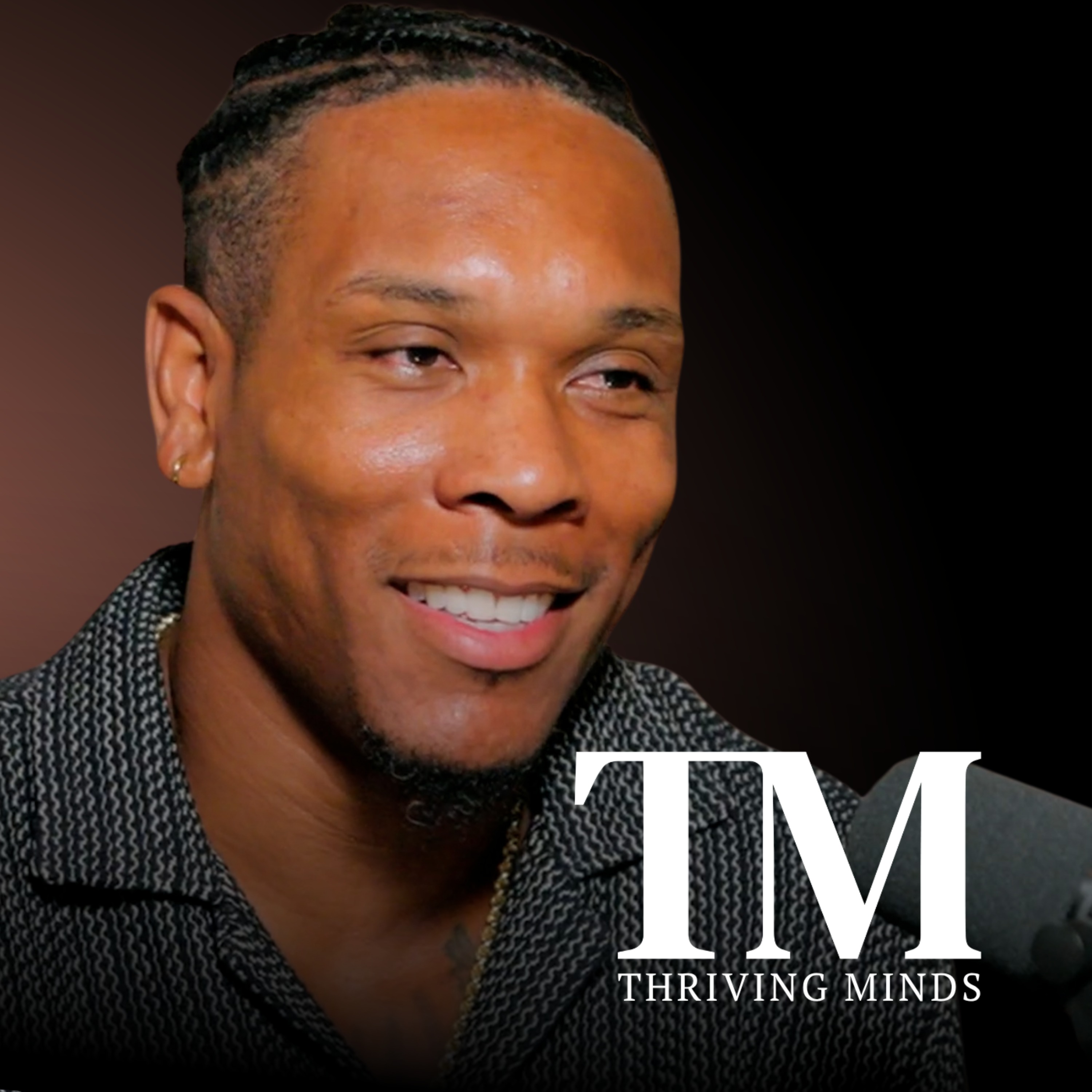
Daryl “BullyJuice” Williams explains how to get fit and stay disciplined using “find your why,” consistent training plans, high-protein nutrition, and recovery (sleep, hydration, warm-up/cool-down, ice baths). He argues exercise “bleeds” into other life areas and that results require both gym work and diet.
The episode features Daryl BullyJuice Williams, a former collegiate track athlete and U.S. Air Force veteran. He became a PTL (physical training leader) in the Air Force, later started YouTube (dog era, military era, then fitness content), and built a large online fitness community (10M YouTube subscribers, 3M+ Instagram followers, 16M+ followers across platforms).
Discipline = doing what needs to be done, not what you feel like. Motivation fades; a deeper why keeps you going. You can’t outwork a bad diet. Aim for habits over quick results (e.g., 30+ day challenges). High protein is central for fat loss; carbs fuel training; supplements should be secondary to food.
Air Force standards (no lateness, grooming rules). Training split examples (chest/shoulders, legs, back, arms/legs). Ice bath routine (about once weekly, ramping to ~20 minutes). Diet examples (chicken salad; “eyeballing” maintenance ranges instead of calorie counting).
Written by AI. May contain mistakes.
Learn how discipline shapes fitness goals and overall lifestyle.
“making exercise and healthy eating advice accessible to an audience of 10 million YouTube subscribers and over 3 million Instagram followers, gaining billions of video views.”
Explore the relationship between Daryl's personal life and his online persona.
“But my response is typically I'm a husband, I'm a father, and I'm a son as well.”
Discover how Daryl's military experience shaped his approach to discipline.
“Oh, I would say take the more natural way, right?”
Understand the standards of discipline learned in the Air Force and their applications.
“So my dad joined the Marine Corps and he served 20 years.”
How Daryl began creating fitness content while in the Air Force.
“So discipline is doing what needs to be done, in my opinion.”
A look at the evolution of Daryl's content from dogs to fitness.
“So I was passionate about fitness, obviously track.”
Discussing Daryl's growth as a content creator and community builder.
“And man, I would see people with 20 ,000, 100 ,000.”
Strategies for individuals struggling to find motivation to get fit.
“Talk to me about that root cause that instills that value in you, that perfectionism, that wanting to be one of the very best at whatever you're doing.”
The importance of having a personal reason for fitness beyond aesthetics.
“So if you start something, start working out, whatever the case may be, it's easy to, well, it's two types of people.”
Understanding the intrinsic motivations behind getting fit and staying disciplined.
“But if they don't continue after the summer, they need to find a deeper why, right?”
Why having a structured plan is crucial for maintaining a workout routine.
“So they are hooked into something the moment they see that this is beneficial to them.”
Insights on effective exercise routines for muscle gain and fat loss.
“You've been seeing advertisements about iFit.”
Balancing different forms of exercise and the importance of recovery.
“That's what I'm like known for the calisthenics hits and stuff.”
Learn how to push your limits to achieve fitness goals.
“If I want to take it from mile five to six, I got to push myself.”
Understand the crucial roles of warm-ups and cool downs in workouts.
“like to do is I like to do like prehab type exercises for whatever muscle that I'm working on.”
Discover why soreness is part of fitness and how to recover properly.
“Because I feel a lot of people think that, and I used to think like that before, that if I'm feeling sore, it's because I did something good the day before at the gym.”
Learn why sleep is vital for muscle recovery and overall health.
“Let's talk about sleep because a lot of people feel like sleep is just to recover your brain activity.”
Explore the benefits of cold therapy and other recovery methods.
“I started doing them back when I was in high school as a track athlete at the hotel.”
Get insights on nutrition strategies for fat loss and muscle gain.
“How should nutrition be if someone wants to lose fat?”
Understand how mindset affects your relationship with food and fitness.
“It's easier on your joints when you got more weight.”
Learn how to manage the psychological impact of calorie consumption after workouts.
“I just spent hours burning this amount of calories and I just ate it with this piece of cupcake or whatever.”
Discover the importance of carbohydrates for maintaining energy during workouts.
“But also, you know, my kids, they, my wife, she likes when I indulge with her.”
Understand the nuances of intermittent fasting and its effects on fitness routines.
“So for me, I would say some people avoid carbs altogether.”
Hear about the personal journey of giving up alcohol and its benefits for health.
“And what are the benefits that you've experienced?”
Explore the world of supplements and their role in a balanced diet.
“There's tons of supplements that are becoming increasingly popular.”
Gain insights into the use of peptides and steroids in fitness and their long-term effects.
“But I try to get some in every day when it's this hot, for sure.”
Learn strategies for managing negative feedback and comments on social media.
“opinions but i think in social media like in the world today people put these opinions on a pedestal and they think that they're right and they think it's just an opinion, right?”
Learn how to handle negative feedback in the digital age.
“Because I understand that even though I'm human, right?”
Discover the key to successful content creation.
“So you have 3 million, just over 3 million followers on Insta.”
Explore the pros and cons of various social media platforms.
“That was, for me, it was a spiritual journey.”
Understand different strategies for growing an online presence.
“And, you know, a lot of people on the way the algorithm works, like sometimes one person like go viral on short form, random platform, TikToks.”
Learn about the importance of addressing physical, mental, and spiritual health.
“So how often do you post on YouTube, Instagram, TikTok and Facebook?”
Reflect on personal sacrifices made in pursuit of a public career.
“Like I mentioned earlier, that mental fortitude for me taking an ice bath.”
Explore personal challenges and the journey towards self-improvement.
“Dedication, the same thing I tell people, it costs you nothing to do with my workouts, right?”
Learn how faith and personal reflection helped overcome personal challenges.
“And it was it's hard because it's not tangible thing.”
Explore the personal meaning of success and how to leave a legacy for future generations.
“Thinking about that version of yourself, thinking about your dad, how does that make you feel right now?”
Understand how family plays a crucial role in personal success and well-being.
“So I want them to know that, you know, I love them and I gave it my all.”
Discover the significance of being intentional in supporting loved ones.
“I slow down, and I ask her, what do you need from me?”
Get key advice on ignoring distractions to improve mental and spiritual health.
“If you had to compress all your knowledge, all of it, into one essential piece of advice that we all must implement in our daily lives, what would it be?”
Acknowledge the holistic approach to fitness, including mind and spirit.
“I feel like I got to know the person behind Bully Juice.”

Get the gist, explore an idea or ask about something said.
 Claude
On Thriving Minds with Alberto Zandi, what are the key points of this episode?
Searching your listeningAutomatic transcript. May contain errors.
0:00Listen, whatever you did, I'm going to make sure I'm a little bit stronger next time so you can't break me down like that. Live your life, make healthy decisions, and that will compound over time. How do you define discipline? So discipline is doing what needs to be done, not necessarily what you want to do. And sometimes you have to set feelings to the side and just do what needs to be done. There's a disconnection right now in between a lot of people that they want to be fit, but they just don't find that motivation to start. What would you say to that person? Daryl Bully Juice Williams is one of the world's most influential online fitness creators, making exercise and healthy eating advice accessible to an audience of 10 million YouTube subscribers and over 3 million Instagram followers, gaining billions of video views.
0:45He is a former collegiate track athlete and U.S. Air Force veteran who has built one of the largest fitness communities online, inspiring people to build healthier habits through discipline and removing excuses around time, money, confidence, and gym access. Exercise bleeds into other areas of your life, right? He's probably doing better at work. He's probably better with his family. You got more energy. You're happier. I have to push myself if I want to get better, right? And if that's your goal, if you're trying to look a way you've never looked before, you have to push past that limit. How should nutrition be if someone wants to lose fat?
1:21So in almost every question you're going to ask, I'm going to say high protein. Okay. Would you say to someone that they can get a six pack if that's a goal while eating carbs every day? Yeah, you need... Somebody was just writing some very nasty comments on Instagram. How do you deal with this stuff? We tend to heighten the not like, right? That affects you more than the like. Yeah. I got all the comments saying, quit making videos, get off the internet. Imagine if I listened. But for somebody that wants to make it big as a content creator, what is the greatest piece of advice that you would give them that you've learned throughout the years?
1:58I think the best creators are the ones that...
2:05Daryl, who are you and what is it that you do? So, I'm Daryl. That's what you refer to me as. But my response is typically I'm a husband, I'm a father, and I'm a son as well. Most people know me as Bully Juice, the fitness guru, entrepreneur. But deep down, I'm just like them. What is the difference in between the digital persona that you created, Bully Juice, and Daryl? So very similar. I am me. So many people that meet me, I've been out here and I've met a lot of people, right? So one thing I would hope that they would attest to is I'm the same as I am online and offline. just my persona, the Bully Juice persona is more of a heightened version of who I am.
2:54Why Bully Juice? How did you pick up that name? So originally, it comes from the word, the American bully, the dog, right? So I used to train dogs and breed them and put them in shows. And I started creating videos online about how to feed your dog or making dog beds from scratch and things of that nature. Interesting. For any dog owner listening to this, which I'm one of those, what is the best piece of advice that you would give us? Oh, I would say take the more natural way, right? And that might be pesticides to like, you know, keep the fleas off, try to use, you know, tea tree or natural elements that, you know, would help the dog's fur, coconut oil.
3:37Also feeding, right? The dogs are normal carnivore diet. It's easy to just, you know, get some dog food and things and that has its place. but uh you know my dog for example i had a dog that i kind of started channel around two years ago he died from uh splenic cancer and uh he had tumors and things of that nature and maybe it's because i reverted back to just feeding dog food like different dog food you never know so i say always take the natural route i want to get to know the human behind your digital persona Yeah. You spent some years in the Air Force. Talk to me about that experience. So that would have to start even before the Air Force.
4:23I grew up a military brat. So my dad joined the Marine Corps and he served 20 years. And obviously I grew up moving around from location to location. And I aspired to be like him. He changed my life in many ways. So So I decided to join the services as well. And I chose, well, actually, I wanted to be a Marine like him, but the tattoos on my chest weren't allowing me to get in at the time. Yeah. So they put a V-neck on me and it showed tattoos right here. And it was like, oh, you can't join. So in the same location, the Air Force recruiter was there. And as I was leaving, they're like, hey. You know, so I went, checked out with them and I joined the Air Force.
5:16So I did the Air Force for a contract. I enjoyed it. It definitely was something that I didn't know that I needed at the time, but I needed because it taught me discipline. And the discipline that I gained in the military is I still apply to this day. How would you define discipline? So discipline is doing what needs to be done, in my opinion. Not, you know, not necessarily what you want to do. And sometimes you have to set feelings to the side and just do what needs to be done rather than just going off of feelings. And how would they teach you discipline at the Air Force? That's a good question.
6:01So I don't think they can necessarily teach you discipline. I think it's just something that you will pick up because some people, they get kicked out of the military, right? Because they don't really meet the standards for whatever reason. So discipline is one of those things where in the military, you're either going to get it or you're not going to get it. And it's not something that they can necessarily teach you. You just pick it up along the way because of the things that's required of you. What are the standards? All the standards are what you're told to do. You got to do no matter how you feel.
6:37For example, you're not supposed to be late. You can't just fall asleep on duty. I have to make sure my pockets are buttoned. I have to make sure my shirt's tucked in. My pants are blouse. My shoestrings are tied and tucked. Those are the standards. You have to make sure you're shaved before you come to work, et cetera, et cetera. There's a handbook that we're given and all the rules in there are laid out and it's no gray area. It's this or you're in trouble. Are there any rules that you intrinsically didn't agree with? Honestly, not necessarily. I would say even before that, I came from a collegiate track as a collegiate track athlete.
7:23You know, you follow rules, right? If you're going to be in college on a team, then if the coach says this, then that's what it is. Right. So you even develop a level of discipline as an athlete in school as well. So when I joined the Air Force, I was also older. I had already graduated school. So I was on the older side. I wasn't, you know, 18, 19 coming out of high school, making a lot of wrong choices. I was married, too. So I was already older and more mature. and so it was not that big of a deal like i know the military is serious right and they say hey these are the rules so i followed them and what happens after the air force what do you do so um during the air force i actually my wife convinced me to start creating youtube videos and that was one thing that i was like reluctant to do at first i'm like no i don't that's kind of weird i don't want to talk to the camera, right?
8:22But I took her advice and I'm glad I did. Obviously, she's glad that I did. And I started creating videos. And during the Air Force as well, I became a PTL, a physical training leader. So I was passionate about fitness, obviously track. I've always been involved in fitness. So why not, you know, take on that position as an instructor to help people stay in shape or get back in shape. If you failed your PT test, you come see me, get you back in shape, get you back to up to standards to pass, right? Because if you fail again, you get kicked out. So it was a serious job and I took serious. And I started creating videos centered around getting in shape, staying in shape, and just overall just being a better, healthier version of you.
9:11And when I got out, I continued that. Beautiful. Can you briefly explain some of those videos? Oh, man. So I went through three different phases of videos. Essentially, it was the dog era where I created video centered around dogs. And then it was the military era when I created video centered around what's it like to be in the military? What's it like to go to MEPs, Military Entrance Processing Station? What's it like to take a PT test or basic training? I did videos like that. I kind of had a comedic element to it, but it was always like a moral at the end. I tried to give you the real, which the real was it sucks, right?
9:53But I also tried to give you the positive aspect to it so that you know that, hey, it sucks. But now guess what? You don't have to wear that anymore. You don't have to do that anymore. You've made it to the next level. And then after that, it was the actual fitness content. And it was follow along workouts. you know me in my garage sweating you know doing push-ups jumping jacks etc i mean now you do have over 16 million followers across platforms when you were starting did you ever think that you would reach this amount of people yes and no um i remember 30 you know subscribers and just talking to them, right?
10:37And man, I would see people with 20 ,000, 100 ,000. I'd be like, wow, that's so many followers. You know, like that's so many, like 500 followers, 500 ,000, 5 million, right? It's a big gap and it's hard to really see yourself at that point. But one thing that I always knew and I always felt, and maybe we'll get on this later, that I was going to, whatever I was going to do, I was going to be really good at it. You know, whatever it is. So that may have come from a competitive mindset as well. I always want to do the best that I can do. So I knew that although I see that gap and it seems like it's very far, I knew that exponential growth could shorten that gap fairly quickly.
11:25Talk to me about that root cause that instills that value in you, that perfectionism, that wanting to be one of the very best at whatever you're doing. Well, I first off believe it comes from my relationship with God, right? Wherever I've gone, like in the past, I may not have understood what it was guiding me. But as I've gotten older and I've developed more of a close relationship with God, I know every step of the way, these pivotal moments, He's been guiding me, right? So that connection, because we all have the Holy Spirit, so the Holy Spirit is a part of Him, which is perfect. So it's that peace that I believe that exists in me that is close to perfection.
12:12What do you think that exists in you and not in somebody else? No, I believe it exists in other people as well. I believe that we're distracted and we might not be connected to it because of the world and different things, social media or whatever the case may be. So when you're distracted, you can't sense it as much. And when you are connected to what he provides for us to be connected to him, then you can hear him better. I mean, when you were at the Air Force, you were either training people to get fit or people that were once fit, but not fit anymore. And you wanted to get them fit again. I think there's a disconnection right now in between a lot of people that they want to be fit, but they just don't find that motivation to start.
13:00What would you say to that person? I always tell people to find their why. Right. So if you start something, start working out, whatever the case may be, it's easy to, well, it's two types of people. It's people that get the results, right? And they stick with it now because they got the results. They like how they look. They like how they feel, whatever the case may be. And it's other people that get the results. And now they say, okay, now I can stop now, right? That's the finish line. So most people that have that why, you'll never stop. What is your why? You could be 60 years old and your why is, I want to play with my grandkids.
13:38I want to be able to run with them at the park, right? If that's your why, why would you stop? Some people, why might be, I just want to stay healthy. I want to be able to move pain free, whatever the case may be. So I think if you find a why, that'll keep you going, even when motivation isn't there. What if someone's why is just to get fit for summer? What would you say to that person? I would tell them that's fine, right? But if they don't continue after the summer, they need to find a deeper why, right? Right. Why do you want to get fit for the summer? Is it because we're going to the beach and everybody else will be looking at me?
14:19So is it really a intrinsic thing or is it more so motivated by external factors and what everybody else is? See, it's very, you know, I used to be into, you know, how I look, how, you know, those type of things, more of the attributes, the physical attributes. But I've graduated to more of being just capable, right? And I think if you want to be capable, you want to feel good, you want to be able to move, run, jump, do it wherever the case may be, the looks will come with it. What are the benefits that anybody would feel and experience at the physical level but also psychological level if you integrate exercise into your everyday life?
15:02That's a great question. So one of my philosophies is always exercise bleeds into other areas of your life. Right. You start you see this guy starts working out. He gets in shape. Right. Guess what? He's probably doing better at work. Right. He's probably getting up. He's probably better with his family. It bleeds into the other aspects. Why? You got more energy. You you're happier. Right. So it's really it's science behind people start working out and they start feeling better. They start living life better because we're meant to move, right? When we were hunter-gatherers, right, we were all constantly moving.
15:42We weren't sitting in a building at a chair typing on something. We were climbing trees. We were hunting. We were running, grabbing water and fetching. We were moving, and we still want to move. Let's say that the people listening to our episode right now are convinced that they need to exercise. So then they took the first step. I'm going to go to the gym. How do we get them to stay? To stay in the gym. So after you found your why, you need a plan as well. It's many different factors why people start and then stop. They start and they stop. And I'm familiar with many of them, right? So once you have a why, it'll keep you going.
16:27But also once you have a plan, it'll make sense. If I go in a gym and I'm wasting my time because I don't know what I'm doing, I'm not going to have a good experience, right? So I'm not going to want to keep coming back for more. It's like I went in there yesterday. It was a waste of my time. Why would I go back today? So you need a plan, right? And that plan may be getting a personal trainer. More people with a personal trainer have more success and they tend to stick with things more often, right? Or there's programs that you can get involved with. I'm also an iFit trainer. So I got trained for iFit and we have personal coaches on mobile apps that can keep you going and keep you accountable.
17:07So my goal, even with I do 45 day challenges and it's something to do every single day. And the reason is because I want to create a habit with you. If you make it a habit, you make it a part of your lifestyle, you'll keep it going. So if you stick with it longer than 30 days and you're and you have a good experience, you most likely won't stop. Interesting. So you need to do it for over 30 days and then it becomes a habit. Then it becomes a habit like anything else. And then a lot of people are very results driven. So they are hooked into something the moment they see that this is beneficial to them.
17:43How long does it take for somebody to start seeing results in their body? That's going to vary. That's going to vary from person to person and how locked in you are, right? So if you just start going to the gym, that's just one little small piece of the puzzle. So you still have to change up what you're doing in the kitchen. You still have to make sure you're recovering and getting sleep, drinking enough water. There's a list of things that will determine. If you do all those things, I guarantee you the results will come. But many people aren't really going hard and locked in on everything. They just think, I'm going to go in and start working out hard.
18:18Well, you can't outwork a bad diet. Yeah, that's so true. I see, unfortunately, a lot of people going to the gym one hour every day, but the other 23 hours of the day, they're not eating well, not sleeping enough. So it defeats the whole purpose. Exactly.
18:38Let's first focus on working out. So for someone listening to the episode right now that wants to start going to the gym this week, what should they do? So if somebody they want to get started, I would say sit down, start right now. Why? Find your why. Why do you want to get started? Is it you want to look better? You want to feel better? You haven't had good energy. Maybe it's a job where you got to lift stuff. You got to move. Maybe you're older and you want to be able to, you know, do more things with your kids. Pick up your grandkids. All right. Find your why. Next is let's develop a plan.
19:18What kind of working out you want to do? There's so many different categories of working out. Some people consider working out, going outside for a jog, maybe lifting some weights, maybe calisthenics, maybe Pilates. There's so many different ways you can work out. What do you want to do? Right. And what what's your goals? Let's set some goals working out. Some people might say, I want to lose weight. I want to build muscle. I want to see my abs for the first time. Let's find a goal and then decide what route we're going to do. Execute, right? So maybe I'm going to contact someone or join a plan.
19:54You've been seeing advertisements about iFit. Why don't you go ahead and join, et cetera, et cetera. Let's say somebody wants to gain muscle. What are the best exercises or what's the best routine or program in order to achieve that? So overall, the best exercises is going to be compound lifts, right? If you want to put on some muscle. and there's different rep ranges we can get into. We can get into, you know, the five by five. We can get into more of a hypertrophy type of eight to 12. Like there's a whole lot of numbers we can really throw at you. But really, I think the basis is you want to lift some weight and you want to do some compound movements, your bench presses, your squats.
20:36Those are compound movements. You're going to work different muscles at one time, right? And then I always have people throwing some isolation movements at the end, auxiliary movements to complement those compound movements. And push-pull legs, or you can isolate and do upper, lower, or you can do full body. There's many different ways you can really get into it. That's why you want to decide what you want to do. Come up with a plan. Also, what kind of hours do you have in a day? Sometimes my job schedule may lean to I could really only get three workouts in per week. So you might want to do push-pull legs.
21:15So you might want to do three different full body routines. Or three workouts per week enough if you want to gain muscle? Oh, yeah. Oh, yeah. Again, what are you doing outside the gym? So if you're going to be making sure your diet is dialed in, your macros are locked in, you're getting your fats, your protein, your carbs, a balanced diet each day. Yeah, three is enough. Is it harder to put on muscle than losing fat? I would say they have equal, depending on who you are, some people put on muscle easy. And more muscle that you do have, the faster you'll burn fat. So it varies on your goals, your body type, your lifestyle in general.
22:00What are the best exercises to lose fat? To lose fat? Yeah. I like HIIT, HIIT cardio. HIIT can be pretty like intense on your body, right? So some people might just walk. You can walk 30 minutes a day at 45 minutes or so. Get a zone two walking, you know, get your heart rate going and sustain that, lift cardio. that would be one of my favorites for somebody that might want to work out as well because sometimes HIIT training or running like miles can take away from your lifting weights as well that makes sense so it's more taxing on nervous system versus you can walk every day at a nice pace not like a stroll in the park but at a brisk pace to really get your heart rate going that'll help you lose weight what type of cardio do you do I'm right now I'm running so um I do it all.
22:58You know, I enjoy hit cardio the most. That's what I'm like known for the calisthenics hits and stuff. Recently, I wanted to run my first marathon, right? So I've been doing a lot more mileage. Do you need to get slimmer to run a marathon? Not necessarily. I think it'll come because the more miles I'll get, the more calories I'm burning. I have to consume a lot more to try to maintain my muscle mass but um i have slimmed up a little bit because of that but it comes with the territory in an ideal week let's say that i can work out five or six times a week what would that week look like so monday to saturday or monday to sunday what should i do each day so i want to put on muscle lose weight and feel energetic and balanced right so on let's start with monday right monday will be a day monday is well known for chest day right everybody's in chest.
23:51So I would hit chest. I would couple it with shoulders. The next day, instead of doing an upper body day, I may, and I like to strategically place a certain body part after my leg day. So my leg day afterwards, you know, after leg day, your test levels are higher. Your, you know, your test levels fluctuate, but it's a little bit higher after leg day. So I like to place whatever body part I want to work on the most after leg day. Shoulders and chest is done. We're hitting legs on Tuesday. And on Wednesday, let's hit back, right? Work on our back. That gave the upper body a little bit of rest. Maybe finish off with another, you know, leg day.
24:34Maybe focus on quads or maybe hamstrings, depending on what you did Tuesday. And add some arms in the mix and then do some. And every day I would do at least maybe three days or four days. I would do cardio after I lift. Right. So with some people that might look like walking, if I'm running, I would do it the same day, but I would separate it. So I might do cardio in the morning and in the afternoon I'll come back and do and do my lift. Why? Because I want to separate enough time for my nervous system to kind of like reboot. Because if I do it at the same time, I just finished doing a 40-minute run, I'm going to be taxed.
25:13I'm not going to be able to really go in a gym and push like I want to. So it gives me time to replenish what I just expelled and get back in the swing of things. But if I'm just like want to get in shape, you don't want to run like that, I would just do cardio maybe 20, 30 minutes after I just worked out. And then you need at least one day a week to recover. One day. At least one. Yeah. So one day out of the week, I prefer six days on, one day off. Or whether that's three days on, one day off, it is still equal to six days a week training, one day off. And that one day off, I get to relax. Whatever you want to do.
25:52You want to go hit the sauna. You want to take an ice bath or you want to get a deep tissue massage. Whatever you want to do, do something that's going to recover. Or you can do a little bit of walk on a walk, right? Stretch. stretch that's active recovery versus passive recovery it's just we're gonna do nothing a day when we are lifting weights how long should we be do that how long should we be doing that so is it an hour 45 minutes every day oh it depends right so you can add supersets or you know drop sets things of that nature that can decrease that time so if i have six different exercises i could turn that into instead of six different exercises i could turn them into two couple and two that's three, right?
26:35Depending on what you're doing and that'll decrease the time that I'm resting, right? So I can get in and out the gym versus if you're lifting really heavy, maybe you're not going to be super setting, right? So it might take an hour, hour and a half. It varies on person to person and what you're doing. How tired should we feel after working? Because a lot of people feel like if they don't feel very exhausted, they didn't really put in the work. Yeah. Yeah. No, you should push yourself. Right. You should feel like, OK, I got to work out and it shouldn't you shouldn't be able to just walk out and, you know, not feel like you actually pushed yourself.
27:14That's that's what the intensity is. So it's hard to really measure. Some people might say you want to leave maybe one or two reps in the tank. Right. for each set if you're just finishing and you're dropping a weight and you're just like ah you're probably not gonna get better you know you're just gonna be wasting your time spinning your wheels in the sand so you want to actually finish like you did something at least i like to for sure interesting so after so many years working out you still reach that physical level of pain it depends on what i'm doing and depends on like i go through different seasons in my life.
27:53So now I'm back on like training for the marathon, right? I have to push myself if I want to get better, right? If I want to take it from mile five to six, I got to push myself. I'm taking myself somewhere that I've never been. And if that's your goal, if you're trying to look a way you've never looked before, you have to push past that limit. Interesting. Are there any exercises that you wouldn't recommend anybody to do? because it may be bad for the back or I don't know. Not necessarily. I think almost anything could be done safely. Like I'm not one of those guys that's like, oh, stay away from this exercise because X, Y, Z, right?
28:32I think anything could be done safely. Anything could be used as a tool, right? I think it varies from person to person, body type. You know, I'm not going to say incline is worse than, you know, a flat bench or I think everything can be used as a tool. As we get older, how should we adapt our workout program? For me, you know, I'll be 37 this year. You know, I just had a conversation with the CEO of it. And one of the things I found out is he was like, he just get in, get out. He's busy, right? I'm like, your knees are hurting because you're not warming up, right? You should warm up when you get in the gym.
29:16He's like, I know, I just he don't have the time. Right. So I think taking like five, 10 minutes to warm your body up will help you prevent, you know, injuries that help increase that longevity and also cooling down. I think those are two things people don't do. I think it's not a big deal, but it pays off in the end on your joint health, your ligaments, et cetera, et cetera. warm up before you you put the work in and then cool down afterwards you know walk five minutes stretch get out of there how should we warm up so whatever muscle you're working so it's cool to like do some squats but if you're doing bench press maybe you should do some push-ups instead so whatever muscle that you're actually working you should warm up around that and what i typically like to do is I like to do like prehab type exercises for whatever muscle that I'm working on.
30:12So I can kind of couple, you know, injury prevention workouts, as well as warm up at the same time. So I'm like killing two birds with one stone, so to speak. So that's what I recommend whatever workout that you're doing, or whatever muscle group you're working, warm that up first. If it's squat day, then warm up your legs predominantly. For how long? Five, 10 minutes goes a long way. And each time, you know, each time you actually go to do a set, right, or you switch from, you know, different exercises, do a warm-up set. So if you're doing squats, you know you can squat 315. Don't put 315 on a bar and start squatting.
30:53Start with 135. Move up slowly, 185, and then slowly increase. So even if you warm up fully in the beginning, each exercise I like to warm up. And what does a good cool down look like and why should we do it? So a good cool down could look like you just walking for maybe three to five minutes and then stretching, you know, whatever the muscle that you was working. Touch your toes, you know, grab your feet, stretch your quads, stretch all the muscles that you put that work in. Hold each for 20, 30 seconds goes a long way. And we should because it prevents injuries and it prepares you for the next workout.
31:36Right. You help decrease soreness. to help prevent injuries. So that's why you should. Is feeling sore bad? Because I feel a lot of people think that, and I used to think like that before, that if I'm feeling sore, it's because I did something good the day before at the gym. Yeah. No, you should feel sore. I mean, you're creating micro tears in the muscle, and obviously it's going to rebuild itself and say, listen, whatever you did, I'm going to make sure I'm a little bit stronger next time so you can't break me down like that. And it's a good thing. I mean, if you feel like it's pain or it's prolonged soreness, then typically that might mean I'm not, you know, hydrated or I'm not getting the proper nutrition.
32:18If it's prolonged or maybe it's a lingering injury. I feel like the area about fitness that most people don't know about is recovery. What is recovery to you? Recovery is just, you know, repairing what you just, the stress you just put on the muscle. So that encompasses sleep, right? I think sleep is probably the biggest thing that people miss. Sleep, staying hydrated, getting your protein back in, making sure you're, and not just protein, but balancing your hormones with your fats, getting your carbs in. If you're hitting all those numbers, that'll help you recover and get ready for the next day workout.
33:01You could also get a massage. You can get deep tissue massage. You can do an ice bath, warm Epsom salt soap. These are all ways to help you recover and get ready for the next workout. Let's talk about sleep because a lot of people feel like sleep is just to recover your brain activity. How does a good night's sleep or also a bad night's sleep affect our body? Well, your central nervous system, for one, it's all like regulating, repairing itself when you sleep. Your body, just as well as your brain, your body's repairing. Your muscles are repairing. So athletes, I mean, LeBron James, he gets like 16 hours of sleep or something like that.
33:43He gets something massive. He takes naps and stuff like that. So sleep was one thing I never really took serious, especially when I was competing. and now you know all the research come out sleep is important and that's when your body's repairing itself so if you're not going to be able to you might be sore if you're not you know getting sleep you're not getting stronger you know the guys that's been working out for years they're not getting better but they're playing video games all night they're eating you know trash etc etc so sleep goes a long way just as you have a workout program do you have a sleep program I do not.
34:21That's interesting. Don't have a sleep program. I wonder if there's one out there. You know, my recommendation would be to, you know, get at least eight hours if you're working out. I think you can you can do seven. The more like nine, ten, I think after ten, it's like, eh, might be sleeping too much. But about my goal is eight. what about uh cold punches on us foam rolling all of these you know wellness hacks that are becoming very popular right now would you recommend them yeah um i think a lot of it comes down to uh belief like if you believe that it's working then it can if you don't then it may not interesting placebos oh yeah it's science you know around um ice baths cold plunges helping right i mean i I started doing them back when I was in high school as a track athlete at the hotel.
35:18After a track meet, you know, I'm in the tub at the hotel getting ice from the hallway, plunging, helping you decrease that soreness. And I was taught that it constricts the muscle, forcing the blood out. Then when it warms back up, that's where the magic happens. The fresh blood with fresh nutrients come back into the muscle, helping it heal and recover. Obviously, throughout college, we took ice plunge baths all the time. And even afterwards, like as a, you know, just a normal fitness guy, I still take ice baths. How often? I like to shoot once a week. Yeah. I like to shoot for once a week, even outside of like the recovery, so to speak, the mental fortitude for me.
36:08Yeah. How long are you in there for? 20 minutes. Yeah. did you gradually ramp up to 20 minutes? Oh, yeah. So if I don't do it for a while, I typically, maybe I get in there for like five, 10 minutes and I'm like, all right, got to get out. And then I work my way back up. But after, I find that after 10 minutes, you know, you're kind of numb. You don't feel anything. You kind of focus. I'm locked in and it's easy to go from 10 to 20 for me. I don't typically go much past that. Does it get easier with time? Oh yeah, for sure. The more I do it, if you do it consistently, it's easy. I've never done like, you know, some of these guys do it for like 60 days or like every day for 90 days.
36:53I've never done that. But I would imagine those guys are like, it's easy when they get to day 60.
37:03Let's think about nutrition and supplementation. How should nutrition be if someone wants to lose fat? What should they eat or not eat? High protein. So in almost every question you're going to ask, I'm going to say high protein. If you're trying to lose weight, think about cutting some of the carbs and some of the calories down underneath your maintenance. Well, you know, obviously it's going to come down to their body weight, how much they weigh, et cetera, et cetera. And I also like to work in ranges. So I don't count calories per se. I eat either maintenance or above. And I always keep my protein high.
37:41So if you want to lose weight, then I would cut down on your calories, increase your protein. And also, if you want to gain weight, you would do the opposite. You want to be in a surplus. What are your favorite either types of foods or recipes to lose weight, to lose fat, to lose fat? I like chicken salad because, you know, you got the chicken and then you got the salad. So the calories are going to be real low, but the protein is going to be high. So that'd be one of my recommendations. What I typically do is I'll cook like a bunch of chicken maybe every few days. And that chicken is what I'll use for, you know, breakfast, lunch, and dinner.
38:22You know, I really don't get tired of it. I just switch it up, chicken and salad, chicken and rice, chicken and sweet potato, and just mix and match. And what about bulking? What should everybody eat if they want to bulk, they want to get bigger? For the type of food, really, I wouldn't say it's a certain recommendation one way or the other. You just want to be in a surplus. So you want your calories a little bit higher. So, you know, some people eating those mass protein shakes or, you know, still I'm going to say chicken, steak. Those are staples because you don't want to just have empty calories.
38:55You want it to be, you know, quality. Right. So as long as you're in a surplus, you're going to gain weight. And as long as you're in a deficit, you'll lose weight. What is the point of being on a cut period and then on a bulk period and then you go back on that cut period? Shouldn't we all achieve our ideal weight and then just be on a maintenance forever, so to speak? Yeah, I mean, that would be my recommendation, especially for those of you that aren't bodybuilders. Everybody's not a bodybuilder or strives to be an IFBB pro, right? So the normal person, I don't think you necessarily have to bulk, right?
39:33Like if you're getting into this like heavy, then bulking has its benefits. It's easier on your joints when you got more weight. You can lift more weight when you weigh more, et cetera. So those might be reasons why people or some people would give themselves like a break from eating maintenance or cutting. And so they'll go through like a bulk period. So you feel better. You just eat whatever you want. But I like to keep it maintenance. You know, stay ready so you don't ever got to get ready. You mentioned that you don't count calories. Why is that? Well, because, you know, I got a family. My wife, she likes to go out and eat.
40:13I got to take on date nights. And what I like to do is I just, I know I have before. So I know how to eyeball where I'm at, that range where I'm at. So I think counting and tracking every little thing, it becomes an extra job, you know, and that's not realistic for most people. Because again, most people aren't trying to be a pro bodybuilder, right? It's going to be healthy. You want to be a better you. So that might take you starting to track in the beginning with any app out there. And then once you know, you have that range, maybe you just learn that range. You no longer have to do that. Aside from it being extra work, I also believe that it can also be not so great for your mental health.
40:57Because you're building a prison of your own, right? Yeah, for sure. That's what I mean. Like if you're not an IFBB pro, like it's, you know, I mean, what's the risk versus reward here? You know, just live your life, make healthy decisions, and that will compound over time. And do you think that looking good, having, in the case of a man, a six-pack equals being healthy? Or sometimes it's not the same thing? No, it's not always the same. You know, it's been, you know, people that have had six packs and not have been the healthiest. Right. We see people dying all the time that are in the best shape.
41:36So I don't think it's always an indication of what's going on on the inside. Did you ever have a bad relationship with food? No, I never struggled with food or had like a bad relationship. I say for a while I would get maybe guilty if I would eat a certain item, you know. and I kind of had to kind of snap out of that. I would be thinking about the calories all the time. I just spent hours burning this amount of calories and I just ate it with this piece of cupcake or whatever. And that stays in your mind? Yeah, it would, but I don't really operate like that anymore. And how did you overcome that?
42:15I would say overall just understanding me, my mind, strengthening the mind, feeding your mind like we talked about before. the more you learn and and just moving on like i understand like we're all different right uh we're all different but we're all connected and we go through the same experiences but in different ways and so learning those different things helped me kind of be calm about a lot of the stuff that really don't matter do you do cheat meals or cheat days or you're just you know eating a little bit of here and there when you want? I would say to an extent I'll do like cheap meals, so to speak.
42:56For example, like, you know, I don't eat dessert like all the time. Not that I don't necessarily like want it or don't want it. That's relevant. That's what a discipline comes into play, right? Because I still like to, you know, be healthy. I like to be in shape. I like to move and eating whatever just doesn't fit that type of lifestyle. But also, you know, my kids, they, my wife, she likes when I indulge with her. She's only happy if she eats the dessert and I eat it with her. My partner is the same. We should get together. So, you know, I tend to not be as strenuous because if I'm strenuous as a father, right, it kind of can flow to everybody else in the house, you know, so I'm kind of relaxed when it comes to that.
43:41I don't have like cheap days, so to speak, cheap meals, but I'm typically locked in. And what is your relationship with sugar? With sugar? I'm not a sugar guy. I know it's not that great for you, so I avoid it. But here and there, if I go out to eat with my wife, I won't worry about the sugar. But I eat it so less, not often, that I don't worry about it. What about carbs? Carbs? Yeah. Carbs is good energy-wise. You know, I'm training for a marathon, so carbs are not going to be bad with me. I do so much. So you got to think I'm working out, I'm running. Sometimes I'm filming workout videos. I'm burning a lot of calories a day and I'm using a lot of energy.
44:25So I don't really struggle with carbs being an issue. Would you say to someone that they can get a six pack if that's their goal while eating carbs every day? Yeah, you need carbs. You need a certain level of, I would say, depending on your body weight, keep it under a certain threshold. You don't have to count per se. Some people may count starting out because you have no idea what the portions are. My wife likes to fill her bowl up with oatmeal, and I'm like, I want a fourth of that. So that's too much oatmeal for her to eat, too many carbs, right? So for what you would need, what your body would consume.
45:05So for me, I would say some people avoid carbs altogether. I think you need carbs to fuel like a really good workout. Just don't over consume them. Keep it relative to what you need. How can we know how much carbs we need? I will find your body weight. Whatever your body weight is, there's formulas to calculate how many carbs you should get, protein, and what fats you should get. I shoot for each of my plates to be 30%, 40 % protein, about, I would say, 30%, 40 % carbs, and then the rest, fats. what what sources of carbs do you eat what types of carbs i like sweet potato i like rice um in the mornings i like oatmeal grits things of that nature um and for protein you know i like the chicken the steaks for fats i like nuts or avocados yeah how many times do you produce that three times?
46:11I eat closer to like four times a day, four with like snacks. And what are your views on intermittent fasting? I like it. I like it when I'm training for different stuff. It doesn't necessarily fit. Like I've been running more, so I can't really afford to intermittent fast. I'm going to lose a lot of weight and I won't have energy for the run that I do in the morning but uh typically management and fasting i like to eat uh when i can i would eat when you know the sun's the highest it's about 12 o 'clock i'm not hungry right i just drink water kind of give my body digestive system rest from consuming and then i'll start to eat but since i've been running and doing more stuff can't really afford to do that do you drink coffee I used to.
47:00You gave up coffee? Yeah. Why? Well, just the things, you know, you hear about the caffeine. I'm sensitive to stimulus in general. So I take my sleep serious and the caffeine affects my sleep. So if I drink coffee, and I love coffee. So I just stopped doing it because I want a better relationship with sleep. And it affects my sleep. I'm one of those people that's affected by caffeine. What about alcohol? Do you drink alcohol? I don't. I used to, a lot. When did you give up alcohol? I would say about two years ago, I haven't had a sip or drink at all. It started out like I wanted to go like 30 days without it.
47:44And then I went 60 days. And then I was like, oh, like I said, I'm competitive. I'm like, well, I'm gonna go 90 days. And now it's like, I don't want to give up that streak. Not that I'll never drink ever again. I just haven't. And what are the benefits that you've experienced? From not drinking? Yeah. I mean, I just feel better, honestly. Obviously, I don't have those issues where I'm waking up with a hangover or I'm getting dehydrated, having to rehydrate. I just don't have those issues. And I know the benefits to, you know, not drinking. You know, you're increasing estrogen when you're drinking.
48:23you're causing your body to be dehydrated, et cetera, et cetera. So I think as a fitness person, it's beneficial not to. What would you say to the average person? Would you advise them not to drink? Not necessarily. I think different people, you know, that makes you happy, then do your thing. I would say to definitely be cognizant of it, be balanced with it, you know, every day, probably not, You know, on occasion or once a week, you want to do your thing. And yeah, or some people do the glass of wine here and there. I don't think that'll hurt. I think overconsumption of it is the issue. Let's talk about supplements.
49:04There's tons of supplements that are becoming increasingly popular. Creatine, protein shakes, peptides, glutamine, you name it. Yeah. What do you think about supplements and which ones should the average person take? I think supplements should be supplemental to your diet. So you should be getting what you need primarily from the food that you're eating. And there's a few that I would say that are not bad. Right now, I barely do protein. And that's just, I just take breaks here and there from doing it because of my organs. I'd be scared about anything, you know what I mean? In terms of over-consuming creatine and the information out there, it's overload information.
49:49Like creatine is beneficial, but you got to be drinking enough water and you shouldn't you shouldn't take too much of it. It's hard on your kidneys, etc. So creatine, I think you can do creatine if you're responsible protein, you know, some collagen or or multivitamin, things of that nature. But it's collagen good for just your your bones, your ligaments, things of that nature to help strengthen those and help. move and groove the joints. If I went to your kitchen right now and I would open a supplement cupboard, what would I see? You'll see a glass filled with protein, with a label that says protein, because my wife takes the containers out of everything and pour it in these nice little glasses.
50:39And you'll see some electrolytes in there, like the little electrolyte drinks. And that is probably all at this moment. Protein and electrolytes. Yeah. How often do you take electrolytes? Right now, you know, I stay in Texas. It's 107 degrees. And I've been running. Sometimes if I have the time, it's middle of the day I'm running. I have a four-car garage gym that doesn't have an AC. It's outside. So I typically been taking it every day, trying to, you know, get that in. I also like natural sources of electrolytes. So I might drink some coconut water instead of actually taking electrolyte supplements.
51:23Like I said, get it natural as you can. That's always my philosophy. But I try to get some in every day when it's this hot, for sure. Peptides are becoming increasingly popular. Should people take peptides? um i'm not i'm not uh into the peptides personally um because i think there's not much um data out there right i think we still got a long way to to learn about peptides and like i said i'm always a guy like well in 10 years you know what are they going to say about peptides like are they gonna is it going to be good or is it going to be bad so maybe in 10 years i'll have a different answer but right now i like to steer clear of something that's like taboo you don't understand it what about steroids yeah i'm i'm more scared with the steroids thing like uh there's been moments where like when i was in college right i did a research paper um talking about like steroids or or performance enhancement drugs in general and i think the thing is especially with like athletes, you get tempted because it's like almost like you can get another edge.
52:39Right. But I think even with the fitness industry, you're tempted because you're like, can this take me from this to the next level? But my concern is always the tradeoff. Right. What's going to happen in five, 10 years from what I gain now? So when I push anything, I tell people to think about the longevity repercussions, not just the temporary, you know, pleasures of it. Do you see a lot of famous people that you would be able to recognize and say they're on steroids? No, I try not to do that for multiple reasons. When I first started like creating content and I was, I was lifting heavy, I was doing a lot of stuff.
53:22I got accused of taking steroids like often. Right. And to some people, I probably looked like I was on steroids. And it would affect me in a way of like, dang, man, I'm working hard. And I had to grow through that journey. Now that I have the subscribers and the platform that I do have now, I can handle it. But you got to think, when I had 5 ,000, I went from 5 to 100 ,000. 100 the 100 000 you know opinions coming at you is different than the 5 000 so it would affect me in a way of like dang like they think i'm lying or whatever the case may be like i'm telling the truth and you know these people think i'm lying so i would not do that to to someone random you know like that's their business they want to do what they want to do and i gotta have my own opinions but i think in social media like in the world today people put these opinions on a pedestal and they think that they're right and they think it's just an opinion, right?
54:23So I wouldn't project something like that on anyone because I wouldn't have proof. How did you deal with those comments? And I'm sure you're still dealing with them right now because I was discussing this morning with probably one of the best nutritionists in Europe that came to the podcast very recently and somebody was just writing some very nasty comments on an Instagram post. How do you deal with this stuff? Well, I remember the first time I received like a lot of negative comments. I had around 10 ,000 followers on YouTube and I had my first viral video. and it when you go viral obviously it brings in back then the algorithm was different viral meant your videos reached a new audience like new people that just discovered you right so it's going to be people that get a chance to meet you they're going to like you and it's going to be the opposite people going to meet you and not like you and we tend to heighten the not like right that affects you more than the like yeah um and there's way more people that like you but you tend to kind of lean into the ones that stand out the ones that don't like you and i i woke up in the morning and i rolled over i grabbed my phone and i saw this negative comment that was the first thing i saw when i opened my eyes and i looked at my phone and that affected the rest of my day.
55:57And after a while, I turned my notifications off on my phone, right? Because I understand that even though I'm human, right? And I could not agree with whatever that comment is, it'll still affect the rest of your day. So I had to grow into, I mean, now comments don't affect me at all, you know, but they used to when I first started this journey of content creation. But now I understand that it doesn't come from a place of like that person probably they don't know me. So they don't necessarily like not like me. They're probably going through something themselves. So really, it's like a reflection of what they're going to through themselves, because I don't know anyone that's doing well, that's happy, that's in a good mood that would drop a nasty negative comment.
56:50That's all right. you know so did you ever engage with the conversation did you ever reply no um not really i may have here and there with a comment but you can't beat the internet like you can't overly and get engaged in it i'm more so a type of person that i'm not going to give you that energy that you just gave me right you give me the energy i'm gonna absorb it and i'm gonna turn into what i want it to be right fuel to my fire um i got all the comments saying quit making videos, get off the internet, et cetera, et cetera. Imagine if I listened.
57:28I want the audience to understand, especially the people that don't know you, the size of your audience. So you have 3 million, just over 3 million followers on Insta. How many do you have on YouTube? How many on TikTok? So I have 3.4 million on Instagram. I have 2 million on TikTok, 10.3 million on YouTube, and like 1.5 million on Facebook. This is crazy. For somebody that wants to make it big as a content creator, what is the greatest piece of advice that you would give them that you've learned throughout the years? That's a good question. I used to get approached a lot by people like around me when I first started creating content, especially I was in the military, right?
58:12So a lot of people are like, hey, I want to do videos too. And most of them will want to start the videos because they felt like they would make money, right? It would change their life, et cetera, et cetera. And I would always tell them that you, I think the best creators are the ones that create something to help other people, not to help yourself. Like you mentioned with this podcast, right? This podcast is to help other people um so i think that if you want to start content think about what kind of value you can add because there's already a bunch of trash out there right think about what kind of value you can add and if it's valuable people will latch on to it you know you have to make it relatable and and catchy etc etc but the foundation is value how did you find your voice throughout this journey to know, well, this is who I want to be online.
59:10This is my tone of voice. This is what I stand for. That was, for me, it was a spiritual journey. That was God. You know, along the way, there's been many pivotal moments. And I realized that those pivotal moments was God pointing me in a certain direction. You know, if I tell you these stories, it's like, Like it's not me, right? It's even all these followers and things of that nature, the creative ideas that I come up with. I feel like they just, God just sends them to me out of nowhere. You know, that's the feeling that I have. Beautiful. Out of all the different platforms, YouTube, Instagram, TikTok, and Facebook, which one is your favorite one and why?
59:51Oh, that's a good question. YouTube always has a place in my heart because that was the beginning. I started YouTube. I didn't have any other platforms. I didn't start really posting on Instagram until I hit a million followers on YouTube and I started posting on Instagram. I would say nowadays, Instagram is my favorite platform because I like the short form of it. I like how I can get a message across in a short amount of time and make it impactful and easy to digest. Whereas YouTube, although it has a place of my heart because that was the beginning of where I started, it takes longer for people to digest it.
1:00:37And a lot of people don't have as much as an attention span as I do. If you say what I consume most, it'll be YouTube. I consume things like this, like this podcast. Which one is the hardest channel to grow in 2026? They all have their own, like, I would say YouTube would probably be one of the hardest still, especially long form, to grow. And, you know, a lot of people on the way the algorithm works, like sometimes one person like go viral on short form, random platform, TikToks. But YouTube, it's a consistent grind for somebody. I think somebody subscribing to you is different than somebody following you.
1:01:26Like somebody subscribing to you is like, OK, you have value that I want to consume. It's a stronger commitment. Yes. How does your strategy differ across YouTube, Instagram, Facebook, and TikTok? So my strategy on TikTok and Facebook is quite similar to Instagram. Like those are some videos. I know some videos that are going to do better on each different platform, but many of them are created on Instagram. and I may edit them slightly different for different platforms, but mainly Instagram is, it kind of flows. And then YouTube is that like, hey, I'm gonna sit down, I'm gonna provide something valuable.
1:02:08I really got something that I wanna say and I want you to pay attention. So that would be a different strategy. Like for YouTube, it's not about the numbers for me, it's about getting a message and helping people versus on Instagram. I want as many people to see this message right here as possible. What about frequency of posting? So how often do you post on YouTube, Instagram, TikTok and Facebook? So my thresholds when I'm actually consistent, YouTube once a week, right? TikTok, Instagram, maybe every other day, every couple of days. So probably like four times a week on those short form platforms and once or twice, once to two times like a month.
1:02:58So it'd be like either every week or like one every other week on YouTube long form. Where do you want to take all this? Everything? I want to help people, right? So that's always been my goal. And that's what I feel like I am put here to do. So eventually I want to continue to help people grow from just the physical to the mental aspect to the spiritual aspect. So that's my overall goal. The complete person. because it's different parts of us. Talk to me about the mental and the spiritual aspect side of things because we spoke at length about the physical side of things. So they all kind of make us who we are, right?
1:03:40Somebody, they get in shape and they're looking good and they're taking themselves out. Why, right? It's not all about the body. That tells you right there. There's some other aspects that really matter that needs to be fed that we yearn for. So I think you should focus daily on mindfulness, feeding your mind in different ways, whereas reading certain books that might kind of feed you or praying and meditating that can spiritually guide you. I think if we start to focus on all three of these parts of us, you get to go in the right direction. You feel more complete. So we exercise for the body.
1:04:25we meditate or pray for the soul, for the spirit, and then you read books for your mind. You read books for your mind. Like I mentioned earlier, that mental fortitude for me taking an ice bath. It's physical, but it's also, it gives me mental fortitude. You know, journaling, gratitude, all these different things. So I think that in itself, and they bleed and they help each other, right? I think meditating can help you spiritually as well as your mind as well. So they all kind of go hand in hand. And when one is missing, you never really feel right. What has your career cost you personally that your audience doesn't get to see?
1:05:10That's a good question. I think it's a blessing that my career, like how I feel, hasn't really cost me anything. And originally, you know, I always saw myself being in the Olympics, right? I was a collegiate sprinter. I was pretty fast. I had the opportunity to train to go pro. Something was guiding me, telling me to join the military. So I joined the military. I got married. I joined the military. And then, you know, my wife was telling me to create videos. I really want to do it. But something was telling me to listen to her. So I started to create videos. And then, you know, I didn't lose anything necessarily.
1:06:00I was pretty successful in the military. I excelled. I did well. I didn't have to be told what to do. You know, the commander, the general knew who I was. I did protocol missions and different things of that nature. So I was highly relied on because they knew I was accountable. Right. They knew I was dependable. But something was, you know, guiding me in a different direction. so I went on to the entrepreneurship route and at first there was some like imposter syndrome like going on like why me like how am I you know and walk around this huge house all of a sudden and you know making this money and like I wake up and I make my own day you know I'm it was It was all like abrupt, especially the structure in the military.
1:06:59That's a big difference, big contrast. So through prayer and guidance, I understand that I was put here to be of a service. I was put here to help people. I get emails all the time from people telling me that, you know, I've changed their life or they've gotten in their A1C lowered or they're, you know, they're lowering their fat or their doctor saying, wow, what have you been doing? I've been doing Blue Juice workouts, right? So personally, that costs me, in my opinion, I mean, nothing, right? Dedication, the same thing I tell people, it costs you nothing to do with my workouts, right? Dedication, just lock in and some grit, right?
1:07:41What is that really? For me, it's a blessing to be in a predicament that I am. I don't feel like it's cost me much. How did you transition mentally from being in an environment in the military where you were told what to do and then transition into a life in which you have a completely different level of freedom and you are the one that needs to tell yourself what to do? So like I mentioned earlier, I still utilize that discipline that I developed in the military with my everyday life. So I still get up and I still make my bed and do the things that I have to do, even if somebody wasn't telling me.
1:08:22And that's a part of discipline, right? Being able to do what needs to be done without somebody forcing you or without you being in a good mood, whatever the case may be. it's a different level where if I don't get up and do what I'm supposed to do then I'm not going to eat right so it's a different level but I still maintain that that discipline that structure that I had in the military and I just apply that to everyday life what has been the hardest and toughest part and moment of your journey and as far as entrepreneurship in your whole life whole life?
1:09:00That's a good question. For me, I would say it would have been modeling a behavior that I feel like is conducive to the growth of my kids. So my biological father died when I was seven. That is actually the birth end of my memory. I don't remember anything earlier than And I thought that was normal. But, you know, I found out that people remember, you know, six, you know, five years old. I thought it was lying, but I guess people do remember those things. I've also, you know, been told from what I've been told is that, you know, he was abusive and things of that nature. And, you know, from age one to seven, you kind of develop, you know, you're programmed in who you're going to become.
1:09:49Right. Who you you've learned from, like your your the father figures in your life and things of that nature. That's what you kind of lean towards. So I was I was aggressive. I had a lot of anger issues and that was things I had to overcome. And it was it's hard because it's not tangible thing. It's not like losing weight. Right. It was tough to overcome those things. But that was some of the hardest things I had to overcome. How did you overcome this? Um, definitely prayer. I think God helped me for sure, um, to be more like him. And, and if it wasn't for that, you know, I tried a lot of other stuff.
1:10:30I tried like wearing something that was a reminder or, you know, listening to anger management books and things of that nature, but none of it really worked. When I really gave that up is, is when I made a change. Thinking about that version of yourself, thinking about your dad, how does that make you feel right now? Right now, maybe pride is the answer. Maybe, you know, I feel proud of myself. I feel accomplished, so to speak. I mean, we mentioned earlier before we were rolling on the cameras about, like, success. What does success look like? For me, that's what it looks like. Success looks like becoming a better version of yourself and just continuing to evolve.
1:11:19And to me, that makes me feel successful. in 20 years from now when your kids look back at everything you've done what would you want them to think of you i want them to think that i care and i gave them my all you know at a certain point it's no longer about me right uh it's about the next generation because that's how we continue to live on, right? We live on through our kids. So I want them to know that, you know, I love them and I gave it my all. What's the most important thing in your life? Outside of my relationship with God, it'd definitely be my family. My family, my wife, I mean, she's a rock star.
1:12:09She's always, even now, I found out I was going to be coming out here to London on Monday. I flew out Tuesday. She stepped right in and handled the things that I needed her to back me up on. And she did the same when I was in the military, deploying for six months. She stepped in and was the superwoman that I call her. You're a lucky mom. Yeah, for sure, 100%. How do you give back? How do I give back? I got to take her on a vacation. That's number one. But I also daily, one of the questions that I ask my wife, because she do so much for me, and sometimes we get caught up in working and grinding.
1:12:57I'm running. I'm working out. It's a lot of movement. I slow down, and I ask her, what do you need from me? And I try to do that daily. Is there something I can do for you? and whatever that is, typically I knock it out like right then and there. Sometimes it's, can you hang that picture up? Or sometimes it's, can you massage my feet? You know, whatever the case may be, I want her to know that I see her and I care about her. So I stop and I be cognizant and intentional to want her to tell me what can I do for you. If she were to genuinely and without any bias describe who you are, what do you think she would say?
1:13:44That's a good question as well. She probably she probably tell me that I'm like I'm like a lion, like I'm I'm a lion. She knows that I protect her and my family. She knows that deep down I'm also like real lovable. Things she tell me all the time, honestly. and she'll know that I'm always willing to give it my all. I'm always willing to go hard, leave it all out there. Is this the way you want to be seen by her? For sure, yeah. That's a good way to be seen, I would say, that protect her, everything that I want to be. She knows I'm God-fearing. She knows that it's not much I wouldn't do for her or my kids.
1:14:35Darren, my last question to you is the following. If you had to compress all your knowledge, all of it, into one essential piece of advice that we all must implement in our daily lives, what would it be? I would start with ignore the distractions. stay the course and make sure you're feeding your mind your body and your soul whether that's you know how to run and jog you know how to read a simple character development book and you know how to sit in a room full of silence it's so much distractions we take our phone with us use the bathroom. We're constantly listening to something while we shower or in the car, we're driving down the street.
1:15:28Try to get some silence in a day, 10 minutes or so. Go in your closet, no phone, and just listen and tell me what you hear. Beautiful. I've deeply enjoyed our conversation. I feel like I got to know the person behind Bully Juice. Because when anybody looks at your profile online, and my team and myself, we did extensive research on you, it comes across, the first thing that vividly comes across is that you are a very strong man that takes care of his body. And that's something that is very important. But throughout today's conversation, I got to meet the two other very important aspects of yourself and what you're preaching to the rest of the world, which is not only about the body, but it truly is about the mind and the spirit.
1:16:21So thank you for allowing me into your world, into your story. It's been incredibly beautiful. And I know this is going to land very deep with all of our audience. So thank you so much. That's awesome. Thank you for allowing me to be on your platform and have this conversation.
Darryl Williams, better known as BullyJuice, is a fitness creator and entrepreneur with over 16 million followers across social media. Before building one of the biggest audiences in online fitness, he was a collegiate track athlete, served in the United States Air Force and became a physical training leader responsible for helping people get back into shape and meet military fitness standards.
Most of us know we should exercise, eat better and take care of our bodies. The difficult part is actually starting, staying consistent when motivation disappears and turning healthy decisions into a lifestyle. In this episode, BullyJuice explains why discipline matters more than motivation, how to build a fitness routine you can actually sustain and why transforming your body alone will never make you feel complete.
You will learn:
• Why relying on motivation is one of the biggest reasons people quit
• How finding a deeper reason to exercise can keep you consistent for life
• How to turn exercise into a habit instead of something you constantly restart
• The best way to start training when you have no idea what to do
• How to build muscle while also losing body fat
• Why three workouts per week can still produce results
• How sleep and recovery affect your progress
• What to eat if you want to lose fat or build muscle
• Why looking fit does not necessarily mean you are healthy
• How to approach protein, creatine and other supplements
• Why discipline means doing what needs to be done even when you do not feel like doing it
• How fitness can improve your confidence, work, relationships and the rest of your life
BullyJuice also opens up about losing his biological father at seven, struggling with anger, learning discipline through sport and the military, building an audience of millions and becoming the husband and father he wanted to be. He explains why his definition of success is no longer simply about achievement, money or how your body looks, but about continually becoming a better version of yourself.
His philosophy is simple: take care of your body, strengthen your mind and feed your spirit.
Because becoming your best self requires all three.
Follow BullyJuice:
https://gymoclockfitness.com/
https://www.instagram.com/bullyjuice/
https://www.youtube.com/bullyjuice
#ThrivingMinds #AlbertoZandi #DarrylWilliams #BullyJuice #FitnessMotivation #MindBodySpirit #PersonalGrowth #FitnessJourney #SelfImprovement #HolisticHealth #WellnessJourney #FitnessEntrepreneur #MentalHealth #SpiritualGrowth
Hosted on Acast. See acast.com/privacy for more information.