Ask ChatGPT

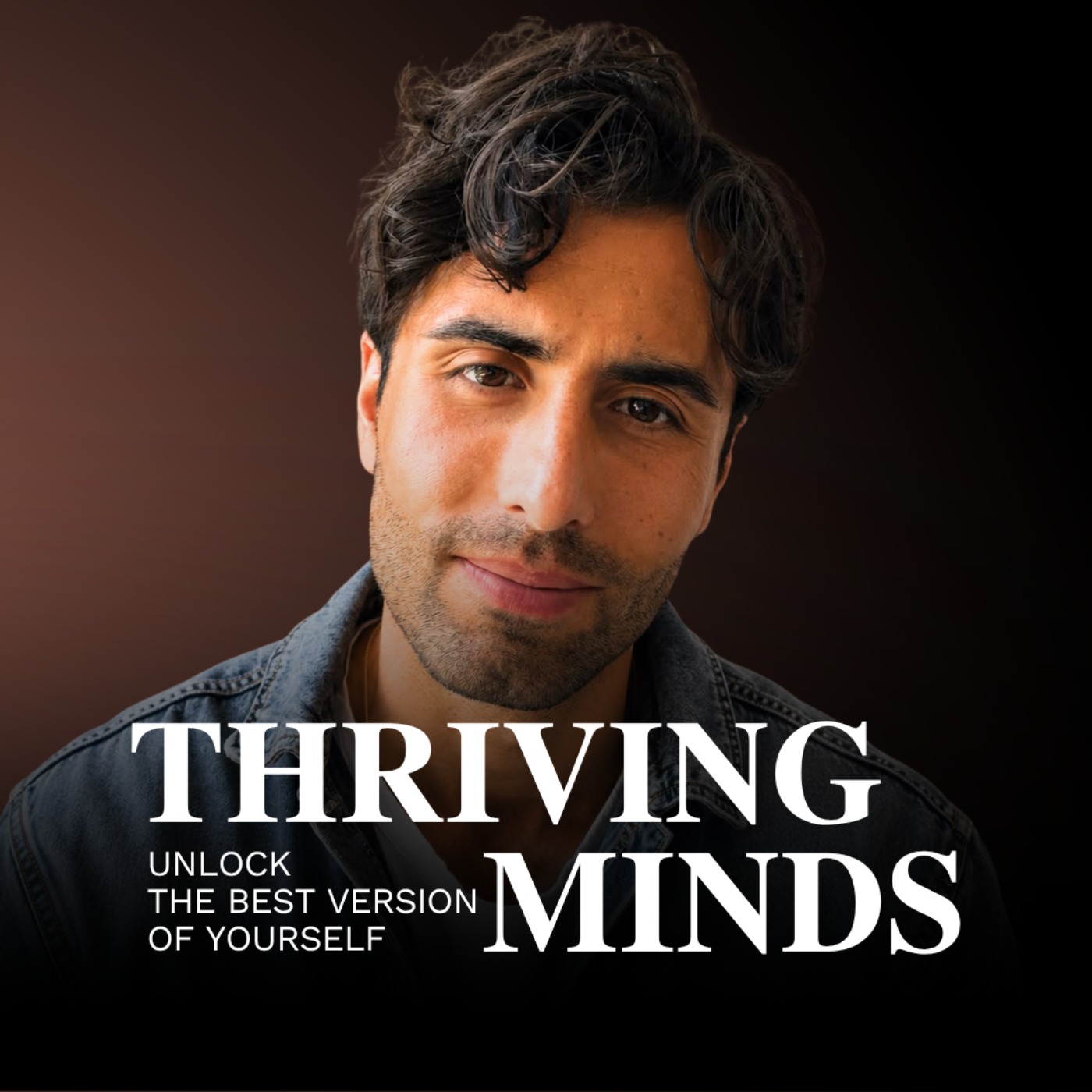
 Thriving Minds with Alberto Zandi
29 Oct 2026 · 1h 30m · 33 chapters

Gut microbiome as a “new organ” that links diet to metabolism, immune signaling, mood/cognition via the vagus nerve, and long-term brain disorders (especially dementia). Core claims: Food and nutrition outweigh genetics for future risk of dementia/brain disease; ultra-processed foods (UPFs) and poor childhood nutrition can “tip” the gut microbiome toward pro-inflammatory signals that drive brain defense/stress responses; depression is framed as an extended immune-defense state; antibiotics and poor sleep worsen gut health and can contribute to mental health problems.
Dr. Tim Spector, world-leading genetic epidemiologist and gut microbiome researcher; scientific co-founder of Zoe; lead behind a large citizen-science health project (OBE); founded the UK adult twin registry; ranked among top cited scientists; best-selling author.
UPFs regularly can deprive microbes of nutrition and increase “bad” microbes; gut health signs include constipation, bloating/IBS, reflux, food allergies, and links to type 2 diabetes/overweight and mental health conditions. Antibiotics: large cross-country prescribing differences; he argues many prescriptions are unnecessary and can cause months/years of microbiome disruption. Dementia link: Parkinson’s patients often had gut problems (e.g., constipation) years earlier; gut inflammation may contribute to misfolded proteins and later brain disease. Examples of interventions: reduce UPFs, aim for ~30 different plants/week, and eat fermented foods (he cites ~25% inflammation reduction). He also discusses GLP-1 drugs as effective for obesity/diabetes but needing long-term lifestyle support; he recommends folic acid in specific cases (e.g., his own MTHFR-related issues).
Written by AI. May contain mistakes.
Discussion on how gut health affects overall well-being and brain disorders.
“for which he was awarded an OBE, and founded the UK's largest adult twin registry and collection of clinical data.”
Dr. Spector shares his personal experience with his mother's dementia.
“How has that shaped your interest in between the food that we eat, the gut, and its relationship with our brain?”
Exploration of how food choices impact the risk of diseases like dementia.
“And the decisions you make and the food that you put into your gut has a direct relationship to things like dementia and all brain diseases.”
An overview of the gut microbiome and its components.
“Gut microbiome is a community of all the microscopic organisms that live in your gut.”
Discussion of the metabolic, neurological, and immune functions of the gut microbiome.
“And the two systems are really now seen as one.”
Indicators of gut health and methods to assess it.
“What are some signs that would determine if it is healthy?”
Dr. Spector discusses the future of gut health testing and its importance.
“And that was basically looking at the number of good bugs you have in your gut compared to the number of bad bugs.”
Explore how gut health impacts mental health and overall well-being.
“Or they might have other illnesses, things that you can't necessarily control.”
Discuss the implications of antibiotic overprescription on gut microbiomes.
“Typically, when it comes to food, we tend to think that we are in control of our choices to an extent.”
Explore the implications of antibiotic overprescription and its effects on health.
“like norway sweden where you have very low levels of prescribing um you get three times more prescribing in the UK than the Scandinavian countries.”
Discover how antibiotics affect gut health and may influence mental health conditions.
“It's not great evidence, but it can affect allergies, increase allergies, and might affect the brain as well.”
Understand the links between gut health issues and the development of dementia.
“And when they've looked inside the guts and done biopsies, you know, why are they constipated?”
Learn about the connection between sleep, exercise, and gut microbiome health.
“contributing factors to an unhealthy gut microbiome are our food choices, antibiotics.”
Challenge popular health advice surrounding calorie counting and protein intake.
“So what you're saying is that in the case of athletes, which most of them have great physics, great bodies, but that doesn't necessarily mean that a good looking body is a healthy one.”
Explore the societal obsession with calorie counting and protein intake.
Discuss the effectiveness and proper usage of weight loss drugs like GLP-1.
“You know, only 10 % of people are probably slightly lacking in protein.”
Understand the importance of ongoing use and dietary changes when taking weight loss medication.
“Then you'll stay on it, and then you might be able to reduce the dose and the cost going forward.”
Examine the potential side effects and brain effects of weight loss medications.
“And current estimates are one in four Americans will be on it within five years.”
Discover how scientific findings can change nutritional beliefs and supplement effectiveness.
“Well, I've changed my mind several times on things like vitamin D.”
Learn about the evolving views on supplements and the importance of following evidence.
“Are there any other supplements that you're a fan of?”
Discover the importance of reducing ultra-processed foods and increasing plant diversity for better health.
Explore the various benefits of fermented foods and their effects on mood and inflammation.
“And I think we discussed this a bit last time.”
Learn why colorful foods are essential for mood and health, along with practical dietary tips.
Learn about ZOE's mission and their latest gut health products.
“of what we're talking about here and all of those are really crucial for your brain health.”
Discover how ZOE's app helps track gut health and nutrition.
“But the app is really interesting because we started as a sort of testing company when we first, because we're going now nearly nine years.”
Understand the motives behind ZOE's establishment and its research goals.
“And I think the key is that we want to provide things as a toolkit for everyone who's interested in improving their gut health.”
Learn how diet quality influenced COVID severity in a large study.
“And we worked out that, you know, your diet.”
Discuss the potential improvements in food systems and health guidelines.
Explore the themes and recipes in Tim Spector's new book on gut health.
“I want to talk about your upcoming book, Good Mood Food.”
Learn how to make healthier versions of classic comfort foods.
“before Yottama Otolenghi came around, we were very frightened of adding these things.”
Discover healthier versions of classic comfort foods that enhance mood and brain health.
“You know, I've taken a lot of British classics, comfort food.”
Learn how to encourage children to make healthier food choices for optimal brain development.
“I'll just, I mean, it's really tough for parents.”
Understand the critical importance of daily food choices on overall health and mental wellness.
“I didn't do a particularly good job myself.”

Get the gist, explore an idea or ask about something said.
 Claude
On Thriving Minds with Alberto Zandi, what are the key points of this episode?
Searching your listeningAutomatic transcript. May contain errors.
0:00It's as if we've discovered a new organ in our bodies. Unlike most of the other organs, we can directly control it by the food we give it. If we were to weigh genes versus lifestyle in relation to future diseases like dementia or any other brain disease, which one weighs more? Many years ago I would have said genetics. Now it's clearly food and nutrition. Professor Tim Spector is a world-leading genetic epidemiologist and researcher, best-selling author, and is ranked as one of the top 100 most cited scientists in the world. As an expert in the gut microbiome and personalised medicine, he is the scientific co-founder of Zoe, turning the latest research into everyday gut health products.
0:42Professor Tim is the lead researcher behind the world's biggest citizen science health project, for which he was awarded an OBE, and founded the UK's largest adult twin registry and collection of clinical data. The immune system knows what's going on through our gut microbes and what we feed it. If it's the wrong signals, they just ramp up our immune reaction and that gives us inflammation. Literally every brain disorder or mental health problem can be helped by improving your gut health. Anxiety and stress seems to have a much bigger effect than it did, particularly in young people. Anything I think that explains it is poor diet from childhood.
1:15ultra processed foods regularly not having enough nutrition for the gut microbes. So when we eat ultra processed foods, our brain reads it as an attack and then it goes into defense mode. If someone listening wants to improve their gut and brain health today, what is the first thing they should change? First thing they should change is... Dr. Spector, welcome back. For anyone discovering your work today for the very first time, What is the mission behind your work? Very broadly, it's to improve the health of millions by making people make better food choices. And studies have shown that if we take people from the worst food choices to the best food choices, you can reduce 80 % of the common chronic diseases.
2:11I want to start today by approaching an emotional side or part of your life. You've openly disclosed that your mom has dementia. And this is something that you've been struggling with because she no longer recognizes you. How has that shaped your interest in between the food that we eat, the gut, and its relationship with our brain? Well, it's affected me massively. Obviously, I'm on a scientific journey to understand more about gut health and food and food choices. and my mum's dementia has made me start to focus on dementia and how we can prevent it because current estimates are that 40 % of us are going to end up with dementia at the moment, which is a pretty frightening statistic.
3:14And so if there's a way of preventing it or if not, at least delaying it by 10 years which is maybe more reasonable until we're dead or whatever you know that appeals to everybody because i think everybody now now knows somebody or a friend or a relative with dementia and it used to be a quite a rare occurrence so this is i think biggest threat facing all of us not only as a personal level but also a huge financial level. You know, it can cripple families, it can cripple the state, it can clog up the health system as it does in the UK. And we don't really have answers to it, nobody's really talking about prevention.
4:06So I wanted to move away from just talking about the gut health in terms of metabolism and blood sugar levels and weight loss and things like this, which we know it's very important for, and really highlight how what happens in your gut transfers to your brain. And the decisions you make and the food that you put into your gut has a direct relationship to things like dementia and all brain diseases. If we were to weigh two important factors, genes versus lifestyle, in relation to future diseases like dementia or any other brain disease, which one weighs more? 20 years ago, I would have said genetics.
5:00Now it's clearly food and nutrition. Because whatever your genes are you can still improve your chances by changing your your diet unfortunately you can't change your genes so you know there are some people at higher risk than others i'm not denying there is a genetic basis but at all levels of risk you can alter your chances of actually getting that problem or it becoming severe by your food choices. And based on this I would love to explore the core topic in today's episode of being able to make the right choices from a food and nutritional perspective in order for us to prevent or to avoid some of these brain conditions or brain diseases.
5:51Let's start from a foundational level so everybody can build up from there. In simple terms, what is the gut microbiome? Gut microbiome is a community of all the microscopic organisms that live in your gut. And generally, we know most about the bacteria. There's a related group called archaea, which are an ancient form of bacteria. then you've got viruses you've got parasites you've got fungi and you've and so there are hundreds of trillions of these guys with 200 times more genes than we have in our own body that are essentially best viewed as chemical factories they're converting food into chemicals Well, they're breaking down the food we eat, which is already chemicals, into other chemicals, which are crucial for the proper functioning of our body.
6:58And, you know, you can break that down into three main groups of things they do. One, metabolically, they're in charge of our metabolism, our hunger, where we lay fat down, how much our sugar levels go up or down, how we break down fat. They're also related to our brains so that they provide neurochemicals that are really key for our brains. And there's a really fast track between the gut and the brain called the vagus nerve where all these signals are going. And thirdly, it's the immune system which is key to virtually all diseases. And the two systems are really now seen as one. So we also think of immune system analogy as completely separate.
7:55But we now know that most of our immune system is actually all around our gut. And the two are interacting all the time, talking to each other. It's the way that the immune system knows what's going on is through our gut microbes and what we feed it. And those signals they're picking up. and if it's the wrong signals they just ramp up the levels of the of our immune reaction and that gives us inflammation that makes us more prone to rapid aging makes more prone to things like dementia and those signals go to the brain where you get all mental health and brain disorders so it's a very broad range about what happens and this is all very new science so None of this is in textbooks or talk to any doctors.
8:44And it's as if we've discovered a new organ in our bodies that has this massive, important control system. And unlike most of the other organs, we can directly control it by the food we give it. Three very important functions I picked up. Number one is our metabolism. The second one is the relationship through the vagus nerve, which is the relationship between the brain and the gut, regulating our mood, our cognitive functions. And then the third one, it is basically the regulation of our immune system. So definitely the gut microbiome is very, very important towards our overall health. For someone listening to this, if they want to understand, do I have a health gut microbiome or not?
9:31What are some signs that would determine if it is healthy?
9:38so it's not always easy and in a way it's an absence of uh diseases or problems or symptoms so you know it's easy to say how i know it's not healthy you're not healthy if you're constipated uh you're not which means you know you're not going every day or twice a day or if it's very intermittent you're not healthy if you've got bloating and some people might have heard of irritable bowel syndrome ibs which can affect up to 30 percent of particularly women um you're not healthy if you've got generally most food allergies or any other gut problems, even if you've got reflux at night, esophagitis, heartburn.
10:37And it's associated with all kinds of other longer-term problems. So if you've got type 2 diabetes, if you're overweight, you have other metabolic problems. and increasingly we found that if you have mental health problems with depression anxiety ADHD autism spectrum you're also much more likely to have a poor gut health on average it's not 100 so it's it's sort of an absence of all those things if you if you say I'm free of everything and I've got a really good transit time and you know I'm going to the toilet regularly, and my stools look normal, chances are you're going to have a reasonable gut health.
11:27But then it does depend on what you're eating as well. So if you're eating lots of plants, you're eating lots of ferments, yes, you're more likely to have a healthy gut. The only way really to check, though, is to have a gut health test.
11:47And at Zoe, we published quite a definitive paper in the top science journal in the world called Nature. A few months ago, that gave a new score of how to do it. And that was basically looking at the number of good bugs you have in your gut compared to the number of bad bugs. A bit like a ratio. So some people might have heard of good cholesterol to bad cholesterol ratios. It's a similar concept. And we use this rather complicated method after looking at 35 ,000 people in the US and UK and 25 other populations to find out, because everyone's different. It's really hard. Your microbiome is going to be very different to mine.
12:29So how do I know what's healthy? It's quite tough. so this is a way where we looked at you know 650 microbes that are very common in everybody and that change with health and diet we rank them the good ones and the bad ones and it seems this ratio is the best way of looking at it so that's just a range of things it's from simply saying well how often do you go to the toilet to getting you know your microbiome sequenced from a company like Zoe with everything else in between. And I'm hoping that in the future, everyone will get a gut test. The price will come down as it would do with volume, like you get a blood pressure check every year.
13:16And I think the way to think of it is a bit like a blood pressure check. What's going on inside me? Am I doing the right things? Or is an indicator that something might be wrong? and you may not notice having a bad gut health. So, you know, you might if you've got all these other symptoms and you're having bowel upsets, but we do find some people that think they should be fine that are disappointed in their levels. And some of that might be due to their past. They might be on a healthy diet at the moment, but because they had lots of antibiotics as a kid or they were taking it for some other reason for long term, for acne or something like that.
14:01Or they might have other illnesses, things that you can't necessarily control. People are often disappointed. So your gut health is a mixture of where you are at the moment plus your past and your childhood. And you can, to some extent, change it at any age, but you may not be able to change it you know from zero to 100 um so you know even i you know i don't have a perfect gut health score because for 20 years i was taking antibiotics all the time which i thought were a good idea i now know they weren't but you know we all make mistakes is that reversible um to some extent but not 100 i think as like most of the human body it's like your brain you know it's much more flexible when you're younger and your communities get more fixed in time so it gets slightly harder and i think if if like me for 20 years you were taking antibiotics there's some microbes that will just always find it hard to live inside you so we've done some studies of people take antibiotics and then trying to recoup their gut microbes often it's very variable some people can get them back others never can so it it can be tough and we don't understand exactly how to do that yet right now we live in a world in which unfortunately we're seeing more and more people with stress depression or diseases like ibs what are we doing to our gut microbiomes what are the factors that are affecting well so you're right so um rates of all mental health problems have gone up in the last 40 years now recently there's been a surge in certain ones like adhd depression autism spectrum disorder that some people say is due to over diagnosis that we've lowered the bar in the past we just say someone had bad mood or you know a bit stressed and now okay you're labeled as anxious you're labeled as adhd if you're a bit fidgety um but some of that is definitely real as well so when you look even the severe cases you see that things have really increased and you know the people just can't get mental health care anymore because there just aren't enough doctors in it compared to the this surge in new cases and in many you know and particularly in young people uh anxiety and stress seems to have a much bigger effect than it did so you've got to work out if you look back and say what's happened in the last 40 years and why is this particular young young cohort doing worse because when you look at um older people so people in my age group there isn't really a real surge in mental health problems.
17:12So definitely there's a sort of cohort effect. And the only thing I think that explains it, the number one thing is poor diet from childhood. That having ultra-processed foods regularly, not having enough nutrition for the gut microbes, overuse of antibiotics and um they're the main ones i mean there's there's never going to be just one cause there's obviously going to be a whole range of things um but it's not clear they have changed over time so all mental health problems are associated with some stressful periods in childhood um but that hasn't really changed in the 40 years uh you know there is a a little bit of genetics, but what I think is happening is by having ultra-processed foods all the time, you know, often, you know, not breastfeeding, being given formula feed, being given pouches, you know, too much sugar, all these things combined with these other factors that have always been there have just tipped many people over the edge.
18:24So their gut microbes are sending out signals to the brain via the vagus nerve, ramping up the immune system and when that happens that's when we get these kind of problems and the brain thinks that the body's being attacked and that's where you get a lot of these symptoms of depression anxiety in the same way you did like when you got a flu vaccine or something you go to bed for 24 hours your immune system is being tickled what happens is not just 24 hours it it can last for months or years you're in this this cycle of your brain essentially being given the wrong signals because the brain is a predictive machine and it's always guessing what's happening in the real world it can't see it and if it's getting signals from somewhere like your gut telling it you know things aren't great here you know i'm getting all these inflamed signals from my gut because i'm eating all the wrong foods your brain reacts in that way and it increases the stress level and it goes into sort of defense mode and leads to antisocial behavior leads to lots of lots of things and we can explain also things like adhd and autism spectrum disorder because that inflammation that can have a crucial times as a child and mess up your brain connections and because we we have all these brain connections that reach a peak actually is in childhood and then we lose about half of them and the way you lose them it seems to be quite critical at these crucial times particularly in adolescence and if you do it wrong you get a variety of these mental health disorders including things like schizophrenia and whatever and increasingly it's looking like all these mental health problems are related it's not they're not 350 different disorders it's one disorder that just affects different bits of the brain at different times of life but the causes are all pretty similar so when we eat ultra processed foods our brain reads it as an attack and then it goes into defense mode yes probably not eating one you know you could eat one snickers bar you're not you're not going to suddenly get depressed um but if that if basically you're continuing that for long periods of time and you're depriving your gut microbes at the same time so you've got to remember it's nutrition is always always tooth it's two-edged sword it's like okay what does this food do to you but the always question is instead of what so instead of a nice full plate of fresh food you know whole foods grains plants fruit fresh stuff you're having this ultra process ready meal shit yeah um that's depriving of the other stuff so it's partly the effect of the chemicals and the uh the way that's set up but It's also you're starving your microbes at a crucial time, and that allows the pro-inflammatory microbes, the bad ones, to start growing because they like that UPF food, and the other ones are getting starved of the good stuff.
22:11And you're then changing this ratio we talked about. That leads to production of all these chemicals, which tells the immune system to start causing inflammation. Those signals go to the brain, and then the brain goes into defense mode. And then why is the defense mode connected to depression? How is it connected? it i think um it's an you can view depression as an extension of a natural defense mechanism when we're ill so if you think back to the last time you had a bad flu or something okay you feel unwell you have those prodromal symptoms or not feeling good you know what are you gonna do you you're going to phone your friends, you're going to cancel, you're not going to go out.
23:05People say, well, can I come and see you and chat? No, you don't want to chat. You want to go to bed and you want to sleep. Yeah. So you're antisocial. You don't feel particularly hungry. You want to rest. You feel tired. Your body, you send all these signals of fatigue. That's just your brain saying you're tired. Your muscles still work, right? but everything is a defense mode to to stay isolated so you don't infect other people and give you time to recover and a lot of these current theories are that that's what depression is it's an extension uh you know the brain instead of stopping that signal when the flu's gone it's like bing gone or if you have a if you had a vaccine shot you might have had this for 24 hours it just you know tickles the immune system but then it's gone you wake up you're fine something about people who experience depression is because those signals are still coming to the brain the brain who can't see can't see that actually you're not ill where it's just getting these false signals and it makes these predictions so it's it's a new way of thinking about mental health problems and you know the more i got into it the more i researched it the more you saw that the view that i you know i was brought up on that basically you know the brain is like this sort of chemistry set and you just had a you you tweak a few of these these chemicals up or down and you could cure it or make it worse and that's what the basis of treatment is antidepressants are basically giving people uh more of this magic potion called serotonin and you know hey voila everyone's supposed to be healthy again but the happiness hormone yeah um but it turns out only a small percentage of people are helped by those drugs and you it and when you give those drugs um it takes weeks or months for it to work and yet your serotonin levels go up within an hour or so so something else you know they might be working completely different ways we've got so much wrong i think in uh our understanding of brain health and it it's been really a revelation to me to sort of study it and try and and once you start looking at it from a distance that i can because you know i wanted to be a psychiatrist at one point in my career then i want to be a neurologist then got very disappointed in the actual practice of it because it was very crude compared to the you know studying it for research purposes um but when you look at it and you think gosh if it's all one condition then you know we should be looking at it completely differently and if we can change those signals going to the brain we can make a big difference you know i'm not saying it can cure everything but at the moment it's the one area that's been completely ignored by the vast majority of people in that mental health space.
26:28And it's like, oh, that's the last thing you think about. Everyone's just obsessed with tablets and it's not working. And, you know, we're saying that, you know, everyone wants a diagnosis and they want Ritalin or they want antidepressants and they're not thinking, what's the cause of this? And maybe we have much more power than we thought to help it. This is fascinating. I want to talk about antibiotics because you've mentioned them as one of the contributing factors to a poor gut microbiome. Typically, when it comes to food, we tend to think that we are in control of our choices to an extent.
27:13But when we think about antibiotics, we're typically given them through a prescription. So a doctor who we perceive as the subject matter expert in a given field is prescribing me this medicine which contains antibiotics. Are you stating that perhaps most of these doctors overprescribe antibiotics? And then we should maybe right now, if we go to the doctor and we feel ill in some area of our bodies, we should maybe be a bit more hesitant in accepting those antibiotics. uh yes um i mean they've done lots of studies in europe and the u.s and there's like five fold differences in prescribing of antibiotics in europe for example so the best country is places like norway sweden where you have very low levels of prescribing um you get three times more prescribing in the UK than the Scandinavian countries.
28:19I think twice more than even in the Netherlands where they have quite strict policies. But then you go to some southern European countries, Greece, Portugal, really high rates of prescribing. And you can often just get it over the counter in the chemists. So if you see, if there's a fivefold variation, and no difference in people dying or having, you know, and actually people are healthier in the countries that have the least antibiotics, you can say we're massively overusing them. And a lot of that is due to demand. You know, it's not always the fault of the doctor because many family doctors, GPs, have enormous pressures on them to prescribe.
29:07You know, mother comes in with little child, she's got a sore throat, you know, do something, do something, you know i'm going on holiday what are you going to do and they say well it's probably a virus uh there's a one percent chance it's uh you know it's not a virus take the antibiotic and at the moment the public doesn't realize the antibiotics have this big downside most doctors don't realize that either so uh antibiotics still save lives i'm not saying don't take them uh you know millions of people have had their life saved by antibiotics but when it's likely to be a virus or when it's likely to be self-resolving you've got to ask yourself is it important i was taking antibiotics myself um for sinusitis every time i got a cold it went to my sinuses i was sick for at least three weeks so i used to take antibiotics as soon as i got a cold and i thought it was doing some good they've done trials of it and it shows that i might have uh improved my duration by one day well okay so that's generally what happens in these treatments is you're getting a very small reduction on average and looking back i said well that really wasn't worth it because also antibiotics can increase your risk of future problems so you you might because you're hurting your gut microbes each time you take antibiotics that helps uh that reduces the effectiveness of your immune system and then the next time you get a virus you might not fight it off and so you could be creating the problem more so there's many examples like that um and so i think yeah in the uk the us i think yeah probably half at least half the prescriptions probably seem more uh are totally unnecessary and if people realize the side effects for your gut health and also in children there's There's evidence that increases obesity in children, and some that it can alter behavior as well.
31:29It's not great evidence, but it can affect allergies, increase allergies, and might affect the brain as well. Interesting. Correct me if I'm wrong with this assumption, but is it that the antibiotics are making our guts and just the wrong signal to our brain? So in the case of obesity, it's just sending the wrong signal to our brain saying, we are hungry when perhaps we're not. So it's just changing the signals. I don't think it's the antibiotics. Well, the antibiotics are killing off a lot of microbes. And yeah, they kill off the bad ones, but there's a lot of collateral damage. So they kill off probably more good ones than bad ones.
32:12and so that means you change the balance after you've had antibiotics and so we've done some studies with zoe following people who've had our gut test and if you you know i'd love to get more people doing this but so if anyone's listening you want who takes regular antibiotics doing a test before and after it'd be really interesting as a citizen science project but you see that you take the antibiotics and then pretty much immediately you lose your good bugs and you stop and then it it can take months uh or years until you get those back again and it i think that then changes the signal to your immune system uh and it leads on from there it's not the probably the antibiotics themselves although there have been some studies show that people taking antibiotics can get depressive symptoms directly so we don't know can't rule it out but it's probably more likely from their their effects than the chemical itself
33:14so we've covered the relationship between the the gut and the short-term mental health conditions like depression but what about long-term mental health conditions like dementia what is the relationship between those and the gut well um i'll start with a related condition which is parkinson's disease it's known as the shaking palsy so you get very rigid and and and it's it's about 50 have dementia as well or more and they're closely related um And what's interesting is if you study people with Parkinson's and you look at them 10 years before, about half of them had gut problems before their symptoms started.
34:08And so they had constipation. And when they've looked inside the guts and done biopsies, you know, why are they constipated? it's they've lost a lot of the muscle tone and the nerves to the gut are not working properly and when they look at that they see some of these proteins in there that uh you later see in the brain these especially folded proteins that won't go into it but the current hypothesis is that this inflammation in the gut causes these proteins to mess up. That messes up your normal gut muscles. You get constipated. And then years later, they make their way to the brain where they will cause dementia.
34:59So that's really one of the clear ways that you can link dementia to gut health. The other is the fact that dementia is very related to metabolic problems. So it's massively increased in obesity and type 2 diabetes, which have biggest gut health changes. and it's also related to long periods of damage to cells in the brain that control your metabolism called mitochondria so we know that most people you know with dementia will have some problem of glucose control which probably means that the energy cells in the brain are getting affected and that's a lot that is coming from your gut and what you're eating so it's a combination of inflammation on the one hand and disrupted metabolism and type 2 diabetes both of which you know ultimately come from your gut so the contributing factors to an unhealthy gut microbiome are our food choices, antibiotics.
36:24Is there anything else that we should talk about, like perhaps sleeping or exercise?
36:33We know that sleep is related to gut health. It's probably less than the effect of diet. but it's um and a lot of it is is short term but poor sleep causes stress raises cortisol levels that affects your immune system that will then interact with your your uh your gut make it worse so even if you're on a perfect diet if you're sleeping really badly you'll have a worse uh gut health now um and we know that after a bad night's sleep everyone you know you're only sleeping three or four hours you feel terrible whether you've you know you've had a night out or whatever next morning it sends signals to your brain and you eat the wrongs you eat terribly right you eat real shit the next day and you're really hungry and you have this desire for high sugary high fatty things and that's like universal and if someone's doing that all the time they'll have a terrible diet which will affect their gut microbes so they're sort of all linked and there is some evidence also coming back to this unifying theory that people with long-term insomnia have not only high cortisol levels but they have high inflammation levels so the immune system is just ramped up we don't know whether that's because the diet or it's something special about your circadian rhythms we don't know so sleep really important you know and should be seen together with getting your your gut health um right as for exercise um it's interesting because studies of elite athletes have shown they have often very bad gut microbes because they're interested in performance they'll take whatever it is to increase their performance by one percent so you know they're having all these special juices they all have you know caffeine tablets they desperately trying to get the calories into their bodies they're not thinking about gut health and so all the studies on elite athletes have been rather confusing but what we do know is that you get the best benefit of your gut if you go from being very sedentary to exercising you know uh three or four times a week amateur amateur sort of sports and exercise then you do get an improvement in gut health but it's not huge so i don't think you can exercise your gut without feeding it properly.
39:20This is very interesting. So what you're saying is that in the case of athletes, which most of them have great physics, great bodies, but that doesn't necessarily mean that a good looking body is a healthy one. Yes, there are great examples of that. And so, you know, they're putting their bodies under huge stress as well. And so there's this balance about you know everyone needs a bit of stress in life because it's good for you uh you know uh why is it good for you because it uh it's like teaching your your body um that this is the upper level of where you should go it's like you know you have a car if you've never gone you know never gone out of first gear you don't think that engine has ever worked properly so every now and again you want to rev it a bit and uh uh show its paces and there is you know evidence that you know episodic exercise you know there's all basis behind hit classes and these things uh short bursts of of stress are actually good for you as long as your body has time to recover and there's different levels of thinking of that that you know because you do get some inflammation it's like people who run marathons where they're terrible looking blood markers just after done it but they do recover and if as long as they're not running them every day they will end up with better blood markers long term after a short-term setback um the other the other stuff i was reading about is that exercise might be good for the brain because um particularly for anxiety and things and that uh you're training your brain to um get more relaxed about having a high heart rate and and and what seems like stress if you weren't exercising and your body was just you know your brain doesn't know what's going on it would just say gosh i've got all this you know i'm going red i'm sweating uh you know my lungs are bursting you know maybe i'm in a a really stressful situation here and so it's sort of training yeah the rest of your body actually you can cope with stress in a way and this might be why breathing exercises meditation also work because you're just sort of training your brain to deal with all these inputs without panicking there's a lot of health and wellness advice out there these days is there one that you particularly disagree with that you see a lot of people follow well plenty that's yeah let's go um you know um calorie counting is still massive you know my fitness pal is you know probably the sort of number one a thing that people follow for calorie tracking um every time i turn the tv on there's adverts for you know weight loss products with calories say however many times i i say it or other scientists say it you know we're stuck in this this world of uh people obsessed about calories um obviously we're you know still in protein mode everyone loves protein and even if you tell people you're getting enough protein you don't need more protein you're just going to pee it out or you're you know it's going to turn to fat they still want protein so sometimes particularly in the in the in the modern era of social media when you're surrounded by all this stuff you know if there's 10 messages saying do it and the occasional expert saying it's rubbish you know people will still do it they feel their peers are doing it it's very hard very hard to go against the flow excess of protein will turn into fat yes just like any other nutrient you can't store protein so unless you're you know in the gym every day trying to build muscle um that protein doesn't go anywhere um Some of it gets eliminated, but some of it will inefficiently get turned to fat.
43:39And people don't realize that. So they're having high-protein snack bars full of ultra-processed ingredients, emulsifiers, additives, chemicals you really don't want just because they're obsessed in getting some ridiculously high-protein target that they don't need. It's not going to help them in any way. You know, only 10 % of people are probably slightly lacking in protein. And, you know, most of them are elderly individuals or people on weight loss drugs who are losing a lot of weight, not average people like you and I. What do you think about weight loss drugs? I think they're great. um you know all my career i was researching genes for obesity and our goal was to try and find the drug that would cure obesity and we have found it um it's not being used properly but this is you know apart from surgery this is the only way to sort out major obesity why are we not using it properly because at the moment most in this country not in the US but in this country most people having to pay for it themselves the NHS is hardly giving any of it out I asked my GP recently he said he's given it to one patient you know and that was really hard to get it to that patient and so unless you've got type 2 diabetes you can't get it so they're having to pay for it themselves and within a year 50 of people have stopped it and that means that it has no benefit at all unless you're taking it long term it doesn't work your weight goes back to where it was it needs need to start thinking them like taking a blood pressure tablet which you don't stop because your blood pressure goes up and you have a stroke so or like a statin it's not like you just take it for the summer and uh and do it that way so people aren't taking it properly you know they don't have uh any advice they're not being given nutritional advice because it's a perfect time to reset your taste buds you know your gut microbiome wean you off you know we think about 10 % of people are addicted to ultra processed foods.
46:16Perfect time to change that addiction and clear out your cupboards. And so if people had access to a proper nutritionist, you know, they wouldn't stop. They wouldn't have less side effects and whatever, but they're doing it on their own. They're having to pay for it. They're saying, gosh, you know, maybe I can stop now. I've, you know, once the hunger feelings have gone away, you think you're invincible and it's not this is easy and they don't realize those hunger signals go switch back on so yeah we'd love you know people on these these drugs either to have access to a nutritionist but there aren't enough but you know apps like zoe's for example should be a perfect you know co-prescription for a trivial amount compared to the drug um you take the app and you you you So you have something like that to guide you through to change your nutrition habits long term.
47:14Then you'll stay on it, and then you might be able to reduce the dose and the cost going forward. But you've changed your diet, so you can do that. But most people just go back to their old diet, and their weight are often worse than when it started. But as well as helping obesity and diabetes, it reduces your risk of cancer, heart disease, possibly dementia, autoimmune diseases, asthma. As a consequence of reducing obesity? No. It acts as an anti-inflammatory. So often the best drugs work through something that we hadn't thought about. you have to look at Viagra which was a blood pressure drug works brilliantly for other things Viagra was a blood pressure drug fascinating it didn't work very well for blood pressure but the men in the trial didn't want to give the tablets back they said why don't you want to give the tablets back I'd like to talk about that for I think another hour but going back to GLP-1 drugs how long should people take them for basically you should assume you should take them for life like a statin like a blood pro uh like a blood pressure one i try and reduce the dose um but the number of people that successfully stop it and keep their weight off is really small and i think when you're going into it you need to be thinking about it in that way and therefore say okay well i've this is a window of opportunity my hunger signals are going to be switched off and it doesn't work for everybody 10 of people doesn't work um but for 90 it does uh but i'm going to make this change in my lifestyle my choices all these things that i've got wrong to get me into often into this position or you know people have told me things were wrong um and you know this will maximize my gut microbiome that will help me deal with a drug also in terms of side effects and uh yeah and just work it out and when you think about people don't say oh it's going to it's i don't know 150 pounds or something a month and you think well yeah what do you spend on coffees or you know what do you spend on the takeaways always um people don't think about well what would you pay to reduce your risk of heart disease and cancer by 25 30 percent people don't value uh future health enough and we've all done it it's very hard when you're young to think about you know not having a disease when you're 60 or something But I do think, given they work so well, they're definitely here to stay.
50:18And current estimates are one in four Americans will be on it within five years. What are the side effects of these trucks? When you start taking them, nausea and vomiting. um it affects the GI system um because it slows the rate at which food is getting into your into your gut um then but they're generally fairly mild um then um the other ones uh so severe ones are about one in a thousand people so you can get pancreatitis and which this little organ that pumps enzymes into your gut that can be pretty nasty and even more rarely some thyroid problems you know but millions of people have taken it we think of roughly this one in a thousand bad side effects is about right with like any drug minor side effects every single drug has has side effects so you know but it's a reason that you should um take it if you really need it not really as a cosmetic trip um because that's you know side effects are unpredictable and um the the big unknown is what effect it has on the brain um so i'm yeah we need more research on things like does it affect your motivation level so i know a lot of people listening might be sort of entrepreneurial and you think okay this is a drug that stops you being addicted to alcohol stops you being addicted if you are addicted.
52:14I mean, cigarettes, cocaine, you know, whatever, it seems to reduce the reward centers in the brain. Now, a lot of us are driven by reward centers in our life, okay? Why do you want to be a success? Why do you want to open more restaurants? You get a reward, okay? So something in your brain says, well done, you know. We all have that. And so maybe if that's a little taken away, it could take the edge off. We don't know. But I think that's the one thing that when you do play with a brain, and it's a brain drug, some good stuff will happen, but we need more long-term research. Nothing seems to happen short-term, but we haven't really studied beyond five years.
53:15What is one health belief or nutritional belief that you've held for many years that you no longer believe in?
53:30What if managing company spend took less managing? Introducing Amex Corporate, One intelligent platform connecting cards, expenses, and payments so you can keep work moving. Built to simplify, designed to scale. This is Amex Corporate. Get started at go.amex.com. Terms apply.
53:53Well, I've changed my mind several times on things like vitamin D. Are you a fan of vitamin D? Or are you now with vitamin D? say obviously i was a doctor i was a rheumatologist originally i used to treat bone diseases and gave out vitamin d and calcium to all my patients telling them it worked and um then studies started coming out saying well actually it doesn't actually prevent fractures and if you take too much of it it can actually make falls worse and things and calcium was the same you know actually can contribute to heart disease and doesn't help at all and so then i then went and said okay vitamin d is rubbish and i was fighting the government that was sort of saying to everyone you should be on vitamin d saying well really the data doesn't support that then some new studies came out um showing that um okay vitamin d doesn't help your bones unless you're super deficient right and your rickets or something but it does help fight infections helps your immune system and we've known for ages that vitamin d is important immune system says ah okay um maybe i should change my mind on that um but what's interesting is that uh yeah so i've i've sort of said okay vitamin d does work it can reduce your risk of infections um we don't totally understand why but it seems to have an effect on the immune system but then you look carefully at the data and you say well it reduces your um you know the duration of a respiratory infection or and your risk by about 10 percent so someone's got to take vitamin d for i think 30 uh 30 years to reduce you know having one respiratory infection someone's worked out that you know that's that's the effect so yeah you can take it but your chances of it helping you are still pretty small but um it's it's a good example of how when the science keeps changing you need to change your ideas and I think that's the sign of a true scientist is they're not sold to something and you know when the evidence changes you do change and yeah you realize I've made mistakes and you know let's follow the evidence and I think many doctors get told okay you've got to say this this is the dogma and they don't always have like me the luxury of time to keep up with the latest research.
56:41Are there any other supplements that you're a fan of? There's not many because 99 % are absolute rubbish, even if they contain what they say they do, which we don't know because it's not controlled.
56:58But I take folic acid at the moment. There's some studies show that if you take folic acid, which is a B vitamin, it's often produced by your gut microbes as well, that can reduce your risk of cognitive decline. So given my family history of dementia, I was sort of keen to do that. And I also went for a fancy test in a clinic in Harley Street, where they looked at all my blood tests, my folic catalyst levels my vitamin b12 levels something called homocysteine which is a marker that if it's too high you can end up with some of these problems and i had a special gene um called the mthfr gene but it means that i don't produce folic folic very well and my b12 folic levels are messed up so um there was another reason that that was low and my homocysteine was high that's not good so um i've changed my mind on that one i thought that was rubbish as well or felic acid is very good for pregnant women i should say how so it uh because we know it um really good for the um stopping um nerve abnormalities and brain abnormalities in in the fetus and the and the infant so really good effects on spinal development and things So that's been shown definitely in multiple studies.
58:41So although 99 % of rubbish, there are still some ones around. Folic acid is one. Some evidence about omega-3, but only if you're deficient. So it doesn't really help if you've got good levels and you like your sardines and your anchovies, then you probably don't need it. And so, you know, you've got to think most of these vitamins, the definition of vitamin is you need microscopic levels to keep your body in the right perfect condition. No one ever said having huge amounts of them is going to be good. And even vitamin C is complete rubbish. It doesn't prevent colds or anything. And that's a huge misnomer that's been around forever.
59:35um and if you take it when you've got a cold it does work but you might just take shave a few hours off your symptoms if you take really high doses every day for a week but it doesn't prevent it so most of this stuff is rubbish but i'm trying to tease this out and in writing you know books this is how i managed to keep up to date and change what i'm doing so yeah so i take folic acid and i've increased my fish eating levels and certainly whenever in spain try and have my anchovies daily if someone listening wants to improve their gut and brain health today what is the first thing they should change
1:00:20first thing they should change is probably to reduce their intake of ultra processed foods particularly the worst offenders the ones that have all the additives the emulsifiers the ones that are designed to make you overeat the uh ones that upset your gut health and have no fiber or anything in them um and that's half the current diet in the u.s and the uk at least more in children um the occasional one doesn't matter but it's those things you have regularly and some of those might be staples like bread you don't think about um or your regular go-to drink your your diet drink or whatever it is um cutting those out then it's to eat more plants um we know that you're the biggest thing in our zoe studies um improving gut health was the diversity of the plants that you're eating every week and our studies show that 30 plants a week is the way to go and having that as a target currently most people are on about 10 to 12 30 different plants different plants so it's not the same portion of kale it's different plants and that means a nut a seed a herb a spice means different colored uh you know it can be different colored cabbages or cauliflowers um they all count uh as a different species and it's that variety that your gut microbes need in order to really get all the good ones coming out there and most people you know struggle to get that that's one reason we produced our prebiotic daily 30 particularly when you're traveling it's quite hard to do that and when we did a randomized trial of this this product that has over 30 plants in it we showed that you can actually not only improve uh gut health um in six weeks but you also within two weeks improve mood and energy they were much faster to change than your gut health so again a link between your gut and your brain in in nearly all the studies we do we see these huge brain effects first so anyone doing this you know whether it's taking a supplement like a prebiotic or just changing their diet they should notice these things which should motivate people to carry on because that's often the big problem in making these changes you know is it i'm just doing this for 20 years time no actually if you start recording your mood and your energy and your hunger you'll notice the difference And the third thing is fermented food.
1:03:17And I think we discussed this a bit last time. But trying to get at least three portions of fermented food a day in your diet is really important. That reduces inflammation by about 25%. And that has an effect, again, on your brain. And there's lots of evolving studies showing that fermented foods can help the brain as well. is it because it has a lot of probiotics fermented food has probiotic microbes in it which means probiotic microbes just means microbes that are proven to be live microbes that are proven to be good for your health some people refer to them as psychobiotics if they're good for your brain health which is do fermented foods have psychobiotics yes because they've now done some studies in fermented foods showing they can help things like depression and anxiety.
1:04:15And so it's still a new term, but essentially any combination of microbes that improves mental health is a psychobotic. So some of these ferments, there aren't enough studies, but increasingly we are showing this. So yeah, have fermented foods. You've written an extensive book about fermented foods. What is the greatest discovery that you've made about them?
1:04:45I think it was the fact that...
1:04:56There was this trial a few years ago from California that showed that when you gave five portions a day to people who weren't on them, you could reduce by 25 % their blood markers of inflammation. Wow. And which you couldn't do just with fiber. So they're working in a different way just to having plants and things. so that was a bit of a revelation for me and then combined with our own study we did a citizen science study with um about six and a half thousand people uh from zoe where we asked people who weren't into ferments to try them for two weeks three minimum three portions a day um the five thousand or so that did it most of them saw a benefit in mood energy and hunger and weight loss within two weeks.
1:05:57So those things linked to all the little studies and the understanding about the microbes and things was important and realizing that they're working through the immune system. So three years ago, I didn't know that. It was a bit of a mystery how they worked. So suddenly, you can see how this is all fitting into place. You know, the link between the gut microbes, our immune system, our brain, and the things that we can do to improve either the immune system or the gut microbes have this amazing effect on our brains. And so to me, it was that those little pieces of the puzzle were crucial in me forming this big idea.
1:06:39So you recommend the consumption of fermented foods because they're rich in probiotics, but you also recommend the 30 different plants every week because they have prebiotics yes they work differently and we we compared so that yes there's prebiotics which are like fertilizers for your food there's probiotics which are a bit like seeds that you're putting in there and the symbiotics which are combination of both where you've got prebiotics and probiotics so some of these fermented foods say like sauerkraut or kimchi are good examples of symbiotics because you've got things like the cabbage the onions the garlic which the fertilizers of the microbes and you've got the live microbes on them so these combination are particularly effective uh i think to have in our diets and there's something certainly you know in countries like the uk uh really doesn't exist as culture so bring it back and not just having yogurt in the morning you know mixing it into your foods and coming up with recipes where you incorporate it into salads and all kinds of things and using miso paste instead of stock cubes lots of swaps you can do so i think that's and that you know that was really fun writing a cookbook based on this so you can actually give people practical examples of how you can actually make the healthiest tasty meals by just using a bit of invention about how you can incorporate all this stuff you know uh you know nothing's processed using whole food ingredients um and then you're you're getting this rich variety of plants on your plate and you're adding ferments um you know all those things are they're definitely the most important things and color is the other thing so you know bearing in mind eating the rainbow we often say we eat with our eyes you know and you know the best restaurants you know what the food looks like when it comes up is absolutely crucial so we've already our brains are already predicting what it's going to taste like and getting all excited just by looking at it even if they can't smell it and so bright colors are important for our mood so it definitely cheers us up to have a bright color you know something that isn't just beige and there's science behind it because the more colorful it is the more it has these defense chemicals in it these polyphenols and so um you've got all things like brightly colored berries blueberries raspberries uh you know the whole range of them you've got um things like purple sprouting broccoli you've got rosololo with those purple leaves you know the really the tomatoes that have the you know very darkest colors the dark carrots the persian carrots rather than the white or orange ones these are always great signs that they've got these defense chemicals and they're also fuel for your gut microbes.
1:09:57So that's another important, that's the sort of fourth part of what we're talking about here and all of those are really crucial for your brain health. We've discussed what ZOE is in our previous conversation, but for those who don't know what ZOE is, what is its mission? And also, what are the latest products that you're coming out with? So we have those fantastic, great looking gut healthy bars which i'll try one of them while you explain this yes
1:10:29so you might find it hard because don't take too much because unlike most of these bars that it takes time to eat them okay so most ultra processed food you it's designed to be eaten super fast so that you keep going and you buy another pack and you you never get hungry right so they dissolve in your mouth these are you know uh you can't you can't eat this in 30 seconds um but zoe is a gut health science company that um translates the science we're doing into tools to help people make better food choices yeah that's essentially what we're doing and we have a range of uh hard products so we have daily 30 which is our prebiotic fiber we have uh the the snack bar which has over 10 plants in it including um eight grams of protein for those protein lovers um and also seven grams of fiber importantly which is probably more important and no no upfs no uh nasty processing in there no additives and very little sugar i don't know if you what you think of the i think it's fantastic there's most of these bars are too sugary or or they have a sort of consistency on the mouth that you know shows it's been emulsified and mashed up to give you that you know to make it cheaper and easier so i think these that these are great um the uh and of course the then of course we have our gut test and we have our app and the app is an evolving one that you can you can download in uh a number of countries now and i should say these hard products are available in most of europe um through Amazon.
1:12:33But the app is really interesting because we started as a sort of testing company when we first, because we're going now nearly nine years. We had a glucose monitor, we had blood testing, we had the gut test, and very successful, when they tested over 300 ,000 people. But I realized that it was a bit expensive, it was a bit cumbersome, and it wasn't solving a long-term solution. It was introducing people to the subject, but we wanted to produce something that was cheaper because it's quite expensive getting all that kit together. So the idea of a cheap app that did the same thing that would give you an estimate of what your gut health was like and your personal responses to foods.
1:13:28So we were sort of using your gut test and the app. We could work out without needing a glucose monitor on you what was going on and what choices to make. And so that's, it's like a tracking app, but also a nutrition coach. I think that's the way to describe it. and it's game we've gamified it so that um you can take use ai to take pictures of your food it tells you exactly what's in there your fiber your protein your um and also importantly the number of plants and how many ferments there are so if you're going for goals like i've been discussing it was virtually impossible before for you to remember you know how many plants did you have last week you don't know right yeah this will just tell you you just snap it you don't have to think about it end of the week says okay tim you've got 29 out of the 30 you know you've got four hours to go what are you going to do um so features like that i absolutely love and it you know tells you how to improve your meals and it's a sort of educational tool so that's the portfolio where we are developing more hard products because they're selling really well.
1:14:50And I think the key is that we want to provide things as a toolkit for everyone who's interested in improving their gut health. And some people might want just the gut test. Some people might want just the easy products like, okay, I'm going to change my snack bar for a healthy one. And that requires virtually no thought on my part and everything else in between. We also got a podcast, which is the number one nutrition podcast. And that's free for everyone and, you know, helps re-spread the word how important gut health is and how important food choices are. at a very raw and fundamental level what is your purpose behind being part of this company why should this company exist the company existed uh for a combination of reasons that there were the two co-founders uh had been working in uh on the internet companies finance you know they'd made money they wanted to do something worthy to tell their family they were doing something really good and they wanted to do something in healthcare and around personalizing i wanted to find a way of bringing gut health to many more people and translating the science and maybe using the commercial way to fund the science, which I knew had to be done on a massive scale.
1:16:31There's no way I could have got charity or government money to do a study with a third of a million people. So for me as a scientist, I was selfishly saying, I want to do the greatest science. I want to have these amazing populations and be the guy that can make these discoveries that no one else can. um so but at the same time you know obviously we were united that the the motive of the company is to gradually improve the health of millions of people through disseminating both information and tools in how to do it but for me it's been just great fun as a scientist um you know we got a taste of it during COVID.
1:17:19We had a break in COVID and, you know, studying, I could do a study of a million people. They'd tell me all their personal data, health data. And we worked out that, you know, your diet. So a million people replied and we worked out from that within two weeks that the quality of your diet determined within three months how ill you got with COVID. Oh, wow. so it like double if you had a bad diet doubled your chance of a severe negative impact of of covid even when you're adjusted for things like obesity and and other diseases so yeah you know and doing these citizen science projects we're doing you know getting 6 000 people just to take some ferments and the fact that we're doing everything we do we test in a randomized controlled trial and we publish it so you know so much of the nutrition field is just hot air marketing even the biggest companies in the space do not test their products and you know i'd love the consumer to say well actually they should be you know if zoe's doing it this little company's doing it why can't we and you know there are obstacles because we can't put on our bar or our daily 30 test in a randomized trial the european rules uh and in the u.s say you can't do that um but you can say i can add all kinds of chemicals to it and say immune boosting or i can add vitamin c to it and that i'll be able to say it's good for immune health is it because the trial has not been regulated by the eu or the u.s no it's because the food labeling rules are just so out of date they were they haven't changed for about 15 years and all the science is about 25 years old and uh this helps the big companies but doesn't help anyone who wants to actually have a sort of scientific evidence behind what they're doing so it makes it very hard for us we can't we get attacked by the advertising standards agency even if we just talk about our trial yeah and you say why shouldn't people know that you're buying a product that we've we've tested uh as opposed to this other one that's been marketed that doesn't seem right are you hopeful about the future of our food system um i am um i think we've reached the worst point i think we're at a tipping point now a few months ago the usda came out with new dietary guidelines and for the first time they highlighted ultra processed food to be avoided that sugar and artificial sweeteners should be avoided particularly in children and they highlighted things like fermented foods and gut health so you know you can say what you like about the administration in the u.s but it has led to some uh step changes which i think and if the u.s changes opinion on some of this stuff then uh there's hope for us all even if you know in the uk government we're way behind so i think popular opinion will start to change it.
1:20:55But, you know, like with these labeling laws, it's very tough for the small company to make an impression.
1:21:10I want to talk about your upcoming book, Good Mood Food. What is it about and who should read it? Who should buy it? Everyone who's interested in their brain, really. it should be everybody then everyone hopefully everyone yeah realizing your brain is part of your body and it's an organ like anything else and you need to look after it and realizing that virtually every brain disorder or mental health problem uh it can be helped by improving your gut health um i think is is vital in this time where we've become obsessed with popping pills and um you know seeing psychotherapists uh that there is a third way it doesn't mean you shouldn't be doing those other two things but add this to your problem so you know a lot of estimates are that at least 50 % of us, you know, at any point in time are suffering from some mental health problem, which is pretty frightening.
1:22:16You're not getting professional help, there aren't enough people around. So it's about taking things into your own hands. So this is a book that's, you know, it's a cookbook. So it's lots of pictures, it's very easy to read. There's a brief introduction of about 20-odd pages introducing to the science of what we've been discussing here, about the brain, about what food does, about gut microbes, understanding the basic principles. And then you've got over 100 recipes. Basic Shanghai, you can incorporate everything we've talked about into simple everyday recipes that, you know, anyone, even myself, can make and make look good using lots of plants, lots of ferments, lots of colors.
1:23:01and what swaps you can do, things you hadn't necessarily thought about. You know, instead of using double cream for something, you use milk kefir. You know, using cheeses in there, which are a health food, rather than something to be avoided because of fat. Like I said, using miso, which, you know, everyone should be making their own miso. It's so easy. instead of stock cubes, which are highly processed. It's about adding things like sauerkraut to your salads, nuts and seeds to many things, and adding more spices and herbs. You know, in the UK, you know, before Yottama Otolenghi came around, we were very frightened of adding these things.
1:23:54Now we know that adding them actually improves your gut health. And as well as, you know, adding so much more flavor and pleasure to your dish. So there's some ones in there. You know, I've taken a lot of British classics, comfort food. There's healthy versions of things like fish and chips. What is a healthy version of fish and chips? No chips? Yeah, so unfortunately there's no chips. but it's you know and you take a trout but you've still got peas because the peas are actually very healthy um and instead of a tartar sauce you've got a you know got a healthier uh sauce in there and there's ones like there's a mac and cheese which you know sounds terrible but you know there are ways of doing them that give you that same warm comfort feeling that we all want every now and again but without any of the you know the bad effects and you know that you're doing it you're actually improving your mental health by eating them there's you know everyone likes a spag bolognese in this country so there's one delicious one that i actually now prefer to the you know the meat version made with mushrooms and capers and is you know so easy and so delicious and you can just store it so it's it's things like that lots of sauces lots of ferments um just lots of different angles but all of them you know designed to make you feel good i think just looking at the book it's bright colors it's supposed to cheer you up it does i think it's very interesting you're taking very democratic and known recipes and converting them into something that is healthy and that would help us just lift our mood and hopefully also our cognitive functions.
1:25:50I was discussing this with my girlfriend before coming into the recording and she was telling me, I really hope he brings his book with him because unfortunately right now it's not out there yet for us to buy. But she was like, I really hope she brings the book with him because this is all we're all about at home right now. So we're trying to make food choices that don't necessarily make us look good, but feel good. and sometimes we still want to keep it fun and we still want to keep it exciting. So I think this is a book that would be fit for purpose at our home. Your book also looks at children's brain health.
1:26:21What would you say to parents in this regard? What would your advice be?
1:26:28I'll just, I mean, it's really tough for parents. You know, I've had two kids of my own, they're grown up now, but I remember that time, you know, especially when they're young and toddlers and they see bright colors and advertising and they want the worst breakfast cereal full of sugars you know i think number one is don't take them shopping with you because they all you know they'll force you to buy the worst stuff and supermarket you know i think the children's yogurt section in supermarkets should be outlawed you know it should it should be banned it's there's nothing healthy in there and try and get children really to eat adult food um you know uk and the us are quite unusual in that we have all these children's menus or everything and they are supposed to have you know continue having ultra processed food while the adult has healthy food that doesn't seem right particularly a time when their brain is massively growing and a five-year-old's brain has um i think you know 60 percent of the it takes up 60 percent of the energy of that growing kid um as opposed to you know adults at 20 percent so it's it's so crucial that you know that fine balance when those connections are growing or whatever you don't disrupt it with a too much sugar too many chemicals um too much inflammation and so getting kids back to whole foods um you know the old-fashioned way and weaning them off this snacking culture with these highly processed protein bars and things and And it's particularly drinks, you know, energy drinks and things like this.
1:28:24Disaster. But, you know, I feel for parents. I didn't do a particularly good job myself. So I know it's not easy. And it's particularly if you're in an environment where everyone else is misbehaving, it's really hard to do it. So it's trying to, you know, create a group maybe that, you know, can see how it works. But you've only got to go to other countries to see it's done better. Dr. Spector, my final signature question, thriving mind signature question for you is the following. If you had to compress all your knowledge into one essential piece of advice that we all must implement in our daily lives, what would it be?
1:29:10I would say the most important thing for your health and your mental health are the food choices you make every day so make the right food choices and it's the best way to improve your body and brain health beautiful, thank you so much it's very interesting to see because almost a year ago when I asked the same question you've answered it in a similar way which basically tells I'd forgotten but it tells the truth this is your truth this is what you believe in so I appreciate your honesty for sharing the knowledge particularly when it comes in the relationship of the gut and the brain and how we can make simple but healthier choices in our everyday lives so we can live more fully and be a better version of ourselves thank you very much my pleasure
1:30:10According to this event, I WSC may have not received an alert to the
Doctor Tim Spector is one of the world's leading scientists in nutrition, gut health, and its relationship with the brain and overall health.
He is Professor of Genetic Epidemiology and Head of Department at King's College London, has published more than 900 scientific papers, is one of the world's most cited scientists, co-founded ZOE and is the bestselling author of multiple books on nutrition and health.
Now, Tim returns to Thriving Minds to explore what the latest science tells us about the relationship between food, our gut and our brain.
In this episode, you will learn:
• Why the food you eat affects the signals reaching your brain
• How your gut and immune system influence mood and mental health
• Why antibiotics can disrupt your gut microbiome for months or years, and when taking them is actually necessary
• Why protein, calorie counting and most supplements remain overhyped, and what matters more for long-term health
• The foods and supplements that actually can improve your gut and support your brain
• Why Dr Spector Tim has changed his mind on nutritional advice including vitamin D, and why changing your beliefs when the evidence changes is fundamental to good science
We also explore sleep, exercise, GLP-1 weight loss drugs, inflammation, children's nutrition and why looking healthy does not necessarily mean being healthy.
But this conversation is also deeply personal.
Dr Spector opens up about his mother's dementia and how watching her no longer recognise him has intensified his determination to understand what we can do earlier in life to protect our future health.
After decades studying genetics, ageing and disease, his message has become increasingly simple:
The food choices we make every day shape far more than our weight.
They shape our body, our mood and our brain.
Follow Dr. Spector:
https://www.instagram.com/tim.spector/
https://twitter.com/timspector
https://www.linkedin.com/in/timspector/
Dr. Spector Books:
Follow ZOE:
https://www.youtube.com/c/ZOE-healthhttps://www.instagram.com/zoe/https://www.facebook.com/joinzoe1/https://www.tiktok.com/@join_zoehttps://zoe.com/zoeverse
#GutHealth #Microbiome #Nutrition #HealthyEating #Wellness #TimSpector #Podcast #HealthScience #FoodMatters #ZOE #thrivingminds
Hosted on Acast. See acast.com/privacy for more information.