Ask ChatGPT

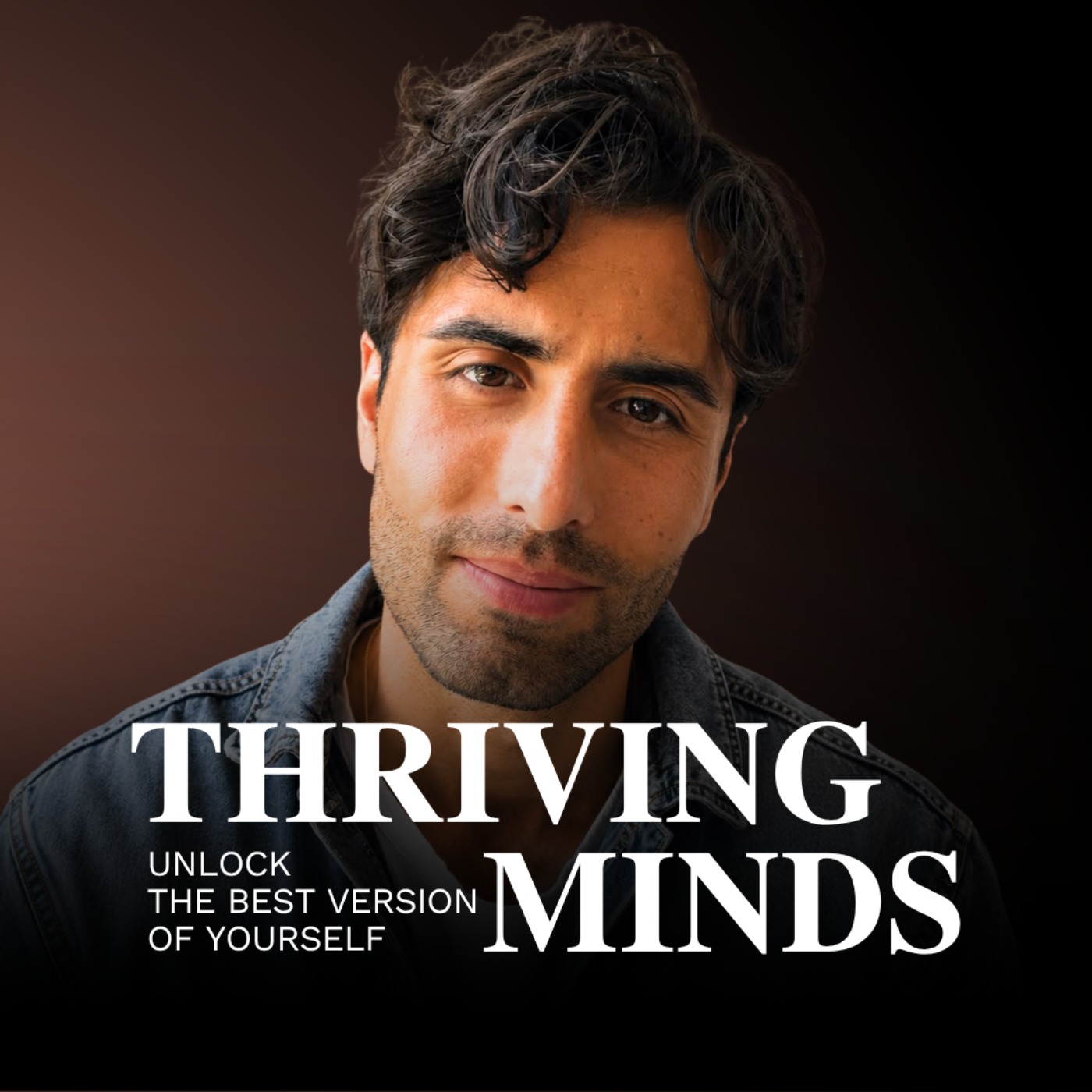
 Thriving Minds with Alberto Zandi
1 Oct 2026 · 1h 12m · 26 chapters

Tukar (Touker) Suleyman recounts his rise and fall in UK retail/fashion finance, the due-diligence mistakes that led to losing everything, and how he rebuilt through Low Profile, then scaled into luxury brands. He also explains why he’s leaving Dragon’s Den after 10 years and what he looks for in founders.
Touker Suleyman is a long-serving Dragon’s Den “dragon,” with 50+ years as an entrepreneur, investor, and retail leader. He’s known for acquiring Hawes & Curtis for £1 and investing millions in UK emerging companies. He grew up in the UK after leaving Cyprus in 1959; his father ran a cigarette-import business and he later worked in accountancy before entering fashion.
Early success can create overconfidence; due diligence is essential; “never give up”; good founders are hard-working, honest, and straight; hiring the right experts lets entrepreneurs enter new sectors.
Buying Bamba Stores via a 29% stake after insufficient due diligence; losing his house and facing liquidation after market manipulation and a failed rights issue. Rebuilding with Low Profile (helped by a Turkish fabric supplier who delivered containers after a casino loss). Turning around Hawes & Curtis (buying a shop and £800k debt for £1; expanding to ~35 shops). Ghost brand deal complicated by Procter & Gamble perfume/cosmetics licensing.
Written by AI. May contain mistakes.
Discover the journey of success and subsequent downfall in business.
“With more than 50 years in business, he has built and transformed major fashion brands, famously acquiring Hawes and Curtis for just one pound and turning it into a multi-million pound business.”
Hear about Touker's childhood, family's immigration, and early influences.
“Well, look, I remember distinctly when my family were from Cyprus.”
Explore how Touker transitioned from accountancy to the fashion industry.
“And I went to a very ordinary school and probably that was the first form of my personality.”
Learn about Touker's early ventures in business and the challenges faced.
“And indirectly, we were doing an audit in a fashion company.”
Understand the importance of due diligence and learning from past errors.
“would like you to buy into Bamba stores as an opportunity.”
Learn about the significance of thorough research and understanding in business decisions.
“Now I always repeat the due diligence is so important.”
Discover how early success can lead to complacency and eventual failure.
Uncover the path of resilience and determination after business failure.
“I think this is a very, very important take because right now, unfortunately, we live in a world that demonizes failure.”
Learn about Touker's experience with Mr. Somnus and their connection that led to establishing a factory in Turkey.
“A billion dollar investment in 1980, making textiles.”
Hear how Touker expanded operations to Bulgaria and Georgia employing thousands in the process.
“So at one point, I had 8 ,000 people I employed supplying the whole high street.”
Discover Touker's vision of owning a brand and transitioning from a supplier to a brand owner.
“And the edge was that I was making a lot of money.”
Learn about the acquisition of the struggling brand Horst & Curtis and the challenges faced during the process.
“I didn't know anything about shirts, but I had the contacts in Turkey.”
Explore the difficulties faced while growing a chain of shops and maintaining profitability.
“So that's why you took secondary locations.”
Understand the negotiations and legal challenges faced with Procter & Gamble regarding the Ghost brand.
“Gianluca Brasotti was, at the time, he was head of Aspinall.”
Delve into the final negotiations with Procter & Gamble and how Touker strategically approached the situation.
“A month later, can we have a coffee with you?”
Learn key negotiation lessons and how to approach deals effectively.
“if you were Procter & Gamble would you risk it at a young age already my mind Anyway, I get a final call from somebody from Cincinnati, from head office, an American gentleman.”
Discover what qualities to look for when hiring and building a team.
“on a transaction you're doing, thinking that they had the same intention and goodwill as you.”
Hear the journey of becoming a Dragon and the lessons learned on the show.
“Just because you're a successful entrepreneur doesn't mean you're a genius.”
Gain insights into what makes a successful entrepreneur and business.
“Sometimes, of course, it's more difficult.”
Discusses the current state of business and the challenges faced by entrepreneurs today.
“could back people that's unfortunately we're in a society where well fortunately i'm saying where there's much more money around than there was when i started a business much more funds private equity, angel investors.”
Provides actionable advice on starting and succeeding in business, emphasizing resilience.
“Sometimes you're better off buying an existing business you can turn around than start from scratch.”
Explores the personal sacrifices and lessons learned throughout an entrepreneurial journey.
“So that's the sort of scale you're going to be thinking about.”
Discusses the evolution of success and happiness over a lifetime of entrepreneurship.
“I can feel it in the tone of your voice.”
Wraps up with key insights on treating others and the importance of perseverance.
“I wouldn't want to change my life just for money.”
Explore the misconceptions about successful individuals and learn about the importance of perseverance.
“But you are not who you are today because you started with money or because you were lucky or because you've not made mistakes.”
Hear how sharing personal challenges can inspire others and the qualities needed for entrepreneurship.
“And I think I've exposed things today that I've never exposed to anybody else, but I think it comes naturally, you know.”

Get the gist, explore an idea or ask about something said.
 Claude
On Thriving Minds with Alberto Zandi, what are the key points of this episode?
Searching your listeningAutomatic transcript. May contain errors.
0:00You've got 800 ,000 of debt, you've got one little shop, what are you going to do with it? I said, I'll buy it off you for a pound and I'll take on the debt. A good entrepreneur can enter a sector that knows nothing. If they're good at picking people, they can do any business. It was like a movie, you know? Chamber of Two Public Companies, young age, Aston Martin, that whole thing, it all looked too glamorous. It was only success, success, success, so you feel like you could do anything. And then all of a sudden, debts, liquidation, losing your house. Yes. I think it's a classic example of... Tuukka Suleiman is one of the world's best-known entrepreneurs, investors and retail leaders.
0:35With more than 50 years in business, he has built and transformed major fashion brands, famously acquiring Hawes and Curtis for just one pound and turning it into a multi-million pound business. He is also one of the longest-serving dragons on Dragon's Den, where he has invested millions into some of Britain's most promising emerging companies. If you could give one advice, only one advice to an entrepreneur, what would it be? The life of an entrepreneur has many roads, ups and downs. No matter what you face, you never give up. I took a 29 % stake without doing my proper due diligence. No, so that's a big mistake.
1:14So the whole thing was like a domino effect. Lost everything. Well, it's a lesson learned. It's very important in whatever you do in your life. I've learned that the hard way. You'd become a dragon in Dragon's Den. After 10 years on the show, what makes a good founder and a good business to invest in? Tukar, thank you so much for coming this morning. I know you don't do many podcasts or none whatsoever, so I feel very privileged that you're here with me today. Well, privileged. Thank you. Take me back to the beginning. What was your childhood like? Well, look, I remember distinctly when my family were from Cyprus.
1:54and in those days Cyprus was run by the British and there were problems in Cyprus, intercommunal problems. So my family decided to leave Cyprus in 1959, a long time ago. And I remember as a five, six-year-old being on a boat, big boat coming into Dover and being lost on that boat. As a very young child, the boat was massive for me. I got lost on that boat. And I remember coming in in the English fog in those days. That was my first remembrance of my young childhood, coming into a country as immigrant. Although I had a British passport because Cyprus was part of Britain, part of the UK then. And my family in Cyprus, my father was a businessman.
2:50he used to import international cigarettes into cyprus so he was quite prominent but he realized that the uncertainty and the security of cyprus meant that he wanted his family to be safe so we came to the uk and we stayed with some family friends for a while and then my father then went into partnership in a restaurant. And I remember distinctly in Camberwell, London, the south-east London. And as a child, I remember being surrounded by my father, working hard. It was really hard work to keep us going. And at that time, opposite where we were, my childhood at a very young age, there was a club called Clubland.
3:51It was run by a Methodist church priest. But the whole thing there was, it was a community of football, games, a community. I remember his name now, Reverend John Butterworth. This is in the early 60s. and I got involved there. And it's probably where I first picked up what I call my leadership. I became head person there. I became head captain of football. It was a leadership, you know. And I went to a very ordinary school
4:34and probably that was the first form of my personality. and of course at an age of around 10 11 i had a bit of a scare on my left hand here my hands were blew up and i went to the hospital and they said we'll have to amputate his hand luckily i went to another specialist and they put you can see the scars still they put plastic drains through my hand yeah to take everything out and if you see my fingers on the left hand they haven't grown. No. So if ever one wanted to know my DNA, that's my DNA. You see? Yeah, yeah, yeah. So that was my young childhood. And then as a young kid, I became a good squash player.
5:24So I remember going from South London and traveling all the way to Wimbledon squash club to learn how to play squash. you know and i i was playing with the top guys in those days and in those days there was a big family called the khan family they used to run the squash world in around the world and i was very fit and at all at all at all that stage it was being in the background of my family working hard me creating my personality, it gave me the vision of where I wanted to go. And I remember, and I went to a very ordinary school, South London, and I came out with quite high grades. Of course, like any immigrant family, you want your children to be a doctor, to be a lawyer, to be an accountant, to be all that.
6:28So I decided my first job was I was an article clerk in a firm of Chartered Accountants in Southampton Road in the city. And I think I was earning about five pounds a week as my salary. Trying to think of the name. So from there, I learned very quickly. I was given the job of sorting out the paperwork for small businesses. And there were three types of businesses in those days that made money. Property, celebrity, and fashion. There was no internet, no mobile phones. There was nothing. And as a young kid in my late teens, early 20, I remember it was, I noticed that very quickly the aspiration of where money was being made in the early 60s or whatever it was then, mid-60s.
7:36And indirectly, we were doing an audit in a fashion company. I took some dresses bought them came to my grandmother a week later she calls me says those dresses you gave me where do you get them from us can you get more I said sure she said I sold those I want more and indirectly I got into the fashion business indirectly um and then I knew that accountancy wasn't for me I was much more ambitious and I um how did you know that and I met I remember I met a Greek gentleman Nick he had a factory in Dawson Lane East London
8:27very charismatic gentleman great talker um he was probably much more mentally advanced than what he was doing and he said to me look I can make the product you can sell it so I went out sold the product I remember my first order was from CNA UK they were very big in those days and that's how I started and then eventually I bought out the partner um and And I had offices in Little Portland Street in the 70s. And I soon became a forceful figure. Supplying CNA, Arcadia. And it was different in those days. It was real, call it rag trade. Around the area, every little first floor, they had lights and factories everywhere, fabric moving around.
9:28There was an excitement. It was a time of Bieber, Twiggy. There was a whole, you know, it was different. Again, no computers, no telephones. And it was very personalized. There were characters. And you'd walk around Great Portland Street, Little Portland Street, all that area. And you see the characters walking around. You know, he was doing that. He was doing that. Just the characters. and everybody was competing about who would have the most lavish showrooms. You know? And of course, at a very young age, probably 21, no, not 21, sorry. Yeah, probably in my early 20s, I had my first Aston Martin convertible.
10:18I made my first million doing this. and after that and then I met people in the city this was the era of before the big bang so in those days you had Lord Hanson, Gordie White, Asil Nadia, Turkish Cypriot George Walker the boxer it was those days where if somebody walked into a company the share price would double the next day They think they're going to buy that company. It was that era. Penny stocks were pounds. It was like the Wild West. Somebody said to me, look, there's a small company in the clothing business that you should look at. Here I am, a public company, this is. Here I am in my mid-20s, wherever I was then, out of my depth.
11:16So I got involved in this company. The shares were 3P. We've been two weeks to£4 on the back of probably this Turkish gentleman, Asil Nadir, who was on a whirlwind, whatever. And then the brokers, I remember the name, Langan Cookshank. I'm not sure if they're around anymore. I met them and they said, oh, we have a company called Bamba Stores. would like you to buy into Bamba stores as an opportunity. Here I am thinking, young kid in my 20s, chairman of a public company. I could be chairman of two public companies. So I had an old friend of mine, who's hopefully still alive, David Caddy. David Caddy was a senior partner at Cooper's and Libran, who are now PwC.
12:18So I called up David and said, David, what do you think? He said, right, let's look at the, order the account. You'd think a public company, order the accounts, it'd be all square. So I went to see the business and talked to the owners or the founders. and the finance director was going to live in America, Mr. Vernon, the Vernon family, very distant. He's probably dead now, Mr. Vernon.
12:55And I looked at him and said, I could do something here. I could turn this business around. So David and I said, why don't we visit the assets? So we went to the warehouse. and as david says went to them it was all dusty and he said he says all those coats thought that just came out of russia he said i remember these distinct words he said look net assets are 16 million let's write off 6 million so 10 million is is what this business is worth is what you can do with it and i said to david look david we know that the business needs more money. We need to do a rights issue. We need to review the business.
13:42So
13:47I took a 29 % stake on the back of that without doing my proper due diligence. You know? The due diligence was just walking around the factory. Yeah. So that's a big mistake. Now I always repeat the due diligence is so important. about, listen, whether you're going into business with somebody, whether you're buying a business, whether you have a girlfriend, you always do your duties. You know, there's always a history. You've got to know what you get yourself in for. It's really important. So I got myself in a position where I'd already bought the steak, and I remember distinctly David Caddy came to me with a big report.
14:29I've still got the report. I've still got it in my office. It's that thick. Cooper's alone report. I think it cost£40 ,000 in the 70s, that report. He threw it at me in my office. He said, they're busts. I said, sorry? He said, they're busts. This is after buying the business? Yes. He said, everything's been overvalued. The property was worth$2 million, they put$10 million. This was worth, stock was that, everything. You know, so what happened was, okay, and I was the chairman of the company now. I've been there for two or three months, you know, running the business. So the next day, we called the stockbroker and said, we should have an extraordinary meeting to discuss where we go from here.
15:21And we're in a room, Coopers and Libran, Lang and Crookshank, lawyers, the whole thing in one room.
15:30And I was advised that I should resign as a chairman. Why? Because the company was insolvent. And my advice from everybody said, look, you're an innocent part of this. It's going to go into liquidation. But the funny thing was very simple. There was Bamba's share price had gone up tenfold on the back of my name. Within three months. Yeah. So John Southwell, I'm sure she's still alive, picks up the phone to his people. This is like 10 o 'clock in the morning. John Southwell here, just to let you know that at 2 o 'clock, we're going to suspend the shares of Bamba stores. between 10 and 2 o 'clock all the cronies came out of the stock the stock nobody knew that was how the stock market worked in those days so the share price plummeted and at 2 o 'clock they suspended the share but all the guys that they put in the people that put me in there they all came out so there was I and of course Bamba stores eventually went into liquidation so I had another business, Melins, which was another public company, also took a stake and again we did the same thing and we had to raise two or three million pounds and I got a phone call from Asil Nadir, the Turkish guy who owned Polypec
17:09and I explained the situation to him, he said to me, look, do nothing, we will take up the rights issue. I said, look, I've only got six weeks to come up with the money. No problem.
17:28Two weeks went, didn't hear. So I called him, he'll call you back. Four weeks went, nothing. On the last day of the six weeks, I get a phone call from his secretary. Mr. Nadia has decided not to proceed right that same day hit the papers he got it taken out out the papers but i had no time to go back and raise the money my time was up cash flow was up public company another public company you know on top of that i didn't have a private company where i started from which guaranteed so the whole thing was like a domino effect lost everything there was i a young age i had a house in highgate which i gave to the bank as a guarantor lloyd's bank so from from building this journey from zero to being a chairman of two public companies on this um and i think at a young age a lot of young people become very successful think they can walk on water.
18:36Yeah. And I went through that stage. Think that I can walk on water. This was like, it was like a honeymoon. It was like a movie, you know? Chamber of two public companies, young age, Aston Martin, the whole thing, it all looked too glamorous.
18:55And it woke me up. I said, I'm not going to give up. I've got a lot, I've made a lot of mental contacts. And in a way, and Lloyds Bank didn't put any pressure on me. And I said to Lloyds Bank, I'm going to sell the house and give you the money, which I did. I sold the house, gave him the money. I'm still with Lloyds Bank after 50 years. Same bank.
19:27Before we discuss the next chapter of your life, I want to quickly summarize everything that you've just said. so our audience still stays with us and understands your journey because I think it's a very powerful and beautiful journey. And your comeback before we discuss it, I think it's quite important that we're all on the same page with your storyline. You come from Cyprus. Your father is an entrepreneur, seems to be a figure that represents the kind of level of success that you want to emulate at some point in your life. Then you become an accountant. You quickly realize that the corporate world wouldn't be one for you.
19:58You get exposed to fashion. That's something that you want to do. You quickly become quite relevant through founding a company that you didn't mention, but it's called Kingsland's Models, which were producing fabrics, selling it to retailers. And then you want to do that on steroids. So you buy a similar business, but that was on the stock exchange called Mellins. So you're manufacturing fabrics, selling it to retailers. And then you realize, well, I want to own most of the supply chain. So I might as well buy a business that is a retailer, which were Bamber stores. So everything starts to make sense.
20:28then three months into the business you are in your 20s making money to publicly traded companies aston martin the definition of success was something that you've only experienced in your life you it was only success success success so you feel like you could do anything and then all of a sudden not necessarily bankruptcy but debts liquidation losing your house yes i think it's a classic example of early success and a classic example of probably not having the correct mentorship around me at the time. I had David Cagney, he was excellent. However,
21:12the circumstances just happened so quickly, you know, and I realized, I realized that once you make one mistake, when I had Kingsland, very successful, it was supplying everybody, making money. But it was only when I went into Melon's and into Bambus that I was out of my depth. Because external factors were making money out of me. The stock market, the brokers, bringing their private clients in, taking them out. You know, it was very much, very different. I mean, today, you would have sued the auditors, but in those days, it wasn't so easy. So the lesson learned here, if you want to ask me, what is the lesson learned?
22:10The lesson learned is very simple. Early success is good. However, don't think you can rule the world with early success. Due diligence is very important in whatever you do in your life. And I've learned that the hard way. And to me, that was the beginning of who I really became. Strong, never give up, keep going. And then readjusting my vision.
22:49wouldn't you say that that early rise and crush in a way is what made you yes as a person as a person and and and now of course i look at things differently your due diligence um whatever i do if i buy a piece of property what i say what's plan b what's the way out you know you know and And one of my ongoing successes probably is where I made my money in fashion and put it into property. Yeah. We can come to that a bit later. But that's... I think this is a very, very important take because right now, unfortunately, we live in a world that demonizes failure. And I have come to learn through my own experience by interviewing so many great entrepreneurs like yourself that the only recipe to success is through failure.
23:36Failure. We live and we learn. You know what I find amazing? if you fail in the UK, they look upon you and they frown upon you. If you fail in America, they love you because they think you've learned something. The Americans love failure because they brought back somebody who's failed, knowing full well they won't make the same mistakes again. They celebrate it. Yeah. Yeah. What I find very interesting and very encouraging is your comeback. because in 1982, 1983 is when your business has collapsed. You have to sell your house. A lot of people would have either A, stop right there and then, or it would have taken them many years to come back.
24:19One year later, in 1984, you decided to come back and create another business in the same industry called low profile. How did you find the courage to start again? Well, I was lucky because I had my brother who had low profile. It's a small little cash in, small business, tiny. And I said to him, come, I have all the experience. I have all the knowledge, right? We'll do it together. You take care of the back end, I'll take care of the front end. One question right there. Your brother saw the collapse of two very large businesses. Obviously, from a place of love, everything is roses and flowers.
24:58but how did he trust you with this small business? I think sometimes blood is thicker than water. And I think he saw my brilliance, my head, my vision, my context. And he knew where he was. And that's where he was fine. And I think the biggest turning point for us when we started this business again was by total coincidence. We had a little showroom, again, in Little Portland Street. And we were supplying the same people. One day, a little man from Turkey comes. and he said he walked in he said the people up the road from the cafe restaurant called efes in those days in great chisville street said that you guys are turkish well i said we're turkish but we're from cyprus he said i'm turkish can you give me a coffee i'm visiting of course little sit there and he says you do fabrics yeah i said well garments yeah we make garments so I'm in that business in Turkey okay and we started talking and he took out some fabrics and he showed them to us it was nice and the prices were good I said why don't we sample some of these okay and then he said can can you tell me where I could have dinner tonight?
26:39So I said, well, we'll take you for dinner. You know, no problem. And he was a, I'll get to the point in a second. And we went for dinner. He said, he'd like to go to a casino. Okay. I looked at my brother and said, who's a member? So we rang a friend who's a member, took him to a casino. And we sat by the side and he lost a quarter million pounds. gambling, cash. And that was in the early 80s, a lot of money. And then he said, I'm leaving tomorrow, but you'll hear from me. Ten days later, three containers arrived outside our office, full of fabric. I'm surprised. What is fabric? He rang me up.
27:30He says, oh, don't worry. He says, just take the fabric. You pay me when you've sold them. maybe 200 ,000 pounds worth of fabric. Wow. The good old days. So into our warehouse. He said, I want you next week to come and visit me in Turkey. Now in those days, I've never been in business with Turkey. Turkey was in the dark days in the early 80s. It was just starting the industry. So I flew to Turkey. he said meet me at so-and-so stand little old man arrived there he's got his own airline flies me to Bursa where his factory is and he's got seven Mercedes waiting for him I thought I'm thinking what's going on here they'll get in the Mercedes and we arrive at a complex in Turkey called Somnus Holding.
28:34A billion dollar investment in 1980, making textiles. All of this from offering a simple coffee. Then, yes. Then, we're there. And of course, I remember this, I used to go to every Monday, he'd have dinner with all his staff. 40 staff managers in dinner. He'd be like the godfather. he's standing there and he would talk to them and he'd always tease me he'd say look there's 40 of you here I know you're all stealing from me but leave some for me that was his face jokingly and then I went around I was like gobsmacked thinking wow he said to me this is your factory
29:23I said what do you mean he said anything you want here and And within a month, he set me up a factory making garments. Why so much generosity? I don't know. We had this connection. And that's when he made me come back. We ended up eventually employing 8 ,000 people. Through low profile. Yep. He, Mr. Somnes, came from Bulgaria In a place called
29:59Near Kirjali A place in Bulgaria, Turkish-speaking area This is a couple of years later He said to me, look I'm going to take you somewhere when I was born And he said, you see all these people here? This was a time when the wall had just come down And there was no food there, nothing he said see all these people out of work I promised them jobs I want you to start a factory here and we started a factory in Bulgaria
30:35employing about a thousand people in those days because he promised them and I grew the business from there eventually also through one of my connections going into Georgia. So at one point, I had 8 ,000 people I employed supplying the whole high street. And we're making money. And the one thing I learned, when you make money, you've got to diversify. So I put money into property, real estate, you know, office buildings. This is around where my office was, was around Fitzroy Square in this area. And that was probably the beginning
31:20where because I had cheap production, and in those days there was a big industry in the UK, in Leicester, Nottingham, all these guys were supplying M &S out of these areas. China wasn't even on the map. I think the only people who were really big into the Far East in those days was CNA. They had offices. So I'd already had an edge. And the edge was that I was making a lot of money. When I say a lot of money, millions a year out of, because the margin, I had an edge. And took the money, put it into property. But I wasn't satisfied. Your edge was low labor cost. Low labor cost and low fabric cost because of Mr.
32:09Summers. And we're still doing business with him today. So we had a big, he would say, how much do you want to pay for this fabric? I said, what was yours? It was like my godfather. Yeah. And we became very close. We're still close with the family. And the question then was, was that here I was in a position, bounced back, learnt my lesson, got credibility in the industry, and decided that that wasn't good enough for me. Why? Why? Because I was a supplier. I didn't have my own brand. And if you were making money, why did you want to own your brand? Because I felt that I had the vision that if you want to sell a business, you can't sell a manufacturing business.
33:02You can sell a brand. And that was my vision in the 80s, early late 80s. So the vision I had already, brands, you know, people weren't thinking about brands. I had the vision of the brands. So what happened, I was approached by Ralph Lauren. They wanted a supply base in Europe. I didn't know anything about shirts, but I had the contacts in Turkey. So I went to the best shirt manufacturer in Turkey. And I said, guys, this is my customer. They're very fussy. And we started making Ralph Lauren shirts in Turkey, supplying Europe. that another supplier out of China, but this was Europe. And I said to myself, why can't I do it?
33:56And so what do I do? I walk down German Street where all the shirt makers are. And I look at all the brands. There's one little shop on a corner that looked tired, but the brand was an iconic English brand. I looked at one company's house and did some homework, and that brand was in trouble. This was Horst & Curtis. And when I approached them, they were happy to hear from me. Horst & Curtis was owned by Cordins, who were still in Piccadilly, and and the owner said look you know we're not sure what to do with this business i said look you've got 800 000 of debt you've got one little shop what are you going to do with it i said i said i'll buy it off you for a pound and i'll take on the debt
34:55i i wanted the brand so i looked at the 800 000 50 000 there 20 000 there 10 000 so i called them up one by one let's look there's the accounts it's probably going to go to liquidation i'll give you 10 pence 20 pence in the pound and they all accepted so i bought the debt then i decided i'm gonna go in and the factory we're making sure it's raf loren said we'll make for you but you need fabric so the best fabric came in mittaly albini and these places but i had no scale one shop so i went there you're buying stocks and i said to myself no no no i'm gonna open 10 shops quickly which i did unfortunately in those days my covenants wasn't good enough so i had to take secondary positions not so good and i built the chain up to about 35 shops just for those that don't know the covenant in simple terms especially here in the uk is your financial strength towards It's a landlord so they can give you a prime location on the high street.
36:02So that's why you took secondary locations. Correct. So what happened then was I grew the business and I realized that we weren't making money. And of course, rather than what you call do a CBA or whatever, I didn't want to do that. I paid the landlords off and produced it. So then another brand came along in trouble called Ghost. Before we discuss Ghost, so early in your career, you acquired two brands, one of which didn't go so well and it ended up impacting the other one. So you decide at the later stage of your career, go through an inorganic growth again, which is acquiring a brand rather than building it from the ground up yourself.
36:49of what made you think that this particular brand could be turned around? And how did you turn it around? Well, I think, look, I think at the time I felt I had the production. I had the fabric. Why can't I do it? And I had a friend of mine, Gianluca. Gianluca Brasotti was, at the time, he was head of Aspinall. lorence stroll brought him in um with silas chow to turn asport around and he was from lvmh his actual words to me was tuka he said to me he's now butcholati he said tuka if you want to do a luxury brand you need 10 years i said no john lucca i want to do it in one year he says then you must do it like this one there's a brand there selling free shirts for 90 pounds And I said, I could do that.
37:45And when I launched the shop, I sat on the corner, and this brand, who's since gone into liquidation, and came back, it was like a mecca. Everybody would go to it, and they wore the bags every Saturday. I thought, I'm going to do that. That's what gave me the incentive to go for it. and and in a way um it was uh the passion for shirts you know i remember even when i was young and 20 years old there's a shop on german street called vinci in those days um i used to go buy silk shirts from there to go out at night you know i I had a passion for shirts. So that was my foray into shirts. And then because of my strong manufacturing background, I said, I need a brand, another brand.
38:41And we had the license to produce ghost product for Mark Suspensers. So we knew the ghost brand. And I knew Tanya. So Tanya had sold the business to the Scandinavians. And then they went into liquidation. I then lined up to buy the business and they had a license for the perfume with Procter & Gamble which I thought the license money alone would cover everything so what do I do three days before signing I flew to Geneva and I saw the executives I said look I'm buying the brand hopefully we can still continue your license so you've got the ghost perfume oh yes we'll we'll definitely back you we'll support you we're with you so i come back the day of the signing i get a call for the administrator we've got not so good news for you unfortunately the perfume business has been sold to somebody else we can see you the clothing side i thought oh strange okay so i signed it disappointed i didn't i didn't know who what i suspected a month later two months later i get a phone call this is the um that i find out the procter and gamble went behind my back oh no and bought the perfume i get a call from their lawyer um there's been a slight mistake the perfume wasn't transferred to us but cosmetics was so i owned the perfume indirectly so they threatened to sue me procter and gamble there's goliath and there's david and they said to me look we'll pay for your legal fees not a problem I said, really?
40:49A month later, can we have a coffee with you? Somebody come to me, we'll give you£30 ,000. Two months, six months later, four months later, whatever it was, I get another phone call. Can we have another coffee with you? He said, we'll give you£300 ,000. pounds i said to him of course through mr somnus at the time he'd invite me to monte carlo he was a big gambler i'd look so i sat him down i said look you know who you're dealing with 300 000 for me is a weekend in monte carlo with one spin on the roulette jokingly i said forget it and i thought they're very keen to sort this out and of course legal letters they're going to take me to court and I had a lawyer friend of mine he said I'll do a deal I said no I said think about it they've got a business doing 20 million if it goes to court it's 50-50 chance they may lose it if you were Procter & Gamble would you risk it at a young age already my mind Anyway, I get a final call from somebody from Cincinnati, from head office, an American gentleman.
42:19He said, I'm in Geneva. Could you meet me to discuss, we want to do this deal? Not knowing what they had in plan. So I arrive at the hotel and we're booked to have dinner in the hotel, in the roof terrace. So I arrive there, I call the wine waiter. So I ordered a thousand pound bottle of wine, had it on the table. I said, let's start getting this meeting in the right perspective. He comes here from the States. And of course, they bring the bottle like a baby. There's two waiters bringing this. So he says, I didn't realize what that is. I said, well, maybe look at the menu. You know, he was startled.
43:07You were telling them you're expensive. Yes. So anyway, to cut a long story short, he said, look, you know, we need to sort this out. We're going to go down the legal route or whatever. What's your price? I said, two million pounds.
43:25I said, look, you can take a risk. We can go to court.
43:36and what the administrator says in his letter is you buy a scene if you buy a business from an administrator they always say you buy a scene you can't go back you buy you bought a scene just because your lawyer made a mistake anyway i said to him look enjoy the dinner i'm paying i said however i'll be here for breakfast tomorrow eight o 'clock my flights and whatever if you reconsider my offer we'll talk about it so eight o 'clock I'm there no quarter to eight I'm there he's there seven thirty was there waiting for me so I said this he said look can we sort this out I said I'm assuming you've agreed to my terms um and I said to him I said look it's very simple we either agree or we don't agree and I want it worded this way I've been advised by my lawyers accountants could be worded that way so it's not we wouldn't be involved in a tax situation situation I'd pay tax forever down the road but not immediately whatever it was at the time we shook hands I said I'm shaking hands with you not because I trust you I don't trust you for what you've done in the past so that wasn't me I said but can I look you in the eye and say, I can trust you.
44:54He said, yes. Anyway, the transaction, and I got the money, two million pounds. Did you offer two million pounds willing to accept less than that? Probably a million. Right? We've got to send this clip to this person. Well, I'm not even sure whether I signed an NDA. It's a long time ago, you know? Yeah. I may have signed an NDA, but if ever I was to write a book, that's a transaction that I would never forget. Yeah. You know? That's, again, being very open with somebody on a transaction you're doing, thinking that they had the same intention and goodwill as you.
45:38What's the greatest lesson you've learned in negotiation? Never undermine other people. And I think sometimes you've got to put yourself in their position and ask yourself why. it's like you're buying a house first thing i would do is who's selling it why they're selling it are they desperate sell it are they are they under pressure that you know always and and in real estate in property you make your money when you buy not when you sell you know and that's always in anything so when you're negotiating you've always got to have what your best and worst scenario is and are you willing to walk away you know are you willing to actually walk away but you've got to know who you can negotiate with and why they want it you know what i'm saying always know the other part you always know that their intentions why are they doing it you know what benefit have they got why can't you benefit from that or how are you going to benefit from that you know it's very um how can i put it um and also you've got to be fair you have to be fair because the world is very small and if you do business with somebody in your fair they'll come back to you if you try and pardon my language screw somebody every time they won't come back to you.
47:13You know? Yeah. It's, I always believe that it's a two-way traffic. And most people that I do business with have done business for 20, 30 years, 10 years, but they know I'm hard. They know that I'm straight, honest, hardworking, but hard. Tough but fair. Yeah. But I always weigh up for both parties. And I hate liars. I hate people who overcharge for no reason. I find that another very important skill, in addition to negotiation, for an entrepreneur is the ability to recruit the right people. As you scaled your businesses back then, what were you looking for in the people that you were hiring? Well, look, I think the question really is, and I learned the hard way, really.
48:06If you try and run a business all yourself, every day, everything. You become an employee of the business. If you pick the right people to do a job, then you can take a step back and let them get on with it. You know, I'm launching a new business now. I know nothing about that sector, but I bought the right people to do the job. I gave them the tools, the finance to do the job. And that's really important. understanding that you bring experts in to do an expert job skills versus attitude when you hire someone in the early stages of a business which is very different when a business is at a more mature stage if you were to put it into a percentage is it 60 skills 40 attitude vice versa first of all i hire people on gut feeling i can look at their CV.
49:02Interesting. It's gut-free. You talk to somebody, you know. And, and, and of course, I'd like them to think that I think. And I've got, if they've got something new to offer, I'll listen to them. You know, I'm a very, I'm somebody to say, right, we got this. I'll call the people. What do you think, guys? Tell me what you think. I don't need to make that decision. I'm very open. And, and I, I, I'm, I support the team in getting where they want to go. You know, And I love it when they come to me with a problem, I solve it. I've done it before. I've been there before. Done it before. But I think it's very simple.
49:42A good entrepreneur can enter a sector that I know nothing. But if they're good at picking people, they can do any business. Because you can always get experts today. People who are more qualified than you to do that job. Just because you're a successful entrepreneur doesn't mean you're a genius. you just you can pick the right skills for the right job let's fast forward to 2015 you decide to become a dragon in dragons then well yeah so i get a call so i was using a pr agency for one of my brands and uh that they were in a bit of a scandal afterwards called bell pottinger before the scandal, James Henderson, who was the head person there, said to me, we've been approached by the BBC.
50:40Do they have anybody that might warrant to be a dragon? Would you go for a screen test? So I go for a screen test, not thinking. And that was it. They asked, screen test. A month went by, and I get a phone call. Can you come to Manchester to visit us? And Steve Hadley, who was the producer then, said, let's have lunch. So we went to a restaurant, Media City. We were the only two there. We were 12 o 'clock in the morning. I got up really early to get there. He sat me there. He said, Tuca, I want you. I said, what do you mean you want me? He said, I want you to be a dragon. and I said fine he said I feel that you've got the right background you've got the right energy it's what you want and at the time Dragons was having a big change there was three new dragons there was myself Sarah Willingham and Nick Jenkins three of us all at the same time new dragons and that was 10 years ago 11 years ago whatever it was why did you want to be on TV?
52:00I don't know why if you look inwards I think at the time I felt that I could add value giving myself the exposure but bearing in mind that I'd come from being a public company in the papers and I thought I can do that it's probably my last achievement you know and um i didn't know what i was really get myself involved in however i knew that i looked at companies i had a pretty knowledge but the one thing i learned about being on dragon's 10 is it widened my horizon to lots of businesses first thing i learned was gluten-free i said what's gluten-free you know this was 10 years ago sustainability you know all the areas i was not familiar with so it was a great it was like going to school you learn something every day how did becoming a recognizable public figure change you as a person look for the first year you feel like you're on a high you're there people approaching you and then I realized that that wasn't me I'm much more of a humble person you know grounded on the ground and slowly slowly I started to define my own person probably a old statesman type realizing that I've got responsibility I want to be respected for who I really am hard-working honest and straight you know and then i i i transformed myself into being that person um not wanting too much to be in the spotlight um and i think probably um even in my social media i didn't want to tell people about my private life because that's private but i wanted to go out and reach out where i could help and that was part of my involvement as a person deep inside if I had all the time I'd help people and in the office we have every week three or four people come in for advice I give it to them very simple sometimes it's so easy to help people they can't see it you know so I had somebody come in a couple of weeks ago said to me oh we need an investment so I said why do you need investment oh but we're growing and we're giving credit and that other and we need investment so I said who's your supplier what credit terms you get 30 days and how long have you been dealing with them have you paid on time yes I said pick up the phone and tell me you're growing you want 90 days but you're going to give more business to free suppliers.
55:07He rings me back. He says, they're all agreed. My cash flow now is positive. I don't need investment. Simple as that. It's very simple advice. Sometimes it's easy. Sometimes, of course, it's more difficult. People have got a product or whatever idea, and they want to market it. But marketing, as you know, is like a black hole. You can spend the fortune market and get nowhere. And there's all different ways. After 10 years on the show, to you, what makes a good founder, a good person and a good business to invest in? You can have a great business, but if the founder is not good. I mean, I've invested in Business on Dragons where great idea, we've helped, but the founder wasn't straight.
55:52And we got out. Other businesses where good founders got the energy, wasn't right, we've helped them. you know but but but for me i just want hard working honest people and i'll back them you know unfortunately i say things like this i get 10 000 people who message me you said you could back people that's unfortunately we're in a society where well fortunately i'm saying where there's much more money around than there was when i started a business much more funds private equity, angel investors. We didn't have that when I started. Much more easy to raise money today than it was then. Interesting.
56:37There's an opposing school of thought that says that building a business in this day and age, it is much harder, not necessarily due to fundraising, but because the competitive landscape, it is so much higher and fearful. And the consumer, especially in business to consumer businesses, the taste and preferences of consumers are changing very rapidly, more than ever. Okay, so I get asked this question. How do I start in business? All the time. I said, look, you don't need to be a rocket scientist to start a business. All you got to do is pick what you want to do, start at the market, look at the competition, say, how can I do it better?
57:20Where are they sourcing it from? How are they making it? Right? And then go about, let's say this glass. Who's the biggest manufacturer? Who's the biggest salesperson? Where do they sell it? What's their USP? What USP can you come up with? Where's it been manufactured? Visit the factory. Go right to the source. And that way you can have an old idea, but you reinvent it. That's what it's about. You know, you reinvent an old idea rather than trying to be a scientist to create something, which you're not. Yeah, it's very interesting. A common friend that we both have, Sir Richard Hartpin, said something very similar.
58:07Replicate a business model that is working and either steadily change the unique selling proposition or make the internal processes more effective and more efficient. Exactly. So I'm a great believer of that now. Sometimes you're better off buying an existing business you can turn around than start from scratch. But if you're going to start from scratch, do it better. Have a USP. If you could give one advice, only one advice, to an entrepreneur, what would it be? The life of an entrepreneur has many roads, ups and downs. No matter what you face, you never give up. Beautiful. After 10 years in Dragonstone, you decided to quit this year, to let that part of you, that part of your identity go.
58:57Why now? It hasn't gone. The identity always sticks with you. I realized that 10 years, an age of 73, I decided that, and I had a little health scare a few years ago, I decided that 10 years was just right. the last thing I wanted was to be wheeled onto the den in a wheelchair. And I said, you know, and seeing the younger dragons coming on board, there's some great young entrepreneurs that should be given the opportunity to go on Dragon's Den. And I felt it's time for me, you know. And I said to the BBC, look, let's give people a chance. I've told them what I would. They said, well, can we give you another program to do?
59:44And I said, I have an idea. I'll come back to it. An idea that I've always had a passion for, a TV show. And that was it. And then I realized that I was working on a new project, which we're going to launch in a few weeks' time, that would take a lot of my time. And that would give me 20 days a year free. That's it. And that was it. But I'll always be a dragon. I've not given up in business. and I may be back on TV with another total idea that I've got, but we'll see. The life of an entrepreneur is multi-layered, complex. You can live the best day of your life and also the worst day of your life, both on the same day.
1:00:28What has your journey as an entrepreneur cost you personally? Cost me? Personally. It hasn't cost me. I've gained a lot of experience. you know when you say cost cost is a is a funny way to express it i think yeah cost hard work sleepless nights being away from your family sometimes when you have to travel all of that is expected to be an entrepreneur if i could turn the clock back um yeah there may be things i would do differently You know, the one thing I've learned is the fact that, you know, if you're dealing pennies, you make pennies. Dealing pounds, you make pounds. Dealing millions, you make millions.
1:01:15So that's the sort of scale you're going to be thinking about. Now, I'm entering now to an industry, the beauty industry, which I've never been in. so I've owned the trademark called lipstick for 40 years and done nothing with it 18 months ago I decided that I'm going to disrupt the lipstick market so I brought in a great guy called Paul and I said Paul he said Paul's a chemist makeup artist I said I want to create the best lipstick brand in the world I want to take the best of the best and the one brand that was his brief 18 months later um we're ready to go i then uh brought on board a young lady called marietta she came on dragons to pitch actually uh and then she started working for me and i put paul america together there's a team they're a dynamo team one's commercial one's product and we're going to launch lipstick london at the end of this month with 100 skus all being tested and we're going to take lipstick as one brand around the world it's very interesting to see and very revealing about generally humans that when i speak with you when i talk to you at the age of 73 what keeps you going is speaking about new businesses that's what's keeping you My life is keeping you young and I can feel it in your energy.
1:02:49I can feel it in the tone of your voice. I can see it in your eyes. It's like nothing else matters. You could speak about that lipstick business for two hours. And I find it very inspiring. But I want you to answer the following question in a very honest way, but not to me, to yourself. Over the last 50 years, have you ever considered quitting? Ever.
1:03:19Have I ever woke up in the morning and said I'm not going to work? No Have I ever, and probably in my lifetime Apart from being in the hospital once for a couple of weeks I probably had a dozen days off in my lifetime I hate holidays My mind works 24-7 Have I ever contemplated suicide? No Have I had a bad day? Yes I remember the day that I lost everything Remember that day distinctly And I went home Sat there and I said right Get yourself together Hit the papers In public company hit the papers And that night I went to a nightclub
1:04:11because I wasn't a loser in myself. And I wouldn't want to show anybody that it was affecting me. So that's probably been, when you've been through that, you don't want to quit. And there are some mornings where I wake up and, oh, God, I've got to deal with this. I have to deal with this. And probably I spend far too much time helping a lot of other people, whether it's my children, my ex-wife, my friends. I'm like a godfather, pulling strings for everybody and the businesses. How has your definition of success evolved over the years? You know, success, when you first start, is always monetary.
1:05:05However, as you get older, success is more how you feel about yourself, how people portray you, your reputation, your legacy.
1:05:22And luckily, I've been very disciplined that I'm not a lavish person. I don't have yachts. That's not me. I'm very humble. I love that. Because you don't have to try. You don't have to be who you're not. You know? And what I've learned now is I'm living in a big house just around the corner. I sold it. I just want to have a simple life. Just work, enjoy myself, enjoy my future. I've condensed my friends to a small circle. And that's better. What is money to you? Money is freedom. Money is there to help people. In my case, it's my children, friends, this, you know. Look, in Dragon's Den, people you invest in, if they make a success, they need more money to expand.
1:06:23If they fail, they need money to survive. It doesn't stop. Money's there to be passed around. And people say to me, Arturka, why don't you move to Dubai? I said, no, I pay my taxes. My children will be brought up very humbly. And I'll pay my inheritance tax. Because I love this country. And for me, at my age, to go to another country for the sake of money, money can't buy what I have here. What do you have here? Freedom. Reputation. Happiness. Friends. You know, I can do whatever I want. I'm recognized, you know, help people. I wouldn't want to change my life just for money. Money can't bite up.
1:07:16Are you happy now? I'm very happy. How do you define happiness? Being content. Being in a position where I enjoy what I do. A challenge. I wake up at six in the morning, I'm on the phone. You know, that's, it's having a passion, having a goal, having a purpose, that's happiness. If you don't have a passion, you don't have a goal, you don't have a purpose, you can't be happy.
1:07:50Is there anything you wish you would have done with your time that you didn't do because you were too busy working? Look, I would have loved to travel to many more countries, of course and um time is a funny thing because what i've learned as i get older is probably what i should have done is brought more people into the business to give me more time to come out and do other things however i'm i'm very happy and now i'm i'm living my dream i want to create products i want to create businesses not because of the monetary because i want to show that i can do it from scratch so my target for lipstick it's very simple could i build from today a billion pound business that's my target and that would make you happier it would give me that little smile inside done it even if i don't benefit from the monetary point of view because other people will benefit my children or whoever right i probably won't benefit money wise but it's just the achievement that I can take an idea, a product, an industry I've never been in, and do it.
1:09:03And scale it to that size.
1:09:11My last question to you is our signature question on Thriving Minds. It's the only question that we ask everyone, whether you're a serial entrepreneur, a neurologist, a celebrity. Tucker, if you had to compress all your knowledge into one essential piece of advice that we all must implement in our daily lives, what would it be? A couple of things, really, not one. One, you treat people like you want to be treated. I find that very, very important in my life. You know, always treat people like you want to be treated. One, be honest, work hard, and never give up. Thank you. Thank you for coming.
1:09:55but most importantly thank you for being very very you with me i think i speak on behalf of a lot of people that they followed your career but when we see successful people like yourself especially on tv we tend to think that well this person is so successful because they're either a genius or they've never made mistakes they started with money they were very lucky and you know we end up or people end up building a lot of reasons a million reasons why we are not like you and And after listening to you, not only professionally, but also personally, your story, it is very beautiful and very refreshing.
1:10:30It's only part of the story. We need a lifetime. There will be a part of this. But you are not who you are today because you started with money or because you were lucky or because you've not made mistakes. You are where you are today because you didn't quit. And you've always found a reason to keep going. So I thank you for being such an inspiration to myself and to so many. Thank you for having me. And I think I've exposed things today that I've never exposed to anybody else, but I think it comes naturally, you know. And to me, I hope that whoever's out there listening to this or seeing this can be inspired, you know, to say, you know, to be an entrepreneur, you've got to have the passion, you've got to have the drive, the purpose and the vision.
1:11:20Beautiful. Thank you.
Touker Suleyman is one of Britain’s best known entrepreneurs and investors, with more than 50 years of experience building, buying and transforming businesses.
But long before millions knew him from Dragons’ Den, Touker lost everything.
In his twenties, he was already chairman of two public companies, driving an Aston Martin and enjoying extraordinary early financial success.
Then one disastrous investment triggered a domino effect.
His businesses collapsed.
He lost his home.
And he had to start again.
In this conversation, Touker explains:
◼ Why early success can be dangerous, and the mistake that taught him the importance of due diligence
◼ How he rebuilt after losing everything and eventually created businesses employing thousands of people
◼ How he bought Hawes & Curtis for just £1, took on its debts and rebuilt the brand to be worth millions
◼ The negotiation principles he has used across more than 50 years in business
◼ Why entrepreneurs often ask for investment when what they actually need is better cash flow
◼ Why you do not need a completely original idea to build a successful company
Touker also explains why, after 10 years, he has decided to leave Dragons’ Den and what he wants the next chapter of his life to look like.
At 73, he is still launching companies, still chasing new challenges and still asking himself how far an idea can go.
His definition of success has changed too.
It is not simply about money.
It is about freedom, reputation, purpose, happiness and leaving something behind.
And after everything he has experienced, his advice remains remarkably simple:
Be honest. Work hard. Never give up.
Follow Touker:
https://www.instagram.com/touker_suleyman
https://www.linkedin.com/in/touker-suleyman-a009a815/
https://twitter.com/toukersuleyman
#ThrivingMinds #AlbertoZandi #Suleyman #DragonsDen #Entrepreneur #BusinessStrategy #Startup #FashionBusiness #RetailBusiness #Leadership #BuildingBrands #SerialEntrepreneur #BusinessMindset #Investing
Hosted on Acast. See acast.com/privacy for more information.