Ask ChatGPT

 Thriving Minds with Alberto Zandi
8 Oct 2026 · 1h 46m · 39 chapters
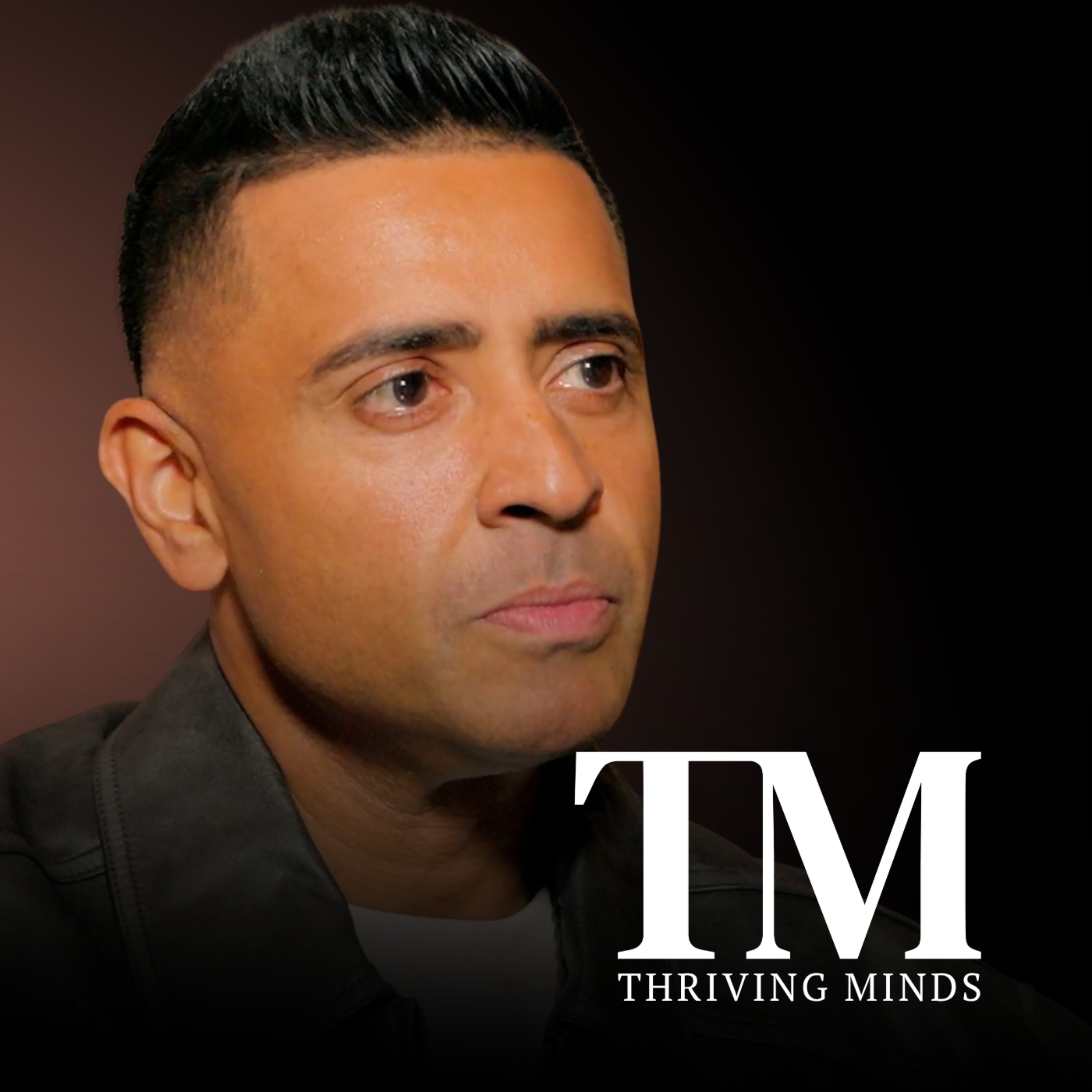
Jay Sean discusses how he chose music over medicine, how he trusted “gut instinct” through industry pressure, and how fame affected his mindset. He also explains his career pivots: signing with Virgin Records, leaving for creative control, going independent, then later signing with Cash Money Records. He shares how major hits (“Ride It” and “Down”) emerged from specific moments, including a leaked track going viral.
Jay Sean is a globally successful pop/R&B artist of Indian heritage from West London (Hounslow). He became the first artist of Indian heritage to top the US Billboard Hot 100 with “Down” (featuring Lil Wayne) in 2009; the song later achieved RIAA diamond certification. He co-founded 3AM Entertainment to develop South Asian talent.
Fame didn’t change his core identity; he focuses on using his platform for good and staying grounded with long-time friends. He says he never chased fame—he was driven by mastering the craft. He left labels when they wanted him to make “puppet” music for sales. He argues “down” success can’t be replicated on demand; you must stop measuring everything against one peak.
“Dance With You” demo leading to Virgin signing; “Ride It” written in a garden-shed studio after leaving Virgin, then going viral due to a leak; “Down” created at 2 a.m. in Miami after a news-driven inspiration about the economy crash.
Written by AI. May contain mistakes.
A recap of Jay Sean's notable achievements in music, including his groundbreaking hits.
“making him the first artist of Indian heritage to top the US chart.”
Jay Sean discusses his upbringing in West London and the cultural influences on his life.
“The darkest period of my life ended up being the biggest, most wonderful moment to change the trajectory of my life in the most beautiful way.”
Exploring the strong family values and support that shaped Jay Sean's ambitions.
“You know, you have the grandparents with you.”
Jay Sean explains his decision to pursue music instead of a medical career, supported by his parents.
“I can't thank them enough for that, man.”
Discussing the instinct and challenges involved in transitioning careers, particularly from medicine to music.
“A lot of people right now listening to this episode may be battling with the possibility of going from one career path into another.”
Learn about Jay Sean's early passion for music and how he began writing and understanding hip hop.
“It's interesting because I believe that in every single profession in life, going from zero to one, it is much harder than going from one to 100.”
Explore the motivations behind Jay Sean's decision to make music his career, focusing on passion over fame.
“And I guess even at that age, I knew that it wasn't about the lifestyle or the fame.”
Jay Sean recounts his experience signing with Virgin Records and the excitement of his burgeoning music career.
“I mean, it was, it was really interesting how things happened.”
Understand the challenges Jay Sean faced with Virgin Records and the importance of artistic integrity.
“I left them because I was no longer happy there.”
Jay Sean shares his bold decision to go independent and the steps he took to regain control of his music career.
“The first album that I did with them was super successful.”
Jay Sean reflects on his decision to leave his record label and the subsequent challenges he faced.
“Maybe I could stay signed, but I would hate myself for the music that I'm then making.”
He discusses the importance of intuition in decision-making and how it led him to a pivotal moment in his career.
“And I remember telling my parents, because I had told them that I was going to be all right.”
Jay Sean shares the story of how he wrote the song 'Ride It' and how it revitalized his career.
“You couldn't even drag me into a studio at that point because it was, I wouldn't have had any inspiration.”
He explains his decision to sign with Cash Money Records after achieving success independently.
“of the United States where I didn't even know I had fans.”
Jay Sean recounts the creation of his hit song 'Down' and its significance in his career.
“Like, you know, we should work together, mainly because I want to go and see Tara again.”
He describes the spontaneous process of writing 'Down' and the feeling of being in the moment.
Explore the spontaneous inspiration and real-time creation of the song 'Down'.
“And then we got it all on our dictaphone.”
Understand how fame affected Jay Sean's personal relationships and choices.
Learn about the relationship between success, happiness, and the fleeting nature of fame.
“So if all of this goes one day, I'm very, very grateful for it, but I, I'm not going to be broken because people didn't recognize me on the streets anymore or asking me for photographs.”
Discover how Jay Sean manages the pressure of expectations after a big hit.
Emphasize the significance of mental health in the context of fame and success.
“It's like, it's a ridiculous thing to say, right?”
Discuss the need for inner peace and the deeper implications of success.
“There were times where I was like, damn, man, like I had, I'd release songs and they didn't hit and they weren't hits and it just missed.”
Exploration of how peace should take priority over traditional success metrics.
“You know, I was talking to my brother about this and I was talking to a couple of my other friends about this.”
Discussion on the subjective nature of success and happiness in life.
“not at home and it just immediately came into my mind when you were mentioning the notion of peace.”
Reflection on personal growth and the evolving nature of one's identity.
“And I think that's exactly spot on what you just said, right?”
Explore the importance of analyzing past relationships and decisions for personal growth.
“You know, sometimes people can't make sense of their exes and I don't know why I dated her for so many years.”
Discuss how fame and experiences have shaped perspectives on money and happiness.
“I want to bring us back to the conversation about money.”
Understand the difference between material gains and true happiness through personal experiences.
“And I think that for me, I've always counted it biggest blessing in my life that I am able to make money from something that I absolutely love.”
Examine the risks of tunnel vision and the necessity of balance in pursuit of goals.
“Money is not the reason I do music, right?”
Learn about the challenges and adaptations required in the evolving music industry.
“if we compare that sort of type of stimulation to somebody right now in their 20s, the definition of success that we're exposed to right now through social media is very different, right?”
Learn how artists must pivot and adapt in today's music landscape.
“That it's, listen, the biggest, the big pivot.”
Explore how modern technology has changed the music release process.
“that are required for you to make that pivot.”
Understand the importance of supporting upcoming artists in the industry.
“It's liberating to be able to do it like that.”
Discuss the personal sacrifices and emotional struggles faced by musicians.
“Sylvester Stallone did for me, like really changed my life, then that would be a beautiful thing.”
Learn about the persistence needed to maintain a long career in music.
Jay Sean discusses how perspectives on success have changed over time and the importance of finding happiness over accumulating more.
“How many number ones do I need before I can give myself a pat on the back and say, you deserve to be here?”
Jay shares his reflections on fatherhood and the values he wishes to impart to his children.
“What would you want them to understand about you beyond your music career?”
Jay emphasizes the importance of self-improvement and not comparing oneself to others.
“And you have so much responsibility to shape these kids' lives.”
The discussion highlights the significance of staying true to one's values and walking away from misaligned opportunities.
“Every time there was a moment in your life in which whatever you were experiencing was not aligned with your values, you were walking away.”

Get the gist, explore an idea or ask about something said.
 Claude
On Thriving Minds with Alberto Zandi, what are the key points of this episode?
Searching your listeningAutomatic transcript. May contain errors.
0:00Music, there's no guarantee, there's no application form to become a pop star. You don't know, you can't control it. But my instinct told me that I gotta go this way. So now you want me to be a puppet and do this kind of music that will be better for your record sales. No thank you, I'm okay. Interesting. I didn't give up medicine for all of that. How much of that decision was driven by I want the lifestyle of a pop star? And how much of that actually I really like the music? Jay Sean is one of the most globally successful and influential artists in modern pop music. In 2009, he made History when Down, featuring Lil Wayne, reached number one on the Billboard Hot 100, making him the first artist of Indian heritage to top the US chart.
0:41The record has since gone diamond, surpassing 10 million units in the US, and making Jay the first South Asian artist to receive an RIAA diamond certification. Across a career spanning more than two decades, he has collaborated with global stars, including Little Wayne, Sean Paul, Nicki Minaj and Pitbull, and today is helping shape the next generation of South Asian talent as co-founder of 3AM Entertainment. A lot of people right now may be battling with the possibility of going from one career path into another. How did you navigate this? That's when I first got taste of the nonsense in the music industry, right?
1:17The business side. So let's take Michael Jackson. Imagine you told him then when he did Billie Jean do 25 TikToks to promote it afterwards. What? What are you talking about? This is now what we're asking of artists in 2026. The darkest period of my life ended up being the biggest, most wonderful moment to change the trajectory of my life in the most beautiful way. I will never doubt myself again when I feel so strongly about something. I go for it.
1:49Jay, take me back to the beginning. You grew up in West London. What was your childhood like? What was my childhood like? Yeah, I think I grew up growing up in West London. What was really amazing about that without me actually realizing it was that I was really in the melting pot, like fully immersed because you know i'm of south asian heritage indian uh and the area i grew up in hounslow right it's um heavily populated with with asian south asians i would say 99 percent people like me look like me talk like me right uh and so that was a sort of the neighborhood environment but i went to school 45 minutes away uh in hammersmith to a private school where it was completely opposite.
2:39You know, it was a real mix of backgrounds and a lot more white people, black people than Asian people. There were like less Asians there. So I had sort of that environment during the day and then at night and, you know, the rest of the time I had just people exactly like me. So it was kind of interesting because I was already from an early age introduced to people from lots of different backgrounds and all walks of life. So I got to experience different cultures. I got to experience so many different, you know, influences as well. It wasn't just one particular thing. And I think that was so important for me in the way that it shaped me as a human being.
3:26Really, the school that I went to was very, very important. Was this a happy childhood? Oh, it was a very happy childhood, man. It really was. I've got to say, you know, it was a beautiful, beautiful childhood. I am very, very blessed that the home that I was raised in was full. It was my grandparents lived with me too, right? So my dad, his parents, they lived with us. And in Indian culture, that's very common. You know, you have the grandparents with you. And my grandparents almost raised me, man. Like my mom and dad, they had a family business and it was, they would manufacture denim jeans and denim jackets for all the high street stores.
4:15So it was a very, very thriving business. But it was time consuming. And my mom and dad used to go to work early. my granddad would drive us to school. So my granddad was almost, he was like my father anyway. It wasn't like granddad. He was like my father. And my grandma would cook for us and make breakfast and tea. And, and, you know, grandparents love is different. They just shower you with love. There's not the reprimanding. It's just love. So I had a lot of love in my childhood and my relationship with my brother is beautiful and still is to this day because he's only 18 months younger than me.
4:50So we grew up with the same friends and we grew up, you know, in the same social circle and as any other siblings, we'd fight, but we're brothers, but we're also friends. And my mom and dad, you know, incredible people, bro. I know there's a lot of people out there. And when I talk to them, I realize actually how lucky I am and how lucky I was that I have this beautiful bond with my parents because some people, they don't have that relationship with their dad or they have a toxic relationship with their mom and dad or their mom and dad didn't tell them enough that they were proud of them or that they loved them.
5:27But I was never deprived of that. My dad and my mom raised us to be, you can do whatever you want and we want to arm you and equip you with those skills and taking me to private school, both me and my brother, that wasn't cheap. We went to one of the best schools in England, right? And that meant my parents had to sacrifice their own personal joy. They didn't go on vacations. They didn't go on holidays. Hardly. We went sometimes. They didn't spend money on themselves, lavish things, designer bags, this, that, and the other. None of that. All that money went into me and my brother because they wanted us to have a good upbringing and a good education.
6:12I can't thank them enough for that, man. You know, I'm very, very blessed that my parents did that for me and my brother. It's very beautiful to hear you talk about your family in that way because I agree with you. Unfortunately, not everyone's family are as loving and supportive as yours sound to be. Your first love was not in music, it wasn't medicine. how did your parents react to the fact that you were not going to pursue medicine which is a very stable career and you wanted to become a musician yeah yeah yeah you know the thing about me is that i um because i don't know it probably came from my seeing my dad and the way that he was so driven as an entrepreneur i see it in you there's traits that you know when you want to win and you want to succeed that you it's one thing having the vision and the dream it's another thing you know, having the skills and then working and honing those skills in order to be able to make that dream come true.
7:04And I saw the dedication and the amount of time that my dad and my mom would put into their work. And I guess that sort of work ethic rubbed off on me and my brother. And again, not in a toxic way, that's what's beautiful. You see these some stories where they do it out of fear because, you know, the parents are slightly aggressive in their way of sort of instilling those values. But luckily I think ours just came through just watching them and seeing. And also sort of acknowledging the fact that I know our school is expensive and mom and dad have made this sacrifice for us. So we actually wanted to do well at school.
7:41So I was always driven to do well. I always wanted to be the best that I could be. And also I was in a school where everyone was smart. You couldn't get into that school unless you were smart. So everyone around me is already an academic level superior to most people anywhere else. And now you have to sort of push yourself even further because you're like all your mates are super smart. So you want to, you know, you want to do well. And so I was always driven to do well in whatever I did. and I think mom and dad knew that it was hard enough to get to the level that I had got to right to get into medical school is tough so their son's already in medical school and now he wants to do music he's he's clearly not making a stupid decision it's not a dumb decision this guy's not a dumb guy you know so where is this coming from and so I think that they saw all of the hours that I was putting into my studies, getting the grades, but also using my free time to do music.
8:54So now I'm doing two very difficult things simultaneously. And at the end of it, really what it ended up being was my mom and dad said, listen, we don't know this industry. We're trusting you that everything you're telling us, you know, is, is true. And this is the lay of the land. You know, we don't know about it. But one thing we do know is that you do work hard. And if you put that same work ethic that you put into your studies, into music and treat it as, you know, a job, like a real job, put the hours in, I think you might be okay. So I did get their blessings for it. That's beautiful. Yeah.
9:35A lot of people right now listening to this episode may be battling with the possibility of going from one career path into another. and that may be a very scary situation to be in. How did you navigate this? It was instinct for me. It was gut instinct. I don't know how else to explain it, you know, without getting sort of airy-fairy and spiritual about things. I do believe 100 % that there is, you know, that's why they call it a gut instinct. It comes from here. There's an intuition in there that I think we all have when we're kids. And it's adults, actually, and sometimes parents who get rid of that intuition because, you know, like, you know, you might have some someone in there in the family or like, oh, God, is he coming?
10:26The kids are like, I don't like him. And the parents are like, go, go give him a hug or go say hi. But they're like, I don't like him. That's a gut instinct. There's something. But we get rid of that by telling children, no, no, no, you've got to do this, got to do that. And I think that that gut instinct told me that, yes, medicine is the smart choice. You know, you pass, you get the exam, you get the results in the exams, you apply for the job, you're going to be a doctor. It's a guaranteed sort of job at the end almost, right? Music, there's no guarantee. There's no application form to become a pop star.
11:02It's just, it's insane whether it happens or not. You don't know. You can't control it. but my instinct told me that I got to go this way I didn't question it man I don't know how else to explain it I did not sit there methodically and write out a list of pros and cons well what happens if this is this I don't think that if you're in a position that I was in I felt like it was a calling man I felt like this was what I was meant to do I really do believe that interesting it seems like a splitting between a brain logical decision and a heart emotional decision so your brain is telling you medicine but your heart is telling you it's music yeah that's actually it i didn't i didn't listen to my brain at all because the thing is my friends were everyone thought i was crazy they did my friends thought i was crazy my professors at school thought i was making a really bad decision uh all of my cousins and not not cousins sort of it's like family, extra outside family members were probably like saying to my mom and dad, what's he doing?
12:04You know, this is a stupid choice. But like, obviously this was meant to be my path. And I went fully with my heart and my passion. That noise is real. Like when people, unfortunately, push down your dreams because they don't think that they're actually going to become real. Yeah. How did you cut through that noise? I think it comes from two places. I think sometimes that, um, that pushback can come from a place of love too. I do think that I think that it can come from a place of love. If you genuinely care about someone and you think that they're going to make a bad decision for themselves, I think, you know, if it does come from a place of love and you want to give them a warning and be like, are you sure you want to do this?
12:42You know, like really think about it. It's okay. So I don't ever think that the pushback is always from haters. I think sometimes it comes from a place of love and that's okay. So you take that on, you listen to it and sort of like, okay, what's your arguments here? Has that changed my mind? No, it hasn't. But thank you for your concern, you know? But I also think that I've always, and I always believe this man, it's like, I'm the one who's got to live this life. I'm the one who has to live with this decision. I'm the one. My dad himself said it to me one day. He said, listen, he said, son, there's two decisions that you got to make for yourself.
13:19He said, it's going to be your life partner and your career because you live with those two forever. Don't let that be my decision because then one day you'll turn around and you say, see dad, you told me to go into this line of work and I hate my job and I hate this. It was your fault. Or dad, you told me to marry this girl and now we're divorced and we're miserable and this, that and the other. Make your own choice. Not saying that he didn't want to take the blame, but you got to think about it. This is your life. Take your time to think about, is this really how I want to spend my days and spend my hours with this person and in this job, you know?
13:55So I really did think about that a lot. And I was willing to take that on. And I was like, no, this is what I want to do. This is what I want to do. This is my life. I'm the one who's going to live it. I will live with the consequences. It's okay. Your dad sounds like a great man. He's a great man. He is. It's interesting because I believe that in every single profession in life, going from zero to one, it is much harder than going from one to 100. Walk me through that zero to one in your career. How did you start making music? Yeah. Well, it started early. It started when I was like 12, 13 years old.
14:31And I would, you know, I had these turntables at home and would go and buy records from the store. And I was obsessed with hip hop. I loved rap. That was my favorite thing. I was just obsessed. and so I'd go to the store and we'd buy all these hip-hop records and on the back they'd have an instrumental so what I would do was I'd take that instrumental and I'd play it and I'd start writing my own raps over it and I'm just writing about anything but I don't even understand I'm doing it for fun because I was actually it's the nerd in me it's the it's the academic nerd in me that was so fascinated by the way that these rappers were stringing words together multi-syllable rhyming and the pattern of their rhyming, I was, I was analyzing it like a student.
15:20And so then I was like, how is he doing that? How is he making that rhyme with that? And how is, how is this cadence like this? And how is his timing like this? And I would practice and I'd copy and then I'd start doing my own thing. And I'd, before I knew it, I was doing this just because I was like literally geek. I was being a geek about hip hop. Right. And without realizing it, I was teaching myself how to write and how to write songs. This was not because I had a career choice at 12, 13, then I'm going to be a rapper or a dream. No, this was simply because I was obsessed with something. It's the same thing with beatboxing.
15:55When I heard beatboxing for the first time, I became a nerd about it. I wanted to learn how do they do that? So I'd study it and I'd do it around the house and I'd just practice all these techniques. Not because I want to be a professional beatboxer because I was obsessed with it. And it was my obsession with things that I was passionate about that then translated into me studying it like a student, analyzing it, breaking it down, learning it, perfecting that craft. It was a quest to perfect the craft really. And that's how I began becoming obsessed with music and songwriting. When you made the decision to make this your life's mission, your life's career, My next question requires for you to be very honest, not with me, but with yourself, with the very young version of yourself.
16:44How much of that decision was driven by, I want the lifestyle of a pop star, hip hop star, of a musician. And how much of that decision was driven by, actually, I really like the music. I'm going to tell you right now, 0 % was about the lifestyle or being famous. I promise you one of the first songs that I wrote really like early on was a song called you don't know me and it was uh I think the lyric was I don't live for I don't live for glam and I don't care for fame I'm in this for the love of the game and it's funny how things can change you didn't believe me you didn't believe in me then but now they're calling my name and it was just I was probably like 16, 17 saying that, right?
17:30And I guess even at that age, I knew that it wasn't about the lifestyle or the fame. I was enamored by the art of music. I wanted people to respect my music the same way, I don't know, or just respect me as a skilled singer or a rapper. That part, it was about that part. It was about being good. It was about being brilliant at something actually for me it was and again that comes from my my my student background a lot of this goes back to me being nerdy about stuff and wanting to be the best at it so it was not because i wanted the the the lifestyle it was actually i just want people say damn he's good he's really good that guy that was it that really was i'm going to bring us to 2003 which was a very important in here for you.
18:21You signed with Virgin Records. Walk me through that time. Oh yeah. It was incredible, man. I mean, it was, it was really interesting how things happened. I was studying medicine still. And in my free time, I was going to studios and recording these songs or raps that I had written for no reason other than I loved it. And it was like, everyone has hobbies. People have hobbies that may call it my hobby. Maybe it was my hobby, but it was a hobby I took very seriously. Um, so I'm going in studios and I'm recording all this stuff. And before you knew it, you know, people were making copies of the music that I was making.
19:11Like a friend would be like, oh, that's it. Can you make me a copy? And make him a copy. So he'd play it to his friends. Oh, who's that? Oh, it's my friend. Oh, can I, can you make me a copy? And the copy started spreading. And I guess much like a mixtape would. And it was spreading around all these different universities. So the people in my university were, had copies of my music and their friends in different universities had copies of my music yet i'm not assigned artists i'm just this kid who's studying medicine but doing songs on the side it got to the point where people were like who is this guy like we all we've all heard these songs but who is he and until it finally landed in the hands of a producer uh called rishi rich and uh rishi rich at the time is an indian guy uh who was born and in England, but he was producing music for like for the Indian genre too, right?
20:05So like Bangor music and stuff like that, Bollywood, but he was also doing remixes for mainstream music, people like Mystique and Craig David and stuff like that. So Britney Spears, Ricky Martin, he was doing all these and he's Indian dude. So of course I had heard of him and I knew he was doing great stuff. And so when it got to that point where I knew that I was going to meet him, I was like damn this is big like this guy's he's in there you know I mean and that's kind of like what I wanted to do so he had one of my demos and uh he said I I've got your song here he goes can you sing for me and I was like sure so I sang a little song for him in the studio and I think he wanted to see if I had the if I was the real deal right and so you think you did it well?
20:52I was probably really nervous. And the thing is, I was very unpolished. For me, I never, I never had singing lessons. I never went to a singing class. I did none of that. It was all sort of very raw. It was just because I loved it. And I probably should have gone because I would have learned all the techniques and stuff. But I kind of, I, it was just, I learned along the, along the way. Right. And so I just did it because I was fearless. I did it because I loved it. right i didn't do it for any other reason other than like i was so passionate about it so like yeah of course i'll sing for you bro and then we just see he's playing some music and i'm i'm like i'm just in it like i'm just writing stuff and i he didn't ask me to write a song but i'm i'm feeling inspired so i'm writing stuff he's like okay this guy's really into this stuff like you know maybe we should actually do a session together so he said listen come back next week let's let's actually let's start writing some songs i said okay cool so we started doing that I'm still in medical school now.
21:47So now I'm in with Rishi. One of the songs you write is a song called Dance With You. And that song just went crazy, exploded everywhere. And I'm in medical school and a record company, Virgin Records, is hearing about this song Dance With You Everywhere. And they're like, who is this guy? And is he signed? and of course I wasn't and because they knew that something was bubbling then I went and did a showcase for them and they signed me and gave me a record deal how old were you so I was 22 maybe I think at the time so this was yeah I was in medical school second and a half year yeah so around that time how did you feel during those two years because in 2006 something must have happened because you left them?
22:45I left them because I was no longer happy there. They wanted me to make music that I didn't want to make. Simple as that. And so any sort of decision that I've ever made in my life is, well, you're not living my life. You don't have to stand behind this music. You can sit behind your desk. I'm the one who has to be on stage singing these songs that you want me to sing. So I have to stand behind the music. So I was like, no. What kind of music did they want you to sing? It was like, I always loved R &B and pop R &B music, right? I think at the time, what was really bubbling and doing really well was this sort of acoustic.
23:20It was like James Blunt, for example, was killing it at the time. And they're like, yeah, we feel like you should do more acoustic rock. And I was like, dude, you know, that's not what I do. What are you talking about? That's when I first got, that's when I got my first taste of the nonsense behind, behind the nonsense in the music industry, right? The business side. That's when I understood, ah, this is the music business. I see. So you sign me because you like what I do. And I go, oh, we love this. But now it's not working for you because you think this is selling more. So now you want me to be a puppet and do this kind of music that will be better for your record sales.
24:02No, thank you. I'm okay. Interesting. I didn't give up medicine for all of that. I didn't, you know, get my mom and dad's blessings to then go and be some puppet for the kind of music that, you know, you want me to make. And so eventually, you know, we had a, you know, an agreeable departure and it was okay. Like I never sort of carried any bad blood for that because I always, I don't know, I took the kind of, I took the kind of sort of perspective that they took a chance on me. you got to remember I was an Indian kid you know doing western music that that had never happened before there was no Indian kid who ever got a record deal to then go and do western mainstream music so they took that chance on me and I was always grateful for that but then I was like well now I have this platform I'm not going to do the wrong thing with it I don't want to be that guy who got this chance to do all the right things and then messed it up.
25:00So I was always very aware of the fact that not only was this a massive thing for me, this is a big thing for my culture. This is a big thing for Indian people because they're looking at me thinking, this is the guy, this is our guy. So whatever move he makes and wherever he goes, he's also representing our community. I was always very sort of aware of that. So I wanted to do the right thing and make the right choices with my music. And so again, that was a gut instinct said, I can't be in this label anymore. I can't be in this deal anymore. And what kind of music did you want to sing? For me, like I said, it was always sort of pop R &B music, right?
25:39So I'm at that label. The first album that I did with them was super successful. I had three top tens with them, right? I mean, I had three, yeah. And I was on, listen, man, there were so many things that were so brand new. I can't even tell you. 23 years ago, this was a very different landscape musically. Okay. 23 years ago, you didn't have people who looked like me on television much. If they were on television, they were playing very cliched, stereotypical roles of Indian people. They were doing the accent and everything. And there was just, there was no real representation of what England looked like at the time.
26:25Because if you were to actually, you know, look at what British society was like at the time, we were assimilated quite well. We were doing all the same things. We were eating the same food as everybody else and going to the same clubs and the same bars and sometimes like the same girls, whatever it is, right? But we were depicted in a different way. and so when I was when I cut through and I broke through as and got signed as a mainstream artist that was unheard of and it was the first time it ever happened and it was only when I realized how important that was and going back to the decisions that I then made um that I knew that I had to really think about you know everything that I'm doing this from from from now on is not just me it's my people that we're repping you know and so the music that i wanted to do was also very important um i had to be true to myself and so i left them and i said well you know i've got to do this by myself if if i have to back myself then i'll do this independently and that's actually what i did i went independent that's incredibly brave you have this incredibly super powerful label telling you to fit in yeah you're like uh-uh yeah i want to stand out that's very That's actually it.
27:42How did you make that happen? So it wasn't easy. In fact, it was one of the scariest moments of my life. I actually thought I had messed it all up. I thought it was done. I thought it was over, actually. Yeah, I really did. I told my mom and dad, I said, I can't stay at this label. Maybe I could stay signed, but I would hate myself for the music that I'm then making. And I would hate the music I'm making. And then what is this all for? you know if I can't enjoy my own art and my own work um I have to do this by myself and they were like okay and so I'd made some money through the first album I toured a lot of the world Southeast Asia I'd say Europe Southeast Asia Middle East not America yet um and I took some of that money and I invested it in myself and so I said all right I'm gonna pay for everything now I'm going to pay for my studio time.
28:40I'm going to pay for my demos. I'm going to pay for my production. I want to pay for the mixes. I'm going to pay for the music videos. I was the label. So I became the label and it was independent. And so one of the songs, well, before we get to one of the songs, uh, at first I thought another label would just sign me. I did. I did think that I thought, you know, well, I've made, I've made some success in myself. Surely another label is going to be like, Oh, Jay Sean's available. Hell yeah. We're going to pick him up. I really thought that might happen. And it didn't. The phone didn't ring. And I think people heard the news that I'd left and probably didn't want to touch it.
29:16Probably were like, oh, I don't know what's going on there. Maybe we don't want to mess with this. And it was scary. And I remember telling my parents, because I had told them that I was going to be all right. I remember there was a time I told them I'm going to the studio. I didn't go to the studio because there was no studio. And I was just in my car and I was just driving around and I was crying and I was parked up and I was like, I fucked it all up. I was like, I fucked this up, you know? Um, and then I had to really sit with that feeling and I didn't know what, what now? Right. And I again, believe this is why I believe that things happen.
30:00I, I had to ask myself, why did I feel so strongly about leaving the label? and I told myself, remember your gut instincts, something had never led you wrong before. You left medicine, then you made yourself a massive success. Go back to your gut. Do you think you still did the right thing? And I was like, yeah, I think I did. Man, I shit you not, about a week later, I was doing an in-store signing because, you know, obviously I was still doing shows and stuff. And this kid came up to me and he was a fan and I signed his CD and he gave me a CD back and he said, I'm a producer. And could you listen to my music?
30:38And I said, yeah, man, yeah, of course. And his name's Alan, Alan Sampson. And I went into the car and I put the CD on as we were driving home and I heard his music and it was just instrumental. There was no songs. And I was like, wait, what? What is, this kid is unbelievable. He had his number on the front of the CD and I called him straight away. I was like where do you live do you have a studio there I'm coming over and he was like so of course he didn't think it was real he didn't think this was happening and when I tell you I went to his house and I wrote write it that day a song of mine called write it wow and at his his studio was in a garden shed his parents house it was just a shed and he said oh man I'm sorry I don't have a big studio like you're used to i said shut up man this is beautiful let's go and we wrote it that day that was probably a week or two after i was sat in the car crying thinking where the hell is my life gonna go and that song changed my life what do you think this means it just means that i know instinctively that you know i have to trust myself i have to trust my gut feelings i have to trust that that voice that's so loud in here um and i have to understand that there will be a way you know uh there will be a way maybe the way is maybe it's the end of something and and it feels like a bad thing you understand the the virgin split felt like a bad thing in the end at the time when I did it it felt like it was a good thing then towards the end that good thing turned into a very bad feeling but it meant that that had to end because had that not ended I would not have gone on met that kid wrote that song by myself gone on independently to then go and have a number one R &B album off the back of that song independently so I would never I would never doubt myself again when i feel so strongly about something i go for it it's like when the doctor tells you you're gonna feel worse before you start feeling better yeah man yeah yeah how did ride it change your life yeah man so so did that song and um youtube had just sort of started to blow up and ride it wasn't there was no music video for anything it was just a song that i'd done but because I love this working with Alan so much I started doing more music with Alan and before I knew it I was just in this garden shed writing music with this kid just as if it was like dude that's all I wanted to do I just was like upset because what happened was I fell in love with music again you understand because when the dark period happened I I resented it and I was like, I made the wrong, maybe I made the wrong choice and I couldn't feel the love.
33:41You couldn't even drag me into a studio at that point because it was, I wouldn't have had any inspiration. Um, but when all of this, it was like a new love again. And, and I was enjoying writing and I was just like, I didn't care that I didn't have a label. I didn't care. You know, I was just like, I love this. And this is like, that fire was, was lit. And so I'm writing, writing, writing. I don't know where it's going. I don't know where it's going to come out. I don't know who's going to come out under what label i didn't care i was in the zone and um so we're writing songs and then one day as this is happening um a friend of his or mine i can't remember sent us this link from youtube and said bro your boys your your song's been leaked because at the time there were a lot hacking there was a lot of hacking going on in the music industry they were hacking people all over the place.
34:28So our song got leaked, writer got leaked. And honestly, we were devastated at first because we thought, oh man, like we haven't even finished this properly. Like I remember one of the bits was wrong word. I was meant to go back and re-record it. I was like, no, I was so mad. But that was the biggest blessing because it went viral. Before this word viral was a thing, it went viral it amassed millions of views and people were like oh my god is this jay sean's new music holy shit he's back and before i knew it you know this little but what i could have seen as a bad thing ended up being the biggest blessing in my life now i'm getting phone calls from all over the world you know labels everyone just all calling yo blah blah blah people are booking me for shows in America where I had never been to perform before off the back of this new song because people are excited.
35:29Well, off the back of that, I ended up doing two sold out tours of the United States where I didn't even know I had fans. So the darkest period of my life ended up being the biggest, most wonderful, you know, moment to then change the trajectory of my life in the most beautiful way. This is very interesting because you are in a stage in your career, in your life, a very pivoting stage in your life in which you go solo, independent, and things start going incredibly well for you. But then in 2008, you decide to sign with Cash Money Records. why did you sign with them if things were going so great for you by yourself well because i okay i had taken it to a level by myself independently but you know running an independent record company by yourself when you're in your 20s is was not easy and also we were you know there was only so much i could do and it was getting bigger and bigger and um we needed a bigger team needed bigger force and it wasn't even bro when you get a phone call from america and it's cash money saying we want to sign you it's just like what are you talking about you have little wayne he's the biggest artist in the world right now and you want to sign me you take that meeting you know i appreciate the honesty so um so yeah man uh that was crazy basically off the record ride it i then made a whole album called it my own way up for obvious reasons the album went on to do amazing it became the number one r &b album in the uk number six in the overall album charts independent everyone else above me was on a major and uh so now of course everyone's like he's back and so everything's good now mom and dad are like oh i'm like we're good um we're touring and stuff ride it is a monster now it's become a monster hit um and during that same time i had uh done a show in miami uh where i actually met my now wife she was at the support act at my show she was an artist as well then and her producer um you know i got sort of started talking to him I'm like, yo, I really like Tara's music.
37:54Like, you know, we should work together, mainly because I want to go and see Tara again. So I go back to America, simultaneously me and Tara having a, developing a relationship now, but I'm working with Jeremy and Jeremy's doing a remix for Lil Wayne. And so he's in touch with Baby and Slim from Lil Wayne, who are the CEOs. And he said, yeah, by the way, I'm working with this kid from England. You know, he's a big star over there, but um you know he doesn't have a deal in the united states and stuff and he sent them ride it they listened to ride it and they um they called him back straight away and they were like tell me about this tell me more about this guy sent the music video he saw the music video they're sitting there watching this and they called him straight back they were like fly this guy over to miami we want to talk to him just off the back of that one song so when i say that that song changed my life yeah not only did it get me out of the that bit yeah it then also got me so it gave me the independent album and also then went on to also get me signed to cash money that song was magical because it it just existed it's crazy song that you produce at the backyard of this kid's parents house it's crazy yeah so it changed my life twice yeah uh so um i get that phone call and uh i fly over there and you know we have this meeting and stuff and for them it was quite simple which i actually really respect this this this um their approach they they judged just the product it was the music they didn't ask questions about my background they didn't ask questions about anything else they were like love the song love the artist love the whole package why does he not have a deal in america it was that simple to them there was nothing else oh he doesn't have a deal here let's sign him and that's why i trusted the deal because they were signing me off the back of my art and the work there was not there was nothing more complicated about it it was just we like this we think he deserves to be out here and we're going to take the the the gamble on we're gonna bet on him and uh yeah and then of course that changed my life once again that led you to produce one of the greatest songs at least uh from back then i remember that song so vividly down which became the number one hit i think across so many countries including my country in spain wow talk to me about that period in your life so obviously right it was you know your first taste of success but then down was just something different altogether so so we're down um the story of how it came about is actually crazy because it was about two o 'clock in the morning and we're in miami and i had just written and recorded a whole song that day anyway so i spent most of that day writing and recording a different song which by the way Funnily enough I don't even know what that song was I don't even know what that song was Never came out Probably was never on an album But the whole point is It doesn't matter about that song That was That had to happen for down to happen So we finished the song It's two in the morning We're ready to go home And Jeremy Producer at the time Of the song Says hey Just so you guys know This is what I think we should write to tomorrow Let me know if you guys like it It's me and one of my best friends, Jared, who I wrote a lot of the songs with.
41:33He plays a song. And so it's just the music. I'm just listening like, yeah, whatever. I just want to go home, man. I'm tired. And then I start music playing, and I start humming some melodies.
41:51I'm like, yeah, I like this. And he's like, yeah, put that down quickly. And I was like, oh, okay. So I get my dictaphone out. I'm like, and now Jared's coming in. Jared's like, I'm like, oh, yeah. And then we got it all on our dictaphone. We did that whole melody in one take before it even got to the hook. And now we're just forget going home. We're just like, we're like vibing. We're like, okay. You are, you are, I don't know. And he's like, yeah, I like it. And then he's bouncing back and he's like, tonight, tonight is the night. And I was like, yeah, yeah, yeah, yeah. We're just going with it, right?
42:32Thinking that we're just doing something quickly that we're going to come back to tomorrow. Right? But before we know it, we're writing the song in real time. Plucking it out of the air. Just delivered to us at that exact moment in time it had to happen. You know what I'm saying? What do you make of that? again man without trying to sound too airy fairy man it was in the heavens bro it was in the it was in the air it was in the ether already had i gone to the bathroom at that time had jeremy not said hey guys let me play you this this for tomorrow had i not spent all those hours writing a song that never even came out at that exact precise moment in time those melodies wouldn't have happened those lyrics wouldn't have come if the news was not on the television at that exact moment in time we wouldn't have written it about the concept of down because the news was talking about the economy crash and we were like man everything's so depressing it's like yo man even that's it the sky is falling down don't worry even if the sky is falling down if the economy's crashing i got you because we were inspired by what we were seeing on the news all those things had to happen in order for that song to exist beautiful yeah of course this was 2008 2009 the big crash wow and then you become extremely famous i mean famous on steroids how did fame change you as a person oh man how did it change me as a person can i be honest with you i i really try to not like let it even in I hope it hasn't changed me as a human being that, you know, my, my parents know and my friends know, because although the only thing I like, the only thing I like about fame is the opportunity to use that platform to then make a choice.
44:32and you can make bad choices or you can make good choices for me i i always try to make good choices with the platform that i now have i know i have a reach i know i have an audience so now i have a platform where i can sort of do some good with it that's what i like about fame but other than that man i don't care about all of this i don't i it doesn't bother me it's everyone's famous now bro it's like you can you know you have people who are on tiktok who are more famous than me and it doesn't matter right like so i don't care about fame i care about what you do with it i care about what you um what you can do when you have that sort of power to to be an influence on people so that's what i sort of care about um but other than that man i have the same best friends i grew up with since i was a kid you know these are the same people who keep me in check you know i'll send them my songs before before it ever comes out and i have best friends since i was 14 and they'll be like no that one's shit bro don't let anyone hear that or they'll be like yo this one right here they keep me in check they're my people you know um and uh the rest of it really for me is is just i just want to i just always want to put out good work i think that's my main thing i'm still about the work and and the and the product this is your relationship now with fame a more seasoned and mature version of yourself but if we go back 17 years ago to 2009 yeah when you're much younger and you're experiencing fame for that almost very first time at that level yeah did that change at least for a period and that you had to learn I think maybe some of my friends would tell you that perhaps it did I asked them that actually I do ask them that I say I was like did I ever was I ever a dick when I when when when I was famous like was I ever just not nice or did I change did I ever become arrogant you know and some of them said you became a little dismissive you kind of like i thought it was just because i was super busy but some of them perhaps it did change me perhaps uh i mean you're a kid you know what are you gonna do so maybe learn yeah and i was just like always convinced i was i know bro guys i was just so busy like then one of them would be like oh no it's something but then you know i think on the whole on the whole I've always found fame nonsense I have I because it doesn't change anything it doesn't actually change anything because if you're living for fame and it's gone and if you're only happy because you're famous and then it's gone and you're irrelevant and then people don't care about you anymore what happens to your happiness you've pinned it in relevance you've pinned it in you know how many people talk about you and how many people recognize you when you're down the street how many people ask you for autographs if that's the only thing that makes you happy it's a dangerous way of living you know i mean and i so therefore if you just pin it in something else in your work and even if you're proud of your work and and and you know or in your and your family or you know if you're married you have kids like for me that's that's what makes me the happiest actually, you know, is my family life.
47:42So if all of this goes one day, I'm very, very grateful for it, but I, I'm not going to be broken because people didn't recognize me on the streets anymore or asking me for photographs. I would like to think, sure. It might affect your ego and you're like, Oh, okay. Nobody's talking about me anymore, but so that's a different conversation though that's happiness versus you know i've had an amazing conversation with one of the world's leading neuroscientists and he told me that one of the most potent things that we can become addicted to is fame yeah um because it really messes up with our dopamine system which is our way of feeling pleasure you know in our brains ever since down you've had great hits but down was in a way the strongest hit in your career if you're again very honest with yourself did you feel at least for a period of time an actual down feeling within you you know this is this is down down is such a monster of a song and it still is to this day which is so crazy that if i let that be the bar for success and and and happiness for me i'm setting myself up for failure because any song that i write from now if i measure it up to down and i'm like oh didn't do as well as down come on man what am i doing rest of my life i'm gonna be upset and let down that was an it was a unicorn it was a moment it was a unbelievable gift that was given to me and a blessing and we struck gold actually we struck diamond because we just had diamond yeah congratulations yeah you won't thank you this year so i actually learned quite quickly and i'm glad very quickly i told myself let it go that's that it's done stop looking back there you it's a blessing you may never get that again but you gotta let's go you gotta keep working though you gotta keep rocking you gotta keep writing songs gotta keep going you got that already that's yours no one can take that away from you be happy you're good but don't expect every other thing if it doesn't do as well don't let that affect your happiness your creative state because come on you just got to be realistic with yourself man like you might never get it again something that big and it's okay but it doesn't mean you stop working doesn't mean you stop you know doing doing what you do so luckily once I kind of planted that in my head I was okay after that right like when I say okay after that like I didn't want I didn't measure anything up to that anymore and then people always make the joke Why don't you just do another down?
50:39I'm like, yeah, if it was that bloody easy, of course everybody would be doing that. It's like, it's a ridiculous thing to say, right? So yeah, I sort of left that behind and I was like, it's always going to be a beautiful thing for me. Like I always say to people, right? I'm like, let's imagine. So for me, Sylvester Stallone is one of my favorite actors and one of my favorite human beings, like just in terms of as an inspirational person. I just think he's incredible. He changed my life actually. I can talk about how afterwards. but Rocky obsessed. I'm Rocky obsessed. Now my son is Rocky obsessed because he watches all the Rockies with me.
51:16And that was in 1976, I think, or something, right? The year when he made that, okay? Over 50 years ago, right? Okay. Since then, Sylvester Stallone has probably done hundreds and hundreds of movies. But if you see him down a street, you're going to go, Hey yo, Adrian. He's Rocky. Yeah. Okay. Because that's how you remembered him. That's how you fell in love with him. That was the character that impacted your life and made you have this connection with Sylvester Stallone. And maybe for people out there, it's down for me. And that's okay. And I could have a hundred songs out after down, but if when they see me, they're like, yo, and they like, it reminds them of down.
52:05Great. What am I going to do? you get mad because of that? No, it's a blessing. It's a beautiful thing that that meant something to them. So once I acknowledge that too and process that, then you're okay too, right? So like, I think for me, everything's sort of about putting, understanding things, putting it in its place in your brain, compartmentalizing it and understanding why people act the way they do and do things they do and say what they say and why I might feel what I feel. And so when I make sense of it all then it's then it's sort of pretty easy to navigate life right but if i obsess over it then you're like well bro you're you're what are you really doing just you've got this beautiful thing that happened and now just move on do whatever else you're doing um and do it with the same amount of passion and love you know yeah that's very beautiful and i think it's very accurate because you're building a very healthy relationship with success because if success was something that you achieve and then you retain for the rest of your life then everything afterwards if it's only success success success it's not really success because there's nothing else right yeah success exists because it can come and go just like you can have a good day yeah and a bad day right yeah you wouldn't call it a good day if you don't have bad days right bro with you you might have one restaurant that is just on fire yeah and then you might have this other one that you love so much and you are you're like oh my god this is gonna be amazing it's gonna be and maybe it doesn't do well god forbid but that doesn't mean you're not a winner doesn't mean you didn't win and it doesn't it just means one of the things you did didn't do as well as this giant over here yeah and that so it's just understanding that and that's okay and that's just human life that's just like who who is always up here just constantly soaring life is like this man and it's and that's okay to go with it and so when to answer your question correctly when you said was there ever a down Yes, there were.
53:56Of course there were downs. There were times where I was like, damn, man, like I had, I'd release songs and they didn't hit and they weren't hits and it just missed. And I was like, damn, I was, had this, now I'm like, I can't even seem to get, I can't get it. Like, where is it? Right. And yeah, what does that do to a creative? Of course, it makes you get into this element and to this stage where you're sort of questioning, you know, questioning everything. Like, do I still have it? Like, am I still a good writer? Am I still, you know, this, that and the other. but I think my only way to get out of those times where I felt like that was to remind myself of all the success that I have had up until now all the records I've broken not just for me but for my community for my people all of the things that I was a first to do how about looking at those things too how about saying you did all right it's like come on let's weigh it up you're neither here or here.
55:00You know what I'm saying? So I think that's been really important for when you're talking about sort of mental health and stuff like that, which I am like hugely, you know, an advocate for just trying to preserve that mental wellness that we have, because life's crazy. And you've just got to have an overall realistic look at the balance of your life and look at all the good things you've done and take the good with the bad and you weigh it out but don't live in a moment too long you know and not acknowledge some good things that you've done too right and that's that's important i agree with you and i think mental health is one of those very particular things in which we don't tend to look at it or or address it up until a point in which it has become something very big because yeah if we take another form of pain a physical pain like your knee maybe perhaps knee pain starts you know very mildly and soft and then you start paying attention to it so you're like okay maybe i should go into someone or exercise less but with mental health it's completely different like am i getting a little bit too hung up in my own definition of success is it retainable you push it down all the way until you feel like you're a slave or a prisoner towards that right and then and then you need to completely change your direction right um so it's it's it's very interesting and i think this this this is a call to action for everybody to start paying attention to what's happening inside because I think our bodies are always in our brains are constantly telling us, how do we feel about this?
56:29100%, 100%. You know, I was talking to my brother about this and I was talking to a couple of my other friends about this. And this is like an overall, it's a much deeper, bigger conversation than success. I think when people talk about success, right? A lot of people strive for it. there's especially like the young generation now it's amazing so you know it's you know obviously like the you know mental mental health and sort of just preserving your peace for me and maybe it's because I'm older now right for me what I think has become a priority in my life is preserving peace right I had a joke with my friend the other day and I said when is it that men suddenly start getting into and I'm speaking specifically for for men here because I can only talk from that perspective when is it that men start doing weird thing like gardening when do we suddenly start picking up weird hobbies like this right and and i said i think it comes from just having a little bit of time alone and just being with your thoughts and gathering your own thoughts and just having a moment of peace you know you're there you're amongst nature and there's no one bothering you there's no noise there's a lot of noise in the world now you see there's there's noise from too many angles and i really do believe that again the sort of scientific nerd in me believes that we want you know structurally built to be able to handle all these connections that we have and when you think of those connections how many of them are real connections a majority now in this day and age are false connections or people with people we don't even know you know i'm saying we wake up and we're scroll doom scrolling and we're looking at other people's lives we don't know these people but somehow we're letting them their success affect how we feel about ourselves we don't know them and they don't know that they just ruined your day but they did because they showed up on your feed and now you're comparing your your life to that person's life but you don't even know that is that even their life you know i'm saying or is it just a highlight of one of the things that we don't know but so many kids especially nowadays i I think that's sort of the danger.
58:43And I say this as a father, comparing themselves to these people that they see. And I just tell my kids, man, and I tell my friends, I'm like, guys, this stuff is too much, right? My circle is small. My circle of influence is also small, right? The people who I allow to get in, into my circle, but also into my head, you know what I'm saying? And into my life. and the energy protect my energy right like i i've always sort of believed that there's that you know you don't need to give too too much to all these different people because then you're not left with enough for yourself right and so for me i try to preserve my my good energy and i try to preserve my feelings and if there's anything that i feel is sucking my energy away then i stay away from that and i stay away from those people or that thing or that project or whatever we might take on a project that we think is incredible.
59:42Let's say you want to open a new restaurant again, right? But you feel like it's just sucking the life out of you. But the initial thing was fun and the initial thought or the idea was fun, came from passion, it came from love. But in the end, the process of it is sucking the energy out of you and you're now miserable. You've got to stop and ask yourself, do I really want to do this? Do I want to stay in this? You know? And I think that's for me something that i question a lot when i'm doing songwriting i do that when i'm writing a song and i feel myself forcing it too much i'm forcing it and i'm like no there's got to be a better lyrical there's a better thing now i'm at that place where i'm going i'm just gonna leave it alone it's not coming naturally to me i'm forcing this it's like you know it doesn't feel right it doesn't feel organic anymore and it's not feeling fun anymore and for me i maybe i'm wrong and maybe only works for me, but I'm very much driven from a place of It's excitement and fun.
1:00:41And, and I'm not saying every single project or everything that works is ha ha ha the whole time. It's yeah, of course, you got to work harder, you got to just chip away and you got to perfect and finesse. But if the overall overwhelming feeling is not one of happiness and joy, then I'll just step away from it. yeah and that's sort of how i handle a lot of things it's how i handle you know like i said my songwriting is how i handle projects that i get involved with it's how i handle the circles that i you know socialize in um and i help it helps to preserve some some mental clarity and peace for me i completely relate to what you're saying and i think it's it's a very important take it comes down to the root cause or the reason why we do what we do if the primary reason for us to do whatever it is that we do with our professional lives is to make money or to become successful in the most materialistic definition of success, then in my opinion, and I've seen this, and I've had this conversation with numerous high performers on this podcast, what's going to happen is that the days in which everything goes wrong, and that will happen in anyone's professional journey, whether you're a singer, an actor, an athlete, an entrepreneur, things will go wrong.
1:01:56Every single fiber in your being is going to tell you quit, quit, quit, because this feels very uncomfortable if your reason to stay in the game is to make money yes you will quit yeah but if you love what you're doing that's what's going to allow you to pull through you said another thing that i find it very inspirational and beautiful and also very healthy which is your relationship with peace i think sometimes in life we do things because we believe that they're very attainable so for example success is attainable but it's not sustainable peace is attainable but it is sustainable. I think peace should be the ultimate goal for everyone, even beyond happiness, certainly beyond success because there are going to be moments and periods in your life in which you're going to be happy and there's moments in your life in which you're going to be unhappy.
1:02:43You can still be at peace in both moments in your life but you cannot be happy all the time or you cannot be successful all the time and this is something that unfortunately we don't get taught at school or perhaps also not at home and it just immediately came into my mind when you were mentioning the notion of peace. I also think that you can be successful and unhappy, and you can also be happy and not as successful as you thought you were going to be, okay? So, and I think that's an important thing to talk about, because if you live your life like, oh, well, you know, I want, if you're goal-driven and you say, I want to achieve this, okay, now I can use an example, let's use a fitness example.
1:03:27some of my videos I had to go shirtless okay and I had to get a six-pack a six-pack is really difficult to get especially if you've been a chubby kid like me I was a chubby kid it's very hard for me to lean that lean down right so it was a grueling process it was a miserable process for me to get to a six-pack I got the goal success but I wasn't happy in in the way I got there and I wasn't happy even while I had it because it's exhausting. It's so hard to stay in that condition. I think we've talked about this off air about sort of how hard that is to attain. And so I do think that, listen, you've got to ask yourself.
1:04:08And so if you're listening right now, whoever's listening, if you're just about success and that's what you want and I don't care, I need, I must succeed. I must win. I must get this goal. I must make X amount of money or I must whatever, whatever. hey then do all of that stuff chisel away you know blah blah blah get rid of this person do that it's stressful life is stress but whatever it's stressful but i don't care because it's gonna get me there fine then you achieved your success and if maybe to them happiness comes lower down the ladder and peace comes lower down the ladder it's different for everybody else for me personally peace is up there on the top rung happiness is right there along with it and quite often with me they go hand in hand right so it doesn't it's not the same for everybody yeah some people just want to win some people are just like yo i just have to win and then maybe even though the struggle was hard maybe when they win maybe that's when they get their happiness and that's you understand what i'm saying it's just different for different people i agree with you 100 and i'll give you an example so uh last week i interviewed one of the dragons from dragon's 10 yeah so i was asking him at this stage of your life what is you looking most forward to right you're over 70 years old and perhaps somebody like me right would if if i put myself in this position i would think of maybe spending time with my family or traveling with them you know experiences with the people that i love yeah he wants to build the next billion pound or billion dollar business right now i would assume that somebody after 70 years got to know himself right very well so he's making the choices that he knows are going to feed into his overall happiness or inner peace right so i think the ultimate goal here is a to understand that we're all very different who are we to judge other people yes and then b and perhaps most importantly that the ultimate goal perhaps in life is to get to know who we are because only then we can start making the right choices for us that would feed back into our personal definition of happiness 100 i think that's and that goes that comes down to self-awareness right i love i love the concept of self-awareness because some people don't have it some people really have it and some people get it really early on.
1:06:17And I think that's exactly spot on what you just said, right? Because I have people in my life who, what is fun for me or enjoyable for me, it's not the same for them at all. You know, you could be like, oh man, my ideal day is going to the beach and having some cocktails, getting drunk with my best friend. To somebody else, that might seem like the biggest waste of time and biggest waste of life. They hate that. They're not interested in that at all. They'd rather be at home on a computer doing a startup and that that lights them up and that makes them feel alive and that's the best way they could use their time so it is completely different for different people right and so that's what i think it also comes down to there are some people who i know who are so work driven that that gives them more joy than anything even if it's stressful at times right so again that's what it comes down to if you understand yourself and you really are self-aware and you go yeah i know i seem crazy to some people but this really lights me up and it makes me happy you might think you might not think it does but it makes me happy so then you you leave it alone that's that guy that's their business that's how they choose to live their life but you're asking me these questions and i'm telling you that from my perspective what i've learned is that you know when something doesn't feel in it doesn't it doesn't sit right with me It doesn't align with you.
1:07:38It's not aligning with me. I've learned to walk away and just leave it alone and not force that door, you know. And that's given me a lot of peace in my life. I'll add another remark here that I think may be applicable in your life, but also into our audience's lives. We go about life learning what it means to be alive. And we build these values based on what we experience. So I am a determined person. am I an ambitious person? Am I a lazy person? Do I like finance? Do I like law? Do I like music? And then we reach certain stages in our life in which sometimes our body is telling us, you know what?
1:08:16You used to like this thing. You used to like working out six times a week, but perhaps you don't like it anymore. But because we've identified with that old version of ourselves that A, we told our inner circles or to the public, this is what I represent. I represent an ambitious person or successful, whatever it is that you want to represent, right? externally that then you're afraid to change because you're like well what are people going to think of me because that's who I was exactly but deep inside maybe in this chapter of my life I'm somebody else and my take on this and this happened to me and I'm not that old I'm 30 years old but it happened to me I changed a lot in in my life it's just accepting what are the new values that I agree with yeah and I'm you're not a thing you're always an evolving thing yes I love that you know I've always thought about this you know there's certain people in your life who come along at a certain time and they they feel a certain way around you because the way you were then right and then you go and change you're having your own personal growth journey and now it makes them uncomfortable right and I've always believed that you should never have to apologize or justify your own personal growth, you know, for, for, for a version of you that was just, you know, fun or, or, or, uh, convenient for someone else at the time, because now you don't, this new version of you doesn't align with them.
1:09:45Maybe that means that your journey has come to an end and maybe that was for a season and it's okay. Right. And now you're off somewhere else and that's okay too. I think that's okay. There's many people that we work with through our life or see or have friends that for that season, maybe they were perfect. They were great. You know, sometimes people can't make sense of their exes and I don't know why I dated her for so many years. Why don't you go back and analyze it? Think about all the decisions you made while you were in there. Where did it lead you to? What path did it take you down? Where are you right now?
1:10:17Maybe it was right for that because you made this decision and had it not been for that, you wouldn't, you know, all this kind of stuff. And so I think that helps me make sense of a lot of the things in my life too. When I look back at that and the people who come and go, and some people spend so much time in the past, looking back at the past, but it's gone. And, and, you know, those things, they happened. And I'm sure at the time it, you know, when you, when you look from where you are now, and you look back and you really analyze it, you know, you can sort of see why those things might have occurred and what you learned from that.
1:10:51That personal growth, man, that's something, a quest that I'm fascinated with and curious about the whole time. I want to be the best version of myself that I can be, but I also have to ask myself, what defines that? What does that mean? Does it mean I need another number one? Or does it mean, hey, I just want to be a better friend, or I want to be the best dad I can be, or I want to be the best husband, whatever it is. It's about, you know, understanding what that means for you personally.
1:11:26I want to bring us back to the conversation about money. Yeah. How has that relationship evolved for you over the years? I think money, I was never, I was never consumed by, you know, i was never consumed by like materialistic things maybe let's say right like yes okay yeah okay fine i like cars right so of course i had a dream as a kid to have a lamborghini we all had that picture of a lamborghini and stuff like that is it like a you know one of those things that where you finally are in the position where you can afford that and you make that little boy's dream come true and you get it does it feel nice yes of course but then again i'm gonna just go back to happiness again do they those things end up making you happy and and uh i've seen a lot of people who are super wealthy like really wealthy okay and they have these big big beautiful houses and the giant yachts and they have this that and the other but every time i'm with them all they're complaining about is that they're not happy in their four walls of their house because the relationships with their kids and they're they don't get to see their kids now their kids don't talk to them and their wife hates them and this, and I'm like, ah, so what did it really change?
1:12:41Right? So really, I don't know, everything that happens in my life or everything that I do of just, you know, I always think about the happiness element of it. Like, what are you acquiring all these things for? As we get older, surely it's about shedding. Surely it's about letting go of a lot more things, you know, so that you don't carry all this baggage anymore so that you can peace out peacefully. You know what I'm saying? And so for me, I think money for sure, a hundred percent is a cushion for less stress sometimes in life, for sure. You know, some people do jobs that they hate because they just need to pay the bills.
1:13:21Right. And I think that for me, I've always counted it biggest blessing in my life that I am able to make money from something that I absolutely love. And that is a blessing. It's insane. Like, you know, if you told the 17 year old version of me that one day I could get paid to sing, right, I would be like, there's no way that's going to happen. Because I remember when I was starting off, I was doing shows in really bad nightclubs and where people weren't paying attention to me and uh they were throwing stuff on stage and like get off who's this guy and there's maybe like 15 people in the audience and i'm singing my little heart out right and i got paid 50 pounds for the show five zero okay when i tell you i could not believe that i actually somebody paid me to sing i couldn't believe it right and i went and on the way home we would spend that at the petrol station and buy sandwiches and look, I can't believe, can you believe I just got this by singing?
1:14:25And it was just, I have to remind myself of that guy and be like, remember how happy you were with 50 pounds? Like, come on. So, you know, I think for me, it's just, it's gratitude. Uh, it really comes down to gratitude and I don't like to think about money too much. I kind of like, I kind of just, yeah, I don't, I try to have a healthy relationship with it. If you know what I mean, what's your relationship like with money? Are you driven by the money or by the, you know, for your business as an entrepreneur? What is the, what is the end goal for you? Is it to make more money or is it to, you know, what is it?
1:15:02My relationship with money has evolved over the last 10 years. So in my early twenties, I, because I didn't know better I thought it would make me feel in a way that it just didn't make me feel so I like cars too but I thought I thought having those cars would mean something different to the way they actually meant once I had them right or or the lifestyle or the house or the travels or you know the entire package and they just didn't feel that right so I my relationship with money is that I still do appreciate the freedom that money can give you but I don't want to play so much value in what it means to me yeah right because it all comes down to how much effort and how much attention i am giving to this one thing yeah so let's say exercise right if i put too much attention over exercise that becomes the dominant thing in my head so i'm building a prison of my own am i doing enough exercise am i traveling and can i get you know same with food but money is the same, right?
1:16:01So if I'm paying too much attention, at least in my life, over this one thing, that becomes my tunnel vision. And I have a big problem with these words, right? Tunnel vision. Like a lot of people use it, like, oh, everybody needs to have tunnel vision. But if you really think about what tunnel vision is, it's pretty unhealthy. It means focus on one thing alone and don't think about anything else. That sounds the opposite of balance and equilibrium, which I think is where happiness and life resides, right? So yes, perhaps to attain things, if you want to become the best thing or whatever it is that you want to do in your life, perhaps that tunnel vision will serve you because you're focusing your attention in this one thing, all of your resources, your time and your energy in this one thing.
1:16:44But going back to your point, would that make me happy? What is the bigger question here? Is it achieving that one thing or being happy? yeah so for me i thought that my happiness was at the end of that tunnel yeah of course oh let me let me get those things then then i got most of the things that i wanted to get and they did not make me happy so what i realized is that nothing that doesn't have a heartbeat would ever make me happy yeah so maybe for you it's actually the it's the it's the it's the journey it's the chase of it that makes you feel alive because you get you got the end goal and then you're like shit i'm here now but maybe it was that bit it was the bit getting there that lit you up and and in that process of being lit up, you're alive.
1:17:24That's when you feel alive. And I think it's much the same for me. Money is not the reason I do music, right? Trust me, there's probably way better ways to make money now. I've like friends, we're like, you know, YouTubers and they make more money than some artists do, especially now in the music industry. If you're an up and coming artist, it's very hard for some of them to make money, right? So I'm grateful for it. I think it, again, it comes to, you know, with age and experience, life experience, looking back at it going, wow, I'm actually super grateful that, that I've been able to have a lifestyle.
1:17:57And also then bro, I'm a dad and I'm a family man. So it's no longer about me. This really isn't. This is about setting my kids up and my, and, and a future generations, right? Like it has definitely got to a point where fatherhood changed me, where it was like, you know, this is not, you start questioning where you're spending money and like, why? And I'm like, really? I'm like, do I need this? was like, do I want to put it into some investments for my kids and a future savings and stuff like that? So, so for me, yes, money is very important to set my family up, to take the pressure off of, of them so that maybe they can have less stress in their life trying to attain the money so that they can enjoy the pursuit of their hobbies and their passions, right?
1:18:40It's a lot easier for them to do that if money's not driving it at the back. And I think that again, that's, that's sort of about my that's why those are things that i think about and care about more now so it's a bigger picture than just me when you're a kid and you're young and yeah man i'm gonna say i want to be a singer i'm gonna be famous i'm gonna get money i'm gonna buy a car i'm gonna get this and then you get older you get married you have kids you start realizing okay that was that little boys yeah that are you know testosterone going crazy this is actually real life so let's you know let's be sensible with it.
1:19:14This is actually very important because when you were in your 20s, if we compare that sort of type of stimulation to somebody right now in their 20s, the definition of success that we're exposed to right now through social media is very different, right? So back then, perhaps you could watch it in the news or read it in the magazines, but right now through social media, you're seeing perhaps fake lives, right? From people that then you want to emulate They're thinking, well, that is not only my definition of success, but it's also my definition of happiness. They look happy on that beach or that yacht or that car, and they employ their lives, meaning their times in achieving that.
1:19:50And then maybe it's costing you 10 years of your life or 20 years of your life, and then you realize, you know what? Actually, I've wasted them because this doesn't mean what I thought it would mean for me. So this is dangerous. Yes, yes, 100%. I mean, I tell my kids this all the time. Luckily, I think they've seen a lot, and I've been very lucky and grateful. I'm very blessed that I've been able to expose them to some very nice things, but then also to remind them that this is not real life. Like this is not all the time, right? Like you have to get, there's a balance. That's why when you see, you know, when I see people who are only watching, like they're following certain people on social media And it can be a dangerous thing to get sucked into like that.
1:20:38This, if this is the only stimulus you're getting, this is the only influence you're getting. It can be very dangerous. It is about balance, isn't it? So let's have a look at the other side too. And I think for, for, for the, for this younger generation, listen, the other day, man, I was pulling up into the petrol station in America in my car and these four, three kids came out. They're like, yo man, like, what do you do for a living? It's the first thing they said. they didn't recognize me as an artist which is fine they just said what do you do for the room because they saw the car and they were like but I thought how interesting is that they asked the question how do I get there I wouldn't have asked that as a kid I swear I was maybe I wasn't even that aspirational as a kid I was 12 13 I wasn't like I wouldn't have had that courage to kind of ask somebody what do you do for a living they wanted to know how do I get that yeah and I kind I was quite impressed, actually, if I'm honest with you, because I was like, well, you got some drive in you at a young age.
1:21:37I respected it. But it can also be dangerous and toxic because you might miss those beautiful years of making mistakes and being silly and enjoying some of your youth. You know, if you're constantly just like thinking about this end goal, there's a reason why, you know, certain we have this decades in our life to do certain things. And that time never comes back. So I do think it's important for the younger generation to, you know, I love that they're ambitious and stuff like that, but to live a little and make some mistakes is okay. I'm going to bring us back to your career, Jay. In 2014, you left Cash Money.
1:22:21Why did you leave a record label that, at least on paper, has contributed so much? Yeah. Again, it got to a point where I felt like our, you know, our journey had come to an end together. You know, we did some great stuff. We had some great wins, but we were, it was starting to dwindle. It wasn't just firing high anymore. And, and I just felt like we weren't gelling much like a normal relationship. the fire it fizzles out sometimes and you can either force it really really force it then maybe you're both unhappy in it and you're like maybe we should have just called it quits and i wish you the best maybe this maybe this is the end for us that's what happened with me and me and the label and we sort of parted ways luckily on good terms and i just you know i said to him i said i don't think we this is working anymore and i'm a father now and i'm a dad and i need to make some correct decisions, not just for me anymore.
1:23:22I'm not, this is about my family. So I've got a life to live that I don't think this is going to work out this way. So there's other visions I have for myself and my career and my music. Um, but I'm grateful that they took, I'm grateful that they took that gamble on me again. You know, this, they didn't need to, but they did. They bet on this Indian kid from England and made him a star in America, you know, And I'm always grateful for that. But it just wasn't working anymore. After two decades in the music industry, having become a star, having worked with people like Ilwayne or Sean Paul, what is the greatest lesson you've learned about the music industry?
1:24:03That it's, listen, the biggest, the big pivot. I would say the word pivot, learn how to pivot because the music industry has done a complete, it's not the same game anymore it's a totally different industry it's an entirely different industry to what it was when i started you know and if you got to learn how to adapt man you got to learn how to adapt you got to learn how to pivot you got to learn how to uh go with the times change with the times but also understand you know am i okay doing this or am i or is this It's just no longer the industry for me. I'll give you a silly little example. You know, Michael Jackson, let's take Michael Jackson.
1:24:49When he was making music, imagine you told him then when he did Billie Jean that he needed to do 25 TikToks to promote it afterwards. Can you imagine Michael Jackson behind a ring light? Did I just make the song of the summer? Like what? What are you talking about? This is now what we're asking of artists In 2026 This is what we're asking of Artists who have the same level of passion And like Vision for their Their life and their Creativity, their art and how the world Is going to see them But you're asking to do this shit too Maybe it's not for everyone Do you do that Shane? Are you on TikTok?
1:25:36Yeah I do it But you see, the reason I do it, I think the only reason it works for me is because like I told you earlier, my perception of fame, I don't care for it. I see the nonsense in it all. And I luckily, I feel like I have a nice, I have a good sense of humor, right? About things. And so I see the humor in all of it. And so I think I, by injecting the humor into my TikToks, people sort of understand. I see what this guy's doing. He's doing this shit, but like, he's also kind of making fun of it at the same time. and he's having fun with it at the same time. So for me, I'm okay with it, but hey, listen, it's not for everybody, you know?
1:26:14And so I think the importance is understanding that you may need to pivot and then understanding the tools that are required for you to make that pivot. This is not a rigid system where you can say, no, I will, if you were like, no, I don't do interviews, man. I don't do interviews. I don't do this, that, and the other. And you want to try to survive in 2026, good luck. because the world now requires you to do that. You know what I mean? You've got doctors and surgeons and dentists who are doing TikToks because they need to promote their business. What is happening right now? But the world has changed, man.
1:26:49You know, the game has changed. You've released new music this year. How are you approaching this new chapter of your career? With a lot more excitement than I had before. and uh i tell you it's because of going back to what we just talked about the industry learning how to make the industry work for me now right learning how to um not moan and be a dinosaur and talk about how the good old days how it used to be back in the past it's not that it's never going to be that except that let's move on this is the way it works now right so previously it would be i could spend three three i could spend three years on an album if i wanted and my fans would patiently wait oh jay's in the he's in the studio he's i wonder what the album's gonna sound like oh it must be really good because it's taking a long time on it you can't do that shit now you can't spend three years away they'll be like oh see you later man what are you doing i'm going off here this guy he's got good music i'm not saying they won't be loyal my fans are amazing i love you you would wait three years for me i'm sure but i don't want to make them wait either So what I do, the way that the structure of the industry is now and the way that we can release music, I could write a song today.
1:28:05And in three weeks, it would be out there for the whole world to have. By the time it gets ingested onto all the DSPs and that's it. Three weeks, they'll have the whole thing. And it's beautiful. And so I don't hold it too precious anymore. I'll do music when I'm inspired and I'm like, oh my God, I love this song. I call the team. I go, yo, we're putting this out next. Boom. And it's out and the world's got it. and now I can perform it live around the whole world. It's beautiful. So it's working for me now, you know, and I'm using it to my advantage. So I'm excited about it. And it's really nice.
1:28:37It's liberating to be able to do it like that. Joe, what's next for you, professionally speaking? Yeah, so bro, obviously the music, like we talked about, I just constantly putting it out there, which I'm really enjoying. So that's there. I also actually have my own record company now. So I'm trying to provide a platform for other South Asian artists who didn't get that spotlight on them. You know, like I found it so hard when I was just the one guy trying to do it all by myself. So I'm trying to like make it easier for the next generation. So I'm really enjoying that. And then outside of that, I actually have a TV and film production company now.
1:29:14So we're making movies and TV shows and stuff like that, which is really nice. And there's an upcoming TV show that we're working on right now, which starring me as me, but an alternate version of me, like Larry David in Kirby Enthusiasm. That's really fun. That's where like the lighthearted side of me can come out, which is really I'm finding quite therapeutic as well. It's fun. It kind of pokes fun at the industry and at fame in a really fun way. But also what is really nice is that they're making the documentary about me and my career and my life, which is always a nice flattering thing when someone says they feel like your life deserves a movie right so that's a beautiful thing uh beautiful team there the guy who's shooting who shot the Michael Jackson movie is going to be the cinematographer for it and an award-winning director who did like Amy Winehouse Tony Bennett like really nice so very exciting there you know and again bro coming back to that that the documentary is it's bigger than my story the reason that you know i'm excited about is that i hope that the story and the journey of all of it the highs the lows the drama the the choices and all of this stuff might be able to help some kid right now who's thinking you know i have a big dream i have a i have a lavish dream that i want to achieve but everyone's telling me i can't do it if it can do a little something the same way Sylvester Stallone did for me, like really changed my life, then that would be a beautiful thing.
1:30:48Shout out to Sylvester. Oh, I just, I love that guy, man. Yeah. Yeah, yeah, yeah. How are you approaching these new projects? Are you open-minded to learn new things? Yes. What are you learning? It's exactly that. I think that's the part that when I feel alive, it's when I feel alive is when I'm trying new things and when I'm bad at them and I'm not good at it and I have to learn and I have to pick it up. but I'm passionate. I don't know enough yet, but I want to learn, you know, music for me is what I've done for so long now. It's not that I don't get the same excitement, but I kind of know my way around it.
1:31:24Um, so for me, it's man, just relearning things. You know, I saw this thing. I was like, again, the nerd in me reads all of this scientific stuff about like what it does to your brain when you pick up a new thing at a later age in your life or a later stage in your life, you know, and how that suddenly makes you feel. Time goes slower. Time actually goes slower because your brain is now processing new things, you know, and that's living. So for me, I get a lot of excitement, a lot of joy out of trying these new things that I love. It's very humbling to hear this because a lot of people that they became successful in one area of their lives, through that success, they built a lot of confidence.
1:32:07And then when they start something new, even if that new thing could be different from a skills perspective to what they were doing before they think that they're going to be good at it because hey i am a successful person or i'm good at you know these one thing so that should make me good at everything right but listening that you're approaching this to a lot of humbleness and openness and willingness to learn i think it's fantastic yeah thank you man no it's exciting i think that's this that's the very that's the experiencing all the little things you got to experience all the little things man and so yeah i'm excited i want to take us to a soft and perhaps vulnerable place which would require for you again to be very honest not with me yeah but with yourself and to answer from the heart what has your career cost you as a person what does it cost me
1:33:19I think I think it hasn't always been easy
1:33:26hasn't been easy it certainly hasn't been like this the whole time you know there have been times where it's been really hard, uh, emotionally for me, uh, I would pretty much born a happy person. Like I say, like I'm a pretty joyful guy as my friends would describe me as like, you know, he's a pretty bubbly guy. Uh, and I found myself being a not so bubbly guy, um, during the hard times of, of, of, of, of music. Cause the ups and downs are crazy, man. You know what I'm saying? and then I think like well if I was a doctor I would just have a probably probably have a secure job the rest of my life and then probably quite cushy and there probably wouldn't be as many crazy highs and lows but I you know certainly wouldn't be having the adventure that I've had doing music and the highs are oh so high man they're just too they're so high your biggest song in the world at that time, right?
1:34:22And then there's quiet moments afterwards. And, you know, the screams and the noise and the, ah, just goes to silence for a little while until the next, you know, beautiful blessing comes in and the next song or the next tour or the next something happens and changes the trajectory of your life again. And I think dealing with those low points where as a creative, I feel like, and I had a laugh with this with my friend who's also a songwriter. I said, man, we're some messed up creatives. I was like, we're one of two things. We're either the best in the world. We'll make jokes, be like, man, I must be the best songwriter on the planet, right?
1:35:06Or we're a piece of shit that no one cares about. There's nothing in between. No creative is going to tell you, I'm okay. Yeah, I'm all right. which creative is going to tell you i'm okay come on so it's that bit in the middle living in that middle bit um can get difficult and there have been times where you know it's been hard and um i might not have been easy to be around i don't know maybe like you know you get sad and you sort of question you know yourself but man with with time and age and experience comes wisdom right and then you then comes the coping tools of like you go oh i've been there before i know how to deal with that i'm not going to let that low get me down anymore as as i was so i think that's you know i was talking to a lot of my artist friends about it we all go through similar things the highs are just so high and you know and then the the quiet bits can get dark and can get can get heavy so i think maybe it's cost me some peace to answer your question in a long-winded way it cost me peace but now I really do hope I really feel like I've understood what it is and how to hold on to that peace and it's actually I'm at a pretty nice place where I feel like I've I've understood a lot of it now during your journey have you ever considered quitting no that is the one thing i have never ever even it was never even a thought i i really mean that honestly some people say like dude like 23 years 23 years into this you know i'm saying and like how because i didn't quit there's not many artists that can get to say you've had 23 years in the music industry and I know that and that's so I'm grateful for that and and that's why when I talk to some of my peers who have been in the industry for longer than me 30 years I ask them questions all the time like I'm curious like I like how did you how did you do it how did you stick around for so long when there's so many distractions there's so much noise there's so many other options there's so many artists in the world that people could listen they're still coming to your concerts they're still listening to your music it's because I didn't quit it's because I really do believe from the bottom of my heart that um I had something beautiful to offer the world in my music I really do believe that and it comes true when I have fans who tell me bro I went through this such a hard time in my life and this one song got me through it or like yo we fell in love to this song and now it's the soundtrack to our lives you are making a difference you know that's when you know you're making a difference with your work and that's all i ever wanted to do is just make a difference with my work and so why quit what's one belief that you've held for many years that you no longer have
1:38:09one belief that i held on to
1:38:21I think maybe it comes down to maybe it comes down to to numbers how much is enough of anything right how many friends is enough to prove to yourself you know unpopular how much money is enough until you say I made it, you know. How many number ones do I need before I can give myself a pat on the back and say, you deserve to be here? I think I used to think it had to be bigger. I had more, you know, because I was so goal driven as a kid because I had straight A's in school in my GCSEs. And that A, I remember this comes down to, it just goes to show how it was. Straight A's, three A stars. And I had one A in English Lit.
1:39:22And I was upset that it wasn't an A star because I felt like I deserved it. And if that doesn't tell you about how gold-driven I was, and then I realized, you know, what did that actually what does it actually change you know and only through years and like i said and through time can you understand what actually any of this actually means and why we're doing any of all any of this and so i'm okay with having less um and being i would rather take the happiness you know i mean so i think that's that's it for me maybe more uh is is maybe it's not about how much maybe it's just about how much does it actually mean in the end you know so yeah i think i think less is more sometimes when it comes to things like that one day perhaps your children when listening to this interview.
1:40:23What would you want them to understand about you beyond your music career? Oh, God. This is where it's all at for me. You know, at the end of all this, I would rather be remembered as a great dad than, you know, one of the great pop stars for my children. A hundred percent. I don't actually care if they think dad is cool. or dad made it or dad is super successful if their friends think their dad is successful I don't care about any of that you know I care about whether I did my job as a father I care about did I instill the right values in them did I was I there for them did I show up you know for me that's more important is is showing up for them and being a good guide for them being a strong pillar for them being someone they can turn to whenever wherever and not thinking dad's too busy for us or dad's too busy chasing his own dream right just know that eventually all of this I do now is for them and I hope that that yeah just out just hearing those words you know I'm saying that dad you were there you were there and that's all that mattered that's that's all that matters to me are you these dad to them right now i would like to think so i i really would you know um people who really know me know that being being a dad is actually my favorite thing it really is um it like the joy of being a father man and bringing these kids into the world and And then just knowing that it's everything you say and everything you do, they are watching and they're listening every second, every second.
1:42:18And you have so much responsibility to shape these kids' lives. And, you know, you have a choice and you have many choices of how you do that. And, you know, to do it the right way. Man, the other day, my daughter said something to me and I just almost burst out crying. and she said, we were getting out of the car and I walked around and I opened the door for her and I took her backpack and she goes, dad, I feel sorry for the man I'm going to marry because you have set the bar very high. And I was like, that's all I ever needed to hear is that that's it, you know? And that was enough for me. And I thought, okay, I'm doing, hopefully I'm doing the right things.
1:43:02I'm setting the right examples. and that's it that's what i keep trying to do beautiful thank you for opening up oh yeah of course bro my last question to you is what we call thriving minds signature question because it's the one question the only one that we ask everyone regardless to what they do for a living if you had to compress all your knowledge into one essential piece of advice that we must implement in our daily lives, what would it be?
1:43:42I mean, there was a quote and I've said it before, so I won't repeat it again, but it is something I actually live by. And I quite often think about, you know, we're sharing this planet with so many people and sometimes we do so many things to impress others. and I stopped doing that and I stopped chasing other people and let them live and I work on myself and I think that um I try to spend as much time now on being the best version of myself that I can be rather than watching or caring what other people are doing in their lives and I think that has brought me a personal growth and it's brought me b peace and it's brought me happiness and so really I try to spend as least amount of time watching or criticizing other people's lives and instead just trying my very best to look inward and see how I can work on myself a little better.
1:44:43Thank you Jay this has been incredibly inspiring at so many levels but there was one thing that for me was and is deeply refreshing and transformational throughout your entire journey, I picked up one trait that is the common denominator that was with you in your heart across your entire journey. Every time there was a moment in your life in which whatever you were experiencing was not aligned with your values, you were walking away. It didn't matter how comfortable that situation was, perhaps with the huge record label that they were giving you money, everything that any other artist in your position would have signed up to.
1:45:18But just because it didn't speak to your heart, you walked away. and that for me is the most inspiring thing that I've heard in a very very long time thank you man I appreciate you thank you so much for coming I loved it man I really loved talking to you so thank you it was really nice I enjoyed it
Jay Sean is one of the most successful and influential artists in modern pop music.
His global hit “Down”, featuring Lil Wayne, reached No.1 on the Billboard Hot 100, making him the first South Asian solo artist to top the chart. In 2026, the record was certified Diamond in the United States after surpassing 10 million units, making Jay the first South Asian artist to ever receive an RIAA Diamond certification.
But his journey began with a decision almost everyone around him thought was crazy.
Jay was studying medicine when he walked away from a safe career in front of him to pursue music.
Then, after finally becoming successful, he walked away again.
His record label wanted him to become an artist he did not recognise. Jay chose to leave, invested his own money into his music and expected another label to come calling.
Nobody did.
He remembers sitting alone in his car, crying, convinced he had ruined his career.
What happened next changed his life.
In this episode, Jay explains:
◼ Why he left medicine for an uncertain career in music, and how to know when to trust your own instinct over everyone else’s opinion
◼ Why he walked away from a major record deal at the height of his early success, and what his lowest moment taught him about life
◼ How he rebuilt independently, eventually signed in America and created the song that would take him to No.1
◼ Why fame, money and social media comparison can distort your definition of success, and how he now protects his peace
◼ What being bullied for his weight, decades of body image pressure and becoming a father taught him about health, happiness and what actually matters
Jay also speaks with remarkable honesty about fame.
He explains why making one of the biggest songs in the world could have become a psychological trap if every future achievement had to measure up to it, and why he eventually learned to stop chasing other people’s lives and focus on becoming a better version of himself.
And towards the end of the conversation, the definition of success changes completely.
Jay says that being a father is his favourite role, and that when his children look back, he would rather they remember that their dad was there than remember him as a great pop star.
This is not simply a conversation about becoming successful.
It is about having the courage to walk away when success no longer feels aligned with you.
FOLLOW JAY:
YouTube:
https://www.youtube.com/channel/UCuLaLS3QYnCWFT5hd3m2w3w
YouTube Music:
https://music.youtube.com/channel/UC5IMokurjvYCO1AWiCOskYg
Spotify:
https://open.spotify.com/artist/4pADjHPWyrlAF0FA7joK2H
Apple Music:
https://music.apple.com/gb/artist/jay-sean/23172423
Instagram:
https://www.instagram.com/jaysean/
X:
YouTube:
https://www.youtube.com/user/jayseanworldwide
Facebook:
https://www.facebook.com/jaysean/
#ThrivingMinds #AlbertoZandi #JaySean #BodyImage #MentalHealth #FitnessCulture #WellnessJourney #SelfLove #HealthyMindset #PersonalGrowth #MusicArtist
Hosted on Acast. See acast.com/privacy for more information.