
 Ask ChatGPT


 Thriving Minds with Alberto Zandi
2 Oct 2025 · 1h 26m
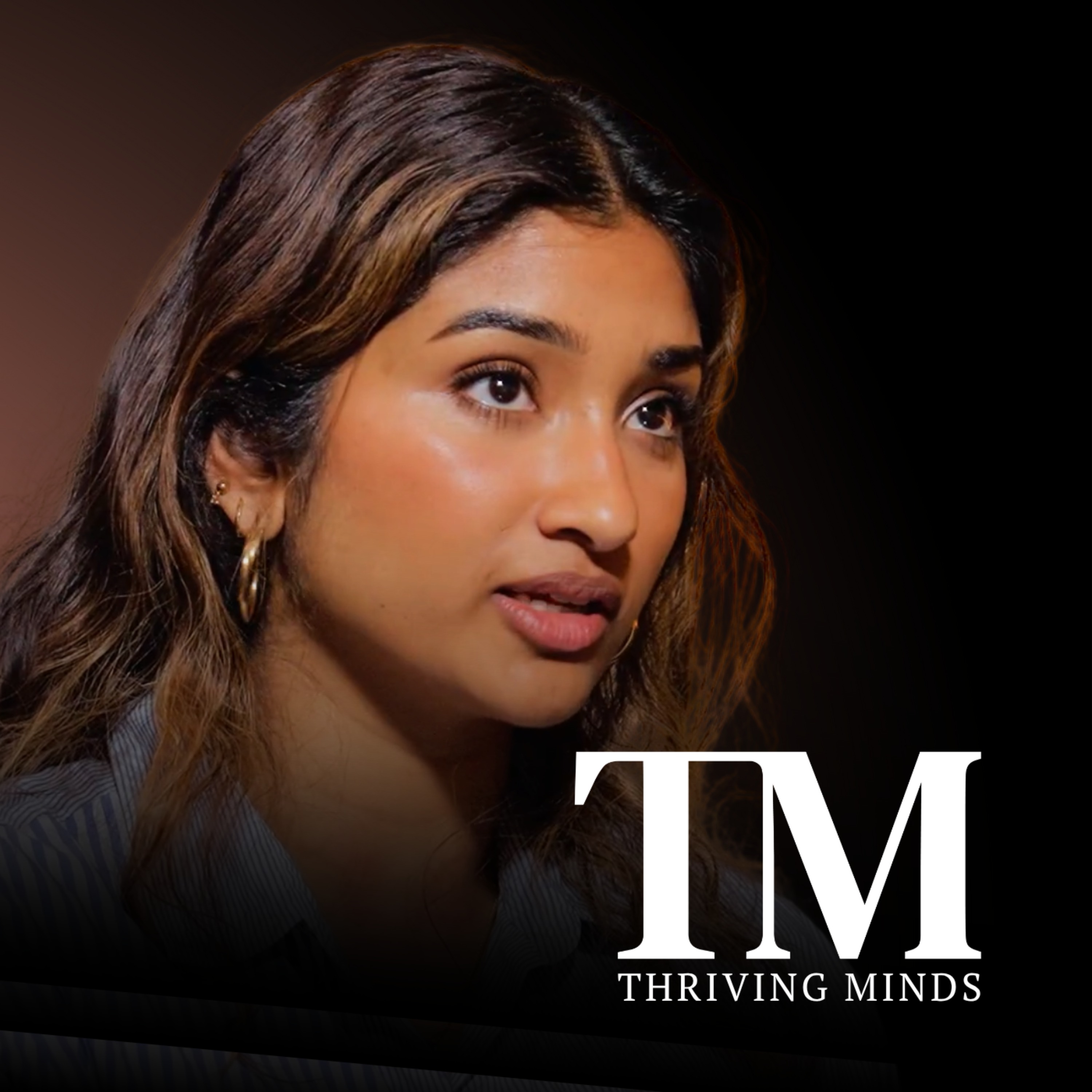
In this deeply personal conversation, host Alberto Zandi speaks with leading actress Varada Sethu about the emotional costs associated with pursuing success in an industry that often overlooks individuals from diverse backgrounds. Varada shares her journey of growing up between cultures, facing rejection and typecasting, and ultimately finding her voice in acting. The episode explores themes of identity, self-worth, and the creative process.
Written by AI. May contain mistakes.

Get the gist, explore an idea or ask about something said.
 Claude
On Thriving Minds with Alberto Zandi, what are the key points of this episode?
Searching your listeningAutomatic transcript. May contain errors.
0:00It was like going through heartbreak after I left that job. It was the experience of being on set that made me realize this is what I want to do for the rest of my life. I just felt so distraught that I'm about to start vet school when this is, like, I've met the love of my life and I am not going to be able to do this. Virata Sethu is a British rising star actress best known for playing Belinda Chandra, companion to the 15th Doctor in BBC series Doctor Who, appearing in Disney Plus Star Wars series Andor and portraying Detective Sergeant Michelle Ali in crime drama Hard Son. She has also delivered supporting roles in Hollywood blockbuster films, Jurassic World Dominion, and Now You See Me Too.
0:44Belinda Chandra in Doctor Who, playing the lead opposite Nshuti Gatwa.
0:52It's one of the best experiences of my life. For like 14 months, I didn't book anything. But you were auditioning. I was auditioning constantly, constantly. So you auditioned for over 100 roles in a year. Yeah, probably. Right to the math, right? Yeah. And you didn't get anything? Nothing. How did you feel? I needed to not have a distraction to actually do the inner work on myself. I learned so much about myself and so much about where I put my self-worth. And so much of it was external. I think actors still struggle with that. And the rejection is so painful, especially if you come very, very close.
1:38Does it get easier?
1:50Varada, for someone who isn't familiar with your work, what is it that you do? I am an actor. I've done mostly TV hoping that I'll make a move into film at some point into bigger roles yeah I am Asian British Indian British and yeah Why did you choose to define yourself in this way?
2:26As Indian British? As in the way that you just described yourself, you could have said many things. Yeah. I like painting. Yeah. I think for, honestly, I think because I've done so much press recently, I think that people are asking me about my work. Yeah. But you're right. That's absolutely, that's a great question. I think really how I see myself or how I'd like to see myself a bit more is as an artist, not just as an actor. I think I have a real passion for following art and things that make people look at the world differently. And that could be books, that can be music, that could be paintings.
3:13I don't think you need to be able to create all of those things to be an artist. I think my special area that I am able to contribute something to the world with is acting. But I'm an appreciator of all the arts. That's probably how I define myself. Interesting. That's interesting because I've had the privilege in this show of chatting with great artists. Some of them are actors, some others are singers. And what I found very interesting is that there was a moment or a series of moments in their youth that define the way that they see life. And as you said, they see it from a completely different lens, a very different perspective.
4:00Talk to me about your youth. How was it?
4:06It was a split between two countries. I lived in India until I was six. And we came to the UK with my parents. I have a twin sister. I have a twin brother too. Oh, you're a twin? Yeah, I'm a twin, yeah. Let's go. I feel like they gravitate. I gravitate towards twins. It's a special, it's such a special bond, isn't it? For sure. Yeah, so we, in India when we lived, And the way that we live in India is a very community-driven society, very family-driven society. And we lived in the same house as my grandparents and my uncle and my auntie. So I lived with my cousins who feel like an extended, they're like my siblings.
4:58I don't look at them in the way that maybe other people look at their cousins in a slightly more distanced way. They are my siblings. So I grew up in a very close kind of environment where I was surrounded by lots of different people. And then when we came to the UK, it was just down to the nuclear family thing. It was my sister and my parents. And that was difficult. I think that's contributed a lot to me the way I am in how I'm always searching for community and I think that's probably contributed a little bit towards my art in some ways and the way I pursue my art it's always I'm always looking for connection for like a family feeling and that's what I love about being on set as well where it feels like there's just this big family around you and everyone supporting each other and caring about each other and loving each other generally if you're lucky if you're on a good set um and does your twin sister feel the same no she she's a bit more i don't know actually she's a bit more withdrawn i think she's looking for connection but the two of us we're like two halves of we make up for we make one whole in a way, I would say.
6:27I'm the person that makes friends. I'm the one that... Compliments each other. Yeah. I'm the one who breaks the ice. I can make friends very easily. And she's the one who keeps them. Interesting. I'm quite bad at staying in touch with people. But when I'm with you, if you're with me in person, then you have all my attention. But if I move on to another job, I've got to... Also, I think as an actor, you've got a high turnover rate for the number of people that you meet. It's not like other jobs where if you're in an office, you have the same co-workers for like five, ten years. In one year, you'll have hundreds of co-workers.
7:10You can't get attached. No, it's not that you can't get attached, because I get attached, but you can't maintain a close relationship with hundreds of people. Um, so while I'm the one that makes friends, she's the one that kind of like, we'll say, okay, we're going to have dinner with this person at this time. Um, she's the one who will organize, like all my friends know to text her if we, if we should go for dinner because I'm so bad at like managing my diary. Um, so yeah, so I, but in terms of her looking for community, I think she finds it through me. Um, yeah. You do complement each other.
7:54So you live in India and you come to the UK at the age of seven. And you feel like you need to be part of a community as you were in India. And that drew you to one extent to acting. But walk me through the moment in which you realized that actually really acting was the thing that you wanted to do in life. I think that came in India. I think that I knew... That young. Yeah, it's such a weird... Indians, we love movies as a culture. We're very... We love TV and we love film. You know, we've got a multi-billion dollar industry, Bollywood, and people idolize actors. And it's just funny because we all love actors and we all love films, but none of us would want our kids to do it.
8:47Why not? I think it's just seen as such a, I think for women, it's seen as it's such a seedy industry. You don't know, it's coming from a place of wanting to protect, you know, your daughter, for example, because you don't know how the producers might be or the directors might be. Is that your general perspective or the Indian perspective? The Indian perspective. Yeah, the Indian perspective. I think it's that, you know, women are going to have a bad experience. but I think it's just not seen as a stable career which is in some ways fair but I think the Indian culture has such an extraordinary appetite for the arts I think we are so rich in all the art forms dance, music, sculptures it's we have such a rich history and culture of all of these things and there are some you know incredible artists but it's this weird it's this I don't know how we don't seem to manage to balance this thing we have this appetite for it but we don't always want to support someone who wants to enter it I think I don't know maybe I'm generalizing maybe there's going to be someone that would um you know interesting i i i mean from from a distance perspective i agree with you when i think about the indian culture and community i do think about the particular dances and dress coats and bollywood so even the henna tattoos right um it is a very rich artistic culturally artistic country.
10:36Now, my question is, why do you think it hasn't, and maybe it's a very binary question coming from myself, but why do you think they were not able to commercialize their industry, the art industry, whether it's acting or dancing internationally as well? Because for example, I lived in Spain. I'm from Spain. I now live in the UK. I lived in the US. When you tell me about Bollywood, I think about Indians watching it. Very few other countries, in my opinion, maybe it's a very binary opinion, watch that content. What do you think?
11:20Two things. I think we are just not interested in being palatable for the Western world. Yeah. I think we are so happy and we're so all-encompassing in our own culture. We don't look for, we're not looking for Western approval. Yeah. And I have a lot of respect for that. And I think it's the same with Nollywood, the Nigerian film industry. And it's content that's, and it's just a nation that's so, it could be a world in its own. It's so rich in diversity, India. All the different, every state has a different language. Every state has a different dance form. Like outside of Kerala, I am useless in India because I don't speak Hindi.
12:15so outside of my state I could be like anywhere else in the world where I don't speak a language so it's there's just so much diversity that I feel like it doesn't need to also now be palatable for other parts of the world my assessment of this is based on three factors and tell me if you agree with them number one, I think the market is big enough for the industry to not need any other financial market to attribute to this, right? So India is incredibly big, right? So we can make tons of money by producing for this community. Number two, I think, cultural understanding. So perhaps if you translate this content into English and I see it in Spain, maybe I don't get the jokes or the drama because we have a different perception of jokes and drama.
13:07And then the third one, I think, is exactly what you're saying. Why bother? going through the effort of converting these movies into Spanish formats or American ones, when we're already making money here, people are enjoying it. Yeah. I don't need to be accepted by other communities. This is enough. It's exactly that. It's all three, I would say. Yeah. I kind of, it's, I would love to internalize some of that. Like it's a, I feel like it's not people-pleasing. Well, I mean, absolutely is. any kind of commercial thing is about trying to get people please lots of people but i've what i love is that um yeah it's been i was actually talking about this with a friend yesterday it's been around for as long as hollywood's been around we just don't care about wanting to be yeah um i don't know i included in the oscars or whatever like we're not trying to win those awards and i kind of love that that um they're able to just be unashamedly indian unashamedly you know maybe unrelatable to other nations and it's fine because you know they know who they are there's so much strength and power in that yeah independence freedom yeah i hope it's not something that um is also i think in some ways it can also be a kind of a shackle uh it's i i would want i I would love the industry to be able to, like there are beautiful Indian films that would be relatable because I think it's the human condition.
14:46That's what art is. And I think if they've got subtitles and you watch it and you're listening to a farmer talk about, you're watching a farmer struggling with poverty, that's something that is relatable all around the world. You don't have to just be from India. There's all sorts of, there are stories everywhere. Like it's just humans. That's what filmmaking is, telling stories. You know, if I think about Hollywood, I was thinking that, again, my perception is that they didn't blend to the Western world, to Europe, for example. They just told us that this is the way you need to live. And right now we have Halloween and Santa Claus and all these things, right?
15:26So they didn't portray their culture in a way that was integrated to ours, for example, the European culture or the Spanish per se. No, because they have so much financial strength, they get to dictate the trends. And that's what's cool. That's what we're watching. That's what we're emulating at the personal and professional level because we see it on the big screen. Any case, I'm going to take us back to your youth. So I was told that you attended vet school, but you dropped out to pursue your acting career. So these are completely unrelated things. yeah okay walk me through that um so yes i did want to act when i was a kid uh i remember seeing stuff on tv and i wanted to act i wanted to be admired i think probably in the way that my my grandma my grandparents loved actors and i wanted i think probably that's where it starts from like i want to be admired like that but i also love animals like i've those are genuinely the two things that I'm the happiest in.
16:31Like I performing and when I'm around animals, I just, it brings me so much joy. And I think I wanted to help them. And my parents are both doctors, and I have absolutely no compassion. I was gonna say towards humans, which isn't true. That isn't true. But like, if I was if I saw a sick person, my reaction is ill. Like, I don't want you near me. Did you see a sick dog? What's your reaction? Oh my God, how can I help it? Interesting. I appreciate the honesty. You know? I'm never going to get sick around you. But you know, if it's someone I like, I have compassion, but it's like, I don't feel like I want to go in and do something.
17:16Which obviously, you know, is a very clear, like you need to do that if you want to be adopted. Somebody needs to. um but i i so i think i just that translated into well i want to be a vet and when we came to the uk i kept it was some it was like a running joke in my family that i would always say i want to be a vet or an actress and um and then you get to and why was uh that your first option i wanted to help animals. But also, actually, funnily enough, I wanted to, like Steve Irwin was one of my heroes. I loved watching him on TV. So I think in my head, I just thought I would be able to work with all these different adventurous, like under all these different adventurous, you know, conditions and get to meet all sorts of animals, ultimately still being on TV, really.
18:10But
18:14I think it was that, yeah, it meant I could make a difference. It meant I could help something that I love. And the reality is very, very different. You kind of don't, you definitely don't see a big variety of different animals. It's mainly, you know, cats and dogs. And also a lot of it's very sad. You put down a lot of animals. A lot of it's destroying the thing you love. Um, but, uh, yeah, I, I, I, it was between those two. And then if you, you know, go into your careers advisor in school and you say, I want to be a vet or an actress, there is not a careers advisor in the world that would say, go to drama school.
18:56Everyone, you know, she was like, all the vet schools, these are the prospectuses. Um, and I really threw myself into it. I did all the work experiences that I needed to.
19:10It's really easy to convince yourself that you want to do something when you love one part of it, one element of it. But then I did a gap year before I went to uni. And in that time, I did a film. And that was what kind of completely derailed me. There's no other way to put it. It was like... How far into uni did you quit? uh i asked for a transfer within a month oh wow yeah how did your parents take it my dad took it well he was very understanding there was something that had happened at that point um he teaches a lot of as a doctor you teach med students as well and he was teaching a med student who he basically watched have a mental crisis because this person was doing medicine for their family and not for themselves.
20:10And I think he started to recognize some of those signs in me. And this was a month into the course. And I remember it was so weird because I went to uni in Bristol, but I was in London for that weekend for a friend's birthday. and my dad was in London for a conference and we were getting the train up together up to Newcastle. And at that birthday party, I said out loud for the first time, I don't want to be a vet. I want to be an actor. And as soon as I said it out, it was like, I can't take that back. Like, I can't, you know, it's real now. I've said that. I've been thinking that and now I've said it out loud and that's my reality.
20:51What am I going to do? And I was speaking to my friend's mom and she was, she sort of coached me through, it's okay, it's fine. I was having this like breakdown at the party, like, oh my God, it's, that's how I've been feeling. That's what this is. And she's like, okay, well, you can have this conversation with your dad. And if, you know, it's going to be fine. Your parents love you. It's fine. because I had this whole panic that I was not, I don't know, it was like I'm going to put them through so much pain telling them this. But yeah, the next day we were on the train together and I was so anxious.
21:36I remember being really sweaty, and I'm not a sweaty person, being so anxious and not knowing how to have this conversation and like being panicked. And he just asked me, are you happy? Do you really want to be a vet? I felt like it came out of the blue and I completely broke down and was like, no, I don't. I have been thinking that I need to have this conversation with you and I've not been able to. I can't do it. I don't want to do another five years of this. I realized a month in, this isn't my destiny. This isn't what I'm supposed to be doing. Like I kept saying, it felt like I was wearing shoes on the wrong foot.
22:22Like I was there. I could get through my day-to-day stuff for university. I could be in dissection. I could pass these exams. It's all fine. But fundamentally, it did not feel right. so your dad was supportive what about your mom less supportive at the beginning I think for her because she's the one who took me to a lot of these work experiences in the middle of nowhere you know going to take me to a stable to work with horses or whatever I think for her she just thought it was an impulsive decision. I am an impulsive person. So for her, it was, it was, uni's just a bit hard for you. And it's a bit difficult for you.
23:12Everyone's having a tough time. You know, everyone's having a panic. This is fine. It's a difficult course. You're overreacting. And there was some dramatics, you know, in the way that like, Indian families are like, you know, a lot of yelling at each other, a lot of, you know, I don't want to shit on my butt. I don't want to talk bad about it. But there was just, there's just a lot. On the train. No, that wasn't on the train. That was when I got home because my dad was like, don't worry, we'll talk to your mom together. Wow. She was just in a state of, she was just in a state of shock. But it's incredible how supportive your dad was.
23:55Yeah. Because I'm going to be playing a careers advisor, perhaps one that is not ordinary. So my assessment of your career all the way until that stage is the following. Your parents are doctors and your parents are immigrants. Without knowing them, my initial assessment of them is that they value hard work, sacrifice, resilience, the value of a pound. and then you have a twin sister so by definition you should be to an extent competitive and you're trying to find your way and and build your character to an extent different to your sister and you grow up with these different factors around you and and then you know inside of you that you don't want to be doing anything related to medicine but a lot of people still need to please their parents and that's normal and have a lot of friends and myself many years ago i used to be in the same situation so you you you do a sort of hybrid version of what you like which is which are animals and what your parents are are doing themselves and that's fit and then i think it's incredibly brave of you that at such a young age you tell both of your parents this is not what I want to do.
25:22I want to do something that has nothing to do with this. I have met very few people in which these people, they absolutely respect and adore their parents. But at the same time, they're willing to make such a decision that goes against every value that their parents have. I have met very, very, very few people that are doing that. And those few people right now are living their best life. Now, their best life doesn't necessarily mean to have tons of money. It means that they feel content with their choices because if you succeed, it's because of you. And if you fail, it's because of you. Because there's nothing worse than succeeding or failing because of somebody else.
26:04Yeah, absolutely. My next question is, I feel like I'm your therapist now. Yeah, honestly, I was like, have you trained a therapist? Because you dissected that perfectly. You make this very brave decision. I'm completely changing career paths and not only that but you know the difficulties of this industry did you have aside from the movie which I'm imagining it wasn't a big production movie but did you have any technical experience attending any drama school prior to making this decision um not not anything long term I did a lot of I mean theater drama club school stuff um which is I think what that taught me was I have a hunger for the literature I have a hunger for learning about how to bring to life these characters but the only real kind of official training I had was I did this two-week course for the National Youth Theatre.
27:12Two weeks. Two weeks. You are very brave. It completely, but it transformed how I felt because I, in school, it's easy to be the best in your year when the people who do drama are doing it because they think it's an easy subject and they don't take it seriously. So you just need one person like me and my friend, Ray, who were obsessed. And we were the best. And we became, you know, theater prefects or whatever, because we were the best because we cared the most. So I was used to being considered the best at something. I did NYT and I was surrounded by other kids who saw acting as a career, took it seriously.
27:53You have to audition to get in. And you're auditioning up against lots of people in the country, lots of kids in the country. to do it. And everybody's good in that class. So suddenly it was like, I have to step it up to match these kids. And I'm also now seeing everybody talk about this as a career. And I think I'm still friends with some of the people that I met on that course. And fine, I was like 17, 18. This is very formative years. And I think it might have been the longest I'd been away from home for like one go um so there was a lot of it was the first time I felt like I was surrounded by people who felt like me like we all have this magic we all have this innate we all felt like magicians it was like going to Hogwarts that's what it kind of felt like like oh this is this is what it's meant to feel like when you're up against someone you belong somewhere again yeah of a community.
28:52Exactly. Yeah, it was and it was incredible, you know, and you can talk about something for hours, we'd stay up late every night and then still be, you know, starting at seven or eight in the morning the next day. But you you couldn't stop talking to someone because you've met this, these people that share the same passion that can talk about the same thing for hours. And it felt, yeah, for me, it was like, this is my calling. This is, this is my people, this is what life could be like. And also hearing people and it was actually an NYT friend's birthday that I was at. And that's why to her mom was like, I was talking to her mom and saying, actually, I can't do that.
29:32This is what I want to do. I think I didn't do. So that's, that's, that's the only real training I had before dropping out of vet school. But I mean, I dropped out of vet school, but I still completed a science degree. So I was still at uni for three years. And for the last two years, I think, to make life easier for me, you know, for it to be palatable, staying doing something I still don't really want to do. I did do a part time drama course while I was there, which was at Bristol Old Vic. It was run by the teachers who teach at the actual drama school, Bristol-Oldwick, they did something separate, like two nights a week, I think it was.
30:23So, you know, you have a full day of uni and then from, I don't know, seven till 10 or whatever it was, it was like you're in, you're just, you can, I just could throw myself into doing what I love doing.
30:38I now have a good understanding of your upbringing and what got you to acting. Now, as an actor, share with me from the first roles that you landed all the way until the bigger roles that you've played recently. So let's go step by step. Yeah, so I, after university, I was very, very lucky. I got an agent quite soon. So I would have graduated in like June or July. And I had an agent by August. And then by December, I had booked my first role, which was a tiny, tiny role. Is that, I would imagine that's unusual to land it so quickly? Yeah. Tiny? Okay. Yeah. I don't think I had an appreciation for that either.
31:34Actually, sorry, I'm going to go back even further. It was my gap year because I just said I did a film in my gap year. that was the first thing that I did that was in a feature film and it was playing a girl gang member um you landed that without an agent or with an agent with an agent um so I went to so when I decided to go on a gap year um I thought I'm gonna try and do some acting in my time in this spare time and I saw this online casting this open casting and I went to it. And it just so happened that there was an agent there. And he said, are you represented? And I said, no. And he then took me on board.
32:15And then I booked a few commercials through him. And then I landed this, this, this film. So in my mind, it was like, oh, acting's, this is, it's easy. You know, you sign up with an agent and you're going to book something. And I did that film and it was a small ish role but it was the experience of being on set that made me realize this is what I want to do for the rest of my life every day for the rest of my life and it was like going through heartbreak after I left that job and but even before starting university I remember there were these months where I could hardly get out of bed because I just felt so distraught that I'm about to start vet school when this is like, I've met the love of my life and I am not going to be able to do this.
33:06Um, so that was the first role I had. And more than the role or this, the plot or the film, what it did for me was it showed me what I'm supposed to be doing in life. And then the second role I got was after university when I came out, um, and I got a tiny role in Now You See Me Too.
33:33And I was opposite Sir Michael Caine, Woody Harrelson, and Daniel Radcliffe. And for me, it just felt like the universe was confirming to me. You made the right choice. Did you have to audition many things before you landed such a role? Yeah, it was constant auditioning. from the moment I signed to when I booked it. And for those smaller roles, you get booked. It's a quick turnaround. They'll cast you a couple of weeks before you're meant to be filming it. So I was auditioning constantly. And then you landed this. And how did you feel? When I landed it? Yeah. I couldn't believe it. I couldn't believe because the, the scene that you have to audition for is something so, um, for something that for a character that has like two lines, right?
34:30Like you go into the room and your audition itself is like 30 seconds. So you kind of, it feels ridiculous to be cast even because it's like, how did you, how do you know what you want if you see me for like 10 seconds? Um, but it felt, it felt affirming. It felt, um, like, okay, there's somebody that can see something in me even in the 30 seconds.
34:56And just being, again, in that space with these actors that I've seen. Do you think it's smarter for an aspiring actor to choose very small roles like this one in big productions or to choose more important roles in the smaller productions in the early stages of your career? I learned a lot from doing the smaller roles. I think if you've had, I mean, this is only my opinion. I imagine if you've had extensive training, if you've been through something intense like drama school, you're probably ready to take on the bigger roles. You probably know how to handle the pressure, how to handle working with all sorts of personalities.
35:44And you probably have a bit more of an insight into what the industry is like, whereas I didn't quite have that. So I think it was really helpful for me to learn the ropes from smaller, smaller, smaller roles and it getting bigger and bigger and bigger. Just having an understanding of, oh, that's what that job, the name is, a focus puller on set. Like that's what that person does. And that's what a grip is. And that's what a spark is. And all of these terms that are so unique to the film industry, you know you you i just wouldn't have learned that and also just how how um what's one role that that i don't know would would blow my mind right now that i don't know it exists in acting that would blow your mind um i mean a focus puller was something that i thought was really interesting because it's their job is to so there's the cameraman who will hold the camera and the focus puller is the person that makes sure that the focus is right.
36:45And I find it crazy that they know just from, I mean, as an actor, I move around constantly, right? And you'll have marks that you have to hit when you first land somewhere. But other than that, you're walking around and it's one person's job to watch the screen and adjust the focus so it moves with you where you want to go. And I think that's an incredible skill just by eyeballing. Like, oh, that's roughly about a meter. So I'm going to, it's crazy. Wow. Okay. So now you see me too. And then what happens? Now you see me too. And then I booked a bunch of commercials. So that first year I kept making not a huge amount of money, but making enough to tide me over for that year.
37:29And then I had a 14 month period of no work. So you were doing commercials for financial reasons, not because it was going to help your acting career. No, no, no. It was financial. Yeah. because they pay well, and it's a day or two. And I would also recommend actors who are starting out to do that. It's also still experience of being on set. Not necessarily artistically that fulfilling, but you make money and you meet people, again, lots of different personalities. You get experience of being on set. Yeah, so I had that, and I think there was another couple of roles. There was a show called New Blood, I want to say.
38:14And I played a nurse in that for like a day or a half a day. You don't remember? I should. I should. It was so long ago. And then there was also Doctors, which is BBC Doctors, which is kind of, it feels like a rite of passage for every actor. It used to be The Bill, but now it's BBC Doctors. And I had a role in that. And that was lovely. That was also a great experience in seeing how like TV soaps are filmed. You get like one take, maybe two, and they move on. You don't get the luxury of I have a take or two to like warm up into it and then you can nail it on the third. Nothing. You say it and they catch it and then they move on.
38:57It's so quick. And everyone on that job was also just so lovely and supportive and kind. um it was it I felt like that first year and a half I felt like it was I had the best experiences everyone was just so excited to see I feel like everyone that met me was just excited to have me there and and happy to have me there and it was it felt um yeah affirming like I'd made the right choice with my career um and then it just ended it felt like it just for for like 14 months I didn't book anything but you were auditioning I was auditioning constantly constantly constantly is average on a monthly basis I had a great agent so I was auditioning at least two times a week Oh, wow.
39:52That's a lot, I would imagine. That's a lot. That's a lot. And I came close once or twice to a couple of projects for bigger roles. And it's hard. And I... So you auditioned for over 100 roles in a year. Yeah, probably. If I did the math right. Yeah. And you didn't get anything. Nothing. How did you feel? I'm so grateful for that period because I learned so much about myself and so much about where I put my self-worth and so much of it was external. I still struggle with that. I think actors still struggle with that, like to not take it personally if you don't get a job because you just think, well, what's wrong with me?
40:40Why not me? And the rejection is so painful, especially if you come very, very close. Does it get easier? Yeah, a little bit. You get used to it. I don't know if it gets easier. You just get used to it. And you have a better understanding of the fact that some things are just out of your control. Some things could be because someone that they saw was the right height. So you can't, you can't grow two inches in like the time you need, you know, or it could be that someone's the right age or whatever it is. There's so many things that are just out of your control. So you can release that a bit. You get better at also, even as you audition, like making your piece with whatever direction it goes and just seeing it as this is the performance that I get to do, the audition.
41:37This is, I just need to see it as that. Like this is my chance to be this character right now. And that's it. And I can make my piece with it. And then if I get it, amazing. I get to play her for even longer. But if I don't, then that was my performance and that's fine. And you kind of have to leave it at that. It's, you know, it's hard. It's hard. It's really hard. I think the first couple of months, if you don't book something for the first three months, it's like easy to do the emotional navigating of, I didn't get it because it's fine. It's out of my control because this thing, that person is better suited for it anyway.
42:20And all of this, you can bargain with yourself. And then the three months after that is really difficult, really difficult to not start blaming yourself. And then just with every three months, I feel like it gets harder and harder to not then take that into the audition room. this feeling of why am I not enough why am I not enough, I'm not enough did you cry? did I cry? yeah, a lot I learnt a lot about how to I'm grateful for that period because I think that was a period when I started therapy I think briefly and I needed to not have work. I needed to not have a distraction to actually do the inner work on myself.
43:17Because as long as there's work, there's the opportunity to feel good about myself. There's purpose. Yeah, there's a purpose. And I can, you know, I'm fine. I've made the right choice. This is great. Everything I do is fine because I'm good. If I'm an actor going through that right now, what would be the best advice that you can give me?
43:42I would say work really hard on finding your identity and your self-belief, regardless of whether you have work or not. So outside acting. It can be to do with acting. But yeah, definitely. It's who you are as a human being, what your purpose is, what you want from your life. you know, see it as an opportunity to grow. Because I think I genuinely do believe the things that are supposed to come to you will come. And it might be that in that time, you like I figured out a lot about my self worth in that time. That's still a journey I'm on. I don't think you can ever really complete it. But the moment I started to kind of come out of that was when, or not come out of it, but come out of the self-pity and the I need validation to be good was when the job started coming in.
44:46And after that period, I've worked every year. I haven't had a dry period like that since. And I think for other people, if they do that, this might be, I don't know, this might not be the right thing to say, but I think if you do the work, for yourself and you have the self-belief and you have the drive and the resilience, the things that are supposed to come for you will come for you. It might not be what you think it is. It might be that you realize, actually, I want to go into directing because acting isn't what I, I want to go further. I want to do something else. If you spend that time to actually figure out what you want in your life and you actually figure out who you are as a person, that is not time wasted.
45:37and you're going to build your life. That is you building the foundations for building your life in whatever direction. I agree with you. I personally believe that both professionally and personally, we don't learn anything from success. We learn everything from our failures. Now, if I reverse the situation and I give you an entrepreneurial context, let's say that your first business doesn't work, and the second, maybe even the third or fourth, I think when people get wrong or they have the wrong perception of the target, the target is not to get the best role. The target is not to build the best business.
46:24No, the target is to become the best actor. The target is to become the best entrepreneur because if you're the best actor, you're not living it to chance or to luck landing that role or building this business right so i i can create that opportunity multiple times for me and i think that's the end goal and i think in these 14 months from what i'm understanding is what you went through which is that inner journey that i think everyone should go through at some point in their lives to understand who is it that I am, who is it that I want to be, and what is it that I need to change to go from point A, which is where I am, to point B, which is where I want to be.
47:09Sometimes people don't like the answer of that. But it is what it is. And ultimately, it doesn't matter how much we close our eyes, reality is still going to be there. So you might as well open them and face them today because you're going to face them tomorrow or in a year from now. So let's just start today. So a lot of actors, they work incredibly hard and they are just waiting for what is called their breakthrough role. In your opinion, do you think it had yours already? Yes. I think in a career, in a career sense, it was a show called Hard Son. it was the first role I had as a series regular um and it was playing a cop in this detective series and it was great I worked with this incredible team that uh all the cast members are gorgeous and all the like crew were amazing and I'd been very lucky until then to have worked with only lovely people, really.
48:21I'd never experienced, like, including that job, I hadn't experienced what it's like to work on a set that's maybe not perfect, not ideal. On a personal level, I think my breakthrough came with Now You See Me Too. Like, I think for me, that was the job that made me think this is that's where I can aim that's where my future is um that's where that's what I need to work towards which is high end I don't want to like I didn't I didn't want to see every job I booked as oh this is the best it's no I'm always going to go level up um but yeah on a career career level I think that was probably the breakthrough in the um it probably demonstrated that I can hold my own in a team, that I'm a good team player.
49:24It's kind of the same thing. I guess it was that I have the stamina if you're doing like a long series and that I get on with people. And then I did this show called Strike Back. And that was similar in that I was in the army. I kept playing these like police officers and army and these like really authoritative people, which I just don't see myself as. I'm so like neurotic and soft, just not in any way like, you know, an army person. But yeah, that was also, that was the job that like went from, for me, from here to leveled me up because everything about that job was challenging. It was the first time I was filming abroad.
50:17The first season was in Malaysia. So you're taken completely out of your comfort zone. and I was working with the cast who had all worked with each other the season before, but I was the newbie. And, you know, when all these people have their ways of communicating with each other, they've got a clique. That makes it sound like school. But it's like, you know, and just in the way that everybody knows how each other works and whatever, and you're trying to find your place in that, But it was terrifying to have that and then to not have any of my grounding factors that I had with any other job. What's the best advice to be able to find your way and blend?
51:00Yeah, it's you just have to show up for yourself. You just have to show up for yourself. I learned so much on that job from trying to people please. And it never, nobody's happy. Okay. Nobody's happy because you're not happy because you're not being authentic. and you might find yourself saying and doing things that don't feel... Can you give me an example of people pleasing in that context? You're in Malaysia and you're trying to please who? What? How? I guess like other cast members trying to be friends, trying to... I feel sorry for myself because I was like, you know, early 20s. I was the youngest in that team and everyone else was a lot older.
51:46Not a lot older, but, you know, a bit older. very different phase in their lives anyway, like married and some of them had kids. And they kind of just like after a day wanted to go home and sleep and get on with their lives. And I took that as a personal, they don't want to be my friend. They don't like me. They don't like who I am. Instead of now as an adult, I was an adult then, but like instead of just seeing it as they are tired. They just want to go home and like decompress after a full day of work. They've spent the whole day with you. they don't want to spend the evening and go for dinner as well.
52:21So people-pleasing was, I think I was just always trying to be buddies, which I think probably gives people a bit of the ick, you know, if you're trying to be like, hey, do you want to go for dinner? But I was also, when you're abroad, you're just like, I don't have anyone else here that I know. And you also have this community mentality. Yeah. So for me, I'm like, we should be breaking bread together, right? And all the other jobs I'd worked on, people wanted to hang out outside of work. But you forget that all the other jobs I'd worked on was in the UK. So hanging outside of work, because they still had their friends to hang out with.
53:04And then you go to the pub at some point, and then they go home to their families. But when you're filming abroad, you spend all day with these people and then you hang out with them and then you spend all like it is nonstop. So I get that they wanted space and I just didn't. I saw it as a it's an attachment thing for me. Like I was an anxious attachment type for sure. I saw it as them not wanting to spend time with me personally, instead of it being they just want a break from everything. What's the biggest role you played to date? Belinda Chandra in Doctor Who. Okay. Yeah. It's playing the lead opposite Nshuti Gathwa.
53:54It's one of the best experiences of my life. It taught me so much. What did it teach you? Say three things. Three things. It taught me that, it taught me how to respect myself in terms of asking for my needs to be met, asking for, but respect in so many ways, even if it's like I have to go to bed right now. I'm going to bed right now because I need to sleep so I can function the next day. I'm not going to stay up talking to this person because I'm having a great time. This is, you know, like I have to respect myself to go home. The power of saying no. Yeah, the power of saying no, which I struggle with.
54:43But also just things like, like I think you get so used to in life, like I just didn't want to be a problem. um so something as simple as like I struggle to have breakfast at six in the morning I don't I don't usually eat anything until 10 it's it's an unintentional intermittent fasting that I do and I just could and it kept what I would eat at six or 6 30 and I would get really bad acidity and I have like stomach things anyway and it took me a long time before I could ask hi actually can Can I just have breakfast a bit later? Can someone just set something aside? Stuff like that, that I now, like it comes second nature to me.
55:27It was this job. It took this long. I'm, you know, fully in my 30s, an adult. It took that long for me to be able to say, hey, actually, can I just have breakfast a bit later? Do you think if you would have asked that probably 10 years ago when you didn't have a big name, so to speak, maybe the team would have been like, no. I mean, this is not, no. I don't think so. There might be, I mean, the breakfast thing, I think I would have just had to do myself. I don't think there would have been someone that was going to bring it to me at 10 in the morning.
56:08But that's the thing. It's like you realize asking for something isn't a big deal. And every time you ask for something, you're not just proving to the other person that you should be respected and you have boundaries. You're proving to yourself, which is the most important thing. And I, you know, so I learned a lot from that job about how to take care of myself and that it's not wrong to take care of myself. Yeah, and also just as an actor, learning to have the stamina, to prove to myself I have the stamina because the hours were insane. I feel like I could take any job now. like it's relentless I had never done a job before where I didn't have a single scene off during the day usually you'd have like a couple of hours at some point in the day when somebody else is doing a scene to just chill out just didn't have it from the moment when you get up at 6 in the morning to you wrap at 7.30 you are on it and now I know I can do it so yeah Did you ever turn down a role because it didn't align with who you are, your values?
57:23Yeah. Yeah. There's been a few roles that I have read, a few jobs that I've read that just felt poorly written. Whether it's because it's a poorly written female character or a poorly written brown female character. And I've just thought, I just don't, I'm not going to put my energy into that. Do you listen a lot to your agent in those moments or you just make that decision by yourself? Before I had a, with my old agent, I would listen to my agent. But again, I feel like the last couple of years has just been a whole new chapter for me where I have new agents. I'm a lot more communicative. I'm not scared of telling them, you know, that actually this isn't right for me.
58:18I mean, I still struggle turning something down as a freelancer. I think when you're working from job to job, you kind of have this little fear of, well, if you turn this down, what if you don't work again? But I'm learning to not listen to that voice and to listen to, okay, now we're looking at how we're molding my career. and the career I want. It's not about making money. It's not about having things to pad out my CV. This is about the career that I want. I'm in a phase in my life where I'm focusing on the shape of the art. How do you decide that? Because let's say that perhaps when you start your acting career, they cast you for roles that are for comedy movies.
59:09but maybe that's not something you like. So how do you, A, identify what is it that you like and what you're good for? And then, B, how do you pivot into that?
59:23I think, I feel like actors know innately what they want or like what's good for them, what feels right in their skin. I think it's having an honest conversation with your agents saying this is more what I like. But I've been quite fortunate in that. I feel people have seen in me the kind of thing that I want to do what I like doing. But I've also been able to try out stuff that felt so not me, but then I do it a bit of comedy. And it's like, oh, that's really fun. That's really comfortable. So you would advise another actor to try multiple genres until you find yours? Yeah, I think so. So I think someone can probably see your potential from a different angle that maybe you don't.
1:00:11I mean, do what you're comfortable with because that's still a strength. That's muscle memory. But someone might throw something at you that you grow from. What's your genre? What's my genre? Yeah. Probably drama. Okay. Drama and action. Interesting. Drama and action. Yeah.
1:00:35Let's talk about rejections. We briefly discussed it in those 14 months in which we're not getting anything. But generally, I think, as you were mentioning, it's quite personal. Because, for example, if I think about a business context, if you don't get that investment, it's not necessarily you are not getting it, but perhaps the business idea, the implementation strategy. Or if sales aren't happening, it could be because of a number of factors, right? microeconomic factors, there's inflation, there's interest rates, the competitive landscape is incredibly hard, or micro factors, there's a wider team that are not performing.
1:01:13But in acting, they're saying no to you. Could be, as you said, for many reasons that are not related or unrelated to you. But ultimately, you're getting the no, the rejection. What's the greatest lesson you've learned in that space? I think... The greatest lesson I've learned from that is learning to let go. Learning to... I love that. To grow from it.
1:01:47Because there are jobs that feel... There's a job that comes to mind as you're talking about that. Very recently, just before Doctor Who, actually, that, you know, again, this far in my career, it still hurts when something doesn't go your way. And it doesn't happen as often, but occasionally you get very attached to something. And in every sense, I felt I was actually right for the job. I felt like the character was right. The writing felt like I could bring it to life. I felt like I connected with it. There were so many other things that I was reading into that I felt like, oh, this is a sign.
1:02:34There are so many parallels and this works. This is going to be it. And in the room, I felt like I had a great chemistry with the director and the casting director and it all felt like it was going to go in my direction. And I did chemistry reads. I got far. And I think it was between me and one other person. What are chemistry reads? chemistry reads are, if it's, for example, the most obvious one is a romantic lead. You read opposite the other actor who they're also auditioning for the other character. That tends to be when you're one of the last few being considered for the role. They put you up against the other actors.
1:03:17And you were at that stage. And I was at that stage. So I had read opposite three, six other boys. So for two different characters, three boys for each character.
1:03:32And I felt like I knew who the, well, I did know. And the men that I read opposite that I thought, oh, you're going to get it. They got it. But I really felt like I was going to be the one that's playing opposite them. And I didn't. And it was so painful because it felt like, how is it at this point in my career, I can tick every box that they're looking for creatively. And it's not like I don't have enough of a CV. You know, it can be, it can, the tiniest thing can fall in somebody else's favor. it and you just have to, I learned how to let go of it. It still kind of hurts because it's really hard to not take it back to, it's because I'm not enough, but it really is just not for you.
1:04:36If it didn't come your way, it is just not for you. That is, and it's letting go of that. It's releasing it. If it didn't come for you, it wasn't meant for you. And just having that solid belief. Because I think there's so many things in my career. If I had got that job, I wouldn't have been able to do Doctor Who, which has been one of the best things in my life, career-wise, but also personally. It has been one of the best growth. It's been one of the most celebratory. You know, I've learned so much about it and I have felt so loved and I've felt so joyous and like the best and fullest, biggest version of myself.
1:05:18And I don't think I would have had that on the other job. And there's so many things throughout my career that didn't come my way that I look back on, like massive roles. And I wouldn't have been ready for them if I got them at that time. I have had to be on the journey that I have been on personally to get to here. and I have enough evidence of that in my life in the past to now hold on to that as an anchor for like, remember how that thing didn't work out and it was actually the best thing that happened because of what you learned from it. That's what you're going to learn from this time. You're going to learn something new from this time when something doesn't work out.
1:06:03So that's what I would give as advice for rejection, dealing with rejection. There's going to be a reason for it and you'll learn from it. This reminds me to something that Novak Djokovic, one of the greatest tennis players of all time, said. He said a lot of people focus in life, but in tennis also, into getting experience and then at some point not feeling anger while playing. So perhaps you lose a point and you get incredibly angry. And he said that should not be the target. That's not the end goal. It's not not to feel it. is how quickly can you move away from that feeling? Everyone will feel it because we're human.
1:06:45So if your target is not to feel it, you're always going to have a feeling of failure because you're going to feel it again and again. So you cannot train yourself to not feel it, but you can train yourself to let it go. And he said the difference in between the top 10 players in the ATPs, which is their league, and the other 100 is not how good technically we are or how bad they are. All of us were at the same level. is how quickly we can let go of our emotions and control them. He said, if you can control your emotions, you can control your future. Yeah, yeah. It's also your health. Like I really got into learning about somatic therapy and learning about how to deal with stress, how it sits in your body, not just emotionally.
1:07:33And I haven't finished it, but I'm still listening to Gabor Maté's book, When the Body Says No. And so much of that is if you hold the feeling and you don't process it and you let go and you don't let it go, you know, it's going to manifest in your body as something really terrible.
1:07:55Of course. Of course it is. So there's going to be, you know, you're not going to have a good life. There's going to be so much that goes wrong. There's going to be things that, you know, isn't what you expect and that hurts. There is so much pain and rejection and anger and loss and grief. There's so much. But I think the lesson that you have to keep practicing, I don't know if you'll ever just learn it, you have to keep practicing is how to experience it, how to let it move through you, but for it to not be, you know, what colors you. Because that's not who you are. It's just the experience that you're going through in that moment.
1:08:40And what you can take with you is what you learn from it. and it's all, I mean, I see it as every time you move on from something that's painful, it's evidence that you survived it. Like every single day that you overcome something that's difficult, you know, or you're in the middle of doing something very, very difficult. It's I've survived everything else. I haven't come this far for this to be it. This is just something new that I'm going to learn from this. This is going to be like another future beyond this. It sounds to me that, I mean, these are techniques that you personally use within yourself to equip you to battle your demons, right?
1:09:22Yeah. And I think that's very powerful because I feel like a lot of people, once they reach a conclusion and they learn something, they feel like something has switched. And now because I learned it, I should not feel the effort going through that same problem again in the future. and then they feel the effort, they're like, maybe they didn't learn it. And in my opinion, it's not that you did not learn it. It's that you did learn it, but it's important to always keep reminding that learning to yourself. It's an evolution. Exactly. Not because it doesn't mean that because you've learned it once, you're going to automatically be able to implement that learning without thinking about it.
1:10:05You need to consciously think, well, this is what I've done before. I'm going through this right now. I'm going to test this, this and that. And maybe there's 20 % of what I'm testing that it's not fit for purpose because no situation is exactly the same. And that's something that I think that's a hard pill to swallow because it means that in life, even though you've just come out of a struggle, you're going to keep struggling. And that's just how life it is. I think you have to learn that lesson the hard way as well. Yes. That there's not a blueprint because every difficult thing I've come across, it's like, oh, I remember when something like this happened.
1:10:40this is how it worked out last time let me try this and when it doesn't it's like i would beat myself up for oh i failed what went wrong but now it's like this reminds me of this thing there's a baseline that i can um that i can use from the previous solution there's a formula yeah but you know you're like a scientist you're still it's a lab you're still figuring out there's a formula that changes it's an evolution yeah you know you're changing as a person you're not who you were when you were that yeah that last time something like that happened either so um And yeah, it's when you try and, again, it's when you try and grip onto control, onto how this should turn out for too long.
1:11:17It's all about just, you just have to let it go. You talk about therapy. Why has therapy been useful to you? Because I went to therapy for different reasons. And sometimes I found it incredibly useful, some others less. And I have many friends that find therapy deeply useful and transformative. but to some others it just doesn't work for them it doesn't it's not powerful enough to drive that change that transformation why you think it helped oh yeah um i think i think a lot of the uh I think a lot of the problems that I have or I had, I want to rephrase that because they're not problems. I think a lot of the growth points that I have are from feeling like I am not, I'm not heard.
1:12:22And the reason I'm not heard is because I'm not valued. Having someone opposite you in therapy that's listening to you inherently breaks those things down. You are worth something because you exist, but also someone is hearing you. And you can say everything you think and feel, and the other person isn't going to judge you. Their job is to guide you, is to navigate you through everything you think and feel. And like my therapist, I got very lucky with her. I have only had one therapist. I see her as like a cheat sheet for my life there's so many things that it you know like family dynamics right there's they are so inbuilt in how we communicate with each other like I have such a short fuse with my with my family about like the things that like my dad might say that to anyone else it's like that's fine But he says it and it drives me crazy.
1:13:27Like, for example, this is so dumb, but like we went to the restaurant, went to a restaurant the other day for my birthday and he was reading things off the menu. And that's fine. But it was driving me insane that he was reading the things off the menu as he was reading it. And it was like, we've all got it in front of us. We all know what's on it. You don't need to. But you know, stuff like that, that like, it's just an inbuilt family thing. Something like that. I think you need like an external person to break it down. It's not logical. And it's quite an emotional situation. And you need someone else to bring that logic into you.
1:14:08Because you're literally wired from birth. From the moment you were conceived, you were wired around these other people and how they work. And your reaction is, it's like a knee jerk reaction. Something triggers you. Yeah, you need someone, I think, for me personally, inserted in there to stop you in your tracks going down that line. And it has, again, transformed my family relationships. It's transformed my relationship with myself. It's the communication part that's helped the most because I don't think I was an effective communicator before. And I think that has been the key to everything in my life opening up.
1:14:45I have had to talk. I've talked to someone who has helped me streamline what I'm thinking, what I'm feeling, and be open about it, open myself up, and also acknowledge when someone else is opening up to me and hold space for them. It's, that has been the biggest thing. And it's meant that I've experienced the world in, like, multicolors in so many, it's like, you know, it's like I was living my life in 2D. and suddenly 3, 4, 5D, everything's opened up for me because I've just been able to see things. Even reading a book, that's why it's helped my acting as well. I'm reading a script and I'm like, that's what this character's going through.
1:15:31They're going through X, Y, Z feelings. Yeah, you have multiple perspectives towards a situation. Yeah, yeah. Again, you can hold multiple realities in your head. This person's reality is different from mine, but they still exist. Both like someone can witness the same event and have so many different accounts. And before I just wouldn't have been able to understand that. It's, this is correct. You know, this thing was green. But that is not life. That is not life. That's not how humans work. That's not how, like everybody has a different reality. And I feel like therapy just opened up all of that for me.
1:16:10You also journal, right? I do. Okay. I haven't done that in a while. But I do. What are the benefits from doing that? For me personally, I have ADHD, so I have a thousand thoughts running at the same time. And it's a constant act to, that's what therapy's helped me with, to narrow down, you know, like the noise, the white noise. And journaling is so useful for what my therapist calls washing machine brain. And it's the same thoughts that are just on this cycle. just endless. And you're not really getting anywhere with it. It's just ruminating. And sometimes it's a re-injury, something someone has said or something that's happened.
1:16:54And instead of unloading it, and maybe looking at it, it's just in the cycle. And what the journaling does is the actual act of writing slows your thinking down, firstly. Because when you are thinking something thousand miles per hour, you can get from the beginning of something to the conclusion to the next evaluation of the conclusion to, but when you're writing it down, you have to slow it down. You are only as fast as how your hand, as the speed of your hand. You have to think about how you're phrasing things. They're not all like abstract. Sometimes it can be an abstract thought that goes through your mind, right?
1:17:37Like you have to put words to what you're feeling, what you're thinking. And just the act of that itself is so powerful in being able to, I don't know, like put a form to what you're thinking. And then it really does feel like you've emptied the load. And you can come back and look at it. And it's there. It's not like you've got rid of it. And because there's a worry that, oh my God, no, that's actually something I still need to think about and figure out it's there. You can go back and look at it. So you don't plan what you're going to write. You just write whatever comes to your mind. Yeah. There's no structure.
1:18:15There's no structure. There's no structure. It'll be, I need to write this down because it's the same thought that's going in my head. I'll plan for like, okay, I need to write this about this topic down. And I'll write down the date and the time. And then it's out of your head. And then it's out of my head. Wow. Or like this much information is narrowed to this much. So there's just space for other things in your head. It seems to me that you have grown a lot and lived multiple lives within the short life that you've lived. If you could give an advice to the 21-year-old version of yourself, what would you advise her?
1:19:0221 is a very specific period of my life that if there is any age I could advise it would be my 21 year old self I would tell her to feed the you know how there's that uh i don't know if it's a parable or something about the two wolves in your head um i would advise her to keep feeding the good wolf or like the spark um the spark the survival spark the spark that was a that was about wanting to survive wanting to take care of myself, seeing better things for myself. It was a very, very difficult, dark, like it was, I was very depressed when I was 21. And I truly believe the only reason I survived that was because I had that tiny, tiny spark that almost went out, but I managed to somehow keep it alive.
1:20:07And I would say, not just keep it alive, feed it. That's what I would say. Something as simple as just survive. If your career ended tomorrow, who would you be outside acting? I'd be me. I would still be me. I would be someone who's curious about the world, someone who's compassionate, someone who...
1:20:42I think that's the key word actually, someone who's curious, someone who's curious about the world, about themselves, about what's happening in the world, what's happening with other people. And I want to try and maintain that. I don't want to be a rigid person. That's a beautiful way to describe yourself, that perhaps when someone else asks you the first question that I did, that tells me so much more about you than saying I'm an actress. So much more. For the people listening to this episode, if you want them to remember one thing about the episode, just one thing, what would you like them to remember?
1:21:32I think we spoke a lot about learning to release things. And I think that's what I'd want people to take away. Learn as much about yourself as you can to open yourself up to the world and release everything that you believe. just be open just be open and curious and let go of things a bit more I mean I'm saying this as if I do this all the time I really don't but it's a process it's evolution it's moving yeah that's what I'd encourage curiosity openness movement
1:22:26thank you thank you for being so honest and so human with me and with the team today i think you are very powerful and i don't think people are powerful when they believe that they have everything figured out or when they feel like they are invincible i think you're very powerful because you acknowledge weaknesses you acknowledge that there are areas in you in which you still need to grow. And you are deploying your time into those areas, into those gaps. And I find that incredibly beautiful, but incredibly and deeply powerful. If I were to take your entire journey and just take one essential takeaway from it, which there are many, but if I were to take one that I think is very powerful and useful and implementable in so many aspects in life is your ability to chase your dreams.
1:23:34As we were discussing earlier, you are the outcome of an immigrant family of hard workers that they became doctors, probably the definition of an exact science to an extent. And you decided to embark a professional journey in the opposite, into the unknown, into something that is not exact, not precise. How do you define good? How do you define bad? How do you define success or rejection? And you did that at such a young age. A lot of people, they try to please everyone around them, but particularly their parents. And then at some point in their lives, or maybe never, they realize that, well, I've wasted so much of my life doing something that I didn't want to do.
1:24:26And perhaps now it's too late. So if you were able to turn around such a situation in an environment that maybe your father was supportive, but I can understand deep inside yourself that you were not super convinced that this was something that your family would approve. and also perhaps having a twin sister that was not doing something very similar to you. Me being a twin, I understand the level of complexity that that can add to the situation. I think it's very inspirational and I think if you were able to turn such a situation around and follow your dreams, I believe anyone can do it. And I firmly, absolutely mean that.
1:25:04So thank you. Thank you for showing your whole life. And I look forward to doing this again in the near future to see what else you've been up to. Yeah. Thank you so much for having me. This has been one of the best conversations. It's so nice that we get to take the time. Thank you.
Would you risk everything to be truly seen?
In this deeply personal conversation, Alberto speaks with Varada Sethu, leading actress and star of Andor and Hard Sun, about the emotional cost of chasing success in an industry that often overlooks people like her.
Born in India and raised in Newcastle, Varada opens up about growing up between cultures, never feeling like she belonged, and the struggles that nearly pushed her to walk away from acting. From rejection and typecasting to finding her voice and rebuilding confidence, this episode explores what it truly means to stay true to yourself when the world tells you otherwise.
In this episode, you’ll learn:
Follow Varda:
https://www.instagram.com/varadasethu
#VaradaSethu #ThrivingMinds #ActingFromWithin #QuietPower #ImposterSyndrome #SouthAsianVoices #EmotionalIntelligence #CreativeJourney #SelfWorth #WomenInFilm
Hosted on Acast. See acast.com/privacy for more information.


