Ask ChatGPT
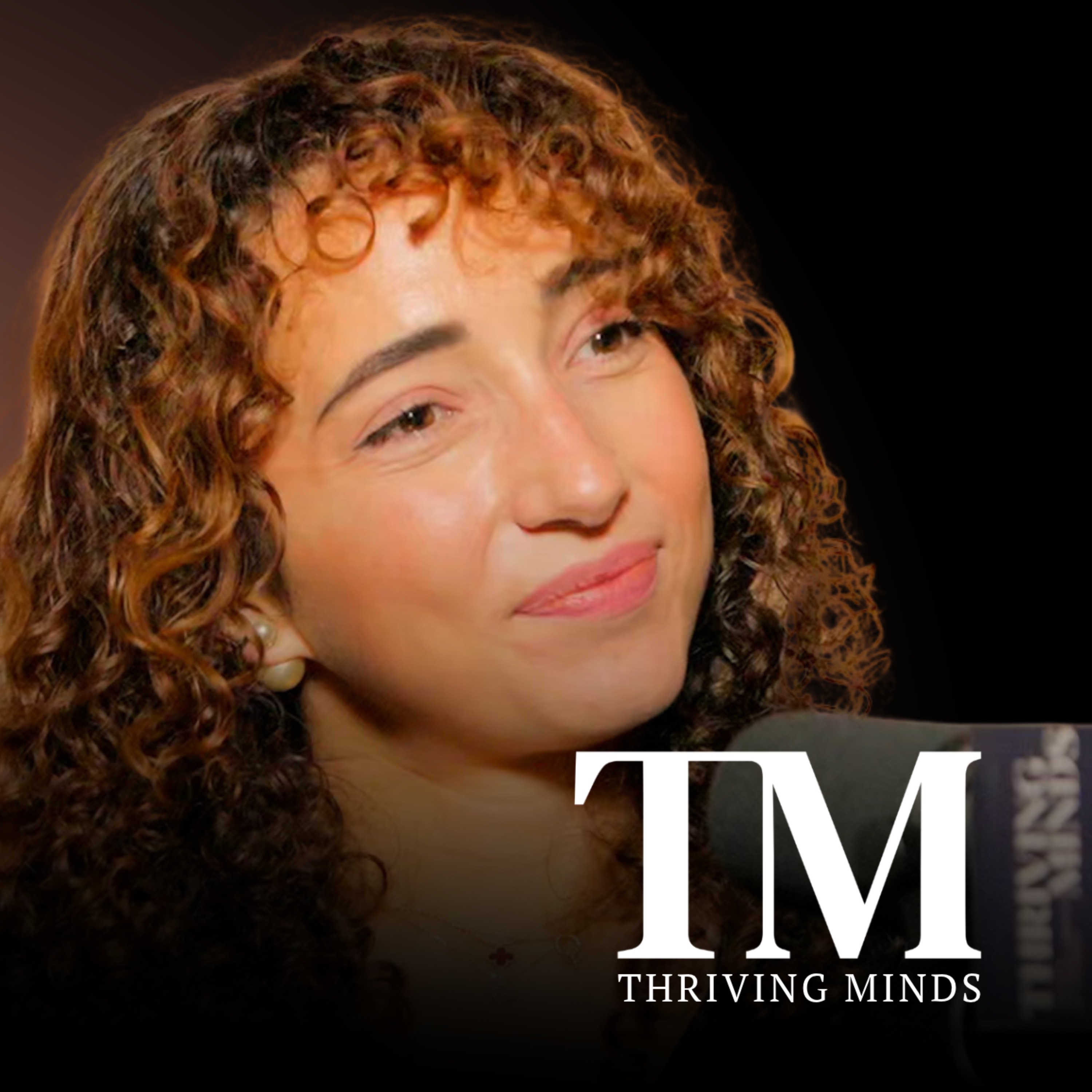

 Thriving Minds with Alberto Zandi
21 Nov 2024 · 1h 7m

Guest: Mia McKenna-Bruce
Alberto Zandi
In this episode, Mia McKenna-Bruce shares her tumultuous journey in the acting industry, which began at the tender age of 8. Her story encapsulates resilience, passion, and the reality of facing rejection. After numerous challenges, including burnout and a brief departure from acting, Mia has now emerged as a BAFTA Award Winner for her performance in "How to Have Sex".
Written by AI. May contain mistakes.

Get the gist, explore an idea or ask about something said.
 Claude
On Thriving Minds with Alberto Zandi, what are the key points of this episode?
Searching your listeningAutomatic transcript. May contain errors.
0:02How healthy do you think it is for a child to become an actor? I would literally see other children crying because they don't want to go in and do this audition and their parents are like, you're doing the audition. Whereas for me, it was always, I was at the forefront wanting to do it. Whether my parents would let me or not, I was like, this is what I'm doing. The award goes to Mia McKenna-Bruce. The winner is Mia McKenna-Bruce. How'd I have sex? The winner is Mia McKenna-Bruce. Mia McKenna-Bruce stepped into the spotlight in 2024 as Tara in British director Molly Manning Walker's How to Have Sex.
0:41Her performance won her the BAFTA Rising Star Award, Best Lead Performance from the British Independent Film Awards, and Breakthrough Performer of the Year from the London Film Critics Circle. Have I had my time? Like, have I had those opportunities now and wasted them? Have I done it and that's it? Am I not going to get those chances again? because you get a million no's for the one yes. So I think my relationship with rejection is a lot better now. Each rejection I get, I'm quite grateful for now. I would tell myself, oh, like, this rejection will make sense somewhere along the line. And I'd tell myself that, but I don't think I'd, like, fully believed it for a long time.
1:19I'm very much a sponge as a person. Growing up, I was always trying desperately to be like the other people that I was around and kind of exist in their shadow. I think I always just deemed myself as not. I don't know, not enough. There are some mornings when you wake up and every fiber of your being is telling you quit. What do you tell yourself to not quit?
1:54Mia, people now know you for being the lead actress in the movie How to Have Sex. so we see you as a successful person now but that wasn't always the case there's so there's so many years of hard work where you went through rejection after rejection I'd like to know how were those years from an emotional perspective for you yeah I mean I have actually been in the industry for 20 years which is kind of crazy because a lot of people you know maybe they have seen how to have sex kind of think oh she's done this one job and it's just all worked out lovely for her but actually I've been working really hard for a really long time and someone said to me quite early on remember it's a marathon not a sprint and the amount of times I've had to tell myself that over the years to like be like come on like it's long game long game it's not an overnight success situation um I have reached many points where I've been facing like really big no's you know um where when you're auditioning for a show you kind of you get really invested you can sometimes go through the audition process for months and they do this thing called like a test deal where they basically give you your contract for if you get the role they give you the contract so you see where you're going to be living you see what money you'll be on and you see basically this life that you're going to have if you get the role and then you don't end up getting it so it's like you're kind of sold this idea if you get the role and then that's taken away from you really quickly and in the years leading up to kind of shooting how to have sex I had quite a few um knockbacks like that where it was kind of I got really close to these big roles and then I didn't end up getting them and I reached a point where I was just like I I can't I can't do this anymore I can't keep giving so much of myself because you know when you are auditioning you're you're putting yourself in a really vulnerable place acting is very vulnerable um so you're doing that time and time again doing your absolute best for people and then you're being told no and in your head you're being told no you're not good enough and that's not what they're saying and I learned in the um audition process for How to Have Sex I got to I got cast in the project and then I got to chemistry read with other actors for the other roles so I got to see other people coming in and doing those auditions and I got to see it from the other side where I went oh when they say to you like oh you're actually not just right for this role they actually mean that it's not that you're not a good actor it's not that like you're not doing a good job something just doesn't quite fit for that role and that's that's fine that doesn't mean that you shouldn't go on and keep you know keep trying for the next role you're not you're not bad um and to experience that firsthand from the other side I was like oh I see now you know it's not a case of them telling you time and time again you're not good enough it's just this role isn't right for you and that doesn't mean there isn't going to be one that isn't right for you you've been doing this you said for 20 years yeah so that makes i mean you're 27 so i mean that's that's a long time for anyone anyone's lives but that's that's a hell of a long time for your lifetime so you've learned a lot probably in the last 20 years but i want to go back to that very first year when you started acting right so you're seven eight years old and was this already a conscious decision like i i want to try this i want to see if i can become an actor or was it a game for you yeah i think a little bit of both i think i never had the concept of this is something i could do forever but i remember the moment where so i watched titanic and i was like six i don't know if that's old enough to watch Titanic but anyway watch Titanic and I was mortified like I was so upset I was crying like for two weeks straight quite a dramatic child as you can probably imagine and my mum got my granddad to ring me and pretend to be James Cameron the director um to explain to me it was a film and then I was like oh like that's a job like because as a kid you don't have a perception that like acting is a job and I was like that's a job and I danced since I was too so I always loved performing I loved kind of being center of attention um and then when I was kind of told that like yeah like acting is a job then I something clicked in me that was like I can do a job that makes people feel something I don't know like I can literally remember that moment like I can do a job that like affects other people I don't know what it was about it but I really loved that idea because I it I'd watched this film and it made me cry for two weeks and I'm like you can do a job that does that to people and then I was like I want to I want to do that I want to chase that and I had no concept at that age a how hard that was be um the obviously work that it took to do that but just something in me was like this is what I'm I'm gonna do and I just kind of took it and ran with it I mean that's pretty impressive for an eight-year-old seven-year-old um most people want to I mean they make a decision a conscious decision a logical decision at a much later stage in their lives yeah you say logical though I don't know if choosing to be an actor is a logical decision to make well it is it is very much a mature decision right so ultimately like you identify this as a as a job itself right I don't remember if at the age of seven or eight I was thinking about jobs in general whatsoever yeah yeah yeah and I don't think I had any concept of like a job as in like oh you make a living out of that I think it was just a I want to I want to perform I want to be like in films you know so you decide you want to perform at the age of seven at the age of eight and then you get this role in this wonderful western production in theater which is called Billy Elliot so you get this amazing opportunity I have a conflict of feelings when it comes to acting as a child yeah how healthy do you think it is for a child to become an actor?
7:53Yeah, I mean, I think it's a really tricky one because obviously every child is very different. And I would go to auditions as a child and I would literally see other children crying because they don't want to go in and do this audition and their parents are like, you're doing the audition. And I think at that point, it's very wrong. You know, don't like, if your child is kicking and screaming, not wanting to do something, surely pushing them to do it is not the right thing whereas for me it was always I was at the forefront wanting to do it um whether my parents would let me or not I was like this is what I'm doing and um I think it's definitely very difficult I was very lucky in a way that the stuff that I worked on at an early age I was surrounded by a lot of other children so like Billy Elliot was a cast of like I think there were like 13 other kind of children that were a little bit older than me um and then I went on to do a series called Tracy Beaker um and that again was a cast of like 15 other children so I was still surrounded by other children if I wasn't I think it could have been really isolating because it's really hard you have to take time out of school um when I was filming Tracy Beaker I did that between the ages of 10 and 18 so I would only spend like six months of the year at school which is obviously a very different life to all of your peers and when I was at school people would have this assumption of who I was because I was someone that was on tv that I was a certain way a lot of people didn't like that um so it does put you in this position where you know you are very isolated at quite a young age and um isolated and I think there was definitely a period of time in my teen years where I felt very lost because I was like I've made this decision I when I was so young to do this do I want to keep doing it do I love it why do I love it you know when you when you're a teenager and you're you're going through so many different changes and figuring out who you are when you've also got a career running alongside that um it's really huge it is really huge but it was always my choice um at any point I turn around and didn't want to do something um my parents were very much like and don't do it whereas I did witness other people being pushed by their parents which I don't think is is the right way to go about it personally I think it's a very important decision that you're making at such an early stage in your life yeah because if you take the same example for athletes let's say most athletes nowadays they start very young yeah at the age of eight or at the age of 10 and you have to commit so much of your life to that particular journey, to that sport, in this case also acting for you.
10:42And that basically is reducing the amount of other opportunities that you can have in life, reducing the amount of other avenues that you can take. And that can be very risky precisely because of what you're saying. You're making a decision at the age of eight, but you're constantly evolving in those early years of your life. And I find that a little bit risky. so I do believe that the parenting figure during these years of your life is very important and definitely I do think that whether having the right support and the right guidance of your parents will make a difference on how you either succeed don't succeed or you pivot into something else in your life in a healthy way which I think is the most important aspect to consider I have two young sisters and my dad did say he wouldn't let my younger sisters do what I did in terms of the TV show that I was on.
11:36I lived away from home. So we filmed in Newcastle. My family was based in London. So we lived away from home from when I was like 10 years old. They didn't come. I lived with a chaperone. So it took me away from my family as well, which I think they really struggled with. We're a very close-knit family. So he did say that he wouldn't let my sisters do what I did. You were the older one. I'm the oldest, yeah, yeah, yeah. So I think that's quite interesting from their perspective. Because obviously for them, it was, they're not in the industry or anything like that at all. So it's all very new for them as well.
12:07You are a test. Yeah, it was like, let's see if this works for her. And I, you know, when we first got approached about an agent for me when I was like eight years old, it was this whole world that none of us knew. So it was like, yeah, sure, let's give it a go and see what happens. It was very much like that for us. And I think if at any point I turned around and was like, this isn't for me, things would have been different. But I did love it. I can't say that I didn't love it. It obviously came with its challenges, but I personally wouldn't change any part of how I've got here. I also think that having emotional support from, in this case, your family because you're very young, is very, very important for you to not quit.
12:47Oh, absolutely. I think, you know, if you want to succeed at whatever it is, especially also if you start very early on quitting, it's a big part of the journey. It pops up into your mind in so many different stages of that path. And having a strong support system in the form of a family in this case, I think it's very helpful. So helpful. You've been doing this for 20 years, but you've been, let's say, discovered. You've been discovered very recently in a way, right? Just a few years ago. So for the majority of your so-called career up until this stage, you were not in a way thriving. Yeah. how was your family during this journey because if I was your dad yeah after 10 years trying this yeah a realistic dad more or more than a realistic that perhaps a conservative dad would tell you baby you've tried this yeah I've supported you I want you to be happy I want you to succeed but you know perhaps you're losing momentum in your life to try other things so it's time for you to pivot and try something else yeah there were definitely we definitely had those kind of conversations maybe not like a full pivot necessarily but we definitely had those conversations of is there other things other avenues to try you know writing or going to uni I never went to drama school or uni or anything like that and you think that would Would be useful for an actor?
14:19Yeah, drama school definitely, I think, can be really useful. I definitely feel in situations still where I'm like in a group of actors that have been to drama school and I haven't and I feel like it's quite inferior. Because, you know, you learn a lot about different methods of acting and stuff like that that I've just never really touched on. For me, it's always been about just kind of existing as a human being in these other roles, but a lot of people approach it in a lot of different ways that for me, I've never kind of broached that subject, you know? So I definitely do think drama school can be a great avenue or for people that like getting into the industry when you're older, it can be really great.
14:58That's why I never really went because I was, even though it didn't feel like it and even though I was, I didn't have any of these like breakout roles, I was consistently working. Like, and I think that's why I never quite did do anything else because I was making a living off of of acting just about um I did kind of consider different routes but every time I kind of it was funny every time you find I found myself at this place of rock bottom every time I found myself of like I I'm at a loss I'm gonna I need to do something else um something would come up something would come up I'd book a job or something that would be like in my brain the universe telling me to stick at it so would you allow your your kid to be a child actor um i would never stop him from doing it obviously if he wanted to but it's not something i'd want to encourage i think i it is really hard mentally it's like exhausting for a long time and you know you have to as with a lot of people like you say like sports people that do start young you do have to grow up a lot quicker and you do kind of maybe miss out on certain aspects of kind of childhood or teen years um and like I say my journey in particular I was I was really lucky that I got to be surrounded by a lot of other children so I didn't miss out on too much of that like we did still have um I did still make these friendships and stuff but that's not that normal if you're a child actor a lot of the time it's kind of you're the child on set and then you're constantly surrounded by adults and not getting those relationships with other other children which i wouldn't want to encourage for my son did you watch the disney channel when you were a kid yeah i watched a lot of disney yeah perhaps too much but when you analyze it there were a lot of young child actors um that played in in all of these different TV shows back then.
17:05And if you look at their lives today, a lot of them had very complicated upbringings and very, very few of them are still acting. Why do you think this is? What happens during those years that either make you or break you? Yeah, I think break you in a way of, I think it's very easy to completely lose yourself and lose who you are, you know, as an actor, particularly at a young age. you're constantly being told what to do what to say where to stand where to look you know um you lose or it's easy to lose kind of your own opinions thoughts feelings um and I think growing up with that and I think particularly maybe in Disney Channel in America where um the kind of acting industry is a lot bigger there's a lot more competition so you're probably I imagine being told even more what you have to look like to be an actor or whatever I think you just reach a point where it's like I'm I don't know who I am I don't know I'm constantly being told even when it looks like you're successful on the surface like you you're still constantly being told you're not enough for whatever reason um so I think when you are when you have that kind of immature brain as a child or as a teenager you can't rationalize that and I think that therefore a lot of people don't carry on because it's like I don't know who I am at this point.
18:33I think that you also get exposed to very mature aspects of life at such an early stage of your life. So for example, I think life has a beautiful way in let's say more traditional upbringings to teach you what life means. And perhaps if you are surely under the age of 10 and you get exposed to alcohol in a way and you normalize it I was not even allowed almost to look at it at that age but perhaps if you see people around you doing it and you normalize it or just the fact that you understand that adults can lie and you learn those things so early on I'm sure that has an effect into how you see life, your perspective of life definitely and this is what I mean by if you're a child that's kind of surrounded by adults in a working environment because also I do remember you're kind of you're expected to do an adult job right so you're obviously being paid to work you're expected to turn up know your lines do this you're expected to be an adult but you're also being treated like a child the rules were very strict we weren't allowed to when i was 14 i wasn't allowed to pour a cup of boiling water because like they have to like the insurances they have to be so careful with kids so it's like you're constantly living a contradiction as well you're kind of expected to be super grown up but also being treated like a baby and you're just like you want to rebel against those things as well a lot of the time so it's like yeah I think being exposed to that I also think maybe achieving a level of what people view as success quite early can be quite damaging um because you kind of go oh I thought this was this dream that I was I was chasing I'm here now like now what so I think that's a part of it as well
20:27I think that going from zero to one whether it is in those early stages of an acting career but whether it could be later on in any industry that you want to venture yourself into I think going from zero to one it is much, much harder than going from one to 100 Yeah, it's that leap of faith I think I'd like you to think about that zero to one moment in your career I think I have two if I'm allowed to because I had one when I was a child which was when I first kind of watched Titanic and realized that acting was a thing I they used to be in like newspapers like open auditions and there was this audition for this show this amateur production of Zeusical the musical right in Croydon and I saw it in this newspaper and I was like I want to go and audition and my mum and dad were like no I was like yeah no like I'm I'm gonna audition and they're like Mia like you basically won't have a chance of doing and I was like no I just want to go and audition and like experience it and I went to this audition and somehow got in to do this show and I think that was a big zero to one because it was I can remember my mum literally saying like no don't be silly and me being like no I don't mind if I don't get it but I want to go to the audition so I think that was a big zero to one because it was like the conscious decision of I'm just going to give it a go and just see what happens so that was my first one and then my second zero to one I think would be when I approached the industry as an adult because is a very different thing and um hmm does this okay I'm juggling between two I think it was so I left the industry when I was 18 I was like I'm done I'm finished I left my agent I went to Australia because obviously go to the furthest place got a job in a call center and was there for like eight months and then I was like oh she lasted a lot in a call center I was like no I've I've messed up um and decided to come back and then my agent didn't want me back so basically I had to start again and I found this like well my dad actually bless him found this court like this drama course on Facebook that was like every Saturday in London um And I was so petrified.
23:00Because at this point, I was now someone that had worked for quite a long time, had garnered a bit of a following in this show that I was in. And then had basically, in my eyes, failed, you know? I wasn't getting any work after that. I quit. I gave up. And I wanted to start again. So it was really, really, really scary. Kind of going back and being like... You lost momentum. Yeah, completely. Lost momentum. And I also, there was this part of me that was like, have I had my time? Like, have I had those opportunities now and wasted them? Have I done it and that's it? Am I not going to get those chances again?
23:40But going back and doing this course, I was like, I love acting so much that even if it doesn't work out as a job, I'm still getting the chance to act by doing this, this course. And that was my zero to one, I think, definitely as an adult, because it's like, again, I don't really care what comes from this. I felt like I'd already failed. So I'd just start again. There was no way kind of further down. It's interesting because these two zero to one moments, they're very much hard work related. Having said that, I need you to be as honest as you can be with my next question. I think luck is something that it is almost inevitable in how a person can become successful in a given field.
24:28Perhaps in some industries more and some others less. I don't like to call it luck. Perhaps timings is a better way of framing it. Yeah, yeah, yeah. Timings. But the question is, to what degree do you think you owe your success today to luck? If you were to put it in a percentage, how much would you attribute to luck in comparison to hard work and in comparison to talent. So you have those three categories. That's really tough. I consider myself insanely lucky. And that goes back to having supportive family. You know, it's huge. You cannot, like, take that for granted. You know, from those very early days.
25:18I also consider myself very lucky because I am very small in stature, quite vertically challenged. And I think a big part of my early career, getting that role in Billie Eilish, part of it was because I was like seven, eight years old, but I looked about four because I was so small. So it was like I was on stage and it was like, who's this four-year-old? Like she's like this child prodigy because she's basically four and doing all this like dancing that all the older girls are doing. But actually I was the same age, but I looked a lot younger. So I owe a lot of it to my lack of height as well.
25:54So that's lucky. Percentage-wise? I don't know, I'm bad at maths. Percentage-wise? Ballpark figure. Percentage-wise?
26:10That's really tough. I want to say like... Maybe to be very honest.
26:20I want to say like 50 % luck, I think. Thank you. I think 50 % luck. Because also I'm not from a family that's in the industry at all, which, you know, a lot of creatives, because it's such an up and down industry, a lot of creatives weigh in a lot of the time is to know someone or be from the industry already. So I'm not someone that's from the industry, but I am someone that's from a family where um not that like I'm from money or anything like that but they have always been able to help and support me when I wasn't working I was able to go and work with my dad um so that I had a job that you know was like it was like a nine to five but it like meant that I could because it was with my dad I was able to take time off to go and do auditions and stuff like that which you know not everyone has that a lot of people have to give up because they can't live you know they need to go and get jobs where just to pay to live and then you can't take time off to go to auditions and stuff like that so that i'm very very lucky and what about the other 50 how much would you attribute to talent and how much to hard work well that's really hard because then i have to like call myself talented which makes me feel icky.
27:41No, you just have to be honest.
27:47You're looking inwards. Yeah. I think maybe like, I think maybe like half and a half, like 25 % each. Because I do work really hard and which feels really, I don't know what I'm saying. I do work really hard, but I also know that, that, you know, people put in maybe in terms of like hours of work. Like I'm someone when I get a job, I don't like to, some people pick apart each scene, you know, go through line by line, pick apart each scene, finding out each objective of each line. That's not me. For me, that's not real. I don't think it means I don't work hard, but in terms of the hours that I put in maybe to each role might not be the same as someone else because they work in a way where they need to pick apart like objectives and stuff like that.
28:45My brain doesn't work in that way. I kind of, again, very lucky. Maybe I need to up my percentage luck. I'll get a script or whatever and I can kind of look at it and I feel like if the character's right for me, I get them off the page immediately. I learn lines very easily in terms of I can read it and it's in my brain pretty much instantly, which again some people have to put in hours of work to just remember lines so i don't know is that luck talent i don't know a little bit of both so after 20 years yeah of experience in this industry yeah basically came to the conclusion that in order for you to succeed in the industry it takes you a tremendous amount of luck so 50 and then the rest is a combination of hard work and talent yeah so this is what you know now yeah if I were to tell you this let's say 10-15 years ago and I'll tell you Mia this is what it will take you to succeed yeah would you have still continued this path yeah I think I think so I think it's really hard because I can look back now in the position that I'm in now and appreciate the luck but maybe like 10 years ago or something when it wasn't going according to plan I don't know how lucky I would have viewed myself then because also in this industry you can be the luckiest person in the world you can maybe have enough money to make your own films you can maybe come from someone that you know can put you in films or whatever but it's still if you're not willing to work hard enough it's not gonna you're not gonna get anywhere and also in this industry you've got other people have got to want to work with you so if you're not willing to put in the work um so now i want to maybe change my luck percentage it's such a mind-filled i don't know just to finalize on this topic i do believe that hard work is incredibly important in whatever walk of life you are in.
30:55Because also hard work breeds the luck as well, no? I don't think that, I think timings or luck are absolutely fundamental. So you could be very lucky, let's say, let's give a very blunt example within your industry. You meet the right producer at the right time or director and they see you and they fall in love with you and they want to give an opportunity. But if you don't work that opportunity, if you don't work very hard, that's not going they go anywhere maybe you know they cast you and you know they don't even you know give you the role or maybe they give you the role but you don't perform very well because you didn't work incredibly hard and then you didn't get a second role so definitely being in the right place at the right time plays a difference but the chances of you being always in the right place at the right time are going to you know be higher if you're constantly trying in your case auditioning auditioning auditioning so in the case for example of a of an entrepreneur of a business person I mean failure is pretty much part of the journey to success so if you only try one business and it fails and you don't try again I mean you won't have a successful business but if you keep trying one after the other or within your business you peep it from one idea and you ship it and so on you're getting closer to being in the right place and at the right time and then you still have to work very hard yeah yeah yeah so in your industry rejection is probably something that is a given probably even at the age of 18 you that this was something that you're going to face numerous times yeah right now what is your relationship with rejection um it's something that i've had to reframe like work at kind of reframing my relationship with it because it is it really takes its toll um and you know I reached a point I was like I don't think this is ever gonna get I don't think the rejection is ever gonna get easier but then when you start to realize that it is a game of perseverance it is a numbers game I looked at it as a way of kind of each rejection that I face is kind of knocking off a number towards the yes you know each no you get is just knocking off a number to to the yes um because you get a million no's for the one yes um so I think my relationship with rejection is a lot better now and I'm kind of each rejection I get I'm quite grateful for now I also think I would tell myself oh like this rejection will make sense somewhere along the line and I tell myself that but I don't think I'd like fully believed it for a long time whereas now where I've got to I think all the rejections that I have had really do make sense for me really make sense for like what what matters to me as a person in terms of like the jobs that I've done and the people that I've met along the way I think if certain jobs would have come through that I wanted to come through but didn't I don't think I would have got to where I am personally and in my career.
34:08So now the rejections that felt really big before actually make sense to me. So with rejections that I get now, I'm like, okay, this is going to make sense. And I fully believe that. If I was to basically translate rejections into a business context, it's basically failing in business. And I think failing becomes a skill that you need to master. And I don't think it's a bad thing whatsoever. In fact, it's a given. And in business, I don't think you learn anything from success, but you learn everything from your failures. Now, when I was researching so much about your life, I was trying to identify what are the common denominators of failing in business and getting a rejection in an audition.
34:50And I think in the early stages of being rejected, there are a lot of learnings that you can take from. but after so many rejections I think the learning is in my opinion and this is where I want to take but that learning is pretty much gone because ultimately they're not saying you're bad they're saying you're not fit for this particular role but if I compare this to business if I fail from any failure in business you can learn so much it doesn't matter if it's the 1050th failure that you go through how do you go about this so you still remain confident yeah yeah you do reach a point where it's like well what can I physically be doing to to better myself from from those from those rejections and a lot of time like you said it's not there's nothing you can take from it sometimes other than you just weren't right for this role so I think it's about taking like what I was saying it's more about learning how to deal with the rejection in acting um and using it as fuel more than a knockback um because you can let it chip away at your confidence as opposed to kind of being like you know I guess this is similar in business like failure is just proof that I'm trying and that's all you can do um just keep trying and I think that's what I would tell myself when I was in kind of the trenches of really feeling like I was failing or really feeling the rejection um it's just proof that you are you are working towards what you want to do and it's also proof that you care about what you're doing I think if if you know if it does hurt it just means yeah you care you care about it which is a good thing when you're pursuing your dream and unfortunately things don't go your way there are some mornings when you wake up and every fiber of your being is telling you quit something else with your life perhaps you're just wasting your time yeah what do you tell yourself to not quit um i think it varies i think a lot of the time because I have been doing it for such a long time it's like I think it's that there's like a quote isn't it it's like don't let yourself come this far to only have come this far and there's this picture that I saw once of like this little man like mining and it's like um he gets really close to like the diamond or whatever that he's trying to mine for but doesn't realize how close it is so turns back and gives up and he was literally like millimeters away and I think that's it it's like particularly with acting I don't know if this is the same with business but like you could be a day a month five years away from the job that's going to change your life like it can change in any moment um so it's just like that it's that thing of like today I feel like giving up but tomorrow I could land the biggest job of my life it can change so quickly in business is not that sudden so you get data that tells you if you're going on the right direction there are a few cases perhaps mostly in the technology industry where success could be could happen overnight but generally you start seeing like a few parameters that are basically telling you you're going in the right direction having said that what i found in my case very powerful is to have purpose beyond in the case of a business beyond profits because if you're starting a business just considering profits especially in the early stages of a business you won't be making money whatsoever so if your definition of success if your key performance indicator is is making money you're gonna quit pretty quickly um if your key performance indicator is winning a BAFTA on year three yeah you're gonna quit pretty quickly because the chances of you achieving that are not realistic yeah from a statistical perspective yeah so this is something that I've also seen in everyone that I interviewed and I think this also includes yourself having that passion having purpose beyond you know the more stereotypical definition of success is what prevents you from quitting and I think it's it's all about that yeah yeah sure absolutely I think the a big pivotal moment in my life for um one of the many times when I felt like quitting some one of my one of my best friends said to me Mia you have to fall in love with the other aspects of your life that are outside of your work um because I think that's really easy with acting is to kind of blur the lines between your life and acting as your work um and it's kind of like what I spoke about earlier when I when I started doing that course again I was doing it just because I loved acting not because it was it was I was being paid to do it or anything um and when I fell in love with my life outside of the work was when I was really able to go okay what actually are my goals you know like what actually am I am I striving for and it was just to act consistently and like you say it wasn't about making a lot of money it wasn't about winning a BAFTA very quickly it was just about getting the opportunity to act to work so then my definition of success changed we're going to get to the definition of success
40:33I'm going to shift the conversation to a totally different topic tattoos yeah so i know you get a tattoo after every role tell me more so it's it's kind of like it's not i haven't been doing that for the past 20 years obviously i wasn't getting tattoos at like eight years old it's um more in recent years and i i don't know what it is I always find still I haven't got the balance right with um I get very absorbed in the jobs that I do I fall in love with the people that I'm working with you know you're you're very close with these people you're being very vulnerable with these people every day and you become like this family and then all of a sudden you don't see them anymore you're not you're like it's like that one day you're just not working together anymore and it's like we might see each other again in a month we might see each other again in 10 years we might not work together again um so I always really struggle with the end of a job because I'm like I've just made this family and I'm not going to see them anymore and you know I'm going back to my reality which I love but I've just made all these amazing friends so one time I was like I need to do something a bit rogue so I just got a tattoo to like mark the end of the job like commemorate that job I feel like maybe it's a little bit of like a grieving process almost um and then it really because it because it feels like okay this sounds so stupid you know when people they leave a job they go for dinner with their colleagues yeah me I'm like I'm off to get a tattoo you could just say bye to these people um yeah I don't know I don't know what it is I think it's like a bit of a grieving thing I'm like I carry this job with me now it's way deeper than it needs to be but yeah it's weird I don't know I don't know it just makes me feel better I think it just marks the end of a job it kind of marks this end point because someone said something interesting to me the other day with when you're filming for screen you work and work and work at like creating this thing with these people but you don't see the finished product for like a year maybe two years so you're kind of like you feel like you're left a bit in limbo whereas when you do a play or something you do the rehearsals and then you work on the you see the finished product when you work on screen you don't see the finished product for a really long time so it's kind of like you feel like you're drifting a little bit so I feel like the tattoo is my finished product I think your professional definition of success is on your skin if I see you in 10 years from now and you're covered in tattoos I'd be like you know what I know you're doing great she's working really well you're buying dinner tonight brilliant so you're a mom now yes and there are so many conversations around how maternity can affect the career path of a woman how is this translated into the acting industry so is this something that affected your momentum it was something i always thought would affect my momentum it was something i was always petrified of to be honest because I didn't see how it would be possible to make it work and
43:56it kind of happened at a time where I couldn't have timed it better if I tried in terms of I had the baby when we started press for how to have sex so that meant I was surrounded by like my publicists and stuff that were amazing and so helpful with helping me look after a child because I went back to do press six weeks after I had him.
44:23Whereas when I was actually pregnant, I wasn't able to work at all because I am someone that looks, plays characters at like 16 years old. I had a massive bump. So that just didn't really work. So do you know what? It was actually amazing because it was the first time in my life that I took time off work and actually thought I'm taking time off work and that's my choice. Like I feel like, you know, I'm not being told by someone else. I'm not being dictated to like, you're not getting this part. I was like, I actually can't work. So it was actually really, really nice for me to stop for a minute.
44:57Do you think the industry is accommodating? Yeah, I mean, I think so. I've got a few friends that carried on working while they were pregnant and it worked for them. For me personally, I had to stop. I had to stop. and touch wood so far it hasn't affected my momentum I don't think but we are getting to the point now where Leo he's just over one so it's like he's starting nursery and stuff like that and it's quite tricky because okay so what do we do normally we up and move our little life to wherever i'm shooting but now it's we're going to be disrupting him so we're having to make those choices now which i don't really know how that's going to go some productions have like crushes and stuff on set which is amazing because obviously that means they can go and do their learning there um but that's only on like really high-end high-end stuff and i think kind of if they have a lot of people that have children and in this case your your partner is also in Yeah.
46:05So my partner's amazing. He's at home and the shoot that I just did, my best friend came with me as well. One of my best friends came with me and she helped have the baby during the day because I was just, I had no hours. Like I don't think I saw him for most of it because I was getting back later than when he was going to bed and leaving before he was up in the morning. So she was there to offer a helping hand. So again, it's really about the people that you have around you. For how long did you do that? I think it was like three months. Oh. Yeah. And with that obviously comes a lot of mum guilt.
46:43A lot of, should I just be taking time off? Am I being selfish, trying to like grow my career while he's a baby? Does he need me at home? Did that impact your performance? I don't think so. I think, like I was saying, I get completely absorbed by the jobs that I'm doing. I think once I'm on set, my brain is fully there. I don't think about home at all, which might change as he starts to get older and my brain is kind of engaged in mum work as well. But currently, no, I'm still able to completely kind of throw myself into the work. And what are the pros and cons of having a partner in the industry?
47:26Definitely more pros than cons for me. pros being that our life is very you don't know where you're going to be one week to the next it's very up and down we don't really have a solid base um so being with someone that's also in that and understands that and isn't kind of scared by that is is amazing um i'd maybe say cons is also neither of you have like full stability you know it's kind of we are constantly living in what's next what about comparative mindset yeah we don't that's not something that i think we've kind of experienced i think not to an unhealthy level anyway um so tom my partner also has his own business so he's very like business orientated he has another love that's business whereas for me like acting is my only love so he can kind of put his focus and energy on his business as well which is amazing because he does that from home can grow that from home so again works with us just moving around the place and I mean I've had this conversation with my girlfriend several times especially when we watch a TV show you see characters that they are playing to be in love with someone else and if that TV show is successful, you're playing that character for many years.
48:52Yeah. I think it must confuse you at some point. Like you're constantly pretending to love someone, to be attracted to that someone. Obviously there might be some sex scenes. Yeah. Is that not affecting whatsoever the relationship? It doesn't affect the relationship. It definitely, you reach, not even just with love stuff, like you, there's a line where you do have to kind of take a minute and go, who am I? Who's my character? You know, a lot of the time. And like you say, like playing in love with someone or even like hating someone. Like you have to like just take a minute and have your little things that bring you back to your reality because, and maybe that's the tattoo thing.
49:36I don't know. But like, because there is a real blurred line and your brain doesn't, I don't know, doesn't know what's real and what's not all the time, you know? so you're for me anyway I'm fully immersed in what I'm doing that I have to go okay check myself whether it's like come home and watch a certain TV show that takes me back to myself or I don't know listen to a certain song just whatever like these triggers that take you back to being yourself and it's something that I haven't quite mastered yet because it's really tough it is tough you do kind of get lost in it sometimes but I think also having an amazing partner where he completely understands that I sometimes when I'm working I won't talk to him for like a week in terms of like if I'm away like when I was filming How to Have Sex I was filming in Greece he was at home in Kent I would be I wouldn't be on my phone I wouldn't talk to him because I'm like just I'm just there and then it would get to the weekends where I'd do my whatever I needed to do to check back into myself and then be able to pick up the phone and be like hey I'm here I'm fully myself I mean you are recording let's say let's go back in time right here so you you were recording a movie called How to Have Sex right so definitely it's about sex yeah so if I put myself in the shoes of your boyfriend and you're in Greece and you're not picking up the phone for a week I'd be like hmm maybe there's a conversation that we need to have yeah and then we're watching the movie and I see my partner which I love kissing this other person and perhaps even pretending so well more than pretending sorry acting so well to love this person and I think it's only natural to think you've never looked at me in that way you've never faced me in that way like do you need to have conversations with your partner about for example those things like is there something you need to bring up or your partner brings up yeah I think for us it's about just being open all the time and he's very involved in everything I do in terms of he knows the people I'm working with.
51:41He has great friendships and relationships with the people that I'm working with. Like he's a part of it. It's never like what I'm doing is me. Like it's never I'm doing this and he's not kind of involved. Like he'll always come and meet the rest of the cast and the crew and he has great relations. Like a job that I worked on a few years ago, some of the guys from that were his groomsmen at the wedding. Like he, you know, comes and makes really great relationships of his own. If it was the other way around, I think I would struggle a lot more. Oh, interesting. Yeah, I think this is, I don't know.
52:17I don't know how he does it. I don't know. But we manage it. I think I would struggle a lot more if it was the other way around. I appreciate the honesty. Yeah. If you could talk to your younger self, and it's too close to your eyes here, and think about you when you were younger, how that person looks like, her problems, insecurities, aspirations. What advice would you give her to thrive in your industry?
52:48Great one. What advice would I give her? Like literally think about you talking to her, how you looked probably 15, 20 years ago. I think I tell her to stop trying to be everyone else in terms of I'm very much a sponge as a person and whenever growing up I was always trying desperately to be like the other people that I was around like friends and stuff like that or other actors that were like my age on set I think I always just deemed myself as not I don't know, not enough not whatever that I would try and become or try my best to imitate these other people and kind of exist in their shadow because I wouldn't want to have a conversation with someone unless they were there running the conversation.
53:59Like my self-confidence was so low as a teenager that I literally would never put myself in a situation where I wasn't with like that person so that they could be running the conversation so that I could just be there like smiling and laughing along. I think I'd love to just be able to shake myself a little bit and just be like you're totally fine as you are and you don't have to be the funniest, the loudest, the most talented, the smartest person to be interesting. I think I always measured... When I was growing up, when I started dancing without sounding like stupidly big-headed, I was always kind of one of the very strong dancers.
54:52And this was, I started dancing from when I was like two years old. I was always one of the, you know, top dancers in the class. And I think as you get older, naturally, you're surrounding yourself with more people. And I think I really started to feel the effects of not being kind of one of the top players all the time. And that just, I don't know, just really knocked me. and therefore made me be like, well, if I'm not one of the best, then I'm not kind of, like, I'm not, no one wants to talk to me at all. I don't know. Do you have any regrets?
55:34I don't know if I have any regrets because I think I learned from an early age because of that, because of having such low self-esteem and kind of letting toxic friendships take advantage of that. I learned from a very early age how not to treat other people because I didn't want to make anyone feel any less than they were. And I think it's something that I'll always carry with me and going into every job or just any situation really. I'm very... try and always think about how the other person feels in a situation. and I think I quite like that about myself now so I don't think I would kind of regret any of that if any of that makes sense you are a self-aware person this is something that I can really tell you I can see that you've worked a lot within you identify who you are what do you like but I think even most importantly what you don't like in life yeah yeah I believe that there is there are two types of growths that happen, but perhaps not at the same pace.
56:45You grow personally in life, but also your career progresses. Sometimes it's the case where your career is progressing much faster than you grow. This is the case of, unfortunately, perhaps some singers that we have seen that then, you know, their lives don't go in the right way. It could also be for actors, but also it could be for entrepreneurs. Some companies, they grow much faster than the founders, let's say, mentality or maturity. where do you think you are from an emotional growth perspective and a career growth perspective? Where I took that time to step back from the industry to step back from the career and kind of start again I think I really gave myself time unintentionally to grow emotionally I think I think that happened a lot more than than the career growth which I think has worked out really really well for me um I think it allowed me to know what I want out of the industry know that I'm you know I work on some jobs or I have worked be thinking about how many followers they'll get from doing this job or you know I'm gonna get a Dior campaign after this job and like amazing if that happens and if that's what you want but I think it's a really scary thing to be doing this job for those reasons because that's actually very empty you know it's not I don't see how that's very fulfilling and I was able to figure that out quite early on because I had that emotional growth where I realized that that wasn't that you don't actually get anything from that you know forbes yes as an actor is this meaningful to you in any way yes i think all of it is meaningful in some way in terms of making um a bit of a stamp anywhere because you go as an actor obviously you're trying to sell stories you're trying to sell like that you're a human be like your characters are these human beings so when someone something like Forbes recognizes your work it's like okay I'm I'm doing something that's making a difference to someone somewhere enough that you're being recognized on these lists.
59:26Do you think that awards in general and perhaps awards that are more related to your industry could be unhealthy because you start like putting these targets in your path and you lose a little bit of the track of why you're doing things? Yeah, definitely. I think if they're the goal, I think it can be really dangerous because, you know, ultimately they're very much out of your control. And again, it's, you know, if that's the goal, it's just a statue. Like, it's not going to change much in terms of, like, I'm still very much facing a lot of rejection constantly every day. People kind of assume now, like, after the BAFTA, like, Like, oh, you know, you must not be being turned down at all.
1:00:19I'm like, no, no, I'm still relentlessly getting no's. And if anything, maybe the rejection became harder for me because it's a bit like, oh, but people are telling me I shouldn't be being rejected now because I've got this BAFTA behind me. So why am I still being rejected, you know? So I think it can be damaging in that way. So you don't get more roles because you win a BAFTA? I don't think there's a direct correlation with that I think maybe I'm listened to more you know people want my input more I think people are more likely to now watch my work and go oh she's someone we want to work with but I don't think it's something like a direct you've got a BAFTA like you're that's you in this project you know definitely probably helps in terms of, like I say, people watching your work.
1:01:17But yeah, I don't think it's a direct kind of 100 % you're set now.
1:01:29A lot of people, they unfortunately are working right now in an environment that they are not happy. It could be a nine-to-five job that they don't like. It could be many different things. You are right now working in your dream job. You're doing what you love. And on top of that, you're getting paid for it. I'd like you to, again, please close your eyes and tell me how does that feel. So you're getting paid to do what you love. because I'd like for those adjectives, that description to be heard by our audience so it encourages them to pursue exactly those feelings in whatever it is that they want to do in their lives.
1:02:16Because I strongly believe that these feelings, this target, it is attainable and achievable for everyone. It, I mean, it doesn't feel like work. it I feel like I wholeheartedly love every aspect of my life um every day that I get to do this job feels like a gift um and I know that sounds so cliche but I mean that from the bottom of my heart like I if if you would like to see me on set when I'm on set like I am the best version of myself I am I'm like a child again I'm constantly elated and people say to me they're like how are you so happy how do you have so much energy all the time and I'm like because I love what I do so much and
1:03:21those getting to be on set makes all of the rejection worth it when you are spending those days and getting paid to do what you love so much it makes the 20 years of jobs here and there or the 20 years of rejection or the on and off giving up and all of this like it makes it so worth it by the time like I'm at this point where I can say I make a living off this now. I currently don't need to do anything else. I am able to throw myself into my work, love every aspect of it. And yeah, it also feels better because I know that I've had that journey to get there. It wasn't easy. but I think cliche that saying it's not worth having if it doesn't come if it comes easy how would you define success
1:04:26for me now I think in terms of success in my career it's the point I'm at where I don't have to have any other job alongside of acting I make a living off acting that to me I therefore feel that I'm currently successful in the job I've chosen to do Thank you It's been an absolute pleasure having you in the show mainly because your story is not a story where as much as you want to think it's related to luck, my assessment of your story is pretty much of resilience hard work and perseverance you had moments where you could have quit and your journey was tremendously long for your age 20 plus years you i'm very sure that aside from those two moments that you've mentioned where you wanted to quit i'm sure that there were many other moments perhaps smaller but many other moments where you've asked and questioned am i going in the right direction is this what i need to be doing in my life is there a better thing that i could be doing with my time and he decided to continue and do not quit and keep working and I do believe that your industry perhaps is the one that gets the most rejections and I think those they either make you or break you and in my opinion they made you because as I said I'm sitting down in front of a woman that while maybe you're casted as a child you are a full grown-up mature and self-confident and self-aware woman.
1:06:02And that's, I think, there are so many lessons that our audience, and there's a lot of North American audience in our show, would be getting from your story, from this conversation. You are very inspirational. You are unusual at the same time. Thank you. And I think that's something beautiful. And I think that's something that makes you shine and succeed in your industry because you're definitely, from the moment we met, you are unusually shiny. thank you so much so you've made everyone today here in the show happy thank you just by being you and I want to thank you again for the authenticity and the openness because that's what we're all about thank you so much I've really enjoyed this thank you Mia thank you
At just 8 years old, Mia McKenna-Bruce embarked on a career that would take over two decades of relentless effort, resilience, and heart. Despite early successes, she faced the harsh realities of the entertainment industry. Rejection after rejection and the crushing weight of burnout. At one point, she walked away from it all, trading auditions for a headset at a call centre in Australia.
But Mia’s acting journey didn’t end there.
Determined to reclaim her dream, she made a triumphant return to acting, pouring everything into her craft. Now, in 2024, she stands as the BAFTA Award Winner for Best Actress, a testament to her talent and perseverance. With highly anticipated projects alongside some of the industry's top names, Mia’s career is soaring to new heights.
In this episode of Thriving Minds, Mia shares with Alberto the raw, unfiltered truth behind her journey. From childhood stardom to the brink of giving up, and ultimately, to becoming one of the most celebrated actors of her generation. Her story is an inspiring blueprint for anyone who’s ever faced rejection, doubted their path, or dreamed of a second chance.
Hosted on Acast. See acast.com/privacy for more information.