Ask ChatGPT
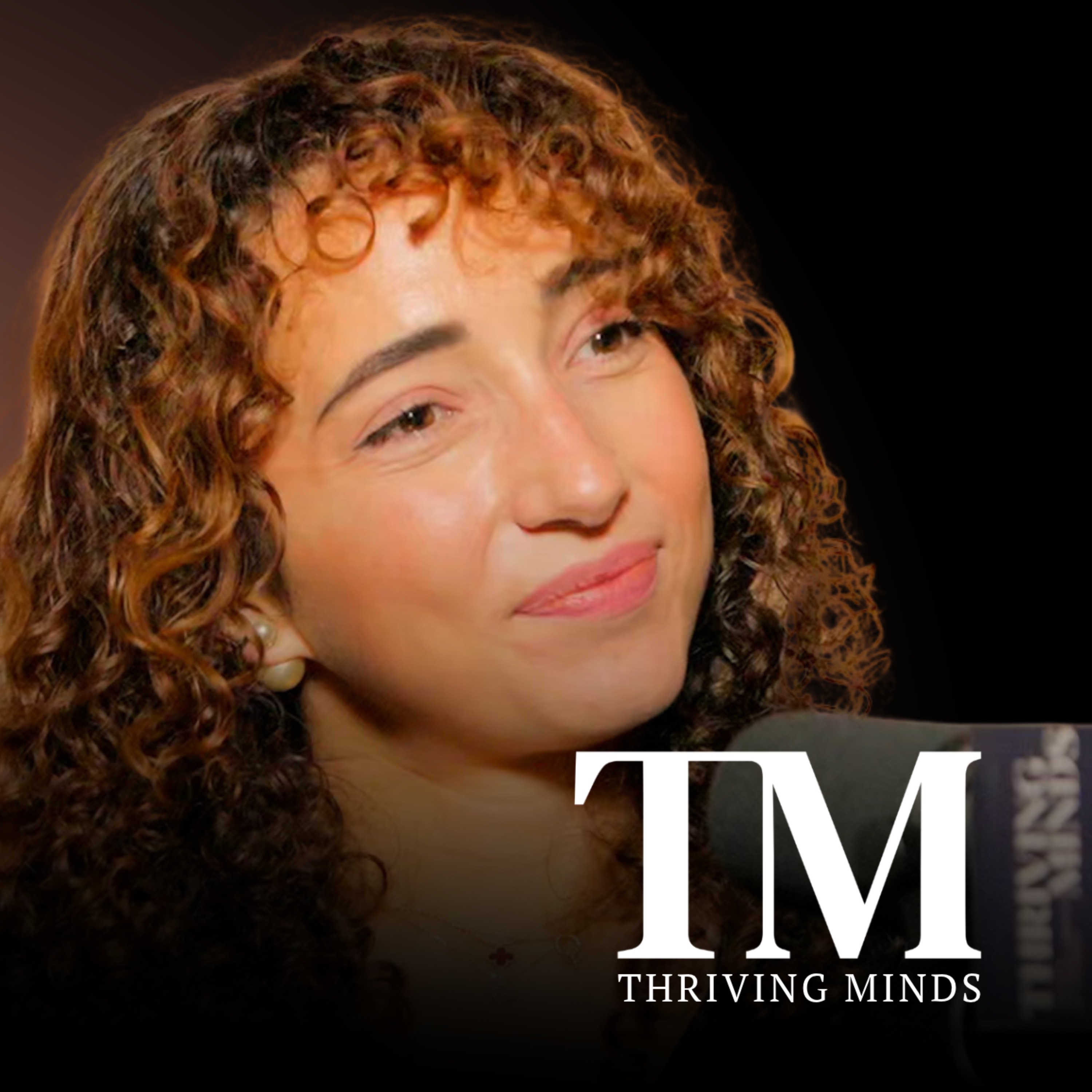

 Thriving Minds with Alberto Zandi
5 Mar 2026 · 54m · 25 chapters

In this episode, Alberto Zandi interviews Maria Hatzistefanis, founder and CEO of Rodial Group. Maria shares her inspiring journey from growing up on a small Greek island to creating a global beauty brand. She provides insights into entrepreneurship, overcoming challenges, and the evolution of her brands.
Written by AI. May contain mistakes.
Maria shares her early career, the founding of Rodial, and the challenges she faced.
“She launched Rodial in 1999 to create targeted, high-performance skincare and later Nip and Fab as an accessible, results-driven line.”
Maria discusses her childhood in Greece and the influences that shaped her ambitions.
“I want to understand if an entrepreneur is born or if it's made.”
Maria recounts her transition from a banking career to pursuing her passion for beauty.
“The hours that I was working, 100 hours a week, I didn't have evenings, I didn't have weekends.”
Maria explains how she identified a gap in the skincare market and her initial ideas for Rodial.
“And at that point, I had to go back to my happy place, which was when I was working for the magazine and doing research on beauty and writing about beauty products.”
Facing numerous challenges, Maria discusses the early days of building Rodial from scratch.
“And coming from the banking sector, you would think I would be the best person to put together a beautiful deck and go and do fundraising, which I did.”
Maria reflects on the bravery it took to start Rodial without prior industry experience.
“Back then, being a female founder was much harder than today.”
Maria shares her experiences in business school and how it shaped her entrepreneurial mindset.
“If I was an employee at Estee Lauder and thought, okay, let me start the business, I don't think I would do it because I would be a lot more aware of the challenges of launching and sustaining and growing a beauty brand.”
Maria discusses the steps she took to find resources and develop her first product.
“I would go from stand to stand and have meetings with packaging suppliers and formulators and design companies and perfumers.”
Maria elaborates on her approach to launching Rodial and the evolution of the brand over time.
Learn why starting with a niche can be crucial for launching a successful brand.
“But some of those ideas don't fall under their area of expertise.”
Discover how unique product names transformed Rodial's market presence.
“So her name is Pippa Murray, and she's the founder of, at least for me, it's my favorite nut butter company in the whole planet.”
Understand how social media has changed the competitive landscape for beauty brands.
“And I said, let's call the product snake serum.”
Gain insights on effective influencer partnerships and common pitfalls to avoid.
“How did social media impact your industry?”
Explore the advantages of having a founder as the face of the brand.
“the 360 degree marketing that you've mentioned, And naturally, for consumer goods and services, a marketing business unit is incredibly important.”
Learn about the challenges and lessons faced during the scaling of a beauty brand.
“So you went from literally working from your home to now being exposed in 35 different countries and being a household name.”
Discover the story behind the launch of Nip and Fab and its unexpected success.
“Precisely exactly what you've just shared.”
Explore how to effectively manage time and focus between multiple brands.
“And now is the bigger one of the two brands.”
Understand the benefits and challenges of working with family members in business.
“at our building our future and building wealth by different revenue streams and not just one.”
Learn about the value of failure and how it can lead to personal and professional growth.
“It's interesting because I'm embarrassed about a whole bunch of things that happened to me from being fired to almost going bankrupt a few years before COVID, which is all in my second book, How to Make It Happen.”
Maria shares her biggest business failure and the lessons learned from it.
“to go through career and life without any failures.”
Maria discusses the personal sacrifices she made for her career and the impact on her family.
“Was this rodeo through the same brand or was it a separate brand?”
Maria reflects on advice she would give her younger self regarding stress and perspective.
“And I've learned more from my mistakes, so I'm not regretting them.”
Maria breaks down the percentages of talent, hard work, and luck that contributed to her success.
“If you, and again, I really need you to be very honest with me here.”
Maria emphasizes the importance of starting the day with clear goals and intentions.
“advice that we must implement in our daily lives, what would it be?”
Maria talks about her new book and what readers can expect from it.
“So I felt I have something new to talk about.”

Get the gist, explore an idea or ask about something said.
 Claude
On Thriving Minds with Alberto Zandi, what are the key points of this episode?
Searching your listeningAutomatic transcript. May contain errors.
0:00Maria Hatzistefanis: No one would fund. A girl just fired from banking, had no experience in beauty and wanted to start a range. I had£20 ,000 in savings. I went into the danger zone, totally unprepared, but then that was the fun element of the journey. Let's call the product Snake Serum. My team went, oh my God, you're going to take us out of business. but we had nothing to lose. Suddenly, an anti-aging serum product became this iconic snake serum.
0:30Alberto Zandi: So you went from working from your home to now being in 35 different countries. Walk me through what you've done that enabled this growth.
0:40Maria Hatzistefanis: Maria Hatzistephanis is an entrepreneur and best-selling author known for founding international skincare brands Rodial and Nip and Fab. She launched Rodial in 1999 to create targeted, high-performance skincare and later Nip and Fab as an accessible, results-driven line. Today, her brands are stocked in over 10 ,000 stores in 35 countries. Maria is the author of several business books, including her new book, How to Make Your First Million, and Is a Dragon in Dragon's Den Grease. To scale, you have to be ready and you have to be honest with yourself. Would it be better to say no now and put the structures in place?
1:15I really need you to be very honest with me here.
1:18Alberto Zandi: What contributed to your success?
1:21Maria Hatzistefanis: Sometimes it's not that the work is hard, it's the discipline. It's not just our talent, it's the talent to bring the right people around us. That's important.
1:31Alberto Zandi: The journey of an entrepreneur can be very, very tough at times. During your career, have you ever, ever considered quitting?
1:47Alberto Zandi: Maria, how would you introduce yourself to our audience?
1:51Maria Hatzistefanis: I am Maria Hansi Stefanis, founder and CEO of the Rodial Group, author of four books and Dragon at Dragons Den Greece. Thank you.
2:02Alberto Zandi: Well, you're definitely a very busy person. And I am very grateful and honored that you came to our show today because I believe that your journey, your experience, your lessons are going to be very valuable to our audience and community. I guess my first question to you is, I keep asking this question to entrepreneurs. I want to understand if an entrepreneur is born or if it's made. So can you please walk me through your childhood? How was it? Was it happy? Was it nurturing? Was it stimulating?
2:31Maria Hatzistefanis: I never thought I would be an entrepreneur. I was born and raised in a tiny island back in Greece. My parents are teachers. They're retired now. And they always instilled in me to find a stable job, be a teacher potentially, and do that and have a stable income for the rest of my life. So for them, stability was very important. But I had other plans. Since I was a young girl, I would take all my pocket money and go and buy Vogue magazines since I was eight years old and read all the fashion magazines and dream that I lived this exciting life in a big city and live in a very different lifestyle to the one I was raised.
3:18Maria Hatzistefanis: And at that time, I didn't know what I wanted to do with my life, but I knew I wanted bigger things and definitely not to be a teacher. So moved to Athens where I studied English literature, but study wasn't what I wanted to do. So I immediately applied and got a job with a magazine called Seventeen. And I was freelancing for them while at uni. I was doing a lot of beauty research. I was doing a bit of styling and I was in my zone. I loved the glamorous world of being in a magazine. When I graduated from university, and by that time I've done four years of writing for 17, I loved pieces and the creative element of working there.
4:08Maria Hatzistefanis: But business was driving me and I didn't know in what capacity, but I knew I needed to continue my studies and get myself into business. So moved to New York. I always wanted to live in New York and studied for a degree in business. I did an MBA at Columbia Business School. And that confused me even more. And at that point, all my classmates were either going into banking or consulting. so I thought that's the only career I can pretty much go for and it sounds really exciting when you're on the outside so I got a job with an investment bank called Salomon Brothers and I got an offer so here I am in London working banking it was one of the most challenging experiences in my life.
5:04Maria Hatzistefanis: The hours that I was working, 100 hours a week, I didn't have evenings, I didn't have weekends. It was and still is in some way, the culture of an investment bank, but it was paying really well for someone in their early 20s. It was an unbelievable experience. A couple of years into it, I started losing my excitement. I've learned a lot, but there was a point that I was going to work and I wasn't feeling it. So I became a very bad employee, not showing up on time, not doing my hundred hours. I would do just the basic 50 hours that was frowned upon. And very quickly, I showed everyone I was totally disinterested and I got fired.
5:50Maria Hatzistefanis: And that's devastating. That was my first big job. But equally, it was what I needed at the time to make me realize I do not want a career in investment banking. It was good while it lasted. I don't want to find another job in a bank. So let's just think, what does the future look like? It took me a few months. It was obviously a big shock to my system. I was very embarrassed. I didn't tell people I was fired. I said I resigned because it wasn't for me. How old were you? I was 25. And at that point, I had to go back to my happy place, which was when I was working for the magazine and doing research on beauty and writing about beauty products.
6:44Maria Hatzistefanis: That was something that really excited me. at the time there were a lot of new startups within the beauty industry back in the day there were just the three major beauty brands Estee Lauder, L 'Oreal, Lancome there was nothing else and I thought there's definitely a gap in the market for a serious skincare range that would offer targeted treatments to specific skin concerns. Everything else is very basic and we can give it a fun spin and make beauty look more interesting. So that was my original idea. There was definitely a gap. It's not like now when you have tens of thousands of brands. It was a very small circle and that's how it started.
7:36Maria Hatzistefanis: I thought what can be different about my range? The first ingredient I used was pomegranate elagic tannin. That's where the word rhodial comes from. Pomegranate elagic tannin in Greek is rhodi, so rhodial. And it's an ingredient my grandmother used to use back in Greece, making a cream that I still remember with olive oil and beeswax and pomegranate. So there was a little bit of history in our family. And I thought, let me make this into a range. So it started really small. I tried to get investment. And coming from the banking sector, you would think I would be the best person to put together a beautiful deck and go and do fundraising, which I did.
8:22Maria Hatzistefanis: But I didn't get any funding. Back in the day, no one would fund. A girl who was just fired from banking had no experience in beauty and wanted to start a range. So it all started small from a backroom at home. I had£20 ,000 in savings for my days in banking and a bit of money to get me going while I wasn't getting a salary. And that's how Rodial was born.
8:50Alberto Zandi: Wow. You are such a brave and are a brave person. For so many reasons, I was thinking, A, it was a very, very small market from a competition point of view. So there were very few competitors, but very, very, very big. And then the second reason why I think you were incredibly brave is because you had no experience in that particular industry. And then C, I can only imagine that this was probably, what, 1999?
9:21Maria Hatzistefanis: Yeah. Yeah.
9:22Alberto Zandi: Back then, being a female founder was much harder than today. And your parents were not entrepreneurs. So it's not like you had a blueprint and you knew what to do. It was really coming just from within.
9:37Maria Hatzistefanis: Yeah, it was all a journey. If I was an employee at Estee Lauder and thought, okay, let me start the business, I don't think I would do it because I would be a lot more aware of the challenges of launching and sustaining and growing a beauty brand. But because I was clueless, for me, that was a plus because I went into the danger zone, totally unprepared, but then that was the fun element of the journey.
10:10Alberto Zandi: Another thing that I find very interesting from your story, those early days, is that you went to Columbia University, one of the best business schools in the world, and yet you came out more confused about business. So would you advise any entrepreneur, any person that wants to become an entrepreneur to go to business school?
10:30Maria Hatzistefanis: What business school gave me was the belief that I could do anything I put my mind in. I got the confidence that I didn't have before. And it taught me a lot. It opened up my mind in a way that I couldn't have done if I didn't go to business school. but it did not prepare me for what it takes to be an entrepreneur. I don't think any course in the world can prepare you for the mental strength and the thick skin you need to have to start a business. To start a business, you need to be street smart as well. And that's the exact opposite of studying because they don't teach you that. You have to have it.
11:16Alberto Zandi: interesting so you have an idea you start you start sort of like toying with the idea at home with your savings so how do you bring this idea into into a reality within the first
11:30Maria Hatzistefanis: like two years how did it become an actual business um what i did was go to a trade show in italy that's called cosmoprof um and it's a big show if anyone wants to start a beauty business that is the place to go. And I had a suitcase with me. I would go from stand to stand and have meetings with packaging suppliers and formulators and design companies and perfumers. I've met all my resources within 48 hours. I filled the suitcase with leaflets, came back to London, started calling, screening out, and then I narrowed it down to the people that I would need to work with to develop my brand. The first thing that I needed to do was find a lab.
12:20Maria Hatzistefanis: Everything else comes after. I needed a lab to work with me so they can develop the formulas and the efficacy that I wanted the products to have. And this is a lab that we're still working together 20 plus years later. So once I found and we immediately clicked, and that was the moment I said, great, we're onto something. I have someone I can communicate. I can explain exactly what I want. And back in the day, I didn't have the formulator training in any way. I couldn't put a formula together to save my life. But over the years, working with a formulator, I did create my own bank of information, of ingredients, of what goes with, what ingredient goes with another one.
13:10Maria Hatzistefanis: And over the years, I have developed my own knowledge. And I can now, when I formulate a product now, I can immediately give the brief. But it was a journey. So going back, first step was the formulator, then finding the packaging, the cartons, the manufacturer who would put it all together, a storage facility. So there were a few resources I needed to put together. But one thing I learned in banking was I was very good at research and I learned very quickly to research an industry, even if I knew nothing about it. And very quickly, I would know what I needed to put together to understand it and run it.
13:54Maria Hatzistefanis: So, yeah, that's how it all started.
13:56Alberto Zandi: Again, this is so inspiring and brave because many of my friends, as we were discussing before we started recording, they want to become entrepreneurs and they have incredible ideas in my opinion. But some of those ideas don't fall under their area of expertise. So they are, for example, working in the finance sector and they have an idea which is in a different industry. And because of that, they always like sort of like push that idea away because they believe that they're not going to be successful because they're not subject matter experts. But in your case, you were not a chemist. You had no industry, directly industry related experience.
14:32Alberto Zandi: And it was a completely different world in 1999. And yet you went for it. How did you choose your first product? Like, what was the rationale behind?
14:44Maria Hatzistefanis: What we did first, I have to say that Rodial has evolved over the years. So we're not what we used to be at the beginning. But we started with body care products. I wanted to have the best, most effective body care you could ever find. And body care was a category no one was producing any products around. So we became one of the first brands to be known about effective body care products. And I only launched with four pieces. And that's something. it's interesting what you say because I speak to a lot of entrepreneurs through my talks or on social media or when I meet people and everyone wants to launch a hundred products at the same time and for me it was good that I was very specific and I narrowed it down this is what I want to do then over the years we evolved and we moved away from body care but I built something on a niche that no one else was covering.
15:48Maria Hatzistefanis: And that's super important when you start your business.
15:51Alberto Zandi: I really, really, really agree with that. And I want to reinforce that message by sharing an experience from another entrepreneur that came to this show. So her name is Pippa Murray, and she's the founder of, at least for me, it's my favorite nut butter company in the whole planet. But it's one of the largest ones in Europe, which is called Pippa Nut. And my question, one of my questions to her was, right now, I think 12 years after she founded the company, there are a number of different products. So if she had unlimited capital from day one, which is never the case, but let's entertain that situation.
16:22Alberto Zandi: Would you still go to the market with a huge range of products? And her answer was exactly what you just said. I went with a niche for several reasons. Reason number one, so the market could understand what is it that my business is about. If you give them seven different things, it's quite confusing. And then two, You don't have the data that you will gather throughout the years to understand what is it that the market actually really wants. So, yeah, I need to ask you a question that I found also interesting. So when I was looking at your products, I found the common denominator, which is that they all have an interesting name.
17:02So Snake Serum, Dragon's Blood, Bee Venom, Banana Low Lighter.
17:12Alberto Zandi: Why did you choose these names?
17:14Maria Hatzistefanis: So it all started in year five. Moving away from body care, we were about to launch our first anti-aging serum. So I get a bottle from the lab. I try the product. It felt amazing. I look into the packaging and the design the team has put together, and it was a white bottle called anti-aging serum. And I say to my team, how are we going to compete with all these big mega brands, with massive advertising campaigns, with a white anti-aging serum? It's impossible. I look into the list of ingredients, and one of the ingredients related to Viper Venom. It's an ingredient called cyanaic peptide. And what it does, it freezes the muscles, similar to how when you're bitten by a snake, your muscles get paralyzed.
18:14Maria Hatzistefanis: So it's not as extreme, but it's a milder effect doing the same thing with that ingredient. And I said, let's call the product snake serum. My team went, oh, my God, you're going to take us out of business. This is crazy. But we had nothing to lose. We were a small brand. It was a big risk. So we made the product black. We did some photo shoots with snakes. And suddenly, a very boring anti-aging serum product became this iconic snake serum. We sent out a press release that was immediately picked up by media all over the world. And that was the turning point for us. We started getting calls from Germany to Japan to Australia.
19:01Maria Hatzistefanis: Everyone wanted a piece of that snake serum. So that's how it all started. And suddenly we have a viral product in a pre-social media world that virality was very different to what it is now. And after the success of snake serum and thinking what's next what's the next range you can't go from snake serum to lavender oil you have to keep it up um and looking at what buzz virality and um excitement the name brought it did the advertising for us we didn't need to pay for advertising we needed the name did it everything. And so the next range became the dragon's blood, which is a ingredient that comes from a sap from a tree in the Amazon.
19:57Maria Hatzistefanis: It's clear red. It's a natural ingredient. It helps with plumping and hydration. So we call the range dragon's blood. We made the packaging coral red. It started from one product. It did so well, we expanded it into 10. And then a few years later, along the same lines, we launched the B Venom range. So there's a pattern and we're at a point that the names represent the ingredient. We were one of the first brands to go with an ingredient-led product. There's more into it, but the leading story is that one ingredient that attracts attention. And that strategy has worked really well for us. And it's advertising when you don't have budgets.
20:49Alberto Zandi: Thank you. Thank you for sharing your initial recipe to success.
20:59Alberto Zandi: Today the world has changed massively in so many aspects due to social media. How did social media impact your industry?
21:08Maria Hatzistefanis: Social media has democratized the beauty industry. it helped to lower the barriers to entry and allow everyone to launch beauty range and be successful very quickly it made it a lot more competitive because it when i started we didn't have social media so to create buzz excitement and word of mouth it was a lot harder now we're all competing with tens of thousands of brands that are all on Instagram. So for me, it's great that it's there. It's for Rodial, it's one of the areas of our 360 marketing, but it cannot be the only one because that's the area where we have the most competition.
22:03Alberto Zandi: And then what about working with influencers? How has that journey been for you and for Rodial? And also, what are some do's and don'ts that you would recommend other founders when it comes to working with influencers?
22:17Maria Hatzistefanis: We started working with influencers a little bit later than most of the other brands, a couple of years before COVID. And during COVID, we had the biggest ROI. So we would have an influencer do a kit and we would sell 2000 pieces of that kit within an hour. And it was magical. And we thought, oh, my God, you know, we found the secret to success right here. And then when we were out of lockdowns and post-COVID, those ROIs started to significantly reduce to the point that the same influencer now, if they post a kit, they would sell 50 instead of 2 ,000. So the metrics have totally changed. And so it's not the get-rich-quick scheme that many people think some of the influences can bring to a brand.
23:22Maria Hatzistefanis: We work with a smaller group now. We work with longer partnerships that have a deeper connection with Rodial rather than one-off. in terms of tips you have to define exactly who your audience is we've made a mistake in our earlier days to work with an influencer with millions of followers who was a lot younger than our customer and that resulted into nothing the awareness goes to a group that doesn't really relate to our brand. So it was a waste. So what I would say is very carefully observe and follow the influencers that you're interested in working with and make sure their audience is aligned with the audience of your brand.
24:16Maria Hatzistefanis: I would do a little test before and do one collaboration. And then And if that does well, I would move into a longer term, three, six months, a year that gives the better results. Because it's interesting. Consumers are very smart and they know when an influencer is paid. And obviously, all influencers are paid to do most of their work. And then if they buy something and then next month the influencer is promoting something else and they say, hey, I bought this Rodial cream from you. What do you think? And they respond, I'm not working with Rodial anymore. Buy this one. And there's a bit of that disillusionment coming from consumers.
25:01Maria Hatzistefanis: So it's more to the benefit of the influencer than the brand to try to do longer term partnerships that feel more genuine and more connected.
25:11Alberto Zandi: And then bringing this a little bit more to a higher perspective, the 360 degree marketing that you've mentioned, And naturally, for consumer goods and services, a marketing business unit is incredibly important. What are the biggest lessons you've learned in your industry when it comes to marketing?
25:31Maria Hatzistefanis: You have to use every platform and media that you can to create brand awareness. And when I'm saying platform, I'm not talking about social media platforms. For me, social media is about 25 % of the pie. There's also the paid media element, paid social media, which is an additional part. But we still go after print. We still go after online press. And we do a lot of eventing and community building. and in 2026, you have to take all the points. And for me, the most important point that we've been working for the last few years is community building through a lot of events. As a brand, we host probably a minimum of 10 events a year.
26:27Maria Hatzistefanis: There's an event happening every four to six weeks of different audiences. and that bringing your audience together can be so powerful.
26:39Alberto Zandi: And what do you think about the founder being the face of the brand in consumer goods industries?
26:44Maria Hatzistefanis: It's very powerful to have a founder behind the brand because there's a lot of brands in all industries that are backed by a VC from a bunch of corporate people. and it's all about let's do this we have a formula let's make money when you have a founder that's present there's a story a founder that really cares a founder that connects with the community then you automatically have something to differentiate your brand from all the other faceless brands so in 2026 it's even more important to have that founder presence to be able to tell the story because right now it's all about storytelling and how my brand story is different from all the other 10 ,000 beauty brands that are out there and which story is going to connect more and which founder is going to be more inspiring and more relatable.
27:51Maria Hatzistefanis: I think these are all points that do benefit a brand that has a visible founder.
27:58Alberto Zandi: I want to pick your brain on scalability. So you went from literally working from your home to now being exposed in 35 different countries and being a household name. How was the scalability journey for you? So walk me through what you've done from a funding point of view, from an operational perspective that enabled this growth.
28:29Maria Hatzistefanis: It's always about people. It's always about hiring people who are more experienced than a founder is. And they've worked in businesses that are much bigger than when my business is right now. So for me, it's always been people. It's always investing in people that I could not afford at the time. sometimes vaguely understanding what they can bring on the table but also taking a leap of faith and saying I don't know exactly what this person is going to bring but I have a gut feeling that they know enough and they've done enough at a bigger scale that they can drive my business there and it's a lot of risk taking because during scaling you invest in systems you invest in people, you invest in infrastructures, and you don't have visibility, you don't have a guarantee that this will pay off.
29:28Maria Hatzistefanis: To scale, you have to be ready and you have to be honest with yourself. I remember when I was first starting out, it was year two, I got an opportunity to expand into a beautiful chain of luxury stores in Australia, focusing on beauty. It was a dream come true. And at that time, it was just back office, myself, an accountant and a part-time salesperson. The glamour and the excitement of expanding in a new country, I got into it, decided to launch. I went to Sydney. We had a beautiful press event. And I thought, this is my road to a million. Little did I know that when I came back, that was a big organization and they were requiring three-year business plans and launch marketing calendars.
30:28Maria Hatzistefanis: I had none of that. It was me and a part-time accountant. And so I wasn't coming up with the information they needed. I didn't have plans that were far in advance to satisfy their calendar and their launches. And within 18 months, I lost the account. And it was devastating. And we still haven't been able to go back there. But what that taught me is I'm very much about saying yes to opportunities. And sometimes you're not ready for them. But sometimes you really need to think hard. Am I prepared for the next step? Would it be better to say no now and delay it and put the structures in place so I can fully be able to support and fulfill growth?
31:24Maria Hatzistefanis: So this is one of the early lessons learned that taught me to make sure, especially with those partnerships, you have to be ready. And I was young. I was clueless. I wasn't experienced enough. But I learned a lot and I've never made that mistake again.
31:43Alberto Zandi: This is one of the things that I really love about this show. Precisely exactly what you've just shared. that that failure, which it turns into a massive lesson because we only live when we learn. Right. But in hindsight, you, you appreciate that that's a lesson. But when you are in the moment and you're an ambitious entrepreneur and you're excited and young and full of energy and passion and ideas, everything feels like if you don't take that opportunity, it's a missed opportunity rather than a decision well-made or a mature decision. So, so thank you for sharing that because I love entrepreneurs that not necessarily only share their successes, but particularly they share their failures.
32:26Alberto Zandi: So other future entrepreneurs make their own failures, but not the ones that others have already made. In 2010, you founded another beauty brand, which is called, and I'm sorry if I pronounce it wrongly, Nip plus Fab?
32:40Maria Hatzistefanis: Yeah, Nip and Fab.
32:41Alberto Zandi: Nip and Fab. Why did you do this. You've already had 11 years of a successful business with Rodial.
32:50Maria Hatzistefanis: So I was invited by Boots and they wanted to stock Rodial. Rodial is stocked in Harold's, Harvey Nichols, Space and K, luxury department stores. The price point is above average for Boots. They were really insisting, but it just didn't feel we were in alignment on Rodial. And they were saying to me how there was a gap in the market for a targeted range with a lower price point and that they could distribute it to their channel. And at that point, I said, let's just create a range for you. So I went back to the office. I sat on with my design team and we put together an idea which had some of the DNA of Rodial, but it was a lot more pared down, more basic ingredients, but still effective formulas.
33:48Maria Hatzistefanis: the name came up there was a popular tv show at the time called nip and tack which was all about how to look good doing little tweakments and fabulous which again it was a word of the moment so nip and tack and fabulous nip and fab that's how the name came about and we presented the range to Boots, they were thrilled and they said, yes, let's launch it. So it was a gift because we had an order from Boots, just a design, and I went and created the range for them. So initially, Nippon Fab was a spin-off of Rodial created for Boots. I thought it was going to be around for a couple of years and then we'll see what happens.
34:35Maria Hatzistefanis: And then 15 years later, it's actually the bigger of our two brands. It has its own separate team and it has grown exponentially. So it started from me saying yes to an opportunity at the time that I was able to support it and became a new brand.
34:56Alberto Zandi: Wow, how interesting. And now is the bigger one of the two brands. How do you split as the founder of the business and as the face of the business your time with with two very demanding
35:10Maria Hatzistefanis: businesses on nip and fab i have taken a step back five years ago and i still own um the business with my husband we're co-owners uh but i act more like an investor i have a separate team i have a managing director and i i'm on a need-to-know basis i support the team we share offices but I let the team run. They're doing an amazing job. And so I'm there as a support and a mentor and an investor. I'm not dealing with a day-to-day because it was necessary for me to focus on Rodial, have one brand and put the DNA on just one brand or else it can become a bit mixed up. You know, when I'm talking on Instagram about a new Rodial launch and then I represent both brands, I may have a comment.
36:04Maria Hatzistefanis: So how does that compare to Nip and Fab? And I cannot be getting into those conversations. It's the same as when you have H &M, they own Koss, and someone goes and say, hey, Koss has this beautiful sweater, a similar one to H &M. How do you compare? You cannot get. So very early on, I realized I have to separate myself. Rodiel is my first baby. I'm connected to it. I'm also more into luxury skincare. So it represents me a lot more. I understand the customer a lot more. So that's what I'm focusing on. But it's interesting, because one of the chapters of my new book, How to Make Your First Million, one of the chapters is about how to create multiple revenue streams.
36:49Maria Hatzistefanis: And for me, that was the first step into another revenue stream that was outside my first business. And I think in 2026 is an interesting way to look at our building our future and building wealth by different revenue streams and not just one.
37:09Alberto Zandi: I want to talk about partnerships because you've mentioned something that I believe our audience would be very interested in. Many people right now would be considering which person to partner with to start a business. And some of them may be thinking, Should I do it with my romantic partner? How has that journey been for you?
37:28Maria Hatzistefanis: When I started my business, my husband was a co-founder. So we owned the business 50-50. But he was a silent partner. He had his own job and he wasn't involved in the day-to-day. and then 10-15 years ago he decided he wanted to come in full-time and support the business because we needed more support on the financial areas on IT on operations that they weren't necessarily my skills and he said yeah well I don't have the business I'm going to come and be the CFO. And I have to tell you, I hated that. Because by that point, it was my business. I did whatever the hell I wanted to do. And I didn't want to have my husband in.
38:21Maria Hatzistefanis: I was really worried how a relationship will pan out. And he came on board and I was very resentful at the beginning. But then over the time, I realized we are so different. And that's what makes it work. It doesn't mean that we wake up in the morning, happy couple, we drive to work together. Everyone does their own thing. I have my meetings. I see my teams. He has different meetings. He sees different teams. We may or may not connect during the day. Everyone does their own thing. But what really helped me, which I didn't have before he joined, I know that there's someone in the business who has the best interest of our business in mind.
39:09Maria Hatzistefanis: But bear in mind, we weren't dating and he joined. We've been a couple, we have kids, so we've been a family before he came in and joined the business. I think there is a lot of benefits on having someone from the family join you. But equally, there need to be some boundaries. So on a Friday evening, I'm done. I've had a challenging week, let's say. And my husband wants to tell me about, oh, you know, you didn't do this and you didn't do that. And why we and then a conversation starts. And then I have to say, I can't talk about this right now. Can we just have a weekend and we'll talk about on Monday.
39:49Maria Hatzistefanis: So it's an interesting way to work. I think there's a lot of benefits, but also you need to be clear about the boundaries.
40:03Alberto Zandi: What is your relationship with failure?
40:06Maria Hatzistefanis: It's interesting because I'm embarrassed about a whole bunch of things that happened to me from being fired to almost going bankrupt a few years before COVID, which is all in my second book, How to Make It Happen. So I've went through some really tough times in my life, whether it was personal failure or a business failure. And at the time, it's hard. We're all human and whether you're successful or not, if you fail on something, it deeply affects you. But I have a way of getting over it with time and then reflecting back. And I think the reason that I have four books out right now is because I failed a lot.
41:03Maria Hatzistefanis: And for me, writing a book was a form of therapy, of assessing what has gone wrong, how I would have dealt it in a very different way, and what I learned from it. And I've learned more from my failures, but also it helped me to communicate that to the world and be open about it. And that's the feedback that I get from anyone reading my books. they're all very surprised at how honest I am because there's a lot of bullshit out there. People say, I have my passion and I work hard and it all happened. And I think that's just not the way to inspire others because we know that failure is around us and it can happen from a small thing that we're trying to achieve to something bigger.
41:56Maria Hatzistefanis: And the more honest we are, the better we make everyone feel around us because it's not realistic to go through career and life without any failures. It's how we deal with them, what we learn from them. Can you please describe to me
42:14Alberto Zandi: the biggest failure that you've endured and how did you overcome it?
42:19Maria Hatzistefanis: So it would have to be a few years before COVID. when I almost went bankrupt. There was an opportunity for us to develop a seasonal tanning range for one retailer. And usually a tanning range would be two to three products, and they wanted about 20 products. I thought there's no space for 30 products, and I'm not a maximalist. As I said at the beginning, we would launch two, three products and very minimal and very niche and focused. But they were insisting they needed 20 products to fill a whole shelf. And that is what's missing in the market. My team presented to me. I said, no, this is not right.
43:11Maria Hatzistefanis: I don't feel this is the right direction. It's a seasonal product. It's a big risk. but they were all having dollar signs in their eyes. So they convinced me to go ahead. And sometimes even if I don't agree, if my team seems to have a gut feeling, I say, let's do it and see what happens. So we created this range. We ordered a lot of stock and we did one season. We spent a lot of time promoting it, campaigns, PR, everything. And at the end of the season, which was very small, It was three months. The range didn't do as well as the retailer expected. And they sent back all the stock. And not only did they send back the stock, but we had three years worth of stock in our warehouse for a seasonal product that could not be sold after September.
44:03Maria Hatzistefanis: So at that point, we were in the red. We owed money to our suppliers. The money wasn't coming in and we had to refund the retailer. and that was the point that I became very humble. I had to call every single supplier and ask for payment terms, explain the situation. We were stuck with all this stock, which we had to find different avenues to sell. We had to go to discount stores, discounted on our website, which never really looks good. and within a year I managed to get back on our foot and and be healthy again financially healthy with our cash flow and it was a moment that really taught me that I do need to trust my gut feeling and even if you see a lot of dollar signs if it doesn't feel right it's not right and you just have to say no.
45:04Alberto Zandi: Was this rodeo through the same brand or was it a separate brand?
45:07Maria Hatzistefanis: It was Nip and Fab actually the risk. That's where the volumes happen and it's always a bigger risk when you're dealing with a mass brand.
45:17Alberto Zandi: The journey of an entrepreneur can be very, very tough at times. And Maria, I'm going to need you to be brutally honest with me. During your career have you ever, ever considered quitting?
45:31Maria Hatzistefanis: Many times. Many times there is times when it all goes wrong. I've worked very hard and then suddenly everything I work for is collapsing. Key team members move on and I feel like I lose my circle or a major relationship with a retailer falls apart. And sometimes I feel like I've been doing the same thing for 25 years and nothing changed. But then a moment will come up that it makes it all worthwhile. A moment like a new launch that does really well. An email from a customer that we changed our life with our products. Something happens that gives me the belief that I'm doing the right thing. But yeah, I've thought about why am I doing this many times.
46:33Alberto Zandi: What has entrepreneurship cost you personally?
46:37Maria Hatzistefanis: It probably cost me family time when my kids were younger. I wasn't a full-time mom, so I would miss a lot of the first, the first step, the first word. I may have missed a few of those, but then equally, I made sure I am there when my kids needed me. But I definitely haven't experienced the full growing of my kids, which is what every parent goes through when they have to grow a business at the critical stage and they have a family as well.
47:23Alberto Zandi: Do you have any regrets?
47:27Maria Hatzistefanis: Every mistake is a lesson. And I've learned more from my mistakes, so I'm not regretting them.
47:36Alberto Zandi: If you could go back to 1999 and talk to your younger self and give her one advice, what would you advise her? I would advise her that it's all going to be okay at the end.
47:53Maria Hatzistefanis: when I was younger I would stress out obsessively about small things that were not that important and I would lose sleep over them and then over the years maturity makes you understand it's not a big deal you know if something is not illegal or life-threatening we can get over it and I would give my younger self a bit more perspective to be a bit calmer about the business and the future.
48:25Alberto Zandi: If you, and again, I really need you to be very honest with me here. If you were to put into percentages, what contributed to your success? And there are three factors to this, talent, hard work, and luck. What would those three percentages be?
48:47Maria Hatzistefanis: I would give, I would put a fourth one, which is dedication and discipline. So let's just say dedication, discipline, and hard work, I'll put them all together because sometimes it's not that the work is hard, it's the discipline of it. I would say that's about 40 % discipline, determination, hard work. I would do luck is about 15 % and the rest is talent that you have or you have the insight to bring around you it's not just our talent it's the talent to bring the right people around us that's important if you were
49:36Alberto Zandi: starting from zero absolutely zero from scratch today, what would you do in the first 30 days, the first month?
49:47Maria Hatzistefanis: I would do a lot of research to make sure that my idea has an audience and that I'm actually solving a problem that exists. And I would also start immediately developing a presence on social media and putting myself out there in my area of expertise.
50:12Alberto Zandi: My next question to you is a question that right now has become a bit of a tradition on the show. And it's my favorite question for so many reasons. Maria, if you had to compress all your knowledge and experience into one essential piece of advice that we must implement in our daily lives, what would it be?
50:39Maria Hatzistefanis: My one piece of advice is start your day by putting together your goals, your intentions, and your plan for the team. take an hour or two to put that together before you meet anyone before you go to your office before you get involved with the hustle of the day the clarity that you can give yourself and your business the first hour or two of the day is very crucial for success
51:23Alberto Zandi: before we finish today i want to talk a little bit about your new book that you're launching in 2026 this year um how to make your first million which is a very very punchy and sexy um title talk to me about it what is it what should people expect from it um so i've written three books
51:42Maria Hatzistefanis: and i thought i was done with writing um and then after covid i completely changed my mindset and I went from heads down to open doors, I started saying yes to a lot of opportunities, started getting into new rooms, networking, and that not only enriched my life, but brought a lot of new sources of revenue and excitement. Also in 2026, success and building wealth is defined in a very different way that involves different sources of revenue and monetizing skills or hobbies that we have to the point of making them part of our wealth creation. So I felt I have something new to talk about. I wanted to convey it in a book.
52:37Maria Hatzistefanis: And at the end of the book, there is a hundred practical steps that you can take today to get into the mindset of creating wealth and living an enriching life around you.
52:52Alberto Zandi: Fascinating. And where can, I mean, we will leave a link on the episode description for anyone that wants to buy the book. But if someone wants to buy it in a physical store, which is something that I also consider very beautiful in this day and age, where can they buy it?
53:05Maria Hatzistefanis: So How to Make Your First Million is available, obviously, on Amazon, on Rodial.com. And I believe it's going to be available in Waterstones and some independent bookstores as well.
53:18Alberto Zandi: Maria, I really, really, really enjoyed our conversation. I think you as a founder, your story is so inspiring for so many different reasons. but I consider you to be a very brave, a very ambitious but a very human founder and a person and I honestly I believe that the world needs more people like you because if we had more people like you I truly believe the world would be a better place in so many ways there would be so much more innovation but humility and kindness and intention in everything that we do and I think we all need that in this day and age so thank you for coming and thank you for sharing all your knowledge your experience, your story with myself and my audience.
53:59Maria Hatzistefanis: Thank you for having me. That was a pleasure.
54:02Alberto Zandi: Thank you.
This week Alberto sat down with Maria Hatzistefanis, founder and CEO of the Rodial Group, bestselling author, and a Dragon on Dragons Den Greece.
Maria grew up on a small island in Greece, dreaming of a bigger world. She moved into magazines, studied business at Columbia, entered investment banking, then got fired at 25, a moment that forced her to choose what she actually wanted.
With 20,000 in savings and no beauty industry experience, she started Rodial from home, faced investor rejection, and built the brand through focus, persistence, and product storytelling. She took a suitcase to Cosmoprof, met suppliers stand by stand, found the lab she still works with today, and launched with a tight initial range, because focus beats noise in the early days.
You will learn
Follow Maria:
https://www.instagram.com/mrsrodial
https://uk.linkedin.com/in/maria-hatzistefanis-64b7985
https://www.tiktok.com/@mrsrodial
https://twitter.com/MrsRodial
Get Maria's books:
How to Make Your First Million: Build wealth with style and audacity
https://amzn.to/4crK3P1
How to Make it Happen: Turning Failure into Success
https://amzn.to/46B3DEN
How to Be an Overnight Success
https://amzn.to/4b1ACmV
How to Live Your Best Life: Transform your mindset and manifest
https://amzn.to/4blUL8F
#entrepreneurship #founderstory #startupjourney #mariahatzistefanis #mrsrodial #rodial #beautybrand #businesspodcast #startupadvice #femalefounder #thrivingminds #marketingstrategy #brandbuilding #entrepreneurlife #dragonsdengr
Hosted on Acast. See acast.com/privacy for more information.