Ask ChatGPT
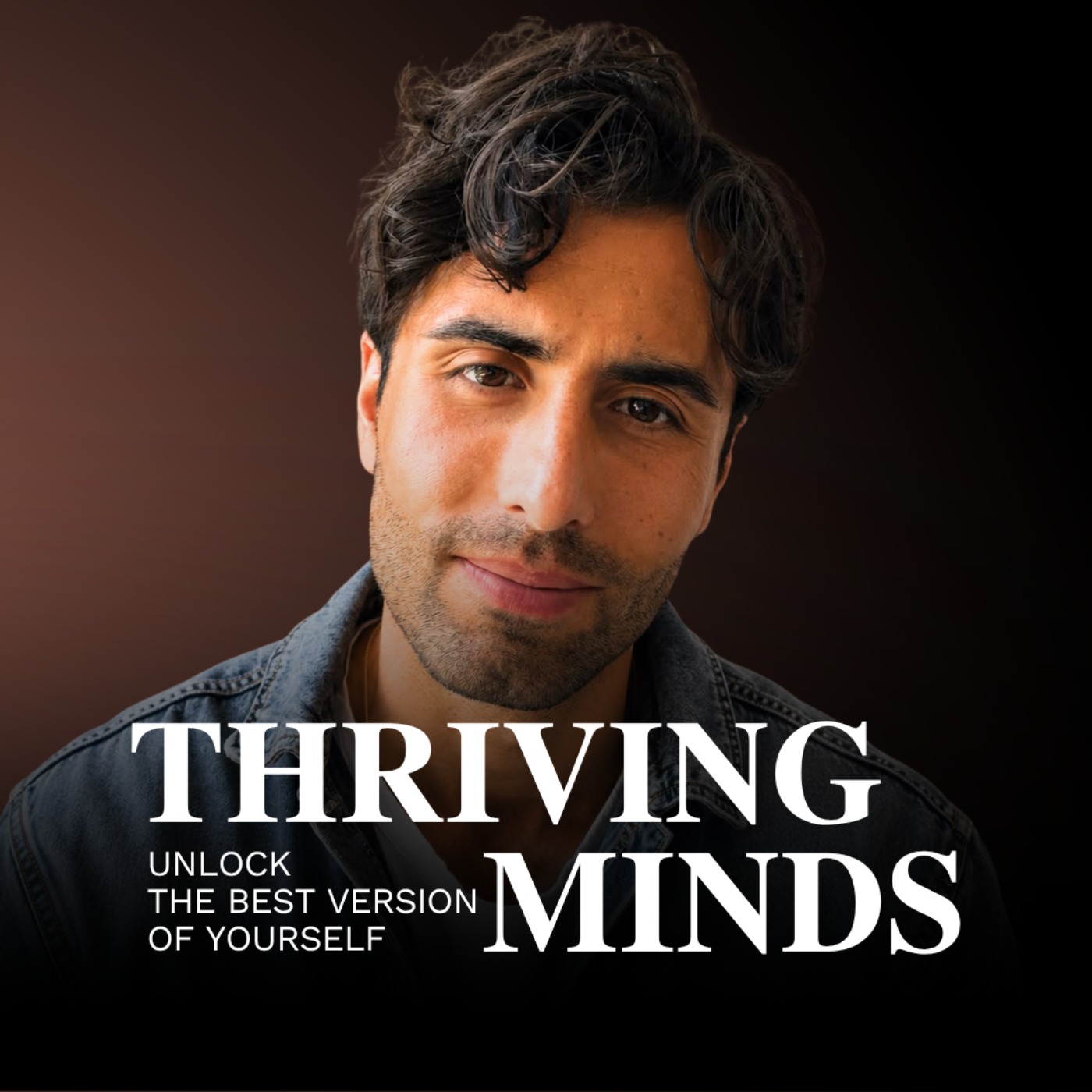
 Thriving Minds with Alberto Zandi
14 May 2026 · 1h 28m · 32 chapters

Sir Richard Harpin, founder of HomeServe (sold in 2023 for £4.1B), explains the “nine steps” behind building a $5.6B business, emphasizing copying proven models, pivoting via market research, disciplined focus, hiring replacements for scaling, and adapting with “second mover” technology and enduring channels like direct mail and omnichannel retail.
Sir Richard Harpin is an entrepreneur, investor, and former CEO of HomeServe, which he built from startup to a global FTSE-listed company serving millions. He stepped down as CEO and now scales companies through Growth Partner. He was knighted in 2026 and authored How to Make a Billion in Nine Steps.
A1 Fast Fix failed due to high marketing costs; HomeServe succeeded after annual plumbing insurance mailshots (1,000 mailshots, 3.8% take-up). Affinity marketing with water companies (e.g., Anglian Water) and end-to-end ownership of the value chain. Omnichannel/pop-up tests (Warby Parker) and direct mail’s continued effectiveness.
Written by AI. May contain mistakes.
Discuss the essential skills and mindsets needed for successful entrepreneurship.
“Which skills do you think are the most important ones for people to learn if they want to become great entrepreneurs?”
Explore Richard's childhood experiences that fueled his entrepreneurial ambition.
“frichard how would you introduce yourself in a way that it best describes who you are as a person but also what you have accomplished in a professional capacity as a person i'm a an entrepreneur through and through.”
Understand the role of family support in Richard's entrepreneurial journey.
“And therefore it was thinking about what was going to be my first business.”
Evaluate the necessity of university education for aspiring entrepreneurs.
“I never told my mum until very recently about that.”
Learn about the journey to finding and developing a successful business idea.
“And so I was juggling both, but at the same time looking for the big business idea.”
Discover how Richard launched HomeServe by adapting existing ideas.
“A lot of people, and definitely have a lot of my friends that fall under this category, they don't start a business because they never believed they had this big, great idea.”
Learn about Richard Harpin's initial struggles and how self-belief fueled his journey.
“And literally, almost the rest is history.”
Discover the pivotal moment when Richard's business model proved successful and scalable.
“On the first occasion, when the emergency plumbing business didn't work, knock on the door, and it was a bailiff's customs and excise.”
Explore the significance of hiring talented individuals to scale your business effectively.
“and everybody's pipes were frozen for a month then we needed to take away that big risk.”
Understand the balance between founders and professional executives in growing a company.
“And that was, I wonder whether HomeServe would work in a foreign country.”
Learn how Richard adapted his business model to thrive in a changing world.
“that the founders can quite often be identified with that business and with the brand.”
Learn how to adapt your business model and strategies for sustained success.
“So a good example would be today, I'm no longer involved in home serve, but over 50 % of the calls that used to come into a call centre with individual call centre agents have been automated.”
Understand the process and considerations behind selling a business successfully.
“And so you have a duty as a board of a public company to talk about and consider the offer.”
Learn about the importance of financial security and how it impacts business growth.
“The day that I actually sold some of my home serve shares back in 2010, that did help me to say, can we now accelerate the business?”
Discover the critical lessons learned from Richard Harpin's experience in building HomeServe.
“And my mission and my life's objective from here is to inspire breakthrough by helping seven and a half thousand mid-sized companies to become large over the next five to 10 years.”
Understand why focusing on core competencies is vital for entrepreneurial success.
“HomeServe was a fantastic business and still is today and it's about annual home assistance cover, not just for plumbing but for electrics, for boiler breakdown, for solar, for heat pumps and installing those.”
Learn why it's crucial to validate your business model before scaling.
“And we did it about a year ago in Business Leader, the organisation that I set up and own, which is about a growth program to help entrepreneurs scale their businesses.”
Explore how entrepreneurs can redefine their purpose after exiting a business.
“As the business got bigger with the wrong model, the losses got bigger.”
Learn about the transition from selling HomeServe to investing in new businesses.
“And making it easy and affordable through annual membership.”
Discover the key traits Sir Richard Harpin seeks in entrepreneurs and founders.
“Since you have invested now in a number of mid-size or even early stage startups, what is it that you're looking for in a founder's profile?”
Explore the nine essential steps for entrepreneurial success as shared in Richard's book.
“Step five was one of the biggest ones, the most difficult for us entrepreneurs, hire our replacement.”
Learn how successful billion-dollar companies exemplify the nine steps to business success.
“If you've got them, you can apply them to your business.”
Discover insights on international expansion and learning from successful businesses.
“and perfecting the model and then expanding internationally, taking my nine steps, taking the learnings from Belron.”
Explore the importance of honesty in sharing entrepreneurial journeys.
“I really appreciate how honest you've been with me in this conversation, but also it really comes across from the nature of your book.”
Learn about the emotional sacrifices that come with building a business.
“I would leave the house at 5.25 in the morning, get in a car with a driver and do two and a half hours of work driving from Yorkshire down to the West Midlands where HomeServe was based.”
Reflect on the idea of regrets and the mindset required for growth.
“I always felt guilty about going to those foreign businesses of HomeServe and thinking I wish I could speak fluent French or Spanish.”
Explore how success evolves and the importance of celebrating others.
“and trying to get that balance making sure that those bucket holidays and experiences that I do those.”
Discover key habits and routines that can enhance personal effectiveness.
“And mine has been sort of honed and developed over many years.”
Learn about the importance of structure in both personal and professional life.
“So my daily routine, I spend most of my time now in London and my alarm goes off at 6.15 in the morning.”
Learn how Richard Harpin structures his personal and professional life for maximum effectiveness.
“Two PAs, one has worked for me for 23 years and that's Jane and couldn't do without her.”
Discover Richard's insights on the nature of success and the importance of time and determination.
“That is hopefully the remaining 25 years of business that I've got left to do and I'll work until the day I die.”
Find out about Richard's free growth workshops and how to participate.
“we're going to leave a link to all of the different assets, including your book on the episode description.”

Get the gist, explore an idea or ask about something said.
 Claude
On Thriving Minds with Alberto Zandi, what are the key points of this episode?
Searching your listeningAutomatic transcript. May contain errors.
0:00Their offer was three point something billion. We went back with your offer materially undervalues Homeserve. They eventually came back with four point one billion pounds. Sir Richard Harpin is an entrepreneur, investor and founder of Homeserve, which he built from a startup into a global business serving millions. After leading it to the FTSE, he stepped down as CEO and now focuses on scaling companies through growth partner. Knighted in 2026, he's also the author of How to Make a Billion in Nine Steps. Which skills do you think are the most important ones for people to learn if they want to become great entrepreneurs?
0:36Entrepreneurs aren't quitters. They might pivot, but the ones that are successful, quitting is not an option. I wish I'd known that... That's a very, very interesting take. I wasn't expecting that. My biggest learning is... is after all the success what did success not give you
1:08frichard how would you introduce yourself in a way that it best describes who you are as a person but also what you have accomplished in a professional capacity as a person i'm a an entrepreneur through and through. And that's going back to the age of four when I knew I wanted to be an entrepreneur, even if I didn't know that word at the time. And I think there are a few things in life that can inspire you. And I was born in Huddersfield in West Yorkshire in the north of England. And I remember my father putting me on his shoulders and we looked over the wall of the big house and watch the helicopter land.
1:48And I remember saying, dad, I want one of those one day. And he said, don't work in the civil service earning a pittance like me. You need to run your own business. Three years later, I found out it was Lord Hanson, the famous industrialist from the 1960s that was flying his helicopter in to land in his parents' garden to have Sunday lunch. Wow. So at the age of four, you were drawn to become an entrepreneur, even though you didn't know what it was, but due to the life that entrepreneurship could offer you. Yeah. And therefore it was thinking about what was going to be my first business. We moved to the North of England.
2:25My dad got promoted in the civil service. My grandfather gave me a New Zealand white rabbit. I thought, okay, I'm going to buy another one and breed them and sell the baby rabbits to my school friends at school. So they all bought one. And then I thought, how can I make more money out of them because they don't want two rabbits, but they do go on holiday every summer. So I'll run a rabbit kennels. So they would all bring their rabbit for me to look after for two weeks. And I had this building with lots of cages with all the rabbits in. So I got the economies of scale in looking after the rabbits at my home, my parents' home, rather than having to go and feed the rabbits at their house.
3:10How supportive were your parents of not only the idea of you being such a young entrepreneur, but also breeding rabbits at home? My mum was. She was the enterprising one. She didn't go into business, but she wrote books. She ran Cub Scouts. My dad was the conservative one and not a risk taker because my great grandparents were mill owners in Huddersfield. and along came the Great Depression of 1929 and like many businesses in that year, they went bust. So my father with his parents was told never go into business. He wanted to be an auctioneer, but they wouldn't let him say you've got to have a steady job because business is high risk.
4:03Whereas my mum helped me with my entrepreneurial efforts and I guess the only drawback was she was a Cub Scout leader and I got all of my badges in Cubs, then went to become a Scout and went on my first Scout camp and the older Scout said, right, we're going to get him. He hasn't got his mum who's the Arkela looking after him. He's the ginger-haired lad. And they tied me up with ropes and tent pegs on an anthill and left me there for an hour until the ants had attacked and eaten my back. What? I never told my mum until very recently about that. But that was one of those negative experiences in life that really drives you.
5:05and I thought I'm going to be better than all these kids and I've got to do something that I can be successful in in life and I knew already that that must be to run a big business. So it seems to me already that your childhood instilled in you ambition and competitiveness. You then went on to study into the University of York. One of my favorite questions to founders and to entrepreneurs is to understand if you think that attending university is a critical factor to then become a successful entrepreneur. Was this the case for you? no absolutely not I think um I did it because I hadn't worked out what was going to be the the big business idea I was while I was still at university running a mail order a mail order in the days before the internet uh selling um ready tied fishing flies and the materials for other fly tires to tie up their flies for fishing.
6:15And so I was juggling both, but at the same time looking for the big business idea. But I believe that people today don't need to go to university, much better to do an apprenticeship or learn another skill rather than taking on a load of student debt. Which skills do you think are the most important ones for people to learn if they want to become great entrepreneurs? I think you've got to think about what you enjoy, what you're inherently good at, and you need to follow that. My dad wanted me to be a chartered accountant, and that would have gone against my personality where I was a sales and marketing person and ended up joining Procter & Gamble in marketing to really understand how you do marketing.
7:08doing finance would have been absolutely the wrong thing for me. The finance guy is the one that puts the numbers there, holds back the entrepreneur, makes sure that the proposal is going to work and that the business doesn't run out of cash. So I think, think about, do you like sales and marketing? Are you a finance guy? Do you like sort of operations and customer service? and focus on one of those and learn that. And I think that's a really good skill to get before you then go into business. And you're saying that you've learned those at your work experiences like Procter & Gamble and I know you've also worked at Deloitte.
7:49So is this something that you would recommend any young entrepreneur get some work experience in these type of companies? Yeah, I think you could be more successful if you've decided what your skill is. you've gone and done that in a large company where the training is likely to be more structured and better then to go to a smaller more entrepreneurial company hone your skills and then think about what's the business idea I'm going to take on and actually you don't have to start up a business from scratch. 97 % of businesses that start up are shut down within three years. So I think people overlook the opportunity to go and buy into a business, something that's already established.
8:45Maybe it's a retirement sale and maybe you can get vendor finance, which means persuade the guy that's selling the business, that wants his legacy to go on, that you're the right owner and operator for that business, and that they'll lend you the money over three or four years to pay them back and buy the business. A lot of people, and definitely have a lot of my friends that fall under this category, they don't start a business because they never believed they had this big, great idea. But it seems to me that through your experience, you had running and working small businesses before you came up with your big idea.
9:33Do you think that's the best process? Is that the best playbook in order for anyone to come up with any big idea? I think the key thing is it doesn't need to be a big new idea. How many people do we hear that say, I came up with this great idea. Then I researched it. I found somebody else had already done it. So I didn't do it. And I would say to them, if somebody else is doing it and it's working, that's a tick. That means that it works. All that you now need to do is to do it a little bit better. Execution. Yeah. So it does need to fulfill a consumer need or a business need, but it doesn't need to be unique.
10:19Far better to take second mover advantage, copy somebody else. We're both taught at school, whether that's in Madrid or in the UK, that copying homework is bad. I believe that copying in business is really good. I want to talk about your big idea, the idea that then got sold for£4.1 billion in 2023. How did you come up with the idea for HomeServe? Yeah, it wasn't my idea. I copied it. I love this already. I've been running an emergency plumbing business that got work from the old way of generating work, which was the Yellow Pages, the phone book. And we called the business A1 Fast Fix to get to the front of the section for plumbing and for heating.
11:13But it didn't work. Cost of the marketing was too high. People only have a plumbing emergency every five years. So there was no repeat business. so desperately thinking we need to pivot the business we haven't got the right business model and somebody called me and said have you seen this little water company in Sutton in Surrey they've developed plumbing insurance cover I remember getting in my car driving down to the high street in Surrey standing on the side of the road while people are out shopping stopping them and saying are you a customer of Sutton Water have you bought their plumbing insurance cover when I got a dozen people that had got them into the local town hall and ran a focus group and this is all about the importance of market research and I said you bought their product and it covers the underground water pipe in the garden and it comes out and inspects the pipe every year.
12:17What do you like about that? What don't you like about it? And literally, we designed our product in that room on that day. We took out the expensive inspection because nobody wants a water pipe in the garden inspected. If it's leaking, there'll be a great fountain coming out of the lawn or there'll be no pressure coming out the tap or no water. so we removed the expensive bit we added in block drain cover and indoor plumbing emergency cover and this was at a time when the business was down to the last 10 000 pounds my business partner said richard uh this is not going to work you better go back and work at and gamble.
13:06Your dream of buying that helicopter that you saw at the age of four and becoming a successful entrepreneur, it's over. And you know what? When you've got a life's dream, you can achieve it. And that would be my message. And I'm an optimist. And I believe when your back is up against the wall, when people are doubting you, that you'll have a bit of luck. And I had that little bit of luck, which was that person calling me saying, copy somebody else's plumbing insurance cover. And it worked. With the last£10 ,000, we sent out 1 ,000 mail shots. 38 people sent in their cheque for£50. And that was a 3.8 % take up from direct mail.
13:58I remember getting on my office desk in front of the 23 people at all about to be made redundant and said, yes. We made it. And literally, almost the rest is history. The business went from losing half a million pounds in that first full year to making three quarters of a million pounds the following year, rolling out the recurring income membership model. That was not my idea. I copied it. And I copied it proudly. you're a very humble entrepreneur because through your explanation you are attributing your wild success to two factors number one copying the idea and then the second one being lucky when your back was against the wall but that's not what i am reading what i'm reading is that you were a very widely probably madly ambitious person resilient hard-working and you you would just not accept a no for an answer i'm persistent and a self i think it's an inherent self-belief that i gotta fulfill my life's dream let's talk about that that's very interesting um i actually would like to revisit very quickly your childhood again that self-belief that confidence was that instilled by your parents did they make you feel like you could accomplish anything in life I don't think so I think they my mother helped me with my business endeavors she inspired me and the things that she was doing that weren't business related but they were enterprising so I think I always was born with that the genotype of something in me that that gave me that resilience, determination, persistence.
15:52But then I think it was the positive of I know what my dream is, I want my own helicopter, I want to run my own business. And then the negative bit of some kids did something to me that really hurt me and made me more determined. And it was only a small thing. and the ant bites on my back had recovered in a few days. I didn't tell anybody about it. Definitely not my parents. I just sort of sucked it up and got on with it. But it's those things that give you that sort of extra bit of determination, I think. Do you think entrepreneurs are made or born? I've asked that question in a room of thousands of entrepreneurs over the years and it's 50-50.
16:45Half of them, like me, want to be an entrepreneur early in life and the other half fall into it. And I think the research says that neither one nor the other is more successful. The average age of somebody starting a business in the UK is actually, I was amazed by this, 42 years old. Wow. and those people are successful because they've got lots more experience they've learned from the other businesses that they've been involved in while maybe entrepreneurs that are born do it earlier and have that more inherent sort of self-belief but the answer is both work home service as i mentioned was sold for 4.1 billion pounds was your ambition that big when you started no it was really uh i want to be successful i never quantified in monetary terms that success and in the early years it was just about trying to make the business work we nearly ran out of money twice.
18:05On the first occasion, when the emergency plumbing business didn't work, knock on the door, and it was a bailiff's customs and excise. We hadn't paid our VAT bill, and they'd come to take away our computers and office furniture. We managed to borrow money from friends and family, and that meant that we could keep the business running. But yeah, it was no big aspiration of how much it was survival and what kept you going in those very hard moments was self-belief back to that resilience and self-belief and if you've got a life's dream then you've got to achieve it whatever the doubters say whatever the obstacle out there a great leader will not give excuses.
18:59They will say, whatever the problem out there, I can turn that problem into a bigger opportunity. When was your aha, this is working moment? It was when we'd copied the business model of annual plumbing insurance cover. We proved it worked small scale. We then did a bigger mailing and that produced the same percentage response rate. Then figured out, let's go to all the water companies in the UK. And we came up with this, what we call today, an affinity marketing model. We would use the brand of the big water company. we would use their customer base and we would pay them six percent of the annual price of the membership in the year the customer joined and every year of renewal and that was the affinity marketing model we owned the customer we collected the payments we sent out the plumber we answered the emergency telephone number and then we did the customer satisfaction review so an important part of the model that we got the customer ownership we were working with the end customer and that was ultimately the model that we rolled out in 10 countries across the world but that was the aha moment i think when we'd prove the model with anglian water who became our a first affinity partner.
20:36It was an end-to-end service that was the differentiating factor. I'm a big believer that own as much of the value chain as you possibly can. We got underwriters that would take away the risk of what if we had an ice age in the UK and everybody's pipes were frozen for a month then we needed to take away that big risk. so some of the£50 that customers were paying went to the underwriter but everything else from running the call centres, doing the marketing, doing the administration, collecting the payments, we owned all of that including ultimately moving from using subcontract plumbers to hiring our own directly employed plumbers in our red home serve vans.
21:31What is the greatest lesson that you've learned from your industry?
21:39I'd say it's probably not a lesson from a specific industry because it's sort of the industry didn't really exist. We developed the category, copied the model and then rolled it out across 10 countries. But if you said, what's my couple of the biggest learnings, then I think back to that question of it was luck. It wasn't my idea. And the third one of my biggest learning is hire people that are much more talented than yourself. And in particular, hire your replacement. Entrepreneurs are really good at the early stages of the business, figuring out the model, pivoting, testing, learning, bringing the resources together.
22:37When the business is trying to scale in a big way, you need a different sort of person. And I got a guy that was signing up all the water companies in the UK, business development director. He'd done a good job. He'd worked for me for about a year. And I called him into my office one day and said, Jonathan, congratulations, you're promoted. I'm making you managing director at HomeServe UK when we were only a UK business. That was effectively making me redundant. But it meant that I could work on the business rather than in the business, knowing that he was going to keep growing the UK, delivering great service, and it meant that I could work on the next big thing.
23:30And that was, I wonder whether HomeServe would work in a foreign country. And we ended up opening in France. And the UK kept growing. So the biggest learning is I waited eight years to hire my replacement. Ben Francis, a Gymshark, did it in three years. And only five years after he appointed his chief exec, a guy called Steve Hewitt, Gymshark was worth a billion. It took me a further seven or eight years, seven years from appointing Jonathan as the MD of UK HomeServe to HomeServe being worth its first billion. At what maturity stage of the business would you say is the ideal one for a founder to make this move is it when the business reaches 10 million pounds in annual revenue 15 20 to yeah we would um um we would define the stages as stage one is sort of uh finding the model and proving it and growing it a bit and that would be sort of professionalising and it would be 3 to 15 million of revenue.
24:45Then it's scaling and that's sort of 15 to 75 million of revenue and it's in that stage that you need to bring in a professional chief exec. Ideally somebody that's done it before. in Procter & Gamble we had a recruitment phrase which was has done, can do, will do. If you can find somebody that's worked not in a big company, big company people want to hire people to do their work or management consultants and you want people who worked in medium-sized, fast-moving businesses that are the right cultural fit and proven that they've grown a business and you can bring them in and they can help you do the same in your rapidly scaling business.
25:38And I then sort of replicated that model because as HomeServe grew, I learned that let's go and hire locals. I feel like you're going to replicate this podcast by tomorrow. Let's go and hire locals in an individual country that our proven chief execs will give them the home-served model and say, this is how it operates. You run it, you hire your team, you've got a bit of autonomy. And that was the magic model that we then took into those nine other countries. I really completely agree with your remarks. And this is something that I've discussed with various different founders in this show. And I share the same opinion as you.
26:25I do believe that when a business is at scale, the leader of the ship should be someone that has done something fairly similar before, because it's not necessarily about building something from the ground up. It's about scaling something that has already been built. And I think it takes a different person and a different set of skills. But it's very interesting to see that some founders, they are very emotionally attached to the business. And it's also very interesting to see that they sort of attach their personal identity to the business, which then it becomes very hard for them to let go and to give it to somebody else.
26:58It's almost like you're giving your baby to somebody else for somebody else to raise. Yeah, and I think I'm a great believer that businesses can build brands, that the founders can quite often be identified with that business and with the brand. People buy from people, but you need to separate the, who's the person that's running the day-to-day business compared to the founder. And my message is definitely don't step out because the magic model is having both the founder and a professional chief exec and working together. And it's about that founder overcoming those emotions and saying, I'm not walking away, I'm not losing my baby, I'm focusing on the one or two things that I'm really good at, that might be the product design, that might be the selling and the business developments, it might be building the brand, but it probably won't be running the day-to-day business in a really disciplined way, setting of an operating plan, a playbook of how you run the business, clear prioritization, all the things that somebody that's done it before knows how to do it again.
28:25You've mentioned that you've identified in your aha moment, an operating model, a methodology that worked and that was operationally successful, but financially successful though home serve was founded in 1993 and the world has changed a gazillion times since then how have you adapted your model how have you adapted your business so you can not only survive but thrive yeah there are two aspects to that one is embrace technology but do it with second mover advantage, not bleeding edge. So a good example would be today, I'm no longer involved in home serve, but over 50 % of the calls that used to come into a call centre with individual call centre agents have been automated.
29:28And that's fantastic because that's making the business more efficient. Those calls are shorter. Customers are really happy to talk to a voice bot. They're more efficient and it works. So that's a great example of where we've embraced technology, but we waited until that technology was proven. Somebody else had done it and it worked. And then we took on the technology. But I think we also need to look at what are the things that haven't changed. An example would be, you might think that we're in a digital marketing age. Everything is online. But think about your doormat at home. 10 years ago, how much direct mail would land on your doormat and it was up here.
30:23Loads of mail. How much today? Not much. Where is the junk mail today? It's sitting in your inbox in your emails. Many businesses ignore direct mail and you can now get a bigger percentage share of the doormat and it works. Think of some of the retail brands in the UK today like Sweaty Betty, Charles Tyrwhitt, The White Company. Many businesses are still doing direct mail, many catalogues on recycled paper. And why are they still doing them? Because it works. And because many businesses are scrapping away on email marketing, they're spending more and more money on google sem adwords which is getting more and more competitive uh really hard because of ai summaries and chat gpt etc so think about the things that everybody think thinks has changed and actually some of those things that work well 20 or 30 years ago still work well today that's a very very interesting take i wasn't expecting that so basically what you're saying is instead of looking at embracing change underpinned by technology let's look at the spaces that we've left behind that used to work but right now there's huge market share potential for you to to grasp another another good example would be bricks retail stores and cast our minds back to COVID, everybody thought, well, we don't need stores anymore.
32:10Many businesses shut their retail stores. And look what is happening today. Retail stores are back and it's a omni-channel model. Think about that example in America, which was the online optician specs business called Warby Parker. They were online only. And one of the management team many years ago said, why don't we open a pop-up store in Manhattan? Everybody around the table said, no, have you not read our strategy? We're online only. It'll increase our overheads. It will cannibalize our online business in the New York zip codes. And they did open a pop-up store to test it. And guess what?
33:02It worked. Because the online business now had the credibility of a store in Manhattan. They put a big picture of the store and the store address on the website. And the clicks in the New York zip codes went up, not down. And more importantly, the overall conversion rate from a click to a sale went from three to six percent. Wow. And they went on and opened a few hundred stores in the US. So the magic model is omni-channel stores and online. And it doesn't need to be a store. Get your product into somebody else's store. Passenger clothing, when we first went into John Lewis, it's a business that I'm invested in through Growth Partner, my private investment business.
34:02Passenger clothing is a copy of Patagonia, colourful outdoor fleeces. And we track the postcodes around the John Lewis store. And our own B2C online business in those postcodes went up, not down. Why? People were going into John Lewis saying, oh, passenger clothing, new brand, really like the product, but they haven't got the full range here, or they haven't got my size. So I'll go to passenger online, and then they bought online. So it was a win-win because John Lewis were doing well out of selling in store, but we were generating more online business. So get your products and your brand into other people's store or do a pop-up.
34:56Great way to bring your brand to life. Stubble & Co is a backpack business that's based here in London that I'm invested in and they do pop-up stands at Park Runs, not just to showcase their brand but they're selling the products they're making money and they're building the brand at the same time it's very fascinating for me to see how your entrepreneurial personality clearly comes across you are happy and content and purposeful when you're talking about business whether it's your business or a potential business or somebody else's business
35:41I'd like for us to talk a little bit about your exit. So in 2023, you decide that it's the right moment to sell your business for 4.1 billion pounds. When I was discussing this question with my team, the question was, Richard, why did you sell your business? And many of my team members, when we rehearsed the scripts and the research back, they're like, well, obviously there was 4.1 billion pounds on the table. For me, there's nothing obvious. If you're very honest with yourself and very honest with me, why did you sell? I'd never planned an exit. And HomeServe became a FTSE 100 company, one of the top 100 companies in the UK listed on the stock market by value.
36:26And along came a Canadian private equity business called Brookfield. uh uh really good investors uh the total value of their funds today is over a trillion dollars and um i was sitting in um uh one of the home serve businesses called um checker trade uh in portsmouth and uh my phone bleeps text message from my finance director director uh the share price is up 15 percent of home serve and it's explained by uh there being a leak that a company called brookfield were in the early stages of making an offer for home serve and i knew brookfield we had actually had a few meetings with them perhaps a year before and they talked about their understanding of the market, whether we could do anything together.
37:30But then the share price went up. And so you have a duty as a board of a public company to talk about and consider the offer. We had our advisors, JP Morgan and UBS, and ultimately we use Goldman Sachs to say, is their offer enough? And the answer was no. So we went back to them and said... What was their offer? Their offer was£10 a share. And that was how much? That was about um uh three point something billion so before you continue three point something billion jp morgan says that's not enough what do you think why do you agree with that i agreed with them because okay home serve fantastic company and they'd undervalued it okay and um so we went back with the investment banking language of your offer materially undervalues home serve and so they came back with a raised offer and we went back again and said that's still not enough and they eventually came back with 12 pounds a share which was the 4.1 billion pounds for the for the equity and at that price as a board we have to consider whether the interests of all of the shareholders not just my shareholding or any shares that the board members held it was what's in the best interests of everybody yeah and we decided at that price that we should sell how much of the business did you own back then before you sold it um 12 and a half percent i had done a share sale back in 2010, where I sold a third of my holding at the time.
39:36And so this was only the second time in the history of HomeServe that I'd sold. Back when the business listed in 2004, when all my advisors were saying, here's a way that you could sell some of your HomeServe shares? I said, no, I believe too much in my company and I'm going to go and borrow 20 million from the banks and buy some more shares on the day that the business was listed on the stock market. Wow. All right. So for, I would imagine almost everybody in the world that has not gone through an exit like that and doesn't know what it looks like to achieve that kind of financial success. so you roughly made five six hundred million pounds how does that work so you sign the sales proceeds and then obviously lawyers finalize the deal it takes weeks or months and then does all the money i'm going to be very specific does it all arrive in one go into the bank account how does it work yeah from uh from that share price going up in may 2022 to getting through all of due diligence even for a public company we had to get some clearances from the fca in the uk because our uk business was regulated and we had to get some clearances from a couple of the state authorities in the us all of that takes a long time so the deal didn't actually complete and the money come into everybody's bank accounts until january the 10th 2023 23 and that was what like almost a year later uh sort of eight eight months later the eight longest months of your life probably right um no i i focused on continuing to run the business because you can't get distracted i wanted to make sure that uh my business that i'd grown from a startup was going to be successful under brookfield's ownership so I wanted to make sure that we weren't distracted from running the business when the sale process was going on so made sure that we got advisors made sure that my finance director and his team were working on that but it was a a big day a relief because you always think as an entrepreneur what if it all goes wrong and my advice would be pick a moment when you do sell a part of your business because if you then got the reassurance that you paid off your mortgage you banked a bit of money so that if it did ever go wrong you and your family are not going to be on the street and homeless.
42:27And then I think you can go faster. The day that I actually sold some of my home serve shares back in 2010, that did help me to say, can we now accelerate the business? Because I know that financially I'm going to be secure for the rest of my life. So you were already financially secured in 2013 years earlier. The money didn't make the difference when I ultimately sold. What is financial security for you? In 2010, what was it? 65 million pounds. Okay. But I had to pay off the borrowings of 20 million that I'd taken to buy more shares, pay off a few mortgages on my house and stuff. But that was enough money for me.
43:18And so really, the selling and the completion of the deal in January 2023, for me, was about looking back and realising that I'd made too many mistakes in home serve. And that there were nine things that I knew that I wish I'd known at the start of my journey. And if I had, I think as a team, we might have got there in 15 years rather than 30 in building a business in 10 countries with 10 ,000 people. And so I thought, I don't want to be a chief exec again. I've done that for 30 years. And really, my only skill is summarized in two words. And I had to go to Harvard Business School to work out what those two words were that could set out my career for my final 25 years in business.
44:26And those words were inspire breakthrough. And I think if you went to the 10 chief execs in HomeServe that were the ones that really made it happen rather than me and said, what was my role? they would say I challenged them and I inspired them and as a team we delivered more than we ever dreamt of and I thought I want to take that only skill and apply it to other businesses that are at an earlier stage in their career other entrepreneurs to mid-sized companies here in the UK as defined as turning over between£3 million and£100 million and say you can be the next large companies in the UK employing more than 250 people.
45:23We only have 7 ,500 large companies in the UK and the way to get this country out of the economic mess that we're in and the lack of growth is to help seven and a half thousand of the 80 ,000 medium-sized businesses to become the next large companies. And my mission and my life's objective from here is to inspire breakthrough by helping seven and a half thousand mid-sized companies to become large over the next five to 10 years. What are the things you were mentioning? What are the things that you wish you knew earlier that would have helped shorten the time of this exit or improve the growth of HomeServe?
46:11I wish I'd known that I was a fox and not a hedgehog. And that came to life to me in Colorado in 2020. And I'd asked Jim Collins, who has written the second best business book ever written, a book called Good to Great. And I wanted him as my personal mentor for a day. In the end, I went with 19 other chief execs and spent two days learning about how you turn a business from good to great. and imagine there were 20 of us sitting round his board table. Next to me was a 76-year-old called Jack. He was a multi-billionaire Australian. He'd made his money in food services. He owned Domino's Pizza in the whole of Australia and he owned Burger King.
47:17Do you know, Alberto, what's Burger King called in Australia? No. Hungry Jacks. After Jack, who was sitting next to me at the table, he's 76 years old, multi-billionaire, and he's still there learning like me. And Jim was talking away. I love that. And Jack reached across to me and he whispered in my ear and he said, do you know what, Richard? What Jim is telling us is we're foxes. We have an idea every day. We're always looking for another opportunity. and he's telling us we need to be hedgehogs. That if anybody comes up with a harebrained idea, we put up our prickles, we ignore the idea and we keep going in a methodical direction.
48:05What I've learnt, and I learnt it too late in my career, is that we need hedgehogs. We don't need loads of ideas. So I look back and say, what would I tell my younger self? What have I really learnt? I try to do too much. HomeServe was a fantastic business and still is today and it's about annual home assistance cover, not just for plumbing but for electrics, for boiler breakdown, for solar, for heat pumps and installing those. But I did furniture warranties for furniture retailers. I got into doing repairs for home insurers when somebody had a break-in or flood damage or a fire. We got into doing smart home devices, a product called LeakBot that is working really well today, but it was a distraction.
49:06And had I just focused on our core magic model, maybe we could have been in 20 countries and the business could have been worth 10 or 12 billion. So to every entrepreneur out there, recognize that you're a fox, you're never going to change your behavior, but you need to hire a hedgehog that will run the day-to-day and that will keep you on a very focused track. And do you know the way that you do it? You have to ask your management team three questions. What are we really passionate about in our business? And that will normally be our purpose. Secondly, what can we be the very best at? Better than our competitors?
49:59What's our unique selling proposition in the geographies in which we operate? And thirdly, what's our economic engine? How are we going to make money out of the business? The hard bit, answer those three questions in one sentence of no more than 20 words. And we did it about a year ago in Business Leader, the organisation that I set up and own, which is about a growth program to help entrepreneurs scale their businesses. And we said, at Business Leader, we inspire our founder and CEO members to fast forward their growth through unique content and facilitated learning. That's all we do. Any of the 40 people that are in Business Leader, they look at that statement every day and they say is what i'm doing today tomorrow this week does it fit with that statement with that hedgehog strategy and if it doesn't they need to put it on their not to-do list so in summary i look back and think i had too many ideas and i wish i could have been more focused this is not the first time that i hear something like this from a great entrepreneur um i was recently discussing offline but i'll disclose this here with the longest serving chief operations officer for soho house i was asking him a very i would say fundamental question for anyone that followed the journey of soho house they've been probably the most successful members club in the world but i asked him why have you guys never turned their profit And he said, because we had a very widely ambitious, incredibly creative founder.
51:58And that means that he not only wanted to do or to focus on the core business of Soul House, which are the memberships, but we had a lot of ancillary businesses that defocused us. And in a way, they were not performing what we're absorbing from the core business, which is very interesting to see. And then the second observation that I have from what you were saying, I think it's a great advice for any entrepreneur in this day and age, which is whatever you're building right now, focus on one of the things that you should be focusing on is how is this going to make money? because I've sat down, particularly in the first season of this podcast, with countless tech entrepreneurs that are focusing on the wrong key performance indicators like traction and active users, which they're great.
52:42But ultimately, the fundamental question is, how are you monetizing this? When are you going to make money from this? Whether it's even having revenue in the first place, because many don't have, or being profitable, because you cannot be negative forever. At some point, you need to become profitable. Absolutely. And I'm a Yorkshireman, so I'm a bit tight with my money. I know the value of money because my parents didn't have a lot of money. And I look at businesses and say, bootstrap it. Keep it really, really small until you've proved out your model. In that way, you don't need to give up a lot of equity in the company.
53:21You're better to borrow a bit of money from friends and family, make sure you own the majority of the company, and don't think that your customers are your investors and your shareholders. Focus on the end customer, get the model right and prove it. If you've done that, that's the time that you go and find an investor and sell a minority shareholding. so I look back also and say I tried to be too ambitious in the early days of home serve when South Staffs Water who were the original investor put in half a million pounds into the business and that was the capital that helped it grow all I did was grow a unsuccessful emergency plumbing model and it didn't work and the losses went up and up and it was only when I found that plumbing insurance model that we eventually made the business work.
54:16I thought if I make the business big, it will get to economies of scale and that will get to profit. And it didn't. As the business got bigger with the wrong model, the losses got bigger. So it's definitely about stay small, prove out the model, copy from others, and don't sell any equity unless you really really have to until you want to press the accelerate button and then you need somebody ideally that will give you more money for growth and will not only bring the money but will also bring some help and expertise. I really really like this advice particularly in this day and age in which we live in a world that we're being told particularly through social media that success needs to be achieved overnight and you need to make it very big very quickly but you're saying the contrary which is stay very small until you have identified what really works and what's the financial backbone of your business and then you can replicate that at scale which I think is probably one of the healthiest business advices that I've heard on this show.
55:23I want to talk about purpose. It is clear to me that for a true entrepreneur like yourself you were drawing purpose for a big part of your life or for the better part of your life through your business home serve but then you sell it in 2023 so where do you repurpose this what do you repurpose this purpose to yeah yeah it was my purpose for 30 years was exactly aligned with the purpose of HomeServe. And that was taking away the worry and inconvenience of a big home emergency. And making it easy and affordable through annual membership. So the day I sold HomeServe, I needed to come up with my next purpose.
56:20and I wanted to make that more personal, personal to my inherent characteristic and my main strength or perhaps my only strength and that was those two words, inspiring breakthrough. And I've got a passion for business, hopefully you can tell and I want to help many other businesses through either investing some of the money that I've been very lucky to make and be a minority investor in some exciting high growth businesses. And I do that through Growth Partner. We've got 15 investments, retail, leisure, health, tech, and where I'm putting in between five and 30 million pounds of my own money for a minority shareholding and then helping those businesses to grow.
57:14But that's through helping them, not ever telling them. Since you have invested now in a number of mid-size or even early stage startups, what is it that you're looking for in a founder's profile? Yeah, and I think the big thing that you've just identified there is that I'm not investing in the business. I'm investing in that individual. I'm looking for those characteristics that we've talked about earlier that is the resilience is the persistence courage knowing that whatever the problem those great leaders will turn it into a bigger opportunity I want people with low ego it's not about building their own career or personally making a lot of money.
58:12It's about they're doing this for the good of their business, for the good of their customers, developing a better consumer or business experience so their low ego. I really set a lot of store by curiosity. Jack, the 76-year-old that was there learning, then he's curious like I am. I want to learn something new every day. People that read a lot of business books, that listen to this Thriving Minds podcast, that are asking lots of questions and listening more than they are talking. Those are the people that are really going to make it. let's talk about your book in 2025 you wrote a book called how to make a billion in nine steps which is a very bold title i must say in a nutshell what is the book about and what should people expect from a learning perspective the book is principally about my journey and the businesses that i got involved in both as a a kid and a teenager and then ultimately leading to the home serve business the 50 000 pound startup that went to the 4.1 billion pound sale and it was the nine things that i know now that i wish i'd known at the start of my journey and i wish this book had been available 30 years ago because I genuinely believe that I could have then got there with my team in 15 years rather than 30.
1:00:00And so those steps are, we've touched on many of them, but don't invent a business idea. Copy, pivot, test, learn. Secondly, get an investor, but it's not just about the money. It's about the help and advice and it's about getting the timing right of when you get the investor. Third one is get some coachment. What do I mean by coachment? That is the magic model of hire a business coach. Find somebody that you pay to give you a few coaching lessons. They will help you with the problem or opportunity that you're grappling with right now. they won't tell you the answer but they will help you to come to a range of different options and then it's up to you to decide or to hire a mentor many mentors are free of charge my first one was Nigel Morris the British co-founder of Capital One Bank in America that made it big over there before it came over here and he helped me to conquer America when for seven years I was struggling to make home serve big in America, and that really helped.
1:01:17So get a mentor. You need to identify who, and then knock the door down until they submit and say yes. Change mentors for the different problem or opportunity you're trying to solve. and even more important I look back and think it was lonely my entrepreneurial journey the thing I missed most even though I got lots of people in home serve was having a peer group of other chief execs that and founders that I could share my problems and opportunities with and we could help each other. Step four we've talked about, which is bricks and clicks and paper. Step five was one of the biggest ones, the most difficult for us entrepreneurs, hire our replacement.
1:02:15Step six, go global with locals. Don't expand your business internationally too quickly, otherwise your UK business will suffer. When you do go global, don't change the business model too much. And if you really want to be big in other countries, then hire people on the ground that are locals. Americans buy from Americans. You can't send a Brit to run your US company. And please don't go to America first because you think it's the same language. American is a completely different language. When Ben Francis tried to sell joggers on his website in America, he didn't sell any because in America they're called sweatpants.
1:03:07Soon as he changed the name, he sold loads. So don't think that it's easy in America. If you want to go to America, go to Ireland first and prove that you can run a little business in a little country before you then make it big in America. So do it in stages. Step seven, evolution, not revolution. You've got to keep evolving your business because if you don't, we know what happens. Think Nokia, think BlackBerry. Revolution is good at the beginning of your business, but it's dangerous if you revolutionize your business that's two steps removed from what you're currently doing. Eight, have the focus that I didn't have.
1:03:58Stop having too many ideas and the way to do that is have a hedgehog strategy and a not-to-do list. Finally, step nine, and this is the one that I missed originally, and that is the personal characteristics of the entrepreneur. I've called that hone your character because I was miserable every time I had a performance review with the chairman of HomeServe who said, you've only got a couple of strengths, Richard, and here are all the things that you're bad at. And I was bad at far more than I was good at. And I walked out of those performance reviews miserable. And so does everybody else. You don't focus on your strengths.
1:04:47You try and fix the things that you're bad at. And that is wrong. What you need to do is hire people to do the things that you're bad at, because you're never going to be able to become good at them. And then hone your character by focusing on the couple of things that you're really good at, whether that is inventing your products and product development, whether that is selling, whatever it is, focus on that and hire people to do the rest. Those are the nine steps. I wish I'd had them earlier. If you've got them, you can apply them to your business. And yesterday, I felt a bit inadequate, but I also felt an emotion of happiness.
1:05:37I was at the Business Leader Summit. There were 816 founders and CEOs running medium-sized businesses. And it was networking, and it was a day of learning from others. And at the end of that day at 5.30, when there was a film of the day and the summing up by the chief executive business leader and I was sitting on the front row thinking wow we are really helping mid-sized businesses to become the next large companies and that's one of the best feelings when your heart says I feel really happy. The other feeling I had was when I did my slot on stage and I was going through the nine steps, not my home serve journey.
1:06:31I thought, I want to prove that they apply to any other business. And in particular, let's take another business that has been worth more than a billion pounds. And there were five that I put up there on a PowerPoint and they were worth much more than HomeServe. Octopus Energy, Greg Jackson worked for me in HomeServe for three years. I would take no credit for his success, but he built a business worth 10 billion pounds in 10 years. Very sure, a Procter & Gamble colleague of mine called Austin Lally. He wasn't the founder of Very Sure, the alarm company. That came out, if you may know it, from Madrid, came out of Securitas Direct.
1:07:26And he turned that business from one worth €2 billion to€20 billion in 11 years. And the one I talked about was Autoglass, which is called Belron. They're the world's largest repairer and replacers of car windscreens. Gary Lubner took over that business as the hedgehog chief exec in the year 2000 when it was worth 200 million euros. And in the next 23 years, he turned it into a business worth 24 billion euros. and I gave his story as a case study yesterday the learning on how you take Autoglass and you really perfect the model here in the UK and then you take it global into 40 countries through mergers and acquisitions with different brand names with great TV advertising and so it made me feel a bit inadequate that I only build a business with my team worth 4 billion in 30 years.
1:08:40He built one worth 24 billion in 23 years. And I asked that audience yesterday, one simple question, which is, I hope that I've got 25 years left to live. I'm in the final stage of my business career and I want to build a business worth 10 billion next not as chief exec because I wasn't a very good chief exec and because I've already done that but as advisor and investor I want it to be in services because van-based service with a technical edge that can operate in 30 countries, not just here in the UK. And it's not going to be in vehicle windscreens because that's been done. It's not going to be in plumbing, heating or electrics because HomeServe are doing that really well and I'd never compete with my old company.
1:09:49So we've got to come up with a category of van-based service that can be global through going and buying small privately owned businesses in other countries, buying one first in the UK and perfecting the model and then expanding internationally, taking my nine steps, taking the learnings from Belron. Rent-A-Kill is another business that's worth 10 or 12 billion and is a similar service-based business. So anybody out there that's got an idea of what that service-based business can be and then we find a business doing it in the UK that's one of the things I want to do next so we asked the audience of 819 we got a few ideas that I won't disclose today but give me some other ideas but it's not the idea it's then about how do we make it happen together.
1:10:52I really appreciate how honest you've been with me in this conversation, but also it really comes across from the nature of your book. So you are really sharing what has really worked for you and what also didn't work for you. So other people can on one hand learn from your success, which it costed you a lot of time and money to find these methodologies, but at the same time avoid the mistakes that you've done so nobody else makes them. And I find that very humbling and very inspirational. While you were speaking, I couldn't stop myself finding and identifying an emotional window that you showed me.
1:11:32And I would like to explore that. What has your entrepreneurial journey cost you at an emotional level? it's cost me time with my children got three great kids they're um all grown up now in their in their early 20s and um i look back not with regrets because um i think what they did learn when i was an absent dad and not there at the tea table or bath time when they were very small and what they did get was a sense of hard work. I would leave the house at 5.25 in the morning, get in a car with a driver and do two and a half hours of work driving from Yorkshire down to the West Midlands where HomeServe was based.
1:12:33It became a bit easier when I did have enough money to buy my first helicopter and could get there a bit quicker. But I wasn't there as much as I could have been. But they had the work ethic. But now I say I don't buy material gifts. I buy experiences because that's then making up for the time that I didn't spend with them. So a good example was for my middle ones, Birthday in February, I bought four tickets to the England-France rugby game in Paris. And that meant spending a day with them, going on the train, Eurostar to Paris, watching the game, spending the night. And those are the valuable experiences.
1:13:28When my daughter was 21, we did a horseback safari in Botswana. I'm a rubbish horse rider I was just grateful to not fall off in the week it was with her and her best friend and me a tremendous week galloping through water seeing the wildlife and just holding on to the horse for grim death but it was spending that valuable time with my daughter that perhaps I hadn't earlier in her life Do you regret anything? Yeah, I wish I could play the guitar. I always felt guilty about going to those foreign businesses of HomeServe and thinking I wish I could speak fluent French or Spanish. I think I've just about perfected American.
1:14:23So I know what trash is and sidewalk and trunk. But you can't have regrets in life. So one day soon I am going to properly learn a second language and probably Spanish because it's widely spoken and is a little bit easier with fewer exceptions than French. if you look inwards and if you aim to be a very very honest with yourself during the hard years when you were building your business and financially things were not going as well and you were not able to see your kids did you ever consider quitting never not even when my business partner in the most difficult moment in my life, I think, said, Richard, you've got to face it, your entrepreneurial dream of running a successful business is over.
1:15:20We've run out of money. You better go back and work at Procter & Gamble. And I knew that I would find a way through. So entrepreneurs aren't quitters. They might pivot, change the business model completely, but the ones that are successful know that they're going to get there. Quitting is not an option. After all the success, what did success not give you?
1:15:59spare time to um sit around and if you said what's my most precious asset it is every minute of every hour of every day cramming as much in as i possibly can and making up for perhaps not having enough balance so today I'm much more focused on health, much more focused on fitness and trying to get that balance making sure that those bucket holidays and experiences that I do those. As people get older most people do less sport and fitness and they slow down. my message is to everybody including myself is as you get older you need to do more fitness and sport that's why i'm pushing myself beyond my boundaries and agreed with my three kids that i would do a half ironman triathlon in berlin in september wow they did one last year without me and I thought I don't want them to do anything without me again I'm going to do it so I'm just about to start my training program which will run for from Easter for five months I've done half marathons and I've done long bike rides I've never done half marathons and a long bike ride and a swim six hours all together so that's the bit that i need to work on that's a hell of a challenge how has your definition of success evolved over the years through saying this is now about no longer my personal success and the success of home serve of seeing my baby, my company being really big globally, but about seeing success through the eyes of 7 ,500 other entrepreneurs here in the UK.
1:18:13And I want to celebrate, and those moments of celebration are really, really important. so I want to be with most of those seven and a half thousand in five to ten years time when they'll have joined business leader as a member we'll have helped them on the growth program with peer groups coaching mentoring master classes networking and I promise personally anybody that joins up we will help you to become a large company and I'll be there in five or ten years time when you make it celebrating your success so my success today will come now from celebrating the success of seven and a half thousand other british entrepreneurs as they make it big globally and as they do it by making far fewer mistakes than i made if you could speak with your younger self when you were just starting up what would you tell him
1:19:22I wish somebody'd written the book that I wrote last year at the start of my journey because I'd have read it and followed those nine steps and got there with a lot less grief and mistakes and quicker Richard my final question to you is the following if you had to compress all your knowledge into one essential piece of advice that we must implement in our daily lives what would it be it would be about making yourself more personally effective and that is about habits and routines and developing a personal operating system that works for you. And mine has been sort of honed and developed over many years.
1:20:22And it's a combination of never driving anywhere because if our time is worth more than 20 pounds an hour then we need to get in an uber or have a driver don't waste time on driving yourself or get on the train have a a habit of when do you do your best thinking when in the day are you best to go and do your exercise. So my daily routine, I spend most of my time now in London and my alarm goes off at 6.15 in the morning. At 6.30, I've got up and put my sports kit on. I have run to the gym, which is a four minute run down the road in Marleybone. And I do weight training. I then do stretching exercises and then I do a swim and so that is 45 minutes and then I run back home shower dress and then my breakfast is waiting for me at 7 40 make sure that I have a healthy breakfast porridge with skim milk blueberries squeeze vegetable juice which is ginger and celery and then a car waiting outside to take me to my office at eight o 'clock.
1:21:58I have a leather sort of desk pad that I put on my knee in the back of the car and I've worked through breakfast and I've worked in the 15 minute journey to my office and that is about, I have four iPads. I don't have a PC. I don't need a PC. And I have an iPad that is my daily notebook. And I'm writing notes and preparing for every meeting for the day. On a Sunday evening, I write up my notebook with a heading for every meeting I'm having in the week coming. and I think about those meetings. And then my team have put in the day file in my emails on another iPad, all the meetings I'm having in the day.
1:22:48And that will be an agenda, reading materials. And I then spend from 7.40 in the morning till ideally 9.30 reading and preparing for all of the meetings in the day. then I have back-to-back meetings from 9.30 through till 5.30 or 6 p.m. Those meetings are 30 minutes, not 45 minutes or 60 minutes mainly, because there must be a paper and pre-reading. I don't do death by PowerPoint. I never will have somebody that turns up to a meeting and puts up 30 PowerPoint slides. If you want to send me some, send them, but it needs to be 12, not 30. And I read them in advance. And then we have a confront the brutal facts, a discussion, listening, opinion, and making a decision.
1:23:48I use on my iPad an app called GoodNotes. and that enables me to keep an electronic notebook. I have a fantastic little team called Team Harpin. Two PAs, one has worked for me for 23 years and that's Jane and couldn't do without her. I have an MD chief of staff, a strategy director and a social media person and that's the team that helps me to be effective. We meet every day, either face-to-face or on video for anything between 10 minutes and 20 minutes. But they can read my notebook in real time where there's a T and a person's name. That means they need to take that action and put it in Microsoft Tasks under that person's name.
1:24:46When I next have a meeting or discussion with that person, I've got a list of things that I want to discuss with them. Do you run your personal life in such a structured way? Yeah. And because you've got to structure it so that the best time to do my exercise is in the morning. And then planning the evening to have social time and go out with friends or family or my partner or having a business dinner. if it's a business dinner then I do it my own home in a small dining room uh one-to-one dinner with a chief exec that I want to learn from and it runs from 6 30 till 8 p.m. wow uh because then I can have the rest of the evening to relax and read and um so yeah I think work hard play hard people would say that i'm high energy and so i want to uh we're only here once the only thing that i'm afraid of is death because i don't want to die until i've had three lives uh i do recognize i'm not a cat that i'm never going to get nine lives but i want to make sure I can cram in three.
1:26:07And you're on your second now? I think I'm on my third and final life. That is hopefully the remaining 25 years of business that I've got left to do and I'll work until the day I die. Well Richard thank you so much for your honesty. You've been incredibly honest with me and with my audience today. I think and I truly believe that your story is deeply inspiring for various reasons. But right now, as we were discussing earlier, we live in a day and age in which we're being told that success needs to be achieved overnight and quantified through tons of money. And your journey, your story, it's a real great reminder that proves that success and real success and lasting success takes, first of all, time to build determination and a lot of self-belief.
1:27:11So I thank you for coming on to the show and for being such an inspiration to myself, but also to many others. And for anyone that wants to follow Richard's work and particularly to buy his book, we're going to leave a link to all of the different assets, including your book on the episode description. Thank you, Alberto. And if there is anybody listening that wants to come to one of my free growth workshops, and I run those every week in my home in Marleybone, and if you're turning over between 3 million and 100 million, and you're the founder or the CEO, then come and have an interactive discussion around those nine steps.
1:27:50We learn from each other. I love doing them. I'm learning every week. How can they reach out to you if they want to show up at your home? Yeah, they just go to the Business Leader website, businessleader.co.uk and they will find the dates of the workshops and they can apply online. Brilliant. Thank you so much. Thank you.
This week Alberto sat down with Richard Harpin, the founder of HomeServe, investor, and author of How To Make A Billion In Nine Steps, to unpack the practical framework behind building a business that sold for $5.6 billion.
Richard’s story challenges one of the biggest myths about entrepreneurship: that you need a completely unique idea to build something great. He explains why copying and improving can be more powerful than inventing, why founders should stay small until they prove the model, why focus matters more than endless new ideas, and why hiring your replacement can be one of the most important decisions a founder ever makes.
He also shares the nine steps he believes helped build a billion dollar business, from copying and improving existing ideas, to testing before scaling, finding the right investor, hiring better people, expanding internationally, staying focused, and developing the character needed to survive the journey.
You will learn
• The 9 steps Richard created to help founders build a billion dollar business
• Why you do not need a completely unique idea to build something great
• How copying, improving, testing, and learning can create a stronger business model
• Why founders should stay small until they have proved the model works
• Why hiring your replacement can help your business scale faster
• How focus, discipline, resilience, and self belief helped Richard build and sell HomeServe for $5.6 billion
• What a billion dollar exit actually feels like, and what success and money do not solve
Follow Sir Richard Harpin:
https://www.instagram.com/richard_harpin/
https://uk.linkedin.com/in/rharpin
https://www.facebook.com/harpinr/
https://twitter.com/richard_harpin
Buy Sir Richard's Book - How to Make a Billion in Nine Steps:
https://amzn.to/3R2cFpu
#thrivingminds #RichardHarpin #Entrepreneurship #BusinessPodcast #StartupAdvice #Leadership #BusinessGrowth #FounderMindset #Success #PersonalGrowth #Investing #ScalingUp #Motivation #HomeServe #EntrepreneurLife
Hosted on Acast. See acast.com/privacy for more information.