
 Ask ChatGPT


 Thriving Minds with Alberto Zandi
18 Dec 2025 · 1h 7m
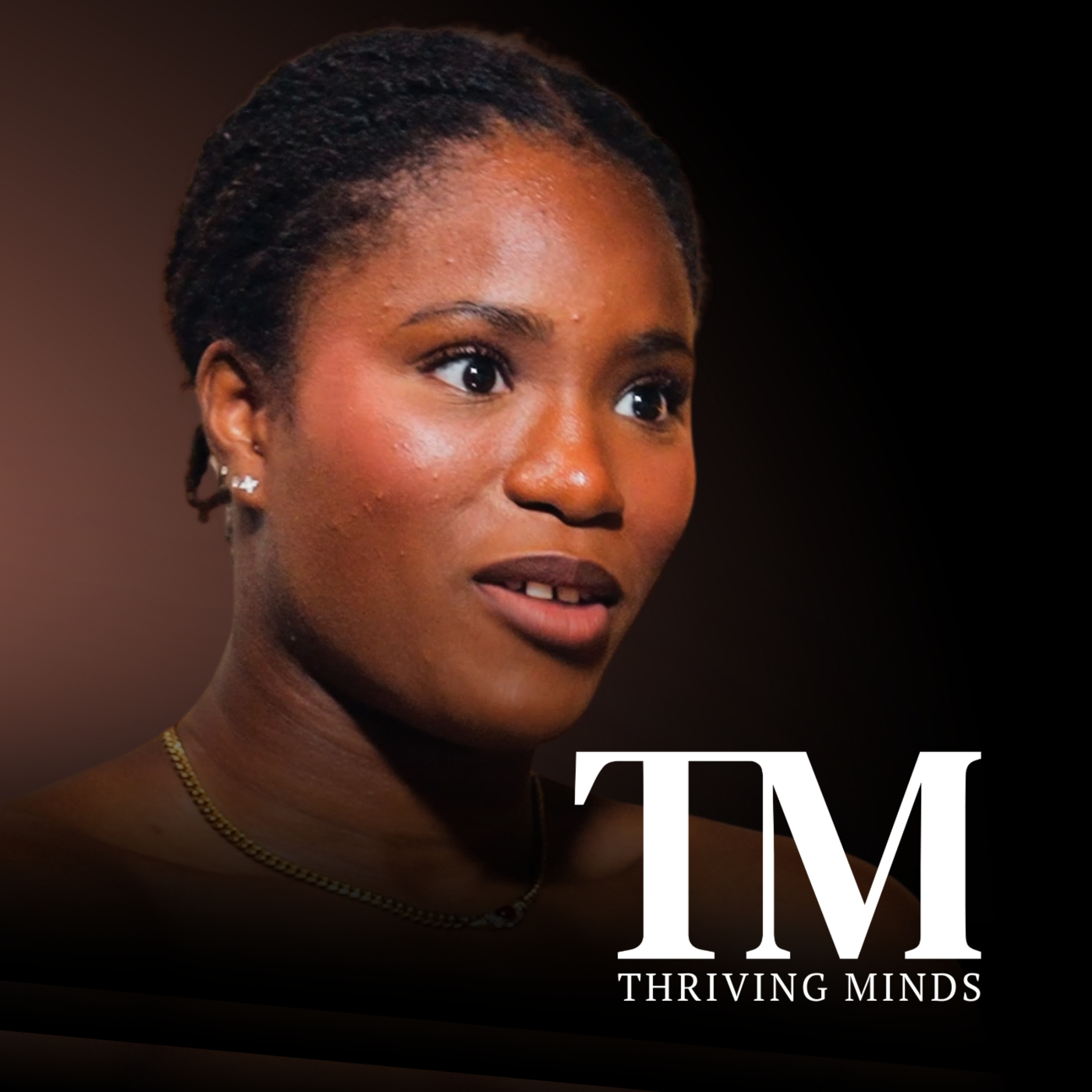
Host: Alberto Zandi
Caroline Dubois, World Champion Boxer
In this episode of Thriving Minds, host Alberto Zandi speaks with Caroline Dubois, a world champion boxer and an extraordinary young athlete. She shares her inspiring journey through the male-dominated sport of boxing, discussing her early struggles, the pressure of her family name, and her relationship with fear and failure. The conversation provides insights into the mindset and discipline required to succeed in boxing and life.
Written by AI. May contain mistakes.

Get the gist, explore an idea or ask about something said.
 Claude
On Thriving Minds with Alberto Zandi, what are the key points of this episode?
Searching your listeningAutomatic transcript. May contain errors.
0:00When I'm in the ring and I'm looking at my opponent, I'm just saying ring the bell, ring the bell, I can't wait, let me out. Did you ever feel fear in the ring? Every hour you've trained, every tear you've cried, all of that can just be changed and taken away from you by your opponent. I want to be known as the greatest woman female fighter. Caroline Dubois is a British professional boxer and women's world champion. She rose to fame as an amateur boxer, winning gold at the 2018 Youth Olympic Games and becoming a four-time European youth champion. Caroline turned professional in 2022 and has built an undefeated record of 11 wins, five of which were by knockout.
0:39She gained world champion status in 2024 for the lightweight category, a title she has since successfully defended. Nicknamed Sweet Caroline, she is the younger sister to world heavyweight champion Daniel Dubois. From the moment I walked into the gym, I said, this is what I want to do. At nine years old, I feel like looking back at it, it's insane what nine-year-old says he or she is going to do something and does it. I grew up in a family where boxing was very important. I wanted some of that. I wanted some of that attention, some of the love, some of the recognition. From your dad? Yes. Your tunnel vision is fascinating.
1:13What did you have to sacrifice to be where you are? You're such a sweet and nice person that I cannot imagine you trash-talking to anyone. For some people, it's real. Really? You can see they mean every word. If I say I'm going to knock somebody out, I don't feel like it's trash talk per se. It's conversing for you. Remind me to not converse with you. You're 24. You're a world champion right now. If I could take all of those accolades and replace it with one thing, it would be the Olympics. Why? Being a boxer can also mean that you can die from boxing. Are you willing to die? To achieve your dreams?
2:06Caroline, who are you outside boxing? How would you describe yourself? Great question. Who am I outside of boxing? A lot of my identity has come from boxing. I started boxing from such a young age, nine years old. And I grew up in a family where boxing was very important. And it was the founding. It was the metal that went through the house was the thing that just everything was around boxing. So it's a hard question for me. But I would say I'm a sister. I'm a friend. And I'm trying to be a good person. Beautiful. I love simplicity. And I think honesty is very much related to simplicity. You're saying that you started boxing at the age of nine.
2:57Yes. Walk me through that moment. Why did you start boxing? Was it because your family wanted you to box or you just fell in love because you saw people around you doing it? Yeah, so everybody's journey into boxing is very different. And I grew up where you're in the gym and you see everybody's journey into starting the sport is very different. I feel like my story is a unique story. I grew up in my family of seven, seven brothers and sisters. my dad my mom my dad was very much the patriarch in the house and a very strong figurehead and he was just very much focused on boxing you know for him he wanted to be successful you know he wanted to be um rich and he wanted to find a way to do that yeah he grew up watching frank bruno yeah um nigel ben eubank and these guys leonard lewis for him were massive inspirations and the fact that they were able to change their lives through sport, through boxing, was something he was very inspired by.
3:56And he's happy to tell the story so many times. He had children, and when he had a son, he was like, I need to put my boys into boxing. I want them to become fighters. I want them to become successful and be able to help me and become successful. And my older brother Daniel, my younger brother Prince, and not at the time, but now Solomon, all of them box at a time. And at the time, it was just Daniel and Prince. And being the middle child that I am, you know, I was noticing that there was a lot of attention being given to the boys. And, you know, I just felt like I wanted to do something. I wanted to be somebody, you know.
4:34Even at that house at a young age, I knew I wanted to be more than just... One out of seven. Just one of seven. Yeah. A sister, you know. And, you know, my dad was putting a lot of attention into Daniel at the time, a lot of attention into Prince. And I wanted some of that. I wanted some of that attention, some of the love, some of the just recognition. From your dad. Yes. And boxing was always on in the house. Yes. Every weekend there was the fights on Saturday nights, Friday night fights, the contender series. Boxing was just so important in the household. and then finally I remember having a moment an epiphany like I need to box I want to box it was crazy me and my younger sister we used to practice in the next door because we would go watch the boxing and we'll go into the room next door and we'll just practice I would be the coach she would be the student I would just be you know hitting pillows pretending they were pads and stuff and it was just crazy and then I got the courage and I was like I'm gonna ask my dad if I can box.
5:36I went and I asked him, I want to box. At first he was like, you can't box, you're a girl. And, um, but Leila Ali was around, um, Muhammad Ali's daughter and she was boxing. He told him this when you were nine? No, no, no. He knew about it because obviously we know Muhammad Ali, his daughter, Leila Ali. She was a famous boxer as well. One of the first female boxers to become successful out of it. And he knew it. And so it was in his mind, like, is there a chance? Is there possibilities, their future in this. And I kept asking him, I kept asking him, I kept knocking on the door, I kept asking, I kept saying, Dad, I want to do it.
6:10And he noticed that I wasn't just asking because, you know, as a kid, you see your brother get something, you say, I want it. But, you know, it doesn't matter whether you get it or not. I was persistent. I kept asking and he kept saying, OK, I'll take you to the Saturday class. We were at Repton Amateur Boxing Club at the time. And at the time, they would have Saturday class for kids that were under 10 years old. I was nine. So he was saying, I would take you to the Saturday class. Saturday will come and it will go and we weren't going. So I kept asking, I kept asking, I need to go, I want to go.
6:39Finally, he said, I'll take you to the Saturday class. And then Saturday came and then he was like, I'm not going to take you and I just had a tantrum. And we grew up in a household where if your dad says something, you have to listen. And I had a full-on tantrum. I cried, I was upset. And I think my dad was just so shocked that I would have such a reaction that I actually wanted this. You know, my brothers were all put into the sport. I wanted it. And I think he saw that. It was all coming from me. And then he said, you know, I'll take you. And so we went. And it was actually a crazy story because at the time, Repton was a boys' boxing club and they did not allow females.
7:16The coach at the time, Bobby Beck, was very, very old school and he would not have women, young girls in the club at all. and so when we went there my dad was telling me you're gonna have to say your boy and it was crazy I was like I didn't believe him we were driving on the way and he was like you're gonna have to say your boy my head was in cane rolls he was like you're gonna have to say your boy I go there I walk into the gym and I'm just taken away by the atmosphere the energy the colors the noise the smell even and I was just like wow how could anyone not want a box so I go in I put my bag down and this coach comes up to me he's this scary guy huge intimidating and he's like what's your name I say Caroline I say it so quietly he doesn't hear me I'm looking around there's only guys in the club young boys in the club and I'm like okay maybe my dad was telling the truth he asked me again and I say it was Colin and then that's how we started I started at nine years old at that gym named Colin and I was there for about four or five months until they got me a fight and in amateur boxing you have to get your medical done and a doctor will have to come in and check you over so you're healthy and so we had to leave and um yeah it just started from there when did they realize you were they never did we left um so um what it is so i started competing i started fighting i started going to nationals and winning i would always go i would get select i would always win the nationals i'll get selected for england i'll go to the europeans i'd win i won the first europeans for women um I was the first one to win the European gold medal for I think juniors yeah and I went to the Europeans I went to the worlds the youth Olympics everything and I'd always win and I'll come back and you know in in boxing world the Caroline Dubois name was getting quite big um obviously Daniel was a big name as well so the Dubois name was getting big and it was always Daniel and his little sister and then repped him they started to clock that that wasn't Colin who came into the gym that was car and so they just you know put the pieces together and um clocked that it was in fact a girl who came in how did all this make you feel because it seems to me that from such a young age you needed to fight and you needed to fight who you are and become someone to an extent that you are not to a get your father's attention to be seen which is something natural as a young kid and then b to be accepted within your i would imagine back then would be just a hobby hobby of choice yeah um i feel like at nine when i walked into the gym i didn't care um i was full on mulan i didn't care you know i was enjoying it finally i was you know at the gym i was with my dad driving to the gym coming back it was it was such a big thing for me it didn't it didn't i had thick skin it didn't matter but as i started to get older i started to notice things you know you notice what people are saying like oh if I had a girl I wouldn't let her box things like that um you just stuff like oh women shouldn't be boxing or da da da da da and even when I tried to go back to Repton a little bit older um the the coach Bobby Becky wouldn't let me in you know even though I was a national champion I was a European champion I was all these things he was like girls are not in the gym so you know after a while you notice things like that you pick up on things like that and um you kind of accept it because you recognize that that is just the time you know it's old time women's boxing is so new they're obviously going to be people who are just changes different changes hard to accept and they're just not going to accept it so you kind of have to just move on from them ignore them um but you love more boxing than its rules of course i love the sport you know from the moment i walked into the gym i said this is what I want to do at nine years old.
11:02And I feel like looking back at it, it's insane because what nine-year-old knows what he or she wants to do, what nine-year-old says he or she is going to do something and does it, you know, consistently stick with it. At 11 years old, I watched the London 2012 Olympic Games. It was the first time women were allowed into boxing and to compete at the Olympics. And it was insane. It was an amazing atmosphere, amazing experience just to see it on the telly was just mind-blowing. And from then, at 11, I said, I want to go to the Olympics. I remember watching Katie Taylor walk out, and the crowd went bizarre.
11:40They were freaking out. The loudest noise recorded at the Olympics was watching Katie Taylor walk out, and I said, I want to walk out at the Olympic Games. And I was able to do that. So I feel like, looking back on my life, I'm kind of very stubborn and I'm very hard-headed in the sense that If I say I'm going to do something, I'm going to try and do it. And if I don't succeed, you know, I will die trying kind of thing. Fascinating. I've been interviewed, I've spoken with so many great successful professionals, different fields in this show. And the only other person that knew what she wanted at the age of nine, she was also nine years old.
12:22It's very interesting. It was a girl, it wasn't a boy. and now she's an actress and she's she's a BAFTA awards winner which is yeah fascinating how was your dad how were your parents outside boxing so you were seven did you get enough attention outside boxing or everything was about boxing boxing boxing it was very very much boxing you know uh seven kids my dad just kind of just focused a lot on the the boxing side of things very focused on the boys um unfortunately I don't have a relationship with my dad right now Now, similar to yourself, you know, I grew up at first, you know, idolizing and wanting to be, you know, accepted by him and respected by him and walk into a room and have him say, oh, where's Caroline?
13:09Where is she? You know, and for a lot of myself and my younger siblings and the girls in the household, that was something that you really had to fight for. So to get that, it was just amazing at first and I loved it. and he put a lot of time into me when I was still with him and stuff and we used to travel up and down the country and he would take me to tournaments, to fights, he would pick me up after school, take me straight to the gym and, you know, I think he could sense that this was coming from me, you know, there was something inside this little kid that, you know, the desire to want to be something, something special, something seen, you know, I've always had that and I think he picked that up and he, you know, he allowed that to nourish and grow and maybe the athlete that I am today.
13:53But unfortunately, as you get older, you notice things, you start to pick up on things, you start to see that things are unacceptable. And I just couldn't, you know, I noticed things that I thought were just unacceptable and I had to remove myself from that situation. And yeah. Thank you for opening up. Since you did it, I'll do it too. As we were sharing off camera, I also do not have any relationship whatsoever with my father and this has been the case for the last thing now 10 years 10 11 years and there are some commonalities in the way we both grew up at least when it comes to looking up to our fathers I did look up to him but then as I became an adult I started noticing things that at a personal and professional level I did not like about him and i decided along with my twin brother to distance myself from him and i've learned a great deal not only about life but about myself in that journey what have you learned from that because and what i have seen from people that have done something remarkable in their lives is that they have this beautiful ability to turn pain into fuel to on one hand learn but then change the direction of travel in their life into something that is meaningful yeah um listen i'm 24 so i'm still very young right now and i'm still uh in that growing and learning and understanding you know sometimes you look back and you think you know why has this happened why is this why is this why it is you know you see other people in their relationship with their parents and it hurts you know it cuts like a knife you're like sheesh i wish i had that um i wish i had someone older than me as you said you know it's a it's a hard thing having to go out into the world and and not have anyone that's older than you that can say no don't do that that's wrong you know can give you experience and let you know what you're doing right what you're doing wrong and it's a hard thing having to be that kid who's the oldest you know i moved out with my younger brother my sister and i'm the oldest in that so uh we call ourselves the free musketeers and it feels like You know, I'm the oldest of that.
16:07So I haven't got anyone older than me, you know, watching my back, looking out for me, telling me what to do, what's right, what's wrong kind of thing. So it's definitely tough at times. And it's just an experience. It's unfortunately life, you know, so it is what it is. Has this shaped any decision that you've made to date? A hundred percent. I think moving out was one of the biggest decisions myself and my brothers and sisters made. we took a long time thinking about it whether or not it was the right thing to do but we finally decided it was and we did it and it was just like somebody said that in your life you're going to make one or two massive decisions that will change the trajectory of your life and I think that was that was one of them I look at my life as two phases before moving out and after moving out and I'm very much in the after moving out phase and my trajectory in my life the way I've grown as a person, the outlook is just not in days, changed completely and it was a good decision.
17:12I'm going to take us back to boxing. As a boxer, as a professional boxer, you've chosen probably one of the most challenging missions. You're placing all your eggs in this one basket and if that doesn't work out, you can be in quite a challenging and risky situation. Have you ever considered throughout your journey to pursue any other career? Was there ever a plan B? There was only plan A. There was only plan A. For me, I think I'm a kid who's all in. If I'm going to do something, I'm going to do something. I'm jumping off the bridge. I'm not hanging off the bridge. And for me, I started at such a young age.
17:57It was such a big thing for me. I loved it. And there was always in the house, when I was in the house growing up, that boxing is the only thing. It's the only thing of importance. So it was never of what's the alternative. There was no alternative. So growing up, it was always that. And then when I never really felt the need to want to do anything, I guess for myself, it was because I wanted to box as well. That helped. And I remember the Olympics coming around and it gave me momentum. him it gave me direction it gave me purpose I was like now I know what it is I actually want you know where I want to go I just I remember going to school and just daydreaming in class thinking about one day I'm going to be at the Olympics what's it going to be like waking up in the Olympic village walking around like I would just daydream for hours and days imagine going away to tournaments going away for competitions fighting and so I've never wanted anything else and it sounds crazy like but you know of course there's been dreams of like oh it would be great to be act or whatever but the serious thought the serious goal mission is has always been boxing your tunnel vision is fascinating you're 24 you're a world champion right now you're incredibly young and i'm very sure you must have made many sacrifices to be where you are as a young person typically typically young people at your age or even slightly younger They're meeting people, they're going out, they're experimenting different things in life.
19:32What did you have to sacrifice to be where you are? You know, all that stuff of going out, meeting, party and having friends. There is a saying, you know, you don't miss what you never had. And I feel like growing up, we grew up in a very closed in-house. And we never really had that whole socialize, you know, go out and make friends kind of feeling growing up. So I don't feel like I've missed out per se so much with that. you know I went to school when I was 11 years old and I had the opportunity to start to socialize and make friends and stuff like that and even in there the focus was boxing you know I used to run home from school not because my dad would tell me to or anything because I wanted to get to the gym as quick as I could and then obviously as I've grown older for sure sometimes you feel a little bit lonely like you know like I wish I had someone to meet up and socialize with or whatever but you know I just I focus on on what it is I've won I look at the life I've lived and I'm very happy and um I feel like I actually I'm making a lot of effort to go out and socialize and meet new people more now at 24 than I did at like 1918 I didn't care um so I feel like I'm growing and I'm I'm happy to to take it a little bit slower on that aspect and yeah I'm I'm cool
20:53right to a non-boxer that doesn't really know how a typical day for a boxer looks like how does a normal day for you look like so everybody else everybody's coaches have a different program but my coach um we train in the morning so usually gym starts at like 10 o 'clock and we'll train until like 12. So we do either bags, pads, we'll have sparring days. So we might spar twice a week, usually on Tuesdays and Thursdays. Monday, Wednesday, Fridays are usually days where we go and we just do technique work. So bags, pads, shadow boxing, that kind of stuff. So after that, we'll come home, get something to eat.
21:31Sometimes we rest. I like to have a nap and then I have a run in the evening. so it could be a long run session a sprint session whatever we have planned um tuesdays and thursdays we do bags pads or sparring and we'll have snc in the evening which is strength conditioning and we do that monday to friday then on the saturday i would have a hill sprint session i do hill sprints and then on sundays we rest and sometimes we alter it mix up days sometimes we add an extra session but that's basically the template the the blueprint what we what we're sticking to so you're training six times a week mornings are either technical boxing work or twice a week sparring and then in the evenings weights work weight lifting aside from saturdays which is basically cardio yeah basically yeah what about your diet do you follow a particular diet so uh i try to eat healthy i don't necessarily personally agree with like excluding things you know I don't eat like pork or whatever but I stick to a healthy diet I eat meat I eat vegetables I eat carbs so that could be white rice white bread I don't necessarily agree in like going completely you know savage and cutting things out like I don't eat white stuff I don't eat you know white rice white bread I think you know you're just limiting yourself and then you're going to end up craving it later where I think it's better to have a little bit of everything keep it healthy keep it clean when i'm when i'm in camp and i have a fight date i get a nutritionist on board and we focus on making sure that the calories are perfect for the camp that i'm losing weight the calories and the energy is good for sparring and preparing me for my sessions but outside of camp i just make sure i eat healthy every every every one day i might have a little ice cream here and there nice a cheeky burger every there uh every how often uh i try to keep it like once a week i like to have once a week so something i can look forward to in the week something that motivates me and yeah and i'll be honest i i have a sweet tooth and i get cravings something something bad so i need to i feel like if you if you resist it and you fight against it you're just going to get it worse and then when you do do it you're just going to end up binging it's much better i think to have like an 80 20 diet so 80 of the time you're eating clean you're healthy and that 20 you can have whatever you want within that 80 do you count calories or macros so i do count calories um i do have somebody's doing my my macros so i have an nutritionist when i'm in camp and she tells me what to eat and um she makes sure that everything is macros so the protein is there the carbs is there and everything is counted up um and when i'm in in camp obviously the calories are counted so that I can lose weight throughout the camp.
24:17Outside of camp, I don't really watch it like that. I just make sure I'm eating healthy. You're mentioning camp. For a non-boxer that has watched perhaps Rocky movies, they think of boxing camp as maybe training 15 times a day and punching a hanging pig in a butcher. Don't be no as dramatic as that. how would you describe to a non-boxer what is training camp no definitely not as caveman we keep it camp for me basically means so we have a fight date and camp is eight to ten weeks before that fight date so you're preparing you're making sure nutrition wise i have to make weight so i might walk around six kilos over the weight so camp is the time to get make sure ten weeks that means that you can only fight technically if you want to follow that regime five times a year because of 52 weeks a year yeah so yeah for sure obviously our promoters yeah um the network i'm on sky sports i fight on sky sports so my network has to make sure that it matches a lot of professional fighters fight three times a year so i fight i'm aiming to fight three times a year yeah um and then i have my off season where i'm just rest resting and relaxing and stuff and recovering from the camp um so eight to ten weeks before the fight date it's locked in you know you're not you're trying to minimize that that 20 of junk food it might be only 10 okay or five percent so there's still some junk food a little bit and then maybe a month before it's like clean you're eating clean what about alcohol no i don't drink alcohol no never and other do you know other fighters like great fighters at your level that they drink alcohol um i know some people who swear against it they floyd mayweather is an example he never let it touch his lips you know he never drank never smoked he never did anything like you know never let it even be some a fault oh wow so you know because it can really affect you it can really have negative effects you know i hear um researchers saying something like one glass a day can affect your brain and in a sport we're getting hit in the head is so it's it's undeniable i've spoken with so many different wellness experts, cardiologists, neurologists, nutritionists, longevity experts.
26:35I mean, alcohol, it's not good for you. It's not good. But I find it fascinating that Mayweather doesn't dream because if you look into his Instagram, it just looks like he is drinking. Now, I don't know what he's doing now. But when he was in camp, when he was training, when he was fighting real fighters, I would say, not having exhibitions against kickboxes or whatever. But when he was in his prime, that man never drank. and there's a lot of people who've never drank and there's some people who did drank ricky hack ricky hat and is a person that does speak to mine he used to drink outside of camp so outside of those 10 12 weeks he would be drinking as well was was your father teaching you these things did did he did he teach you not to drink no no no i just i just never you know i never did i never went out partying and drinking so it was never a need for me like oh i want to have a drink because It's just, I'm not interested.
27:26I don't see the need to do that. So eight weeks, 90 % eating clean, 10 % you eat almost whatever you want. What else do you do in those eight weeks? Do you change your sleeping habits? I try to get to bed around 10 o 'clock at night. I wake up like eight o 'clock the next day. So it's good hours of sleep. Ten hours. Yeah, I'm really bad at maths. I need to use my fingers to count. You're sleeping good. I'm making sure I'm eating healthy I'm making sure that I'm taking all my supplements so my vitamin D, my omega my fatty acids, all that stuff I'm doing everything that I can to make sure I'm prepared for the fight recovering, I'm watching film of my opponents, I'm watching film of the fight is that I like to watch see if I can pick up anything and implement it into my game, all that kind of stuff it's just about You're really preparing for work.
28:23So you're eating super healthy. You're sleeping a lot. You're getting an amazing rest. You're studying your opponent for eight weeks. I would assume during your rest period. And you're training. I mean, so at a competitive level. So how good are you from one to ten when you are, let's say, sparring, but you're not in in fight camp versus when you're actually fighting so right after the fight camp how does that differ if you and i fighting is there a big difference um i would say sparring outside of camp versus sparring in camp there's there is a difference because you're training your diet is coming on so you're losing weight you're sharper but then obviously towards the end of camp you get more tired the camp is taking its toll you're you're losing weight so you're less energy so it does depend and for me and one thing I've had to learn is that it's not important to get every day get in the gym and spa and spa great every day what is important is what you have to realize what you're in camp for the camp is to fight you know you want to peak on fight night that is when you want to be your best your sharpest your your most best is on fight day so outside of camp it's just practicing trying to make sure that you're improving on little things so that when you get to fight day, there is nobody, no one on this earth that can mess with you.
29:51And so I say that my best day, the day that I'm the sharpest, the best, the strongest is on fight day. Did you ever feel fear in the ring? Ever? At least once? You don't feel it in the ring, you feel it before the ring. There's no feeling when that person knocks on the door and says, are you ready for your wing walk your arsehole drops through the floor like you're like oh your stomach goes you're like oh my god but then you for me I get when that knock comes on the door you know so before you're in the change rooms you're warming up that's always an intense moment you're thinking about the fight you're thinking in 10-30 minutes I'll be out there and I'll be trading blows with this person I don't know what's going to happen so it's a very intense moment you're sparring you're getting ready on the pads and stuff but then when that person comes and knocks on the door they're like you ready to go the walk is on I always feel like that's when you feel that drop like oh my god it's real but then I go out I'm praying in my head I'm thinking you know god you sent me here for a reason yeah I've trained up my asshole off I've left no stone unturned it is what it is you're on the ring walk and then the crowd is going your music is blurring and then you feel no fear.
31:09I feel no fear on the ring walk. The more close I get to the ring, the more confident I get. The energy is up, the excitement. And then when I'm in the ring and I'm looking at my opponent, I'm just saying, ring the bell, ring the bell. I can't wait, let me out. And it's just like that energy. But I would admit that the moment when that person knocks on the door is a very ass drop moment, you know? This is a real kind of moment. And then when you're in the change room, you're also feeling tension, nerves from your team maybe even. And you're just getting that nervous energy. So, yeah. Does that get better over time or is it always the same?
31:46It definitely gets better over time. People deal with it better. I would imagine Canelo now in his four-year fight versus in his pro debut night and day. But it never goes away. The moment it goes away, I feel, is the moment that you stop caring, that it doesn't matter to you. but if it always matters to you if the fight is always a big thing and the training camp is always important it's always going to matter it's always going to be nervous it's always going to be nerve-wracking because in 20-30 minutes however long the fight lasts it could be the making or breaking of you you know you could go out you could get knocked out in the first 10 seconds and your whole career is just destroyed or you can go out and knock the person out in 10 seconds and your career is just on this massive trascendery you're like on the ladder straight up to stardom So, you know, there's always the anticipation of anything can happen and whatever happens can make or break my career.
32:38So, yeah. And then, so the techniques you're following are two on one hand, you turn to God, you pray, and then you believe in the process. Yeah. You believe in your work. You trust in your work. You know, when you have a great camp and you've left no stone unturned, I always feel like you're in that moment before the ring walk and it's like, whatever happens, happens. I've done my part. You know, I've done everything you've asked of me. I've done everything that's been asked of me. I've left no slow and unturned. So whatever happens, you know, I hold my hands up and I can be proud that I gave everything that I could give.
33:14So, yeah. And obviously boxing is a show business and there's a lot of, I would assume, fake trash talk happening before the fight. To be honest, you're such a like sweet and nice person that I cannot imagine you trash talking to anyone. but like how does that go for you? Like do you do it? Do you engage with it? Do you care about it? Does it affect you mentally? Everybody's different. Some people, you know, they don't trash talk. They hate it. They hate the idea of going up there and looking at someone and saying, I'm going to knock you out. It's fake. To some people it is fake and you can see they're putting it on.
33:51But some people it's real. Really? And it's real and you can see they mean every word that's coming out of their mouth and it's not a game for them. they mean it you know and I get that because you're in 10 weeks and you're fighting against someone who can destroy your career in one moment like everything you've worked for I've been training since I was nine years old and everything you've worked for everything you've every hour you've trained every you know sweat you've you sweat every tear you've cried all of that can just be changed and taken away from you by your opponent and so you know for me I just try it I mean what I say when I and I converse with my opponents and stuff I don't see it so much as trash talk I just see it as I'm telling the truth I'm trying to be as genuine and honest as I feel you know if I say and I feel like I'm gonna knock somebody out I don't feel like it's trash talk per se or fake it's conversing for you it's just I'm saying remind me to not converse with you number 45 maybe like if this is how I feel and I genuinely feel like I'm gonna you know beat your ass I'm gonna say it it's not it doesn't feel fake for me I'm just I'm just saying it and I and I do get that sense of you know frustration when I'm up against somebody and they're trying to play the whole friendly game and oh let's just be nice because you know you're trying to get into the ring and beat me up and take away everything I've worked for since I was nine years old and I'm not gonna allow that to happen and we're not gonna be cool pretending like I'm gonna allow that to happen so for me I don't mind doing the whole trash talking thing but I don't see it as threshold.
35:26And when you fight, is it good to fight with emotion, with anger or? I don't think raw emotion is a good emotion to bring into the ring. So raw anger, raw frustration, raw anything is good emotion. But I think it's good to channel that. So, you know, before the fight, you're thinking of all the hard work that you've put in. And there's been moments, you know, you're watching a fight and you can see somebody's been hurt. They go into the corner, the corner man, their coat sits them down. They give them the old motivational talking. You can see it affecting them. And it's like, I'm not going to let this person take it away from me.
36:04I'm not going to lose. So I think that is a form of emotion. You're just channeling it, channeling it the correct way. So it's not raw. You're not angry. You're not sad. You're not frustrated. You're just channeling those feelings, those emotions. as i shared with you earlier i do muay thai boxing i've been doing it for i think six years yeah on a daily basis i don't compete but i would say i do train a lot and i've spart a lot and one thing that i that i find fascinating is that some people when they're sparring they get they get angry and these are probably very advanced people some of them they're professionals they get angry yeah and then they just want to hurt you yeah like they almost like lose it to an extent did that ever happen to you not necessarily in sparring but in a fight where you got hurt and you're like i really want to hurt you right now for sure i mean it's a competitive sport someone's punching in your face you want to hit them back if someone hurts you you think okay i'm gonna get you back so it's a competitive energy i think boxing and athlete and especially combat sports i think it attracts competitive people people that will not let you get one without giving one back.
37:14And so I just think that's a little bit, maybe it's a little bit ego. You know, if you're walking in the gym and you feel like you're the biggest, the best, like nobody can mess with me and someone gets in the ring and they hurt you, you're like, I got to get that back. I got to let them know, keep them in their lane. So I think it's a little bit of ego. It's a little bit of just, you know, the competitive spirit. Emmanuel Stewart, one of the greatest coaches of all times, he said, a great fire has to be cocky. He has to be arrogant. He has to have that. Because if you don't have that, you know, what's going to stop you from making sure that you're going to keep people in their lane, keep them on check?
37:52Fascinating.
38:00I was having a look at your career highlights. So you've won pretty much everything since 2018 until now, 2025. I can see so many different accolades. gold medal at the Youth Olympic Games in Buenos Aires, European Junior Champion, named BBC Young Sports Personality of the Year, Olympic stage, you qualified for the Tokyo 2020 Olympics, you turned pro. I mean, you've worn so many different belts. Is there a fight that you remember the most? That I remember the most? I mean, amongst all those accolades, the one that hurts the most, the one that hurts like a bitch is the fact that I didn't win the Olympic gold medal.
38:46Am I allowed to swear? Yeah, you're doing whatever you want. That one, that one. You can converse. Okay. That's the one that, you know, if I could take all of those accolades and replace it with one thing, it would be the Olympics. Why? As I said, you know, from 11, I was watching Katie Taylor walk out, Clash of Shields walk out. Well, my favorite fight is Sugar Ray Leonard, Shakur Stevenson, Floyd Mayweather himself, other people they've meddled at the olympic games even muhammad ali the olympic champions olympic medalist leonard sluice and for me growing up all the greatest fights oscar de la hoya they all went through the olympic cycle and you're looking at them and they've meddled or they've won gold and you're like i want to do that i want to be great just like them i want to go to the olympics just like them and i want to win just like them and at 11 the olympic game became real for women.
39:35You know, it's at London, it's at Tokyo, it's in my backyard. I'm watching it and Katie Taylor walks out, Clare Schultz walks out, Nicola Adams walks out and they all win gold and I'm like, that's what I want to do. I get to the Olympics and it's unfortunately, it's the one thing that I wasn't able to do and it's the one that hurts, you know, that hurt for a very long time and hurts so much because, you know, I went on a whole undefeated streak when I was a kid, I never lost a fight until I turned senior at 19 years old. So that's all the way from 11 till 19, I never lost a fight. And it hurt so much losing at the Olympics because it was the only thing that I ever really, really, really, really wanted that was for me.
40:16As a professional now, I feel like I fight not just for me, I fight for my family, I earn money, I bring it home, I support my brothers and my sisters and my mum and everyone around me. So it doesn't feel like boxing is just for me. Whereas if I won the Olympic gold medal, the only person that would have really benefited would have been for me. And I feel like it was the one thing that would have just truly been mine. And that would have been a moment that, you know, I would have never forgotten about. And it sucks that I wasn't able to achieve that. So it is what it is. It's interesting. You mentioned that you've never lost from the age of 11 until 19.
40:54Yes. A lot of young people experience failure at young ages and then you develop a different relationship with failure. But you haven't failed in a critical moment in which you're learning what it means to succeed and fail. You were only succeeding. I mean, I went through my hardships and training and we used to train very, very hard. Yeah, so I feel like I just trained really, really hard and I learned. And, you know, I would spar with the guys all the time. So, you know, I was getting my ass whooped in the gym to make up for that. So I definitely learned what it meant to not quite get what you want.
41:32And then at 19, I lost my first fight. That was insane. It was an insane moment. And then obviously I'm preparing for the Olympics. And I lost at the Olympics and that hurt crazy. And what is your relationship with failure now? um you know it's a good relationship because i i recognize that after i lost it was like i just up to level you know i wanted the olympics so bad like you have to understand i will go to bed thinking about how i'm gonna get there i wake up thinking about i need to run because i want to get to the olympics i need to diet because i need to get to the olympics i need to train because i wanted So I'm so tunnel vision, so focused on this one thing.
42:16So even when I lost, it was like, okay, what did I do wrong? Why did I lose? What was the process that made me fail? And I just upped my level of training, upped my level of focus and desire. And it just, every time I lost, it felt like I just improved a little bit and got better. And then I don't think I would have, if I never lost my first fight at 19, I don't believe I would have qualified for the Olympics. Because, you know, you learn so much. actually like, oh, I wasn't training hard enough. I thought I was training hard. But until I lost, I realized that, in fact, I wasn't. So my level of training, discipline, hard work, it just went up a whole level when I lost.
42:55And then I was able to qualify for the Olympic Games. And then I went to the Olympics. I feel like if I had a few more fights as a senior experience in major tournaments, I would have definitely been able to achieve my dream. But that wasn't to be. So it is what it is. It is very important sometimes in our journey to realise that we're human. As a human, Caroline, in that particular moment, did you have any doubts when you lost? For sure. I felt maybe I'm not good enough. The Olympics was coming around quick and I lost for the first time. And I was really struggling to make the way. So in amateur boxing, you have tournaments.
43:39and in tournaments you might fight four times in seven days, five times in seven days. I was fighting in a very busy weight division. So 60 kilos is a very, very busy weight division. It's one of the busiest for women. So every time I would go to a tournament, I would have five fights in seven days. And unlike in professionals where you have day before weighing, you have the same day weighing. So you have to weigh in five times seven days and you have to be on weight five times on that day. And as you know, I walk around about 66, 67. You're coming down to 60 every day. It's a very hard process.
44:15And you have to make sure you're on weight every single day or you won't be able to fight. So there was a lot of learning in making the weight. There was a lot of struggling in training and making sure that I'm on weight and that whole process at such a young age. Yeah. What is the main learning from this loss? The loss for me was just that I remember losing for the first fight. It's like I felt like I wasn't good enough. You know, I felt like I wouldn't be good enough to make the Olympics. And I had to have that whole moment of you are good enough. It's just you have to learn from it. And I learned what it meant, I believe, to be an athlete, to be disciplined 24-7, 365.
44:57Up until that point, I wouldn't say things were easy for me because I think you take away from everything you achieve. but it was easier. You know, it's like I was naturally gifted. Everybody said it. You know, I would just be able to pick things up very quickly. But there's a difference between being naturally gifted and working hard. And there's a saying in boxing that hard work beats talent if talent doesn't work hard. And I feel like I learned that when I lost for the first time. You were mentioning some of your so-called idols in boxing. I was fascinating also to see that most of them are male boxers who are your two favourite boxers one male and one female and within these two what splits of talent versus hard work do you think they have so let's say 60 % talent, 40 % hard work it's a really tough question because as we all know boxing has been on for thousands of years and there's just so many fights to pick from like who is your favourite but I would say relevant to now One of my favourite female boxers is Kaleisha Shields.
46:01Growing up, she was the first woman that I believe I truly looked up to and idolised. She also went to the Olympics very young, 17 years old, won gold. Then went again to the 2018 Olympics, no, 16, and won gold there. So she was a two-time Olympic gold medalist, very young, and she did it. And she just was, she lost one fight and she never lost again. and so I just really idolized her, looked up to her, I thought she was amazing, she was young, she had her own background issues and she was able to overcome every single last one of them and be successful in the ring and I was really inspired by that.
46:43I think for her it's a 50-50 % ratio of talent and hard work. I think she works very hard but I think she's got a lot of talent. I think she's got a lot of talent as well. For men, who is my favorite fighter, I would say, I'll bring it back, I'd say Sugar Ray Leonard. I think he was an Olympic gold medalist as well. And he tried to qualify for previous Olympics and he didn't qualify. He lost. And he actually never was able to make the weight, so he wasn't able to go. But for the second Olympics, he got it right and he won gold and he turned pro and had a phenomenal career. I think for him, I think he works incredibly hard as well, but I also feel like he's incredibly gifted.
47:24so I would give him a 50-50 % ratio as well. I think Sugar A. Leonard is a phenomenal, great, like unbelievable fire. And what would be your ratio? Oh, I would say when I was a kid, younger, my ratio was like 80 % talent, 20 % hard work. Now I think I'm evening up and I would say I'm more 50-50. Great. how would you define your boxing style for someone that is a non-boxing expert um i would say i'm an aggressive counter puncher i think i'm a um puncher boxer so i think the fight i hit quite hard for a woman and um i have a few knockouts and you know my when i fight i think a lot of the opponents that I fight, they feel my power first.
48:18They see their skill, they see the ability, but it's the power that they see first and that affects them first. So I would say I'm a puncher boxer and I'm an aggressive counterpuncher. I'm a southpaw, so I'm in the unorthodox stance and aggressive counterpuncher because I like to be on the front foot, but I still have the skill to counterpunch you and to be flurry as well. Do you have a star shot? I like the right hook. I'm a right-handed southpaw, so that means that my right hand is my strongest punch. And I like to let the right hand go, yeah. What are your strengths and what are your weaknesses in boxing?
49:02Strengths, I would say, is my power, my skill, and my IQ. So I think I have really good boxing intelligence. You know, I've never felt that I needed a coach to tell me what to do when I get in the ring. Of course, I have a coach now and he sharpens up everything and he polishes down what I already have and make sure I'm doing the right things. But it's always come intuitively to me. So when I'm in the ring, I can read an opponent very quickly. I see what he or she does well and I know what to do to nullify them and get to them, usually. one of my weaknesses is that I would say that because I'm quite heavy-handed I kind of gas out quite quickly sometimes and I would say probably that you know making sure that we you're I'm still young I think the fact that I'm still young is one of my weaknesses is that I haven't got the experience to know how to, what pace I need to be training at all the time, what pace I need to be fighting at when I'm in the ring.
50:12Just experience, things that come with experience. I think one of my weaknesses right now is my inexperience. You know, I'm a world champion, but I'm still quite young. I haven't had that many fights. So that experience is one thing that I'm looking to get. How does men's boxing from a PEGA perspective compared to women's boxing um from uh just looking at it men fight 12 three minute rounds women fight 10 two minute rounds so that's one difference that's pretty big and pretty obvious um when you look at the fight itself because men fight 10 12 to three minute rounds they fight longer their durations are longer and they get they pace themselves a lot more in the fight you know some people say that You know, you see fights where maybe not a lot is happening.
50:59You know, there's a Floyd Mayweather is notorious for it where, you know, people say, oh, he's boring or whatever. But it's because they're pacing themselves because they fight a longer duration. Women fight shorter rounds. We fight less rounds. So sometimes our fights are very action packed because we just go at it. You know, we don't have as much time and we need to make sure that the judges see our work. And our fights are very intense and action packed more. From a pay gap perspective, so if we compare, for example, a known male fight, your brother fought recently, Uziq. I was reading that he got paid over 50 million pounds.
51:40I don't know how much Uziq got paid. If you were to compare that payday for an equivalent fight in women's boxing, is that comparable whatsoever? How does the gap look like? No, there is no comparison. Obviously, there is always going to be a gender pay divide, I think. Is it very big? It is big right now, for sure. I think we have Amanda Serrano and Katie Taylor, and they were the highest paid female fighters. They both earned over five million for their fight recently. So, you know, the money is there for women's boxing and they are getting good pay. But obviously, when you compare it to what men are getting, it's like nine in eight.
52:20It's uncomfortable. This is incomparable. So there is definitely a gap, but I think we're going to catch up for sure. I think we just have to be involved in the biggest fights. We have to make big fights. And that would help that gap close up a lot quicker. What do you prefer to watch, honestly speaking? Men's fight or women's fight? Because I'm a woman, I like to watch women's fights. I think when I watch boxing, I don't just watch it from a fan's standpoint. I watch it from, okay, what's going on here? What can I learn? and I like to watch my opponents and stuff. So I genuinely handle my heart.
52:55I love to watch both. I watch women's boxing. I watch men's boxing. There is no difference for me. I watch both of them. I love it. They both bring different aspects of the game. I think one of the greatest female fights I saw recently was Sandy Ryan versus Michaela Mayer. It was action-packed and they fought twice and both fights were action-packed. You know, my hand is on my heart just watching it. Kate Taylor and Amanda Serrano, when they had their first fight at the MSG, It was an unbelievable fight. They fought about three o 'clock in the morning. I got up for that. My adrenaline was going so hard.
53:27I couldn't sleep for the rest of the night. I was up all night just thinking about the fight. It was unbelievable. Obviously, men's fights, they're action-packed. They're exciting. They get more knockouts. So there's always that. I don't think there's a difference for me. I just watch it for his boxing. A good fight is a good fight. It doesn't matter if it's a woman fighting or a man fighting for me. I enjoy it. enjoy it you briefly mentioned what you're fighting for so if we go back to your father he wanted for you and your siblings to pursue boxing because he wanted for all of you to be successful but also financially successful if you can expand a little bit on the reason why you're boxing so are you boxing mainly for legacy to be seen by not necessarily maybe anymore your that but like you know just to be seen are you boxing for money um uh good question um i remember the moment i had that revelation of who it was i was fighting for and i realized that i was fighting for myself um you know boxing is in my opinion obviously people will say yes or no But in my opinion, boxing is one of the hardest sports in the world.
54:46Unfortunately, just last week, we had two fighters that died on the same card. They both fought on the same card and they both passed away. So boxing is a very dangerous sport. You know, you're not just walking away with a loss sometimes. You're walking away with a loss of life. You know, that's your brother, whoever. That's, you know, that's a painful loss to have. and I remember having that moment of like boxing is held really really hard it's dangerous it's it's hard it's intense and I realized that I was doing this for myself why was I doing it for sure when I started I wanted recognition I wanted attention I wanted love but then I realized I was doing it because I wanted to be happy and boxing gave me that happiness so yes when when you said that it gave you happiness a very honest and true smile just if you're not boxing what would you do it's a ridiculously hard question because if I wasn't boxing I would not be in the position to be financially secure I would not be in a position to be financially independent and being able to support my brothers and sisters so I would not have been able to leave you know the house that I was living in so I wouldn't be very happy is there anything else that you like aside from boxing um i like music i love music i don't think i'd be a very good musician i don't think i have a great voice um but i love to test you
56:18no um definitely nothing that i love on a comparable level in terms of anything i would have wanted to do um boxing is just everything i've ever done so it's hard to say all right so we're going to stay in boxing then if what would you advise a young athlete starting out right now um i would advise them to as an athlete i would advise to find out why you're doing it if you love it if you love it how far you're willing to go for it and if you say you're willing to go all the way you want to commit to a thousand percent then start living the life of an athlete for me as a kid I was always naturally gifted I love boxing I was great at it and it was it came easy to me and it wasn't until I got older that I learned that I needed to live the life as an athlete not just as a boxer but as an athlete and to young athletes in whatever sport you want to do I would advise you if you want to be the best at it to live the life eat sleep drink breathe the sport commit to it because what you commit what you give is is what you're going to get back and you can't do things half-heartedly yourself, you're an entrepreneur, businessman, you know that you have to live it.
57:29You have to think about it all the time when you wake up, when you go to bed. How am I going to improve? How am I going to be better? And the same goes for sport. You're competing against a million of other kids who want the exact same thing as you do, who want to be the best just as much as you do, who train just as much as you do. So you have to have that 1 % edge over them and that usually comes through consistently, and hard work and time. You've mentioned that being a boxer can also mean that you can die from boxing. Are you willing to die to achieve your dreams? I think it's an unconscious thought, unconscious commitment we make all the time.
58:17The fact that I've been doing this since I was nine and committed to it. I spar two times a week sometimes when I'm in camp. That's a lot of blows to the head that you're taking. Unconsciously, you don't even realise that's affecting you. I do the whole weight-making thing that's not necessarily the healthiest thing in the world. Unconsciously, we're taking that every day. If you ask me consciously, am I willing to die for it, I don't know how to answer that. But I think the proof is in the pudding that I am willing to die. I've dedicated my life for this so long. It's so hard and I'm going through it every day and I'm willing to do this for a good few more years.
59:03So I would say that I am, yes. A person that I respect and I admire a lot told me once that it is sometimes easier to say that you would die for something, but it's something much harder to say and to really commit to, to say that you are willing to live for something. For sure. And it seems to me that that's what you're doing. For sure. You're willing to dedicate your whole life to it. For sure. We discussed briefly off camera what it takes for you to gain weight or drop weight. In your case, you typically end up dropping weight to fight. Can you walk me through again that process? So you told me that you're right now walking on 66 kilos.
59:47You need to drop to 60 kilos right before the fight. So how do you do it? So in professional boxing, we have day before weigh-in. So you weigh in the day before you fight. And for me, I fight lightweight. So I have to make 61.2, to be precise. And I walk around about 66 kilos. So we make sure I have a nutritionist on board who's monitoring what I'm eating for our camp, making sure that the weight is coming down and then on fight week we we do what is known as the cut so we just make sure that we're manipulating how much water we're drinking manipulating how much food we're eating when we might not be eating a lot on fight week um how much we train to make sure we sweat a lot and so that the weight all comes off um just just on the day before on the weigh-in so that when we weigh in we're as light as possible and then the next day we rehydrate we eat we drink and we put it back on so that when we get in the ring we're as big and as strong as we possibly can be you're dropping five kilos in one week so not in one week no for me i would i like to do three kilos some people i've seen do bigger cuts and they do i've seen people who do like five seven kilos on five week i think that's insane i would never do that i could never do that but i've seen some crazy cuts um for me i like to keep it at three kilos yeah wow that doesn't sound very healthy it's definitely not the healthiest and it goes back to your previous question of how much we're willing to commit to the sport and it's just a commitment that we do you know this is you know i want to be a lightweight world champion i want to be undisputed world champion so um i want to be a multi-weight world champion so after this i will move up in weight and then i'll move up and i'll move up as much as i can and it just gives us the opportunity to be as great as we possibly can be and be world champions as many weight divisions as we can be.
1:01:40Let's talk about that. Let's talk about your future. So imagine you're going to be watching this in 10 years from now. Like one of those corner McGregor videos in which he was projecting where he was going to be and then it actually happened. Where do you see yourself in 10 years?
1:01:59Hopefully retired.
1:02:03I would like to be able to walk away from the sport at 30 years old. Okay. Gives me time to retire and, you know, focus on other things. Hopefully having kids and stuff like that. But that's for another time. In the sport, the legacy I want to leave behind. I want to be known as the greatest woman female fighter that's in this era. You know, I want to be one of the greatest fighters that's, you know, walked this earth and I want people to recognize that. I spent a lot of time, a lot of dedication, a lot of, you know, suffering. I remember Oscar De La Hoya said, a world champion is a world champion sufferer.
1:02:38And he basically is saying that to be a world champion, you have to put in a lot of pain, a lot of suffering, a lot of time. And I know that I have done that and I know that I will continue to do that. So I would like to leave behind the legacy as a world champion, as a multi-weight world champion, as someone who can hopefully bridge the gap between women and men in terms of viewership, in terms of pay, in terms of what it brings to the television for the viewers and the excitement. I would like to be someone who goes down in the World Boxing Hall of Fame. I want to be someone who does things that's never been done before.
1:03:14I want to be special. I want to be undisputed. I want to be the greatest female fighter. Beautiful. if you could talk to your 11 year old self what would you tell her um i would say that i'm incredibly proud i'm i'm so happy that she made the decision that took me to be where i am today and if she never made that decision at nine years old that she wanted to box I would not be where I am today I would not be sitting down here with you today so um I would say that I'm so proud and I'm so happy that she was able to do that and um I took that mantle and I'm running with it ever since so it's something that was started from nine years old and something that I'm so proud that I started and now.
1:04:14Caroline if you had to compress all your knowledge and lessons you've gained from being an athlete a world champion boxer into one piece of advice what would it be? If I had to compress all the knowledge that I've learned from my life so far I would say that shit happens you have to roll with the punches and it is what it is like I think it's very easy to get stuck on things and just think oh man like simple like losing you know it's very easy to get stuck on that be like oh my god I lost I'm not so great but it is what it is it happened move from that what did you learn from that what can you do what went wrong what went right you know always think about what's next for me and one of the mindsets that I realized that I have is that I have a very what's next mindset what's the next move like what can I do now okay that happened what do I do about it I'm very much okay something happened what do I do about it and I think it's a great mindset to have of course it has its negatives and stuff because you're not reflecting you're not in the moment as much but for me it's worked and I think I have that mindset of just constantly think about what's next and what can you do about it if something does go wrong and there's some advice I will give to people and I think it translates in whatever you want to do if you want to be a doctor a teacher a friend a brother whatever a parent I think having that mindset of things happen whether they're good whether they're bad instead of sitting on that and being miserable about it focus on what can you do about it and if there's nothing you can do about it, then it is what it is.
1:05:55And if there is something you can do about it, make sure you're doing the thing that you need to do. Thank you, Caroline. I think you are profoundly brave. And I say this for many reasons. It is very challenging to follow the footsteps of a family member who is globally successful, as it is your brother, the internal pressure, and you hold yourself to very high standards but also the external pressure can be incredibly high especially for a young person like yourself. On top of that you ventured into a profession that is mainly male dominated at every single level. Despite all the challenges and adversity your passion, your tunnel vision are stronger than any barrier.
1:06:43And that is so inspiring to see. I thank you very much for sharing your story. I think you've lightened the entire team's morning and I very much hope that you'll do the same with our audience. And I wish you the very best of luck in your career. And I think you have six more years to go until you retire. And I very much think that if anyone can accomplish her mission and her vision, it's definitely going to be you. because I don't think I've ever met anybody that wants something so badly as yourself. And I really mean this. I appreciate that. I really do. Thank you. Thank you.
This week, Alberto sat down with Caroline Dubois, world champion boxer, the younger sister of heavyweight world champion Daniel Dubois, and one of the most extraordinary young athletes of her generation.
This is the story of a GOAT in the making.
Caroline’s story is unlike anything you have heard before. She started boxing at nine years old in a gym that did not allow girls, so she entered under a fake name, pretending to be a boy, driven by a desire to be seen by her father and to claim her place in a male dominated sport.
On top of that, she grew up carrying the weight of the Dubois name. Instead of letting the expectations and comparisons break her, she learned to turn them into fuel. In this conversation, she opens up about how she navigated the pressure of being Daniel’s sister, how she refused to live in his shadow, and how she converted that pressure into motivation, focus, and an even higher standard for herself.
Since those early days she has become a world champion, and carried the weight of expectation in a discipline where a single punch can change your life or end a career. Caroline shares what she had to sacrifice, how she rebuilt herself after painful losses, and why she is willing to push her mind and body to the edge in pursuit of greatness.
We explore her relationship with fear, her complicated relationship with her father, what it means to train for ten weeks knowing you could lose everything in ten minutes, what it takes for women to rise in a sport where the financial and cultural barriers remain enormous, and how she uses pain and pressure as fuel rather than an anchor.
You will learn
• How to develop unshakeable tunnel vision
• How to recover from devastating failure
• How to stay disciplined when your goals feel out of reach
• How to build confidence when nobody believes in you or you are living in someone else’s shadow
• How elite fighters manage fear, intensity, and pressure
This is the real story of what it takes to chase a dream when the world tells you it is impossible.
#ThrivingMinds #CarolineDubois #Boxing #WomensBoxing #WorldChampion #Olympics #Mindset #Discipline #Resilience #AthleteLife
Hosted on Acast. See acast.com/privacy for more information.


