Ask ChatGPT

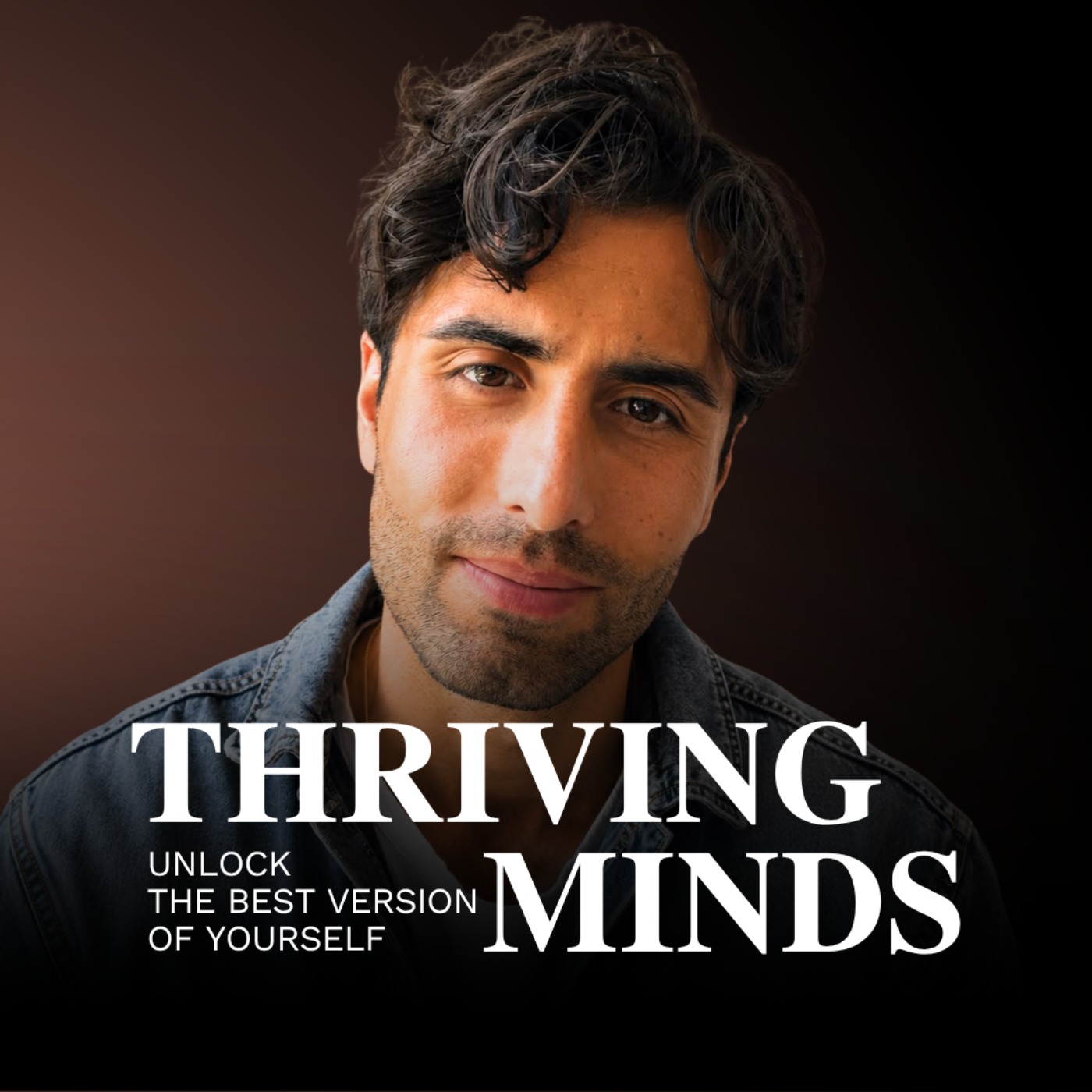
 Thriving Minds with Alberto Zandi
20 Nov 2025 · 1h 23m

In this episode of Thriving Minds, host Alberto Zandi converses with celebrity chef Thomas Straker. The discussion revolves around Straker's journey from experiencing burnout in the fine dining industry to building a successful restaurant empire and becoming a widely recognized figure on social media.
Written by AI. May contain mistakes.

Get the gist, explore an idea or ask about something said.
 Claude
On Thriving Minds with Alberto Zandi, what are the key points of this episode?
Searching your listeningAutomatic transcript. May contain errors.
0:28Don't cut the corner. particularly his Butter series, gained him a following of more than 5 million followers across platforms. His most viewed clip is a recipe for burnt butter, which has racked up millions of views on TikTok. His debut cookbook, Food You Want to Eat, was an instant Sunday Times bestseller. Tom now runs the acclaimed London restaurant Strakers and has launched All Things Butter, a line of flavored butters available in supermarkets across the UK. You knew where you wanted to be, what you wanted to achieve. You just didn't know how to get there. I was the private chef in the house cooking for a family of five.
1:00That's when I made my first cooking video. I had 900 followers when I left to go out. When I came back, I had 30 ,000 followers. Which video made you buy? You end up achieving your dream, which was opening a restaurant, not following a specific roadmap or strategy. Yeah, I've got the restaurant. It's built up a good following. The restaurant's fully booked. Then it's about discipline. I did this butter series online. Billions of views between Instagram and TikTok. it was going completely bananas. So he said, OK, Tom, I will set up the business and run it. You just don't get cancelled. You were criticised by the media.
1:40So you went from half a million to how much? Zero. To zero. Zero. I did not do a deal for a year. How do you build a restaurant that lasts for over 30 years? I have two answers for that. Yeah, I'm flipping the interview. The first one.
2:08Tom, who are you and what is it that you do? My name is Thomas Straker or Tom Straker, whatever you want to call me. I'm a chef, an entrepreneur and also create a bit of social content. I own a couple of restaurants. I own a butter business, which came from socials. So I've managed to create a, I never know the acronyms that all my business partners use, but they're, you know, CPMG or fast moving consumer goods business. They're FMCG businesses. So I've created a butter business. I'm working on another business, which is Olive Oil. We have a cookware business. So everything based around food. So I'm fully immersed in the food industry.
3:05Aside from professional accolades and descriptions of yourself, how would you describe yourself personally if you were to describe yourself with three adjectives?
3:18I'm energetic. I'm passionate. And I'm loyal. Interesting. Walk me through your childhood. Where did you live? And when did you fall in love with food? So I grew up in Herefordshire, which is just on the border of Wales. We're a very amazing rural country. We're in the southwest of Hereford, near a town called Hay-on-Wye. So that was Hay-on-Wye, famous book festival down there. And right on the Brecon Beacon. So lovely mountains, lovely names like the Cat's Back and Hay Bluff and Penny Fan. So I was immersed in, that was my upbringing, immersed in countryside, I suppose. My dad was in the army, which is why we lived down there.
4:16And then my mum was at home looking after us kids. I've got two sisters, a twin also, and an older sister. So, you know, spent life outside. It was idyllic. Mum was very green-fingered or green-thumbed. I can't remember the expression for being good at gardening, but she was incredible at gardening, always growing tomatoes in the summer, courgettes and leeks and purple-sprouting broccoli and stuff like that. So I suppose vicariously through that, I sort of had a gained a passion for food and also my father on the other side, terrible cook but gave me the passion of hunting and fishing and catching and cooking what I manned stuff like shooting a pigeon and then plucking it and grilling it he would burn it mum cooked it nicely But that kind of primal thing of going out and catching or shooting what you want to eat, which is something that sits really deeply within me now, today, and something that I have been trying to sort of educate people on across one of my platforms on YouTube.
5:40we do a series called Game Eater where it's going to, I've done 12 episodes last year where we went and shot, you know, for instance, a roe deer, and then I cooked it in the field. It was like this whole thing about wild. The best of mum and the best of dad. Yeah, so it's blended that together. And here I am, you know, this is, so, yeah, I really, you know, I sort of thought about going into the army because I was very, you know, highly energetic, love being outside, love being fit. running you know shooting i loved i loved that i loved the whole thing i loved the the pressure you could put on yourself being you know whether it's a long distance race or something like that walking up a hill you could really challenge yourself mentally um but then i failed actually getting into the into sandhurst which on my main board but because i did it when i was 18 they said i was too immature which probably back then i was maybe i still am now but um um i then so you fell to to get into sandhurst which was the officer training um school but that's interesting so dad is in the army mom is into food yet the first thing you want to try is the army yeah i never really thought about doing food as a career i didn't you know i didn't have a shit i didn't come from a family of chefs or hospitality owners hospitality industry professionals one point my mom did have a little flutter on a pub she she bought a pub with a friend of hers you know um in the country you know the countryside dream of owning a pub and she the dream the dream didn't last that long but um she ended up falling out with her friend and working too much.
7:30But I did have a little taste of that. I quite enjoyed the vibe of the pub life. But yeah, I failed the main board for Sandhurst. Why did you feel? I didn't want to start trying to make myself better to do that. And that was to gain entry. I didn't want to try and address the issues because I was like, that's who I am. What were the issues? That I was too immature and that maybe I wasn't well versed enough on current affairs. I was 18. I think by definition, you should be immature. Yeah, exactly. 100%. So I was like, right, I'm going to go and do something. I'm going to go and put my mind. I'm going to go and do this cooking course because it was something else that I enjoyed doing.
8:23So you fail at getting into military school and then you enroll yourself in a cooking course. Yeah, a cooking course, exactly. Just to try it out or because you actually believed that you wanted to make a career out of it? I think initially, back when I had left school, I enjoyed sport. I liked dossing around. I liked doing sport, hanging out with my friends, going to the pub, doing all that sort of stuff, music festivals, whatever. A lot. I wasn't driven, I wasn't in the mode for career path. I'd just left school, so I was like, I'm going to go and do this cooking course. And I'd sort of lined up a few different things that I wanted to do, like go and do a ski season and cook so I could have fun with my job and then maybe go and work on a yacht and do that in the summer.
9:16And I was sort of thinking about how can I make my job as fun as possible. So priority number one was having fun. Priority number two was making some money on the site. Yeah, yeah, make, you know, work to live. And when I left the cooking school, it was only a three-month course, very famous course actually. It's called Ballymaloo, owned by a lady called Darina Allen. She's built an absolute beast of a school down there with, you know, a greenhouse that's one acre big. big and they've got you know they do all the organ everything's all organic free-range chickens and cows that you can milk there and they have a hotel and they have cooking schools lovely teachers like rory o 'connell um rachel allen so they've got this this whole family running it they're all they're all chefs there's a lot of people do you think you would have been able to become a successful chef without attending culinary school yeah i think yes you could have done yeah it was only you know it was three months it's a small small chapter in my career which is in my journey so far which has been 16 16 years so uh it's a small it's a small journey but something that has been you know they they do instill some good ideas and discipline and agendas that you you you know you're free to think but the real work starts when you enter a kitchen that's when i so i went to do two weeks work experience at the and i was like thinking about this ski season and everything i was going to do out there and you know how fun it was going to be and you know there's going to be lots of drinking and women and all this stuff and i was like i was thinking about you know skiing and uh and i did two weeks and i was like right you stayed at the dorchester only for two weeks no i was gonna i was going for two weeks work experience just to see how it was like and they they offered me a job and i was like you know what i'm gonna i'm gonna take the job and i'm gonna stay here and i stayed for three and a half years oh why and that because i was like because it was a great place to learn there was a team of you know a hundred chefs in in one building i loved the dynamic of the kitchen the sort of camaraderie the energy the the banter between people there was you know but also the discipline the opportunities to learn that you know there was a three michelin style restaurant there was a Chinese restaurant there was a bakery in house and you were exposed to all of those?
12:02you could by way of speaking to the executive chef you could work your way into any of the places and do obviously you worked for a restaurant I worked initially in the promenade which was like the restaurant when you go in it's the more casual restaurant when you walk in the front of the all day dining yeah all day dining so it was like that's where I started I wanted to get out of there pretty quick and then I ended up in the grill where it's like much more modern British very good Michelin's ex Michelin star chef in there and then you know working working around working around that that was like the first experience of a really good kitchen that I worked in and all the team from that place from the grill have gone on and done fantastically well that was the first experience where I worked in a team where it's been you know we thought we were doing something pretty exceptional I felt really proud to be working in that team then subsequently one of the chefs is now head chef of a two Michelin star restaurant in East London called De Terre he's called Mark and then Matthew Ryle who runs Maison Francois he was working the team Freddie Money he's got a Michelin star out in Atlanta myself a chap called Andrew Tomkinson's got several cafes and restaurants so the Dorchester it really honed me into that hospitality mode for those that don't know the Dorchester is a five star luxury hotel in the centre of London so the Dorchester for you was the real culinary school that was my apprenticeship what's the greatest lesson you've learned in those three years I think it was like it takes the same amount of time to do a shit job as it does do a good job and so just do it right and don't cut the corner just take it takes the same amount of time to do it right as to do it badly and then it's also a respect thing because in kitchens someone's always coming in to work after you so you've got to you know maybe at the beginning i was a little bit lazy having gone through school you know coasted a bit and then you realize that you suddenly you realize quickly like you leave it not perfect for the next guy then you're leaving them you know their start they start from behind so it's always about you know you've got to turn up to work on time you've got to be teamwork yes teamwork it's the team and you know i've recently you know i deal with it on a daily basis in my businesses now if people turn up late I sit them down it's the respect thing it's the respect for your colleagues the people you're working with like yes you may have issues in your personal life but you create issues for other people in their lives if you don't turn up to work or if you don't communicate or if you don't give people the right amount of time to change something in their day to manage the business correctly.
15:23So you spent three years at the Dorchester. You learned tremendously. And then what do you do? I then went to work for Heston Blumenthal at dinner. Didn't stay there a huge amount of time just because I'd been in a big hotel, going to another big hotel, but two Michelin-star restaurant at the time. I felt like the cog, I was like a cog in a big machine and I wanted to get out of that. However, the small amount of time I stayed there, I learned a huge amount as well. Discipline, great recipes. Did you learn discipline? Yeah, yeah, yeah. I'd learned discipline in the kitchen environment, still incredibly ill disciplined in my personal life.
16:16But always time to work on that. Just the consistency element of being at the top. At the time, dinner was the fifth best restaurant in the world, apparently. According to the San Pellegrino Restaurant Wars. That was back in 2012 or 13, I can't remember. At some point you became a private chef. Yeah, that was further down the line. This is where my career took a slightly different path to... Well, I don't know what is normal in hospitality because all I know is hospitality is... I think there's many different routes you can take for yourself to create the person you want to be in your cooking journey or hospitality journey.
17:06I then went to do my friend Ollie Templeton who owns Carousel which is a place where they invite guest chefs in on a weekly basis whether it's from Mexico or New York or Hong Kong or whatever but before he was doing Carousel he used to do these supper clubs where they would get two chefs together and you would cook against each other so I did it it was at a place called Tom's Deli on Westbourne Grove which was owned by a chap called Tom Conran and they called it Rumble at the Deli. There was two chefs going head to head in like a boxing theme event so you do I'd do one course, he'd do one course, one course one course anyway so Tom's Deli was owned by Tom Conran.
17:57Tom Conran was in for dinner and he really liked the food I was doing so he was like we set up a meeting at the cow which is now the my favorite pub and the only one i drink in but the first reason to go to the cow was the only one you're drinking the first reason i went to the cow was actually for a business meeting um and tom said to me we've got this opportunity at the deli tom's deli um well i've got another year left on the lease but the business is closed shall we do a pop-up so I ended up going in there and doing a pop-up for a year with Tom. But I was suddenly in a position where after only four years of being in the industry, that I was having to hire my own chefs, set up the supplier accounts, manage food and stock take.
18:51I learned that on the side. I mean, we probably ran it incredibly badly. but it was a you know i had to it was a big wake-up call from the very uh from very early on in my career which is why i think at this point now i've got i i sort of in in at the deep end so i've done my time and then in at the deep end and and and haven't really looked back from there i then went to work for a chap called juan santa cruz and opened casa cruz and isabel with him um two two serious restaurants you know proper money behind it the deli was sort of like you know back of you know a bit of cash on the side they you know they it was very much done on a shoestring whereas caster cruise was done on full budget isabel even bigger budget and then after leaving working for juan that was another three years of my career you know i'd open restaurants i'd learned the structure and the you know put the real discipline the team and in myself and learned a lot creatively from someone like Juan who was very good at design and customer facing experiences.
20:05You know, you go into the restaurant, beautiful, always, you know, good silver, nice plates, you know, comfy chairs, tables at the right height, everything, you know, that was something I hadn't seen before. So always in these new experiences, I'm taking on new bits of information and growing my brain and my own style in this time. So when I left there, I'm ready to open my own place. I've got a vibe in mind. How old were you? I was 27, 2017, around September I left. Before opening your first restaurant at Casa Cruz, what was your role? Were you a head chef? I was a head chef at Casa Cruz. and then I was exec chef of Casa Cruz in Isabel.
20:49In Isabel, okay. But, okay, so I left Casa Cruz. I said to myself, I'll take a few months. I'm just going to check my creativity, make sure I'm not jumping straight out of a job into forming my own place. But I still wanted to work. So I went to, by chance, I went to eat lunch at Elliston Street and I was like really good it's a chef called Phil Howard he had two Michelin stars at the square he I'd read his books back cover front to back you know the covers are all you know all the pages are you know well worn and love the books love cooking from them and I met Phil on the way out of lunch I was like that was insane like thank you so much I'm a chef and I like and he was like oh we're actually looking for someone to come in the kitchen for you know help us out over this busy period from november to you know january and i ended up staying there going to work just off the back of lunch and i stayed there for six months it was great because i saw his food as what role i just went in as a sous chef so i was just like i wasn't fussed about going in interesting so you took two steps down from executive chef to sous chef yeah and i was just i wanted to go and work I just wanted to cook again and not be fussed by doing rotors and ordering and everything like that.
22:11I just wanted to cook and see the food and enjoy being a chef again. And then my wife got pregnant. This was 2000. And I was like, fuck, I cannot keep earning 30 grand a year. I need to go and As a sous chef you were earning 30 grand It was like 30 or 35 Can I ask you what were you earning as an exec chef for Casa Cruz and Isabel? Oh I think it was like 65 or something nothing big that was 2000 How can you live in London with that salary? In central London Yeah No it was difficult that time you know I hadn't until this point in my career Especially because the level of responsibilities for an executive chef of two restaurants like Casa Cruz and Isabel is not irrelevant No No is it what okay so once you are still at this point point now we're in two that we're late 2018 and i've i have not i've been working in london for 10 years and i haven't saved a penny you know i haven't not saved a penny in my whole career i've been living paycheck to paycheck yeah so this 10 years down the line i was like right okay tom time to get moving let's uh so i I was looking, start looking for a restaurant.
23:26I left working for Phil Ellison Street. Were you aware before you started your own restaurant? So you have these multiple different experiences, sous chef, executive chef, and you were just not content with how much money you were making, but were you aware of what were the margins of the restaurants? And then that drew you to then open a restaurant. Yeah, when I was the head chef of Casa Cruz, we'd have a weekly management month, weekly go through the sales p &l you know i was in charge of the gp we're in i was in charge of the gp i was aware of gp is the gross profit for those ones i don't know i was in charge of the um you know all food yeah all food uh costs and so the restaurants were making money that compelled you yeah yeah i think no what compelled me was i knew that i i wanted to open i knew i could make money out of the restaurant if i ran it properly i knew that castle cruise was making good money what is properly ran it properly what is that you know good good staff costs good food costs like happy team great customer experience somewhere you want to go and enjoy to eat and have you know that that for me that's properly but if i want to go and eat in the restaurant and have fun I go out to eat for fun.
24:46I don't go out to eat for... I don't often go out to eat for business, really. I'll go out to eat with friends and have a great time and drink and eat. That, for me, is the purpose of a restaurant. So for me, to run it properly is to be able to entertain, be able to look after a team, be able to have work with other creative minds.
25:21So then in 2017, 18, you opened your first restaurant? No, it's 2018. I start looking for the restaurant. This becomes a long journey now. Start looking for the restaurant. I didn't have a clue about property or raising money or doing my own accounts or anything like that because I was always on PAYE. And so I start learning, start learning. I go to my father-in-law who was a businessman at the time or had been in business. He helped me, put me in touch with his accountant. We start looking at setting up the company and doing various things together. So it's like really learning from the ground up.
26:03I start looking at, I was obsessed with this site in Queen's Park. a dodgy landlord uh this lady who was just completely batshit crazy and she'd let us down various rabbit holes anyway during this time i'm like fuck i need to keep earning money i'm still trying to learn the business orientation of how to how to get a site and open a restaurant and i end up getting a call from someone who used to come as a guest to cast cruise saying my friend is moving to London can you help her find a chef in the house and I said yeah I can help her find a chef and at this time I did not want to be a private chef I thought having been a chef I was like being a private chef I don't want to do it I didn't want to go and work at someone's house so anyway I go into her house which is actually just up the road here on that big street Kensington Palace Gardens so I go in you know very wealthy family
27:06and she says, do you want to be my chef? I said, no, I don't, but I'll find you a chef. And I did actually find three chefs in the past five years. And then she said, do you want to fancy coming? Okay, you're not going to be my chef, but how about come and do a week on my boat next week in the south of France? I was like, that sounds kind of cool. I'm going to go and do that. It was only until now that I, so until now I hadn't saved any money in my life. and then I go and work on the boat and chefs get paid really well on boats. Can I ask you how much? Ballpark figure. I think it was like a grand a day or something like that.
27:44So seven grand a week and everything is paid, right? Yeah, seven grand a week and you're just working on the boat. Okay, so a grand a day and then I end up staying there for three weeks. So I made 21K in three weeks. I was like, fuck, this is kind of good. I was in the wrong business before. So anyway, I keep going back over the next two years whilst I was learning stuff about restaurants. And I actually started saving money. So maybe I did eight weeks one year in the run-up to it. So I made a bit of cash. And then eventually it gets to 2020. And I still haven't signed the restaurant. on March 2020.
28:30I literally got this lease down to sign and then COVID comes. Literally the same month. Yeah, same month. And then I get a call from the family saying, do you want to come and watch COVID blow over in St. Bart's on the boat? I was like, yeah, absolutely. Can I ask you a story? At that point, were you in a relationship? Yeah, I was married. You were married? I had a two-year-old. And how did you juggle having a child, a wife, and being able just to go to St. Barts? Well, you know, I'd go like to, you know, whenever it was before, it was like two weeks or one week or three weeks or nothing, nothing serious.
29:10So anyway, I was like, right, COVID, I'm going to St. Barts. So anyway, they sent me the private jet to get on the flight. And you go by yourself on a private jet to St. Barts? Yeah, I've gone. And we never made it to St. Barts. We got to New York and we end up staying in their house in New York. And I didn't go home for four months. And you stayed with them for four months. I stayed with them for four months. I was the private chef in the house cooking for a family of five. And at this point, I was like, right, okay, cooking for a family of five. Going to have to make this kind of interesting to stay here.
29:46I didn't know how, no one knew how long it was going to go on for. Did they keep paying you one grand a day for those five months? Yeah, we did. I'd made a bit of money when I was away in COVID. So that was good. Stay for four months. And the big thing I did was not just become lazy and just cook bare minimum. So I reckoned I could make three meals for a family of five in the first four hours of my day, okay, eight till 12. I could cook and prep breakfast, lunch, and dinner. So I'd do everything. Can you tell me what were the options? Oh, you know, I was going all out. I'd make sourdough, two loaves of sourdough every day.
30:27I'd then do, you know, whatever they wanted for breakfast. I'd cut fruit plates and do all that rubbish. And then lunch would be always like a starter, main pudding every day for lunch and dinner. Simple cooking? Yeah, I always cook simple. I don't know if you've ever eaten. My restaurant's all like stripped back, you know, like a whole Dover sole with courgette fritti and a lemon mayonnaise or something for lunch. dinner might be you know grilled lamb with you know burnt aubergine and tabbouleh or something you know do you go and like make different you sort of lean into different parts of you know worldwide cooking they don't want to eat the same thing every day but I'd normally look into mainly tap into Italian every Saturday we'd have pizzas so you know it'd be like 16 weeks on we've done you know we've done 16 Saturdays of pizzas yeah you know so we started measuring the time by how many pizzas we've had um and then you finished your time with them but that it i could do the work in four hours because i was like diligent fast i got it done and that meant i had the afternoon to myself so you know at the beginning it was like you know i'd sit and watch fucking netflix or something um and you know go for a run but then i was like right i need to make this time pay i need to make it you know i was making my i need to make this time work for me better so i started doing that's when i made my first cooking video on tiktok on instagram instagram yeah so i did i i just met i met so i started doing cooking videos because i was chatting to my friends and they were wanting to cook at home they're like can you make recipes and one of my friends in in la i was like yeah i'm gonna make a recipe.
32:14I'll make a recipe for you. And so I made this thing and he started cooking and he said, love it. So I started doing these videos more and more. And then I was speaking to friends. I had 900 followers when I left to go out. And when I came back, I had 30 ,000 followers on Instagram. Which video was the video that made you viral? Nothing. Nothing was like mega viral at the time. But my friend, Ben Leibus, who owns Mob Kitchen, Mob now, helped, you know, they had, you know quarter of a million followers i think or something like that something like that and he would he would he would reshare my videos and we did like a live collaboration once so that kind of helped boost you know awareness from the from from an early stage and we and we sort of worked together then for maybe a year or so um across you know he would help promote my videos, I do stuff for them.
33:09And then coming back to London, after four months, I carried on the videos. And it's something that's really checked. It's had a huge every state, every version, every different section of the business of my learning in business has come from, you know, putting myself out there. And that was one of the big things is putting yourself out there on socials like you know readily like putting yourself you know you can you can do anything anyone can say anything about what you've done creatively so but it's become a big it became a huge now if i'm looking back on it i'm so glad i did that because it's turned my career around and not it's not turned singly it's not the only thing that's turned it into what it is now but it's one of the many things that i've added to my i mean you know how you know how almost two million followers on on instagram i think yeah i've got 2.6 million or something on instagram another two and a half on tiktok 500 000 on youtube so it's like it's a big to what do you attribute that uh growth if you were to summarize it?
34:23I think it's the fact that I cook good food. I have a personality. A lot of people cook well. I understand how I've trained a lot of chefs in my life. I'm a chef. That is it. And I know how to tell you whether it's through in person or in a video how to do something properly. so I feel like people and I think this has come from what people's opinions are of what I've been doing but I managed to break down something simply and make it very easily to understand even if it's in a short video format the skill sector of how to do it and then obviously there's editing style which I don't do so you make videos that are simple to understand by audiences that are not chefs, right?
35:23Something that is digestible for the general public. Exactly, yeah. So you explode online and then you open your first restaurant? Yeah, I think, you know, I was still looking, you know, when I came back, I still went straight back into looking for a restaurant because that was the ultimate, that was my goal and I've been looking now for three years or two and a half years. So I get back almost immediately, find the site on Goulburn Road, which is where Strakis is now. Sign the lease. We bought the lease off another restaurant. Small site, 1 ,000 square foot. I wanted to use, I didn't want to put loads of money into it.
36:06I wanted to build something that I could prove concept and make sure that I would keep various things in there from the last place because I wanted that extract, which has turned out to be a disaster because we had a fire two months ago. But anyway, we put in, I raised 350K from investors and we were off to the races. We opened in November the 1st, 2022. So if you think back, I started looking in April 2018. So we're now quite four years, four and a bit years down the line. But in those four and a bit years, I learned, I grew, I worked. I never stopped working. And that was the main... That was also a good year to open because right post-COVID, people were going out and about to spend the moment.
37:10Yeah, it was a two-year postcode. But the biggest thing I did was never stop. I never stopped. I worked every opportunity. I went for lunch. I took a job. I finished working. I took a private job. And then I carried on. I was working for a private job. It didn't take me all day. I created the social media. So it's always in my day now, if I ever have, everyone's like, slow down a bit, slow down a bit. If I ever find I've got time in my day, I'm like, what about this business or opportunity? Or how do we do that? I think there's no substitute for hard work, no substitute for putting the time in, waking up early, getting stuff moving.
38:02I create the restaurant, you know, it becomes a central hub for me, you know, somewhere I can go every day. and work, creative output, you know, start thinking about food and start getting people eating my food on a daily basis. What I find very interesting, even fascinating about your story is that you became successful and you end up achieving your dream, which was opening a restaurant, not following a specific roadmap or strategy. You wanted to, you knew where you wanted to be, what you wanted to achieve. You just didn't know how to get there. Yet you're working incredibly hard. I'll take this job and I want to learn and I want to go here and there and keep learning and keep acquiring professional experiences.
38:48And then at some point that led you to you opening your restaurant, which was the initial intent after four years. It's fascinating because other entrepreneurs in the same sector, but also in different sectors, they usually follow a very specific roadmap or strategy. And that has advantages and disadvantages. A disadvantage is that when they deviate slightly from that strategy, which in my opinion is absolutely normal because life cannot be very much predictable, especially four years down the line, they tend to panic like, oh, I'm on the wrong path. I'm not going to achieve my dream. But yet you didn't have this perhaps pressure on you and you were just downloading information, learning, perfecting your craft.
39:28And in the right place, the right time, the right moment, you open what right now is a successful restaurant. Yeah, I think it's totally that. I knew where, when I got into the industry, I knew, I was like, okay, I definitely want to open a restaurant, so I've got to learn from people to do that. I was like, I want to write a book. Because I'm looking at successful chefs and thinking,
39:53who do I look at? You know, like Gordon and Hugh Fernley, Whittingstall, Jamie, Oliver, all those chefs who were sort of on the TV. And which steps did they take to become successful? Yeah, what are they doing now? What's so special about what they're doing? And then you understand the personality,
40:16the presence on TV, which was at the time the biggest thing for the chefs to then go and get a book. So I've got the restaurant. I've built up a good following. The restaurant's fully booked.
40:36Then it's about discipline. Essentially, I've got a successful business, but then the pressure is then on because you're successful. So then what's going to keep you motivated to keep going and not just sit back, rest on your laurels? So obviously, I keep driving forward. I did this butter series online just before we opened the restaurant, which was super viral, which probably gave me the biggest boost in my social media career to this point. It was like billions of views between Instagram and TikTok, and it was going completely bananas. TikTok grew 1.5 million followers in two weeks. Instagram grew 800 ,000 in a week, let's say.
41:24Would you say you were lucky? I hit an emote I think when I was creating no it's not luck because when I hit when I was creating content for I don't really believe in luck I think you create your own luck by the experience you have I don't believe that you can just be lucky I don't maybe you get lucky if you just you know in certain situations the chap in 11A on the India flight the other day that was luck um but i was very diligent in terms when i was creating content i was thinking what do people want to eat what do they want to see how do they want to how do they because obviously they can't eat the food they're just looking at it but i was thinking i was thinking about what do people have an emotional attachment within food and I was like, bread and butter is like the start of every meal in France, for instance.
42:26And a lot in a big part of the world, you go to a restaurant, you eat bread and butter. So I was like, oh, you know, and I was thinking back in my first restaurant, we used to do three different types of bread and three different butters and people used to love it. So I was like, I'm going to do flavoured butters with different and use them in different things. I did one on Instagram, TikTok, and it did a million views at the time. and then i was like okay six months later i did another one another butter another million views i was like god the tiktok loves butter so i was like right i'm gonna do a i'm gonna do a series a series butter series so i did this thing where i was like welcome to all things butter in this series i'm gonna make all things butter and it just went boom it was like and i was like now it was like feeding the beast i was like i can't make the videos fast enough for them to consume fast forward two years my business partner who i went to school with when i was 13 he comes from a family of entrepreneurs and businessmen um he was running he was the cmo of trip which is the fastest growing drinks brand in the uk having to be one of the founders great company yeah so he was a cmo and he was like right but i was like how do we turn butter into the business, he said, okay, let me think about it.
43:47He said, right, we're going to have to go and make butter. So he said, okay, Tom, I will set up the business and run it. You just don't get canceled. So anyway, so he left his job at Tripp. We go and do this whole research and find the farm who were going to make the butter. So it's going to be a salted, unsalted, and then all the flavors that we do. So anyway, we go and raise some money, create this brand. We're lucky that I have the, this is where the following becomes a big thing. It's big leverage to get into these supermarkets and online stores and everything. So we, so now, so now fast forward, we, we, we've been running for a year and a half.
44:38yeah just over a year and a half we did a million blocks of butter in our first year we'll probably do 4 million blocks this year so it's a that I cannot attribute to my own that's not on me but Toby is a fantastic fantastic CEO runs the team very well built a really amazing team so that's a credit to them but what we have done is build a brand that represents, represented what we were doing, what I was doing online. So, you know, making the flavors, doing the, you know, good branding and solid, solid delivery of product, which is, which I suppose comes from the hospitality sector, you know, always delivering what someone really wants.
45:28So we kind of disrupted the bus market a little bit. But it hadn't been if you looked at different. That's where like branding, I love being able to create a brand because I love the whole visualization of what something can be and seeing it from the infancy to actually on shelf and on product. And I'm very lucky to be able to do that. I love the visual aspect and working with creatives, working with great branding agencies. so the moment we have i use a company called regular practice run by this guy called tom finn who's really fantastic but i think you can get you know initially when i did the branding for strakers i had no no money and i kind of got it's it's something i didn't know anything about and when i was do it starting doing the brand i was speaking to a friend another friend of mine from school and we created a created a brand this is back in 2018 sorry i'm jumping around a bit but we've created a brand which i didn't ever end up using and it cost me 27 grand but you learned from that i learned from that and then when i actually did i didn't i didn't use the brand because i changed the name to strikers and then when i built the strikers brand i was like i cannot waste 27 seven grand again i was i'm gonna go i found a student in loughborough university who i paid 5k to do the logo and the website and everything like that so i created i managed to like i did learn i lost money but i learned and i've become very strategic in how i how i allocate money for for branding so when i found someone who i really really gelled with and worked with he does everything for me now but i know i can say look that's too expensive you need to knock it down so I suppose yeah in business you become wiser with the mistakes that you make I agree because you don't want to make the same mistakes again butter business restaurant in London but also you have a restaurant in New York yeah not yet but I've signed the lease we're underway with all the planning and design and all the fun stuff, frilly stuff like that but we won't start building until September What are the main differences, in your opinion, between London's food scene and New York's?
47:57I think, I mean, New York, people eat out every night, basically, in Manhattan. So I do think there's a lot of similarities. I think both cities are pumping out some of the best food in the world. I think the, I mean, it's a restaurant at the end of the day. they're pretty similar in terms of how people experience. The product is, for me, my product is going to be very similar to what I put out here. Which one do you think is better from a restaurant or business perspective? London or New York? Oh, I don't know yet. Were you advised by anyone if that's a better market, smaller market, harder? I think America is a far bigger market.
48:44For me, it's about getting into the American market. I've got a huge amount of following in the U.S. I've also got a U.S. passport. So I was keen to go and explore. And I think if I can make it in the U.S., the growth can be just far, far bigger and far quicker. Because obviously I'm not here to, you know, I'm not going to be young and energetic forever. I want, you know, I do want to be successful. And that is quantified as we were talking about earlier. You know, some part of that is to make money. You know, I want to make money out of my businesses. I'm not running it for a vanity project. As I said, I've got three kids.
49:33I want to put them through school and give them a nice life. And so it's that, you know, essentially a lot of work. You know, I work to live still. Still work to live. but I would like to expand and to keep the integrity of the brand and also take, you know, for me to take the restaurant out there also gives me the opportunity to take the butter out to the US and build the business internationally, worldwide. That's ultimately what we want to do. What would you advise to an aspiring chef that just wants to start his or her first restaurant? So someone who's worked in the industry for a while, perhaps, yeah.
50:24I'd probably, the best bit of advice would be to find someone who shares your same goals, but maybe has a different viewpoint on the industry, whether it's in the operations department, or let's say you're a chef, find someone who works in the front of house or find a partner who knows how to put together the financial package. So now for me, with opening new restaurants, I have a very clear role, which is I work solely creative at the moment. I'll find the sites, I'll do the creative, the drive, And then Toby, who's the CEO of The Butter, looks at all the operations. And Gavin, who works for me in The Butter, is the CFO.
51:19So he'll look after, he'll put together all the financial planning. If I want that site and I want to hire this many people, he'll just find people who have different strengths to you. That's the best thing you can do in business is stay in your lane and understand I'm really, really, really, really, really good at cooking. And I'm also creative and I understand touch and feel. So I'm going to stay in that lane. And then, you know, once you grow more than one restaurant, you can't be in more than one at one time. So having three people who you can rely on to communicate with, to send the clear message down to the rest of the team that you are across everything.
52:08It's incredibly important. I was discussing very recently with some friends what makes a restaurant successful these days. And it's interesting to see what my friends, from a consumer perspective, they think. They say that for them, restaurants are transitioning from selling good food and delivering a great service to becoming marketing platform engines. you need to be very good online and that's probably your priority number one and everything else comes afterwards what do you think? No I don't think so I think if you deliver a shit experience but you have a good online presence it doesn't work you need to have great experience as backed up with good online presence now but I also don't think it's the major I also think you can build a great restaurant without online presence.
53:02Like lots of the restaurants I go to, I don't even follow them on Instagram. Are they successful? Yeah. Some top hundreds in the world, you know.
53:14And if I keep going back to some, I have a great experience, then I'm always going to keep going back there regardless of what, you know, I try and spend not so much time on my phone on social media anyway. I think you've got to, if you have a good experience, the word of mouth is more powerful than Instagram. Because you never know if you're doing a video on Instagram if it's going targeting people in Asia or Australia. You never know where your audience is. You can't fire it to 10 million people in London. But what you can do is every day, if you have 100 people in the restaurant, make it the best meal they've ever had.
53:52They're going to tell their 10 friends. Then you've got 1 ,000 people who are in the city who are coming to the restaurant or trying to book. So I think it's experience first over everything. Then, yeah, great social performance. But really, the guests first and create that energy. Make sure you're thinking about what people want to eat. Style of service. So I'm more laid back in my approach to the dining scene. I want food to give us the opportunity to converse better in our conversation, not to be like, ooh, what's that? Oh, wow, I wonder how you did that crackly thing that's going on in the foam.
54:41Oh, God, isn't that impressive? I'd much rather the food be like simple grilled bit of chicken, some lovely endive or something, butter, beans, and lovely tomatoes and a lovely sauce, boom, and we can just carry on our conversation about whatever. A good friend of mine, he's the founder of a hospitality group called Big Mama. Yeah, yeah. And they just sold the business for just a bit over 230 million pounds. And I asked him this question and he said, look, Alberto, you just need to open a very good restaurant. Now, what does that mean? He said, if your average spend per head is, let's say, like them, between 50 and 60 pounds spent per person, are you the very best restaurant within, you know, two or three miles around you at that spend per head?
55:29If you are, it's going to be successful. Then you can sugarcoat it with a beautiful marketing and social media and the overall experience. But ultimately, are you delivering on the promise of value for money for the spend per head? I agree. I agree. Definitely it worked for them. But the problem that I face with generally consumer goods and services and that includes the hospitality industry, is what is the definition of good, right? It's very subjective. A lot of people may dine in one restaurant and they may tell you, this is fantastic, this is great. But then the same person, or sorry, not the same person, but a different person may dine at your restaurant the night after, which is pretty much the same experience, and they may not like it.
56:14I've also went to restaurants on the same street in multiple cities in which one restaurant is packed and you dine there and the food is okay slash mediocre. The music isn't great. The service is very rushed and it's quite expensive, but it's packed. And then you go to the restaurant next door, literally next door. And the music is amazing. The food is great. It's so much better value for money. They're so friendly and it's empty. And you wonder, why? Did you ever think about this? I don't know if I've experienced that personally. I always find, I think if you've got a quality, it shines through.
56:53Have you not been to a restaurant that is great, that is not performing well? Yeah, it depends. But it's not necessarily in the right location, potentially, whether it's design is wrong. I don't know. I've been to eat in restaurants where the food is really good, but the design and the feel is terrible. Let's reverse it. Have you been to not great restaurants that are doing very well? Not recently. maybe back in the day when I was younger and I was going to like a shit restaurant because I couldn't afford to go to a good one but it was packed you know I don't I don't know what now I now I don't know I would don't I I eat very sparingly out I think the hard thing I'll change the question a bit for a successful restaurant how what is the longevity of a restaurant that's something I'm starting to ask myself.
57:43And what is like, you know, how many restaurants are over 20 years old? How many restaurants are over 30 years old? How do you build a restaurant that lasts for over 30 years? That's that for me, is what is is kind of the way that I'm looking at the moment, not in success in this moment, busy right now. So I feel like you can create that in any way possible. I have two answers for that. Yeah, tell me. I'm flipping the interview. The first one is related to the customer segments that you are tapping into. So let's give a simple example. If you're a restaurant in which your experience is predicated around a party, which there are many restaurants in, let's say Mayfair or in Manhattan, that they are more of a party restaurant than a food and drinks restaurant, you're going to be probably very successful financially.
58:33If you deliver the right party for a short amount of time, maybe tops, 45 years maximum. The problem that you have with that in retaining those customers is that parties are trendy, right? They're about trends. And trends, by definition, they evolve. They come and go. Then if you are a restaurant in which the main unique selling proposition is food and drinks, then you have two different types of restaurants. Just to simplify it, you have multiple. But let's say two. on one hand one that is chef-based in which the name of the chef it is probably the main reason why people are visiting that restaurant and just like the lifetime of a chef is very dynamic, that in my opinion would also be the lifetime of or the performance of the restaurant is going to be very dynamic, you're going to have super high periods, super low periods because that chef will not always be there cannot always be there, especially if you want to scale right?
59:26You preserve the name but if you're not always there perhaps you won't be able to maintain the level of quality of service if you're operating at that super high level standard. So I feel like that can trade very well, but the longevity of that and again, delivering on the promise in which this is my restaurant, the name of the restaurant is my name. I can preserve this for 20 years when I am in New York and in Kuala Lumpur and anywhere else. I find it challenging for the consumer to buy into that. And then you have the ideal case scenario of restaurants that become institutions. A place in which perhaps you open it now and when you enter, you feel like it's always been there.
1:00:03And there's a very interesting level of complexity, and I call it magic, that the interior designer, first, initially, the interior designer needs to deliver in order for the customer experience to say, this has been here for 20 years and maybe it opened last week. And then those institutions, they're not, again, predicated around delivering parties. They're not predicated around the name of a chef, because it doesn't matter. like let's say Cipriani or Le Petit Maison. You don't really know who's the head chef or the executive chef. You don't care, right? And ultimately, these types of restaurants, their cuisines are quite democratic.
1:00:39It could be Italian, it could be Southern French, or it could be even like, let's say, Japanese. You're targeting various different customer segments or different experiences that they won't evolve over time. For example, let's take a different industry, Instagram or TikTok, which you're very present on, right? Which is, I think, a super good marketing platform. I don't think Mark Zuckerberg right now can assure his shareholders that people are going to use Instagram in 10 years from now. I think not even him knows that. I don't know. I don't think he even knows that. But I can guarantee you right now that people are going to dine in an Italian restaurant in 10 years from now.
1:01:15Maybe not in a Latin American fusion with some author, I don't know, chef, author experience, but definitely in an Italian restaurant. Maybe how they consume those products and their services is slightly different. But the baseline of the experience is going to be exactly the same. Can I invest into a brand that is as democratic from a culinary perspective, which is Italian or French or Japanese? And then on top of that, you have the different dining experiences. When people have less money to spend, let's say right now, post-COVID, you have interest rates, you have inflation. People, let's say, just to give a very random example, used to go out 20 times a month, just to give a very stupid example.
1:01:52When they had more disposable income. Right now, that gets chopped down to 10 times. When you were going out 20 times, probably 5 to 10, you were going to democratic places that your friends, your family, your work colleagues may like to. An Italian restaurant, a French restaurant, a Japanese restaurant. And then the other 10 times that you're going out, you may want to become adventurous. I'm going to try going back to the Latin American fusion example. But if you're going out 10 times a month, right, you're chopping that down to half, which is normal normal because people are cutting down in their consumer expenditure, then you're going to be less adventurous.
1:02:29And if you still want to go out, as you mentioned earlier, I like to go out with friends, with family. Some people, they go out on some business lunches or dinners. You're going to risk less what your other people want to enjoy. And definitely, if you're taking somebody on a business lunch and you don't really know this person, the chances that they like an Italian restaurant versus a latin american fusion it's going to be very high so i think the cuisine if it's very democratic the three ones that i mentioned would help you with longevity not being a party restaurant will help you with longevity and not being and i'm sorry because i know that's where your your style of dining falls into if you're not only chef named that can also help be with longevity i think i also that just on my on on strakers it's it's it's my surname but it's not food by thomas straker you know strakes is a brand in itself so i feel like i'm not i'm not conflicted by either of those points which is why i think my concern was nobu has been very successful and that's his name exactly yeah but it's not that's a very unique exception but it's not associated to him.
1:03:44Do you know what I mean? You know, it's a chain. It's what he represents. Exactly. Whereas on the separate level, something like Restaurant Jean Rubichon was, you know, it's his name, full name. Rubichon. Restaurant Gordon Ramsay, for instance, been there for 30 plus years. Gordon doesn't work there. never will again I don't think but it's still got three Michelin stars and that's what I think a lot of people don't know that about Gordon he's got a three star restaurant in London no I think opening a restaurant 20 years ago is different than opening a restaurant today 100 % I mean I can't comment because I didn't do it but I think from what I hear from industry professionals yes it is extremely difficult extremely different there's another additional piece of information that I find interesting when making this decision, which is access to capital.
1:04:45What I'm finding these days is that people are more hesitant, especially in the hospitality industry, in investing into a person, a chef, because if that chef is gone, their investment is very much impacted. But if they're investing into a format, into an institution that is automated and that can be replicated on a scale on its own without the necessity of this very one person, by definition, these financial institutions, either VCs or private equities, they're risk adverse. They want to diversify risk as much as possible. And a person, one living, breathing person, is very risky. So that's something also additional to take into consideration.
1:05:23Yeah.
1:05:29Tom, we're going to talk about some personal topics, and I really want you to be as honest as you can be with me. Yeah.
1:05:41You were criticized by the media for not hiring mixed-race chefs from a post that you uploaded on Instagram. And these followed you for probably several months. How did that make you feel? Well...
1:06:06Where do I start with this? Um, so it didn't, well, it didn't follow me for several months. It's still followed me for a lot longer than that. Um, but you know, all I, all I can say is we did learn, you know, I learned a lot about, you know, social issues and that, you know, issues that people had with certain things at that time, something that I, you know, may have not been aware of or something that people found offensive. We had a diverse team anyway, but me putting up a picture of eight white male chefs became a huge scandalous that I was a racist or whatever, which is categorically not true.
1:06:54The fact is that those are the people who were on shift that day. yeah so you know we i'm in a restaurant that works seven days seven seven seven seven lunches seven dinners you know so 14 shifts a week you know and each chef works six shifts so you you can work it out how many how many more chefs we had than those eight people um but no i mean it affected me massively in terms of um affected me financially personally because I had online, I had all these followers, and then I had lots of partnerships with brands, and they just disappeared. I was probably doing half a million quid a year just through partnerships on Instagram alone, and that went to zero for the next year.
1:07:43So let's say, wrongly or rightly, I got criticized for this eight white chefs incident. If I didn't have a thriving restaurant and my business was solely on social media, I would have been completely fucked. Because I would have gone from making money to making no money. Can I ask you, you went from half a million to how much? Zero. To zero. Zero. I did not do a deal for a year. One year. Because it was all, you know, because it was shrouded around that subject of really contentious subject of, you know, not hiring, not having a diverse team. So, yes, it massively impacted me financially. Thank God I'm a strong, resilient person.
1:08:36And I learn from mistakes. I try and educate myself to be better. And I don't let things affect me deep down too much. I'm not overly emotional. some people would say I'm emotionally detached but I'm not I just you know I can process something and understand like that okay that was the situation this is why people were upset let's learn from that let's be better whether I thought right or wrong whether I thought I you know whether I thought it was unfair or not I learned from it and I fucking pushed on and now we you know now we do I do deals with brands again but luckily the restaurant never suffered because it never suffered in fact we were never busier all was good but it's a constant constantly you're checking yourself if you make the right decision do I need to hire another girl in the kitchen have I got enough have I got enough people of colour working for me have I got enough the voice that was never in the back of my head before is am I going to get criticised for this and it's meant I've been a lot a lot less open to talking to people about how I run my business I didn't do a podcast for a while, I didn't do an interview I then did an interview with a chap called who works for the Evening Standard David Ellis who then, it was on the premise of a butter exclusive and he fucking crucified me about what i said and i had my pr team with me he was like yeah that went well he just like took it upon himself to go and like run with this story which was a year you know six months on as a friendly interviewer like you know it was unfair it was it was and it was you know and i actually thought it was pretty like um yeah whatever anyway so we move on we moved on from that but it's a constant you can't you just it's always there you just like whether rightly or wrong you check yourself like oh is this fine is it fine double check triple check you know because you know i never got into and that's why also i never got into this business to be like you know i don't want to make that you open yourself up to criticism by having an online presence if i had no online presence, no one would have given a fuck.
1:11:14No one would have cared. I see pictures of teams which are not diverse all the time. It's just the fact that I was an easy target. I think that social media has brought us many advantages, but also many disadvantages. One of the disadvantages is precisely this one. People look at the post and they make up their own minds very quickly and they don't know the context. And also they don't give you the chance for you to explain yourself. They make up their minds very, very quickly and they take things at face value. And that's sad because I think on social media, people forget that, you know, in the case of yourself, of a celebrity chef, you're human, right?
1:11:59You are allowed to maybe explain yourself, but also you are allowed to make mistakes. I'm not saying that what you've done was a mistake because I am unaware of the intrinsics of the topic, but I definitely kind of agree with you that a picture doesn't give you the full picture. But again, probably, that's probably the downside or the negative side of social media in your particular case, but you know very well also what's the upside. So unfortunately... You can go and take the rough with the smooth sometimes. You know, if it's... you know i'm fully aware of you know i try and educate people through social media not make them you know i'm not trying to push any ulterior there's no ulterior motive other than i'm proud of my team my achievements the stuff i'm trying to do that's you know it's all comes I invest my time in doing that.
1:12:58My time in doing the videos. Yes, I've taken some money off the table from brands, but I've never charged a user of my content a penny. I'm doing it from, yes, because I'm building my brand, but I'm also offering a lot of time, a lot of energy into making content that then you know I will continue to do it I don't know for how long but I will continue to do it and enjoy doing it and I want to create I spend my life trying to create good times in my restaurants online and so for that I felt like a bit of a sting that whole thing But, you know, as I said, we move on, get over it, make, learn whatever lesson you need to learn.
1:13:56And I'm sure there's going to be something I do. I put my foot out of line again in something. We'll deal with that when we come to it. You're mostly known for being a social media celebrity first and then as a successful restauranteur. Does that bother you? Back in the, you know, before I had a restaurant, yeah, it bothered me. a lot because I was like they're like TikTok chef blah blah blah and I was like it actually doesn't matter how many of these people you can it doesn't matter it doesn't matter at all it gave me an opportunity to sign a book deal it gave me an opportunity to do other things in my life travel everything so yeah who cares whatever people it really doesn't matter if you could talk to your 18 year old self what would you tell him I would probably give like a clear path of well just be true to who you are take the opportunities when they come and if it's the wrong opportunity change it you can always make mistakes and just keep but keep true to what you believe in it's your values it's your because ultimately you know there's life outside of work as well what is your relationship with failure i just want to get back and try and do it again that's my relationship with failure like i can only associate that with you know like sport or something that you know if i ever i loved playing cricket when i was young and if i I used to get out for two runs.
1:15:41Then I'd be like, next time I want to get 100. I want to get 100. I want to bowl better. I want to do this. And that's always been my attitude towards business. If it didn't work today, I want to make it work better tomorrow. I want to get at it and give it my best shot. And that's always the... I don't dwell on failure. and I think it's always like that's the past next it's like learn from it Have you ever considered quitting because as an entrepreneur there are days in which everything and I mean absolutely everything goes wrong No I mean I'm not a quitter I'm not a quitter but you know I've had a rough time the last two months with I briefly mentioned it we had a fire in the extract system in the restaurant two and a half months ago and it was all at a time when everything was sort of like piling you know i had i'd just signed the restaurant the lease in new york i'd just opened acre which is another restaurant i've got just down the road from strikers um i was just about to open acre the day after the fire so the fire happened and then that almost completely wiped me out financially with 550 000 pound bill to rebuild the restaurant and keep all the staff employed and do everything so you know at that stage I was like fuck this whole dream I've built not yet but they should they will if not I'm going to sue them because they they should apparently it's quite an aggressive insurer but I'm going to get after them because I had to fund it all myself to get it back open and we opened again two weeks ago and that's taking this you know I was leveraged I had money in New York just built just opened acre which was 100 grand over budget um and i had all these staff to pay for it's draker so i was like bleeding cash and then pay for the rebuild so it was like money was pouring out the door couldn't couldn't shut the floodgates fast enough uh but now when when the insurance money comes in normal order will be resumed and we're back in the we're back in the mix what if it doesn't come in It will.
1:17:57Either one way or another, we're going to get the money back. But if not, then, you know, no, we will get the money back. We're fully covered with, like, well, we are. But that's one thing I would say to a business owner is make sure, check your insurance, make sure you get a good insurance company to, a broker to get you the right policy. Because I don't understand how other, you know, how a small restaurant, you know we are a small restaurant essentially how many covers 40 seats but you know returning over good money um and had money in the bank and luck you know if you don't have money in the bank let's say and you didn't have any cash personally if this happens you are and the insurance company take their time you could like wiped out see later dream gone like just from one small fire in the extract system dream over how did the fire start i i i assume like a flare up in the extra i don't i don't actually know i'm not a forensic scientist but um was it a full-on fire in the extract yeah but it was the small extract so it's like shooting up it was like a flame throw fine fire engine came in four minutes and put it out and it was all good so a four minutes fire costed you half a million pounds well yeah if you add up 250 for the redevelopment of the new extract system all the equipment that we had to get rid of salaries salaries everything yeah how long were you closed for two months yeah yeah so it's a serious thing and yeah being like on it with insurance is something that i can recommend highly enough if you were not a chef what would you do I think I'd probably have gone and got myself into the army I think I like being physically active and about moving around I like being outside and that's one thing I don't get to do as much working in London I'm a country boy at heart but I sacrifice that to do certain things that I love.
1:20:17Are you happy? Yeah, totally happy. How do you define happiness? Well, I enjoy being, I'm busy, I'm surrounded by some great people, I've got lovely kids, lovely family.
1:20:35And yeah, I'm lucky, I'm blessed. I'm not lucky because I chose the right, you know, you can't choose your family, but you can choose your friends and it shows the right people to be around me shows the right team and bless that you know that that we are all there on this journey together and you know i've got opportunities and it's all like life's life's about to get super super busy even more busy with the travel to new york and stuff like that so under yeah i'm living i'm living my dream it's maybe not the dream but i'm living my dream and I'm going to keep pursuing it until I'm unlucky. If this was the last interview you ever gave, what would your last words be?
1:21:28Enjoy it. We're not here for long. So you've got to give everything. Work hard, play hard. And if you can't play hard, if you can't work hard after you play hard, then you shouldn't play hard. You've always got to turn up. That's the thing. Always got to turn up. Tom, thank you so much for coming. I think freedom is probably a key ingredient in everyone's happiness, in everyone's definition of happiness. And if I were to describe you in one word, it would be free. Yet, even though you work in the hospitality industry, a lot of people might think, well, he's not free. I would define you as free.
1:22:10And the reason why I would describe you in that way is because you have done for probably your entire life, whatever you want, whenever you want. You've lived life according to your own terms. And that, on one hand, can be criticized by society and by culture because you're not following the norms. You're not following what people expect you to do. But then on the other hand, you are free as a bird and you can dream and you can do and undo. and I feel that that is probably a state of mind that a lot of people only dream of. So thank you very much for sharing your story. Thank you so much also for being so honest with me and a lot of luck in the opening in New York.
1:22:55I'll definitely come and visit you both in New York and London. Yeah, please do. And thank you for this very refreshing conversation. My pleasure.
1:23:09you
What happens when the dream job nearly breaks you?
This week on Thriving Minds, Alberto sat down with Celebrity Chef, Thomas Straker, the chef, founder, best selling author, and digital powerhouse behind the Straker’s restaurant group and global ‘All Things Butter’ brand.
From burnout in fine dining to millions of views on Instagram, Thomas reveals the full story of how he rebuilt his relationship with food, found freedom through content, and became one of the most watched, and talked about, chefs on the internet.
In this raw and revealing conversation, he opens up about self-worth, criticism, building a business, and staying grounded when the spotlight finds you.
You’ll learn:
🟠 What the world of fine dining gets completely wrong
🟠 How Thomas built a viral food brand while running restaurants
🟠 Why content is every founder’s unfair advantage
🟠 The truth about burnout, ego, and starting over
🟠 How to stay true to your vision, even when others doubt you
This isn’t just a story about restaurants.
It’s a story about reinvention.
Follow Thomas:
https://www.youtube.com/@ThomasStraker
https://www.instagram.com/thomas_straker/
https://www.tiktok.com/@UCDci5O1KG2SqFr79vWbuCJQ
https://uk.linkedin.com/in/thomas-straker-58034280
#ThrivingMinds #ThomasStraker #ChefLife #RestaurantBusiness #EntrepreneurJourney #FoodCreators #HospitalityMindset #CookingPassion #Resilience #SuccessMindset
Visit the Thriving Minds website:
https://thrivingmindsshow.com/
Hosted on Acast. See acast.com/privacy for more information.