Ask ChatGPT

 Thriving Minds with Alberto Zandi
12 Feb 2026 · 1h 11m · 32 chapters

Written by AI. May contain mistakes.
Exploring how technology monopolizes our attention and its stress impact.
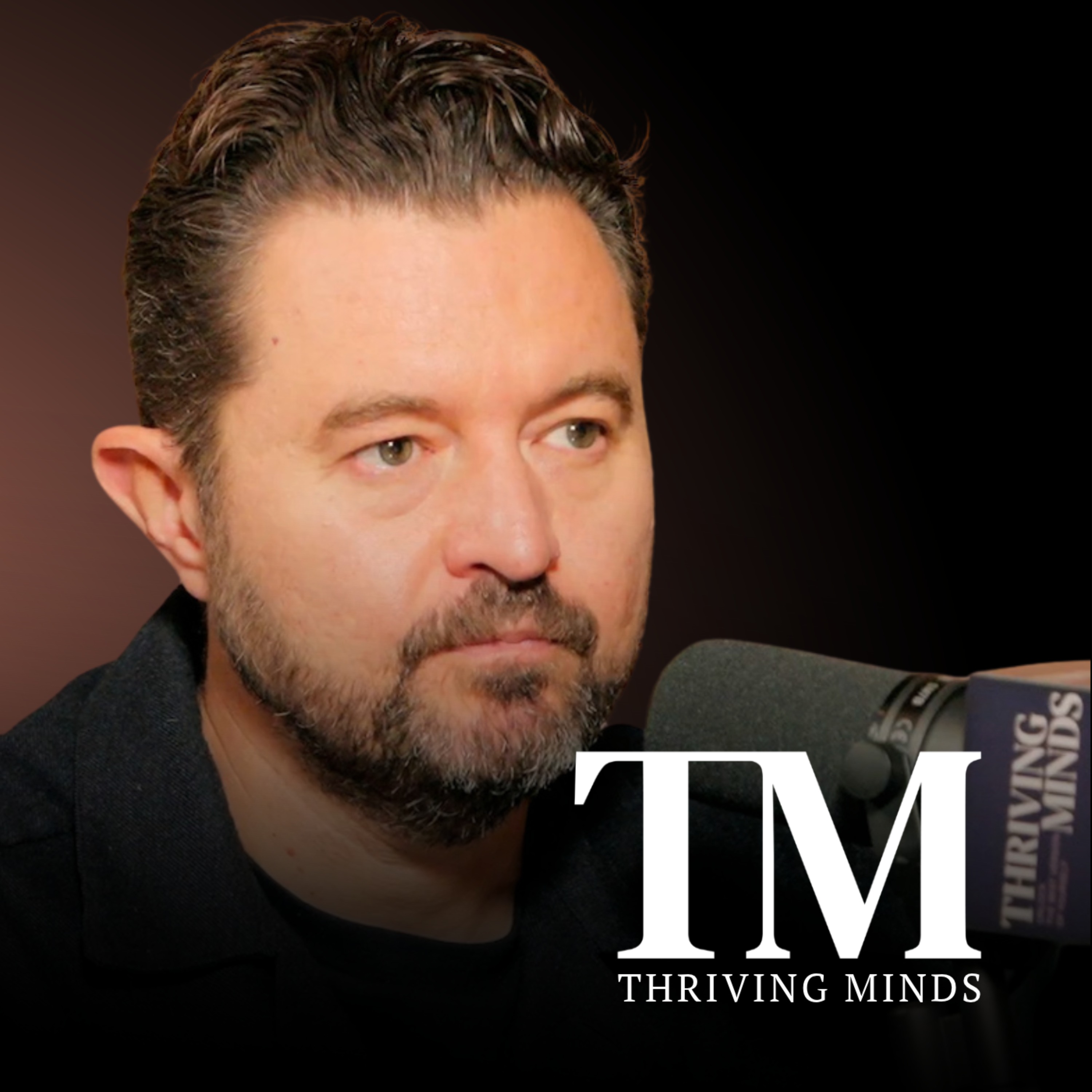
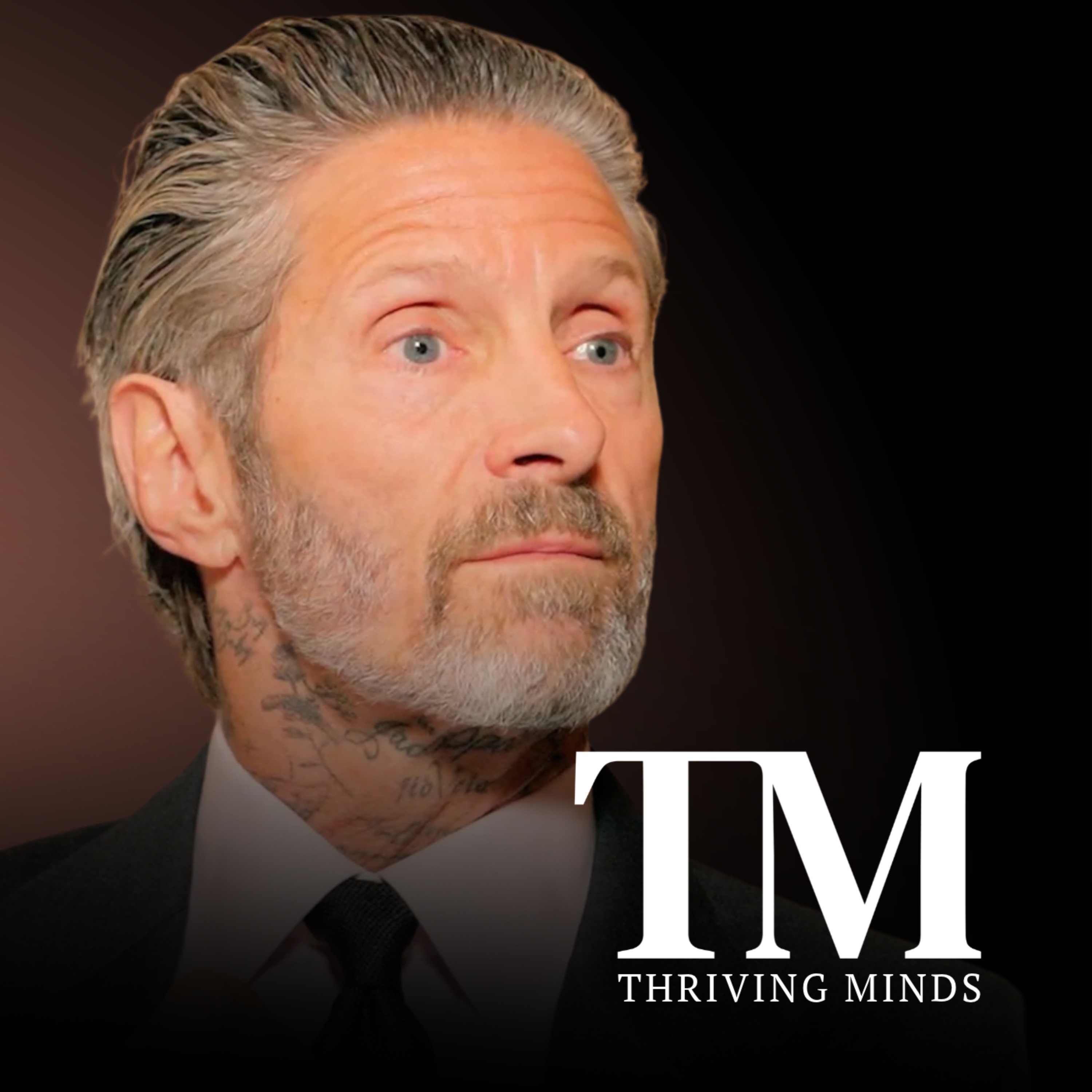
“He blends insights from decades working in tech with psychology and mindset coaching to help individuals and organizations build healthier, more productive relationships with technology.”
Guest introduction and discussion on Colin's expertise in digital well-being.
“But we're now in the age of AI, and AI is doing some of the thinking for us.”
Colin shares his personal story of stress, technology, and finding balance.
“As we were discussing prior to the conversation, I believe this is the one common denominator that everyone suffers from.”
Discussion on how technology impacts mental and physical health.
“The connection between our mind and body, they're not separate.”
Explaining how technology-induced stress accumulates through multitasking.
“So if you have back-to-back video calls, the stress you get on one call, you take into the next call.”
Examining the different effects of various screen time activities on mental health.
“health as if i was scrolling on social media for the same amount of time so that's a great question So there's going to be different levels.”
Discover how social media can create feelings of inadequacy and control loss.
Learn how different uses of technology can affect our well-being variably.
“and how long is it so how long do we need to be using technology for to then determine that that's too long and it's bad for us?”
Explore why increased online communication hasn't alleviated loneliness.
“So if we only have connection online, then we're less safe and more stressed.”
Uncover the physical and mental health risks linked to excessive technology use.
“or at people having a so-called better life than us on social media.”
Understand the potential for reversing negative impacts from tech overuse.
“immediately reminded me to something that my grandfather used to say multiple times.”
Learn practical tips for protecting sleep to enhance daily performance.
Explore strategies to modify your environment for better tech habits.
“So you don't have a device next to your bed and you don't use a device that overstimulates you at least an hour before you go to bed.”
Learn about the importance of physically distancing your phone to interrupt habitual usage.
“The friction is so great that there's no way am I going to look at that phone and I've solved the alarm clock problem.”
Discover how to set up your day by avoiding phone use for the first 30-45 minutes.
“The second simple thing, and it's related, is to control your day.”
Understand the significance of scheduling regular offline breaks to boost concentration.
“In the afternoon, it's famous for that afternoon feeling, you need to increase your energy.”
Explore how to replace smartphone usage with fulfilling hobbies and activities.
“So non-negotiable things for me is I must train.”
Learn strategies to manage notifications effectively and create a communication strategy.
“So on your smartphone, if you're working on a laptop and smartphone, it's much easier because there are some things that only appear on your laptop.”
Discover the 'Just One Thing' challenge to regain control over smartphone distractions.
“So the just one thing challenge is, while you're in control of your own thoughts, you decide what it is you want to do, and it's one thing.”
Gain insights into how habits form and what to do when you relapse into old patterns.
“talk about habits habits take around 66 days on average i think it's professor wendy wood that did some research could be longer if it's due to complexity or could be shorter so just use that as an average.”
Explore how both muscle memory and brain neuroplasticity facilitate quicker recovery in skills and habits.
“And then after a period of time, unfortunately, for whatever stressful reasons, you go back to not being as fit.”
Discuss the impact of shared screen time rules in relationships and family dynamics.
“I would like to get your take on the following.”
Learn about the role of parents in setting technology boundaries for children.
“So the first advice to all parents, lead by example.”
Examine the impact of smartphone use on child development and socialization.
“And there's always a group of friends with their smartphones.”
Investigate the relationship between boredom, smartphone use, and resilience.
“and things like that because they didn't have that final sense.”
Discover the benefits of allowing time for reflection and creativity away from screens.
“of doing something you have to break the habit in order to break the habit you have to replace it with something that's enjoyable but you then have to train and practice it before it come it becomes the habit.”
Learn how stepping away from technology can enhance creativity and reduce stress.
“Being online is a bit like being in a crowded room, lots and lots of people, and they're all shouting at you, come and see me, come and play with me, come and look at this, come and do that.”
Discover how advances in technology have diminished our patience and attention spans.
“They're automating our thinking and some of the most important tasks in our life.”
Understand the dangers of outsourcing our thinking to technology and losing essential skills.
“And if there's some congestion or if there's a problem and you've used spatial maps, you've got a better chance of working around that because you've got a map of the whole area.”
Explore how education should adapt to respect neurodiversity and foster creativity.
“because as you were mentioning earlier, a brain is much more neuroplastic.”
Learn why owning your attention is crucial in a technology-driven world.
“So we're going to survive through our diversity.”
Explore how our relationship with technology affects our lives and health.
“If we take simple examples like sugar or porn or drugs or alcohol addictions, those may not be applicable to everyone.”

Get the gist, explore an idea or ask about something said.
 Claude
On Thriving Minds with Alberto Zandi, what are the key points of this episode?
Searching your listeningAutomatic transcript. May contain errors.
0:00One of the most valuable resources in the world today is so valuable that all of the technology companies are trying to get it. our attention. What's interesting about our attention is it belongs to us. Being online is a bit like being in a crowded room, lots and lots of people, and they're all shouting at you, come and see me, come and play with me, and it's stressful. Then at the end of the day, you carry all of that stress into your home life. We are already in the problem. We are using our phones. We find ourselves not within control of what we're doing. What should we do in that specific moment to stop that habit.
0:36Colin Corby is a world-renowned digital well-being expert who works with world-leading organizations and senior executives. As the CEO and founder of Technology, Well-Being, and creator of the Digital Detox Coach, he tackles issues like burnout, distraction, and digital overload. He blends insights from decades working in tech with psychology and mindset coaching to help individuals and organizations build healthier, more productive relationships with technology. About 43 % of everything we do is out of habit, because that's That's the way we designed. Parents right now are trying to navigate how to educate their kids around technology and perhaps reduce their screen time.
1:10So one of the things we miss by being stimulated externally is that we don't get time to think. Daydreaming, incredibly important for creativity. Ultimately the life that we lead depends on what we pay attention to. And yes, you can. You can make super changes. and the best one is
1:36Colin it's an absolute pleasure having you on the show so first I would like to ask you what is it that you do and then second why should my audience listen to this episode why is this topic important so to answer your first question I'm a digital detox expert and why is it important is we have to live and work with technology in today's world there's no alternative but if we use technology too much we neglect ourselves as biological and social human beings and if we neglect ourselves then it has health implications both physical and mental health implications. But we're now in the age of AI, and AI is doing some of the thinking for us.
2:26So we have an extra problem where we're outsourcing our knowledge and skills to our technology. So we're less able to do things ourselves. Now we're at this crossroads, so why it's really important is we can do something about it. And it's much easier doing something about it now than later on. So it's really important. So I like to get the message out about why we should have a balanced and sustainable life with technology and the things that we can do it. But it's not a one-off. It's a mindset and lifestyle change. Technology doesn't stand still. So we can't stand still either in the way that we adapt and balance our lives with technology.
3:15So it's really important. Incredibly interesting. As we were discussing prior to the conversation, I believe this is the one common denominator that everyone suffers from. Before we deep dive into defining what the problem is and the solutions to the problem, why is this topic important to you? Because I believe it's important to everyone. Everyone understands that perhaps technology is not great for our mental health. But I think it's even more important to you because you've decided to commit your life to this mission. Yes. So my story is quite a long one, but then I am quite old as well. So in my mid-30s, I've had a wonderful job in technology.
4:02I was working with some great people. I was lucky enough to be there working on world-first projects. the first digital cable system across the Atlantic, the first digital satellite systems, the first voice coding that allows very efficient transportation of voice and video and all those things. So it's incredibly exciting. I loved it. I was commuting into London. I was doing very, very long hours. I was working hard and I was playing hard. And I neglected myself and I started suffer stress and but stress wasn't talked about in those days and the way it materialized for me was that my heart rate would start increasing and increasing increasing and then on several occasions it got to the point where you see the stars and you have to sit down or you collapse and you pass out so I had lots of tests um because I had to do my job I had a house I had a family it was really really important uh the test came back as they hadn't found any anything but then in those days stress wasn't talked about so then i thought well i've got to do something for me it's a tipping point got to do something so what what what can i do and so i remember being a great swimmer when i was young that was a memory so as we know memories are not always accurate and so I went swimming a couple of links the swimming pool absolutely wrecked and I thought oh I think I found the problem I was really unfit I wasn't overweight um but I was really unfit the reason why I went to sport is because I thought well look if I can train the heart if I can exercise the heart then the heart will be better able to cope with the stress because I have to work i have to work in technology i love the working so i thought well okay i'll persevere so i persevered then i realized that i wasn't swimming the strokes correctly so i took lessons for an hour for a year and a half and then i started racing because actually i wasn't a bad swimmer at all so i started racing i then got invited to swim with a triathlon club they promised me that i I didn't have to cycle and run.
6:25They lied. And so I did triathlon. During this time of doing sport, it just suddenly dawned on me that how much control we actually have. The connection between our mind and body, they're not separate. They're all one thing. So a healthy heart or a healthy body leads to a healthy mind. And it's obvious because the heart pumps blood. The blood has oxygen. the oxygen feeds the brain and then the way that we talk to ourselves and the way that we think impacts what we can do so I was fascinated by by all of this and then I got talked into doing some Ironman triathlons swimming bit was easy the other two bits were really hard um and I thought well this is brilliant and became part of my life.
7:18But around about 2010, 2015, I started to find myself spending too much time on my laptop and my smartphone. And I struggled to fit the exercise in, which was the very thing that brought balance back to my life. And I thought, this is fascinating. what's what's going on here so i was i was excited about what the mind could do so i did lots of research on behavioral psychology on consciousness on everything to do with the mind the body the relationship the fact that we're part of this earth and we're connected to it and i thought well that's fantastic and then i got an opportunity after about 30 years in lots of different technology companies to do something different first of all I said well okay which technology company shall I work in and then in that process I thought do you know what I don't want to do this anymore I love technology I love imagining the future of technology I love sport and the way that you can do things in sport with your body and your mind and the way you think and isn't it fascinating why we're all on our smartphones so I smashed these things together and it became a sort of a vocational thing well if it can happen to me when I've had a tipping point and I look around me and it's happening to everybody else then I must be able to do something here I must be able to communicate and help and guide people to get that balance back because if you do suffer severe stress and if you do suffer burnout that's serious it does it takes you a long while to come back from that and you may never fully come back from it and a lot of my friends were in technology and were suffering burnout as well
9:26what is the relationship in between technology and stress and burnout so if we are on technology all of the time if we are receiving lots of external stimulation all the time not only do we get not get enough time to think for ourselves we get no recovery time Microsoft Research did some great studies on back-to-back video calls, in fact. And their research looked at the accumulation of stress. So if you have back-to-back video calls, the stress you get on one call, you take into the next call. Now, we'll ignore the fact that you haven't prepared for the next call, which is quite stressful. And then at the end of the day, you carry all of that stress into your home life.
10:15but then they started to introduce 10 minute breaks between the video calls and what happens is providing those breaks are offline breaks or you're doing something different the body starts to recover from stress the other part of technology is that we multitask so our attention spans got so much shorter so professor gloria mark did loads of tests and research for 15 years on attention span and she found the detention span of information workers, and I guess we're all information workers now, has reduced from two and a half minutes down to 47 seconds. What are information workers? People that use laptops.
11:00So you might be data processing. We all use laptops. We might be doing word processing, spreadsheets, finance, whatever. It's basically using laptops. and that's 47 seconds before shifting to another screen and she wired up people with heart rate monitors and the measure of stress is looking at heart rate variation which is the variation between heartbeats and that's fascinating because i've been wearing heart rate monitors in sport for a long long time and i'd never realized that the variation between each heartbeat it has to be different because you don't know whether you're going to have to react to something really quickly and if you have to react to something really quickly because the variations there you can read more easily do it but if you don't have that variation it's a good indicator of stress and she found that multitasking creates stress as well and is it only a problem of technology is over stimulating us or is it a problem of what we're doing with the technology that is over stimulating us i'll give you i'll give you an example if i'm watching tv for four hours in a row or if i'm looking at my emails is it going to have the same consequences to my mental health as if i was scrolling on social media for the same amount of time so that's a great question So there's going to be different levels.
12:35So if you're watching TV online, you're basically sitting down, you're not moving around. So you're spending your time looking at a screen. what that means is you're not doing other things so as biological humans we need to get enough sleep we need to move about we need to eat the right diets we need to be connected with other people and we need to be in nature and we need to be close to nature because it turns out that our microbiomes are enhanced by being in nature as well. So at that level, the fact that you're spending time watching screens, and if that becomes an excessive amount of time, then you're not doing other things.
13:27So it's the things that it's replacing, the things that you're not able to do to look after yourself. And that applies to all technology. But then if we drop down a level, so well if you look at the news for the start all the news is bad news because it sells you know there'll be somewhere in the world where something terrible has happened because it sells um so that starts to affect your your mood um it also affects the fact that there are lots of problems in the world that individually we can't seem to do anything about so that's that that loss of control um and that has a stressful impact on us as well if we take social media media hey everyone's having a better life than me how's that happening and and so you then get you know disappointed with you know your particular life why is it they're having such an exciting life again this is almost like a loss of control where we're being fed what you know apps with amazing content and we can entertain ourselves as well but it's almost like we're not in control and that loss of control or that comparison can affect our mental health as well and how long is it so how long do we need to be using technology for to then determine that that's too long and it's bad for us?
15:00So the great thing about humans, and the reason why we've survived this far, is that everyone is different. We're all wired differently. We've all had different experiences. So we're a very complex system, so it's going to vary. Then it depends on what it is you're doing. So if you're doom scrolling, and if that's all you're doing, then the amount of time that you do that is going to be much less. than if you're using technology to do some research or if you're using technology to help you exercise or to learn a new topic. If the technology is helping you to acquire knowledge and do things yourself, then that's actually more useful.
15:46But always you have to think about what is it replacing and is it replacing, is the time you're spending online, is that time detrimental to your health is it detrimental to your connection with other humans um there was a wonderful study by the um american uh chief medical officer or equivalent of chief chief medical officer and he issued a report and it was about the loneliness epidemic now being able to communicate online is wonderful we're going to transmit this video call um it's amazing during the pandemic it was an absolute lifesaver um but he was saying well okay how come we're the most connected people ever and there's a loneliness epidemic and the short answer is that online communication shouldn't be instead of physical connection it should be in addition to and that's because we've evolved as social animals and like a lot of animals that live together it's a form of safety so if we're well connected with other people in the physical level, in the real world, then we feel safe and we don't feel stressed.
17:15So if we only have connection online, then we're less safe and more stressed. So that's the other dimension. And what are other negative consequences that we suffer from the use of technology? So you've mentioned that our attention span would decrease. We're also going to feel potentially more depressed because we are looking at negative news or at people having a so-called better life than us on social media. So what are other negative consequences that come with technology? So throughout history, technology has made life easier for us. The biggest one that I think that we neglect is that we're going to be 30 % less active by 2030 than we were in the 1960s.
18:05Physically active? Physically, yeah, active. So it's not just the latest technology, it's technology in general.
18:18Inactivity accounts for the same number of deaths, one in six deaths, the same as smoking. And the Alzheimer's Society have said that the biggest thing anyone can do, even in you know their 40s and their 50s to delay the onset of mental illnesses is to exercise and so it makes a lot of sense because the mind and body connected blood pumps around it gets rid of toxins it does all of those great things it's an incredibly complex system but we're designed to move around um so inactivity is is a huge one um we mentioned sleep i think earlier on now i if you don't sleep for a couple of days you know that you're wrecked you know that you can't do anything at your best and the way i try and explain it is the human brain is about one million times more power efficient than a supercomputer we've roughly the same processing power but in order to be that efficient as biological animals and also other animals as well um we have to sleep we have to eat the right food we have to exercise we have to be connected so it comes back to this idea that we somehow every latest technology we do we somehow imagine we're like that technology so we imagine that our minds our conscious minds are a bit like software and the bodies like hardware it and it couldn't be further from the truth um so we forget that we we're actually biological animals we're connected to this incredibly complicated world of which we don't understand.
20:13But somehow we can survive on this edge of chaos and we can make sense of it sufficiently to survive and prosper. The first consequence that you mentioned, inactivity, immediately reminded me to something that my grandfather used to say multiple times. He said, these new generations, they're spending their time at home and socializing at home with other friends that they're not in the same space as them. So they are socializing over, you know, digital devices, whether it's gaming or social media. And he told me, back in the day when I was a kid, we used to go out and play with our neighbors, you know, play football, whatever it was.
20:56And that definitely has, I mean, it's a definition of activity, right? Yes, yes. And then on your other example, sleep deprivation, I can 100 % relate to it. So when I see myself overworking and in my line of work I need to use various different digital devices, I can immediately see a negative effect in my sleep. imagine that somebody listening to this right now is in their late 30s or early 40s and they have been unfortunately being the slaves of technology for various different reasons for the past decade or more if they start right now taking a different direction in their lives and they want a change would those changes or solutions only prevent from the consequences getting worse or can we reverse the damage that has been done?
21:53So the answer to that question is we can halt the decline, but because of complexity, we can reverse some aspects. And the reason why I say we can't necessarily reverse everything is humans are born with some programs, but we acquire knowledge. We acquire knowledge as the brain grows, children have various stages of brain growth they acquire knowledge and experience they acquire the ability to coordinate movement they acquire the ability to understand space so all of those things are acquired and some of those the the things that we need as children to learn are much much harder when we're older languages if you learn a language when you're when you're a child it's much much easier than if you try and learn it afterwards because who we are is built up of every experience that we have and that's why we're all uniquely different twins identical twins are different because their experiences are different if we've had lots of experiences online those experiences are part of us the important thing is to understand the past but not be ruled by the past so if you're in your 30s and you say do you know what i'm gonna do something about it the answer is yes you can and from that point on once you recognize you want to do something about it and you have to want to do it um then very slowly step by step you can make lots of changes and as i've mentioned earlier if you start exercising if you haven't exercised before if you exercising then that's going to have long-term benefits um we know from past experience when lots of people used to smoke we know that if you stop smoking then after around 10 years a lot of the impact of smoking on your health would would diminish so there are lots of things that would diminish over time technology is slightly different the technology we have we had five years ago if we look back we might think it's a bit rubbish compared to the technology today and the technology in five years time we'll look back and say yeah today's technology is a bit rubbish and so technology is always moving so it's always presenting new challenges and so this is a forever moving target so really it's a mindset change to enable you to be more resilient to whatever's going to come along and yes you can you can make super changes and the best one is if you can be fully present so we're talking now you're fully present with me i'm fully present with you i'm listening to what you're saying i'm listening i'm looking at your facial expressions i'm looking at your body you're listening to me you're taking in what i'm saying you're giving it meaning so if you're fully present with other people with whatever you're focusing on at work with the world around you then all of a sudden it's almost like waking up the technology world we've created but it's it's a facsimile it's incredible it's the best thing humans have ever done but it's only just a facsimile of the real world and we don't even understand that i'm looking forward to uh someone working out what quantum physics is all about really all right um i was thinking if i were to share that advice with some of my friends a portion of my friends would 100 understand it because they're very spiritual and emotional based and they would understand the advice of being present in the moment but i have another group of friends who are more logical a bit more pragmatic and then they would need more tangible and specific solutions so let's talk about the first step what should be the first thing that we should do if we want to improve our relationship with technology so the first step is the first step is a really, really simple one.
26:18If you want to show up as your best at work, with your friends or family, then protect your sleep. It's really that easy. So you don't have a device next to your bed and you don't use a device that overstimulates you at least an hour before you go to bed. That includes the TB? Yes, because to a lesser extent, but if you watched a horror movie, you would be overstimulated. Or if you watched something that you were really, really into, your mind would be whizzing. Yeah. And it's the same with your smartphone and all the things you get on the smartphone. The reason why I say you move it away from your bed is there's some lovely research on the mere presence of a smartphone on the table or in a pocket or in a bag has a cognitive pull on us.
27:19Even if we're not using it? Even if we're not using it. Wow. And even if we're not consciously aware of it. And so we're always tempted to pick it up, to look what's happening. And so one of the strategies that I give out is that if you want to spend less time on your smartphone, then you need to change your environment. Environments, willpower is never enough. Environments work much better. So if you change your environment at nighttime and you don't have your phone next to your bed, okay, you have to solve the alarm clock problem, but that's solvable. and if you physically move it away preferably in another room but it could be in the same bedroom then what that does is it it introduces a time delay or an interrupt into a habit and so we do about 43 percent of everything we do every day is out of habit because that's the way we designed it it's energy efficient it's quick it's simple consciously we're not engaged i mean we realize we've done it but it's not really part of the process if you create an interrupt then it gives you enough time to think so you you consciously become engaged do i really want to get up do i really want to go and do that now the funny thing is um i started the digital detox coach in 2018 slightly slightly ahead of the curve um before people were really listening and um so i experimented on myself i've been experimenting on myself so i i had a phone next to my bed then i moved it across the room but i could still get up and go and look at it so then When I moved it to another room upstairs, nowadays it's downstairs, well out of the way.
29:19The friction is so great that there's no way am I going to look at that phone and I've solved the alarm clock problem. So that's the first simple thing. The second simple thing, and it's related, is to control your day. So if you have your smartphone next to your bed, you're going to switch the alarm off, but it's your phone's a bit like a sweet shop you know i like chocolate going to a sweet shop i'm gonna probably buy some chocolate and i might eat that chocolate um because it's a sweet shop if i'm not in the sweet shop i'm not going to do those things so your phone is the online sweet chop as soon as you pick it up to switch off your alarm the habits that we've built up over the years looking at the same screen swiping pressing um you know they are really tough habits to break and so you'll end up scrolling and if the first thing in the morning you look at the news or your emails or social media what whatever you plan to do that day when you wake up you're you've got your most energy you want to do something you've got plans you know and then instantly those plans are changed by what you're seeing online so the second simple thing is you might be able to switch off your alarm if you if you haven't solved the alarm problem but you can allow to do nothing else for at least 30 minutes 45 minutes and that gives you time to think what is it that you really want to do with your day who are the what are the the tasks or problems you want to solve what you know do you want to exercise what do you want to do with your friends or your family it allows you to set up your day so that's the second simple thing and the third one for professional people is put in your diary your work diary at least four 10 to 15 minute micro breaks and so that you're working away on something and and coincide them with coffee breaks coincide them with mealtimes or whatever it doesn't matter but they are offline breaks and what that allow you to do how often uh at least four times a day four times a day during the work day during the work day this is really about the work day and what that allows you to do is it restores your focus and attention so that when you go back to your work, you're refreshed.
32:02In the afternoon, it's famous for that afternoon feeling, you need to increase your energy. So the fact that you've got a break, the fact that you've got up, you've walked around, your blood started to move. In the afternoon, you might also have to get some fresh air or you might have to have a conversation or even looking at a house plant. It doesn't matter. All of those things will actually allow you to recover your focus and tension. And so you'll be more productive. So taking these breaks isn't about being less productive. It's about making you more productive because you're productive if you work at your best.
32:42So that's the third very simple thing that people can do straight away.
32:52can you walk me through other non-negotiables that you do at home because the first one really resonated with me creating an environment in which it takes more effort for you to reach your device that that makes so much sense are there any other non-negotiables that you follow um so i have priorities you've always got to replace what you what you're what you've got into the habit of doing on your phone you've got to replace it with something that you're excited about something that you enjoy doing and and everyone's going to be different so some people will like to play music but they never get the time because they're on their phone okay but they enjoy playing music they might enjoy reading they might enjoy going having a coffee with someone um they might enjoy painting whatever it is it doesn't matter i i enjoy sport and the great thing about sport is it's very difficult to have a phone if you're in the water it just doesn't work so you have to replace what the time that you would have spent on the phone with something you really enjoy.
34:04So non-negotiable things for me is I must train. I must keep fit. I have a calendar of events during the year which keep me motivated. And how do you deal with notifications? Because I feel like in this day and age, we all have a sense of urgency to answer people. If someone is sending us a WhatsApp message, we feel like if we don't answer now, they're going to get angry. that's weird because I do a list of 10 things to know whether or not you need a digital detox. And one of them is this, do you feel it's necessary to answer a notification even if you don't have to? And that's one of the signs.
34:50So I don't have, so you have a plan. So on your smartphone, if you're working on a laptop and smartphone, it's much easier because there are some things that only appear on your laptop. So you basically have to declutter. Simplicity is the thing. So you declutter on your smartphone to have only those things that you really have to. And these days, it's still going to be a lot. It really is going to be a lot. Then it's a hassle. Get rid of notifications. So you have to work out, well, if it's important, how could someone contact me? now i'm a little bit old-fashioned they can ring me or they can send a message if they use whatsapp i've got the notification switched off even though it asks me every day do you want notifications switched on i have to ignore it um because i'll get to it when i'm good and ready so you you have to decide how is it you want to be communicated with and when i when i talk to companies i just can't understand why they really don't have a communication strategy they might have 10 different methods of communicating but they don't say which one is the important one if you get a community if you get a message on on this app this is important and and they put messages across on lots and lots of different apps um different forums and all those things but which one's important so they make it more difficult for their staff so i said well just have a communication strategy if something is important it will be on this messaging system that makes so much sense i've recently stopped all the notifications on my phone including whatsapp and my my thought process was that if something is very important people will call me yes and you can you can talk to your friends and your family and just say look you know this is how i've got it set up they may not listen to you but you can still talk because i've done the same and they don't always listen they said haven't you got my message and i said how did you send it and they said what's up i said well no so we've discussed various different preventive measures like placing your phone in another room not using your phone within the first 30 to 45 minutes of the day taking four breaks of 15 to 20 minutes during your work day from any digital device now from a reactive perspective we are already in the problem we are using our phones we find ourselves unfortunately not within control of what we're doing what should we do in that specific moment to stop that habit so there's a there's a lovely challenge that um i offer and it's called um the just one thing challenge now just one thing phrase was made popular by the late michael mosley and so this just one thing challenge is when you go to the phone we've all done it um i like to check the weather and so i think i'm going to check the weather on my phone I go onto my phone, I then see a notification, I then see something on email, I then see this, that, and I forget to check the weather.
38:17So the just one thing challenge is, while you're in control of your own thoughts, you decide what it is you want to do, and it's one thing. Then you're allowed to check your phone, but you're only allowed to do that one thing. And then you have to come away for five minutes. it's it's devilishly hard but it's fun it's fun because it shows you how much control you've ceded to your phone even give your phone a name because if you do and you will from time to time forget and you'll start looking at emails and i'll show it if you give your phone a name then you can say oh george and whatever you got the better of me that time but i'm going to do better next time what that does is it starts to retrain your focus and attention um we have to talk about habits habits take around 66 days on average i think it's professor wendy wood that did some research could be longer if it's due to complexity or could be shorter so just use that as an average.
39:30What does that really mean? It means that we no longer have to consciously think about something, we instinctively do it. Now, if you've ever done anything, then you've developed lots of great habits. If you drive, you can't go about thinking about everything when you're driving. A lot of it's got to be habit. So things take time to develop. And so when you do this, just one thing, stick with it. Repetition is the key. And you have to stick with it at least a month, two months, for it to become a habit. And so what's happening in that time? What you're actually doing is you're strengthening the neural connections in your brain.
40:22It's just like exercise. So you're creating, through the exercise of doing a challenge, change a change in habit but it's a bit like running a marathon on day one you probably can't run a marathon but if you are in good health and if you do the training and the work sooner or later you're going to build up to a five kilometers ten kilometers and then eventually be able to run a marathon it's the same with habits and what happens if you relapse so for example you take on all the advices that you've just shared and we start having a better healthier relationship with technology for a prolonged period of time but then we go through a devastating stressful period of our lives and then we elapse again and we see ourselves over using technology should we apply exactly the same methods or should we change them no you can apply exactly the same methods we're all going to relapse you know life is complex um we're all going to relapse yeah we In one aspect or another aspect, things change.
41:26Pressures on us change. Work changes. Things are going to happen. First thing is, don't worry about it. Don't beat yourself up about it. I think that's very powerful. It happens. We're all in this together. It's going to happen. It's going to happen to me. It's going to happen to you. It's going to happen to everybody. The second thing is, yes, you can repeat everything that you've done, but you'll find it easier. if you've ever memorized a speech or a poem or anything it's really hard at the beginning but by through repetition it becomes very easy well no it doesn't become easy but you can do it especially if it's public speaking if a year later you're then asked to do it again exactly the same thing you're still going to have to do a bit of training but that training is going to be significantly reduced because you've already created those neural networks in your brain associated with that habit so you're going to find recovering much quicker that's so interesting i was asking perhaps the same question but to a completely different expert i asked that question to a fitness expert i asked him let's pretend or let's assume that you get in shape, in great shape.
42:44You increase your tissue volume. So you're more muscular. You are more fit from a fat percentage. And then after a period of time, unfortunately, for whatever stressful reasons, you go back to not being as fit. And then he was telling me exactly that, that our muscles, they have memory. So it seems that not only our brain has the ability to be neuroplastic and then retain the information to an extent, but also our body, which is actually very encouraging because in my experience, I tend to be hard on myself when I don't follow either my diet or my exercise routine or in this case, perhaps the new rules that I'll have on my phone.
43:33So just maybe accepting that we're all going to go through that and that it's going to be a little bit easier. It's going to be a little bit easier. I have a funny story. I swim with Charles Swimming Club. And some years ago, a gentleman from America was working in the UK and he joined the swimming club. To look at him, he was carrying some weight. He was unfit. To look at him. So he started off in the lower lanes. After a few weeks, he moved up to the next lane. Oh, that's interesting. A few more weeks, he moved up to the next lane. Then he passed my lane. And then he ended up in the top lane.
44:16And it got the better of somebody. And somebody said, have you done swimming before? And he didn't really mention it at all. So they looked him up online. Okay, he was in the American Olympic squad. His body had grown up with serious amounts of swimming. So it didn't take him long to achieve a pretty reasonable standard of swimming again. I was impressed.
44:54I would like to get your take on the following. So last night I was discussing with a friend of mine about how him and his girlfriend, his partner, both act as the reminder for each other when either of them is over easy technology. So they're all sort of like acting as the police officers. Do you think that's a healthy approach to the relationship but also reducing the amount of screen time? So this one's a difficult one, and I have some experience of this. If you want to spend less time on your phone, you have to want to do it. and normally it's because it's causing you some pain. You might not be as productive at work.
45:43Your relationships might not be working out. You need to be fully present or you've got children and you really need to be fully present with them. There must be some pain somewhere. If there's no pain, if someone's perfectly happy scrolling away, having their phone while they're watching TV, picking up their phone when they're at mealtimes and all those then that's going to be difficult um if you agree if you can agree with your partner or your family that there is just some rules that we all will obey um that's much easier so no phones at mealtimes no phones the classic one no phones when you go out with your friends for a drink have you have you been out into a bar and you've got a group of friends and they're all on their phones yes And families in the restaurant and they've got their phone sale.
46:36If you have a family rule that everybody does, then if someone lapses, perhaps you can agree a fun forfeit. Let's talk about families. I think that's a very interesting one. I think parents right now are trying to navigate how to educate their kids around technology and perhaps reduce their screen time. Yet, when I go out to restaurants, I see so many kids on their iPads, like very young kids. What would you advise these parents? So the first advice to all parents, lead by example.
47:17If you go back in history and you look at smoking. Now, smoking is addictive, but smartphone use is bad habits. So it's not exactly the same thing. but if the parents smoked it was more likely that the children would smoke parents basically have to sort their own phone use out so they can be an example and that works two ways one it's great to be an example we're social animals so if one member of the group is doing something different then that's slightly uncomfortable you know you're the odd one out no one likes to be the odd one out but you you'll be the odd one out so first advice is parents have got to lead by example and it's going to be hard because you've got to sort out your own smartphone use the second is to have family almost like a family contract saying you know get together what is it as a family that we that we value and agree simple ones meal times not have your phones um late at night all of these things now luckily today there's a move to take smartphones away from um schools it it's an obvious one the science hasn't caught up with it but everybody knows it makes sense especially while children's brains are developing so it's making makes it slightly easier today than it was two years ago the next thing is not to ban a smartphone if you've got a child just say okay you can use your smartphone for certain things um but you can only do it for so long and then even have a place where your smartphones are stored as a family you can store your smartphones in a certain area and the last one is one of the biggest problems with smartphone and children is that they go way into their bedrooms they're on their smartphones connecting with their peer groups and anyone else who may be in that group and they're all by themselves so i like to say well socialize it if you like to look at cute cat pictures then why not stick it up on the screen television screen have your friends around with you and all enjoy it together because in doing so you've got that human connection laughing with other humans sharing those experiences is really really valuable for mental health so socialize the use of phones so that it's not a solitary lonely activity what are the consequences and active consequences that you're seeing on kids personalities because you've been around technology for the last three or four decades so you clearly have a good thermometer that determines what has worked and what is not working so what are you seeing in today's kids that perhaps you didn't see in kids when you were growing up so what's noticeable i i've got a dog and I walk my dog and the children go off to school and all the rest of it.
50:40And there's always a group of friends with their smartphones. So even if the school has a no smartphone policy, going to school, they've all got their smartphones. As I said earlier, when you're on your smartphone or on screens, you're not doing something else. Now, when we look at children, and I'm not a specialist in children area. I prefer to concentrate on adults and professionals. It's much safer ground. But there are various stages of rapid growth in a child's brain. And the last bit of that growth is actually in the 20s, which is why a lot of teenagers used to have accidents on motorbikes and things like that because they didn't have that final sense.
51:33during these phases of growth then the brain is very flexible it's it's absorbing everything so if you're spending lots of time on your screens instead of focusing concentrating being with friends being in nature doing all the things that that historically children used to do then you're not learning those things you're not not learning those things as well as you could have done so when you get into adulthood it's you've got less to work on so it's harder work to get fit it's harder work to to focus um it's scarier trying to have better human connections because you haven't got that history you can still do it but it's much harder let's go back to an adult brain, I've recently tried to understand why is it that I'm using my phone over and over again for prolonged periods of time.
52:37And I've clearly identified that when I am bored and I feel like my reality is boring, my mind wants to escape that feeling. So I immediately grab my phone just to not be bored. And when I've identified that, now I'm making it my daily mission to feel more more bored on purpose yes why is it that we can't be bored so if we're bored it's an uncomfortable feeling it's a pain and we want to resolve that pain which is why we reach for our smartphones before we had smartphones we had to find another way of resolving that so our resilience and our tolerance to boredom was much greater but i like to um i like to think of it this way for some people the only time when they're truly alone with their thoughts is when they take a shower in the morning because it's the only time they don't have their phone well they might have the phone playing music but it's the only time they don't have the you know scrolling on the phone and all the rest of it because it's it's difficult because you're having a shower and they have some of their most creative thoughts so what i'd encourage people to do is when you've got nothing to do when you hit that boredom think well okay what techniques can i use to train myself to be more resilient so in the summer months is a lovely one about going into your garden or going into a park and you sit down and you do a simple thing.
54:23Name five things that I can see. Name four things I can hear. Three things I can smell. And then do sort of little games. And those games are a little bit like gym sessions. So you're doing those exercises. a lot of people feel comfortable with breathing exercises so you find something else to do if you're a creative person or a problem solver those moments are great moments to think yeah what that problem i was working on now of course when we're out uh when we're out shopping or when we're in the queue you you see it instantly people are picking up their phones but why not people watch yeah um so you create something that replaces reaching for the phone try and notice things try and do but it's a question of training so if you're in the habit of doing something you have to break the habit in order to break the habit you have to replace it with something that's enjoyable but you then have to train and practice it before it come it becomes the habit.
55:38It's so interesting what you're saying because I've been experiencing exactly that. I've trained my brain to think that being bored is not doing nothing. It's actually doing something. And right now when I'm not on my phone and I'm on purpose not doing anything, I see myself maybe perhaps looking at the window, looking at people, but there are two things that I feel that I'm better at. one is the ability to feel calm quicker and the second one is i become a much more analytical version of myself it's almost like i'm less on autopilot yes the thing about some of the thinking processes that we do are slower so one of the things we miss by being stimulated externally by lots of visual images and all those sorts of things is that we don't get time to think so if you've got a job where it requires you to think and most people's jobs require them to think then having buying that time for yourself is really really important daydreaming incredibly important for creativity so having that time to not only think but when when you're in that space and if you're comfortable in that space, you start to reconnect with the internal signals of your body rather than be bombarded with the external symbols.
57:07Being online is a bit like being in a crowded room, lots and lots of people, and they're all shouting at you, come and see me, come and play with me, come and look at this, come and do that. And it's stressful. So you need time just to step away and go, ah, I'm back now, I'm back with myself. and multitasking is a thing that causes stress it if you focus on one thing at a time for all the important things then that is less stressful and more productive i have an additional view on technology that i'd like your opinion on so if we go back to the very first computers, it would, obviously with the progress of technology, one of the things that technology is doing in our lives is automating it, right?
57:59They're automating our thinking and some of the most important tasks in our life. But if we take an example of the very first computer or one of the first computers, commercial computers at home, you would first press the button and wait for the computer to turn on. Then you need to wait, right? And just by waiting, you're forced to think, what the hell is happening in this machine that it takes so long to turn on? And then if you wanted to send an email also, the email would take very long to be sent. So you're forced to think during those waiting times. But right now they're designing most of the digital devices in a way that they are so automated that there's just no time for us to process anything.
58:37We're just doing things without thinking. And my worry is that we are applying the same analogy, the same dynamic into our everyday lives. And my view on this is that we are then being far less patient. And one of the consequences that I am seeing is that we live in a world that everyone talks over each other because, you know, everything is automated. We don't have the ability to be patient, not even in a conversation. Yes, you're absolutely right. So our attention span is very, very short. We are so used to being distracted that we'll even distract ourselves if we're not getting external distractions.
59:21If you take a look at TV adverts, you go back a few years, 10 years or so, and a TV advert for some coffee, let's say, used to have a picture of somebody getting into a car, the car driving, getting out of the car, walking up the stairs, getting into the room and doing the coffee. these days guy car arrive enters the room drinking the coffee because of that keeps our attention so we've got very very short attention spans so we've got to retrain and focusing and attention is a learned skill we've evolved to be easily distracted it was a very very important survival skill particularly as we could have got attacked by wild animals other humans and all of those sorts of things and and in some parts of the world it's still really important so we have to learn to to be able to focus on one thing and not on others so that is a learned skill your attention is like a spotlight you focus on one thing and not on others and that's a hard thing to do and you have to practice that so we have to train if we want to have improved attention the problem of stimulation is that the technology is working faster than our thought conscious thought process so it operates in the region of our unconscious before we've had a chance to think and there's a classic thing is if you do something and someone says why do you do why did you do that you don't know but then you have to work out a backstory about why it was you did it but you you consciously didn't do it but you did it because it was your your your unconscious because it's operating in that that region which is why if you're in the sweet shop the technology sweet shop it's so so difficult you have to get out of it in order to do that and you have to train yourself the other thing about technology now is um that automation has been happening for a very very long time uh simple example sat navs there's lots of research on sat navs that said if you use google maps or a sat nav you can get from a to b it will tell you turn left turn right do this do that you'll get there but you don't remember how you got there compared with someone using paper maps because if you use paper maps you have to create the spatial awareness of how we get from A to B.
1:02:01And if there's some congestion or if there's a problem and you've used spatial maps, you've got a better chance of working around that because you've got a map of the whole area. Whereas if you've used technology and if you've outsourced that to your technology, you have to wait for it to tell you how to do that. We've now got AI and And AI is doing a lot of our thinking. So we're going to lose lots of skills ourselves because we're not doing it. So I know, because I love technology, I know that I could ask one of the large language models to write me an email, to summarize a book, to suggest some great questions, to ask someone on a video podcast, to understand the answers, to produce, to do lots of things.
1:02:52And it's only going to get better. Online, I can interact with non-humans. And there's lots of AI avatars out there, incredibly realistic, and it's getting better. So we're outsourcing a lot of things. We no longer do those things ourselves. so my my concern is that we really need to now decide what it is that we have to do ourselves and why it's important is automation is going to carry on and get greater and greater and greater so what is the role of humans now humans have a magical role is because we interface with this real world which we don't know about but also our job is to create the next technology or then imagine the next technology imagine the next idea to imagine something to cope with changes that haven't happened yet in our environment so we can only do that if we do things ourselves so we really ought to decide what it is we want to do ourselves because if we don't do it ourselves we don't have those memories and experiences and we can't use those memory and experiences in our imagination or in our problem solving.
1:04:16I feel like if our education system would change, part of the problem would be mitigated because as you were mentioning earlier, a brain is much more neuroplastic. It has a better ability to learn in its infant years. but yet nobody's teaching us this at school right nobody's teaching us how we should use technology how our relationship needs to be yet they're teaching us the most important rivers in a given country right which yeah yeah for the love of life i don't understand why is that important in this day and age so so my personal view because it is a personal view because i'm not an educationalist is that historically the problem was the masses were not educated, only the very wealthy were educated.
1:05:07So it was a wonderful thing that brought education, certainly in the UK and other countries, to everybody. It's fantastic being able to learn to read and write. God, that took years to be able to do that. But the only way of doing it economically was to fit everybody into the same mould. It's the only realistic way of doing it. And that meant that if you, simple things, if you were left-handed and not right-handed, you had to transfer to be right-handed. We now know that everybody's brain is wired slightly differently. and in recent years we've discovered that people that are wired differently on the the neurodivergent scale are really really important in terms of creativity and and all the through the future humans survive by being different that's that's the whole yeah the whole point and so if there is something that can be done in technology in schools with technology it would create some flexibility to enable children to learn based on their own neurodivergence so that all of a sudden we can have everybody reaching their full potential instead of just the standard model but for that technology to work it has to impart knowledge and skills skills to the children and they have to learn by doing it and it mustn't take away other skills so it took me a long while to form my letters it took me quite a long while to read and write and i think that's true of everybody uh so it mustn't replace that it mustn't replace the ability of children to work in groups and make lots of mistakes upset people maybe have a little fight whatever doesn't matter learn how to be human in those safer environments so it mustn't replace those things and how to be yourself i really like that approach we should celebrate much more and encourage much more being different rather than all being the same and it's essential for our survival to be different that's how we've got here by being everyone being different i love the fact that if you learn british history you learn about all these dimensions all these great things but if you dig a little bit deeper then an awful lot of them were made by people that came to this country i mean i the local one for me is um radio and i live near chelnsville chelnsville is the home of radio radio is marconi that's italian there's an italian person who came to the uk and if you dig a bit deeper you'll find that the richness of ideas and all these other sorts of things, it's because you've got this input from all over the place.
1:08:09So we're going to survive through our diversity. My final question to you is one that I'm very interested in. If you had to compress all your knowledge into one essential piece of advice that we must implement in our daily lives, what would it be? So I'm going to go with this one.
1:08:34One of the most valuable resources in the world today is our attention. What's interesting about our attention is it belongs to us. It's really, really valuable. It's so valuable that all of the technology companies are trying to get it, are trying to control it, trying to use it. But it's ours. So what we focus on is what we experience. What we experience is what we remember. And we do that through our attention, which we own and control. Ultimately, the life that we lead depends on what we pay attention to. So my advice to everybody is take back the ownership of your attention. don't don't don't become a follower don't give it away cheaply just just own your own attention and decide where it is you want to put put it thank you colin i've really enjoyed this conversation because in this show i bring several different experts and we discuss on one hand what are the problems that our world is facing and what are the different solutions that their particular area of expertise can offer.
1:09:58And unfortunately, or realistically speaking, we not all suffer from the same problems, right? If we take simple examples like sugar or porn or drugs or alcohol addictions, those may not be applicable to everyone. But if there is one problem that we all suffer from is our relationship with technology. So I thank you for sharing all your advices and I'll definitely implement many of them already from today. And I hope that our audience has benefited and will enrich their lives from this conversation. Thank you very much for inviting me and in person as well, which is even better. Yes, absolutely.
1:10:37Thank you. Thank you.
This week Alberto sat down with Colin Corby, a leading digital detox expert with over three decades of experience in technology, health, and behavioural change.
In this conversation, they explore how constant stimulation, multitasking, and screen exposure quietly erode focus, sleep, energy, and emotional resilience. Colin explains why technology itself is not the enemy, but how it replaces movement, rest, presence, and human connection.
This episode is about reclaiming control, not rejecting technology, and learning how to live and work with it without sacrificing your health.
You will learn
• Why constant phone stimulation increases stress and burnout
• How technology kills attention span and focus
• How to break phone addiction without quitting technology
• How boredom silence and presence improve clarity and creativity
Follow Colin:
https://www.linkedin.com/in/colincorby/
https://www.youtube.com/@thedigitaldetoxcoach
https://www.instagram.com/the_digital_detox_coach/
https://www.tiktok.com/@thedigitaldetoxcoach
https://www.facebook.com/techologywellbeing.coach
https://x.com/ColinDCorby
https://linktr.ee/TheDigitalDetoxCoach
https://TheDigitalDetoxCoach.com
#DigitalDetox #TechAddiction #MentalHealthAwareness #ThrivingMinds #AttentionMatters #ScreenTime #ColinCorby #AlbertoZandi #Wellbeing #PodcastLife
Hosted on Acast. See acast.com/privacy for more information.