Ask ChatGPT
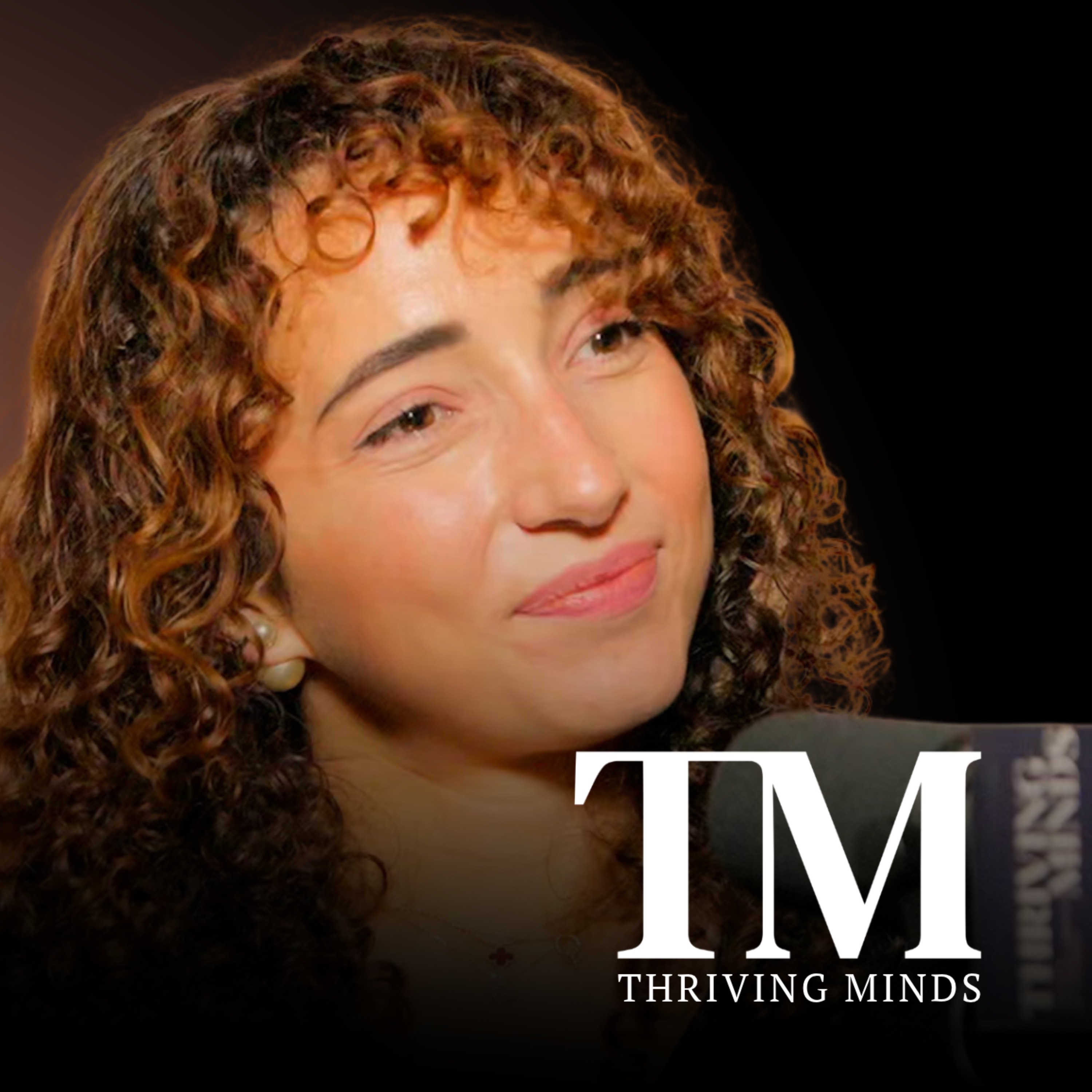

 Thriving Minds with Alberto Zandi
23 Jul 2026 · 1h 22m · 40 chapters

The episode argues that diets don’t work because they create psychological deprivation and “food noise,” and it reframes nutrition around long-term habits, gut health, and emotional regulation. It also explains how fiber supports the gut microbiome, why stress affects gut symptoms (including IBS-like issues), and why slowing down eating and balancing meals improves appetite and blood-glucose responses.
Emily English, “Em the Nutritionist,” is a global nutritionist, best-selling author, and founder of Epitome. She previously worked in fashion as a model (scouted at 17, later criticized to “slim down”), then left fashion and studied nutrition at King’s College London after developing an unhealthy relationship with food. She also credits therapy for recovery, describing a multi-year process.
Dieting increases hunger through expectation; lasting health requires habits you can do “from now till the day we die.” Gut-brain connection is central: emotions and stress change gut motility and inflammation. Fiber and polyphenols feed microbiome diversity, supporting gut barrier function and immune balance. Avoid overtracking for healthy people (e.g., unnecessary continuous glucose monitors).
Her “cheese roll” panic moment in summer with family; her “photo food diary” idea (plate photos for a week); adding plants gradually (2–3 new plants/week) to avoid gut overload; pre-carb salad/vinegar to blunt glucose spikes; “nervous poo” as an emotion-to-gut example.
Written by AI. May contain mistakes.
Discussion on why diets fail and the emotional connection to food.
“There is such a strong correlation between your emotions and how your gut is functioning.”
Em shares her personal experience with food and challenges in the fashion industry.
“Emily, how would you introduce yourself and your work?”
Exploring Em's childhood and how family shaped her views on food.
“And I remember there's a few things that are on her restaurant menu that if she ever took off, people would go into uproar.”
Em discusses the pressures of modeling and its effect on her eating habits.
“I'd have laughed at you and said, that's not a proper job.”
A pivotal moment for Em regarding her relationship with food and family.
Understanding the psychological complexities behind eating disorders.
“coming from the girl who loved the Stilton bacon walnut fritters and the slice of cake with a cup of tea and Christmas dinner was petrifying.”
Learn about the psychological aspects of food disorders and the recovery journey.
“And you have to forgive yourself for these slightly strange thinking patterns and behaviours because there is a reason behind it.”
Explore the importance of enjoying food and developing cooking skills for a healthy relationship with food.
“And I loved learning about all of the science and all of the nutrition.”
Discover the complexities of nutritional recommendations and individual needs.
“how are you meant to eat 30 types of plants a week when you can't even afford your shopping list and your grocery list?”
Understanding the downsides of using continuous blood glucose monitors for healthy individuals.
“you when it comes to nutrition movement sleep all of those things what is actually serving you because that does not have to look the same for everyone.”
Discuss the dangers of following simplistic health advice spread by influencers.
“and had a bitter dressed salad with a bit of vinegar before any meal, you're going to be regulating and managing your blood glucose levels.”
Learn how genetics and environment influence health outcomes and nutrition beliefs.
“Another thing that I believe has changed quite quickly through science, science and underpinned by technology, is enabling us to understand things and learn things at a completely different speed.”
Explore the gut microbiome's role in health and its connection to various bodily functions.
“And I think that's one thing that I find really, really fascinating.”
Learn how to treat your gut like a muscle and avoid overloading it.
Explore the connection between mental state and gut symptoms like IBS.
“When we suddenly go from, okay, I'm not very healthy, but I'm going to eat 30 types of plants a week, you're overloading your gut.”
Discover how stress affects gut motility and digestion in daily life.
“umbrella term for a range of gut symptoms.”
Understand the importance of being present and aware while eating.
“And you're like, I thought this salad bowl was going to make me feel good.”
Learn how to diversify your plant intake and enhance your diet.
“and sometimes I think that can actually be quite surprising for a lot of people.”
Examine the relationship between eating pace and feeling full.
“And I'm definitely an ugly eater when I'm alone.”
Uncover how our perceptions of food influence our eating habits.
“You're having a meal that actually is lasting for about one to two hours, whereas at home, some people eat their dinners in like 15 minutes.”
Understand why sustainable health habits are more effective than diets.
“and fasting works for a lot of people because you create your own little boundaries and structure into the pattern of eating in your day.”
Explore the significance of social connections in promoting health.
“We're never always going to look the same.”
Learn how to achieve a balanced relationship with food and nutrition.
“that you will not live that optimum life that that whole industry is promising you.”
Learn how incorporating favorite foods and diverse ingredients can enhance your diet.
“They don't agree with the fact that I eat carbs.”
Discover how meal composition and timing can affect energy levels and digestion.
“But what I do see is that when people have more balanced peaks and troughs over their context of the day, they do feel more energized.”
Explore the balance between enjoying treats and making healthier food choices.
“What are types of food that you yourself avoid?”
Learn how to navigate grocery aisles for healthier food selections.
“I'll always try and not do back to back days.”
Understand the impact of lifestyle and stress on women's health and fertility.
“make sure that kind of like I will have a drink and then I'll support my liver the next day.”
Discuss the significance of self-awareness and independence in dietary choices.
“And I know I say that a lot, but I truly, truly believe that so much of nutrition is underpinned by our relationships with ourselves and our lives.”
Explore the importance of self-awareness and confidence in nutrition choices.
“What do I want that I think is such a shame?”
Learn strategies for incorporating vegetables into meals for children.
“But if we go back to our childhood, that's where most of our relationship with food is instilled.”
Discover the speaker's entrepreneurial path and the challenges faced in building a business.
“is a brainchild that was born out of people that I've worked with.”
Understand the impact of relationships and self-belief on entrepreneurial success.
“That's a very interesting approach to supplementation.”
Hear about the darkest moments in the speaker's entrepreneurial journey and lessons learned.
“And, yeah, nothing will snuff out your flame quicker than someone who doesn't want your success for you.”
Explore the emotional toll of overworking and the journey to self-awareness.
“and using to pay other people on their payroll.”
Understand how seeking approval can lead to personal struggles and eating disorders.
Learn how the speaker's definition of success shifted from financial gain to personal freedom.
“I'm missing out on this beautiful part of my life now.”
Gain insights on resilience and self-acceptance from reflections on youth.
“and having the peace and the presence of mind to be able to enjoy them.”
Discover the importance of nourishing both yourself and your gut microbiome.
“into one essential piece of advice that we must implement in our daily lives, what would it be?”
Learn about the target audience and mission behind Emily's latest book.
“It's written for the people who don't have time, who are in a rush on the go and they feel like nutrition is overwhelming and not accessible.”

Get the gist, explore an idea or ask about something said.
 Claude
On Thriving Minds with Alberto Zandi, what are the key points of this episode?
Searching your listeningAutomatic transcript. May contain errors.
0:00The psychology of how we think we're going to feel after a meal will also determine how we feel. If we're on a diet, psychologically we think, I'm going to be hungrier, so we should never be on a diet. Well, diets don't work. Diets don't work. Emily English is a global leading nutritionist and one of the most influential voices in modern healthy eating. Known to millions as Em the Nutritionist, she has become one of the most trusted experts of her generation by making nutrition simple, joyful, realistic, and accessible. She is a best-selling author, founder of Epitome, and a leading voice in helping people move away from diet culture, food fear, and restriction.
0:35But Emily's mission comes from lived experience. After being scouted as a model at 17, one comment about her body changed the way she saw food, movement, and herself. What are the most common factors that contribute to people building unhealthy relationships with food? There is such a strong correlation between your emotions and how your gut is functioning. So stop, calm down, take a breath before you take that first bite.
1:07It's as simple as that. What happens when you don't eat enough fiber and you starve those microbiome? I was utterly petrified. It was like someone telling me to go and cliff dive. How come this area of the fashion industry warped my opinion of what nutrition and health should be? How long did it take you to build a healthy relationship with food? Something that seemed so simple felt so overwhelming and so complicated. We need to be having health habits and nutrition habits that we are doing from now till the day we die. I like that. Simplifying things. You've said something that piqued my attention.
1:43You said there was a period in your life that you didn't believe in yourself. Why didn't you believe in yourself?
1:57Emily, how would you introduce yourself and your work? I do the food you want to eat, designed by a nutritionist. And that's it, simple. Lovely. And then at the personal level, how would you introduce yourself if we don't know each other? I love how I jumped straight into my kind of brand and my work. If you didn't know me, I would say that I'm someone who loves food. I think food has so much identity and fun and it's just a whole arena to explore and I also love health so my body is something that is really valuable and really important to me and I like to be able to bring both together I find that again funny because I'm just instantly going back into my work and my nutrition because I actually speak to my therapist about this I don't often split Emily English versus Em the Nutritionist.
2:51I am kind of one with my work now, but Emily English is my work. And I think that's maybe why I've been so successful and grown so quickly because it just comes from an authentic place. Where does your passion and your love for food come from? So take me back to your childhood. What role did food play? So I'm from a massive a family. I'm one of five. And it's really funny. I don't necessarily have like a rose tinted view of what we ate when my mom was bringing us all up because it was getting something on the table quickly, fast, cost effective. But it was my granny who was a chef. So whenever I had the escapism, my first ever job was in her restaurant.
3:38I remember going into her restaurant kitchens and just falling in love with food and the emotions and the joy that people would have for her making something. And I remember there's a few things that are on her restaurant menu that if she ever took off, people would go into uproar. She used to do these Stilton bacon walnut fritters that you'd grate bacon, you'd dice shallot, you'd have walnuts, roll them into a little ball, wrap them in bacon, deep fry them, kind of like a croquetta. And then you put them on a base of rocket and cranberry and pork sauce. And she had to have those on 365 days a year.
4:12Otherwise, it was uproar. And I learned how to make them. And I remember once my brother ate nine before Christmas dinner and couldn't eat his Christmas dinner. But just little food memories like that, I think, have such an importance to me. And then my mum was obviously learned from my granny, but my mum was the ultimate refrigerator. So when you're feeding a household of seven, not with loads of money. It was about bulking things out. So we actually had a very, very healthy diet because my mum used to cook with so many vegetables and she was one of the first people to ever get a veg box when they became a thing.
4:50I remember back in the day when Riverford was like literally just starting out, she would get her veg box and be sticking in all of those seasonal veg. And I just grew up eating predominantly plants because that was what was the most cost-effective way. So I wouldn't necessarily love my mum's food or crave my mum's food in the same sense I would my granny's. But I've always come from a household that has cooked. And the other one thing that I think was so important is we always sat around the dining table. Never, ever didn't have a dinner that was a TV dinner or not around the dining table. And I just have so many distinct memories.
5:25And I still value that importance of a dining table. I think you can go anywhere in the world, not speak the same language, not have the same culture. sit down and sit around a dining table and you can put the world's rights. Interesting. So it seems that aside from you having an individual relationship with food, it was also the common denominator across you connecting with the rest of your family. Yeah, absolutely. And I think food has always been important to all of us and it still is now. We go home and we connect over food. It's what are we eating? How are we eating? Where are we eating? What's going on to bring us together?
6:00But it will always be through the medium of food. And then you fast forward until you're 17 years old and you decide to become a model. Talk to me about those years. So I was a scientist at school. Love science. Anything to do with the human body, human physiology, biochemistry, just the way that the human body worked. And I laugh now because if you asked me back in the day, would you ever be a nutritionist? I'd have laughed at you and said, that's not a proper job. That's not a real job. What does that mean? All you do is Weight Watchers, those trashy mags that were telling people how to lose 30 pounds in 30 days.
6:37And I ended up going to a music festival one summer. I think I was 17 years old. So I was in my just going into the final year of Sixth Or. And I got a tap on my shoulder and someone says, hey, we want to scout you to be the first in-house model for ASOS. And back in the day, ASOS was just on fire. So as a 17-year-old girl, this was like my dream come true. So I went in for that test shoot. they said yeah we'd love to book you and they started booking me one day a week and I kind of got thrown into this whole wicked world of e-commerce modeling so I was too small to be able to do the the proper modeling and I had a really lovely time there it was it was fun it was well looked after I had a very community family feel and it was going really well for me and modeling was very lucrative that you got paid a lot of money for for days at e-com so the day rates were just fantastic so I was like wow this is the first time in my life that I'm I'm making serious money to put me financially independent again coming from that big family I've always strived for that kind of financial independence because nothing was ever given to me so I finally was able to to kind of go traveling I went on an airplane for like the second time ever in my life and I was I was only 17 and I then ended up getting a kind of proper official modeling agency because the guys at ASOS were like, look, you're working really well.
7:55You should go and actually sign up to a proper agency, get more work, don't just work for ASOS. And I suddenly went out into the big bad world of the real fashion industry where I wasn't really kind of protected and mollycoddled. And I remember coming back after this first ever summer of traveling, eating all the food, going out to all the restaurants that my financial independence had unlocked for me. And they do the Polaroids when you come back and they take a picture of these Polaroids. And I remember them sitting me down. They put these prologes on the table and they said, we just think that you book more jobs if you slim down your thighs.
8:30And it was the first time I'd ever received physical criticism for my body. The only time I've ever been criticized was normally by men saying that I was too skinny when I was a young child. But now I had the opposite. I had these people turning around to me and saying that my thighs were too big. And I don't know why. and you can ask me, oh, what, what, what, why did you react like that? I don't know, but it was like a switch went off in my head. And I remember this day so clearly. I remember coming back on the train from London back to Bedford and I remember walking through my front door. And during that train journey, I'd done the classic thing where I'd Googled how to lose weight off your thighs.
9:10And suddenly my body was a massacration. So I downloaded MyFitnessPal. I had the Nike Run Club app and I started to track every single thing that I ate and I started to use movement for this tool to chip away at my body I didn't sit around the dinner table and eat my family anymore I remember that first meal my mum had made I think it was sausages and mash with like a really like lovely homemade onion gravy loads of greens on the side and I turned around to my mum and said you're making me fat can't eat that so overnight I stopped eating with my family so all of that story all of that love, that connection, the importance, the freedom.
9:47That's the thing that I think makes me so sad is I had such food freedom. I didn't come from women in my family who dieted or commented on their bodies or spoke about nutrition. We had nutrition just genuinely because we ate well, predominantly plant-based. We're very, very active as a family. We're very healthy. Yet how come this area of the fashion industry warped my opinion of what nutrition and health should be and that took a solid year of my life to be able to kind of navigate that and reach my lowest low to the point where I ended up leaving the fashion industry and and seeking the most amazing therapist who really really helped me just kind of reframe my mind but it was that whole kind of journey of losing my relationship with food that made me sit down with myself and think looks all well and good me getting into the nitty-gritty of the science and the way that the human body works but how do I not know how to feed myself how do I feel so confused and how has this health made me so unhealthy so I ended up kind of swapping my degree going to King's College London doing nutrition and the rest is history really thank you for sharing this was it accumulation of that one year building this unhealthy relationship with food that led you to change your life or was there one catalyst moment that made you think wow I'm going down a very very unhealthy and dark path I think the biggest moment for me was it was summer and my mum had made every single person a cheese roll for lunch so it was a brown bread cheese fresh tomatoes lettuce a little bit of mayonnaise salt and pepper and normally my mum just wouldn't cook for me because she knows that I would just not eat whatever she put in front of me but she made us all these cheese rolls because we were all at home my brother had come back from university I had my ex-boyfriend with me at the time and I remember it was the first time I think she really pulled a mirror up to my face where all these cheese rolls on the side and she's like lunch ready come on everyone Emily I've made you a roll come and grab it so everyone's in the kitchen grabbing this plate of this cheese roll and they go outside it's a nice hot summer's day and I'm sitting there and I'm holding this cheese roll and I'm like oh my god oh my god my mum's making a cheese roll and I was freaking out over it and I felt so embarrassed and I think that's the thing with relationships with food and mental illness it's like there's so much shame and stigma around them but I can't explain to people I was utterly petrified it was like someone telling me to go and cliff dive that same level of anxiety and emotion to eat that cheese roll and I had a mental breakdown and I sobbed and I cried not for any other reason but I cried for myself because I cried for the fact that I was so heartbroken that my relationship food had got to this point I couldn't sit down and just have a little cheese roll in the garden with my family and that was a defining moment that I just knew I didn't want to live my life like that coming from the girl who loved the Stilton bacon walnut fritters and the slice of cake with a cup of tea and Christmas dinner was petrifying.
13:03And it changed. Were you alone in that state of mind and in that journey or were you sharing that with your relatives, with your parents, some friends? I think the difficulty with any sort of relationship with food is everyone always just jumps to, well, just eat a bit more or just eat a bit less. and this is the whole thing when we're talking about relationships with food and food noise and food understanding is that people's relationships with food are complex and it's not a simple a plus b equals c my mum was just like oh well you need to pump some weight so let's just add a little bit more olive oil into your things and it's just not that simple and I think it does feel very lonely It does feel very isolating because as someone who was very smart and very pragmatic and very efficient, I found it so crazy that something that seems so simple felt so overwhelming and so complicated.
13:59And that's the biggest, biggest thing. It's OK. And you have to forgive yourself for these slightly strange thinking patterns and behaviours because there is a reason behind it. There is a psychological reason behind it. There's a slight OCD. There's a slight control. There's a slight anxiety, depression, comfort aspect of these kind of food disorders and eating disorders that isn't just as simple as the kind of black and white, eat more, eat less. How long did it take you to build a healthy relationship with food from the moment you start going to therapy? I think it has to be a good five years, five, six years.
14:42I would say that university was fantastic for throwing me into the science and maybe a slight distraction and new environment I really found fantastic because I knew that I didn't want the life that that eating disorder had pulled me into I got rid of all the apps I think that was a really important thing for me I think it's identifying the triggers and the things that don't make you feel good and this is the hard thing so for some people they need and love wearables trackers data they thrive off it they feel like it gives them structure and purpose and they're absolutely fine some people can count calories and and not even have a an inkling of an eating disorder yet some people it's a slippery slope and it becomes an obsession and again that ocd control so working out the kind of things that I knew that just weren't serving me in my life and creating distance from it.
15:42And I loved learning about all of the science and all of the nutrition. I still am an absolute science buff. Like I, I I'm obsessed with it. But the one thing that I think I learned during that full recovery period was there is more to this than just nutrients and science. We don't eat nutrients, we eat food. I always say that. We don't sit there and think, oh, I'm having lasagna. So I'm having XYZ calories, numbers, blah, blah, blah. We sit there and we should be more present and think about the joy and the company and how we eat and where we eat. And that I felt was so lacking in that nutrition space.
16:21And it's eventually when I ended up kind of having my own client base and setting up my own clinic, I knew that I wanted to be a nutritionist that brought in that sense of food joy and food not like normalness around food again interesting so you go to therapy but also you start in nutrition as part of your rehabilitation or process yeah and then you build your own practice so within all the clients that you've worked with what are the most common factors that contribute to people building unhealthy relationships with food? Is it their parents' childhood programming? Is it eating or watching TV?
17:03Is it stress? So I think it's multifactorial and very, very complex. So I think the foundation has to be where you learnt how to eat. So from your parents, from your grandparents, from your friends. I learned so much for kind of cooking skills and I was comfortable chopping, peeling. I knew what a courgette was. I knew how to salt an aubergine. There's just certain things that I picked up that I was very lucky to pick up. And also the women in my life having very normal relationships with food in their bodies. So my mum never commented on her weight. She was never on a diet. It was just never something that was top of mind for me.
17:45My body was just my body, but I always wanted to feel my best and I was always very fit and sporty at school and I was used to carb load for a big race and it was just like there was just a few things that I used to do that weren't too complicated so I think the people that inspire you and teach you how to cook are so so important and it's one thing that I feel really passionate about I think so many people are lacking it's just that fundamental ability to be able to cook and feel confident in the kitchen and be able to walk into a supermarket, especially when the cost of food is so high, how are you meant to eat 30 types of plants a week when you can't even afford your shopping list and your grocery list?
18:24So I think there's this kind of careful art of balance when it comes to giving nutritional recommendations for people who are struggling in their relationships with food or want to become healthier of it doesn't have to be this kind of ultra privilege kind of rooted in diet culture or premium products in order to be healthy. Sometimes it's just as simple as kind of getting an extra red pepper, buying a pack of frozen onions and sticking that into your lasagna or your pasta sauce to kind of create more vegetable bulk. So learning and education is absolutely key. And then I think another thing is identifying that not everyone has the same headspace and same behaviours and same relationships with food, and that's okay.
19:09so I always always say as long as something doesn't take away more in your life than it adds to it it's a good thing so sometimes we don't want to get up and go for a walk or go to the gym or exercise sometimes the thought of that makes us feel a bit oh but we know it's really good for us that's something that adds more to our life than it does take away takes away maybe when we wake up and we would love to just click snooze for half an hour but then you go out there and you do it and you get the endorphins you're like this is so amazing yet if you are obsessively exercising every single day and tracking every single number and on your devices and and you have anxiety and and it's not making you actually feel good that exercise is now taking away more than it's adding so you have to be realistic with yourself about the health information that you consume that feeds you when it comes to nutrition movement sleep all of those things what is actually serving you because that does not have to look the same for everyone.
20:07I agree with you. But I was also thinking that right now, and I've discussed this at length with my friends, there's just so much nutritional advice online. There's so many influencers out there giving very contradictive advice. Have you come across one advice that you can share with me that you categorically would say no one should follow? But a lot of people are following because it's everywhere in the internet. Such a good question. I so one thing that I don't like and I just don't think is necessary is people wearing continuous blood glucose monitors when they're perfectly healthy and getting freaked out about blood glucose spikes we will always naturally have peaks and troughs in our blood glucose levels and it will change depending on if you slept badly last night that slice of toast will make you spike more and now we're getting so obsessed in these tiny nitty-gritty numbers that actually if you just ate more fiber and protein with your carbs anyway and chose the more whole grain carbs and had a bitter dressed salad with a bit of vinegar before any meal, you're going to be regulating and managing your blood glucose levels.
21:16So there's just normal tips and hacks that you can use. You do not have to be tracking it like a diabetic. And I think that's one thing I'm just, no, no, no. People are spending a lot of money on it and I just don't like it. I don't agree with it. I completely agree with you. I was discussing with my friends. So one of my friends started to go to the gym and he wants to achieve a certain type of physique now that we are in the ramp up to summer. And he was sharing me like this reels from an influencer whose advice was, if you want to have a six pack and get in the best shape of your life, you need to be very simple.
21:47Eat the same thing every single day. And I was like, I was asking my friend, are you for real going to eat the same thing for months? And he was going to do it. Wow. So if my friend is doing it, imagine how How many people are buying into that advice? Yeah. But I remember the worst time was when I got COVID for the first time. I couldn't taste anything. And it was the worst week of my life. Because I was like, this is just crazy. Like, when you take out all of the joy and the love of food, and you truly believe that you have to be miserable to be healthy, I just, and I feel like so many of these health trends and so many of these health gurus and longevity experts, it's like, what you're doing is promoting misery.
22:27Absolutely.
22:34Another thing that I believe has changed quite quickly through science, science and underpinned by technology, is enabling us to understand things and learn things at a completely different speed. So perhaps from a nutrition perspective, things that we believed were very healthy, a simple one like an orange juice, right? Back in the day, especially in Spain, they used to tell us you need to drink an orange juice in the morning because it has vitamin C and so on and so forth. And right now we know that it's just packed with sugar and it's just incredibly healthy for you. What is a nutrition belief that you had five years ago that you no longer believe in?
23:08That genetic testing and DNA personalization, we used to call it kind of nutrigenomics. So this whole area that our genes dictated our health outcomes. We now know that it's just not that strong. one thing that I love is when you look at twin studies because obviously twins I have identical twin brothers and they are genetically the same but the way that they are is totally different and the way that they have grown up is is like they all have their kind of own uniqueness and when you look at these twin study models you notice like hold on a second environment still plays such a key role even though they have the same genes I actually love the whole side of of gut health when it comes into this and the influence that the microbiome will have because even though you're genetically the same your microbiome would be totally different and and actually our microbiome is as unique as our own fingerprint so none of us have the same microbiome and when you think that your microbiome is connected to your brain to your skin to your hormones to your sleep to to pretty much everything you have this whole unique orchestra they're all playing their own song.
24:21And I think that's one thing that I find really, really fascinating. Let's talk about that. So imagine I'm a 10-year-old boy and you are going to explain me what is the gut microbiome and what is its relationship with other parts of our body, including our brain. So within our gut, we have this whole population and civilization of loads of live bacteria. And what happens is whenever we eat fiber-containing foods or colorful foods, that contain antioxidants, these things called polyphenols, which are responsible for making tomatoes red. We eat them. We can't actually digest them. So we can't absorb these things straight away.
25:01So they pass down into our guts and all of these lovely live microbes go, oh yes, dinner time. And they'll start metabolizing them. So digesting them, eating them. And the beauty is when they eat these things, they produce other things. And it's these other things that we can then absorb or we'll produce these things called short chain fatty acids which are again compounds that are anti-inflammatory our gut cells love them so the same way that we have a skin barrier think of a nice healthy hydrated skin barrier helps protect from pollution environmental aggressors we have that same barrier that lines our guts so all of the kind of metabolites and the things that we produce when we eat the fiber and eat the antioxidants supports that skin barrier so we've got a lovely juicy plump healthy skin barrier and all of our immune system because we basically have to identify what comes into our body in this absorption site so we've got a bouncer at the door who says hey kind of vitamin c you come in vitamin d you come in that antioxidant you come in but all of the nasties that essentially we are an open system from our mouth to our bum we want to make sure that that doesn't get into our bloodstream because it's going to over stimulate our immune system.
26:17So we want loads of bouncers who are there by the door. The doors are lovely and thick and hydrated. So when we have this kind of perfect flow of good bouncers, strong gut barrier function, same as our skin barrier, nice diverse microbiome to produce lots of types of these byproducts from our diet, we have a lovely synergy. And because so much of our immune system, our gut is basically kind of like an immune organ if if if you want to call it that when we have that healthy gut our immune system is nice and balanced so we keep our inflammation low we keep everything kind of nice and calm nice and stable we want a tolerant stable calm resilient guts what happens when you don't eat enough fiber and you starve those microbiome and those little live bacteria they'll start to deplete in numbers and you'll have less microbiome diversity when we don't have as much diversity it can actually cause the bad guys or the kind of microbes that we don't really want to overpopulate they don't produce the things that give us a lovely healthy strong gut barrier so we start to wear down this gut barrier lining especially as well enhanced by stress lack of sleep excess sugar not enough fiber then we'll start to kind of lose the number of number of bounces that we have and we start to get this triggering of the immune systems then our immune system's firing And because the immune system is basically the conductor of the orchestra in our body, you'll notice things like breakouts, flushing, rosacea, irritation, anxiety, mental health conditions, kind of PCOS, endometriosis, PMS symptoms can be exasperated by bad gut health.
28:00so that is why looking after the fundamental part of the population and the species that are in there is so important because it truly truly is connected to every single part of our body what are then the do's and don'ts the most important ones so we can take care of our gut microbiome so treat your gut like a muscle that you build in the gym you don't go up to a squat rack and go and do a squat of 100 kg a you're gonna hurt yourself you're probably gonna tear a muscle and You're not going to feel very good afterwards. You may even hurt your back. When we suddenly go from, okay, I'm not very healthy, but I'm going to eat 30 types of plants a week, you're overloading your gut.
28:41You're like giving your gut 100 kg of squats to do. So then you feel kind of really uncomfortable. So don't just run and jump. Build up stepwise. Add two to three new plants a week. If you don't tolerate beans and legumes, start with a smaller portion and add, add, add. And what you'll start to do is encourage more types of bacteria the types of bacteria that love to eat the legumes that love to eat the antioxidants they will start to flourish and thrive so you'll build it up strength wise stress ibs is basically a kind of a mental gut condition it it's not the food that's making your gut respond it's how your gut is responding to the food what is ibs so ibs is it's kind of umbrella term for a range of gut symptoms.
29:27So when you are, you've kind of got excessive bloating, cramping, pain, you struggle with types of foods that you eat, you have a hypersensitive gut, essentially, so it can over respond. And it doesn't look the same for everyone. I think that's the hardest thing. And a lot of people, when they have gut issues, they'll walk into their GP and they just get given the IBS diagnosis. And it's just, again, it's just like this blanket umbrella term, but the biggest, biggest thing that you can actually do for your IBS is to re-establish that gut-brain connection. My favorite fact, actually, so my favorite fact is, or my favorite comparison would be, you know, when you have a big event, you're speaking, you've got a new opening, you've got something that's going on, you get nervous, you have the nervous poo.
30:12That is a direct correlation between your emotions. Did you say the nervous poo? The nervous poo. Okay. Yeah. But that's a direct link between your emotions to your gut motility. So that is a physiological response to your feelings. Imagine if you're chronically stressed every day. You're constantly on the go. You're tired. You're run down. You're running to your job. You've got kids to look after. You're just about getting them out the door for school. All you've had is black coffee. And then finally you eat this massive fiber meal because that's what you think you should be eating. you have this massive fiber dump on an already stressed and hyperpermeal triggered gut, no wonder you have the cramping and you need to go to the bathroom and you feel awful.
30:56And you're like, I thought this salad bowl was going to make me feel good. It's because how you're eating in the state that your gut is in, in the first place. So stop, calm down, take a breath before you take that first bite.
31:13It's as simple as that. Take a breath before you eat your plates. You will digest it better. You will cope with it better. Your IBS-like symptoms will calm down because there is such a strong correlation between your emotions and how your gut is functioning. And is there a correlation in between how much we chew and then how we are helping our gut microbiome? absolutely so chew your food but this chew 30 times thing is a bit weird I'm not sitting there going one two three four five every single time I'm eating tomato it doesn't need to be kind of overly fancy but just be aware and I think this is the whole thing so many of us aren't aware imagine watching yourself on like a tv camera imagine someone's filming you and I do this sometimes because obviously I start to film more long format vlogs now where I film my wine I eat in a daze and I sit there and I'm I'm having my lunch and I'm filming myself and I'm like oh hold on a second if the camera wasn't here I would have gone laptop open text message stressed two three hours time I'm like oh I feel so bloated I feel so uncomfortable imagine someone's filming you and just be a little bit more aware of how you're eating and sometimes I think that can actually be quite surprising for a lot of people.
32:36A lot of people misreport how they eat, how much they eat, the types of foods that they eat. One of my favourite things I actually used to do with my clients was I used to do a photo food diary. And if anyone's interested and they're listening to this and they want to create a little bit more awareness with their nutrition and their diet, start your own little photo food diary for a week and then look back. All you need to do is just take a picture of your plate. So you take a picture of your breakfast, everything that you drink and eat, And then put it all into an album and then look at it over the course of the week.
33:07Realistically, how many plants are you having? Are the only plants that you're having, we all have the same vegetables. Tomatoes, cucumber, maybe a red onion, a pepper, broccoli, maybe a carrot. I feel like that is like the six. But can we maybe add some fennel? Can we add some sweet potato? Can we choose like what's in season? And often what is in season is cheaper. So you go into the front of a lot of supermarkets and they'll do the kind of 69p, one pound kind of fruits and vegetables out the front. Just pick them up and just genuinely whack them in. You don't have to follow a recipe to the T, but whack them in.
33:42And it's those kind of things that can actually make a really, really big difference. I was thinking about how I change my eating style if I have someone eating with me versus when I'm eating alone. And I'm definitely an ugly eater when I'm alone. Like, I'm just, you know, it's ugly all over. interesting is there a correlation also in between the speed of how we eat and the quantity that we eat so if i eat faster maybe i'm not allowing my body to understand that i'm satiated hence i'm going to eat more a hundred percent so one of the best things that you can do is slow down the rise of a zempic obviously everyone's talking about a zempic it's based on something called an incretin hormone that we naturally produce.
34:25But incretin, a Zempic will last a lot longer in the body. That's the difference. So the GLP-1 that we naturally produce in our body has a very short half-life. So we produce it, it's initial response to when our food hits our digestive system, it signals back to the brain saying we're full, we're satisfied, slow gastric emptying, all of those things. We also have the stomach stretch signaling. So when our stomach fills, it would fill up signal back to the brain so we have these responses when we eat that are meant to signal back to the brain saying i'm done i'm satisfied i'm full what exasperates these having a meal that has protein fiber and fat they are very very satiating they really really help trigger again these incretin hormones the slower you eat the more time you have for these components to be able to signal back to the brain i always always say it's why when you eat in a restaurant you feel a lot fuller, a lot quicker, because you're sitting there eating a lot slower and a lot more consciously.
35:23You're having a meal that actually is lasting for about one to two hours, whereas at home, some people eat their dinners in like 15 minutes. So if you're eating your dinner in 15 minutes, you're not giving your body's response and signaling systems enough time to be able to signal back to the brain to say that you're satisfied. So just chew a little bit slower, eat a little bit slower. And then when you want your little sweet treat after your meal, just wait 10-15 minutes 20 minutes before you have it that will again means that you will often eat a lot less sugar and it's the best time to eat the sugar because it's after a meal that's complete with the fiber and protein which naturally will slow down the sugar spike as well i was thinking how can i determine if i am emotionally hungry or actually physic physiologically hungry like Is there a way of understanding that?
36:14This is such a good question. There's a study that shows you have two milkshakes and you have group A and group B and the milkshakes will be exactly the same. But you'll say to group A, I'm going to give you this diet milkshake that's really light and it's probably not going to fill you up, but here you go, have it. And then you give group B, this is our ultra luxurious, full cream, full fat, ultra indulgent milkshake. Here you go, have this. Group A reported feeling hungrier and less satisfied. And group B were like, couldn't eat another thing, possibly. So the psychology of how we think we're going to feel after a meal will also determine how we feel.
36:57So if we go into things and we have kind of healthy salads and we feel restricted and we feel like we're not giving our body what it wants or our cravings mentally, we will naturally crave more. because the psychology behind food and appetite and appetite regulation is just as important as how we eat so a hundred percent it's why sometimes intuitive eating just doesn't work because people who have a lot of food noise and and are trying to say oh i eat intuitively you don't know when you're hungry and when you're not and it's difficult so i would never ever just have a blanket approach just saying oh just eat intuitively some people need structure and regulation to make sure they just maybe have their three meals and they're done so i intermittent and fasting works for a lot of people because you create your own little boundaries and structure into the pattern of eating in your day.
37:45Whereas if you try and eat intuitively, but you have no ability to be able to recognize you're on and off, you're often just ovary or you're constantly graze. Me personally, I'm a three meals a day girl. I know I have my breakfast, I have my lunch, I have my dinner. And that's just what works for me. It's a structure that works really well for me. and that's what I do. If I'm not feeling too hungry for breakfast, I'll always still have my breakfast, but maybe it's something a little bit smaller. But then this means that if we're on a diet, just because we're on a diet, psychologically we think I need to, for example, lose weight, I'm going to be hungrier.
38:19Yes. And you will actually physically make yourself feel hungrier because you think you're depriving yourself on a diet just by using your mind. So we should never be on a diet. Well, diets don't work. Diets don't work. And diets will work acutely for a short-term goal that you want to achieve. Maybe you wanted to get your abs out for summer or whatever. But I always say, if you want to make true health change to your nutrition and your health, you have to do that thing every single day for the rest of your life. Otherwise, there's no point. Because all you're doing is chasing short-term wins and you're not thinking about long-term game.
38:57and I the whole longevity movement biohacking blah blah blah it's a fancy word for basically saying we just want to live healthier happier lives for longer we want to grow old and be able to pick our grandkids up and and and feel healthy and support our joints and our cognitive function and our mental health in order to do that we need to be having health habits and nutrition habits that we are doing from now till the day we die and that's why diets don't work interesting that makes a lot of sense also because once we're on a diet and then let's say we accomplish that physiological goal we have the six pack because it's not sustainable the moment we lose it we develop a very unhealthy relationship with ourselves because we feel like we're failing but we just don't know that actually we cannot live under that level of restriction for example exactly long term interesting and the body as well like we're naturally meant to have this flux and flow.
39:53We're never always going to look the same. We're going to have moments in our lives that sometimes you're going to get pregnant or you maybe have an injury or be an accident and things will change. But the fundamentals have to be the same. And this is what I always try and say. It's the fundamental principles. It's the getting enough sleep. It's the managing your stress. It's moving your body multiple times every single day, not just going to the gym for an hour in the morning and then sitting sedentary for 12 hours. It's eating more plants. It's having the protein and fiber in your meals. And it's having the color and diversity, but it's also having the balance.
40:30It's having the balance for that vitamin joy, the freedom, the yes to the glass of red wine with your steak with your friends, the birthday cake on a birthday at 10am just because it's a celebration. the beautiful art of balance is what is going to make you live the longest and I say in the blue zones the people that who live the longest the one thing that I actually think they have the most of is connection community and purpose and if you don't have connection community and purpose it doesn't matter how many blueberries and and injections and peptides you take I truly believe that you will not live that optimum life that that whole industry is promising you.
41:21And then for someone listening to this thinking, I agree, I want to have a balanced diet or relationship with food, but I don't know what that looks like. So if I build a program that is designed through science, that that basically is a balanced nutritional or relationship with food am i going to be a prisoner of of that structure because then it's not balanced anymore if you see what i mean so i totally know what you're saying there is not a one size fits all but i think the patterns and the fundamentals are the same so it's having and this is my opinion there will be people out there who do not agree with me.
42:05They don't agree with the fact that I eat carbs. They don't agree with the fact that I love pasta and that is just something that I include in my diet because this is a pattern and the way that I eat and the recipes that I put out on my social media is how I like to eat and it's how it works to me and I know that I can do forever. So that doesn't have to look the same, but you just have to be realistic. If you're someone who loves noodles, for example, and noodles is your crux and it's your thing, you love a satay noodle, Can you not just add three types of extra plants into there? Maybe some carrot ribbons, some extra broccoli and loads of spring onions.
42:42You can get in your extra diversity by still using the same thing. It doesn't have to be perfect. It's this whole idea of elitism and perfectionism that I think holds so many people back when it comes to their health and their nutrition. Because they almost feel it's like you can't come in unless you're committing 100%. But for me, the committing 100 % is being realistic with yourself of what can you do for a very long time and happily. And then does the order of what we eat also matter in the way we digest it or metabolize it? Yeah. So if you have kind of plants and vegetables and something that's maybe dressing a bit of vinegar pre your pasta, the way that you will then respond your your blood glucose spike will respond to that pasta we will be a little bit lower so if you're going to have like a nice rocket salad that's kind of dressed in a bit of red wine vinegar with some tomatoes and capers and whatever just pre your vanglais the way that you then respond to the pasta is slightly different and I don't want to kind of talk about these blood sugar spikes as this kind of beyond an end all because sometimes I think they are overhyped.
43:58But what I do see is that when people have more balanced peaks and troughs over their context of the day, they do feel more energized. They do feel more balanced. They don't feel as sleepy. And that will then make a difference to their motivation to want to get home and maybe cook a proper dinner or go out for a nice walk or maybe hit the gym. So it's those kind of things that do make a difference. So meal timing does matter. Having your fiber and your protein as well before your carbs will also slow down the the spike but it doesn't I don't then don't want people to overthink their plates like it doesn't have to be like oh wait stop I can't need that pasta because I need to run off and quickly shove some rocket in my mouth it doesn't need to be that complicated what about maybe if you are doing that pasta course making sure that you're kind of bulking it out with mushrooms peppers courgettes aubergines like onions tomatoes and then can we add um uh an extra bit of olive oil into the bechamel you can make again those additional antioxidants and then i'd also start uh serve that kind of bit of lasagna with a side salad anyway so and then within a balanced diet is there is there a food category food type that we should completely avoid like sugar for example there are a few categories that we should minimise because they're just not good for us.
45:19So loads of excess free sugar. We just know it's not good for us, but I'm not going to be petrified of it. I think this is the thing. So am I going to have a slice of birthday cake on my birthday? Yes. It doesn't have to be gluten-free, sugar-free, refined sugar-free. It's again, I feel like that's an elitism status or just an overthought idea. me personally I don't drink full sugar drinks because that's just not something that I want to put into my body I think for to get that hit of sugar in one dose I just don't think has any part to play in our health but then neither does alcohol and I love a glass of wine so I think it's sometimes balancing the contradictory things that we do for our health that aren't necessarily good for us with what is actually going to make us still feel content and satisfied with our life because we all are exposed to nutrition every single day because we eat every single day so every single day is an opportunity for you to be able to give your body something that's going to make it feel amazing and not every single thing has to make it feel amazing but it can also make your mind feel amazing so i think it's about having some discipline and respect for yourself to know i'm gonna have that chocolate but i'm not gonna eat the whole bar interesting i find that very hard yeah a lot of people do and i yeah and i say that and i know a lot of people be like oh well good for you but that then becomes that level of okay what do you want from your life and your health what about fruits because fruits they also have sugar is should we be eating foods regularly or equally just maybe once in a while like that birthday cake i mean fruits are great i mean berries are ultimate they are the lowest fruit the lowest sugar fruit highest fiber packed full of antioxidants by them frozen they're just as good as fresh when we have the whole fruits obviously they're packaged up in a certain way that the we don't absorb the fruits as quickly um we don't absorb the sugar as quickly in the fruits again i don't want people like certain people get scared of eating a banana and i think a banana if you're exercising or you just need a quick little sugar boost and and you need to kind of run out the door can be a fantastic thing it's got lots of potassium in does an avocado have more potassium yes but it's still packaged with lots of other nutrients and lots of other foods and it is a whole food so i just don't want people to get scared over sugar to the point where they can't eat banana anymore let's just be realistic I think that's the thing.
47:54What are types of food that you yourself avoid? You said sugary drinks. What are other examples? Full sugar drinks. There's that meme that goes around on social media that's like, I wouldn't touch a full fat Coke, but I will have a Campari spritz on the beach. And it's like, yes, yes, I would. I think that's it. There's nothing else that I really don't eat. I don't love heavily ultra processed foods. That's just my personal taste preference. So all of the crazy American sweets and chocolates and their bread. So I don't like ultra processed bread. I don't think it tastes nice. I think once you eat proper bread, like really good sourdough, even just the generic own brand supermarket pitas.
48:39So just the own brand ones just contain wheat salt and water and that's it so there are loads of fantastic options and yeah i will you'll never catch me buying the kind of just white sliced kind of crappy bread and if we go to the supermarket how can we make a simple decision on what to put in our basket and whatnot 80 20 so when you're going through all of those different aisles look and can you see what it is do I walk through this the kind of fruit and veg section I can identify all of those things but then if I pick up a I don't know like a like a snack bar can I recognize most of these things I don't like people now to become ultra obsessed and the kind of their own little investigators about food manufacturing and processing a lot of people don't actually know why certain things are in our food and a lot of it can actually do to kind of feed a growing numbers of populations make sure that we reduce waste that things aren't going to go off too quickly the the binding agency emulsifiers all of these things they are fine in micro doses but if you again take that photo food diary and you look at how much you're having a week if your days are predominantly made out of things that contain all of these additives and preservatives and emulsifiers as the predominant base of your diet because realistically you're not giving yourself enough time to prep prepare and make sure that you are on top of your nutrition so then all you do out the day in the day is just grab bars and grab things grab grab grab then I'd be like okay maybe we actually need to look at this pattern of intake so trying to make sure that you're actually focusing on the patterns making your supermarket basket predominantly the foods that you see can identify and recognize but not having that fear that's the thing that i don't want to do and i i just don't like the fear mongering and the intensity that people put fear into people who are just trying to eat do you have a rule to decide how much you eat out versus how much you eat at home to stay healthy yes yeah so i love restaurants um we i eat out multiple times a week definitely at least once a week um alcohol wise two times a week is my limit.
51:05I'll always try and not do back to back days. So I'll always try and make sure that kind of like I will have a drink and then I'll support my liver the next day. So nice big walk, hydration. I am that annoying, annoying person who just craves a big salad. I don't actually get hungover because I don't drink enough to get hungover. That's also a really important point. I think it's this whole thing about relationships with the things that aren't necessarily good for us. And I am lucky in that sense. I don't have that kind of binge compulsion where I start drinking and it kind of just continues to go on.
51:35I definitely like, I go with my body as well. So I know when I really want something and if I really want a pizza, I'm just going to have a pizza. And sometimes I think we put these things on pedestals to the point where we're like, the pizza, I've got to earn the pizza. Oh, I'm going to have a pizza. We over stress about the pizza. If you look at someone who has a normal relationship with food, they just eat the pizza. Then they get three quarters of the way through and they're like, like, oh, do you know what? That was really good. I'm finished with that pizza now. And anyone who's actually suffered with food noise, they look at them and be like, how do you do that?
52:08That feels like the impossible task. So realising actually we're putting these moments, these restaurants, these takeaways, these things on these really high pedestals when we actually just need to bring them down and think about that bigger picture of the week. Because what percentage of that pizza, it what percentage of that pizza is making up your diet for that context of the week so if I laid every single thing that I ate on this table in a week and I had that pizza nestled in with all of my greens my bitter veg and and my my legumes and my chickpeas and my chia seeds and all of those things am I bothered about that pizza is my body bothered about the pizza no it's fine it all just becomes part of the life and I think it's this funny thing that sometimes we just get so worked up and stressed out about the things that the in reality like in a month's time you're going to be thinking about that pizza are you going to be having the same guilty thoughts those over those pizza no so move on eat eat the pizza enjoy your life but also still have the level of respect for your body to do all the things that you know makes you feel amazing too.
53:26I love this advice sounds very balanced and refreshing. A lot of my friends are now trying to have a baby. What would you say to all women that are trying to get pregnant? What role should food play in their lives? Should they make any dietary changes? I mean, obviously, looking after your gut health, supporting your hormones is absolutely key. But I genuinely think the biggest issue at the moment is a lot of females have fantastic careers. A lot of females are under a lot of pressure and strain and stress. And it goes back to the same reason why I think so many people are having gut issues. So many people are literally running off chronic cortisol.
54:05They're not necessarily prioritizing or planning their nutrition properly. They're trying to do it all. They're trying to get to the gym class in the morning, then go to work, then run around and then go and see friends and then try and meal prep and then it's all this it's too much if you feel in that constant state of fight or flight your body doesn't feel safe and then your body is going to struggle to be able to conceive and and and have a baby so i think it's important that we don't just hyper fixate on the food we also think about the way that we're living our lifestyles and the pressure that we're putting on trying to have the perfect health and the perfect movement and the perfect well-being.
54:44Sometimes that stress is going to be making it just as difficult as actually just relaxing and setting into a little bit more. And I know I say that a lot, but I truly, truly believe that so much of nutrition is underpinned by our relationships with ourselves and our lives. I agree with you 100%. And as we were discussing earlier, historically, we have identified problems with food at both ends, at both extremes. So either you are malnourished and you're anorexic or you're obese. But there's a hole in between that. I think we just need more language and more people to speak up about. So I absolutely agree with you.
55:25Is there anything about nutrition that we haven't talked about that we should talk about? I think maybe the amount of people who are so quick to judge other people's bodies and other people's choices and motives. And I have friends who are kind of, as I said before, like full carnivore diets and they go to bed at eight and they wake up at five and they just don't, they are what a normal person I guess would call extreme. The level of hate that they get by living their life like that. I just sometimes find a little bit uncomfortable. And it's this thing. I encourage anyone to focus on you and so many times the messages that I get from my followers and from my audience and even from new people just looking for dietary advice it's actually so simple that really if you looked inside yourself you would be able to answer for yourself and it's the fact that I feel like the nutrition and the health industry has stripped stripped away independence, independence of thought, independence of self-awareness and self-check-in of how do I feel?
56:40How does this make me feel? What do I want that I think is such a shame? So it's building people's confidence and making people understand that nutrition can feel normal. I think that's the most important thing. Nutrition doesn't have to be something that you do or you jump on the bandwagon and you try this new diet or you're like, do you know what I'm actually going to be nutritious nutrition is normal and it can feel normal and that's what I like to do with my recipes and my social media and my books it's it's reminding people that you don't have to do the same as your friend or your sister or your mom in order to be the best version of yourself I feel like most of us and I include myself in that basket right now we're in a situation where we're trying to absorb as much reactive advice because we already have an unhealthy relationship with food.
57:31But if we go back to our childhood, that's where most of our relationship with food is instilled. What would you say to parents that right now are navigating their kids' education and they want to make the right choices so their kids build a very healthy and normal relationship with food? I definitely think awareness of how to cook and just enjoy vegetables, making them not a thing but just integrating them into things for so long you'd have I know this is definitely the case in in in the UK you have you're kind of like your meat your carb and then your veggies aside where I actually and I think it's why people like my recipe so much is I integrate all of the veg into the thing so you'll have your your pastas your rice dishes your your taco, your fajita nights, bulked out with all of this amazing veg diversity.
58:24So it doesn't feel like you're just eating veg and then the thing that you want to eat. It's the thing that you want to eat also combined with all of the veg. So if you have kids who are worried a little bit fussy and they're maybe not overly excited about vegetables, just chuck it into the thing, blend it into the thing. Like I know it's like day old thing of like, oh, we used to just puree all of the kind of sofrito or your pasta sauces into a smooth sauce before mixing it into the pasta. I think that one of the reasons why so many people love my recipes and families love my recipes is because the veg is just integrated into a normal thing.
59:02It's a burger. It's a paella. It's a pie. And suddenly it feels a lot less imposing and intimidating. So rather than just trying to be like oh eat more vegetables kids it's like here have have this delicious thing that feels a lot more comfortable a lot more safe and then you'll just be building their palette up as well i like that simplifying things simplifying things yeah
59:31i want to talk about your entrepreneurial journey because you're not only a leading voice in nutrition but you are an entrepreneur talk to me about your business so epitome is is a brainchild that was born out of people that I've worked with. And as I said before, I genuinely think that we're having an epidemic of gut health issues. And so many people quick to jump on blaming the food. I've got this intolerance. They do food intolerance testing that doesn't work. It's a waste of money. Again, a common theme for all of these very expensive testing things that you can buy on the internet. But gut health underpins everything.
1:00:08And when your gut is feeling good you feel good that's a fact the supplement industry is wild wild west it's very unregulated and you really don't know what you're getting and even with the bacterial strains so you can buy different bacterial strains from multiple companies across the world how do you know you're actually getting the strain how much of it is there how much of it's actually alive? Is it tested? There was just so much rubbish that I actually couldn't turn around to my clients and really confidently say, yeah, do you know what? This is what you should take. So using all of my kind of scientific knowledge, my love of gut health, and also my love of trying to make things as simple and easy as possible.
1:00:52I was very, very lucky that my business partners had just sold a company a few years ago, and they were looking for the next venture. And it's actually one of them is my husband's cousin and we were sitting down at a family event one day and I was telling Jim I was like oh do you know what I just got I got this idea and I really want to do this thing and he said let's do it I said okay but it has to be my way and it has to be like this and he's like it's fine I was like it's gonna be very expensive he said fine I trust you let's build it so we chose 11 of the best strains I could possibly get my hands on I say you can get a white t-shirt from Primark, you can get a white t-shirt from Martha Spencer's, and you can get a white t-shirt from The Row.
1:01:36They're all white t-shirts on paper, but the quality and the types of materials that go into them differ. So I like to say that we are The Row of gut health strains and supplements. And then we stuck it in a duo cap, which basically means we've got an inner core and outer core. So all of those amazing, incredible strains get released where they're actually meant to go. And the thing that's really cool, so when I was explaining the importance of gut health earlier, it's all of those strains will then interact with what we call the kind of matrix inside your gut. And your matrix is built up of all of the foods that you eat, the other types of bacteria that are there, everything that's kind of floating around and doing its thing.
1:02:11So then when you eat your plate, all of those incredible 11 strains are connected to things like skin, mind, hormones, IBS, bloating, all of those things, they'll start to produce those metabolites. So those byproducts of the matrix, which in turn will strengthen the gut. barrier which in turn will calm the inflammation and regulate the immune system and my favorite thing is I'm very very lucky that I work in an industry and in a space that is incredibly tactile and instantaneous to people's lives so I get messages every single day around epitome on my recipes people being like this has literally changed my life I can eat in restaurants again I am finally able to travel and not be in crippling pain my psoriasis has absolutely just like calmed down and and and those kind of things are just everything for me and I think especially as someone who I've always been very driven I've always been very entrepreneurial I definitely get that from my my dad and my granny to be able to actually build a company that's based on integrity and love and passion, and then for it to do really, really well, it's just such a pinch me moment.
1:03:27That's a very interesting approach to supplementation. So through the gut microbiome, if we are feeding it in the appropriate ways for these 11 best strains, then we're getting less inflamed. We are helping our brain. So I would imagine our cognitive functions are better. Our skin is better. So there's an array of different benefits that are not only for our stomach, for our gut microbiome, just by focusing on that. Yes. So interesting. Has building a business been the way you imagined? So when I first did it solo, when I first launched my nutrition clinic myself, and I remember it was just before COVID happened.
1:04:10And I was very lucky because that meant I could do all of my clients from home. So I had the kind of the freedom and the space. I set up Google ads so I used to market myself on the local Google ads and that's where I pumped all my all my money and I would pick up a client from time to time and that was hard because that was lonely and I remember trying to be the cheapest because I was like if I'm the cheapest and I'll get more clients and and learning your value was something that I really really discovered when I met my husband really it was my husband who who made me believe in myself and the value that I had to offer.
1:04:46So I think recognizing that and not being afraid to put your prices up and charge more. And even now, like if I'm ever working with anyone and they have their own independent business and they say, oh, I'm like, I'm really sorry, like the price is going up. I'm like, good for you. Good for you. Because that's when you have your own business, you're there to like, it has, you have to make it work. You need to make money. And that was a slog. And to launch a Deliveroo kitchen during lockdown as well, which is one of the hardest things I've ever done. It's made me never want to open a restaurant ever because that was me.
1:05:21I built it. I staffed it. I ordered all the food. I prepped all the food. I cooked all the food. I did everything. And I could do it for about four months until I had a mental breakdown. And my business partners weren't fantastic and they absolutely screwed me over. And then also their companies went under. So the last laughs on them. um but I I remember kind of going through that entrepreneurial part of my journey thinking oh but I'm like never afraid of a hard day's work and I and that and I closed that and I was like come on we keep on going keep on moving on then Instagram reels became a thing so my Instagram page which at the time was just end the nutritionist for my clients I started posting recipes I used to design for my clients on Instagram with the new reels feature then I suddenly got 2 ,000 views and 5 ,000 views 14 ,000 views and 20 ,000 views so I was suddenly reaching all of these people growing exponentially to the point where brands started to pay interest and I would have brands be like cool like we want to work with you like we own this chickpea brand we own this tomato brand like would you use our products in your in your in your thing so my social platform joined and I started to monetize that I never ever ever thought that I would become an influencer and I don't like the word influencer because that's not what I set up and the nutritionist to do and the nutritionist was my nutrition page for my clinic and then all of the recipes came through from it and then that grew grew grew grew grew to the point where I stopped doing seeing clients because I was at capacity and the the financial benefit of of creating a nutritionist as that social media platform was much more lucrative than than that and I could reach more people so I could reach millions and millions and millions of people with my recipes and my ideas and my advice which was incredible and then obviously by the time I get around to doing um Epitome I was very lucky that my business partners take all of the the boring stuff they do all the numbers they they do all the kind of the back work I'm just I just got to be the creative and I think that's why it's worked so well and it's been so successful and we've created such a fantastic product because you have me who is the driver and the creative and and the core I understand the core message and what I want this to be and that will never change for me and I refuse to let anyone who comes on board ever change the the integrity and the quality of the product and I just can't wait to actually see where it goes and we're testing in in a few other markets now we're hopefully going to try and explore the US so that's very very exciting on that front so as an entrepreneurial journey goes it's it's what it's as you said it's hard work it's hard work but at the core of it it's my purpose and I wake up every single day and I feel so lucky to be able to do something that I truly truly truly love thank you you've said something that piqued my attention you said that there was a period in your life that you didn't believe in yourself why didn't you believe in yourself i think the people that i had around me were not the nicest and i think it's one thing that i would actually say is choose your relationships very wisely because the people that you have closest to you i truly think will determine your growth and your success and if you surround yourself with people who have confidence in you and let you fly and let you fail to be there for you, to pick you up when you fall down.
1:09:03I mean, that's why I married the man that's now my husband, because no matter what I wanted to do, no matter how many times I cried and said, I can't do this anymore, he'd pick me up, he'd brush off my shoulders, he's like, we go again, because I know you want to go again. And, yeah, nothing will snuff out your flame quicker than someone who doesn't want your success for you. What has been the darkest and hardest moment in your journey?
1:09:39I think I have to actually say that Deliveroo kitchen days. And I remember, so I used to do private mail prep for Warner Brothers Studios alongside this Deliveroo kitchen. So I used to wake up at 4 a.m. every day. it was COVID, so it wasn't much to do, but I remember I was struggling. And they kept on telling me that I'd made a loss on my profits, but actually my dodgy business partners were siphoning off money and using to pay other people on their payroll. So I couldn't afford staff, so I was basically single-handed. And I remember picking up the box of meal prep that I'd spent three hours on when the courier arrived, and the bottom of the box fell open and fell through, and everything fell on the floor.
1:10:19and I remember looking down at myself and I can't remember the last time I like got ready and like put my makeup on or do you know just like silly things like humanistic things and I was so hammering myself into the ground digging that hole and I think sometimes when you're obsessed with working hard you dig you dig you dig you dig you dig and you forget why you're digging the hole and then suddenly the hole is so deep and you're so far into this hole and then you look up and you're like, what have I done? And don't be afraid to climb back out the hole. And I think that's the thing. And I realised in that moment, I was like, what am I doing?
1:11:03What here is actually helping me achieve all of my dreams and where I truly want to go in life. and I think it was only a few weeks after that that I remember pulling the plug. Just stop digging the hole if the hole doesn't need to be dug. What have you learned from that?
1:11:31That people pleasing is probably one of the worst traits to have and so many of the things that have actually taken away so much from my life is being an avid people pleaser coming from a massive family being that kind of middle lost child syndrome and my older brother was much smarter than me when I was at school and my younger brothers were much more sporty than me and I was just begging for attention and begging to be good enough and I think I think that in turn, if we go back to the eating disorder thing, and the reason why I think I got so addicted to the losing the weight off my thighs, it's because I truly wanted nothing more than to achieve what they told me to achieve, to seek their approval.
1:12:21people pleasing will destroy your soul especially when you've got a platform with nearly three million people in fact I do have a platform with over three million people now I cannot people please everyone so it's been a learning curve in that sense of being able to have my boundaries and it still is a learning curve there still are things that if I get a negative review on one of my books I try I want to try and fix it I yearn to be like okay cool let me change your opinion on that sense but the reality is you're never going to be everyone's favorite and you're no one's ever going to like the same plate of food and this the same way that i speak and and i preach what i preach so it's trying to let that go if you look inwards and you are brutally honest with yourself do you feel like what you're doing is enough for you
1:13:17yes because I feel truly like I was born to do what I was put on this earth to do and it's so funny the way that life has pulled me to be at this exact point and now I think more than ever I am thinking about my space and the peace and the joy and the enjoying the present moment because when you slog and you drive and you work so hard to achieve a certain point it is that scary thought of like oh my goodness nothing will ever be enough if this is if this is where I keep on going so if I'm constantly trying to just go, do, improve. I'm missing out on this beautiful part of my life now. So it's taking the time to stop, smell the roses, book the holiday, take the day off, sleep in, and all the lovely things I actually think.
1:14:18The things that make me happiest in life are the simplest things and having the peace and the presence of mind to be able to enjoy them. but I do feel very I love I love my job how has your definition of success evolved over the years I think I used to always just think success is making as much money as possible and being as as independent as possible I think that's the thing that really drove me I didn't want to feel like I was stuck, like I used to feel stuck when I was a teenager. And now success is having the freedom and the luxury of time and getting to choose how I spend my time and where I spend my time.
1:15:08And that is priceless. Would you consider yourself successful? Yes. Yeah, without hesitation now and if i didn't i think i'll be doing myself and younger me a disservice what's the cost of being you
1:15:34i am my job i am my work i am my brand that i am not separate from anything that i do both a blessing and a curse um and sometimes i sit there with my therapist and she's like yeah but what would Emily, what does Emily want? And I'm like, I don't know because it's all merged into one. It's a lot of weight to carry. Yeah, that's the only time I ever cry. I only cry because I just say it's too much pressure.
1:16:08If you could speak to younger Emily, when she was just starting out and she was discovering who she is and what life is, what would you tell her?
1:16:26never feel embarrassed for being exactly who you are and don't be embarrassed or feel like you need to change because you don't necessarily feel like you fit in and if you were to talk to yourself right now and there's a reason why I say it like this we carry different versions of ourselves depending on how strong we fit on a given day some days were just much more logical and were stronger and some other days were just not as logical and things make less sense so when you're in one of those days if you could talk to that emily now what would you tell her logical days or non-logical days non-logical days
1:17:15I think I'd say you're so much stronger than you think you are
1:17:23and no matter what life throws at you you always have that little thing in you that you'll always pick yourself up so take the punches sometimes but I'll always be there with that hand to help pull you back up when we go again.
1:17:48Emily, if you had to compress all your knowledge into one essential piece of advice that we must implement in our daily lives, what would it be?
1:18:06every single time that you build a plate you're eating for two both you and your microbes and if you're starving your microbes you're starving your life thank you before we wrap up i want to talk about your book so 2026 you released your third book I mean you're a nutritionist you don't want to call yourself an influencer but you have a a public presence you're an entrepreneur and an author I mean so many things going on for you in this last version or facets of yourself which is Emily the writer what would you want people to understand from this book and who is this book written for? It's written for the people who don't have time, who are in a rush on the go and they feel like nutrition is overwhelming and not accessible.
1:19:03And it's just reminding people that good food doesn't have to come at lots of effort, loads of ingredients. And it's something that, again, busy mum, family, single man, just someone who literally just works a really hectic high heavy job this is the book for you so it's quick food delicious food food you actually want to eat but fast i can definitely relate to that we're gonna leave the link to in across all of our descriptions so if you want to grab your own copy um you'll find it there but emily i've i really enjoyed this conversation uh for various reasons but i'm gonna conclude with two the first one is because you had a problem and a lot of people when they have a problem in their lives they they find a unique singular solution that would serve only themselves you've taken a problem that you've identified with and made it your life's mission so people don't suffer from that problem so I find it very admirable and I thank you on behalf of the people that don't get to thank you in person and then the second thing that I really enjoyed about getting to know you is that I believe in life we all want to get there and once I get that promotion everything will make sense once I buy that house I will be enough once I build the business I'm going to be happy once I sell the business I'm going to be even happier then we get there and then we realize that we're not there because there has just moved it's somewhere else so then you end up realizing that there doesn't exist there's only here so having listened to you explain all the amazing things that you're doing and then basically mentioning that what makes you right now happy is to be in the moment in the present to go on that holiday to with your husband with your family find that probably one of the most refreshing approaches to life that the high performer can have and an inspiration to so many so thank you for sharing your story your honesty and yourself with me today thank you so much thank you
Food is supposed to nourish us. So why has eating become a source of guilt, anxiety, confusion and control?
Emily English is one of the world’s leading nutritionists, a bestselling author, entrepreneur and one of the most influential voices in modern healthy eating.
Known to millions as Em The Nutritionist, she has built a global community by making healthy food feel simple, joyful and realistic. She is also the founder of Epitome, a science-led gut health brand, and the author of So Good, Live to Eat and her latest book created for people who want nutritious food without spending hours in the kitchen.
But Emily’s mission began with her own painful relationship with food. After being scouted as a model at 17, one comment about her body led her into a cycle of restriction, obsessive exercise and fear around eating.
She explains:
◼️ Why diets work temporarily but almost always fail in the long term
◼️ Why some people cannot stop thinking about food
◼️ How childhood experiences silently shape the way you eat as an adult
◼️ Why trying to look healthy can make you physically and mentally unhealthy
◼️ The nutrition trends and online advice she believes people should stop following
◼️ Why healthy people may not need continuous glucose monitors
◼️ How stress, anxiety and the speed at which you eat can affect your gut
◼️ Why some people feel bloated after eating foods that are supposed to be healthy
◼️ The truth about carbohydrates, sugar, fruit, ultra-processed food and blood glucose spikes
◼️ Why intuitive eating does not work for everyone
◼️ How to enjoy pizza, pasta, chocolate and restaurants without guilt
◼️ What your gut microbiome has to do with your skin, brain, hormones and immune system
◼️ Why people pleasing contributed to Emily’s eating disorder and later business burnout
◼️ How she recovered after a business failure, betrayal and mental breakdown
◼️ What it really takes to create nutrition habits that last for life
Follow Em:
https://www.instagram.com/emthenutritionist/
https://www.youtube.com/channel/UCidIG-H2gxf9Wkf30z3aSaA
https://www.facebook.com/emthenutritionist/
https://www.emilyenglish.com/
Buy Em's books:
https://amzn.to/4vO2tzA
#ThrivingMinds #AlbertoZandi #EmilyEnglish #Nutritionist #HealthyEating #FoodRelationship #DietCulture #Wellness #BlueZones #BodyImage #NutritionTips #HealthPodcast #MindfulEating #FoodIsCulture
Hosted on Acast. See acast.com/privacy for more information.