Ask ChatGPT
 Thriving Minds with Alberto Zandi
27 Aug 2026 · 1h 43m · 42 chapters
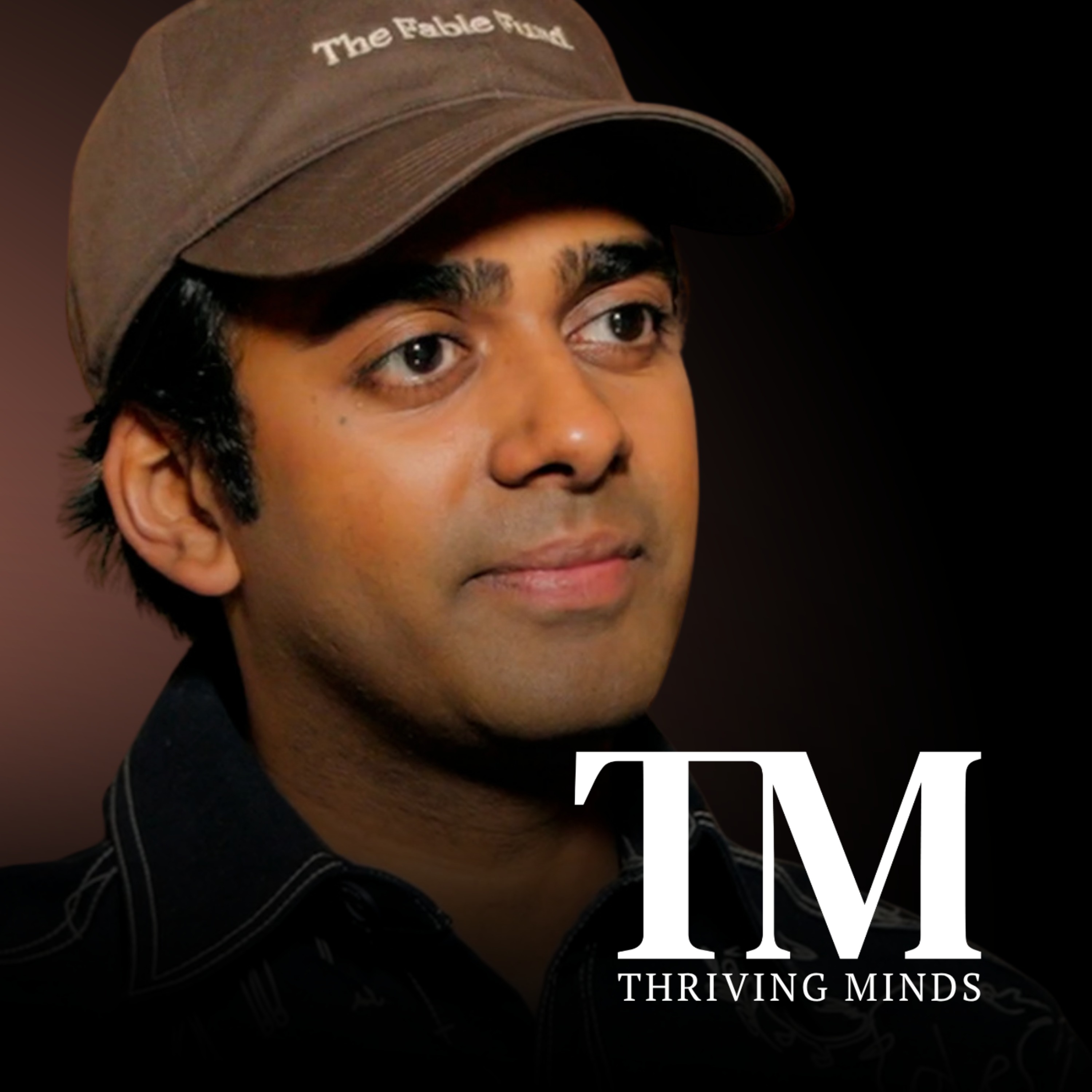
Akash Mehta discusses building a life on one’s own terms (not for others), confronting internalized beauty and identity pressures, and using wildlife conservation as both purpose and healing. He argues that protecting wildlife and “Mother Nature” matters to everyone because environmental destruction and human-wildlife conflict affect human wellbeing, not just animals.
Akash Mehta is British Indian, raised in London. He co-founded and is CEO of Fable in Maine, an Ayurvedic-inspired hair care brand built with his sister Nikita. He previously worked in digital growth at Estee Lauder and Dior, becoming one of the youngest global digital managers and earning a Forbes 30 Under 30 spot. He is also a wildlife conservationist and co-founder of Fable Fund.
Childhood “fairness” conditioning damaged his self-confidence; therapy helped him “talk to his younger self” and rebuild self-worth. Failure (Imperial College second-year failure) redirected him from engineering toward marketing/beauty and later purpose. Conservation should be human-led locally, funded effectively, and respected culturally; Mother Nature “doesn’t need saving, it needs respect.”
Fable Fund projects include “Rhinos in Olpajeta” (with poachers) featuring Winston Duke, and “Tigers in India” with Maitreyi Ramakrishnan, plus a water-heater initiative that reduces village forest logging to lower tiger conflict. He describes visiting Ecuador’s Warani tribe and using storytelling films to move money from marketing to front-line conservation.
Written by AI. May contain mistakes.
Explore how wildlife and nature impact our well-being and responsibility.
“If we don't protect the wildlife and we disrespect Mother Nature, how is this going to affect us all?”
Akash shares his journey of embracing his cultural roots and identity.
“To be honest, because I think I'm always evolving.”
Akash discusses the impact of failing his second year at university and its lessons.
“while I was hearing my dad on a business call at the same time.”
A discussion on the concepts of enlightenment and personal journeys towards it.
“the beginning of the podcast, but I did care what was on a piece of paper.”
Akash reflects on societal beauty standards and personal experiences with skin color.
“Since you were very young, you've already decided that you failed because you were not happy with your skin color.”
Explore how societal beauty standards and personal experiences shape self-perception and confidence.
“They sort of like encourage that behavior.”
Learn about the transformative journey of self-acceptance and the importance of personal validation.
“And I think many kids and also adults still go through it.”
Discover how music and creative pursuits can aid in building confidence and self-expression.
Understand the importance of exploring diverse career paths and the impact of early internships on personal growth.
“I think you've got to try many things and be kind of unapologetically afraid to fail at those things and pick yourself back up.”
Learn how the journey of self-discovery can lead to aligning work with personal passions and values.
“and two is sitting down with yourself because we sometimes don't even know what we want i ask this question to so many of my friends oh what would you do if you create your own company or what would you do?”
Explore the importance of reconnecting with one's youthful passions and experiences.
“Because me growing up, I was obsessed, and I still am, about wildlife.”
Learn how the Fable Fund turns storytelling into conservation action.
“What we're trying to do is, my goal is to mobilize, you know, let's say$100 million by 2030 is the goal.”
Understand the significance of local wildlife conservation and its impact on communities.
“So this year, we've started it with some really cool friends of mine.”
Discover four critical pillars necessary for effective wildlife conservation.
“This exists local level, which is where I focus a lot my energy on.”
Examine how wildlife and nature can serve as a source of healing and well-being.
“I go in moments when it says forecast rain three days.”
Join the journey into indigenous tribes and their deep connections to the environment.
“I'm actually using nature and wildlife as a mascot for global connection.”
Explore the cultural dynamics and environmental impact of indigenous tribes.
“I start getting this like tattoo, which is like a version of henna, of an anaconda.”
Discuss the detrimental effects of technology on happiness and well-being.
“by holding hands with the people that you're fighting for with.”
Learn about the struggle of balancing modern life with nature.
“we're in this jail, cellular jail, and we're still on this phone, we need to disconnect.”
Discover practical steps to positively impact the environment.
“You can also just spend a couple of days visiting some of these places and just being respectful by not being on your phone too much, being present.”
Understand how technology and AI can enhance conservation efforts.
“Before we move into another topic, is there anything about wildlife conservation or climate change that we should talk about that we didn't talk about?”
Explore the difficulties in securing funding for wildlife conservation and the need for sustainable financial models.
“Some of these AI companies are giving hundreds of million dollars a month out to efforts.”
Discuss the reasons behind migration from undeveloped areas and the importance of telling these stories.
“I want to pick your brain on a controversial topic.”
Discover the inspiration and journey behind Fable & Mane, a holistic hair care brand founded on Indian rituals.
“And also I will say, if you don't have to give a dollar, it's okay.”
Learn about the importance of storytelling and authenticity in brand creation and marketing.
“We're still self-funded, no investors, just me and my sister and a beautiful team.”
Understand the principles behind building a lasting brand that focuses on authenticity over trends.
“Shakti is your inner female divine energy.”
Learn why authenticity and storytelling are crucial for building a timeless brand.
“Like I think you can work with all these amazing labs and they even have white labeled and this and that.”
Discover how Akash pitched Sephora with just a deck and a vision.
“And there's loads of real business rationale that makes you realize that's not a smart move.”
Explore the lessons learned from industry changes and the importance of personal growth.
“And I remember having this discussion like October, November, and they wanted to launch us in April.”
Understand the complexities and rewards of running a business with family.
“Whenever there's money, ego, I have ego, we all have ego, businesses, people's opinions, board, all this stuff.”
Learn how to recognize and manage ego in personal and professional relationships.
“You're seeing this with like conglomerates that sell to someone else and then the other person's upset.”
Examine the complexities of ego and its potential positive aspects in leadership.
“So there is a timeline, I think, when it comes to family businesses, that you can't always stay working with your family.”
Explore how ego is perceived differently among individuals and its implications in leadership.
“The word ego has a lot of negative connotations.”
Discuss the complexities of ego in family relationships and the challenges of communication.
“So that's where ego can be perceived differently.”
Learn about the distinction between confidence and ego, and the need for new role models.
“And then everything is going in the right direction for that character.”
Delve into the vulnerability leaders face and how it impacts their decision-making.
“or even the positive sense without a barrier.”
Akash shares his personal journey with self-acceptance and the societal perceptions of skin color.
“And honestly, it's quite sad, but I had to, being with South Asians, a lot of the time they had the same problems I had.”
Explore how cultural background and societal norms shape perceptions of beauty.
“Are you truly happy with your skin color?”
Discuss how societal conditioning affects personal beliefs about attractiveness and self-worth.
“And the worst part is the ones with darker skin tones don't even love it either that much because we have been told otherwise.”
Examine the interplay between cultural preferences and personal attraction in relationships.
Learn how societal beliefs impact self-image and the importance of personal growth.
“But this and this, I don't find it because they're not even looking in that world.”
Discover the significance of kindness in daily interactions and its transformative effects.
“When I did my therapy and stuff, I spoke to him about it a lot.”

Get the gist, explore an idea or ask about something said.
 Claude
On Thriving Minds with Alberto Zandi, what are the key points of this episode?
Searching your listeningAutomatic transcript. May contain errors.
0:00Wildlife nature heals us. If we don't protect the wildlife and we disrespect Mother Nature, how is this going to affect us all? It's already happening. We are going to not only feel the effects of the planet fighting back, but we will also feel sad that you're going to feel it. When you look at a photo of destruction, you don't smile. My job is to find those and they're just asking, respect my home and my ancestors have lived here for hundreds of years. Let me just live here. When you visit these indigenous tribes, do you see them happier than us? A hundred percent. Akash Mehta is an entrepreneur and the co-founder and CEO of Fable in Maine, an Ayurvedic-inspired hair care brand he built with his sister Nikita.
0:41He has built a career in digital growth across beauty brands, working at Estee Lauder and Dior, where he became one of the youngest ever global digital managers and was later named to the Forbes 30 Under 30 list. Alongside Fable in Maine, he is a passionate wildlife conservationist and co-founder of the Fable Fund, created to protect wildlife and support coexistence between humans and nature. Since you were very young, you've already decided that you failed because you were not happy with your skin color. Yeah. What was that like? So then if you're told your culture, your skin color is what's your problem, you start to suppress it.
1:18So I'm really proud today. Somehow I built a brand based on my culture, championing my culture. The first love of your professional life, which was Fable and Main. When we launched it, we were shocked because we went quite viral. From the Kardashians to the Stranger Things set. I love my team. I love being slow and steady. I love feeling the feels. And that makes me not the best CEO for a brand today. Did you forgive yourself for doing that? Akash, who are you? First of all, British Indian. Very proud of having been born and raised here. that have my roots from India. And I would say I am a curious, adventurous,
2:02and hungry to learn soul. Beautiful. A lot of people, when I ask that question, decide to answer it through a professional lens, like I'm the founder of this or I'm an expert in that. Why didn't you choose that? To be honest, because I think I'm always evolving. when we talk about my life I've done many things so I think what I am today professionally might change in the future so I have to answer it by a timeless answer which is for me deeper than what's on a piece of paper I want to understand you a little bit better and I feel like the best way to do that is to go back in time into your childhood what was it like growing up oh so So growing up, I'll be honest, I had an amazing, a lot of privilege and amazing childhood, mainly because I had just the most loving parents and sister.
2:52And I still do. So when I preface that, I'm still very privileged and lucky. It was interesting because I grew up in London and my mom is from India. I came here for university. My dad is from Uganda, British Indian, so came here as well. And he, both of them had different views, right? My dad was a bit more entrepreneurial. My mom was very spiritual. My mom's grandma and grandpa, no, my mom's, my grandma and grandpa, but my mom's dad specifically was a healer. So he used to travel around the world. He was best friends with a guy called Osho, if people know. And I remember seeing him. he has an amazing story because he actually whether people believe it or not but he chose to leave this planet so we call it in Jainism like Nirvana so he reached enlightenment and he was very young in his early 70s and decided that his path was done so the doctors, he was in I think Switzerland he was very close to my mum out of his three children, the youngest child so he said my mum can't be in the same country, then he can't leave.
4:08So my mom had to stay in London, but my mom's sister and brother were in Switzerland. And he was able to like flatline himself without any pain, without any stress, which the doctors were like, this is so weird. And I've seen a photo. He had like a third eye. So this eye was like a lot lighter shade of his skin tone. So I was like, that is definitely something. And that was sort of what I experienced when you're very young age in a nutshell, like even to the death of my grandpa, I just felt like there's peace. And I think that was the luck of being in this double dual household where my morning journeys to school were like Osho, like chants and just like mantras and talks about spirituality while I was hearing my dad on a business call at the same time.
4:58That's kind of what I grew up with. Beautiful. So dad teaches you logic and mom teaches you emotions. Exactly. And then sometimes it reverses, right? I think that's a pendulum of them both and why they really work well together is sometimes I see spirituality in my dad more than ever, and maybe thanks to my mom. And then sometimes I see my mom talk about business and numbers in some ways, maybe more in shopping ways. But I see her doing her math. But it's interesting how we are all of it. We can just pendulum between the two. So I don't actually think one of them was more than the other. That's why I think they're connected.
5:40This is a little bit of topic, but you've mentioned something that I'm very curious about. And I know this is a big topic for you. You've mentioned enlightenment, nirvana. What is that? so enlightenment is the point of we believe um in my in my in jainism that uh we get reborn you know kind of similar to um i guess when you think about kind of reincarnation or karma and coming back into your next life next form enlightenment is the last form where you don't come back your your your timing now is done so um it's where everyone strives to achieve um nirvana funnily enough has been such a word which means enlightenment it's such a word that a house growing up was called nirvana my dad's a company right now is called nirvana investment nirvana brand so in a weird way it's been such a strong word in the family and um but it's something you don't spend too much time thinking about you don't dream about you just know if that's your path or not so we don't strive for it in our day-to-day it's not like i'm doing things that i'm like how do I get enlightenment in this life form?
6:46So I think for me, for example, I know I'm not on my journey of enlightenment this life form because it's not something I feel, but my grandpa must have. How can we know if we're feeling that if we are on that last journey? I think very few people are. So I don't think many of us will ever know. And I think the ones that do know won't be able to explain it. We'll just know. My grandpa, it's usually the ones that don't, are not very vocal about it, that will be on it. If you're seeking for it, if you're trying to find it, if you're talking about it, if you're going on, you know, social media talking about enlightenment, maybe you're probably not at that level.
7:27I feel this is my opinion. You're probably yearning for it. But I think if you know, there probably is something inside you that makes you not want to tell too many people. My grandpa never told us. It was only at the point where he left, he said it. So that was interesting. You've had a very interesting relationship with success and failure at a young age because you got accepted to one of the best universities in the world, Imperial College, but then you failed your second year. How did this affect you? So to rewind a bit, like in school, I was probably opposite to my answer right now in the beginning of the podcast, but I did care what was on a piece of paper.
8:06I did everything for that, you know cv and uh i studied a lot so while most of my friends growing up on weekends would be hanging out after school hanging out i was going to tuition not because my parents were typical indian parents and forcing me to they were like my sister did none of that that i just wanted to so i remember saturday morning math saturday afternoon economics sunday evening spanish i I just was always doing that. So I got my, you know, my 10A stars and 6A stars and A-level, all this stuff. I did everything right by the CV. So then when I got into Imperial, I was like, great, this is like just an extension of like just getting better grades and continuing to grow.
8:49And the path for me at that time was I really wanted to work for NASA. I, growing up, I did internships at like Airbus, BMW. I was good at math and physics. So I thought engineering would be perfect. And I even like applied and I was a finalist of a space design competition at 16, 17. That was actually Imperial. We had to build a spaceship in two days, no sleep. It was really fun. Like not physically, like mentally. And I thought that was my path. And my first year I passed and I was like, oh, you know, I could do this. Everything changed in my second year where it got much harder. Like it got a lot more harder.
9:26And I realized I'm not passionate about this. And I was struggling to get great grades, whereas all my colleagues and cohorts were just studying so much. I mean, some of these kids were building computers since they were 10, and I was in a small cohort of geniuses. I was like, wait, maybe I'm not that smart. But then I realized it wasn't that. It was maybe I'm not that passionate. And naturally, that led me to, truth be told, I was also having a bit of fun at university, which you should. maybe i i didn't have it since i was 18 i never drank alcohol i never did anything i was like this i'm gonna be this kid and then when i got to 18 i was like oh vodka this is interesting um clubbing quite a bit and um the week before my second year exams i decided to go to amfar in can and i was like this is i've got to do this and all my friends are like you're crazy and i was like i can do it and then i failed and they were like you see and i was like yeah you're right so i i'll be honest So failing was really tough for me.
10:23I, um, when I got the news, I was in India and I remember I was, um, yeah, I was, I was in a lot of tears and didn't know what to do and seeking like kind of people's opinions. But I realized no one actually cared. Like it's my life and they can say something, they can feel sorry for you. They can give you advice, but it's my decision of what I do next. And I take a year out. and that's when I learned the most about myself of like, do what makes you happy, not what you think is good for your kind of career. We were a CV. And that's when I ended up working in a different industry and I worked in marketing at Burberry for a year internship.
11:06And yeah, that changed the course of my life, I guess. Beautiful. So who are you today then? Today I'm someone now who when failure happens, like out of our control, I kind of look forward to it. And I say this in the lens of my biggest passion and hobby in life is escape rooms. And probably didn't expect that answer, but it's something that I think I'm sadly quite addicted to, to the point where I'll do them on my own. I'll pay more to just fill in the room with like the minimum people and I'll just go on my own. um that's sad like i've even and once i was in saudi with sephora doing some stuff and i was on my own and i was like there was a horror one and the guy was like this is weird like we don't ever have anyone asking to do their own i was like i'll do it on my own and i was in like a prison cage in the pitch black on my own i was like yeah maybe i should rethink my choices but um i think it just showed me even things i fear the most like i'm claustrophobic and um yeah i don't like being on my own.
12:09But I love figuring things out. I love not necessarily escaping, because I don't think escaping is the right word. I just love growing, learning and solving. And I think that's when engineering is at its heart. And I think that's why that levitated me towards that career. Maybe I didn't love the exact medium of what the engineering was teaching me, like the diodes and semiconductors I wasn't that passionate about. But the idea of working together, solving things, I think has made me a greater entrepreneur today. And I think that's why I still do escape rooms. I've done about 500. I do sometimes one a week.
12:45So yeah, I've done a lot. I want to dig a little bit deeper into the topic of failure. Since you were very young, you've already decided that you failed because you were not happy with your skin color. Yeah. What was that like? So growing up, I think this is something that a lot of South Asians can connect to. I don't think this is solo to just my journey and also other cultures too. Usually people of color, you know, we've been taught and raised with from the Disney films to what we see on covers of magazines of what is the society's version of beautiful, right? blonde blue eyes fair skin is often synonymous to that and then obviously you think about India and then you think about Bollywood and growing up all the Bollywood actresses actors were fair skinned we had creams called fair and lovely which today has changed to glow and lovely thank god but still and it was the same photo just photoshopped lighter and I remember asking my grandma always when she used to come from India like can you bring fair and lovely can you bring ponds can you bring all these like whitening skincare.
13:53And I love my parents so much, but they didn't exactly protect me from that mindset. They, in some ways, and I don't blame them because it's projections and projections from generations. They sort of like encourage that behavior. I remember my, my, my mom would be like paying for like bleaching, um, for someone to come in and do facials. And she was like, it's, you know, go for it. Like it's good. Kind of encouraging me not to go out in the sun um I was always um in the shade and never stayed out and I was born so just to put some context my mom is very fair fairer than you like she's very fair skin um she's also blonde but that's she dyed her hair so that doesn't help anything and I think growing up I was born her color and I got darker so I think for me it was always like oh I had it and I'm I'm ruining it or I'm changing my skin color, so I'm at fault.
14:42So I need to like stop it. And I think little triggers, which people don't realize, but like at dinner tables with their aunties, they would say, oh, this girl is very fair, very beautiful. You'd hear these words. And then you'd be like, why are we allowing those words? And then at school, sometimes at parents' evening, my teachers would be like, oh, like I got told once, oh, you're adopted, I didn't realize. And I was like, no, I'm not. and they just they just saw this difference in my skin color my mom and me um and you know it's not a negative connotation it's just felt like ah maybe I need to go back to where I was so that's when I started scrubbing and I remember once I bought online a pill that was like for um traditionally for black people and it was like a melanin changer pill that can make you a couple of like shades lighter and I remember buying it and no my parents didn't know about it and I was maybe I was like 12 or 13, very young.
15:38And I remember like, like taking it and then reading the back and it said like could cause like serious side effects and even death. And I was like, what am I doing? So I remember trying to like vomiting it out and I was crying a lot that moment. And like, you know, that was when I started realizing I got to start changing the stupidity in my head. And I will say it's stupidity because while it's, um, it's, um, you know, projections and stuff, it's stupid projections. It's like really dumb to think my skin color is ugly. And I think now I really believe it. And I'm so glad, like I look at my skin color and I'm like really proud of what I see.
16:20But back then, yeah, like I just wished everyone was invisible. Like I wish none of us had skin color to compare and to judge against. So, yeah, it's a shame I had to go through that for many years. And I think it definitely, even today, still probably has deteriorated a lot of my self-confidence. And I think many kids and also adults still go through it. So it's one of those things where if we hear stupid comments, we've got to call it out and not allow for this to flourish. We don't have to pour any energy into that because it's really not true. and I wish my older self would go to my younger self and tell him that but yeah those years I can't take back what else would you say to your younger self I would say like stop feeding the superficial parts which is the looks and there are things we can do and I think that's fine we want to look our best and we feel good but don't feed it for what others think feed it for what you think because I think for so long I cared what people thought because that's what a good South Asian kid was told you know like whenever my parents had anything wrong like said something wrong about like my grades or something I did it was always the first response was what is she gonna think what are they gonna think don't tell anyone and it's like they don't answer with what they think or how are you even more powerful like how are you Akash so I think I've been raised with that mentality that we do things for others and what society portrays us as.
18:02That I think is completely needs to change. And only I got to that point of view, not because of my parents and I love them so much, but they still have a bit of that. It's because of coaching and therapy that I had to do in the last many years that gave me the tools to equip myself. And a lot of it was going to my younger self and talking to my younger self and that's where i got a lot of healing today is that conversation which you can still have at any point they still exist um the kid in you you've also found a way to express yourself through music yeah what was that journey like music for me um was again being in a very analytical kind of mindset with math physics um To give you some context, I was always loving music and art growing up.
18:50I had an art studio, so I used to paint pretty much every other day. And I used to play violin and piano for over 11 years each. I was in an orchestra. And singing, I wasn't confident because you can probably get the picture. I wasn't very confident as a kid. I was very shy. So I think I was always like never applying for the talent shows and stuff. So I never, never knew I was singing. I just was like singing on the down low. um but then i i remember when i was 16 i wanted to study a levels math physics um and economics and i thought let's do an art i want something creative always at least give me 25 you know and my school didn't allow me they were like no no no you're going to do further maths and this and that so they actually um kind of stopped me from doing art um so i was always stopped from pursuing the creative because i thought people wanted me to just focus on something maybe more career safer at that time um but that's when I decided uh when I got to uni I I realized I need to do something a bit more for me and I remember in the first um first few weeks there was that induction and you could see what clubs there are and the thing that gravitated to me the most was acapella and there was a really cool like acapella group for tectonics and I I auditioned and I remember I got a call and they were like yeah you got it and I was like oh my god no way and um I was uh yeah it taught me how to be in the background how to be in the foreground and it's just it that's when I started busking as well with them at the beginning and that got me my confidence singing was a bit of a lifesaver for me yeah when you went busking for the first time how did you feel oh it's terrifying I was like oh everyone's gonna look at me um I think even the first time it was raining so I was like why are we even doing this and i remember um it took me a few times busking to get confident because there are some mean kids that would like laugh at you and acapella isn't you know if you get like seven to ten guys singing acapella on the streets of portobello road you're going to get some annoying kids saying something right and you just have to ignore that and some of them they come up to you and they kind of sing with you but they're kind of laughing and you just have to like figure out like how do I make that like a win like I don't want to make sure people feel awkward about that I'm going to like bring them in and like play with them and play their game back so it taught me like how to deal with different personalities because when you're when you're singing on the streets for three hours every Saturday every week you meet different personalities but what the best part was I remember especially with the group after we would go to McDonald's with our anywhere between 20 to 300 pounds on a great day we would make and we would all like buy like a, I would just get fries.
21:32I would just buy like a little treat for ourselves and count the money, each penny, each 50 pence. And that was really cool. Just like learning how hard work can, and what you earn from that. It doesn't matter what you earn, it's how you feel when you earn that. I think that was a little taster of like what I wanted to feel when I worked for someone later in my career was I want to be valued and I want to count the value step by step with me, not just like get a check and make millions and then not feel anything. You've got to feel with every dollar you've earned that in the right way and then you'll get happier.
22:10I started researching that time like with Harvard Business School and like looking at like happiness index with like successful people. And you know, when you're in engineering, all your friends want to work in finance. So you obviously do think about which is the best career, what's the best salary. you have to think about those things and I was thinking everyone's doing that but they're missing a point like it's not about the number it's do you enjoy how you make that number then you'll be happier and you'll have that number in your bank it's a win-win but I've seen luckily growing up my dad you know his wealth grew over time and I was seeing how there were more and more people in our in our friend circles that had wealth they were miserable and that's when I was starting to question like we all want to be successful in terms of monetary value but like what does success mean in terms of happiness value and no one also seeks that and it's proven right it's how you give the money when you make the money it's how you earned the money it's how you um you know feel on that journey of making it too that is actually true success in my mind how can someone understand And what is it that they like in life?
23:18I think you've got to try many things and be kind of unapologetically afraid to fail at those things and pick yourself back up. But also you've got to rely on others. I've been helped a lot. My internships growing up, I did 13 internships before I was 18. Let's call them work experiences. That's probably a better word to say. and a lot of it was people that I asked and people helped me so I had to try different things I was very curious as a child at one point I wanted to be a film director I think like most like most kids at some point and I remember I was like oh like I'm in LA for one summer like with the family instead of like just going to Santa Monica and the beach can I like doing a one-week internship somewhere so someone hooked me up with a one-week internship at Warner Brothers at Burbank and I was 15 and I spent one week there and I was like absolutely not I hate it like I just did I was probably in the wrong division I was reading scripts and it was summer when nothing was filming so I probably was like this is really boring for seven hours reading scripts but that was a good like okay if not for now uh let's look at the next one and I did that over many different I worked at Broadway in plays I was like a runner on shows I've done um SD Dupont lighters a marketing assistant.
24:37I've done so many random internships, home removal, I was packing boxes in warehouses. I wanted to try it all. And I think that's when I realized full circle beauty is what I, what I loved at that time. So when I, when I went to Burberry and then I stopped in my career, I think it was that. And I think it's also because my dad is in it. So maybe subconsciously, I just felt comfort knowing it's like a legacy extension of my dad's world to me. Maybe that's part of it but yeah i think that's a very powerful take the only way to learn and understand who we really are and then by consequence what is it that we like in life is by trying so many things without the fear of failure yeah and i think i would say like to try is maybe phase two or three phase one and two is sitting down with yourself because we sometimes don't even know what we want i ask this question to so many of my friends oh what would you do if you create your own company or what would you do?
25:36What's your hobbies? And they're like, oh, I don't know. And I'm like, because you haven't spent time thinking about it. And thinking about it could be in your head, but it could also be just like writing down on a piece of paper. So one of my best tips that has always been so helpful in writing the path to my next choice has been writing it down on a piece of paper and taking my phone away, all the distractions away. And usually I do it on a flight where I don't pay for the Wi-Fi that trip. And I write it down on a piece of paper, the idea. So this could be seven things you want to start doing for a hobby every Saturday or your next job or maybe your next career industry.
26:14Write it down, close it. And then, I don't know, maybe like every 20 minutes, 30 minutes as you want, open it up again, read it out, and then delete one that doesn't spark like that joy. And then close it again. And then open it up again and delete one. And then, or like number it from like 10, 9, 8, whatever it is. And you'll be left by the end of that flight with one. Interesting. Is this how you found your latest mission in life, wildlife conservation? Yes. It's how I, well, yes. And, and, and also no, because it's how I started my journey. So I did this exercise when I chose to quit Dior and I was like, what do I do?
26:52Do I start my own company? Do I, cause I was offered a chief officer title at LVMH for another brand and I would have been the youngest and then that sounds good and your brain goes oh let's put that down and say should I just do it for one more year and just get that title because why not it's good in my cv what's I can build my brand in another year's time um but that didn't spark joy but on that journey was when I said I really want to look at something with conservation and I wanted to figure out a brand that has some kind of wildlife that's when that governed the choice to put tiger as a logo but not necessarily create Fable Fund yet.
27:28What made me create Fable Fund initially with my sister, then lead it on my own, was therapy, the coaching. And what happened was about a couple of years in creating Fable in Maine, and I'm sure we'll talk about that later, I didn't feel very good about my relationship with my sister at times, and we're fighting, but it's normal, we're siblings. She's my best friend, but I don't think everyone can work with their sibling every single day of their life um and i remember always um going to my purpose coach let's call it that's what she was um by trade and um talking about things and she was explaining how we need to talk to your younger self it's completely your younger self right now so she would make me go into this room and close the door and speak to him and all that young self said is not shampoo conditioners not dior and not all this stuff.
28:20He was like, animals, animals. Because me growing up, I was obsessed, and I still am, about wildlife. I remember writing down all my books and stuff. I was writing down, animals should be in homes. And I mean, it was a bit too extreme. I was like, humans should be out of the homes. I just really felt like, why are we seeing stray animals? And why are we seeing animals being killed for poaching? And I was quite angry, obviously. But I was also hopeful that there were organizations out there, like yeah even like from pita to loads of different um organizations uh wwf you know talking about animal welfare so what i do i ended up working with them ambassadors for them giving them money but i also felt that they're not doing they're doing a good job they're not doing a great job because they're not really focusing on getting as much funds to the cause i would visit then over time throughout my Fable domain journey, the cause and realize how little money reaches the front lines of conservation.
29:19A lot of it stays still in marketing and it does exist. Also, the visibility gap is poor. Like people are not seeing the work that those organizations are doing. And that's when Fable Fund started. And that's when I decided to, yeah, focus my life on giving a good, I would call it 50 % of my life to my younger self, which is like wildlife. And that will be till I die.
29:48In simple terms, what is the Fable Fund? Fable Fund, basically, we turn stories into conservation action. What we're trying to do is, my goal is to mobilize, you know, let's say$100 million by 2030 is the goal. And work with people, family offices, brands, organizations. the average person just watching the video, how can they be involved? So anywhere from a dollar onwards, we will take that and we will put that to good cause. And what we do is, is we basically find the conservationists on the ground doing great work from all over, predominantly focusing on the South. And they usually, they have to have their own NGO.
30:33And we fund them. usually we give them like a grant initial seed capital and then I go and I visit their project for about a week and I film a little short film using also a short film content like we'll also do TikToks, Instagrams, you know get to the masses and we only hire local filmmakers local producers so then we can also give income to local kind of talent and we then distribute that through through youtube through social but also through our events where we can mobilize funding through that content because if people see the founder of the fund visiting these projects speaking through it through its own lived experience i think it's a lot more authentic it's a lot more um there's more trust there and also i can actually articulate what we need and what i can also govern where it goes um and that's what we're trying to do is basically find those fable makers i call them uh for wildlife they're the people not just telling stories and making the stories that we need to be telling.
31:34And I go and fund them and also help them visibility wise. Whenever there is someone that doesn't want to be on camera or doesn't maybe feel comfortable articulating the story fully, and that happens with some of these amazing conservationists, we bring a celebrity and we bring someone who has an audience that cares for that species and that planet and that place, ideally even has that same shared culture and can even add more value to the conversation and they come with me. So this year, we've started it with some really cool friends of mine. We had Winston Duke, who is known for his, being the King of Wakanda in Black Panther.
32:11He's been amazing. We did Rhinos in Olpajeta with poachers and that was an amazing story. And very soon we'll be releasing our vulture film that we did. And I also had my friend Maitre Ramakrishnan, who is in the show, Never Have I Ever. And we did Tigers in India. And we talked about this water heater project that helps livelihoods of villages, but stops them going to the forest to collect lumber, which stops them interacting with tigers. So yeah, it's been amazing to bring those friends because also more people are seeing the work, but then also it's a bit lonely doing it on your own. You want to bring friends with you.
32:45So that's been quite fun. For someone who just listened to everything you've said and they're like, wow, it sounds like it's quite important, but I have very little knowledge about wildlife conservation and why does this matter to me? What is wildlife conservation And why does this matter to the average person living in London or New York or in a big city? So firstly, exactly that. Wildlife conservation exists everywhere. It exists on your doorstep, right? So in the UK, for example, wildlife conservation could exist in the form of horseshoe bats in Glastonbury to ospreys in Leicestershire to foxes in London.
33:19And actually, that's one of our recent projects was a local story, because I think sometimes we focus on charismatic, faraway species, but actually what's on your doorstep is just as important. And when you're thinking about local conservation, local wildlife conservation, it's human-led first. It's very rare to do any projects with wildlife without interacting with a human around it. So what we actually end up doing is giving most of the money and support to those communities, to those villages. That in turn affects so many things that we all globally try to strive to help you know a lot of our projects are supporting women empowerment poverty even just just like family issues within households and we need to focus on that because if you don't fix that problem at the root wildlife is affected and why is that a problem because basically human wildlife conflict is our biggest in my opinion one of the biggest threats when it comes to conservation.
34:20This exists local level, which is where I focus a lot my energy on. It's a global level. I mean, human wildlife conflict exists from what we're doing with the climate right now. You know, right now, the Panthenal is on fire. There's floods in Ghana. There's so many things happening with human, and that's causing conflict with wildlife, whether we can visibly see it or not. But what I find the most easiest to change tomorrow, not maybe in a few more years, is the human wildlife at the local level because they're the ones living by it and they're the ones that can protect it and be custodians of great blueprints that we can take and learn from globally.
34:59So what I've had to do is spend a lot of time living with those communities and seeing what they need. There's four main key pillars that it comes to conservation that we need to all address. One is lack of infrastructure and support, poverty gaps or welfare. They don't have the funds to even have a roof over their head sometimes. So naturally, they will go out to the forest and take from there. Or naturally, they will go out. And if they don't have proper fencing and a hyena comes in to their village and maybe their child is nearby sleeping, they're going to go and kill the hyena. So we need to first help infrastructure.
35:41We then need to help. For me, it's the biggest thing is about technology and sometimes getting them to catch up to where technology is heading. That's a big part of my look is to look at like, you know, what is AI role in conservation? What is technology role in conservation? And how can we kind of accelerate their growth locally by bringing them technology? That will bridge the disparity that we're seeing between even cities at the local levels, like Nairobi, to a local town in Mara. So that's something I'm also looking at as technology. third is um cultural erosion um what we're what we're noticing is is the youth especially they don't want to be a farmer they want to go to the cities they i've been in the middle of ecuador and they have starlink they have better wi-fi than i have in london and they have phones and they're on tiktok so that you know 14 year old girl i'm speaking to saying oh like are you excited to like continue they're like i don't i want to go to quito i don't i don't want to stay here so you're going to make them want to stay you've got to empower them with the future that's worth staying and help protecting what's there and and the generation of kind of ancestors if they want to obviously they want to move they can but we can't keep on escaping we've got to like protect and the last thing is for me it's respect and I learned this from an amazing woman called the Montan Nkwimo who is a Warani indigenous leader and she basically says mother nature does not need saving it will save itself um it will get rid of us all and we'll be fine but it needs respect and i think that's what i often feel they never teach you in wildlife conservation is first just going in and touching the ground with your hands that's my spirituality coming respect just respecting for a second before you run into doing action just take a moment and say thank you um Because I've done that every trip.
37:36And I go in random times of the year. I go in moments when it says forecast rain three days. And obviously as a filmer, that's like a terrible. Every time I say thank you, we've had no rain. We've had the best sightings and the best filming. And I think there's something in there that Mother Nature is like, okay, you do what you need to do. I'll make sure this is the best environment for you to get what you need. If we don't protect the wildlife and we disrespect Mother Nature, how is this going to affect us all? It's already happening. Look, exactly. I mean, what you just said is exactly what majority of us are doing.
38:12We are going to not only feel the effects of the planet fighting back, which is happening often in places, sadly, not in the cities happening in the places where our secondary effects are happening. but we will also feel sad. We will feel, you know, if you wake up with a city full of smog, you wake up with, you know, the destruction of forest, that you're going to feel it. When you look at a photo of destruction, you don't smile. So naturally, if you want to just be happy and have your children be happy and have your family be happy, protect this planet. It's proven. Look at Singapore. It's one of the few cities that have really adopted nature.
38:57There are situations where there's hospitals now that have nature walks to heal patients quicker. In prisons, we're looking at things where they're bringing nature and wildlife to protect, like to give them like animals to care for. And the prisoners are now learning how to care and how to maybe get out of prison and do something with care in the next step. Wildlife nature heals us. And I think we need to remember that's why I'm doing what I'm doing. So it's not really about just the tiger. It's also a way for me to heal myself. I'm actually using nature and wildlife as a mascot for global connection.
39:39Because if I go to Ecuador and I say, hey, to a big company in the US, I need some funding for this project because it's going against the oil companies and we need to fight this legal battle, they're going to be like, my shareholder is part of that and this, I don't if I can, I don't know. Whereas if I say, do you want to help me share a film about jaguars? They're going to be like, oh, that's cute. Yeah. But my money goes to the oil protection. No worries about that. But that's what we need is we forget our younger selves, all of us loved David Anenberg's Planet Earth. And we love nature. We love dogs.
40:16We love cats. So I think it's a healing tool for everyone out there. Take me to one of your journeys into an indigenous tribe. Yes. What would I see? What's life like? Oh my God, it's amazing. Recently, yeah, talk about Ecuador. Went to Nemonpare, which was, which is, the Waranis live in this, there's a lot of different tribes and areas. You have to, I'll paint you the picture. So I fly to Quito in Ecuador. I then drive six, seven hours to Shell. It's literally called Shell because of the company. So that's how just in a way, just take a moment to think about what I'm saying. The town nearbiest where I can fly into them in the small plane to name one pirate is called Shell, named by Shell.
41:05So then we go there. And I remember I took a flight and this film is going to come out in the end of September. So I'm excited for everyone to see it. And I land and I just see from the plane, vastness of luckily untouched Amazon forest with meandering waters. But then there's a small airstrip that the Waranis have built and I see them waving and there's like 60 of them or 50 of them. So already I'm feeling so welcomed. Like I've never had that kind of welcome like at home or anywhere. And you get this tradition very similar to Indian culture. Like you get like a garland and, you know, I get some, my third eye touched.
41:47So I really felt quite similar to my own Indian culture there. And straight away we sit down and I'm immersed right into that culture. We're having like a kind of this bark tree drink. The grandmas are making this bracelet. I start getting this like tattoo, which is like a version of henna, of an anaconda. and everyone's laughing and laughing. And I'm like, you don't see that side of them. They're jokers. They're like, they're like, and luckily I speak Spanish. So while they speak Wao, which is a local language, they also can understand and most of them can also speak Spanish. So I immediately felt I could communicate, which helped one barrier that can happen.
42:28And you just realize I was a bit envious. Like I straight away felt like, oh I don't have that ever in my life and no wonder when they say they have to come to New York to do an event they're rolling their eyes because they don't want to leave so when we're destroying their home you know there are stories of people waking up and they're going to the water and they're cleaning their themselves naturally with their water and one guy got blind for a few minutes because there was oil in there we cannot be destroying their own home and they're just asking respect my home and my ancestors have lived here for hundreds of years let me just live here I'm just staying here I don't need to come to you and that's when I started to think about like how ridiculous um our actions are and you know there are all these amazing organizations raising funds and I'm doing awareness to these places and I'm so grateful but I asked those and I will say there's all you know i want to be very honest there's old white privileged ceos have you visited and they're like no our time needs to be here we need to be raising i'm like you can raise all you want but go visit just spend three days visiting please they would welcome you with open arms but then don't talk your talk in those big conferences and big rooms and if you haven't even seen it with your own eyes because you definitely don't know what you're talking about and that's something that I feel quite vocal about because trust me being a young brown kid entering those rooms a lot of them try to belittle me say you know like I had this at LVMH and all my companies I used to work with you know you're so young respect take your time when I was your age and I'm like paying the game back saying thank you so much for inviting me into this room I appreciate it but I'm also rolling my eyes just like the Varanis because they're like they don't know this world like I've seen it, luckily, because you need to know what you're fighting for by holding hands with the people that you're fighting for with.
44:34And that's why the thing I feel doesn't exist today, a lot of the time. I feel like right now we live in a world in which people are more stressed than ever. We're building things that we believe they're going to make us happy, but they truly make us unhappy. when you visit these indigenous tribes do you see them happier than us 100 they're not happier when we're destroying things but they're still hopeful because um they're not exposed to as much as we are and we're exposed to whether we like it or not a lot of doubt a lot of negativity in our day-to-day. Look at news. You turn on the news, it's not positive.
45:17It's negative often. And I do feel we need to disconnect to reconnect. And I think that's what they have is they only turn their Wi-Fi on at night. In the day, you're just present. You're just sharing stories. You're just talking or you're with yourself. And that's why I go once a week, well, once a month, one week a month I go to the to the to the wild it heals me this this world I'm in right now I do have to be in here I need to earn money I got to do my thing I do enjoy it too like I can't I'm not going to be I'm going to be honest I can't live I've been too cushioned it's very hard for me to shower with wet wipes every day like I need some luxuries and that's why I have to accept who I am today is is a better balance of both but I realized very quickly about two years ago um we're in this jail, cellular jail, and we're still on this phone, we need to disconnect.
46:13And I think that's what makes you happier. And I think that's why they are happier. And you see this, you see these people post on social, I've taken a one week detox, and I feel so much better. And the irony is they're posting on social after, but it's good because it reminds people that they do feel better. But how often do we do it? So I ask you, like, how often have you been have you spent a week without your phone no impossible right but is it impossible unfortunately i think right now we live in a world in which every single service and product needs to be utilized for technology if you think about some of the most essential services right now in in developed societies so banking telecoms or even to pay your taxes right you need to do it for some sort of form of technology so the world is moving into a direction that is just becoming increasingly harder to stay away from technology.
47:04The big companies are making you reliant because they want to make money. And I'm part of that kind of direction. So I'm not necessarily against it. I'm just like, that's why I think we need to go to the wild. And I say the wild as a very positive word, right? This is a place where untouched. Because there, your phone's going to get you nowhere. There's no Apple Pay. There's no anything. I think I'm like, my bartering system is my smile. And I'm like, can I have one of those? And then it gets you everything. So I think it's a bit like, maybe the most similar is like Burning Man when people are going and just like connecting with each other.
47:48I don't think they're on their phones either. So we have in our society places where we do love and go and we visit. I think if we can't do it here, just go out as much as possible and visit. And it doesn't have to be a five-star safari resort, right? You can also just spend a couple of days visiting some of these places and just being respectful by not being on your phone too much, being present.
48:14If someone right now at home wants to help Mother Nature, what can they do that would make a realistic change? Okay, so let's go by layers. So first within yourself, just get your mindset reshifted to really want to do this because you want to, not because you think you need to. So just make sure you're really doing this for the right reasons, because the nature will feel that reason. So I don't want you touching grass if you're coming in. Just let me touch it. Let me touch it. Okay, I've done it. Don't. It doesn't want to be touched that way. Leave the grass alone. But for me, it's, yeah, once you fix the inside nature, because we're all made of nature, then you can go in your own home.
48:56do you have plants are you watering are you are you doing are you growing your own little uh i don't know like maybe basil leaf or something then your garden if you're lucky to have one or if not your nearby park um spend time just respecting it looking around maybe feeding things or if you're allowed to feed um or what i like to do is is focus on two key kind of pillars as bird keepers and like all bird feeders, sorry, and bug houses, bug hotels. We can use excess waste to make beautiful like safeguards for like insects. And we can also just feed some birds which help pollinators and all everything.
49:36So I think we teach that in school. I'm really proud to be an ambassador for Jane Goodall Institute. And we have a program called Roots and Shoots. It's Dr. Jane's legacy that I've been fortunate enough to spend a bit of time with her. We really connected spiritually. She was one of my biggest mentors. And she taught me the importance of local education. So I go quite regularly to schools and I teach them about urban conservation, local conservation. So that's where I would start. And then if you happen to have luxury of traveling further and visiting some places, try to, yeah, like visit some of these communities.
50:14Obviously, if they want to be visited or if you're willing to support them. and uh you'll be surprised like if you go to some of my ngos and you know look at favor fund who we support and you know we'll be able to message me and i'm happy to share if you're i'm like my friend's best travel conservation like partner they send me i'm going to botswana i'm like here's who you're going to meet here's who you should see here's what you should do um i can i should make a travel agency open um but i'm happy to help anywhere i can if you dm me um to to make those trips a bit more meaningful as well. Before we move into another topic, is there anything about wildlife conservation or climate change that we should talk about that we didn't talk about?
50:53Technology and AI.
50:58AI is a topic that a lot of people have obviously mixed opinions on. The one reality is it is here to stay for now. I can really not see it going away anytime soon. and there are so many levels to that word so I don't want to get into the whole pie because it will be here for for days but I will say yes we're looking at data centers and wastage of water and there's a climate implications and there's things you know there's a whole world there which I want to you know look into but at the local level I'm already seeing my NGO partners using technology and AI tools. And there are some incredible ones that has changed their life and it's changing animals' lives for the better.
51:50And that is what I'm quite interested in exploring is those tools that are using technology and AI for accelerating our conservation efforts. Perfect example, a very simple, simple, simple level is like, and this might have a lot of flaws, so just take it with a pinch of salt, but I will explain it in a way, is a camera trap. So a camera trap is something that people use in places all around, even in parks, which gets triggered by usually a heat sensor. So at night when there's no light or a light sensor, and it will take a photo. So it's not always taking photos. It takes it when it's triggered, when something walks past it.
52:30And it's our easiest way to monitor things. So even against poachers, you know, straight away. Some camera traps are like, majority of them are in remote areas. So they're SD card powered and you have to go regularly and visit them and then take it out and take all the photos. Some are GSM powered. These are like, you know, triangulated through Bluetooth and stuff. So you get fed the images. When you have a place with hundreds of camera traps and thousands of images and you manually are going through it, there is a lot of human error, time error, and it's delayed. There are tools being made that can implement already with your camera traps that you have that get the photo in real time, will siphon it, and will tell you, like you have for your ring camera, ping, ping, ping, this rhino has one horn taken off, it's bleeding, it needs to be saved in four hours, go.
53:22Why is that bad? You know, that's great. You've just saved a rhino's life potentially. And this is quite nuanced. I'm saying this in the sense of like, there's not as simple as that, But those ways are really helpful for local communities to have the empowerment of their own world, their own technology. It can increase livelihoods, it can increase jobs, and it can also help the culture erosion of the young kids getting excited by this technology. There's a lot more nuances. Where is the data stored? I spoke at the UN about digital and data sovereignty. And what if that data is taken then from someone else?
54:00And what if it's stored in another place? and what if the poachers have access to it? So there's layers to this that we need to work on. And it's one of my big projects I'm looking at now is this AI for good. And I'm looking into it. And, you know, I'll ruffle some from feathers, but I'm doing it in the eyes of, I don't know, guys. So let me see if it's good or bad. I just want to explore it. How has the AI community, from a corporate perspective, reacted to this? Because I would imagine that, unfortunately, most corporations only move forward with initiatives that are financially lucrative. So if this isn't one of those, how can you bring it to life?
54:36So it will be. Like the main thing is, I mean, when we're talking about, this happened with microfinancing for agriculture, right? A lot of banks, a lot of places are making a lot of money from these communities because there are millions of these people and they have money and they have mobile payments. So you can make actually, I think, more money focusing on the South in the right tools and the right technology and the right businesses. And that's why you're seeing, I know a lot of billionaires in Kenya, in Uganda, in India. And I'm like, well, we're sometimes stuck in US trying to make a billion.
55:14And these are for those kinds of folks. When I'm like, the South is the future for a lot of future, a lot of things. So I want to make sure people realize that there is money to be made as well and money to be shared. my job is to share it. So if I find those solutions, connect the dots from Silicon Valley to the Masai Mara, find ways that we can make businesses work together, it can't be staying in Silicon Valley, the money and the data. How do they own it? How do they get a piece of the pine? How do we make them millionaires too? Because if you're making$100 billion very quickly, give them something now.
55:50That's sort of what Fable Fund is also trying to do is mobilize those funds. So if I'm finding tools where I can help the big tech companies deploy some of their funds. And some of these have foundations. Some of these AI companies are giving hundreds of million dollars a month out to efforts. I want to be there to be like, hey, how do I use some of this technology? How do I use some of this funding to give it back and distribute it to where it needs to be distributed? I also need to do a lot of homework. I need to understand where the money comes from. It's not as simple as that as well. But as an engineer, as an entrepreneur, I think that's my USP in the conservation spaces.
56:26I'm able to think a bit more sustainably in this blended finance world. Old school philanthropy is not working. When you talk about wildlife conservation, I've been in some of the biggest galas in the world where the king and queen are there and then you have the five course meal. And I'll be honest, I'm not a big fan of galas in general. I think there's something a little bit odd about like we're all here celebrating something that, you know, with our lavish tuxedos. But, you know, it's important to raise some funding. but when you think about wildlife And you'll be lucky to get a couple of hundred thousand dollars from that night.
56:59And often you lose money because the event costs you more. And I'm just like, it's, and it makes sense. Ricky Gervais said this recently at a talk I was at, and he was like, which I loved and it's funny, but it's got the truth in it. He was like, animal lovers are like the craziest because they'll come to you and they'll be like, oh, I've got this slug that needs protecting. And you're like, oh, why? It's like, yeah, yeah, it's a very rare slug, please. It needs some financing. Yeah, of course it's rare. It's a$50 ,000 slug. And that in a way, while it's funny, it's the problem. People are like, why am I giving$50 ,000 to an animal?
57:31So I think we have to remember it's very hard for us to keep sustained financing. Most NGOs in wildlife conservation get a year at a time. They don't even know what the money is coming in next year. So that's something where I need to think about this blended finance model of for-profit, non-profit. And already in my short time of building the Fable Fund, when I've gone to so many rooms, and some of these banks and some of these family offices, it's hard to get some money today. It's very hard. And I get it. It's a tough time right now. But if these tech companies are making a lot and I can use some of their solutions on the ground, there's something there.
58:11I haven't yet figured it out, but there's something there. I want to pick your brain on a controversial topic. I'm not sure if you've been following what happened in the south of Spain in Ceuta, But I think just about 60 ,000 or over 60 ,000 people from Africa, they went to Ceuta, which is a part of Spain because they wanted to enter Spain and then throughout Spain, Europe, because they thought that they would have a better life. Why do you think this is happening? If the narrative is let's preserve the lifestyle that they're having in more undeveloped parts of the world, why are they coming where we are?
58:46Because today the narrative is just the goal. It's not happening. if I was in a lot of those places. If I was in Emonpare and I was in a local area, it didn't exactly happen in Emonpare, but if I was somewhere in Ecuador and I was watering my eyes and oil companies are destroying it, gold mining. So like I have to think about today or leaving tomorrow and the thought of a cash coming, Fable Fund even, having the right intentions. I still have not got the funding. Like it still takes time, but some of them don't have time and they just will leave. And I can't blame them. And I think we need to start.
59:24That's why my word is you've got to start telling the stories because if people don't know, people don't know what to do and how to support. And I inherently believe there are so many great people in the world that want to help and have the funds to help and have the connections to help, but they just don't know the stories. But then we need to get action. And that's why my whole thing is turn stories into action. I want to be the Disney of conservation and create many Disney fables, many different worlds. and maybe that person there will like this one. And I'll say, let's work on that one. You know, you don't have to love, if I ask you now, what's your favorite Disney film?
1:00:00Tarzan. Tarzan, right? Yeah. And if I told you, oh, but what about Cinderella? You'd be like, okay. So if I told you tomorrow, do you want to come and watch which film? You'll say Tarzan. Tarzan, yeah. Yeah, so you're choosing. And I think that's where I want people to feel that there's multiple options books and they can choose which one like we're building that library um and i think that's where when i see all the stuff you're just mentioning happening it's why i can't i initially focus on tigers then i said okay let's do india and then i was like oh no but what about africa where dad was born uganda and then i was like kenya now i'm in ecuador it's addictive because there's so many stories that need be need to be told and i want to help as much as possible so um now you told me about that i'm like i'm curious to learn about that and I want to help that story.
1:00:50If I can just use wildlife as a catalyst of change, but actually it's a human story. It's a human work. It's beautiful. You're shedding light on topics that need to be addressed. People love learning. And also I will say, if you don't have to give a dollar, it's okay. If you just give the eyeball for that first second, that's enough. Because the visibility is so important. And unfortunately with news outlets, we're not being told these stories. social media is one of the best gifts where we can share these in such a way that I can tell you tomorrow what we're doing on that same day
1:01:28I want to shift the conversation into the first love of your professional life which was Fable and Main which is probably the vehicle or the company that most people know you from as the co-founder of this great company what is it for people that don't know what Fable and Main is and where did the idea come from? So I'll be honest, it was probably my fourth level. I will say I love Dior. Even though I had like things that are like, I love my corporate career and I was really an entrepreneur within my corporate career. So I felt entrepreneurial within it. So I felt like Dior was my baby too. So I have to say that.
1:02:03And I built things there that was my own thing. So I did feel that was like my starting point. So because of that, this wasn't like my first date. This was like, I knew how to play the game. It wasn't your first rodeo. No, it wasn't my first rodeo. But when I started, I just was a huge fan of the brand. I couldn't believe I created something with my sister that I was a fan of. And it's a way to say, but I'm sure you with your podcast and the work you do, you love it. You're obsessed with it, right? And I still am. I'm obsessed with it. I thought the logo, I was like, oh, the logo is so sexy and the products are so good.
1:02:45And the tiger is amazing. I was like, whoa, like I'm a fan. I'm grateful to be able to be in this brand. And I think that's when I was so like blindly just like optimistic. I was like, oh, Sephora, they'll want us. Like, why wouldn't they? Or like I would hire great people. And it kind of happened. That infectious love for the brand became, I think, felt by a lot of people. and I started it a bit more pragmatically. Like I'll be honest, I left a corporate job with a salary. I didn't pay myself a salary for Faber-Lemain for a while. So what I ended up doing in between, which is very weird and not many people know, but I created my own agency.
1:03:23It was called a cash agency. And I was doing PR and influencers and ads for brands. So I had clients like Raleigh Chateau. I managed all the UK properties and Ireland properties. I did like Alice and Olivia and really cool brands, L 'Oreal. And I mainly started because of Dior, because when I left Dior, my CEO asked me to consult and help them. So I had to create a little new co to just fund that consultancy. And then I was like, oh, maybe I should go to L 'Oreal. So I did that. And I started building things that I did at Dior. Like I built Dior's affiliate program. I built that for brands at Sephora and stuff like that.
1:03:57So that got me my play money. So that was important. and it gave me a bit of a gap from the brand. I think that what it taught me is when I stopped the agency, I said it's still important to have something that gives you a bit of space. Because if you spend the night, as founders, we can spend 7 a.m. till midnight working on the brand. We can obsess over it and it's like a cake. You can't like, or a dough, you can't over it. Don't do too much to it sometimes. You can take a step back. And you lose perspective. Yeah. So for me, I realized the agency was a lot of more than just helping me financially.
1:04:32It gave me a lot of learnings. Also, how I deal with agencies, being on the agency. So you're like, okay, have respect as a brand. As a brand, even if you're paying them$1 ,000 or$10 ,000, it doesn't matter. They treat them with respect. So that's what helped me with my career. And Faber-Lemain, since then, it's been now six, seven years, six years. I've been the CEO of the brand. We're still self-funded, no investors, just me and my sister and a beautiful team. And it's been amazing. In simple terms, what is it? What's the elevator pitch? So the elevator pitch is we are an Ayurvedic, which is basically an old ancient Indian science, 4 ,000 year old.
1:05:13So basically I think of a very holistic hair care brand inspired by Indian rituals. And the name comes from when my grandma growing up used to massage me and my sister's hair with oils. And while she would massage our hair, she would read us stories. And that's why story and hair fable in Maine. And we launched the brand. The idea started when unfortunately both my grandmas passed away in 2018 is when we had this idea to reconnect with the memory of them through keeping their legacy alive through this brand. So it created not from a desire to create a profitable business. It created because of a need to share this.
1:05:50And we also felt at that time we were going to the Sephora's and we were obsessed with seeing the brands that they were launching at the time, like Sol de Janeiro, which was like Brazilian culture and Tacha, which was a Japanese culture. And for me, I never saw India. I never even saw South Asia, like in general, like, um, and I was shocked when you think about hair, most of the world's wigs over 90 something percent of the world's wigs are Indian hair dyed in different color. So Indians are known for their long, strong, thick hair, but these ingredients don't discriminate. Like we started to infiltrate them in different ways.
1:06:23Like ashwagandha, which means strength of a horse is using like protein powders or sometimes skincare and turmeric. You know, we know these ingredients, but no one thinks of it for hair. And I realized when my sister said we can make these formulas not so thick and heavy and smelly. That's like what Indians would use from the kitchen. And it's for strong black hair. If you have fine, delicate blonde hair, those oils will be so heavy. So we tried to find a formula and types of brand, a type of products that could be for all hair types, but use those ingredients for everyone. And when we launched it, we were shocked because we went quite viral.
1:06:58We were used from the Kardashians to the Stranger Things set used every single like actor got a pre-wash hair oiling treatment and the wigs was used with our shampoo. and I was like, whoa, like, Faber in Maine has got an opportunity to get into all these worlds without even trying. People are resonating with this. How? I think the main thing was the rituals. When I talk to everyone about the rituals, any culture, I say, what were some of those beauty rituals for you growing up? While they might not resonate with the Indian one, they have their own. They have, in Mexico, they would have their own oil, not maybe our oil.
1:07:35We use amla or coconut. They have their own version. so I realized people saw themselves in this I think this is the word fable why I love the word fable it's just stories right people connect with a story then you connect with the product and I think our first campaign proved it our first ever campaign we launched the brand with was an animation video our own Disney version of an Indian princess that never existed because Jasmine you know she's not necessarily Indian and we thought okay this is someone called Shakti. Shakti is your inner female divine energy. We have Shakti Shiva. And this was a Shakti character that a tiger was running through a forest.
1:08:13There was deforestation and all that kind of stuff. And then it came across Shakti and then it walked towards Shakti. And this girl, this village girl, she wasn't scared. And she just looked around and she looked eyes and eyes with this tiger. And then she became the tiger. And it's our kind of word to be like, be wali, be wali free. And that was the feeling of Fabian Maine. I feel people felt when they saw the name the tiger the packaging they felt invited into this world and then it made a lot easier because then you're at least wanting to try and then luckily you know we have good products and good formulas that they like the experience and they um they saw the hair benefits and hair growth and we became the number one at one point hair oil at sephora when we launched like and then you know pre-wash oil there wasn't really many pre-wash oils in the market so we've kind of helped create that, I think, category.
1:09:01And I will say like, it's, it's great to be one of the first doing things. We were the first like Ayurvedic brand at Sephora, first South Asian hair care brand and also first sibling founded brand, which is quite funny. I guess not many people want to work with their sibling, but I'm also like, while it's an honor, it's also like, what the hell? Like that was 2020. Why are we the first? There's so many amazing South Asian brands before our time that inspired us and why are they not there? And luckily now we see a shift. There are a lot more. And I remember my merchant at the time, she was saying, you know, we've never been pitched in an Ayurvedic brand.
1:09:37Like maybe once every couple of months or a year, we get one if we did. And now they get pitched pretty much daily. I don't know if Fable and Main had something to do with it, but I'll take a bit of credit if we can. So you're attributing your success to great storytelling paired with a really good product. Yeah. And I will say a good product exists today as sort of table stakes. It's mandatory. Like I think you can work with all these amazing labs and they even have white labeled and this and that. It's hard to make a bad product today. It's very hard. I mean, it happens, but it's hard. So I think consumers expect that.
1:10:11I think what they're still missing is authenticity, connection, and storytelling. I think that's the difference between a trend brand versus a timeless legacy brand. And what Faber-O-Main is for me is a timeless legacy brand, which means we will not be number one always. We will definitely not be growing at the rate our retailers want us to. But I have to, for me, I have to force that. I have to make sure we don't just create trend products because it's a trend and we don't just over-invest because we're told to. We have to create a healthy, happy, long-lasting business that even if we sell the business, the next owners will appreciate that.
1:10:53And I learned that at Dior, what it took to build a legacy brand is learning when to say no and when to be quiet and when to just stay true to yourself and actually at that time I was against her and I was like come on do this do that but my mentors are my I still the Veronique who's uh Courtois who's the CEO of Dior today she was my mentor and my boss then she has changed my life and without her I wouldn't have been where I am and I learned that from her when she was like younger cash just relax for a second, take a moment. Like there's things we've got. And I, and I think that's what I'm doing to myself now is just remembering, breathe, take a moment, don't rush to the next trend.
1:11:31Don't trust the next viral video because you'll feel good for a moment, but in three years time, you know, you've got to comp that and you've got to make sure it's growing the right way. And there's loads of real business rationale that makes you realize that's not a smart move. I was told that you approached Sephora before you even had a website peeled. talk to me about that experience yeah we had a three page deck not even a website we didn't even have a sample we just had a deck maybe a pre-wash hair will mock up this look quite different to what it is today and my sister and I we found like one of the buyers we knew San Francisco was like the main place we wanted to go that's like the main hub there wasn't a global team really at that time this was 2018 but there was like Sephora US was like the mothership.
1:12:21And we just DMed that person, Jessica Phillips, the most amazing person. She's now our alter, funny enough. But she believed in us. And someone called Elise Valentine, they both saw what we had pitched and they saw, I think, even beyond us, what it could be. And they invited us to San Francisco for a meeting. And I remember we were schooled in the kitchen with Sephora. So it's when you are in the kitchen building. And we had a few meetings. I kept on taking some sick days from Dior, traveling to SF. Eventually I told my team at Dior, I was like, hey, I'm doing this. And they're like, all good.
1:12:59That's another story. But they were quite helpful, actually. And I basically, at one point, said to Sephora, hey, just to let you know, are we launching? And they were like, no, Akash, of course we're launching. We're launching day one with you in stores and online. That's why we're giving you all this time. And I was like, oh. And then I was like, I got to quit because this is going to be then a big brand. Like, I don't think I'm ready. I haven't built a website. I haven't. And I remember having this discussion like October, November, and they wanted to launch us in April. And I was like, I need to like start yesterday.
1:13:31Of course, we had products and stuff developed by then. And that was what we were doing. Samples were being shared with Sephora. I'm not, Sephora, you know, retailers are not the same as they used to be. It's quite sad to see the change happening where they don't really give as much investment of their time. And I get it. business and stuff you know there's so many brands launching left right and center uh celebrity brands are changing the industry so i'm not surprised with how it's shifted but i was so lucky to be doing it at that time the amount of love and time sephora spent on our brand then and i remember when we launched like we were given like so many social posts live streams emails mailers all this stuff and they just took that risk on a little old brand that's amazing that is truly amazing yeah what has been the greatest lesson you've learned from the industry um there's a lot of change um and it can always also cause you to change um but you don't need to and i think sometimes um the industry has taught me it's not it's not stable and like the planet like this is also what the conservation world has taught me that when i go visit my my place is it could be on fire tomorrow i don't know it's not stable and often at the helm of humans so let's just be really clear we're creating this instability but it's hard to blame anyone and we shouldn't blame anyone and human nature is going to be creating this change change is not always bad it can be good but i will say the industry has taught me never feel comfortable never feel like just always keep on learning to grow adapt but don't change who you are at the core.
1:15:10And for me, it's why I've been looking recently if I should be the leader of this company, because what it takes to build a beauty brand today and what it takes to be a typical founder and CEO today is not inherently who I am as a human. I'm not that kind of person to like, you know, maybe, you know, you're seeing all these stories of layoffs and change and technology and AI and trends. And I'm like, I love my, I can never, I love my team. I love being slow and steady. I love feeling the feels. And that makes quite a, maybe not the best CEO for a brand today in a retail landscape. So I've had to adapt a little bit my mindset.
1:15:56And I'm not saying this is what I feel today. I'm very aware I might be chatting absolute, again, stupidity and nonsense. Maybe I'm feeling these doubts I have that I need to stop. And I need to probably go back to some coaching. I've been definitely in a cycle of just changing my mind and being unstable in my decisions. So that shows that we're always learning and always need help. But I feel that is my truth today. Hopefully, I get to a point where I'll be saying to you, on and who I am is perfect for what it is and what I need to be creating. but a lot of people recently including our retailers and stuff have been telling me directly to my face that i need to change and post more in social and go do founder stuff and spend more in the business and lay of this and do that and i'm like i've done that i don't want to do it always i need to move on and grow but that's the thing yeah you've built a business with your sister yeah how's building a business with a sibling it is the most toughest but the most rewarding thing in the world.
1:16:58I definitely will say my sister's my best friend. And for me working with her, it's been a blessing. It's also been very tiring and very tough. And there's been a lot of, probably more than I anticipated, downs than ups. Because I thought it would be the first few years, most like just joyful journey. But I realized with any sibling, any loved one, as you grow a business, right? And that's normal. It's not personal. It's, it's corporate, right? It's hard to compartmentalize and to know when is a sister talking, when is a co-founder talking, when is your creative director talking and vice versa with me and her.
1:17:39So I think we've had a lot of like, cause we're so open with each other. We've had a lot of butting of heads and differences. And I think that's what you often see is written in stone with family businesses. I see it with my dad's business and a lot of other people I know. You can even look at the succession, the films, the TV show, right? Whenever there's money, ego, I have ego, we all have ego, businesses, people's opinions, board, all this stuff. It's a ticking time bomb. And what I've realized is a little bit is, again, maybe it doesn't make me the best CEO to some people, but I rather protect my relationship with my sister so that means both of us have to figure out how we take a step back and let the team team and let the business grow without us and we be, you use someone you need to be using us but if, and no one will understand that nuance of that I've got to do that because for me, my sister is more important than Fable and Mane like 10 ,000 times more, right?
1:18:40So that's been something I need to like always remind myself so I'd rather in five years time be like, oh, Nikki, you know, we built Faber in Maine and, oh yeah, we only sold it for this, but we're best friends. And look, forget that, but look what we built and legacy we've created. Then one of us kind of kicked out. It's a bigger company, way bigger revenue, but I've lost my sister. If you could go back in time and make the decision of building the business with your sister, would you still make it? Yeah, 100%. Because I think it was our superpower. It's what made everything happen. This whole brand was also built on our family rituals.
1:19:20And without her, she made the name, she made the price product. Like she's a genius behind it all. I'm just the operator that just like made it come to life and build the team. And that's where I kind of want to basically make sure for me personally, I respect the fact that I probably can do many more things and operate many more businesses. but I to my sister that she you know she was a visionary behind this and if we both feel a moment that we should step down like we should do it together because I even if she says no continue I just want I know what will happen in a few years if I continue dynamics will change and it's hard for you to see someone else do something when you created it together right so I feel like it's a very common thing with also co-founders, not just siblings, with business partners.
1:20:15You're seeing this with like conglomerates that sell to someone else and then the other person's upset. It's so common. This is a very business conversation, right? Because I feel like there is other things that can, you know, sibling dynamic can change and other things, but it is all governed by business and ego. So it's really not about me and my sister. You could be also best friend. It's just a matter of time when you realize that your ego grows when your business grows. And we often never accept that we have our own ego. And recently, a lot of the time I've been saying things with such conviction.
1:20:53And I think, oh, but, you know, she's the negative one. And she's saying this horrible stuff. And look what I'm doing. And I'm saying I'm doing it for the team. So in my head, I'm right. And of course I'm right. And we forget. And some people have recently been telling me, and it's been helping me, gosh, you've got a lot of ego there. And I'm like, wait, what? What do you mean I've got ego? Have you not listened to what I've said? And they're like, no, you've got a lot of ego. And I realized, yeah, that's what she's seeing is my ego. Not the words I'm saying. Because the words are true, but the ego is distracting it from that.
1:21:28And the minute you start realizing, if you're able to put your egos on the table and say, let's first just address our egos, then we have a conversation. Then you can last. But naturally, your egos will build and that's tiring and that's heavy. And I think we as humans don't want to be doing something for so long when it's heavy and tiring. So there is a timeline, I think, when it comes to family businesses, that you can't always stay working with your family. This is my opinion. Today, more than ever. 40 years ago, you could have. Today, with social media, with information you're getting, with podcasts and stuff like that, it's a lot different than being quiet and silent building businesses.
1:22:09How do you address your ego? Again, I need coaching probably recently. Something I'm realizing I have one. That is, I know I always have, but I never thought it was like that apparent. So I've had to like look at like getting some tools for sure. So I don't have the full answer today because I'll be lying if I, I don't really address it that well. But I will say acknowledging it as one point. And a number two, what has helped me a little bit is just communicating around it. Like in meetings, like, hey guys, like, just want to say like, sorry, if I'm like, if I'm saying this, it's because I really believe this.
1:22:45And it might be just my, my belief and correct me if I'm wrong. Like allowing yourself to be humbled and corrected, I think allows for a conversation, which allows people to like feel welcomed to, to that table. not feeling, I'm just watching your table, a lot of ego. So I think that's really important. I think this is a very interesting point because perhaps a lot of people think that ego only comes in one form, which is I'm the best. And then if I don't think I'm the best, then I don't have an ego. But I think ego can come in various different forms. And it's, for example, just being very single-minded or narrow-minded and you're stuck to your opinions and that's the only one that matters.
1:23:26not necessarily because you think you're the best, but because you think you're right. Maybe it's backed by data and so on. It's pretty thing you're right, but that is a form of ego. And I think it's very true. And I agree that the best way to combat that is just by being very open-minded and be willing to change your mind as many times during the day as it needs to be. I will also say about it, I think a big part of it is also addressing that ego can be great. and it doesn't necessarily need to be changed if it's great because we should like failure, accept it as like a positive. The word ego has a lot of negative connotations.
1:24:05So when I first had someone, when I said something and someone said to me, oh, you have a lot of ego. My first response was like, really? Why? And they're like, oh, no, no, but I mean that as a compliment. And I was like, no, you don't. Like, really? Like, why? And she's like, it's a great thing to have ego. Like, like it's, but you have it. You need to address that, Kash. Because when you say things with authority and often leaders have ego, a lot of people can misread that ego there. That's what I've realized is it could be at this call, great. But I've done this thing in my company where we have this like archetypes.
1:24:40You have it by colors or I do it by animals, right? So you have like, there was a snake, the peacock, the jaguar and the owl, right? And it was really interesting because it was like some of my team members are very analytical and like very just numbers focused and quiet with the owls and the jagger with the leaders and let's go team. We got this. This is amazing. But then it shows you what you can be perceived as by the relevant people. So an owl will perceive it as obnoxious, confident and like arrogant, not as like in a good way. So that's where ego can be perceived differently. So I think that's why when you open up a conversation to be like, hey, guys, and maybe add a bit more fluff around it.
1:25:18Like, hey guys, this is what I'm feeling, but I'm feeling this because of this. And what do you think? And I'm open to change. I think change is a lot of conversation. And I think I haven't done that with my sister. I think I sometimes react and I get heated. And it's not easy, you know, when you're siblings. I ask loads of my friends, loads of people, and I say, I say, put your hand up if you'd work with your sibling, and barely anyone does. So I think you have a nuance when it's family. and then what you don't forget is the ego not just of that individual and yourself but when it comes with family it's a lot more connected to the ego of their loved ones and their children and their spouses and their parents so you're also dealing with um you know naturally a case my sister she's recently married has a child her priorities and her ego is no longer nikki it's nikki and a child and a husband and i have to also accept that of course sometimes i would love her to say hey this is not me speaking now this is my husband then i would understand more of where it's coming from maybe not react with anger or with upsetness right i think we all need to do a better job of just communicating better i also think we need better examples when it comes to showing what real confidence looks like because i think ego and confidence can be mistaken And especially when you look at movies and TV shows, the typical leader is seen as confident, but there's a level of ego.
1:26:45And then everything is going in the right direction for that character. Like he or she gets, you know, the right partner and the lifestyle and everything. So we're like, oh, well, that's the person I need to become in order to achieve all of that, right? And I think we just need new role models. And the new form of confidence is shown by being open-minded and vulnerable. and the person that can truly be confidence through open-mindedness and also showing who I am, but also who I am not. And these are my weaknesses. That I think is the real definition of confidence without ego. I agree. And I think making sure that we remember the first role model is ourself and there is no right and wrong.
1:27:28When you said the word weaknesses, my brain goes to like, it's going to be quite hard to address that with people because Akash will see your weakness different to your other friend because you have different opinions on what is your strength and what is your weakness right so ultimately all of that is also difficult to to even invite in because it's going to be flawed by different opinions I think ultimately you just have to be sure of what you feel in that time is and always strive to just like uh listen without ego and that's confidence for me, right? Is an ego in that negative sense of listening or even the positive sense without a barrier.
1:28:08Like I think the best thing we can do as humans is actively listen and absorb and take it in. Now we can store it and decide to take it later or now. Because when I was, for example, in Dior and I had my ego and I thought I was 25 and I could run the world. And when I was pitching ideas and this and that, my CEO was saying, no, no, this, that. I had ego going home that they just don't get it. now but luckily i stored those learnings and now i'm getting it and i'm like uh-huh so if i just took that ego out and said cool let me think about that let me i might not have the answer today but i got that not react with a but or but but this but that and i just stored it if i wasn't ready to receive it uh we would be yeah way better as a society i think
1:29:00with my next questions i want to go a layer deeper that's it and i'll hold as much space as you need what has been the hardest moment in your journey
1:29:16i think for me well right now obviously it feels very hard because it's it's now and it's like in the moment and I find myself like always um still in the state of vulnerability because like little things trigger me I'm not gonna play and I see something that I see in me I cry I'm in a film I was watching a tv show yesterday silo and I was like crying and that and I was like because I'm taking things I'm clearly seeing I'm not yet content with what I'm doing so I think today is quite hard because there's a lot of change I need to make decisions a lot of things I've got to do um but that's probably not answered yet so it's not going to be a clear enough story I would we can still talk about it but uh for me in terms of in the past what I can really tell you is a clear clarity story would probably be um in yeah probably be like my my uh confidence and probably like at 18 not still loving my skin color but being at uni seeing everyone like you know so confident in themselves and also being in a new pool of people because I was in 11 years in high school in the same school so I didn't really know what else was beyond those walls and going to uni and seeing all these cultures all these people from all over the world but seeing them all quite confident and I was that kind of person where I was like saying no to a lot of things and it took me a while to get out of my comfort zone and love myself and I think uni is what made me love my skin color it was I was still at I was It's still going to be in 1920 until I felt, oh, I love it.
1:30:55And honestly, it's quite sad, but I had to, being with South Asians, a lot of the time they had the same problems I had. So they will also agree, she's beautiful, he's beautiful. And it will always be like, I can tell it's because that person has maybe a different color, eye color and maybe fairer skin tone. It was really obvious. And often I would also get told, and I do believe I'm, I'll be honest, Like I do believe I am good looking. I just think, and I still maybe still kind of believe, I do believe that I would be better looking if I was fairer. And that's the problem, right? So, and I would hear that a lot.
1:31:31Oh, but you have really beautiful features or your eyes. And I would never hear the word like the totality. It would always be like focusing your eyes. So my way of interpreting was like, oh, they're saying that my skin is ugly, but my eyes are good and that saved it and this is wrong so at uni I felt from the South Asians a little bit of that feeling whereas a lot of the non-Indians they actually genuinely like I would believe it they would feel my skin was beautiful so then I was like oh they're my tribe so I started making a lot of friends out of the Indian world and it's really crazy because I've in a way I've done a full circle moment where I try to suppress my culture suppress my Indianness growing up um and also because you know growing up I got bullied the only times I got bullied was because of my being Indian kids in school would come to me and be like hello how are you like do you understand me like little things right and I was like that's not funny but that's in that form of bringing me down so then if you're told your culture, your skin color is what's your problem, you start to suppress it.
1:32:44So I'm really proud today. Somehow I've built a brand based on my culture, championing my culture in a way, needing to do that. And luckily running back to it. I never thought I would say that when I was 18. If you told me at 18, 19, like build a brand where, you know, I put only Indians on the front and it's all in my culture, I'll be as if. I need you to answer the next question to yourself. Yeah. Not to me. Yeah. Are you truly happy with your skin color? Not yet, not fully. I believe it's like beautiful and I know it is to a lot of people. To me, I do look at it and I do like it, but I don't love it.
1:33:31I think that's a problem. I don't hate it. I used to hate it. I like it and I definitely like it. I love the skin. I love the fact that it's healthy. It's just, yeah, there's a moment sometimes where I look at a photo and there's no flash or it's in a dark room and I'm like, oh, I wish there was, I say to myself, I wish there was a bit of lighting on me or flash on me because it would be better. And that's something that I think, sadly, a lot of black, brown people feel. and I think no one will understand it until you are because I mean I could go to a fair person and say why are you tanning and they're like they want to feel better better looking and then I'm like well I don't have the opportunity to go fairer so I only can only go darker so for me I I have an opportunity to go worse to my looking where you can you can change you can go darker So, you know, if I always said to myself growing up, if I could go in the sun and I'd get brighter, I'd be in the sun every day, right?
1:34:34So we normalize those thinkings and we don't realize people who have those colors, how do they feel? And in society, 100 % people look by skin color. We can generally see it on apps when you're swiping left and right. Like, I don't get the typical matches. I know what I get matched to. and it's usually darker skin tone because I know there's a sense of small racism or skinnerous colorism. So there are nuances, how I get looked at, how I get things, and those always trigger me back to my place. As much as work I can do internally, the world still is not built to love darker skin tones. And the worst part is the ones with darker skin tones don't even love it either that much because we have been told otherwise.
1:35:25and that's annoying. Even like this recent Odyssey thing with Lupita Nyong 'o and Helena Troy and stuff, and people are like, why is she Helena Troy? There's so many racial nuances of how can it be someone who's black? They have to be fair and white and beautiful. It's Greek mythology. And my brain is like, it's all mythology. What are you talking about? And I look at Lupita, and I genuinely look at Lupita, and I'm like, she's the most beautiful skin. But I don't have it for myself. It's a weird thing. Yeah. I think it's unfortunate that sometimes society and life conditions us to see reality through a lens that could be very harmful to us.
1:36:04Do you think a brown-skinned person is less good-looking than a white-skinned person, if you're honest with yourself? Sadly, I would say this. With the same exact replica of facial structure, yes.
1:36:26because again I think I've been brainwashed since a child to believe that and society has like brainwashed us to believe that so while I know it's not I do think it is it's a weird thing like the no is different to the think yeah you know what I mean and I think it's a perceptional thing so therefore better looking is perceptional so ultimately i'm speaking from the generalization of things i do also think and know and believe that there could be a person that just finds brown people attractive and you often see that when you see like um types right and i've had history of when i've dated people and i'm like looking at their exes i'm like oh you definitely got to type it's dark skin tone right and that is um and i think also i will say my sister for example um she she i don't think she's even said she doesn't think she could date a non-indian um because and that's a cultural thing and there's many things i i never could say that i'm like i could date anyone and i have dated all skin colors um but there is that nuance of also culture in there that i think also is quite sprinkled on top um and has the opinion of skin color too um but i think and that's where people are also if they have cultural restrictions or like religious restrictions then there's a restriction of what they find beautiful from skin tones because then usually those cultures have skin tones so that i think is something too so naturally if you're like only thing finding a hindu attractive because you just want to only date a Hindu and a lot of Indians will only date like Indians, they will say, I find this skin color to this skin color attractive.
1:38:13But this and this, I don't find it because they're not even looking in that world. And that is something that I think I've witnessed a lot in my upbringing. What do you think should happen in your life for you to let go of this harming belief? I will say, this is maybe sounding a bit, there's like two forms. There's an internal and external. I do believe external helps. And I do think you can do things on the superficial level to make the superficial less problematic. Meaning naturally, if you have a skin, right? if you have a skin with the same skin tone, but have a bunch of pimples on it and not a bunch of pimples, naturally you're going to love the one that has less pimples, just normally.
1:39:06So then having good skincare, having healthy skin. Yeah, I think for me, I need to obviously externally do things like, it does help sadly, those vanity things to get your, I mean, this is superficial anyway, right? This is a skin color. You've got to start finding ways that can bring that confidence in its totality. So skincare, routines and stuff like that to love the texture and the feel of it. And then also things like for me, I remember when I started gymming a lot and getting into that place where I was like working out and I started to love my body and then naturally the skin. So I think there are things like that that I should probably, luckily I have good skin.
1:39:51My skincare routine is great. Maybe I've got to go to the gym more. But those are things I can start doing externally. that I remember I didn't feel it distracted from certain things, but then that doesn't step, the key word is distracting, right? It doesn't step into that world of really fixing. So that's all internal for me. And I think it's a mix of two things. It's doing the work and I will do the work. And it's also seeing the work change in the world because I need to see society change to start really living up to not allowing and not having those thoughts even exist. I go, look at Bridgerton, Simone Ashley, these amazing, you go on TikTok, good luck.
1:40:35One in every two comments will be about her skin color, negative. Why is she, how is this ugly? It exists. People, and their keyboard words, wherever you say, but it exists. And I need society to stop also thinking of it because that will help people like me not think of it, and we'll get reminded. So it's not just internal. You need to also fix the internal of others as well. If you could talk to a young Akash that was struggling with this, what would you tell him? I would say get the tools quicker to not let those things affect, because I would still be hearing it from my aunties. I would still be hearing it from society.
1:41:12I would still be seeing it in the films, on the covers of magazines. So it's not like something that is unavoidable. But I need to find those tools at a young age to never go on those websites and buy those pills. He needs to learn, you're great. And then eventually, just having the confidence where you don't even care what people think. Did you forgive yourself for doing that? Yeah, I did. I definitely have. And he has, I think, too. When I did my therapy and stuff, I spoke to him about it a lot. And he has, which is great. My last question to you is a question that I ask every guest. Akash, if you had to compress all your knowledge into one essential piece of advice that we all must implement in our daily lives, what would it be?
1:41:59Yeah, it's so simple. It's something I think I do quite well, hopefully, is just be kind to every single thing. I'm talking to that fly that's flying around us, to the planet we step on, to your friends and family. just be kind um it's honestly the biggest uh and gift you can give to anyone today is kindness because we lack it greatly in this world so yeah thank you thank you for coming and for being so honest and so human with me today because throughout the entire conversation we touched upon several different topics from wildlife conservation to business to your relationship with your sibling, with yourself.
1:42:47And there was one common denominator across all of them in the way you were explaining your thoughts and articulating your ideas. And it's how human you are. I kept thinking human, human, human, human. So thank you for coming here and showing and revealing the human behind everything that you're doing. It was very beautiful to see and very relatable. Thank you so much.
1:43:14You
Akash Mehta is the cofounder and CEO of Fable & Mane, one of the most recognisable Ayurvedic haircare brands in global beauty. The self funded company launched globally with Sephora, became a number one hair oil at the retailer and helped bring traditional Indian hair rituals into mainstream beauty.
But behind the success is a much more complicated story.
Growing up, Akash struggled deeply with his skin colour. At around 12 or 13, he bought pills online hoping they would make his skin lighter. Later, after building his identity around achievement, he got into Imperial College and failed his second year.
For the first time, Akash had to question whether the life that looked impressive from the outside was actually the life he wanted.
Through failure, therapy, entrepreneurship and years of self reflection, he began unlearning the need for other people’s approval and discovering what genuinely mattered to him.
In this episode, you will learn:
Today, Akash dedicates a significant part of his life to wildlife conservation through the Fabled Fund, with the ambition of mobilising $100 million for conservation by 2030.
This is a conversation about identity, ambition, confidence and the difficult process of discovering who you are when you finally stop living for everyone else.
Follow Akash:
https://www.instagram.com/mehta_a/?hl=en
https://uk.linkedin.com/in/akash-mehta-425bb783
https://fableandmane.com/
#ThrivingMinds #AlbertoZandi #AkashMehta #FableAndMane #Entrepreneur #PeoplePleaser #Empath #Overthinking #CEOLife #Leadership #PersonalGrowth #Authenticity #MentalHealth #BeautyBusiness #Mindset
Hosted on Acast. See acast.com/privacy for more information.