Ask ChatGPT

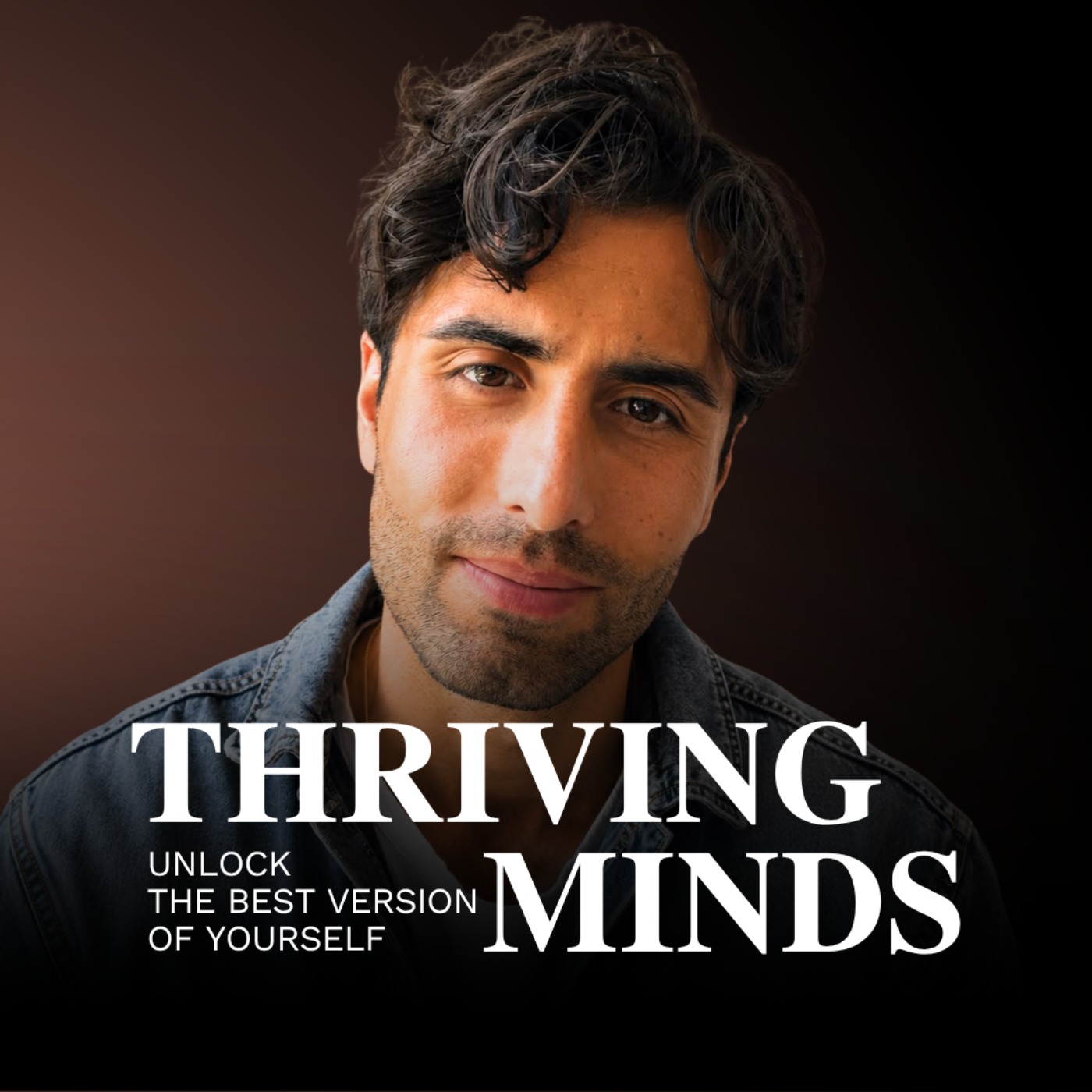
 Thriving Minds with Alberto Zandi
11 Jun 2026 · 1h 38m · 39 chapters

Donna Ida’s journey from an idea to building a denim empire, and what entrepreneurship costs emotionally. She argues that business identity can become inseparable from the founder, that you must “just ask” and not accept “no,” and that the “dark days” are part of the strength-building process. She also explains how she shifted from multi-brand retail to creating her own high-waisted denim niche.
Donna Ida (aka “the Jean Queen”), founder of Donna Ida. She built a single London boutique into a globally recognized denim brand; her jeans are favored by Catherine, Princess of Wales. She describes herself as an entrepreneur, wife, friend, sister, and daughter, with a strong obsession with jeans and a focus on fitting customers to their body shapes.
Written by AI. May contain mistakes.
Dona discusses how her identity became intertwined with her business and the challenges that came with it.
“Never ever look at the whole mountain because we always look at the mountain.”
Dona reflects on her uncomfortable childhood and the impact of school on her entrepreneurial spirit.
“Can you take me back to Australia, Sydney?”
Dona shares her various jobs in Australia leading up to her decision to move to London.
“say if they've got kids or whoever, if they don't like school, whatever, I was like, honestly, school is something that you just have to get through.”
Discover the speaker's motivations and early challenges leading to London.
“And they'd say, no, I just want like a cheese pizza with like cheese on one half.”
Learn about the speaker's diverse jobs and financial strategies in London.
“We didn't actually do it then because we didn't have the money.”
Understand the transition from temp jobs to the desire to start a business.
“I'd say maybe it took a year or two or 18 months or something and I worked for a company called Manildra Group actually at the time.”
Explore the importance of having a strong work ethic in any job role.
“I knew I wanted to have my own business but I had, I didn't have, I only had a working holiday visa.”
Hear a compelling insight on professionalism in transitional jobs.
“because in my industry right now, I'm the owner and founder of a hospitality group and right now we employ just a bit under 400 people.”
Discover the valuable lessons and skills learned from seemingly menial jobs.
“And what we always tell them is, look, if you want to be a very good professional lawyer in the future, but right now you're a waiter, you might as well start right now.”
Understand the significance of customer-facing roles and the skills they develop.
“And especially like, I think that almost working in a restaurant or working in hospitality or anything that is, you know, at the coalface.”
Learn why every job deserves respect and the value of diverse skill sets.
“It's an important job and that deserves the respect and they're getting up every day and they're going there and then making it happen.”
Explore the importance of recognizing personal strengths and skills in the workplace.
“But if you ask me to sort of like even do anything on an Excel spreadsheet, I'd be like, I was like clicking something or, you know, on my phone or doing something like just give it to her.”
Hear the story of how the idea for Donna Aida came to fruition.
“How did you come up with the idea for it?”
Learn about the initial steps and challenges in launching the Donna Aida brand.
“And so she said to me just to have a job that just sells teens.”
Discover how Donna Aida evolved over the years and the lessons learned along the way.
“And so I think that is something like, I just don't take no for an answer.”
Learn about the challenges and motivations behind starting a denim brand.
Discover the complexities of sourcing factories and creating products.
“So you have to hunt them out or then do they find you?”
Explore the key lessons learned from the entrepreneurial journey.
“brand, the jeans and what they would look like.”
Understand the significance of asking for help and opportunities in business.
“So if you, whether it's a factory, whether it's, doesn't matter what it is, but just pick up the phone and talk, people are really scared of the phone and just actually ask.”
Learn how to cope with vulnerability and mental health in entrepreneurship.
“And if they say no, just ask them again.”
Hear strategies for overcoming challenges and staying motivated in business.
“You could have one day, you know, you're walking around, you think you're fantastic.”
Learn how to break down overwhelming tasks into manageable daily goals.
Understand the importance of taking immediate action instead of procrastinating.
“I like a small pad of paper and I'll write like five things on them and I'll do them, tick off.”
Explore the mindset needed to commit to a long-term business vision.
“And it just, it will work if you work it hard enough.”
Discover how success is often a result of perseverance rather than luck or intelligence.
“And she's sort of, you know, applying this deadline of if in one year my business doesn't work, then I need to quit because then I'm not going to be successful.”
Hear about the early challenges and successes in establishing the Donna Ida brand.
“But I think, you know, within what I do within making this product and what I do, just be the best at that.”
Learn the importance of continuous learning and adaptation in business.
“That's a great thing about being in business or even just being alive.”
Understand the critical role of marketing in building a successful business.
“Like every day is a school day and we're just constantly learning.”
Explore how social media has transformed marketing and brand engagement.
“good to write about how has social media changed your industry because from when you started in 2006 I mean the world on its own has changed dramatically right 20 years down the line so yeah Yeah.”
Learn about the importance of genuine connections with influencers rather than transactional relationships.
Discover the value of trusting your instincts and staying focused on your unique business journey.
“Don't look side to side, just look straight ahead.”
Understand the significance of making your business easily accessible to customers.
“So it's kind of, and I, so many times I thought standing in that shop in my business plan, I wrote down, I wanted our second shop to be in Marlborough and High Street.”
Explore how building a business can teach resilience and offer freedom, but may come at emotional costs.
“But also I always think about that, the barrier to entry, like don't make it hard.”
Reflect on the balance between work and personal life and the realization of what truly matters.
“me to, you know, to be flexible and to be with my family if I have to, or to help my sister or help someone else, you know, if I have to.”
Learn how personal losses can lead to significant shifts in priorities and business focus.
“And so I worked so long without unblinkered, four hours sleep a night, just working so hard and actually just dismissing my parents, you know, not calling them enough, not being there and just being like this.”
Learn about the shift from physical boutiques to an online business model.
“because I'm on the motorway back and forth all the time.”
Discover the realization that achieving goals doesn't always bring happiness.
“So, yeah, I mean I feel like that there's probably things that I've missed out on.”
Explore the insights gained from personal experiences and the importance of self-belief.
“I think we all need to learn how to differentiate a need from a want.”
Understand the importance of being true to oneself in business and life.
“If you had to compress all your knowledge into one essential piece of advice that we all must implement in our daily lives, what would it be?”

Get the gist, explore an idea or ask about something said.
 Claude
On Thriving Minds with Alberto Zandi, what are the key points of this episode?
Searching your listeningAutomatic transcript. May contain errors.
0:00Let's ask or we'll die wondering. And that takes bravery. It takes time. They say, no, it doesn't work. No one buys your jeans. It's like, is it the end of the world? No, you'll make it better. It will work if you work at a hard nut. We said that you would like to bring the King of England into our podcast. And I was like, do you think that you can make that happen? And your answer was, I mean, we can ask. Just ask. Today's guest is Donna Ida, better known as the Jean Queen. She built a single London boutique into a globally recognized denim brand whose jeans are now favored by Catherine, Princess of Wales.
0:35This is the story of how she turned an idea into a fashion empire. It took me a long time to realize that actually that's the powerful thing we have in the business is me. And to use that power. Never ever look at the whole mountain because we always look at the mountain. It's just overwhelming like tick, tick, tick, dun, dun, dun, throw it away. And then you move on to next thing. How do you keep going in those dark days? I literally just kind of go... What has building a business cost you emotionally as a person? 20 years has gone like that. You're in your 80s. Now I want to spend so much time with them.
1:20Now you've made me cry.
1:26Donna, good morning. In the fashion industry, you are known as the jean queen. Yes. Who are you beneath this title? Who am I beneath that title? I'm someone who just is obsessed with jeans and who wants to stay in her lane and deliver the best possible jeans in the best possible way to my customers. But I think like underneath that is like I'm an entrepreneur, I'm a wife, but I don't sort of, I'm probably like a, I'm not exactly a trad wife. I'm a sort of like almost part-time wife. My husband's also an entrepreneur. I'm a really good friend, I hope. And I'm a sister and a daughter. And I just, you know, like to be a good person.
2:17What happens? What do you think happens when your professional identity quickly becomes linked and tied to your business identity? Well, when I first started Donna Ida, I called it Donna Ida because if you Googled that, nothing else came up. And so I sort of inadvertently made myself the business, but I didn't realize it. And so when we started in 2006, opened with a shop that was multi-brand denim, sold all the best jeans brands in the world, called her Donna Ida. And I had a girl who worked alongside me who came into the business and she kept saying, well, but we've got you. You know, you're the person we've got.
3:02We've got you. And I was thinking, but I don't want to be sort of me. In fact, even my name's Donna Ida Thornton. I even took the Ida out of my business card at first and just had Donna Thornton, which obviously then became confusing. So I put it back in because I was kind of, I was really confusing things. I was kind of going, well, it's called Donna Ida and I'm Donna Ida, but you know, I'm really just the business owner, but I also do serve you and you know what I mean? So I was quickly confusing the customer. Well, actually it's probably just confusing myself. The customer was probably never confused.
3:37by not leaning into that just very simple thing that the asset is me and that I have that eye and I can tell people what jeans to wear and what will look good on them, their body shape, and how to make them, how to cut them, all the rest of it. But that is something I've learnt over and over a long period. But it was coming back to sort of Donna Ida, me being that person, It took me a long time to want to be that person and to be the person at the front and to realize that actually that's the powerful thing we have in the business is me and to use that power. It has become clear to me through my research and the conversation that we have before starting the episode that you are an entrepreneur through and through.
4:27And one of the things that I find very interesting is that typically the upbringing of an entrepreneur is something that in a way molds your brain to then see life through the eyes of an entrepreneur. Can you take me back to Australia, Sydney? How was your childhood? What was it like? So I found growing up very uncomfortable. comfortable um I grew up in a sort of you know a beautiful family mum and dad like you know the nuclear family my sister I was a younger girl my sister's 22 months older than me mum and dad all perfect middle class like if you've ever watched neighbors it looked like our house literally looks like Ramsey Street like it couldn't be more Australian that's exactly what it looked like but for me being told what to do and what to eat and what time to do it I hated school.
5:22I wanted to be home with my mum all the time. Like learning was, I hated it so much. I found it humiliating, depressing. I was anxious, you know, but you wouldn't have known that when I was at school, but I would then sort of like go home and then play for an hour or so. And then, you know, it'd start to get dark depending on daylight savings or not. And then that Sunday night feeling would sink in and I'd be like, oh God. And then I'd be crying. I would tell him, mama didn't want to go to school the next day and it was just, and then my sister would take me to school. And I remember like every day in the playground when we were at primary school, I would cry every single day.
6:02And then my sister would take me to Sister Carmel who was, because we were educated by nuns, we went to Catholic schools, and say, you know, she's sick. And she's like, she's not sick. Like, of course, you're not sick every day, you're just crying. But I was just so emotional and I hated it so much. so um it kind of got better for me just as I was kind of growing up and I just was very clingy to my mum um and then it just and I feel like that was just I don't know what it was but considering how tough and resilient I am now I wasn't when I was a kid at all so I just you know I don't know if that's sort of like for me or what but I you know I did find it really tough and I sort of say to other kids and I look at kids in school, I think it was just the environment that I was in.
6:52So for me, I like to have a really flexible environment. I like to be the person who's in charge. I decide what's happening in my day. I can sort of say, okay, I'm going to do this podcast or I'm not going to do it. I'm going to go to lunch or I'm not going to do it. Or I'm just going to say, I don't want to do anything. And I'm just going to be work and be all day, do whatever I want to do. Having that sort of having to go to a job from nine to five and get up a certain time and be there on time makes me fearful and anxious. And I think I feel very hemmed in. And I think that's what school did to me, like having to be in a certain place at a certain time, I just couldn't stand it.
7:29And so then because I wasn't enjoying it and I didn't like where I was, I wasn't learning. So like, I remember maths, for example. Okay, so I mean, you would probably still say that maths is not my strongest point. But I remember somebody coming out of the playground because the maths teacher was marking all the papers and she kept me saying, you got like 2%. And I was like, what? And I was like, no, I didn't. But instead of multiplying, I plussed everything. So I was just going plus, plus, plus, plus instead of multiplying. And it's like, so you got everything wrong. I was like, oh, my God. So then that, like, and I found that really embarrassing.
8:07But it's like I wasn't listening to the teacher because I was scared and I was anxious and I felt hemmed in. So I kind of like say to friends of mine, say if they've got kids or whoever, if they don't like school, whatever, I was like, honestly, school is something that you just have to get through. It's horrendous. For me, I absolutely hated it. My sister was better at it, but just the environment was bad. And I think a lot of entrepreneurs would also find school a bad environment because it's, you know, I feel like entrepreneurs want to create their own environment. That's just me, me. and that's what I think I see with other people.
8:45I don't think my husband liked it. I mean, he's dyslexic, but he's very creative and we're probably both quite good with people. So then you left school at the age of 16. Left 16, yeah. Did it feel like a relief? Oh, such relief. So my dad, my dad went to university. My dad's an accountant. My mum grew up in a small country town. and she then went and worked in a pharmacy and she was always a pharmacy assistant her whole life and my mum's very beautiful you know very sort of glamorous she always have like nails done just gorgeous hair was done everything about my mum's just beautiful um and but she was always sort of like the softer one still is you know mum and dad's still alive in Australia um and so my mum said to me as I was getting to year 10, I think you should, I was going to go on to year 11 and 12.
9:44So in Australia, we have like year 10. So we go to high school for four years, then you can do an additional two years of what they call higher education before you would then go to university. So to go to university, you've got to do those extra two years. And then my mum said to me, I think mum just did it. She said, I don't think you should be going on to these two other years. and she booked me into a secretarial college called St. Patrick's. And so I said to Dad I wasn't going to go. I had the uniform and everything because I had to go to another school. And I said, no, I'm not going to go.
10:17Mum's, you know, and so Dad was like, you know, really disappointed and everything. But at the same time my sister would do the other two years and she didn't go to university either. So for me I was just like I just need to get out of here and get on with things. I just wanted to work and earn money. So from when I was 11, no, it must have been like legally 12 or 13 in Australia, you could work a Saturday job. So as soon as I could legally work, I was working. And I'd work in a chemist for four hours on a Saturday. My whole time in Australia until I left, I was always working two or three jobs, always.
10:51Because it was like, how do I get more money, save more money? Because I'd always be looking and going, okay, well, this is how much I'm earning. And this is how much I'm in this job. but if I just stay in this job even if I never leave the house and do anything this is all the money I'm ever gonna have yeah I'm like that's not I need to be I need to be in control of the money so did you mean the social aspect of school don't like the social aspect did you miss it once you left no I didn't I didn't even I don't have any friends from school I had like a little school was bitchy I was probably bitchy because it was like dog eat dog yeah in an Australian school I mean, we had this kind of like gang of four of us and if you were off sick, you'd come back, oh, my God, isolated, ostracised, but then we would also do it to the other person.
11:41It was like Lord of the Flies. It was horrendous. So I didn't enjoy that at all. I then did have my friend from high school I then came to England with and then she eventually went back to Australia and I stayed here. but even from like St. Patrick's, from my sort of like typing college, I know of a couple of the girls and what they're doing. So you leave school at the age of 16, at the age of 26 you decide to move to London which I'd like to explore that in a bit but during those 10 years what type of jobs did you work on? So I worked, so all secretarial, typing as a PA, receptionist, so all that during the day and then um at night i was waitress world's hardest job being waitress i have so much respect for waiting staff and i'm always so nice i mean i remember there was this huge this round table i used to work a place called the keg in paramatta and it was like friday night huge table and i had this huge tray of cocktails and i lent over and there was like beers and everything and then just everything went on today it was horrendous so I've done that um but I was always but I was all about the tips so the ambition behind this this work experiences was money I wanted yep I wanted money to um to save money to to travel over here um and so then any in any work environment especially if it was something like tips I could sort of control it so that's why I wanted to waitress because you can slightly control a little bit more, you know, what you're earning.
13:25So if you're just, if I was, oh, I also worked at Domino's Pizza, like at the call center in the evening, you know, taking the pizza orders, but you couldn't really control what you're earning. You're just earning, you're in a call center and you're just earning, you know, however many whatevers. And then you're just taking call from drunk people and stuff. But, and also I wasn't good at that because I was, you know, actually looking back at it, like I would wind the customers up as well. And so they're calling and they were drunk. And then there was like trying to order a pizza and I was being real and I'd be tricking going, you sure you don't want cheese with that?
14:01Or do you just want cheese on one half? And they'd say, no, I just want like a cheese pizza with like cheese on one half. And I'm like, right. So it's actually no cheese on anything. Like, no, I want cheese. And I'm like, you want cheese? Okay, right. So we're doing triple cheese. and so then they would like listen in to the um the the boss would off the call center or sitting there like going you know without lying on taking pizza orders um and she'd say to me um if they'd like listen and see how you are and then you'd like get taken back and they'd like yeah you can't really you can't really do that to the customers you know you can't be and I'm like oh okay sorry sorry um so I've done every I've done a lot of crap jobs and the idea that your target was to save enough money to come to London?
14:45To come to London. Why? Yeah. So I came to London when I was about, um, when I was growing up, there was always, you know, I was in high school and I was really inspired by Sex Pistols, by, um, Sex Pistols was the big one I was into. I was really into punk music. Um, and everything about London was just like so cool. The King's Road and the Beatles I loved so much. Like all the English music. I really liked American music as well but I loved English music. So we've just got this rich history of we've got the Rolling Stones, we've got the Beatles, we've got David Bowie. It's like we've got everything.
15:26It's like all the T-Rex, it's everything. And so for that it was just, you know, you've got a girl in Australia who's living in suburbia. I mean there was no internet. Like how do you even find stuff? Like to look for anything, you have to go through the yellow pages or watch on TV or find some snippet in a magazine. I remember the first time I heard Princess Diana's voice and Elton John's voice, I was so shocked that they had these accents. So shocked. I was like, like, I was like, why do they sound like that? Like I didn't even think Australians had accents. I thought we were neutral. We just didn't have accents.
16:05Everyone else had an accent. Australians didn't have accents. We got the biggest accent ever. So I was just like everyone, we're the normal ones. And everyone else was like living on these different crazy planets. So when people were like talking about like leaving school and stuff and we used to have this thing in Australia, probably does still go on called Schoolies Week, and you would go for a week after school and you'd go and just hang out and get really drunk and whatever in Byron Bay. So I was like, well, we're not going to do that. instead of doing that, because everyone else is doing that, we're going to do something much cooler, we're going to go to England.
16:43And then she was like, oh, my God, let's do that. So it kind of came from that. We didn't actually do it then because we didn't have the money. But then once I started, I went to St. Patrick's, went to business college, learned to type, shorthand I wasn't very good at at all, so I still can't do that, but, you know, fast typist. And then, you know, went, got a job and then started to work as a receptionist as a PA and from there I said, okay, I saved money-ish, not really, and then just decided I was going to then just go and go for a holiday for six weeks. So that's the first time I came over here.
17:23I didn't even know how old I was, maybe like 21, 22, something like that, and we did a Contiki tour. Have you ever heard of a Contiki tour? No. Oh, my God. So it's like an Australian thing and you get, so you get, there's just like a load of people. You land in England, you go to like Russell Square, to one of those enormous hotels, like a backpacker hotel, get on this bus and you then just go around so you can do like, you know, you can do 30 cities and countries in like, you know, 28 days and stuff. It's insane. And so we did this sort of package, did that, went all around Europe. It was, for me, it was like the people that were on this bus, It was just horrendous.
18:05But it got me around. It got me to see everything. And so I had a real sort of whistle-stop tour of Europe. Then I was, you know, here for a few days. Then we went to America and we went east coast, west coast, really sort of, you know, got in as much as we could in six weeks, I think, I'm pretty sure six weeks. Went back to Australia and said, okay, that's it. I'm going to now knuckle down, take on more jobs, work more hours, pay off all my debt because I had like all the credit card debt and save money and then move to England. So I had to get a visa for here for working visa for two years. And I was doing stuff like I went to my boss and said, I think I was working nine to five as a receptionist.
18:53And I said, what if I work eight to six so I can earn more money? So, okay. So then I was working like eight till six and I was going straight to the keg to like waitress. And then I was, and then I think on other days I was like, I made greeting cards. I sewed aprons. I, there was like t-shirts and I need fixing. So I would sew stuff I can sew. So I was doing like loads of different things so that I could just, and back in the day there was telephone banking. So you dial up the thing, like listen to the thing and see how much money you've got in the bank or you don't have in the bank. and I was just obsessively doing that at the reception desk, like listening, like counting how much money have I got.
19:32And then when I eventually left, so I told my boss that I was going to go. I'd say maybe it took a year or two or 18 months or something and I worked for a company called Manildra Group actually at the time. So they were huge and they're still very big in Australia. It was a flour mill, so they made flour and then from the waist they started making ethanol so you know very entrepreneurial business as well and um and i worked for mr davis who was the finance guy of mr honan and mr davis's daughter jody she said to mr davis i you know what are you going to give her you got to get i don't know i was going to have a drink with her so she's so she said no you need to go and get so they gave me five thousand in travellers' checks.
20:23And so I was, like, thrilled. Yeah. So I left Minaldra and then with that, with$5 ,000 in travellers' checks because I was really, I'd had to work so hard to pay off all my shopping addiction as well at the same time. So even though there was no internet, I managed to, like, I had a huge shopping addiction, as most girls do. It's an illness. And so then I left with some cash, with what I'd say plus$5 ,000 Australian dollars in travellers checks. So that's what I left. So I went to New York, had an amazing time there, probably burnt through all the money and then travelled around there. And then because we didn't have visas to work in America, although I really wanted to, we had a visa to work in England.
21:13So then I arrived here in 99. And then at what point did you decide that you want to become an entrepreneur? When I realized that I was earning six pounds an hour over here. So I got here and I was working at Office Angels. So I went to Office Angels and we had sort of friends of friends from Australia. We then rented a house in Barnes, so just over Hammersmith Bridge. and so I mean we arrived in in January 1999 and it may as well be 1956 so you leave New York and everything's like amazing everything feels like Saturday night every day and then you get to London and it literally felt like 1956 it just everything felt like I could write checks for I mean you can still write a check here which I think is wild so back in 1999 I could write a check at KFC because there was a KFC at the end of the street.
22:11So we didn't have any money. So I could write a check and give it to them at KFC and they wouldn't bank it until the following Wednesday. I didn't have any money in the bank. So I was like, great. So I was like gaining the system, working on how I could sort of like, because office angels were then, you'd work for, as a receptionist for six pounds an hour, then you'd, by the time they took everything out, you got like a hundred pounds. So I'd have to write a check for dinner and then think, okay. and then the little corner store you can write checks for. So it was really at that time like I thought, okay, I knew I wanted to be an entrepreneur.
22:41I knew I wanted to have my own business but I had, I didn't have, I only had a working holiday visa. So I then had to go get a job, find something long term. So I found this guy, Alistair Ritchie, who I said let me money for my first flat and he's still a really good friend of mine. friend of mine and um I eventually through my temping jobs went and worked for him to this company called Advantage it was a sports marketing company and I was working for a guy called Po Tang who was the finance director so I started working for Po and then I saw Alistair and I'm like I think you're Alistair's secretary was pregnant she was leaving to go maternity leave and I said I actually think I need to work with you because you're more fun.
23:29So, and Poe's great but quite boring. So I then went and worked for Alistair and I said, you know, we need to get, you need to sponsor me. He said, okay, well, cool, how do we do it? So I said, I'll take care of it all. I found a lawyer. I placed the ads. I did everything. And then he didn't find out that I'd sort of really, he knew he'd signed all the papers but it wasn't until then I think the check went through. like 700 pounds or something and then somebody called up and wanted to apply for the job because what you had to do is in those days you had to place an ad for a job and then if you didn't get anyone who was applying for the job they used that you'd say okay well you can have it then because no one else has applied for it and so you need to be doing this job well guess what someone applied for the job and so then Alistair was like oh my god what's going on here I'm like well you know um anyway so i got but so i'm i will always find a way you know where there's a will there's a way so then he's they that what i did i got the job the other person didn't get the job um and so i worked there in sports marketing which is something i don't know anything about i only know like what kind of football or soccer it is from the shorts in australia like i wouldn't know what kind of thing, what the shape of the board.
24:50I didn't know anything about that. But I worked there for four years so I could then, I did my working, my two years holiday, working holiday visa, and then I got a four-year visa, work visa, and by then so it was six years working in a job that I didn't like before I could get my permanent residency here and I could start my own business. So I kind of knew the whole time, so this is crazy. You just, and I managed to, Alistair helped me, my mum and dad helped me, bought my first flat, bought a scooter, used to whiz around town on a Vespa, just thinking how am I going to make this happen because this limited amount of money was limiting.
25:39So I knew I had to work myself because I had to control the cash. Did any of these work experiences help you become an entrepreneur? in any way from a learning point of view perhaps? Yeah, definitely. Like, for example, I would always be the one where even though it was a secretarial job or like I was, you know, working marketing or I was styling friends on the side, it was I would always have the best work ethic. So even like on a Friday. So it was fire. I remember being in this office filing till like 9 o 'clock on a Friday night and everyone else had gone to the pub and they're like, come why aren't you coming to my why aren't you coming pub and I'm like for me that's just why would I want to spend time in a pub on a Friday night when actually this filing system could be perfect I just I'm not someone here I just can't leave it yeah so it was for me that always like whatever I did it had to be good yeah so um and actually Trevor Beattie who's a really um well-known, he worked with TBWA, he was like a big ad guy.
26:44He did all the sort of the FC UK ads, pretty poly, like very clever ad guy. And he used to work for Alistair. And so Alistair got him in one night, one Friday and did a talk. And he said, and really resonated with me, he said, it doesn't matter what you do, if you're the bin man, if you're the jean queen, if you're this, whatever you do, don't be ordinary, be extraordinary. So even though it was a secretarial job I didn't want, I still want to do it really well and leave my surroundings better than I found them. I think that's a very powerful takeaway and I can relate to one extent or through a different angle to it because in my industry right now, I'm the owner and founder of a hospitality group and right now we employ just a bit under 400 people.
27:35And it's very interesting to see the profile of employees that we want to get to have in the hospitality industry. Many of them are working in the industry as a transition process or period. So many of our employees, for example, right now, they want to become lawyers or they want to do something else with their lives. So hospitality is not going to be their long term career. And what we tell all of them is that some of them, unfortunately, they are not as professional during this period because they don't think it's going to be. their long-term gig. And what we always tell them is, look, if you want to be a very good professional lawyer in the future, but right now you're a waiter, you might as well start right now.
28:14You might as well be very professional at whatever you do. And you need to start right now. So for anyone that right now is going through any work experience, I think this is a very powerful lesson. Whatever you're doing, don't dismiss the learnings that you can have from it. because from any job, you can learn something that then can become a very solid pillar to whatever you're going to build in your life, whether that is in the form of becoming an amazing entrepreneur, or as we were discussing later, even an amazing parent, it really doesn't matter, but we can learn something valuable from anything that we do in our lives.
28:51And especially like, I think that almost working in a restaurant or working in hospitality or anything that is, you know, at the coalface. So you would sort of, it's really interesting, like retail and say, you know, hospitality is very similar. So you're, you've got a relatively low paid job, but actually it's the most important because you're the person facing, you're at the coalface, you're selling to the person. So you could create the most incredible restaurant. You can have the best chef in the back. But if you don't have that person at the front, you know, giving them a warm smile, welcoming the guests to the table saying, please take a seat.
29:34You know, what can I get you? How's your day? What can I do? And just that level of not too intrusive, but just lovely. I mean, the chef may as well pack up and go home. It's like the waiter is so important. It makes that experience great. And learning those people skills. And even for example, if you cock up, like you spill cocktails all over somebody, that is absolutely going to happen. You're going to make a mistake with an order. You're going to spill drinks on somebody. You know, you might, you'll do whatever you do any multitude of things. It's how you deal with it. And that's what it teaches you is like, get out there.
30:16You have to deal with the public and you have to start peopling. And so even if you wanted to be a lawyer as an example, I mean, you're selling your services. So I think as long as we all get into our heads that we are all in sales and sales is very much like a dirty word. People are like, oh, I'm not a salesman. We all have this kind of like image of like a car salesman, of someone like, you know, bad suit and, you know, greasy hair and whatever and say, want to buy a car, want to buy a Rolex, want to buy, you know, and actually we're all selling, whether we're selling a meal, whether we're selling jeans, we're selling, if you're a surgeon, you're selling your skills, whatever it is.
30:55If you're a psychologist, you're selling what you've learned. We're all in sales and we all have to have that sort of customer facing or on the phone or talking to somebody. So you're selling a skill. Even if you're an IT whiz, that's that skill you're selling. So you have to actually be reporting to, you know, your boss or actually or the person you're selling your software to, whoever it is, we're all in sales. And so learning that and understanding that and having that respect for every job you do, even if it's menial. So if you're, every time I go into the bar or to a bathroom, if there's a person there, you know, cleaning up after the bathroom or, you know, doing whatever, handing, you'd go to Claridge's and they give you, hand you the thing.
31:45I always say, hi, how are you? Always look at the person, always like recognize them, say hello to them, show them respect because they're doing their job really well. It may just be making sure you flush the loo, but you know what? It's an important job and that deserves the respect and they're getting up every day and they're going there and then making it happen. It could be just because they absolutely love it and they're so proud to be working at Claritism. For them, that is the most amazing job. Like I'll often say to Dazzler, my husband, who said to me, why can't they, why couldn't they do that?
32:24Why couldn't they do that? And I said, because you have to have different people in every job to make it all work. It's the ecosystem. It's the same as in the animal kingdom, everywhere. 8 % of the population employee 92 % of the population. So what I can do, a lot of people just wouldn't want to do. And equally, you know, what other people would sort of do, I wouldn't want to do. So it takes all types. Like I've got a different, very creative brain. I can make something happen somehow by talking to somebody, explaining to them, and I get them to do what I want them to do. But if you ask me to sort of like even do anything on an Excel spreadsheet, I'd be like, I was like clicking something or, you know, on my phone or doing something like just give it to her.
33:11I'm like, it's not working, it's not working. And so there's, you know, it's just my brain isn't working like that. I'm like, so I have to like stop and go, okay, right, okay, just calm down, Donna, calm down and sort of work it out. But, you know, I think recognising we all have different brains and different ways of doing things and different skills, For me, I know what my skill is, what I'm good at, and I'm now 52 now, but now I'm really leaning into that because it's really, you kind of got, for me, it's like, okay, halfway there. Hopefully I'll live to 100. I completely agree and I think, yeah, we're all different and I think that's a beautiful thing.
33:48Exactly. Like, that's a plus.
33:56I want to talk about Donna Aida. How did you come up with the idea for it? Well, I didn't come up with the idea. Oh, I really like this. Yes. So again, Alistair Ritchie, all roads lead back to Alistair Ritchie, who was my first boss. He, you know, lent me money for my flat. Your mentor. My mentor. He's amazing. And he, and very funny as well. You've got to have humor in your life. So he always said to me I had a really fat ass, which I actually do. And so he would say to me, like, God, he'd go on a way on a business trip and I'd come back and say, haven't you lost any weight? And I'd say, I can see where your hair used to be.
34:38So he had this kind of like, you know, and he'd like three hairs coming out of his head. So it was his now wife, Janice. It was his, Janice's daughter, Lindsay, came to London and was working here when Alistair was dating Janice. They weren't married at that point. And I was chatting away to Lindsay saying, you know, I had this work visa, I was working in sports marketing. And I said to her, what is it that I could do? I could do, I could have a concierge company. I could do, you know, the internet was brand new. Wanted to start a business that was like an online business. And she said, well, you know, you could start open a shop that just sells jeans and I was like oh my god that's such a good idea she's like you love jeans you wear them every day why don't you have a shop that just sells jeans and I actually had even had this idea in my mind or I'd seen other people doing similar things are so stupid it didn't occur to me so I remember in my sitting in my flat reading the Sunday Times style.
35:47And there was this article on Heidi Klein, which is made, it started just like Donna Ida, multi-brand swimwear company. So if you wanted to go and get your bikini, go on holidays, you get a spray tan there, get everything, one-stop shop called Heidi Klein. If you want to go on holiday, go there. You walk in the door, smells like coconut. You just like instantly transported. And I remember sitting there going, oh my God, that's just so good. What a great idea. I wish could have an idea like that it's just amazing and I didn't I still didn't even go okay Donna so what is it that you like how old were you old enough to know better I was like must have been 25 26 something like that no no no it wasn't no it wasn't sorry I was much older started on I do 33 so yes definitely old enough to know better yeah so already 32 you would have thought that my brain was more fully formed at that point but I was probably I was still over complicating things There's just so much noise.
36:45And I think that going back to even like hormones or just as you're growing and getting older, you do tend to overcomplicate things when you're younger. Yeah. And you can't see the wood for the trees. There's just so much noise. And so she said to me just to have a job that just sells teens. I was like, oh, my God. I thought about it all night, rode home on my scooter. I was like, oh, my God. Like I thought about it. The whole riding back to work the next morning, that's it. that's it so because if you have an idea and just sort of ruminate and you go actually no that's not going to work because of this because of that it was just that was it and it's like that's what I'm doing I started writing the business plan straight away I was just so into it and from that moment that was 2005 I just have never ever not even for a second thought I don't love this I don't enjoy this even when things have been really shitty and really really tough stuff i've never thought oh my god like i don't love jeans you know so i'd even like and and i think everything i've sort of gone through in my business and and you know and having stores going online creating my own brand which actually was almost like going back to square one all i have to do if it's look at my look at someone wearing a pair of jeans and be inspired all over again.
38:07And so it's like, it always just, I can take myself there so quickly. And what exactly was your business like when you launched it in 2006 and how has it evolved throughout the years? Because right now it's something different, relatively different. Totally. So it's, so it started as a multi-brand retail. And so I then had to, you know, find the location, go and find all the brands like TrueLegend as an example is a person, the first one that I contacted and um and I remember saying um to the guy Vinay who actually is still a friend of mine and he was selling true religion at the time and I wish I still had the email because he denies this but I said to him um I really want to come I'm gonna open this door this is gonna be the location and it's gonna have all these brands and I'd like to sell true religion And he said, no.
39:01I said, okay, well, but I'm really, no. But, and I just kept going. And so I think that is something like, I just don't take no for an answer. Like if I called you tomorrow, for example, and you didn't call me back, I wouldn't say that as, that wouldn't bother me. I would just keep calling you. And so you would literally have to say to me, I don't want to talk to you. I would just keep going. So you see like somebody says, I call them, never call me back. And that's it. That person would never, ever, you'd never try again what if they missed the call or didn't see it or had something going on you know you just got to keep going somebody then said to me actually i'll block you i don't like like okay i've got the picture now but other than that i would just keep going and so i he then said okay then fine come for an appointment then he sold me true religion so then as soon as you got the first brand you're like i've got the next brand got the next brand got the next brand so I started that with all these brands multi-brand retail is really tough it is so you've got to then go and you know you there's million different buying appointments all the time so you're always out at buying appointments um instead of being in your shop with your stuff with your customers so it's something that like it takes you away from the business all the time you've also got different brands saying okay well there's distribution so you've got harrods down the road you've got um harvey nichols whoever other boutiques so i can't within this square mile i can't open distribution to because there's already too many too many distributors but so it kind of was a even when i wrote the business plan the the aim was always to create my own brand but when we first started there were so many other great brands and I was actually learning the business and I was learning about denim um and not just being a fan of it but actually selling it and actually being in the industry that it wasn't also obvious to me what what was the what was the gap where was the gap in the market it was kind of there from the beginning because jbrand had the bardo jean which is high-waisted but it was and it started people were saying oh do you have high waisted you have a high waisted so it was we kind of always knew but I was so busy and I can still hear the voices now it's like to me years later picking out that voice it was always the high waisted jeans that people wanted but there's also everything else it was just like you know managing to serve customers we were very busy from the beginning I had my chihuahua called Romeo in there every day shitting in the window because I wasn't like taking him out when the remember the um the vm from um ralph lauren just down the road she'd come in and she's like say should i just spray it gold and call it installation i'm like well you could pick it up um so it was like a million things going on but when i sort of you know look back now i can see that it was it was obvious it was the high-waisted jeans but how to get there um so i then start so this is 2006 we started very successful great got all the brands on board but I was but I was also in the back of my mind when you're trying to get distribution you're trying to like you know go to all these buying appointments and I thought I'm creating a destination I'm making a name for myself as a person who can fit you with the best genes but I but also because we are popular and because we're doing well why wouldn't the brand the denim brands that I'm buying say well why don't we just stop selling to Donna and open a shop right next to her no so I could see that straight away and so I was always in my mind trying to protect myself and future-proof the business so back to probably where like being in control and probably why I didn't like school and other like you know growing up and everything because you're having to operate in a controlled environment that it wasn't of my making I didn't enjoy that so then I thought okay we have to we have to make our own jeans and it was I was talking to Roberta who was our store manager at the time um that was a few years into the boutique business yeah so then we would have been like you know 2010 maybe to 2010 and she was saying and we were really talking about she said it's high-waisted it's high-waisted it's that you know it's always what people are asking for and then a customer of mine called Jeannie Norman who's one of our um very first customers amazing woman but very very straightforward like Donna I want this so a lot of my customers are like that they sort of um um i want this i want this give me this and so she said why don't you just make it yourself then it's like i want to be high-waisted straight leg cigarette leg this is what i want i was like okay so that's what the brand's gonna be and so that was their first so i'm like we need to create that gene for genie her name is genie norman so we then call the first doll genie so that kind of like was like as a i wanted a brand but like why what was it couldn't just be like anything else and so that was the gap and then that's when i said okay so high-waisted you said cigarette leg high-waisted yep high-waisted like a straight leg like a slim straight leg okay so i would just call it a cigarette leg um and so that was kind of like that's it that's the gene that's missing in the marketplace that's it nobody was doing that nobody was doing that um and um and it was kind of like it had been around but it's sort of like years ago it was like it was kind of like you know it was that Saint Laurent sort of look you know that's like chic 70s French woman look um and at the time everything was very low-waisted skinny tight super stretchy jeggings you know um and so that's it was quite different at that time So, but then I had to then find a factory.
45:13How do you find a factory? Like, you know, nobody says to you, oh, you know, share my factory or share my contacts. No way does anyone ever help you with anything in manufacturing, ever. It's like this massive secret. And also there's no sort of like yellow pages for like, you know, jeans factories. It just isn't. So you have to hunt them out or then do they find you? Like how do you? And so for me, always, I mean, I could give the FBI a run for their money on any subject. So I'm like, how do I find this? So I even was like, okay, do I just go to like Turkey, get on a plane, go out there, get in a car, and like literally drive around searching factories.
45:55I even did that. And then through like a, you know, a friend of a friend of a friend, I then found this guy who actually he used to all the manufacturing for next and then it eventually went on to his other factory and then he then took me to like this other dude who worked in Sweden or something anyway and so we went through this whole process I think we spent like maybe 10 ,000 on 15 ,000 on it making the worst jeans ever and actually the jeans were good the styling was bad and so he was kind of like taking it he really just took the Donna Ida logo and he just, it was almost like a pair of like Dolce jeans and it'd have like Donna Ida with a huge logo on the back.
46:42And so he'd taken everything from the show. It was just too literal. And he'd like just slapped it on the back of her jeans. And it was like, it just, everything was wrong. And it was just giving me the ick. And it was like, it just wasn't right. And I said, we just need to completely reverse back out of this. You didn't sell those? No, didn't manufacture anything. I just said, look, I sent them an email, says not working I'm not going to throw good money after bag bad forget it that was your first like sort of production that was well we didn't produce it was just all sampling okay so then we didn't hadn't gone into production but we'd spent for us like a fair bit on it um and I said we just have to like start again and so then sort of reverse back out of that and then um and then I was doing a um like a customer survey and without Donna Ida customers and then at the end I said what do you like?
47:31What don't you like? Do you like this online? And at the end, I said, if there's anything that you wanted to tell me that you're too shy to say here and, you know, in a forum, just here's my email address, get in touch. Got an email the next day saying, thanks very much, really enjoyed it. If you've ever thought about doing your, making your own jeans, I'm a sort of a talent scout, I could help you. So I was like, okay, amazing. So then she connected me with a designer who I could work with to create the label, create the brand. I then got the guys back in who did the Donna Ida branding and they created the Ida branding.
48:07So it kind of sat separately. So it looked like a brand within a store. It became a brand on its own. And then we were fine. And then with the designer who Amy was the first person who actually then sat with me and created the brand, the jeans and what they would look like. And she understood what I wanted. She then said, okay, there's this factory I work with. So then we went to the factory. So that's, and they said, we can start with small quantities. Like they could do like 150 pairs at a time, something like that per color, per style. So that's how it kind of happened. But, you know, again, that's just from going out and meeting people.
48:49So actually, if I hadn't done that survey, I wouldn't have met this person. So every time I go and do something or go out or go somewhere, I always meet somebody that takes me somewhere else. I think there's two other like very valuable nuggets that I think are very interesting here. So the first one is that a lot of people that I know, tons of friends, they're right now in a moment in their lives in which they want to become entrepreneurs. And actually last night, And I was speaking with a very good Spanish friend of mine who's sort of like toying with three different ideas. But he's not deciding on one of them because he wants to find the perfect idea.
49:26And what I told him is, look, his name is Enrique. I said, Enrique, by the way, shout out to Enrique here. You're never going to find the perfect idea. And most likely, once you choose one of the three, I think, good ideas that you have right now, your business in the future will look relatively different to when you started it. And that's exactly what happened to you, right? Totally. So it took you like four to five years to understand and to know exactly what is it that you wanted to do within the gene space, right? And the type of genes that you wanted to manufacture, design and so on and so forth.
49:58That's one very valuable lesson to be learned here. But I think another one is as an entrepreneur, you're not taking a no for an answer. No, exactly. So you're constantly seeking to achieve what you want regardless of the challenges and the complexities. this. And I think that's one of the most important skills that an entrepreneur can have. Absolutely. You have to, you have to just sort of connect with people. So if you, whether it's a factory, whether it's, doesn't matter what it is, but just pick up the phone and talk, people are really scared of the phone and just actually ask. So I had a finance director who worked with me and he used to work directly for Al Fayed at Harrods.
50:43He said he would come to me and he was very sort of, this is the balance sheet, this is this, you know, we owe this person this, we've got to do this. And I'd say, okay, well, let's call HMRC and ask them if we can do a payment plan. And he'll say, well, they're never going to do that. I'm like, but we haven't asked. And he's like, well, we're never going to do that. And so anyway, and he's now, he's in New Zealand and he says to me, It kind of annoyed me. Like I said, well, let's go out and get in the car so no one can hear us. And we'll just call them and you can hold my hand. And he said I was almost hoping they would say no just to like prove me right.
51:19But he said that the biggest thing that I've learnt from you, that Stephen learnt from me, is just ask. Just ask. And I can say 100 % that you still have that within you. and I'll disclose this openly, but before we started the show, you said that you would like to bring the King of England into our podcast. And I was like, do you think that you can make that happen? And your answer was, well, if, I mean, we can ask. Just ask. And, you know, let's see what happens. But at least you should ask. Ask. Ask why, and my Uncle Peter, he says to me, he says, let's ask or we'll die wondering. And it's so true.
52:00But let's not die wondering. Let's ask. And if they say no, you could ask them again. And if they say no, just ask them again. And actually, if you're nice about it, maybe you eject a bit of humour, you kind of like find a common ground. I mean, you know what? Here's another. So every entrepreneur will have to have a relationship with HMRC because we guarantee we owe the government money at any point because you're constantly, it's a cash flow crisis all the time. So they'll have like, there'll be a number you call and you get, you know, you will be shuffled from like department to department, like whether it's kind of like just the general like, hey, did you miss this payment?
52:38To then, you know, you'll be heading more into more of a management and then you go into the emergency room. So it depends if you're in management or you're in the emergency room. They pick up the phone and you kind of get, you know, hi, HMRC. And then I say, and their tone is tense. because they think they're going to get some fuckwit saying, you bastards, if you didn't do this, if you didn't do that. So they're already pissed off because they don't know what they're going to get. Yeah. So they're tense. And then I'll sort of say to them, I'll say, good morning, how are you? Can I please give you my VAT number?
53:18And then they say, yeah, sure, take that. And then by the time I say, and they say, okay, I'm just going to take you through security. I'm going to go, yep, no problem. And I give my address and everything. By the time I've gone through at my address and I've said, please, thank you so much. Do you mind if I just wait a minute while I look for it because I should have had this information? But you know what? I don't have it. Give me a sec. And they're like, yep, no problem. And then by the time we've gone through security, they're happy. I'm happy. We're happy. And so I think you can then have a conversation because it's just human to human.
53:55Human conversation, yeah. That's all it is. and like they're just doing a job. They're working for HMRC, you know, I owe them money. They just need to like, how is this going to happen? And so they don't want to be in a position, they don't want to have a tricky conversation. It's like, look, let's just work this out. With anything in business, let's just work it out. How are we going to do it? And also you can sort of, they don't want to put you in a position and actually things have really changed over the years. I've really noticed that like when I was first in business, people would be like, if it was HMRC as an example, you owe me this much money and I don't care, I would just come around and like, you know, shut you down.
54:37These days, is everything okay? Are you having any mental health issues? Are you all right? And so there's a lot of softening on both sides because, you know, there is a much more human element now. Mental health is, you know, is more as part of the conversation. It's like, and I think, you know, you've got these two words like mental health, but it just is like, you know, we're all vulnerable. We're all humans. We're all just trying to make it through. And you could have, you know, some days are better than others. You could have one day, you know, you're walking around, you think you're fantastic.
55:12If the sun is shining, you've had good sales the day before, everything's great. But it could be it's raining, your mum's sick, you know, you want to get back to Australia in my case, whatever. and it makes you feel really vulnerable. And so that can just be that one thing that makes you feel really sad and vulnerable. And so, but you still have to be putting on the smile. You still have to keep going. So it's like, if somebody's going to be, just gives you a little smile and he's nice to you, it just makes you feel so happy.
55:47How do you keep going in those dark days? I literally just kind of go, okay. and actually the one of the dark days well some of the dark days was when I first started Donna Ida and I was really lonely and just like writing this business plan it's sitting in my flat in Brookgreen and I remember I had this like desk which I still have in my bedroom and this desk I got for my 30th birthday and I was writing business plan and it was raining and I looked back and I looked at my bed and I was like I just want to get in the bed I just want to get in that bed I'm like no you have to do this and so I just say to myself this is all you got to do today this is what you have to do and so and I would just be like researching dinner brands or like finding out who to like do it say just do this and so every day I'll say to myself I never ever look at the whole mountain because we always look at the mountain climbing that mountain it's just overwhelming and stuff so I always just say you just got to do this this is what you're doing today so I have this like piece of paper I was saying to I never have I never have like long to-do lists.
56:49I like a small pad of paper and I'll write like five things on them and I'll do them, tick off. And then I like to rip it off and throw it in the bin or from at home, throw it in the fire. So there's that sense of achievement, like tick, tick, tick, done, done, done, throw it away. And then you move on to next thing because that's kind of bite size. It's, you can sort of deal with just a few things on a piece of paper. If you've got these massive lists, you know, and I also tend to not write multiple lists and stuff because it's just giving yourself more and more problems. And it's actually, instead of just, I'll write it down if I think, oh, I might forget, but I'll usually, I'll just quickly do it.
57:28I send the voice note, I make the phone call, I'll quickly send the email, just do it. Also, if you have a long list on a day-to-day basis, it instills in you a sense of failure because you won't be able to work for your entire list. So what I used to do years ago, back in the early days of Donna Ida, I'd be having like lists and sub-lists and my list had lists and then lists, it was like it was just ridiculous. I was being the whole time going, actually I don't like my writing on that one or I don't like the paper or maybe I'll change pen. I was just procrastinating. Yeah. And it's like instead of writing it down, do it.
58:03But then that takes bravery. It takes time. It takes sort of like experience and just takes years of just going, what's the worst that can happen? What is the worst? And honestly, the great thing about being a business this long and being alive for this long is actually what is the worst that can happen? Like they say, no, it doesn't work. No one buys your jeans. It's like, is it the end of the world? No, you'll make it better. You do something else. You'll find another customer. Like it will work in any business you're in. if you, unless your idea is so bad. And it just, it will work if you work it hard enough.
58:45Yeah. I was talking to my friend, Ellie, who's an esthetician, you know, where they sort of like do the Botox and all the rest of it. And she just started this business called The Edit by Dr. Ellie. And she's, so it's all of the, you know, the skin creams and everything that she would recommend. And so she sells my website. She said, so how long do you think I should give it? And I was like, for the rest of your life. Because she was like, so do you think I should? She was like, I think I should put a time limit, like a year, two years. I'm like, okay, well, 20 years, 30 years. Like you just, you can't just say I'm going to give this this long.
59:24I'm going to give this in my mind. That's for you would just keep going because it's a really good idea. She's really clever. She really knows what she's talking about and it will work. yeah and so you just sort of even when I first started on Ida actually um my friend who moved from Australia to here said um well if it doesn't just try it if it doesn't work you can just go get another job and I was like no it will work like it annoyed me so much that she would say if it doesn't work you can just go get another job like if you're thinking that thought I mean it just wouldn't even occur to me yeah it just wouldn't occur and you just I don't think any entrepreneur or anyone who really, really believes, if you've even vaguely got that in the back, you've always got the escape route.
1:00:13You know, you've got the, I'm going to jump out of the plane. I've got my parachute on. Like there is no parachute. You have to make it work. As we were discussing earlier, I believe that right now we live in a world in which through social media we're being told that success is achieved very quickly. So then hence why maybe perhaps that happened to your friend. And she's sort of, you know, applying this deadline of if in one year my business doesn't work, then I need to quit because then I'm not going to be successful. Right. Because everything needs to be an overnight success. And and that is not true.
1:00:45I mean, in the show, we've interviewed countless of incredible entrepreneurs like yourself. And if there is one common denominator across all of you is that you've worked incredibly hard for a very long time and you just didn't quit when when the chips were down. and and that's exactly the reason why you have all become incredibly successful because the common denominator that i that i that i see across all of you is not that you're all the smartest people in the room well you obviously you're very smart but you're not the smartest people in the room or the luckiest or you started with money or you were incredibly lucky or you had the biggest network is that you just didn't quit exactly you just didn't quit and you worked for thick and thin until you achieved yeah your your target your goal your mission Exactly.
1:01:26And it's like, and look at Madonna, for example. So she's always said, I'm not the best singer. I'm not the best dancer, but she worked. She just never quit. And she worked and worked and worked. She didn't take the easy road. She wanted to learn how to sing, dance, play the guitar. She's, she's a grafter and just getting up every day and wanting to work and wanting to be better within, you know, my capabilities. I mean, I look at, there's millions of people who are so much better than me in a million different ways, um, much better, better designers, everything. But I think, you know, within what I do within making this product and what I do, just be the best at that.
1:02:10I mean, I can't, I'm not amazing at like really technical fabrics, technical tailoring and stuff, leave that to somebody else. Or people say to me, we used to do like cashmere, silk, that kind of thing. And I'd say, oh, I really wish you would do your jumpers again. I wish you would do this, which you would do that. And I think, okay, yeah, I was good at it, but I don't think I was the best at it. And I can buy a great jumper from somebody else. I'm really good at jeans. So I should just like stick to that. And I also think that like a lot of people, especially in fashion i see it in fashion a lot is you start with something and i'm sure that it's investors or someone else who kind of is like next thing next thing next thing and they'll say if they start in coats and then they do trousers then they do like shirts then they do t-shirts so it's opening every category so you just go okay next category next category and then you end up not being a specialist anymore so you're just another fashion brand who does this so then it becomes so what are you you know where is your area of expertise and so you would then be maybe chatting to any of these you know fashion brands and parents say okay then you've got to dig back in what was it it was like it was those trousers i was good at that shirt i was good at the jacket but i always think it's like stay stay focused so and for me anyway i need to stay focused this what works for me is to actually just be really really good at one thing when in your journey did you realize that you were on to something that things were working well well really you know as soon as we actually opened Donna Ida as soon as I first started because I had customers I've got to this day that were outside the shop trying to come in like and calling when you're going to opening because it was like delayed by a couple of weeks as these things always are um and so pretty much straight away we were we were onto it and it was that sort of people wanted that destination and they wanted somewhere to come you know for great jeans and then for me the really scary thing and the really challenging thing so when I look back at it as much as hard as multi brand was I was actually piggybacking on so I created my name by selling brands that were already successful yeah and I opened in a good location so you've kind of got a great location selling successful brands so okay but then is it me that can actually you know fit you and stuff so that was you know there was me I had that the connection the personality um and I was serving the customers to then take that and create our own brand it was like honestly like starting Donna Idol all over again and manufacturing learning how to um make stuff how to deliver it like you know even sort of manage the production learning everything from scratch and so that was like starting another business all over again while you're still managing a multi-brand business so that was really really challenging quite tough um and and quite lonely um but it was another it was a tough journey but a necessary one to get to a point where I think from the beginning we made good genes now I think we make great genes so um it's that and it's sort of you as you go on and you make things and you're, you know, and you'll be developing and learning and you just learn all the time.
1:05:58That's a great thing about being in business or even just being alive. Like every day is a school day and we're just constantly learning. And I think if you want to learn and you actually, when I was a kid, I was scared of learning. Now I want to learn. I'm interested in learning because I'm sort of in a more relaxed environment so I can like take things in. And I, you know, I'm always researching, studying, like even I was lying in bed last night and I was like going, why did Joe DiMaggio stop sending roses to Marilyn Monroe's grave after 20 years? When was that? So then I start going down a rabbit hole.
1:06:32And I'm like, so when were they divorced? And like, I just always wanting to know, know things. And I might've known a bit, but I'm like, I'm just researching all the time, little things. How important was marketing in your business model? And what's the greatest lesson you've learned in that regard? Marketing is very important. so important and I think that that's probably something that I'm you know I'm good at and I didn't realize I was good at I just sort of thought from the beginning I needed to do PR marketing so when we started in 2006 I had a PR company I had a really good girl um who was almost like her name was Lydia and then she was almost like my little um like a little business partner like a little she would be okay what we're going to do in let's give you an intern she can help you with this and that and the other and we did these um as we did these amazing sort of boxes um which was with vv relo so i got pairs of jeans from all the companies that we were um that we were going to be selling and then we got these beautiful boxes with vv relo with like ribbons and all the rest of it and then we delivered so i got brian i got beverly knight to do one I got Brian Ferry to do one.
1:07:47I got some artists, one called Trademark. Who else did I get? And then we got them to customise the jeans and then we auctioned them on eBay on the day of opening. So it was like gave us a story that we could go to the press with and then the proceeds went to Jeans for Jeans. So I connected with a charity and then I had sort of like, you know, I had these using bigger names and then sort of, so you're kind of giving the press a story so that really told me or I kind of knew anyway and that's why I did it that you do have to market you've got to give somebody something interesting they're wanting a story they need something to write about so you've got to give them something good to write about how has social media changed your industry because from when you started in 2006 I mean the world on its own has changed dramatically right 20 years down the line so yeah Yeah.
1:08:40Well, I remember when Twitter first started. So I was straight onto Twitter straight away and I loved it. So I was like, great, you know, in like a little 140 characters, it's amazing, you can just like send out like, you know, cute little tweets all the time and sort of like funny little things. And I loved it because I loved sort of just, you know, chattering, tweeting. And then Instagram came along. And I feel like when it was just Twitter, I could be good at it because I was kind of like, could be snappy and funny. And then when Instagram came along, like, oh my God, like I was just literally blown out of the water because suddenly all these like little mini film directors came along and these content creators.
1:09:24And I was just like, I'm just not good at this. So, you know, you're running a business and you're making a product and you're selling it. But at the same time, you need to be a film director. You need to be a cinematographer and you need to be writing scripts. And I was just like, what? So for me it was just all too much. And so I would say in turn but it actually but it then gave other people like incredible platform. So it's just so amazing that you can actually see like, God, people are just so clever. They can create this incredible content. But even for me and on, say, Instagram, for example, or TikTok, I barely even touch.
1:10:05it's sort of for that and even that has been a journey for me because I think I do it all myself and I want to do it myself because it has to be my voice and I think instead of like feeling the pressure to like create all this content and do all this stuff I just do what feels right for me is good enough and that's kind of it and so that's been like a whole other sphere it's like another business do you work with influencers no we sort of like have um influencers that are sort of people who are sort of natural friends to the brand and I would say you know when everything sort of came along um with when Instagram came along and then you know the influencers became a thing um it was again it was just not something that I just wanted to sort of say can I give you this and you post this can I do this we don't pay people we don't do anything like that we never have for me it always has to be quite an organic thing I want them to like it and enjoy it and then say if it's um say a friend of mine Lisa Snowden's a good friend of mine she's always shopped with us since before we started our brand and so she'll always shop she buys stuff but then I might give her something as well so I'd say do you know what I've got these if they're really long I want you to try them I'll send them to her so there's kind of like there's there's both she's she's shopping with me but I'm also going I want you to try this so it's kind of a relationship she's my friend but also then we'll be working together maybe like just lightly in another way so that to me feels real I just think that it's not if you're just sort of paying people to talk about something gifting like it just doesn't come across authentically at all yeah and for me as a as a you know and i know that when i've worked with pr companies in the past and pr people and i know they're frustrated with me and they get sort of annoyed because they're like we just you have to give it to all these people and they talk about i'm like but what about my customer who's like saved her birthday money and then she wants to buy this and then she sees that someone else is just getting it for free why should she be saving up her money and you know when I was remember thinking um this years ago when we had the shop on Dracod Avenue this girl came along and she had her Christmas money and she came in early January she's like I asked money for Christmas so I could buy a pair of jeans and don't either and I was like oh my god thank you and it was the nicest thing and so I've always got her in my mind that she wanted to come and spend her money with us so then for me to be like just kind of spray and praying and throwing jeans at everyone it's like well why should that person spend their budget with me if I'm just giving it to everyone else do you know what I mean I mean maybe it's the thing maybe it's not but in my mind that's how it feels for anyone that right now is considering starting a business in the fashion industry what would be the greatest advice that you could give them the greatest lesson that you've learned from the industry?
1:13:10Don't look side to side, just look straight ahead. And I think you can, you can, comparison is the thief of joy. Don't look at what anybody else is doing. Your journey is going to be completely different to somebody else's journey. Just because something's working for them doesn't mean it's going to work for you. And just because it worked for you doesn't mean it's going to work for them. It's like, it's always different. Your own journey, it's, it's going to be unique to you. so you can maybe you know you can look at reasons why things work in a certain way but you have to it's a feeling you have to go with your gut and any wrong turns I've made in business is when I haven't listened to my gut and known what I've um you know known to be true and I've I've been a people pleaser I've listened to other people I've sort of bowed to experience and you know and the thing is in business and as an entrepreneur all the people want to give you advice and tell you what to do you're the one who's going to be left holding the baby yeah so really just say to yourself okay it's going to be me it's going to be me doing this it's going to be me you know we had a shop in westville for five years not open nine in the morning closed at nine at night seven days a week guess who is doing the client the clothes at nine o 'clock and then driving out to Bakersha afterwards, me.
1:14:30So it's kind of, and I, so many times I thought standing in that shop in my business plan, I wrote down, I wanted our second shop to be in Marlborough and High Street. And I was, you know, everyone's like, no, you don't want to go there. You don't want to go there. There's nothing there. Um, I knew I was onto, I knew it was a place to go. And because it had a sitting, all my research is like, it has a sitting population, the same as Chelsea, see you want a sitting population of a wealthy sitting population i knew it's the right place and instead of standing my ground i was in like no we're going to this new development in westfield that you have all these barriers to entry the person had to get into the car park they had to park the car they had to get into the lift they had to get like all these things they had to do in order to get to our shop it just taught me so much about barriers to entry and um and listening listening to my gut so you know you want to be you just want it to be as easy as it is as easy as possible for the customer to get to you so you would say that being on a high street is more appealing or you you would you would advise that um against being on a shopping mall yes i mean yeah i think a shopping mall yeah especially for me for my kind of brand um also like growing up in australia like we were surrounded by westfield shopping centers so for me they're not sexy and when I moved to England I'm like oh my god it's amazing he's walked down the street and there's the streets aren't that wide and you've got a shop side the side and you can just go and you can have a coffee and doctor you know so it was very and you could park right there so it was just so easy to shop and to get to shops and see the shop so you know for me maybe in Australia because we're used to shopping malls and maybe in America we're used to shopping malls But I think in England, we're not used to shopping malls.
1:16:21And it's, you know, and the shopping experience on the high street is so nice. We have these beautiful streets. And so for me anyway, you know, it doesn't work. But also I always think about that, the barrier to entry, like don't make it hard. So we do, for example, the pop-ups now. So we're doing one in a hotel, the Franklin Hotel. And it's easy to get to. So it's in a suite, but it's easy. You sort of, they can park right at the front. You walk in the door and you just come up to room 108. It's literally just like that. But if you were in a much bigger hotel, they'd need a key card. They'd need this.
1:16:59They'd need that. So it's like, it's harder to get to, you know, where are you going to park? What are you going to do? And it's like, do you need to ask? Do you need permission to get up to there? So it can feel more exclusive, but you don't want to make it too hard for people.
1:17:17I want to change the tune of our conversation into a more reflective or deep perspective
1:17:28what has building a business cost you emotionally as a person
1:17:36um emotionally I think it's actually I don't know if it's cost me that much. I would say it's taught me so much resilience. Um, but, and yeah, it's taught me resilience. It's taught me to be tough. It's taught me to, that actually that I have to rely on myself. Um, and that, um, you, you can't rely on other people as much as I, you know, my, I've always been, I've been married for 16 years. My husband and I are great in that we work very, very well together, but I've always, as an example, had my own bank account, do my own stuff, pay my own bills. And so I just want to know that I've always got my money.
1:18:22I can control, I've got control of my own destiny. It's so important to me that I sort of know. I mean, imagine if somebody else is just like controlling all the money and they gave me some money every month. What if they just disappeared tomorrow? I just couldn't do that. So in terms of sort of like the cost, I don't know if there's been a huge emotional cost. I actually think for me, it has actually been a gift that I've given to myself. And I especially thought about this when I was in Australia last year, my mum and dad, mum, we moved into a home, we sold the family house. My dad is in a villa on the same property.
1:19:02But I remember thinking, thank God I can be here in Australia. I had to go back I was five times last year and I was there for like a stretch and I said to my mum I won't leave you until you're okay and she and it was like imagine if I worked at the post office in England and I I wasn't I didn't and I didn't have any holiday and I wasn't allowed to go and for me that's like would have been the worst thing I was like thank god thank god I work for myself thank god I can work from anywhere thank god I can just get on a plane like that so like I could leave right now if I had to like a lot of people aren't in that position that so for me freedom and flexibility is what having my own business has given me and that is the most joyful thing that could be in my life and most important thing to me is having that freedom and that flexibility so it's kind of like strengthened me emotionally because it's allowed me to, you know, to be flexible and to be with my family if I have to, or to help my sister or help someone else, you know, if I have to.
1:20:08I would, I, for me, it would make me feel so vulnerable and scared if I was working in marketing in an office and I had to like save up money and save up holiday. Like I would feel that would make me really anxious.
1:20:26in the initial years of building a business and typically this this lasts for a considerable amount of time one unfortunately doesn't have the freedom no to to visit family or friends as much as when the business is more stable and on a sort of autopilot yeah do you regret not having enough time to visit your family in australia yes i do yeah yeah and especially now like I see my mum and dad as soon as I talk about my mum and dad I get upset but they're 20 years it's gone like that and they're older and they look so much older and they sound so much older and you think oh my god like what if something happens to them you know so for me now I just think family is just so important my friends are important my dogs are important my husband everyone who's around me is just and I think okay we're 20 years in now to to this business like for me it's just be so focused be so focused on what you do and delivering excellence to the customer connecting with the customer staying connected with them so that I can actually be with my family because when you when you've kind of been in business for 20 years say or whatever journey you're on, you then just kind of go, what actually is important?
1:21:46What gives me joy? Because being in Australia last year and I would go home and I'd like sit in bed and I remember just calling my sister's best friend and like, because she was also, she lives in Australia, crying my eyes out because I'm like, what's the point? What is the point of all this? We work so hard and then we die. So what is the point? And so you think, what is it? So is it just you have to work but you have to find the joy as well. And so I worked so long without unblinkered, four hours sleep a night, just working so hard and actually just dismissing my parents, you know, not calling them enough, not being there and just being like this.
1:22:32And actually it's just we all do it. Everyone does it. You kind of do it when you're going through your 30s and 40s and you just won't be paying enough attention to your, you know, to your family and to your friends. And, you know, like my uncles, I go back to Australia and I think, oh, my God, you're so much, you're in your 80s. And I now want to spend so much time with them. Now you've made me cry. But I think that's the point. It's just, it's not, we're not here forever and you just have to be connected. When did you realise that this is more important than your business?
1:23:16I think, well, actually, when one of my dogs died, like when he was 10 and it was probably like Romeo and he died when it was like 2016 and I kind of had a real jolt then because I'm like, I knew he was sick or he didn't seem quite himself. I took him to the vet like two or three times and then he just suddenly died. And I was just so upset. And I'm like, this business is costing me. Like, you know, for me it's like because of my babies, my world. And I think it was just too, it started at that point to become too much for me because I thought I'm going to lose people, someone will die. Or I thought I'm just going to die on this motorway because I'm on the motorway back and forth all the time.
1:24:05and actually that's when we closed the boutiques and we just took the business all online because I thought I just it was when's it going to get better when is this endless endlessness of just like day in day out and you know for me like having those those boutiques and everything just actually became such a grind and it just wasn't fun anymore you know and so there was that because it and that's what I love about the business being online for me to be doing pop-ups and stuff so I can actually do everything that I am good at and that I really love it's like making a product selling it to a customer getting to have a conversation with the customer and like actually and just making a difference to them, like seeing them so happy that makes me happy.
1:25:00And, you know, I'm not a rocket scientist. I'm not changing the world. I'm not a doctor. But whatever I do, and I think whatever anyone's doing, you just want to do it really well and make a difference to that person, smile at them, or, you know, they're happy with their purchase. So it makes me happy. um and I think sometimes in business and I think COVID gave us that jolt of what we so I'd already closed the stores and taken the business online when we came to COVID but I think it gave us that jolt that a lot of us needed to like you can do things differently and just because we've always done it this way it doesn't mean we always have to do it this way you can change and sort of just think about change, think about, you know, change, doing things.
1:25:50Like I said, you know, the book, Who Moved My Cheese? Go find other cheese or, you know, or move the cheese yourself and then like, you know, and start going to a different place to work every day. You don't have to keep doing something. I think sometimes, and I've done it myself, like I've created cages for myself, thinking it's what I wanted, thinking I wanted this cage. And actually, once you're there inside the cage that you've built, like you really don't want it anymore. And so like going through a business process and trying different things and seeing what works and what you actually really do enjoy, it's like that process of growing up, maturing as a person, learning listening realizing and that it all starts to culminate in actually in my case a simple approach to life and a simple approach to business um in that it's just keep it about the customer keep it about the product and just make it not complicated um you know with store because stores make things complicated for example you've got ADT ADT you've got staff you suddenly you have HR suddenly you have shoplifting theft you've got lots of different things um and so and it's a different thing so I I want to keep things for me now going to this next period with my parents getting older I'm in my early 50s they're in the early 80s it's kind of okay this is another like in the next 10 years of my life I want to be traveling a lot more and I want to be sort of a lot more flexible so that I can go back and forth and it's only a day and on a plane you can be there quite quickly thank you for sharing that um I believe that in different ways a lot of people go through a similar experience so we tend to set these targets these milestones in our life these goals and we believe that once we achieve them we're going to be happy we're going to feel like everything makes sense we're going to be enough once I get the business I get the promotion I have that really I find that relationship I buy the house and then you achieve some of those things and and you arrive at the destination point and you're like well this doesn't feel the way I imagined it no and then you look back and you see how much time you spent with that tunnel vision trying to only get that one thing and you look at the opportunity because all the things that you didn't experience, you didn't get.
1:28:32Yeah, exactly. So, yeah, I mean I feel like that there's probably things that I've missed out on. Like I would, you know, not travel, not go away, not go to things because I was always like so glued to the business. And so there's definitely been things that I've sort of, you know, missed out on but at the same time probably more meals I've missed out on because I was always on the diet. So it's probably that's the one thing that I've probably missed on is food. But I also just think actually wanting those things and once you've got them, you realise you don't need it so much but it's kind of like it's chasing.
1:29:14It's the chase. And then once you get it, you get a little bit of buyer's remorse almost sometimes. And I've sort of realised I used to always want to be like, I need a new pair of shoes. I need a handbag. I need this thing. I want that watch. I want this. And as soon as you've got it, it actually isn't, it just doesn't fit. It's not that great. But you still want it and it's good to have that hunger. So now I've sort of realised that for me as a creative person, I like to enjoy my surroundings, like looking at beautiful things, but it doesn't mean I have to own it. So that's kind of for me it's been that switch.
1:30:00It's actually like the handbag I've got today, Bowie Dazer bought that for me for Christmas probably five, six years ago. And it's a Chanel bag. I really love it. It's kind of like it's almost like it's got like sections inside. It's really, really handy. And so any other bag, if I looked at it, like if I want another bag, and I've got other bags at home, I always just use that one because actually it's great to use. It goes with everything. It's got these compartments. I really, really like it. So as much as I can have other bags, I still want, actually, I'd still always pick that one. And I've got, you know, I'm not wearing it today, but like a Rolex that he bought me for Christmas.
1:30:44And it's like if I look at any other watch, like actually I would just like that one. And I think sometimes it's like being satisfied with what you've got and really choosing something, choosing it well and really looking at it and going, I really love that. And instead of like we'll choose something and then we'll, you know, want another car and have this other car and this one, you can only drive one. And actually it just gives you problems. You've got to tax it. You've got to service it. You've got to do this, got to do that. And I think once there's nothing wrong with having those goals, Like I always, I love G-wagons.
1:31:18I bought a G-wagon. I absolutely loved it. I drove it till I had like 120, 130 miles on it and then I sold it. And actually not having a car has been the nicest, has been the biggest gift I give myself. I've always had a car. Since I was a kid, since I could learn to drive since I was 17, always had a car. For now, I sold it when I was going back and forth to Australia and then also I kept getting a speeding fine. So I thought I'll sell it before I actually lose my license. And so not having that is like being this another tick, another thing of freedom. It's like it was a cage. You just put yourself in these cages.
1:31:57I was giving myself another problem. I was purchasing problems. I purchased that car and it was a problem. So you have to service it. You have to tax it. You have to do this, do that. You've got to remember where you park it. You've got to pay the parking. You've got to think, oh, have I taken a London? and where am I going to put it? So I think sometimes we do, by wanting stuff, we actually buy ourselves problems. Yeah. I think we all need to learn how to differentiate a need from a want. Exactly. Because once our needs are covered, the wants will not add another unit of happiness. Exactly, exactly.
1:32:33And that has been something else that's come with maturing and with years of being in business is actually, you know, once you've actually had all those things. And I would always say like, well, when a need is like strong enough, you know, sorry, when a want is strong enough, it becomes a need. So it kind of did become a need for me, those things. But then once I had it, it just wasn't, it didn't deliver the joy. What delivers joy for me is being able, is freedom and flexibility. So that makes me feel really happy is to have freedom and flexibility. So being able to get on a plane is probably my number one thing.
1:33:12Like being able to go and see mom and dad. If you could speak with your younger self when you were just starting out. Yes. What would you tell her? You're going to be great. You're going to be okay. Like I always thought I was just, I thought I was going to have to get married to somebody when I was younger because I thought I was just could never achieve anything. and so and I remember even thinking about like fashion designers whatever like how do they do it how do they know how do they know what to make how they know what to do like it was this massive mystery to me and if you would have told me when I was at school that you'd I'd be a fashion designer and I'd live in London and I just would never ever I'd be so blown away that I could actually have my own business and that I make something that people want to buy, I would never have believed it ever.
1:34:04Like I was so worried about myself when I was growing up, like going through school. Like I was like, what will become of me? Literally what will become of me? And I used to say that in my head, what will become of me? And it's like, you're fine. And so it's also just, again, like looking at that mountain and then like taking it just step by step. Because if you look at that mountain and think, oh my God, I've got to have this career. I've got to have a career. I have this. But actually, if you just each day go, okay, I'm just going to do this. Today, I'm going to do this. And you improve a little bit each day.
1:34:36And then you take another, you do something that's a bit scary. Then you kind of, you just keep going each day. And then you look back and actually look, I've actually come quite a long way without even realizing it. So we can always achieve quite a few things by just trying a little bit more and improving every day and then you find you've actually arrived somewhere that you didn't think you ever would. Dana, my final question to you is the following. If you had to compress all your knowledge into one essential piece of advice that we all must implement in our daily lives, what would it be? Listen to your gut, listen to yourself, bet on yourself always.
1:35:22Always. You just have to have that courage of your convictions. You know, I've always known the best thing for me. And I think I've always had to, as you're growing up, you've, you kind of say things or do things because you think you have to, you think it's expected. Having children, for example, like I, and I don't drink alcohol. People say to me, we live in a community, everyone, everyone drinks alcohol, pushes alcohol on you to have a good time. And I'm like, why would you drink that? It's poison. So actually for me, just being strong, confident, having that courage and just saying, no, I don't want to have kids.
1:36:03I just honestly, I couldn't think of anything worse. I don't want to drink that because this poison makes me feel horrendous. It's just be strong, clear, true and honest. Thank you. Thank you for a deeply inspiring session at various different levels. From an entrepreneurial perspective, I really admire the way you have pivoted your business into different forms of commerce within the fashion industry, as we were discussing earlier. You first aggregated and curated different brands, then you created your own fashion label. You've also sold your pieces online, so you were in the e-commerce space and most recently in the pop-up space.
1:36:47And I think that's a very important ability and trait that a good entrepreneur has. And as we've already established throughout the entire conversation, you are an entrepreneur through and through. But what I appreciate the most about your story and who you are is that you're human. You're very human. You, throughout your journey, were constantly trying to identify the lessons that you can learn as a human. And before we started the conversation, I've asked you a question. What is the greatest lesson that you've learned in your journey? And a lot of people would answer that this is the best methodology that you can apply in business or that this is the technique that will get you from A to B.
1:37:35And the greatest lesson that you've learned is to know who you are as a person. And I find that one of the most beautiful things that can happen to anyone's life. So thank you for sharing this with me. Thank you for sharing it with the team. and with all of our community, I know that a lot of people will resonate deeply with you at the personal and professional level. Thank you very much. Thank you. Thank you so much. I really loved it. Thank you.
She cried every single day in the school playground.
Now her jeans are worn by celebrities and royalty, including Kate Middleton.
This week Alberto sat down with Donna Ida Thornton, founder of Donna Ida, known in the fashion industry as the Jean Queen, and one of the most distinctive voices in British fashion, to unpack what it really takes to build a brand that lasts for 20 years.
Donna shares how she grew up in Australia, struggled deeply with school, left at 16, worked multiple jobs, saved everything she could, and eventually moved to London to build a life that felt like her own.
But her story is not just about fashion.
It is about resilience, reinvention, instinct, customer connection, and learning how to keep going when business becomes difficult.
Before Donna Ida became one of Britain’s most respected denim brands, Donna worked in secretarial jobs, waitressed at night, took calls at Domino’s Pizza, fought to stay in the UK, and built the business from the ground up without waiting for permission.
In this conversation, Donna explains why fashion and food are two of the hardest industries to survive, why even the most successful entrepreneurs struggle behind the glossy exterior, why vulnerability is not weakness, and why the best founders learn to listen to their gut, ask for what they want, and bet on themselves always.
You will learn:
• How Donna went from crying every day in the school playground to building one of Britain’s most respected denim brands.
• Why childhood anxiety can become the foundation for resilience, independence, and entrepreneurial strength.
• What it really takes to survive in one of the hardest industries in the world.
• Why you should not wait for the perfect idea, the perfect moment, or someone else’s permission.
• How Donna built her brand from a multi brand denim boutique into her own fashion label.
• Why asking is one of the most underrated skills in business.
• Why founders need to stop looking side to side and start trusting their own path.
• How to build a business around customer connection, personal identity, instinct, and consistency.
• Why real success is not about the glossy exterior, but about freedom, family, resilience, and building a life that feels like yours.
This conversation strips away the polished version of entrepreneurship and reveals what it really takes to survive, adapt, and build something that lasts.
Follow Dona:
https://www.youtube.com/c/donnaida
https://www.instagram.com/donnaidadenim/
https://www.facebook.com/donnaidadenim/
https://www.pinterest.co.uk/DonnaIdaDenim/_shop/
https://twitter.com/donnaidadenim
#ThrivingMinds #AlbertoZandi #DonnaIda #FashionEntrepreneur #BusinessResilience #Entrepreneurship #FashionIndustry #WomenInBusiness #StartupLife #EntrepreneurMindset #BusinessStruggles #PersonalGrowth
Hosted on Acast. See acast.com/privacy for more information.