Ask ChatGPT

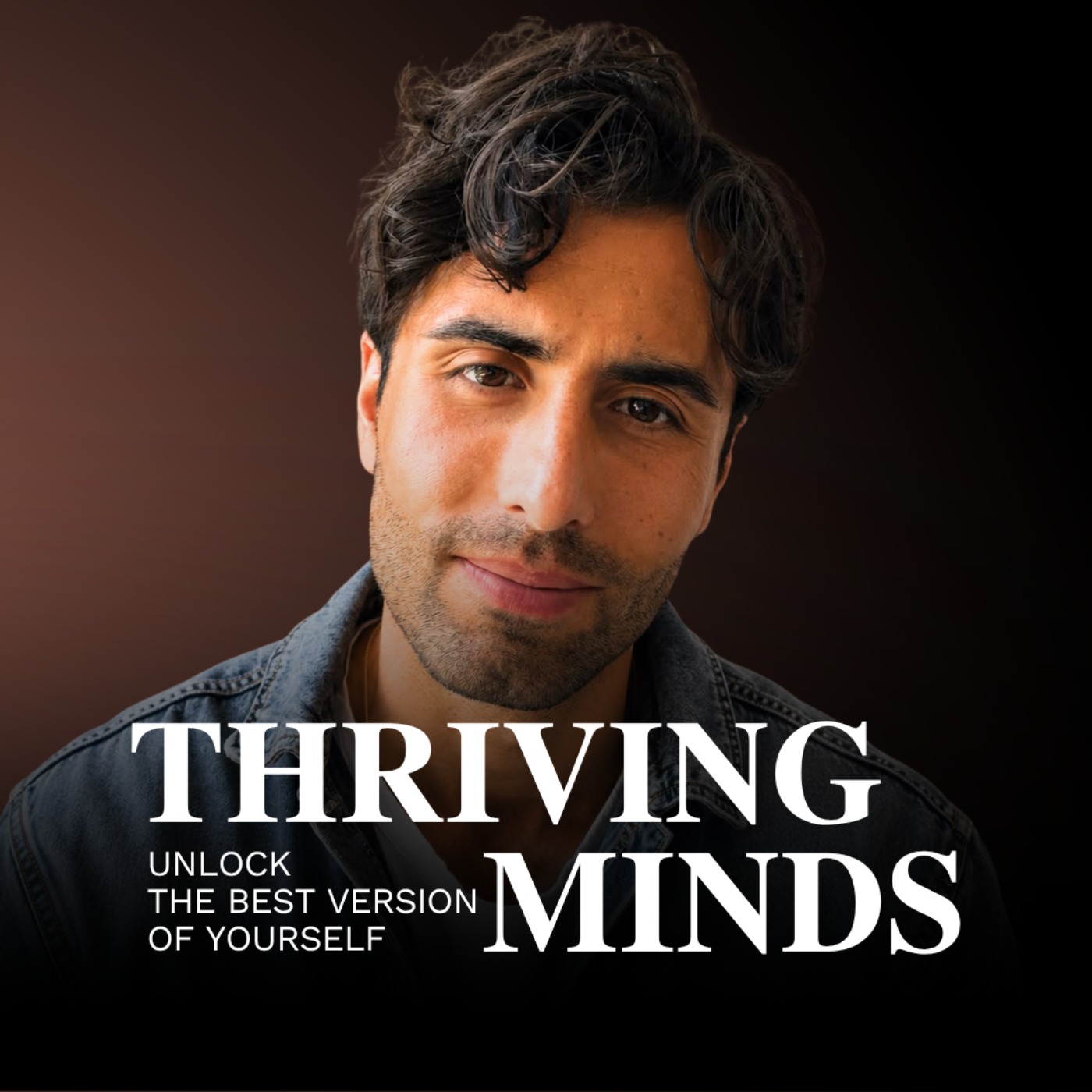
 Thriving Minds with Alberto Zandi
28 Aug 2025 · 2h 4m

Description: Dr. Aseem Malhotra, a leading cardiologist, discusses significant misconceptions in modern health care, particularly around nutrition, heart health, and the impact of stress. This episode aims to empower listeners with actionable insights for improving their health.
Written by AI. May contain mistakes.

Get the gist, explore an idea or ask about something said.
 Claude
On Thriving Minds with Alberto Zandi, what are the key points of this episode?
Searching your listeningAutomatic transcript. May contain errors.
0:00Basically, too much exercise is bad for your health. Okay. Most of what determines your health has nothing to do with what happens in the hospital. It happens before the hospital, right? Before you get to the hospital. So the social determinants of health are defined by the conditions in which we are born, grow, live, work, and age. Dr. Asim Malhotra is a world-leading British cardiologist, health campaigner, and author. He was the first science director of Action on Sugar in 2014 and was listed as one of the Sunday Times 500 Most Influential People in 2016. Dr. Asim is also the co-author of the groundbreaking book, The Piopi Diet.
0:36If you are, for example, in a low pay, low control, high demand job, that can be more damaging to your health than being unemployed. This is one of the most prescribed drugs in the world, estimated to be prescribed between 200 million and 1 billion people. Most of those people aren't going to get any benefit at all, and they're not told that. The one problem right now with our diets and populations is that... It is believed that if you drink a glass of red wine a day, just one, it's going to be good for your heart. Is that the myth? Is there a correlation in between having regular sex and our heart health?
1:18Okay, I think the first thing is... I've taken the mRNA COVID vaccine. what was so wrong about it that you needed to speak publicly about it? I think most of us were going to suffer from stress in one way or another because it's relative. So once we are in that situation, how can I get out of it? Yeah, really good question. I think...
1:51Dr. Maholtra, you are probably one of the world's most recognized doctors, cardiologists. You've been campaigning heavily on public health issues, which include obesity, general health. For those who don't know you, can you share a little bit further your professional background that allows you to speak about this subject matter. Yeah, thank you, Alberto. Thank you for having me. And also, please call me Asim. Asim. You don't have to be formal. I mean, that's actually part of one of the things that I try and promote and advocate is something called shared decision-making with patients so that patients don't feel that doctors are so patriarchal, really to get more on their level.
2:33And I think they're more comfortable having conversations. So that's also part of my philosophy and ethics when it comes to patient contact. so I am a consultant cardiologist I grew up in Manchester I went to a school with and you know it's it's I'm mentioning this because I think we are all shaped by our experiences by the people we meet by our family by culture the way we're brought up and the school I went to called Manchester Grammar School which is a very well-known prestigious school the motto of the school was in latin separate auda which means dare to be wise and it's a school that encouraged critical thinking and always actually um although it was you know certainly when i was there it was the number one school in the country for you know examination um success whether it's a levels or gcscs we were the number one but it actually encouraged people to have a breadth of knowledge and experience of so many other things, whether it was excelling in sports, whether it was debating, whether it was getting involved in communities, action, or Amnesty International.
3:46So it gave me and students there, I think, a good breadth of understanding of the world, but also in particular, coming back to Dare to be Wise, it also you know the Einstein said a foolish faith in authority is the worst enemy of truth so that kind of almost concept was instilled into us they wanted students to challenge the teachers to ask questions so I think that definitely had a shaping shaping on who I am as well as my background in terms of my parents both my parents were GPs in Manchester and I although they were doctors, they didn't sort of, I think, influence me to a great deal to pursue medicine, although I thought it was a very noble profession.
4:32But I grew up with values that were very much about the community comes first, always, you know, your primary duty is to the community. So that definitely shaped me. And then obviously, in school, I really enjoyed debate and discussion. I actually, interestingly, wanted to initially pursue a career in law, because I had a really strong sense of injustice but i also had an idealized view of what law was watching you know tv programs which is probably before your time alberto something called la law which was a very popular program um i hated injustice but i also wanted to fight for those people that didn't have a voice and ultimately i changed almost last minute to pursue a career in medicine partly because i had friends and relatives who were lawyers who said family friends certainly and for relatives or lawyers that said, I seem to understand one thing.
5:24The current legal system is not so much about injustice, it's about winning. And then I decided to pursue a career in medicine. And of course, cardiology was the career I pursued, partly also, you know, rooted in the fact that I had an older brother who died. So when I was 11, my older brother, who's two years older than me, who was 13, just after, you know, we had birthdays very close together, just after our birthdays he got sick with just a tummy bug he had a down syndrome as well which also meant that his immune system wasn't you know perfect and within five or six days of getting this tummy bug i'll never forget it he started becoming breathless my parents didn't really know what was happening even the pediatrician that came to see him thought it was just nothing major and within 48 hours of becoming breathless he was in hospital with crashing heart failure had a cardiac arrest and died.
6:13So that had obviously a massive impact as me as an 11 year old boy losing my older brother on my parents, you know, no one should have to outlive their child. And I always, I remember thinking at the time, speaking to my mom and part of the way of me dealing with this is like, you know, you know, this shouldn't happen. Why, why is a young boy died of a heart issue? And, and that was really where I think I started to think if, if I was going to pursue a career medicine, it was going to be in cardiology so i went to you know i was lucky enough to to get you know top grades in school um and then get you know uh accepted into edinburgh medical school which is one of the dream medical schools for me because it's oldest medical school in europe and and had a traditional course and was very well known so i i went to edinburgh and uh on that as well you know one thing that's interesting which i also teach my when i was teaching medical students, I tell them this.
7:06And this influenced my thinking as well, is one of the most famous alumni of Edinburgh Medical School was Arthur Conan Doyle, who was the author of Sherlock Holmes. So Arthur Conan Doyle was a medical doctor. And what many people don't know is he modeled the character of Sherlock Holmes on one of his professors of medicine, who was an amazing diagnostician. And he would talk about the fact that he would sit in a consultation room as a medical student observed this doctor who would start to make a diagnosis even before the patient has opened their mouth by looking at clues. So if patient walks into the room, he would look at the shoes they're wearing, look at their hands, quickly try and figure out what kind of job they had and already then start formulating in his mind what kind of disease are they more prone to and what are they likely to have before then asking questions to then make the diagnosis.
7:58And, you know, so Sherlock Holmes and the way that he would solve his murder mysteries, if you like, as a detective, the thinking is actually quite similar to how a doctor makes diagnosis. And one of the bylines of Sherlock Holmes is when you've, in terms of trying to solve his murder mysteries, which is where you almost, you know, can make a diagnosis of medicine when you've eliminated the impossible whatever remains however improbable must be the truth or must be true so that so that and and why is that important um alberto coming to a broader concept we'll talk about later is that 80 of the diagnosis we're taught in medical school and this is true 80 if you're a good doctor 80 of your diagnosis will come from the history from the conversation with the patient right 80 of that will so you will then start to formulate i'm asking questions because you know about different clusters of symptoms that then you know will match with a disease so that's what doctors are very good at and should be good at and then five percent comes from examining the patient five percent comes from simple tests five percent comes from expensive tests and in five percent one in twenty you don't get a diagnosis and often what that is is something that just gets better on its own that you can't really figure out but It doesn't fit with the disease process.
9:17So that was another, obviously, influence of the way I approach medicine and patients, you know, thinking broadly. And then, yeah, I pursued a career, obviously, in cardiology. Cardiology is very competitive. You have to pass your postgraduate examinations quickly. And then ultimately ended up in London. And then I've been, so now I've been, so I qualified from medical school in 2001. I became a fully trained cardiologist consultant around 2013, 12, 13. And my initial training actually was in keyhole heart surgery, if you like, called interventional cardiology. So that's really passing wires and tubes to the heart using x-rays and injecting dye, either going through the wrist, the radial artery, just under local anesthetic patients awake, or through the groin, the femoral artery.
10:16very neat procedure you know the actual diagnosis of the of the blockages injecting the dye doing that that process takes about 20 minutes and of course if you need to then treat a blockage usually in the setting of a heart attack then um you know that can take obviously longer that's what i trained in and then i shifted you know for lots of different reasons which we can talk about but i basically shifted more towards prevention because i realized that actually we have this huge burden of chronic disease which had been creeping and increasing for the last few decades along with the obesity epidemic and i wanted to investigate and understand why was this why were we not really curbing heart disease in the way that we should be doing it's still the number one cause of premature death in european men it's responsible cardiovascular disease heart attack and stroke about 50 50 is responsible for about 20 million deaths per year globally.
11:12So I wanted to try and play my role, first of all, in understanding the problem, the root cause of the problem. And then once I understood the root cause, to then offer solutions. And that's essentially, that makes up who I am. That's really my primary driver, my focus and what I do. Thank you. There are a few aspects that you've mentioned that I think are perhaps the most explosive moments in your life that have just allowed me to understand who you are and why you have built this character. So on one hand, you went to this school that it built a mentality of challenging things. You were not just a person that would be satisfied with an answer, even if that answer was coming from people that were professionals in a given field, but you would challenge it.
12:02And I think, and I'm very sorry for what happened to your brother, but I think that's a clear example on how you are a very different, or you have a very different mindset to most other people, at least most other people that I met, because you were brought up in an environment in which both of your parents were professionals, they were GPs, they were in the medical industry or in the medical space. And And when your brother suffers this very unfortunate event, a lot of people would have thought that there is nothing else that could have happened because my brother is living in an environment where everything could be immediately detected and analyzed because I live with GPs.
12:45I'm not living in a house where my parents are professionals or lawyers, for example, that perhaps they can oversee some issues that are going on at home. so in your case you still thought that well they missed it and they are my parents they're my so called or so thought superiors i still want to challenge that i can improve at detecting these things which is not something normal for such a young person um and i think that allows me also to understand much better why you are the character that we see in the news or in other podcasts as this challenging doctor that wants to find the truth and to disseminate this truth to the general population.
13:32So thank you for that. That paints a much clearer picture. Now, I want to discuss about cardiology in particular and within cardiology, heart diseases. For the majority of the population, and I include myself in that basket, we know perhaps one type of disease, a heart attack. That's the most common known disease. What are the most important ones that I am missing here? Yeah, so you've hit the nail on the head. I think coronary artery disease is related to heart disease. So that's really to do with buildup of blockages within the main arteries that supply the heart muscle with blood. So that's the definition of a heart attack.
14:13So a heart attack very specifically is any death of tissue, of cells of the heart, we call them myocardial cells, heart cells, because of a restricted blood supply for a prolonged period of time. So that scar that develops, maybe tiny, and can be detected from a blood test as well, is called a heart attack. And it can be small or it can be big. So that's a heart attack. and the difference in the magnitude is according to which artery is being blocked absolutely okay very absolutely correct where the blockage is how long the blockage has been there for as in before it's treated in emergency situation determines what area of the heart muscle is is damaged and then on a on a broad and by the way that's different to a lot of people think so it's different to cardiac arrest cardiac arrest just means heart stopping ultimately everybody has a cardiac arrest ultimately when they die but the if but a cardiac arrest a primary a cardiac arrest can occur because of lots of different reasons it can be because of a heart attack that's one of the most common causes it can be because of a rhythm disturbance that happens electrical disturbance in the heart and that can be linked again to heart disease but maybe other factors can happen as well like um even you know having severe infection or having a toxin in your body these can cause disturbances in the heart rhythm um and then there are other aspects to heart disease which in cardiology and which include heart failure so that is when the heart muscle doesn't pump blood to meet the metabolic demands of the body usually because it's become weak and it can become weak because of blockages developed over time it can also become weak because of excess alcohol consumption it can become weak because of a viral infection that attacks the heart like with my brother he ultimately we realized it's interesting we never realized what happened to my brother there was never really a diagnosis given only um probably almost 20 years later i'm sitting in a clinic already as a cardiology trainee um with a with a wonderful doctor called lorna swan who is a doctor in what we call adult congenital heart disease in the royal brompton hospital i i trained in Harefield Hospital, which is one of the top cardiac centers in London and in the country.
16:29And we did a clinic together. I was, you know, getting experience in treating, you know, managing patients who'd had, who are basically born with a heart defect, can be something wrong with the heart valves. For example, that's again, another part of managing heart conditions. And I remember having this conversation with her, said, oh, by the way, you know, this is what happened to my brother. And she said, Asim, it sounds like viral myocarditis. And I thought, of course so we had just a normal viral this can happen you know affects anything i think from one in ten thousand to one hundred thousand people random you get a cold okay and suddenly within a space of a few days or a couple of weeks the immune system for whatever reason randomly will attack the heart and cause the heart muscle to have a problem and in a third of those cases often it gets better and about a third you know you have a bit of an issue and it gets better A third will have some damage that then remains there for the rest of your life.
17:25And a third will actually die within a very short space of time. So that was how, interestingly, I realized, I was like, ah, that's probably what happened to my brother. Because, you know, he died in 1988, October the 28th, 1988. I'll never forget that day. But, you know, I think probably there wasn't maybe a good full understanding of viral myocarditis at that time. But now, obviously, now we know that's probably what happened. So yeah, there are lots of different aspects too of managing heart disease. Of course, I have expertise in managing many different types of heart conditions. My personal special interest though is in the coronary artery disease as well, is the big killer.
18:07What I was thinking right now is that based on your answer, there could be so many different factors that are affecting our heart. There are so many different heart diseases. and also at some point our heart weakens and its performance is not optimum to carry the vital functions of our body. Now when I think about a different organ and how do I identify as an average person at home that this organ is not functioning well it's because there's some pain to it or I feel like its performance is not optimum. Let's take an example of my stomach. If my stomach hurts for a prolonged period of time, that probably would indicate me that I should go and see a professional.
18:51Yes. My lungs. If perhaps I'm not breathing well, my breathing patterns have been changed for, again, a prolonged period of time, I might go and seek professional advice. But with the heart, I've never heard a friend say, my heart hurts or my heart beats very fast or very slow. how often should we go and get our hearts checked? Listen, if you've got symptoms that are troubling you, that are worrying you, if you've got pain, the classic most worrying symptom that suggests underlying heart disease is if you've got a central chest heaviness that comes on either with stress or mainly with exertion, relieved by rest, it's predictable, that's coming consistently, that is when you, or goes up into the neck and the jaw or down the arms, that's classic concerning heart pain.
19:42if it's happening every so often as a one-off and is unpredictable it's unlikely to be a heart it's probably muscular it could be something else so i think listen to your intuition about whether you need to get checked i think in general though what i would say alberto is um you know in terms of screening and again you know there's a big issue about what we call over investigation over diagnosis it's a whole medical industry we'll talk about that later which makes money are not good evidence, right? Plays on people's fears. It happens a lot in the private sector. People want to go and get checks done.
20:18And in general, general rule of thumb is you don't really need to be screened for any issues unless, of course, you've got, for example, a very strong family history. Say that you have a relative that died in their 30s and 40s who's a first-degree relative, okay? Maybe you screen earlier. But I'll tell you, really, once you hit 40 is when you should definitely have a screening check. People can get it done earlier. it's very simple there are really sort of um three or four main you know uh checks that need to be done which are very simple by the way and very cheap which is great okay it's not expensive a blood test to look at whether or not you what your average blood glucose is this is how you diagnose type 2 diabetes or something called pre-diabetes which happens before you develop type 2 which can tell you at risk of type 2 diabetes and that's one of them um high blood pressure very simple you know if people want to check their blood pressure they can buy for 40 pounds from boots a blood pressure monitor at home just check that you want your blood pressure to be within a normal range also from the blood test you can look at cholesterol profile now there is a conventional thinking and wisdom that high cholesterol is a risk factor for heart disease i've essentially through my research through my publications through my third book which is called statin-free life, you know, to a large degree, in a polite way, questioned that hypothesis.
21:39To put it less politely, completely demolished it as a risk factor for heart disease. I don't think that high cholesterol actually is a major risk factor for heart disease, although it's been the main focus, and we'll come on to that, of managing heart disease, and it's a trillion dollar industry, okay, which is still being sustained on flawed information. But within the cholesterol profile, there are two things that you measure which actually are relevant and are much more predictive of heart disease one's called triglycerides and one's called HDL HDL is known as high density lipoprotein is is conventionally known as good cholesterol okay so those things you can check you want your good cholesterol to be in a good high range and you want the triglycerides to be which is basically a fat in the blood if you like to be low and then finally um yeah those those are So type 2 diabetes, high blood pressure, what we call an abnormal cholesterol profile, an unhealthy cholesterol profile.
22:32Smoking. I think smoking consumption has gone down massively. I think only about 70. It's still not as low as we'd like. 17 % of UK adults still smoke. That's definitely a major risk factor for heart disease. That includes vaping? Great question about vaping. It's an ongoing area of controversy. see one of the people that i know very well who's researched this is actually one of the world's top vascular surgeons so he doesn't operate on hearts but he operates on blood vessels either in the neck or in the legs that have become blocked for the same reasons risk factors he believes vaping is is is quite bad and it makes sense that vaping uh for me there is some research that shows that what vaping does it increases stress within the arteries and can maybe trigger heart attacks and people have already got some underlying blockages so i i think vaping is a problem personally i think it's going to come out more and more research is going to come out again remember this the same industry that lied for 50 years deliberately deceived people about tobacco being harmful is also you know their business model we come back to the economic model in a minute their business models to make money right all these big corporations make money in general through mass deception so we really can't trust them to tell us the truth on it there needs to be independent evaluation but of course they want people to get you know as many people vaping as possible i think just to be nuanced about it alberto just on the vaping issue you know not i don't be this throw the the baby out with the bath water here i think one of the issues is you take say a product for like vaping which may actually have an important role in a very subgroup of people who are really struggling to stop smoking and it's like a way for them to kind of you know go from smoking cigarettes to vaping to quitting okay i think that's fine okay but actually you see many people now who maybe have never even smoked because of course the market business models to get many listen if you are you know running a vaping company your business model depends on getting as many people to vape as possible doesn't it does frequency matter as far as the heart is concerned in terms of vaping for example or smoking listen uh in general terms of course yes you know there's a dose response same with smoking um if you're smoking 20 cigarettes a day versus less than five cigarettes a day massive increase risk compared to that right um on that and i'm not here to justify smoking because i think you know you know when we talk about sugar one of the things people ask me about sugar being harmful i say well one teaspoon of sugar won't kill you in the same way one cigarette won't kill you okay um but one thing that's very interesting when you look at the evolution of the understanding of heart disease and populations is that you know in the 50s and 60s, there was a question as to why did Mediterranean countries have much lower incidence of heart disease compared to Northern European countries in America, okay?
25:24And, you know, this is where the Mediterranean diet concept came in and started to be researched and evidence suggested there was something in the diet, but diet from ancient Greek actually comes from the word diata, which means lifestyle. So, that was lost in the, you know, it then became just about food. but what was interesting Alberto is if you think about those Mediterranean countries let's look back again it's before our time but it's extraordinary to think now in 1970 50 % of adults in the UK and the US were smoking cigarettes 50 % it's huge right I suspect I don't know for sure but the exact figure but I suspect it was similar in European countries the difference was though from research I've looked at and I'm very happy to be corrected if someone has better information on this, is that the Mediterranean countries, they were also smoking, but not so much, maybe four or five cigarettes a day, yet they had much less heart disease.
26:16Now, was it because other things were counteracting it? You know, a sense of community, the extra virgin olive oil, the sun exposure, maybe. But anyway, to answer your question, yes, there's an issue with the dose, the amount you take, the amount you smoke. So you hit 40. Sorry, one more thing I'll go to. So these are the conventional risk factors for heart disease. but actually the the root cause that drives a type 2 diabetes that drives a high blood pressure that drives the um cholesterol profile to be abnormal has never really been properly addressed and that's something called insulin resistance and that's your body becoming resistant to the hormone insulin which is involved with fat metabolism and managing blood glucose levels to be an optimal range um over a period of time that is the primary driver and that's not been refuted okay of heart disease um of course you know drives these other risk factors uh also by the way linked to we'll talk about later chronic stress okay and you can very rapidly improve insulin resistance purely from optimizing your diet but no doctor talks about it most doctors don't even know this concept or if they do they don't know what to do about it and the model right now to prevent and manage heart disease is to basically give drugs for these risk factors rather than reverse it, which is what I've been doing with my patients, just from lifestyle changes.
27:42So this is the big, the sort of big battle going on right now is trying to shift the paradigm in medical practice and also the understanding of heart disease. Are these risk factors affecting both men and women in the same way? Yes, pretty much the same way. Absolutely. The only thing I would say is women tend to not develop heart disease. They tend to develop heart disease later than men because there seems to be some protective effect of estrogen. So after the menopause, that's when the rates of heart disease start to go up for women. And should they change their lifestyle then? I mean I would recommend being on a lifestyle you mentioned it before we started the conversation obviously before which I love is this is ultimately about how can we be the best version of ourselves right and that comes back to a definition of health which I love which actually came from the World Health Organization who I don't love anymore by the way but I used to love the World Health Organization in 1946 and their definition of health was a state of complete mental, physical and social well-being, not merely the absence of disease and infirmity.
28:56Now Alberto, let me ask you this question. What is more important to people in their life than that? I can't think of anything. What is more important to people? And if you look at international surveys, they always put health as number one. Understanding that, complete mental, physical and social well-being. I mean, that's basically how do we get to a level of authentic, sustained level of well-being, stroke, happiness, if that's the right word. That's what we're all trying to do, aren't we? So that's really, again, what my area is really getting to the root cause of this. Because if you don't have that, you're going to be obviously at increased risk of heart disease and heart attacks.
29:32I think at the fundamental level, everyone cares about their health. but unfortunately I strongly believe that we live in such a consumer-oriented world that most people in developed countries, they prioritize other aspects in life on top of their health. And I also feel like we care about our health when we don't have it. It's one of those things. Like we miss it. We try to protect it when it's at risk. But until something happens either to you or a relative, we tend to neglect it and think that we're invincible. Yeah, it's a very good point. There's a quote I've read somewhere, which was a healthy man wants a thousand things.
30:14A sick man just wants one. Yeah. You're mentioning cholesterol. There's good cholesterol, there's bad cholesterol. Can you simplify this for me? Yeah. Let's just talk about the broad concept of high cholesterol. So your total cholesterol is actually a measure of different aspects of the cholesterol, which are triglycerides, good cholesterol, so-called HDL, and so-called bad cholesterol, LDL. LDL actually makes up the biggest proportion of your total cholesterol. So for all intents and purposes, total cholesterol is correlated with LDL, so-called bad cholesterol. And for decades, the conventional thinking, not just amongst doctors, but it's been such an effective campaign, partly through also marketing of drugs to lower cholesterol through food industry, low-fat foods, etc.
31:09The mindset has been, in most people, a fear of this high cholesterol because that is the main driver of heart disease and heart attacks. And I can tell you, hand on heart, having spent over a decade, probably 15 years at least, looking at this and studying it in detail and going to depth in the research papers and doing my own analyses and publishing in journals that I think it is one of the greatest flaws in medical history to put high cholesterol as a major risk factor for heart disease and lowering it to be the solution. I would actually argue that there's a good case to be made that it isn't a risk factor at all for heart disease.
31:52certainly in 99 % of people and lowering it is a complete waste of time and actually potentially harmful. So you're attributing high bad cholesterol to the consumption of sugar, not genetics? Well, no, it's a good question. So most of your cholesterol, actually, about 80 % of the total cholesterol and LDL is genetic. It's produced by your liver. It actually has many roles. The reason we have cholesterol, it has many roles. it's involved in hormone production it's important for maintaining the integrity of our cells the cell membranes it's a precursor for example to vitamin D but one of the things that's been missed over many many years because there's been such an obsession with curbing heart disease which had increased in the western world from 1920 up until 1970 before there was a full understanding of how much smoking how much harm smoking was doing this is in the 50s and 60s you'd see adverts on tv where doctors were smoking in their consultation room and it was like what what what you know brand is your doctor like think about that's just crazy sounds crazy now right because of that blind spot there was an over obsession focus thinking that you know there was a few scientists that had certain hypothesis put some data together which wasn't robust you know and made a case um that cholesterol was a major risk factor and therefore all population health policy should be focusing on lowering it um because of that we then people stop looking at it going back and looking at the um the information which is what i started to do and looking at the research but one of the things sorry just to finish the point i was making is that um high cholesterol actually has an important role in the immune system and we think it has some protective role so in 2016 myself a number of international scientists decided to look at all the published data in relation to whether or not there is an association with this so-called bad cholesterol LDL and heart disease like any association correlation and heart disease in people over 60 okay the reason we looked at people over 60 is that when we go went back to the original studies where the large sort of population studies that were done looking at LDL cholesterol being or total cholesterol being a risk factor for heart disease, one thing that was never discussed when you look at the research is that once people hit 50, as their total cholesterol and LDL went down, their death rates increased.
34:22And nobody really talked about it because they suddenly thought, okay, we found the risk factor for heart disease here. We need to get LDL lower. So we thought, okay, let's just look at this again and see in the modern day, what is the association how much of an association was there and there was none first of all there was no association and we found an inverse association in people over 60 with ldl cholesterol and um what we call all-cause mortality in other words statistically alberto the lower your ldl if you're over 60 the more likely you are to die so why is that two two reasons two hypothesis if you like one is i said the immune system older people are more vulnerable to dying from infections so it may be the LDL is giving some protection there okay and like you know pneumonias and stomach infections for example and we know that there is an association with low cholesterol low total cholesterol and LDL and cancer which again is likely linked to the immune system cancer is partly in large part due to immune dysfunction you know one of the things that I looked at again during the COVID pandemic just very briefly which is something that was not at the forefront of my mind when i started looking at the research it's like it's interesting the people who are more vulnerable to dying from covid once you count for very elderly were people with risk factors for heart disease and um you know uh high blood pressure for example you know 34 fold increased risk of having uh dying from covid if you had high blood pressure versus someone who's completely healthy obesity nine fold increased risk heart disease 18 fold increased risk type 2 diabetes 20 fold increased risk and when i was looking at that research it was very interesting if the same people who had um what we call optimal metabolic health so let's talk about this broad term of these factors i talked about is metabolic health actually had much better immune systems so excess body fat which is again linked to all of these things actually makes your immune system dysfunctional.
36:29Excess body fat as in over 15 % of body fat, 20 %? Well, I wouldn't say as a percentage. I would say probably looking at it as, in simple terms, probably in very simple terms, BMI. But beyond BMI, I would say the conditions linked to excess body fat. So type 2 pre-diabetes or type 2 diabetes, pre-hypertension, you know, blood pressure is slightly going up, this abnormal cholesterol profile, increased belly fat in particular. so very simple rule of thumb okay just for people to is is that your waist circumference should be less than half of your height so let's say you're 180 centimeters tall your waist circumference of the belly button should be less than 90 centimeters so that's a nice way of looking at the body fat just in a very simple way so how how can i keep a balanced so what should i be doing on my day-to-day to keep an optimum level of cholesterol all i would say is don't worry about high cholesterol, worry about triglycerides and HDL, the other components of the profile.
37:27You want the triglycerides to be low and the HDL high. And that's it. In very simple terms, the ideal ratio in mathematical terms, very simple, your triglycerides should be less than your HDL. So let's say your HDL is, we use millimoles in this country, say your HDL is 1.4, your triglycerides should be 1.4 or less. Very simple rule of thumb. That's optimal. And if it's in that range, I don't, I really don't worry about what your LDL cholesterol is. And when it comes to daily activities, exercise, or what should I eat or not eat, to keep these two parameters at optimum levels, what should I do?
38:05Great question. So with exercise, interesting. Exercise is, I think, a lot of long-term benefits, even short-term for physical health. Interestingly, it doesn't have much impact on weight and weight gain so you know we've done i published this paper in 2015 in the british general sports medicine it caused a huge international controversy but um i published it with two leading sports scientists and it was it was actually titled it's time to bust the myth of physical and activity and obesity you can't outrun a bad diet right so it doesn't mean don't exercise because i'm obsessed with it right i mean i do it more for kind of mental and just feeling strong and being mobile and that kind of thing.
38:44So with exercise and health and heart disease and longevity, actually, Alberto, very simple. If you're just doing, you know, 30 minutes of a brisk walk every day or 30 minutes of some kind of activity, that's good enough. And that gives your heart healthy. Yeah. Listen, they did an interesting study of ex-Olympic athletes. Elite athletes didn't live any longer than people who played golf or cricket. but then why do some people that have terrible habits like they are regular drinkers and smokers they can live very long and then you have people that have taken care of their bodies their whole life and they die of a heart disease yeah i mean listen i think this is all about statistics and increasing risk you're going to get some outliers i mean there's a famous um is that bad luck or genetics it could be a number of things it could be it's probably genetics to some degree but there's another aspect to it which comes into the equation which we don't measure properly or discuss enough and it's chronic stress and interpersonal relationships so chronic stress as a risk it's now been established as a risk factor for heart disease is the same as being a regular smoker or having type 2 diabetes or having high blood pressure we're more stressed than ever right now certainly in the modern day how would you define stress um it's very subjective so you know basically i you know i ask people on a scale when i talk to my patients i mean how to define stress is basically your brain you don't feel that you're able to keep up with the demands that are put on you as a person whether it's a demand from a spouse whether it's a demand from work right so it's a perspective of reality from the brain that affects the body absolutely whether it's a fear that's been exerted on you that you're worried about dying you know we see this huge pandemic of fear during covid all these things will have a and you subjectively feel it you just don't feel you feel anxious right so i ask people when i ask my patients and almost all of them um all my cardiac patients or people who've developed heart disease or got risk factors invariably when I ask them on a scale of 0 to 10 what their levels of stress are and I just say to them think of 0 being imagine a Buddhist monk meditating on a mountain complete peace and serenity that being there and 10 being very high levels of stress where are you on that scale and almost always they're above a 7, 8, 9 kind of thing and they've not done anything about it not addressing it if I'm on that 7, 8, 9 should I go and seek professional advice?
41:23no i mean not necessarily professional advice but i think you need to think about how do i curb it right what can i do um you know um what's causing it what's the external stressor like if you're in a toxic relationship for example that's your main stress you need to get out of that relationship or go for counseling okay um if it's to do with your job now and this is not that easy and we you know we we should talk about this as well if you're in a in a job that's causing you stress can you change your job or this is something again i'm i'm definitely you know i want to talk a little bit more about in terms of advocacy in terms of what's going on in the population so there's a guy called michael marmot he's a a public health professor brilliant man pioneering researcher who's done a lot of work on something called the social determinants of health this links to our stress discussion so we should i think we should talk about it now so social determinants of health are estimated actually to be responsible to for 35 to 50 percent of what determines your health right not the medical care medical care by the way maybe 10 to 20 percent okay determines your overall health outcomes most of what determines your health has nothing to do with what happens in the hospital happens before the hospital right before you get to the hospital so the social determinants of health are defined by the conditions in which we are born grow live work and age and the causes of those conditions so if you are for example in a low pay low control high demand job michael marmot says that can be more damaging to your health than being unemployed right so and probably through a chronic stress situation have you identified some jobs that actually lead to a particular heart disease or heart diseases you can look at it and you can look at it from socioeconomic class.
43:19So you know that people in there is a much increased risk of heart disease and people from the lowest socioeconomic class, which will correlate often with those jobs. And, you know, people, for example, minimum wage, zero hours contracts, we know those people are going to be at more increased risk of disease. So we've got to ask ourselves, well, hold on a minute, as a society, are we happy with this situation? Because of stress, because that leads to stress. Yes, because of the chronic stress. So what's the mechanism, by the way. This is another interesting aspect of it. So how does chronic stress cause disease?
43:48Well, when it comes to heart disease, it causes what we call chronic inflammation in the body. Inflammation is basically a normal response of your immune system to any kind of toxin in the body. When you're using the word chronic, it means that it's long-term. Long-term. Absolutely. So any response of your immune system is inflammatory, and an acute inflammation can be life-saving. It stops you, you know, dying from viral or bacterial infections. It stops you bleeding to death if you're cut, okay? But if it's there longer term at a lower degree, chronic what we call low-grade inflammation, where the immune system's over-activated but not massively activated like in a near-death situation if you're bleeding or whatever, then what happens is the effects of those immune system cells, immune system sort of factors, is they start to damage your own tissues, right?
44:43because they are there to clean up pathogens. So now you've got your own bodies producing stuff that ultimately can become toxic to your body and start damaging your cells in the heart arteries. But how does it happen with stress? And one theory from an evolutionary perspective is that if we were, for example, going back thousands of years, if we're in the jungle and we are running away from a predator, say a tiger, in the acute situation, it makes sense for our body to release factors that are going to be increased clotting factors and immune cells so that we are less likely to bleed to death if we're attacked.
45:23So that's what's happening with the brain. It's on a hyper alert. But we don't, you know, nowadays, Alberto, we are constantly being bombarded with things that give us stress, even social media, trolling, right? On the other aspect of that, we know that feeling safe and secure is protective for our immune systems and even for our heart. And how does that come, safety and security? A lot of it comes from our interaction with people around us, with our family, our friends, having good relationships, because we feel protected because we're in a group. Right? Good quality relationships. So this also comes back to how the mind influences the body.
46:08and then we've got to think about well hold on a minute what's going on in society right now that is taking us away from really optimizing our mental health what it means to be human and it for me and and looking this in a lot of depth uh i think you can you can um associate much if not most of that with increasing materialism so what does materialism mean? It means you put more, your value system is more based upon image, power, status, wealth, than it is on actual things that are good for our brains. Interpersonal relationships, you know, lifelong learning, being engaged in learning new information, growing as a person, right?
46:58Being engaged in activities that are not there for some personal gain, even like whether it's reading a book, whether it's playing football or tennis, where you're just in that zone, right? Doing things that are not, you know, for the purpose of their enjoyment, you know, not for any other reason. So this is where society, I think, is going in the wrong direction. And it's having, you know, a catastrophic effect on our health. When I think about any problem, in this particular case, the problem is stress. my mind immediately goes into two different roads. Road number one is how can I prevent it from happening?
47:40That's usually my preferred option. And then road number two is, okay, if preventing it is something that is hard for whatever reason, if I end up with that problem, in this case stress, how can I solve it? On the first point, I have two things related to stress or two arguments related to stress that I find it very hard for it to be prevented. Number one is that I believe that we live in a society that is not accommodating someone having stress because, especially from a professional point of view, if you share with any worker colleague that you are suffering from stress, you might be perceived as weak.
48:19And that leads me to the second one. If I right now place you in an environment, an environment with a specific type of stimuli and i place myself perhaps i might be stressed on this that same environment that you might not be stressed because the way my mind is wired and has been developed is really depending on how i was brought up and so on of course it's really a matter of perspective and when you say that i'm stressed a lot of people might dismiss it because that's not stressful for them yeah so that leads me to well i think most of us we're going to suffer from stress in one way or another because it's relative yeah so once we are in that situation how can i get out get out of it yeah um really good question i think if if it's looking at making yourself more resilient then something i do so you know i'm i'm with what i do and obviously speaking out and being a disruptor it comes with a lot of external stresses potentially you know my mind um i have to train my brain to try and ignore stuff so that's one thing i do but one thing i regularly do um alberto is i do um breath work every morning so i do 40 minutes of breath work when i wake up and that's preventive because you do it it's helpful it's definitely going to be helpful to what degree you know it's difficult it depends on how much stress you're receiving etc but it's definitely one way that people can you know a form of meditation um for me i find even I'm going to the gym, a form of meditation.
49:48I do Pilates. So these are things where your mind can move away from thoughts that are negative thoughts in relation to whatever you're doing. Can you share breathing techniques with me? Yeah. I mean, one thing I do. So I work with this amazing cardiac nurse. Her name's Sherry. She's Spanish origin. Of course she is. And she's a cardiac nurse, but she's also a stress reduction expert. And we manage patients together, heart patients together. and she taught me and teaches them a form of breath work. The key really is, and obviously I'm not the expert, I'm the someone that, you know, she's taught me to do it, but basically it's about diaphragmatic breathing.
50:28So when you breathe in, a lot of people breathe up here in the chest, but actually you want the breath to go much deeper into the diaphragm and that has a better activation of what we call the parasympathetic nervous system that is going to slow your heart rate down, lower your blood pressure, for example, right? And obviously release good hormones into the body. so I have this technique where I what I do is I breathe in through my nose for four seconds I hold it for seven and then breathe out through the mouth for eight and that kind of pattern is something that helps stimulate and slow the heart rate down and interestingly you know it can be really you can see massive differences in people's blood pressure people have got high blood pressure a lot hasn't been you know um sort of detected because of as in the the cause hasn't been detected which is related to stress when you do this sort of meditation thing for even five ten minutes the blood pressure can drop massively into a normal range you know so it's something definitely people need to think so what you are what you want to do is to reduce your heart right yeah that that's the main time yeah i wouldn't necessarily i mean you naturally the heart rate will go down um to different degrees blood pressure will go down but i wouldn't think about those parameters that happens as a side effect i would just do the breathing because it just it will calm your mind you know and i and i do it regularly and you notice alberto when you start doing it you get a bed in the morning you're just like oh i feel so much calmer to start the day you know and also one of the other things i do is i deliberately refuse to look at any screens in terms of my phone or whatever else for at least you know um i mean i'm doing the meditation obviously in the morning anyway but I would say at least 30 minutes after waking up you know because we think and I think that our addiction to obviously through the algorithms and the engagement our addictions to screens and social media is not good for the brain you know that's something that needs to be explored in terms of what's the limit how do we then do the research to figure out is there a limit you know for example do we need to give guidelines out saying that we know now that any more than 30 minutes of engagement with a social media or a screen is actually having a negative effect i don't know the answer i'm just saying for example that's we need to explore that because we know it's having a damaging effect for lots of different reasons i feel like when someone is suffering in today's day and age of any problem in this case stress when they go and see their doctors probably one of their first recommendations is to prescribe them a medicine yeah but it wouldn't be i don't think i've ever been to any doctor that gave me a set of instructions on how to change my life and then would tell me try this for two weeks and then come back and then we'll try something else i think in most cases i've always i always got out of the room with a sort of prescription yeah um and the team told me that through the research that we went together that overprescription is today the third most common cause of death.
53:33Yeah. Is that right? Yeah. So prescribed medications because of side effects are estimated to be the third most common cause of death globally. Why is that? Because the safety and benefits of medications prescribed by doctors is grossly exaggerated by drug companies who control the data. but most doctors don't know that so doctors may be well-intentioned thinking that the information they're getting on certain drugs from guideline bodies is rigorous and independent when in fact it's not at all you know this is what they've done over time um through this neoliberal economic model where they've got more and more power where big corporations like big pharma big food went from certainly up until maybe 1970, having a business model that was geared to addressing and supporting many different stakeholders, the consumer, the community, shareholders, right?
54:33And now it's just about shareholders and they forgot about the community. And that's partly because of this guy called Milton Friedman, who you may know, who was a Nobel Prize winning economist influenced Ronald Reagan and basically is responsible in many ways the brainchild behind the current economic model is that we reduce all these regulations on these big corporations and I'm sure it was well intentioned but as a result we've now got this situation where corporations I think people need to understand this their only legal obligation is to produce profit for shareholders but the diagnosis of the entity that is the corporation has been given by the forensic psychologist Robert Hare, supported by law professor Joel Buchanan's book, The Corporation, as an entity, to understand what we're dealing with at the root, because I'm a root cause guy, Alberto.
55:20I think you know what I'm going to say. That diagnosis is psychopathic. So when he, the guy behind the original definition of psychopath, by the way, has labeled big corporations psychopathic. So some of the characteristics of psychopath is callous and concern for the safety of others, incapacity to experience guilt. repeated lying and conning others for profit. And there's another definition that's come in in the last few years, and the new corporation, but a psychopath is also using excessive charm to persuade people, you know, to do something of interest to that person or to the corporation.
55:53So the current paradigm, if you like, and I can liken it to what's happened, for example, with the COVID vaccine, is that, you know, these big companies are putting them forward as being, we really care about the public and we're doing this, you know, whatever else, and using charm or whatever else, that's actually part of the diagnosis of psychopaths. So, yeah. But if some or most doctors are unaware of this, then definitely the patient is totally unaware of it. Absolutely. What should we do? Like, what should the average patient do? Should I challenge my doctor's prescription? Well, first of all, they should listen to this podcast.
56:38That's for sure. They have to ask questions. Listen, an interaction between doctor and patient should be on an equal level in the sense that our duty as doctors is to help the patient, right? We're doing a service. That's what we're there to do. So therefore, you know, the most important person in the room is not the doctor, it's the patient. So they should ask questions, absolutely. if i extrapolate this example into a car issue if i bring my car to the mechanic and then the mechanic is telling me your car has a problem with the left valve from the engine that is not pumping whatever my answer is going to be great let's fix it yeah but i'm not going to challenge that because i'm not equipped to challenge it unless i go to another mechanic or i go to another doctor yeah it's going to be very hard for me to have these conversations yeah the profession yeah yeah you're right that's that's a fair point and that's why you know certainly something i've worked on and we we need to change the culture within the profession we need to educate the doctors better certainly in terms of being more skeptical about drug trials but of course on a policy level we need to make sure the data is independently verified that doesn't happen so that's something that can happen at the top end.
57:49For a patient, again, I think... if they are privy to information like this or we've been discussing, you know they should just have that conversation with their doctor and and see what happens i mean what else can they do what else can they do they just have to try and take information from many different sources and then but patients still interestingly um albert a lot of patients come to me who've decided that they don't agree with their doctor's plan for example taking cholesterol lowing drug because they've heard me speak or read a book and they'll come to me say listen i decided i didn't want to do that and ultimately you know even when i have conversation with patients it's about informed consent, you know, and actually telling patients, for example, if you take this pill, there's a 1 % benefit.
58:32Again, this is something else that doesn't happen in normal practice. Based upon interpretation of biased research already, there's only a 1 % benefit of taking a statin over a five-year period, for example, and preventing heart attacks and strokes. So there's a lot of, there's a huge knowledge gap here, Alberto, but yeah, what can a patient do other than trying to ask questions, learn as much as they can, and then have that conversation with the patient, with the doctor. The doctor may learn something new too. I learn stuff from my patients all the time. A certain supplement they've taken that's helped them with certain things, I say, oh, that's really interesting.
59:06Tell me about that. I'm curious. A good doctor should be there also wanting to learn from their patient, not just tell them what to do. Segmenting this into the four different stakeholders in this equation. So you have a stakeholder number one, which are the pharmaceutical companies. I don't really think the change is going to come from that end. But perhaps on the second stakeholder, which is from policies from the government. Yes. Then the third stakeholder are the doctors, the medical institutions. Yes. I fundamentally think that if they are better trained, better educated to challenge the way that you're challenging certain aspects of the industry, that's going to then benefit definitely the patient.
59:49But going back then to the patient, which is where I include myself, are there any organs in our body that if we are prescribed medicine, we should definitely ask for a second opinion or challenge it? So perhaps if my leg hurts and they prescribe me, whatever, okay, you know, the worst case scenario of that medicine is not too bad. But if perhaps it's something for the brain or for the heart, then I should definitely challenge the prescription. Listen, the one thing that I've got expertise on is statins. They're massively over-prescribed. This is one of the most prescribed drugs in the world, estimated to be prescribed between 200 million and 1 billion people.
1:00:29Most of those people aren't going to get any benefit at all, and they're not told that. And they come with side effects that can affect the brain, in terms of memory. They can cause muscle pain, fatigue, erectile dysfunction, stomach upset, and often they're not picked up. People go for investigations for other things when the whole time it was a statin causing the side effects. So that's definitely one. Absolutely. Massively overprescribed. What about AI tools? Are they useful in any way? Yeah, so I was having a conversation with somebody yesterday about this. I'm very skeptical about the use of AI.
1:01:04For the end patient, for the patient? No, for the patient, I think the AI tools, for example, for making a diagnosis, I don't think are going to be very helpful. They're going to increase extra work and anxiety. you know there's an art to medicine as well through that conversation of trying to figure out what's wrong with the patient also the patient comes to a doctor obviously from a place of fear and we know from research there are two important aspects to a successful patient outcome the history the conversation to make the diagnosis all right and the other one which is equally important is empathy patient wants to feel that the doctor cares for them is an ai tool going to give you empathy come on man it's completely nonsense i think what's happened is there are people who've got this technological mindset and i think there's amazing advances we've done in technology you can't apply it to medicine medicine again there's another myth that needs to be busted here medicine is not an exact science it's not like physics or chemistry or even engineering all right it's um a social science science of human beings constantly evolving right and um you can't i don't think an AI, listen, there may be some specific very limited role it has, fine.
1:02:14But to use this as a new approach to, I think it's going to be a lot of waste with not much benefit.
1:02:26Okay, so this is the patient being in the consultation room and getting a prescription. Now, let's try to avoid that. So let's go back in time and reverse engineer it. So we don't want to land into that consultation room. Diets. There are so many diets out there. I personally have tried a lot of them. And if there's one thing in common in between all these diets is that they all claim to be the ultimate diet that is going to change your life for the better or the best and so on. You've developed a diet called the Piopi diet. Yeah. What is it? So, I don't think one diet fits all. I think on a basic level, the one thing, the one problem right now with our diets and populations is that we're consuming a lot of these ultra-processed foods.
1:03:15So foods that aren't going to nourish you, are going to lack fiber, and are going to increase insulin resistance, which we talked about as the main driver of heart disease and probably one of the main drivers of cancer. So you want to eliminate or minimize at least those foods, these so-called ultra-processed foods. Very simple. And these are foods that have at least five or more ingredients. packaged, usually the additives and preservatives. Lots of research showing that they're linked to many, many diseases now. The next question is, okay, what is the optimum diet? Well, any diet that's going to nourish you, give you all the nutrients and micronutrients you need, which is going to be from whole foods.
1:03:47For me personally, from a heart disease perspective, I looked at all the research. Like what is the, like, and I devised this in a way, in an original way, what is likely going to be the best diet from a heart disease perspective, maybe from a cancer perspective? And the one that I obviously put together comes from the, is based upon the traditional Mediterranean diet, but without the bread and the pasta and all that stuff, right? Okay. Partly because - None whatsoever. Well, it depends where you're starting from, Alberto. Most people in this country and in the US have markers of abnormal metabolic health, insulin resistance already.
1:04:21The best way to combat insulin resistance or the most effective way is to cut up the carbohydrates. Completely. The starch carbohydrates. as well. To get a baseline, to get back to normal metabolic health, yes. And then you can then add back in. And I say then follow the 80-20 rule. 80 % of the time, follow a low-carb diet. 20 % time, if you want to have a pizza on the weekend or a chicken biryani, who cares? That's kind of what I do. But from a pizza to a potato, there's a big gap. So our potatoes or brown rice on a daily basis. Starch. If you already have metabolic health markers that are abnormal, or you have increased waist circumference, overweight for example, then those foods are not going to help you get to an optimal level of metabolic health.
1:05:02So what I suggest, and this is a program that I've just started, I did a pilot which was very successful. We had people reversing a type 2 diabetes in four weeks, which I've been doing with my patients for years, is what we suggest, it's called metabolic reset, is that people at least for four weeks, even up to three months, but I would say my patients, various people first in six weeks, go completely cold turkey on sugar and starch. Cold turkey to get you to a baseline of what you could be. And then you can, a lot of people then, the thing that's interesting, Alberto, is they feel better. They sleep better.
1:05:35They have better mental clarity, better energy levels. This includes fruits? Low sugar fruits are better. And in the initial stage, you avoid the high sugar fruits like bananas. So in this six-week period of your... So berries are fine. Blueberries, blackberries, strawberries, for example, raspberries, they're fine. Those are the low sugar fruits. You can have maybe an apple or whatever else, a pear, which is kind of, I think, moderate sugar fruit. Initially, for six weeks, without any bread, pasta, rice. Brown rice is no much better than white rice, by the way. So for example, white rice has two grams of fiber per 100 grams.
1:06:12Brown rice has three. I mean, it's a whole myth nonsense about brown rice being better for you. It's just complete, pardon my language, bullshit. You just broke my tie. Complete bullshit, right? So if you're going to have rice, just have the white rice. There's no point having brown rice. But yeah, I know, man. Tell me about it. It's crazy. Same kind of goes for brown bread as well. You know, because we know that it increases blood glucose to a similar degree. It's very little extra fiber. Even seeded bread with lots of seeds and some because you have fats. Yeah, it depends on the fiber content.
1:06:41So a good rule of thumb is you want to have a ratio of at least one gram of fiber to every five grams of total carbohydrate. Okay. So let's say a product has 20 grams of carbohydrate. You want to have at least four grams of fiber in there. That's a good rule of thumb. But the other issue comes in as long as it's not an ultra-processed food. So all ultra-processed foods should be out of the equation too. for this period. Now, this isn't forever. We like treats, okay? What's happened is we become hooked to treats because food industry have designed these food products with sugar and all these other things to basically get us eating more and more and more.
1:07:25That's how they make money. Big Tobacco did something similar with their cigarettes. They refused to even accept for many years, probably deliberately, that they were addictive. In fact, in 1994, the CEOs of every major tobacco firm went in front of US Congress and swore under oath they did not believe that nicotine was addictive and smoking caused lung cancer. Probably with a cigarette in their hand. Yeah, right. So I mean, this is just the willful blindness or whatever it is, and the psychology or whatever it is, you know, their primary purpose is to make money. So food industry are the same.
1:07:56So we just have to think, hold on a minute, am I happy that I'm being manipulated? Right? This is not about free will, you're being manipulated and exploited to eat certain foods. I'm not talking about the foods that people know are junk foods, like your fast food or whatever else. I'm talking about food that's even marketed as healthy or low-fat or whatever else in the supermarket. Can you give me an example of a food that is marketed as healthy and it isn't? Well, for a long time, I think it's getting better. Certainly, low-fat foods, proven to lower cholesterol, being full of sugar and that kind of thing.
1:08:27These are the kind of foods. The diet you're describing sounds very similar to the keto diet. It can be keto, absolutely. It can be keto, but Mediterranean. So why I call it Mediterranean is there are, from research that we've got in nutrition science, which has limitations, it's not the most robust science, but we have to look at best evidence that we have. So certain aspects of the Mediterranean diet are likely to be beneficial, anti-inflammatory, extra virgin olive oil, for example, nuts and seeds, whole fruit and vegetables, low sugar fruits, lots of non-starchy vegetables, high fiber vegetables.
1:09:03these are the types of oily fish, omega-3 fats are really important for the brain and for the heart. Oily fish a couple of times a week. So as long as people have got those in their base of their diet, they've cut out the ultra-processed foods and minimized the low-quality carbohydrates, the rest of it doesn't matter. If they want to have a steak, no problem. Steak doesn't cause heart disease, doesn't cause colon cancer. Unprocessed red meat is not an issue. you know cheese full fat cheese for example may be protective there's some studies suggesting an association it's not rigorous data but may be protective against heart disease so and it's enjoyable at the end of the day listen food is one of our greatest pleasures certainly for me I'm a big foodie I cook almost every day one of my greatest pleasures in life is food and I follow this diet and I love it you know you can make it tasty I'm obviously I'm lucky and maybe a bit biased because I'm I've Indian roots A lot of the food I cook is Indian, and Indian food is just, you know, so much variety and certainly with vegetables.
1:10:04So you can enjoy this, yeah? You can totally enjoy this diet. It doesn't have to be restrictive and make you feel miserable. But you have to break the addiction first. Once you break the addiction, then your palate changes, especially to sugar, right? And then as someone who's a reformed sugar addict, I don't crave sugar anymore. How long does it take for one to break? Three weeks. Three weeks. It can take three to six weeks, even less. That's any addiction. well certainly with the food stuff yeah it can for most people you can break that addiction within three to six weeks but one of the challenges as well um just to mention this for people is we're still having to fight against this food environment which is saturated all these foods right smells and you know whatever else and um and also the chronic stress if you don't deal with the stress we tend to we tend to reach for these sorts of comfort foods when we're stressed right so so so addressing the stress at the same time makes it more likely you're going to sustain it so in your diet you've mentioned low carbs to no carbs zero sugar fat proteins whole foods nothing that has more than like one or two ingredients so effectively just whole foods it sounds in a way not too complicated to follow no it isn't and there's a lot of variety there alberto people think you know i got a bit of trolling on social media from other doctors when i you know called out the fact that during the pandemic one of the hospitals teaching hospitals in london was bragging about the fact that crispy cream donuts had given a thousand free donuts to the staff or something i was like this isn't really setting a good example first of all junk food shouldn't be sold in hospitals 70 of the food purchased in hospitals ultra processed which is not good for healing doesn't set a good message out there and um you know um you know people were were basically trolling me saying oh yes you know you expect us just to eat salad or something i was like no there's so many you can eat so many other foods that are not just salad that are really nice and tasty and enjoyable right so i think people have this concept that these sorts of diets are so restrictive and they're boring and they're bland and i'm going to feel miserable no No, no.
1:12:15If you get through the first three weeks, you know, it is a bit of a challenge initially. For me, you know, having to change my diet, I mean, I was total sugar addict, man. Sugared cereal for breakfast. I then thought it was normal for me to feel hungry at 10.30 and I'd usually have a chocolate bar, okay? Packet of crisps and a chocolate bar. Comes lunchtime, I'm, you know, I'm working in the hospital and I'm going to Cafe Nero and getting a, you know, a grilled panini, right? And because I'm always so hungry, I'm getting grilled panini and I'm getting pasta. as a glutton, right? And eating pasta.
1:12:46And then about two o 'clock, you know, after lunch, I'm suddenly feeling sleepy like this. I was like, oh, you know, obviously because of the carb crash. I then go back to Caffe Nero and I get a mocha. And by the way, this is my routine. I'm telling you my routine for years, right? I then go and get a mocha coffee to wake me up. And I would insist to the barista, please put extra squirts of chocolate in there. And then I'd go home and I'd cook my dinner and I'd have whatever, chicken and rice. Okay. Then I'd feel hungry about two hours later, even if I had pasta. And then I'd have some cake before I went to bed.
1:13:13I mean, this was me for up until the age of certainly probably 30. This is normal for me. But I have some friends that they follow a very similar lifestyle. But what they tell to themselves, but also they share it with me, is that, well, I'm eating sugars, I'm eating starches, but I'm balancing that out by going regularly to the gym. Yeah. So this is why I wrote the article in Virtual Sports Medicine. What we found is very interesting. you can be normal weight exercising regularly but if you're consuming too much sugar which a lot of these people are still massively increasing your risk of type 2 diabetes so this is a myth you can't outrun a bad diet you can stay slim so this is another issue as well we talked about excess body fat about a third of people who develop these metabolic health problems are going to massively increase their risk their body mass index is normal right and even if you've got guys with six packs who are consuming too much sugar.
1:14:10I've managed patients who have had heart attacks in their 40s. They've got six packs. And you go through their diet and it's terrible and the stress. So it's not just about the weight. And we know that research shows sugar is harmful to the heart independent of weight. Just like cigarettes is. For example, my girlfriend, she's fit, slim because she exercises regularly. She has a balanced diet. But every day she eats one or two proteins because she loves chocolate, sweet chocolate. Is that going to have very bad consequences for her heart? Okay, so you can calculate it. Is it the praline, is it just a chocolate-covered nut then, is it?
1:14:52Yes, imagine like a lint sort of... Okay, so let's try and give some definitions so people can understand what's... So the World Health Organization, and they did this partly because of the campaign that I was heavily involved in and kind of started in this country. Action on Sugar was this organization that I was a science director for and founding member for, ultimately influenced the sugary drink tax in this country. The WHO ultimately looked at the research independently and concluded that the maximum consumption daily of teaspoons of sugar, after which there is an increased risk on average in people of developing all sorts of conditions, was six teaspoons a day.
1:15:32So four grams is one teaspoon. So if, and this is what we call free sugars. So this means any added sugar in the food, right? In chocolate, for example, includes fruit juice, honey, and syrups as well. So if it's more than six teaspoons in total, then you're probably increasing your risk. To me, six spoons sounds like a lot. Yeah. Well, I mean, listen, when I went through my diet and I looked back at what I was eating with all the different foods, the chocolate bar and whatever else, sugar cereal, I was getting through about 40 teaspoons of sugar a day. And the average Brit is probably still getting close to 20 teaspoons of sugar a day in all the foods that they won't even realize has got added sugar in it.
1:16:10So you can look at the label and count the number of grams and figure it out. And the effects on your heart is that you're going to increase your bad cholesterol levels, your blood pressure is going to... Well, triglycerides, blood pressure. These are the things over time. Obviously, it's going to vary from person to person, but slowly over time, it's increasing these problems. Insane resistance, for sure. Fasting. there are so many different types of fasting. I think we've been talking about them for so many years now. Yeah. What are the different types that you would consider useful? Yeah. Again, there's a lot of mixed information in the research and also anecdotally about fasting.
1:16:53So for me, you know, some people do this, what we call 16-hour fast, where they will just eat within an eight-hour window. listen if it works for you and you feel well then great okay um as in you're able to be in that eight hour window you feel that you're keeping yourself in check your food that you're eating nutritious um some people they love it when i started doing it for example i i struggled a little bit because i tend to work out in the morning and when i work out fasted it ramped up my stress hormones and it didn't suit me at all i felt crap really low energy awful so i i have to eat before i work out so it depends on person to person if you've got a lot of stress right now in your life fasting can make the stress worse so so i would i would generally my default still alberto is just eat two to three meals a day eat when you're hungry as long as you're eating nutritious food eat till we're hungry to stop when you're full however having said that some interesting research has been published uh last year um the one of the top if not the world leading researcher on fasting is a guy called volta longo he's an italian american based in california and he developed this uh something called the fasting mimicking diet what he found first of all in animal studies is that um if you were to fast just do a water fast for three days it would affect genes that control aging okay and slow the aging process down.
1:18:22But he felt, I think, from what I understand, if I hope I'm not misquoting him, is that the three-day water fast, imagine just having nothing but water for three days, was going to be quite challenging for most people. So he developed a diet plan, which would be easier for people to follow, called the fasting mimicking diet, which was basically going to have the same effect as a three-day water fast. And by the way, I've tried this. I mean, I've done it, I've done it like three times. So what he suggests is that for five days, only for five days, for three consecutive months, so once a month for three months, you consume no more than 800 calories of something that is essentially keto without animal protein.
1:19:04So it's just vegetables, maybe some low-sugar fruits, where you are essentially in ketogenesis, which basically means your total carbohydrate consumption is less than 50 grams of carbohydrate in a day. Okay. And you do this 800 calories a day max for five days. And only last year, they published very interesting studies where they took lots of middle-aged people, people I think between 40 and 60. And they did this plan for three months. And then they did a test looking at biological aging. And on average, they were able to reduce their biological age by two and a half years, just by doing this three times.
1:19:46So imagine this fasting, it suggests this is going to slow down your age. So let's say you're 50 years old and you do this thing and they have a marker of biological age that makes you 50. And then you do this fasting program just three times for five days. And then it comes back, your test is now 47 and a half. pretty interesting so that's the best data i've seen which i think is fascinating um yeah so at least there's some evidence behind that now and and my suggestion to patients would be if you can do the fast then why don't you try this plan you know it's pretty safe i think the only thing i would say is someone who's very active during that week i didn't go to the gym i'll go for a bit of a walk just a nice gentle walk but no intense exercise when you're doing that because again that's going to probably ramp up your stress hormones there's just one thing that i have a slightly different opinion to what you were mentioning oh sorry one quick thing so the mechanism is why it's effective is you're reducing insulin we talked about insulin resistance and there's another mechanism through animal protein the um by eliminating animal protein I think it's called mTOR it's some kind of I think hormone that induces what we call autophagy which means that the cell is more likely to regenerate etc so this is the mechanism proposed mechanism behind this but yes go on intermediate fasting it's not for everyone you should do whatever works for you and I completely agree with that in fact they follow the intermediate fasting the 16 hours of not eating anything and then eight hours of eating.
1:21:28I eat three times a day and that works for me. I feel energized. I feel also at the same time, I feel strong, but I feel light. I feel very mobile. I feel that I don't get brain fog. So it does work for me. But you've said that we should eat three times a day and when we eat, we should eat until we feel full. I have a slight discomfort with that because I don't trust myself when it comes to knowing when is it that I am full. For example, we've recently interviewed an amazing sleeping neurologist expert. And one of the things that he was sharing with us is that if you're sleeping less than six hours on a given night, the day after, you're prone to consume 40 % more calories.
1:22:14So that is one, let's say, indication that not every day our appetite is going to be at the same level. I'm pretty sure that there might be other reasons that are not related to sleep. So because of that, I try to measure in a way what I am putting on my plate. Maybe not scaling it, but like, okay, maybe two pieces of chicken, not three. And do you think that's wrong? No, that's fine. I mean, it works for you. It's interesting. I didn't know about the 40 % thing. The only thing I would say, Alberto, is nobody was discussing obesity up until 1980. We've been on this earth for how long? I don't know.
1:22:49Tens of thousands of years. something changed in the food environment that got us to increase our appetite. So I say this eat till you're full is if you're eating whole foods, essentially. You shouldn't. In Japan, they have this cultural thing that you eat till you're 80 % full, apparently. So you feel 80 % quite full. So you've got rid of that real hunger, but you can still eat a bit more, but you stop, right? That works for them. So whatever works for you. I don't think there's any issue with that. If you feel that helps you. I think, yeah, it's interesting though. What about water? Is there a link in between how much water we need to consume every day and our heart health?
1:23:30Not directly, no. I think, again, if you don't drink enough water, obviously dehydration and increased stress hormones, which, again, isn't going to be good for your heart. But, you know, we evolved to drink when we're thirsty. You know, we should listen to our bodies. you kept mentioning the Mediterranean diet in Spain which is part of the Mediterranean I mean it's considered a Mediterranean diet it is believed that if you drink a glass of red wine a day just one it's going to be good for your heart is that the myth? there's a lot of controversy about alcohol at the moment and heart health the person I spoke to actually is the world reading when I educate myself on this, there's a world-leading researcher on wine called Roger Corder, Queen Mary University.
1:24:18And he has a lab where he analyzes different wines to look at what we call something called procyanidin, so anti-inflammatory compound in the wine, which he feels is linked to reduced disease. Not all wines are the same. And in his book, I'm not here to plug it, but I can tell you, I mean, it's called The Wine Diet. He talks about it. It's very interesting. Certain wines have more, you know, these anti-inflammatory polyphenols, whatever. My personal view is I think that actually there probably is in moderate consumption, some benefits of certain red wines for sure. But in the Mediterranean regions, it was with food.
1:24:58I think there's something about maybe the British culture where the binge drinking and all that kind of stuff. I don't think that's pretty helpful. I think when you look at the traditional Mediterranean diet and the way people ate, sitting at the table with company, with food, not usually an empty stomach so i think that you know if you put that all together there may be some synergistic positive effect yeah but listen i have a massive bias i have to declare i love red wine so so i would like to think that red wine is healthy so that is my bias let's go back to exercise so if we've we've mentioned that exercising regularly three times a week is healthy for the heart and i think almost everyone knows that that that's general knowledge like exercising is good for you for so many different reasons yes but i exercise probably a lot and i would like to know how that how that looks like is it like five days too much six days so how does over exercising look like and what are the consequences to the yeah you know i've had some patients who've done everything you know they're slim diet's good i remember one particular lady i saw um last year and she was in her 50s and she was you know she had something called a calcium score that was very high calcium score is a test you can do it's nothing to do with dietary calcium that shows how much inflammation and and build up of of blockages within the arteries is in the heart and it was extremely high over a thousand and you know she didn't have any symptoms but she was a bit shocked by it and i just went through her discussed like her lifestyles okay so let's talk about you know um exercise sleep stress stress was a bit high definitely not crazy but was only getting four hours sleep a night for a long time but was running 10 miles a day.
1:26:42And I was like, okay, here we... And interestingly, there's some data showing that, you know, I remember reading this from another well-known sports cardiologist in London in a letter I got, you know, through a patient where it was something like 11 % of elite athletes will have significant furring of the coronary arteries by the time they hit 50. I think it's a stress issue so too much exercise basically is going to increase stress hormones what would you say is too much exercise okay great question so if you look at the I would say more than 10 hours of a week of aerobic exercise aerobic yeah especially high intensity okay so for example with my patients I tell them you know there's a whole craze about HIIT high intensity interval training I generally recommend that people shouldn't really do high intensity interval training more than once a week.
1:27:36Listen, it's all relative. If you're sleeping great, you're getting at least seven hours sleep a night, really sleeping great. If your stress levels are low, you can probably get away with it more. If you're not sleeping that well and you've got high stress levels, high intensity training regularly is going to be bad for your heart. So for me personally, and I'm obsessed, I want to optimize myself. I go to the gym every day. I've been, you know, I used to play a lot of sports competitively, etc. I'm very much in, you know, I know a lot of sports scientists, I tend to keep my, you know, I keep within a heart rate, which is what we call, you know, 50 to 70 % of your maximum heart rate, 30 minutes, five times a week.
1:28:17I think that's zone two, I think you call it, right? So, so I would just keep, so regular moderate exercise is fine. It's when you really, you know, go high intensity. The other interesting thing about exercising the immune system is that if you look at, you know, marathon runners, for example, they develop four times more respiratory infections per year than somebody who is just doing moderate exercise and doubled somebody who's completely sedentary. So exercise, probably through a stress response, is overdoing the exercise. So, like, for example, running more than an hour a day, that's going to cause a depression in your immune system and that's going to make you more vulnerable to infection.
1:29:01Interesting. Yeah. So we're trying to keep our stress levels down by... Basically, too much exercise is bad for your health. Okay. So we're trying to keep the stress levels down by following a diet that is low in sugar, low in starches, exercising regularly, but not over exercising. So not more than 10 hours a week. I would say ideally, probably kept to about five hours a week. Then it just came to mind that what about socializing is it is is that a good thing to keep our stress levels down is that absolutely so it's good for the heart interaction i'm not talking about you know socializing through social media you know so it's a fake form of connection so if i'm going out for dinner i'm doing something good for my heart yeah if you're if you're laughing you're spending time with with friends and i think that's good absolutely um for sure i also think you know physical touch I think has a big role to play as well you know I actually prescribe hugging to my patients hugging certainly to the you know couples or where one of them's maybe suffered a heart issue whatever else is you know there is definitely some impact of hugging on stress hormones and yeah I think that's something again people should think a little bit more about because during the pandemic as well we were told not to you know keep our social distancing all that kind of stuff physical distancing very bad for the mind not not what us humans not good for us humans we feel safe and protected if we are you know with people we love and care about you know it's uh and if you look at other research interestingly one of the most important factors for longevity is having someone that we love and someone that loves and cares for us that is actually maybe the secret one of the most important secrets to lifespan you look at blue zones, these so-called areas around the world with high longevity, none of these people were in a gym, pounding in the gym, man, living to 100.
1:30:55They just had a very strong sense of community. Pioppi, this Italian village where my book, The Pioppi Diet, the home of the Mediterranean diet, is not an affluent place. It's a fishing village. Southern Italy, close to Naples, the province of Salerno. And these people were quite poor in relative terms, right? But they really looked after each other. They really cared for each other. And they had average life expectancies above that. And your assumption is that if we care for each other, we're bringing our stress levels down. Yes, and that's protective because it makes us feel safe. What about sex?
1:31:28Is there a correlation in between having regular sex and our heart health? There's some observational study that showed that men in the middle age who had sex twice a week were 50 % less likely to develop heart disease compared to men that had sex once a month. Now, I'm not encouraging people to be promiscuous here. I think it was done in the context of a stable, loving relationship. So it may be a confounding factor. And of course, if you're in a relationship and you're having sex once a month, it may be a problem. It may reflect that the relationship isn't good. It just came to mind that perhaps the sex industry, I don't know, the condom industry, perhaps drugs can start funding researches for medical institutions just like the pharmaceutical industry is doing.
1:32:13so then doctors can prescribe having sex and giving you condoms. It's a fascinating question. I don't know if anyone's done even a survey, an observational study where they've calculated, you know, the frequency of sex over a period. I mean, it's an interesting study to look into. I'm sure someone should do that. Is there a correlation with frequency of, you know, of sex and reduction in disease? I'd like to think there is. And I think, my guess is though, it's going to be almost certainly positive with a stable partner. And it may be negative if it's multiple partners. If you're a single guy or single girl, it may be negative because if you think about that kind of pattern of behavior, that isn't really a deep connection.
1:33:02That's actually almost like a way of maybe an addiction or a dopamine hit that people are getting to fill a void. of loneliness. I'm just thinking aloud here, Alberto.
1:33:19We've talked about the case in which pharmaceutical companies, the pharmaceutical industry, is subsidizing researchers or subsidizing entire medical institutions. And I'd like to know what are the consequences that a normal patient can have because of that? First and foremost, because they are controlling the data and they are primarily only motivated by making money, we're not getting clean information on drugs when patients have prescribed them. So there's no real informed consent going on about risks and benefits of drugs. And most doctors don't know this, Alberto. That's the big issue, right?
1:34:07The reason that, you know, there's somebody I call the Stephen Hawking of medicine in America called John Ioannidis, professor of medicine at Stanford, professor of statistics, brilliant mind, most cited medical researcher in the world. He wrote a paper in 2017 and people listening can look this up because you can read it. It's open access. It's brilliant. It's called How to Survive the Medical Misinformation Mess. and he makes a point that most doctors are unaware of the poor quality research that drives overuse of medications under use of simpler safer options waste avoidable harm from side effects and missed opportunities to give the right patient the right treatment at the right time and as a result of that and this is extraordinary let's come you know come back to the economic issue and market failure, 20 to 50 % of all healthcare activity in the United States brings no benefits to the patient is wasteful or harmful.
1:35:03Right. And they spend over, you know, $4 trillion on healthcare. Uh, and as a result, this is, this is, and he said it is rooted in the fact that the research is, is biased and corrupted and poor quality. But he said the reason the problem that this situation hasn't been resolved is most doctors don't know that. and the reason most doctors don't know that is because it's not being discussed in mainstream media right and a lot of the mainstream legacy media is great obviously we have alternative media now which is getting much more attention and i even think helped win you know donald trump win the election with the help of robert kennedy jr my friend is um the the legacy media is is bought and paid for by the very industries that are profiting from basically lying to you from deception so the way we overcome this of course is through knowledge and spreading the information and people understanding the truth and that can happen you know through a ripple effect but it's still the dominant you know narrative so for example i'm sure even after this podcast you'll get a lot of people who of course i believe in the power of speech to change people's minds right and i think people can genuinely there's something within human beings that allows us to for truth to resonate within our hearts and i hope through this conversation that's going to happen but for for other people for example let's say someone's watching this podcast this is what's going to happen i'm going to predict this because it's happened with before there's somebody's going to watch it and they're going to think oh my god this is amazing this information is so important and they're going to maybe share it with their nurse at a hospital or someone they know that is maybe taking lots of medications the there will be an immediate natural initial psychological barrier to trying to accept a different paradigm or change someone's worldview where they think that they completely should trust their doctor by the way the doctor's well-intentioned i'm not saying the doctor's being malicious here the doctor doesn't know this and the first thought would be as you know that we call psychological barrier to the truth is to try and in your mind create reasons why this guy me can't be trusted right you know how can everybody else say the opposite of dr malhotra how can this be wrong um maybe he's doing this for fame or personal gain maybe he's mad you know these sorts of things you see it all so and that's because again partly there's a reinforcement through the mainstream media as well of the of And what's happened historically when you've got truth seekers and people who are not afraid to speak out is there is always a coordinated attempt from those very industries to smear those people.
1:37:49And that's happened historically in many different situations. And one of my inspirations is, it keeps me going, is Mahatma Gandhi, who said, first they ignore you, then they laugh at you, then they fight you, then you win. so when I'm getting attacked then I see that he went through jail during that process I mean absolutely Mandela for example says that his greatest inspiration in jail was Gandhi so there are points in history where certain people are made to be the bad guy through the mainstream media you're calling out some of the biggest major players on planet earth and one of the biggest industries what would you like them to change?
1:38:32If I am the pharmaceutical industry, you're talking to me right now. What do you want me to change? Well, I honestly don't think the drug industry themselves are going to change. Because you see those, and I've met, you know, I debated the CEO of AstraZeneca at the Cambridge University Union in 2019. And their motion was that we need more new drugs, which effectively means we need more people taking more drugs. And, you know, the information he gave was also very much tailored to the marketing of, you know, for drug industry interests. for derogatory interest. But as a person, you seem like a nice guy.
1:39:05Their obligation as CEOs is really only to their shareholders. So there's not very much they can actually do, to be honest, other than maybe think from their conscience, this is really bad and I need to quit. Aside from what they can actually do, imagine I'm giving you a wish list. How would that wish list look like? Okay. I think the first thing is, um they if let's say you you suddenly get a an understanding and a conscience right that you're from the information you've realized because i also think they probably turn they become blinded i think as well to the negative aspects of their drugs they just condition their brains to this you know um black out if you like any of the negative stuff and just think okay i'm gonna get so i'm doing something life-saving i'm helping people let's just say that's what's going on psychologically with them okay not malicious intent where we're going to deliberately hide data and lie okay that there's evidence that that's happened of course but let's just take the argument that they are well-intentioned as well but they realize suddenly this is not right i think the first thing is that we should say listen we're gonna get our amazing scientists we're going to develop these drugs that we think are going to be amazing and helpful for people but we realize we've got a stake in this and we have a huge bias so our drugs that we think are amazing and great, they need to be trialed independently, not by us, not by people who have a stake in the company or people who are funded by the company or the employees of the company.
1:40:30Because that's what happens normally right now. So right now the regulator is approving a drug based on trials that are paid by the pharmaceutical company. Designed, analyzed by employees of the drug industry. And then the other issue is the regulator. You think the regulator is independent. They're not, right? MHRA in the UK, our regulator here, gets 86 % of its funding from Big Pharma. 65 % of the funding of the FDA in the US comes from Big Pharma. Huge bias. How is that legal? It's called corporate capitalism, my friend Alberto. But it's a conflict of interest. Of course it's a huge conflict of interest.
1:41:08Exactly. But this is what happened with this neoliberal economic model that was put through by Milton Friedman, is that what used to be publicly funded, even University of Research, for example, he that got that money you know got reduced because it was thought you know we need to reduce government spending so who then filled the gap the industries that then were making huge amounts of profit through obviously over time through fraud so you know i'm all for people making money doing the right thing but we've got a system alberto where a lot of these actors these big industries you know have not made money through merit they've made it through mass deception and exploitation and manipulation they don't deserve to have all that money because the other comeback will be well hold on dr moholtzer where are we going to get this money if we want publicly funded where are we going to get this money tax the fraudsters don't tax the rich tax the fraudsters which by the way happen to be the people who are the most rich unfortunately this is a huge injustice that's being inflicted on society and needs to be resolved through conversation through information through knowledge because most people i think will realize this is unacceptable but because they are so powerful this is a challenge we have alberto because they are so financially powerful it has now become a tyranny and you know jordan peterson the clinical psychologist talks about this he says you know a tyranny emerges when people are afraid to say what they think when you have something to say silence is a lie and when everybody lies all the time, the tyranny is complete.
1:42:43I know this myself when I've been so heavily involved in exposing what I think is the greatest medical mistake may well turn out to be one of the greatest crimes against humanity of our modern lifetime is the continued use and rollout of the COVID mRNA vaccines. Right? It's causing lots of problems. Good independent data says from the beginning it probably shouldn't have been given to anyone because it was going to cause more harm than good. with a serious adverse event rate from their own trials of Moderna and Pfizer of one in 800, which was higher than the risk of being hospitalized with COVID.
1:43:17Okay? So it suggests more harm than good from the beginning. The data's clear and I've published on it. I've given lectures around the world and people are on board. But most people, doctors come up to me, they say, Asim, we support you. This is a problem. Thank you for what you're doing. I'm too frightened. I've spoken to politicians, people in government, in government ministerial positions. I've sat with them for hours, taught them through it. they completely understand what's going on by the end of it and they're shocked. They even feel afraid to speak out, right? This is bigger than even a prime minister or a president because the power of these corporations financially is even bigger than them.
1:43:51So what's the solution? It needs a collective approach. It needs everybody to be aware and that's slowly happening, Alberto, to then suddenly there'll be a tipping point, that bubble will burst and people say enough is enough. and I think to some degree we've seen things happening in the American election where Bobby Kennedy Jr. who was originally running for president decided ultimately to align himself with Trump because they weren't really getting him on the ballot and I think he would have done very well millions of people I have no doubt and I know many people themselves voted for President Trump to get Kennedy in there because Kennedy is willing to take on these big corporations how did this happen though is that what's interesting is a couple of things, I think, is the real world data and people experiencing more and more of the issues of side effects.
1:44:38There was one survey in the United States, a large proportion, maybe up to 50 % of Americans felt the excess death rate in the US, okay, above average expected number of deaths per year was linked to the COVID vaccine. So now, and the dissemination of that information has happened through real world experience, like, hold on a minute, you told us this was going to protect us from getting COVID, first of all, 100 % protection. Then you change the goalpost saying protect you from severe disease right so things kept changing then you know we were told to stop transmission then we know it doesn't stop transmission but people were so overcome by fear that they psychologically i think became obedient to the state power to the state narrative and were still able to remain obedient to the state narrative even though the state narrative was just changing all the time and contradicting itself but then the real but then people started to realize hold on there's an issue here and they were experiencing side effects and then the other i think what enabled the dissemination of this knowledge massively was less trust in legacy media which is not good i don't think that's a good thing we need to trust our institutions and more trust in alternative media such as joe rogan's or tucker carlson's you know um of this world maybe the stephen bartlett's you know what you're doing so there's a huge shift happening but the way to ultimately combat the injustice is what Gandhi said is make the injustice visible and this is what we're doing right now I feel like there's a difference in seeing change in the pharma medical drug industry than in the food industry mainly for from an educational point of view so I think that almost everyone is aware that sugar is bad for you for one reason or another also because it's easier to digest that to understand it and then to apply a change in your day-to-day life but i think that you need to have studied medicine to be able to challenge that drug a b or c that your doctor has prescribed to you absolutely is bad for you but also there's another factor that that plays a role here which is the authority figure is both at a doctor level but also in the case of the COVID vaccines at the government level.
1:46:55I forgot the particular name of the study, of the research, but there was a research in which they took a number of civilians and then they put them in a case in which they distributed them into two different groups. Group number one, they were supposed to play the patient, and then group number two, they were supposed to play the authority figure. and then the group number two was told that you need to give these patients an electrical shot and the voltage could go up to a specific level. Yes. And that level can also kill the patient and so on and so forth. I think it was the Stanford prison study, I think, something like that.
1:47:34There were two of Stanford. The prison cell is a different one, but effectively the conclusion was that when there's an authority figure in front of you or present and they're telling you to do something, all your morale, all your values, they go down the drain. and you end up following that authority figure. And that's what happened in this case. So almost everyone went to the highest voltage because they were told to do so. And in this case, they were told to do so by someone that was perceived as an expert, as an authority figure. So I think that if we extrapolate this example into the medical industry, or in particular what happened with the COVID vaccines, it was either the doctor telling you to take it or the government.
1:48:12Those are two very strong authority figures. How can I, as a civilian, as an average person, challenge that i mean i think the first thing is just be prepared to listen to different sides and what people are articulating about what are their views and then and join your own view make your own view um it's not easy to challenge because you know you're going to get pushed back you have to just think that by not speaking the truth that you believe to be correct you know it's it's not safe to speak the truth often but it's less safe to not speak the truth so the problem is going to get worse so you just have to then speak your mind and articulate in the best way you can that's all i can say as a as a citizen and uh you know we all have we live in a democracy we can vote for politicians and people that we think are um you know putting our best interests first and that's one of the ways that we we can um exert our influence over a corrupted system you can write to your mp mps have to respond i mean that's one simple thing that people can do is write to their mp saying listen what what's going on here this is not acceptable this is what a lot of people did certainly people who oppose lockdowns for example um just coming back to your point about the the compliance issue it's very interesting because i just remembered there's um a film on netflix on it based on a true story pretty horrific but reinforces what you just said it's called compliance if i remember correctly and this is a story about a guy that i know they named that but it was mcdonald's who was a fake caller that called mcdonald's and identified i think he'd gone in there um a young woman who's one of their employees to say that he you know she i think was stealing and gradually through the conversation and he came across as an authority figure like a policeman and it got so bad that ultimately he got one of the um i think another employer someone linked to the to the to the restaurant to the fast food chain to get this girl in a room and sexually assault her and that again underlies what happened just from this compliance he's a police officer i mean it's crazy it's crazy horrific so yeah it's it's it's something that's quite disturbing really that what what can happen Also adding to that, if we're trying to do something at an individual level, going back to what you were mentioning, the pushback, an individual is trying to tackle a big organization.
1:50:43So it feels like the resources against you are so big that there's nothing that you can do. Let's talk specifically about the pushback that you've suffered. It was in 2023. So a number of doctors, they gathered together and they recommended the GMC, which is the official regulator for doctors, to investigate you and basically determine if you were fit to practice because you were disseminating all this knowledge, anti-vaccines, anti-mRNA vaccines, and so on. Then that turned out not to go so well for these doctors because the GMC didn't proceed with investigation. but in the simplest of terms I've taken the mRNA COVID vaccine my brother has taken that my girlfriend some of my family members what was so wrong about it that you needed to speak publicly about it?
1:51:43I think we were sold a lie that it was safe and effective it wasn't effective in preventing transmission or infection. We know that almost very quickly. Okay, we have data clearly showing that it was never going to prevent infection from the beginning. We were told it was 95 % effective, number one. Number two, the serious harm rates were very significant. And the original trials reveal that, you know, a reanalysis published in the journal vaccine that it was going to do more harm than good from the beginning. That's horrific. It's awful. And it's not a small number. One in 800 is not a small number.
1:52:21at the short term. We now have emerging evidence suggesting that through some sort of immunosuppression, especially people who've had boosters, that it's increasing the risk of cancer. So there were a lot of uncertainties, but we have certain good strong evidence that it was extremely harmful. And in my view, Alberto, shouldn't have been given to a single human being in the first place. Talking about this magic wand about the system changing in independent analysis, if the system was in place that allowed independent evaluation of drugs, like something I campaigned on for many years, even took it to the European Parliament in 2018 and gave a lecture there, which is called Big Food and Big Pharma, Killing for Profit, and got some media coverage on it, and have been calling for this for a long time.
1:53:04If that system was in place, it wouldn't have passed the approval process at all, because the serious adverse event rate was going to be too high to mass vaccinate tens of millions of people, hundreds of millions of people. So it's really unfortunate. It's a really unfortunate situation. as a cardiologist, as an expert in cardiology, I had to learn a lot more about vaccines, which I didn't know because that's not my area of expertise, and then spent months researching it and then writing up in a journal. The thing that I identified which troubled me most is the fact that there's good mechanistic evidence and other data to support that it causes inflammation of the coronary arteries, which would drive heart disease or accelerate people who had a bit of mild furring that may not affect them for 20 years, suddenly they're having a heart attack in a year or two.
1:53:54So this is something I've also diagnosed with my patients where we've had patients who have had a coronary angiogram and got what we call stable 20 % narrowing or something, which is not mild, more than 70 % is severe. And then nine months later, they've come back with chest pain, gone back in, they've had an angiogram, and they've got almost 90 % blockage, which is very unusual to have that kind of degree of acceleration. Everything else is stable. They're taking their meds appropriately. Lifestyle is good. And the only difference is that in that space of that nine-month period, they've had two mRNA vaccines, Pfizer jab.
1:54:29So I've seen it in my clinical experience. We've got mechanistic data, published data, showing it increases inflammatory markers in the blood, certainly for up to a year. And that's a really, really unfortunate situation we're in. So what we've done is, in effect, and I've written to the GMC about this, is that it appears that we have mass injected into hundreds of millions of people a carcinogen, something that can cause cancer. Now, to what degree that needs to be determined, but it does certainly need to be carcinogenic through suppression of the immune system that also causes heart disease.
1:55:07It's causing autoimmune conditions to flare up. I sometimes wake up in the morning hoping that this has all been a nightmare. This is truly horrific, Alberto. And it pains me. It pains me. I have been suffering from clinical depression for the last almost a year and a half. I'm not taking meds for it. It's mild. And part of it is to do with, of course, having to deal with these sorts of threats to my career. People kind of go after my medical license. But I think a large part I realize now is just the pain I feel of the fact that all the suffering is going on and still going on and it hasn't been stopped.
1:55:50Since you started campaigning have you seen any change any progress? Huge. 85 percent of NHS staff and I think this figure is similar in the United States, think about the doctors and nurses despite being told to have their booster are refusing. What does that tell you? You know, there's much less uptake. And just to give people perspective now, you know, in terms of the benefit of the COVID vaccine, it's a very, very tiny benefit to a point where if it wasn't such a serious issue, it would be laughable. But the actual benefit, for example, the highest risk group now is people over 90. And you have to basically vaccinate over 7 ,000 of them.
1:56:35And this is, again, data which is not the most robust, but gives you a ballpark figure. you have to vaccinate 7 ,000 of them to prevent one of them being hospitalized with COVID. Roughly that number. With a serious adverse event rate of at least 1 in 800 in the short term. And patients are not being told that. People have conversations and patients come to me saying, what do you mean the statin is a 1 % benefit? That doesn't sound very good. We're talking about thousands of people having to be vaccinated if the vaccine is effective at all. and again this is still data which isn't clear but gives us an idea it's it's it's unbelievable and and the the authorities the willful blindness i mean let me let's also try and understand and have some empathy it's difficult with the people who are not doing anything about it it's a lot for them to take in you know i met one former very respected i won't name him senior government minister conservative party when they're in power spent two hours with him He completely understood and believed what was going on and listened to me and believed me.
1:57:42And he basically said to me, he said, this can't come out before the general election because it will collapse the government. That was the reply. Not that, you know. So this is an issue. We have a crisis of morality as well in the world right now. People in these positions of power, in medical institutions, leading medical doctors. And I know a lot of these guys, right? I've worked with them. politicians, it's a cultural problem. We're all part of it. And I come back to this, you know, who has the greatest influence or power over our lives at the moment, over our culture? It is an entity that is being described as psychopathic.
1:58:22So this is what we call the downstream effect. I'm not saying everyone's a psychopath. But if you think about that, it's going to affect our morality, actually. It's going to stop us from behaving virtuously. And we can't, I mean, this is a, you can't achieve also optimal mental well-being unless you're actually acting from a place of virtue as well history tells us that modern psychological research tells us that as well you know somebody who acts from a place of honesty truth justice courage psychologically they are much better than people who don't so this is all it's lose lose but we have solutions so we have to go back to square one you know that's it very simple basic ethics you know i wrote to the GMC and I one of the things I I had a role I was the youngest member to be appointed to something called the King's Fund it's a um it's an organization that advises government on health policy it's a think tank um very prestigious very good people in there and when I joined the King's Fund it's very interesting I had to sign this you know I was one of the youngest members to be made a trustee and I had to sign this um document you know as I joined and I I I loved what they wrote and they they talk about something called the seven nolan principles of public life which is um principles that every person that serves the public for specifically teachers doctors police politicians should adhere to and there are seven principles of how you should act and they are selflessness objectivity integrity accountability honesty openness and leadership and leadership also means calling out bad behavior when people are not adhering to those principles i think that most people in leadership positions are not adhering to those principles i cannot think of any leader in today's world that is yeah there's one that for me does actually fulfill those criteria but he's not in this in this country um without a shadow of doubt i'm sure there are people here that i can't don't come to my mind immediately but one person that definitely fulfills all the criteria is Robert Kennedy Jr.
2:00:27I've known this guy for a few years, and for me, he epitomizes that. He epitomizes what his uncle, JFK, and his father, the late Robert Kennedy, also the way that they became such popular, prolific, amazing political figures is because they were genuinely in those positions because they wanted to serve the public good. Your mission is to seek transparency and justice in a nutshell. Do you think this can be accomplished within your lifetime? I would certainly hope so. Definitely we can make progress. And it's always about evolution, you know, moving more and more. We never achieve utopia, but we should at least strive for it.
2:01:14But my view, my philosophy is really to devolve the ego from this, is that when you speak the truth, you've got to let go of the outcome. but honestly I hope so and I believe we can
2:01:33Dr. Maholtra Asim we've discussed so many different topics related to health or heart medication the different institutions if you had to compress all your knowledge into one single advice that we should implement in our daily lives to improve our heart health what would it be? I can only give one advice sir I think the most important thing right now for heart health and other disease is the real issue is eat real food. whole food eat whole foods that's it thank you thank you not only for coming but thank you for for your bravery because you're you're taking on one of the biggest giants our world has ever seen which is the pharmaceutical industry along also with the food industry and in particular in the pharmaceutical industry, I believe that the average person doesn't have the right technical knowledge and also the bravery to go up against it.
2:02:46But you do. So I thank you on behalf of everyone that will benefit from this. Also, we're going to leave a link in the description to two of your books that I started reading. One of them is the 21-day immunity plan. And then the other one which is the one that i was super curious about is the piope diet so thank you for your work thank you butto um also thank you um i just add that i see myself as a as a medium for a message and there's some of my influences i'm just part of a movement uh so i think you know we collectively will overcome this but thank you and um if people are also interested you know one of the of getting more empowered education on the lifestyle plan on the stress on the cholesterol all the statins on a diet plan that's going to work for them.
2:03:36I've just started a program with a nutritionist called Metabolic Reset. So they can go to have a look at that. And again, it's just 25 pounds a month. But it's empowering knowledge as well that they become experts almost in their own health around cholesterol and drugs and diet. And the website is metabolicreset.co. So yeah, that's another. I'll put it in the description too. Okay, great. Thank you.
2:04:03Enjoy!
What if everything you believed about health, medicine, and nutrition was wrong?
Dr. Aseem Malhotra, one of the world’s most outspoken cardiologists, joins Alberto to expose what he calls one of the biggest deceptions in modern health care.
In this episode, Dr. Malhotra takes us on a wellness journey.
This episode will show you:
🟠 How to Keep the Heart Strong
🟠 Nutrition for Heart Health
🟠 Warning Signs & Early Detection
🟠 Stress, Sleep & Lifestyle Factors
🟠 Medications & Interventions that Actually Work
If you've ever struggled with diet, weight, energy, or trust in medical advice, this episode is your wake-up call.
Follow Dr. Malhotra:
https://www.instagram.com/lifestylemedicinedoctor
https://www.youtube.com/@UC94PuG9g2_lvYgTFSzyyfvg
Books by Dr Malhotra:
A Statin-Free Life - https://amzn.eu/d/73ajmXE
The Pioppi Diet - https://amzn.eu/d/h9v9PYJ
Join the Metabolicr Reset:
https://www.metabolicreset.co
#bigpharma #bigpharmaandmentalhealth #thrivingminds #30andthriving #forbs #cardiology
Hosted on Acast. See acast.com/privacy for more information.