Ask ChatGPT


 Thriving Minds with Alberto Zandi
10 Sep 2026 · 1h 21m · 33 chapters
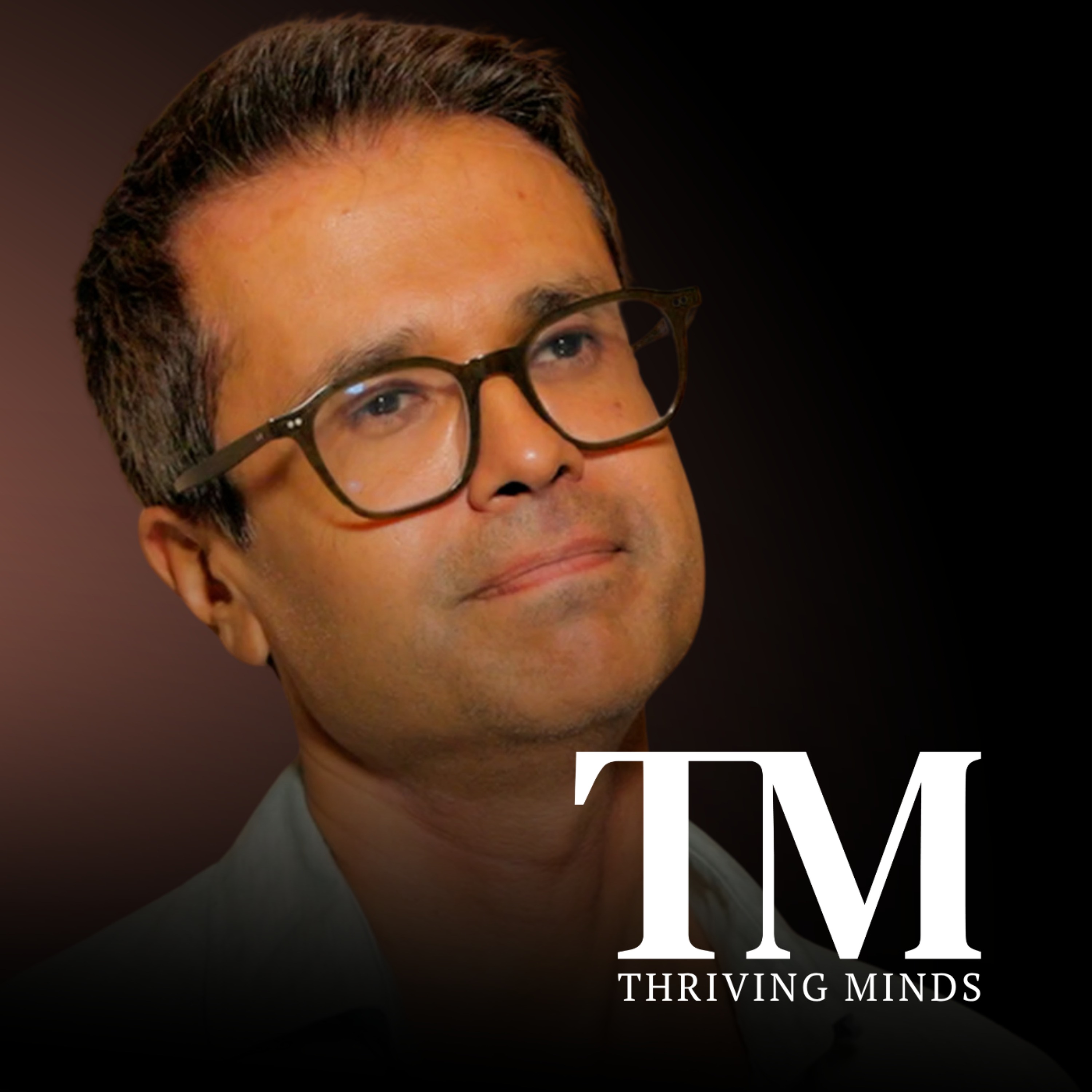
Dr Aseem Malhotra argues that “healthy” people still get heart disease because the main drivers are insulin resistance (linked to refined carbs/ultra-processed foods), chronic stress (compared to smoking 20 cigarettes/day), and inflammation/clotting—not cholesterol alone or “more exercise.” He also criticizes overuse of statins and blood-pressure drugs for mild cases, claiming they create “illusion of protection” while exposing patients to side effects.
The episode is with Dr Aseem Malhotra, a consultant cardiologist (qualified 25 years) who shifted over the last decade from interventional cardiology to prevention. He is a public health campaigner, founding member of Action on Sugar, co-creator of The Big Fat Fix, and author of The P.O.P. Diet and The 21-Day Immunity Plan. He cites personal motivation after his brother died at 13 from viral myocarditis.
High cholesterol is a weak risk factor and correlates with longevity; insulin resistance is the “biggest driver” of coronary artery disease; chronic stress increases inflammation/clotting via brain pathways (amygdala) and is worsened by social isolation, meaninglessness, and lack of autonomy/authenticity. He says many blood-pressure pills (especially for mildly raised BP) don’t reduce heart attacks/stroke/death in trials.
MRI/Lancet 2021 stress research; “two-thirds” cold risk in isolated people vs “one in three” with strong community; breathwork lowering BP by ~30 mmHg in his patients; elite athletes reportedly getting 8–10 hours sleep (often including naps).
Written by AI. May contain mistakes.
Discuss the misconceptions around cholesterol and its relation to heart disease.
“His views have made him one of the most controversial voices in health, sparking fierce debate within the field.”
Explore how chronic stress compares to smoking in terms of heart risks.
“when it comes to the heart and heart disease.”
Hear about Dr. Malhotra's motivations and experiences that led him to focus on heart health.
“I was motivated and inspired by one, the subject of science and biology.”
Learn about the primary functions of the heart and common diseases affecting it.
“is the heart, which basically is a muscle that pumps blood around the body.”
Uncover traditional risk factors for heart disease and their flaws.
“What are the main root causes for most of these heart diseases?”
Understand insulin resistance and its effects on heart health.
“hierarchy of those causes as well, so that we're not focusing, say, on a small factor and ignoring the big factor.”
Discuss how diet impacts insulin resistance and heart disease.
“which can drive insulin resistance and even inflammation in the body.”
Examine the effects of chronic stress on heart health and inflammation.
“So the key thing is, yes, don't be sedentary, but also realize that there is not a dose response with exercise.”
Learn how the body reacts to stress and its implications for heart health.
“contributes to the abnormal clotting of blood.”
Identify ways to recognize stress and its effects on health.
“Now, imagine though, however, rather than acute stress response, you know, for that initial clotting response to a threat to your life, you're now low-grade chronic stress.”
Explore how stress manifests in our lives and its impact on health.
“analogy, how stress has evolved from prehistoric times where we saw a threat and our minds would rush us and give us tons of cortisol.”
Learn about the correlation between social isolation and health issues.
“To feel that we are valued and a valuable member of society.”
Discuss the psychological factors influencing public reactions to crises.
“to dealing with COVID, lifestyle changes, for example.”
Identify the critical elements that contribute to optimal mental health.
“Okay, so again, everything comes back to the mind for me.”
Learn how love, autonomy, and authenticity impact mental health and social well-being.
“And again, authenticity, you know, expressing your true intrinsic beliefs and desires, following your interests and your passions, not what someone else expects of you.”
Explore how social media can create anxiety and affect authenticity in relationships.
“So then, you know, um, and then you've talked about self-efficacy and self-esteem.”
Discuss the moral responsibility to remain hopeful for future generations and the power of truth.
“I'm thinking back, I was at university, and you know, and fine, we have this nostalgic view of our university.”
Gain insights into blood pressure, its measurement, and its significance for heart health.
“I think it's a moral responsibility for us to be hopeful because pessimism is surrender and despair is defeat.”
Learn about the connection between insulin resistance and high blood pressure.
“And my guess is most of those people don't realize those pills are doing nothing for them.”
Learn about the potential illusions of protection provided by blood pressure medications and the importance of addressing underlying causes like insulin resistance.
Discover how stress reduction and dietary changes can positively impact blood pressure and overall heart health.
“And you can sometimes see drops of 30 millimeters of mercury.”
Understand the significance of good sleep hygiene and a structured morning routine for heart health and overall well-being.
“You look at this guy, Ronaldo, who's what, 39, 40?”
Learn about the ideal breakfast choices and supplements that support heart health, as well as the importance of hydration.
“So I have lemon water with saffron, turmeric, hot water, again, before I've eaten anything.”
Explore the best practices for exercising to maintain heart health, including cardio and resistance training tips.
“So, you know, there's a lot going on there.”
Discuss the misconception that having a six-pack is a sign of good health and the balance needed in fitness tracking.
Learn about the nuanced relationship between alcohol consumption and heart health.
“That's when you can then get a toxic effect on the heart muscle, all right?”
Discover what constitutes a heart-healthy diet and essential foods to include.
“of carbohydrates when it comes to keeping our hearts healthy, mainly due to preventing insulin resistance.”
Understand the complexities of cholesterol and its impact on heart disease risk.
“And in fact, it's associated with longevity.”
Explore the influence of the pharmaceutical industry on cholesterol management practices.
“The way I was taught about LDL and HDL is that LDL, as you've mentioned, historically has been perceived as the bad guy, the bad cholesterol.”
Learn about the impact of pharmaceutical companies on healthcare practices and the importance of public awareness.
“So there are several layers all the way down, which means that we are focusing, we're over-medicating people, we're not being judicious in the use of medicine, which in my view should be primarily used for acute illness.”
Explore the psychological barriers to accepting new perspectives and the value of humility and curiosity.
“the liberty of democracy is not safe when you allow any individual entity or group to have more power than the government.”
Discover personal reflections on dedication to health and the sacrifices made along the journey.
“to make them healthy and happy across the world when I could be doing something else and just enjoying myself and having fun.”
Hear essential advice on nurturing empathy and curiosity in daily life for personal growth.
“would probably tell me is like son can you need to you need to find a partner and settle down have a family so he probably just say he was saying that to me before he passed away as well so he'll probably reiterate that.”

Get the gist, explore an idea or ask about something said.
 Claude
On Thriving Minds with Alberto Zandi, what are the key points of this episode?
Searching your listeningAutomatic transcript. May contain errors.
0:00The fear of cholesterol is a trillion dollar industry. High cholesterol is a weak risk factor for heart disease and in fact it's associated with longevity. So you've got high side effect rate, you've got illusion of protection and who's benefiting? The drug companies. While we're suffering and we're wasting our money and potentially doing harm. Most people who come and see me want an honest conversation about their heart health, about the pills they're taking, historical data on what determines people's health and longevity. The single biggest determinant is... What are the main root causes for most of these heart diseases?
0:30The biggest driver is... Dr. Asim Malhotra is a renowned cardiologist, best-selling author, and prominent public health campaigner, known for challenging the influence of big pharma and conventional thinking around diet, statins, and COVID-19 vaccines. His views have made him one of the most controversial voices in health, sparking fierce debate within the field. He is a founding member of Action on Sugar, co-creator of film The Big Fat Fix, and author of best-selling books The P.O.P. Diet and The 21-Day Immunity Plan. Incapacity to experience guilt, repeated lying conning others for profit, callous unconcerned for people's safety.
1:13This is all pharma. This is all big corporations, including big pharma. And big pharma. Absolutely. I think the elephant in the room of what's not really being addressed in society and for individuals is chronic stress is equivalent to smoking 20 cigarettes a day when it comes to the heart and heart disease. Jesus, why do you think we're so stressed? So the two biggest drivers of people's stress in their lives is walk me through a perfect day for our hearts. What should we eat? What should we do in the gym? Should we go to the gym? Perfect day starts with... Dr. Maholtra, I've had the distinctive pleasure of already recording an episode with you.
1:48But for our new subscribers that don't have the pleasure of knowing who you are and what you do, how would you describe yourself and your area of expertise thanks for having me on again alberto i am a consultant cardiologist a practicing doctor i've been qualified 25 years i initially sub-specialized in interventional cardiology which in layman's terms is keyhole heart surgery and gradually over the last 10 years or so i've shifted much more towards prevention a more approach where most people who come and see me on a clinical level are coming because they want an honest conversation about their heart health, about the pills they're taking.
2:28Often they want to come off their pills and they want to get a honest view on what lifestyle changes they can make to improve their health and reduce their risk in the future and even potentially reverse disease. Why is the heart? Such an important topic for you. Well, as a, first of all, qualifying as a doctor, I was motivated and inspired by one, the subject of science and biology. Two, I think that I had big influence from my parents who are both doctors. Three, I think this probably played a big role is I lost my elder brother when I was 11 years old to viral myocarditis. So he was 13 years old, two years older than me, got a viral illness.
3:09And within a few days from being fit and well, had a cardiac arrest and died. So I think that had a very big impact on me. And then once I got to medical school, I had a fascination with the heart for lots of reasons. But I think one of the main ones is, you know, it is still one of the biggest killers and certainly the biggest cause of premature death in European men. And I wanted to try and understand what was driving heart disease and what role I could play to help fix that. For those who are not very familiar with the primary functions of the heart, what does the heart do? Well, it's a pump, essentially.
3:46So every cell in our body, in order to survive, needs oxygen. And the delivery apparatus, if you like, of oxygen to our cells, our brain, our skin, our organs is the blood and the pump, what allows blood to reach those cells essentially is the heart, which basically is a muscle that pumps blood around the body. And what are the main issues that we have with the heart in this day and age? Well, when I talked about heart disease, what specifically I'm referring to is a disease of the vessels of the heart. So the heart has its own blood supply by what we call the coronary arteries. they run on the outside of the heart muscle call them epicardial is the name to describe these vessels and they supply the heart muscle with blood over time for many different reasons which we'll come on to those vessels can become damaged and diseased and blockages can develop and cause damage to the heart muscle it can happen chronically over time or it can happen suddenly on the background of disease that happens over time over decades and that can result in a sudden clot forming within the in those vessels if you like the the tubes or you know that where the blood's supposed to flow and if the any area and this is true for any part of the body if any area of heart muscle is denied oxygen for more than several minutes then you have cell death the cells die and that is actually what you call a heart attack so heart attack specifically is cell death it doesn't necessarily mean that the heart's going to stop beating but it's one of the causes of how a heart can suddenly stop beating and cause what we call a cardiac arrest what okay what are other examples of heart diseases well you can have diseases of the heart muscle so in a way that um my uh my brother died of viral myocarditis he had a virus and then the immune system attacked his heart rather than just being dealt with normally in an autoimmune way and then cause damage to the heart muscle from that perspective.
5:57And then you have other diseases of the heart which can include what we call cardiomyopathies. So these are again diseases of the heart muscle linked to things like excess alcohol intake. People who have a drink a lot of alcohol, usually at least more than 50 units a week, sometimes more, that is directly toxic to the heart muscle and can cause the heart muscle to reduce in its ability to pump. How long does it take for that to happen? So for how many years don't it be? It varies. It can happen over a few months. It can happen over several years. What are the main root causes for most of these heart diseases?
6:30Well, I think the thing we should focus on, Alberto, really is coronary artery disease, because that is the main issue around what's a massive driver of premature death in the population. So the traditional major risk factors for heart disease, for those blockages building up, are high blood pressure, high cholesterol. However, I'm going to tell you why that is flawed and wrong. Okay, we'll come on to that. It's a very big, important topic about cholesterol. Type 2 diabetes and smoking. So those were the sort of the major four. But when you go deeper, and this is what I've done in my research and my publications and my books and my documentary films and my advocacy and my lectures, the real driver, the primary driver, of course, there are multiple risk factors, but we want to understand what is the hierarchy of those causes as well, so that we're not focusing, say, on a small factor and ignoring the big factor.
7:31okay the biggest driver is insulin resistance how do i explain that it's when the body becomes resistant to the hormone insulin over time and insulin itself when it's chronically raised and insulin is there primarily to control metabolism and blood glucose when insulin is chronically high that is directly toxic to the inner lining of the heart arteries and that house is how heart disease develops now from a perspective of what drives insulin resistance the primary driver is actually poor diets and that means diet that is high in refined carbohydrates and sugar or ultra processed foods so from a dietary perspective um that is the primary driver the good news is you can affect insulin resistance or reduce insulin resistance very quickly from dietary changes just within weeks, even days sometimes.
8:24Then you have chronic stress, which can drive insulin resistance and even inflammation in the body. So inflammation, which is essentially an immune reaction to a toxic substance, if that is chronically in excess, that also will damage the inner lining of the heart arteries. And smoking is one example which drives chronic inflammation in the body and heart disease, but also increases the clotability of blood. and uh coming back to the other one of the other drivers is chronic stress as well which you know i think for most people that and this is you know i i from my perspective i think the elephant in the room of what's not really being addressed in society and for individuals is chronic stress is equivalent to smoking 20 cigarettes a day when it comes to the heart and heart disease jesus right and recent data shows certainly from america that we are potentially more stressed than we've ever been in you know in the last 50 years for sure maybe longer so it's a big problem and i will talk about why i think we are stressed we should come on to that as well because what are the drives of that um and then being sedentary so i think exercise is overrated and too much exercise can cause heart disease.
9:41I see that a lot. A lot of people don't know this. I've diagnosed severe heart disease in people who are in their mid 40s and 50s who have six packs, are running 10 miles a day, which they shouldn't probably be doing because it's not good for them, especially with stress. But movement is underrated. So the key thing is, yes, don't be sedentary, but also realize that there is not a dose response with exercise. Not that the more exercise you do, the better is for you. In fact, you reach a point where when you start doing more exercise, one, it can be detrimental to the heart, but also depending on the type of exercise you do, Alberto, it can be quite damaging to the joints as well.
10:17So you have to find the bliss point for exercise. So really from a lifestyle perspective, I think those are the key things that we should be focusing on really. So I want to talk about stress, but before talking about stress, I want to summarize what you've mentioned about sugar. So if we eat a diet that has excess of sugar or refined carbohydrates, our body is going to create excess insulin. And over time, our body is going to become resistant to that insulin. Excellent. Absolutely. And sorry, I'm watching mention it's through the process of... So whatever foods rapidly raise blood glucose are the same foods that are going to drive insulin resistance if they're eaten in excess over time.
10:54And then insulin is a hormone that enables our cells to use glucose as a source of energy. The moment we don't have that hormone, then that glucose stays in our bloodstream and this is very bad for our hearts. Yes. Or if there's too much insulin over time, the cells become resistant because they're being overstimulated by insulin. And that's another way glucose can stay high in the bloodstream as well. Interestingly, glucose independent of insulin contributes to the abnormal clotting of blood. And insulin independent of glucose does the same thing. So actually it's a double hit. Both high glucose is bad and high insulin is bad.
11:35I want to move on from sugar just for this part of the conversation because I'm quite confident that at this stage of how the wellness sector is evolving, almost everybody listening to this episode might know that sugar is just not good for you and necessarily not very good for your heart. But I want to tackle the stress topic. So how is stress and chronic inflammation affecting our heart? And explain it to me as if I was a 10-year-old boy, please. Yeah, the stress thing is fascinating. So, to explain it from an evolutionary perspective, Alberto, acute stress can be life-saving and is important for us.
12:13So, for example, millions of years ago, if we're in the jungle and we're escaping a saber-toothed tiger, then what happens is when you have an acute stress response to that, there are signals from the brain that go to the bone marrow in particular and start producing essentially clotting factors. so that if you are attacked, the risk of you bleeding to death is reduced. Now, imagine though, however, rather than acute stress response, you know, for that initial clotting response to a threat to your life, you're now low-grade chronic stress. So you are almost living in a fight-or-flight response, not to the extreme degree where you think you're about to die, but you are anxious and you are stressed for whatever else.
12:59And that is a mechanism that has been shown through studies of likely increasing the risk of heart disease. And there was a publication in The Lancet, if I remember correctly, 2021, where they actually looked at MRI scans and the emotional center of the brain, which is called the amygdala, and to see the response, how the subjective feelings of stress linked to the amygdala being overactive, which then linked to markers in the blood, which indicate increased chronic inflammation, clotting problems, clotting factors being increased, which then also correlated with poor outcomes and increased heart attacks and these were in healthy young people with people who've got more chronic disease and a bit older the the effect is going to be even more and even worse so that's the mechanism that's best understood and then on a population level they've equated that level of chronic stress that people have with uh the equivalence just to help most people can understand this when it comes to heart diseases smoking 20 cigarettes a day.
13:57Interesting. I was introduced to the topic of stress through a very similar analogy, how stress has evolved from prehistoric times where we saw a threat and our minds would rush us and give us tons of cortisol. So then we would either, you know, fight or fly away. But I wasn't aware that stress was also enabling us to bleed less, which is fascinating. So that That was interesting. I didn't know that. How can somebody right now from home determine if they are stressed? I think it's subjective, to be honest. Most people know if they're stressed. There are markers other than feeling anxious is poor sleep quality, rapid breathing.
14:45I mean, I actually work with an amazing cardiac specialist nurse. She's Spanish origin called Sherry Ruano. and she actually works with my patients to teach them a form of breathing called diaphragmatic breathing which actually is a very good way of calming the cardiovascular system if you like and lowering blood pressure and heart rate and even good for the obviously for the mind and what she often does before she takes people on that journey of learning this type of breathing technique is she visually assesses them from their breathing pattern and can see that they're very stressed because they're breathing from their chest rather than from the diaphragm but the honest answer to that question alberto is most people know whether they're stressed if you ask them and what i normally do in a very basic way is i ask patients give me a score from naught to 10 subjectively what you think in the last few years on average where your stress levels are and i say zero imagine a buddhist monk happily meditating in the himalayas okay as very low levels of zero stress and 10 being extreme you know very very high level stress where you're on that scale and all with all the people who have suffered heart disease or have heart problems or heart attacks when you ask them the question about their levels of stress in the last five years almost always it's at least seven or eight out of ten and they've not dealt with it why do you think we're so stressed i think there are lots of reasons i think the first primary one and and this is actually a factor behind you know it's a really interesting um question you've asked because of what is going to now emerge from this, what you've triggered in my mind.
16:26If you ask people from evidence-based surveys what are the two biggest drivers of stress, they say it's work stress and relationship stress. So the two biggest drivers of people's stress in their lives is their work. You could be in a high demand, low pay, low control job, effectively being a slave when many people are, unfortunately, right? That's very damaging to health in fact sir michael marmot who's the guru behind what we call the social drivers of ill health he says being in a poor stressful job poor in terms of lack of quality in terms of that particular job or low pay high demand etc can be more damaging to health than being unemployed and we know being unemployed is very damaging to health so when politicians talks about creating jobs you shouldn't ask the question about the jobs like what's the quality of the job right That should be the first question you ask.
17:16So you've got work and relationship stress. Relationships, of course, you know, and maybe most of us have been there at different times, but you've got this figure, which is pretty terrible, really, that 50 % of first marriages end up in divorce. So we've got a problem. We've got a relationship problem in society, I think. But to come down to the primary driver, in my view, the most important driver, the converse of which is protective, by the way, social isolation talk to me about that disconnection from from other people lack of meaning in jobs i think servers have shown if i'm not if i get that i can't remember if this figure is exactly right i think it is from memory but i think one survey revealed that 67 percent of people who are doing their jobs actually don't enjoy their jobs you know they're in quotes described as bullshit jobs don't give them meaning let's just take one step further back The greatest pleasure or meaning we get in our lives is giving to the other.
18:16To feel that we are valued and a valuable member of society. If people don't feel that from what they're doing in their work, then they're going to feel unsatisfied and isolated and maybe disconnected. So the social isolation is really what is behind loneliness, for example. we're interacting more and more now alberto on on screens with people than we are with each other and that is not a it's a false substitute for real connection so on a tangent i'm going to come back to social disconnection something i find very interesting you know as you probably remember um i was quite prominent and vocal and the first doctor in the world to publicly make the link between covid out poor covid outcomes and obesity and and related to excess body fat, partly because of immune dysregulation.
19:10But in my research in that process, when I was doing that, and I wrote my second book, which was a Sunday Times bestseller called The 21 Day Immunity Plan, it happened on the back of me advising the then health secretary, Matt Hancock, on the links between COVID and obesity. But when I was doing my research into that, before I wrote that book onto the immune system, and something I wasn't even fully aware of, many, many years ago, there were these studies done on the common cold. and what they did was they looked at what was a relationship between social connection versus isolation and the development of cold by actually inoculating people with coronaviruses original coronaviruses as a cold virus not what not covid but okay so they inoculated they gave people okay they put these cold viruses into people's nostrils okay and then they looked over the next few weeks how many people actually developed symptoms of a cold or flu and there was a clear correlation with the people who are the most isolated about two-thirds of those people developed a cold two out of three okay but the people who had really strong sense of community good family relationships good social relationships only one in three of those people developed a cold so there's a clear link between chronic stress and illness also through the immune mechanism so you've got social isolation that then drives and this is very nicely and eloquently explained by a professor of psychology in the University of Ghent in Belgium, who's become a very good friend of mine, called Matthias Desmet.
20:34At some point, you should interview him. He's a fascinating guy. And his research area is called the psychology of totalitarianism. Interesting. Okay. Over the years, over centuries, what happens when you have totalitarian regimes and what happens to the population, whether it's Nazi Germany, whether it's Stalinism, right? And what he talks about is what makes populations vulnerable to totalitarian control? Because when we reflect back, it was like, how did this happen? How did all of Germany get brainwashed by Hitler? Okay, that's a question we've got to ask ourselves. We can ask ourselves now with what's emerged recently with certainly the hearings of Anthony Fauci, how did we get so brainwashed by the COVID narrative?
21:16Not saying COVID didn't exist or wasn't a problem, but we went to a real extreme way of handling it. So the conditions were already in place to allow the situation to arise where we had this bizarre, strange, I would say crazy response to the COVID virus, okay? Social isolation, first and foremost, in the population. Then you have a sense of meaninglessness. Because again, as I said earlier, our greatest meaning we get in life is giving to the other. When you have meaninglessness in your life, and of course it applies to the job you do too then you have free-floating anxiety okay you're not quite sure what what you're anxious about but you just have this feeling of dread and with free-floating anxiety alberta you then get a free-floating aggression looking for a target so if you have um a common enemy suddenly appears either through government or somewhere else right and in the case of nazi germany it was the jews right in the case of what happened uh during the pandemic it was a virus, a deadly virus, people then, because we crave connection, you create a false sense of solidarity for a common enemy, okay?
22:29COVID virus, unvaccinated people. And then what happens is people are happier with the new order of things where they've got this common sense of a common enemy, we've got solidarity. They don't want to go back to the old way where they were more anxious. And it basically, you know, then creates this situation of what we call, he calls mass formation. Matthias Desmet calls it mass formation. A group hypnosis where you lose your ability to think critically and your ethical self-awareness. And you see all the sequelae that happened. It's very almost eloquently and perfectly explained in terms of the mindset that happened and the persecution, the suppression of people with dissident views, alternative treatments to dealing with COVID, lifestyle changes, for example.
23:23and at the root of that coming back to the mind how did we allow people to become so indoctrinated with for example that this so-called new technology vaccine code vaccine right which hadn't been tested was being produced by corporations who have a history of fraud right historical fraud going back decades never been corrected how do we get so indoctrinated by that and um you can explain it all from a from a psychological mechanism really so the barriers to the truth are really psychological not intellectual that's one of the things i've probably learned more than anything else in the last five years are you alluding to the idea that we are the victims of the stress that we're feeling we're not the drivers and we're not selecting through poor choices having stress, which is the victims?
24:13I think that we are primarily victims, but also I think the solutions come back from within too.
24:23One of the things I wanted to mention, Alberto, is why did we become so blindly faithful when, I'm going to give you an example here. I'm not saying everybody was like this, and I can explain the different groups of people who responded differently. to when Anthony Fauci said, trust the science. And I said this on Tucker Carlson, as someone who is an evidence, you know, who's been a professor of evidence-based medicine, who's well-published academic, who understands data and the best of medicine, but also the worst and the limitations. Trust the science is one of the most unscientific statements I've ever heard.
25:00First of all, medicine is not an exact science. It's a social science. It's a science of human beings. It's And therefore, there was no uncertainty attached to when we were rolling out this novel technology in terms of vaccine. Because there is another problem, which is called mechanistic ideology, which is essentially defined as a naive belief in the measurability of reality and the misuse and excessive use of data and statistics. so i've just said to you medicine is not an exact science it's just as much an art it's evolving but there has been a cultural issue but i think driven in large part by industry because they benefit from us thinking things in black and white you've got high cholesterol here's a pill to lower it you're not going to have a heart attack when actually the reality we've talked about before with statins is when you break down the data at best it's a one percent benefit there are so many other things that are important that relate to your health some things we'll never fully explain even the greatest scientists such as Einstein and Stephen Hawking you know Einstein was concluded ultimately he said much of of what we know about the universe will remain mysterious and that's okay let's embrace it we can't explain everything by science it's part of the story but it's not a complete version of humanity and that with the problem with that ideology any ideology again it gives an incomplete version of humanity and therefore is a distraction from other things that we should be focusing on, Alberto, that is going to give us the optimum mental, physical, social wellbeing, which is essentially what health is.
26:37What are those things? Okay, so again, everything comes back to the mind for me. It all starts in the mind. So if you look at the research, okay, and I'm going to try and explain it in a very simple way, but it will make sense to people. What are the components of optimum mental health? It's broken down very well by a professor of psychology, called Tim Kasser. And there's a great book. If people want to look this up, they can read it themselves. It's very short and concise and it summarizes the research. Very easy to read. It's called The High Price of Materialism. So the things that are important for us, the building blocks for a good mental health are safety, security, and sustenance.
27:17We need to feel safe, that we're not under threat. I mean, this comes, for people like you and I, that probably isn't, we are in relatively good economic conditions, right? But you've got to remember a lot of people, in the world there's 2 billion people living in poverty out of 7 billion, right? They don't have regular safety, security, and sustenance in terms of food, right? These are the basics. Self-efficacy and self-esteem. You need to feel that you are valuable as a person. You have something valuable to contribute to your friends, your family, society. Interconnectedness is really important.
27:49Having some connection with your community as well, right? We talked about that earlier. What does that look like? Can you give me an example of that one? I think it means um what does that look like it means having regular interaction listen on a very basic level okay it's having on a very very basic level but so important there's a there's a cardiologist called Ross Walker in America and um in my second documentary which is called First Do No Farm people can look that up online and download it if they want uh he says and he's one of Australia's most famous well-known um cardiologists and he's a very good clinician and he said the most important thing that he tells his patients is having someone that you love and someone that loves you on a very basic level and so interconnection and then the last two which are crucial to try and figure out why we are also chronically anxious and not happy autonomy and authenticity so autonomy means that you feel that you um are in control of your choices okay you're not not being silent because you are under oppression and we are we're under corporate oppression you know in my journey on the whole issue where i've exposed all the damaging sides of the code vaccine i've lost count alberto the amount of doctors and people i've met even people in policy positions politicians senior politicians some of the most potentially powerful people in the country who say assume we agree with you but we're too afraid to speak right so that is an impairment of your ability to have autonomy.
29:18And again, authenticity, you know, expressing your true intrinsic beliefs and desires, following your interests and your passions, not what someone else expects of you.
29:31How is the average person at home affected by these components through society, through the society that we live in right now? I think that when it comes to, when you can break all of these down in a way so in terms of basic needs being met you know we've got what a million children in poverty in this country for example and there is a scale in a spectrum if you don't have good quality housing you haven't got confidence that you're going to be able to see where your next meal is coming from and again on the spectrum of that of course you then get into So the unhealthy foods, which are cheaper, which then drives disease in another way.
30:13Right. So then, you know, um, and then you've talked about self-efficacy and self-esteem. I mean, that's something that I think really starts at school. You know, it's, it's giving children the confidence to be able to harness whatever. We all have different skill sets, right? Everybody has something to offer in my view. you know so so i think it's about harnessing those particular skills and feeling that you are valuable valuable in society the interconnectedness i think you know social media really in effect and it's it's ironic we're doing this and this is going to go on youtube we want as many people to hear it and that's great of course right 100 and i think there's a big value in podcasts 100 um but i think where we go wrong is the anti-social media of people on the Instagram culture where it's about image and status and projecting a version of yourself, which most often I've found Alberto is not true.
31:17You know, I think this is maybe, and please forgive me women, if this is not just a female thing. I think it's a bit more of a prominent issue for women is that, you know, I know people who I interact with. I won't name them right in the health and wellness space. And you see them in person and you look at their instagram and they look completely different and yeah we're talking when we come back so why is this this raises another point why are we also more anxious is because there is an increasing lack of trust in society because when we're disconnected and there's all these divisions happening then you uh you don't for society to progress cohesively we need to be able to trust each other to feel safe and secure okay when you look at the instagram culture the perception of truth requires people to be authentic so they can perceive authentically if i'm incentivized just to put likes to get as many likes as i can on a post i may not be being authentic in what i'm posting and i'm thinking about what shall i post it's going to get more and more likes and it might be a filtration it might be i say something i don't really mean now i think what's happening is happening psychologically there from my perspective if i'm doing that i know i'm not being authentic if i know i'm not being authentic when i'm posting something i'm also perceiving everybody else as being not being authentic yeah so the perception of truth requires people be authentic so they can perceive authentically yeah that's very interesting right so we've got so we've got all of this going on but that gives us a lot of agency because then it starts with us it does it does but it also you're absolutely right it does start with us but we have to create a structure where and i haven't got the answer for this i mean you know there's all this talk and discussion about banning social media for under 16s i think the argument's very strong i'm you know i'm open to encounter arguments purely because i think it's damaging the mental health of our children i am in some ways fortunate alberto that i grew up in a society where i didn't get a mobile phone until I was a junior doctor, right?
33:26I'm thinking back, I was at university, and you know, and fine, we have this nostalgic view of our university. For me, my university was the happiest time of my life. And I was like, we didn't have, we didn't have mobile phones. We had like, you know, in our halls of residence at uni, we had like a phone. And I remember coming back to my room at the end of a lecture and I'd lift to the phone and be like, you have four messages. I'd be really happy. Oh my God, four people have called me, right? What's going on? I'll listen to those messages. We'd plan things and we'd still meet. And we were, But, you know, I think we were actually mentally a lot better off then.
33:53I certainly felt I was. Different stresses, of course. So you've got that issue from the mental health disconnection. Is social media, which maybe should be renamed anti-social media, is it distracting us from proper connection with other people through a conversation? There's something that happens when you meet somebody, which is very different to a communication through a text message. even a phone call a phone call is still better than a text message but there is something that happens between human beings there's what we call and matthias desmet the professor of psychology talks about this it's a certain resonance that you feel there's an energy there's almost a heart connection that happens that you can't rationalize and he talks about even within a split second when somebody is speaking to you you can interrupt that person speaking within a split second knowing where they're coming from from the non-verbal cues you don't have to process everything they're saying before you respond, right?
34:48We can all relate to that. So this is something else that gives us that feeling of, again, it comes back to safety and security. You know, it's about friends, it's about people around us. And again, I think, you know, if you look at historical data on what determines people's health and longevity, actually the single biggest determinant is quality relationships. Ideally, it can be with a friend, of course, but ideally, if you get what's perfect for you in terms of a partner, there's nothing like it. Are you hopeful about our world? Yes. I think it's a moral responsibility for us to be hopeful because pessimism is surrender and despair is defeat.
35:30So we have to be hopeful. We have to be hopeful for our children. But the fact that we're having this conversation at all, Alberto, on one of the most prolific upcoming influential podcasts in europe right for me that already gives me hope that we're having this conversation here on this platform because that means the information is going to be disseminated to as many people as possible and there's nothing more powerful than the truth when it's authentically spoken in terms of how it impacts on people what's your life's mission my life's mission because i am a biased advocate for good health which which is defined as a state of optimal mental physical and social well-being is to ensure that i achieve that for myself and i disseminate the knowledge that i gain in that journey to as many other people as possible so that we can you know i can certainly leave this world a better place than i found it
36:31beautiful i want to bring us back to the heart you mentioned high blood pressure unfortunately not everyone knows what high blood pressure is so what is it and how does it affect our hearts so blood pressure is essentially a measure of the pressure within our major blood vessels and there are normal ranges of blood pressure i'm glad you've brought this up because this is a really good example of how big pharma if you like have over medicated millions of people with blood pressure pills. So this is a really, really good topic. So first of all, in terms of the context of it, in terms of risk factors for death globally, the single biggest risk factor for death globally is high blood pressure, okay?
37:20Because it's a risk factor for stroke, which is effectively similar to a heart attack of the brain. You get a clot in a blood vessel to the brain and you lose brain tissue as a result of that. So high blood pressure is the single biggest risk factor of that, and it's one of the major risk factors for heart disease as well. And heart disease and strokes or cardiovascular diseases as a group is the biggest driver of premature death globally, certainly in the Western world. So you have a normal range of blood pressure, which is basically two values you get, what we call a systolic value and a diastolic value.
37:54The systolic value corresponds with the heart pumping. So the heart pumps blood around the body, and then it relaxes. pumps relaxes the blood's continually flowing but the systolic the initial contraction is where you get the biggest pressure and flow there's still flow on the relaxation it's still flowing from the previous right but that's called the diastolic blood pressure and then when the heart relaxes so there are two figures people will be familiar with this i think most people know what they've gone to their doctor and had the blood pressure checked and the normal ranges are roughly around you know 110 over 70 120 over 80 etc okay so those are what we call the normal range Population studies have shown over time that once your blood pressure increases, and it is in a relatively linear fashion, the higher the blood pressure goes on average when it's measured, the more the increased risk of heart attack and stroke.
38:46Now, the normal range traditionally was thought to be anything under 140 over 90. So under 140 systolic and under 90 diastolic. when you get from 140 to 160 and from 90 to 100 either of those two or both that's mildly raised blood pressure okay 160 to 180 100 to 110 moderately raised and over 180 over 110 is severely raised blood pressure okay and just to give you context here if you have uncontrolled severely raised blood pressure, which is very few people these days, by the way, but we look back historically, okay, over 180, over 110, over a year, about 25 % of those people will have a stroke in a year.
39:38I mean, it's a lot of people, right? If it's left uncontrolled, it's a very high number. So the question is, what's driving the blood pressure and how is it managed and what are we doing wrong? There's a definition that's come in and it does have some data behind it, but again, it's sometimes a bit of overkill of what we call pre-hypertension so for diabetes you have blood glucose has to be a certain level and then you have before diabetes have pre-diabetes which getting to a dangerous potentially dangerous range and then you have normal so pre-hypertension is okay you're on the road to getting mildly raised blood pressure potentially so the pre-hypertension range is now between 120 and 140 okay and between 80 and 90 it's called pre-hypertension and again in that range over time your risk may be small over 10 years depending where you are but it doubles the risk okay every 20 millimeters of mercury above the pressure okay above 115 you get a doubling of risk a stroke okay now the driver of high blood pressure and this is not something we're taught in medical school and this is where a lot of doctors there is a big limitation that needs to be corrected around lifestyle etc is we were told that 95 of high blood pressure is unknown okay five percent is related to some conditions linked to excess adrenaline or aldosterone being produced by your adrenal glands or something like that right these rare tumors benign tumors you get that can cause these hormones to go in excess and that raises blood pressure that's one of the what we call the five percent but we're told 95 is unknown called idiopathic is the medical term and through my journey in the research i realized that actually 50 of high blood pressure half of it can be attributed purely to insulin resistance which is what we talked about earlier the glucose and insulin and the reason i mentioned this when i see patients when you get them off the starchy foods often their blood pressure comes down they can come off their pills which is great okay so that is the missing link in this discussion now Now, a lot of people around the world, a lot of people listening to this, I mean, 50 % of Americans, to give you some context here, Alberto, 50 % of adult Americans are on blood pressure pills.
41:52And my guess is most of those people don't realize those pills are doing nothing for them. And I'll tell you why. When they did the trials, the drug trials, looking at controlling blood pressure, for people who had mildly raised blood pressure, where we do know that it is does increase risk of stroke there's no doubt there over time when it was treating people who had levels up to 160 so one between 140 and 160 and between 90 and 100 lower value the blood pressure pills treating them lowering it and they followed them up versus people that weren't treated there was no difference in the heart attack strokes and death rates so why are they taking them well they're taking them because of mechanistic ideology a naive belief in the measurability of reality and misuse of data and statistics so you think in your head blood pressure's high bring it down it's going to benefit you but the only way to know for sure is to actually do a trial to show whether this actually benefits people in preventing heart attacks and strokes and death that's the main risk of what high blood pressure does so what is the reason for that well this is where things get a little bit more complicated but also let's simplify it i said to you earlier and so this is my theory okay insulin resistance is the main driver and we know insulin is directly toxic to the vessels imagine if insulin resistance is the main driver and blood pressure goes alongside it as a marker of it you treat the blood pressure with a pill but you're not attaching hitting the insulin resistance you get me and that's causing the problem so it's giving people the illusion of protection there may be other factors we haven't identified but the bottom line is this alberto is when you talk to patients when i prescribe a pill i should know if that information is available and the studies have been done i should say to and i said to patients say listen we can put you on a pill here but the reality is the evidence suggests that there's no real benefit for you right there's no significant benefit for you according to drug misreponsor trials therefore you may be getting the illusion of protection and you're now vulnerable to side effects about 10 percent of people will get some sort of quality of life limiting side effect from blood pressure pills often they have to change a pill to you know to see if that side effect disappears with a different pill so you've got high side effect right you've got illusion of protection and who's who's benefiting the drug companies while we're suffering and we're wasting our money and potentially doing harm this is just one example in medicine alberto so what is my approach with these patients i say to listen there is an alternative here let's do some stress reduction let's do some meditation listen sherry the cardiac nurse who does you know and she's done When they do the breath work, people do the breath work, she measures the blood pressure before their breath work and 20 minutes after.
44:34And you can sometimes see drops of 30 millimeters of mercury. People whose blood pressure is 150 comes 120, for example. So for different people, it could be different things driving the blood pressure. But chronic stress is another driver. I have no doubt about it. So you've got the stress reduction and the dietary change. You reduce ultra-processed food, the refined carbohydrates. Inter-resistance gets better. Blood pressure comes down. They come off their pill. Everyone's happy. Now, playing devil's advocate on myself here, someone would say to me, but Dr. Mahochu, you haven't got evidence that that's going to improve outcomes.
45:03And they're right. We haven't got the studies showing that doing this lifestyle approach necessarily prevents heart attacks, strokes and death. But common sense and intuition tells us, well, hold on a minute, you're doing a lifestyle change, you're coming off the pills, your quality of life is going to get better, and it's likely that it's going to improve your lifespan. I think most people can agree from a common sense perspective, it's likely, I haven't got the hard evidence. but when you at least give that patient that honest information, they tend to choose that they'll go for the lifestyle approach.
45:33I want to talk about solutions shortly, but all the way until we have high blood pressure, if you were to put it in a percentage, what contributes most to that situation? Is it genetics or lifestyle? In general terms, and it varies for different diseases, certainly for heart disease, probably also to high blood pressure, I would say 15 to 20 percent is probably genes 80 is environment and lifestyle and I also speak from a personal perspective so both my parents had high blood pressure and they developed high blood pressure in their 40s I'm 48 now my blood pressure isn't even pre-hypertensive it's just bang on 110 over 70 I do breath work every morning for 20 minutes I do moderate exercise I'm you know I'm a bit obsessed with the gym probably too much and I'm very particular you know I follow my own advice i i i um what i think is probably one of the healthiest diets in the world
46:34walk me through a perfect day for our hearts what should we eat what should we do in the gym should we go to the gym perfect day starts with good sleep actually we haven't talked about that but i think that let's talk about it well yeah listen the data suggests at least seven to eight hours a day um i was pleasantly surprised maybe a little bit shocked but it was interesting that when you look at these elite athletes you know i want to be the best version of myself for as long as possible and you look at the like and i'm a massive sports fan i used to play a lot of sports i could have played competitive cricket you know as a profession i'm a massive football fan and you know i'm a big man you fan as well sorry for the non-man you supporters listening but um And I saw him play as Ronaldo, right?
47:21You look at this guy, Ronaldo, who's what, 39, 40? You look at Lionel Messi, people like that. Amazing. Ryan Giggs, these people that played quite late onto their career and they were still phenomenal. Look at tennis players like Novak Djokovic, Roger Federer, basketball players like LeBron James. These people are very particular about their sleep. And they say on interviews that they get eight to 10 hours of sleep a day. Eight to 10 hours, Alberto, right? For recovery purposes, often it'll be eight hours at night and they'll maybe have a two-hour nap in the middle of the day. There's a gap in between wanting to get eight to ten hours on sleep and then being able to get there.
47:56So what would you say to the latter part of the population that want it, but then unfortunately they can't? You get at least seven hours. So get at least seven hours. That's important. Most of your productive deep sleep from the research I've seen and listening to other people who are experts in this field actually happens before, some of the best sleep happens before midnight. So you really don't want to be ideally going to bed after 10 o 'clock, I would say. Okay? I mean I personally and this is me I'm not saying everyone does this I go to bed at 8 30 every night when do you wake up um you know I go to bed at 8 30 I read before I sleep and I usually wake up about if I've had a good a good sleep you know decent sleep then I'll wake up just after four o 'clock what does your overall sleep hygiene look like so no screens before two hours before bed at all two hours I don't look at yeah I don't I literally make sure that um I switch off my mobile phone if I can almost always 6 37 o 'clock I switch off my mobile phone I will often you know I'm a big uh movie person I like series for me my personal downtime enjoyment is watching something on Netflix or Apple or Amazon Prime or whatever right so I usually watch something right um I like that that's kind of my escapism at the end of the day I've always been like that so that's the last thing then I read then I sleep um the first thing I do when I wake up I do at least 20 minutes sometimes 30 minutes of breath work which is Sherry's technique and diaphragmatic breathing so i breathe in for four seconds through my nose i hold it for seven i'm thinking about my diaphragm so i'm breathing out i'm breathing in through the lower part of my chest right and then i breathe out slowly through my mouth for eight seconds so i do that for about 20 minutes again i deliberately do not look at my screen or my phone for a good hour after waking up that's really important so i do that um then i go and start my what i'm going to eat in the morning whatever else i try and get a liter in of fluid actually first thing i do um gary brecker who you may know who's a biohacker in america good very good friend of mine the he's produced these um hydrogen tablets basically hydrogen type water which is supposed to be better for your energy mitochondria and for your gut so the moment i'm doing that so i drink the i have the hydrogen water i have some turmeric and hot water as well after that why um because i think well turmeric actually, or curcumin, has got some very potent anti-inflammatory properties, good for the gut.
50:16So I have lemon water with saffron, turmeric, hot water, again, before I've eaten anything. And I have that while I'm reading. So one of the things I found about myself, but also from the research, lifelong learning is conducive to good mental health. If I'm not learning something new every day in some form or another, Alberto, I'm not happy. I realize that about myself. So I stimulate my brain in the morning by reading something. It might be a medical journal article, it might be a passage from a book it might be something spiritual for me all of it is relates to my advocacy anyway these days i'm reading something just really trying to get into the nitty and gritty of of not just understanding what good mental health is which i know is how do we also overcome challenges to communicate this information to people to change the system and to change hearts and minds right how do we become better communicators so i so i do all that kind of reading in the morning usually about 30 minutes then I will have my breakfast, which for me is a high fiber.
51:09I'm, I realized that about myself. I'm low carbon, not keto, but I eat the only time I eat any kind of starch, but high fiber starch is really around my workouts. So I'll usually have a high fiber gluten-free porridge oats in the morning with berries and cacao powder and nuts and seeds and pomegranate. You know, I really get into that um and then i the supplements i take at the moment really the ones i i think have probably got some benefit with no harm are vitamin c um and i take magnesium i mean i've had a despite the breath work i've had probably you know extremely high levels of external stress in the last few years partly related to obviously losing my dad and being isolated in the sense i live alone and being persecuted and trying to do all the advocacy work.
52:00So, you know, there's a lot going on there. But I found magnesium helps a lot with me in terms of my stress and my sleep. And then I will hit the gym, you know? I do resistance training three to four times a week. I do cardio five times a week. So I'll be, you know, when the gym opens. Also, I'm a morning person. So I tend to find that, you know, I'm usually in the gym at 6.37 a.m. And then usually the morning is when I see my patients. So the mornings are left free for patient consultations. You've mentioned that sometimes overworking out is not good for the heart. So what does a good workout routine look like for the heart?
52:37And also what does a bad workout look like? I think a good workout routine for the heart is essentially doing 150 minutes of zone two. So getting your heart rate between 60 and 70 % of what you call a target. You can all calculate this. So there's a way of calculating this. 220 minus your age. So let's say you're 40 years old. 220 minus your age will be 180. And then you want to be 60 to 70 % of that 180, which will be something in the range of whatever. It might be in the range of 100 to 115, 120, something like that, okay? And you maintain that for 30 minutes, five times a week, ideally. so that for me is really the bliss point of good cardio zone two cardio zone two cardio you have high intensity interval training as well and people can do that and i think there's some benefits there as well good for hormones good for testosterone um i normally tell patients not more than once or twice a week for if you're highly stressed and your sleep is poor you don't want to be doing that more than once a week and you need to be keeping in zone two when you combine high stress poor sleep maybe high carb diet and where you're training where you're doing you're going well over 300 minutes a week of cardio that's i think where you get the potential damage to your heart and around 11 percent of elite athletes by the time they hit 50 will have evidence of severe coronary artery disease by something called the calcium score of over a thousand so i think there is a problem and i've seen patients with this issue as well what does the heart look like and if you compare it to our regular healthy heart well i think it's about the build-up of furringham blockages etc over time so it's damage it's chronic inflammation it's too much stress on the heart that's going to cause another mechanism of heart disease so i i'm very concerned actually with people over training not just from an injury point of view but also from a heart point of view so keep it simple you know if you look at these so-called blue zones with people with these communities high longevity alberta they weren't pounding in the gym these people around the fields they were walking in the hills that's how they got their exercise right and they were doing it usually from a practical perspective to go and you know from a farming perspective for example or to pick fruit or whatever that's what they were out in there so i have a question for you um so the people that we see for example having a six pack which requires for the individual to put their bodies at high levels of stress both from a workout perspective but also from a dietary point of view typically we have assumed that having a six pack is the sign of being in good health would you dismiss that belief yeah i think it isn't necessarily it could give people the illusion of being good health uh i think it listen it's better than having a pot belly okay all right um but we shouldn't let perfection be the enemy of good talk to me about that because i think that's a very big topic right now everybody through all the wearables and trackers and so on they're trying to find their perfect way of of being of thinking of feeling of everything what do you think about that i think it has a role to play but i think we can become a bit obsessive about it i mean listen i have an aura ring um i'm i'm addicted to my aura ring in the sense that for me it's particularly looking at my heart rate variability and my stress which heart rate variability is a good surrogate marker of stress levels so i can see that and looks at my deep sleep and rem sleep but it's again how you deal with it right and you know there's some evidence to suggest certainly anecdotally that if you have certain bad markers one night it could just ruin your mood for the whole day and you're just like you're basically pissed off because you know your sleep hasn't been that good would it have been better to not know that and just get on with your day right so there's there's a balance to be had what do you do with this data when you check the results i think what can be helpful with alberto is stopping overtraining so one of the markers of overtraining is heart availability going down which is not a good thing and it can tell you listen today you got to take it easy a bit right i mean i've been victim of overtraining i've had injuries from overtraining and i know that i've worked out on days sometimes before i had my o-ring where i just had four hours sleep and i'm like okay i'm gonna have extra coffee and i'm gonna go there and then something happens so i think that could be the the best use of your ring interesting and also you can see what happens when you drink alcohol what happens to deepen rm sleep hrv and you're like oh you know so if it triggers you for behavioral changes that are positive then why not how does alcohol affect our hearts and what is your relationship with alcohol so alcohol in the heart is in moderation certainly isn't isn't damaging to the heart.
57:05As we talked about earlier, in excess, when you're talking about people getting at least 50 units or over 50 units a week, which is a lot, I mean, that's basically drinking 25 pints of beer, you know, at least 25 pints of beer a week for months and months and months. That's when you can then get a toxic effect on the heart muscle, all right? But interestingly, it doesn't directly cause heart disease. It may also have some protective effect because it's an anti-platelet and platelets are involved in clotting i think that the quality of alcohol matters i must admit i have a bias here i'm i'm very partial to good red wine um for me you can't like there's nothing like a really good red wine it can make you my whole evening i don't know if you can relate to that but um but you know there are there's a professor um in queen mary university called roger corder who wrote a book called the wine diet and he's the the preeminent researcher in the world on the impact of wine and the health impact of wine on health and he measures these polyphenols these anti-inflammatory compounds called procyanidins in the wine and he's shown that there are certain wines that have more a more beneficial anti-inflammatory than other ones so i believe there's probably something in that all wines are not the same but in general no you don't need to drink i think that if you're having wine and certainly the traditional Mediterranean diet, they would drink with food, don't have an empty stomach.
58:27There may be some benefit where you interact with the wine, the red wine and say the olive oil and the fish and you get the synergistic health effect. I think doing it in a social context is better doing it on your own. So I think there's a big nuance with the alcohol. Ultimately, do you need to drink alcohol for good health? No. Can it be conducive to a good social environment? It can be. Is there a problem with binge drinking? absolutely you know um i think the the statistics are that 50 of head injuries that end up in a and e are somehow linked to alcohol either the victim of someone that's been drinking too much alcohol the person that's been drinking a little bit is then vulnerable to a head injury so it is a problem you know we shouldn't dismiss it but i also think that just to go completely teetotal and say that's the only way and the best way um isn't completely true either you've mentioned that you're not a fan of carbohydrates when it comes to keeping our hearts healthy, mainly due to preventing insulin resistance.
59:27What does the ideal diet look like? So from my own research, what I've written about, my default, and listen, there are many different diets. There are people who are watching this, might be vegan, who might be carnivore, and that's fine, do what works for you. But on a population of what seems to be most conducive to good heart health is what I call a low-carb Mediterranean diet. So the research on nutrition is, most of it is not high quality and not extensive but for me trying to see the wood through the trees i have determined looking all of it that the the ideal foods are beneficial is good quality extra virgin olive oil is your base fat nuts and seeds oily fish at least two or three times a week um getting enough protein so meat fish eggs dairy is fine if you can tolerate it lots of non-starchy vegetables for fiber good for your gut microbiome.
1:00:17That would be really the ideal diet. And starch, you know, you can have starch, sourdough bread, you know, potatoes, whatever else. It depends where you're starting off from, but I would say that would be maximum 20 % of your diet. And what should we avoid that is bad for our hearts? I think that, well, smoking is one for sure. Very high glycemic index load carbohydrates. Lots of white rice, lots of pasta, lots of bread i think bread flour based uh products are not very good for the heart those are the key things and of course sweet treats too much sweets too much sugar are those once a week twice a week fine for the heart depends where you're starting from i think if you're otherwise already in good metabolic health as in your blood pressure is normal your cholesterol profile in terms of triglycerides and hdl are normal your blood glucose is fine you've got a normal waist circumference i think um having those treats once or twice a week is not a problem how should we adapt our diet as we get older as far as the heart is concerned i don't think there's any adaptation specifically i think the only thing i would say alberto is you become more into resistance as you get older so what you can metabolize quickly when you were younger you can no longer metabolize as well when you hit 40 50 for example so maybe yeah i mean listen i was massive carb addict, right?
1:01:37Up until the age of my early thirties, I was, I calculated, I was consuming 40 teaspoons of sugar a day in different forms, chocolate bars, cakes, biscuits, other, other snacks, very high carb diet, always hungry, right? But running 5k in the gym every morning, you know, probably getting away with it to some degree, although you can't outrun a bad diet. But I started to, I did have this belly fat, right? And I was like, oh, you know, once I cut the sugar out that got better and disappeared pretty much so as you're older you have to be more careful i want to talk about cholesterol again big one in simple terms what is cholesterol cholesterol is a molecule that's produced by the liver that has many different roles in the body including maintaining the integrity of our cell membranes the the structure of the cell producing hormones like vitamin d and it also probably has an important role in the immune system traditionally and still now there is a massive fear of cholesterol the fear of cholesterol and cholesterol lowering drugs or cholesterol lowering foods is a trillion dollar industry what i discovered with my research and with other people that i've been involved in around the world independently looking at the data and this is going to shock people at best high cholesterol is a weak risk factor for heart disease, and at worst, it's not a risk factor at all.
1:02:59And in fact, it's associated with longevity. So the higher your so-called bad cholesterol, LDL, which is not bad, and total cholesterol, the longer you live, certainly when you get older, because it's involved in the immune system and likely protective against fatal infections to some degree, and cancer. What's the difference between good cholesterol and bad cholesterol? Well, I don't think there is any bad cholesterol. I think LDL cholesterol, which is a so-called bad cholesterol, which was linked to heart disease, within complete data and flawed science is actually healthy for you when you're older in terms of the higher your LDL, the longer you live.
1:03:33What you should be focusing on is the markers of insulin resistance, which is your triglycerides and HDL. You want your triglycerides to be less than your HDL. These are part of the cholesterol profile. HDL is the so-called good cholesterol, okay? And if you're in that range, Alberta, what we found is LDL is not associated with the risk of heart disease. But most people don't know that. Most doctors don't know that. and they're following guidelines that have been produced by vested interests essentially you know scientists who are well-intentioned but have a bias either from their ideological belief in cholesterol being high and don't listen to any other view combined with financial interest so they are funded their institutions are funded by drug companies that manufacture cholesterol and drugs so that they can make money that is really the truth of what i've uncovered over the years And therefore, my approach, and this is going to shock people, when I manage heart disease, lowering cholesterol is not part of that management plan.
1:04:26It's improving insulin resistance. The way I was taught about LDL and HDL is that LDL, as you've mentioned, historically has been perceived as the bad guy, the bad cholesterol. And HDL is the good type of cholesterol that will offset LDL. Is that accurate? No, so triglycerides and HDL are markers that are the most important determinants of progression of heart disease. the problem is because there's no market for the message that this can be improved by lifestyle and by diet specifically most people don't know about it and no drug that's been produced that's altered them has shown any real benefit in terms of outcomes therefore it's actually the insulin resistance that we should be dealing with that then reflects on the cholesterol profile so so triglycerides and hdl being good is basically saying that you are not insulin resistant or certainly you know and then ldl itself have different types of particles type a and type b and type B are the more damaging small particles that are supposed to penetrate and cause damage to the inner lining of the heart trees and they are influenced by refined carbohydrates and sugar.
1:05:22The type A particles are the ones influenced by saturated fat from dairy, for example, and red meat, which I showed through my research and publications is not linked to heart disease. So high saturated fat in the diet is neutral. It doesn't benefit the heart, but it doesn't harm the heart either. And therefore, that's why for me, I tell my patients, as long as extra virgin olive oil is your base fat, I really don't care how much red meat or butter or cheese you're eating. It's not going to be a problem for you. Are you a supporter of the keto diet? I mean, I'm not just a supporter of the keto diet.
1:05:51I'm not blowing my trumpet here, Alberto. I'm probably the most vocal influencer through the mainstream and alt media in the world that has made keto mainstream. Talk to me about the keto diet. Well, ketogenic diet basically is that you don't, you're, okay. Every cell in our body needs glucose for energy, but it doesn't need it from the diet. So if you don't have it from the diet, your body will basically produce its own glucose from breakdown of fat and protein. Okay. So when you don't rely on dietary glucose, your body then uses ketones as another source of energy, which is essentially the breakdown of fat.
1:06:25So it's usually a fat from the food or fat in the body, then becomes your source, primary source of energy. And that's really a keto diet. And for most people, that means having no more than 25 grams or 50 grams of total carbohydrate in your diet per day, net carbohydrates. So carbohydrate minus fiber, because fiber is also a carb in many ways. So that's what it is. And why is it better for us running on ketones rather than on glucose as a source of fuel? Because, well, partly because of the insulin resistance issue. We also find from an athletic point of view, for endurance training, ketogenic diet is better than glucose.
1:06:57You can basically go for longer without having any kind of source of fuel. So that's another advantage of it. And there's emerging evidence, for example, it's beneficial for heart disease. There's some emerging evidence saying it could be helpful for even managing cancer. So those are the main reasons, to be honest. I want to introduce a couple of more complex terms, and I would like for you to simplify them for me. So the APOP, the APOL lipoprotein, and the lipoprotein. So what are they? They're just different parts of the cholesterol profile and molecule. LPA is a form of the LDL molecule that is associated with increased risk of heart disease.
1:07:37Again, a lot of these new molecules that have come out, these biomarkers, Alberta, were essentially, in my view, being done to try and get more people on more drugs. So it's kind of like, you know, finding other markers in your body that are going to scare you and then get you to take drugs. You keep going back to pharma. What's the worst thing the pharma industry has done to you over the last years? Because I'm pretty sure you're being targeted by them. They've been responsible for killing millions of people and their business model is fraud. And the diagnosis of big corporations like Big Pharma from law professor Joel Buchan and forensic psychologist Robert Hare is psychopathic.
1:08:11Let's define that. Incapacity to experience guilt, repeated lying conning others for profit, callous unconcern for people's safety. This is all pharma. This is all big corporations, including Big Pharma. and big pharma absolutely think about that though the people who are determining the economic system or basically profiting from the current economic system are in their nature pathologically self-interested when it comes to making money but most people don't know that most doctors don't know that and they exert their influence in many different ways including suppression of alternative views so for example i've been one of the most i'm the most outspoken cardiologist on the cholesterol and statin issue in the world.
1:08:53In 2019, the Mail on Sunday did a hatchet job, a front page linked hatchet job story on me and two other doctors, basically saying that a place belonged in hell for people like us, who say statins don't work, which I never said. I just break down the data to show the benefits are marginal. And as a result of that, and again, the influence of that we found out was being influenced by groups of scientists linked to the drug industry. And this is how they exert their power to suppress that information and smear us is I lost my NHS job in 2019 as a result of that. I wasn't told explicitly it was because of that, but within a month, because my hospital was mentioned, my services no longer acquired.
1:09:29Never had a single patient complaint, got on with my colleagues, was doing a good job there. You know, linked to that last year, I got the highest patient rating award in London for my private practice. So I pride myself on my clinical care there was no issue but i lost my job and then have not been able to get back in the nhs as a result of that because when i've reached out to cardiologist people in different departments who are very supportive of what i do and are happy that i have a different perspective and are happy to debate it um you know they said there's been antibodies you know because of your stance and view on cholesterol and statins so this is the effect it has on one somebody they're trying to silence you yeah of course but i don't take it personally alberto i'm just a medium for a message and the sum of my influences so it's better to not take it personally you got to rise above it because you know i'm in a movement to try and change things for the better because i believe there's a better way and people need to understand the truth because the alternative is actually very bad we're heading in the wrong direction if we don't stop big pharma in their tracks now we need the drug industry of course we want the drug industry to exist but the current model is that they basically control the narrative right they design the studies that are there to try and maximize the how the benefits of and the harms of the safety and benefits of their drugs they manipulate the data as a result what ends up happening as a result of those trials and they're never independently verified and then the regulator now takes most of its money from industry so don't want to bite the hand that feeds them and then the doctors the poor doctors who are there who are there intrinsically to do the best for their patients actually don't realize the information they're using to make decisions for their patients is biased and corrupted and then the patient isn't getting informed consent.
1:11:11So there are several layers all the way down, which means that we are focusing, we're over-medicating people, we're not being judicious in the use of medicine, which in my view should be primarily used for acute illness. I think we do great things in acute illness, whether it's antibiotics for infection, whether it's surgery for road traffic accidents, whether it's emergency heart surgery, whether it's treating heart attacks, we do amazingly well there. What we don't do is where the big money is and where the biggest problem in society is this chronic disease which is mental physical social well-being we're using a drug uh centric approach when it should be social environment and lifestyle driven and people don't even know that alberto it's a big pharma it's big food industry big tech they're all influencing us to consume poisonous food tech and medicine what can the average person do at home well first of all awareness is the first uh beginning of redemption and changing all of this i think people shouldn't underestimate the power of their individual speech once they become empowered they should maybe try these lifestyle changes okay themselves they'll see then they become advocates themselves they should speak to their friends and family influence as many people as they can and then you have a ripple effect and that's how you change things right there's there's a concept in thailand called the triangle that moves a mountain the mountain is considered almost an immovable object it's a concept right but there are three components to move that mountain that's creating the relevant information the knowledge right the truthful is best available evidence and knowledge that we have at the moment okay things are going to keep evolving but we should at least be at the forefront of that knowledge right then it's dissemination of that knowledge the social movement traditionally mainstream media now alt media has had a bigger role to play i think more and more although i think traditional media needs to restore trust because we need that and then last but not least is a political engagement because the politicians are the ones that have the power to exert laws to protect the population from the excesses and manipulations of industry the problem is people's like we don't want too much government intrusion lives i get that but that's the best thing we have otherwise the alternative is our government becomes big pharma that's what they want they want to take over and remove government and basically we've got corporate psychopathic institutions who are now controlling us and we are living in the era of fascism, Alberto.
1:13:28President Roosevelt, Franklin Roosevelt said, the liberty of democracy is not safe when you allow any individual entity or group to have more power than the government. That in essence is fascism. So people need to realize we are living in an era of extreme fascism and what we call corporate totalitarianism. So awareness is the very first step. Absolutely.
1:13:57after spending a career treating people whose lives are at risk what's the greatest lesson you've learned about human life the barriers to the truth are primarily psychological they're not intellectual can you expand on that so there are i think our the greatest barrier for us being open-minded to other perspectives advancing our knowledge is our own ego we are so attached to our own ego to being right to feeling maybe and it's understandable we we like to have security and certainty but that you cannot have security and certainty when there is so much uncertainty out there so we have to be a bit more courageous to embrace uncertainty and think that whatever we believe now should be open and subject to change and we should embrace that as a virtue you know the two biggest characteristics are important to come out of darkness and expand your mind and evolve your mind to reach a greater state of being are having humility and having curiosity
1:15:10what has cost you personally dedicating your life to this mission to this fight
1:15:20i don't want to i'm not somebody that lives with regrets because things happen for a reason i have followed a certain path it's a it's been a difficult challenging and dangerous path to to my personal well-being to my career clearly but it's brought me great meaning but I think it has it's all consuming when you're in this Alberto I can't remember the last time I had a proper vacation or holiday where I wasn't in some way still engaged with this mission so I think you know it has and affected my social life a lot of the time where I could be visiting friends and I you know I talk about the fact that that's important I do my best I've become very spiritual, so I try and go within and internal to reach a level of peace and well-being.
1:16:10And I still do socialize, but it's probably affected to some degree some of my social life because I'd rather be working and focusing on thinking about how to shift the dial in people's lives to make them healthy and happy across the world when I could be doing something else and just enjoying myself and having fun. if today was your last day on earth what would you do if i knew it was my last day on earth oh that's a good question isn't it um
1:16:48i'd probably record a video that'd be one of the things i would do that i'd want everybody to see to tell everyone that ultimately there's much more that unites us and that divides us. Everybody wants happiness and doesn't want suffering. And that the divisions that are created between us are actually artificial. And that the solutions to progressing is more conversation, more freedom of speech, but understanding that we are all primarily incentivized to do good. And to empathize with each other is the way forward. That's what I would do. And I would probably call everybody that I know and tell them how much I love them.
1:17:34After everything you have seen through your career, what do you think people regret the most at the end of their lives?
1:17:44Hmm. I think having resentment about maybe relationships, I think. You know, that they could have patched up or they could have healed. people being driven by stubbornness and ego i think it's probably one of the biggest regrets people have if your father would be here right now and he could see the man he had become the fight you're fighting what you stand for and your overall mission in life what do you think he would say to you you know before my dad passed i mean it's interesting with all the trials and tribulations I went through and taking on the medical establishment. And this is a guy who was the vice president of the British Medical Association.
1:18:26He never told me to stop. He told me to keep speaking out. And he also told me he was extremely proud of me. So I think he would be proud. I hope he would be proud. I'm pretty sure he would be. And he would tell me to keep going. I think the only thing from my dad's point of view, and this is just an issue, this is a typical, you know, this is a personal thing from a dad to his son. You know, when my grandmother died, I'd gone through just before my grandmother passed I went through a divorce and my grandmother the last thing my grandmother said to my father before she passed and we didn't know she was going to pass she said don't let Asim be alone don't make sure he's not alone so I think the other thing he would probably tell me is like son can you need to you need to find a partner and settle down have a family so he probably just say he was saying that to me before he passed away as well so he'll probably reiterate that.
1:19:17I have a final question for you. Dr. Maholtra, if you had to compress all your knowledge into one essential piece of advice that we all must implement in our daily lives, what would it be?
1:19:36One bit of advice.
1:19:42Go deep, deep into yourself and activate your characteristics of curiosity and empathy, which we all have, and bring that to the forefront of your consciousness. Asim, thank you so much for coming again. The most moving quote I have ever heard is one that you shared with me when we met two years ago. you said a healthy man wants a thousand things but a sick man only wants one thank you for making it your life's mission to help us understand our health before we lose it thank you I'll be too
Dr Aseem Malhotra is a world-leading consultant cardiologist, practicing doctor and one of the most outspoken voices challenging conventional thinking around heart disease, nutrition and modern medicine.
After 25 years in medicine and treating thousands of patients, Aseem reveals why you can look incredibly fit and still have serious heart disease, why chronic stress may be far more dangerous than most of us realise, and why more exercise is not always better for your health.
His connection to the heart is also deeply personal. When Aseem was 11, his 13 year old brother died suddenly from viral myocarditis, an experience that helped shape his decision to dedicate his career to understanding heart disease.
He explains:
◼ Why chronic stress could be one of the biggest overlooked threats to your heart
◼ Why having a six pack does not necessarily mean you are healthy
◼ How much exercise he believes we actually need, and when it can become too much
◼ What he recommends eating for better heart and metabolic health
◼ Why he challenges conventional thinking around cholesterol, statins and blood pressure medication
But this conversation goes far beyond cardiology.
Aseem opens up about grief, losing the people closest to him, living with enormous professional pressure, loneliness, relationships and the personal cost of dedicating his life to a mission bigger than himself.
And after decades spent thinking about human health, his conclusion is surprisingly simple:
Our health is not only determined by what we eat or how much we exercise.
It is also shaped by stress, meaning, connection, curiosity and the people we love.
Follow Dr Malhotra
https://www.instagram.com/lifestylemedicinedoctor/
#ThrivingMinds #AlbertoZandi #DrMalhotra #Cardiologist #COVIDVaccine #PublicHealth #BigPharma #HealthTruth #CorporatePower #MentalHealth #FoodIndustry #VaccineDebate #HealthPodcast
Hosted on Acast. See acast.com/privacy for more information.