
 Ask ChatGPT


 Thriving Minds with Alberto Zandi
9 Jul 2026 · 1h 10m · 34 chapters
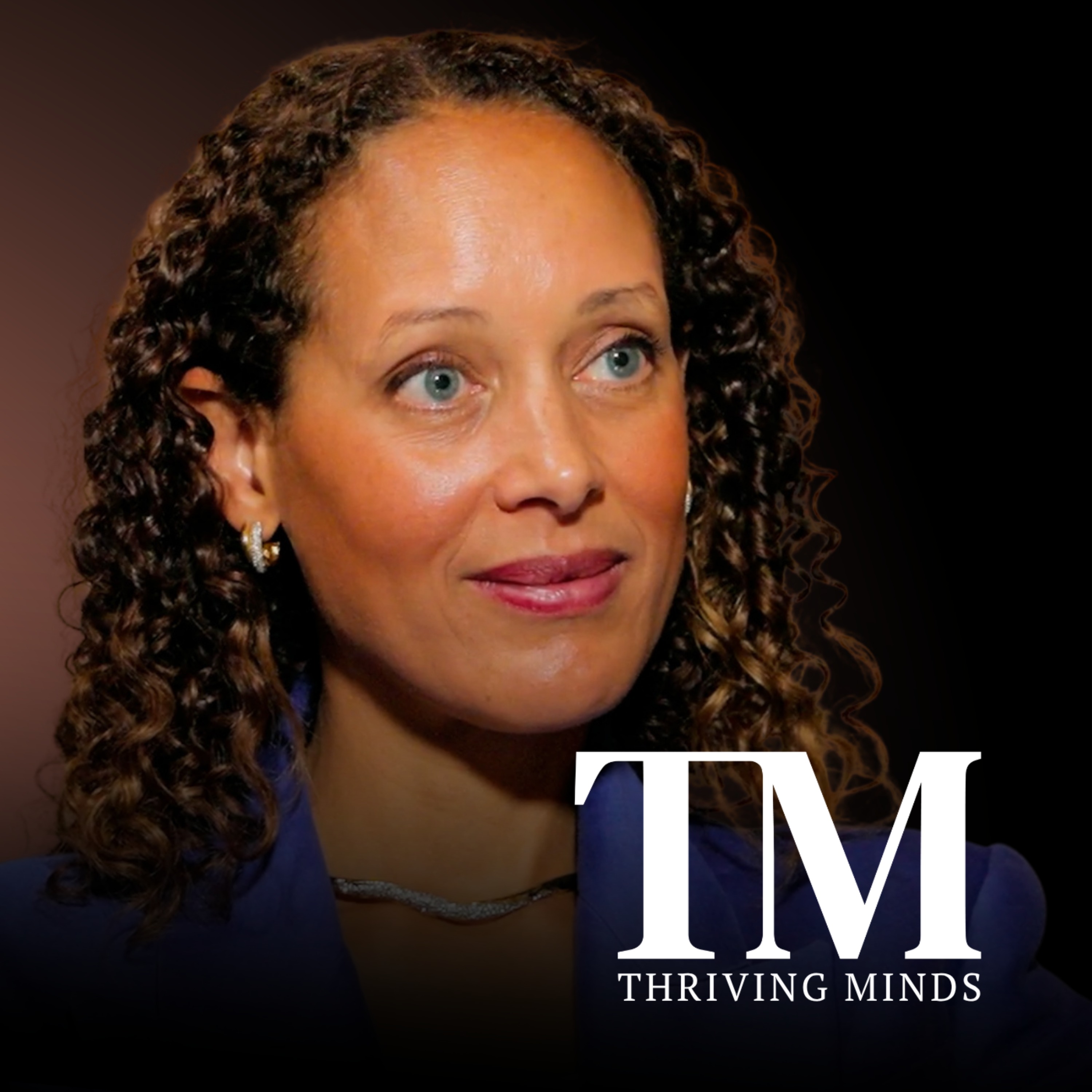
Andrea Thompson discusses becoming editor-in-chief of Marie Claire in 2018 and leading a print legacy brand through a digital-first transformation, while sharing leadership lessons for women, including taking risks, power/responsibility, and navigating loneliness, ambition, and work-life boundaries.
Andrea Thompson is an award-winning journalist and former editor-in-chief of Marie Claire, with 25+ years in media. She has worked across major global publications, focusing on female-led stories, diversity, and social impact.
Marie Claire’s digital success came from preserving its “soul” (investigative storytelling, women’s empowerment, sustainability) while creating content that resonates and builds an engaged audience. Editors must be meticulous because content has real influence. Social media reduced gatekeeping, making media narratives less controlled by traditional outlets. There is no “perfect balance” for working mothers; risk and self-belief matter.
She reported in real time on 9/11; worked at the Daily Mail investigating Putin’s dealings and exposing exploitation in Cannes; went undercover on plastic surgery and sweatshops in India. She cites World Cup coverage where “WAGs” were vilified by press as an example of past misogyny. She describes Marie Claire’s print team redundancies and rebuilding a digital team from about seven people, then scaling to 17 during lockdown.
Written by AI. May contain mistakes.
Explore the challenges Andrea faced while transitioning Marie Claire to digital.
“to a digital publication and what it takes to be an effective leader to today's workforce.”
Discover how Andrea's childhood shaped her values and purpose in journalism.
“I'm prepared to give it 250%, take the opportunities because one day they won't be there.”
Andrea shares her early inspirations and the decision to pursue a career in journalism.
“I love finding out about other people and their stories.”
Learn about Andrea's various roles and experiences leading up to her time at Marie Claire.
“and create social change through my work.”
Andrea discusses her work in investigative journalism and its impact.
“of Marie Claire, I told my friends that I wanted to do that.”
Learn about the shocking truths Andrea uncovered regarding model exploitation.
“that would be quite shocking for the audience.”
Andrea reflects on the changes in media attitudes and misogyny over the years.
“I don't think it was a surprise that the casting couch was happening.”
Explore the evolution of media representation and social media's impact.
“were the wives and girlfriends, which we were called the wags at the time.”
Discuss the ethical dilemmas faced by journalists within the media landscape.
“So media outlets no longer control the narrative.”
Insights into Andrea Thompson's bittersweet journey to becoming editor-in-chief.
“But I recognize that journalists, like lawyers, you are, you know, you were an employed hand.”
Learn about the challenges faced during Marie Claire's shift to digital.
“In 2018, you became the editor-in-chief of Marie Claire.”
Understand the importance of taking risks and stepping out of your comfort zone.
“We launched lots of new online events and awards and we weathered the storm.”
Discover how failure is perceived as a stepping stone to success.
Learn how Andrea Thompson views challenges as opportunities for growth.
“And, you know, yeah, it was really tough.”
Discover how successful individuals perceive failure as essential for success.
“Talk to me about the transition period, so that digital transformation.”
Explore Marie Claire's strategy for transitioning from print to digital.
“So it was about not diluting those values and bringing them to new audiences across multiple platforms in a way that we'd never been able to do before.”
Learn how Marie Claire preserved its core values during digital growth.
“with the development of so many digital influencers and content creators it's about creating content that really resonates where people watch it and they're like, oh my God, that's me.”
Understand how the magazine engages a new audience while honoring its legacy.
“You know I think women have always wanted to be inspired.”
See how Marie Claire highlights women with purpose and resilience.
“one of the things that was very very difficult when we first went digital first was competing with big glossy magazines to get A-list cover stars.”
Learn about the ethical considerations in selecting content and models.
“at the heartland of what Marie Claire has always stood for.”
Discover how Marie Claire approaches fashion to empower women.
“It's about taking a trend that's blowing up on social media and dissecting it with very expert driven views in terms of the fashion, always very informed.”
Explore the importance of diverse representation in publications.
“Am I too big or too small or am I dressed in the right way?”
Understand the uncertainties leaders face in decision-making.
“Slightly, you know, outside, you know, the kind of original fashion model look, as it were.”
Learn how agility in leadership can lead to successful outcomes.
“couple of people who were senior members of staff there where I would take you know input but I I've I pretty much always had quite an instinctive idea about the way that I wanted to do it.”
Discover the responsibilities leaders hold in shaping their brand and audience.
“And I find that really exciting to be able to do that in real time.”
Explore the isolation that often accompanies leadership roles.
“that I would change because, you know, you want to make people feel empowered at the end of the day reading the content.”
Explore the unique challenges of loneliness faced by leaders in editorial roles.
“When it comes to leadership, what has leadership taught you about loneliness?”
Discuss how work attitudes have shifted across generations and the importance of mental health.
“I think a lot's been talked about, you know, the working from home, the absence of learning from leaders.”
Hear about the challenges faced when stepping into the role of editor-in-chief during a crisis.
“That's a progress in, you know, in a way.”
Reflect on the proud moments of balancing a career in publishing with motherhood.
“What was your internal dialogue during those times?”
Andrea discusses her journey balancing ambition with motherhood and work.
“They've only ever known me really as senior editor at a big magazine and being a role model to them about, you know, what it takes, the hard work it takes to maintain that position is something I'm proud of.”
Andrea shares key lessons on resilience, failure, and personal growth.
“I think we've been sold this idea that like perfect balance exists and it just doesn't.”
A conversation about success, societal pressures, and the media's role.
“that are the most challenging and where I've learned the most about myself and even surprised myself by how well I can navigate those situations when other people are losing their head.”
Andrea emphasizes the importance of stepping out of your comfort zone.
“Andrea, my last question to you is the following.”

Get the gist, explore an idea or ask about something said.
 Claude
On Thriving Minds with Alberto Zandi, what are the key points of this episode?
Searching your listeningAutomatic transcript. May contain errors.
0:00I was terrified doing that role. Those films like Devil Wears Prada, I thought I'm not that kind of editor. In 2018, you became the editor-in-chief of Marie Claire. The main challenge was rebuilding that brand as a digital first proposition in a market that felt that Marie Claire was dead. Andrea, everybody wants this. Andrea Thompson is an award-winning journalist and former editor-in-chief of Marie Claire, one of the most influential media brands in the world, where she helped transform the brand into a competitive digital-first platform across a career spanning more than 25 years. She has shaped stories for some of the largest global publications while championing female-led stories, diversity, and social impact.
0:39In this episode, Andrea will share her learnings about steering a print magazine to a digital publication and what it takes to be an effective leader to today's workforce. I'd just come from a panel talking about the future of media, and there were people crying outside. They were making the whole team redundant. What has leading a major publication taught you about power? Do you believe that the attitude towards work has also changed? For women that want to build a career, what would you advise them? We've been sold this idea that perfect balance exists and it just doesn't. You have to accept that you might have the best things in life happen when you take a risk because then you have to step up.
1:26I'm prepared to give it 250%, take the opportunities because one day they won't be there. Andrea, how would you introduce yourself to someone who's a complete stranger to you? I would probably say I'm a journalist. I'm also quite a purpose-driven person in all my work. And I'm very inquisitive, which is something that's always characterized me since I was a child. And I think that's something that drives me. I love finding out about other people and their stories. And I'm quite curious. Talk to me about your childhood, because I find it very interesting that most of the values that we carry in our adult life are instilled from those early years.
2:21I grew up in a household where it felt that political conversations and current affairs was debated regularly. We were, as children, always very aware of global situations. I grew up in a mixed race household. My father's from Barbados. My mother is from England. and a lot of their friends were mixed race couples who had fled apartheid in South Africa who came and lived with us at various times we had quite a big house we had people always stopping through and my parents were a very it was a very fun house we had there were lots of dinners and parties. So it was very social, but it was also somewhere that social kind of issues were often talked about.
3:21So from a very young age, I had a very strong sense of, you know, social justice. You know, my parents were obsessed with the press, there was like loads of papers and news was always on. So I was constantly analysing the way that stories were told. I had a sense of the underlying misogyny and racism that was quite embedded within the media landscape at that time in terms of the way that things were reported and I was very just socially aware. I grew up feeling like I wanted to be part of this machinery telling the stories and I wanted to tell different stories that perhaps I was not seeing. And I wanted to change people's lives and create social change through my work.
4:15So I guess that sense of purpose has always been there throughout my life. I've always wanted to do things that made a difference. When did you decide to become a journalist during these early years?
4:35I was watching Kate Hady on TV and I was really inspired by her ability to embed herself in very difficult situations and come back with a very unique and often female centric human side to a story. and I remember watching her and thinking wow that's amazing like I'd love to do something where I'm bringing my unique perspective on global stories to an audience a big audience I also found that from a young age people really enjoyed talking to me and they enjoyed open up up to me and I thought well where can I do that you know regularly I could be a therapist or you know I could be a journalist and I worked in bars as well at the university and I always found that you know I was the one that was really interested in sitting at the end of the bar talking to like the old man in the corner about his story I've just been always fascinated by other human beings and I believe everybody has a story.
5:46So I guess that's what drove me into journalism. Beautiful. Well, today we're here to talk about your story. So that's one for a change. So right now, I guess almost everyone that would be listening to this may know of the latest chapter of your life, which is being the chief editor of Marie Claire. but before accomplishing or becoming that person you've held a number of different roles within the media sector whether it was television or other magazines walk me through those experiences and what is it that you've learned from those that then enabled you to become the editor-in-chief of Marie Claire?
6:28I think so when I when I was at university I set out with the goal to be editor-in-chief of Marie Claire, I told my friends that I wanted to do that. And I also had another role, another dream that I would be, I would write for the Sunday Times, which was like, you know, the pinnacle for me of great journalism. But I established really early that this wasn't something I could just do immediately. You know, the papers and magazines that I were reading were Vogue and The Guardian, But I completely recognised that I couldn't get there immediately and that I would have to sidestep and do various things along the way.
7:09And I was really happy to do that. So I worked, I think my first job was in interiors magazines. And then I worked at a magazine called Glamour during the time when it was launched. And I was reporting on September the 11th, believe it or not, in real time. I was in the office when you know the Twin Towers went down and I wrote a report about it with first-hand experiences of people who were in the vicinity and also unfortunately somebody that I'd known from my school who lost her boyfriend in the block and I wrote quite a powerful investigative piece um going behind you know all of the into the background of the story um and on the back of that I got a job at the Daily Mail um and um working at the Mail for five years was no easy feat it was first of all you know I got a job at a paper that my my political views were not aligned with.
8:16You know, it was a very, very tough place to work, but it was absolutely incredible experience. And I had the best time working there because I learned so much. The pressure was intense. I was young. I was hungry to learn. They gave me such brilliant opportunities. So I could be investigating Putin's dealings one day and his business dealings in a very serious hard news story. And then the next day reporting on the casting couch and the exploitation of women in Cannes. So it was a really wide remit. And the thing that held all of those things together was that I was doing undercover and investigative reporting in quite dangerous situations.
9:03So at the time, I possessed an ability to be able to sort of just embed myself in all sorts of different scenarios and pass myself off as part of, you know, that community. So it meant that I was able to, yeah, well, I found myself in some really incredible situations that landed me regular sort of front page news and center spreads in the paper. And I don't know where those skills came from. You know, at Glamour magazine, I was doing investigative bits of it. I did the kind of one serious piece every month. But I just, I don't know, I just always really enjoyed kind of getting into a story and bringing something very new to the audience that was totally unexpected so I had a great time at the mail I was there for five years and then following that I went freelance and because of some of the investigative work I'd done and the undercover work I'd done which there weren't many women that were doing that at the time I was approached to do a couple of TV series.
10:23One was an undercover expose about the plastic surgery business in the UK. Another one was about where I had to go undercover in sweatshops in India, which exposed that children were working there and producing clothes for the British High Street. And in each of those stories, it was very much about having a cover and then embedding myself and then coming back with something that would be quite shocking for the audience. What's the most shocking truth that you have uncovered from all of these years of investigative journalism? I probably have to say, on reflection, a piece that I did about the way that young models were exploited in Cannes during the festival season, on reflection is so shocking because I exposed what was happening with people like Weinstein and all of the big producers and directors that were landing on those shores and the women that were desperate to be in those films and who were being sexually exploited at the time but for me the shock was that it went in the paper it was a center spread and nothing really changed you know it was like it was shocking but 10 15 years later the whole me too movement happened um and the difference was that social media had given all of these women a platform to talk about what happened in their own voices and also had democratized the whole landscape so that people could come forward with those testimonies and other people could resonate with that.
12:26I don't think it was a surprise that the casting couch was happening. People were reporting on that back in, you know, 20 years earlier. But what had changed was there was a generation of women that had come up and said, actually, no, this is not okay, that we know this and it's bubbling away. This stuff needs to come out and it needs a public kind of platform where women can join in and we can get justice. And I suppose looking back, for me, that's the most shocking thing, that arc that we were talking about it. And then something really, really... Did you lose faith in that moment about the journalism world?
13:09I think it was just a different time, you know? I mean, it's interesting. In the last couple of weeks, I've done two articles that reflect on the media landscape 20 years ago, one through the prism of The Devil Wears Prada and then the revisiting of that film. And I've done another piece about, you know, the World Cup and how 20 years ago, the WAGs were, you know, these women, you know, the wives and girlfriends of the footballers were centre stage. And what I've talked about in these articles is the toxic, absolutely toxic misogyny at the heart of the way that these stories were reported 20 years ago.
13:50Can you give me an example? So, for example, 20 years ago today, the World Cup began. and the main event being talked about in all the papers were the wives and girlfriends, which we were called the wags at the time. And people were following these women around. They were talking about the size of their thighs. They were documenting every single thing that they ate and drank. They were really vilified in the press for being social climbers. 20 years on we would never talk about people in that way and in fact a lot of those women have gone on to be highly successful business women in their own right the way that the media machine worked then you know on reflection when we look back you know it's a really different time when it was more forgiving of the way that certain men talk about certain women and women were commodities if you like it was also quite an elitist time as we saw in you know the devil wears prada you know 20 years ago there was a way you had to be to get into magazines and there was a way you had to look and and you know i think you know So there have, you know, to an extent at certain publications, certainly maybe that exists.
15:24But in a lot of ways, the difference is social media, because social media has given so many people platforms, the press can't be gatekeepers anymore. They can't act in that way. Media editors can't act in that way because ordinary people, whether they're working class girls that want to marry footballers or whether they're young aspirational people that want to break into the media world, they have their own platforms and they can use them to build their own brand. Brand me, brand whoever you want to be. So media outlets no longer control the narrative. No, the media is not in control in the same way as it was.
16:06How does that make you feel, having been part of the media sector? I mean, even at the time, I recognized that what was wrong about it, you know, yes, we had a ringside seat to all these incredible events as the privileged few in the media. But I always felt that the media was not very representative of the country that we live in. And I feel quite happy that these days you have more access to audiences. You know, ordinary people can set up their podcasts. They can write newsletters. They can broadcast on their own channels. It feels more, it feels fairer and more democratic. It feels, and as a result, we have different views, a diversity of content, a diversity of view, diversity of images, which is great.
17:00And on the flip side, I think, sadly, we have lost some of the spontaneity in the sense that social media is so curated that often, you know, although it's supposed to be candid, it often doesn't feel that way. But overall, I think it's been a really good thing. Have you ever submitted a potential article to some of your superiors back then and then they never saw the day? So it never came out because it was maybe against the political view or maybe it just didn't serve the paper's hidden agenda. I mean, that does happen a lot on newspapers if it's not, if it doesn't work, if a piece doesn't work.
17:45It didn't happen to me that often. And fortunately, I didn't have to write the sort of highly politicized pieces that sat, you know, in opposition to my views. Yes, I did have to align with certain values that sat uncomfortably to me. But I recognize that journalists, like lawyers, you are, you know, you were an employed hand. You were writing. You were in the same way as a client hires you. You have to do sometimes those things that perhaps, you know, were slightly, might be slightly outside what you would usually do. I think unethical I never I don't know I never did anything that I would classify as unethical I really in fact um I was speaking about this with another journalist yesterday I quite often would find myself on stories where I would get a lot more than I ever put into the piece um because I found myself in situations where I was party to quite confidential things.
19:06I was close to somebody famous or somebody vulnerable where a situation would happen, it would be played out. And I had a really strong line that actually, when the editor said, and what did you get on the phone? So I'd say, oh, they weren't there or I didn't get it rather than include something that would compromise that person. So I do feel quite happy that I made those decisions in the moment. It was always better to say you didn't get anything than to try and write in something that you would feel didn't sit with you well. I don't think I could have done that. Do you think you're an anomaly within your sector?
19:48Because perhaps other people in your position, in other media outlets, would write whatever is needed. so they can sell the article? Look, I think it's a tough line. I think there are times that people have to turn out the story that is wanted. Because I would imagine then perhaps maybe your superiors don't advance your career if your articles are maybe clickbait or popular from a view's point of view. Yeah, look, I think I've always certainly as an editor allowed the journalists that report into me to push back on certain things. And together we've worked through that. Sure, sometimes you're not going to get the big headline.
20:47For the sake of the brand in the long term, I think it's better. um I'm fortunate to have worked at brands that align their values aligned with my own for the latter part of my career so I haven't had to have um that situation situation arise too much you know early on in my career when I didn't feel like I could push back I suppose there were instances where a headline was changed or and there's nothing you can do and then it would it would be a really horrible feeling to see the article that you'd written with your name, with a new headline that an editor had put on that, you know, perhaps aligned with the values of the paper and where they wanted to push that story.
21:37In 2018, you became the editor-in-chief of Marie Claire. How did that moment feel for you? you know when I stepped into the role of editor-in-chief at Marie Claire in 2019 it was really tinged with a sadness because I'd been deputy editor there I loved the magazine I'd worked on the print magazine we went in one morning and we were told that the whole print team was being made redundant that was like you know almost 30 people overnight you know I'd just come from a panel discussion talking about the future of media and I came into the office and there were people crying outside and it transpired that they were making the whole team redundant from the print team and keeping just myself and one other member of the team and they came to me and they said because I'd been deputy editor for a few years they said to me you know we'd like you to be editor-in-chief you've got some time to think about it but we hope you do that um so I took on this mantle and it was it was kind of bittersweet it was a job that I'd always wanted but all around me people that I really cared about and people that I'd worked with for a long time were losing their jobs um and we had our sort of women of the year awards um days later and I had to get on stage and um host these this event as the new editor with people crying in the audience who were on my team.
23:10It was a really, it was a difficult time, to be honest. It was not the way that I envisaged stepping into that role. It's a role that I felt I was very qualified to do, but not in those circumstances. And then the main challenge really was then rebuilding that brand as a digital first proposition in a market that felt that Marie Claire was dead because, you know, it was a big print glossy title and had always been so. And, you know, there were 30 odd editions around the world and we were the first one to go digital first and to experiment on this journey. So there was no blueprint. There was, you know, no roadmap.
23:58I just sort of had to we had a very small digital team um and for the first few years as an editor-in-chief I had a team of like seven people and we were up against big big magazines with fully staffed teams and it was you know it was a challenge six months later we also went into lockdown so um you know as an editor you're very much you are the embodiment of your brand you're an ambassador for your brand you want to be out there and I'm like a real people person I wanted to be out talking about the brand how excited I was but we were confined to you know staying indoors um and so that was like the beginning of my journey as editor-in-chief and it was not easy um however we did have a really great time in lockdown in the sense that we had incredible traffic everyone was locked at home So, you know, we had great traffic.
24:52We launched lots of new online events and awards and we weathered the storm. When you graduated from uni, you manifested to yourself and to your friends that you wanted to become the editor-in-chief of Marie Claire. And Marie Claire standed for this thing. It was a very particular thing in your head back then. But then they give you the opportunity, but it's not this thing anymore. It's not what he initially thought Marie Claire was. A lot of people right now listening to this may be also confronting a decision that perhaps they like some parts of it, but they don't love all of it. Walk me through your decision making process in saying yes to something that you didn't completely like, but there were some aspects of it that you did like.
25:46For me, and this is something I always, I mentor a lot of people. One of the things I've always said to them is the best things in life happen when you take a risk and you bet on yourself. And looking back on my career up to that point, the things that had been the best move for me were the times where I felt completely out of my depth. so I'd been in magazines the Daily Mail came along courted me and within a day just offered me a contract and said we need you to do this and I was like I've never worked for a daily I'm going from a monthly magazine to a daily newspaper with daily deadlines this is absolutely terrifying and I just signed it because I was like I'm just going to do it and deal with it later and you know sometimes making those decisions is absolutely the best thing that you can do because then you have to step up and you have to grow into it um this particular situation was not the way that I'd envisaged becoming editor-in-chief but I remember speaking to my mum and she was like what's the worst thing that can happen you know just do it and you know my parents always gave me that sort of um that attitude just try it you know just try it you can only fail um anyone listening to this that's on the verge of making a decision you know you should try something that scares you regularly it is the only way that you can grow as a person learn new skills I was terrified doing that role everything it stood for I'd watched all those films like Devil Wears Prada I thought I'm not that kind of editor and I can't step into that role you know I want to be somebody that I could that that that my team are not scared of that can talk to people can be approachable I don't want to be that kind of um leader but I recognize that actually when you take on any role you can make it whatever you want want it to be it nobody had been editor-in-chief of Marie Claire Andrea Thompson before so that was my that was me I was going to carve out a way to do it.
28:03And, you know, yeah, it was really tough. And, you know, going into lockdown straight afterwards and weathering that storm and having a small team and, you know, growing the team again to 17 people. All of these things were a challenge, but I'd never have any regrets. I'd never look back. I just think, take the opportunities because one day they won't be there. Yeah, thank you. Thank you for sharing this. This validates a very important point that has become a common denominator across all the very successful people that I have had the pleasure of interviewing, which is that they all have a very healthy relationship with failure because they only see failure as the only path to succeeding in whatever it is that you want to succeed.
28:49Talk to me about the transition period, so that digital transformation. What has been the greatest lesson that you've learned that has served Marie Claire to successfully transition into a digital magazine? I think that great content is content that talks to people in a way that really resonates with them. And Marie Claire was always known as a brand with excellent investigative journalism, really strong storytelling and great fashion and beauty. So it was about not diluting those values and bringing them to new audiences across multiple platforms in a way that we'd never been able to do before.
29:30And I think that, you know, in a time where the media landscape is just so crowded with digital noise, particularly in the women's lifestyle market, some of the best success that we had at Marie Claire was really leaning into those values, you know, around women's empowerment, sustainability. um bringing really great storytelling that resonates with people because people want to read content that makes them either feel like they're escaping their lives or that makes them think that's me you get me you really understand me and I think that's what we're seeing now with the development of so many digital influencers and content creators it's about creating content that really resonates where people watch it and they're like, oh my God, that's me.
30:27That is exactly me. And then they tune in again and they tune in again. So it's not, you know, we used to think about, it was about having a huge audience. It's not, it's about having the right audience. It's about having that audience that's highly engaged and they come back again and again because your content really resonates with them and it's really speaking directly to them. How were you able to preserve the soul of such a legacy brand while at the same time making it attractive to a new generation? You know I think women have always wanted to be inspired. You take the universal things that Marie Claire stood for, it had, it platformed inspiring women that you can learn from.
31:10Everybody wants life lessons, you know whatever stage you are in your career you want to learn from other women and you want to be inspired by other women so that was a big part of it you also keep audiences and engage new ones just by the sheer quality of your content we'd always platformed really inspiring women and we'd always you know brought people incredible fashion and beauty and that was something that we continued to do but we did so in more a more digestible form we included a lot more video we probably incorporated more shopping and we still did the beautiful shoots with cover stars so one of the things that was very very difficult when we first went digital first was competing with big glossy magazines to get A-list cover stars.
32:10People didn't understand that we were digital first and that we didn't have a cover, but we were still having a digital cover in the magazine. So we would be like, well, we're doing a cover. And they'd be like, but you don't have a cover. But it was very crucial for me that we were still platforming incredible women. And I'm not just talking about any old celebrity. Like the celebrities that front in Marie Claire were always women with purpose. So it was like Salma Hayek talking about, you know, the trailblazing stuff that she'd done, you know, in her career. It would be like sporting stars like Venus Williams.
32:46We had like Alicia Keys. We had very, very big, big stars. but they were always, it was always through the prism of that kind of purpose piece and how they'd led the way for other women and how they'd broken down barriers and been trailblazers in their industry, which is really at the heartland of what Marie Claire has always stood for. I think what we also did was establish our team of journalists as experts, which is, you know, extremely trending right now on social media. to build your own journalists into experts and talking heads who create their own videos, filtering the noise of the internet through to a select pic of whatever the news is.
33:42I believe that magazines like Marie Claire have a considerable influence over, in Marie Claire's case, a women's definition of beauty, of fashion and success. How did you decide what goes in the magazine? What women will care about?
34:06Marie Claire has always had that sense of responsibility. We were very careful, first of all, about the kind of role models that we held up. Marie Claire was always and has always been like the smart woman's magazine. So it was about having a global view on the world, a very intelligent and informed view. We are bringing global issues to our audience. But also, you know, in the fashion and beauty, we were quite forensic. So the beauty, you know, it's not about just reporting on a trend. It's about taking a trend that's blowing up on social media and dissecting it with very expert driven views in terms of the fashion, always very informed.
35:06We always had like front row seats to, you know, where the heart of the action was happening at various fashion weeks. But we reported on the fashion in a way that was about empowering women, not telling them how they should dress. You know, it was very much about, you know, how you can use fashion to be the best version of yourself rather than, you know, telling them that this is what you need to buy right now. I was always very mindful of that overconsumption piece as well. Like, you know, the tone that I always set was about investing very wisely, buying key pieces, spending money on good clothes, not throw away clothes.
35:57And, you know, listening to our editors who would tell you how to actually style them, you know, for your unique life or whatever. But through a lens that was very much like it was it was always empowering. It was never dictatorial. Yeah, that's very refreshing to hear because most of these magazines, they hold a lot of power and real influence over what a woman would think about themselves. Am I too big or too small or am I dressed in the right way? So hearing from the person responsible on what goes in the magazine and what leads the trend, having ethics at the forefront, I think it's very encouraging.
36:42Well, we were always mindful about the type of models we used. We never used anyone too thin. We used a diversity of shapes and sizes and, you know, and color and different diversity of race, because it was very important for me that the magazine was representative of the audience. When I was growing up, magazines were not that way. So I was always inspired to be able to pick up a magazine that reflected people like me. Slightly, you know, outside, you know, the kind of original fashion model look, as it were. A lot of people right now in their professional careers, in more junior or mid-seniority level, they look at their superiors and they think, wow, they must have everything figured out.
37:30And if I become, if I held that role, I'm not sure if I will know what to do all the time. Having held the most senior role within Marie Claire, how many of the decisions were you very sure of? Or how many of those, if you were to put it in a percentage, were you testing and then comfortable in testing and not knowing exactly what the result would be? But then you would learn from that result and then you would go again. I was when when when there was a decision on the table I would often have a gut instinct about what to do yes I would speak to the team and I always had a very a policy where I had a couple of people who were senior members of staff there where I would take you know input but I I've I pretty much always had quite an instinctive idea about the way that I wanted to do it.
38:24Did I always get it right? No, of course not. Like nobody gets it right all the time. But I think it goes back to that idea of not being afraid to try something new, fail and pivot quickly and do something else. And I was so fortunate to have my first editorship within a digital environment where you could do that. You can be agile. So you can try something for three months. And if that doesn't work, you know, you get the data back, you analyze it, tweak, change direction slightly. The same, you're on the same journey and you have the same vision, but you're tweaking along the way in response to what your audience wants.
39:12And I find that really exciting to be able to do that in real time. But making decisions, I think it's really important to be able to make a decision and get people behind you quickly and also own up. If later on you have to pivot, fine, and you change something, but it's really important to go with something, make the decision. And, you know, make your peace with it. Yeah, I agree with you. What has leading a major publication taught you about power?
39:52I just have cliches going around my head that with great power comes great responsibility. But it's so true because you have such a big, I mean, sometimes I used to forget how big the platform was at Marie Claire. um when I um left recently people reached out to me to tell me what a profound impact I'd had on their own careers when they were starting out and the fact that they'd watched me and what that meant to them you have incredible responsibility as a role model first of all um in how you behave and in the choices that you make the decisions you make you also have huge responsibility over the content that you're putting out so you know any editor you are you you you worry about something that may go out unwittingly and you haven't checked the final thing and something is off you know because that can actually have a huge impact on your brand and on your audience so you you have to have a meticulous attention to detail and you have to um be constantly aware of the huge platform that you have and make decisions that feel fair um and that feel um for me it was always really coming back to does this piece of content empower the person reading it and make them feel good?
41:37Does it make them feel informed about their purchase? Or does it actually make them feel that that's not the case? And if it was the latter, then that would be something that I would change because, you know, you want to make people feel empowered at the end of the day reading the content.
42:00When it comes to leadership, what has leadership taught you about loneliness? I guess I wasn't prepared for how lonely leadership could be in a way, because when I became editor, I'd worked at so many different publications where I'd had a really good group of sort of friends and colleagues where you'd talk about everything. and then suddenly you become editor-in-chief and you are immediately seen as slightly separate from the team um you learn not to bring you know you bring your authentic self into work but you don't bring everything in I you know I very much compartmentalized um elements of who I was because it was really important to maintain a professional conduct and professional exterior to people that I was leading.
42:57And I wanted them to feel the confidence in me. So even the times where perhaps things are really, really challenging, you don't want to be passing that on to your team. you want them you I mean you want to inform them of the best way to navigate something and to pull together and to get through it you don't really want to be showing them all the vulnerabilities of how you might be feeling in that situation so I guess it can be quite lonely. I am so fortunate that I have incredible peers at other publications and in my role as chair of the British Society of Magazine Editors for 2025, which I held last year, I have met really great editors at other publications.
43:55And we all talked about this very thing the fact that sometimes you can't talk with your team but we could talk amongst ourselves and it was so comforting to hear that many of those editors who you know outside might be perceived as my rivals they absolutely weren't by the way um were friends of mine that we could say god we're i'm experiencing this with the affiliate staff and you know and you know it's really challenging right now commercially in this market and they'd be saying oh god yeah us too and what we're doing is this and you'd be like yeah we're trying that and you would swap those you know that those that sort of those insights with each other um and you'd also sometimes just talk about um the loneliness of leadership itself and the fact that you're often leading a team that's um younger than you um they might have different ways of working from the ways that you've come up um you know, ingesting.
44:55And it's just that push and pull of like, you've got a team of people who are millennial, Gen Z's, different ways. And sometimes those things come up, you know, well, I think I came up in an environment where no one worked from home, you know, like I had two kids and it was like, you were in the office, you didn't work from home, nobody worked from home. You worked till the job was done, however late that was, 10 o 'clock in the office, that's what you did. Then, you know, the editor would open some wine, you'd have some wine, and then you'd go home and do the same thing again tomorrow. These days, you know, Generation Z, they are definitely, they definitely have a much better work-life balance.
45:44They have boundaries that are much more defined than I would have ever have been able to have with my editors. And, you know, they want to take care of their health. So often, they're not going to work late because they've got to go to the gym or they've, you know, they've got a life outside that they don't, you know, they don't want to be hanging out with their colleagues. And there is probably more of a preference to that flexible thing of being able to work remotely than being in the office, which obviously, you know, we worked around and we had a kind of a balance, I think, three days in the office, two days at home, which felt about right.
46:25Performance-wise, do you think that delivers more results than the professional or cultural approach that you had when you started your career? I think a lot's been talked about, you know, the working from home, the absence of learning from leaders. And I personally learned a lot from sitting next to great leaders and editors in my time. um I enjoyed the rigor of office life um and the debating and the brainstorming um I think that you are missing something if you're at home all the time um you know in a sense I agree with Emma Greedy's um analysis that you know you need to be in the room to be seen to be getting the promotions however I don't think that's the only story I have certainly really enjoyed being able to as an editor give mothers the flexibility great workers that I know put in the time to work at home a bit more often to leave early to pick up their kids or whatever because I know they're going to be back on later I don't think it's so much about where you're working I think it's about an attitude of person because the people that are serious about getting ahead and getting the promotion will show up when they need to and will be in the room when there's something important happening and I could always rely on my team to to do that you know um so I I feel that overall it's been a good thing and I don't think performance has suffered I think if we had imposed five-day office, a five-day in the office regime, we would have simply lost some excellent staff that I had on my team.
48:32They would probably be content creators or working for other channels. So I think it's a push and pull. It's a compromise. It's what you do to keep people engaged. engaged um what I will also say is that I don't think all work is about um the brainstorming and the communal bit as a leader I also needed that time the quiet time to strategize and my team also needed that quiet time to sit and write it's really hard writing in an open plan busy office so I was very prepared when people were on deadline to be able to give them that, you know, rather than drill them into the office every day. Apart from the working conditions, like people working from home or at the office, this hybrid model, do you believe that the attitude towards work has also changed with the newest generations of professionals?
49:30Yeah, definitely. I mean, like when I was in my early 20s breaking into journalism, work was everything. Like it was just like, like all of my colleagues who, like all of my, well, my friends actually from university who came out and started in law, banking, you know, journalism as well. We lived for our work. We didn't really have a lot going on outside it. We were obsessive about our work and climbing the ladder and, you know, and then we let off steam, you know, at weekends and we went out and we had drinks. and everything. I think we were, the aspiration was to get your foot on the ladder by 30, to get into a management position by 30.
50:20That's what drove us. This generation, I think they're faced with a very different landscape. They can work really, really, really hard and all hours, they still won't get on the ladder by 30. I think the economic situation is completely different. Um, so I think a lot of them have figured, well, you know, what's the point in killing myself? I can't get those things. So I'm going to prioritize my wellbeing and they're prioritizing it and having that sense of balance in a way that we just never did. Now for me, that was fine. I'm the kind of person, I love pressure and I love deadlines and I was, I was fine with it, but I know a lot of people who were working in those conditions who were really unwell mentally they had breakdowns or they were suffering from extreme stress um they had burnout that can happen really easily and did happen really easily and no one was talking about it we did it and we sucked it up and it was before social media where you felt you could talk about those things i knew a lot of people that that happened to and they didn't talk about it.
51:34Now it's fine to set very clear boundaries, prioritize your health. And if you do have, you know, a mental health issue or a health issue, you can talk about it. That's a progress in, you know, in a way. With how competitive the world is at the business landscape perspective, are some of those barriers in line with the businesses staying competitive? I think it presents a challenge.
52:07It's a multi-layered question. It is. I mean, it's really multi-layered. I think you can be short-sighted and long-sighted. You know, I mean, there are companies whose business model it is to hire in, burn people out let them leave hiring a new batch of younger oh wow you know that's something that i've witnessed in the particularly in the digital media landscape um so that was that was a conscious approach towards hiring it was an unwritten wow yeah like you just work people and of course they're not going to last that long but that's what you need and then they move up they move on and I I know somebody who worked at a very big digital um content company where that was very much that was an established way of of working um I think the media look it's it's competitive out there time will tell whether you know the way that we've been working is productive.
53:20What I am seeing is a lot more publishers now bringing people back into offices in the belief that it will make people more productive. We'll see. What has been the hardest moment in your career?
53:41um my the hardest moment was sim was simultaneously the best moment it was definitely being when i was made editor-in-chief it was really difficult stepping into that position at that it was the hardest and the best at the same time it was the best at the same time in the sense that it was the best opportunity i'd ever been given but when it landed on me something that i'd wanted so long, the conditions were so challenging that every day I thought, oh my God, what have I done? What have I done? You know, I never regretted taking the decision, but getting through that early period as editor-in-chief in lockdown trying to carve out this brand trying to prove to brand partners clients that we were a viable entity um trying to educate two very young children in a lockdown situation with the compounded stress of all of these things colliding was definitely the most challenging point and there were moments where the pressure was way more than I'd ever faced in an office environment and that was like just working at home you know um back-to-back zoom calls for nine hours a day um and just this pressure to turn around a brand that people had known as something different and feeling that my name was on the top of it it was it was really difficult.
55:22What was your internal dialogue during those times? I'm just so determined. I think I'm really dogged. I was just like, I'm not going to walk away and I'm not going to fail at this. I want to try and make it work. And when I want something and I want to make something work, I'm prepared to give it 250%, whatever it takes. Because it was a great opportunity and I didn't want to waste it. What part of your journey are you most proud of? I think the thing I'm most proud of is realizing my dream of becoming an editor-in-chief at a great magazine, keeping the values that I've always lived by um alive and finding a brand that aligned perfectly with those there's a there was a unique pleasure in being able to work somewhere that I felt embodied what I stood for and I hadn't always been that way so you know I was very proud to be able to do that I'm also very proud that I was able to raise two boys during that time It wasn't easy, you know, having kids and juggling that with a career.
56:49They've only ever known me really as senior editor at a big magazine and being a role model to them about, you know, what it takes, the hard work it takes to maintain that position is something I'm proud of. some of the things that I've done that they know, you know, that I've been leaving them for the evening, but I've always tried to explain to them, but my mum is going out, I have to do this thing at parliament or, you know, I have to interview this person and she's going to inspire thousands of people. You know, that's something that makes me proud. How has your relationship with ambition changed over the years um god i've always been really ambitious um it was always a dirty word um for for um women uh well i kind of felt that that you couldn't really outwardly say i'm ambitious why not um i don't know because people would think that that meant that you were ruthless or you know in some way I don't know it played into a lot of negative stereotypes but I've always been really ambitious I suppose my ambition was quite linear then it was very much like I want to get on the property ladder by this time and I want to have this sort of job by this time and I want to have kids right and now my ambition is very much more in tune with where the world is in a lot of ways it's about for me ambitious now and success is about having professional success on my terms and having a sense of balance I've definitely been in jobs where I have fulfilled the outward kind of metrics of success but felt quite stressed out quite you know unable to balance all the things in my life um in the next chapter i want to have um success that is that means you know i'm working on projects that really resonate with me um that are still in some way changing minds or you know resonating with audiences but i want to have a sense of balance and I want to have the time to look after my health.
59:25I'm a big runner. I want to continue to be able to run and to maintain good health as well. In your previous years, when your definition of ambition related to you wanting to control things, I want to be a manager or have this position at that particular age and have kids at that other age, have you ever felt like you were building a prison of your own? Because sometimes when we try to control things, that thing ends up controlling us. Yeah, absolutely. And, you know, although I, I mean, I had those markers, things don't always go to plan and often you sort of go sideways to get there. I don't really know where those markers came from.
1:00:07I suppose as a woman, I wanted to start a family before the stage where I might be in a position where I would be trying for a long time like I didn't like the idea of having to um you know uh make you know have a struggle to to to get pregnant so I didn't want to leave it too late that was just my own personal um ambition I wanted to have kids while I was young enough and had enough energy to um really enjoy them um but did they come at the time I'd planned absolutely not like it was completely, it was actually unexpected. Did I become editor in chief at the time that I wanted to? Absolutely not.
1:00:52No, none of these things happened. I set those markers. You know, I don't think I built a prison in the sense that I was always flexible enough to go this way and that way. I always liked nice things. I always wanted to have a good standard of living. So I often sidestepped into roles that weren't dream roles, but were roles that could give me what I needed in terms of the money to travel, to expand my mind, but also roles that perhaps didn't fit with my exact linear journey of where I wanted to go, but would teach me new things. And I did that quite a few times before I got to where I really wanted to be.
1:01:35For women listening to this, that just like you, but in a few chapters behind, there are a few chapters behind in life or earlier chapters in their life, that they want to build a career, but at the same time being great moms. What would you advise them? I think we've been sold this idea that like perfect balance exists and it just doesn't. Like, I think you have to accept that you might have a point in your life where you are building something, whether you're an entrepreneur or you're climbing the ladder and you might have kids and you're not you're not 100 % being the most present mum. But you're doing so with the intention that this is a stage.
1:02:24And then maybe the next stage, you're more hands on. I just don't believe that there's a perfect scenario. and women are putting pressure on themselves to find the perfect scenario where it's like they have this incredible balance and they, you know, I really don't think it exists. If you speak to most mothers, they're just winging it. Some weeks it works and some weeks it doesn't. So don't wait for the perfect time, the perfect gap in your career, whatever, you know, the perfect moment to start a family. you know I think you adapt to the situation you're in and good enough is good enough it doesn't need to be perfect I suppose the other thing I'd say is work on building your own personal brand as well because no one can take that away from you so if you know you are in a corporate environment and you want to have a family, although you might have to step off that ladder for a short time to take a break, you can continue in your personal time to build something that you're passionate about.
1:03:32You know, there are so many platforms now through which you can do that and you can build it around the times that your kids are sleeping or the time, you know, other times. And there are more opportunities than ever before to have that multifaceted life and you're in a stronger position than ever.
1:03:59You have lived a very multilayered and complex and interesting life. As a person, what has been the greatest lesson you've learned?
1:04:12It's really important to be resilient. you're going to fail you're going to get knockbacks you have to just learn from them pick them pick yourself up and carry on um don't take things personally it's just business is is definitely like you know one of those sayings that's like bandied around but like sometimes it is just business and um you know it's important to remember that although you might sometimes define yourself by work you are not your job you are you um and um building your inner resilience um and knowing who you are as a person is you know the the the most important thing in terms of life lessons in the workplace, I would say back to the failure.
1:05:11Don't be scared to try something new. Take risks and fail and learn from them. Is that how you learned who you are by failing and testing? Yeah, and through going through really tough, challenging times. Sometimes the times that I've been through that are the most challenging and where I've learned the most about myself and even surprised myself by how well I can navigate those situations when other people are losing their head. Often in a crisis situation, I just know what to do. I don't know why. I think that's the same in personal situations as well as in the workplace. I just have a very strong instinct
1:06:00of what's the right thing to do and what I want to do in any given situation that's best for the brand. As you've recently closed your chapter with Marie Claire, what do you want to do in the next phase of your life? I want to return to a bit of writing. I've missed writing, so um i'd like to do a little bit more writing um i'm already doing some consultancy for a few brands which i'm really enjoying i'm enjoying dipping into different workplaces um learning a bit about you know uh the way that they uh their their processes um and helping them with press strategy um and partnerships so that's been fun um there are also some other personal things i I want to do, you know, perhaps write a book, podcast, you know, those sort of things, hopefully at some stage.
1:07:02We definitely need you to be either controlling what content gets out there or creating your own content. Just by having heard how ethical you are about what's important in the world and what's BS. I feel like it's unusual in the media world. Right now, we live in a society in which if you go into social media, and if you also look at most movies and TV shows, the way some of the most important aspects or things in life are defined, are not very healthy. Starting from, as we were discussing you and I earlier, success. Things are depicted through the lens of making money and making it overnight and having this perfect life.
1:07:45And as you alluded to earlier, there's nothing perfect. And having this ideal definition of perfectness and having a perfect life, I feel like it can become very unhealthy to a lot of people. So having someone that has sat at the forefront of one of the most influential magazines in the world, having a very different version of what is important in life and what success should look like, but also even to specific details like what you should dress. and I find it very inspiring. I find that power has been placed into the hands of the right person, but at the same time, I'm hopeful that this power would begin placed in you either through future personal work that you do or maybe leading another very big media outlet.
1:08:30Andrea, my last question to you is the following. If you had to compress all your knowledge into one essential piece of advice that we all must implement in our daily lives, what would it be? Do something that scares you regularly. Only by doing that can you grow.
1:08:55I would also say
1:09:02recognize that what you see on social media is not the whole story. This overnight thing that is very popular right now. Nobody's an overnight success. The only thing that leads to success is a lot of very hard work. A bit of luck as well, but the hard work as well. So take risks and work hard. I've really, really enjoyed this and I thank you for coming to the show. you have constantly put yourself out there, out of your comfort zone throughout your entire life and career. And for me, while there's so many lessons that I've learned from our conversation, there's one that really stood out in my heart, which is learning how to feel comfortable in uncomfortable situations.
1:09:57So thank you for sharing that and many other things. Thank you. Thanks for having me.
1:10:07you
Most people wait until they feel ready.
Andrea Thompson built her career by doing the opposite.
In this episode, Alberto sits down with Andrea Thompson, former Editor in Chief of Marie Claire UK, award-winning journalist, investigative reporter, and one of the most influential women in British media.
Andrea grew up in a home where politics, current affairs, race, representation, and social justice were part of everyday conversation. From a young age, she wanted to tell stories that mattered, especially the stories that were not being told.
Her career took her across some of the biggest names in British media, from newspapers and magazines to television. She worked undercover, investigated exploitation, reported on child labour, and exposed difficult truths in industries where power often protected itself.
Then came the role she had wanted since university: Editor in Chief of Marie Claire.
But when the dream job arrived, it came with redundancy, grief, pressure, digital transformation, and eventually lockdown.
Andrea had to rebuild Marie Claire as a digital-first brand while leading a small team, protecting the values of a legacy publication, raising two children, and carrying the loneliness that often comes with leadership.
In this conversation, Andrea opens up about ambition, risk, failure, media ethics, motherhood, leadership, representation, power, the changing role of journalism, and why doing things that scare you may be the only way to grow.
This episode is for anyone who has ever wanted to take a bigger step in life, but did not feel ready.
It is for anyone who has ever achieved the thing they wanted, only to realise the pressure was bigger than they expected.
And it is for anyone who needs the reminder that nobody is an overnight success.
You will learn:
Follow Andrea:
#ThrivingMinds #AlbertoZandi #AndreaThompson #MarieClaire #FashionJournalism #EditorInChief #CareerGoals #Manifestation #WomenInMedia #JournalismCareer #FashionMagazine #MediaCareer #DreamJob
Hosted on Acast. See acast.com/privacy for more information.


