
 Ask ChatGPT


 Thriving Minds with Alberto Zandi
16 Apr 2026 · 56m · 25 chapters
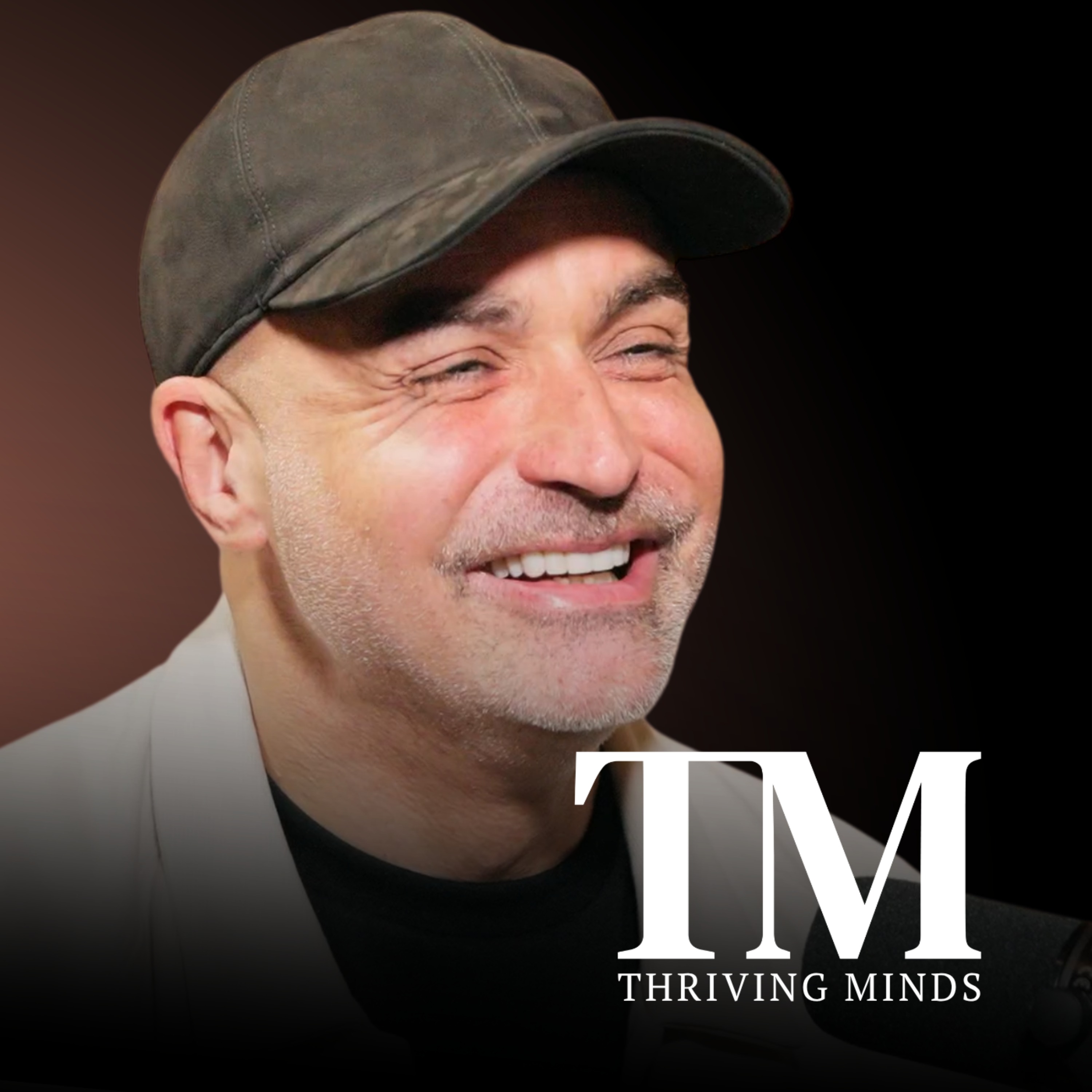
Oliver Cookson, founder of MyProtein, explains how he built the first major online sports-nutrition brand (“the Amazon of Protein”) without investors or debt, scaled via lean execution and marketing innovation, and later sold the company for £58m; he also shares lessons on entrepreneurship, hiring, cash flow, and resilience.
Oliver Cookson is a Manchester-born (47) entrepreneur and author of Bootstrap Your Life. He left formal education early (one GCSE, then quit college), worked as a junior developer, taught himself web development, and started multiple businesses before MyProtein. He later built Go Nutrition and DJ/produces house music.
Start with “doing” not theory; bootstrap with 100% equity (began with a £500 NatWest overdraft); evolve marketing and find “white space”; referral schemes can drive cheap acquisition; take time in major exits; money buys options but doesn’t solve everything.
Kitchen-made flavored whey (e.g., strawberry milkshake), a customizer allowing users to set ingredient percentages, early Google AdWords CPA of £2.34, referral code scheme (MP1) driving ~1/3 of new business, scaling moment when parcel volume required two vans, and sale process where PE reneged on promised terms.
Written by AI. May contain mistakes.
Oliver shares the origins of MyProtein and his entrepreneurial background.
“It was a third of all new business for MyProtein back then.”
Oliver discusses his childhood in Manchester and how it shaped his drive to succeed.
“And I had a big passion for computers since about 11 or 12.”
Oliver reflects on his educational experiences and early career choices.
“Talk to me about the moment when you decided that, yes, I want to become an entrepreneur.”
Oliver explains the inception of MyProtein and his approach to entrepreneurship.
“It was the, so we were pretty much the first, uh, online sports nutrition brand.”
Oliver shares insights on his vision for MyProtein and what it means to him now.
Oliver shares his early vision for MyProtein and his need for control.
“I guess I probably didn't see the total vision of it, but I saw enough to be in control.”
Oliver discusses his funding journey, emphasizing self-reliance and equity.
Oliver reflects on the impact of cash flow management and funding decisions.
“What's the greatest lesson that you've learned in that regard?”
Oliver shares insights on his hiring strategy and the importance of team dynamics.
“So they mitigated my, I'm an entrepreneur, I'm forward thinking I've got the energy, but they brought in a different skillset which was better than me.”
Oliver reveals the revenue context when he expanded his management team.
“So I overlaid that after my interview and interviews and it seemed to work.”
Oliver discusses the philosophy of reinvesting profits for long-term success.
“So I think it was around 10 million when I brought the team in, but we were making about two or three million profit EBITDA.”
Oliver recounts pivotal moments that validated his business success.
“So in the morning, I used to go and make the orders at 5am till 8am in the lockup garage.”
Oliver shares insights on navigating challenges in the supplements market.
“What is the biggest lesson you've learned in the supplements industry?”
Oliver discusses the evolution of marketing strategies for MyProtein over time.
“I think it's an incredibly important business unit.”
Oliver explores the effectiveness and authenticity of influencer marketing.
“But now, you know, pretty much everyone does that anyway.”
Oliver Cookson discusses the reasons behind selling Myprotein and the sale process.
“So I think there's value in it, but I think it's not as simple as just getting an influence and giving them a product and it'll work.”
Oliver reflects on his motivations and challenges in starting Go Nutrition after Myprotein.
“I built that because my protein, I started, we had a few issues and I wasn't seeing eye to eye with the way the direction of the business was going.”
Oliver shares his evolving relationship with money and its impact on his life.
“because otherwise people will take advantage.”
Oliver discusses the challenges of balancing entrepreneurship with family life.
“Another thing was to message someone that I, that I don't message enough and I probably should just reach out and see how they are.”
Exploring the challenges of entrepreneurship while in a relationship.
“And that was my priority in life, if I'm honest, maybe that's selfish of me, but it was very much where I was in that, in that, in that growth period.”
Key strategies and mindset shifts for new entrepreneurs in their first month.
“I would say, you know, just spend 30 days researching, but treat research as a full-time job.”
Understanding that failure is a part of the entrepreneurial journey.
Discussing how creative hobbies can balance the analytical nature of entrepreneurship.
“always done it throughout my businesses maybe i wasn't doing it as much for my protein years because I didn't have the time.”
Oliver shares his experience of writing a book during the pandemic.
“I don't go into that with a learn, actually.”
Discussing personal weaknesses and areas for improvement through reflection.
“But it was a really, really good journey.”

Get the gist, explore an idea or ask about something said.
 Claude
On Thriving Minds with Alberto Zandi, what are the key points of this episode?
Searching your listeningAutomatic transcript. May contain errors.
0:00We're pretty much the first online sports nutrition brand. The Amazon of Protein, if you like. Right now, MyProtein does over 300 million in annual revenue. Was your dream that big? I didn't see it being the number one brand in the world, which it is now. Oliver Cookson built MyProtein from a garage with a 500-pound overdraft, scaling it into one of the world's biggest sports nutrition brands before selling it for 58 million pounds. He's also a leading voice in lean business thinking and the author of Bootstrap Your Life. So I started with 500 pounds, and that was the only funding in the business that I sold.
0:29maintained 100 % equity, no investors, no debt, all the way through to exit. My best ever marketing initiative so far was... No one else was doing it then. The cost of acquisition was pennies. It was a third of all new business for MyProtein back then. Which problems did money bring to your life? A lot. Did it change you? if i'm honest
1:06oliver how would you introduce yourself to our audience oh good question uh i guess people know me best for the founder of my protein but that was a long time ago so i think i've evolved a lot since then so i guess uh i'd introduce myself as uh hopefully a humble hard-working guy from from Manchester, 47, with big dreams. Beautiful. You grew up in Manchester, and one of the things that I always like to ask, because I'm still trying to understand, is if entrepreneurs are made, as in, does your life teach you to become an entrepreneur or you're born as an entrepreneur? So how was your youth, your childhood in Manchester?
1:51Talk to me about it. um look it's it's it's um it's it's a question that i've it started when i started to write my book that was the question i wanted to answer and it's it's something i did come up with my own conclusion but it's i guess the my life in my childhood was was probably not perfect but what is perfect but i had a lot of love so i was born in inner city manchester in a place called withington which is which you know which is working class at best i was born in a bed sit with my mother and my father. And my dad was a second-hand car dealer. My mum was a secretary. So both hardworking people, but not obviously the middle class or above.
2:34We then moved to a place in North Manchester called Bury, where we stayed for a number of years before moving to South Manchester. And so I guess my mum and dad separated when I was around nine, which created its own issues. He was my only child. Well, I was then. My father's since I had children. But my mum showed a lot of love, as I did my father. But it instilled a lot of determination for wanting better for myself when I was older. So, you know, I'm not playing the old pity party, but there was certain things I didn't have that I wanted, like the new trainers. But even things like, you know, the flat my mum lived in, we didn't have central heating.
3:18um so it just made me want more so it really did instill so i think it nurtured the entrepreneurial drive in me and then you quit high school right yeah no not um so i i stayed in high school till i was 16 so i didn't quit okay i'd only got one gcsa which wasn't very good and then uh i spent a week in college when it was a quick college why did you quit college um it sounds it doesn't sound very nice the answer but i thought i knew more um than the teacher so i'd had it i wanted to do it i actually got a u in it in high school in high school and then there was two levels of it in college there was lower and upper and i went into lower and i thought i knew more i did i did actually I'd know more because I was, I was a web, I was also doing development then.
4:13And I had a big passion for computers since about 11 or 12. So I just thought there's no point in this because I do actually know more. It's not actually teaching me anything. I'm just going to be sat here and I hate standing still, hate grass growing under my feet. So I just quit. And I thought that was the best decision at the time. No one else did, but. What did you do? I had a period of drift. I had a period of probably doing things that I shouldn't do. I was probably going out too much, messing around and then and then actually found a modern apprenticeship which was I don't know if it's still a thing now but essentially I was working as a junior developer in a in a IT company software development company making IDE drivers for industrial machines so it's effectively talking making one machine talk to another but it was you know c plus plus it was super super difficult I went in as a, I was making cups and teas and photocopying, let's not lie, but it certainly taught me a lot than college did.
5:10What have you learned? I learned a lot, social dynamics within an office, which is very important. So learning when to speak, when not to speak, what the dynamics are, everyone's different, everyone responds to different ways, instructions, delegation. I learned that if you want to do something, you need to do it yourself. and I wanted to learn how to make websites and I taught myself in my spare time because one of the developers there showed me the World Wide Web in 1996, which was obviously quite early. And I just learned the discipline you need to work in a nine to five job as well. And that taught me a lot.
5:52And do you think you could have become a better entrepreneur if you would have attended university? I don't believe so. Who knows, but I don't believe so. I think the university of doing is better for me. As we discussed before, I agree with you. I'm not a big believer in university. Maybe for something like medicine or law, potentially. But for entrepreneur and business, I think doing is a lot better than theory. And for any aspiring entrepreneur, would you then advise them to get a job before building their business? uh it depends on your situation right so i had to because i needed to work to live to pay for i got i had to pay for my house to pay for everything but if you're fortunate where you got someone who potentially could support that time then then i don't think you even need the job really you can go straight in maybe but i always think these these benefits of the job in terms of the things i mentioned then but i think getting straight in is a is a good way but not going in big doing it in the right sequence.
7:00Okay. Talk to me about the moment when you decided that, yes, I want to become an entrepreneur. I probably can't remember. I was young. So there's a story when I was in primary school, I was eight, and I don't remember this. My mom presented it to me a number of years ago now, about three or four years ago, I think. And the teacher actually asked, the question was, because it's in the Jotter, the teacher asked, what do you want to be when you're older? to the school, to the class, sorry. And I said, a lot of people were saying racing car driver, astronaut, football player. But I said, I want to be a businessman.
7:37I want to create lots of, I can't remember word for word. I want to create lots of jobs and give people an opportunity or something like that. And I was eight when I wrote that. So I don't know where that came from. I don't remember it, but my mum gave me, she actually framed it in, it was actually what I wrote and the teacher said, well done. um she actually framed it and given me um a number of years ago i thought that was pretty pretty uh powerful for me because it made me understand where what my mentality was at eight years old and i have no idea where that came from because my mom and my father aren't entrepreneurs so i have no idea i can't i can't i can't still can't reason it and what fueled you to open your first business by protein well it wasn't my first business it was the first business that was materially successful uh so i i had a few businesses before which all which all helped shape the my protein journey so i believe sometimes in life you you do things you don't know why you're doing it at the time but then later in life you look back and you go ah that was the reason it helped you know you joined the dots so i had a um i used to import gray super nintendos from japan because the the used to come out in japan a lot earlier than in the uk so I used to import them as a gray import um so he had a company called paradox supplies that did that when I was so I had a few different businesses anyway uh but my protein I guess it became I've always been curious and that's a slight cliche but I've always I'm never satisfied with someone telling me the answer I want to know why on everything so I remember I used to I joined a gym when I was 16 and that was a big thing for me that created a real that was a turning point in my life i can i can i can be as strong as that um but then a few years after um well five years after i was i used protein powders creatine or i was really into going to gym bodybuilding really not not not extreme and then um and then i used to i looked on the back of the pack of whey protein i was using the max muscle products at the time called as a basically protein products pro max i think it was and uh what is whey protein so what is in this the flavor it said whey protein flavors sweeteners some vitamins what is whey protein i didn't actually know so i actually went online it was also vista back then so it was 2002 around then and then what is whey protein and whey protein is the byproducts of cheese and i didn't so i thought okay that's interesting and i was had a big passion for making websites that was my job so i thought there's an opportunity here where I can manufacture the product, sell it online direct, become a brand, sell it for half the price and give you that direct consumer model.
10:17So that's where it started, yeah. So that's fascinating, so interesting. So the idea for MyProtein didn't come from you thinking I can build a better product, but it came from you thinking that I can leverage my experience in creating websites and then hence this would give me an advantage in distributing from a distribution point of view. Absolutely. Yeah. It was the, so we were pretty much the first, uh, online sports nutrition brand. So we were the, you know, we were the Amazon of protein, if you like, obviously on a much smaller scale, but that's, that was the, so yeah, it's the, it's the better price and, and the model.
10:53Yeah. So you had this idea and then how did you bring this idea into a reality? So take me from idea to execution. So, um, so I was working full time at the time as a web developer for an educational, uh, provider who worked for the BBC and such, like they made websites for sub-sites for various educational pieces. So I was doing that, but I knew it was very much a stepping stone. It paid me mortgage because I bought the house at the same time. I needed the income to get a mortgage. And then, so I just jumped straight into it. I'm not going to lie, I didn't have a business plan. I didn't have anything.
11:29It was all here. I was just super excited. So I started bringing the dairies. I bought whey protein. I got samples of the raw material. I started flavoring it with Nesquik and then flavorings. And then I ended up with ice cream flavorings. And then started to use sweeteners like aspartame back then. Sucrose wasn't a thing. And I was just literally just doing it in my kitchen. And I found the right balance. I thought, this tastes brilliant. It tastes like strawberry milkshake. And it costs five pounds a kilo. And I'm paying 30 pounds for two pounds, which is 908 grams. And I thought, okay, I can double the margin here, 100 % margin.
12:05and still be half the price of competitor. And then I started to build the website. But then what I thought, I need a USP. What's a USP? To be honest, what I was doing anyway was enough. But I didn't, I was quite naive in business then. And I thought I needed an additional USP. Maybe I did need it. But what I did was create a customizer, which was, we had listed all of the ingredients. So we had all the proteins like whey, milk, soy, and then the amino acids like creatine, glutamine, fibers, and carbohydrates, dextrose and multidextrose. And we'd list everything and you could write a percentage next to each one.
12:42So you could say 50 % isolate whey, 10 % dextrose, and you could basically 100 % create your own formula. Okay, so it's quite advanced for the back then. And then that would then pass through and then I would get the products and mix it, you know, so mixing to order. So that was where my protein and word came from, the name, because it was protein for you. So what my idea was, you're buying this product, which is made for a veteran bodybuilder who could be 20 stone, or it could be for a new gym user who's nine stone, you know, I want something that's customized. So that was the idea. That was the hook, which was the start.
13:22but i guess all right so i'm i'm wondering why did you decide to build your own products rather than just capitalizing on your area of expertise which is building websites and then by definition distribution and not maybe partnering with an existing brand that has already done all the homework and they they have all the formulas and everything right and then you just sell those products through your website i guess that's too easy for me i went to own a vertical supply chain I saw the vision of owning that, having a brand online and just owning it from cow to customer, which was the mantra coined in the end.
14:01I guess I probably didn't see the total vision of it, but I saw enough to be in control. I like to be in control of my businesses. And I saw that owning that whole supply chain would be a bit more scalable. How much of how big was your vision? because you started in your kitchen, but right now, obviously you're already sold, but like right now my protein thing does over 300 million in annual revenue. Was your dream that big? Honestly, probably not. I could sit here and say, yes, it was, but no, I was just trying to create the best version at that moment. I was very living very much in the now.
14:39I know you get the analogy where game by game, set by set. it was, that's how I was living. I was very present at that period. I was very in the, in the tunnel focused. Um, so I saw the big potential, but I never, and I saw us taking over Maxi Muscle, which was the leader in the UK, but I didn't see it being the number one brand in the world, which it is now. Mind-blowing.
15:06Okay. Let's talk about the scalability. Um, how did you scale from a small brand literally like creating the recipes from your kitchen to becoming a household name in terms of marketing or let's let's go first from a funding point of view okay funding well it was i only i i didn't have any money then i went to nat west i was sorry i went to a bank and um a different bank and asked for a loan he said no i went to nat west and they gave me an overdraft of 500 pounds and now that sounds an arbitrary number but it's actually the right it's the maximum overdraft i could get so i started with 500 pounds and that was the only ever funding in the business till i sold so i maintained 100 equity no investors no debt all the way through to exit um so it was very much bought the the pro it's a cash cow so i bought the way so i bought i think i bought four sacks of way at the start sold it and with profit but it was that's how it that's how it evolved right it's self-funded bootstraps um what is your relationship with cash flow because typically organic growth entails slower growth because you're reinvesting your profits right or maybe in the form of debt if you're contracting some debt and inorganic growth if you get external investment you are reducing your equity but at the same time you're gaining perhaps quicker market share due to the incremental of cash that you have in your business and then disposable resources.
16:38What's the greatest lesson that you've learned in that regard? If I'm honest, I didn't know about taking, you know, angel funding or VC funding. I didn't really understand all of that until much, much later. I just did, I worked within the means, which was a blessing and a curse. It was probably a curse because I could have expanded quicker maybe, but it was a blessing because it kept me very focused and it didn't give me enough, didn't give me any option. all I had was what I had I didn't have any I didn't have any idea of anything outside of that vacuum and I just I just ran with it so look it's a question I've asked myself as well recently well not recently over the years but I've self-reflected if I would have had a cash injection earlier could I have made it bigger quicker potentially yeah but potentially I don't know I think everything you know was was it was perfect the way it was at the time would I do it differently now probably yes for sure i would take investment and nitro it only because i know um so i'm i think that you should just you should really make that decision based on the business where you are there's no right answer i don't think where we should bootstrap or get funded then my second question about scalability is hiring naturally hiring is probably one of my opinion the most important skills any founder can have what is your hiring approach and what's the greatest lesson that you've learned again in that regard i agree 100 it's in so i was obviously i had limited funds so until around 2007 2008 i kept it was pretty much me i did everything um and then except for we had production team who made the products and i obviously delegated that but in terms of all the management side of it marketing operations business development all of that side was me but when i really when the step change happened when i brought my senior management team in in 2008 and so i brought in three or four directors who were marketing operations finance and later um business development sales mpd commercial um but that that that three cohort those that team was was really elevated so what i did was I really wanted to bring in a team that covered my weaknesses.
18:55So they mitigated my, I'm an entrepreneur, I'm forward thinking I've got the energy, but they brought in a different skillset which was better than me. So I wanted someone to teach me about their disciplines. And luckily I brought in really good people in each discipline and they all elevated every area and I learned every day from them. So we worked as a great team. I actually used Maya Briggs as well at the time. I don't know if you know the personality test, but it's a bit deeper than that. And actually what used, I wanted, so I did a Maya Briggs test on all of them and myself and I made sure everyone worked.
19:34I just wanted everyone to be fluid and there'd be no ego, be no conflict and no headbutting because obviously that is painful in business. How did you achieve that? So it's a personality test called Maya's Briggs. It's probably a bit out of date now. It's, you know, it was 15 years ago. but it effectively works out what type of person you are in terms of your traits. It gives you a full, full letter, uh, whether you're an introvert, extrovert, different types of people. And it tells you what works better, which, who, who works better with each other. So I overlaid that after my interview and interviews and it seemed to work.
20:11So you basically put together a management team four to five years after you launched the business. Yeah. Yeah. Yeah. Can I ask you, what were the revenues back then? Mainly because I want the audience to understand when is it the right moment for you to start? Ooh, yeah. Look, I can't actually remember exactly. The revenues weren't that big, but the profit was. We were running at like 30 % EBITDA. So I think it was around 10 million when I brought the team in, but we were making about two or three million profit EBITDA. we could have scaled quicker, but I was very, I wanted to create a lean ship, but then it really did ramp up when I went to 2025.
20:56It was on a real high trajectory. And as a young man, as a young entrepreneur, with no shareholders, having 100 % of your business, having two to three million possibly to distribute in terms of dividends, what were you doing with that money? Were you reinvesting it? Reinvesting, yeah, all of it. so I one thing again it's something I've learned in in the years after but I've got a delayed gratification I do that naturally so I didn't go out and buy a shiny new car or anything too excessive I was I did write myself a dividend check of one million at some point I remember and that was the penny drop right we're making money here but I didn't I just kept on kicking the money back in and looks at the end goal which I think is a key lesson for any entrepreneurs is now once you start making that money don't go out and buy the shiny objects you know you know bet yourself a little bit more and you can make a lot more money down the track when when during my proteins journey did you have the this is working moment so there's two moments one was the write myself a million pounds cash dividend i think i was 26 then and then the the other one was probably when I was 24, because I started my protein when I was 23, when Danny, the parcel force driver, he used to come every, because I used to work full time.
22:16So in the morning, I used to go and make the orders at 5am till 8am in the lockup garage. Then I went to work from 9 till 5 or thereabouts. And then I used to go back to the lockup to pack the parcels, pack the orders into parcels. And then at about 6, Danny, the parcel force driver, came to collect the parcels. So that was my working day. Then I used to go home and do the emails, customer service, website. So that was my long working day. But one day Danny came back and he says, Oliver, I can't fit all the parcels in. He went, he dropped off all the parcels at the depot, came back with an empty big van.
22:50And then he said, but I can't fit in. I'm going to have to phone one of my colleagues to come and pick them up. And that was my moment when I thought, wow. Because when it first came, I was putting a few parcels in the back and then it was like a full van and half a van. and then it came to a point where I need two vans to come. Yeah, that was like a moment. And in that sort of aha moment, did it change your strategy in any way or you just carried on? Didn't change anything, no. I just, it was, I already knew, if I'm honest, I already knew, but it was like, it was a good validation for my mum a lot because she was my first employee.
23:24She worked as a secretary in Manchester for 15, 20 years and she came to be chief packer, she's blenders, sorry. So she was blending the powders, but she was always very, she's very cautious. She's very cautious. Oliver, this is not right. It's too much risk. But that was like a moment for her, I think as well. And that made it a lot more important for me. How did your parents feel when you made a million pounds? I don't think I told them, to be honest. Why didn't you tell them? People don't need to know every detail, you know. It looks like you're showing off. I didn't need to validate it with anyone.
23:59Did you tell anyone at all? No. I think my mom might have known because she was moved more into accounts at that point within the business. She signed off all the checks, but I kept it to myself because it opens a lot of things that it brings. It doesn't, what value does it bring? What value does it bring? I've learned that. Let's think about other learnings. What is the biggest lesson you've learned in the supplements industry? In the supplements industry, there's a lot of nonsense that goes on, I guess. There's a lot of stuff that's just marketing and storytelling. There's a lot of people that do well, which is good.
24:37But I guess for me, it's more about the, but there's a lot of good and there's a lot of bad. But I guess that's a lot of industries, I guess. Let's talk about marketing because in consumer goods industries, I think it's an incredibly important business unit. What's the greatest lesson that you've learned? It's probably the most important, I think, in B2C businesses. The lesson I've learned, you've got to always evolve. Look, the way I'm marketing MyProtein over 20 years ago is very different to how I market now. And even like towards the end of, seven years into MyProtein, it's very different to how it started.
25:19So I think you've got to look for the white space. You've got to look for the green grass in terms of these. if you're just going to follow people marketing, you're not going to ever be the leader. I think you've got to be the trendsetter. Not everything's going to work, but that's where you get the low cost per acquisition. That's where you get the, you can ride the wave. What's one initiative that works that you can tell? Yeah, this works. Well, what has worked for me in the past. So my protein back in the day, cost per acquisition was£2.34 on Google AdWords. That works. You can't, even for 10 times that, you can't really get a whey protein acquisition now.
26:03And the lifetime value of that is very short. So I think the one thing, my best ever marketing initiative so far was the referral scheme, which was a win-win, which is very common now, but I invented it, which was where you get, when you, when you join MyProtein, you get a referral code, MP1, MP, you know, a random number. You give that to a friend. They then use that code on the website. They get a discount and the referrer gets them points to his account. That was, that was, I did that. And that was, no one else was doing it then. And that creates, the cost of acquisition was pennies. It was a third of all new business for MyProtein back then.
26:46But now obviously. A third, wow. A third, yeah. And that's, you know, it's huge. It's a huge thing. But now, you know, pretty much everyone does that anyway. And it's sort of a must do. So yeah, that's a perfect example. When you do something fresh with initiative, you're going to get real good results. What's your view on working with influencers? since influencers become more of a thing i've been more not as in in the weeds but from afar i think it's very difficult to to get working with macro influence is very it's hard because they charge a lot and what the real value is i'm not sure i'm not sure the the cost per acquisition is there the return on investment i think there's more value in the micros or the mids it's a bit more authentic as well.
27:35I think the consumer has seen a lot of, they've come blind to a macro influencer promoting a product. I think it's sort of like, just scroll past it now. It's come subconsciously, it's become a blind spot. So I think it's still use there. It's just got someone who's authentic, someone who really actually does believe in the product. And you can really, the micro signals, you can see that, I think a lot more than people know. So I think there's value in it, but I think it's not as simple as just getting an influence and giving them a product and it'll work.
28:13Let's talk about the acquisition of my protein, which happened in 2011, right? Yes. Why did you sell? so the the analogy i always use is um uh if you've got if you've got a one-armed bandit if you've got a fruit machine and you've got all your money in the fruit machine and you keep on spinning it you keep on winning jackpot there is there is there's got to be a point where you've got to press cash out or partial cash out because if you have all your net worth in one thing and you keep on spinning the wheel, it's probably not sensible because even though the risk was very small of anything going catastrophically wrong, it's our children at the time.
28:55And I needed to, so I wanted to de-risk a bit in short. And, but I didn't want to sell the whole business. I wanted to sell a minority stake. That was the position I went into, take some cash off the table, bring in a strategic partner, obviously get, who can add value to the business. and the business then we were in five European countries. We were number one in Germany, France, Italy, Spain. And we wanted to then expand into Eastern Europe and further east. So that was the value of the strategic partner I wanted. And so, yeah, it's a simplified de-risk, I guess. And what did the sale look like as in comparison to your initial structure of the sale?
29:41So did you end up selling a minority? No, it was very different. So I sold 100 % of the business in the end. Why? Because, okay, so, but I rolled a large equity stake. Half of the value of the business I rolled into the bigger, well, at the time I thought bigger company, the hook group. And so I had, I think about 14 % share of that business. So reason why, okay. So I sat down with multiple private equity firms. We were hot potato. We were the best, you know, nutrition, wellness, internet, online brand. You know, we had all of the different pillars which were, you know, which were growing like a weed.
30:28So I sat down with one or we really went advanced with one into a point, went into exclusivity. So in a bidding process, you put your bids in and you look at what's what, then you go into something, you pick one person, you go exclusive for a month, so they can do due diligence on your business. So at the start of that process, I actually said to them, look, all my management team and myself are going to be focused on doing the due diligence. So numbers are going to taper off a little bit because we're not driving it every day as much. But not a lot. It'll just be a slight taper. Come to the end of the month, this is no problem.
31:03At the end of the month, the numbers slightly went down. and we're talking a few percent here and it was already you know it's going like this but they said oh the numbers are going down we're gonna have to re we're gonna have to chip it a little bit which is just basically reduce the the value i said look forget it because i sat down at the start of this process and said that's what you're going to do don't do it and now you're looking at me in the eye and you want me to be your partner deal off i'm just walked out of the room and then they tried to oh no we're not joking but we'll sorry for this but by then the trust had gone i thought i can't be in a business with these guys when they just you know they renegaded their the the promise.
31:38So then, uh, the whole group came in and offered a very clean deal. So it was a hundred percent cash, no restrictions, no restricted covenants. Um, I saw value in the, the, uh, the, I had discussions with the CEO, the founder and everything seemed good. Um, so I, I, I went with the deal. Yeah. So what's the lesson here that the better deal was with a larger company that operates in the same industry rather than a private equity? I think it was, I think because I was so worn down with, obviously I've been working at a very high level for seven years. And then the process of selling a business is very, very tough.
32:22It does drain you. I think, and then going all the way through that process of due diligence and then it falling away. I think it was a bit of a relief just to get a very clean deal. on reflection maybe i should have taken my time paused yeah going back to running the business and then come back to the process but you live and you learn it's an expensive lesson you then went on and built another company called go nutrition yes a few years later if you've had a successful sale why did you build a second business yeah if i'm being honest there and I will be honest, I built that from the wrong place.
33:01I built that because my protein, I started, we had a few issues and I wasn't seeing eye to eye with the way the direction of the business was going. Well, there's a few issues. So I created my Go Nutrition as sort of a mitigation of risk because I wanted to then build it to not replace my protein, but that, but maybe a little bit to replace because I went from my life having consumed 100 % with my protein to the next day, not having that, that my protein was my purpose and I lost my purpose overnight. So I had a period of void and I thought going nutrition would be the right thing to fill that void.
33:46It wasn't, you know, but again, it is all learning curve. Why wasn't it? Because it wasn't my purpose really. I'd, I like to build new things and build new categories. I I believe. I'm good at that. And Go Nutrition was very much a me too business. But then you went on and sold that business again. Yeah, but I didn't, again, being open, it wasn't sold for a huge amount of money. It washed its face, maybe a little bit more. You've been through these exits. You've been through growing, obviously, a very large business and generating a substantial amount of profit. and you effectively come from a very financially humble background what is money to you good question i guess um look business can be looked at as a game if you're just really you know distant and that's it's it's a high stakes game and i guess that the currency of winning is money and that's what I used to believe anyway so um money isn't something I had when I was growing up and it's I guess you always want what you haven't got in life generally typically and you know I wanted more and obviously money buys you freedom it buys you opportunities options and it buys you some material things as well so I guess that's that's what money is was was then and I guess money for me now is is different again i guess it gives me opportunity it gives me options that's what it does it certainly doesn't solve problems what is your relationship now with money um it's it's uh i guess it's gone full circle really well it's people always say to me well not always a lot of people say you've got loads of money oliver you know you should do this you should do that you should be very happy with everything and i am happy i'm very happy but But it brings as many problems as it does as it brings positivity.
35:43And that's not a negative thing. But it doesn't solve everything is what I'm saying. It's what it does and what I'm very grateful for. It enables me to help other people. And it enables me to live freely and with options. I can do whatever I want whenever I want now within reason. Which problems did money bring to your life? Jealousy. a lot from people that you care some yeah i think it's unfortunate i think it's jealousy is something that runs deep and unfortunately it can go in within families it will go within close friends friends acquaintances external people i think it's a disease that's spread pretty wide did it change you it's made me more guarded i guess yes for sure i think so i think it has to because otherwise people will take advantage.
36:39That doesn't, you know, I've got a close circle. It's still my bestest friends are still the people I was in primary school with. There's still 12 of us that we all knew each from primary school. And, you know, it's an amazing thing. We're still best friends now. I've got different circles of friends, but they're my true friends. They knew Oliver before anything and they still love me for me. Yeah, that's very important. Yeah. What has been the biggest mistake that you've made as an entrepreneur?
37:09um i don't like to look at things as mistakes i like to reframe it as what's the best lesson i've had uh i know that i guess it is probably the sale process i i probably again it comes back to what you said at the start i like to i should take more time with things sometimes you know taking a breath and and just taking a little bit longer to do something sometimes is the right decision on, on big decisions. I, I do that a lot more now and I probably should have done that on the sale process. During your journey as an entrepreneur, which anybody, anybody that is an entrepreneur would definitely agree with this, but it can be incredibly tough and hard and it can take so much away from you.
37:50Did you ever consider of quitting? No, but it does. It is super. It's, and this is something I've covered on a few podcasts before, but the, the, um, I think, you know we don't look at entrepreneurial journey especially as a solo founder as it's it's very tough mentally uh and it's a lonely place it's a very low place as any entrepreneur it's a lonely place i think we need to support that more within the community because it you do have bad days everyone has dark days and we have great days as well but we we all need to remember and we need to on those low days we need to support each other to know that the next day is coming and it's not always going to be it's going to be peaks and troughs it's never linear what has entrepreneurship cost you personally oh again i'd say what it's given me more um it's given me a lot more than it's cost um but i i i don't my brain doesn't think like that honestly i don't know what it's cost me um i don't know if it's me hiding from it or not um what have you gained from it uh i've gained mental fortitude i've got i've gained a lot of um a lot of a lot of pride honestly um it's gained a lot of opportunities that wouldn't have come from from uh before and yeah i guess they're the key things if you wouldn't be an entrepreneur what would you be that's a good question like you said yourself you're unemployable i think i've never been someone who likes to be what time to stand by the bed in the morning or what to do generally.
39:30So I would always do what I need to do to get to the end result, which I do. I guess I'd probably still be a web developer or a developer of some kind. That's my passion. If you could go back in time and talk to the young Oliver in your early 20s, what advice would you give him? Believe in yourself. just um focus on focus on what you what you believe uh because you know yourself better than anyone and you have everything you need within to execute what you want have you ever doubted yourself sometimes but then i remember that that is fear and fear is a liar and you need to just you know separate though you need to separate that emotion because you know i don't believe anything positive comes from a fearful thought nothing nothing ever what is your relationship with yourself um it's a good one uh i'm hard i'm very critical of myself internally um uh in terms i always want best i'm never content so um if i don't when i say critical I mean, in a sense of, I always want to do better and I never rest on my laurels.
40:51I never let grass grow in between my feet in a sense. I always wanted to continually improve every day. And one of my rules was when I was, well, still is, I have to do three positive things in a day. They could be very small things, but I'm not going to close my eyes until I've done three positive things every day. And I've done that for 25 years. What are the three positive things you've done yesterday? I don't know if I can remember, but they were, So it's, what were the three things? So one of the things was to actually, to look at, to watch one of your podcasts. And then, so it's a positive thing.
41:28Another thing was to message someone that I, that I don't message enough and I probably should just reach out and see how they are. And one of the other thing was going to the gym. They can be small things and they can be quite trivial, but they are, I write them in the morning typically and then I do them.
41:50As a father, how did you co-parenting with entrepreneurship? I was, it's obviously challenging, but I was quite, my first child came like pretty much in the sale period. It was right in that period. so I never really so in those hard hard in the bunker years of building my protein I was I didn't have children would you advise anyone to build a business while they're raising a baby I think it's very personal thing to to do I think it makes it a lot more difficult it depends on how supportive your other half is and whether they're working full-time or not I wouldn't advise or not advise either way to be honest that's up to them that's a good point uh what's your view in that regard so i think in life you also have a co-founder right which is your partner i mean if you get to have a romantic partner what do you think a your romantic partner should be like in order for you to build a successful business again i was i was very much i wasn't in a i wasn't really in a serious relationship or maybe at some point, but I was very disciplined.
43:05I didn't, I knew what I needed to do. And that was my priority in life, if I'm honest, maybe that's selfish of me, but it was very much where I was in that, in that, in that growth period. Um, I, I wouldn't want to personally, I wouldn't want to be in a relationship with someone who needs to be a certain way. I always want someone to be how they are. And if that doesn't work for me, then there's no point in relationship and I've got to be how they want me to be as well. I'm not going to change for them. and I wouldn't want them to change for me. For someone that right now is building a business and their business is priority number one in their lives and their partner challenges that and is not happy with the business being priority one and the relationship being priority two, what would you say to this person?
43:48I think you've got a choice to make. You've got to decide what's more important for you. Yeah, of course, there's so many factors that could affect that, whether you've got children and I don't know what, but for me you you know that's a conversation you need early at the start before you get serious um because it's obviously going to fester away and become an issue later on but i'm no relationship guy coach i've got my you know i'm not that's definitely not one of my fortes but certainly for me you've got to make a choice and you know you've got to it's got there's got to be equilibrium do you think one can build a highly successful business if the business is not their priority number one no no doubt it's got to be priority one what would you advise someone that is looking to start a business and what would your advice be within their first 30 days what should they do um is this when they launch business or prior to launching someone wants to become an entrepreneur okay but they don't know what it is they just want to become an entrepreneur what would you advise them to do within the first 30 days?
44:52I would say, you know, just spend 30 days researching, but treat research as a full-time job. So actually set your, and become structured around it. Say, look, week one, this is what I want to do. So week one, I might do some desktop research in markets, but have very much deliverables at the end of the week one. So set yourself targets in the framework. So research, end of week one, the deliverables are, this is the market I'm interested in it's growing well what's the reasons week two then go deeper into that market and try and find a product and a commercial um a viable solution a solution to a problem within the market make it something rational for you and at the end of the week two have these deliverables and the week three blah blah and then i would do it that way and then end of week four make sure you're doing at least 12 hours a day if you can you know if you work full time figure it out because that's how it's going to be when you've been an entrepreneur.
45:47And then at the end of it, ask yourself and look in the mirror and ask yourself a straight question. Is this for me or not? And for a first time entrepreneur that is going to do that and then build their first business. A lot of people, I believe that particularly in this day and age, feel like they need to quickly become entrepreneurs and grab the so-called founder accolade or title. And they also believe that they need to build a highly successful first business. What would you tell to these people? Stop listening to what other people tell you. What other people think is none of your business.
46:21And that is, and don't listen to the mentors on Instagram and TikTok. And, you know, for me, not trying is failing. Failing isn't not trying. So if you try and it fails, that's not failing. Simple. Cause you are going to fail. You are going to fail whether the first business fails or whether there's a campaign you launch within your first business that fails, there's going to be failure within being entrepreneur. And that is one of the biggest things, I think resilience, you know, getting back up after you've been on the floor and going again. And, um, you know, I, I had businesses before my protein that failed, but for me, there are lessons.
46:58I know that's a cliche, but they were, they all, they all helped then when I started my protein, they all, all came together, joined the dots and that helps grow the business at that point. In hindsight, there are lessons, but back then were they also lessons for you? So the moment that you closed that first business or second business before my protein did they also feel like no no they didn't they didn't feel like because i didn't understand it then yeah when you're at the bottom of the mountain you don't know what the top looks like yeah so but when you're at the top you see what the bottom looks like so i didn't understand it and that's what i mean i joined the dots later so i think you don't need to always understand everything in life just understand that that's how it is and it will serve you at some point i'm pretty sure of that as a father would you like your kids to become entrepreneurs i want them to do whatever makes them happy you know that's that's the most important thing because if you try and force a square peg into a round hole it doesn't work if you try and put someone in a cage and if i got threads put in a cage i want to break out of the cage you know i have wings i want to fly and i want my children to fly what's one topic that you haven't discussed in any other public engagement including podcasts that we can talk about oh any public i don't know i've got a for you probably not suitable for her no i'm joking you can pick one yeah um i don't know um maybe that you know my maybe my hobby i don't know uh i rarely talk about my my create i think it's very important for everyone to have a creative outlet while you're an entrepreneur i think so sometimes yeah yeah i i've had this my my hobby i've been doing for 30 years so uh i've always done it throughout my businesses maybe i wasn't doing it as much for my protein years because I didn't have the time.
48:40But I think, you know, being an entrepreneur typically is very analytical. It's very systems driven. It's systematic. It's pragmatic. All these things. But I think it's good to have a counterbalance for everything in life. So having a creative outlet, whether that's writing, drawing, music, dancing, whatever your creative outlet is, I think it's important to have one. What's your hobby? So I DJ. DJ. Have done since 19, since I was 16, I bought my first turntables. And five, six years after that, I make music. So I produce house music. I've had, I've played all over the world. I've, I've had over 20 releases on various different labels.
49:22So it's my hobby. It's a serious hobby. It's a serious hobby. But I love it. You know, it's my, music is a very important passion of my electronic music. Fantastic. And what have you learned from your hobby? I don't go into that with a learn, actually. I just do it, yeah, that's the thing. Maybe that's the key. Yeah, that's the thing, it's a counterbalance. I go in there just to let myself express myself. And that's, I don't go in for anything other than that. Once you've made music and you listen back to it, it really does reflect some part of your life and you could feel how you were then. And, you know, I love building things, so there's no difference to music.
50:01I love it. Oliver, my last question to you is now a tradition in the show that we ask absolutely every single person. And it is by far my favorite question due to the benefit that it provides to anyone listening to it. But also it's quite a complicated question to answer because it's quite important and it requires a concise answer. If you had to compress only your knowledge into one essential piece of advice that we must implement in our daily lives, what would it be?
50:38um it's it's it's there's a very difficult question um there's so many different ways to go with this it's hard for me to go away from what i said before which is it is believing in yourself i know i'm not sure it's but it sort of encompasses everything because i'm a strong believer in you you've got two two feet you need to stand on them and you shouldn't so what what i mean in that don't listen to other people all the time you know always you've got two ears and one mouth so yeah of course listen more than you speak but at the end of the day you always have to distill what the right decision is don't expect other people to do what you need to do you know again you should do yourself if you start relying on other people to do things it will break okay um so it all comes back down to yourself and i'm a big believer in that you can do everything you need to within your own means before we finish i'd like to discuss and briefly chat about your book oh yeah talk to me about it so a bootstrap your life um i um i in covid one i was going mental like everyone was i didn't clambering the walls i just had uh i just had my third child um and that was an amazing time but when you're stuck in a house you need to decompress and and actually the reason i thought i was starting to think of like moments from my journey and i forgot some of the details so i thought i need to start writing this down i started writing it down and then a bit more the next day and a bit more and then they become a book and um well a manuscript really and And then I showed it a few people and they said it was good, sent it to some of the publishers and Hachette, one of the bigger ones, said they wanted to publish it.
52:33But it was a really, really good journey. It was something I recommend everyone to do now. Maybe not a book to release with a publisher, but just like a memoir, because it was a very self-reflective journey for me. And I wrote down from 1979 when I was born you know to to when i wrote the book um actually it was the end of my approach journey 2011 2012 and there's lots of learns and lessons in there it's very self i think when you start writing you go you reflect a lot and it shows your weaknesses and i think that's important to know what you're good at and what you're not good at and the book process and the self-reflective journey really helped with that there's very introspective journey what are your weaknesses I've got lots.
53:14I've got lots. Look, um, so look, I'm, I'm maybe, uh, I can, I can, um, have better relationships. So not just romantic ones I'm talking with, with, uh, in business, I can understand more, more empathy, more compassion. Um, I'm certainly sometimes a bit impatient, well, very impatient. Sometimes I like to control too much in business and learn to delegate more. There's a lot of things. So there's self-affection as a weakness, but also there's the strength as well. So I think it created a sort of like a blueprint of where I need to improve. And I think I've done that over the years because this was a number of years ago now.
54:05Oliver, thank you so much for opening up to me and to our audience. with complete honesty. As we were discussing off camera, I deeply believe that your story is probably one of the most inspirational that I've had on the show, if not maybe the most inspirational due to its nature. So you started the business, not from one of the largest cities in the world, New York, London, or Miami. You started the business from your kitchen in Manchester. Your parents were not entrepreneurs. For you, everything was a huge, a big question mark, a big mystery, a big maze. And then you sold your business having kept 100 % of your equity.
54:54So you didn't have any financial support. But at the same time, typically with financial support, it comes as strategic support, smart capital. And you didn't have that. And you did it all by yourself. And on top of that, you didn't attend university. So you're absolutely breaking every single rule that we are told in this day and age by social media, by movies of founders and TV shows, all the different factors that we're being told to have in order to become successful in business. And you've created something extraordinary from something or from a beginning that was quite ordinary. And I'm incredibly grateful that you've shared this today with me and again with our audience.
55:31So thank you so much. I really enjoyed this. I appreciate it. Thank you for the kind words. I really appreciate it. And it's been a pleasure, truly. Thank you.
This week Alberto sat down with Oliver Cookson, the renowned founder of Myprotein, the world’s #1 supplement brand, serial entrepreneur, author, and one of the UK’s most compelling self-made business builders, to unpack how he went from humble beginnings in Manchester to building one of the most recognised names in sports nutrition.
Oliver’s story breaks almost every rule people think success requires. He did not go to university, did not raise outside funding, and did not build Myprotein with a polished business plan or a big support network. He started with a £500 overdraft, built the first products himself, packed orders around a full-time job, and slowly turned a kitchen operation into a global business.
In this conversation, Oliver explains how curiosity first led him to question what was really inside protein powder, why he believed he could build and sell a better version online, and how obsessive execution, discipline, and self-belief became the foundation of everything that followed.
He also shares the reality of scaling without investors, the importance of hiring people who cover your weaknesses, the emotional toughness required to keep going, and why entrepreneurship is often far lonelier than people realise.
You will learn
Follow Oliver:
Buy Oliver's book:
Bootstrap Your Life: How to Turn £500 into £350 Million
#entrepreneurship #businessstory #startupjourney #founderstory #mindset #selfgrowth #successmindset #motivation #myprotein #businesstips #hustle #resilience #podcastclips #growthmindset #startupadvice #myprotein
Hosted on Acast. See acast.com/privacy for more information.


