Ask ChatGPT

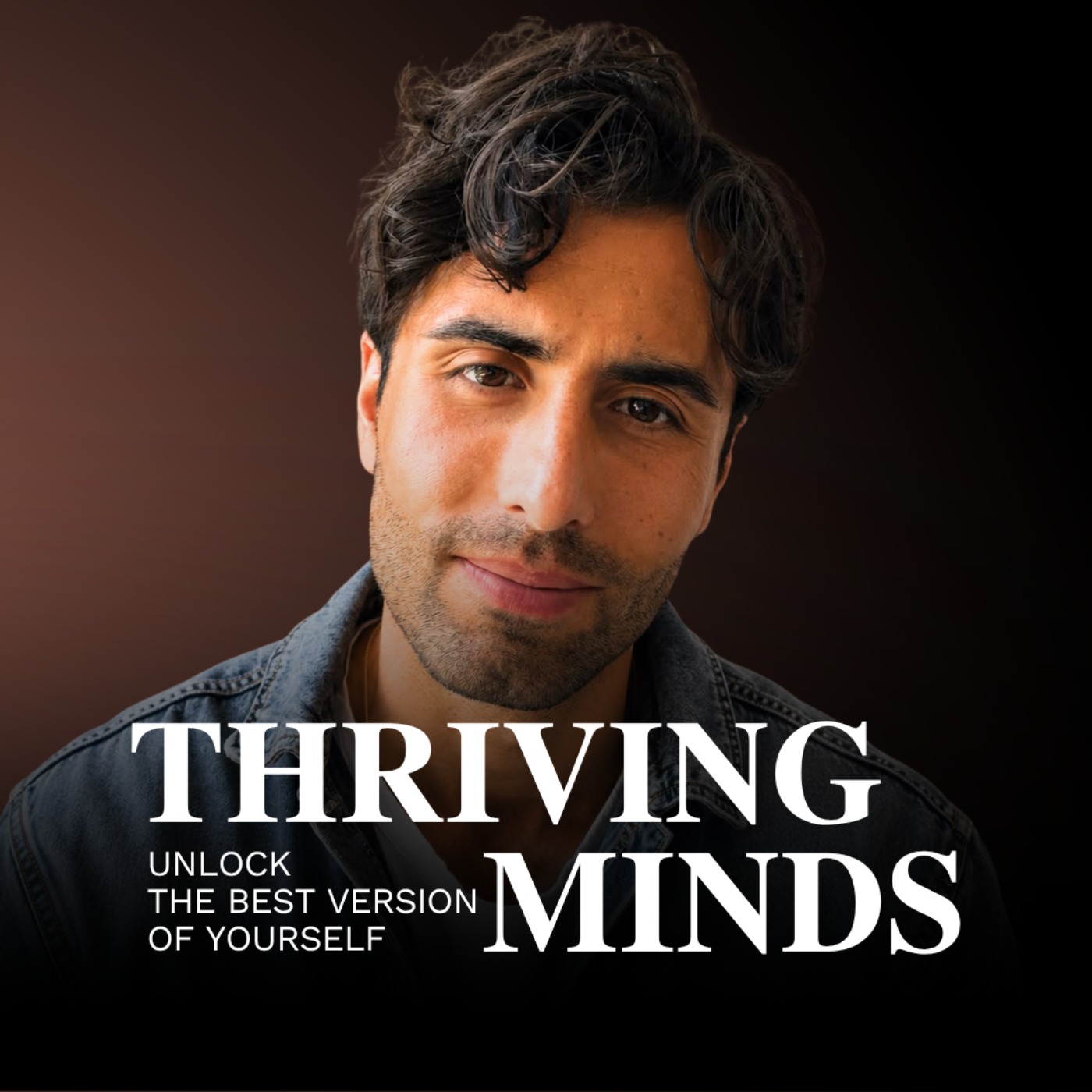
 Thriving Minds with Alberto Zandi
4 Dec 2025 · 1h 47m

No.1 Dopamine Expert: The health cost of quick dopamine and how to rewire your brain today!
Alberto Zandi - Entrepreneur, Forbes 30 Under 30, Sunday Times 100 founder.
TJ Power - World-leading neuroscientist, bestselling author, creator of the DOSE framework.
Written by AI. May contain mistakes.

Get the gist, explore an idea or ask about something said.
 Claude
On Thriving Minds with Alberto Zandi, what are the key points of this episode?
Searching your listeningAutomatic transcript. May contain errors.
0:00Dopamine lies to us. It creates illusions within our mind. This is relaxing me. It's making me feel pleasure. It's helping me fall asleep quicker, making you obsessed with all these things. So me scrolling down through social media, it's going to have the same dopamine effect as drinking a glass of whiskey? TJ Power is a world-leading neuroscientist, the Sunday Times bestselling author, international speaker, and the creator of the Dose Framework. His work focuses on the four core neurochemicals that shape our mental health and performance, dopamine, oxytocin, serotonin, and endorphins. Through his research and teaching, he helps people break phone addiction, rebuild attention, improve mood, and create healthier daily habits grounded in brain science.
0:42I navigated a pretty complicated time in my life. About 14 years old, I discovered quick dopamine. Drink vodka and smoke cigarettes and party and watch pornography and go on social media. And that world of dopamine killed my dream. I liked smoking a lot. And you see, it creates dopamine in my brain. and that's Antisbury dopamine, thinking about the smoking. One day I asked myself, okay, there's this party, I'm not going to smoke. And I immediately felt a strange feeling of sadness. Your dopamine would have actually crashed at the thought of not having it. We have 150 unique checks of the phone.
1:17And that's 150 dopamine spikes a day. It's okay to feel bored, but we're constantly trying to escape that. It's not just okay, it's actually... TJ, give us some solutions. What can we do? The most important thing for your dopamine system is...
1:41TJ, you are a leading neuroscientist, best-selling author, international speaker, entrepreneur. but for someone who has only been exposed to these titles most probably from the trailer that happens before our conversation yeah um how would you describe your scope of work so they can get to know you a little bit better yeah so i run a research lab called dose lab dose is this acronym for dopamine oxytocin serotonin and endorphins what we've basically done is turn these four brain chemicals into what's called a psychological intervention where we're assessing and running research studies on what happens to an individual when they understand how their brain chemistry works and starts completing targeted habits to rebalance these chemicals with the goal of creating change in people's lives on very specific measures things like their sleep quality and their energy levels their relationship with technology their ability to limit their doom scrolling and social media, regrow their attention spans, connect deeper with those they love.
2:48And my whole world is effectively running these studies and then traveling around the world, sharing about what we find in order to help people get their brain back into balance. I'm so hooked into all the different benefits that your work can provide. And I've been following your work as I shared with you earlier for quite some time right now. And I'm just fascinated by your approach on how you can, on one hand, simplify what these neurochemicals are and what are the primary functions, oxytocin, serotonin, endorphins. And I think before we deep dive into the more technical aspects of them and the different solutions to the overarching problem that I believe we live right now in our society, I'd like to understand what happened in your life.
3:40Was there a catalyst moment that led you to pursue this mission? I grew up from a really young age with OCD. And from six, seven years old, I had OCD. And that creates quite a lot of anxiety in your mind as you grow up navigating OCD. And then during that time, I wanted to become a professional golfer. and from about 6 to 14 years old, my whole life was dedicated to how do I become a professional golfer. About 14 years old, I discovered for the first time what I describe as quick dopamine, which is I went to secondary school, discovered you can drink vodka and smoke cigarettes and party and watch pornography and go on social media.
4:24And that world of dopamine killed my dream of becoming a professional golfer. I basically completely let go of that dream in the pursuit of how do I just have loads of fun and party hard. and I had a good time over those years as a teenager my brain was fairly tolerant to it but then as I kind of got older went into 16 17 18 years old I navigated a pretty complicated time in my life where I had a number of people pass away in my family over a short period of time and got deeper and deeper into the alcohol and deeper and deeper into dopamine and then by the age of about 22 my life just wasn't that healthy I was very hooked on dopamine obsessed with pleasuring my brain in any way I could and ultimately it was leading to a reduction in my capacity to achieve my dreams and I was still an ambitious human being that wanted a great life and a great family and a great career but this overwhelming need to stimulate my brain with pleasure was reducing the chance of that becoming a reality and with that I then started thinking how do I figure out this dopamine chemical in my own life I wasn't yet thinking about how do I do this with others gradually i discovered there is an alternative way to live my life that i could still find deeply rewarding arguably way more rewarding than that life i was living and that just created this fire inside of me of how do i then activate these other chemicals this oxytocin serotonin and endorphins and then that dream of helping others access what they dream of having and i think many people are also experiencing dopamine reducing their odds of getting there has like sparked this fire inside of me that then i want to share it with people so you endure a problem in your life you you have a dream and that dream is crushed by you mismanaging all these different neurochemicals through different actions in your life it could be porn it could be alcohol yeah um so you suffer that problem your dreams are crushed and then how do you become an expert in this field so what did you study what did you practice yeah so i first studied psychology at 16 at college here in the uk and discovered wow i like this psychology topic then i went to my undergraduate in psychology discovered during the undergraduate the world of clinical news neuroscience which i found super fascinating then went into my master's and got deeper into both clinical neuroscience and also health science because i was very interested in the overall holistic health of a human being at the same time yeah also got pretty curious about pediatric health we do a lot of work within the world of young people in their brain chemistry during that time I began writing my first paper and started lecturing at Exeter University and I built this module called the neuroscience of mindfulness.
7:04Mindfulness was one of the first doors I opened that created change in my life because I found it so hard to sit in the choir and spend time in these states of boredom in these more mindful states but I found it incredibly impactful in the decisions I was then making in my life. So I built this module I then started lecturing at the university to third year students I was in my fourth year at this point and discovered at that point I quite liked to teach information. I'd never thought of myself as a public speaker at that point but I thought wow this is kind of cool and they seem to relate to it and connect to it.
7:34I liked the whole kind of visual aspect of how do you teach people science in a simple way. That then led to the journey of how do I actually set up my own research lab in some way. How can I build some kind of structure where I can run research with a team, continue to share these ideas, make them really scientifically backed and that journey has then brought us to now. I've been doing that for the last five years trying to build this out and get it stronger and stronger. Obviously, I know very much a lot about your work and I've been deep diving into all the different neurochemicals and I want to discuss about each and every one of them.
8:07But the first one that I want us to unpack is probably one that has become, in my opinion, a buzzword these days. Everyone is talking about dopamine and they are defining dopamine in different ways. So for someone that doesn't have a scientific background whatsoever, like myself, how would you define dopamine? Dopamine is this chemical that evolved in our brain over hundreds of thousands of years, just to give us the desire to do hard things that would keep us alive as a human being. So when we had to sit as hunter-gatherers, and the reason I refer to hunter-gatherers is because for 99.9 % of human history, we lived like that.
8:49And then over the last few thousand years we started really changing things and then really in the last 30 years is when humanity massively changed we move indoors less sunlight sitting down all day food changed relationship with technology changed and our brain chemistry is just not designed for this experience of life that we have today and for the hunter-gatherers for our ancestors for hundreds of thousands of years they had to wake up and do a lot of hard things restart fires with obviously no nice match and a fire lighter they had to go hunting build their shelters explore places to live forage for food and they needed a chemical evolving in their brain to motivate them and give them desires just go out there and deal with the hardship of it and then any time in which they successfully gained something that would increase their chance of survival the fire lit they found some food they built the shelter they'd effectively get what we would describe now as a dopamine hit where they'd get this feeling of pleasure and that pleasure would then drive them to continue engaging in that behavior the more they engage in it the higher the likelihood we would survive as a species.
9:46So the origin of dopamine is just something that motivates us towards hard things. So in simple terms is the feeling, the reward or pleasure feeling that we get after a work process to achieve something, correct? So we want to achieve something and then in order for us to repeat that work because it would enable us to survive, what we're feeling in our brains is a reward or pleasure so if we were to move forward to today's world how are our brains mirroring what we used to do in the past but with today's stimuli which is profoundly different yeah so the brain has long hunted for this feeling of pleasure this feeling of reward but for the vast majority of human history it required a lot of effort and time to access it.
10:36So you didn't just scratch rocks together and go one scratch, fire sparked. It would have been hours of trying to get that fire to spark. The same with the hunting, the same with the building. Over the last few thousand years, since the advent of things like alcohol and tobacco and things like brothels, these would have been early examples of quicker dopamine access. And then obviously nowadays with drugs and pornography and social media, we've invented ways to access that feeling that might have taken three or four hours to get hold of, but we can access it instantaneously. If I, for example, get home from work and open TikTok on my phone, it's immediate pleasure straight to my brain.
11:12The interesting thing here is it'll actually take your brain far higher than originally our dopamine would have gone. So where your dopamine say would have gone to a certain level when hunting in the wild, TikTok, for example, would take it way beyond that. And dopamine is a limited resource within the brain. There's only so much dopamine at any one given time. So if it's slowly generating, it's okay. You remain a certain amount of dopamine in your brain you remain a motivated and focused human if when we scroll these videos we use up all of that resource by quickly spiking it we then experience this massive crash where dopamine drops below what we call our baseline as dopamine crashes and we all feel this so you wake up scroll your phone for a while it's really fun when you scroll it but then you have to get out of bed and it's like feels like this annoying uphill battle you feel demotivated and unfocused and maybe less excited about your day ahead and that's because you've effectively used up all of your dopamine inside the phone rather than going out and hunting and trying to earn the dopamine that we desire and these spikes and crashes are what are depleting the chemical interesting um for anyone listening to this they may be thinking if i'm getting more of that pleasure feeling of that reward feeling i shouldn't i'm not doing anything bad to my brain yeah but what you're saying your answer to them is yes that feeling is great in that moment but what you're going to be feeling afterwards is going to have a negative effect in your life because your perception of hardship has changed that watermark has changed is that accurate it is accurate you will feel good in the moment when you watch pornography for example you're watching it's like wow this is so stimulating and exciting and you watch it but after you watch pornography you may notice that you feel different to after for example you've had nice intimate loving sex with someone nice intimate loving sex you might actually feel some kind of bond with that human being and some kind of satisfaction from that experience pornography is a deeply unsatisfying experience afterwards and that's because the brain doesn't like the quick rush of pleasure it likes slow pleasure because it evolved in that slow environment the reason this is so important to consider is in order to access the life we really want to get to whether that's certain career goals financial goals, getting an amazing partner, buying a certain house, whatever it is that you're dreaming of having in your future, it is going to require immense willpower and hard work and determination to get there.
13:36And every single time you over engage with the quick dopamine, you deplete this dopamine store with the porn, the social media, the alcohol, the sugar, whatever it might be. And your dopamine production in your brain is just getting lower and lower and lower. And then your chances are then just reducing. The odds of you accessing whatever you want in life are just progressively going down because you've got less of this key dopamine battery in your brain that's trying to give you the fuel to go out and get it. And if, for example, you were to compare a hunter-gatherer tribes like now, the Hudson in Central Africa still operate as a hunter-gatherer tribe.
14:08If we could measure their dopamine level versus the average dopamine level here in London, they would, of course, have much more natural dopamine in their brain because their life is just pure hard-earned reward. Whereas our lifestyle is a lot of quick, easy pleasure. and it's annoying this information because it's really fun all that stuff but what is even more fun is having the life you really desire and that's why it's so important to motivate yourself through that lens if we feel bad from an emotional or an energy level afterwards because we crushed our dopamine levels after a quick porn session or scrolling up and down social media why does our brain asks us to engage in that same activity again if we felt bad afterwards it's looking for a quick way to escape effectively you know when you drink alcohol the next day it's much harder to manage things like pornography and doom scrolling and uber eats and all these like quick sources of pleasure because your dopamine is extremely low the day after drinking your brain is there just desperate to get out that feeling so it's temporary i think maybe that will help me escape this feeling and you go up and then you go back down and you go up and you go back down if for example on an alternative day where you didn't drink and you had an early night and a good dinner and then you got into bed and you woke up the next day managing doom scrolling and porn and uber eats is obviously much easier because your dopamine level is healthy so it's only that the lower your dopamine gets the more your brain is desperately trying to find some way to escape that feeling and now because these things are accessible to us our brain has learned oh wow that can give me a temporary feeling of joy.
15:43Whereas obviously for the hunt gatherers in Africa right now in the Hudson, they're not waking up thinking, oh, I feel a bit low today because maybe a hunt wasn't successful yesterday. That could cause them low dopamine, for example. They're not waking up thinking I need some porn or sugar or cigarettes because it's just not accessible to them. But because the brain in our world has learned that it's an option, it's began to think, oh, maybe that will help me get out of here. so if I were to give you an example through an analogy I would like for you to tell me if there's a place within this conversation for the dopamine receptor so in my opinion or maybe it's maybe it's an inaccurate opinion but in my opinion once you are having excess of dopamine your dopamine receptors are hijacked in a way so if you need it let's just say on a scale of zero to ten five is your baseline of dopamine and you're constantly feeding your dopamine receptor or your brain with a seven or an eight or a nine through quick dopamine catalysts like porn or drinking or consuming sugar then anything else that is below that new baseline your baseline is seven but your baseline needs to be five if you're hitting a five with an exercise won't give you as much pleasure because you can't feel it anymore.
17:03And if I give you the example that I had in mind is like, if I'm eating a dessert that is very, very sweet, and then I eat another dessert that is less sweet, it just won't taste as much. Does that make sense? That's exactly how it works. And we are numbing our capacity to feel the joy that our life has to offer us from even something as simple as walking in the sunshine in the morning to someone that's not having lots of quick dopamine you could walk in the sunshine in the morning think wow it actually feels really good this feeling of sun hitting my skin this like bright light in my eyes and you could actually almost get a dopamine hit off of that but if for example you're living a life where there's a lot of far more stimulating things than some sunshine hitting your face the sunshine is going to feel very weak in its capacity to generate dopamine within you and And we are effectively like having that sugary food, just over pleasuring our brain all the time.
18:01And it's very useful here to just understand actually how dopamine works in the brain. Can I explain the dynamics of how this actually takes place? You have this area of your brain called the ventral tegmental area. This is called your VTA. And this is effectively, you can imagine, your dopamine factory. So it's this small ball in the center of your brain. in there your brain is able to generate what we call dopamine vesicles small dopamine bubbles effectively in your VTA your dopamine factory across from there you have something called your nucleus accumbens which is more of your reward center in there you experience the sensation this feels quite good I'm happy about this this is giving me pleasure in my brain if we were to take a niche example of something like cleaning your home that's something that's not particularly fun but it's something that as you clean your house say for example you need to wash the kitchen you start like emptying the dishwasher and washing the dishes and then wiping the surfaces in your kitchen whilst it's not fun you begin to notice a sense of reward as you do it you begin to think oh it's actually quite nice that my house is clean and organized now in that specific scenario with this analogy your dopamine factory has begun generating these dopamine vesicles these dopamine bubbles because you're putting in effort and it generates them whenever we do things that are hard and then what it's done is it's occasionally shipped some of these bubbles towards this nucleus accumbens, the reward center.
19:20And it's given these moments, oh, this feels kind of good actually, like cleaning these surfaces and getting my house in order. Once you look at your kitchen, you think, wow, look, my kitchen is clean. A nice amount of extra bubbles will transfer to that nucleus accumbens and your brain thinks, cool, happy I did that. That's great. And in that scenario, your factory has still loads of dopamine in it. The reward center has had some dopamine and that's like a nice peaceful experience in the brain. in the example of say eating a really sugary meal as we eat the sugary meal the brain goes wow this is deeply rewarding that's how it perceives it and the factory starts mass shipping bubbles towards that nucleus accumbens and your brain goes wow this is so good this is so good more more more more and as you finish it you don't have any sense of oh i'm so satisfied with that you just think more more more in that scenario the key difference is that there was no effort involved to earn the pleasure that you experienced.
20:11So as the factory was shipping bubbles to the reward center, no more dopamine was being generated in the factory. So then your factory gets very low in dopamine. When your factory is very low in dopamine, your general capacity to experience joy from your life is far less. So as you have a nice conversation with someone, go for a walk, go to the gym, eat a great meal, your capacity to actually think, wow, this is magical is so much lower because the factory is empty because you sent all the bubbles to the reward center from the pleasure. That's so, I can, from, from in my own experience, I can say that that is so true, but that is, I can, I can also give an example that I felt that not only when I did something that gave me an excess of dopamine, like partying and then versus the next day having to do the laundry, right?
21:00Because then obviously my, my brain won't be capable enough to understand that there is pleasure from those, I would say, heart enduring activities to an extent. But I would even take this a step back before I am engaging myself in that high dopamine activity, like going out, partying and drinking. Let's say it's a Tuesday and I know that I have a party on Friday night. my brain is already looking forward to that activity and defines it as the climax of having fun and maybe also confusing it to being happy. I think our brain sometimes confuses having fun with happiness, but that automatically would, because that event is so important from a fun and from a pleasure point of view in my head, whatever else I'm doing on that Tuesday, Wednesday or Thursday, my brain is going to understand it as a less important thing.
22:01It's going to be more insignificant. So I go back to your example, having a walk in the park could be so deeply rewarding and so many different levels. For example, I could be having a beautiful conversation with my partner. I could just be by myself and then understand maybe a problem that I'm going through at work better just by having that me time yeah but i won't be able to access that state of mind because i have this friday thing happening and that is occupying most of my i'm determining that that moment is it's where i'm going to be drawing most pleasure from so anything else is just okay a routine process through my life to get me to that friday night so it's almost like can I fast forward to Friday night, everything else that I do, I'm not going to be as present and I'm not going to do it with such intention.
22:57100%. And this really brings into account what your attention is on is going to impact how much dopamine you can actually get from something. So say, for example, you eat a meal and you have your TV on and maybe your phone here and you just nail the meal really quickly. And we like to do that now as humans, this sort of double dopamine thing where we have screens down food simultaneously because it obviously is very rewarding and pleasurable and distracting from like our busy thoughts and stresses that we have in our day-to-day life but because your attention is not on the food itself your capacity to generate dopamine off the immense pleasure of the fact you're getting to eat this delicious food is significantly reduced because you're doubling it up and thinking that there's reward over there on the screen instead and with the walk there is deep pleasure in a walk if you're in the experience of the walk immersed in the nature looking at the trees, hearing the birds, being in that wonderful conversation.
23:48But if your attention on the walk is, I've got to go on this stupid walk because it's good for my health, but I can't wait for Friday. Because your attention is future-oriented and not in the now, your capacity to experience dopamine off what is in the now is reduced. The same with if you were intimately connecting with someone and you were constantly thinking about something else whilst connecting, obviously the experience would be a lot less magical than if you were deeply present in that experience. and our attention is so fragmented now in the modern world where we're so not present as a result this constant need to look at the phone constant need to look at the phone and therefore our capacity to experience the beautiful dopamine we can get from the more mundane things in life is reducing let's talk about some specific social examples that overstimulates us and then by default or by design they're going to give us a an excess a surplus of dopamine let's start with alcohol so when we drink alcohol what's happening in our brains following that idea of the dopamine factory is going to flood hard towards the nucleus accumbens the reward center and feel great as it does it but leave you with a very low level of dopamine within your brain the following day.
25:03And I don't say this from a point of not understanding the joy of alcohol. I loved drinking for 10 years, but ultimately I knew it was so detrimental to my overall experience of life. Great in the moment, detrimental to the overall experience. The interesting thing also with alcohol is actually an additional neurotransmitter called GABA. GABA is this main calming neurotransmitter within the system. It's the main brake pedal for your nervous system that slows you down. And GABA is extremely important for calming the speed in which we operate in the modern world because our sympathetic nervous system is so dominant now because of the pace of life.
25:42And when you take a sip of alcohol, like you have that first drink of a glass of wine or a pint of beer, you notice this kind of like feeling. You feel this like deep relaxation flood through your system with that first sip. And it's because alcohol by chance effectively perfectly mimics GABA within our brain and temporarily creates this unbelievably soothing experience within our mind. The challenge with that is as we drink more and more alcohol not only do we impact our dopamine system we begin to reduce our brain's capacity to naturally activate its GABA this calming system within our nervous system so then we begin to rely on booze as the thing that calms us rather than thinking that we can naturally calm our system.
26:24So you've got these two things at play, they're interplaying with one another, dopamine and GABA. Ultimately, it's just making us a bit less motivated and a bit more anxious. And that's the outcome. Is there a watermark on how many classes we drink where that becomes overly dangerous from a dopamine perspective or any alcohol consumption leads to the same dopamine effect? from an overall health experience annoyingly no alcohol is the optimal goal but with each individual person there's a balance to be struck dependent on the addictive nature of your own personality my mum for example doesn't have an addictive personality and on Christmas if she has a glass of red wine or two glasses of red wine that'll be enjoyable for her it's not going to create massive disruption to her brain chemistry whereas my brother sister and dad and I all have an incredibly addictive personality and all have had to quit drinking because when we have a drink we immediately want more and we either go through the process of allowing ourselves to have more and drink loads and feel like shit and really disrupt our GABA and our dopamine or we only have a few but then spend the whole time in our mind narrating trying to battle the quantity of consumption and it's like oh maybe I'll just have three today and I'll stop at three and that's all I'll have.
27:42And then you're sitting there whilst you're in a conversation with someone calculating how many drinks you're even allowed to have. And I think if you have a very addictive personality, it's such a great idea to test the experience of less alcohol and just see what happens around like a seven day experience. And for you decide whether you feel like your life improved or didn't improve. If you have a very low level of addiction in general to things, maybe you can have one, two drinks a week and your brain chemistry will be okay. What would you say to someone and have some friends that adopt this mindset and approach, what would you say to them if their opinion is that I drink alcohol because, yes, that is something that is giving me pleasure, it's momentary pleasure, but my trade-off is that in other aspects of my life I am incredibly disciplined.
28:33So hence, maybe I am balancing my dopamine hits with other more heart-enduring activities in my life that give me slower doses of reward. Does that make sense? So can you recalibrate your brain and your dopamine receptor if you're doing that or you can't? you can definitely train your brain to be more tolerant to the burning out of dopamine that alcohol is creating. If, for example, you do drink on a Friday night and you might be drinking your vodka tonics or whatever it might be to try and be clean if you're a particularly healthy person. If you're then spending your whole week doing hard exercise, going in plunge pools, doing saunas, eating great, really high protein is very good for our dopamine system, you are still going to have a brain that can generate a lot of dopamine.
29:26So that is possible. It doesn't mitigate the fact you will experience some anxiety and depression and low mood when you drink because it's inevitable outcome. If the dopamine crashes, that's how the brain feels. It doesn't matter how great your life is at that moment. You could have literally just got married and have your dream day of your whole life. But if you get absolutely smashed, you might feel a bit depressed the next day just because if the dopamine crashes, that's the outcome in the brain. But yeah, if you wanted to live a life where alcohol feels like it is overall a massive net positive maybe it is for your experience but I as someone that did believe that for 10 years I just think everyone hopefully has a nice long life ahead of them it's so worth just running the experiment with yourself and just checking whether that's definitely definitely true because you might be being fooled by the alcohol because dopamine lies to us and it creates illusions within our mind for example with pornography it lies to you this is relaxing me it's making me feel pleasure it's helping me fall asleep quicker when I watch pornography creates all these illusions within the mind and it's just so worth seeing the truth and then maybe you see the truth you think wow I did a month without alcohol for me my life's just much better with it then that's great keep having it so this experiment should last in your opinion seven days is that long enough for someone to see the profound benefits of giving up alcohol?
30:45I think seven days is a great first test. Something like pornography, seven days would be a good first test. 30 days is the number though. All of our research studies operate on 30 days. We're trying to create change in all of these different metrics within 30 days. 30 days of a different lifestyle can create a monumental shift in your mindset towards whatever given behavior you're considering. So me scrolling down through social media up and down, TikTok, Instagram, you name it, it's going to have the same dopamine effect in my brain as drinking a glass of whiskey? The glass of whiskey is going to be sharper and faster.
31:24With alcohol, for example, you can double your dopamine level within about 15 minutes of consuming the drink. And that's why those first 15 minutes after that drink are pretty magical. Then it begins to fall. Then you think, oh, I might have another one of those drinks to get me back to that lovely place I was in. if we were to consider a really powerful drug like cocaine cocaine with 2.5 times your dopamine level within about nine minutes so rather than 2x and 15 minutes 2.5x and nine minutes big up big big down and then it creates a very difficult journey with a drug like that social media annoyingly doesn't have a specific number no one has run a great research study as of yet on the number it would likely be more of an effect where over a day you might be having a couple hours of social media consumption.
32:12And that overall is creating these spikes and then lowering, spikes and then lowering, spike and then lowering it. But I would argue, and it would be tricky to actually run the research down in this, but if you were to pick between three hours of TikTok doom scrolling a day or a small glass of whiskey, it might actually be better to have the whiskey than three hours of doom scrolling for your overall brain chemistry because of the length of time that your dopamine system is spending in this rapid activation. Wow. What are other things that we do in our daily lives that we perhaps are not aware that are hijacking our dopamine system?
32:48Just simply checking the phone. We associate social media with hijacking the dopamine system a bit. People might have come to this, oh yeah, doom scrolling and this term brain rot is quite big. But every single check of the phone spikes the dopamine because it's just so much novel information and anything that creates a significant novelty, anything new within our environment spikes our dopamine slightly. For our ancestors, just the sight or rustling of the bushes, thinking there might be a deer out there that we could hunt and kill for our family. That rustling created an activation of dopamine to drive us towards, oh wow, there might be a deer out there, boys go hunt.
33:22Novelty creates dopamine. In your phone is endless novelty. It's why the phone is so addictive. And every time you look at that phone and you see your Slack and your email and your WhatsApp and your Facebook and Instagram, Even just looking at all the checks spikes it. And one of our main goals within Dose isn't just to break down the doom scroll so we don't spend so many hours doing that, but just reduce the frequency of pickups of the phone every day. Because the average human now picks up their phone 150 times a day. We have 150 unique checks of the phone. That's the average. A lot of people are actually way higher than it.
33:53And that's 150 dopamine spikes a day. And then you consider that in comparison to alcohol. That's why I consider the phone to be so significant because the frequency is so much higher. And if, for example, that number dropped to 100 or 50 times a day, and you can observe this in your settings, if you go settings and then screen time, you'll see exactly what your averages have been. If you observe it and intentionally reduce the number, so when you're working, you might be checking your phone once every 15 minutes rather than once every two or once every 30 minutes or once every hour. And then as you sit in the evening with your partner or your kids or chilling out on your own, if you were to watch TV, and TV for context is much better for our brain than phones, and we can go into that.
34:32If you were to check your phone twice in the whole evening rather than 40 times, which is what we average, you'll see a massive shift in your dopamine pathway. So the frequency of checks is key. Why are TVs better than phones? Because as I shared there, the novelty idea is what spikes the dopamine. And this is why TikTok won and all the platforms had to clone their model because they provided the most novelty, the most fast changing content. When you watch something with less novelty that has to follow a longer storyline. It's actually much better for your dopamine. So say right now, people are listening to this podcast.
35:07They're sitting on a train, they're sitting at home and they've got this playing maybe in their car and their brain is having to concentrate on this conversation and pay attention in order to gain an understanding from whatever we're chatting about. And their brain is actually slowly generating dopamine to tune into what it's learning. Whereas if, for example, you change it, someone paused their driving and they sat down and they started nailing their real speed. Rather than following one story, they're suddenly following a million stories and with tv if you were to watch a movie tonight like gladiator is random movie that's come into my head that's a great movie your brain has to follow one storyline for two hours and these days we very rarely can even sit and watch a movie that's actually considered too boring now to just sit and watch a film because it's slower delivery of pleasure it's better for your brain of course there's better things than movies but in comparison and it's better.
35:56And interestingly, just to point out how significant this is, Netflix and Amazon Prime now have this whole protocol where they're beginning to reduce the depth of the storyline in the content they're making because they're so aware that about 90 % of people are scrolling a phone whilst they watch the shows and they're having to dumb down the content so that people can dual screen in order for them to be capable of understanding the storyline. If we are to watch TV. It is so beneficial if your phone is in another room and you just settle in. You just think, oh, it's a little bit boring. That scene's a little bit slower and that's okay.
36:30It's all right. And your dopamine system will be much more managed. Do our brains only release dopamine when we are doing the thing or also when we're thinking about the thing? So for example, you, you gave the analogy of our ancestors believing that there's going to be a deer behind the bushes. So then they're going to release dopamine and that's going to enable them or motivate them to go and actually find out if there's a deer behind the bushes. If I give you a present example, that would be similar to what we were discussing earlier. Tuesday afternoon, I'm thinking about my Friday night party.
37:12Am I releasing dopamine also before I engage with that activity or while I'm doing it? Before as well. you have this thing called anticipatory dopamine within your brain that simply at the thought of accessing some form of dopamine will give you dopamine. And if for example, I have this a lot when I come to London, I don't live in London, partly because I can't manage the dopamine here in London. I have to live out in the countryside because it's just easier if there's not so much around me, so much tempting stuff. And yesterday I was walking through London, me and my partner walking through London and we're walking through Soho and there's all these bars and everyone's having so much fun.
37:55They were drinking their pints and their glasses of rosé. And as my brain observes it, it's accessing what's called anticipatory dopamine. Simply the thought of dopamine is giving me dopamine. And that mechanism was very useful from an ancestral point of view. If I was sitting in the tribe being lazy and I suddenly watched five men stand up to go hunting and provide for us, I would get anticipatory dopamine. Wow, they're going to go hunt, I should probably do that too. So I can help this group survive. So anticipatory dopamine is useful. And interestingly with the phones, and this is why if you're going to try and manage the addiction to the phone, those you spend your time with need to get on board as well.
38:30Because if you're tonight to try and watch a movie without your phone in your hand, but your partner sits next to you nailing videos, you're going to be constantly getting anticipatory dopamine. And this is why in any moment when you're sitting at a restaurant, if someone takes out their phone, you immediately imitate the behavior because of this anticipation. Is there anything about dopamine in relation to what it is and what triggers dopamine rushes that we didn't discuss? Fundamentally, we have these things called dose laws within our research lab. The most important thing for your dopamine system is that you take action as soon as you wake up.
39:09Our brain is not designed to wake up and experience pleasure straight away. It's designed to wake up, go out there and earn it. And if you wake up and you enter your phone immediately, whether that's something harmless, just checking your WhatsApp or checking your missed calls, you're accessing dopamine straight away and you're training your brain to pursue easy pleasure rather than hard work. And over time, that just makes you a lazier and less motivated and less focused human being. And if you were to run, say, a seven-day experiment, and for seven days you wake up, you charge your phone maybe the other side of your bed or ideally outside your bedroom for seven days and you just test it out and see what happens, you'll discover that it's okay if your phone's not right by your head at nighttime.
39:50And if you wake up and just very simply go and brush your teeth, splash cold water on your face and then make your bed, basic stuff. You don't have to go do 60 minutes of meditation. You can, it would be good for you. But you just do those three things. You're training your brain to go towards effort rather than towards easy pleasure. And that's the fundamental principle. If I was to go to that Hudson tribe and observe their unbelievably motivated way of operating and then every single day when they wake up for seven days, hand them each a Krispy Kreme donut and they each ate a Krispy Kreme donut.
40:18Within seven days, they'd all be sitting around doing nothing. And the phone is no different in our brain to the Krispy Kreme donut. I believe there's a level of complexity to adhering to harder activities that give us regulated levels of dopamine when everything is going well in our lives. so our willpower, our mental strength is better and that enables us to make those hard choices to delay gratification and then being able to accept the reward down the line not immediately but why is it that when we're stressed when things are not going well in our lives when we just had a problem with our partners or there's an issue at work that our brain from that level of stress or that feeling of pain immediately is asking us to numb it by doing one of these various things that we've mentioned, whether it's eating sugar or drinking or smoking and access a quick dopamine hit.
41:23Why? Because we're fundamentally not actually addicted to the phone or the porn or the alcohol or the sugar. We're addicted to silencing our thoughts. that's what we're so desperate to do is to silence the noise in our brain and as soon as you start scrolling the videos your thoughts disappear as soon as you drink the alcohol the thoughts disappear the sugar the thoughts disappear when your life is going to plan your thoughts are quite nice they're quite positive they're quite optimistic when life is not going to plan your thoughts are tough on you and they're critical and they're judgmental and often they're trying to guide you but the negative thinking is so painful to navigate that it's easier to just silence them with the dopamine and dopamine because it forces us into that present experience artificially it's such a tempting source of getting rid of that and one of our biggest experiments we always run within dose is getting someone to walk for a prolonged period of time in nature without a phone on them at all and it's actually the most hated thing in the whole of dose initially when someone has the idea of it they would prefer to freeze themselves in a cold shower than to walk in silence with their own mind.
42:32Interestingly, by the end of dose, once they've tried all 20 habits within dose, they end up ranking it as the highest, most important thing they do. So they go from hating it to thinking it's the most important. If your life is really not going to plan, it is unbelievably important that you go into the quiet and have a significant conversation with yourself about why that's the case. Why is this work stressing me out? What is wrong with my relationship? Maybe something to do with my health is dysregulating my system, causing this to be a more difficult situation. But for me, for so long, I silenced the pain of the grief I navigated, of the different anxieties I had in my life, just by banging the dove main, banging the dove main.
43:13And ultimately, because you have this deep wisdom within your system that's trying to keep you alive and create a good life for you, like there's this guiding power within you that's trying to keep you going in your life. If you continue to act more and more misaligned to what that system wants you to do. That voice of noise and anger and frustration will get louder and louder and louder. And then you'll go more and more into dopamine trying to make it quiet and quiet and quiet and it get louder and it's trying to battle through. If on a frequent basis you go into the quiet and you say, I know you're going to have some annoying stuff to tell me about my life, but I'm here to listen.
43:47And whatever the wisdom is within me, please tell me. The first 15 minutes of those walks is a difficult time. Gradually you get through the boredom and the stress in your thoughts and you start asking yourself some good questions and clarity comes. But the addiction is driven by silencing our thoughts effectively. And if you can go out there and build a relationship with that voice within your mind, you begin to be able to construct a life that you're actually happy with. I think that is so powerful and probably one of the most useful ways for someone to live a more conscious and healthy life altogether, not only in relation to dopamine, because I feel like, for example, in my life, when I'm stressed, when I'm stressed, I am very well aware of the negative consequences of that cake or smoking or drinking.
44:35But there is an inner voice in my head that is telling me, grab that piece of, it could be a donut or puff a few, I don't know, puff a little bit the vape or get a pint of beer. And I believe a lot of people trust their brains. They think that if my brain feels this way, it is right. So that's their equation. I feel this way. My brain is telling me to do that. It should be right because that's what I'm feeling. So I am trusting my brain. So one of the things that I've done in my life is to stop trusting my brain in the moments in which I am overly stressed. So I'm basically detaching myself from my brain and I'm telling my brain what to do or what not to do.
45:21When everything is going well and I feel a better version of myself and I feel like my brain is connected with everything else in my body, then I very much allow myself to do more things in life, i.e. acting. So for example, I'm going to eat the right thing or I am going to even talk more in this particular meeting. But when my brain, I know it's under stress or something is not going well and that could be in the form of pain or anxiety, I try to do less things and not trust my brain and just maybe wait until my body goes to baseline levels and my brain reaches those baseline levels. And the reason why I realized in my life that this was very useful is because the moment my brain has attached a feeling of pleasure towards a product, so if you drink that glass of wine, you're going to feel better.
46:16even if I didn't drink for like two weeks the moment I'm a little bit stressed my brain doesn't want to feel the pain of stress and is immediately associating that problem with a solution that I've a wrong solution that I tried maybe weeks ago that glass of wine so my brain is literally telling me oh do you remember that thing that we ingested weeks ago that made us feel great that's what you need right now and that's what I am unconsciously going to be drawn to do yeah so this has been something this technique very useful for me which is detaching myself from my brain in moments in which i know i'm not as much in control of my emotions and my thoughts and my feelings and just wait a bit until because i believe time is our biggest ally to for things to settle down internally in my within myself and then make the right and healthy choices definitely and you can't trust your brain our dopamine system has been hacked in the modern world so it can't be trusted you can trust your heart though and your gut and we can feel our sensations within our body and i do this a lot i try and ask myself like is my brain wanting this or does my like actual heart does my real body my system actually desire this thing i'll sit on the sofa for example and I think oh I could just nail through Twitter right now and just like really stimulate myself on Twitter and that's something I said like do I actually like really want that or does like my brain just want that quick stimulation or would it be okay for me to just like sit here and try and just like settle into a little bit of a slower moment and so often as you say when the brain gets stressed it panics towards how do I just like escape this sensation even when I was on my way here just now I got on the wrong troop I got on the district line instead of the circle line realized I was heading to South Kensington instead of High Street Kensington and then had to get off and get in an Uber and try and figure that out immediately my system started speeding up I don't like being late and it's just annoying and in that moment I got into the Uber and I noticed my system was running so fast and my heart was beating and I was like then I like got out my phone to just start just going into it just to try and like distract myself from this stress in my system just like go on my email and just start just like speeding myself up and then in my mind I think if I continue to speed myself up this next 10 minutes then I turn up to this conversation with like a really fast system and that is not what I want the last thing I necessarily wanted to do in that moment was put my phone to the other side of the cab stare out the window and just try and see if I can spend 10 minutes in silence to settle my nervous system but I made that decision from my heart not from my brain that wanted to distract itself in the phone and then within literally two or three minutes my system had regulated itself back down and you can so intentionally soften the system but as you say you got to not trust your brain listen to the body beautiful the power of silence I love that yeah let's talk about the other very important neurochemicals in our brain serotonin oxytocin and endorphins can you please describe them to me and what role do each of these play in our lives?
49:27Oxytocin, the O in dose, is the biochemical formula that enables us to experience love. Love is very important as a human being. Arguably, it's the absolute number one thing. We might think we're going out drinking, for example, to experience the fun of drinking. But really what we're wanting is laughter, human connection, romantic experience that's what we're actually chasing so oxytocin is our capacity to feel love serotonin is deeply connected to your nervous system and your energy levels if your energy is very low and your mood is so up and down you struggle a lot with anxiety and just feeling like your system is quick that's very much serotonin if we settle it your brain becomes much calmer you become much more sustainably energetic and then endorphins is all about our resilience to stress.
50:19Endorphins can really build our resilience to stress for our ancestors. They would activate so much more endorphins than we would. And their capacity to then tolerate highly stressful experiences was much better. So you've got love, energy, stress tolerance. And what are some examples of things that we do across our daily lives that underpin the release of these neurochemicals yeah so what's interesting about these three is we're not hacking them like we're hacking dopamine we're not spiking them and crashing them out we're just under activating them as a result of our obsession with dopamine so say for example if we take oxytocin if you were lying in bed with your partner and you were both choosing to scroll your phones which is like a now common partner activity is to lie in bed and watch videos apart from one another.
51:11In that moment, your brain is selecting to go for dopamine instead of the conversation you could have with your partner and connection you could have with them and therefore not activating oxytocin. And that situation would play out in all scenarios, if you're on your phone, when your kids are right in front of you, whatever it may be. So oxytocin is getting under activated largely because of our obsession with technology that's making us prioritize dopamine over deep human connection. Serotonin desperately wants a natural experience to life. It wants the sunlight, the nature, the natural foods, the deep sleep, the naps occasionally.
51:44And as a result of the intensity of just fast, fast, fast, fast, fast, city, city, artificial nature of modern life, it's just not getting this like beautiful natural activation where serotonin basically wants you to walk in the forest with someone you love, lie down on the grass and just stare up at the trees. That's what serotonin would want us to do. And then endorphins wants a physical experience of life. When you look at these Hadza tribe members, the men in the tribe are averaging about 40 ,000 steps a day and about nine hours of movement a day, just on their normal day, not like a hard day, just the normal day.
52:19And our body is designed for immense amounts of physical movement. Now in our modern world, if I get 10 ,000 steps, I'm like, well, pretty good. 10 ,000 steps a day is a lot. And if you have a day at home, you can do like 5 ,000. With all physical action within the body your body generates these endorphins for them when they were say for example having an extreme threat of an animal chasing them in that moment of unbelievable stress endorphins would generate because of the physical movement within the body that would then lead to the de-stressing effects within their brain to increase their chance of survival nowadays with stress we often sit sedentary while the stress occurs when we get an annoying email something happens with our bank account, whatever it might be, stress comes in rather than physical action.
53:02We just stay still. We therefore don't get any release of endorphins that can take the stress out of our system. So you're looking at a lack of presence from the phones with the love and the oxytocin, a lack of natural operation with serotonin, and then just too much sedentary living on the endorphins. In relation to oxytocin in particular, I believe that people experience love in different ways according to, especially if we're talking about romantic love, in different ways according to the maturity stage of their relationship. So perhaps in the first year you are in the so-called honeymoon phase and you're feeling absolutely everything.
53:41And then perhaps after some time, you don't feel that as much. What does oxytocin, the hormone of oxytocin, what role does it play and how does it evolve from that first honeymoon phase, that first maybe year, to then later stages within the relationship? People may associate the honeymoon phase with a lot of excitement and lust and sex and fun. That might be more we think of the honeymoon phase as. And the honeymoon phase, interestingly, is more dopamine. We actually begin a relationship more inside dopamine. We haven't yet formed this deep, loving, trusting bond with someone that occurs over time as you live your lives together.
54:29When you look at the difference between gender within brain chemistry, the female brain will move out of dopamine and towards oxytocin slightly quicker than the male brain will. And that's why sometimes for women, they might form like a deeper connection with someone. The man may be a little bit more promiscuous looking around for longer periods of time. And that's no fault from either of them. And that's just sort of the way in which the brain operates. And as you spend more time falling in love with each other, navigating difficult situations together, helping each other through challenging emotional experiences, when you really are there for one another, that's when you begin to shift from dopamine towards oxytocin.
55:05And as we shift towards oxytocin, that is a beautiful place. It might be slightly less frequency of sex and slightly less excitement, but it's a place where you feel this deep love, this safety with a human being, this presence with someone, the feeling that someone has your back. that's arguably exactly what we're looking for that's what's very beneficial to our survival as a species that deep love but sometimes in the modern world with dating and with relationships we're getting stuck just thinking that love is about dopamine it's purely about excitement if this isn't generating loads of fun for me maybe it's not right for me but if we can understand that love is supposed to be slow it's supposed to be something that's calming for our system not necessarily just pure excitement it can have exciting moments definitely that mindset of moving towards oxytocin being the driver for the love you experience is going to create more sustainability and long-term relationships than dopamine being the driver.
55:55Based on our discussion, would it be safe to assume that dopamine manifests in such a much more potent way within our body than the rest of the neurochemicals? So we feel it much more. you're much more consciously aware of the increase in pleasure and it happens much quicker there'll be moments in a relationship where you do feel oxytocin if you if you're lying in bed with someone you think wow this might be the right person for me forever and you're falling in love and staring into their eyes that'll be a unique experience but that happens rarely in life and oxytocin is slower and less frequent.
56:39And we've become obsessed with dopamine because it's so present, it's so pervasive in our mind. If we sit with our partner and we get absolutely smashed drinking red wine, it's like, yes, this was such a good experience temporarily because dopamine does that. Whereas if, for example, you experience slower moments of connection with your partner, they'll feel more fulfilling, but they just might not feel as like consciously exciting. My partner and I, for example, recently did something where we got rid of our TV for four weeks we thought what will happen if we don't have any tv and we weren't allowed to scroll social media for four weeks just to see what would happen we like running this
57:16and it was so interesting because we like watching tv like everyone does and in the evening finish work five six o 'clock we eat our dinner quite early because that's unbelievable for your sleep just so people know and uh we'd then be done 6 30 7 o 'clock and so what do we do now until we go to sleep? And we'd go for a walk. And then it's like, Hey, now we're bored of a walk. And then we'd get home eight o 'clock, eight 30. And then it's kind of, what do we do? We read a bit. That's pretty boring, but also very good for your brain. And then we'd lie in bed for maybe eight 30, eight 45. Cause there was just nothing to do.
57:50And in that honeymoon phase of a relationship, one of the characteristics of the honeymoon phase is lying in bed, talking to each other, getting to know each other. It's this magical experience where you don't say in the first months of relationship, just nail videos sitting next to each other. That's probably a later thing. And in that initial phase, you have these magical conversations, you learn all about each other. And what we noticed over the four weeks is because we'd lie in bed and we wouldn't be ready to fall asleep, we would start talking. But then our conversations just seemed to go much further and much deeper towards different aspects of her life and her childhood and her dreams and the same for myself.
58:22And suddenly we were having these magical conversations. And I was lying there thinking, we met in Australia, she's from Australia, and I flew there to go and meet her. And I was lying there thinking, this is actually just like when we met, this four-week experiment, when we didn't have the dopamine of the TV every evening. And that was true oxytocin, true proper conversation. And so much of the time, we're just missing this magical place that we can get to if we don't constantly chase the quick hits. That's so beautiful. I'm going to try that at home. I believe that because I was I was thinking of an example in my head.
58:57I was basically seeing these two neurochemicals sometimes competing one against the other. So for example, dopamine and oxytocin. You start the relationship, romantic relationship, it's dopamine-based. As you said, you want to do everything with this person, spend all your time, effectively all your resources, time, money, you want to have sex absolutely every single day. And then at some point you enter a more mature stage of the relationship and that's where you start to feel oxytocin from connection and trust and safety and space. And then you're in that oxytocin-based relationship, but all of a sudden you go out one night or someone introduces you to somebody else and that person stimulates dopamine to you.
59:56And I have seen in many examples people living what we are now defining as an oxytocin-based relationship for a dopamine-hit relationship, which will end up then becoming an oxytocin relationship if it becomes a long-term relationship, right? So then perhaps this goes back to what we were discussing earlier. Even if you're feeling maybe oxytocin with your partner, which is probably one of the most important people in your life, the feeling of dopamine from another stimulus it could be another person that just entered your life can hijack the oxytocin feeling and that's where in the moment of dopamine you meet that beautiful woman you think wow you're really attractive and you seem to be coming on to me or the vice versa men and women you have to remind yourself of the overall magic that is being created in your life of the oxytocin, not just the momentary pleasure of this experience right now.
1:00:58You have to think of the whole relationship and all the love you're receiving and getting to give rather than, wow, sex with this human being can feel amazing. And that's a tricky thing to remind yourself in those moments. But learning to live by oxytocin being a driving force in your life ultimately will lead you being much more satisfied with your life. We all want to feel satisfied and at peace and fulfilled. What the hell are we all doing except trying to feel those things? And dopamine fundamentally is programmed into our brain to never satisfy you, to never fill you up. Because for our ancestors, dopamine evolved as this chemical that made sure that the quality of the fires we made and the shelters we built and the tools we made to hunt never were good enough.
1:01:41So we'd always make more. And we've evolved to this insane species we now are where we're building AI robots because of this excessive need for more and more and more. Dopamine is driving that. But oxytocin is the opposite. It does fulfill you. It does fill you up. Love will fill you up. And when you, for example, scroll your phone, you never finish feeling satisfied. When you, for example, hold a newborn baby, that feels deeply fulfilling. You don't think, oh, I need loads more of this. You just think, wow, I've held a baby. How magical. And then you put the baby down and oxytocin will fill you up.
1:02:13And I so deeply believe in this that I have made such a huge life decision to have kids young because I believe that oxytocin is more important than dopamine lots of people in my life I'm 28 years old right now we're saying maybe don't have kids yet focus on your career your followers your income your business your research lab because the kids will distract you and maybe there's truth in that maybe I'd be more successful in my career if I chose to not have kids now in 10 weeks time my baby is coming by either daughter or son we don't know what it's going to be. And part of the desire to have this baby with this beautiful woman I'm with is because I believe that human connection and love will fill me up more than the followers and the success I can gain in my career.
1:02:54And if it means my career goes slow, I don't care. I would rather find love in my life than find pleasure. I believe that a person like yourself is only able to access that level of priorities in life because you have a good control of how much dopamine you're allowing access within your life. You said something that it got me thinking. You've mentioned the word boring when you did the short-term experiment of giving away your TV, of not using your TV at home. And I feel like the definition of boring has evolved in the wrong way so much throughout history. So if we go back to those ancestors, I'm pretty sure that there was so much downtime in the sense of not doing anything whatsoever so i already hunted we already had sex i've already eaten now i'm just gonna sit down and lay down or i'm just gonna go for a walk i'm just gonna look at the trees there's nothing stare at the stars but exactly but probably for them that was doing something also right yeah right now for us we define that as doing nothing and perhaps wasting our time.
1:04:06And hence we constantly need to be doing something to either feel accomplished or to feel stimulated in one way or another. And I feel like every year with the increment of how much technology is embedded in our lives, this is becoming a bigger and bigger and bigger problem. And nobody is either discussing about it or but probably doing something about the people like yourself we need more people like you but like there needs to be more discussions around the fact that it's okay to do nothing because that's already doing something it's okay to feel bored but we're constantly trying to escape that it's not just okay it's actually unbelievably beneficial to your life your mental health your future, your work, our brain has to experience moments of de-stimulating itself.
1:04:59And I'm someone that grew up super ADHD, hyperactive. I didn't have like an ADHD diagnosis, but I was just one of those ADHD type kids at school. And I hated boredom, hated boredom my whole life. And I remember when I was trying to figure out how to break this phone addiction five, six years ago, I started really caring about it. One of the things you have to accept to break the addiction to the phone is boredom because the phone is like the pacifier to boredom. It just eradicates boredom. Every moment you can just get rid of boredom. You just get rid of boredom. And I went to my cousin's house one day.
1:05:34He's someone that really inspires me. He lives out in Australia. And he told me that for fun, he would occasionally sit on his sofa and think. And to me, that was mental. I could not believe someone could find it fun to sit on a sofa and think. But it really made me question, How could he possibly find that fun to think? And I've been on a long journey now of trying to figure out how do I just put myself into boredom? Because I know it resets my dopamine, but I also know that it has this huge effect on your brain networks. And this is really cool. We have these two networks in our brain, our executive control network.
1:06:14It enables us right now to pay attention and focus and do tasks. And then you have something called your default mode network, which is what your mind defaults to if it's not stimulated by anything. And as you shared there with our ancestors, they had this life of a nice interplay between default mode network, just imagination, mind-wandering, daydreaming, boredom. Daydreaming is a much nicer word than boredom. And then sometimes executive network, task, focus, hunting and so on. For us now, we're basically 99 % executive network, no default network, because we're almost afraid of the boredom.
1:06:48and what's so interesting in research is if you intentionally get an individual to start going towards the default network so that would be going on a walk without their phone in the quiet or lying on their sofa staring up at the ceiling doing nothing if an individual does that without any prescription or guidance as to what's doing the quiet their brain begins to naturally strategize and dream about how it's going to create a better future for itself and this is crazy because you everyone will desire something in their future relationships work whatever it might be if you put yourself into the quiet the brain has a natural program in it programming and it given us given to us by nature or god or whatever it might be that begins to ask itself important questions about life and we really have to ask these questions this is how you get the life you want is by asking yourself the big questions as soon as you're in boredom when for example there's this phrase raw dogging where you try and do a flight without stimulating your brain I don't know if you've seen that or people are waking up in the morning and trying to do 60 minutes raw dogging where they sit and do nothing for 60 minutes to put a timer on they just like look around their room for 60 minutes and I had a drive the other day up north towards a speech and I thought I'm gonna try and do this drive raw dogging it by having no podcast no music no phone just sit in silence for the whole drive four hours so it's just in my head four hours and it's unbelievable the ideas your brain can generate and the initial phase oh this is boring and i'm stressed about this and then it will just disappears and you go into this like beautiful trance where your brain is just so creative and invents beautiful ideas for your future and we need it and we can't eradicate it and those that eradicate are going to struggle and those that go towards it will experience immense gain and what would you say to a person that is an overthinker and is just afraid of that that it will only last so long i'm a massive over thinker I analyze everything that's how I've come up with all this stuff is by analyzing every unique experience of life and we have this thing in the research lab called the boredom barrier where for the first 15 minutes you're going to overthink like crazy and you're just going to analyze and then the brain almost has its opportunity where it's like well I've had the thoughts now and I've actually got nothing left and you might think that state is impossible but you might not have spent enough time in the quiet to know that it eventually will quiet itself You might be overthinking, quick, distract myself with the phone, overthinking, distract myself with the phone.
1:09:14Whereas if you sit there and you just wait and wait, you'll enter this bliss. And it's so nice. If, for example, someone needed to have a conversation, say, for example, my mom needed to have a conversation with me and tell me something really important and give me some wisdom from her mother knowledge over my life. if I ignored her for a whole year didn't reply to her calls or texts or anything like that and then I went to see her once and she had something really important to tell me she would immediately be like TJ I have to tell you this thing and she'd shout at me as quickly as she possibly can because I didn't speak to her for a year if once a week I called my mom and spoke to her for an hour and she had a few minutes to tell me the things the wisdom that she had for me and then we just chatted about life she would never have to rush that communication because we never spend any time in the quiet anymore and time in the boredom.
1:10:03When your brain experiences it, like my mom having to rush that information at me, the brain rushes the wisdom at you as quickly as it can. Whereas if you create a consistent practice where, for example, you drive in the quiet on your journeys or you go on walks in the quiet, or maybe one day your partner is cooking you dinner and you sit on the sofa and you just sit on the sofa and just be bored. Your brain has these little incremental moments to chat to you and in that state it settles these different things you're overthinking and then the intensity of your overthinking reduces
1:10:38let's talk about addictions we we defined and we we established the fact that there is a problem in today's society underpinned by alcohol, drugs, smoking, digital devices, not necessarily social media. And there are different stages of how a problem can be and become. And then at some point when that problem is too big, it can become an addiction. again to someone that is has doesn't have any science background whatsoever how would you define addiction i think of addiction very simply as the progressive narrowing of the things that bring you pleasure if for example when i was obsessed with alcohol alcohol was my primary source of pleasure in my life.
1:11:40The narrowing was occurring whereby alcohol was the main thing that was giving me pleasure. And now we might find the majority of our pleasure in the moments where we finally get to sit down and doom scroll our phones, in the moments where we drink, in the moments when we eat the really sugary food. And our experience of pleasure is narrowing towards only a few things. And I would think of the opposite of addiction, a life where you're free as the progressive expansion of the things that bring you pleasure where you do start getting pleasure out of your food out of nature more pleasure out your relationships more pleasure out of just lying in your bed and thinking i'm so comfy right now you can get pleasure out of tons of stuff but when we're deep in addiction the things that provide us with the pleasure are very small and the majority of life feels pretty mundane in comparison if someone that is listening to this right now wants to talk to you and ask you a question and this question would be tj i'm not addicted to dopamine at least i don't think i'm addicted to dopamine so i don't have an alcohol addiction i don't have a sugar addiction i don't have a pornography addiction i do consume all those things but i believe that i consume them in a measurable way and controlled way why should i still give them up?
1:12:59Firstly, you don't have to give them up. It's your choice with your life and the life you want. And I would simply ask yourself the question, is my life feeling amazing? Am my relationships feeling amazing? Is my work feeling amazing? Am I feeling deeply creative? Is my health feeling really good? I feel energetic. Is my mood really stable am i sleeping really good if all of those things occurring and life is great definitely just keep doing exactly what you're doing because that's amazing if you've managed to achieve that especially in the world we live in right now how do you know when you're lying to yourself about that those questions you have to ask yourself the questions in the choir over a prolonged period of time you can't just ask yourself am i feeling amazing yep you have to next like all of these discoveries around my relationship with the porn with the alcohol with the sugar because i didn't consider myself addicted to these things when i was in them i wasn't drinking all day and i was very healthy still with my food and i still went to the gym every day and i still got a very good degree and became a lecturer all whilst i was doing all that stuff so it wasn't like my life was going to shit and I was falling apart I was still a very high functioning human being but all these discoveries came because I was so curious about the phone addiction specifically I actually didn't really care about all the alcohol and porn and I liked smoking a lot and uh you see it creates dopamine in my brain that's anticipated dopamine thinking about the smoking that's why my brain laughed because of how much it likes smoking your facial expression completely changed yeah that's activating in my brain yeah i just was curious about can i break the phone addiction because i thought doom scrolling my life away is such a crap life and i started going on these walks in the choir not because i thought there was something amazing in the choir just because i thought the only i'm not gonna be able to sit and meditate for an hour so i'll walk without my phone for an hour to try and see if i can spend the whole 60 minutes without checking this phone then out there in the choir i just started talking to myself about how satisfied I am by my career and my relationships and the way I earn money and how much of a contribution to society I feel I make and how much love I feel when I hang out with people and how consistent my energy is and how anxious I feel.
1:15:24And I just began to observe that I wasn't in the best state of life. I just wasn't there. And then I asked myself what might be interfering with this. And I thought, given I have studied this dopamine thing, maybe something like porn is having an impact. So then I just ran the experiment. Okay, seven days, I won't watch porn. And then suddenly notice, oh, I'm suddenly more driven. And I feel a bit more excited by life without porn. So that experiment began to continue. And I really think for everyone, the goal is just walk in the quiet, communicate with yourself about how your life is currently feeling, identify something that feels like it may potentially be a disruptor, then run the experiment without it and decide for yourself whether it has any impact.
1:16:05You can't know that drinking less alcohol has a benefit unless you drink less alcohol and feel the benefit you can't know that stopping doom scrolling is going to make your life better unless you run the experiment and then as you run these experiments over time you get compound growth just like investing a small amount of money every day is going to lead to much more money in the long term if you put it in the stock market the exact same thing occurs with our health where if you start watching porn you're getting some compound growth of your dopamine levels being higher as a result of not watching porn you're also much better at being intimately connected with people so you're getting better oxytocin, there may be less sugar, you start getting compound growth of that, less alcohol, compound growth, less phone.
1:16:43And suddenly, it's six months down the line, you look back on that 60 minute silent walk, you think, holy shit, I'm way more motivated, my energy is way better, I'm much more successful, my income is better, my relationships are stronger. And then you're like, wow, now I'm motivated. And now I am going to follow this new path, even if it feels like it's against the grain of what those around you do. I think it's easier to drive a meaningful change in your life if you've hit rock bottom. And rock bottom can be in the form of agreeing within yourself that I'm addicted to something. I'm addicted to alcohol because I'm drinking every single day and I can clearly quantify the negative consequences in my life, so I need a change in my life.
1:17:26But I personally believe that we need to learn, and this is something that I learned, and I'm still learning, the ability of being able to drive a meaningful change in your life without having to hit rock bottom. And in my case, when I gave up first smoking and more recently alcohol, it wasn't related to the more known mainstream spread wellness benefits that giving up those two products would provide. to my life but i determined that i was addicted in a different way that probably most people would define themselves addicted i was only smoking when i was going out and i was drinking only when i was going out and i wasn't going out that often so probably in the lens of an addiction expert i was not defined as an addict having said that one day i asked myself okay there's this party on a friday night i'm not going to smoke and i immediately felt a strange feeling of sadness or not being able to have fun on that particular friday your dopamine would have actually crashed at the thought of not having it it was tj fascinating how quickly i felt that i felt so uncomfortable and i also felt very bad by feeling uncomfortable i immediately told myself what the hell Like I'm feeling like my brain started hijacking my thoughts.
1:19:01It started requesting me, what if you don't go then? Or what if you leave earlier? Like my brain could not understand the possibility of me being able to be at that party, have an equal amount of fun without a cigarette or a vape. And I got severely alarmed and disgusted by the feeling of needing it towards having fun that I was able to quit smoking very quickly. So that was my first journey to quit smoking. And since then I didn't smoke. And I obviously feel great for so many different reasons. And then when I gave up alcohol, it was harder because as we've discussed before we started the show, it is much more accepted socially.
1:19:50And you also see very high performing people, very successful people that drink regularly so as a young person you're trying to emulate the definition of success of somebody that has already achieved it in your own lens of how you define success and if these people are doing it and they're functioning and they look happy they seem to be happy and they seem to be successful then it should be fine for me to do it But then I asked myself exactly that same question. I'm going to attend that party and I'm not going to drink. And I still want to be as engaged and socially active with my friends as if I were drinking.
1:20:32and my brain immediately got sad and unhappy and rejected the fact that I needed to be at that party. It was almost preventing me to attend the party. So very similar feelings to when I wanted to give up smoking. So because alcohol is harder to quit in my opinion, because again, it's widely accepted. My grandparents smoke and my grandparents are considered healthy people. so it is harder for a brain to understand that this is something that perhaps it is actually bad for you i started with a week a similar experiment to yourself and then i felt great and then i went into my second week and my third week but going back to the original question i defined that i had an addiction not because of the frequency of me using these products but due to the fact that I needed them to achieve a certain feeling.
1:21:28And that feeling is being able to have fun. And then I started gradually to define fun in different ways, in much healthier ways. Right now, for me, having a coffee chat with a good friend of mine is not only meaningful, I also define it as fun. Before, it was only a meaningful moment, but not necessarily fun. Fun, it's a Friday night, it's a Saturday night. Right now, that for me is a different way of having fun. and that's so liberating yeah freeing so freeing and you'll be getting more dopamine than you used to get off the coffee with your friend because your dopamine is steadier and less burnt out from the booze and that word free is so nice the idea of not being free is not very enjoyable i mean if you think of the extreme end of it of actually being like inside a prison environment would be very uncomfortable and very sad that people have to navigate that and we really underestimate that dopamine is imprisoning us it really is making you obsessed with all these things that are going to temporarily help you escape i loved smoking weed smoking weed to me when i was young was everything but then i realized i was actually almost in like a prison of weed being this thing that could create so much like pleasure in my brain and letting it go felt like I'd escaped to prison.
1:22:50And even though it was so hard to let it go because it became such a big thing in my brain, I experienced lots of withdrawal as I let it go. It's the initial phase. I didn't even feel good. But eventually it's like, to me, a Friday evening and a Saturday evening was weed smoking. That was just how it worked. And then sometimes I'd force myself to not do it as you described. And I would hate those Fridays and Saturdays. Like these are shit. I don't enjoy these Fridays and Saturdays. And now Friday will come. When's Friday? tomorrow evening and to me getting some like grass-fed steaks is very exciting to me now like on good quality grass-fed steaks from a butcher and then like sitting with my partner having a really nice meal maybe watching a movie that will feel pretty much just as pleasurable as the weed used to feel but in the period of coming away from the addiction it felt so boring that kind of stuff because in comparison it was so much less and it's just so nice to consider let's just test out what it'd be like to escape some of these things and see how it feels and it might feel pretty good and that would be i agree with that would be blissful tj give us some solutions what can we do so you are the founder of a framework called also dose walk me through the different steps of what is it and how it can help us become a better version of ourselves i just want to preface on that as well because it is tricky to listen to a conversation about all the things you love and hear they're bad for you.
1:24:16That's a really annoying experience. If you stayed with us until now, I consider you, I believe we consider you a very brave person, because I can also agree that before I quit alcohol or cigarettes, I went on dinners with one of my best friends who also quit alcohol, but he quit alcohol one year and a half before me. And I remember so vividly, we went on a trip to Belgium and this friend of mine, one of my best friends he lives in germany which means that we can only get to see each other a few times a year so we met in belgium for whatever reason and one of the things that belgium is known for are beers and back then yeah they're good and and i used to drink so i remember that um we went out for dinner and i was like okay uh my friend um why don't we have a beer together and then he he gave up alcohol a year ago and i said bro like just just one beer with me we haven't seen each other There's such a long time.
1:25:08We're in Belgium. Let's just try the beer together. And then he would tell me, no, I don't drink anymore. And I remember so vividly how bad that made me feel, not only about myself, but I resented my friend a little bit. Yeah, it's annoying. For something that I felt like he was doing against me, but he didn't do anything against me. So my point with this is that if you're still with us and we don't sound too annoying to you, first of all, thank you for staying. And now we're going to get into the solutions on how you can become a better version of yourself through the dose framework. Yeah, and it's all coming from a place of pure love.
1:25:41It's just so nice if life feels better, and this stuff may make a huge difference. Going through each chemical, should we pick an action maybe, one key action? Yeah. We've obviously discussed lots of the doing less of things, so let's go for what we could do more of. The first thing with the dopamine chemical is our brain loves flow state, a deep, deep state of focus on one thing. For our ancestors, they would have had crazy flow states, hunting and making tools and fires. And we have unique flow states in our life today. And I really consciously ask myself every day, how am I going to access flow state?
1:26:23And that can be in work and it can be in your personal life. But trying to identify an activity that could get you into a state of undistracted focus for longer than 30 minutes is a dream for your brain. Does that mean that we're not capable of truly multitask? We're capable of it, but it's just not necessarily the optimum use of our brain. If I was hunting for a deer whilst also looking for fruit, I wouldn't probably be as good at hunting for the deer if every time I saw a tree with some blueberries on, I went, oh guys, look, blueberries. Oh no, the deer. Oh, blueberries, the deer. Whilst I could do it, it wouldn't be the optimal way to get the deer.
1:27:02and what's interesting about social media is we all have certain videos we like to watch on social media we might like watching sport we might like watching cooking videos are very popular music is popular creative stuff people even like watching other people clean their houses and which is unusual but it's satisfying as hell to watch someone clean their house in this uh world today we've actually started to sacrifice our capacity to access our own flow state by watching other people do our flow state for us in our social media feeds and it's really good to ask yourself the question like with the different things you're watching on youtube or instagram is there something in here that could actually be my flow state rather than constantly observing someone and getting passive dopamine, you get active dopamine instead.
1:27:54And there's this YouTube channel, which has now taken a break. That's very popular with men called Outdoor Boys. It's this guy who goes out into the wilderness and builds huts and survives outside. It's like 15 million subscribers. He absolutely boomed. He took a break recently and it was so viral. The fact this guy was going to stop making content. The reason all the men have this deep pain of not being able to watch this guy go out and make his huts and survive outside. It's because we're all supposed to be doing it and we're watching it thinking, fuck yeah, like I wish I was doing that, but at least he's doing it for me and I can get some passive dopamine.
1:28:30Whatever it is that you're sitting there watching on your feed, there's something that you could be doing in real life. If you're watching football every weekend, you could go to the park and kick a football with your friend. And that is the first action from a dopamine perspective that I'd be really hunting down. How do I access some form of deep state of focus maybe you can identify what that is by looking into your feed video feeds what about let's say i want to frame the solutions based on what anyone can do on a daily basis so you wake up in the morning and all the way until we go to bed okay walk me through the things that we should not do and the things that we should do it could be from what we eat how we exercise how we use our phones yeah let's do a day from waking to going to sleep wake up go to the bathroom brush your tea, splash your face, make your bed.
1:29:18We discussed that earlier. So make sure that is the absolute first activity and do all you can to follow your morning routine before you access any quick pleasure inside your phone. So if you have kids, you go and get your kids up. You'll also be more settled as you wake them up, which is good for their nervous system. If you haven't frantically like got your system going and then you transfer that energy into them. If you don't have kids, you just go about your normal morning. You make your breakfast. If you eat food in the morning, obviously I know lots of people are intermittent fast. I imagine your audience might be intermittent fasters.
1:29:47You have your shower, you do your makeup if you do makeup and you just try and get ready for your day as slowly, like as calmly as you can. If you can go to sleep 15 minutes earlier so that you can move at a 15 minutes slower pace in the morning. So good for your nervous system. Start slow and steady and no quick dopamine. Eventually though, you got to go in and start working. I'd really recommend your laptop being the first point of technology you see every day. Laptops are much better for our brain than phones just because the lack of change that we constantly do like when you're on a phone you go email instagram whatsapp slack faster if you open your laptop and you start with whatsapp and you're like okay do five minutes of whatsapp then you go to your email bang your email it's just going to be a much more efficient protocol inside that morning unbelievably useful if you can get some sunlight in your eyes just so important it's so hard for your whole energy system to even understand what the hell is going on if it hasn't gone out and receive the data it needs from the sun.
1:30:41It still receives that data if it's cloudy. So I'd say those are the most important things first thing in the morning. It's just a slow start, phone-free, using your laptop as your first point of technology to check in on and getting some sunlight. And you've mentioned previously that protein is incredibly good for our dopamine. Yeah. Can you expand on that? Yeah, protein, a variety of different proteins break down into an amino acid called tyrosine, which is one of the building blocks of this dopamine molecule. Things like eggs, for example, are extremely useful. And you often see that when an individual decides they're going to go on a high protein diet, they do become this more motivated human being.
1:31:23And you can imagine for our ancestors, how motivated they'd be if they did catch some deer and eat some deer or something like that. That would have been unbelievable. And And the protein that we're consuming is just helping as an extra building block of our dopamine system. And if you want to be super motivated, you just want to eat tons of protein. And we're so lucky now that we get choice over our food. We don't even have to go get the deer. It's in the shop. So go eat it. Maybe don't eat the deers, though. They're quite sweet. Go for like a cow or something. I don't know.
1:31:55And maybe someone is asking themselves. I'm certainly asking this to myself. If our brain has been overly stimulated through excess of dopamine for many years, so someone might be listening to this during their mid-30s and they've been drinking and smoking and consuming porn for the better part of their adult life. Sounds like a good time. And probably the way their brain is wired has changed. Definitely. Definitely. So that's the answer. So your brain, the structure of your brain changes according to how much dopamine you're receiving. For sure. Via neuroplasticity, the idea that our brain is literally malleable, like Play-Doh, like that thing that a kid can play with.
1:32:41And when you're really young, it's very malleable. But even throughout your entire life, it's still malleable. Your brain is constantly shifting and adapting and learning and changing. Like, for example, when you learn to drive a car, it's very difficult. When you first learn to drive a car, you put a clutch down and the gears and all that stuff. in your visuomotor cortex, there'll be literal physical change in your brain as you adapt and learn that new skill. And that's happening with all behaviors, all addictions, all good things. Everything is rewiring your brain. Can we reverse the damage that we've done over the, I don't know how many years?
1:33:10You can also reverse it fast. It doesn't take long for your brain to start changing and adapting. How long, more or less? Good change would happen in seven days. Things would begin to change. In a recent research study, they looked at the areas responsible for your dopamine and serotonin activation and looked at what happens if you didn't go on social media for just three days, 72 hours. And the individuals were still allowed to use their phone for non kind of pleasure related tasks. They're allowed to check their work, make calls and send some messages, but they just weren't allowed the quick, quick pleasure.
1:33:43Within three days, you saw structural changes in the brain, just 72 hours because they weren't going on social media and their dopamine and serotonin areas were activating better. They were more focused, better motivation, more stable mood, less anxiety. So change occurs quickly. Then as you consistently adopt that skill, you go from 72 hours to seven days. Then we move towards a month, maybe 30 days, massive changes occurring. And then obviously, as you keep going, your brain is completely adapting into a new environment where, for example, now I'm not craving drinking and smoking all the time, whereas I used to constantly think about drinking and smoking.
1:34:18This is so encouraging because probably a lot of people were thinking that, gosh, it's going to take me so long to start feeling the benefits of giving up all these very pleasurable things in my life. But if it's seven days, I think anyone can commit to that. And also, definitely don't listen to this conversation thinking, wow, I've got to drop everything, relearn my whole way of operating. All you've got to do is ask yourself, what is maybe one thing that's a little bit disruptive? And that might be doom scrolling videos on social media, for example. Maybe that's the thing that's disrupted for me.
1:34:50And I'm just going to keep doing everything that I'm doing. And I'm just going to run the experiment on the doom scrolling videos. That might feel good. That could be your priority for however long it feels good. Naturally, as you continue to let go of that one thing, dopamine will restore and you'll be a bit more motivated. And then you might ask yourself a question about your sugar consumption. And then you actually move into that. I didn't just wake up one day, quit everything. I think, well, I'm in peace now and I'm so energetic and happy and life is great. It was just step by step, little small shifts gradually moving me towards a life that I really love.
1:35:20So we wake up in the morning, we don't use our digital devices for at least the first hour. Yeah. Right. Then even if you did 10 minutes, that'd be good. Then we go to work and the first device that we should be using is our laptop because of the speed of how much stimuli we're getting from the phone versus the laptop. then you've mentioned that when it comes to eating we should prioritize protein yeah and also eating as early as possible when it comes to going to bed right yes is there anything else that we should be doing in our day-to-day lives like perhaps a type of exercise that we should be doing or a type of exercise that we should be avoiding ensuring that you don't sit down for too long a period of time is very important so making sure that you're always kind of getting up and stretching your body.
1:36:13I always like to put my hands like on the doorframe in my houses, just keep like stretching my back out because we're like curling our bodies over in the modern world. And it's so interesting in the hunter gatherer tribes, we think of old people as these curved over human beings in the Western world, but in the hunter gatherer tribes, they're not curved over. They're standing up straight at like 80 years old. And it's because of just this constant sitting, sitting is just curling us over. So always getting up, moving your body is very useful. Even just randomly just doing press ups or even just like some squats, just like your body keeps activated is great i also think from a movement perspective hanging from bars is so good for you so when you go to the gym just like trying to time how long you can hang for ridiculously good but you've got to realize you're a physical being both men and women that were designed to like hunt out in nature and survive now we're becoming just like this reduced version of what a human being can be so i think a physical aspect of life is a life is very key spending time in natural environments unbelievably important no podcast turn your podcast off if you're in nature right now and just go to the quiet listen to the podcast in other environments but nature is a time for just nature and then always asking yourself throughout the day when i have the opportunity to connect with a human am i deeply present in this experience or am i looking for dopamine in my phone and not really concentrating on this person because it's so easy to just not satisfy oxytocin it's the chemical that is the lowest out of all four of these because we're so obsessed pleasure dopamine success money just lay down that lane and all throughout your day just keep asking yourself am i connecting with people am i connecting with people because that's what you're being needs the most of all of this stuff i want to know your thoughts on the following i think that right now we live in a world that celebrates the excess of work so basically when you ask someone how are you doing the typical answer is i'm busy and the reason why they're saying i'm busy is because that's going to signal the fact that you are a successful person in one way or another and sometimes we also give them awards for the fact that they are working an amount of hours that is unhealthy i would say for anybody is this related to the dopamine that we're getting through society's validation or what are we getting here yeah we have a natural prerequisite it to think that making money is cool and puts you in some kind of higher position and we associate working really hard with making money money is very dopaminergic few money is like cocaine in our brain they're the same thing basically so we do have this society that thinks that's something that's of deep value at the moment because we're living in what i call dopamine land where we've for some reason decided that financial and material success is the whole goal of life.
1:39:05But it's not. The whole goal of life would probably be giving love to human beings and creating opportunity for those who love to have a good time and experience this short period of time where they get to be in a physical body, just having a good experience. The goal is not just pure money and I think it's important that society finds other ways in which we validate one another and when you see someone not just complimenting them on their success and their work and the progress they're making in their life but complimenting them on how great of a dad they seem to be or how good of a partner they are or how admirable it is that they seem to take care of their health and their food.
1:39:47If you complement them on other things, you could begin to shift that. But it's definitely a paradigm we're living in in the modern world that I don't think is going anywhere. I think we're so deep inside finance that it's just going to be a focus for people. Those that choose to begin to complement one another on different things will begin to create a change. Yeah, I agree with you. What are your thoughts on meditation and mindfulness when it comes to rewiring our brain? magic my whole journey began towards healing my health with signing up for a mindfulness module in my degree in my undergraduate degree and I signed up to it because so many of the things I was studying were so complicated this like deep biology of how the brain works and neurobiological structures this was just called mindfulness I thought oh that'll be a bit easier.
1:40:40I'll go and do that. And I turned up with this electric or Jerry and we walked in, he put all the tables to the side and said, we're going to sit in a circle. And I was like, Oh, cool. Something a bit different as well. Like no paper, just going to like sit here. And then he goes, we're going to start with a 20 minute mindfulness. I'm going to sit in the quiet, shut my eyes and just hell broke loose in my brain. Just I was, I didn't do any of that quiet stuff. So I was like, wow, there's some noise in here that I didn't listen to. I've never listened to and i remember a few minutes in kind of flickering my eyes open looking around this circle and seeing everyone was super committed and the deep irony in my work now is i got out my phone and scrolled my phone for the whole meditation week on week though i kept going back i thought well i have to go back it's part of my degree but i did think there was some benefit to be found in that mindfulness and kept listening kept thinking oh okay i'll try this do the 10 minutes focusing on my breathing, focusing on my body.
1:41:40And then it birthed this routine where I was like, okay, I'm going to wake up and we do 10 minutes of mindfulness each day. And this whole concept of this default mode network, asking yourself big questions, hearing wisdom, building a relationship, a good relationship with yourself in your mind, where you're honest with yourself and loving to yourself. It happens in that state, that state of meditation. Meditation is magic from a dopamine perspective, from a serotonin perspective. so I think it's one of those things that if you can be bothered it's going to change your life and every single day I wake up and I do it and I never want to do it and I don't even know why I'm doing it necessarily I don't have like very clear specific reasons but I know my life is better if I do it and I just make sure it happens there's a closing tradition question that I like to ask all subject matter experts and it's basically if you were to compress all your career's knowledge and experience into one only one essential piece of advice that everyone must implement in their daily lives what would it be yeah it would 100 be that every week a minimum of once a week that you leave your phone at home if it has to be with you from a safety perspective it's in a bag you go to a natural environment and you walk for a minimum of 60 minutes and that is all you have to do you out there your brain will take care of exactly what I would want it to take care of for you it'll go into deeper states of appreciation it will ask itself important questions it will restabilize your dopamine it will train you to be less addicted to phones.
1:43:30You'll feel more love for your experience of life. You'll connect with nature, which we desperately need as a species right now as we run to robot land. And I think that one action is something people aren't doing. I think they're going on walks. I think they're taking their headphones with them and their phones, and they're missing the opportunity for the deep wisdom that turns up 45 minutes, 50 minutes into a walk after nothing, no stimulation. If you have your phone with you, you come up with an idea and then you think, oh, quick, oh, I've got a good idea it for my work go on my phone oh shit look someone text me and then you're gone and then you've lost that magical place and I think if once a week 60 minute walk nature no phone that is what I believe is the the key answer to your brain chemistry thank you TJ thank you for coming first of all but thank you for shedding some clarity in into what I believe is probably one of the biggest problems in today's society.
1:44:26I believe that everyone, all of us, deep down, we know that the hard things in life are usually the healthiest paths that we can take. And vice versa, we also know that the quick roads usually lead to negative consequences. It's fascinating to see that when something in the short term feels great. It almost always doesn't feel so good in the long term and vice versa. So if I have a donut right now, it's going to feel fantastic. Yeah, it's going to. But I'm not going to feel good probably in two or three hours down the line. If I have a salad right now, it may not taste great, but I'm going to feel so light and at the same time energized afterwards.
1:45:17And we can take this example and extrapolate it into so many other aspects of our lives. So I believe that each of us, almost all of us, deep down we know this. But yet we still need either science or subject matter experts like yourself to validate this for us. So then you become the inner voice in our heads that is more powerful than what our brain is telling us in this moment. So next time when I am in the midst of a stressful moment in my life and my brain is telling me, Alberto, go to the kitchen and grab whatever is the most sugary thing, TJ's voice in my head will play and say something like, well, this is bad for you for A, B, C and D.
1:46:07And that is again, going back to the point that we were discussing initially, is detaching the strength and the compelling strength that my brain has over me versus science or a subject matter expert like yourself. So I very much thank you for that. And I believe that not only to myself and my team, but also the people listening to this, this is going to be tremendously useful. And I also look forward to doing this in a year from now to see how the world is doing when it comes to embracing all the practices that you're working in. So thank you very much. Thanks, man. Loved it. Thank you for the brilliant questions.
1:46:51Thank you.
This week, Alberto sits with TJ Power, a world leading neuroscientist, best selling author, and the creator of the DOSE framework.
His work investigates how dopamine, oxytocin, serotonin, and endorphins influence mental and physical health, particularly in the context of our digitally driven lifestyles.
TJ’s framework is designed to unlock your best life, to live with purpose, intention, focus, and a positive mindset.
This episode also unpacks why phones, alcohol, porn, and sugar, severely erode attention, mood, and drive, and how to reset your baseline with simple habits you can start today.
You will learn:
• How dopamine actually works
• Why chasing dopamine peaks lowers motivation
• How to run a 7 day reset
• How things like sleep, morning light, protein, movement, nature, and real connections support healthy brain chemistry
This conversation is a clear path back to focus, energy, and calm.
You can purchase TJ’s book, The DOSE Effect, here: https://geni.us/doseeffect
Follow TJ Power:
https://www.instagram.com/tjpower
https://uk.linkedin.com/in/tjpowerneuroscience
#ThrivingMinds #TJPower #Neuroscience #MentalHealth #DigitalBalance #Dopamine #Attention #Wellbeing #Mindset #StressManagement
Hosted on Acast. See acast.com/privacy for more information.