
 Ask ChatGPT


 Thriving Minds with Alberto Zandi
9 Apr 2026 · 1h 18m · 35 chapters
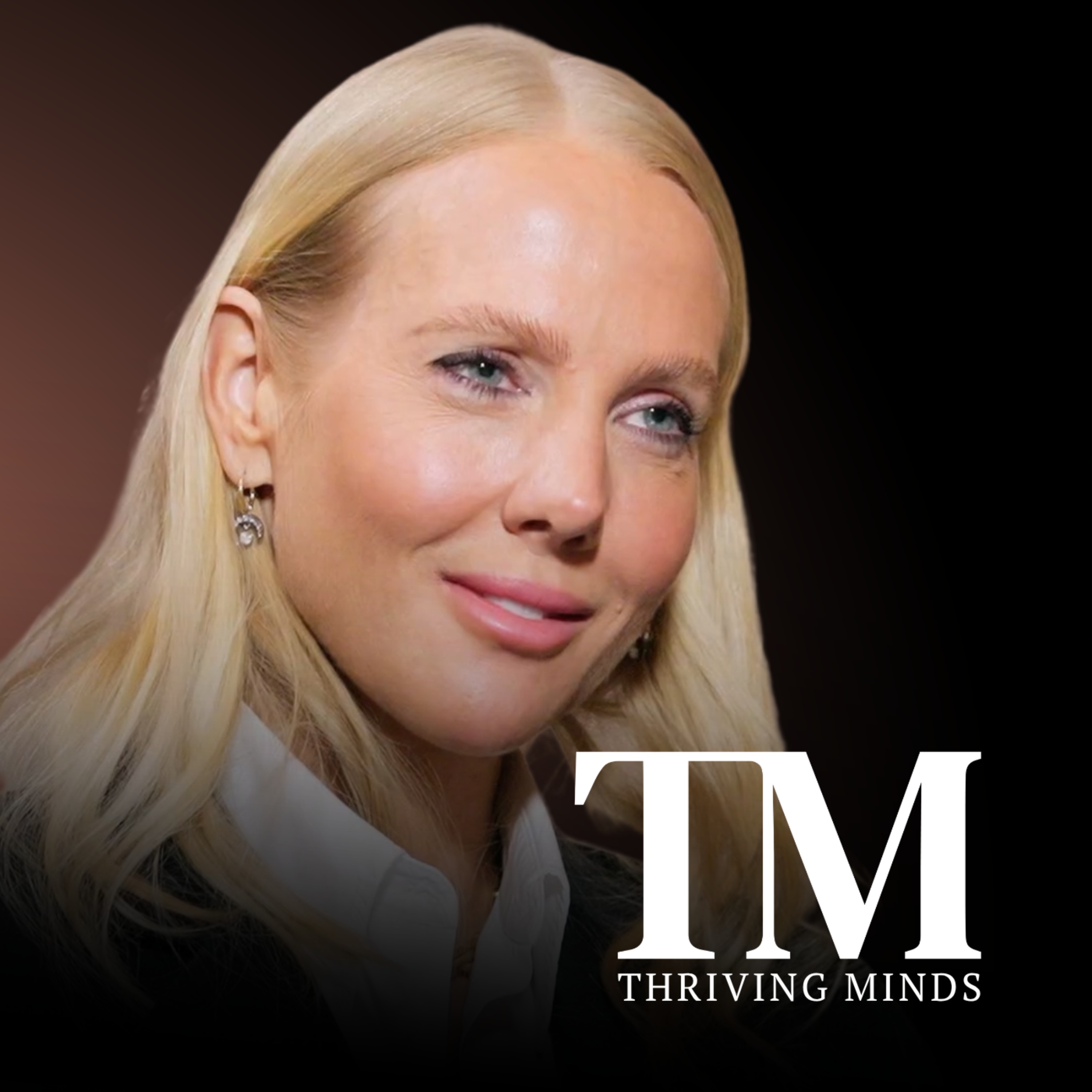
Georgie Coleridge Cole, founder of UK lifestyle publisher SheerLuxe (launched as Sherlock’s in 2007), discusses building a digital publishing business through content, audience growth, and brand partnerships; the pressure/anxiety of success; and why she sold the company for about £40M after a long run. She also covers hiring culture and how SheerLuxe adapted when traditional PR and advertising access was blocked.
Georgie Coleridge Cole is the founder and CEO of SheerLuxe, reaching millions globally via content, podcasts, live events, and email. She previously founded Sherlock’s (2007) and sold it in 2026 for ~£40M. She co-founded with her husband, an accountant who handled early finance/bookkeeping.
Digital publishing success requires constant testing and pivoting; “content + people + audience” drives monetization; first-party email/data is crucial as search weakens; and “behind-the-scenes” employee-generated storytelling created differentiation and PR-like reach.
Daily Candy-style discovery; an early paid advertorial about expensive snakeskin handbags that got no clicks; VC feedback demanding “10 times” growth; SheerLuxe’s “Behind the Scenes” docuseries; and the “stickiness” problem solved via editor’s picks and recurring content.
Written by AI. May contain mistakes.
Georgie shares her journey of founding SheerLux and the challenges faced.
“How have you changed since you sold your business?”
Exploration of Georgie's childhood experiences and their impact on her leadership.
“So Georgie, walk me through your childhood.”
Discussion about the concept of being 'bossy' and its implications for leaders.
“you had a leadership attitude already back then?”
Georgie reflects on her work ethic and early career decisions before founding SheerLux.
“But my father, I think he was OK, and then he did take me aside and say, no, that's not the one.”
Georgie's experience navigating job offers and career paths while at university.
“And I can see that from a really, a really young age.”
Learn about Georgie's unconventional path into the estate agency world.
Explore how family background and material desires shaped Georgie's career ambitions.
“So whilst I never set out to be one, and when I left school in 1999, it was not the, it wasn't like it is now.”
Discover the pivotal moment when Georgie decided to become an entrepreneur.
“I thought you were going to ask me that.”
Hear about Georgie's early experiences in the beauty industry and her insights.
“So you decided to become an entrepreneur.”
Uncover the inspiration behind Georgie's idea for a shopping directory.
“And I started researching the different categories.”
Learn how Georgie transformed her idea into a business with her husband’s support.
“But every single place listed in that directory you had to be able to buy online.”
Explore how Georgie's early support from her husband shaped her journey.
“not have done what I have done without him by my side, rooting for me, supporting me and guiding me, particularly in the early years.”
Learn about the timeline from business planning to site launch.
Discover how Georgie funded her business through unconventional means.
“How did you guys fund the business initially?”
Understand how key investors shaped the direction of Shirlux.
“I'm happy to say she's in a brilliant position now and she deserves every bit of it because she has worked tirelessly.”
Georgie reflects on funding and challenges in the early years.
“who is one half of Venrex, who are a VC, and a random number called me.”
Learn about Georgie's vision for Shirlux as an e-commerce platform.
“I knew there was a gap for a platform, for a publisher that connected people with the best brands and products to buy online.”
Georgie discusses the importance of audience building and content creation.
“And print publishing was starting to get a bit rocky.”
Explore how Georgie monetized Shirlux through audience engagement and trust.
“Someone paid us to do it quite early on.”
Discuss the three pillars that Georgie believes are essential for success.
Learn about the critical traits of ambition and open-mindedness in entrepreneurship.
“So I was always really, really clear that we needed to build our first party data.”
Discover what constitutes good content and its evolution over time.
“So let's talk about the three critical pillars of your industry.”
Understand how entertainment shapes brand identity and audience engagement.
“we were using our team to showcase products we were shooting products on our team because we knew that made them more commercial and more relevant to our audience.”
Explore successful marketing strategies when traditional methods fail.
“Another trait from great entrepreneurs is the ability to be able to adapt and come out the other way when they're backed against the wall.”
Learn about effective strategies for hiring and retaining employees in dynamic workplaces.
“And that is what sets great entrepreneurs from, unfortunately, less successful entrepreneurs apart.”
Learn how Georgie has built a supportive community while maintaining her company's values.
“And it's really, it will be sort of one of my greatest achievements that I've managed to employ this many people.”
Understand the considerations Georgie took into account when deciding to sell her company.
“you see it in our people, you see it in our content, you see it in our readers.”
Explore Georgie's feelings of relief and identity after selling her business.
“And maybe that's where there's sort of want for things.”
Hear about the stress and emotions that come with running a business and achieving success.
“It's been everything I've lived and breathed for 20 years.”
Georgie expresses gratitude for her career and the support she received along the way.
Georgie discusses her journey, acknowledging her privileges while reflecting on sacrifices made for her career.
The evolution of Georgie's definition of success and the importance of industry recognition is explored.
“How has your definition of success evolved over the years?”
Georgie shares her thoughts on education and offers advice to her younger self regarding university.
Georgie emphasizes the importance of financial education for everyone, regardless of their career path.
“an understanding of money and how it works and how it makes the world go round.”
The conversation highlights the realistic definition of success through hard work, sacrifice, and resilience, particularly in Georgie's journey.
“Thank you so much for coming to the show.”

Get the gist, explore an idea or ask about something said.
 Claude
On Thriving Minds with Alberto Zandi, what are the key points of this episode?
Searching your listeningAutomatic transcript. May contain errors.
0:00The future of digital publishing is change. You have to be constantly testing, learning, pivoting, evolving. I knew there was a gap for a platform that connected people with the best brands and products to buy online. Georgie Coleridge Cole is the founder of SheerLux, one of the UK's most influential lifestyle brands, reaching millions globally across content, podcasts and live events. She spent nearly two decades building a media powerhouse and shaping what modern brands look like today. In 2007, you founded Sherlock's. And in 2026, you sell it for£40 million. Why do you sell your company? The fear of failure has driven me so much as an entrepreneur.
0:43We had a board meeting and the VC said, that plan's not ambitious enough. I want to see ten times the money. I remember thinking... How have you changed since you sold your business? I felt like I'd been through an exorcism. Gosh, you're making me emotional. I think I feel really relieved that I'm okay because... What has your career at Sheerlox cost you at the personal level?
1:21Georgie, how would you introduce yourself? I would introduce myself as the founder and CEO of Sheilux. Why have you decided to introduce yourself from a professional lens? Well, I'm pretty sure you're not here to talk to me about my gym routine. And we're here to talk about the recent acquisition of Sheilux, the story. I know this is a podcast for entrepreneurs and an incredibly successful one. and I really share your vision in using this podcast as a tool to help ambitious people or people wanting to hit there, achieve their full potential for helping entrepreneurs to learn. I'm a real believer in feeding curiosity and I know that that is a big part of what you do in your mission.
2:12So I know that's why I'm here. I know that's what we're going to talk about. I want to cover during today's episode two different angles of your life. On one hand, your personal journey, but also your professional journey. Because in my experience, in order to fully understand why someone had such a successful professional career and made whatever choices you've made during your career, we need to understand it better at the human and at the personal level. More than a personal level, I'm not going to go deep into maybe very confidential topics or personal topics, but more at an emotional and human level.
2:46That's what I want to explore with you. So every time I interview an entrepreneur, I'm very curious to understand how their childhood was, because typically there are something or a number of things that stimulate this young person that then ends up becoming an entrepreneur. So Georgie, walk me through your childhood. How was it? It was, gosh, I feel like I'm in therapy in a good way. It was, yeah, it was, it was happy. I suppose if you were reflecting you might assume otherwise but it was happy and I was happy and I say that because my parents got divorced when I was a baby and I grew up with my mother and just the two of us until I think I was about five or six when she married my stepfather and had a little boy with him who I adore.
3:45He came with two stepchildren from his previous marriage. My father had by that time married my stepmother and went on to have three more children with her. So I was on paper an only child but never felt like an only child. I was fiercely independent and I think that probably came from the fact that it was just my mother and me and she also worked and I would spend quite a bit of time with my father so I'd go once a week I'd go every other weekend and he moved to Hong Kong when I was 10 and at that age I started to fly on my own unaccompanied to Hong Kong every other Christmas every other Easter several half terms half of the summer holidays and I didn't really question it back then but I suppose I was 10 I mean my my youngest child is nine she's 10 this year I mean the thought of putting her on a plane on her own I mean breaks my heart but I suppose that cultivated this independence and I was I was very grown up I was very bossy I used to go and stay with my godmother in Scotland and they'd call me Little Miss London and I used to love to change outfits however many times and and endlessly played offices and as I've often said my favorite film was Working Girl and you know I longed to answer phones and have a filing cabinet and I think I got an old one from somewhere once and yeah I was I always my role models were working women there weren't that many of them then hence working girl but yeah going back to your question it was a happy childhood probably not a massively stereotypical one given that I didn't have my parents under one roof and and I spent a lot of time going to Hong Kong um I went to boarding school when I was 11 and loved it and went to Edinburgh University after I left school and started sheer luck's about a year after I left university.
5:59Would you say you were, you had a leadership attitude already back then? Because right now you're a leader in your industry, yes? Yes. My father used to, I mean, my brothers and sister and I sort of die, but he used to, in the school holidays, he would get our reports out and his highlighters, and he would go through and we'd be sat down and he would go through mainly, no, there probably were the positive bits, But mainly I remember a lot of highlighter over the word bossy. That's mainly what I remember. And I remember getting given my report once. I was going out to Hong Kong for the holidays and they gave it to me.
6:38And I opened it and I read it and I was like, this is not a good one. And I wasn't naughty at school, but it was not a good one. And so I didn't give it to him. I got in real trouble for that. But yeah, this highlighter used to come out and we'd all literally. But yes, I was, leader is a much better word. My little girl, my eldest, I remember when she started school when she was little and they called her bossy and it's not new, Sheryl Sandberg it was, wasn't it? He said it, that, you know, which man had been described as bossy. It's a funny word though, because for me, it's a word I grew up feeling quite ashamed of.
7:14And without sort of catastrophizing it, it was a really negative, negative thing to be described as bossy. hence this highlight came out and I'm not criticizing my father by the way because he's been the hugest supporter for my career and for all his children but it was seen as a negative thing and I used to see it highlighted and I remember it from from such a young age it was consistently in my reports and yeah it's funny because it was only I always say that it's only sort of hitting 40 that I feel you really truly understand who you are kind of for better for worse and that you start to realize that some of the characteristics you were made to feel were your less attractive good ones are actually the ones that have made you the person you are and leadership being an entrepreneur leading inspiring a team day in day out when you're pushing and pushing and pushing um is a huge part of of success and and without good leadership skills and entrepreneurs are definitely not perfect they're not they're not the sort of textbook mba um ceos that that you you would get elsewhere and be corporates but they bring something really special and they bring passion and energy but you also need a bit of you need a bit of bossiness and you know you need to listen to everyone else and then you occasionally go okay thank you but we're gonna do it my way did you have high expectations of yourself when you were growing up or did your parents or your father have higher expectations on what you needed to achieve no I wouldn't say I mean I wanted to be a makeup artist and or a photographer and I always like think if I'd been a makeup artist I might have been a Charlotte Tilbury and had a I mean, that's aiming high, but, you know, got to own hell, right?
9:11But my father, I think he was OK, and then he did take me aside and say, no, that's not the one. But other than that, I don't think there was huge pressure, no, not to go into a profession or anything. And I don't think I was sort of academic enough to be an accountant, a lawyer or a doctor. I toyed with being a lawyer, definitely, and acting. um I liked the stage and did theatre studies um for GCSE and day level but no I didn't have huge pressure I definitely had support my mother is was a physiotherapist and worked very very very hard and had that profession she was the only one of her siblings of her sisters at least to have a profession and and she really needed that and fell back on it and had to work very very hard and my father was a financial advisor.
10:05But yeah, there were no, I mean, marketing was the route I was going to pursue and did pursue. I think the pressure was on myself. I, yeah, I was always really driven. As I said, I wanted to be Melanie Griffith in Working Girl and I wanted to put on a pencil skirt and a pair of heels and play with my filing cabinet. So you don't want to be an entrepreneur. No, I didn't want to be an entrepreneur. No, I think I would have been, as I said, I think makeup artistry, I always think I'd have been one of those makeup artists. You know, Ruby Hammer was the original, right? And then the Charlotte Tilbury and, you know, all the others who have wonderful, wonderful ranges.
10:45But I like to think that I'd have gone on. I actually tried to leave Edinburgh University after my second term. And I went and temped. It was the Easter holidays. and I went and tipped for a very, very wealthy guy in Mayfair. And I got paid really, really freaking well through the States and the Sea. And I was like, this is great. I don't want to go back to Edinburgh. I want to work. I want to earn money. And I hate to say, and I've talked about it a lot, so I won't go on about it too much. But, you know, throughout school, I was at boarding school and I went home every single weekend and waitressed in a wine bar around the corner from my mum's.
11:23None of my friends did that. I just, I loved earning money. I love shopping I'd go and spend it all on shoes but I love the feeling of earning money and my father's always had this incredible work ethic incredible work ethic and his four children all have it the same and I definitely learned from him you know the power of working hard and the reward from working hard and I spent my whole I spent my evenings and my weekends working in a in Barclays Bank Lost and Stolen Call Centre and I'd go off in my little car to a business park outside of Edinburgh and I'd sit with a headset on. I look back now and I'm like, God, that was lonely.
12:04And I'd rock up. I'd known nobody. It was shifts. I'd put my headset on and we'd be targeted on how many calls we would take a shift. And I'd pick up the phone and be like, hello, Barclays Lost and stolen and these really pissed people mainly pissed people late at night who'd had their wallet nicked or lost their stuff they'd be like I've lost my car and we'd go through this whole process of cancelling the card and then we'd get to the end of the call they'd go you're really posh why are you answering the phone to me and and then they'd try and chat and I'd be like gotta go gotta go next call but so I was always I was never shy of hard work never shy of hard work and I loved earning money.
12:44And after I'd worked at the call centre, my husband, then boyfriend, was actually working in New York on a secondment. He'd been seconded to Ernst & Young in New York. And I just wanted to go out to New York. I'd never been and go shopping. And I made a fortune. I spent the whole lot in 10 days. I literally went shopping for 10 days. He went to work, I went shopping and spent a lot. So I loved the feeling of earning money and going out and buying nice things. I never lived beyond my means. I never got into debt, did not want that. But I wanted to live a certain life. And I can see that from a really, a really young age.
13:24I then, going back to university, went this Easter holidays and tempt for this very wealthy guy. And he called me up to his office once. He's quite well known, I won't say his name, but he called me up to his office and I was like, knocked on the door. And they had this amazing townhouse in Mayfair which is basically where their family family office was and he called me in and he was like so Georgie don't go back to Edinburgh come and work for me full time they were paying me so much money anyway I realized that that wouldn't land very well with my family but I trotted off to Foxton's the estate agent and interviewed secretly interviewed for a job to be an estate agent and in those days Foxton's used to give you a BMW when you became an estate agent I mean back a long time and anyway I did the I did the interviews they were group interviews I mean can you imagine group interviews with a load of guys basically mainly men that wanted to be estate agents and I was quite different to them rocking up to Foxton's anyway I got the job and quite a lot of people in those days wanted to work for Foxton's because they were kind of the disruptor in the estate agent world and I got the job and they're like right you're starting on the whatever it was the 15th of April your BMW will be ordered on I was like whoa I'm going places and I went home and told my mum my dad my boyfriend now husband and they all hit the freaking roof they were like no you're freaking not and it was my step-mom who was quite clever and convinced me to go and finish my term at Edinburgh pack up my things say goodbye to everyone and anyway off I went and forgot about Foxons but my husband and I often reflect and say he's like I reckon you'd have been running Foxons by now that I or you'd have started your own estate agents or you know I think I I think whatever route I'd have taken I realize now that I'm not a very patient person and that I probably would have taken my career into my own hands and probably would have ended up as an entrepreneur I think.
15:26So whilst I never set out to be one, and when I left school in 1999, it was not the, it wasn't like it is now. It was a totally different world. Entrepreneurs were sparse. And anyone my parents knew, any sort of slightly older friends, you went into maybe marketing, maybe PR or banking or law or you know some other profession so probably if I was the me I am now I'd have I'd be seeking it out but at the time I wasn't if you look inwards and if you try to be as honest as you can be with yourself and reflective what do you think back then money was such a and some materials aspect that money can buy like the BMW and the shoes was such a driver for you to work?
16:18Yeah, it's a good question. I thought you were going to ask me that. I've opened a can of worms. I can see. My stepfather was made redundant in the recession in the 80s. He was in the printing business. And obviously, you know, print has been through it. And I said earlier that my mother was a physiotherapist and had to work very hard. And it was difficult. It was difficult. My stepfather wasn't that young and struggled to get another job. He then went on to start a building company. But there were a number of years where it was quite tough. And look, it's all relative, right? But it was quite tough.
17:02And I watched my mother work really, really, really hard and not really go on holiday very much or at all, really. We had a little place in Cornwall that my grandparents had bought when they were younger. But, you know, look, it was, they worked really hard. And the same for my father. And I guess I like nice things and I like shoes and bags and I like restaurants. And call me materialistic if you like. I think I am materialistic. I think there's a lot more to me than that. You know, I think I have a lot more depth than that. And there's a lot more to life than that. But for me, that was something that drove me.
17:45and it doesn't feel like a sort of, it's quite an ugly thing to say that you're materialistic, but I think I am quite materialistic. Thank you for your honesty. Thank you very much. Sometimes people don't get to open up ever. Sometimes it's not in these conversations. Definitely not in the early stages of our conversation, so I really appreciate that, Georgie.
18:09Let's talk about sheer locks. So you decided to become an entrepreneur. where did the idea come from? So where were you? Who was with you? Like, take me back to that moment.
18:25I, when I was at university, as well as call centres, I interned for Coty Beauty, which is a bit like L 'Oreal, a bit like Unilever. I say that because not everyone has heard of Coty, but they own everything from Lancaster, Suncare to Rimmel to Marc Jacobs Fragrances to Davidoff Cool Water that I worked on back in the day and I was the first intern they'd ever had in their London office so there was a guy in Paris that my dad knew and I said to my dad do you know anyone that I could intern for and he said chat to this guy anyway long story short I ended up interning at Coty in my first summer of university so everyone else went off traveling and I was like no I want to do an internship so I waitressed and did an internship and I absolutely loved it I loved it I was working in their luxury fragrance business and I then did a year abroad in Paris and went to work for them in Paris didn't speak any French because I was in the trade marketing department but loved it was fascinating I learned so much.
19:39Jennifer Lopez had just launched her first celebrity fragrance and it smelled like shit, but it was taking the world by storm. Literally, it's wild. Glow by J-Lo. Some people listening will remember that. Smell like talcum powder. Anyway, I left and then went back, did my last year at university. Didn't get onto the L 'Oreal grad scheme, but KT offered me a job. So went to KT, worked there for a year. Not long after I had gone back, they acquired the Unilever Prestige business. And I was really hungry. I was assistant brand manager working on Davidoff, working on, I think, Sarah Jessica Parker and Mark Jacobs, Yope, Doop, do you know that brand?
20:24And I was really hungry to progress. I was like, I'm assistant brand manager. I want to be brand manager. I want to be da, da, da. And I got on really well with the CEO. And I went to her and she said, look, Georgie, I'm massively behind you, but we've just acquired this business. there's no more promotions for at least six months and I was like I'm not waiting around for that so I went and I went into property marketing Savills the estate agent had a creative agency and I went to work there and I doubled my salary and I was like I was on 20 grand at Coty oh they gave me a pay rise to like 20 20 and a half or something like I was like what the fuck I went to where I went for 40 grand so this is in 2001 or whatever it is 2002 no it's not it must be in 2004 because I did a four-year course at university and went to this agency that was part of Savills turned 20 into 40 but I was doing the marketing for kind of hoarding on residential commercial developments and it was like shall we move the full stop half a centimeter to the right and I was like shoot me this is so boring and I'd also been toying with being a personal shopper at the same time I'd always had a bit of an eye and I got some business cards printed and I saw a couple of people one was a friend mum was a friend of a friend and I actually took them shopping.
21:51We're in Kensington right now in your amazing restaurant and I took them shopping. I remember sitting in a shop on a Saturday and I was like, this is not fun. And I started to think about what I would do with the eye that I had for spotting things and knowing where a good place was to buy a white T-shirt. And long story short, I thought that I would, I don't know why, but I thought I'd write a book about the best places to buy. a white t-shirt or denim or underwear. And I started researching the different categories. And as I was researching them, I discovered that quite a lot of places were already selling online and that there was this whole world of e-commerce that I knew nothing about.
22:39ASOS were around, Amazon was around, Nellaporte was around. I actually think Bowdoin were online already and And the white company were pretty early to it. No luxury brands were online. Natalie Massenet was busy disrupting the world with Net-A-Porter. But it was a long way before, you know, Saint Laurent was anywhere close to thinking about e-commerce. And I discovered this sort of long tale of e-commerce businesses. And a lot of them were sort of kitchen table businesses that had discovered that there was a really quick route to the customer and that was online. and back in the day if you were a if if you were a if you had a consumer business and you made jewelry or cushions or caftans or whatever it was you went to sort of shopping fairs and that was really it was mail order or shopping fairs and suddenly this world of e-commerce was around and you could sell direct to the customer now look you had to market yourselves and the customer had to find you but suddenly you didn't need to take a stand at spirit of christmas for 10 000 pounds and so it was a it was a good time at the same time there was a newsletter called daily candy which back in the day was huge and it used to land in your inbox and feature one thing one thing only so it might be the best places for an alteration it might be Pimlico plumbers it might be a great place to get a wedding dress and one thing every day a little sketch and it was wild people were desperate to be in it like if you had a business or a service and you wanted to talk to sort of a fairly affluent demographic that was sitting at a desk you wanted to be in daily candy it had like 100 000 subscribers in the uk it was in every state in the us and it was like the hot thing but i remember trying to find there was some there was an odd jobs company that was mentioned so in those days you know digital was very very nascent and so if they featured something really good you're like god that's amazing i've you know you wouldn't have known where to find it otherwise and i went looking for this odd jobs company i couldn't find it i went onto their website and all they had was an archive by date of the newsletter with this one thing so it'd have like third of march fourth of march fifth so you had to click on i don't know how many years it'd been going you had to click on like every day of content to try and find the one company you were looking for i was like that's mad at the same time i had also discovered this world of e-commerce and that i guess was the sort of eureka moment for there needs to be a website that is a directory of the best places to shop online and that was the usp that every single business listed in this directory from lingerie to cushions to split up into fashion, into home, into beauty, into men, into...
25:36I can't remember what else. But every single place listed in that directory you had to be able to buy online. And that was where it started. So you had this idea after, from what it seems, a very thorough due diligence and research. Then how do you take it to reality? How do you go from idea to execution? well I went to my now husband then boyfriend he was my soon-to-be husband and I said I've had this idea and my husband is an accountant by training and I would say in the best possible way that accountants are quite glass half empty and he was like I think that's quite an interesting idea and I was like I just think there should be a website that you can go to and find out the best place to shop on the internet because Google ain't going to tell you it's going to show you a load of rubbish and look there's this whole world out there and he was like wow wow these places are all selling on the internet and so he he backed it and and we well I put down the vision and he was amazing and and he pretty much wrote the business plan and yeah he was an accountant he knew what a business plan should look like he knew what an investor summary should read like he knew what a p &l should look like i didn't know what a p &l was i i had you know i didn't know what ebitda was i remember i'm trying to explain it to me and and i had a little bit of budgeting and forecasting at KOTI but I was very young like I had no I'd had no financial education whatsoever and not only did he give me that but he also was hugely instrumental in me setting up Sherlock's from a business perspective and really helped instill in me the importance of understanding at your numbers of cash flow of making money of breaking even and all those things that are you know as well as we touched on earlier constantly showing up and not giving up financial savvy is so important if you're going to make it I mean we all know how quickly businesses go bust and that is largely down to cash flow um so you know I could absolutely not have done what I have done without him by my side, rooting for me, supporting me and guiding me, particularly in the early years.
28:14Did he have any operational responsibilities? He had a lot. He was our bookkeeper. He was there. I sat and did your receipts for freaking years. he yeah he was hugely hugely involved in the early years by night not you know he was a non-exec and he he was there when we raised money he did he did our accounts for years he did payrolls for years he did expenses for years and was a was an amazing sounding board for me but back to where we were which was how did how did I get it started I mean I went home and I think that was it was end of 2005 that we wrote the business plan at the end of 2005 so you know the idea I left university in 2004 I stayed at Coty for about a year before I left and went into property marketing and it was pretty quickly after I got there that I decided on Sherlock's and so by Christmas 2005 we had a business plan so you were like 25 26 2005 business plan I spent two I got married and we got married we got married in September 2006 so from January from when we had the plan to September whilst planning my wedding and having a full-time job I was also working building the directory researching you know all the places that were going to make up researching all the places that were going to make up this directory we got married in the end of September 2006 went on our honeymoon I would say I came back from our honeymoon they gave me a really nice wedding presents so I waited an extra day before I handed my notice in and I left there in November 2006 and launched the site in February 2007.
30:18How did you guys fund the business initially? Because you were bringing the creative aspect, he was bringing the business equipment, how did you fund it? We gave a developer equity in return for building the business and my husband and I lived off I think about a 45 grand salary in a rented one bedroom tiny flat like our sitting room I mean our kitchen was like a corner we were so happy there though we were so happy there we lived in a rented flat in Fulham um on Moorpark Road above an estate agent and we lived off his salary and that was it. The site went live in February 2006. Laura Black, who is our founding managing editor, joined the business that summer.
31:09She worked in the business, I think, for about six months in return for equity. We sat down with her father and we had to, he grilled us. I remember we went to meet him in the Savoy and he grilled us about the plan and he agreed to support her for the first six months and she worked for Equity. I'm happy to say she's in a brilliant position now and she deserves every bit of it because she has worked tirelessly. She's sort of an unsung hero of Shaylark's for 20 years. So she came in June and that summer I met Nick Jenkins who is the founder of moonpig.com and he was a dragon on Dragon's Den, if that means anything.
31:58I met him. My mother's goddaughter was working for him in marketing and we were having Sunday lunch. She came around for lunch and I was telling her about this idea I had. God, I must have bought people back then. Anyway, and she said, you should meet, you should chat to my boss. He's the founder of moonpig.com. Do you remember that? And founder of moonpig.com. You don't need me singing on your podcast. and so I went off to meet Nick, showed him the plan and he was like, that's really interesting and he was like, off you go now, go and build the site so I was like, okay, went off and built the site built the site, came back to him probably in sort of April and he said, no so I went back to him in February and I said, what do you think?
32:43and he said, well you need to think about stickiness you need to think about why people are going to come back through Shillow So once they've discovered lingerie.com or whatever it is, how are you going to get them back through the site? Fair enough. And I started with editor's picks and content, you know, then just snowballed, essentially. And so I went back to him and I said, so I've got content now. And he said, great, go for it. and, you know, if you're raising any money, let me know. At a similar time, I got a call from Tom Fleming, who is one half of Venrex, who are a VC, and a random number called me.
33:30And I picked up and he said, I've heard about what you're doing. It seems quite interesting. Are you raising any money? And I was like, well, sort of, but like family and friends and we don't want any, you know, anything complicated. And he was like, no, no, no, no, no. He was like, gentleman's agreement and a one page shareholder's agreement. And they invested 20 grand. Nick Jenkins invested 20 grand. We raised about 60 grand at the end of 2006. At which point Nick Jenkins said, if you want some office space, Moonpig are moving to much bigger offices. You can rent, well, we'll accrue it, but you can have it for now.
34:14We've paid it back. You can take our office that's on lots of roads. We took this massive office. It was massive. It was so dark. We had all the lights off so the bills weren't too expensive. And it was Laura and me, and we hired a junior editor and somebody on the commercial side called Catherine Elphick. and we started to charge for premium listings in the directory. So you were gold, silver or bronze and it meant you sat higher up in the directory. And with your package, you got advertorial content as well. And that just started to come together. Catherine was great at sales and it just started to come together.
34:59And suddenly we'd smashed our targets, which takes us to January 2008 when we then went and re-raised. So Venrex, so Nick Jenkins followed his money and Venrex went in and put in about another hundred and something grand. I think in total, we raised 210 ,000 in the history of Shirlux, in the lifetime of Shirlux. Wow. The 150 that we raised second time round was supposed to last us for a year. But we got the money, that 150 came in the day before, I think, Lehman's went down. And we were like, shit, that was close. And so that was to last us for a year. I remember we had a board meeting and Mark Aziri, Tom Fleming from Benrex and Nick Jenkins came in and we said, right, here's the plan.
35:59My husband was with me. He said, like, here's the plan. for the next year and we want to raise did it i can't remember what it was now and i remember mark aziri he's a freaking legend by the way in the vc world and and he said that plan's not it's not ambitious enough i want to see 10 times the money i remember thinking fuck i'm such a female i should have been and i remember getting but we're actually a trading business we're not a business plan we're actually a trading business do you want me to make up numbers and well i remember we walked out that meeting my husband was like you don't need them we don't need them don't need to raise money we just need we just need to get profitable very quickly so we were profitable by year three and we didn't raise any more money so that was your aha moment in year three when you when you realized we're onto something look I always felt we were onto something from day one Yeah.
36:53I knew there was a gap. I knew there was a gap for a platform, for a publisher that connected people with the best brands and products to buy online. There was nothing like that. E-commerce was booming. Didn't exist. And print publishing was starting to get a bit rocky. So the combination of the growth of e-commerce and print, the edge is starting to come off the heyday of print. pointed towards Shirlux. Were you always this ambitious, as in right now Shirlux is a household name? Was that your plan from day one? I mean, that's what you hope for, right? You've got to aim for the stars. Yeah, and I think publishing is a volume game, right?
37:46I remember very early, so we started email very, very early and I knew that if we were going to drive an ROI for the brands in the directory that we're paying, that we would need to drive traffic onto the website and that it wasn't just going to come through search engine optimization because A, I didn't have any money for search engine optimization and a million cowboys were saying, I can 10x your web traffic via SEO and here's what it's going to cost you. And I was like, holy shit, we're just going to focus on getting email addresses because I can do that myself and it's cheap. and and so we very quickly built I was very focused from day one and still am now on building our first party data and building our email data and knowing that that and that has served us so well with um you know with the rise of AI and the impact of that on search traffic you know it has served us really really well but ultimately it was always about we're going to create this content and then we've got we've got to get people to see it and so very early I remember remember sending out an email and we were a daily and everyone was like it's too much it's too much it's too much you can't be a daily and I was like we can't be a daily newspapers are a daily and you might not be used to having something in your inbox talking about fashion and beauty every day but you're going to get used to it and and so we kept going and kept going and kept going and I remember writing about snake skin now and I hate snakes I don't quite know why we did but we wrote about this new collection of snakeskin handbags.
39:15And they were so expensive. I think it was an advertorial. Someone paid us to do it quite early on. They paid us about£300 to write an article on snakeskin bags. And no one clicked on it because it was so expensive. And I remember then going, OK, this business needs volume. And we are not looking for the 2%. we are looking for a much, much bigger audience. Back in the day, the only revenue you could really make online, and we were quite new with the directory, but as a publisher, the only revenue you could really make online was affiliate revenue, which was basically, it was like no win, no fee for the brand.
39:59I remember talking to Bowdoin and they said, oh, you can sign up to our affiliate program. So if anyone listening doesn't know what affiliates is, affiliate marketing is where if you drive a sale, you earn commission for that sale. And bearing in mind that you might get an email at lunchtime and you might really like what you see and three weeks later you might go back and you might buy what you saw, but you probably go through Google, in which case Google gets all the attribution and you get nothing. Affiliate marketing only really works if you click straight away and buy it. And there are cookies and things like that, but even still it's a very leaky bucket.
40:36it. I remember Bowdoin saying to me, well, if you could create all this content about us, we'll pay you if you drive any sales. And I was like, whoa, whoa, whoa. Magazines don't make money like this. You have no idea what sales a magazine drives you. Yes, you can see it in digital, but that doesn't mean that's the only way you should be paid. So I guess very early on, I knew that we needed to drive sales if we were going to make any money and we were going to charge advertorial we're going to charge for brand partnerships and that we were not going to drive many sales if we only wrote about luxury and that we were going to have to have a hell of a lot of people reading our content and so there was always this so you say you know did you always we was that ambitious i think i always always knew that we needed volume and as i've often said the route to success in digital publishing is content for us it's content and people it's building your audience and if you can get those two right the monetization flows but you've got to have great content first of all i think you've also got to have good great people and and it's got to be seen and if you can build that audience with and have great content and damn, damn good content and this amazing trust and loyalty, then the revenue comes.
42:00So I was always really, really clear that we needed to build our first party data. And that was the key. I knew we had a great eye. I knew we had great people. I knew we had great content. We needed to market it. And then we'd make money.
42:21We're going to talk about those three very important pillars in your business, which are, as you're mentioning, content, people and audience. But before we unpack those, there are two traits that I have identified so far from your story. That are the two traits that every successful entrepreneur that I had the pleasure of sitting down with in this show has. There are many others that I have identified, by the way, but these are the two that are very much in and with everybody else that I interviewed. The first one is the level of ambition. And then the second one is being open minded. So you're incredibly ambitious.
42:59And that allows you to pull through in the days in which as an entrepreneur, you know, there are tons of ups and downs. And there are some days in which you wake up every morning and every single fiber of your being is telling you to quit. And sometimes your friends and your family and you think, I'm wasting my time. am I losing momentum or my career? But your ambition is so high that that enables you to come the other side. And you can only achieve great things in life if you're very ambitious. Like Cristobal Columbus didn't say, let's go and cross the street. He said, let's go and cross the ocean, right?
43:30And then the second one is being very open-minded, which sometimes doesn't go hand in hand with being ambitious because the people that are very ambitious, sometimes they tend to be perhaps too stubborn. And I think great entrepreneurs, they need to be open-minded because you launch your business and you have your ideas and sometimes it's your baby, right? So you're quite passionate and emotional about it. But then the moment you deploy your service or your product in the market, you're going to receive tons of feedback. And if you're overly emotional or close-minded to your idea alone, you're not going to pivot, you're not going to adapt, you're not going to shape your offering based on what the market is telling you.
44:04And that's exactly what you've done, which I find two great valuable lessons. So let's talk about the three critical pillars of your industry. Let's start with content. So what is good content for you? I've said it so many times, but for us, great content educates, inspires, and entertains an audience.
44:29In everything we do, we ask ourselves that we're doing those things. and I've said many times that the order in which we prioritize them changes based on which channel we're on so we'll say right online on the site we entertain first then inspire then educate a bit but on Instagram we inspire first on TikTok we entertain first and so you know we're always asking ourselves are we ticking those all off and are we applying are we prioritizing them correctly for the channel in which we're on and how has that those those factors or those key performance indicators evolved over the last 19 years since you founded sheer luck so obviously you launched your business in 2007 so the definition of inspiring content is different to know yeah i mean it's a good question entertainment has become so key i would say inspiration and entertainment look we're obviously educating people we're talking about fashion beauty we're keeping them informed but the entertainment piece and look you can define entertainment in different ways but but that's also about creating this this workplace at shillocks you know we have sort of famously pioneered employee generated content and you know over 12 years ago we started a sort of fly on the wall docuseries called behind the scenes created by a guy called mystery rich who was a bit like the stig in top gear and and that was that really helped push us we were already in the sort of employee generated content space and that we were using our team to showcase products we were shooting products on our team because we knew that made them more commercial and more relevant to our audience.
46:23But I think the entertainment piece really came into its own with behind the scenes. And that came, I think, from me watching. I remember there being a Vogue documentary. And I've always loved a business documentary. I've always loved a biography, an autobiography from an entrepreneur. I mean, Learning to Fly, Richard Branson was the first book I read. And you name it, I've probably read any other biography or autobiography of an entrepreneur that's out there. And so that combined with my curious mind, combined with the fact that I'd seen this one on Vogue that was a one-off. I was like, God, that's all I want to watch.
47:00Like, that is all I want to watch is behind the scenes at Vogue. And I was like, we can do that. And we've got these people that people are starting to go, I really like when Esme wore that. And I really like when someone and I I also realized that we were never going to get any PR and we were going to have to do our own PR. And I say that because throughout my career, there have been or there are so many so many awards for entrepreneurs. So, so many PR opportunities for entrepreneurs. they've always been closed to me because we've always been competing with the people that put them on so the harper's bazaar verve clico that they're all in partnership with publishers so no one would write about us ever once they realized once magazines realized that shillocks was going after their business was on their turf nothing like closed so the only way we could ever get any p and people see me oh you should be in that feature and and i was like they're not going to write about us you know we're taking their ad revenue and and so i realized that the behind the scenes youtube series which is where it lived was really key on lots of levels and that really yeah opened the floodgates for the people that we have in sheerlarks who have really become someone said the other day you know your email is your jewel in the crown i was saying no no our people is our jewel in the crown and it is content combined with people that has been the key to our well one of a huge part of our success essentially which brings me back to entertainment and sherlock's sherlock's combines a sort of authority of a media title with the creator economy and it's as if we have a load of influencers what we do all under one roof all under the Sherlock's brand and that is powerful you build loyalty you build connection you build trust you drive really good sales for your advertisers and you really entertain your audience and years ago I said I remember saying in a meeting to to my senior team I was like our mission this year is to get under the skin of our readers i want to be under the epidermis and i want to be part of their daily lives not just a magazine they pick up and put down i want them to be listening to our podcasts on the way to work getting our email at lunchtime popping onto social media during the day watching our vlog at the end of the day watching our long form content at the weekends and talking to their other fellow showlocks readers on our community app and coming to our events and getting dressed and thinking about us and thinking what do we talk about i'm watching tv and and that also provides something more i mean whether you could call it entertainment but it also provides something quite unique for those people that are really part of our community it's a holistic media it really is yeah yeah holistic there's another amazing trait that I have just identified from you, which is fascinating.
50:22You can give me a report. You can highlight it. Another trait from great entrepreneurs is the ability to be able to adapt and come out the other way when they're backed against the wall. In your case, you were not able to promote, advertise yourself because naturally you're competing against those same very people that you need to show yourself to the world. But a lot of people in those situations, they would cave, they would break, they would find so many excuses in their brains to tell them that this is not going to work. This is the chicken and the egg problem, right? We have a great idea, but how do we put it out there?
50:59But you found a very innovative approach and a way around it. And this just reminded me of another example from, so one of the founders of a company called Trip, which is a CBD, James Edmund. So there's Olivia. I know them very well, yeah. So James came to the show, brilliant guy. And he was telling me that in the early days of building Trip, they were not able to advertise their brand because it contained CBD. And back then, Meta, particularly Facebook and Instagram, was not allowing to advertise CBD products. So a lot of companies would have thought, well, how are we going to market this consumer goods business if we cannot get to the consumers.
51:39And they were very smart because they needed to pitch, sort of associate their branding with certain attributes and values. So what they did, in my opinion, was brilliant. They started collaborating with other brands so they could sort of attach the brand values of that other brand into TripCBD. So they did a collaboration with Equinox. So if you would go to Equinox and you see TripCBD, you might think back then they were only doing drinks. Oh, that's a healthy drink. And then they also had a collaboration with Soho House. Oh, this is an alternative to alcohol. This is also a cool drink. Then they put it into another member's club called Arabelle's, which again, it just tells you that the ability of an entrepreneur to adapt and engineer an out-of-the-box solution towards a problem that a textbook would not have an answer for, it's just fascinating.
52:30And that is what sets great entrepreneurs from, unfortunately, less successful entrepreneurs apart. I think the other sort of really, really key characteristic factor, particularly in digital, is just getting comfortable with change. Because you have to be constantly minimum viable product, testing, learning, pivoting, evolving. And as I said, particularly in digital, you know, the future of digital publishing is change and constantly moving and trying things. And I think it's the same for all entrepreneurs, you know, feedback, breakfast of champions and all of that. But, you know, you have to be focused in your vision.
53:17But, you know, it's a wiggly route to get there. Let's talk about people. So when it comes to hiring and retaining employees, so what's your methodology, your approach, your mindset? Hi, slowly, fire quickly. Okay. That came out very quickly. yeah it's i'm gonna get it as a tattoo i think my next one um it's hard it's the hardest part and the best part i i work with the most phenomenal phenomenal group of some men and largely women and
54:03it is not for everybody the pace is really fast it's really fast but it is this incredible atmosphere we have a lot of we have a lot of young girls who sort of come in and it's their first job and and I sort of sometimes think you you don't know quite how good this is and I know that everybody's priorities are changing and everybody understandably wants more balance and I firmly believe we will look back in 100 years and go, holy shit, do people go to an office for five days a week, that many hours? Like, I really think we're in for a very different future. For us, it's really important we're in an office because we're shooting content in our office all the time.
54:43It's part of our product is our office content. But we really have this phenomenal group of largely women. And they are out of straight out of uni, haven't been to uni. through to women in their 30s, 40s, and I'm sure we've got one or two with a five. And it's just an amazing sort of shared energy. And I give huge credit to our chief of staff, who is just brilliant and so perceptive and has built such a great team of good, hardworking, fun women who work really hard. And people love to look in and think that Sherlock's is this sort of toxic workplace because, you know, sadly, sadly people love to criticise what they don't know.
55:47It normally comes from a place of ignorance. But it is, it's a really, it's a bit like going to a drinks party every day, going to work. And I count myself so lucky. And it's really, it will be sort of one of my greatest achievements that I've managed to employ this many people. and maintain what I think is, as I said, we are not perfect. Nowhere is. But we really care. And it's really a wonderful team. And the fact that we've managed to maintain that and almost make it better. And I think we've learned a lot along the way, right? We've improved as I've got older and wiser and, you know, further into motherhood and life and understand the balance or the juggle, or the challenge, should I say, for working mothers and women.
56:47But yeah, the fact that we've managed to maintain this sort of Sherlock's magic is something I'm really proud of. And we continue to hire brilliant people. What has been the greatest lesson you've learned when building an audience? that you can't cheat them and you know forget about trying to cut corners forget about you can't buy data you can't trick them with clickbait you can't you know look there's loads of levers you can pull my god have we learned to pull them all over the years but once you've got them you look after them and you you put them first and everything it's a very very very basic rule that you put your customer first and again going back to people you know yes I'm tough and yes I'm driven but I always say like I I really care and I'm a warm genuine loyal person and I think you see that in our people I hope the people my team would say they see it in me I think they would you see it in our people, you see it in our content, you see it in our readers.
58:06Like, you go to a Sherlock's event, our readers are just heaven. They are so supportive. And we've also cultivated this really genuine community and it's amazing. It's very refreshing to see an entrepreneur that is incredibly ambitious, but at the same time, incredibly human. in 2007 you founded sheer lux and in 2026 january you sell sheer lux and you sell it for 40 million pounds with the possibility of another 40 million pounds in the form of an earn out why do you sell your company i think as an entrepreneur well certainly how i have always felt two things one one is that have you ever made it if no one wants to buy what you've built okay and the other is look digital is it's a very unsettling place to be it's amazing it is so rewarding I love it with all my body but it is also draining it never stops it never sleeps it grows arms and legs when we were a website with a daily email people would be like my god how do you do it every day you start again I'm like whoa little did I know that we were going to be posting 12 pieces of content on Instagram every day same on TikTok a community YouTube content you know a community app so what was a daily and was quite a lot as growing arms and legs at the rate of knots knots and we have got so much more change to come with AI and I am so proud to have got Shilux this far but I want it to go further and I want it to live beyond me and that has always been and I sat with my husband and talked for hours during this process that it was not, yeah, okay, the number is important, but more important to me was where it went and the future it could have.
1:00:28And I was aware that the best thing I could do was to take it into somewhere bigger, where it could grow and benefit from a better tech stack and, you know, a greater depth and breadth of knowledge, of commercial contacts of be it data be it cyber be it it be it international growth be it you know non-endemic sales teams you know etc etc etc and so I think yeah it's twofold one one is feeling like you've only really made it if someone wants to buy what you started and the other is getting it this far and not having an ego to think that you're invincible and knowing that there's a lot happening in digital and you know we've done really well to get to this point my team is amazing but we need some we need some greater expertise in the business as if if we really want to achieve our full potential how have you changed since you sold your business again if you look inwards
1:01:51I feel relieved I said in the Times article that I felt like I'd been through an exorcism and I had quite a profound conversation with a friend the other day and I said I said I sort of I can't quite believe I've I've done it for this long and I've still got my mental health intact and I think I feel gosh you're making me emotional I think I feel really relieved that I'm okay because it's 20 years and I was with my assistant the other day talking about the fact that I probably need to set up a personal email address because we're moving on to futures IT systems and I'm like you know it's it's all I know and I have given it so much and I've got three amazing children and a great husband and somehow we're all intact and so I think yeah I feel like maybe I can just breathe a little bit and I didn't think I didn't think that's something I would feel that I needed to feel but I feel like I can just drop my shoulders a little bit Who are you without cheer dogs?
1:03:19Well that's another good question and I think I think probably working so hard
1:03:28was also because I wasn't the cleverest and I wasn't the prettiest and I wasn't the whatever that I think, you know, I felt like it gave me current, a career would give me currency. Do you know what I mean? And maybe that's where there's sort of want for things. And, you know, and by the way, I love things, by the way. I love clothes. I've got some new Salomon shoes on. I'm absolutely delighted. You know, so I'm not trying to make that too deep. But I think, I think I probably looked around me in my sort of teenage years that people that I sort of thought had it all. And I think I've got to a place now and I'm like,
1:04:15it's given me some currency. It's given me so much. I don't really know anything else. It is me, but I'm, who knows? I've got a lot of life ahead, a lot of living to do. I am definitely not done with shit. like I think it's really important to say that I'm as driven as ever and it's amazing because I've had you know we had the sort of excitement of the acquisition being announced and you know lots of celebrations which have been wonderful but the last couple of weeks you know going back to what I was just saying I feel like and I feel like I can really focus again and you know we just had our second board meeting this week and it went really well we got a gold star and you know we're trading really well and we've still got such ambition for the business and so do I so I don't really know who I am without it well I do but I don't but but it's in my DNA you know you grow so much in your 20s and 30s you grow so much in your 20s you change so much and it's changed with me You know, it's been with me throughout, it's been with me for 20 years.
1:05:31It's been everything I've lived and breathed for 20 years. I think in life, sometimes we set some targets that we want to achieve. And it could be in the form of achieving something professionally or materialistic or even at a sentimental level like marriage. and we tell ourselves once I build that company, once I buy that house, once I marry this person, once I have this third child and then it's almost like we tell ourselves then when that happens I will be successful, I will be enough, things will make sense and then we achieve them and then we're like damn it like this doesn't taste anywhere near to what I was imagining.
1:06:13I know. So how do you feel right now that you have achieved this? because I'm sure you have envisioned this moment, this milestone in your life before. I'm pretty sure you have done it. Do you know, I haven't really. I haven't really because I've never let myself. I've never, ever let myself. To the extent that 10 days before we signed, I said to my assistant, I was like, I said, I think this might happen. And I said, I think, she's sitting over there. And I said, I think we might need to think about how we might celebrate. and I wanted to do something with my FD who is one of my greatest friends and has worked just unbelievably hard through this process.
1:06:57Due diligence for a PLC is not a walk in the park. And I said, maybe we might get a helicopter and take the children to the Soham Farmhouse for lunch. Because I was like, I want them to know that their mother has worked so freaking hard and has been such a rock to me and that I couldn't have done it without you. And so I said to him, I was like, can you just inquire? I mean, this was 10 days before. I hadn't even, and then I was like, oh, I think we ought to think about doing something with the senior leadership team. And like a week before we're trying to get a private dining room in London. I mean, honestly, I've never, ever really believed it could happen.
1:07:45and you know I didn't I didn't get the job at L 'Oreal I didn't I just you know it's funny because during showdarts I've had I've had a few terrible moments sort of during BLM and that's not good because I've done it many times but but other than a couple of sort of PR moments like that it's been consistently we've consistently grown every every day every week every month the shit's never hit the fan we've never really run out of money my husband instilled in me such good commercial savvy that I've lived and died by the numbers for 20 years and we still are very frugal as a business we're very careful we don't take big risks we test things first we don't jump in feet first and I guess I sort of yeah I never ever stopped to think that we had it in the bag and I sort of can't quite believe I can't quite believe that we've done it and we were so close the week before we signed was so so stressful I was in Dubai trying to renew some trying to renew my visa and and we had a couple of sticky points like you always have indeligence at the end and and I was like this is it this is where it falls over and and and I I sort of sobbed to my husband one night and I was like I'm just not that strong enough and this isn't gonna happen and you know I I just I was convinced that and not in a way that it's impacted how I've not in a way that's impacted the business but I guess I'm the fear of failure is something I've talked about before that just drives you so much has driven me so much as an entrepreneur and I think I I can't quite believe that it's happened to me and to Sherdark's can't quite believe that and so I'm in this point now and I just feel really content and I feel really fucking lucky and I feel really relieved that's how I feel now what has your career at sheer locks cost you that's a personal level i don't know and i'm i'm a really positive person like i'm i am so lucky to have had this career and yes you know you make it happen but equally you know i had a great education i was very privileged in a lot of ways and i had support from friends and family from my husband to start this business and I feel so lucky to have had that and to have had this career to have three amazing children somehow I've managed to maintain and grow amazing friendships that's really important to me I'm a really social person and you know I have moved at a million miles an hour I am now just trying to slow down a little bit and not beast myself quite so much and I guess I'm at an age and stage of life where I sort of know what I want and I can prioritize it and so I I could say there have been lots of sacrifices but not not sacrifices that matter you know a few less holidays a few less catch-ups with with friends but nothing that really matters I don't think you know we all have our own priorities and I for what we want to achieve and and you know career success was one of those for me and and so I'm I'm just going to focus on being really happy with that and not thinking about, you know, as I said, I'm, I'm, I'm relieved I've got here and I'm intact pretty much.
1:12:00How has your definition of success evolved over the years? I think I, what I realized being in this industry is that the acknowledgement from the industry was really important to me and again during this process when I've thought about where we might end up and where we should choose because we had other offers I it was really important that I felt the industry were going to support that and think it was the right place and there was somewhere that was quite keen and I didn't think it was the right place and And so I think, yeah, I think the acknowledgement and the support from the industry has been something that AI didn't expect.
1:12:57And B, that it's just meant so much and more, even more than I ever thought it would mean. If you could go back in time and talk to your younger self and give her one advice, what would you advise her?
1:13:16it's not massively profound but in my case I'd say don't bother with university interesting didn't teach me a lot look I think it has a place for it has a place like it has a place for certain careers right and I think there are many courses now that are a lot more interesting I actually wanted to do criminology at university but it wasn't available at the universities I was looking at it was it was available at sort of polytechnics and things but not at any sort of mainstream universities and and um as well as as well as having been an army cadet as we discussed before this I also wanted to work in the prison service so um you know had I done something like that that would be different but you know I did French I came out with a load of debt took me a long time to pay off and you know it didn't teach me masses that for others who perhaps haven't had the independence I had as a child and traveled as I had as a child then then it serves a different purpose as well but I would say it's getting more and more and more expensive and you know you really that you either face coming out with a lot of debt or it's a lot pressure for parents who have already brought up children and and dedicated years and years and years of all their earnings and everything and like that's obviously a choice we make as parents but you know you're just extending that and unless you've got a really good reason to go I would say don't I agree, I agree with you 100 % my last question to you as I said numerous times on the show is my favourite one because it's the only question that is homogeneous, it's the same across every single episode Georgie, if you had to compress only your knowledge into one essential piece of advice that we must implement in our daily lives what would it be?
1:15:08I would say commercial savvy, an understanding of economics, an understanding of money and how it works and how it makes the world go round. I think that is essential whether you're an entrepreneur or not. I think financial education is so important. Thank you so much for coming to the show. this conversation has touched me in places that if I'm very honest with you, I didn't know even existed within me.
1:15:46I'm a firm believer that unfortunately right now the definition of success as we were discussing earlier is not realistic and it's very unhealthy. We're being told that we need to achieve it over time and by making tons of money. But your journey serves as a real example that success is achieved through hard work, sacrifice, and resilience. But time. You started the business in 2007 and it didn't quit on the way until 2026. And we've been through 2007, 2008 economic recession, then wars, interest rates, I don't know how many prime ministers in a few number of years in this country, inflation, and so on and so forth.
1:16:28And you still believed in yourself. that you believed in your business. And just seeing how human you have been throughout all these years and how human you feel about your exit. It was the most human reaction that I've gotten in this show ever. And it's so interesting for me to see that a lot of people would react. And I've had those conversations, not in this show, but off camera, with many friends that they've exited their businesses, very large businesses. and their reaction is less human because there's money involved. And it's so interesting to see your transition from what your perception of money was when you were younger.
1:17:08And as you said, you still like nice things. I do like nice things and I'll disclose that. But your reaction when you close this chapter of your life, which you still have things to do with Sherlock's, but eventually you're in a closing process, in a closing phase, is from a place of relief, is from a place of happiness, and it comes from a very human place within you that is unmaterialistic, unrelated to money. And that was beautiful to see. So thank you for sharing this story. It was so inspiring to me. I'm pretty sure for everyone that is listening to this would be exactly the same. Thank you.
1:17:43It's been a pleasure. Thank you.
This week Alberto sat down with Georgie Coleridge Cole, the renowned founder and CEO of SheerLuxe, one of the UK’s most influential digital media brands, to unpack the real story behind building a business that shaped modern online publishing and recently reached a major acquisition milestone.
Georgie started SheerLuxe in 2007, after spotting a clear gap in the market, a trusted destination that could help people discover the best places to shop online at a time when ecommerce was still in its early stages.
What began as a simple but sharp idea evolved into a powerful modern media brand built on great content, trusted voices, first party audience, and commercial discipline.
In this conversation, Georgie shares the full journey, from her early ambition and fascination with working women, to writing the business plan with her husband, raising a relatively small amount of capital, building the first version of the platform, and learning how to not only survive but thrive through nearly two decades of change in digital media.
She explains why great businesses are built through constant adaptation, why curiosity is one of the most underrated entrepreneurial traits, and why content, people, and audience became the three pillars behind SheerLuxe success.
You will learn:
• How Georgie turned a simple market insight into one of the UK’s most recognised lifestyle media brands
• Why content, people, and audience became the core pillars of SheerLuxe’s growth
• How to build an audience, why trust is the most valuable asset in media and how to build it
• What great hiring and team building really looks like inside a fast moving founder led company
• What it feels like to sell a business for millions and millions
• Why commercial savvy is one of the most important life skills, whether you are an entrepreneur or not and how to craft it
Follow Georgie
https://www.instagram.com/gcoleridgecole/
https://www.linkedin.com/in/georgiecoleridgecole/
Follow SheerLuxe
http://www.youtube.com/@sheerluxe
https://www.instagram.com/sheerluxe/
https://www.tiktok.com/@sheerluxe
https://uk.pinterest.com/sheerluxe/
#podcast #entrepreneurship #startupstory #businessjourney #founderstory #ecommerce #contentstrategy #mindset #workethic #leadership #thrivingminds
Hosted on Acast. See acast.com/privacy for more information.


